Japan Advanced Institute of Science and Technology
JAIST Repository
https://dspace.jaist.ac.jp/
Title
インタレストベースの交渉を使用した自動チャットボ ット(NDLtutor)を通じたオープン学習者モデルにお ける対話の役割強化
Author(s) SULEMAN, RAJA MUHAMMAD Citation
Issue Date 2016‑09
Type Thesis or Dissertation Text version ETD
URL http://hdl.handle.net/10119/13816 Rights
Description Supervisor:池田 満, 知識科学研究科, 博士
Doctoral Dissertation
Enhancing the Role of Dialogue in Open Learner Models through an Automated Chatbot (NDLtutor)
Using Interest-Based Negotiations
SULEMAN RAJA MUHAMMAD
Supervisor: Professor Mitsuru Ikeda School of Knowledge Science
Japan Advanced Institute of Science and Technology
September, 2016
ABSTRACT
Negotiation mechanism using conversational agents (chatbots) has been used in Open Learner Models (OLM) to enhance learner model accuracy and provide opportunities for learner reflection. Using chatbots that allow for natural language discussions has shown positive learning gains in students. Traditional OLMs assume a learner to be able to manage their own learning and already in an appropriate affective/behavioral state that is conducive for learning. This thesis proposes a new perspective of learning that advances the state of the art in fully-negotiated OLMs by exploiting learner’s affective & behavioral states to generate engaging natural language dialogues that train them to enhance their metacognitive skills. In order to achieve this, we have developed the NDLtutor that provides a natural language interface to learners. Our system generates context-aware dialogues automatically to enhance learner participation and reflection.
This thesis provides details on the design and implementation of the NDLtutor and discusses two evaluation studies. The 1st evaluation study focuses on the dialogue management capabilities of our system and demonstrates that our dialog system works satisfactorily to realize meaningful and natural interactions for negotiation. The 2nd evaluation study investigates the effects of our system on the self-assessment and self-reflection of the learners. The results of the evaluations show that the NDLtutor is able to produce significant improvements in the self-assessment accuracy of the learners and also provides adequate support for prompting self-reflection in learners.
Keywords: Intelligent Tutoring System, Open Learner Model, Affect & Behavior modelling, Metacognition, Interest-Based Negotiation
ACKNOWLEDGEMENTS
First of all I would like to thank ALLAH the Most Gracious, Most Merciful for the countless blessings bestowed upon me, without which I would have never been able to be where I am today.
I would then like to show my utmost gratitude to Prof. Riichiro Mizoguchi for his never ending support, guidance, patience and kindness. I will always be indebted for his undoubting support and continuous encouragement throughout my Doctoral studies.
Special thanks to Prof. Mitsuru Ikeda for all his generosity and support. Thank you for providing valuable feedback on the research and for the constructive arguments during our discussions.
I would also like to thank Prof. Tsukasa Hirashima, Prof. Ho Tu Bao, Associate Prof. Hyunh Van-Nam, Associate Prof. Takaya Yuizono and Associate Prof. Hideaki Kanai for their comments and valuable feedback which helped me to improve the quality of this thesis.
Thank you to all the members of the Ikeda laboratory for their kindness. I would like to specially thank Ikue Osawa and Chen Wei for all their help which made life easier in JAIST. I would also like to thank Fernando and Tamires for their love and support.
Last but not the least; I would like to thank my beloved family; my parents, my brothers and sister and my nephews and nieces. Thank you for all the support, prayers and love.
TABLE OF CONTENTS
1. INTRODUCTION...1
1.1 Motivation ...2
1.2 Objective ...4
1.3 Approach ...5
1.4 Organization of the Thesis ...5
2. RELATED WORK ...7
2.1 Learner Models ...9
2.2 Classes of Open Learner Models ...10
2.3 Interest-Based Negotiation ...14
2.4 Affect & Behavioral Modeling ...14
2.5 Dialogue-Based Tutoring Systems ...15
3. ANALYSIS & DESIGN ...18
3.1 Scope Definition ...18
3.2 Negotiation-Driven Learning ...18
3.3 Problem Analysis ...19
3.3.1 Generating Dialogues for NDL ...19
3.3.2 Facilitating Metacognitive Skills ...20
3.3.3 Identifying Learner's States ...22
3.3.4 System Architecture ...24
3.4 Requirements Analysis ...27
3.5 Wizard-of-Oz Experiment ...29
3.5.1 Results ...33
3.5.2 Classifying Student’s Affective and Behavioral States ...34
3.5.3 Inputs Related to Affective States ...38
3.5.4 Inputs Related to Behavioral States ...39
3.5.5 Revisiting Questions set for the Experiment ...41
4. IMPLEMENTATION - NDLtutor ...45
4.1 Overview ...46
4.2 Database Structure ...48
4.2.1 Domain Structure ...48
4.2.2 User Utterance Library ...50
4.2.3 System Utterance Library ...52
4.2.4 Rules Library ...52
4.2.4.1 Feedback Rules ...52
4.2.4.2 Dialogue Move Rules ...53
4.3 Natural Language Understanding ...56
4.3.1 Natural Language Understanding in NDLtutor ...58
4.4 Functional Modules ...63
4.4.1 NLPE Class ...63
4.4.2 Dialogue_Manager Class ...64
4.5 Interface and basic functionality of NDLtutor ...65
4.6 Phases of NDL ...66
4.6.1 Initialization Phase ...67
4.6.2 Domain Discussion Phase ...67
4.6.3 Reflection Phase ...68
4.7 Example Interaction ...69
Initialization Phase ...70
Domain Discussion Phase ...72
Reflection Phase ...76
5. EVALUATION 1 - DIALOGUE MANAGEMENT CAPABILITIES ...79
5.1 Participants ...79
5.2 Method ...79
5.3 Learner Interactions ...80
5.4 Results and Discussion ...85
6. EVALUATION 2 – PEDAGOGICAL IMPLICATIONS ...90
6.1 Participants ...90
6.2 Method ...90
6.3 Results ...92
7. CONCLUSIONS & FUTURE WORK ...105
7.1 Summary ...105
7.2 Contributions ...107
7.2.1 Contribution to Knowledge Science ...108
7.3 Limitations & Future Work ...110
References ...114
Appendix A: List of Publications...123
Appendix B: NDLtutor Dialogue Logs (Evaluation 1) ...125
Appendix C: NDLtutor Dialogue Logs (Evaluation 2) ...136
LIST OF FIGURES
Figure 1: Research themes in the NDL Paradigm ... 7
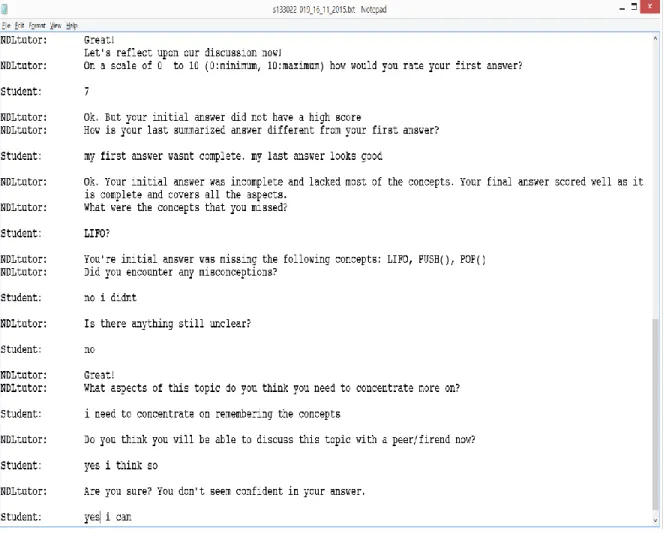
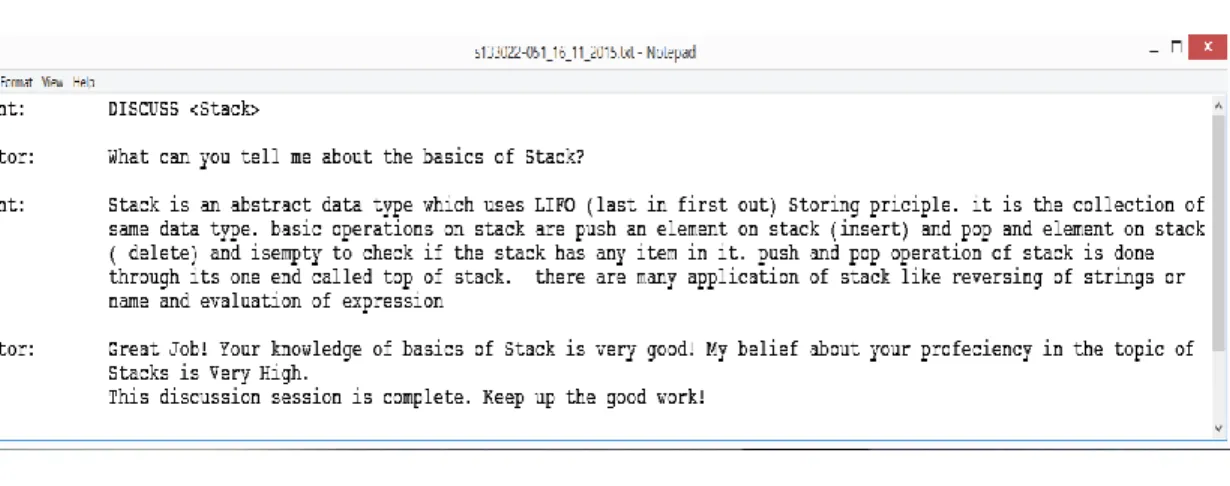
Figure 2: Sample NDL dialogue (Reflection Phase) ...21
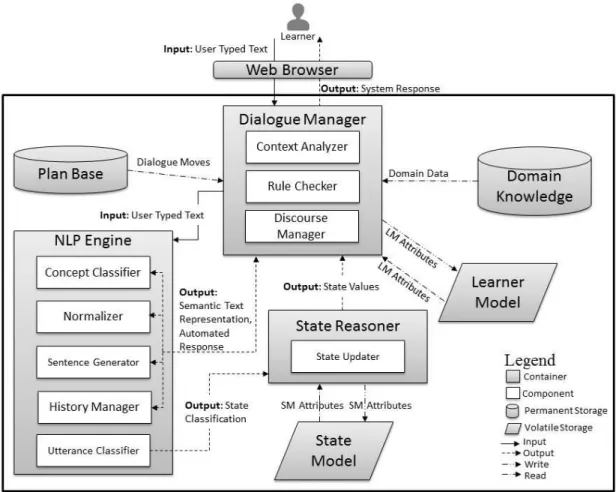
Figure 3: NDL System Architecture ... 25
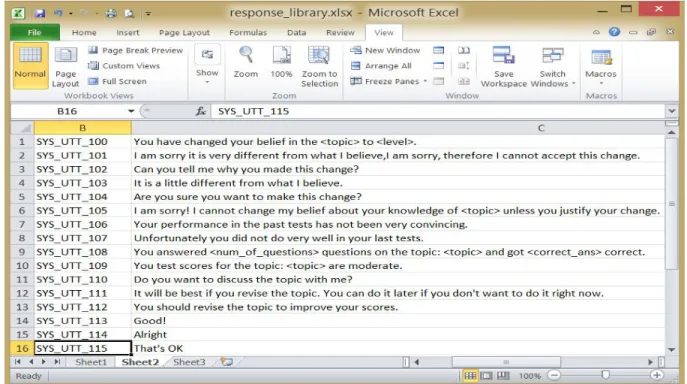
Figure 4: Response Library ... 32
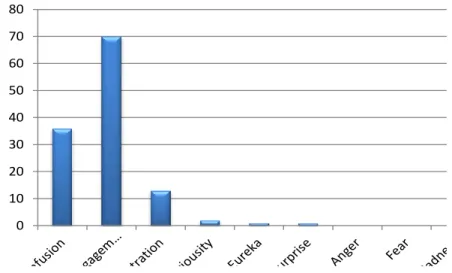
Figure 5: Occurrences for each Affective State ... 38
Figure 6: Occurrences for each Behavioral State ... 40
Figure 7: NDLtutor Workflow………..47
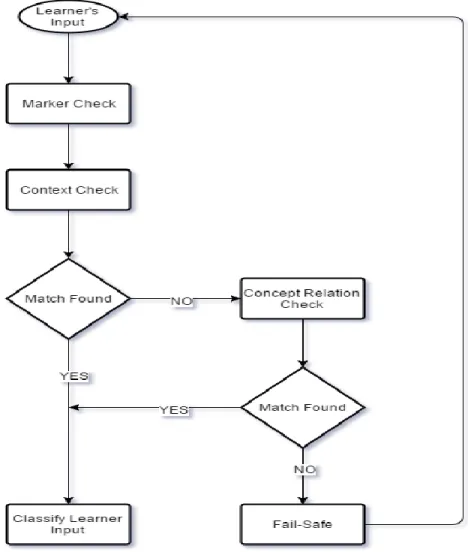
Figure 8: NDLtutor Steps for Classifying Learner Input ... 61
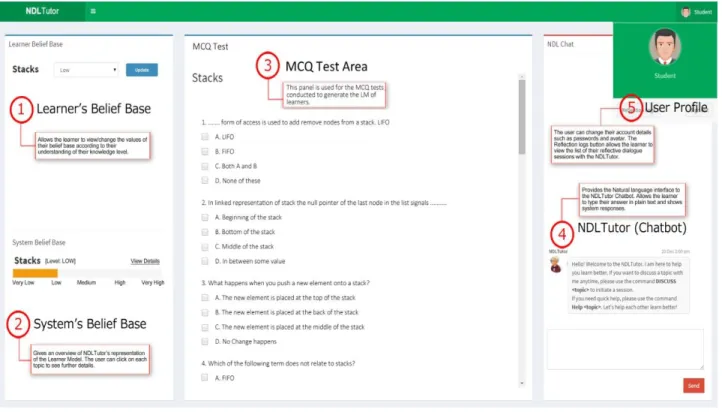
Figure 9: NDLtutor Interface ...66
Figure 10: Knowledgeable Learner Interaction with NDLtutor ... 81
Figure 11: Less knowledgeable learner Interaction with NDLtutor ... 82
Figure 12: NDLtutor dialogue excerpt showing system’s adaptation to the learner’s response patterns ... 84
Figure 13: NDLtutor dialogue excerpt showing system’s confirmation of the student’s confidence in his response ... 89
Figure 14: Self-assessment inaccuracy Before & After Negotiation with NDLtutor ...94
Figure 15: Number of Topics with discrepancy Before & After Negotiation with NDLtutor ...95
Figure 16: Self-Reflection scores (in ascending order) of individual students across all sessions ... 100
LIST OF TABLES
Table 1: List of selected Affective & Behavioral States of learner in NDL ... 23
Table 2: Sample Rule for wizard to select system response ...32
Table 3: Examples of Affective states corresponding to user inputs ... 39
Table 4: Examples of Behavioral states corresponding to user inputs ... 40
Table 5: User Utterance Categories with sample sentences ………50
Table 6: Post-Experiment Survey results ... 86
1
1. INTRODUCTION
The paradigm of Open Learner Models (OLM) was introduced in Intelligent Tutoring Systems in order to involve the learner in the overall learning experience (Bull, S. &
Pain, H., 1995; Dimitrova, V., 2003). OLMs generate the Learner Model (LM) of a learner by diagnosing their knowledge during their interactions with the system (VanLehn, 1988). This is achieved by evaluating the learner’s answers to a series of questions on a particular topic or domain. Previous LMs were encapsulated from the learners and were only accessible to the system. OLMs externalize the contents of the LM to promote independent learning. This is done in order to provide transparency and increase learner's trust in the system (Bull, S. & Judy K., 2010). Negotiated OLMs achieve this by maintaining separate belief bases for both the learner and the system. The term belief here is defined as the “confidence in one’s abilities or knowledge”. The learner is allowed to inspect (view) and edit their own belief base however they can only inspect (view) the belief base of the system. Negotiation mechanisms are used to resolve any conflict (difference) that might occur between the learner’s belief base and that of the system. The result of this negotiation is used to update the LM accordingly.
Different approaches to negotiation have been deployed by previous fully negotiated OLMs which include menu-based interfaces (Bull, S. & Pain, H., 1995) and conceptual graphs (Dimitrova, V., 2003). Conversational agents or chatbots were introduced to allow for more flexible and naturalistic negotiations (Kerly, A. & Bull, S.
2006). The natural language interface provided by a chatbot (Kerly, A., Ellis, R., Bull, S.
2008) improves the quality of dialogues by easing the communication between the learner and the system. The use of a chatbot yielded positive learning gains and was
2
successful in increasing self-assessment accuracy (Kerly, A., Bull, S., 2008). Through a successful trial with different age groups the research was able to identify the novelty and effectiveness of using a chatbot to discuss the LM content with the learners in the context of OLMs.
Research has shown that expert human-tutors are successful as they try to engage students according to their affective and behavioral states, which provides a sense of empathy and encourages learner involvement (Lepper, Mark R., et al., 1993). We believe current OLM implementation can be largely enhanced by explicit use of the information regarding such states of a learner to control the flow of the dialogue.
Improving the metacognitive abilities of the learner has always been a key role of OLMs (Bull, S., & Kay, J., 2013) and these systems have shown to be successful in promoting self-reflection. However, there is no explicit mechanism in current OLMs to scaffold the metacognitive processes. Self-reflection is implied implicitly, i.e. how the learner is reflecting or evaluating themselves is left on the part of the learner. The system does not explicitly involve the learner into a discussion that can motivate them to practice these skills more actively.
1.1 Motivation
Allowing the learner to edit their belief base results in scenarios where the learner's belief about their own knowledge is different from that of the system. Such events trigger an interaction where the system tries to negotiate the changes made by the learner in their belief base in an effort to remove the difference of beliefs between the learner’s belief base and the system’s belief base. The aim of this negotiation has been mainly used to increase the accuracy of the system's LM and enhance the role of the learner in the
3
construction and maintenance of their LMs, which increases learner reflection (Bull, S. &
Pain, H., 1995; Kerly, A., Ellis, R., Bull, S., 2008; Dimitrova, V., 2003).
A major research issue for Intelligent Tutoring Systems has always been related to maximizing learner engagement and control over their learning processes. During the interaction with an ITS, the learner might feel that he has improved his knowledge about a certain topic. At this point the learner should be allowed to inform the system about the changes in his knowledge level. This ability of the learner to inform the system about the change in his knowledge level inspires us to envision a new learning paradigm in which the system suspends the normal course of tutoring and engages in a dialogue with the learner about their belief of the knowledge of a specific topic. Contrary to the common practice in previous fully-negotiated OLMs which confined the scope of this negotiation by only allowing the learner to prove his claim by giving another MCQ test, we find it more effective if the system can engage the learner in a dialogue about a specific domain concept in a natural language environment. Therefore, instead of merely testing the learner’s knowledge, the system should be able to help the learner construct their knowledge and fill any knowledge gaps or remove any misconceptions that might arise during this discussion. Moreover, we believe introduction of an explicit reflection phase dialogue at the end of each discussion would provide learners with a unique opportunity for dialogue-driven learning which is different from normal learning based mainly on problem-solving in conventional ITSs. Once this dialogue session has been completed, the system can resume the normal course of tutoring.
In the context of current OLM implementations negotiation is mainly used as a tool to improve the accuracy of the Learner Model while promoting self-reflection is only
4
implied implicitly. The motivation of this research is thus to make use of the negotiation between the learner and the system as a unique opportunity for not only learning but also for explicitly promoting metacognitive skills in them.
1.2 Objective
A conflict may occur because the learner may be confused about their knowledge, or simply have a misconception which leads them to change their LMs. The system challenges the change made by the learner and requires them to justify himself. This creates an interesting prospect to involve the learner into a discussion about their belief and what led them to believe so. Humans become stronger advocates of their beliefs once they are challenged, and are intrinsically motivated to defend their beliefs (D. Gal, D.D.
Rucker, 2010). This provides an excellent opportunity to involve an intrinsically motivated learner in a deep learning dialogue which not only discusses the domain knowledge but also encourages them to assess the discussion to promote self-reflection.
By capturing this opportunity and making use of the context, we believe we can come up with a new learning paradigm. Based on this, the objectives of this research include:
1. Proposition of Negotiation-Driven Learning (NDL) which exploits the above mentioned opportunity.
2. Proposition of a conversational agent (chatbot) named NDLtutor that uses Interest-Based Negotiation in OLMs to engage the learners in a natural language dialogue targeted towards deeper learning.
3. Investigation of the impact and effects of NDLtutor on dialogue management for promoting metacognitive abilities in learners.
5 1.3 Approach
Learning is maximized by proactive participation of learners; we believe that such a context is ideal to engage a learner in a dialogue that explicitly targets the metacognitive skills of the learner and provides them the scaffolding to utilize and enhance these skills.
Research on the effects of using learner's affective and behavioral states to shape negotiations has shown a positive impact on the overall learning gains (Du Boulay, Bennedict, et al., 2010; Fredrickson, BL. 1998). This has not been previously studied in the context of OLMs. In NDL we aim to exploit the utility created by the occurrence of a conflict by engaging a learner in a natural language dialogue according to their affective and behavioral states and promote metacognitive skills in them through reflective dialogues and self-assessments. This thesis aims at exploring the effects of negotiation in the context of fully-negotiated OLMs and its impact on the learning gains of the students, the use of behavioral modeling to understand the motivational state of the learner, and the potential of a deploying a conversational agent (chatbot) that uses Interest-Based Negotiation (IBN) to allow for a more open dialogue between the learner and the system.
1.4 Organization of the Thesis
The rest of the thesis is organized as follows; Section 2 provides the background of our research in the context of the related work and literature review. Section 3 defines the scope of our research and introduces the paradigm of Negotiation-Driven Learning. Here we provide the outline of the system architecture and the details of the design of dialogues in NDL. We then describe the Wizard-of-Oz experiment which is used for selecting learner's affective & behavioral states for our system as well as generating
6
system libraries for rules of dialog management and NLP matters. This is followed by the discussion on the objectives achieved during the WoZ experiment. The Section 4 introduces our implementation of the NDLtutor which is our realization of the NDL paradigm. Here we provide the description of the domain structure and the functional modules of the NDLtutor. Then we give a description of the different phases of NDL and then provide an example dialogue to illustrate how our envisioned system interacts with the learner. Section 5 discusses the first evaluation study which evaluates the dialogue management capabilities and validates the affective & behavioral states that were selected for our system. In Section 6 we provide an in-depth discussion on the second evaluation study that explores the effects of our system on the self-reflection and self- assessment skills of the learners. In Section 7 we conclude the thesis by providing a summary and highlighting the contributions made by our research to the artificial intelligence in education society and knowledge science and then briefly discuss the limitations together with future work.
7
2. RELATED WORK
Fig. 1 shows the research themes that motivate and influenced the research on the Negotiation-Driven Learning paradigm. This section provides an overview of these research areas and how they contribute to the development of NDL. Open Learner Models emphasize the active involvement of the learner in the process of improving the accuracy of the Learner Model. OLMs utilize different strategies of negotiation in order to allow the learner to discuss their LM with the system. These strategies are mainly differentiated on the amount of control the learner and the system have over the course of the dialogue. Fully Negotiated OLMs allow a larger degree of control to the learner as compared to other negotiation strategies by deploying interaction symmetry that provides the same dialogue moves to both the system and the learner (Bull, S. & Vatrapu, R.
2012). Allowing the learner to change their belief base gives them a sense of control over the process while having the ability to defend their beliefs against the system and ask for justification from the system inculcates a sense of trust in them.
Fig.1. Research themes in the NDL Paradigm
8
Allowing the learner to interact with the system about his LM, opens up new doorways of interaction possibilities and diagnosis. The interactive nature of the dialogues provides an opportunity to promote reflective thinking in the learners. A very important aspect of OLMs has always been the active promotion of metacognitive skills in the learner (Bull, S., & Kay, J., 2013). It has been documented that students who have better metacognitive skills perform much better than students who have weak metacognitive skills (Swanson, H. L., 1990; Schraw, G. & Dennison, R.S., 1994). Since metacognitive skills do not have any observable manifestation, such skills are hard to acquire and gauge. However continuous stimuli can lead the learner into learning to use such skills more actively so that these skills are automatically used by the learner while they are learning.
Improvement in the metacognitive skills of the learners has mostly been implied implicitly. Externalization has been considered as one of the major sources of self- reflection in learners. When they are able to view their LM and reflect upon their knowledge level. However, this self-reflection remains implicit and OLMs do not provide a clear platform to the learner to keep a track of their metacognitive abilities.
ITS systems are modelled to replicate expert or semi-expert tutors, since expert tutors have shown to have the maximum learning gain in learners. An important aspect of the expert tutors teaching tactics is the ability to react to the student’s affective and motivational states (M. T. H. Chi et al, 2001). A learner’s affective and behavioral states play a vital role in the outcome of their interaction with the system as a confident, interested, and motivated learner would interact very differently from a learner who is not confident, uninterested or demotivated. For an automated system to be able to replicate
9
an expert tutor’s empathy, it needs to be able to classify the learner’s interactions as a possible outcome of a mental state. Intensive research on this effect would contribute to advancement of the field of OLMs.
2.1 Learner Models
Intelligent Tutoring Systems use Learner Models to provide adaptive and personalized content to the learners. The system diagnoses the learner’s knowledge during its interactions with the learner and uses this information to infer the corresponding learner model (VanLehn 1998). The learner model represents the current state of the learner’s knowledge. The basic tasks for any learner model include (Wenger 1987):
1. Storing information about the learner’s knowledge and expertise about a particular domain. This information allows the system to compare the learner’s knowledge with that of an expert module to generate evaluations and highlight area of weakness.
2. Representation of the learner’s knowledge level that allows for an insight into incorrect knowledge and misconceptions held by the learner.
3. Accounting for data by analyzing the information available to the system to generate the diagnosis for the learner. Such diagnostic process can vary depending upon the kind and amount of information available to the system.
Traditionally the learner model was encapsulated from the learner and only visible and available to the system for adaptive tutoring. It has been argued and that involving the learner in the process of constructing and maintaining their learner model not only
10
promotes learner engagement but also has positive effects on their metacognitive skills (Bull & Pain, 1995; Kerly, A., Ellis, R., Bull, S., 2008; Dimitrova, V., 2003).
2.2 Classes of Open Learner Models
We can identify different classes of OLMs according to the level of control they provide to the learner over the LM. The learner’s level of control can be defined as the learner’s capability to change the contents of the LM. According to this specification, OLMs can be classified as:
1. Inspectable: An inspectable OLM can be considered as a read-only or view only OLM. The LM is completely controlled by the system and is only available to the learner for viewing. The learner has no right to change the contents of the LM directly. The learner can answer questions related to the domain in order to have their model updated. The externalization of the LM has shown to increase learner involvement and promote self-reflection and planning skills (Bull, S. & Judy K., 2010). All OLM implementations are considered inspectable since they allow the learner to view their learner models in one form or another.
2. Co-operative: These models allow the learner and system to jointly construct the learner model. The system asks the learners to provide complementary information required for the modeling process (Beck, Stern, & Woolf, 1997).
3. Challenge: These OLMs allow the learner to challenge the model generated by the system. EI-OSM (Zapata, R. et al., 2007) is one such system based on Toulmin’s model of argumentation (Toulmin 1958). EI-OSM uses claims, data, warrants, backing and rebuttal to allow learner to add new arguments with supporting evidence. A teacher has the authority to determine which evidence has
11
the highest strength and the evidence supported by the teacher is considered stronger than the unapproved evidence provided by the learner.
Another OLM that allows the learner to challenge the system is xOLM (Van, L. et al., 2007). The learner is allowed to view the model and select the topic for discussion. The system provides is justification for the topic and the learner are provided with three options; 1) agree 2) disagree and 3) move on, to continue the interaction. If the learner agrees with the system, the system’s beliefs are reinforced. In case of a disagreement the learner has to provide further information which is used to diagnose the model. Move on allows the learners to end the discussion with the system.
4. Add-Evidence: These OLMs allow the learner to provide additional evidence to be considered in the modeling process. ELM-ART (Weber & Brusilovsky, 2001) is an OLM that allows the learners to inspect and edit the contents of their learner model. ELM-ART is implemented as an adaptive interactive textbook where the learner informs the system about their knowledge by providing evidence to support their claim. Evidence can be in the form of answering questions, taking tests or performing tasks.
Another OLM that allows the learner to provide evidence is TAGUS (Paiva, Self & Hartley, 1994). The learner can inform (tell) the system about the new evidence which is then analyzed by the system to take appropriate action.
5. Editable: Learners have full responsibility and control in editable OLMs. They are allowed to edit their learner model when they deem necessary without the intervention of the system. The system may offer some information regarding its
12
belief base which can be neglected or overridden by the learner. The changes made by the learner are directly reflected in the system’s belief base which alters their learner model. Some examples of OLMs in this class are; C-POLMILE (Bull, S. & McEvoy, 2003), SASY (Czarkowski, Kay, & Potts, 2005) and Flexi-OLM (Mabbott & Bull, S., 2006).
6. Persuaded: Persuaded OLMs also allow the learner to change their learner models but they are required to demonstrate their competency before the system can agree with the changes they made. The system uses questioning techniques to analyze the learner’s knowledge level and validate their claim. If the learner is not able to justify the change they made, their changes are rejected by the system and the learner model remains unchanged. Flexi-OLM (Mabbott & Bull, S., 2006) is an OLM that falls in this category.
7. Negotiated: Negotiated OLMs allow for a more collaborative approach towards constructing and maintaining the OLM. Negotiated OLMs use a separate set of beliefs for the learner and the system. The negotiation process is used to resolve the conflicts (discrepancies) between these sets of beliefs. There is an interaction symmetry which provides both the learner and the system with equal rights of interaction. The basic negotiation protocol allows for; ask for justification, provide justification, challenge justification, reject justification, provide proposal, accept proposal or reject proposal.
Mr. Collins (Bull, S., Brna, P., Pain, H., 1995) is the first fully negotiated LM which focuses on the discussion of the LM between the learner and the
13
system. Mr. Collins uses a menu-based discussion which allows learners to challenge and respond to the system.
While Mr. Collins has been shown to promote learner reflection, the negotiation method used can be considered as restrictive. STyLE-OLM (Dimitrova, V., 2003) is another fully-negotiated system that allows learners to discuss their LM with the system. STyLE-OLM is proposed based on the idea that interaction is a stimulus for reflection. The dialog is constructed as a conceptual graph that allows the learner to see the explicit connections between the different arguments. However, some learners might find using the graphical interface difficult or distracting.
CALMsystem (Kerly, A., Ellis, R., Bull, S., 2008) addresses the problem of using menu selections and conceptual graphs for young learners. In order to provide an easier way to communicate with the system, CALMsystem proposes the use of natural language dialogue. CALMsystem follows the negotiation options provided by Mr. Collins and uses a chat-bot to provide a natural language dialogue. CALMsystem utilized the Lingubot™ (Creative Virtual, 2007) technology to build the chatbot. Domain-independent utterances do not affect the course of the dialogue which can be restrictive in a natural language dialogue system. CALMsystem laid the foundations of using natural language conversational agents in the context of OLMs. The background and guidelines provided by CALMsystem formed the basis of this research.
14 2.3 Interest-Based Negotiation
Negotiation is a vital form of human interaction which ranges from basic information exchange to more complex cooperation or coordination activities. As computer systems evolve to become autonomous agents, it was inevitable for such systems to be able to conduct a negotiation of their own in an automated way. Automated negotiation has found much interest and success in the field of e-commerce where automated autonomous agents negotiate over resources (tangible assets).
Interest-Based Negotiation (IBN) (Fisher, R., Ury, W., 1983) has gained attention from the research community since it provides a good alternative to Position-Based negotiation where all agents are considered adversaries. It is also known as win-win negotiation as all parties try to create a mutual gain. IBN allows the parties to reveal their underlying interest by specifying new information during the course of the dialogue. This information can be used to decide an alternate strategy in real-time which makes IBN more responsive. Since learning is a process of exchanging ideas and understanding problems, IBN seems much more suited for educational systems, as proposed in (Miao, Yuan, 2008). There are no current implementations of OLMs that have tried to utilize IBN as the main negotiation approach.
2.4 Affect & Behavioral Modeling
Research has shown that expert human tutors have a higher impact on learning than novice tutors and ITSs (Lehman, Blair, et al., 2008). This is not only due to the pedagogical strategies employed by such expert tutors but is also deeply rooted in the emotional (affective) and motivational (behavioral) strategies such tutors employ to
15
engage the learners in leaning (Du Boulay, Bennedict, et al., 2010). Affect and behavior are closely entwined in a bi-directional relationship. Moreover a learner may not only experience a positive affective or behavioral state, but also a negative state. Such a negative state might even be necessary for a learner to be engaged in the process of learning. Understanding the state the learner is in can allow a system to be more empathetic towards them which leads to higher levels of engagement. It has been argued that while an exact estimation of a specific state might not be possible or even required, an approximation of these states can be as helpful in continuing the learning process. The terminology of “caring systems" encompasses such systems which are meta-affectively and meta-cognitively aware. Our research aspires to inherit such attributes to provide adequate support the learners to promote their cognitive and meta-cognitive skills.
2.5 Metacognition
Metacognition is commonly defined as “thinking about one’s own thinking” or “what we know about what we know” (Puntambekar and Du Boulay, 1999). It involves understanding what one already knows, comprehending the task of learning and what skills would be required to solve it, the ability to monitor one’s actions, planning, debugging and evaluation (Schraw, G. & Dennison, R.S., 1994; Taylor, 1999).
Metacognition definitions generally include 2 components (Schraw, G. & Dennison, R.S., 1994; Taylor, 1999; Flavell, 1987):
1. Knowledge about Cognition: Includes declarative knowledge, procedural knowledge and conditional knowledge to aid the reflective aspect of metacognition.
16
2. Regulation of Cognition: Includes planning, information management, comprehension monitoring, debugging strategies and evaluation processes which support in the control aspect of learning.
2.6 Dialogue-Based Tutoring Systems
ITS systems have come a long way from having simple human-computer interfaces to adopting conversational interfaces. Apart from the conventional text display and graphics such systems employ an automated conversational agent that is able to speak to the student using synthesized speech accompanied by facial expressions and gestures. This makes the learner’s experience more interactive and has also been shown to increase engagement.
Dialogue-based tutoring systems have deployed different forms of strategies to maximize learning. Knowledge construction dialogues (KCD) were used to encourage students to infer or construct the target knowledge in the ATLAS system (Freedman, R.
1999). KCDs connect principles and relate them to common sense knowledge to help students to discuss their knowledge. ATLAS was originally developed for CIRCSIM tutor and also provides a natural language interface to the learners. Immediate feedback strategy was employed in ANDES (Gertner and VanLehn, 2000; VanLehn, 1996) to help college and high-school physics students to do their homework problems. ANDES highlighted the use of real-time hints and feedback to help student solve given tasks.
One of the most successful systems in this category has been AutoTutor (Graesser et al., 1999, Person et al., 2001). It is an ITS that provides a natural language dialogue to interact with the learner. AutoTutor provides the learner with an interactive agent that speaks out the question in addition to displaying the text on the screen. AutoTutor
17
engages the learner in a deep reasoning dialogue which requires the learner to provide comprehensive explanations. Autotutor’s strength lies in its ability to handle learner responses during the course of the dialogue. Autotutor uses advanced statistical NLP techniques such as Latest Semantic Analysis (Graesser, A. C., et al, 2000) to analyze learner response and classify responses into corresponding speech acts. The role of AutoTutor is to act as a teacher and teach/construct knowledge.
18
3. ANALYSIS & DESIGN
3.1 Scope Definition
This thesis introduces a new learning paradigm of Negotiation-Driven Learning which allows a learner to interact with an ITS in a natural language interface. The research finds its motivation in different research fields i.e. Natural Language Processing, Affect &
Behavioral Modeling, Dialogue-based Tutoring, and endeavors to combine best practices that have only been used separately in existing OLMs to develop an independent OLM that is capable of engaging learners in dialogues that promote metacognitive skills in them.
3.2 Negotiation-Driven Learning
This research proposes a new learning paradigm of Negotiation-Driven Learning which aims at enhancing the role of negotiations in OLMs to facilitate constructive learning.
When a learner is involved in a learning exercise, they are not only learning something new, but they are also implicitly involved in learning how to learn. More often than not they are more inclined towards executing well-practiced strategies rather than monitoring themselves. NDL aims at encouraging learners to use these metacognitive skills more actively and effectively.
NDL acts as a component of the ITS which is triggered when a conflict between the beliefs of the system and the learner occur. During its interaction with the learner the system tries to understand why the learner holds a certain belief (cause of the conflict) and tries to help them understand why it might not be true. The system uses the
19
information about the learner's affective and behavioral states to control the flow of the dialogue to ensure maximum engagement. An NDL dialogue session is concluded when the learner is able to defend their claim, or shows an understanding of their incorrect belief by accepting the system's justification/proposal. The system's LM is updated with the outcome of the dialogue and the ITS resumes the normal course of tutoring.
3.3 Problem Analysis
3.3.1 Generating Dialogues for NDL
NDL allows learners to interact with the system in a natural language interface. In order to accomplish this, the system follows the negotiation protocol proposed in (Miao, Yuan, 2008) to allow the learner to provide justification of their change. This protocol is consistent with other protocols that have been defined and used in previous versions of OLMs (Bull, S. & Pain, H. 1995, Dimitrova, V., 2003, Van Labeke, N., Brna, P. &
Morales, R., 2007). The system asks the learner to justify the changes they make to their belief base. If the justification provided by the learner contains an incorrect idea, the system rejects it. If the justification provided by the learner contains an “assertion”, the system can ask for more information to accept it or provide a proposal to the learner to continue the dialogue further. The system initiates a reasoning process which is used to understand the motivation behind the change made by the learner. The system and the learner have equal rights to ask for further information; accept or reject a justification provided by the other party; therefore the system needs to be capable of deploying an alternative strategy in case a learner rejects its proposal/justification.
20 3.3.2 Facilitating Metacognitive Skills
Facilitating metacognitive skills has been the core of recent research on ITSs and OLMs (Bull, S., & Kay, J., 2007, Mitrovic, A. & Martin, B., 2002, Mitrovic, A. & Martin, B., 2007). Learners who are good at using their metacognitive skills perform better than those who are unable to use such skills actively (Garner, R. & Alexander, P.A., 1989,
Schraw, G. & Dennison, R.S., 1994). NDL emphasizes the importance of actively using and enhancing these skills during an interaction between the learner and the system. Fig.
2 shows the dialogue session after a few dialogue moves encompassing domain-specific reasoning. Once the learner is able to answer the domain specific questions to an acceptable standard, the system requires them to summarize their answers and reflect upon their discussion with the system. This is done to reinforce their understanding and encourage self-assessment.
21
Fig. 2. Sample NDL dialogue (Reflection Phase)
The dialogue session in Fig. 2, highlights a major feature of NDL that distinguishes our approach from the current implementations of OLMs. The system engages in a domain discussion if the learner is unable to justify the change they made in their belief base. The domain discussion phase is used to analyze how much the student knows about a specific topic. If a learner is more knowledgeable or has improved/increased their knowledge they are able to answer the question within the first attempt. This provides the system with the information about their knowledge level in the topic. For less knowledgeable students who are not able to answer the question according
22
to the defined standard (criteria), the system engages in a series of funneling questions in order to understand their level of understanding/knowledge of the topic. For such students, at the end of the domain dialogue session, the system explicitly encourages them for self-assessment by asking them to reflect upon the past interaction and evaluate how the discussion helped them formulate their final answers.
3.3.3 Identifying Learner's States
All ITSs aim to engage learners to maximize learning; however a learner's engagement highly depends upon the affective and behavioral state they are in (Lehman, Blair, et al., 2008). If a learner is in some sub-optimal state, the system needs to diagnose such states in order to help a learner move into an optimal state that is more conducive to learning.
When a learner is in an optimal state of learning, they are more focused and learn better.
Hence the system needs to ensure that such a state is maintained. There is an abundance of literature on modeling affect and motivation with varied views (Afzal, S. and Robinson, P., 2011, Burleson, W. & Picard, R. 2007, Conati, C. & Maclaren, H. 2009, Sidney D'mello and Art Graesser. 2013, Woolf, B. et al., 2010). However it is agreed that an exact estimation of such states is not required in practice as the main focus of an ITS is to improve the cognitive state of a learner, and the knowledge about these states support the system in its reasoning process (Du Boulay, Bennedict, et al., 2010) .
The process of learning requires the learner to be interested, motivated and confident to engage in a productive discussion with the system. Table 1 shows a list of Affective & Behavioral states that were selected to be used in NDL to model the affective/behavioral state of the learner. These states have been selected from previous research on the subject (Lehman, Blair, et al., 2008; Du Boulay, Bennedict, et al., 2010),
23
and they provide a good approximation of the learner’s mental state. How these states were shortlisted will be discussed in the experiment section of the paper. The precision of modeling these states is not of principal importance, but an approximation of these states can allow the system to engage the learner more actively.
Table 1
List of selected Affective & Behavioral States of learner in NDL
Affective States
CONFUSED
Poor comprehension of material, attempts to resolve erroneous belief
FRUSTRATED
Difficulty with the material and an inability to fully grasp the material
ENGAGED Emotional involvement or commitment
Behavioral States
CONFIDENT The feeling or belief in one’s abilities or qualities INTERESTED Wanting to know or learn more about something MOTIVATED Having a motive or incentive to perform an action
Affective states are related to emotions or feelings and therefore are more prominent during the domain-independent discussions where learner responses are generally influenced by how they are feeling. On the other hand behavioral states are related to the interaction of the learner and hence domain-dependent discussions are
24
mostly influenced by the behavioral states of the learner. Metacognitive states of a learner are more difficult to gauge as they are implicit in nature and are used subconsciously.
However, understanding the context of a dialogue can help in estimating the approximate metacognitive state of the learner. Further discussion about these states will be continued in the Wizard of Oz experiment section.
3.3.4 System Architecture
We propose the use of Interest-Based Negotiations (IBN) (Fisher, R., Ury, W., 1983) in NDL. IBN aims at exploring underlying interests of the parties rather than their negotiating positions and considers negotiating parties as allies working together for mutual gain, which is the essence of the negotiation process.
Since negotiation is a process of understanding, we make use of IBN to generate the dialogues in NDL. To realize the envisioned interactions in our system we extend the computational model proposed in (Xuehong Tao, et al., 2006) on the automation of IBN.
Fig. 3 shows the architecture of our system which consists of the following functional components:
State Reasoner: handles all the state-related tasks. It generates the State Model (SM) for the learner by translating learner inputs to the corresponding affective and behavioral states. The State Updater (SU) updates all these state in real-time with each transaction. It also stores previously held states of the learner to understand learner progression.
25
Dialogue Manager: consists of the Rules Checker (RC) which is an inference engine and uses the information from the SM in conjunction with the LM in order to select the next system move with the maximum utility according to the current context. The Context Analyzer (CA) submodule uses the information from the SR and the NLPE in order to articulate the current context. It also consists of the Discourse Manager (DiM) that controls the flow of the overall dialogue.
Fig. 3. NDL System Architecture
NLP Engine: this is the core module for providing a Natural Language interface to the learner. NDL does not require a complete NLP understanding as we are
26
interested in the concept-level cognition of the learner's input. To accomplish this, the NLPE consists of submodules which include:
Concept Classifier: uses a Normalized Distance Compression algorithm to return a list of concept identifiers that most closely match the learner input.
Normalizer: manages stemming and spell checking for the learner input.
Sentence Generator: uses the concepts identified along with the current context to generate a list of possible utterances of the system. These possibilities are matched with the response library and the best matching phrase is selected to generate sentences automatically.
History Manager: stores information about the concepts used by the system and the concepts expressed by the learner. This information is passed to the RE, which uses it to classify the current context.
Utterance Classifier: uses a Cosine Similarity Index algorithm to return a list of state classifiers that are identified from the learner input.
Plan Base: holds the different negotiation moves available to the system according to a specific context. The information regarding the consequences of
27
using a move in a specific context and state are used to update a move's adequacy to that context in the PB.
3.4 Requirements Analysis
Realizing interactions envisaged in NDL, it requires that the system not only understands the learner's characteristics but is able to comprehend their answers to provide a proper response. In NDL we wanted to introduce a more flexible, open, and natural method of interaction between the learner and the system. The use of chatbots has been documented to ease the negotiation process and improve engagement levels (Kerly, A. & Bull, S.
2006, Kerly, A., Ellis, R., Bull, S 2008). In light of these previous studies on the use of chatbots in OLMs we put forward the following questions for ourselves:
Q1. Can a conversational agent provide a more natural and flexible negotiation interface to the learner than a menu-based system?
Q2. What kind of dialogue moves would be required to facilitate such a negotiation?
Q3. What will be the challenges of implementing such a chatbot?
Q4. Which affectvie & behavioral states of a learner we need to pay attention to for realizing usable IBN-based dialogues?
To find the answers to these questions, we conducted a Wizard-of-Oz (WoZ) experiment. Natural language dialogue is complex in nature and the interaction patterns differ from learner to learner. Such inconsistencies were to be faced in negotiating the LM with learners; therefore, we required empirical data in order to support our system design. The WoZ approach has been shown to be valuable for collecting data in scenarios
28
which require complex interactions between the users and the systems (Dahlbäck, N., Jönsson, A., and Ahrenberg, L., 1993). Our experiment design was based on the structure and guidelines on conducting a WoZ experiment provided by the previous study on CALMsystem (Kerly, A., Ellis, R., Bull, S. 2008). Building upon the findings of the previous studies our experiment design included a self-annotation mechanism for students to annotate their input according to the option they think best describes their current affective and behavioral state. We also used the findings of the previous study to generate a list of possible outcomes/markers that could be related compared afterwards.
Since in the WoZ experiments, users are under the impression that they are interacting with a system, many application-specific characteristics of a textual dialogue can be elicited.
For this experiment we created an independent OLM. The domain of “Data Structures” was used for this experiment. The system gave a multiple-choice questions test to capture their understanding. These test scores were used to analyze the performance of each student and the results were used to generate the learner model. At the end of the test, the learner was allowed to update their belief base about their knowledge in the corresponding topic. This allowed for the wizard to initiate a dialogue in the case of a conflict occurring between the system’s set of beliefs and the learner’s set of belief. Ensuring a mixed-initiative dialogue system, the participants were also allowed to initiate a dialogue with the system by themselves at any time. During their interaction with the system, the participants typed their inputs and were required to annotate each input according to a drop-down list of states provided to them (self-annotation). They had
29
the liberty to select multiple states which they thought best represented their mental state or they could provide a new/different state not available in the list.
3.5 Wizard-of-Oz Experiment
Wizard-of-Oz experiments have been shown to be very useful in eliciting application- specific characteristics of dialogues in complex interaction scenarios (Dahlbäck, N., Jönsson, A., and Ahrenberg, L., 1993). In a WoZ experiment, the participants are under the impression that they are interacting with a live system however the role of the system is “played” by a human which is commonly refered to as the “wizard”. In our experiment, the wizard played the role of a “chatbot” which allowed the participants to discuss their learner model through a natural language interface. The encapsulation of the human experimenter from the participants ensures that the participants interact with the system as they would do in a natural setting. Another benefit of using the WoZ approach is that the interaction data can be collected without implementing a complete system.
The study was conducted with the students of Bahria University, Islamabad, Pakistan. A total of 45 students from semester of the Software Engineering course participated in the experiment. All participants had completed the compulsory courses of computer programming (C++, OOP, and Data Structures) as a course requirement. One of the present authors acted as a secondary experimenter while the experiment was conducted and supervised by the local instructor (Senior Lecturer in the SE department).
The author was available via an online connection throughout the duration of the experiment. The participants were given an introduction to ITSs and OLMs by the secondary experimenter through a Skype video conferencing session. The session included an introduction to the aims and objectives of ITSs and their real-life
30
applications. The participants were also introduced to the different categories of OLMs and were shown the interfaces and interaction possibilities provided by some OLMs, specifically Mr. COLLINS (Bull, S. & Pain, H., 1995), STyLE-OLM (Dimitrova, V., 2003) and CALMsystem (Kerly, A., Ellis, R., Bull, S., 2008). Ann initial survey was conducted to understand their expectations from such a system.
The participants were provided with a web interface to interact with the system.
All interactions between the system and the participants were logged and the interaction transcripts were stored for future analysis. Once the participants had completed their sessions with the system, another survey was conducted to get their feedback about the system and the interaction possibilities it provided.
The participants were randomly divided into 3 groups; 1 uncontrolled group and 2 controlled groups. This was done in order to ensure that the system responses generated during each phase would be valid enough for a diverse group of learners. The experiment was conducted in 3 phases where in the 1st phase with the uncontrolled group, there was no negotiation protocol set for the wizard. The wizard conducted open-ended dialogues with the participants without following any set of rules. The dialogue scenarios captured in these interactions were translated into IF/THEN clauses in order to generate the initial
‘rules library’. The interaction logs were also used to generate a corpus for system responses that constituted the first version of the response library. Fig. 4 shows a screenshot of the response library available to the wizard.
In order to generate the response library, the protocol discussed previously was used to classify system utterances. The strategies used are:
1. ASK for JUSTIFICATION: ask to justify a response/claim.
31
2. GIVE JUSTIFICATION: provide justification for the last utterance/action.
3. ACCEPT JUSTIFICATION: accept the claim if it is justified.
4. REJECT JUSTIFICATION: reject a claim if it is not justified.
5. GIVE PROPOSAL: propose an alternative solution 6. ACCEPT PROPOSAL: accept a proposal.
7. REJECT PROPOSAL: reject a proposal.
8. PROVIDE FEEDBACK: provide feedback corresponding to the last action.
Both the rules library and the response library were saved in MS Excel file for quick access to appropriate response to the learner. Each system response was given unique identifier SYS_UTT_ #, where ‘#’ was a unique numerical value. This allowed the wizard to only select and copy/paste the corresponding system utterance in the next phase.
The 2nd phase with the controlled group 1 was conducted under controlled conditions where the wizard used the rules and response libraries generated from the analysis of the interactions in the previous phase under the protocol guidelines to respond to student inputs. During this phase there were certain scenarios which did not occur in the previous phase and hence had no corresponding rules in the rules library to select an appropriate response from the response library. In such situations, the wizard had the liberty to improvise the response and such a situation was highlighted for future analysis of the dialogues.
The 3rd phase was conducted with the controlled group 2. The interaction logs of the first two phases were used to update the rules and response libraries. The analysis of
32
the first two phases allowed for the improvement of the rules and response libraries for the wizard by including missing rules and responses for new dialogue scenarios. The 3rd phase of the experiment was almost completely automated with 85% of the wizard responses being generated by using the rules library. The results from this phase were again used to update the libraries to accommodate missing rules or responses. Table 2 shows an example of a rule used by the wizard in order to select a corresponding system response.
Fig. 4. Response Library
The students were divided randomly in 3 equal groups for the 3 phases of the experiment. This meant that for each phase, we had 15 students interacting with the wizard. Each group had a single interaction session with the wizard. The interactions in
33
the 1st phase were the longest as there was no set negotiation protocol, so the students and the wizard indulged in a very open discussion. The interaction times of the 2nd phase were considerably shorter as a negotiation protocol was introduced and the discussion was more directed. The average interaction time in this phase was 20 minutes. The 3rd phase saw the shortest interactions as it used the formalized rules and response library. Average interaction time for the 3rd phase was 16 minutes. All of the interactions were concluded successfully with the student either accepting the wizard’s proposal or retaining their initial stance about their knowledge level.
Table 2
Sample Rule for wizard to select system response.
IF
User has changed their belief in topic and the difference between their belief value and the system’s belief value is greater than 2
THEN
Highlight User Change: {SYS_UTT_100}
REJECT CHANGE: {SYS_UTT_101}
ASK for JUSTIFICATION: {SYS_UTT_102}
3.5.1 Results
The interaction logs and the conversation transcripts form the WoZ experiment were transcribed and analyzed in order to understand the kind of dialogues the participants engaged in with the system. In the 45 conversations between the student's and the wizard there were a total of 195 negotiation fragments. The number of user initiated conversations was 80. The mean interaction time was 27.4 minutes. Off-topic discussions or small talk constituted 13.4% of all conversations. 45.6% of the conversations were
34
related to domain-specific discussions while the remaining 41% conversations constituted the inputs used to approximate learner characteristics.
While off-topic conversation during a tutoring session may be seen as counter- productive to the construction of knowledge, it has been found to be an effective strategy to keep the learners engaged. Expert tutor utilize off-topic conversations in scenarios where the learner seems to be disengaged or frustrated. It is seen as useful strategy to build a sense of trust and empathy using a dialogue that does not require the learner to recall domain or task-oriented knowledge. Having the ability to engage at a certain level of small talk allows the system to provide responses to user inputs that are not related to the domain or the task at hand. This gives the system the ability to hold more naturally flowing dialogues with the learners.
3.5.2 Classifying Student’s Affective and Behavioral States
Affect relates to the emotional reaction (feeling) one has towards an attitude object (learning task). For example, if a student is confused about a mathematical concept (attitude object), whenever they are exposed to a problem related to that concept, they feel confused. Behavior relates to how one behaves when exposed to an attitude object.
Considering the previous example, if the student is confused about a concept, they are most likely to avoid it and be less interested in taking on the problem.
There are many unknown categories of learner’s mental states and an in-depth evaluation of all these states was out of the scope of our study. For the initial classification of the participant’s affective states we used Ekman’s six “basic” emotions (Ekman, P., 1973) and a set of learning-focused affective states identified in (Graesser, A.
C., et al., 2006; D’Mello, S. K., et al. 2007) for our study. The list of affective states that
35
was used for this study include: confusion, engagement, frustration, curiosity, eureka, surprise, anger, fear and sadness. Similarly for the classification of behavioral states, we used only the “states” identified in (De Vicente, A., & Pain, H., 2002) based on the theories of motivation in education (Malone, T. W., and Lepper, Mark R., 1987; Keller, J.
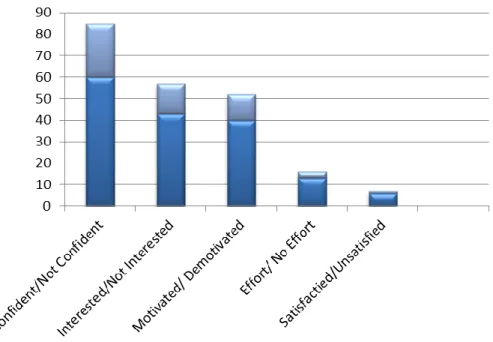
M., 1983). Choosing between different states is not a trivial task; therefore, we concentrated on the states that would have a deeper impact on the outcome of an interaction. We limited our study to the states that characterize a student’s behavior while interacting with a human tutor which include: confidence, interest, satisfaction, effort and motivation along with their negative dimensions. The occurrence frequencies of the states were used as the measure of acceptance which narrowed the affective states list to;
confused, frustrated, and engaged. Whereas the behavioral states selected were;
confident, interested and motivated.
The interaction logs generated during the experiment consist of self-annotated typed input by the participants. There is no gold standard for understanding and detecting the mental state of a learner from an interaction log. To this effect we employ the Multiple-judge strategy (Graesser, A. C., et al., 2006) to manually annotate the interaction logs. The judges included the participants (self-annotations) and 2 expert judges (assistant professors) and 2 intermediate judges (lecturers). One of the expert judges was a professor of psychology while one of the intermediate judges was a lecturer in linguistics. This selection of judges provided us with a diverse pool of experience which was very helpful during the discussions over the annotated utterances. The judges were provided with the learner interactions along with the list of affective and behavioral states classified for this study. They were also given the liberty to add a new state if they
36
deemed necessary in order to capture the approximation of the participant’s mental state.
We are aware of the subjective nature of this classification scheme which might not reflect the true mental state of a learner. However, we have previously emphasized that an approximation scheme can be considered sufficient to control the flow of the dialogues. An incorrect classification of a learner state does not drastically impede the dialogue course as the system uses the context and dialogue history to ensure an effective flow of the dialogue. We will discuss this topic in the evaluation section below.
The judges were provided specific guidelines for annotating the transcripts. They were required to highlight any markers in the student’s input that might point towards a specific attribute of their mental state. For example using “Ummm…” in the beginning of an utterance was classified by tutors as a sign of “low confidence” or “guessing”. A similar “vocal” sound is associated to a thinking person. However, it was noticed during the experiments that when the students were thinking, they did not type “ummm”, but rather made the vocal sound. Another important aspect of annotation was the consideration of “context” while annotating the transcripts. Context plays an important role in helping to decipher the rationale behind a specific utterance and in most cases the thought process involved. For example, if a student is asked a question related to the domain and they answer;
“I don’t know…. But I think it is ……”
This input from the student is treated as “confused” and their answer is “not confident” but he is considered to be “interested” as he is trying to answer the question.
37
Similarly, the very basic utterance “OK” can have multiple meanings which can be elicited if the context in which the utterance occurs is known. The strategy to highlight markers in text and convey a context was very helpful in fine-tuning the rules in the library.
The annotated transcripts from the judges were compared with each other to find the matching and conflicting annotations. The list of conflicting annotations was discussed with all the expert judges in order to reach a consensus regarding a specific learner utterance and its relation to a specific affective of behavioral state.
The self-annotated lists of the participants were then matched with the agreed upon judge’s annotated list in order to generate a list of student utterances classification according to the affective and behavioral states. A list of utterances with no matches, or mismatches was also generated during this process. These lists were deliberated upon by the judges in order to remove any discrepancy between the annotated values. As mentioned previously, the panel of judges included an expert tutor of psychology and a lecturer in linguistics. This diversity of experience helped the panel to annotate utterances mismatching annotations to generate a complete list.
An interesting observation during the analysis of the inputs was the positive and negative dimensions of the specified states and how they affected the course of the dialogue. It was observed that in case of affective states, a negative affective state required more system involvement than a positive affective state. For example, if a learner was confused (negative state), the system had a better opportunity to help him realize his confusion than when he was not confused (positive state), in which case the system intervention was minimum. Contrary to this, the dimensions of behavioral states