Title
オンラインバーチャルラボの設計・開発スキルを向上 するためのバーチャル学習プラットフォームに関する 研究
Author(s) Mohamed, Mohamed Elsayed Ahmed Citation
Issue Date 2017‑03
Type Thesis or Dissertation Text version ETD
URL http://hdl.handle.net/10119/14240 Rights
Description Supervisor:長谷川 忍, 情報科学研究科, 博士
Doctoral Dissertation
A Virtual Learning Platform for Developing Skills of Designing and Producing Online Virtual Laboratories
Mohamed Elsayed Ahmed Mohamed
Supervisor: Associate Professor. Shinobu Hasegawa
School of Information Science
Japan Advanced Institute of Science and Technology
March 2017
Research Abstract
The expansion of using new virtual learning applications in educational institutions requires enhancing educators’ skills of design and production in such applications. Those skills must be acquired by educational technology students for the future of education because they often lack the above skills in their curriculum. The main purpose of this research is to investigate the effectiveness of virtual learning platform (VLP) in order to cultivate the students’ skills in designing and producing online virtual laboratory (OVL) with a standard way. In the context of this research, the OVL is an online practical environment for a specific topic, which makes learners active such as learning by experience and by trial-and-error. On the other hand, the VLP means a web-based learning system including several functions/tools for presenting and managing the OVL.
In order to teach the educational technology students how to design and produce OVL (DPOVL), a new instructional design (ID) model is proposed as standard components for teaching guidelines of DPOVL. Based on the literature review, the model is comprised of the following six phases; OVL pre-design, DPOVL criteria, OVL design, OVL production, OVL experiment-implementation, and OVL evaluation. Moreover, we present a list of practical skills in DPOVL to clarify which kinds of the skills to be cultivated in this research.
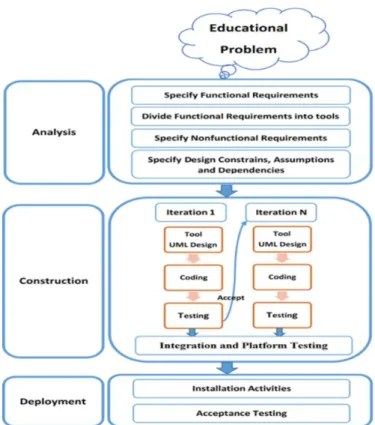
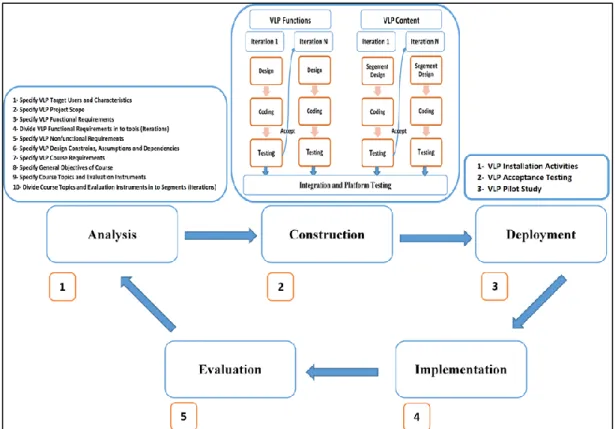
We also propose an educational software development process, especially for designing and producing the VLP by integrating some features from software engineering (SE) into the traditional ID framework. The proposed process contains the next five phases; analysis, construction, deployment, implementation, and evaluation, to develop a high-quality product with an iterative process. Based on these model and process, a new VLP software is developed with several innovative tools and special course contents to cultivate the target skills. The developed VLP consists of the following tool groups; a) Learning tools: They support online learning with interactive contents and web activities. b) Management tools: They assist the administration of online learning environment such as user management and content management. c) Communication tools: They facilitate collaboration between the students and the instructors with real-time and/or on-demand style. d) Innovative tools for OVL: They focus on the students’ skill cultivation of DPOVL with a template method. e) Evaluation tools: They simplify assessment of the students’ performance with various methods like quizzes, questionnaires, and rubric scales. f) Help tool: It guides the students to use the VLP tools through a brief explanation.
Eventually, the empirical experiment was conducted with a quasi-experimental research design
in order to evaluate the effectiveness of the proposed VLP in cultivating the skills of DPOVL.
Thirty students, who were the fourth grade of undergraduate students majoring in educational technology, Faculty of Specific Education, South Valley University, Egypt, participated in the experiment. All the students as the participants were assigned to one group as a pre- and post- test design. The data were collected by using online instruments; achievement test, performance observation card, product evaluation card, and usability questionnaire. The results indicated that the VLP had a positive impact on cultivating the following knowledge and skills with significant effectiveness; a) Attaining the knowledge regarding theoretical and practical aspects of DPOVL, b) Acquiring the skills related to a practical aspect of DPOVL, c) Producing the OVL products in the various educational domains. It was also suitable for the educational technology students to learn with the proposed VLP in a comfortable way. From these results, the VLP could provide a significant learning environment to cultivate the specific skills in DPOVL.
In conclusion, there are five main contributions of this research in the educational technology field; firstly, it proposed a new ID framework to teach the educational technology students DPOVL with the fixed format and suitable components. Secondly, it defined the list of 34 practical skills for DPOVL. Thirdly, it adopted the iteration process in designing and producing the VLP to keep the educational software high quality. Fourthly, it provided the novel VLP with the template method to learn the practical skills effectively in DPOVL. Finally, the results of the experiment showed that there was the significant difference with the large effect size between the pre-test mean scores and the post-test mean scores of the experiment group with respect to developing knowledge and skills of DPOVL. In addition, the results indicated that the proposed VLP had a positive impact in producing the OVL products in several educational domains with high mastery level. In the end, the students strongly agreed on the usability of the VLP software.
Keywords: Virtual Learning Platform, Virtual Learning Application, Online Virtual Laboratory, Skill Learning Support, Educational Technology Student.
Acknowledgements
Firstly, I would like to express my sincere gratitude to my supervisor Associate ProfessorDr.
Shinobu Hasegawa about his guidance and continual encouragement, support of my Ph.D.
research. His kindly guidance, insightful comments assisted me in all the time of research and writing of this thesis. I am very glad to become one of his students and to learn new experiences under his outstanding supervision.
I would like to thank my second supervisor Professor Dr. Hiroyuki Iida for kind support and cooperation.
Besides my supervisors, I would also like to thank all members of my thesis examination committee who assessed my Ph.D. thesis: Associate Professor Kokoro Ikeda of JAIST, external examiners Associate Professor Masukawa Hiroyuki (Shizuoka University), and Assistant Professor Kunimune Hisayoshi (Shinshu University), for their insightful comments to refine the thesis.
I would also like to thank Hasegawa Laboratory members for their helpful and cooperation, especially their comments during lab meeting.
I would like to thank my colleagues at the Educational Technology Department, South Valley University for their cooperation to conduct the empirical experiment of research smoothly.
I would like to thank, financial support of my Ph.D. research scholarship by the Egyptian Government (Cultural Affairs and Missions Sector, Ministry of Higher Education and Scientific Research) and also by Hasegawa Lab source funding.
Finally, I would like to express thankfulness to my family for encouraging me morally throughout doing this thesis and my life.
Table of Contents
Research Abstract ... i
Acknowledgements ... iii
List of Figures ... viii
List of Tables ... ix
List of Abbreviations ... x
Chapter I Introduction ... 1
1.1. Problem Statement ... 2
1.2. Research Questions ... 3
1.3. Definition of Terms ... 4
1.4. Thesis Outline ... 5
Chapter II Research Background and Literature Review ... 7
2.1. Chapter Overview ... 8
2.2. Significant Impact of VLs in Enhancement of Knowledge and Practical Skills . 8 2.3. Advantages of OVL in Improvement of Education ... 9
2.4. Current Situation of VLs Regarding Educational Technology Students ... 10
2.5. Target Students ... 10
2.6. Types of VLs ... 11
2.6.1. Online VLs (OVLs) ... 11
2.6.2. Offline VLs ... 11
2.7. Proposed General Design for the OVLs ... 11
2.8. OVLs Support Factors for Learning Process ... 13
2.8.1. OVLs as supportive tools for online courses ... 13
2.8.2. The OVLs as supportive tools for learning in the real laboratories ... 13
2.9. Paradigm Shifts in Educational Technology Field ... 14
2.9.1. Computer-assisted instruction paradigm shift ... 14
2.9.2 . Intelligent tutoring system paradigm shift ... 15
2.9.3. Interactive learning environment paradigm shift ... 15
2.10. Summary ... 15
Chapter III Proposition of Modeling for DPOVLs ... 16
3.1. Chapter Overview ... 17
3.2. Tasks of Instructors and Target Learners in OVL ... 17
3.2.1. Tasks of instructors in designing process ... 17
3.2.2. Tasks of the instructors in teaching with the OVL ... 18
3.2.3. Tasks of learners in the OVL ... 19
3.3. Proposed ID Model to Teach DPOVL for Educational Technology Students .. 19
3.3.1. OVL pre-design phase ... 20
3.3.2. DPOVL criteria phase ... 20
3.3.3. OVL design phase ... 21
3.3.4. OVL production phase ... 23
3.3.5. OVL experiment and implementation phase ... 24
3.3.6. OVL evaluation phase... 25
3.3.7. Features of DPOVL model ... 26
3.4. Suggestion Criteria for DPOVL... 26
3.4.1. Educational criteria of DPOVL ... 27
3.4.2. Technological criteria for DPOVL ... 29
3.4.3. Features of criteria DPOVL ... 33
3.5. The Proposed Practical Skills for DPOVL ... 34
3.6. Summary ... 36
Chapter IV Design and Development of Virtual Learning Platform ... 37
4.1. Chapter Overview ... 38
4.2. A Blended Model Embedding ID and SE for Developing VLP ... 38
4.2.1. Basic concept of VLP ... 38
4.2.2. Methods... 40
4.2.3. Discussion of ACDIE model ... 42
4.2.4. The proposed ACDIE model characteristics ... 45
4.3. Case Study: Developing VLP Prototype for DPOVL ... 45
4.3.1. Analysis of the VLP project ... 46
4.3.2. Construction of the VLP project ... 46
4.3.3. Deployment of the VLP project ... 49
4.4. The Relationship between VLP Development and Required Skills of DPOVL 49 4.5. The VLP System Overview ... 50
4.6. The VLP Tool Description ... 50
4.6.1. Innovative tools for the OVL ... 51
4.6.2. Learning tools ... 53
4.6.3. Communication tools ... 54
4.6.4. Evaluation tools ... 54
4.6.5. Management tools ... 55
4.6.6. Help tool... 55
4.7. VLP System Online Course Contents for DPOVL ... 55
4.7.1. Unit one: VL in education ... 55
4.7.2. Unit two: Designing the OVL ... 56
4.7.3. Unit three: Producing the OVL ... 56
4.8. Summary ... 59
Chapter V Implementation and Evaluation of Virtual Learning Platform... 60
5.1. Chapter Overview ... 61
5.2. Implementation Design ... 61
5.3. Variables of Implementation ... 62
5.4. Evaluation Instruments ... 62
5.4.1. Online achievement test ... 63
5.4.2. Online performance observation card ... 63
5.4.3. Online product evaluation card ... 63
5.4.4. Online usability questionnaire ... 64
5.5. Review and Pilot Implementation of the VLP System ... 64
5.5.1. Expert reviews for the VLP system ... 64
5.5.2. Pilot study for the VLP system ... 65
5.5.3. Acceptance testing for the developed VLP ... 66
5.6. Main Experiment... 68
5.7. Participants and Ethical Considerations... 68
5.8. Evaluation Procedure ... 68
5.9. Data Collection ... 70
5.10. Data Analysis ... 70
5.11. Results and Discussion ... 70
5.11.1. Attaining knowledge of DPOVL ... 70
5.11.2. Performing skills of DPOVL ... 71
5.11.3. Producing the OVL products ... 72
5.11.4. Usability of the VLP ... 77
5.12. Summary ... 78
Chapter VI Conclusion, Contributions, Recommendations, Limitations, and Future Work ... 80
6.1. Chapter Overview ... 81
6.2. Conclusion ... 81
6.3. Contributions ... 84
6.4. Recommendations ... 85
6.5. Research Limitations ... 85
6.6. Future Work ... 86
6.6.1. Improvement of the VLP system ... 86
6.6.2. Future vision for Egyptian educational system ... 86
References ... 88
Publications ... 94
Appendices ... 95
Appendix A: Conclusion of the VLP analysis phase ... 95
Appendix B: Test cases for the cloud storage tool as example ... 100
Appendix C: Usability test Questionnaire for the VLP ... 102
Appendix D: Achievement test for knowledge of DPOVLs ... 103
Appendix E: Performance observation card skills instrument ... 106
Appendix F: Product evaluation card for OVL product instrument ... 108
Appendix G: The VLP system screenshot ... 109
List of Figures
Figure 1. Relationship between main terms of research ... 5
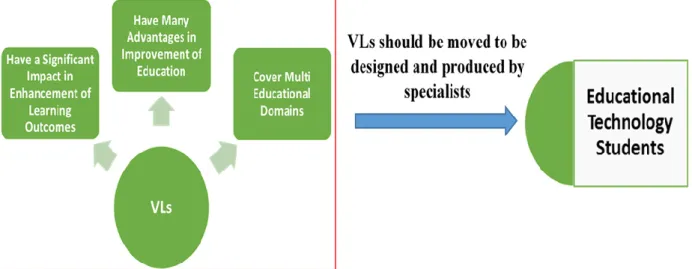
Figure 2. VLs technology transition to specialists of educational technology ... 10
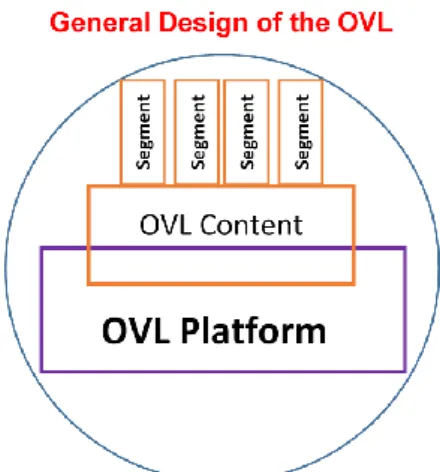
Figure 3. Suggestion to realize general design for the OVL... 12
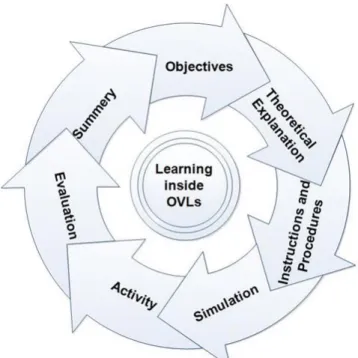
Figure 4. Idealistic learning process inside the OVLs ... 14
Figure 5. Instructional design model for DPOVL ... 21
Figure 6. Organization of OVL contents ... 23
Figure 7. Proposed SE process for VLP as a system ... 41
Figure 8. ACDIE Model for Development VLP ... 45
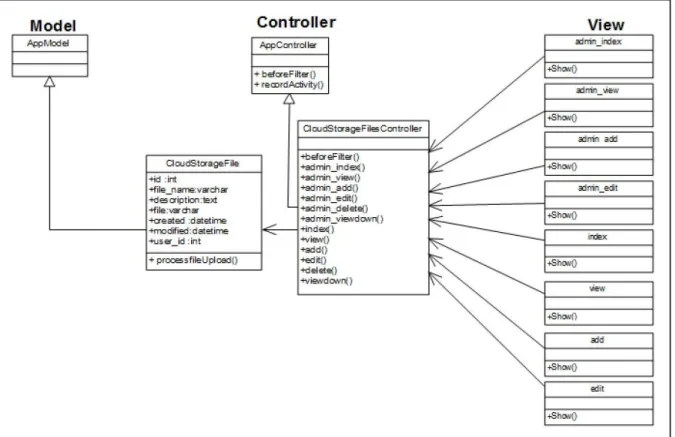
Figure 9. Description of UML design of the cloud storage tool ... 47
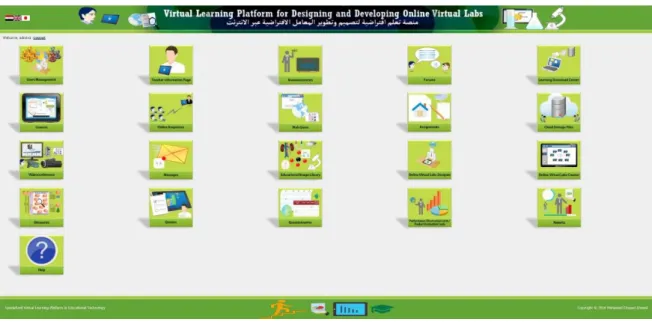
Figure 10. Instructor mode GUI of the VLP system ... 50
Figure 11. OVL designer tool screenshot for displaying OVL design and some ready-made templates ... 51
Figure 12. Template for OVL framework screenshot ... 52
Figure 13. Ready-made template for adding contents to the lesson ... 53
Figure 14. Screenshot as example for lesson four content in unit two ... 57
Figure 15. Content explanation for skill of creating a virtual experiment in the OVL ... 58
Figure 16. System login for students ... 69
Figure 17. Evaluation procedure ... 69
Figure 18. Comparison between mean of pre-test and post-test for experimental group in achievement test and performance observation card ... 72
Figure 19. Boxplot for distribution of the participants’ scores in the product evaluation card73 Figure 20. Framework of the ready-made template ... 74
Figure 21. Computer Network OVL product for one of the students who participated in the research experiment ... 76
Figure 22. Mathematic OVL product for one of the students who participated in the research experiment... 76
Figure 23. Biology OVL product for one of the students who participated in the research experiment... 77
Figure 24. Conclusion of the answers of the research questions ... 81
List of Tables
Table 1. The VLP administration tools ... 48
Table 2. Description for the OVL course contents ... 49
Table 3. Implementation design of research ... 61
Table 4. Variables of the research ... 62
Table 5. Experts’ evaluation questionnaire results for the VLP based on item per number of the experts ... 64
Table 6. Percent agreement for pilot study participants performance ... 66
Table 7. Percent agreement for pilot study participants products ... 66
Table 8. Acceptance testing questionnaire results for the VLP ... 67
Table 9. Comparison between the mean of pre-and post-test for the experimental group in the achievement test and the performance observation card. ... 72
Table 10. Comparison between participant’s scores on the product evaluation card and criterion score of the mastery level ... 73
Table 11. Classification of the number of the OVL products by subject domain. ... 74
Table 12. Classification of the OVL products by educational stage. ... 75
Table 13. Usability testing questionnaire results for the VLP based on item per the number of the participants ... 77
List of Abbreviations
ICT Information and Communication Technology
VLP Virtual Learning Platform
VLs Virtual Laboratories
OVLs Online Virtual Laboratories
DPOVLs Designing and Producing Online Virtual Laboratories
ID Instructional Design
ADDIE Analysis, Design, Development, Implementation, Evaluation
SE Software Engineering
UML Unified Modeling Language
LMSs Learning Management Systems
ACDIE Analysis, Construction, Deployment, Implementation, Evaluation
MVC Model-View-Controller
M Mean
SD Standard Deviation
DF Degree of Freedom
SPSS Statistical Package for the Social Sciences
Min Minimum
Max Maximum
Chapter I Introduction
1.1. Problem Statement
In the twenty-first century, the technological revolution has made a great positive impact on diverse fields including education. Therefore, ICT becomes one of the essential elements of any educational systems/curriculums in recent years. This impact leads to the emergence of the numerous applications of technology in education, such as E-learning, distance learning, virtual learning, and mobile learning. In particular, it is noticeable that some educational systems have expanded using virtual learning applications such as virtual learning systems, virtual classrooms, and virtual laboratories (VLs) in schools and universities. These applications have common advantages about overcoming learning constraints of time and place, enhancing traditional learning, and sufficient and repeatable training.
The VLs are considered as a new ICT application for improving education. This application has many advantages regarding aspects of economic for lower costs and maintenance, rich laboratory equipment, safety for harmful and dangerous experiments, sufficient learning environment, support of real laboratories, motivation for learners, understanding clearly without ambiguity, interactivity in the learning, accessibility via internet remotely, creation by testing new variables, and integration with online courses in the same learning environment.
Diverse empirical previous studies also addressed the VL technology in various fields of science (Finkelstein et al., 2005; Yang & Heh, 2007; Zacharia, 2007; Sun, Lin, & Yu, 2008;
Tüysüz, 2010; El-Sabagh, 2011; Herga & Dinevski, 2012; Kollöffel & de Jong, 2013; Bajpai, 2013; Lampi, 2013; Cheesman et al., 2014; Mutlu & Şeşen, 2016). These studies confirmed significant and positive impacts of the VL technology like offline and online VLs in enhancing the attainment of knowledge and practical skills for target learners.
In order for educational technology students, who are responsible for next generation education, to apply such technology in actual classroom education, they need to have the skills in designing and producing the OVL (DPOVL) products. In this context, the OVL is considered as a web-based environment which includes virtual experiments for alternatives to real laboratory experiments, invisible phenomenon, and skills or concepts related to the specific educational course. The students have potentials for implementing such technology in the future schools and universities. Moreover, the ideal academic programs at their universities should offer the class of how to design, develop, utilize, combine, and evaluate modern ICT applications for improving education. However, there is no class for learning the DPOVL skills from a technological point of view because it takes long time to update the current academic programs in the educational technology departments, especially in Egypt, with recent ICT
applications like DPOVL. Thus, this kind of the skills becomes one of the weak points of the educational technology students in the era of E-learning.
In response to this problem, an instructional design (ID) model will be proposed to teach the DPOVL skills to the educational technology students in a scientific way. Also, the practical skills for DPOVL will be offered. Moreover, a new virtual learning platform )VLP( as an educational technology solution with specific features and contents will be developed to enhance the students’ DPOVL skills in a standard way. In the context of this research, the VLP means a web-based learning system including several functions/tools for presenting and managing the OVL. Furthermore, the developed VLP will be investigated experimentally through practical use by the undergraduate educational technology students to assess its effectiveness and to confirm its usability.
1.2. Research Questions
This research is prompted by the following driving questions:
1. What is an ID model which can guide the educational technology students in DPOVL?
One of the essential points is there is no ID model for DPOVL. Thus, this research focuses on proposing an ID model. In this context, the ID model means an educational framework which includes organized steps in order to guide specific users like the educational technology students to construct specific educational products like the OVL. This research question will be approached by analyzing some previous studies related to the OVL, and ID models to specify main features of the proposed model.
2. What are the suitable practical skills for DPOVL?
The lack of the list of general practical skills for DPOVL makes this research focus on proposing the suitable DPOVL skills for multi-educational domains in a standard way. This research question will be answeredby specifying these skills according to researcher’s envision and embedding it into the tools and the contents of the VLP system.
3. How to develop the VLP for cultivating the DPOVL skills of the educational technology students?
There is no educational technology solution to cultivate the DPOVL skills. Thus, this research concentrates on developing the VLP with some specific tools and educational contents for DPOVL. The proposed VLP realizes skill learning which needs appropriate experiential training with a fixed form for the novice students. This research question will be accomplished through proposing a blended software development process integrated between ID and
software engineering (SE). Then, the proposed educational software development process will be used in developing the target VLP.
4. How effective is the VLP for the educational technology students?
There is no evidence for the effectiveness of the proposed VLP in cultivating the DPOVL skills of the educational technology students. Thus, this research exams the actual impact of the VLP in improving the target skills. This research question will be conducted by empirical experiments. The finding data of the pre- and post-test of the experimental research group will be collected, analyzed, and compared to answer this research question. Another reason for this question is there is no evidence for the student's usability of the proposed VLP in cultivating the target skills. Thus, this research also focuses on detecting the student’s attitude to some usability elements regarding the developed VLP. The finding data of the experimental research group will be collected after learning with the VLP and analyzed to answer this research question.
1.3. Definition of Terms
In this research, there are some specific terms defined as below:
Online Virtual Laboratory (OVL): It is an online environment which includes some tools and virtual experiments for alternatives to real laboratory experiments, invisible phenomenon, skills, and concepts related to the specific educational course. We suggest each virtual experiment in the OVL consists of educational objectives, theoretical explanation, instructions and procedures, simulation, activity, evaluation, and a summary.Thus, it makes learners active through learning by experience and by trial-and-error, participating on not only virtual experiment but also discussion forums and quizzes.
Virtual Learning Platform (VLP): It is a Web-based system that contains several educational tools. Some of them make instructors create, manage and deliver online courses, activities, formative and summative evaluation to teach the students in ICT classroom or online learning at anytime and anywhere. Others enable the students to create and manage their own OVLs.
Skills of Designing and Producing OVL (DPOVL): In this research, the skills mean the practical ability of the educational technology students in DPOVL using the proposed VLP and some software such as Adobe Photoshop and Animate.
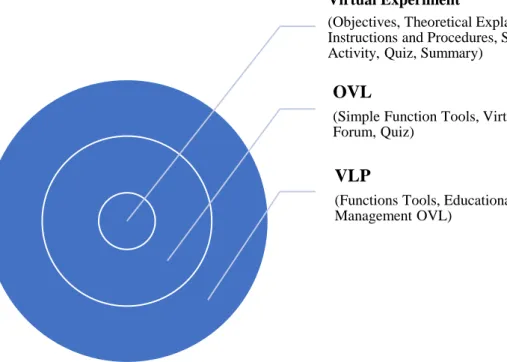
The relation among these terms as described in Figure 1 shows that the VLP offers essential services for the students, in particular for establishing and managing the OVL components like virtual experiments, forums, and quizzes.
Figure 1. Relationship between main terms of research
1.4. Thesis Outline
This thesis is split into six chapters as follows:
Chapter one, as shown above, presented an introduction of this research. First of all, it described the problem statement of the research in the field of educational technology. Then, it discussed the research questionsand explained the main terms of the research. Finally, it stated the whole outline of the dissertation.
Chapter two will focus on presenting viewpoint of the literature and the role of the VL technology in the enhancement of the learning process. Also, it will explain the relationship between the VLs and the specialist students in the educational technology field. Furthermore, it will define target students and VL types. Moreover, it will claim a standard wayfor DPOVL and the OVL’s influence in coming education. Finally, it will present major educational technology paradigm shifts.
Chapter three will focus on providing a guide to the educational technology students for learning DPOVL. It will discuss the proposed ID model for DPOVL. Furthermore, it will claim main practical skills of DPOVL. It will present responses for the first and second research questions; RQ1: What is an ID which can guide the educational technology students in
Virtual Experiment
(Objectives, Theoretical Explanation, Instructions and Procedures, Simulation, Activity, Quiz, Summary)
OVL
(Simple Function Tools, Virtual Experiment, Forum, Quiz)
VLP
(Functions Tools, Educational Content, Management OVL)
DPOVL? RQ2: What are the suitable practical skills for DPOVL?
Chapter four will focus on how to design and develop the VLP as an educational technology solution. It will discuss SE technology for developing the VLP, which is combined with traditional ID model with prototyping and iteration. It will present a response for the third research question; RQ3: How to develop the VLP for cultivating the DPOVL skills of the educational technology students?
Chapter five will focus on the implementation and evaluation of the VLP system with the educational technology students. It will describe implementation aspects and main experiment and present the results and discussion of the evaluation.It will present a response for the fourth research question; RQ4: How effective is the VLP for the educational technology students?
Chapter six will describe a conclusion for overall research findings according to the research questions, research contributions to knowledge and recommendations, research limitations, and future work.
Chapter II Research Background and Literature Review
2.1. Chapter Overview
This chapter aims to present research background and related work of VL technology. The chapter presents discussion for VLs as a modern technology for improving the learning process, especially the OVL. It explains the significance of the OVL for the students in the educational technology field. It claims the standard way for DPOVL and the OVL influence in coming education. Finally, it presents some of the major paradigm shifts in educational technology related to ICT evolution.
2.2. Significant Impact of VLs in Enhancement of Knowledge and Practical Skills The VLs are one of the important learning applications in developing modern education. The VLs work as an alternative solution for real laboratories since the VLs overcome several restrictions about equipment, cost, and risks of experiments. In addition, the VLs provide the students with sufficient training opportunity for the experiments because of time and economic efficiency. In recent studies, the VLs have gained considerable attention in improving education, especially in supporting practical learning. (Chu, 1999) claimed that the VL provided simulations of complicated scientific processes that were less likely to be demonstrated in the real laboratory. Furthermore, (Tatli & Ayas, 2012) confirmed the VLs enriched the students’
experiences as a supportive factor to the real laboratories.
On the other hand, recent empirical studies which addressed VLs have confirmed the major impact in enhancing the practical skills and achievement of students in various fields of science across educational stages. For example, physics academic achievement and process skills of tenth graders (Yang & Heh, 2007), conceptual understanding for electric circuits of undergraduate students (Zacharia, 2007), conceptual knowledge for electric circuits and procedural skills of secondary vocational engineering education (Kollöffel & de Jong, 2013), concepts of photoelectric of undergraduate students (Bajpai, 2013), science learning for elementary school students (Sun, Lin, & Yu, 2008), conceptual understanding and science process skills of fourth grade primary school students (El-Sabagh, 2011), achievement level and attitudes towards chemistry of high school students (Tüysüz, 2010), knowledge in chemical topics of seventh grade elementary pupils (Herga & Dinevski, 2012), chemistry scientific process skills of first grade pre-service science teachers’(Mutlu & Şeşen, 2016).
As outside fields of science, there are diverse studies such as computer networking skills (Lampi, 2013), pharmacology education regarding student’s confidence and skills in the real laboratory in addition to decreasing experimental accomplishment times (Cheesman et al.,
2014). Based on this analysis of the previous studies, the VLs have been approved that it has a valuable impact on learning process.
2.3. Advantages of OVL in Improvement of Education
The OVLs are characterized by many advantages as modern methods in developing educational process. Some previous studies presented several advantages of the VLs such as (Herga &
Dinevski, 2012), (Rajendran, Veilumuthu, & Divya, 2010), and (Chan & Fok, 2009). Now, we have organized and added these advantages from the improvement of learning point of view as follows:
1. Economic: The OVLs are low in costs of equipment and tools because preparation and maintenance of equipment in the virtual form are easier than the real laboratories.
2. Richness: The OVLs offer rich environments with the kits and tools with information through linking to particular websites.
3. Safety: The OVLs provide safe environments, particularly regarding the danger and harmful experiments.
4. Sufficiency: The OVLs supply sufficient and repeatable training environments for experiments like “learning by doing,” which lead to mastery in learning.
5. Enhancement: The OVLs help the learners in improving their performance regarding experiments, equipment, and tools in the real laboratories.
6. Motivation: The OVLs cause excitement in learning to the learners by interactive simulation about reality and theoretical ideas, which encourage to continue their learning process.
7. Understanding: The OVLs facilitate the learners to reach a high level of understanding especially in practical experiments, concepts, laws, rules, relationships, processes, and ideas in various courses.
8. Interactivity: The OVLs serve interactive environments to the learners with not only the OVL contents but also the instructors and other learners.
9. Accessibility: The OVLs provide diverse contents to the learners anytime and anywhere.
10. Creation: The OVLs offer the possibility of original experiments by testing new variables on the virtual representation of some theoretical ideas, which conduce to creativity in learning.
11. Integration: The OVLs work to enhance the online courses through offering practical part of the course.
2.4. Current Situation of VLs Regarding Educational Technology Students
Despite the valuable impact in multi-domains and the advantages of the OVL technology for the learning process, the current students who study in educational technology departments do not have skills in DPOVL as a new ICT application in education. There are a couple of barriers to teach such skills as follows; at first, there are no suitable educational contents for standard skills in DPOVL without dependence on educational domains. Secondly, there are also no online tools which help the students learn the skills without technical and programming difficulties. The ideal situation is to move the VL technology, especially, the OVLs to be designed and produced by specialists in educational technology to become an ICT tool in future schools and universities as shown in Figure 2.
One of the major difference from the traditional learning is mainly to target not knowledge but cognitive/technical skills. In this context of the research, the knowledge-based learning means achievement of knowledge about both of theoretical information and practical skills regarding specific learning topics of DPOVL. On the other hand, skill based learning intends to provide sufficient training materials for cultivating the target skills in DPOVL of the educational technology students. Furthermore, these skills should be performed practically by the students.
2.5. Target Students
The target students of this research are the educational technology students as the next generation of specialists and responsible persons for ICT in education. The main aim of educational technology field is to enhance and support education by ICT. The students in the
Figure 2. VLs technology transition to specialists of educational technology
department of educational technology typically learn how to integrate ICT in education, according to educational theories and principles, instructional design, and other perceptions of educational sciences. The academic programs in their universities usually include learning how to design, develop, utilize, combine, and evaluate the modern applications of ICT in order to improve education. Therefore, these students have potentials to be responsible for implementing such technology in the future schools and universities after graduation as instructional designers, content developers, computer and information technology instructors, and specialists for educational technology.
2.6. Types of VLs
2.6.1. Online VLs (OVLs)
This kind of the VLs provides virtual environments in the form of the website via the internet.
Therefore, the learners can learn skills, real experiments, and theoretical ideas about the courses practically anytime and anywhere. Also, they interact with not only the contents through interactive simulation but also the instructor and their colleagues through some communication tools. Such OVLs also provide them with many information offered by external website links.
2.6.2. Offline VLs
This type of the VLs is available in the form of specialized software which contains menus and tools in a specific field. After setting up the VL program on the computer, the learners can conduct experiments to obtain practical skills. This type sometimes needs much time in designing and producing the program package and is now limited to specific practical fields, for example, ChemLab (“Model science software products - model ChemLab,” n.d.).
2.7. Proposed General Design for the OVLs
In this section, we discuss the general elements of the VLs such as their shape and components to reach to one uniform of the OVLs suitable for multi-domains. The OVLs become one of the new ICT tools for developing learning in the schools and universities. Therefore, such uniform would help the educational technology students in DPOVL with a standard way. In order to consider the uniform of the OVLs, we have made an analysis of many fields of the previous studies which proposed not only online but also offline VLs in many areas (Yang & Heh, 2007), (Sun et al., 2008), (Tüysüz, 2010), (El-Sabagh, 2011), (Herga & Dinevski, 2012), (Tatli & Ayas, 2013), (Bajpai, 2013), (Lampi, 2013), (Cheesman et al., 2014), (Mutlu & Şeşen, 2016).
After analyzing these previous studies, we summarized the following findings:
1. The significant impact of the VL technology was to increase learning skills and educational attainment of the learners in the various fields.
2. The VL technology can be used in the teaching courses which have the real laboratory experiments and also courses which have no laboratory experiments in reality such as an invisible phenomenon and concepts.
3. There was no fixed form in designing of the VLs, especially the OVLs. Also, its components and way of organizing contents differ on each previous studies according to each field and the researchers’ suggestion.
From the results of the analysis, we decide to suggest a unique and general form of the OVL suitable to any courses/domain (not only practical but also theoretical) in educational institutions as shown in Figure 3. The suggestion is divided into the following two parts:
Fixed part: We call it OVL platform. This part is stable in any OVL. It consists of common functions such as basic user interfaces to display the OVL contents and add virtual experiments from any courses, management tools like quizzes, reports, and communications tools such as forums.
Variable part: We call it OVL contents. This part is variable according to the contents of the courses. In this section, we suggest how to organize the contents inside the OVL to become segments. Each segment should belong to one real experiment, invisible phenomenon, skill, and concept which consists of educational objectives, theoretical explanation, instructions and procedures, simulation, activity, evaluation, and summary. Such form of the general OVL would help the students for designing and producing the high-quality OVLs with a stable/standard way.
Figure 3. Suggestion to realize general design for the OVL
2.8. OVLs Support Factors for Learning Process
2.8.1. OVLs as supportive tools for online courses
The OVLs and online courses are similar in presenting something to the learners via the internet in an easy and interactive way. However, the types of these contents are quite different. The online courses typically provide e-contents with multimedia in a static form. On the other hand, the OVLs mainly serve interactive simulations for practical experiments. It means the OVLs would enhance the online courses from a practical point of view. In order to expand the availability and reusability, we sometimes implement both materials independently. The OVL environment can also integrate into the online courses as complementary learning resources.
2.8.2. The OVLs as supportive tools for learning in the real laboratories
Another role of the OVLs is to increase levels of learning in the real laboratories. The OVLs are sometimes used in blended learning where the learners can conduct training before and after experience in a real laboratory. On the other hand, they may be able to learn new simulation which has no real laboratory. In both ways of learning on the OVLs, they have to pass the following several steps to learn the contents deeply. Firstly, the learners should identify general and specific objectives in the OVLs and know the theoretical background about simulations through brief text information and instructions about how to perform the practical simulation in the OVLs without mistakes. Moreover, they begin to conduct simulation practically through many actions such as dragging and dropping items, changing values and shapes, collecting, arranging, and classifying items. They may also communicate with other learners with asynchronous tools to confirm their achievement and skills like forums. Finally, they have to make a self-evaluation through answering electronic questions and read a summary of main information of the target simulations to conclude the contents. Figure 4 shows these cyclic steps of the idealistic learning process inside the OVLs. If the learners do not acquire the target skills, they can repeat learning from the objectives step. As a result of the learning process, they would reach to the following outcomes:
1. Sufficient training about practical skills.
2. Learner’s experience related to the real laboratories’ equipment.
3. Learner’s experience related to the virtual learning environment tools.
4. Mastery of learning by training and experiencing difficult theories practically.
5. Implementation of new ideas during learning.
2.9. Paradigm Shifts in Educational Technology Field
The paradigm shifts in educational technology are linked to technological evolution. This research focuses only on major historical aspects of educational technology paradigm shifts.
These paradigm shifts are related to use a computer in education such as computer-assisted instruction (CAI), intelligent tutoring system (ITS), and the internet and web application.
2.9.1. Computer-assisted instruction paradigm shift
The emergence of computer devices and use it in the education field led to the beginning the computer-assisted instruction (CAI) as a new educational technology paradigm shift. The main theme of the CAI is to develop and utilize courseware to enhance learning in the classroom.
the CAI has emerged since the early 1960's (Teichert, 1985). By the early 1980s, the vital technological advancements had occurred that would make manner for improved and endure the CAI (Michel, 2001). According to Nazimuddin (2015), the CAI has several advantages regarding offers program can adapt to the abilities and preference of the individual learner, provides to learners the instant responsiveness of computer interactions, motivating learners to learn, and boosting independence and individual responsibility for instruction. On the other hand, the CAI has some disadvantages related to programs are costly to develop and require considerable preparation time (Zhang, Watson, & Banfield, 2007).
Figure 4. Idealistic learning process inside the OVLs
2.9.2. Intelligent tutoring system paradigm shift
Intelligent tutoring system (ITS) paradigm shift represents the subsequent development of the CAI. The ITS pointing to “any computer program that can be used in learning and that contains intelligence” (Freedman, Ali, & McRoy, 2000).
ITS have many advantages in improve education regarding individualized instruction delivery through adapt itself to becomes suitable for different categories of learners, Also using this system teaching can be accomplished with low intervention from the instructors which make it truly effective in regions where there is lack of trained instructors (Chakraborty, Roy, & Basu, 2010, p.75).
2.9.3. Interactive learning environment paradigm shift
This paradigm shift is considered as the significant change in educational technology field because it led to the emergence of several applications in education like distance learning, virtual learning, and mobile learning. Furthermore, it made an essential change for traditional teaching methods. The main features are instructional websites, Learning Management Systems (LMSs), web 2.0 applications, designing and developing new specialized VLP system to solve specific educational problems.
2.10. Summary
This chapter presented the importance of the VL technology as a new ICT tool in improving education. Also, it stated why this research suggested learning of designing and producing such technology, especially the OVLs for the specialists in the educational technology field. Then, it proposed a general design for the OVLs and presented how the OVLs support the learning process with a standard way suitable for DPOVL in multi domains. Finally, it introduced some of the major paradigm shifts in educational technology related to ICT evolution.
Chapter III Proposition of Modeling for DPOVLs
3.1. Chapter Overview
This chapter aims to propose an instructional design (ID) model as an educational framework to teach undergraduate students in the educational technology field how to design and produce the OVL. Thus, the proposed model makes the students learn the DPOVL process in a systematic way. The chapter presents discussion for modeling of DPOVL and claims the practical skills of DPOVL. It represents the responses for the first and second research questions; RQ1: What is an ID model which can guide the educational technology students in DPOVL? RQ2: What are the suitable practical skills for DPOVL?
This chapter is an updated version of work previously published in
1- Ahmed, M. E., & Hasegawa, S.: An Instructional Design Model and Criteria for Designing and Developing Online Virtual Labs. International Journal of Digital Information and Wireless Communications (IJDIWC), 4(3), 355-371, (2014).
2- Ahmed, M. E., & Hasegawa, S.: An Instructional Design Model for Designing and Producing Online Virtual Labs for Educational Technology Students. In The Third International Conference on E-Learning and E-Technologies in Education (ICEEE2014) (pp. 191-205). The Society of Digital Information and Wireless Communication, (2014).
3.2. Tasks of Instructors and Target Learners in OVL
3.2.1. Tasks of instructors in designing process
In actual education systems, the instructors would have many duties in the designing process of the OVL as the course content experts. In this part, we illustrate two types of the tasks by the instructors’ responsibility.
Some educational systems focus on qualifying the instructors to specialize in one subject. These systems also produce specialists in educational technology to collaborate with the instructors in implementing technology in the schools. In these cases, the instructors play a major role in designing the OVL regarding their teaching courses. Therefore, they must have technological skills and awareness of teaching methods using ICT. The fundamental point of their role is to participate with the specialists of educational technology in the following design steps:
1. They must decide target learners and courses.
2. They must specify teaching topics from the subjects/courses.
3. They must define the general and specific objectives and formulate the objectives
accurately.
4. They must recognize the importance and necessity of the OVL.
5. They must prepare the appropriate contents and activities for the OVL to achieve the target objectives.
6. They should consider how to organize the OVL topics logically.
7. They should select the suitable evaluation style for each topic.
The instructors in other educational systems may also have additional tasks in the designing process to combine ICT into the classroom in the absence of the specialists of educational technology in their schools. In these cases, they have to be responsible for not only designing but also producing the OVL besides teaching courses. The additional tasks are summarized as follows:
1. They must study and apply criteria for DPOVL with high quality.
2. They must design and implement the OVL platform.
3. They must design and implement the OVL contents.
4. They must publish the OVL via the internet and conduct technical tests.
5. They should perform the improvement of the OVL based on the technical tests results.
6. They should carry out training to other instructors about how to use the OVL.
3.2.2. Tasks of the instructors in teaching with the OVL
When using the OVL in teaching, the instructors also face several tasks as follows:
1. They must plan online teaching methods to reach best practice.
2. They should enhance and motivate self-learning for the learners.
3. They should do training to the learners about how to use the OVL.
4. They should plan to integrate the OVL in the real laboratory environment.
5. They should interact with the learners via the internet in synchronous or asynchronous manners.
6. They should evaluate and track the performance of the learners to continue for improvement of education.
7. They should provide enrichment activities like additional internet websites to get related information easily.
3.2.3. Tasks of learners in the OVL
In using the OVL in learning, the learners are required to fulfill the following duties:
1. They must have the ability for self-learning to the OVL contents according to their intentions and attitudes.
2. They must conduct the required activities and assignments and send them to the instructors via an electronic form.
3. They should contact the instructors and other learners through electronic learning tools such as e-mail, discussion forums.
4. They should extend creative thinking during their learning process to reach new relationships among the variables.
3.3. Proposed ID Model to Teach DPOVL for Educational Technology Students
Based on previous researches, the VL leads to promote learning by providing interactive virtual environments, which makes the learners repeat diverse activities for cultivating their skills and for accomplishing their experiments with saving costs and controlling experiment variables.
Also, the VL can apply to theoretical fields that have no real laboratories by experiencing a new simulation to understand difficult or invisible phenomena, concepts, and theories. If we intend to teach the geography of climate and weather practically, for example, we can use a VL including a simulation regarding change in weather on the map. In order to improve education by using such new technology, we should pay attention to the students in the department of educational technology as described in section 2.5. However, now they may have no ID models which guide how to design and produce the OVL because most of the previous studies about the VL focused on establishing the impact of the VL in specific fields as new ICT tools in education. In this research, an ID model is suggested to teach DPOVL to the students through a uniform shape and components. This model would guide them to reach suitable skills for DPOVL at diverse courses and fields in the future schools and universities.
In order to reach to our suggestion model, several previous studies were analyzed. Some of them confirmed the positive impact of the proposed OVL (Sun et al., 2008), (El-Sabagh, 2011), (Cheesman et al., 2014), (Yang & Heh, 2007). Others discussed some of the previous ID models such as ASSURE model (Smaldino, Russel, Heinich, & Molenda, 2005, pp. 47-73), ADDIE model (Forest, 2014), Morrison, Ross, Kalman, and Kemp model (2011), Dick and Carey systems approach model (Dick, W., Carey, L., & Carey, 2009, pp. 1-8), Alessi and Trollip design and development instructional model (2001, p.410), Gerlach and Ely systematic
approach model (1980, pp. 10-29). The results of the analysis showed the OVL had no specific and suitable ID model in teaching DPOVL as a new instructional technology product for the specialists in ICT education, especially for the students in the department of educational technology.
In light of these previous studies and literature, an ID model was proposed for DPOVL. The proposed model contains six phases, OVL pre-design, DPOVL criteria, OVL design, OVL production, OVL experiment-implementation, and OVL evaluation which lead to DPOVL step by step as described in Figure 5. We believe it is important to become widespread of teaching DPOVL in various educational institutions. The main phases of the proposed model were explained as below:
3.3.1. OVL pre-design phase
OVL pre-design is the first phase of the DPOVL model. In this phase, the educational technology students would conduct the following steps:
1. Determining the target learners of the OVL: The students would specify the target learners by defining the educational level and grade like “3rd grade of elementary schools” or “freshman year of universities level.”
2. Defining the subject for the OVL: The students would specify one course/subject which intends to be made for the OVL. The course should be selected from same grade courses/subjects of the target learners like science, mathematics, chemistry, biology.
3. Specifying the topics for the OVL: The students would choose main course topics related to real experiment or theoretical idea, theories, concept, and law.
4. Deciding the overall objectives for the OVL: The students would specify general objectives for the OVL.
3.3.2. DPOVL criteria phase
The criteria are commonly used to provide the guidelines for the students in designing and producing any ICT tools for education. The students should learn and apply the DPOVL criteria to reach to acceptable educational and technological OVL products. Therefore, the instructors of educational technology can prepare a list of criteria of DPOVL or select the available lists of the criteria prepared previously and teach it to the students.
3.3.3. OVL design phase
The fundamental role of the OVL design phase is to provide the students with the sequential stepsin order to reach general design of the OVL suitable for the multi-educational domain.
As described in Section 2.7, this research was proposed a new standard form of the OVL by dividing into the following two parts.
3.3.3.1. Designing OVL platform
This part is stable in any OVL, which contains skills for determining the OVL platform tools in light of the proposed tools of the VLP system. These skills consist of the following steps as below:
1. Determining tools of management learning in the OVL: The students determine some tools for management the OVL like report tool, and quiz tool.
2. Defining tools of communication in the OVL: The students determine some tools for communication in the OVL like forums.
3. Deciding content display tools in the OVL: The students determine some tools for Figure 5. Instructional design model for DPOVL
adding virtual experiments and displaying all the OVL contents.
3.3.3.2. Designing OVL contents
This part is variable according to the contents of the courses. In this section, we suggest how to organize the contents inside the OVL to become segments. The educational technology students may need to cooperate with a content expert in the case of difficult experiments. The students would apply the criteria of DPOVL as much as possible to the OVL contents. Such skills consist of the following steps as below:
1. Determining instructional objectives: The students would divide the general objectives of the OVL to a subgroup of educational objectives according to each topic.
2. Determining actual contents: The students would specify actual contents for the OVL topics according to selected course. The OVL contents should achieve the OVL objectives. The actual contents might include texts, digital images, computer graphics, and videos. They could use and modify existing contents to achieve the OVL objectives.
3. Organizing topics logically: The students would arrange the list of the collected topics of the OVL logically from simple to complex according to the course.
4. Determining educational activities: The students would specify the OVL activities which help the target learners to confirm their learning such as discussion forums, search on the web.
5. Determining evaluation style: The students would specify the appropriate evaluation style like electronic quizzes for the OVL contents and each virtual experiment.
6. Designing OVL virtual experiment: The students would design the OVL contents through conversion of the OVL topics into segments as virtual experiments. Each virtual experiment represents onereal experiment, skill, theory, or law as described in Figure 6.
Each virtual experiment should have an obvious title and following seven tabs:
educational objectives, theoretical explanation, instructions and procedures, simulation, activity, evaluation, and summary as follows.
a) Educational objectives: At first, the students would specify the educational objectives that the learners should acquire at the end of learning for each virtual experiment.
b) Theoretical explanation: The student would specify theoretical backgrounds for each virtual experiment such as scientific laws, rules, applications, information, and description.
c) Instructions and procedures: The students would explain the correct sequences to conduct the simulation of each virtual experiment in practice.
d) Interactive simulation: It is a vital part contained in the virtual experiment. In this step, the students specify the components of the virtual experiments such as experiment objects (images, graphics) and the aim of each object.
e) Activity: The students would specify activity for each virtual experiment such as group discussion to enhance the learners’ performance and conduct the improvement of learning outcomes and mastery of skills.
f) Evaluation: The students would specify assessment methods for each virtual experiment like a small quiz for self-assessment.
g) Summary: The students would include a summary of each virtual experiment. It makes the learners summarize the main points in the OVL virtual experiment.
3.3.4. OVL production phase
In this phase, the educational technology students begin to produce the OVL as the following steps:
1. Determining computer programs: The students first select application development environments to realize the designed OVL with high quality. The environments may support ASP, PHP, JAVA, MySQL, Adobe Animate, Cinema 4d Studio, and Unity. They can also consider ready-made web systems if available like the VLP system.
Figure 6. Organization of OVL contents
2. Developing OVL platform: After determining the environments, the students implement the OVL platform by programming or using the ready-made system to create some learning management tools and the content displaying tools inside the OVL. Also, they develop some synchronous and asynchronous communication tools.
3. Developing OVL contents: The students also produce the segments or the virtual experiments of the OVL contents such as texts, animations, images, graphics, videos, simulations, electronic questions, and activities according to the DPOVL criteria as much as possible. They should keep the segment production to harmonize with the OVL platform.
4. Publishing OVL via the internet: The students publish the OVL in the VLP system according to the course name and uploaded simulation files in the OVL via the internet.
3.3.5. OVL experiment and implementation phase
In this phase, the educational technology students begin to check the OVL and conduct actual implementation in schools and universities as the following steps:
1. Conducting technical tests for the OVL: After publishing, the OVL becomes an initial instructional product. Therefore, the students should carry out technical testing such as user interface and accessibility, navigation, robustness, database connection, and performance. Based on these results, they should fix the technical errors of the initial OVL.
2. Making preliminary OVL experiments with some target learners: The students perform a preliminary experiment of the OVL to a few target learners to receive early feedbacks regarding easy handling, difficulties, notes, and mistakes. In light of the results, they can make necessary reforms, and it becomes a final version of the OVL.
3. Making training of the OVL: Training on how to use such new technological resources contributes to increasing the OVL efficiency. Thus, they conduct training for the instructors about how to use the OVL tools as online teaching skills, to perform training for the learners about how to access, navigate, use the OVL tools, and to conduct their assignments electronically.
4. Applying actual target learners: In this step, the instructors can use the OVL actually in teaching in the classrooms as an instructional technology tool to start an online teaching session with the target learners, to make discussion, to present replies for the learners’
inquiries, to receive assignments from the learners, and to offer feedbacks from the
performance of the learners.
3.3.6. OVL evaluation phase
OVL evaluation phase presents the learners’ main indicators about learning inside the OVL and quality of the designing process as a whole of the OVL. The students need to make improvements permanently in the systematic process based on the results of the evaluation. At this phase, they would use two types of evaluation.
3.3.6.1. Formative evaluation
Formative evaluation for every part of contents: The instructors conduct a formative evaluation during the actual learning process with the OVL final product. Therefore, they should implement it as electronic questions or questionnaires in every segment (virtual experiment) of the OVL contents. The results of this evaluation provide the following feedbacks about revisions and modifications of the OVL contents to the target learners, the learners’ progress in achieving the objectives inside the OVL to the instructors, and the level of performance to the learners in order to motivate them in continuing in their learning process.
Formative evaluation for every phase:The students also perform a formative evaluation after each phase during the design process under the supervision of the teaching staff in educational technology department to improve the DPOVL model. They can use some tools such as evaluation forms, reports, and checklists.
3.3.6.2. Summative evaluation
Summative evaluation for the OVL learning process: The summative evaluation would be conducted at the end of the learning with OVL final product. This evaluation provides one of the main indicators of the learning process, the learners’ level, and instructors’ performance inside the OVL. The students can use some evaluation tools such as interviews, quizzes, and questionnaires.
Summative evaluation for the OVL designing process: The students need to detect the negative and positive aspects of the whole of the DPOVL model at the conclusion of the project. They use some evaluation tools like evaluation forms, questionnaires, and interviews with the instructors and the target learners. They carry on such evaluation under the supervision of the teaching staff in educational technology departments. The results would improve the OVL design process continuously.
3.3.7. Features of DPOVL model
In the proposed DPOVL model, we skip the analysis phase since the students do not need to make analysis before DPOVL. First of all, the analysis is a difficult phase since they need some experience in the actual classroom. Also, the target learner’s characteristics are defined by the usual courses in the schools and universities. Our model also provides the instructors and the learners with enough technological training for using the OVL. Thus, they do not need to focus on the learner and instructor analysis. The instructional designer and the actual instructor can specify the content parts like real experiment, skill, concept, and idea directly according to their experience in teaching the courses on the OVL. It means they do not need course analysis, too.
On the other hand, we add the OVL pre-design phase as the first one. Thus, it would make useful inputs for the OVL designing phase. Our model also focuses on the DPOVL criteria phase because the criteria are vital to guide them for DPOVL with high efficiency. The professors of the educational technology can prepare or select any criteria in this phase. We divide the OVL design phase into two parts. The OVL platform is a fixed part in any OVL, which contains a group of tools to make management of learning and to provide the learners with multi-communications with the instructors and the contents. On the other hand, the OVL contents are variable parts according to the courses, which are divided into the segments. Each segment represents a virtual experiment which belongs to one real experiment, skill, concept, or idea to improve learning. Such segments also have the possibility for reuse in another OVL, especially simulation. These parts would make the model general and suitable for diverse domains. In the OVL production phase, we do not specify application development environments to produce the OVL so that they can select anything freely. In OVL experiment and implementation phase, we claim two ways of the experiment as the technical and the preliminary test. The results of the OVL evaluation phase would make the students improve the OVL in a systematic process. The model components in all phases offer the students the sequential steps to make them simple and efficient. Finally, the main original aspect of the DPOVL model is to present a new standard design form suitable for DPOVL in multi- educational domains.
3.4. Suggestion Criteria for DPOVL
This research also presented the latest version of the criteria list for DPOVL to be easier in teaching the model directly to the students. The criteria aim to reach modern educational and technical principles by providing guidelines. Consequently, we make a derivation of some
elements for the criteria from the previous studies regarding to the VL (Cagiltay, Aydin, Aydin, Kara, & Alexandru, 2011), (Padman & Memon, 2002), (Hristov, Zahariev, Bencheva, & Ivanov, 2013), (Li, Zheng, & Zhong, 2010), (Darrah, Humbert, Finstein, Simon, & Hopkins, 2014), and criteria for e-learning technologies, qualification, and evaluation (Shee & Wang, 2008), (Hsu, Yeh, & Yen, 2009), (Ardito et al., 2004), (Holt & Segrave, 2003), (Jung, 2011), (Wu &
Chen, 2013), (Pike & Huddlestone, 2006), (Thomas, 2001). In addition, other elements of the criteria are picked up from designing online electronic courses, developing e-contents, evaluating instructional websites (Büyüközkan, Arsenyan, & Ertek, 2010), (Ghirardini, 2011), (Çelik, 2012), (Teng et al., 2004), (Wright, 2003), (Hasan, 2014), and (Eristi, Sahin-Izmirli, Izmirli, Firat, & Haseski, 2010), and general aspects of educational technology (Southern Regional Education Board [SREB], 2009), (SREB, 2008).
Although there are diverse types of the previous studies, the elements of the criteria were divided into two parts; educational criteria of DPOVL and technological criteria of DPOVL.
The one part is mainly related to educational rules and theories. Another part is technical standards related to the computer software. The criteria contain diverse specific elements related to the OVL.
3.4.1. Educational criteria of DPOVL
The educational criteria of DPOVL have some instructional items that may guide the educational technology students to design the acceptable OVL environment. In this aspect, there are five main sections.
The first aspect is related to design the OVL objectives as follows.
1. It should be specified clearly.
2. It should be linked to the OVL contents.
3. It should be formulated in the behavioral form.
4. It should be measurable and appropriate for the OVL target learners.
5. It should be shown at the beginning of each OVL content.
6. It should be described as not learning activity but learning outcomes.
7. It should be arranged in a sequence according to expectations of the learning outcomes.
The second aspect is related to E-contents of the OVL. It mainly helps to provide acceptable design contents of the OVL as follows.
1. It should be directly related to the educational objectives.