• 検索結果がありません。

EXPERIMENTAL STUDY ON MITIGATION OF LIQUEFACTION-INDUCED GROUND DEFORMATION BY USING GRAVEL AND GEOSYNTHETICS

N/A
N/A
Protected

Academic year: 2021

シェア "EXPERIMENTAL STUDY ON MITIGATION OF LIQUEFACTION-INDUCED GROUND DEFORMATION BY USING GRAVEL AND GEOSYNTHETICS"

Copied!
108
0
0

読み込み中.... (全文を見る)

全文

(1)

EXPERIMENTAL STUDY ON MITIGATION OF

LIQUEFACTION‑INDUCED GROUND DEFORMATION BY USING GRAVEL AND GEOSYNTHETICS

著者 ヘンドラ セティアワン

著者別表示 Hendra Setiawan journal or

publication title

博士論文本文Full 学位授与番号 13301甲第4835号

学位名 博士(工学)

学位授与年月日 2018‑09‑26

URL http://hdl.handle.net/2297/00053082

doi: 10.2208/jscejseee.73.I_704

Creative Commons : 表示 ‑ 非営利 ‑ 改変禁止 http://creativecommons.org/licenses/by‑nc‑nd/3.0/deed.ja

(2)

DISSERTATION

EXPERIMENTAL STUDY ON MITIGATION OF

LIQUEFACTION-INDUCED GROUND DEFORMATION BY USING GRAVEL AND GEOSYNTHETICS

Graduate School of

Natural Science and Technology Kanazawa University

Division of Environmental Design

Student ID Number: 1524052018 Name: Hendra Setiawan

Chief Advisor: Prof. MIYAJIMA Masakatsu

Date of Submission: June 2018

(3)

EXPERIMENTAL STUDY ON MITIGATION OF LIQUEFACTION-INDUCED GROUND DEFORMATION

BY USING GRAVEL AND GEOSYNTHETICS

砕石とジオシンセティックスを用いた液状化による地盤変形 の抑制に関する実験的研究

金沢大学大学院自然科学研究科 環境デザイン学専攻

Student registration No.: 1524052018

Name: Hendra Setiawan

Supervisor: Prof. MIYAJIMA Masakatsu

(4)

i

SUMMARY

Soil liquefaction has been observed during past major earthquakes, and in several occurrences, it caused extensive damage. Its devastating effects sprang to the attention of engineers since 1964 by the catastrophic earthquake in Alaska, US, and followed by the Niigata earthquake, Japan.since these two devastating earthquakes, liquefaction has been studied extensively by engineers around the world, especially in the earthquake-prone countries. There are frequent reports regarding the damage to the constructions in the previous earthquakes, such as the 1964 Niigata earthquake Japan (Ishihara and Yoshimine, 1992; Bhattacharya et el., 2014), 1995 Great Hanshin earthquake Kobe Japan (Tokimatsu and Asaka, 1998), 1999 Chi-Chi earthquake Taiwan (Chu, et al., 2004), 2010 Chile earthquake (Verdugo and Gonzalez, 2015), 2011 Tohoku Pacific earthquake Japan (Tokimatsu,et al., 2012; Miyajima, 2013), 2010-2011 Christchurch earthquake New Zealand Potter, et al., 2015), 2015 Nepal earthquake (Gautam et al., 2017), and the 2016 Kumamoto earthquake Japan (Bhattacharya et al.,2018).

Ground deformation is one of the unpleasant forms of liquefaction. Mainly, ground deformation caused by liquefaction could be observed in two different configurations, namely horizontal ground movements and vertical ground displacements. These two liquefaction-triggered ground displacement may cause massive damage to constructions built on it.

Lateral spreading is the term used to state the liquefaction-induced horizontal movements of the ground that mainly appears in the gently sloping ground. When lateral spreading appears, the ground rips, opening surface cracks and fissures across the slope. In the previous earthquake, lateral spreading has forced damages to engineering structures, for example, as reported by Motamed and Towhata (2010) in the 1964 Niigata earthquake, the 1983 Nihonkai-Chubu earthquake, and the 1995 Kobe earthquake.

Furthermore, soil liquefaction also decreases the strength of the soil. If the residual soil strength reaches the amount that is insufficient to support the constructions built above it, the settlement will occur. The magnitude of the settlement is influenced by several factors, such as peak ground acceleration (PGA) and the soil density. Occasionally, the ground composed of soils with different relative densities, the imbalanced settlement could appear.

In the severe conditions, this condition leads to extensive damages and cause significant

(5)

ii

effects on society, such as impassable roads and tilted buildings. Tokimatsu et al. (2012) presented liquefaction-induced damage to buildings in Urayasu City during the 2011 Tohoku Pacific earthquake. In contrary, it is important to keep some vital constructions such as evacuation roads and shelters still usable during earthquakes.

Over the last few decades, many methods have been suggested to alleviate the ground movements caused by liquefaction, for instance, as reported by Yoshida et al. In 2013. They clarified that the use of wooden piles could increase the resistance of the ground against liquefaction due to the increase of ground density by piling and the dissipation of excess pore water pressure along the surface of the piles. Correspondingly, Murakami et al. (2010) pointed out that, the use of the gravel and geosynthetics effectively reduced the settlement of the embankment during liquefaction. Lateral spreading of the gently sloping ground Previously, a conventional countermeasure such as cement solidification and sand compaction pile have been employed to reinforce liquefiable ground. However, since these methods are costly and complicated, its use becomes limited, and can not be widely applied, for example, constructions such as small planar roads and residential houses would not be able to afford these costly methods.

In this study, laboratory experiments were performed to investigate the effectiveness of

gravel in conjunction with geosynthetics to mitigate liquefaction-induced ground

deformation, both horizontal and vertical deformations. The performance of the proposed

methods quantitatively observed by using a sequence of 1-g shaking table test. The result of

this study will provide a recommendation regarding the effective and affordable techniques

to mitigate the ground deformation induced by liquefaction. This proposed technique is

expected to complement the existing methods and can be widely applied.

(6)

iii

ACKNOWLEDGMENTS

The achievement during my doctoral course at Kanazawa University in the last three years would not be possible without the support from many parties, including teachers, colleagues, friends, and family members.

First and foremost, I want to thank my main supervisor, Professor MIYAJIMA Masakatsu for his complete support. He with great enthusiasm, unlimited patience and full of energy has guided me in my doctorate studies, always encouraged me to solve the obstacles while I am doing my research. Thank you for your continuous support and advice. Your enthusiasm and energy made me feel that the time I passed in our laboratory was one of the best phases of my life.

I would also express my deepest thanks to my dear professors in Earthquake Engineering Laboratory; DR. IKEMOTO Toshikazu and DR. MURATA Akira for their great support, advice, and guidance during my study time.

I would like to thank the committee members of my dissertation: Professors MIYAJIMA Masakatsu, IKEMOTO Toshikazu, KOBAYASHI Shunichi, FUKADA Saiji from Kanazawa University, and Professor HASHIMOTO Takao from Kokushikan University for their helpful discussions and critical reading.

I enjoyed the environment of the laboratory, and it gave a positive influence on my study progress. Therefore, I feel I am indebted to all of my friends and colleagues particularly the liquefaction group members: Mr. SUGITA Wataru, Mr. MATSUNO Kenji, and the one and only Ms. SERIKAWA Yuko, for their helpful and support while doing liquefaction experiments. Also, I would like to thank Mr. ISHIDA Akihisa for helped me in my early time in Kanazawa. Moreover, of course, last but not least, Ustadz Rama, for created Indonesian atmosphere in our laboratory. My deepest thank also goes to my friend the members of “2015 KU-DIKTI’.

I would like to thank also Directorate of Resources for Science, Technology, and Higher Education, Ministry of Research, Technology and Higher Education of Indonesia for providing me the scholarship.

My sincerest gratitude goes out to my family for their support, encouragement, and unfailing

love throughout my life. I attribute my success to their reassuring love and sacrifice.

(7)

iv

EXPERIMENTAL STUDY ON MITIGATION OF LIQUEFACTION- INDUCED GROUND DEFORMATION BY USING GRAVEL AND

GEOSYNTHETICS

TABLE OF CONTENTS

SUMMARY i

ACKNOWLEDGMENTS iii

LIST OF FIGURES vii

LIST OF TABLES x 1. INTRODUCTION ... 1

1.1 General Remarks ... 1

1.2 An Overview of Liquefaction Phenomenon ... 2

1.3 An Overview of Liquefaction-induced Ground Displacement ... 2

1.3.1 Horizontal Ground Displacement ... 3

1.3.2 Vertical Ground Deformation ... 3

1.4 Literature Review of Current Research on Liquefaction Phenomenon and Countermeasure Method ... 5

1.4.1 The Liquefaction Phenomenon and its Occurrence in Previous earthquakes... 5

1.4.2 Liquefaction Countermeasure Method ... 7

1.5 Research Objectives and Scope ... 14

1.6 Research Significance ... 15

1.7 Thesis Organization ... 15

1.8 References ... 16

2. AN OVERVIEW OF LIQUEFACTTION-INDUCED GROUND DEFORMATION IN THE PREVIOUS EARTHQUAKES ... 20

2.1 Introduction ... 20

2.2 The 2010 Chile Earthquake ... 20

(8)

v

2.3 The 2011 Great East Japan Earthquake ... 23

2.4 The 2010-2011 Canterbury Earthquakes, New Zealand ... 25

2.5 The 2016 Kumamoto Earthquake, Japan ... 27

2.6 Discussion ... 29

2.6 References ... 29

3. THE ALLEVIATION OF LATERAL SOIL MOVEMENT GENERATED BY LIQUEFACTION BY UTILIZING GRAVEL AND GEOSYNTHETICS ... 31

3.1 Introduction ... 31

3.2 Previous Studies on Lateral Spreading Caused by Liquefaction ... 33

3.3 Laboratory Tests on Mitigation of Lateral Ground Movements Induced by Liquefaction with Gravel and Geosynthetic ... 35

3.3.1 Instruments Used in the Experiment ... 35

3.3.2 Material Properties ... 35

3.3.3 Experimental Setup ... 37

3.3.4 Pull-Out Test ... 40

3.4 Experimental Results ... 42

3.4.1 Excess Pore Water Pressure ... 42

3.4.2 Lateral Ground Movements ... 46

3.4.3 Pull-Out Test ... 51

3.5 Conclusions ... 53

3.6 References ... 53

4. THE MITIGATION OF LIQUEFACTION-INDUCED VERTICAL GROUND DEFORMATION BY USING GRAVEL AND GEOSYNTHETICS ... 55

4.1 Introduction ... 55

4.2 Previous Studies on Liquefaction-Induced Ground Settlement ... 55

4.3 Laboratory Test of the Liquefaction-induced Vertical Ground Movements ... 57

4.3.1 Material and Instrument utilized ... 57

4.3.2 Experimental Set-up ... 57

4.4 Experimental Results and Discussion ... 59

4.4.1 Pore Water Pressures ... 60

4.4.2 Acceleration ... 61

(9)

vi

4.4.2 Vertical Ground Deformation ... 64

4.5 Conclusions ... 69

4.6 References ... 70

5. CONCLUDING REMARKS ... 71

APPENDIX A ... 7 3

(10)

vii

LIST OF FIGURES

1.1 Liquefaction-induced damages ... 2

1.2 Liquefaction-induced lateral spreading in the previous earthquakes ... 4

1.3 Liquefaction-induced settlements in the previous earthquakes ... 4

2.1 Post-liquefaction settlements in the 2010 Chile earthquake ... 21

2.2 Damaged road due to lateral spreading ... 21

2.3 Collapse of the Hospital overpass ... 22

2.4 Damaged ports due to lateral spreading ... 22

2.5 Boiled sand on the road in the 2011 Great East Japan earthquake ... 23

2.6 Damages caused by liquefaction in the 2011 Great East Japan earthquake ... 24

2.7 Liquefaction-induced lateral spreading in the 2011 Great East Japan earthquake ... 24

2.8 Tilted buildings due to liquefaction-induced differential settlements... 26

2.9 Lateral spreading occurred in the 2010-2011 Canterbury earthquakes, New Zealand ... 26

2.10 Road surface cracks due to lateral spreading towards the Avon River ... 26

2.11 Buildings suffered from differential settlements due to liquefaction... 28

2.12 Damaged buildings caused by liquefaction-induced ground deformation ... 28

2.13 Lateral spreading in the river bank of Kiyama River, Akitsu Town, Kumamoto ... 28

3.1 The lateral spreading due to liquefaction during the 1995 Kobe earthquake ... 32

3.2 The lateral spreading due to liquefaction during the 2010-2011 Canterbury earthquakes, New Zealand... 33

3.3 The photograph of the instruments used ... 36

3.4 The photograph of the materials used ... 37

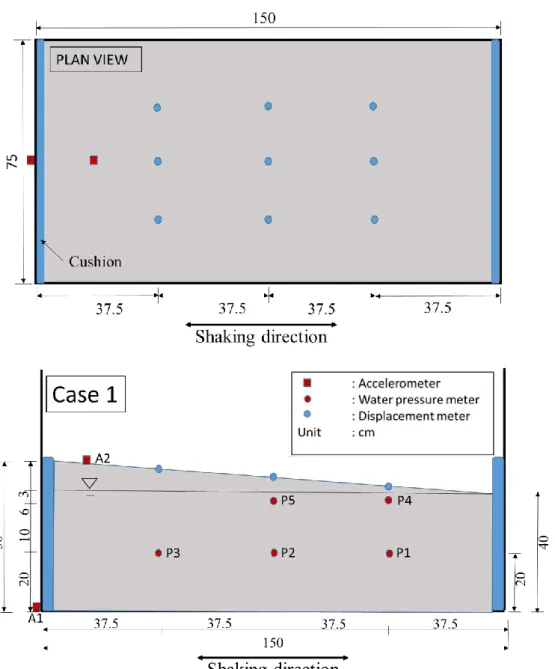
3.5 The plan view and cross-section of the unreinforced model ... 38

3.6 The side view of the reinforced models (Case 2 – Case 6) ... 39

3.7 Pull-out test set up ... 41

3.8 Instruments used in the pull-out test ... 42

3.9 Excess pore water pressure time histories for P1 ... 43

3.10 Excess pore water pressure time histories for P2 ... 43

3.11 Excess pore water pressure time histories for P3 ... 44

(11)

viii

3.12 Excess pore water pressure time histories for P4 ... 44

3.13 Excess pore water pressure time histories for P5 ... 45

3.14 Pore water pressure ratio of 5 cases for P1 – P5 ... 45

3.15 Ground surface lateral spreading measured for Case 1 ... 47

3.16 Ground surface lateral spreading measured for Case 2 ... 47

3.17 Ground surface lateral spreading measured for Case 3 ... 48

3.18 Ground surface lateral spreading measured for Case 4 ... 48

3.19 Ground surface lateral spreading measured for Case 5 ... 49

3.20 Averaged ground surface lateral spreading ... 49

3.21 Ground surface lateral spreading measured for Case 6 ... 51

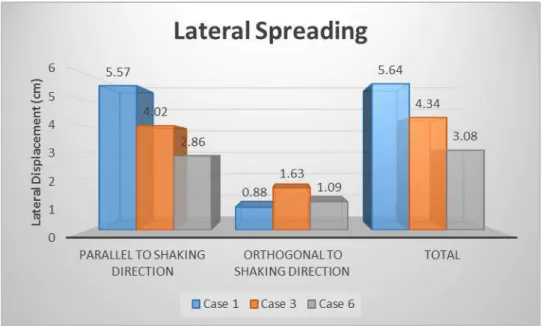
3.22 Averaged ground surface lateral spreading of Cases 1, 3, and 6 ... 51

3.23 Friction angle of the geosynthetics used ... 52

4.1 Damaged constructions due to liquefaction-induced ground displacements ... 56

4.2 The top view of the sandbox ... 58

4.3 The side view of the unreinforced ground (case 1) ... 58

4.4 The side view of the gravel-reinforced ground (Case 2)... 59

4.5 The side view of the gravel and geosynthetic (type I and II) reinforced ground (Cases 3 & 4) ... 59

4.6 Pore water pressures time histories in the loose sand condition (P1) ... 60

4.7 Pore water pressures time histories in the dense sand condition (P2)... 61

4.8 Acceleration time histories of no countermeasures ground (Case 1) ... 61

4.9 Acceleration time histories of gravel-reinforced ground (Case 2) ... 61

4.10 Acceleration time histories of gravel and geosynthetic type I-reinforced ground (Case 3) ... 62

4.11 Acceleration time histories of gravel and geosynthetic type II-reinforced ground (Case 4) ... 62

4.12 Amplification acceleration measured in the loose sand condition (A1) ... 63

4.13 Amplification acceleration measured in the dense sand condition (A2)... 64

4.14 Averaged residual vertical ground displacement ... 67

4.15 Differential settlements between the loose and dense sand zones ... 68

4. 16 The ground surface inclination angle at the border line between loose and dense sand zones ... 68

A.1 The seismology of the 2016 Kumamoto earthquake, Japan ... 74

(12)

ix

A.2 The recorded acceleration, velocity response, and response of the KMMH16

station at Mashiki town for the foreshock ... 75

A.3 The recorded acceleration, velocity response, and response of the KMMH16 station at Mashiki town for the mainshock ... 76

A.4 The residential houses damage in Mashiki town ... 76

A.5 The landslides during the 2016 Kumamoto earthquake ... 77

A.6 The fault movement during the 2016 Kumamoto earthquake ... 78

A.7 Liquefaction sites during the 2016 Kumamoto earthquake ... 79

A.8 Liquefaction-induced ground subsidence during the 2016 Kumamoto earthquake ... 79

A.9 The geologic map of Kumamoto city ... 81

A.10 J-SHIS Japan seismic hazard map... 81

A.11 Location of the field survey ... 82

A.12 Topography classification map of the surveyed sites ... 82

A.13 Measurement locus of the house ... 83

A14 The location of the surveyed area and borehole in Akitsu town ... 84

A.15 The tilt angle and tilt direction measured in Akitsu town ... 85

A.16 One of the tilted houses in Akitsu town ... 85

A.17 The lateral spreading occurred at Kiyama Riverbank, Akitsu town ... 86

A.18 The summary of the structural type and damage level of buildings in Akitsu town ... 86

A.19 The pile-supported house which experienced minor inclination in Akitsu town ... 87

A.20 The location of the surveyed area and borehole in Chikami-Karikusa towns .... 88

A.21 The location of the surveyed area and borehole in Chikami-Karikusa towns .... 88

A.22 The guiding pillar of former Chikami bridge ... 89

A.23 The inclination angle and its direction measured in Chikami town ... 90

A.24 The summary of the structure type and damage level several buildings In Chikami town ... 90

A.25 The inclination angle and its direction measured in Karikusa town ... 91

A.26 The summary of the structure type and damage level buildings

in Karikusa town ... 92

(13)

x

LIST OF TABLES

3.1 Instrument’s specifications ... 35

3.2 Index properties of materials used ... 36

4.1 Residual settlement for Case 1 ... 64

4.2 Residual settlement for Case 2 ... 65

4.3 Residual settlement for Case 3 ... 65

4.4 Residual settlement for Case 4 ... 66

(14)

1

1. INTRODUCTION

1.1 General Remarks

Liquefaction is one of the most complex and important topics in geotechnical earthquake engineering. This phenomenon has come to the attention of experts since 1964. In the previous time, liquefaction does not attract much attention since it does not cause casualties compared to the collapse of buildings and slopes failure. Furthermore, liquefaction is not considered a threat to public safety as it often occurs in areas not widely utilized by society.

In March 1964, the Good Friday earthquake (M = 9.2) occurred in Anchorage, Alaska, followed by the Niigata earthquake (M = 7.5) in Japan, in June. Both earthquakes caused serious liquefaction-induced damage, such as bridge and building failures, slope failures, and flotation of buried structures. Ever since then, studies on mechanism and prediction of liquefaction as well as countermeasure methods were initiated.

Constructions, such as roads and buildings, which built on the soft liquefiable ground, may be damaged by liquefaction during earthquakes that cause large ground deformation.

The damages that occur, among others, the tilted buildings, and the road surface deformation.

Figure 1.1 (a) shows the damaged road construction of the Joban Motorway near Mito, Ibaraki, due to liquefaction occurred in the Great East Japan Earthquake in 2011. The tilted residential house due to liquefaction can be seen in Figure 1.1 (b), which occurred in the 2016 Kumamoto Earthquake, Japan. On top of that, in the severe conditions, road surface deformation can lead to impassable roads. However, for the vital roads such as main roads, evacuation routes, it is indispensable to guarantee the accessibility of these valuable roads during earthquakes. Hence, for that reason, it is essential to restrain liquefaction-induced ground deformation by economical and easy methods.

This chapter carries a review of relevant studies. An overview of the liquefaction

phenomenon is presented in Section 1.2. In Section 1.3, the discussion is focused on ground

displacement due to liquefaction, either vertical or horizontal displacement. Section 1.4

reviews and summarizes the literature on liquefaction phenomenon, liquefaction-induced

ground displacement, and its countermeasure methods.

(15)

2

(a) (b)

Figure 1.1 Liquefaction-induced damages:

(a) The damaged road in the 2011Great East Japan earthquake (b) Tilted residential house in the 2016 Kumamoto earthquake

1.2 An Overview of Liquefaction Phenomenon

The term liquefaction, originally invented by Mogami and Kubo (1953). Seismic liquefaction occurs in the saturated loose sandy ground. During shaking, saturated cohesionless soils tend to densify, and causes excess pore pressures to increase and effective stresses to decrease with time. As a result, in a complete loss of effective stress condition, sand has neither shear strength and consequently develops large deformation.

There are frequent reports regarding the damage to the constructions due to liquefaction and ground movement in the previous earthquakes, such as 1964 Alaska America, 1964 Niigata Japan (Ishihara and Yoshimine, 1992; Bhattacharya et al., 2014), 1995 Great Hanshin Earthquake Kobe Japan (Tokimatsu and Asaka, 1998), 1999 Chi-Chi Earthquake Taiwan (Chu, et al., 2004), 2010 Chile Earthquake (Verdugo and Gonzalez, 2015), 2011 Tohoku Pacific Earthquake Japan (Tokimatsu, et al., 2012; Miyajima, 2013), 2010-2011 Christchurch Earthquake New Zealand (Potter, et al., 2015), 2015 Nepal Earthquake (Gautam, et al., 2017), and 2016 Kumamoto Earthquake Japan (Bhattacharya, et al., 2018). However, the significant liquefaction and ground deformation damage have not only occurred under very strong earthquakes, but also under moderate levels of earthquake motion.

1.3 An Overview of Liquefaction-induced Ground Displacement

The adverse effects of liquefaction take many forms, such as ground deformation. There are

some different appearances of ground deformation, for instance, lateral spreading of slightly

(16)

3

inclined ground, and settlement of the ground. These liquefaction-induced ground deformation may cause extensive damage to highways, railroads, pipelines, and buildings.

1.3.1 Horizontal Ground Displacement

Lateral spreading is the term used to refer to the development of horizontal ground displacement due to liquefaction that mainly occurs in the marginally sloping ground.

Saturated loose cohesionless soils are prone to excess pore water pressure and liquefaction during earthquakes, and consequently, lateral displacements may occur. When lateral spreading occurs, the ground tears, opening surface cracks and fissures across the slope. This type of stretching of the ground can introduce significant lateral forces into foundation elements and built structures. If the foundation is not strong enough to resist the movement, the lateral spread causes it to extend. Furthermore, lateral spreading close to a waterway can cause damage to the surrounding land and the buildings it supports. Typically, the degree of lateral movement lessens as the distance from the waterway increases.

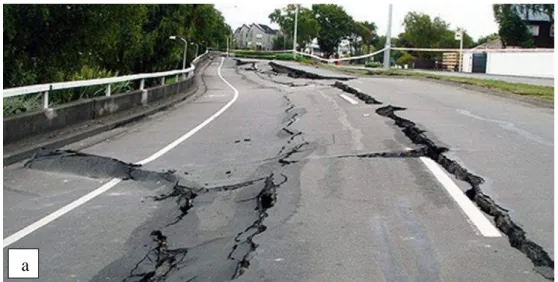
Lateral spreading has imposed damages to structures during previous large earthquakes, for instance, the 1964 Niigata, the 1983 Nihonkai-Chubu, and the 1995 Kobe earthquake (Motamed and Towhata, 2010) and the 2010-2011 Canterbury earthquakes (Cubrinovski and Robinson, 2016). Figure 1.2 (a) displays the lateral spreading that occurred along river road in Richmond, Christchurch, in the 2011 Christchurch earthquake, New Zealand (Heather and Wright, 2011). Figure 1.2 (b) shows the collapse of the Showa Bridge in Niigata after the 1964earthquake. Lateral spreading was observed in the loose sands of the riverbanks, and it is suspected that it caused the failure of the bridge (Agaiby and Ahmed, 2016).

1.3.2 Vertical Ground Deformation

Landfilled ground occasionally liquefies due to large earthquakes and triggers ground

deformation and may devastate constructions built on top of it. Liquefaction occurrence will

cause the strength of the soil to support the structure reduced. If the strength decreases to an

amount that is insufficient to hold the structure, large subsidence takes place. The magnitude

of the settlement is influenced by several factors, such as Peak Ground Acceleration (PGA)

and the relative density of the soils.

(17)

4

{{

(a) (b)

Figure 1.2 Liquefaction-induced lateral spreading in the previous earthquakes:

(a) Richmond, Christchurch, in the 2011 Christchurch earthquake, (b) the collapse of Showa Bridge in the 1964 Niigata earthquake

There are several reports related to the damage due to liquefaction-induced ground subsidence in the previous major earthquakes. For example, Tokimatsu et al. (2012) presented liquefaction-induced damage to buildings in Urayasu City during the 2011 Tohoku Pacific earthquake, and Verdugo and Gonzalez (2015) described the liquefaction-induced ground damages during the 2010 Chile earthquake. Figure 1.3 (a) shows the liquefaction- induced large-scale settlement of the approach fills at Raqui 2 Bridge during the 2010 Chile earthquake (Anon., 2011). Figure 1.3 (b) illustrates the bridge damage due to liquefaction- induced ground settlement within the fill of the approach and displacements of abutment side walls in 2009 West Sumatera earthquake, Indonesia (Kusumastuti et al., 2010).

(a) (b)

Figure 1.3 Liquefaction-induced settlements in the previous earthquakes:

(a) Raqui 2 Bridge, Chile, in the 2010 Chile earthquake,

(b) Padang, West Sumatra, Indonesia, in the 2009 West Sumatra earthquake

(18)

5

1.4 Literature Review of Current Research on Liquefaction Phenomenon and Countermeasure Method

Since 1964, when Alaska and Niigata earthquakes occurred, many researchers have studied on liquefaction phenomenon. In this thesis, the previous studies on liquefaction were classified into two groups: first, the nature of liquefaction phenomenon and its occurrence in the previous earthquake Reported, and second, the studies carried out in order to mitigate the liquefaction.

1.4.1 The Liquefaction Phenomenon and its Occurrence in the Previous Earthquakes

Hwang et al. (2003) investigated soil liquefaction during the 1999 Chi-Chi earthquake. They found that the sites where significant liquefaction occurred can be categorized as hydraulically-filled reclaimed land, riverbanks and nearby alluvial deposits, and alluvial deposits in old river channels or fans. Furthermore, on the liquefied horizontal ground, the ground subsidence and the sloping of the building largely swelled with the number of the stories, and buildings with pile foundations or underground basement suffered slight breakage.

Miyajima (2013) studied the performance of drinking water pipelines in liquefaction areas in the 2011 Great East Japan Earthquake. It is determined that the destruction level of drinking water pipeline in the filled land in Urayasu City be 1.60 cases/km, which comparable to the destruction level of pipeline buried in the reclaimed land of Kobe, Ashiya, and Nishinomiya Cities in the 1995 Kobe earthquake.

Potter et al. (2015) reported that in The 2010-2011 Canterbury earthquakes, in Christchurch,

there was major destruction to the built environment due to liquefaction. A massive quantity

of silt was ejected onto the surface. Approximately 900,000 tonnes of liquefaction silt were

removed from the greater Christchurch area and washed into waterways, increasing the

concentration of suspended sediment and causing impacts on water quality which reflected

by the high level of bacteria (Escherichia Coli) in lower reaches. The ground height was

changed in parts of Canterbury through settlement and tilting. Moreover, much of the

underground infrastructure was damaged by the movement and liquefaction which causing

lifeline failure.

(19)

6

Tokimatsu et al. (2015) conducted a field survey on building damage associated with geotechnical problems in the 2011 Tohoku Pacific earthquake and revealed conclusions as follows; 1. Liquefaction mainly appeared around Tokyo Bay and in the basin of Tone River inland areas reclaimed in relatively recent years. In some locations, grave sand boils, and ground subsidence of up to 50 cm triggered by liquefaction, leading to breakages such as the incline and the settlement of wooden and buildings reinforce with concrete on spread foundations, the uplift of underground structures and the collapses of roads. Liquefaction also caused a significant gap between pile-supported buildings and the surrounding ground, without structural damage was found in superstructures. Buildings on spread foundations having high rigidity, such as mat foundations, did not suffer structural damage to its superstructures, even when inclined.

Verdugo and Gonzalez (2015) reported liquefaction-induced ground damages during the 2010 Chile earthquake. They observed that liquefaction sites were found along the country, covering a prolongation close to 1000 km, which roughly reflects twice the size of the rupture zone. The farthest site with confirmation of liquefaction was observed at Llanquihue Lake, located at 550 km and 350 km from the epicenter and fault, in turn. Largest displacements were verified at the tip of the Arauco Peninsula, with an uplift of 1.8 m and a horizontal movement in the direction of the trench of 5.1 m.

Cubrinovski and Robinson (2016) investigated lateral spreading in 2010-2011 Christchurch earthquakes. According to their report, in these earthquakes, liquefaction appeared almost half of the urban area of Christchurch and the heaviest destruction to buildings and infrastructure was often associated with lateral spreading. The analysis, results, and interpretation of lateral spreads using measurements from detailed ground surveying at locations along the Avon River were presented.

Gautam et al. (2017) mentioned that soil liquefaction occurrence was found in the form of sand boils and lateral spreading in 12 locations during the 2015 Gorkha, Nepal earthquake.

Also, numerical analysis based on geotechnical investigation records have been performed.

Furthermore, by comparing existing vulnerability maps and their numerical analysis, together

with field verification, it is confirmed that the existing susceptibility maps are unreliable.

(20)

7

Bhattacharya et al. (2018) discovered that during the 2016 Kumamoto earthquake, liquefaction was detected along the quadrangular strip between two rivers which was an old natural river dike. This liquefaction occurrence shows the significance of carrying out appropriate and sufficient ground improvement while reclaiming the ground. Furthermore, a study of the boiled sand showed that black volcanic soil liquefied.

1.4.2 Liquefaction Countermeasure Method

Akiyoshi et al. (1993) conducted the two-dimensional finite element program NUP2 liquefaction investigation of sandy ground enhanced by sand compaction piles. The numerical and experimental study performed showed that there might exist unsteady areas in the compressed zone near the unimproved area and an optimum compaction width to counterattack liquefaction of the ground for design objectives.

Zheng et al. (1996) evaluated the performance of sheet pile-ring countermeasure against liquefaction for oil tank site using the finite element numerical model. The results show that the numerical model could reproduce the observed earthquake reactions of the tank-ring-soil system and that the excess pore water pressure and the subsidence of the tank could be considerably decreased using this proposed method.

Haeri et al. (2000) performed a laboratory triaxial compression tests to ascertain the influence of geotextile strengthening on the mechanical performance of sand by means of varying the number of geotextile layers, type of geotextiles, confining pressure, and geotextile composition. The results demonstrated that geotextile existence enlarges the maximum strength, axial strain at failure, and ductility. However, it downgrades dilation.

Alawaji (2001) observed the vertical deformation and bearing capacity of the geogrid-

strengthened sand of collapsible soil. Model load experiments were conducted using a

circular plate of 100 mm diameter and Tensar SS2 geogrids. The width and depth of the

geogrid were varied to ascertain its influences on the collapse settlement, deformation

modulus, and bearing capacity ratios. The results showed a considerable disparity in the

structural contribution of the tested geogrid which range from 95% decrease in subsidence,

2000% enlarge in elastic modulus, and 320% enhance in bearing capacity.

(21)

8

Boominathan and Hari (2002) studied the liquefaction strength of fly ash strengthened with disordered scattered fibers by conducting a series of stress-controlled cyclic triaxial experiments. The liquefaction strength is expressed regarding pore pressure ratio. The results show that the use of fiber elements enlarges the liquefaction resistance off fly ash remarkably and arrests the initiation of liquefaction even in models of the loose initial condition and consolidated with the low confining pressure.

Adalier et al. (2003) developed stone columns as liquefaction countermeasure in non-plastic silty soils by performing centrifuge investigations. The study focused on investigating the overall site stiffening consequences due to the stone column existence rather than the drainage effects. The results demonstrate that stone columns can be an efficient technique in the remediation of liquefaction-induced of nonplastic silty deposits, specifically under shallow foundations.

Orense et al. (2003) developed wall-type gravel drains as liquefaction countermeasure for underground structures. In this study, the implementation of reprocessed concrete crushed stones as gravel drain materials were measured by conducting two series of shaking table tests. The results showed that gravel drains, when appropriate grain size distribution is considered, effectively dissipate the excess pore water pressure underneath the structure, and consequently lessen the level of uplift.

Chang et al. (2004) performed a study of direct assessment of the usefulness of manufactured vertical drains in the liquefiable sand by a dynamic full-scale testing program. The effectiveness of the proposed mitigation method is evaluated experimentally by comparing the pore pressure generation, pore pressure dissipation, and vertical deformation from two reconstituted soil samples. The results showed that the drainage afforded by manufactured drains could considerably downgrade pore pressure generation, accelerate post-shaking pore pressure dissipation, and control related vertical displacement.

Takahashi and Takemura (2005) conducted centrifuge model experiments to study the

dynamic performance of a pile-supported wharf, focusing on the failure process of the piles,

the consequences of liquefaction on the permanent displacement of the wharf during

earthquakes. In the parametric study, varying the thickness of the and layer under the rubble

mound caused a change of the deformation mode of both ground and structures, and it is

(22)

9

revealed that a thicker liquefiable sand layer does not certainly trigger a larger distortion of soils and the structures.

Harada et al. (2006) developed a new drain method for protection of existing pile foundations from liquefaction effects by performed shaking table tests and on-site experiment.

They found that when the intensity of earthquake motion is 200 gal or less, generation of excess pore water pressure is lessened and the pile bending moment is diminished, but if the intensity is greater, drainage impression avoids the disappearance of subgrade response.

Moreover, drain type proposed can manage pore water pressure without blocking.

Liu and Song (2006) studied the working mechanism of cutoff walls in reducing uplift of large buried structures provoked by soil liquefaction by using the fully coupled dynamic finite element code DIANA Swandyne-II. They found that the insignificant effective unit weight of buried constructions, the generation of excess pore pressure and the flow of liquefied soil were the adequate and required conditions for buried constructions to uplift throughout an earthquake. Cutoff walls could control the flow or displacement of liquefied soils and prevent the uplift of underground structures, but they could not inevitably constrain the liquefaction of the surrounded soils.

Gallagher et al. (2007) investigated the colloidal silica treatment on the liquefaction and deformation resistance of loose, liquefiable sands during centrifuge in-flight shaking. Loose sand was saturated with colloidal silica grout and subsequently subjected to two shaking events to evaluate the response of the treated sand layer. The result showed that the improved soil did not liquefy during either shaking event.

Muntohar et al. (2008) carried out a study to mitigate liquefaction by using cement-column.

It is concluded that of cement-column installation increased the strength of the ground the column, both radially and vertically and indicated that the risk of liquefaction is reduced.

Motamed and Towhata (2010) presented experimental results of a series of 1-g shake table

tests on mitigation measures for a model consisting of 3 x 3 pile group and a sheet-pile quay

wall in which the pile group was subjected to liquefaction-induced lateral spreading. In this

study, three remedial techniques were deployed, namely sheet pile of floating type, sheet pile

of fixed end type, and anchoring the quay wall to a new pile row. The results demonstrate

(23)

10

that by applying the proposed mitigation measures the seismic performance of both pile group and quay wall can be improved, as a result of a reduction in soil displacement and velocity of soil flow.

Valsamis et al. (2010) carried out a parametric investigation of horizontal ground deformation of the gently sloping liquefied ground. In this study, the main device used is a numerical methodology occupying a bounding surface plasticity model applied in a finite difference code, which has been comprehensively confirmed against 16 published centrifuge horizontal ground displacement experiments. The results show that important problem parameters are the mean ground acceleration, the period of strong shaking, the beginning of liquefaction, the corrected SPT blowcount, the depth of the sliding plane, the slope of the ground surface and the fines content of the liquefied soil layers.

Raisinghani and Viswanadham (2011) conducted a centrifuge model study on low permeable slope strengthened by hybrid geosynthetics. In this study, four centrifuge tests have been carried out on 2V:1H at 30 gravities. One unstrengthened, one model geogrid reinforced, and two hybrid geosynthetic reinforced incline models with a varying number of hybrid geosynthetic layers were verified. It was confirmed that the hybrid geosynthetic enlarge the steadiness of low permeable slope exposed to water table rise. The hybrid geosynthetic layers in the lowest half of the slope height play an important part in the dissipation of pore water pressure.

Liu et al. (2011) observed the static liquefaction performance of saturated fiber-reinforced sand in undrained ring-shear tests. The results indicate that the undrained shear performance of fiber-reinforced loose samples is not significantly affected by the existence of the fiber, but for medium dense and dense samples, the existence of fiber affects their undrained performance.

Azzam and Nazir (2012) proposed liquefaction mitigation using lateral confinement

technique. The results demonstrated that the cell lessened the excess pore water pressure

within the confined zone and the pore water pressure alleviation outside the confined block

where the liquefaction is generated. Moreover, the maximum foundation acceleration of the

confined footing soil system is decreased compared to the case of without cell confinement.

(24)

11

Haeri et al. (2012) carried out a large-scale 1-g shake table test to ascertain the reaction of a pile group to liquefaction-induced lateral spreading. It was found that the behavior of a group of piles without pile cap in an infinite mild slope far from a free face is different from those located behind a quay wall or close to a free face were reported by other studies.

Asgari et al. (2013) performed a numerical simulation of enhancement of a liquefiable soil layer utilizing stone columns and pile-pinning methods by employing three-dimensional finite element simulations using OpenSeesPL. The results are as follows: 1) risen superstructure mass tempts an enlarge in the lateral movement and highest bending moment and a lessen in the excess pore pressure. 2) the degree of variation in highest lateral deformation with structure weight enlarges approximately as the ground slope increases. 3) for any ground slope, lateral movement boosts as peak ground acceleration enlarges and the rate of increase is greater for a small slope angle.

Caballero and Razavi (2013) conducted a study on numerical simulation of mitigation of seismic liquefaction risk by preloading and its consequences on the behavior of constructions.

The result showed that the usage of the preloading lessens the excess pore pressure generation into the soil profile and result in the reduction of liquefaction possibility when the mitigation technique is expended. Moreover, the preloading has an advantageous impact as well concerning the co-seismic relative subsidences.

Yoshida et al. (2013) reported experimental results of small-scale shaking table tests in a 1- g gravity field in order to mitigate liquefaction by using logs. It was clarified that the resistance of the ground against liquefaction was risen by using the wooden pile due to the upsurge of ground density by piling and the dissipation of excess pore water pressure along the surface of the piles. As a result, the level of subsidence of the house which was set on the improved ground by piling logs decreased.

Kang et al. (2013) researched centrifuge modeling and mitigation of manhole uplift due to

liquefaction by testing 22 dynamic centrifuge models under 20g. It was found that excess

pore water pressure is one of the influencing issues to the level of the manhole uplift. Based

on this result, it was proposed to employ the backfill compression technique by shaking the

manhole. The result shows that the uplift deformation in loose backfill was about 0.95 m,

whereas in compressed backfill was only about 0.13 m.

(25)

12

Noorzad and Amini (2014) explored the behavior of randomly distributed fibers in increasing the liquefaction durability and shear modulus of loose and medium dense sand deposits by using stress-controlled cyclic triaxial examinations. The results indicated that the fiber existence appreciably enlarged liquefaction resistance of sand samples. The reinforcement effect in medium dense samples was found to be more considerable than that of looser samples. Furthermore, the shear modulus rises with the growing of fiber content.

Yukihiro et al. (2014) measured the usefulness of crashed tile in countermeasure against liquefaction by performing shaking table experiments. It is found that liquefaction can be lessened by using proposed materials. This is proven by the manhole which was backfilled by crashed tile floated only by 1/3 of the level detected in the case of without countermeasure.

Tang et al. (2015) carried out a numerical investigation on ground improvement for liquefaction mitigation by using stone columns encased with geosynthetics. In this study, three-dimensional finite element analysis was performed to explore the mitigation of mildly sloped saturated sand strata using encased stone column approaches. The results showed that the geosynthetics-encased stone column remediation lessened more lateral deformation, compared to the stone column. The ground stiffening was also improved as the stiffness and thickness of the geosynthetics, and the diameter of the column was enlarged.

Hernandez et al. (2015) carried out laboratory experiments on the cyclic undrained behavior of loose sand with cohesionless silt and its application to assessment of the seismic performance of subsoil. They concluded that when the rise of the fines contents up to F thr

reduces the liquefaction resistance. Furthermore, by using the volume compressibility, mv, in place of SPT-N, FC reduces the liquefaction resistance of sand, and shear modulus of sand decreases as well with the progress of cyclic undrained shear.

Rasouli et al. (2015) investigated mitigation of vertical seismic deformation of light surface

constructions by the induction of sheet-pile walls nearby the foundation by carrying out a

series of 1-g shaking table tests in dissimilar groundwater levels. The results indicate that

installing sheet-pile walls in fairly low groundwater level can stop settlement of structures

completely.

(26)

13

Saez and Ledezma (2015) suggested liquefaction mitigation using secant piles wall under a large water tank by developed two-dimensional and three-dimensional numerical models.

They found that although the mitigation strategy did not considerably decrease the liquefaction-induced vertical displacement, it enforced a relatively homogeneous distribution of these settlements, leading to less structural damage.

Chen et al. (2016) performed a study on the tensile force of geogrids inserted in the pile- reinforced embankment. In this study, a full-scale high-speed railway embankment model was formed. Water bags were dispensed around pile caps to initiate a model of the subsoil.

The vertical movement of the subsoil was decided by the subsidence of the water bags. The results indicate that the spreading force of the embankment due to the embankment fill weight and the surcharge on the embankment vaguely enlarge the tensile force of the geogrid.

Furthermore, the pile-soil differential settlement can considerably affect the tensile force of the geogrid.

Miranda et al. (2017) carried out a laboratory study on the effect of geotextile encasement on the performance of the stone column. The experiments were performed in a large instrumented Rowe-Barden oedometric cell. Results showed that the vertical stress reinforced by encased columns is about 1.7 times that sustained by the non-encased ones.

Rouholamin et al. (2017) performed a research on the effect of initial relative density on the post-liquefaction performance of sand by utilizing the cyclic triaxial equipment. Results of the test indicate that the stress-strain performance of sand in the post-liquefaction stage can be formed as a bi-linear curve using three parameters: the initial shear modulus (G 1 ), critical state shear modulus (G 2 ), and post-dilation shear strain (γ post-dilation ). It was found that the three parameters are reliant on the initial relative density of sands. Furthermore, it was observed that with the growth in the relative density of both G 1 and G 2 enlarge and γ post-dilation

declines.

(27)

14

Ayoubi and Pak (2017) carried out a numerical study to determine the influence of different parameters on liquefaction-induced subsidence of shallow foundation placed on the two- layered soil. Results show that the existence of the dense layer can downgrade the settlement by up to 50% compared to uniform liquefiable layer.

1.5 Research Objectives and Scope

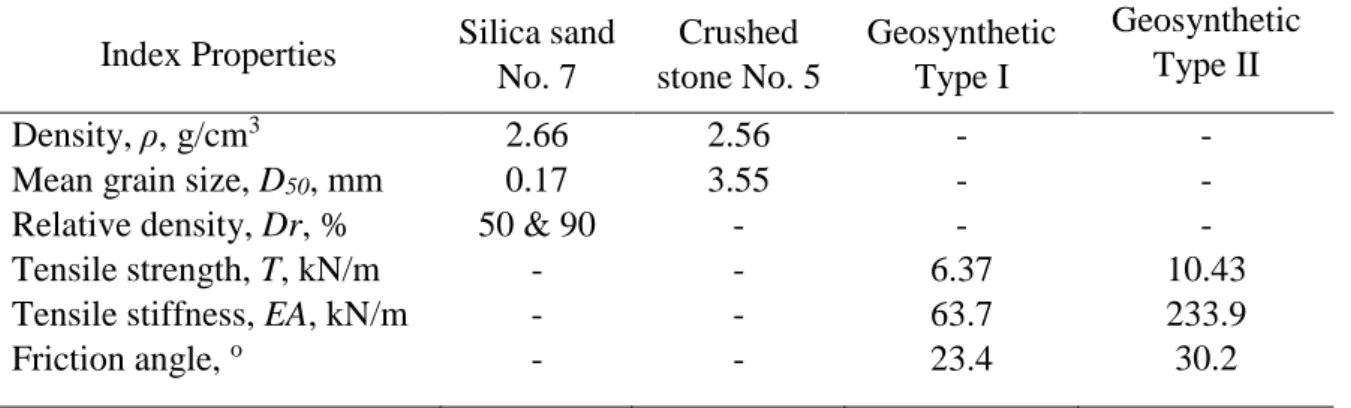
It is generally known that major earthquakes are usually followed by the occurrence of liquefaction. During past earthquakes, many important structures have been subjected to severe damage due to the deformation of the liquefied ground. Therefore, the main focus of this study is to determine the performance of gravel and geosynthetics to mitigate the liquefaction, in particular, the ground displacement triggered by liquefaction, both horizontal and vertical displacements.

In order to investigate the effectiveness of the suggested mitigation, a series of shaking table tests are carried out. The tests are performed in several different models, such as no countermeasure model, reinforced with gravel only, strengthened with geosynthetics only, and by using gravel along with geosynthetics. Through the shaking table test, parameters measured include acceleration, pore water pressures, and ground displacement. The effectiveness of projected mitigation is determined by analyzing the results obtained from the shaking table test.

Furthermore, the effectiveness of the proposed mitigation is also tested on two different ground conditions, i.e., in dense and loose conditions. The aim is to determine the performance of suggested mitigation on both soil conditions, which is the representation of soil conditions in nature. This test is also intended to be able to determine the level of success of planned mitigation to overcome the differential settlement, which often occurs in the ground due to various level of liquefaction occurrence on soils with different densities. The impacts that are often seen are the tilted building and the damage to the road surface as mentioned earlier.

Furthermore, there is also a variation on the geosynthetic used. In this study, two different

geosynthetic types, both thickness, tensile strength, friction angle, and aperture size, were

used to compare the effectiveness of the two geosynthetic types. Therefore, the pull-out test

is performed on both geosynthetic types which will be used to determine the friction angle

which has a massive influence on the effectiveness of gravel and geosynthetic use in this

mitigation. This is because the geosynthetic friction angle affects the connection between

(28)

15

geosynthetic, sand and gravel. The stronger the bonds between the three, the more coherent the reinforcement layer will lead to ground deformation reduction.

This study is expected to produce a recommended reinforcement technique that can be used effectively to overcome ground deformation due to liquefaction. The simplicity of the proposed method is also intended to allow the method to be applied to residential houses that have limited funds to address the ground deformation problem. In addition, this method is also expected to be applied to conditions where sophisticated and heavy methods are impossible to perform, such as in remote areas where it is difficult to mobilize heavy equipment, as well as densely populated residential environments where several mitigation techniques causing noise and disturbance to existing constructions around the location to be repaired.

1.6 Research Significance

Research on earthquake-related disaster mitigation, particularly liquefaction has been widely practiced previously. Up to this moment, the study of liquefaction is still intensively conducted around the world, especially in countries prone to earthquakes. This is because liquefaction is a complex phenomenon and needs to be done in a comprehensive and sustainable study. To the author's knowledge, the use of gravel and geosynthetic is specifically aimed at overcoming ground deformation including lateral spreading and settlement due to liquefaction, in particular, for detached houses or buildings, is still very rare, and continues to grow rapidly to date. The method proposed in this study has several advantages over the methods proposed by previous researchers, among others:1) more economical compared to other methods, such as vibration or sand piling, so it will be more affordable, especially if used for residential houses, where sometimes expensive and sophisticated techniques are not affordable; 2) more workable, due to it is easy to be executed;

3) less impact on surrounding environment.

Furthermore, one of the advantages of this study is the modest analysis due to the target is residential houses and people who cannot afford high costs of soil investigation. Of course, the resulting method is expected to be able to complement the previous techniques so that it can be one alternative in liquefaction mitigation.

1.7 Thesis Organization

This dissertation is organized into five chapters and delivers the findings of an investigation

of the liquefaction phenomenon and the ground deformation triggered by liquefaction.

(29)

16

The first chapter presents a general overview of liquefaction and ground displacement due to liquefaction. A summary of the previous studies carried out on liquefaction and the methods of countermeasure liquefaction is also introduced in this chapter.

The liquefaction occurrence, particularly ground deformation triggered by liquefaction in the previous earthquakes is discussed in Chapter 2.

In Chapter 3, the mitigation of horizontal ground displacement caused by liquefaction by using gravel and geosynthetics is presented. In order to determine the effectiveness of this proposed mitigation in overcoming the liquefaction-induced lateral displacement, a series of shaking table test is implemented. The testing process, the materials and instruments used, and its results which include pore water pressures, acceleration, and lateral spreading are discussed in this chapter.

Chapter 4 illustrates the experimental results and analysis of the mitigation of vertical ground displacement due to liquefaction by using gravel and geosynthetics.

In Chapter 5, the summary, conclusion remarks of this study are described. Also, recommendations for future work are presented.

1.8 References

Adalier, K., Elgamal, A., Meneses, J., and Baez, J.I., 2003, Stone columns as liquefaction countermeasure in non-plastic silty soils. Soil Dynamics and Earthquake Engineering 23 (2003), 571-584.

Agaiby, S. W., and Ahmed, S.M., 2016, Learning from failures: A geotechnical perspective.

Proceedings of the International Conference on Forensic Civil Engineering, Nagpur, India. 21- 23 January 2016.

Akiyoshi, T., Fuchida, K., Matsumoto, H., Hyodo, T., and Fang, H.L., 1993, Liquefaction analyses of sandy ground improved by sand compaction piles. Soil Dynamics and Earthquake Engineering 12 (1993), 299-307.

Alawaji, H.A., 2001, Settlement and bearing capacity of geogrid-reinforced sand over the collapsible soil. Geotextiles and Geomembranes 19 (2001), 75-88.

Anon., 2011, Post-earthquake reconnaissance report on transportation infrastructure: Impact of February 27, 2010, offshore Maule earthquake in Chile. Available at:

https://www.fhwa.dot.gov/publications/research/infrastructure/structures/11030/005.cfm.

Accessed at 4 May 2018.

Asgari, A., Oliaei, M., and Bagheri, M., 2013, Numerical simulation of improvement of a liquefiable soil layer using stone column and pile-pining techniques. Soil Dynamics and Earthquake Engineering 51 (2013), 77-96.

Ayoubi, P. And Pak, A., 2017, Liquefaction-induced settlement of shallow foundations on two- layered subsoil strata. Soil Dynamics and Earthquake Engineering 94 (2017), 35-46.

Azzam, W.R. and Nazir, A.K., 2012, Liquefaction mitigation using lateral confinement technique.

Hindawi Publishing Corporation, Advances in Civil Engineering, Vol. 2010, Article ID 538274.

(30)

17

Bhattacharya, K., Tokimatsu, K., Goda, K., Sarkar, M., Shadlou, M., and Rouholamin, M., 2014, Collapse of Showa Bridge during 1964 earthquake: a quantitative reappraisal on the failure mechanisms. Soil Dynamics and Earthquake Engineering, Vol. 65, October 2014, 55-71.

Bhattacharya, S., Hyodo, M., Nikitas, G., Ismael, B., Suzuki, H., Lombardi, D., Egami, S., Watanabe, G., and Goda, K., 2018, Geotechnical and infrastructural damage due to the 2016 Kumamoto earthquake sequence. Soil Dynamics and Earthquake Engineering 104 (2018), 390-394.

Boominathan, A. And Hari, S., 2002, Liquefaction strength of fly ash reinforced with randomly distributed fibers. Soil Dynamics and Earthquake Engineering 22 (2002), 1027-1033.

Caballero, F.L. and Razavi, A.M.F., 2013, Numerical simulation of mitigation of seismic liquefaction risk by preloading and its effects on the performance of structures. Soil Dynamics and Earthquake Engineering 49 (2013), 27-38.

Chang, W.J., Rathje, E.M., Stokoe, K.H., and Cox, B.R., 2004, Direct evaluation of the effectiveness of prefabricated vertical drains in the liquefiable sand. Soil Dynamics and Earthquake Engineering 24 (2004), 723-731.

Chen, R.P., Wang, Y.w., Ye, X.W., Bian, X.C., and Dong, X.P., 2016, Tensile force of geogrids embedded in pile-supported reinforced embankment: A full-scale experimental study.

Geotextiles and Geomembranes 44 (2016), 157-169.

Chu, D.B., Stewart, J.P., Lee, S., Tsai, J.S., Lin, P.S., Chu, B.L., Seed, R.B., Hsu, S.C., Yu, M.S., and Wang, M.C.H., 2004, Documentation of soil conditions at liquefaction and non-liquefaction sites from 1999 Chi-Chi (Taiwan) earthquake. Soil Dynamics and Earthquake Engineering, Vol.

24, Issues 9-10, 647-657.

Cubrinovski, M. And Robinson, K., 2016, Lateral spreading: Evidence and interpretation from the 2010-2011 Christchurch earthquakes. Soil Dynamics and Earthquake Engineering 91 (2016), 187-201

Gallagher, P.M., Pamuk, A., and Abdoun, T., 2007, Stabilization of liquefiable soils using colloidal silica grout. Journal of Materials in Civil Engineering 19 (1), 33-40.

Gautam, D., de Magistris, F.S., and Fabbrocino, G., 2017, Soil liquefaction in Kathmandu valley due to 25 April 2015 Gorka, Nepal earthquake. Soil Dynamics and Earthquake Engineering 97, 37- 47.

Haeri, S.M., Kavand, A., Rahmani, I., and Torabi, H., 2012, Response of a group of piles to liquefaction-induced lateral spreading by large-scale shake table testing. Soil Dynamics and Earthquake Engineering 38 (2012), 25-45.

Haeri, S.M., Noorzad, R., and Oskoorouchi, A.M., 2000, Effect of geotextile reinforcement on the mechanical behavior of sand. Geotextiles and Geomembranes 18 (2000), 385-402.

Harada, N., Towhata, I., Takatsu, T., Tsunoda, S., and Sesov, V., 2006, Development of new drain method for protection of existing pile foundations from liquefaction effects. Soil Dynamics and Earthquake Engineering 26 (2006), 3297-312.

Heather, B. and Wright, M., 2011, Half of the city’s roads damaged. Available at http://www.stuff.co.nz/national/christchurch-earthquake/4867370/Half-of-citys-roads-

damaged. Accessed 4 May 2018.

Hernandez, Y.A., Towhata, I., Gunji, K., and Yamada, S., 2015, Laboratory tests on cyclic undrained.

Soil Dynamics and Earthquake Engineering 79 (2015), 365-378.

Hwang, J.H., Yang, C.W., and Chen, C.H., 2003, Investigations on soil liquefaction during the Chi-

Chi earthquake. Soils and Foundations, Japanese Geotechnical Society, Vol. 43, No. 6, 107-

123.

(31)

18

Ishihara, K., and Yoshimine, M., 1992, Evaluation of settlements in sand deposits the following liquefaction during earthquakes. Soil and Foundations, Japan Society of Soil Mechanics and Foundation Engineering, Vol. 32, No. 1, 173-188.

Kang, G.C., Tobita, T., Lai, S., and Ge, L., 2013, Centrifuge modeling and mitigation of manhole uplift due to liquefaction. Journal of Geotechnical and Geoenvironmental Engineering 139(3).

458-469.

Kusumastuti, D., Suarjana, M., Sengara, I.W. and Rildova, 2010, Report on the West Sumatra earthquake of September 30, 2009. MCEER Bulletin, Vol. 24 No. 1, Spring 2010.

Liu, H. And Song, E., 2006, Working mechanism of cutoff walls in reducing uplift of large underground structures induced by soil liquefaction. Computers and Geotechnics 33 (2006), 209-221.

Liu, J., Wang, G., Kamai, T., Zhang, F., Yang, J., and Shi, B., 2011, Static liquefaction behavior of saturated fiber-reinforced sand in undrained ring-shear tests. Geotextiles and Geomembranes 29 (2011), 462-471.

McCulloch, D. and Bonilla, M.G., 2013, Effects of the Earthquake of March 27, 1964, on the Alaska Railroad. Available at: https://pubs.usgs.gov/pp/0545d/. Accessed 4 May 2018.

Miranda, M., Da Costa, A., Castro, J., and Sagaseta, C., 2017, Influence of geotextile encasement on the behavior of stone columns: Laboratory study. Geotextiles and Geomembranes 45 (2017), 14-22.

Miyajima, M., 2013, Performance of drinking water pipelines in liquefaction areas in the 2011 Great East Japan earthquake. International Journal of Landslide and Environment, 1(1), 61-62.

Motamed, R. And Towhata, I., 2010, Mitigation measures for pile group behind quay walls subjected to a lateral flow of liquefied soil: Shake table model tests. Soil Dynamics and Earthquake Engineering 30 (2010), 1043-1060.

Muntohar, A.S., Widiannti, A., Oktoviar, E., Hartono, E., and Diana, W., 2008, Cement-column technique application on sandy soils. National Seminar of Science and Technology II (SATEK II), 17-18 November 2008, Lampung University, Indonesia.

Noorzad, R. And Amini, P.F., 2014, Liquefaction resistance of Babolsar sand reinforced with randomly distributed fibers under cyclic loading. Soil Dynamics and Earthquake Engineering 66 (2014), 281-292.

Orense, R.P., Morimoto, I., Yamamoto, Y., Yumiyama, T., Yamamoto, H., and Sugawara, K., 2003, Study on wall-type gravel drains as liquefaction countermeasure for underground structures.

Soil Dynamics and Earthquake Engineering 23 (2003), 19-39.

Potter, S.H., Becker, J.S., Johnston, D.M., and Rossiter, K.P., 2015, An overview of the impacts of the 2010-2011 Canterbury earthquakes. International Journal of Disaster Risk Reduction, Vol.

14, 6-14.

Raisinghani, D.V., and Viswanadham, B.V.S., 2011, Centrifuge model study on low permeable slope reinforced by hybrid geosynthetics. Geotextiles and Geomembranes 29 (2011), 567-580.

Rasouli, R., Towhata, I., and Hayashida, T., 2015, Mitigation of the seismic settlement of light surface structures by the installation of sheet-pile walls around the foundation. Soil Dynamics and Earthquake Engineering 72 (2015), 108-118.

Rouholamin, M., Bhattacharya, S., and Orense, R.P., 2017, Effect of initial relative density on the

post-liquefaction behavior of sand. Soil Dynamics and Earthquake Engineering 97 (2017), 25-

36.

(32)

19

Saez, E. And Ledezma, C., 2015, Liquefaction mitigation using secant piles wall under a large water tank. Soil Dynamics and Earthquake Engineering 30 (2010), 1043-1060.

Takahashi, A. And Takemura, J., 2005, Liquefaction-induced large displacement of the pile- supported wharf. Soil Dynamics and Earthquake Engineering 25 (2005), 811-825.

Tang, L., Cong, S., Ling, X., Lu, J., and Elgamal, A., 2015, Numerical study on ground improvement for liquefaction mitigation using stone columns encased with geosynthetics. Geotextiles and Geomembranes 43 (2015), 190-195.

Tokimatsu, K. and Asaka, Y., 1998, Effects of liquefaction-induced ground displacements on pile performance in the 1995 Hyogoken-Nambu earthquake. Special issue of Soils and Foundations, Japan Geotechnical Society, September 1998, 163-177.

Tokimatsu, K. and Katsumata, K., 2012, Liquefaction-induced damage to buildings in Urayasu City during the 2011 Tohoku Pacific earthquake. Proceedings of the International Symposium on Engineering Lessons Learned from the 2011 Great East Japan earthquake, March 1-4, 2012, Tokyo, Japan.

Tokimatsu, K., Tamura, S., Suzuki, H., and Katsumata, K., 2012, Building damage associated with geotechnical problems in the 2011 Tohoku Pacific earthquake. Soils and Foundations, Japanese Geotechnical Society, 52(5), 956-974.

Valsamis, A.I., Bouckovalas, G.D., and Papadimitriou, A.G., 2010, Parametric investigation of lateral spreading of the gently sloping liquefied ground. Soil Dynamics and Earthquake Engineering 30 (2010), 490-508.

Verdugo, R. and Gonzalez, J., 2015, Liquefaction-induced ground damages during the 2010 Chile earthquake. Soil Dynamics and Earthquake Engineering, Vol. 79 (2015), 280-295.

Wang, G., Wei, X., and Liu, H., 2015, Liquefaction evaluation of dam foundation soils considering overlying structure. Journal of Rock Mechanics and Geotechnical Engineering 7 (2015), 226- 232.

Yoshida, M., Miyajima, M., and Numata, A., 2013, Liquefaction countermeasure technique by using logs. The progress of Geo-Disaster Mitigation Technology in Asia, Part of The Environmental Science and Engineering Book series, 293-311.

Yukihiro, M., Kenichi, M., and Feng, Z., 2014, Effectiveness of crashed tile in countermeasure against liquefaction. International Journal of GEOMATE, Vol. 7, No. 1 (SI. No. 13), 1003-1008.

Zheng, J., Suzuki, K., and Ohbo, N., 1996, Evaluation of sheet-pile ring countermeasure against

liquefaction for oil tank site. Soil Dynamics and Earthquake Engineering 15 (1996), 369-379.

Figure 2.5 Boiled sand on the road in the 2011 Great East Japan earthquake
Figure 2.7 Liquefaction-induced lateral spreading in the 2011 Great East Japan earthquake  (a) Lateral ground spreading towards the river
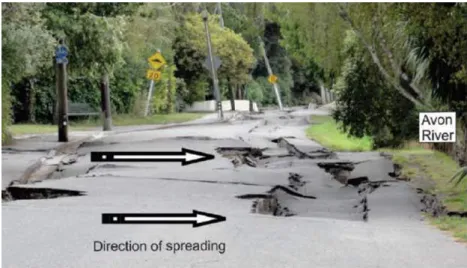
Figure 2.10 Road surface cracks due to lateral spreading towards the Avon River
Figure 2.13 Lateral spreading in the river bank of Kiyama River, Akitsu Town, Kumamoto
+7

参照

関連したドキュメント