A Digital Signal Processor Implementation of Silent/Electrolaryngeal Speech Enhancement based on Real-Time Statistical Voice Conversion
Takuto Moriguchi 1 , Tomoki Toda 1 , Motoaki Sano 2 , Hiroshi Sato 2 , Graham Neubig 1 , Sakriani Sakti 1 , Satoshi Nakamura 1
1 Graduate School of Information Science, Nara Institute of Science and Technology, Japan
2 Foster Electronic Company, Limited, Japan
{ takuto-m, tomoki, neubig, ssakti, s-nakamura } @is.naist.jp, { m sano, hrssato } @foster.co.jp
Abstract
In this paper, we present a digital signal processor (DSP) implementation of real-time statistical voice conversion (VC) for silent speech enhancement and electrolaryngeal speech en- hancement. As a silent speech interface, we focus on non- audible murmur (NAM), which can be used in situations where audible speech is not acceptable. Electrolaryngeal speech is one of the typical types of alaryngeal speech produced by an alternative speaking method for laryngectomees. However, the sound quality of NAM and electrolaryngeal speech suffers from lack of naturalness. VC has proven to be one of the promising approaches to address this problem, and it has been success- fully implemented on devices with sufficient computational re- sources. An implementation on devices that are highly portable but have limited computational resources would greatly con- tribute to its practical use. In this paper we further implement real-time VC on a DSP. To implement the two speech enhance- ment systems based on real-time VC, one from NAM to a whis- pered voice and the other from electrolaryngeal speech to a nat- ural voice, we propose several methods for reducing computa- tional cost while preserving conversion accuracy. We conduct experimental evaluations and show that real-time VC is capable of running on a DSP with little degradation.
Index Terms: statistical voice conversion, real-time process- ing, reduction of computational cost, DSP, non-audible murmur, electrolaryngeal speech
1. Introduction
Speech communication is one of the most widely used methods for human communication and there is no question that it is a part of our everyday life. However, many barriers still exist in speech communication; e.g., we would have trouble speaking in quiet environments such as in a library as the sound would annoy others; and we may lose the ability to produce a nat- ural voice after undergoing surgery to remove speech organs.
In order to break down these barriers, new technologies have been developed, such as silent speech interfaces for allowing people to speak while keeping silent [1, 2, 3, 4] and speaking- aid systems for enhancing unnatural and less intelligible speech produced by vocally handicapped people [5, 6, 7].
Non-Audible Murmur (NAM) [8] has been proposed as one form of the silent speech interface. NAM is a very soft whis- pered voice, which is acoustically defined as articulated respi- ratory sounds without vocal-fold vibration conducted through the soft tissues of the head. It is directly detected from the skin surface by attaching a NAM microphone, which is one of the body-conductive microphones, behind the ear. Although NAM can be produced while keeping silent, its sound quality and intelligibility are very low because of the very soft voice and
body-conductive recording [9, 10]. To make it possible to use NAM in speech communication, it is essential to make it sound more natural and intelligible.
Electrolaryngeal (EL) speech is produced by an alternative speaking method for laryngectomees whose larynx has been re- moved by laryngectomy, which is surgery to treat laryngeal can- cer. To produce EL speech, the laryngectomee uses an external device called an electrolarynx to mechanically generate excita- tion sounds. EL speech is quite intelligible but its sound quality is very unnatural owing to the mechanical excitation sounds.
Lack of naturalness in EL speech prevents the laryngectomee from smoothly communicating with others. Therefore, it is strongly desired to develop techniques to improve quality of EL speech.
To address these issues, speech enhancement methods based on statistical voice conversion (VC) techniques [11, 12]
have been proposed, e.g., silent speech enhancement based on NAM-to-Whisper, which converts NAM into a whispered voice [10], and electrolaryngeal (EL) speech enhancement based on EL-to-Speech, which converts EL speech into normal speech [13]. It has been reported that the trajectory-wise conver- sion processing [12] is effective for improving naturalness of NAM and EL speech. Moreover, towards the use of these enhancement techniques in human-to-human communication, a low-delay conversion method approximating the trajectory- wise conversion processing with the frame-wise conversion pro- cessing has been proposed [14]. Furthermore, a real-time im- plementation of these enhancement techniques has been pro- posed and successfully implemented on devices with sufficient computational resources [15]. Towards the practical use of these enhancement techniques, it would be useful to further im- plement them on devices that are highly portable (e.g., even with no network access) but have limited computational re- sources.
In this paper, we implement real-time enhancement systems based on VC, such as NAM-to-Whisper and EL-to-Speech, on a digital signal processor (DSP), a highly portable and com- pact device. Because the computational resources of the DSP are very limited, we propose several methods for reducing the computational cost while preserving conversion accuracy. We experimentally show that the proposed real-time enhancement systems have been successfully implemented on the DSP with little degradation in conversion accuracy.
2. Speech enhancement techniques based on statistical voice conversion
2.1. NAM-to-Whisper and EL-to-Speech
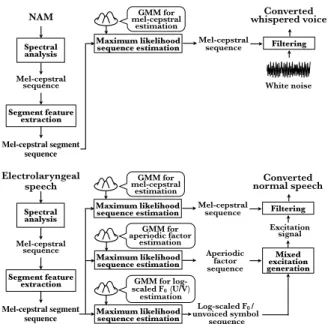
Figure 1 shows the conversion process of NAM-to-Whisper and
EL-to-Speech. In NAM-to-Whisper [10], the mel-cepstral seg-
INTERSPEECH 2013
ment features of NAM are converted into the mel-cepstrum of a whispered voice. Next, the converted whispered voice is syn- thesized by filtering white noise excitation signals with the con- verted mel-cepstrum. As a conversion model for estimating the converted mel-cepstrum of a whispered voice from the mel- cepstral segment of NAM, a Gaussian mixture model (GMM) is used. A parallel data set consisting of NAM and a whispered voice uttered by the same speaker is used to train the GMM.
On the other hand, in EL-to-speech [13], the mel-cepstral segment features of EL speech are converted into not only the mel-cepstrum of normal speech but also F 0 and aperiodic com- ponents [16] separately. Next, the converted normal speech is synthesized by filtering mixed excitation signals, which are gen- erated by the converted F 0 and aperiodic components [17], with the converted mel-cepstrum. Therefore, three GMMs are used for estimating the three speech parameters from the mel-cepstral segment of EL speech. To train these GMMs, a parallel data set consisting of EL speech uttered by a laryngectomee and normal speech uttered by a target non-disabled speaker is used.
2.2. Training
To allow conversion to function in real-time, computationally efficient spectral analysis based on the Fast Fourier Transform (FFT) is used to extract the mel-cepstrum of the source speech [15]. Given the mel-cepstral feature vector x t at frame t , as the source features, a mel-cepstral segment feature vector X t at frame t is extracted from a joint vector created by concatenating several mel-cepstral feature vectors from frame t − C to frame t + C as follows:
X t = E
x t − C , · · · , x t , · · · , x t + C
+ f, (1) where denotes transposition of the vector. The transforma- tion matrix E and the bias vector f are determined by princi- pal component analysis. On the other hand, to extract target speech parameters, such as mel-cepstrum, log-scaled F 0 , and aperiodic components, high-quality speech analysis methods, such as STRAIGHT [18] or mel-generalized cepstral analysis [19], are used because quality of the target speech parameters directly affects quality of the converted speech. Let us assume a feature vector of each target speech parameter y t at frame t . As the target features, a joint static and dynamic feature vec- tor Y t =
y t , Δ y t
is created at each frame, where the dynamic feature vector Δ y t is calculated as y t − y t −1 .
The joint source and target feature vector
X t , Y t
is created at each frame by performing time alignment to the par- allel data. The joint probability density of the source and target feature vectors is modeled with a GMM as follows:
P
X t , Y t |λ ( X,Y )
= M
m =1
α m N X t , Y t
; μ ( m X,Y ) , Σ ( m X,Y )
, (2) where N
· ; μ, Σ
is a Gaussian distribution with mean vector μ and covariance matrix Σ. The parameter set of the GMM λ ( X,Y ) whose total number of mixture components is M is composed of the mixture component weight α m , the mean vec- tor μ ( m X,Y ) , and the covariance matrix Σ ( m X,Y ) of each mixture component. At the m th mixture component, the mean vector μ ( m X,Y ) and the covariance matrix Σ ( m X,Y ) are written as
μ ( m X,Y ) = μ ( m X )
μ ( m Y )
, Σ ( m X,Y ) =
Σ ( m XX ) Σ ( m XY )
Σ ( m Y X ) Σ ( m Y Y )
, (3)
! "
!%
! "
! "
"# % "
$!!
#!
! !!
! !!
!!