2006年から2007年
著者名(日)
加藤 司
雑誌名
東洋大学社会学部紀要
巻
47
号
2
ページ
59-81
発行年
2010-03
URL
http://id.nii.ac.jp/1060/00003090/
Creative Commons : 表示 - 非営利 - 改変禁止英語文献におけるコーピング尺度の使用状況
―2006年から2007年―
A Review of Research Using Self-report Measures
of Coping Behavior from 2006 to 2007
加藤 司
Tsukasa KATO
ストレス概念の普及、健康に対する意識の高まりなどによりストレスフルな状況に対する対処の 方法、すなわち、コーピングが注目され、現在では、コーピングは健康や適応のキーワードとされ ている(加藤, 2004, 2007a, 2008a)。例えば、心理学関連研究論文または、文献のデータベースであ るPsycINFOに登録されている論文のうち、コーピングに関する論文は1970年では約0.5%、2000年には約3%に上昇している(加藤, 2007a)。そもそもコーピング(coping)という言葉は、to strikeを意
味する古代ギリシアのkolaphosに由来し,元来to meet, to encounter, to strike againstという意味で用い
られていた。その後,社会的・文化的変化に伴い,コーピングは「何とかうまく処理すること」(to
manage successfully)を意味するようになった(加藤, 2008a)。
コーピングという概念が用いられ始めた1960年代当初、コーピングの無意識的側面に焦点があて られ、投影法や臨床観察によってコーピングの測定がなされていた。しかし、1970年代から、コー ピングを意識的な反応として捉える考えが主流となり、コーピングを測定するために自己報告式に よる質問紙法が用いられるようになった。その結果、数多くのコーピング尺度が作成されるように なった(加藤, 2004, 2007a)。加藤(2006)は1990年から1995年にかけて発刊された学術論文を、加 藤(2007b)は1996年から1999年にかけて発刊された学術論文を、加藤(2008b)は2000年から2002 年にかけて発刊された学術論文を、加藤(2009)は2003年から2005年にかけて発刊された学術論文 をまとめ、それぞれ、英語文献におけるコーピング尺度の使用状況について論じている。本稿では 質問紙によるコーピングの測定に焦点をあて、2006年から2007年までのコーピング尺度の使用状況 をまとめることにする。
代表的なコーピング尺度に、Lazarusら(Folkman & Lazarus, 1980, 1985, 1988; Folkman, Lazarus, Dunkel-Schetter, DeLongis, & Gruen, 1986; Vitaliano, Russo, Carr, Maiuro, & Becker, 1985)が作成した Ways of Coping Questionnaire、Carverら(Carver, 1997; Carver & Scheier, 1994; Carver, Scheier, & Weintraub, 1989)が作成したCOPEがある。コーピングをテーマとした概論書や展望論文では、 Lazarusらが作成したWays of Coping Questionnaireは最も使用頻度の高いコーピング尺度として紹介 されている。しかし、それらの記述は、研究者の主観に左右されており、本当に、Lazarusらが作成 したWays of Coping Questionnaireの使用頻度が最も高いは定かではない。そこで、加藤による一連の 研究(2006, 2007b, 2008b)では、コーピング尺度の使用頻度をカウントし続けてきた。加藤の一連
英語文献におけるコーピング尺度の使用状況―2006年から2007年―/加藤 司
の研究の特色は、該当する論文の収集方法にある。第一に、該当論文が掲載されているジャーナル の分野が多岐にわたることである。対象としているジャーナルは、心理学分野だけでなく、医学、 看護学、社会学、福祉学、老年学、宗教学など多様である。たとえば、1990年から1995年にかけて 発刊された学術論文をまとめた加藤(2006)の研究では73種類のジャーナルから、1996年から1999 年にかけて発刊された学術論文をまとめた加藤(2007b)の研究では70種類以上のジャーナルから、 2000年から2002年にかけて発刊された学術論文をまとめた加藤(2008b)の研究では119種類のジャ ーナルから抽出している。第二に、抽出している論文数が圧倒的に多いということである。実際に、 1990年から1995年にかけて発刊された学術論文をまとめた加藤(2006)の研究では182篇の論文から、 1996年から1999年にかけて発刊された学術論文をまとめた加藤(2007b)の研究では232篇の論文か ら、2000年から2002年にかけて発刊された学術論文をまとめた加藤(2008b)の研究では395篇の論 文からデータを得ている。これらの研究の対象となった学術論文の総数は1,279篇であった。これら の特徴は、加藤の一連の研究では、多くのメタ分析で用いている論文収集方法とは異なっている。 多くのメタ分析では、PubMed、PsycINFOなどのデータベースから、あるキーワードに該当する論 文を選出し、選出した論文から、必要とする論文を抽出する。しかし、加藤の一連の研究では、ま ず、コーピングの研究が掲載されているジャーナルの収集から始まり、それらのジャーナルで、コ ーピング尺度が使用されている論文を抽出する。その結果、キーワード検索で選出することができ ない論文を抽出することができる。キーワード検索では、加藤の一連の研究で取り上げた論文の十 分の一も抽出することができないであろう。加藤の一連の研究は時間と労力がかかる手法ではある が、実際に研究で使用されているコーピング尺度について、真に近似したデータを与える意義深い 研究である。このような研究は、極めて地味であり、多大な労力を支払って実施しようとする研究 は皆無である。しかし、これまで研究者自身の個人的な経験でしか論じられていなかった最も使用 頻度の高いコーピング尺度について、知ることのできる唯一の手掛かりとなる。そこで、本研究に おいて、2006年から2007年までのコーピング尺度の使用状況をまとめることは、非常に重要である と考えられる。
方 法
文献リストの作成 以下の条件を満たす学術論文を抽出し、コーピング文献リスト06-07(Appendix)を作成した。① 2006年から2007年にかけて刊行され、英語で書かれた学術雑誌論文であること。②本文中にストレ スフルな状況に対するコーピングを測定していることが明記されている学術論文、すなわち、測定 変数にcoping、coping behavior、coping response、coping skills、coping strategiesと記載されている学術 論文であること。コーピングの概念に類似、あるいは同義と思われる学術用語を用いた論文もある が、コーピングを測定したことが明記されていない論文は抽出しなかった。③コーピングの個人差 を測定するために作成された尺度を用いた論文であること。すなわち、論文中にコーピングを測定 していることが明記されていても、本来はコーピングを測定するために開発されたものでない尺度 を用いた論文は文献リストに加えなかった。防衛機制を測定するために開発された尺度を用いてい る論文も文献リストに加えなかった。④メタ分析を含む展望論文ではないこと。⑤コーピングの測定に、少なくとも2項目以上の項目を用いている学術論文であること。 コーピング尺度の使用頻度のカウント 次に、コーピング尺度の使用頻度を以下の手続きによってカウントした。①コーピング尺度を用い るごとに1カウントした。②ひとつの論文に、複数のコーピング尺度が用いられている論文の場合、そ れぞれのコーピング尺度に1カウントした。しかし、ひとつの論文内で、同一のコーピング尺度を複数 回使用した場合、例えば、2つ以上の研究に同一のコーピング尺度を用いた場合、その論文内において、 1カウントとした。③あるコーピング尺度Aを修正し、使用した場合、コーピング尺度Aとしてカウン トした。ただし、大幅に修正し、信頼性と妥当性が検証され、独自のコーピング尺度Bとして用いら れた場合あるいは、その後、そのような検証がなされた場合、コーピング尺度Bとして1カウントした。 ④コーピング尺度Aを改訂したコーピング尺度Bを用いた場合、あるいはコーピング尺度Aの短縮版と してコーピング尺度Cを用いた場合、コーピング尺度Aとして1カウントした。⑤コーピング尺度AのX 版コーピング尺度Bを用いた場合、コーピング尺度Aとして1カウントした。例えば、青年用コーピン グ尺度B、ドイツ版コーピング尺度Bなどは、コーピング尺度Aとしてカウントした。
結 果
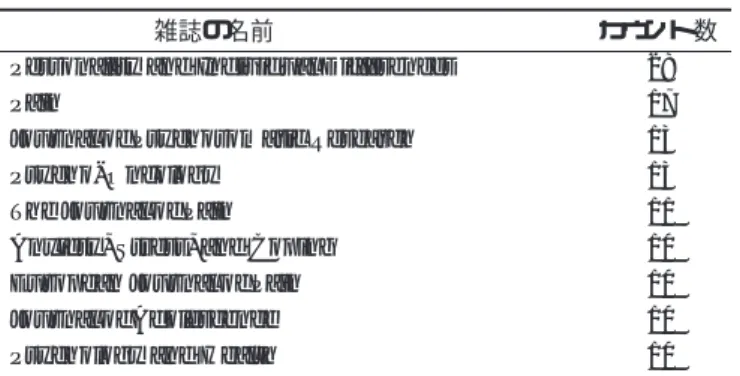
上記の手続きによってコーピング文献リスト06-07を作成し、コーピング尺度の使用頻度をカウント した。コーピング文献リスト06-07は377篇の学術論文からなり、2006年に刊行された論文数は197篇、 2007年に刊行された論文数は180篇であった。さらに、コーピング尺度の文献リスト90-95(加藤, 2006)、 コーピング尺度の文献リスト96-99(加藤, 2007b)、コーピング尺度の文献リスト00-02(加藤, 2008b)、 コーピング尺度の文献リスト03-05(加藤, 2009)を加え、英文学術論文に掲載されているコーピング 尺度の使用頻度の推移を表したものが Figure 1である。 英語文献におけるコーピング尺度の使用状況―2006年から2007年―/加藤 司 61 コーピング文献リスト06-07は120種の学術雑誌から収集された。10カウント以上の学術雑誌をTable Figure 1 英文学術論文に掲載されているコーピング尺度の使用頻度の推移1に示す。最も、コーピング尺度を用いた論文の掲載論文数が多かった学術雑誌は“Personality and Individual Differences”誌であり、30篇の論文が掲載されていた。コーピング尺度を用いた論文を10篇 以上掲載していた学術論文は、“Pain”誌が17篇、“Journal of Psychosomatic Research” 誌が13篇、 “Psycho-Oncology”誌が13篇、“The Journal of Pain”誌が11篇、 “Anxiety, Stress and Coping”誌が10篇、 “European Journal of Pain”誌が10篇、“Journal of Adolescence”誌が10篇、“Psychology and Health”誌が10
篇であった。
Table 1 学術雑誌別、コーピング尺度の使用頻度 雑誌の名前 カウント数 Personality and Individual Differences 28
Pain 17
Journal of Psychosomatic Research 13 Psycho-Oncology 13 The Journal of Pain 11 Anxiety, Stress, and Coping 10 European Journal of Pain 10 Journal of Adolescence 10 Psychology and Health 10
Table 2はカウントが5以上であるコーピング尺度の使用頻度を示したものである。COPE(Carver, 1997; Carver & Scheier, 1994; Carver, Scheier, & Weintraub, 1989)は91篇の論文で、最も使用頻度の高 いコーピング尺度であった。次いで使用頻度の高いコーピング尺度はWays of Coping Questionnaire (Folkman & Lazarus, 1980, 1985, 1988; Folkman, Lazarus, Dunkel-Schetter, DeLongis, & Gruen, 1986; Vitaliano, Russo, Carr, Maiuro, & Becker, 1985)は38篇の論文で使用されていた。圧倒的に、COPEの 使用頻度が高いことがわかる。続いて、Coping Strategies Questionnaire(Rosentiel & Keefe, 1983)、 Coping Inventory for Stressful Situations(Endler & Parker, 1990a, 1990b)、R-COPE(Pargament, Ensing, Falgout, Olsen, Reilly, van Haitsma, & Warren, 1990; Pargament, Kennell, Hathaway, Grevengoed, Newman, & Jones, 1988; Pargament, Koenig, & Perez, 2000)、Responses to Stress Questionnaire(Connor-Smith, Compas, Wadsworth, Thomsen, A.H., & Saltzman, 2000)、Occupational Stress Inventory(Osipow & Spokane, 1987; Williams & Cooper, 1996)、Coping Strategy Indicator(Amirkhan, 1990)、Coping Strategies Questionnaire(Roger & Najarian, 1989; Roger, Jarvis, & Najarian, 1993)、Chronic Pain Coping Inventory(Jensen, Turner, Romano, & Strom, 1995)、Jalowiec Coping Scale(Jalowiec, Murphy, & Powers, 1984)、Coping Response Inventory(Billings & Moos, 1981; Moos, 1988, 1993a, 1993b; Moos, Cronkite, Billings, & Finney, 1984)、Daily Coping Inventory(Stone & Neale, 1984)、Mental Adjustment to Cancer Scale(Watson et al., 1988)の使用頻度が高いことがわかる。さらに、最も使用頻度の高か ったCOPE(Carver, 1997; Carver & Scheier, 1994; Carver, Scheier, & Weintraub, 1989)ならびにWays of Coping Questionnaire(Folkman & Lazarus, 1980, 1985, 1988; Folkman, Lazarus, Dunkel-Schetter, DeLongis, & Gruen, 1986; Vitaliano, Russo, Carr, Maiuro, & Becker, 1985)に焦点を当て、コーピング尺
度の文献リスト90-95(加藤, 2006)、コーピング尺度の文献リスト96-99(加藤, 2007b)、コーピング
尺度の文献リスト00-02(加藤, 2008b)、コーピング尺度の文献リスト03-05(加藤, 2009)のデータ
英語文献におけるコーピング尺度の使用状況― 2006 年から 2007 年― /加藤 司 63 Table 2 コーピング尺度の名称 COPE
Ways of Coping Questionnaire
Coping Strategies Questionnaire Coping Inventory for Stressful Situations R-COPE
Religious Coping Activities Scale Religious Problem-Solving Scale Responses to Stress Questionnaire Occupational Stress Inventory Coping Strategy Indicator Coping Strategies Questionnaire Chronic Pain Coping Inventory Jalowiec Coping Scale Coping Response Inventory (Health and Daily Living Form)
Daily Coping Inventory
Mental Adjustment to Cancer Scale
尺度開発報告主要論文
Carver, Scheier, & Weintraub(1989)、Carver & Scheier(1994)Carver(1997)
Folkman & Lazarus(1980, 1985, 1988)、Folkman, Lazarus, Dunkel-Schetter, DeLongis, & Gruen(1986) Vitaliano, Russo, Carr, Maiuro, & Becker(1985)
Rosentiel & Keefe(1983) Endler & Parker(1990a, 1990b) Pargament, Koenig, & Perez(2000)
Pargament, Ensing, Falgout, Olsen, Reilly, van Haitsma, & Warren(1990) Pargament, Kennell, Hathaway, Grevengoed, Newman, & Jones(1988) Connor-Smith, Compas, Wadsworth, Thomsen, A.H., & Saltzman(2000) Osipow & Spokane(1987)、Williams & Cooper(1996)
Amirkhan(1990)
Roger & Najarian(1989)、Roger, Jarvis, & Najarian(1993) Jensen, Turner, Romano, & Strom(1995)
Jalowiec, Murphy, & Powers(1984)
Billings & Moos(1981)Moos, Cronkite, Billings, & Finney(1984) Moos(1988, 1993a, 1993b)
Stone & Neale(1984) Watson et al.,(1988) 頻 度 91 38 24 16 15 8 8 7 7 6 6 5 5 5
2 である。COPEが開発された1989年当初は、WCQの使用頻度が高く、コーピング尺度の中でもっと使 用頻度の高い尺度であったことがうかがえる。しかし、2000年ころより、WCQよりCOPEの使用頻 度が上回り、現在では、両尺度の使用頻度に大きな差が生まれ、その差は広がりつつあることがわ かる。
考 察
本稿では質問紙によるコーピングの測定に焦点をあて、2006年から2007年までのコーピング尺度 の使用状況をまとめた。コーピング尺度を使用した英文学術雑誌は増加しており、今後もますます 増加することが期待される。それゆえ、科学の領域においてコーピング果たす役割も重要になって くる。コーピング尺度を用いた学術雑誌は多様であり、特に、疼痛(Pain)を研究対象とした学術 雑誌で、盛んに用いられていることがわかった。例えば、“Pain”誌、“The Journal of Pain”誌、“European Journal of Pain”誌などは、まさに疼痛学の専門雑誌である。特に、“Pain”誌は疼痛に関
する専門誌であり、1975年に刊行された、2007年のインパクトファクターは5.249であり、一流の科 学雑誌である。また、癌専門雑誌である"Psycho-Oncology" 誌もまた、疼痛に対するコーピングの研 究が数多く含まれていることが推測される。このように、コーピングは、心理学だけでなく、疼痛 学においてその重要性が認識されている。 次に、コーピング尺度別の使用頻度をカウントでは、COPEの使用頻度が、他のコーピング尺度 の使用頻度を凌駕して、増加していることがわかった。このような現状を認識していない研究者た ちが執筆した著書や論文には、「最も使用頻度が高いコーピング尺度はWCQである」と記載される ことがあるが、明らかに間違いであることがよくわかる。このようなことも、本研究による地道な 研究の積み重ねによって明らかにされたことである。 Figure 2 英文学術論文に掲載されているCOPEおよびWCQの使用頻度の推移
英語文献におけるコーピング尺度の使用状況―2006年から2007年―/加藤 司
65
引用文献
Billings, A.G., & Moos, R.H. (1981). The role of coping responses and social resources in attenuating the impact of stressful life events. Journal of Behavioral Medicine,4, 139-157.
Carver, C.S. (1997). You want to measure coping but your protocol's too long: Consider the brief COPE. International Journal of Behavioral Medicine, 4, 92-100.
Carver, C.S., & Scheier, M.F. (1994). Situational coping and coping dispositions in a stressful transaction. Journal of Personality and Social Psychology, 66, 184-195.
Carver, C.S., Scheier, M.F., & Weintraub, J.K. (1989). Assessing coping strategies: A theoretically based approach. Journal of Personality and Social Psychology, 56, 267-283.
Connor-Smith, J.K., Compas, B.E., Wadsworth, M.E., Thomsen, A.H., & Saltzman, H. (2000). Responses to stress in adolescence: Measurement of coping and inventory stress responses. Journal of Consulting and Clinical Psychology, 68,
976-992.
Endler, N.S., & Parker, J.D.A. (1990a). Coping Inventory for Stressful Situations (CISS): Manual. Toronto, Canada: Multi-Health Systems.
Endler, N.S., & Parker, J.D.A. (1990b). Multidimensional assessment of coping: A critical evaluation. Journal of Personality and Social Psychology, 58, 844-854.
Folkman, S., & Lazarus, R.S. (1980). An analysis of coping in a middle-aged community sample. Journal of Health and Social Behavior, 21, 219-239.
Folkman, S., & Lazarus, R.S. (1985). If it changes it must be a process: Study of emotion and coping during three stages of a college examination. Journal of Personality and Social Psychology, 48, 150-170.
Folkman, S., & Lazarus, R.S. (1988). Manual for the Ways of Coping Questionnaire. Palo Alto, California: Consulting Psychologists Press.
Folkman, S., Lazarus, R.S., Dunkel-Schetter, C., DeLongis, A., & Gruen, R. (1986). The dynamics of a stressful encounter. Journal of Personality and Social Psychology, 50, 992-1003.
Jalowiec, A., Murphy, S.P., & Powers, M.J. (1984). Psychometric assessment of the Jalowiec Coping Scale. Nursing Research, 33, 157-161.
Jensen, M.P., Turner, J.A., Romano, J.M., & Strom, S.E. (1995). The Chronic Pain Coping Inventory: Development and preliminary validation. Pain, 60, 203-216.
加藤 司 (2004). 自己報告式によるコーピング測定の方法論的問題 心理学評論, 47, 225-240. 加藤 司 (2006). 英語文献におけるコーピング尺度の使用状況―1990年から1995年― 東洋大学社会学部紀要, 43(2), 5-21. 加藤 司 (2007a). 対人ストレス過程における対人ストレスコーピング ナカニシヤ出版 加藤 司 (2007b). 英語文献におけるコーピング尺度の使用状況―1996年から1999年―東洋大学社会学部紀要, 44(2), 71-87. 加藤 司 (2008a). 対人ストレスハンドブック―人間関係のストレスにどう立ち向かうか― ナカニシヤ出版 加藤 司 (2008b). 英語文献におけるコーピング尺度の使用状況―2000年から2002年― 東洋大学社会学部紀要, 45(2), 49-72. 加藤 司 (2009). 英語文献におけるコーピング尺度の使用状況―2003年から2005年― 東洋大学社会学部紀要, 45(2), 49-72.
Moos, L.H. (1988). The Coping Response Inventory manual. Palo Alto, California: Social Ecology Laboratory, Stanford University and Department of Veterans Affairs Medical Centers.
Moos, L.H. (1993a).Coping Response Inventory Adult Form manual. Odessa, Florida: Psychological Assessment Resources.
Moos, L.H. (1993b). Coping Response Inventory Youth Form manual. Odessa, Florida: Psychological Assessment Resources.
Moos, L.H., Cronkite, R.C., Billings, A., & Finney, J.W. (1984). Health and Daily Living Form manual. Palo Alto, California: Social Ecology Laboratory, Stanford University and Department of Veterans Affairs Medical Centers.
Pargament, K.I., Ensing, D.S., Falgout, K., Olsen, H., Reilly, B., Van Haitsma, K., & Warren, R. (1990). God help me: (I): Religious coping efforts as predictors of the outcomes to significant negative life events. American Journal of Community Psychology, 18, 793-824.
Pargament, K.I., Koenig, H.G., & Perez, L.M. (2000). The many methods of religious coping: Development and initial validation of the RCOPE. Journal of Clinical Psychology, 56, 519-543.
Pargament, K.I., Kennell, J., Hathaway, W., Grevengoed, N., Newman, J., & Jones, W. (1988). Religion and the problem-solving process: Three styles of coping. Journal for the Scientific Study of Religion, 27, 90-104.
Riley, J.L.,III., & Robinson, M.E. (1997). CSQ: Five factors or fiction? The Clinical Journal Pain, 13, 156-162. Roger, D., Jarvis, G., & Najarian, B. (1993). Detachment and coping: The construction and validation of a new scale for
measuring coping strategies. Personality and Individual Differences, 15, 619-626.
Rosenstiel, A.K., & Keefe, F.J. (1983). The use of coping strategies in chronic low back pain patients: Relationship to patient characteristics and current adjustment. Pain, 17, 33-44.
Vitaliano, P.P., Russo, J., Carr, J.E., Maiuro, R.D., & Becker, J. (1985). The Ways of Coping Checklist: Revision and psychometric properties. Multivariate Behavioral Research, 20, 3-26.
Appendix コーピング文献リスト 06-07
Afifi, T.D., Huber, F.N., & Ohs, J. (2006). Parents' and adolescents' communication with each other about divorce-related stressors and its impact on their ability to cope positively with the divorce. J Divorce & Remarriage, 45, 1-30.
Aguilar-Vafaie, M.E., & Abiari, M. (2007). Coping Response Inventory: Assessing coping among Iranian college students and introductory development of an adapted Iranian Coping Response Inventory (CRI). Ment Health Relig Cult, 10, 489-513.
Ai, A.L., Park, C.L., Huang, B., Rodgers, W., & Tice, T.N. (2007). Psychosocial mediation of religious coping styles: A study of short-term psychological distress following cardiac surgery. Pers Soc Psychol Bull, 33, 867-882.
Ai, A.L., Peterson, C., Bolling, S.F., & Rodgers, W. (2006). Depression, faith-based coping, and short-term postoperative global functioning in adult and older patients undergoing cardiac surgery. J Psychosom Res, 60, 21-28.
Alkhadher, O., & Al-Naser, H. (2006). Assessing occupational stress, strain, and coping for North American teachers in Kuwait. Psychol Rep,99, 681-690.
Amirkhan, J., & Auyeung, B. (2007). Coping with stress across the lifespan: Absolute v.s. relative changes in strategy. J Appl Dev Psychol, 28, 298-317.
Amone-P'Olak, K., Garnefski, N., & Kraaij, V. (2007). Adolescents caught between fires: Cognitive emotion regulation in response to war experiences in Northern Uganda. J Adolesc, 30, 655-669.
Anshel, M.H., & Sutarso, T. (2007). Relationships between sources of acute stress and athletes' coping style in competitive sport as a function of gender. Psychol Sport Exerc, 8, 1-24.
Armeli, S., Dehart, T., Tennen, H., Todd, M., & Affleck, G. (2007). Daily interpersonal stress and the stressor-vulnerability model of alcohol use. J Soc Clin Psychol, 26, 896-921.
Arndt, J., Routledge, C., & Goldenberg, J.L. (2006). Predicting proximal health responses to reminders of death: The influence of coping style and health optimism. Psychol Health, 21, 593-614.
Asghari, A., & Nicholas, M.K. (2006). Personality and pain-related beliefs/coping strategies: A prospective study. Clin J Pain, 22, 10-18.
Baider, L., Goldzweig, G., Ever-Hadani, P., & Peretz, T. (2006). Psychological distress and coping in breast cancer patients and healthy women whose parents survived the holocaust. Psychooncology, 15, 635-646.
Baker, J.P., & Berenbaum, H. (2007). Emotion approach and problem-focused coping: A comparison of potentially adaptive strategies. Cogn Emot, 21, 95-118.
Baker, L.M., & O'Brien, K.M. (2007). Are shelter workers burned out? An examination of stress, social support, and coping. J Fam Violence, 22, 465-474.
Barakat, L.P., Schwartz, L.A., Simon, K., & Radcliffe, J. (2007). Negative thinking as a coping strategy mediator of pain and internalizing symptoms in adolescents with sickle cell disease. J Behav Med, 30, 199-208.
Barker, D.B. (2007). Antecedents of stressful experiences: Depressive symptoms, self-esteem, gender, and coping. Int J Stress Manag, 14, 333-349.
Barnoy, S., Bar-Tal, Y., & Zisser, B. (2006). Correspondence in informational coping styles: How important is it for cancer patients and their spouses? Pers Individ Dif, 41, 105-115.
Berlin, I., & Covey, L.S. (2006). Pre-cessation depressive mood predicts failure to quit smoking: The role of coping and personality traits. Addiction, 101, 1814-1821.
Bjorck, J.P., & Thurman, J.W. (2007). Negative life events, patterns of positive and negative religious coping, and psychological functioning. J Sci Study Relig,46, 159-167.
Blumenthal, J.A., Babyak, M.A., Carney, R.M., Keefe, F.J., Davis, R.D., LaCaille, R.A., Freedland, K.E., Trulock, E., Parekh, P.I., & Palmer, S.M. (2006). Telephone-based coping skills training for patients awaiting lung transplantation. J Consult Clin Psychol, 74, 535-544.
Bode, C., de Ridder, D.T.D., & Bensing, J.M. (2006). Preparing for aging: Development, feasibility and preliminary results of an educational program for midlife and older based on proactive coping theory. Patient Educ Couns, 61, 272-278. Bode, C., de Ridder, D.T.D., Kuijer, R.G., & Bensing, J.M. (2007). Effects of an intervention promoting proactive coping
competencies in middle and late adulthood. Gerontologist,47, 42-51.
Bodenmann, G., Pihet, S., & Kayser, K. (2006). The relationship between dyadic coping and marital quality: A 2-year longitudinal study. J Fam Psychol, 20, 485-493.
Boehmer, S. (2007). Relationships between felt age and perceived disability, satisfaction with recovery, self-efficacy beliefs and coping strategies. J Health Psychol, 12, 895-906.
Boehmer, S., Luszczynska, A., & Schwarzer, R. (2007). Coping and quality of life after tumor surgery: Personal and social resources promote different domains of quality of life. Anxiety Stress Coping, 20, 61-75.
Boon-Miller, M.O., Vujanovic, A.A., Feldner, M.T., Bernstein, A., & Zvolensky, M.J. (2007). Posttraumatic stress symptom severity predicts marijuana use coping motives among traumatic event-exposed marijuana users. J Trauma Stress, 20, 577-586.
Bouteyre, E., Maurel, M., & Bernaud, J. (2007). Daily hassles and depressive symptoms among first year psychology 英語文献におけるコーピング尺度の使用状況―2006年から2007年―/加藤 司
students in France: The role of coping and social support. Stress Health, 23, 93-99.
Boyd, M.R., Baliko, B., Cox, M.F., & Tavakoli, A. (2007). Stress, coping, and alcohol expectancies in rural African-American women. Arch Psychiatr Nurs,21, 70-79.
Brown, C., Battista, D.R., Sereika, S.M., Bruehlman, R.D., Dunbar-Jacob, J., & Thase, M.E. (2007). Primary care patients' personal illness models for depression: Relationship to coping behavior and functional disability. Gen Hosp Psychiatry, 29, 492-500.
Brown, S., & Ireland, C.A. (2006). Coping style and distress in newly incarcerated male adolescents. J Adolesc Health, 38, 656-661.
Brown, S.A., Williams, K., & Collins, A. (2007). Past and recent deliberate self-harm: Emotion and coping strategy differences. J Clin Psychol, 63, 791-803.
Buck, R., & Morley, S. (2006). A daily process design study of attentional pain control strategies in the self-management of cancer pain. Eur J Pain, 10, 385-398.
Buckner, J.D., Schmidt, N.B., Bobadilla, L., & Taylor, J. (2006). Social anxiety and problematic cannabis use: Evaluating the moderating role of stress reactivity and perceived coping. Behav Res Ther, 44, 1007-1015.
Buenaver, L.F., Edwards, R.R., & Haythornthwaite, J.A. (2007). Pain-related catastrophizing and perceived social responses: Inter-relationships in the context of chronic pain. Pain, 127, 234-242.
Buunk, A.P., Zurriaga, R., & González, P. (2006). Social comparison, coping and depression in people with spinal cord injury. Psychol Health, 21, 791-807.
Calsbeek, H., Rijken, M., Bekkers, M.J.T.M., van Henegouwen, G.P.B., & Dekker, J. (2006). Coping in adolescents and young adults with chronic digestive disorders: Impact on school and leisure activities. Psychol Health,21, 447-462. Calvete, E., Corral, S., & Esévez, A. (2007). Cognitive and coping mechanisms in the interplay between intimate partner
violence and depression. Anxiety Stress Coping, 20, 369-382.
Campbell-Sills, L., Cohan, S.L., & Stein, M.B. (2006). Relationship of resilience to personality, coping, and psychiatric symptoms in young adults. Behav Res Ther, 44, 585-599.
Cano, A., Mayo, A., & Ventimiglia, M. (2006). Coping, pain severity, interference, and disability: The potential mediating and moderating roles of race and education. J Pain, 7, 459-468.
Caples, H.S., & Barrera, Jr., M. (2006). Conflict, support and coping as mediators of the relation between degrading parenting and adolescent adjustment. J Youth Adolesc, 35, 603-615.
Carmona, C., Buunk, A.P., Peiró, .M., Rodríguez, I., & Bravo, M.J. (2006). Do social comparison and coping styles play a role in the development of burnout? Cross-sectional and longitudinal findings. J Occup Organ Psychol, 79, 85-99. Carrico, A.W., Antoni, M.H., Durán, R.E., Ironson, G., Penedo, F., Fletcher, M.A., Klimas, N., & Schneiderman, N.
(2006). Reductions in depressed mood and denial coping during cognitive behavioral stress management with HIV-positive gay men treated with HAART. Ann Behav Med, 31, 155-164.
Carrico, A.W., Ironson, G., Antoni, M.H., Lechner, S.C., Durán, R.E., Kumar, M., & Schneiderman, N. (2006). A path model of the effects of spirituality on depressive symptoms and 24-h urinary-free cortisol in HIV-positive persons. J Psychosom Res, 61, 51-58.
Carroll, L.J., Cassidy, J.D., & Côté, P. (2006). The role of pain coping strategies in prognosis after whiplash injury: Passive coping predicts slowed recovery. Pain,124, 18-26.
Carson, J.W., Keefe, F.J., Affleck, G., Rumble, M.E., Caldwell, D.S., Beaupre, P.M., Kashikar-Zuck, S., Sandstrom, M., & Weisberg, J.N. (2006). A comparison of conventional pain coping skills training and pain coping skills training with a maintenance training component: A daily diary analysis of short- and long-term treatment effects. J Pain, 7, 615-625. Chang, E.M.L., Bidewell, J.W., Huntington, A.D., Daly, J., Johnson, A., Wilson, H., Lambert, V.A., & Lambert, C.E.
(2007). A survey of role stress, coping and health in Australian and New Zealand hospital nurses. Int J Nurs Stud, 44, 1354-1362.
Chen, G., & Martin, R.A. (2007). A comparison of humor styles, coping humor, and mental health between Chinese and Canadian university students. Humor, 20, 215-234.
Chen, J., Yeh, C., & Kennedy, C. (2007). Weight status, self-competence, and coping strategies in Chinese children. J Pediatr Nurs, 22, 176-185.
Cheng, C., Yang, F., Jun, S., & Hutton, J.M. (2007). Flexible coping psychotherapy for functional dyspeptic patients: A randomized, controlled trial. Psychosom Med, 69, 81-88.
Chesney, M.A., Neilands, T.B., Chambers, D.B., Taylor, J.M., & Folkman, S. (2006). A validity and reliability study of the coping self-efficacy scale. Br J Health Psychol, 11, 421-437.
Christensen, U., Schmidt, L., Kriegbaum, M., Hougaard, C.Ö., & Holsten, B.E. (2006). Coping with unemployment: Does educational attainment make any difference? Scand J Public Health,34, 363-370.
Chui, W.Y., & Chan, S.W. (2007). Stress and coping of Hong Kong Chinese family members during a critical illness. J Clin Nurs, 16, 372-381.
Cipher, D.J., Kurian, A.K., Fulda, K.G., Snider, R., & van Beest, J. (2007). Using the million behavioral medicine diagnostic to delineate treatment outcomes in rehabilitation. J Clin Psychol Med Settings,14, 102-112.
Citero, V., de A., Levenson, J.L., McClish, D.K., Bovbjerg, V.E., Cole, P.L., Dahman, B.A., Penberthy, L.T., & Aisiku, I.P., Roseff, S.D., & Smith, W.R. (2007). The role of catastrophizing in sickle cell disease: The PiSCES project. Pain, 133, 39-46.
Cohan, S.L., Jang, K.L., & Stein, M.B. (2006). Confirmatory factor analysis of a Short Form of the Coping Inventory for Stressful Situations. J Clin Psychol, 62, 273-283.
Compas, B.E., Beckjord, E., Agocha, B., Sherman, M.L., Langrock, A., Grossman, C.I., Dausch, B., Glinder, J., Kaiser, C., Anderson-Hanley, C., & Luecken, L. (2006). Measurement of coping and stress responses in women with breast cancer. Psychooncology, 15, 1038-1054.
Compas, B.E., Boyer, M.C., Stanger, C., Dufton, L.M., & Cole, D.A. (2006). Latent variable analysis of coping, anxiety/depression, and somatic symptoms in adolescents with chronic pain. J Consult Clin Psychol, 74, 1132-1142. Conner, T.S., Tennen, H., Zautra, A.J., Affleck, G., Armeli, S., & Fifield, J. (2006). Coping with rheumatoid arthritis pain in
daily life: Within-person analyses reveal hidden vulnerability for the formerly depressed. Pain, 126, 198-209. Cook, A.J., Brawer, P.A., & Vowles, K.E. (2006). The fear-avoidance model of chronic pain: Validation and age analysis
using structural equation modeling. Pain, 121, 195-206.
Costanzo, E.S., Lutgendorf, S.K., Rothrock, N.E., & Anderson, B. (2006). Coping and quality of life among women extensively treated for gynecologic cancer. Psychooncology, 15, 132-142.
Cousson-Gélie, F., Bruchon-Schweitzer, M., Dilhuydy, J.M., & Jutand, M. (2007). Do anxiety, body image, social support and coping strategies predict survival in breast cancer? A ten-year follow-up study. Psychosomatics, 48, 211-216. Covic, T., Tyson, G., Spencer, D., & Howe, G. (2006). Depression in rheumatoid arthritis patients: Demographic, clinical,
and psychological predictors. J Psychosom Res, 60, 469-476.
Creed, P.A., & Moore, K. (2006). Social support, social undermining, and coping in underemployed and unemployed persons. J Appl Soc Psychol,36, 321-339.
Cunningham, G.B. (2006). The relationships among commitment to change, coping with change, and turnover intentions. Eur J Work Organ Psychol,15, 29-45.
Daigneault, I., Hébert, M., & Tourigny, M. (2006). Attributions and coping in sexually abused adolescents referred for group treatment. J Child Sex Abus, 15, 35-59.
Dangelmaier, R.E., Docherty, N.M., & Akamatsu, T.J. (2006). Psychosis proneness, coping, and perceptions of social support. Am J Orthopsychiatry, 76, 13-17.
David, D., Montgomery, G.H., & Bovbjerg, D.H. (2006). Relations between coping responses and optimism-pessimism in predicting anticipatory psychological distress in surgical breast cancer patients. Pers Individ Dif, 40, 203-213. de Vlieger, P., van den Bussche, E., Eccleston, C., & Crombez, G. (2006). Finding a solution to the problem of pain:
Conceptual formulation and the development of the Pain Solutions Questionnaire(PaSol). Pain,123, 285-293. Degazon, C., & Parker, V.G. (2007). Coping and psychosocial adaptation to type 2 diabetes in older black Norn in the
Southern US and the Caribbean. Res Nurs Health, 30, 151-163.
Deimling, G.T., Wagner, L.J., Bowman, K.F., Sterns, S., Kercher, K., & Kahana, B. (2006). Coping among older-adult, long-term cancer survivors. Psychooncology, 15, 143-159.
Demond, D.M., & MacLachlan, M. (2006). Coping strategies as predictors of psychological adaptation in a sample of elderly veterans with acquired lower limb. Soc Sci Med,62, 208-216.
Demond, D.M., Shevlin, M., & MacLachlan, M. (2006). Dimensional analysis of the coping strategy indicator in a sample of elderly veterans with acquired limb amputations.Pers Individ Dif, 40, 249-259.
den Boer, J.J., Oostendrop, R.A.B., Beems, T., Munneke, M., & Evers, A.W.M. (2006). Reduced work capacity after lumbar disc surgery: The role of cognitive-behavioral and work-related risk factors. Pain,126, 72-78.
Deniz, M.E. (2006). The relationships among coping with stress, life satisfaction, decision-making styles and decision self-esteem: An investigation with Turkish university students. Soc Behav Pers,34, 1161-1170.
der Boer, J.J., Oostendorp, R.A.B., Beems, T., Munneke, M., & Evers, A.W.M. (2006). Continued disability and pain after lunbar disc surgery: The role of cognitive-behavioral factors. Pain,123, 45-52.
Desmond, D.M. (2007). Coping, affective distress, and psychosocial adjustment among people with traumatic upper limb amputations. J Psychosom Res,62, 15-21.
Devonport, T.J., & Lane, A.M. (2006). Relationships between self-efficacy, coping and student retention. Soc Behav Pers, 34, 127-138.
Dewey, D., & Crawford, S.G. (2007). Correlates of maternal and paternal adjustment to chronic childhood disease. J Clin Psychol Med Settings, 14, 219-226.
Doolittle, B.R. (2007). Burnout and coping among parish-based clergy. Ment Health Relig Cult, 10, 31-38. Dunkley, D.M., Zuroff, D.C., & Blankstein, K.R. (2006). Specific perfectionism components versus self-criticism in
predicting maladjustment. Pers Individ Dif, 40, 665-676.
Dunn, J.C., Whelton, W.J., & Sharpe, D. (2006). Maladaptive perfectionism, hassles, coping, and psychological distress in university professors. J Couns Psychol,53, 511-523.
Dyson, R., & Renk, K. (2006). Freshmen adaptation to university life: Depressive symptoms, stress, and coping. J Clin 英語文献におけるコーピング尺度の使用状況―2006年から2007年―/加藤 司
Psychol, 62, 1231-1244.
Edwards, R.R., Smith, M.T., Kudel, I., & Haythornthwaite, J. (2006). Pain-related catastrophizing as a risk factor for suicidal ideation in chronic pain. Pain, 126, 272-279.
Eisengart, S.P., Singer, L.T., Short, E.J., Kirchner, H.L., Min, M.O., Fulton, S., & Minnes, S. (2006). Factor structure of coping: Two studies of mothers with high levels of life stress. Psychol Assess, 18, 278-288.
Ekwall, A.K., & Hallberg, I.R. (2007). The association between caregiving satisfaction, difficulties and coping among older family caregivers. J Clin Nurs, 16, 832-844.
Ekwall, A.K., Sivberg, B., & Hallberg, L.R. (2007). Older caregivers' coping strategies and sense of coherence in relation to quality of life. J Adv Nurs, 57, 584-596.
Elfström, M.L., & Kreuter, M. (2006). Relationships between locus of control. Coping strategies and emotional well-being in persons with spinal cord lesion. J Clin Psychol Med Settings, 13, 93-104.
Elklit, A., Hartvig, T., & Christiansen, M. (2007). Psychological sequelae in parents of extreme low and very low birth weight infants. J Clin Psychol Med Settings, 14, 238-247.
Engler, P., Anderson, B., Herman, D., Bishop, D., Miller, I., Pirraglia, P., Hayaki, J., Stein, M. (2006). Coping and burden among informal HIV caregivers. Psychosom Med, 68, 985-992.
Ersek, M., Turner, J.A., & Kemp, C.A. (2006). Use of the Chronic Pain Coping Inventory to assess older adults' pain coping strategies. J Pain, 7, 833-842.
Eschenbeck, H., Kohlmann, C., & Lohaus, A. (2007). Gender differences in coping strategies in children and adolescents. J Individ Dif, 28, 18-26.
Esteve, R., Ramírez-Maestre, C., & López-Martínez, A.E. (2007). Adjustment to chronic pain: The role of pain acceptance, coping strategies, and pain-related cognitions. Ann Behav Med, 33, 179-188.
Fang, C.Y., Daly, M.B., Miller, S.M., Zerr, T., Malick, J., & Engstrom, P. (2006). Coping with ovarian cancer risk: The moderating effects of perceived control on coping and adjustment. Br J Health Psychol, 11, 561-580.
Feldman, B.N., & Broussard, A. (2006). Men's adjustment to their partners' breast cancer: A dyadic coping perspective. Health Soc Work, 31, 117-127.
Filaire, E., Maso, F., Sagnol, M., Ferrand, C., & Lac, G. (2006). Anxiety, hormonal responses, and coping during a judo competition. Aggress Behav,27, 55-63.
Filipas, H.H., & Ullman, S.E. (2006). Child sexual abuse, coping responses, self-blame, posttraumatic stress disorder, and adults sexual revictimization. J Interpers Violence,21, 652-672.
Finkelstein, D.M., Kubzansky, L.D., Capitman, J., & Goodman, E. (2007). Socioeconomic differences in adolescent stress: The role of psychological resources. J Adolesc Health, 40, 127-134.
Fitzsche, K., Forster, F., Schweickhardt, A., Kanwischer, H., Drinkmann, A., Rabung, S., Bergmann, H., Geibel, A., Herrmann-Lingen, C., & German-Austrian ICD Multicenter-Study-Group(GAIMS). (2007). Depressive coping is a predictor for emotional distress and poor quality of life in a German-Austrian sample of cardioverter-defibrillator implant recipients at 3 months and 1 year after implantation. Gen Hosp Psychiatry, 29, 526-536.
Fivush, R., & Sales, J.M. (2006). Coping, attachment, and mother-child narratives of stressful events. Merrill Palmer Q, 52, 125-150.
Fortes-Ferreira, L., Peiró, J.M., González-Morales, M.G., Martín, I. (2006). Work-related stress and well-being: The roles of direct action coping and palliative coping. Scand J Psychol, 47, 293-302.
Forys, K.L., & Dahlquist, L.M. (2007). The influence of preferred coping style and cognitive strategy on laboratory-induced pain. Health Psychol, 26, 22-29.
Fouladi, R.T., Rew, L., & Horner, S.D. (2006). Comparison of three modes of measuring stress, coping, and humor in school-age children. J Nurs Meas, 14, 79-98.
Fresco, D.M., Williams, N.L., & Nugent, N.R. (2006). Flexibility and negative affect: Examining the associations of explanatory flexibility and coping flexibility to each other and to depression and anxiety. Cognit Ther Res, 30, 201-210. Gall, T.L. (2006). Spirituality and coping with life stress among adult survivors of childhood sexual abuse. Child Abuse
Negl,30, 829-844.
Gan, Y., Shang, J., & Zhang, Y. (2007). Coping flexibility and locus of control as predictors of burnout among Chinese college students. Soc Behav Pers, 35, 1087-1098.
Gan, Y., Yang, M., Zhou, Y., & Zhang, Y. (2007). The two-factor structure of future-oriented coping and its mediating role in student engagement. Pers Individ Dif, 43, 851-863.
Gan, Y., Zhang, Y., Wang, X., Wang, S., & Shen, X. (2006). The coping flexibility of neurasthenia and depressive patients. Pers Individ Dif, 40, 859-871.
Garcia-Campayo, J., Pascual, A., Alda, M., Teresa, M., & Ramirez, G. (2007). Coping with fibromialgia: Usefulness of the Chronic Pain Coping Inventory-42. Pain, 132, S68-S76.
Garnefski, N., & Kraaij, V. (2006). Cognitive Emotion Regulation Questionnaire: Development of a short 18-item version(CERQ-short). Pers Individ Dif, 41, 1045-1053.
intensity, but neither factor predicts tolerance or blood pressure reactivity: An experimental investigation in pain-free individuals. Eur J Pain, 10, 457-465.
Gil, S., & Caspi, Y. (2006). Personality traits, coping style, and perceived threat as predictors of posttraumatic stress disorder after exposure to a terrorist attack: A prospective study. Psychosom Med, 68, 904-909.
Gilbar, O., & Hevroni, A. (2007). Counterfactuals, coping strategies and psychological distress among breast cancer patients. Anxiety Stress Coping, 20, 383-392.
Gilbar, O., & Zusman, A. (2007). The correlation between coping strategies, doctor-patient/spouse relationships and psychological distress among women cancer patients and their spouses. Psychooncology, 16, 1010-1018.
Gomez, R., & McLaren, S. (2006). The association of avoidance coping style, and perceived mother and father support with anxiety/depression among late adolescents: Applicability of resiliency models. Pers Individ Dif, 40, 1165-1176. González-Morales, M.G., Peiró, J.M., Rodríguez, I., & Greenglass, E.R. (2006). Coping and distress in organizations: The
role of gender in work stress. Int J Stress Manag, 13, 228-248.
Göral, F.S., Kesimci, A., & Gençáöz, T. (2006). Roles of the controllability of the event and coping strategies on stress-related growth in a Turkish sample.Stress Health, 22, 297-303.
Gore-Felton, C., Koopman, C., Spiegel, D., Vosvick, M., Brondino, M., & Winningham, A. (2006). Effects of quality of life and coping on depression among adults living with HIV/AIDS. J Health Psychol, 11, 711-729.
Grant, S., & Langan-Fox, J. (2006). Occupational stress, coping and strain: The combined/interactive effect of the Big Five traits. Pers Individ Dif, 41, 719-732.
Gravdal, L., & Sandal, G.M. (2006). The two-factor model of social desirability: Relation to coping and defense, and implications for health. Pers Individ Dif, 40, 1051-1061.
Greene, C., Murdock, K.K., & Mitchell, D.K. (2006). Coping with illness-related stress among urban children with asthma. Child Health Care, 35, 297-320.
Greenglass, E., Fiksenbaum, L., & Eaton, J. (2006). The relationship between coping, social support, functional disability and depression in the elderly. Anxiety Stress Coping,19, 15-31.
Greening, L., & Stoppelbein, L. (2007). Pediatric cancer, parental coping style, and risk for depressive, posttraumatic stress, and anxiety symptoms. J Pediatr Psychol,32, 1272-1277.
Greenway, A.P., Phelan, M., & Turnbull, S., & Milne, L.C. (2007). Religious coping strategies and spiritual transcendence. Ment Health Relig Cult, 10, 325-333.
Greer, T.M. (2007). Measuring coping strategies among African Americans: An exploration of the latent structure of the COPE inventory. J Black Psychol, 33, 260-277.
Gu∂mundsdóttir, H.S., Gu∂mundsdóttir, D.B., & Elklit, A. (2006). Risk and resistance factors for psychological distress in Icelandic parents of chronically ill children: An application of wallander and varinis's disability-stress-coping model. J Clin Psychol Med Settings, 13, 299-306.
Gürhan, N., Akyüs, A., Oflaz, F., Atici, D., & Vural, G. (2007). Effectiveness of nursing counseling on coping and depression in women nudergoing in vitro fertilization.Psychol Rep, 100, 365-374.
Gustafsson, M., & Ahlström, G. (2006). Emotional distress and coping in the early stage of recovery following acute traumatic hand injury: A questionnaire survey. Int J Nurs Stud,43, 557-565.
Gutner, C.A., Rizvi, S.L., Monson, C.M., & Resick, P.A. (2006). Changes in coping strategies, relationship to the perpetrator, and posttraumatic distress in female crime victims. J Trauma Stress, 19, 813-823.
Gyurcsik. N.C., Johnson, E.M., & Perrett, J.J. (2006). Prospective and daily measures of acute thoughts, decisional struggle, and coping: Measurement correspondence and the prediction of exercise in young adults. J Appl Soc Psychol, 36, 1321-1336.
Haden, S.C., Scarpa, A., Jones, R.T., & Ollendick, T.H. (2007). Posttraumatic stress disorder symptoms and injury: The moderating role of perceived social support and coping for young adults.Pers Individ Dif, 42, 1187-1198.
Hampel, P. (2007). Brief report: Coping among Austrian children and adolescents.J Adolesc, 30, 885-890.
Hampel, P., & Petermann, F. (2006). Perceived stress, coping, and adjustment in adolescents. J Adolesc Health, 38, 409-415.
Hansen, N.B., Tarakeshwar, N., Ghebremichael, M., Zhang, H., Kochman, A., & Sikkema, K.J. (2006). Longitudinal effects of coping on outcome in a randomized controlled traial of a group intervention for HIV-positive adults with AIDS-related bereavement. Death Stud, 30, 609-636.
Hardie, E.A., Critchley, C., & Morris, Z. (2006). Self-coping complexity: Role of self-construal in relational, individual and collective coping styles and health outcomes. Asian J Soc Psychol,9, 224-235.
Haritatos, J., Mahalingam, R., & James, S.A. (2007). John Henryism, self-reported physical health indicators, and the mediating role of perceived stress among high socio-economic status Asian immigrants. Soc Sci Med, 64, 1192-1203. Hasenbring, M.I., Plaas, H., Fischbein, B., & Willburger, R. (2006). The relationship between activity and pain in patients 6
months after lumbar disc surgery: Do pain-related coping modes act as moderator variables? Eur J Pain, 10, 701-709. Hasking, P.A. (2006). Reinforcement sensitivity, coping, disordered eating and drinking behavior in adolescents. Pers
Individ Dif, 40, 677-688.
英語文献におけるコーピング尺度の使用状況―2006年から2007年―/加藤 司
Hasking, P.A. (2007). Reinforcement sensitivity, coping, and delinquent behaviour in adolescents. J Adolesc, 30, 739-749. Hawkins, A., Howard, R.A., & Oyebode, J.R. (2007). Stress and coping in hospice nursing staff: The impact of attachment
styles. Psychooncology, 16, 563-572.
Hayashi, N., Igarashi, Y., Suda, K., & Nakagawa, S. (2007). Auditory hallucination coping techniques and their relationship to psychotic symptomatology. Psychiatry Clin Neurosci, 61, 640-645.
Heckman, T.G., Barcikowski, R., Ogles, B., Suhr, J., Carlson, B., Holroyd K., & Garske, J. (2006). A telephone-delivered coping improvement group intervention for middle-aged and older adults living with HIV/AIDS. Ann J Behav Med, 32, 27-38.
Hegel, M.T., Oxman, T.E., Hull, J.G., Swain, K., & Swick, H. (2006). Watchful waiting for minor depression in primary care: Remission rates and predictors of improvement. Gen Hosp Psychiatry, 28, 205-212.
Heppner, P.P., Heppner, M.J., Lee, D., Wang, Y., Park, H., & Wang, L. (2006). Development and validation of a Collectivist Coping Styles Inventory. J Couns Psychol, 53, 107-125.
Hermann, C., Hohmeister, J., Zohsel, K., Ebinger, F., & Flor, H. (2007). The assessment of pain coping and pain-related cognitions in children and adolescents: Current methods and further development. J Pain, 8, 802-813.
Hirsh, A.T., George, S.Z., Riley, III., J.L., & Robinson, M.E. (2007). An evaluation of the measurement of pain catastrophizing by the coping strategies questionnaire. Eur J Pain,11, 75-81.
Holahan, C., Moerkbak, M., & Suzuki, R. (2006). Social support, coping, and depressive symptoms in cardiac illness among Hispanic and non-Hispanic white cardiac patients. Psychol Health,21, 615-631.
Holahan, C.J., Moos, R.H., Moerkbak, M.L., Cronkite, R.C., Holahan, C.K., & Kenney, B.A. (2007). Spousal similarity in coping and depressive symptoms over 10 years. J Fam Psychol, 21, 551-559.
Hong, R.Y. (2007). Worry and rumination: Differential associations with anxious and depressive symptoms and coping behavior. Behav Res Ther, 45, 277-290.
Hovey, J.D., & Seligman, L.D. (2007). Religious coping, family support, and negative affect in college students. Psychol Rep, 100, 787-788.
Huflejt-Lukasik, M., & Czarnota-Bojarska, J. (2006). Short communication: Self-focused attention and self-monitoring influence on health and coping with stress. Stress Health, 22, 153-159.
Husser, D., Bollmann, A., Kühne, C., Molling, J., & Klein, H.U. (2006). Evaluation of noncardiac chest pain: Diagnostic approach, coping strategies and quality of life. Eur J Pain, 10, 51-55.
Hutchinson, S.L., Baldwin, C.K., & Oh, S. (2006). Adolescent coping: Exploring adolescents' leisure-based responses to stress. Leisure Sci, 28, 115-131.
Ireland, J.L., Brown, S.L., & Ballarini, S. (2006). Maladaptive personality traits, coping styles and psychological distress: A study of adult male prisoners. Pers Individ Dif, 41, 561-573.
Ishikawa, R., Matsuda, Y., Inoue, S., Nishigauchi, M., Kamba, N., & Mori, K. (2006). Social support, stress coping and caregiving efficacy: A path analysis of caregivers' well-being. J Health Psychol, 13, 11-21.
Ising, M., Weyers, P., Reuter, M., & Janke, W. (2006). Comparing two approaches for the assessment of coping: Part II. Differences in stability in time. J Individ Dif, 27, 15-19.
Jackson, T. (2007). Interpersonal transactions and responses to cold presser pain among Australian women and men. Sex Roles, 56, 55-62.
Jang, K.L., Thordarson, D.S., Stein, M.B., Cohan, S.L., & Taylor, S. (2007). Coping styles and personality: A biometric analysis. Anxiety Stress Coping, 20, 17-24.
Jasera, S.S., Championa, J.E., Reeslunda, K.L., Kellerb, G., Merchantb, M.J., Bensonc, M., & Compas, B.E. (2007). Cross-situational coping with peer and family stressors in adolescent offspring of depressed parents. J Adolesc,30, 917-932. Jeavons, S., & Greenwood, K.M. (2007). World assumptions, coping and attributions. Pers Individ Dif, 42, 1427-1437. Jenaro, C., Flores, N., & Arias, B. (2007). Burnout and coping in human service practitioners. Prof Psychol, 38, 80-87. Jensen, K.M., Thomsen, A.B., & Højsted, J. (2006). 10-year follow-up of chronic non-malignant pain patients: Opioid use,
health related quality of life and health care utilization. Eur J Pain, 10, 423-433.
Jensen, M.P., Turner, J.A., & Romano, J.M. (2007). Changes after multidisciplinary pain treatment in patient pain beliefs and coping are associated with concurrent changes in patient functioning. Pain, 131, 38-47.
Jim, H.S., Richardson, S.A., Golden-Kreutz, D.M., & Andersen, B.L. (2006). Strategies used in coping with a cancer diagnosis predict meaning in life for survivors. Health Psychol, 25, 753-761.
Jones, A., & Elklit, A. (2007). The association between gender, coping style and whiplash related symptoms in sufferers of whiplash associated disorder. Scand J Psychol, 48, 75-80.
Jones, M.C., & Johnston, D.W. (2006). Is the introduction of a student-centered, problem-based curriculum associated with improvements in student nurse well-being and performance? An observational study of effect. Int J Nurs Stud, 43, 941-952.
Jose, P.E., & Kilburg, D.F., III. (2007). Stress and coping in Japanese children and adolescents. Anxiety Stress Coping, 20, 283-298.
internet and people living with HIV/AIDS: Information evaluation and coping styles. Health Psychol,25, 205-210. Kaptein, A.A., Helder, D.I., Scharloo, M., van Kempen, G.M.J., Weinman, J., van Houwelingen, H.J.C., & Roos, R.A.C.
(2006). Illness perceptions and coping explain well-being in patients with Huntington's disease. Psychol Health, 21, 431-446.
Karademas, E.C. (2007). Positive and negative aspects of well-being: Common and specific predictors. Pers Individ Dif, 43, 277-287.
Karademas, E.C., Karvelis, S., & Argyropoulou, K. (2007). Stress-related predictors of optimism in breast cancer survivors. Stress Health, 23, 161-168.
Karoly, P., & Ruehlman, L.S. (2006). Psychological "resilience" and its correlates in chronic pain: Findings from a national community sample. Pain, 123, 90-97.
Kashdan, T.B., Barrios, V., Forsyth, J.P., & Steger, M.F. (2006). Experiential avoidance as generalized psychological vulnerability: Comparisons with coping and emotion regulation strategies. Behav Res Ther, 44, 1301-1320.
Keers, J.C., Bouma, J., Links, T.P., ter Maaten, J.C., Gans, R.O.B., Wolffenbuttel, B.H.R., & Sanderman, R. (2006). One-year follow-up effects of diabetes rehabilitation for patients with prolonged self-management difficulties. Patient Educ Couns, 60, 16-23.
Kelly, M.A.R., Sereika, S.M., Battista, D.R., & Brown, C. (2007). The relationship between beliefs about depression and coping strategies: Gender differences. Br J Clin Psychol, 46, 315-332.
Keogh, E., & Eccleston, C. (2006). Sex differences in adolescent chronic pain and pain-related coping. Pain, 123, 275-284. Kidd, S.A., & Carroll, M.R. (2007). Coping and suicidality among homeless youth. J Adolesc, 30, 283-296.
Kim, J., Knight, B.G., & Longmire, C.V.F. (2007). The role of familism in stress and coping processes among African American and white dementia caregivers: Effects on mental and physical health. Health Psychol,26, 564-576.
Kiviruusu, O., Huurre, T., & Aro, H. (2007). Psychosocial resources and depression among chronically ill young adults: Are males more vulnerable? Soc Sci Med, 65, 173-186.
Kliewer, W., Parrish, K.A., Taylor, K.W., Jackson, K., Walker, J.M., & Shivy, V.A. (2006). Socialization of coping with community violence: Influences of caregiver coaching, modeling, and family context. Child Dev, 77, 605-623. Koleck, M., Mazaux, J., Rascle, N., & Brucho-Schweitzer, M. (2006). Psycho-social factors and coping strategies as
predictors of chronic evolution and quality of life in patients with low back pain: A prospective study. Eur J Pain, 10, 1-11. Kowalski, K.C., Mack, D.E., Crocker, P.R.E., Niefer, C.B., & Fleming, T. (2006). Coping with social physique anxiety in
adolescence. J Adolesc Health, 39, 275.e9-275.e16.
Kraaij, V., Arensman, E., Garnefski, N., & Kremers, I. (2007). The role of cognitive coping in female victims of stalking. J Interpers Violence, 22, 1603-1612.
Kulik, L., & Rayyan, F. (2006). Relationships between dual-earner spouses, strategies for coping with home-work demands and emotional well-being. Community Work Fam,9, 457-477.
Lam, C.B., & McBride-Chang, C.A. (2007). Resilience in youth adulthood: The moderating influences of gender-related personality traits and coping flexibility. Sex Roles,56, 159-172.
Landisa, D., Gaylord-Hardenb, N.K., Malinowskia, S.L., Granta, K.E., Carletona, R.A., & Ford, R.E. (2007). Urban adolescent stress and hopelessness. J Adolesc, 30, 1051-1070.
Langeland, E., Riise, T., Hanestad, B.R., Nortvedt, M.W., Kristoffersen, K., & Wahl, A.K. (2006). The effect of salutogenic treatment principles on coping with mental health problems: A randomised controlled trial. Patient Educ Couns, 62, 212-219.
Lapierre, L.M., & Allen, T.D. (2006). Work-supportive family, family-supportive supervision, use of organizational benefits, and problem-focused coping: Implications for work-family conflict and employee well-being. J Occup Health Psychol, 11, 169-181.
Lau, B., Hem, E., Berg, A.M., Ekeberg, Ø., & Torgersen, S. (2006). Personality types, coping, and stress in the Norwegian police service. Pers Individ Dif, 41, 971-982.
Lawson, V., Lyne, P., Bundy, C., & Harvey, J.H. (2007). The role of illness perceptions, coping and evaluation in care-seeking among people with type 1 diabetes. Psychol Health, 22, 175-191.
LeBlanca, M., Beaulieu-Bonneaua, S., Mérettec, C., Savarda, J., Iversb, H., & Morina, C.M. (2007). Psychological and health-related quality of life factors associated with insomnia in a population-based sample. J Psychosom Res,63, 157-166.
Ledermann, T., Bodenmann, G., & Cina, A. (2007). The efficacy of the couples coping enhancement training(CCET) in improving relationship quality. J Soc Clin Psychol,26, 940-959.
Lee, J., Pomeroy, E., & Bohman, T.M. (2007). Intimate partner violence and psychological health in a sample of Asian and Caucasian women: The roles of social support and coping. J Fam Violence, 22, 709-720.
Lee, J.M., Greening, L., & Stoppelbeing, L. (2007). The moderating effect of avoidant coping on restrained eaters' risk for disinhibited eating: Implications for dietary relapse prevention. Behav Res Ther, 45, 2334-2348.
Lee, R.T., & Brotheridge, C.M. (2006). When prey turns predatory: Workplace bullying as a predictor of counteraggression/bullying, coping, and well-being. Eur J Work Organ Psychol, 15, 352-377.
英語文献におけるコーピング尺度の使用状況―2006年から2007年―/加藤 司
Lehto, U., Ojanenb, M., Dybac, T., Aromaad, A., & Kellokumpu-Lehtinena, P. (2007). Baseline psychosocial predictors of survival in localized melanoma. J Psychosom Res,63, 9-15.
Lengua, L.J., Long, A.C., & Meltzoff, A.N. (2006). Pre-attack stress-load, appraisals, and coping in children's responses to the 9/11 terrorist attacks. J Child Psychol Psychiatry, 47, 1219-1227.
Lester, K.M., Milby, J.B., Schumacher, J.E., Vuchinich, R., Person, S., & Clay, O.J. (2007). Impact of behavioral contingency management intervention on coping behaviors and PTSD symptom reduction in cocaine-addicted homeless. J Trauma Stress, 20, 565-575.
Li, J., & Lambert, V.A. (2007). Coping strategies and predictors of general well-being in women with breast cancer in the People's Republic. Nurs Health Sci, 9, 199-204.
Liang, C.T.H., Alvarez, A.N., Juang, L.P., & Liang, M.X. (2007). The role of coping in the relationship between perceived racism and racism-related stress for Asian Americans: Gender differences. J Couns Psychol, 54, 132-141.
Lipani, T.A., & Walker, L.S. (2006). Children's appraisal and coping with pain: Relation to maternal ratings of worry and restriction in family activities. J Pediatr Psychol,31, 667-673.
Litman, J.A. (2006). The COPE inventory: Dimensionality and relationships with approach- and avoidance-motives and positive and negative traits. Pers Individ Dif, 41, 273-284.
Littleton, H., & Breitkopf, C.R. (2006). Coping with the experience of rape. Psychol Women Q, 30, 106-116.
Llewellyna, C.D., McGurkb, M., & Weinman, J. (2007). Illness and treatment beliefs in head and neck cancer: Is Leventhal's common sense model a useful framework for determining changes in outcomes over time? J Psychosom Res,63, 17-26.
Lodge, J., & Feldman, S.S. (2007). Avoidant coping as a mediator between appearance-related victimization and self-esteem in young Australian adolescents. Br J Dev Psychol,25, 633-642.
Logan, S.M., Pelletier-Hibbert, M., & Hodgins, M. (2006). Stressors and coping of in-hospital haemodialysis patients aged 65 years and over. J Adv Nurs,56, 382-391.
Lonczak, H.S., Clifasefi, S.L., Marlatt, G.A., Blume, A.W., & Donovan, D.M. (2006). Religious coping and psychological functioning in a correctional population. Ment Health Relig Cult, 9, 171-192.
Low, C.A., Stanton, A.L., Thompson, N., Kwan, L., & Ganz, P.A. (2006). Contextual life stress and coping strategies as predictors of adjustment to breast cancer survivorship. Ann Behav Med, 32, 235-244.
Lu, Q., Tsao, J.C.I., Myers, C.D., Kim, S.C., & Zeltzer, L.K. (2007). Coping predictors of childrenユs laboratory-induced pain tolerance, intensity, and unpleasantness. J Pain, 8, 708-717.
Lundqvist, L., & Ahlström, G. (2006). Psychometric evaluation of the Ways of Coping Questionnaire as applied to clinical and nonclinical groups. J Psychosom Res, 60, 485-493.
Luszczynska, A., Gerstorf, D., Boehmer, S., Knoll, N., & Schwarzer, R. (2007). Patients' coping profiles and partners' support provision. Psychol Health,22, 749-764.
Lynch, A.N., Kashikar-Zuck, S., Goldschneider, K.R., & Jones, B.A. (2006). Psychosocial risks for disability in children with chronic back pain. J Pain, 7, 244-251.
Macy, R.J., Nurius, P.S., & Norris, J. (2007). Latent profiles among sexual assault survivors: Implications for defensive coping and resistance. J Interpers Violence, 22, 543-565.
Madu, S.N., & Roos, J.J. (2006). Depression among mothers with preterm infants and their stress-coping strategies. Soc Behav Pers, 34, 877-890.
Malan, L., Schutte, A.E., Malan, N.T., Wissing, M.P., Vorster, H.H., Steyn, H.S., van Rooyen, J.M., & Huisman, H.W. (2006). Coping mechanisms, perception of health and cardiovascular dysfunction in African. Int J Psychophysiol,61, 158-166.
Maltby, J., Macaskill, A., & Gillett, R. (2007). The cognitive nature of forgiveness: Using cognitive strategies of primary appraisal and coping to describe the process of forgiving. J Clin Psychol, 63, 555-566.
Mann, B., & Pakenham, K.I. (2006). Development of a measure to assess coping for auditory hallucinations. Aust J Psychol, 58, 93-100.
Manne, S.L., Norton, T.R., Ostroff, J.S., Winkel, G., Fox, K., & Grana, G. (2007). Protective buffering and psychological distress among couples coping with breast cancer: The moderating role of relationship satisfaction. J Fam Psychol, 21, 380-388.
Marin, T.J., Holtzman, S., DeLongis, A., & Robinson, L. (2007). Coping and the response of others. J Soc Pers Relat, 24, 951-969.
Markstrom, C.A., & Marshall, S.K. (2007). The psychosocial Inventory of Ego Strengths: Examination of theory and psychometric properties. J Adolesc, 30, 63-79.
Matheson, K., Skomorovsky, A., Fiocco, A., & Anisman, H. (2007). The limits of 'adaptive' coping: Well-being and mood reactions to stressors among women in abusive dating relationships. Stress,10, 75-91.
Matsushita, T., Murata, H., Matsushita, E., Sakata, Y., Miyasaka, N., & Aso, T. (2007). Emotional state and coping style among gynecologic patients undergoing surgery. Psychiatry Clin Neurosci, 61, 84-93.
McCabe, M. (2006). A longitudinal study of coping strategies and quality of life among people with multiple sclerosis. J Clin Psychol Med Settings,13, 369-379.
McCracken, L.M., & Eccleston, C. (2006). A comparison of the relative utility of coping and acceptance-based measures in a sample of chronic pain sufferers. Eur J Pain, 10, 23-29.
McCracken, L.M., Vowles, K.E., & Gauntlett-Gilbert, J. (2007). A prospective investigation of acceptance and control-oriented coping with chronic pain. J Behav Med,30, 339-349.
McKee, L., Jones, D.J., Roland, E., Coffelt, N., Rakow, A., & Forehand, R. (2007). Maternal HIV/AIDS and depressive symptoms among inner-city African American youth: The role of maternal depressive symptoms, mother-child relationship quality, and child coping. Am J Orthopsychiatry, 77, 259-266.
Miers, A.C., Rieffe, C., Terwogt, M.M., Cowan, R., & Linden, W. (2007). The relation between anger coping strategies, anger mood and somatic complaints in children and adolescents.J Abnorm Child Psychol,35, 653-664.
Miller, J.F., McConnell, T.R., & Klinger, T.A. (2007). Religiosity and spirituality: Influence on quality of life and perceived patient self-efficacy among cardiac patients and their spouses. J Relig Health, 46, 299-313.
Mitchell, M.D., Hargrove, G.L., Collins, M.H., Thompson, M.P., Reddick, T.L., & Kaslow, N.J. (2006). Coping variables that mediate the relation between intimate partner violence and mental health outcomes among low-income, African American women. J Clin Psychol,62, 1503-1520.
Molock, S.D., Puri, R., Matlin, S., & Barksdale, C. (2006). Relationship between religious coping and suicidal behaviors among African American Adolescents. J Black Psychol, 32, 366-389.
Moneta, G.B., Spada, M.M., & Rost, F.M. (2007). Approaches to studying when preparing for final exams as a function of coping strategies. Pers Individ Dif, 43, 191-202.
Mosher, C.E., & Prelow, H.M. (2007). Active and avoidant coping and coping efficacy as mediators of the relation of maternal involvement to depressive symptoms among urban adolescents.J Child Fam Stud, 16, 876-887.
Mosher, C.E., Prelow, H.M., Chen, W.W., & Yackel, M.E. (2006). Coping and social support as mediators of the relation of optimism to depressive symptoms among black college students. J Black Psychol, 32, 72-86.
Nagoshi, J.L., Terrell, H.K., & Nagoshi, C.T. (2007). Changes in authoritarianism and coping in college students immediately after the terrorist attacks of September 11, 2001. Pers Individ Dif, 43, 1722-1732.
Nater, U.M., Wagner, D., Solomon, L., Jones, J.F., Unger, E.R., Papanicolaou, D.A., Reeves, W.C., & Heim, C. (2006). Coping styles in people with chronic fatigue syndrome identified from the general population of Wichita, KS. J Psychosom Res, 60, 567-573.
Nijhof, K.S., & Engels, R.C.M.E. (2007). Parenting styles, coping strategies, and the expression of homesickness. J Adolesc, 30, 709-720.
O'Dougherty, M., Crawford, W.E., & Sebastian, K. (2007). Positive resolution of childhood sexual abuse experiences: The role of coping, benefit-finding and meaning-making. J Fam Violence,22, 597-608.
Öngen, D. (2006). The relationships between coping strategies and depression among Turkish adolescents. Soc Behav Pers, 34, 181-196.
Osborne, T.L., Jensen, M.P., Ehde, D.M., Hanley, M.A., & Kraft, G. (2007). Psychosocial factors associated with pain intensity, pain-related interference, and psychological functioning in persons with multiple sclerosis and pain. Pain, 127, 52-62.
Ouwehand, C., de Ridder, D.T.D., & Bensing, J.M. (2006). Situational aspects are more important in shaping proactive coping behaviour than individual characteristics: A vignette study among adults preparing for ageing. Psychol Health, 21, 809-825.
Páez, D., Basabe, N., Ubillos, S., González-Castro, J.L. (2007). Social sharing, participation in demonstrations, emotional climate, and coping with collective violence after the March 11th Madrid bombing. J Soc Issues, 63, 323-337. Pakenham, K.I., Chiu, J., Bursnall, S., & Cannon, T. (2007). Relations between social support, appraisal and coping and
both positive and negative outcomes in young carers. J Health Psychol, 12, 89-102.
Pakenham, K.I., Smith, A., & Rattan, S.L. (2007). Application of a stress and coping model to antenatal depressive symptomatology. Psychol Health Med,12, 266-277.
Paparrigopoulos, T., Liappas, J., Tzavellas, E., & Soldatos, C. (2007). Coping styles of alcohol-dependent individuals: Comparison with depressed patients and controls. Soc Behav Pers, 35, 599-614.
Park, C.L., Fenster, J.R., Suresh, D.P., & Bliss, D.E. (2006). Social support, appraisals, and coping as predictors of depression in congestive heart failure patients. Psychol Health, 21, 773-789.
Parker, G., & Lee, C. (2007). Relationships among abuse characteristics, coping strategies, and abused women's psychological health. J Interpers Violence, 22, 1184-1198.
Patry, D.A., Blanchard, C., & Mask, L. (2007). Measuring university students' regulatory leisure coping styles: Planned breathers or avoidance? Leisure Sci,29, 247-265.
Pearce, M.J., Singer, J.L., & Prigerson, H.G. (2006). Religious coping among caregivers of terminally ill cancer patients: Main effects and psychosocial mediators. J Health Psychol, 11, 743-759.
Petersen, C., Schmidt, S., Bullinger, M., & DISABKIDS Group. (2006). Coping with a chronic pediatric health condition 英語文献におけるコーピング尺度の使用状況―2006年から2007年―/加藤 司