「農学国際協力」編集委員会
編集委員長:
石川 智士(東海大学海洋学部・教授)
編集委員:
岡田 謙介(東京大学大学院農学生命科学研究科・教授)
山内 章 (名古屋大学大学院生命農学研究科・教授)
縄田 英治(京都大学大学院農学研究科・教授)
渋澤 孝雄(国際協力機構農村開発部・次長)
小山 修 (国際農林水産業研究センター・理事)
編集事務局:
名古屋大学農学国際教育協力研究センター
編集幹事:犬飼 義明(名古屋大学農学国際教育研究センター・教授)
Journal of
International Cooperation for Agricultural Development
J Intl Cooper Agric Dev 2019; 17: 1
巻頭言
今後の食料生産と国際農業協力
縄田 栄治
京都大学大学院農学研究科長
「年間24億トン」。この数値を聞いて、何を思われるだろうか。2014年から2016年の3年間、イネ・
コムギ・トウモロコシ、いわゆる3大穀類の全世界の総生産量は、24億トンを超えている。「年間24 億トン」がどのくらいの量なのか、あまりにも膨大でとらえにくいが、大ざっぱに言って、1年1トン の穀物でほぼ4〜5人の人が食べていける。即ち、「年間24億トン」は、100億人かそれ以上の人口を 養うことが可能な生産量といえる。2014年から2016年は、エルニーニョ現象が現れたため、この間、
世界各地で異常気象が報告され、旱魃や洪水なども頻発し、農業被害も多かった。にもかかわらず、
地球規模では比較的安定した穀物生産が実現している。他の多くの主要食用作物の生産もほぼ同様で ある。多くの要因がこのことを可能にしたと思われるが、農業技術の進歩は間違いなく大きく寄与し ているであろう。また、農水省農業環境研究所の最近の発表によると、地球温暖化の悪影響は既に現 れているという。地球温暖化の影響が徐々に現れてくる中での高く比較的安定した穀物生産の実現は、
ある程度温暖化の影響を考慮した技術革新や政策実行がなされていることを示している。
ただ、上のような状況は、あくまで地球規模で農業生産を見た場合である。地域レベル、国レベ ルでは、相変わらず生産が不安定で飢饉が頻発し、国際連合国際食糧計画(World Food Program、 WFP)の食料支援活動は、毎年、活発である。頻発する飢饉の原因は様々であり、地域によっては民 族紛争や宗教紛争を含む政治的な不安定性、あるいは人口急増の影響も大きいが、砂漠化を含む気候 変動による生産の減少・不安定化も主要な原因の一つであろう。地域紛争の解決には、国際連合や他 の多国間の枠組みなど、国際的な協力が欠かせないが、多くの場合、短期間での解決が困難で、国際 社会の持続的な支援が必要である。一方、地域レベル、国レベルでの安定した農業生産は、ある程度、
地域の安定化をもたらすことが期待される。反対に、不安定な農業生産は紛争地域の政治的安定をよ り一層遠ざける懸念がある。地域レベル、国レベルでの農業生産の安定は、今後の地域の安定に必要 不可欠であろう。この意味で、農業分野の国際協力は、地球規模での安定した穀物供給を達成した今 も重要であるし、気候変動や人口増加、現在の農業が大きく依存する化石エネルギーの枯渇など、安 定した穀物生産を脅かす問題が次々と顕在化してくる近い将来において、より一層の重要性をもつと 思われる。本誌が、農業分野の国際協力の一助となれば幸いである。
Journal of
International Cooperation for Agricultural Development
J Intl Cooper Agric Dev 2019; 17: 2–7
Original
Study on the Reproductive Performance and Problems in Crossbred Cows in
Jalalabad, East of Afghanistan
Assadullah1), Nahoko Ieda1), Darmel Bayer M2), Peer Mohammad Stanikzai2),
Redwanullah Memlawal2), Naoko Inoue1), Yoshihisa Uenoyama1), Hiroko Tsukamura1)
1) Graduate School of Bioagricultural Sciences, Nagoya University, Nagoya 464-8601, Japan.
2) Clinic Department, Faculty of Veterinary Science Nangarhar University, Nangahar 2601, Afghanistan Received January 23, 2018 Acceptd August 1, 2018
Abstract. Livestock production is one of the most important economic and social activities in agriculture in Afghanistan.
The present study aims to survey the reproductive performance of crossbred cows to address any major constraints of their reproduction in Afghanistan. Body condition, reproductive disorders, and feeding schemes were surveyed in 144 cows of 7 dairy farms in Jalalabad city. In this survey, we found that 55.6% dairy cows had reproductive disorders, among them
“anestrus” showed the highest percentage. Cows with a lower body condition score (BCS) showed a greater incidence of anestrus, with a significant difference in the occurrence of anestrus between BCS 1 and BCS 3. Further, cows fed with only straw tended to show lower BCS compared with animals fed with both straw and concentrates. In conclusion, the present study suggests that the low BCS of cows, which is possibly caused by a poor feeding scheme, is closely associated with a higher occurrence of anestrus in cows. The present study may contribute to proposing improvements in feeding schemes that may in turn increase the reproductive performance of crossbred cows in Afghanistan.
Key words: Reproductive performance, problems, crossbred cows, Afghanistan
Introduction
Livestock production is one of the most important eco- nomic and social activities in agriculture in Afghanistan:
46% of the land area in the country was estimated to be used for meadows and pastures, which covers up to 79% of the total agricultural land1). Livestock products contribute to 15% of agricultural GDP and are suggested as one of the most promising industries in Afghanistan2). On the other hand, the negative impact on food security caused by the armed conflicts still continues in the country. Approxi- mately 30−40% of the total population are estimated being under severe or moderate food-insecurity3, 4), of which 4.3
million people (which counts for 16% of the total popula- tion of the country) are in urgent need for assistance to access food5). Improvement of livestock production is required for the security of nutritious food in Afghanistan, especially in the dry rural areas where the farmers largely rely on livestock for income.
Cattle provides the largest portion of meat and milk products among livestock in Afghanistan1). The total number of cattle kept in Afghanistan was 3.7 million in 2002–20036) and the largest number of cattle were kept in Nangarhar and Badakshan provinces, where over 0.3 mil- lion of cattle are farmed6). According to Zafar7), before the war in the 1970’s, bulls for exotic breeds and their semen for crossbreeding with local breed cows had been reared in governmental farms located in provinces including Nangarhar. Until now, some of the governmental farms Corresponding author: Hiroko Tsukamura, e-mail: htsukamura@
nagoya-u.jp
and artificial insemination centers continue to provide artificial insemination with the semen from Friesian and Jersey bulls7).
Reproductive performance is a key trait for cattle production, because successful pregnancy, gestation and lactation of cows directly leads to economic return for the farmers, as well as an increase in animal production, which could provide efficient nutrients (protein) to people.
In the surrounding countries of Afghanistan, such as Iran8) and Pakistan9), reproductive performance of cows, such as estrus cycle, fertilization, pregnancy period, calving inter- val, estrus cycle detection rate after parturition10) have been described, whereas such information is extremely limited and scarce in Afghanistan. Thus, the present study aimed to investigate the reproductive performance of crossbred cows in Afghanistan and address major constraints in their reproduction. We initially identified seven cattle producing farms in Jalalabad city, where recorded reproductive his- tory is available in each crossbred cow within the previous year from the survey date, as well as the body condition score (BCS) on the date of the survey. This study will also serve as an entry point for further surveys at a larger scale within the country, which may contribute to improving reproductive performance of cows in Afghanistan.
Materials and Methods Selection of the study site
The present survey was conducted from 15th February to 15th March 2016 in Jalalabad city, located in Nangarhar, an eastern province of Afghanistan. It is located at lati- tude 34.43 N and longitude 70.45 E, and elevated at 575 meters above the sea level. The province was previously identified to hold the largest number of cattle population in the country, according to the national census6). Seven farms, including one governmentally and six privately owned, were selected, because these farms have complete background records of the cows such as breeds, age, repro- ductive performance and reproductive disorders, and their cows were regularly checked by their private veterinarians.
The veterinarians cooperated with the interviewers during the present survey.
Animal husbandry
All 144 cows kept in the seven farms were crossbreed of Afghan native breed, Kandahari, and exotic breeds (Holstein and Brown Swiss). According to the locals, the Kandahari breed is originated from Kandahari province, Afghanistan, and known as one of the oldest and most preferred native breed among the farmers. Before the war, the exotic cattle were kept at governmental dairy farms at Jalalabad and other districts of Nangarhar province to
provide the bulls to rural farmers for crossbreeding. The governmental farms were looted during the war and the cattle were taken to private farms. Currently there is no documented information about pedigree of these cows nor stable system to provide artificial insemination and/or breeder bulls, as a result of the influence of the war. There- fore, the farmers practiced artificial insemination or mating depending on available services, and the information on pedigrees, such as filial generations from the parental strains, was not available in the record kept at the farms.
Fifty-four cows in one farm were fed with only wheat straw and ninety cows in the other six farms were fed with combination of hay, wheat straw and concentrate.
The hay was mainly produced from Shaftal Persian clover (Trifolium resupinatum), which is one of the most popular fodders in Afghanistan according to the previous case study by FAO11). As concentrate, farmers used local cereal crops, such as maize bran, cotton seed cake, wheat and corn.
The farmers who used the mixed feeds with hay, wheat straw and concentrate changed their feeding practice sea- sonally. During winter, the farmers fed the animals with dried hay and concentrate in the daytime and with only wheat straw in the nighttime. During summer, the wheat straw was mixed with green hay and concentrate and there was no change in the feeding practice from daytime to nighttime. The approximate portion of the wheat, hay and concentrates, when they were mixed, were 45%, 45%, and 10%, respectively, according to the interviewer’s observa- tion.
Implementation of the survey
Seven dairy farms in total were visited by trained inter- viewers together with private veterinarians who regularly serve for these farms. A close-ended questionnaire was designed prior to the interview and interviews were con- ducted at each farm in presence of the cattle. Questions were answered by head of the farms, family or labor, who were mainly responsible for the animals. The farmers’
records on notebooks that had all previous records of the herds were also checked at the site.
Questionnaire
The questionnaire was prepared in the local language (Pashto). All questions asked during the survey are shown in Table1. The first question pertained to the feeds for all the cattle at each farm. All other questions were asked regard- ing each individual cow in the herd. All cows that have ever experienced at least one conception were targeted for the survey. Bulls and prepubertal heifers were excluded from the survey, because the present study focused on reproductive performance of adult females.
Diagnosis of anestrous and history of reproductive disorders
Estrus was detected by observation of standing estrous behavior and visual inspection of mucus from genital area.
Animals that had shown no estrus, and therefore undergone no mating nor artificial insemination, during the previous 3 months or longer were diagnosed as “anestrus” unless they were pregnant. The history of reproductive disorders in the last year was collected from the farmers’ records.
Body condition score (BCS)
Body condition was scored in order to assess the nutritional status of the animal by visual inspection by the interviewers on the day of the survey. A five-point condition scoring system was used in the current survey as previously described12). All the animals were grouped into one of five categories1, 2, 3, 4 and 5, for very poor, poor, fair, fat and very fat conditions, respectively. The scoring was determined by palpation and visualization of the trans- verse and spines processes for the lumbar vertebrae (loin) and pins, hooks tail head shapes, respectively.
Statistical analysis
The difference in the number of cows diagnosed as anes- trus between BCS groups was analyzed by using Fisher’s exact test with Benjamini and Hochberg false discovery rate controlling procedure (R version 3.2.0, http://www.R- project.org/).
Results
Number, age and BCS of animals
In the surveyed 7 farms, 144 cows were present.
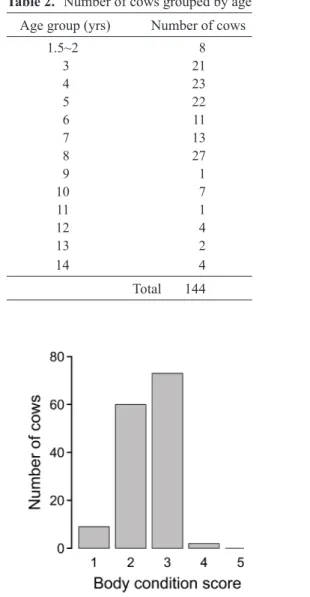
Numbers counted in each age group are shown in Table 2. Among the all cows, the median age was 5 years old, ranging from a minimum of 1.5 years old to a maximum of 14 years old. The largest number of cows scored 3 in
BCS (n=73), followed by 2 (n=60), 1 (n=9) and 4 (n=2) as shown in Figure 1. No cow was scored as 5 in BCS in the present survey.
Number of parturitions
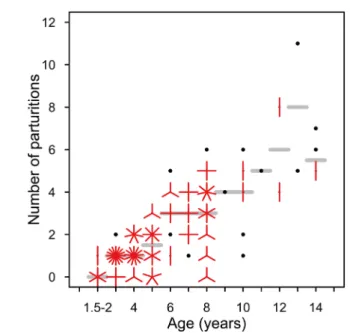
The number of parturitions recorded for each cow during its lifetime are shown as a sunflower plot in Figure 2. The majority of cows showed their first parturition by the age of 3 or 4 years old. As the age of the cows increased, the median (indicated as grey bar) of the parity increased by approxi- mately one between 2 and 13 years old. Some females have never shown parturition by the age of 8 years old.
Table 1. Questionnaire on reproductive perfor- mance and feed condition of cows
Questions
Type of food (A= Straw, B= Hay, C= Concentrate) Breed of cow
Age of cow BCS (1, 2, 3, 4, 5) No. of total parturition No. of total abortion No. of total dystocia No. of repeat breeder Length of anestrus Other diseases
Table 2. Number of cows grouped by age Age group (yrs) Number of cows
1.5~2 8
3 21
4 23
5 22
6 11
7 13
8 27
9 1
10 7
11 1
12 4
13 2
14 4
Total 144
Fig. 1. The number of crossbred dairy cows showing 1 to 5 of body condition score (BCS). The BCS was determined according to the 5-point condition scoring system as previously described12). 144 cows in total were surveyed in 7 farms in Jalalabad in East-Afghanistan. Note, no cow with 5 of BCS was found in the current study.
Fig. 4. The percentage of cows showing each BCS in two groups categorized by the feed; a group fed with straw, hay and concen- trates (n=90); the other group fed with only straw (n=54). BCS 1 (
■
), BCS 2 (■
), BCS 3 (■
) and BCS 4 (■
).Fig. 2. The number of parturitions recorded during the life- time of each cow. Black dot indicates there was one cow observed at the coordinate value. When two or more cows were observed at the same coordinate value, the number of the cows were expressed as the numbers of “petals” in red. Median among each age group are indicated by grey horizontal bars.
Table 3. Number of cows diagnosed with reproductive disorder
Reproductive Number of % disorder animals
Abortion 6 4.2
Anestrous 29 20.1
Dystocia 6 4.2
Repeat breeding 8 5.6 Retain placenta 1 0.7
Metritis 13 9.0
Vaginitis 3 2.1
Mixed 14 9.7
Total 80 55.6
Fig. 3. The number of the cows diagnosed as anestrus (
■
) and cyclic (■
) in each BCS group. Cows which had shown no estrus during the previous 3 months or longer was diagnosed as anestrus. There was a significant difference in the occurrence (per- centage) of anestrus between BCS1 and BCS3 (p<0.01 by Fisher’s exact test with Benjamini and Hochberg false discovery rate controlling procedure).Reproductive disorders
The number of animals with reproductive disorders in the last year is shown in Table 3. Eighty cows out of 144 were diagnosed as having reproductive disorders, which is equivalent to 55.6% of the total cows observed. Among the diagnosed cows, the largest number were anestrus, which counts for 20.1% of the total cows observed, followed by metritis (9.0%) and repeat breeding (5.6%), which is defined as the failure of fertilization after two or more insemination trials. Fourteen cows showed two or more of the disorders, such as abortion, anestrus, dystocia, vaginal prolapse and repeat breeders (9.7%).
Occurrence of anestrous and feeds
The number of the cows diagnosed as anestrus in each BCS group is shown in Figure 3. As the BCS increased, the percentage of the cows diagnosed as anestrus in all cows with the same BCS decreased. The percentage of cows showing anestrus in each BCS group was as fol- lows: BCS1, 77.8%; BCS2, 31.7%; BCS3, 17.8%; BCS4, 50.0%. There was a significant difference in the occur- rence (percentage) of anestrus between BCS1 and BCS3 (p<0.01 Fisher’s exact test with Benjamini and Hochberg false discovery rate controlling procedure). Figure 4 shows that cows fed with only straw tended to show a lower BCS compared with cows fed with straw, hay and concentrates.
Discussion
The present study demonstrates that anestrus is possibly the largest constraint in the reproductive performance of Afghan crossbred cows in Jalalabad city and that a poor feeding scheme may mainly be the cause of anestrus in the local farms in the area, because the present study showed that cows with a poor BCS were highly associated with the occurrence of anestrus and that the BCS correlated with the type of feeds. These results suggest that an improvement in the feeding scheme may contribute to improving the repro- ductive performance of crossbred cows in Afghanistan.
It is well known that the reproductive performance of cows is often affected by nutrition13, 14). Low nutritional feeding after parturition has negative effects on pulsatile luteinizing hormone (LH) release in dairy cows15, 16). Negative energy balance, caused by deficiencies in food content and/or total dry matter intake, results in delaying the first ovulation and decreasing reproductive efficiency in cattle17). Indeed, the cows whose body condition was poor during early lactation appear to be at risk for delayed ovulation, delayed first insemination, and low conception rate13). A previous study also indicated that poor body condition during the early postpartum period caused long calving intervals and that poor nutrition impaired ovarian function, resulting in repeat breeding in crossbred (Hol- stein x Sahi-wal) dairy cows in the Philippines18). Further, nutritional status is largely correlated with reproductive performance in cattle: when nutrition is improved, particu- larly during the pre-partum period, postpartum anestrus and calving intervals are reduced; when BCS is adequate at calving, the interval to conception is reduced14). An increase in nutrient intake during the pre-partum period substantially improves pregnancy rate compared with beef cows that experience a low nutrient intake until parturi- tion19). On the other hand, an inadequate nutrient intake causes loss of weight and a low BCS, finally resulting in the cessation of estrous cycles in cattle13). These studies are largely consistent with our current findings, showing that cows fed only with straw were highly associated with anestrus. Wheat straw alone is insufficient as feed for dairy cows, because the total digestive nutrient can be as low as 38%20), which only supplies energy for survival of the individual cow. Further, cows fed with only straw tended to show a lower BCS compared with animals fed with straw, hay and concentrates, suggesting that an improve- ment of the feeding scheme is required to improve the BCS and consequently reproductive performance in cows. It is also noteworthy that two cows fed with only straw showed higher BCS compared with others, implying that the BCS could be improved by other environmental factors, such as better management of sheds and sanitation, than only
feedings. Individual variation of physiological conditions also needs to be taken into account, because residual feed intake (one of the major indices of feed efficiency in rumi- nants) varies depending on metabolism, thermoregulation or physical activities of individual animals21).
The BCS is one of the most useful indicators to under- stand the animal nutrition and reproductive status in dairy cows, because the present study showed that the lower the BCS, the higher the percentage of cows that showed anes- trus. The notion is consistent with previous studies showing that estrus cycle can be estimated with the BCS and that the time of the delivery to the next estrus can be estimated by BCS in the Japanese anestrus Holstein dairy cows22). Indeed, an excessively low BCS results in an unsuitable condition for estrus cycle and fertility in Holstein dairy cows: Cows that have a low BCS have low estrus and pregnancy rates than cows with a moderate BCS as seen in Nellore cows23). Interestingly, ‘fatty condition’ also can have a negative influence on reproductive performance in cows. In fact, the pregnancy rate was higher in cows that showed moderate BCS than thinner or fatter cows23). Thus, the feeding programs designed to maintain cows at a moderate BCS from pre-calving through rebreeding are required to improve reproductive performance in cows23).
The present study revealed that 55.6% of dairy cows in the survey have reproductive disorders and that “anes- trus” was the major disorder and some anestrous cows also afflicted with additional reproductive disorders, such as metritis repeat breeding. The result is consistent with previous studies, indicating that anestrus is major reproductive problem, which is often accompanied with repeat-breeding, dystocia, retained fetal membranes, endo- metritis and abortion in crossbred dairy cattle in Mekelle, Ethopia24), Hosanna, Ethopia25) and Ho Chi Minh, Viet- nam26). Further, the present survey showed that some cows have never shown parturition by the age of 8 years old.
It is speculated that an improvement of nutritional status may solve anestrus and other accompanying reproductive disorders that may consequently facilitate reproductive performance in Afghan cows.
In conclusion, the present study showed that cows with a poor BCS were highly associated with the occurrence of anestrus and that BCS was associated with the type of feed.
These results suggest that an improvement in the feeding scheme may contribute to improve the reproductive perfor- mance of crossbred cows in Afghanistan.
Acknowledgements
We are grateful to Nangarhar valley development authority project and Nangarhar agriculture, irrigation &
livestock directorate to providing records and opportunity to survey the animals. We thank veterinarian doctors
Mr. Abdul Haq, Mr. Bahader khan Rahmanzai and Mr.
Muhammad Hassan to cooperating animal examination.
The present study was supported in part by a grant of Project for the Promotion and Enhancement of the Afghan Capacity for Effective Development (PEACE) project of Japan International Cooperation Agency (JICA). We thank Dr. Nicola Skoulding for her English edition.
References
1. FAOSTAT (2014) Available at: http://www.fao.org/
faostat/en/ - home Accessed 1st July 2018
2. World Bank (2014) Islamic Republic of Af- ghanistan agricultural sector review -revitalizing agriculture for economic growth, job creation and food security. p. xiv. Available at: http://documents.
worldbank.org/curated/en/245541467973233146/pdf/
AUS9779-REVISED-WP-PUBLIC-Box391431B- Final-Afghanistan-ASR-web-October-31-2014.pdf Accessed 1st July 2018
3. Food Security Information Network (2017) Global report on food crises. p. 97-101. Available at: http://
www.fao.org/3/a-br323e.pdf Accessed 1st July, 2018 4. FAO (2017) GIEWS Country Brief Afghanistan.
Available at: http://www.fao.org/giews/countrybrief/
country.jsp?code=AFG Accessed 25th September 2017 5. FAO and WFP (2017) Monitoring food security in
countries with conflict situation. p. 5-8. Available at:
http://www.fao.org/3/a-i7490e.pdf Accessed 1st July 2018
6. FAO (2008) Afghanistan National Livestock Census. p.
3-5. Available at: http://www.fao.org/tempref/docrep/
fao/010/i0034E/i0034E01.pdf Accessed 1st July 2018 7. Zafar M (2001) First draft country report on the sta-
tus and perspectives of the animal genetic resources development and conservation in Islamic Republic of Afghanistan. p. 1-77. Available at: http://www.fao.org/
tempref/docrep/fao/010/a1250e/annexes/CountryRe- ports/Afghanistan.pdf Accessed 1st July 2018
8. Bahmani HR, Aslaminejad AA, Tahmoorespur M and Salehi S (2011) Reproductive performance of cross- bred dairy cows under smallholder production system in Kurdistan province of Iran. J Appl Anim Res 39: p.
375-380.
9. Sattar A, Mirza RH, Niazi AAK and Latif M (2005) Productive and reproductive performance of Holstein- Friesian cows in Pakistan. Pakistan Vet. J 25: p. 75-81.
10. Dayyani N, Karkudi K and Bakhtiari H (2013) Re- productive performance definition in dairy cattle:
affective factors. IJABBR 1: p. 1392-1396.
11. Suttie JM (2000) Hay and straw conservation - for small-scale farming and pastoral conditions. p. 303.
Available at: http://www.fao.org/docrep/005/x7660e/
x7660e0m.htm Accessed 1st July 2018
12. Edmonson AJ, Lean IJ, Weaver LD, Farver T and
Webster G (1989) A body condition scoring chart for Holstein dairy cows. J Dairy Sci 72: p. 68-78.
13. Rice LE (1991) The effects of nutrition on reproduc- tive performance of beef cattle. Vet Clin North Am Food Anim Pract 7: p. 1-26.
14. Montiel F and Ahuja C (2005) Body condition and suckling as factors influencing the duration of post- partum anestrus in cattle: a review. Anim Reprod Sci 85: p. 1-26.
15. Randel RD (1990) Nutrition and postpartum rebreed- ing in cattle. J Anim Sci 68: p. 853-862.
16. Do VH and Taylor-Robinson AW (2015) Influence of maternal nutritional factors on ovarian folliculogen- esis in cattle. J Vet Sci Anim Husb 3: p. 1-5.
17. Ferguson JD and Chalupa W (1989) Impact of protein nutrition on reproduction in dairy cows. J Dairy Sci 72: p. 746-766.
18. Alejandrino AL, Asaad CO, Malabayabas B, De Vera AC, Herrera MS, Deocaris CC, Ignacio LM and Palo LP (1999) Constraints on dairy cattle productivity at the smallholder level in the Philippines. Prev Vet Med 38: p. 167-178.
19. Selk GE, Wettemann RP, Lusby KS, Oltjen JW, Mobley SL, Rasby RJ and Garmendia JC (1988) Re- lationship among weight change, body condition and reproductive performance of range beef cows. J Anim Sci 66: p. 3153-3159.
20. Shaver R and Hoffman P (2010) Use of straw in dairy cattle diets. Focus on Forage 12: p. 1-2.
21. Arthur JPF and Herd RM (2008) Residual feed intake in beef cattle. R Bras Zootec 37: p. 269-279.
22. Arai K, Suzaki N, Ahmed I, Fukuda O, Okumura H, Endo K and Yamashita K (2017) Method for produc- tive cattle finding with estrus cycle estimated with BCS and parity number and hormone treatments based on a regressive analysis. IJACSA 8: p. 191-196.
23. Mohamed A, Wahid H, Rosnina Y, Mazni OA and MohdAzam K (2016) Relationship between body con- dition of cows with incidence of estrus and pregnancy rate. IOSR-JAVS 9: p. 199-209.
24. Mekonnin AB, Harlow CR, Gidey G, Tadesse D, Desta G, Gugssa T and Riley SC (2015) Assessment of reproduc- tive performance and problems in crossbred (Holstein Friesian X Zebu) dairy cattle in and around Mekelle, Tigray, Ethiopia. Anim and Vet Sci 3: p. 94-101.
25. Haile A, Tsegaye Y and Tesfaye N (2014) Assessment of major reproductive disorders of dairy cattle in urban and per urban area of Hosanna, Southern Ethiopia.
Anim and Vet Sci 2: p. 135-141.
26. Nguyen-Kien C, Van Khanh N and Hanzen C (2017) Study on reproductive performance of Holstein x Lai Sind crossbred dairy heifers and cows at smallhold- ings in Ho Chi Minh City, Vietnam. Trop Anim Health Prod 49: p. 483-489.
Journal of
International Cooperation for Agricultural Development
J Intl Cooper Agric Dev 2019; 17: 8–13
Original
Growth and Feed Utilization of Juvenile Nile Tilapia Fed with
Boiled Moringa oleifera Meal Diets:
A Preliminary Report
Albert V. Manuel1), A. M. Shahabuddin1), Debasish Saha1), Miguel H. Chele1), Kelvin O. A. da Conceicao1) Naoaki Tsutsui1) and Takao Yoshimatsu1)
1) Laboratory of Shallow Sea Aquaculture, Graduate School of Bioresources, Mie University, Mie 514-8507, Japan Received September 21, 2018 Accepted: December 10, 2018
Abstract. Juveniles of Nile tilapia were stocked (4.47 ± 0.26 g, eight fish per tank) and fed with test diets containing different inclusion levels of boiled Moringa oleifera leaf meal powder (0–30%: MLM 0, MLM 10, MLM 20, MLM 30), at 6% body weight for a total for six weeks. MLM 10 recorded the best average weight gain, specific growth rate, food conversion rate and protein efficiency ratio but there were no significance differences in all parameters with the MLM 30 diet which had the highest MLM inclusion. As there were no differences in fish growth and feed utilization between MLM 0 diet and MLM 10–30 diet, it would be possible to replace fish meal as a main dietary protein source by MLM up to 30% from 40% without any negative influence on the growth of juvenile Nile tilapia and is applicable as a practical rearing diet.
Key words: Nile tilapia, Moringa oleifera, growth, feed ingredient, fish meal
Introduction
Aquaculture is believed to reduce pressure on the wild- stock in fisheries and meet the needs of on-growing world food supply1). Fish feed is the single largest expenditure in semi-intensive and intensive fish culture operations. One major reason for its high cost is the animal protein content used in feed formulations. Animal proteins, for example, fish meal is usually the biggest proportion of commercial fish feeds. Global fish meal and fish oil production aver- aged 6.5 and 1.3 million metric tonnes, respectively, over the past 20 years, however, some years’ productions were higher and in others lower2). Recently, researchers have been considering plant proteins as a substitute for animal proteins in fish feed to lower cost. For example, a study in
Egypt was carried out to replace fish meal with a mixture (soyabean, cotton seed, sunflower and linseed meals) of different plant protein sources in juvenile Nile Tilapia feed and concluded that a replacement of 100% fish meal protein would have no adverse effects for up to 16 weeks old juvenile3). Furthermore, another study showed that cot- tonseed meal can partially replace fish meal as a source of protein in compound feed at a limited amount of no more than 50% for tilapia raised in recirculation systems4). Plant sourced proteins to replace fishmeal have successfully been carried out but there are some challenges. One being that these plant proteins need to be purchased at a certain cost which may be lower than fish meal but still carries a price to use as part of the fish feed ingredient.
Moringa oleifera, is a resilient tree that can survive in a variety of climates and substandard soils. Moringa plant is native to the sub-Himalayan regions of Northwest India and the plant thrives in many countries of Africa, Arabia, Corresponding author: T Yoshimatsu, e-mail: takaoyos@bio.
mie-u.ac.jp
South East Asia, the Pacific and Caribbean Islands as well as South America5, 6). It is readily available at no cost in many of these countries and is fast growing and hardy.
Moringa leaves have a high nutritional value and contain various amino acids, which are rarely found in other plants.
From those practical merits, in agriculture, Moringa leaves are used to feed cattle7), pigs8), chickens and poultry9). The use of Moringa leaf meal (MLM) also might be a good choice for the aquaculture field. There are several feeding trials that have used Moringa leaf meal as a replacement to animal protein (fish meal) for fish feed in many places in the world. For example, a preliminary study by Richter et al. (2003) carried out feeding trials using Nile tilapia and results indicated that raw Moringa leaf meal can be used to substitute up to 10% of dietary protein in Nile tilapia without significant reduction in growth10). A study by Afuang et al. (2003) showed a comparative nutritional evaluation of raw, methanol extracted residues and metha- nol extracts of Moringa leaves on the growth performance and feed utilization in Nile tilapia and results showed that the solvent extracted Moringa leaf meal could be included up to 33% in tilapia diets without any negative effects on growth11). The solvent extraction method resulted in the inactivation and reduction of antinutrients and improved the palatability of Moringa leaf meal diets. Therefore, even though the antinutrient levels were not measured, the cur- rent experiment treated Moringa leaf by boiling and sun drying, a simple practical method for developing countries
that has not been used before in treating Moringa leaves, hoping that this would also reduce negative influences by antinutrients in the test diets.
In Mozambique and most parts of Africa, tilapia farm- ers cannot afford expensive imported fish feed and are in dire need for cheaper feed, so ingredients that were used to prepare test diets were chosen to be practical and affordable for farmers in Mozambique. The choice of these nutrient levels, particularly protein, was intended to reflect the practical diets used in developing countries. Therefore, this preliminary experiment focuses on substituting fish meal at different inclusion levels with boiled MLM to help overcome problems like high feed cost and reduce wild stock exploitation.
Materials and Methods Feed Formulation and Preparation
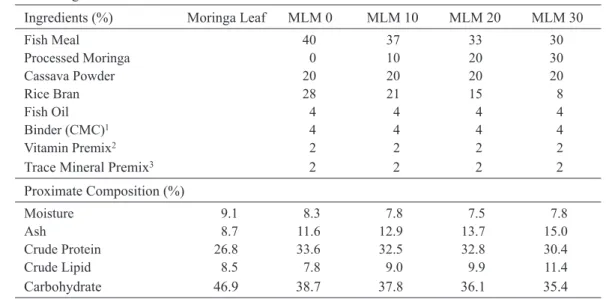
Moringa leaves were picked, boiled, dried and ground to powder form in the Instituto Superior Politécnicode Gaza (ISPG) in Chokwe, Mozambique by ISPS academic staff and sent to Mie University in Japan where feed formula- tion and preparation were done. A control (0%: MLM 0) and three test diets were prepared with different inclusion levels (10%: MLM 10, 20%: MLM 20, 30%: MLM 30) and analysis of their proximate compositions were carried out and is shown in Table 1.
Table 1 Feed formulation and proximate composition of MLM diets fed to O. niloticus during the growth trial
Ingredients (%) Moringa Leaf MLM 0 MLM 10 MLM 20 MLM 30
Fish Meal 40 37 33 30
Processed Moringa 0 10 20 30
Cassava Powder 20 20 20 20
Rice Bran 28 21 15 8
Fish Oil 4 4 4 4
Binder (CMC)1 4 4 4 4
Vitamin Premix2 2 2 2 2
Trace Mineral Premix3 2 2 2 2
Proximate Composition (%)
Moisture 9.1 8.3 7.8 7.5 7.8
Ash 8.7 11.6 12.9 13.7 15.0
Crude Protein 26.8 33.6 32.5 32.8 30.4
Crude Lipid 8.5 7.8 9.0 9.9 11.4
Carbohydrate 46.9 38.7 37.8 36.1 35.4
1 Carboxymethylcellulose.
2 Vitamin Premix, diluted in cellulose, provided the following in mg. kg–1 diet according to the requirement of O. niloticus12): vitamin A 1.8; vitamin D3 0.025; vitamin E 25; vitamin K 5.2; thiamine 2.5; riboflavin 6;
pyridoxine 16; pantothenic acid10; niacin 121; folic acid 0.82; vitamin B12 0.024; biotin 0.06; chlorine chloride 1000.
3 Trace Mineral Mix provided by the following minerals (mg. kg–1 diet): zinc (as ZnSO4.7H2O) 150; iron (as FeSO4. 7H2O) 40; manganese (as MnSO4. 7H2O) 25; copper (as CuCl2) 3; iodine (as KI) 5; cobalt (as CoCl2. 6H2O) 0.05; selenium (as Na2SeO3) 0.09.
Fish Sampling and Experimental Setup
Juveniles of Nile tilapia Oreochromis niloticus were sampled from the wild stock in Nikko river, Aichi Pre- fecture, Japan and then transferred to Mie University where they were kept for a week to acclimatize. Following acclimatization, fish weighing an average weight of 4.47
± 0.26 g were distributed (eight fish per tank) into twelve 10 L-volume tanks (three tanks per treatment) in a closed recirculating system set indoor. Fish were fed with test diets containing different levels of MLM at 6% (wet basis) body weight for a total of six weeks at temperature, 25 ± 2ºC. In a two-week interval, individual weights were mea- sured until the end of the experiment where all fish were sacrificed and sent for whole body composition proximate analysis (Table 3).
Growth Performance and Utilization
Growth and feed utilization were determined in terms of average daily weight gain (ADWG), specific growth rate (SGR), feed conversion ratio (FCR), protein efficiency ratio (PER) as follows:
ADWG (g fish–1 day–1) =
final weight – initial weight/ number of days SGR (% day–1) = 100 × (ln [final body weight] –
ln [initial body weight])/ no. of days FCR = feed intake / live weight gain PER = live weight gain/ crude protein intake Whole Body Composition
After the sixth week of rearing, fish were sacrificed and sent for a whole-body proximate analysis to determine the amount of crude protein, crude lipid, ash, moisture and carbohydrates and results expressed as a percentage of live weight.
Statistical Analysis
Statistical analysis (SPSS vers. 16. IBM®, New York, USA) was carried out using Tukey’s test after one-way analysis of variance (ANOVA) to determine differences among treatment groups which were deemed significant at P<0.05.
Results
Growth Performance and Feed Utilization
Body weight gain during the six weeks of growth trial is shown in the Fig. 1. Fish fed actively on the prepared test diets but not at a consistent rate and this resulted in a low weight gain.
Moringa leaf has high levels of crude protein (26.8% in the present study) and previous studies have proved this
to be similar, for example, a study showed that Moringa leaf had a crude protein content of 31–35%13), 25%10), and 25.4%11). By adding MLM with different inclusion levels, test diets including 30.4–33.6% crude protein were formulated in the laboratory (Table 1).
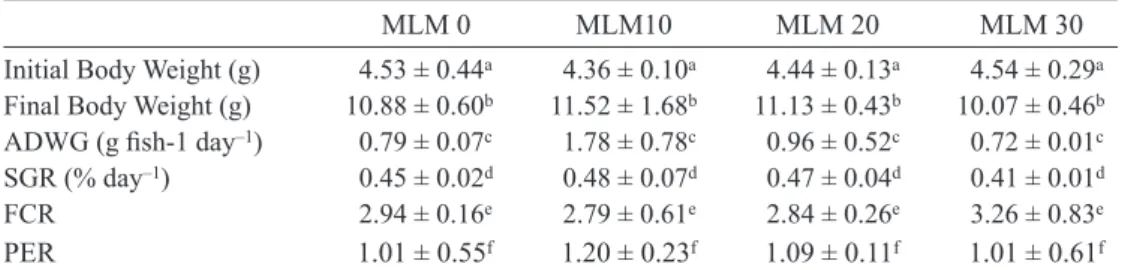
The overall performance of our feeding trial is sum- marized in Table 2 together with the nutrient utilization.
Although, fish fed with the MLM 10 diet clearly showed the best performance in average daily weight gain (ADWG) of 1.78 ± 0.78 g fish–1 day–1, specific growth rate (SGR) of 0.48 ± 0.07% day–1, feed conversion rate (FCR) of 2.79 ± 0.61, and protein efficiency ratio (PER) of 1.20
± 0.23, there were no significant difference in comparison to other diets, mainly due to the varied weight gain values and limitation of individual number used in each treatment.
Whole Body Composition
As for the effect of MLM supplementation on proximate body compositions of juvenile Tilapia, crude protein and lipid contents were measured 14.1% and 1.2%, respec- tively in initial fish body. After 6 weeks feeding, the values of 18.8% and 3.6% were noted in MLM 0 group and 16.7–19.2% and 3.0–3.3% were obtained in each MLM supplemented groups.
Discussion
The rearing results obtained in the present experiment suggested that an inclusion of MLM up till 30% would be possible without any negative influence on feed intake and fish growth. One factor that limits the high inclusions of MLM in fish diets is the presence of antinutrients.
According to a previous study, 30% inclusion of Mor- inga leaf caused a depression in growth and this could Fig. 1. Change in body weight of O. niloticus over a period of six weeks after been fed with different levels of MLM diets.
likely be attributed to several factors, most importantly, antinutrients7). However, this problem could be solved by drying and/or grinding of moringa leaves before aqueous extraction that would improve the removal of soluble antinutrients13). The study further mentions that rejection was prominent in (45%: MLM 45) and (60%: MLM 60) fish diets, so therefore it is safe to say that an inclusion of (30%: MLM 30) would have no negative effect on fish intake and growth.
The best FCR value of 2.79 ± 0.61, obtained from fish fed with the MLM 10 diet in the current experiment was considered to be quite high, however, FCR values reported in a previous study showed that an inclusion of 30% aque- ous extracted MLM in fish diets recorded a FCR of 4.97 ± 0.3713) and in comparison, to the current experiment, a 30%
MLM inclusion in fish diet recorded a much lower FCR value of 3.26 ± 0.83. The experiment was conducted over months of October to December and room temperatures ranged from 18–25°C but heaters were placed in the recir- culating tanks to control water temperature. The optimum range of culturing O. niloticus is from 26°C to 29°C14) and it appears that low temperatures may have affected FCR. A study carried out in winter reported FCRs ranging from 3.3–4.715) for different sizes of O. niloticus reared during winter and compared to the current experiment, FCR values ranged from 2.79–3.26. Therefore, to obtain a much better FCR value with the same experimental design, a study with more individuals per treatment, bigger culture tanks, an effective antinutrient removal technique, and a temperature of 28 ± 1°C, would provide an optimum
culture condition which would maximize feed in-take and conversion, resulting in obtaining a reasonable FCR value.
If all these parameters are achieved and a low FCR value is obtained, MLM substitution instead of fish meal could be carried out in developing countries to reduce fish feed cost and encourage more farmers to tap into the fish farm- ing business. Encouraging farmers to begin fish farming businesses would not only boost the local economy but be a favorable protein provider which could help tackle the issue of malnutrition faced in African countries.
PER was best recorded in fish fed with MLM 10 diet but there were no significant differences to other MLM diets. PER also might have been affected by the suboptimal temperature during the rearing period. PER decreased with decreasing weight of fish and protein level and this was the same case in an experiment by Richter et al. (2003)10).
The level of whole-body moisture as shown in Table 3 was higher in fish fed with MLM 10, MLM 20 and MLM 30 diets compared to the control MLM 0 group. This agreed with results of a reported study which had similar lose in whole body lipid content and energy of common carp fed with plant-based protein, Mucuna16). Furthermore, another study that studied factors affecting the proximate composition of cultured fishes observed that body mois- ture and body lipid were inversely related17), which was the case in this experiment.
The results of the present study showed that MLM 10 diet recorded the best ADWG, SGR, FCR and PER but the results were not that statistically different from the MLM 30 diet. Due to these experimental results, a 30%
Table 2 Growth performance and nutrient utilization of O. niloticus fed with MLM diets
MLM 0 MLM10 MLM 20 MLM 30
Initial Body Weight (g) 4.53 ± 0.44a 4.36 ± 0.10a 4.44 ± 0.13a 4.54 ± 0.29a Final Body Weight (g) 10.88 ± 0.60b 11.52 ± 1.68b 11.13 ± 0.43b 10.07 ± 0.46b ADWG (g fish-1 day–1) 0.79 ± 0.07c 1.78 ± 0.78c 0.96 ± 0.52c 0.72 ± 0.01c SGR (% day–1) 0.45 ± 0.02d 0.48 ± 0.07d 0.47 ± 0.04d 0.41 ± 0.01d FCR 2.94 ± 0.16e 2.79 ± 0.61e 2.84 ± 0.26e 3.26 ± 0.83e PER 1.01 ± 0.55f 1.20 ± 0.23f 1.09 ± 0.11f 1.01 ± 0.61f Mean ± SE (n=3) in each column followed by different letters (P˂0.05) indicates a significant difference.
AWG: Average daily weight gain, SGR: specific growth rate, FCR: feed conversion rate, and PER:
protein efficiency ratio.
Table 3 Whole body proximate composition of O. niloticus fed test diets before and after the experiment (% fresh weight)
Initial MLM 0 MLM 10 MLM 20 MLM 30
Moisture 81.2 74.3 77 74.9 74.9
Crude Protein 14.1 18.8 16.7 19.2 18.9
Crude Lipid 1.2 3.6 3.1 3.0 3.3
Ash 3.2 3.2 2.4 2.8 2.8
Carbohydrate 0.3 0.1 0.8 0.1 0.1
inclusion of MLM in fish diets replacing fish meal would have no interference in the growth and performance of juvenile Nile tilapia. The use of Moringa leaf as a dietary source in fish diets is limited due to the presence of anti- nutritional factors, particularly saponins and to a lesser extent tannin, phytic acid and hydrogen cyanide18). The present study processed Moringa leaves by boiling and this may have led to a reduction of anti-nutrients due to the leaching of soluble fractions in water. To clarify this point, more detailed experiments and biochemical analyses from various viewpoints would be necessary in future. Also in the next step, larger scale rearing experiments would be indispensable to establish the usage of boiled Moringa meal as a cheap and sustainable feed source for fish.
Acknowledgement
This experiment was carried out as one part of a Japan International Cooperation Agency (JICA) project (2016, BOP Business Survey Project in Mozambique) carried out under an academic MOU between ISPG and Mie univer- sity. We would like to thank JICA for its financial support and ISPG in Mozambique for preparing the key ingredient for this laboratory-level feeding experiment, Moringa leaf meal. We acknowledge that the country of origin of the material is Mozambique and that the country’s biodiversity had been managed by various legislations, in particular the Convention on Biological Diversity and the Nagoya Protocol which need to be adhered to.
References
1. Naylor RL, Goldburg RJ, Mooney H, Beveridge M, Clay J, Folke C, Kautsky N, Lubchenco J, Primavera J, Williams M. (1998) Nature’s subsidies to shrimp and salmon farming. Science 282: 883-884.
2. Hardy RW. (2010) Utilization of plant proteins in fish diets: effects of global demand and supplies of fishmeal. Aquaculture Research 41: 770-776.
3. El-Saidy DMSD, Gaber MMA. (2003) Replacement of fish meal with a mixture of different plant protein sources in juvenile Nile tilapia, Oreochromis niloticus (L.) diets. Aquaculture Research 34: 1119-1127.
4. Mbahinzireki GB, Dabrowski K, Lee KJ, El-Saidy D, Wisner ER. (2001) Growth, feed utilization and body composition of tilapia (Oreochromis niloticus sp.) fed with cottonseed meal-based diets in a recirculating system. Aquaculture Nutrition 7: 189-200.
5. Foidl N, Makkar HPS, Becker K. (2001) The potential of Moringa oleifera for agricultural and industrial uses.
In: Fuglie LJ (eds.), The Miracle Tree: the multiple uses of Moringa. CTA, Wageningen, The Netherlands:
45-76.
6. Isaac N. (2012) Reaping the gains of R&D in Moringa oleifera. http://leadership.ng/nga/articles/31240/2012/
07/31/reaping_gains_rd_moringa_oleifera.html.
7. Sánchez NR, Spörndly E, Ledin I. (2005) Effect of feeding different levels of foliage of Moringa oleifera to creole dairy cows on intake, digestibility, milk production and composition. Live Stock Science 101:
24-31.
8. Ly J, Samkol P, Preston TR. (2001). Nutritional evalu- ation of tropical leaves for pigs: Pepsin/pancreatin digestibility of thirteen plant species. Livestock Re- search for Rural Development 13: 5. http://www.lrrd.
org/lrrd13/5/ly135.htm.
9. Olugbemi T, Mutayoba S, Lekule FP. (2010) Effect of moringa (Moringa oleifera) inclusion in cassava-based diets fed to broiler chickens. International Journal of Poultry Science 9: 363-367.
10. Richter NS, Siddhuraju P, Becker K. (2003) Evalu- ation of nutritional quality of moringa (Moringa oleifera Lam.) leaves as an alternative protein source for Nile tilapia (Oreochromis niloticus). Aquaculture 217: 599-611.
11. Afuang WS, Siddhuraju P, Becker K. (2003) Compara- tive nutritional evaluation of raw, methanol extracted residues and methanol extracts of moringa (Moringa oleifera Lam.) leaves on growth performance and feed utilization in Nile tilapia (Oreochromis niloticus L.).
Aquaculture Research 34: 1147-1159.
12. Shiau S, Lin Y. (2006) Vitamin requirements of Tilapia—A review. In: Sàurez LEC, Marie DR, Salazar MT, López MGN, Cavazos DAVC, Ortega ACPCAG (eds.), VIII International Symposium on Aquaculture Nutrition. Mazatlán, Mexico: 15-17.
13. Madalla NA. (2013) Evaluation of aqueous extracted moringa leaf meal as a protein source for Nile tilapia juveniles. Tanzania Journal for Agricultural Sciences 12: 53-64.
14. Chervinski J. (1982) Environmental physiology of tilapias. In: Pullin RSV & Lowe-McConnell, RH (eds.), ICLARM, Manilla, Philippines: 119-126.
15. Siddiqui AQ, Howlader MS. (1991) Growth of Nile tilapia, Oreochromis niloticus (L.), in response to winter feeding. Journal of Aquaculture in the Tropics 6: 153-156.
16. Siddhuraju P, Becker K. (2001) Preliminary nutritional evaluation of mucuna seed meal (Mucuna pruriens var. utilis) in common carp (Cyprinus carpio L.): an assessment by growth performance and feed utiliza- tion. Aquaculture 196: 105-123.
17. Shearer K. (1994) Factors affecting the proximate composition of cultured fishes with emphasis on salmonids. Aquaculture 119: 63-88.
18. Francis G, Makkar HPS, Becker K. (2001) Antinu- tritional factors present in plant-derived alternate fish feed ingredients and their effects in fish. Aquaculture 199: 197-227.
モリンガ飼料を与えた際のナイルティラピアの 成長と飼料利用効率(予報)
Albert V. Manuel, A. M. Shahabuddin, Debasish Saha, Miguel H. Chele, Kelvin O. A. da Conceicao, 筒井 直昭,吉松 隆夫
三重大学大学院生物資源学研究科浅海増殖学研究室
要旨
ナイルティラピア幼魚(4.47 ± 0.26 g)を各水槽に 8 尾ずつ収容し,煮沸による熱処理を施したモリンガMoringa oleifera 葉体の乾燥粉砕物(MLM)を 0 - 30%添加した試験飼料を体重の 6%分 6 週間の試験期間中毎日給餌して,成長,生残,飼 料成分の利用効率,体成分に与える影響を予備的に検討した。その結果,MLM を 10%添加した試験区で最高の平均増重,
比増殖率および飼料成分の利用効率が得られたが,MLM 無添加,あるいは 20–30%添加した区との間で統計的有意差は 認められず,また給餌試験終了後の魚体の一般分析値にも大きな差異はなかった。本実験により,ナイルティラピア幼魚に 対して,MLM を 30%添加することにより飼料タンパク質源である魚粉を 10%分削減することが可能であることが本試 験で分かった。
キーワード: ティラピア、モリンガ、成長、飼料成分、魚粉
Journal of
International Cooperation for Agricultural Development J Intl Cooper Agric Dev 2019; 17: 14–23
Working Paper
フィリピン・バタン湾におけるウシエビ放流の 試み
Feasibility of Stock Enhancement of Tiger Shrimp in Batan Estuary in Philippines
黒倉 寿1)・Jon Altamirano2)・Yasmin Primavera3)・石川智士4)
Hisashi Kurokura1), Jon Altamirano2), Yasmin Primavera3), Satoshi Ishikawa4) 1) NPO法人Hunet ASA
2) Southeast Asian Fisheries Development Center, Aquaculture Department 3) Aklan State University, College of Fisheries and Marine Science 4)東海大学海洋学部
1) Non-profitable Organization Hunet ASA
2) Southeast Asian Fisheries Development Center, Aquaculture Department 3) Aklan State University, College of Fisheries and Marine Science 4) Tokai University, School of Marine Science and Technology
論文受付 2019年2月4日 掲載決定 2019年2月20日 要旨
エリアケイパビリティー (AC) の強化方法に関する研究として行われた、フィリピンの漁業者の参加によるウシエビの 放流事業の経緯と現状をレポートした。ウシエビの漁獲量の低下の原因は、過剰漁獲と生育場の環境劣化であった。放流 プロジェクトには 5 名のボランティアが最後まで参加し、中間育成のマニュアルの作成等、現地での技術的問題はほぼ解決し、
放流ウシエビは 20% 以上の再捕率であり,資源添加としての放流効果が確認された。事業の経済的妥当性も確認された。
実際に、多くの人々がウシエビの漁獲量の増加を実感しており、行政を含めて、放流についての地域の理解は得られつつ ある。現在、放流事業は中断しているが、関係者は再開のための準備を行っており、現地の大学は AC にかかわる放流事 業とその学術研究への外国の研究者の参加を期待している。放流事業が再開された場合、AC の評価法・理論化のための 研究フィールドとなることが期待できる。
キーワード:ウシエビ、エリア・ケイパビリティー、参加型地域開発、フィリピン、放流
Abstract. Processes and results of stock enhancement of tiger shrimp performed in Batan Bay in Philippines was reported as a trans-disciplinary research for enhancement of area-capability (AC). Causes of decline in catch amount of tiger shrimp were overfishing and degradation of its nursery grounds such as mangrove forest. Five fishers had participated in the intermediate culture throughout the project period. Technical issues for stock enhancement were solved and expectable recapture rate of released shrimp was more than 20%. Economic feasibility of the stock enhancement was also confirmed. Forty-five percent of the people in the area are realizing the increase of catch amount of tiger shrimp. Effectiveness of stock enhancement is obtaining understanding from common people including public administrations. After the project, the stock enhancement was paused and stakeholders want to proceed with the stock enhancement. Aklan State University is planning to support stock enhancement project as its extension activities and expect participations of researchers from foreign countries. Such activities will provide research opportunities for evaluation and theorization of AC.
Key words: Tiger shrimp, Area capability, Participatory community development, Philippines, Stock enhancement
栽培漁業事業とは水産生物の種苗生産や種苗放流と同 義であると一般的に思われており、事業の実態もほと んどが種苗の生産と放流である。しかし、本来は漁業 者が自然環境における水産生物の生産に積極的にかか わるという意味で栽培という言葉が使われており、生 息域・産卵場の維持管理、餌料環境の改善等も、本来、
栽培漁業に含まれる。栽培漁業には、自然の生態系や 野生生物の遺伝子のかく乱、疾病の拡散に対する懸念、
経済的合理性に対する疑問等々、批判や否定的評価も ある。それ以前に、健全な生態系では生物生産のエネ ルギー・フローは隙間なく埋め尽くされており、種苗 放流によって、生物生産量全体が増加することはほと んどないという根本的な批判がある。放流事業が盛ん になったのは我が国の経済が急速に拡大した高度成長 期以降のことである。1954年から1973年の高度成長 期には、沿岸の浅瀬の埋め立てが進められ、浅瀬を生 育場とする水産生物の生育場が奪われていった。また、
残された生育場の環境も劣化していった。当時はまだ 漁業者人口も多く、それらの漁業を維持していくために、
失われた生育場の機能の代替として、種苗放流を行う ことが行政的にやむを得ない選択でもあったのだろう。
現在は、漁業者の数も漁業に依存する地域も減ってい る。一方、沿岸環境の改善も進んでいる。結果、放流 事業の必要性は低下している。実際、(社)日本栽培漁 業センターは、2003年に独立行政法人水産総合研究セ ンターに統合され、現在、放流事業も縮小傾向にある。
しかし、栽培漁業の本来の意味に戻れば、栽培漁業=
種苗放流ではない。(社)日本栽培漁業協会は大島泰雄 氏が主張した「つくる漁業」を具体的に実施するための 機関である。「つくる漁業」は「とる漁業」に対する言葉 で、漁業関係者が、自然資源であり公共物である水産 生物の天然での生産に関心を持ち、その維持に積極的 にかかわっていくことである。実際、つくる漁業の成 功例とされる浜名湖のクルマエビ放流事業では、漁業 者が参加する形で放流事業を行うことにより、漁業者 の意識が変わり漁業者間の連携が強化されたことが知 られている4)。
経 緯
フィリピン・Panay島・Batan湾はSibuyan海に面す る海跡湖で、我が国の浜名湖やサロマ湖などと同様 に、砂州で海と隔てられて狭い湾口で外海とつなが る。浅海域であるための生産性が高く、漁業が盛んで ある。Batan湾内には、Pinamuk-anという東西に5km 背 景
開発とは何か、国際協力とは何について協力すべき なのかを考えることは、開発学の重要なテーマの一つ である。古くは資源開発や技術移転による経済開発、
インフラ整備や教育による社会開発・人間開発、最近 では環境や生態系の保全を含めた持続的開発、さらに 先進国を含めた地球規模での人類の安全性にかかわる 開発など、様々な視点から何を開発するべきなのかが 議論されてきた。農学分野の開発でも、単なる資源利 用技術の開発や移転だけでなく、地域社会が自律的に 発展する要素とは何かが問われてきた。石川・渡辺1,2) は、エリア・ケイパビリティー(AC)という概念を提唱 した。ACのCはアマルティア・セン3)が主張するケイ パビリティー(潜在能力)をベースにしているが、それ を個人レベルから社会のレベルに拡大する一方で、資 源の管理とその利用に特化している。ACとは、地域 の集団が、地域の資源を認識し、それらを適切に管理 して、集団として利益を上げ地域の厚生を増大させる 能力である。資源・環境・社会は不確実性を伴って変 動し、地域の風土も多様である。そうした質的量的変 動が常にある中で、地域全体の厚生を維持・増大する ためには、資源の状態を継続的に把握し、地域の合意 に基づいて適切に管理・利用していく正の循環を作り 出さなければならない。状況の変化を把握し、合意に 基づいて管理・利用の方法を柔軟に改変して、その結 果に基づいて改変の適否を評価する循環的な枠組みを 維持する、地域の持つ潜在的な能力がACである。あ る地域が持つACをどのように定量的に評価するか、
その具体的な評価方法は議論の過程にある。現状では、
成功したAC的なシステムの存在の事例報告的な研究 がAC研究の主体となっている。生物資源以外にも、
文化、人的資源、環境など様々な資源がACの評価対 象となりえるが、理論的には地域の共有資源のである ことが前提である。漁業においては生産行為の対象が そもそも水産物という共有資源であるため、従来の漁 業社会学、漁業経済学の研究の多くは、AC的な能力・
システムの研究であったと整理することもできる。特 に、魚種の多様性が高く、小規模な地域漁業に依存し、
資源の評価・管理コストに制約のある途上国の漁業で は、ACの涵養が重要である。これを逆転して考えると、
地域漁業の成功度から地域全体のACを評価すること も可能かもしれないし、あるいは、地域のAC強化の ための漁業協力もありえる。
我が国の漁業を特徴づけるものに栽培漁業がある。