九州大学学術情報リポジトリ
Kyushu University Institutional Repository
イッテルビウムを使用したPARACEST造影剤による CESTイメージングの臨床MR撮像装置での実用化に関 する研究
高山, 幸久
九州大学大学院医学系学府
https://doi.org/10.15017/21739
出版情報:Kyushu University, 2011, 博士(医学), 課程博士 バージョン:
権利関係:(C) 2012 by Japanese Society for Magnetic Resonance in Medicine
*Corresponding author, Phone:+81-92-642-5695, Fax:+81- 92-642-5708, E-mail: ytaka@radiol.med.kyushu-u.ac.jp
MAJOR PAPER
Ytterbium-based PARACEST Agent: Feasibility of CEST Imaging on a Clinical MR Scanner
Yukihisa TAKAYAMA1*, Takashi YOSHIURA1, Akihiro NISHIE1, Tomohiro NAKAYAMA1, Masamitsu HATAKENAKA1, Naoki KATO2, Satoshi YOSHISE2, Jochen KEUPP3,
Dirk BURDINSKI4, and Hiroshi HONDA1
1Department of Clinical Radiology, Graduate School of Medical Sciences, Kyushu University 3–1–1 Maidashi, Higashi-ku, Fukuoka 812–8582, Japan
2Philips Electronics Japan, Tokyo, Japan
3,4Philips Research Europe,3Hamburg, Germany and4Eindhoven, the Netherlands (Received May 17, 2011; Accepted August 31, 2011)
Purpose: We investigated the feasibility of performing chemical exchange saturation transfer (CEST) imaging using ytterbium-based paramagnetic CEST (PARACEST) agents on a clinical magnetic resonance (MR) scanner.
Materials and Methods: We prepared solutions of 3 diŠerent ytterbium-based PARA- CEST agents at concentrations of 5, 10, 20, and 50 mM at a pH of 7.4 and at a concentra- tion of 50 mM at pHs of 3.0, 5.0, 7.4, and 9.5. We acquired images with a turbo spin echo technique using a quadrature head coil and a clinical 3.0-tesla MR system in accordance with the safety limits of the speciˆc absorption rate (SAR). We acquired CEST images with presaturation oŠset frequencies from -5,000 Hz (-39.1 ppm) to 5,000 Hz (39.1 ppm) with an interval of 500 Hz (3.9 ppm) for each condition. We repeated each scan 3 times and then calculated the mean and standard deviations of the magnitude of the CEST eŠect at diŠerent concentrations and pH values for each agent. We used one-way analysis of vari- ance and Tukey's honestly signiˆcant diŠerencepost hoctest to compare mean values of the magnitude of the CEST eŠect obtained at diŠerent concentrations and pH values.
Pº0.05 was considered signiˆcant.
Results: PARACEST agents showed a strong CEST eŠect at their speciˆc presaturation oŠset frequencies. For each agent, the CEST eŠect showed signiˆcant concentration depend- ency (Pº0.05), increasing with agent concentration, and signiˆcant pH dependency (Pº0.05), with strong eŠect near physiological pH.
Conclusion: CEST imaging using ytterbium-based PARACEST agents might be feasible on a clinical MR scanner with further modiˆcations, such as adjustments of the presatura- tion radiofrequency pulse and imaging protocols.
Keywords: chemical exchange saturation transfer (CEST), paramagnetic CEST (PARA- CEST) agent, ytterbium
Introduction
Chemical exchange saturation transfer (CEST) is a novel contrast mechanism for magnetic resonance (MR) imaging1,2 based on the chemical exchange between bulk water protons and labile solute pro- tons, such as those bearing NH- and OH-groups.
After saturation of labile solute protons by a selec- tive radiofrequency (RF) pulse, saturation ex-
change with the bulk water protons takes place. If the bulk water proton pool is much larger than the solute proton pool, nonsaturated bulk water pro- tons repeatedly replace saturated solute protons, and accumulation of saturated protons in the bulk water pool decreases the signal intensity of the water to provide information about the solutes, which are otherwise undetectable on MR imag- ing.1–5Numerousin vitro and a few recentin vivo studies have investigated the utility of this new technique.6–11 The rise and fall in strength of the CEST eŠect is known to depend not only on the
36
Fig. 1. Structural formulas of the chelate ligands for the encapsulation of ytterbium: (a) triethylenetetramine- N,N,N?,N!,N?!,N?!-hexaacetamide (ttham); (b) N- benzyl-triethylenetetramine-N,N?,N!,N?!,N?!-penta- acetamide (1bttpam); (c)N?-benzyl-triethylenetetramine- N,N,N!,N?!,N?!-pentaacetamide (4bttpam).
36 Y. Takayama et al.
Magnetic Resonance in Medical Sciences
concentration of the solutes but also on conditions, such as magnetic ˆeld strength, pH, temperature, and enzyme activity.1,2,8–11However, it is di‹cult to detect these changes on a clinical MR scanner with- out special RF pulse sequences that are likely to ex- ceed the limit of the speciˆc absorption rate (SAR).
Successful CEST imaging requires the selective and rapid saturation of the exchangeable solute proton followed by its rapid transfer to the bulk water, where it must remain a long time to allow large enhancement.2A high chemical exchange rate from the solute to the bulk water is ideal to increase the sensitivity of the CEST eŠect, and it is essential to maintain the condition of ``slow'' to ``intermedi- ate'' exchange on the nuclear magnetic resonance (NMR) time scale.2 This means that the exchange rates of the CEST-active protons should not exceed the Dv, which is the diŠerence in resonance fre- quency between the bulk water and solutes. Al- though a high magnetic ˆeld can be used to in- crease the CEST eŠect, such increase in ˆeld strength is limited in clinical practice. A group of paramagnetic CEST (PARACEST) agents have been developed exogenous contrast agents.1,2,12–20 They can eŠectively enlarge the chemical shift of the exchange site by several orders of magnitude and provide an alternative approach for attaining slow to intermediate exchange NMR conditions, even for very high exchange rates.2 Newly synthe- sized PARACEST agents composed of ytterbium complexes of several structurally related multiden- tate ligands have recently been reported.15Ytterbi- um allows for the highest practical CEST eŠect among the lanthanide ions because of its compara- bly small magnetic moment and the related long T1 values in aqueous solution.15,21,22 The CEST eŠect of ytterbium-based PARACEST agents has been evaluated on a 7T experimental NMR system using MR spectroscopy, but the possibility of reproduc- ing the CEST eŠect of the ytterbium-based PARA- CEST agent on a clinical MR scanner has not been investigated.
Our main purpose was to investigate whether CEST imaging using ytterbium-based PARACEST agents was feasible on a clinical MR scanner. First, we performed in vitro CEST imaging of PARA- CEST agents on a clinical MR scanner using com- mercially available RF pulse sequences that com- plied with the safety limits of the SAR and meas- ured the magnitude of the CEST eŠect of each agent at diŠerent presaturation oŠset frequencies.
Second, we measured the magnitude of the CEST eŠect by changing the concentrations and pH values of the solution and investigated the concen- tration and pH dependencies of the CEST eŠect.
Materials and Methods
Approval from our institutional review board was waived because this was a phantom study.
Paramagnetic CEST agents: We used the follow- ing 3 ytterbium-based PARACEST agents in this study, each yielding a tricationic complex after dis- solution in aqueous buŠer solution along with 3 charge-balancing chloride ions:
[Yb(ttham)]Cl3: ytterbium triethylenetetramine-N, N,N?,N!,N?!,N?!-hexaacetamide trichloride [Yb(1bttpam)]Cl3: ytterbium N-benzyl-triethylene- tetramine-N,N?,N!,N?!,N?!-pentaacetamide trichlo- ride
[Yb(4bttpam)]Cl3: ytterbium N?-benzyl-triethyle- netetramine-N,N,N!,N?!,N?!-pentaacetamide tri- chloride
We synthesized the PARACEST agents as previ- ously reported.15Figure 1 shows the structural for- mulas of the chelate ligands.
Phantom: We dissolved the agents in 4-mor- pholine-propanesulfonic acid (MOPS) buŠer to yield complex concentrations of 5, 10, 20, and 50 mM at pH of 7.4, which is the physiological pH value. We also prepared agent solutions with a complex concentration of 50 mM at pHs of 3.0,
5.0, 7.4 and 9.5, adjusting the values by adding small amounts of either 0.1 M sodium hydroxide or 0.1 M hydrochloric acid solution using a pH meter.
We prepared 24 phantoms using 10 mL plastic cyl- inders, each of which we ˆlled with 2 mL of one of the solutions, and scanned the phantoms simulta- neously. During the scan, we placed the 24 phan- toms in a foam container ˆlled with polyvinyl alco- hol so that we could monitor their temperature be- fore and after each scan to maintain a physiological temperature of 36.0±2.09C, which we adjusted by adding warmed polyvinyl alcohol.
Imaging Protocols: We performed experiments using a clinical 3-tesla MR system (Achieva, Philips Healthcare, The Netherlands) with a quad- rature head coil. The images were obtained using a turbo spin echo (TSE) technique with parameters:
repetition time (TR), 1500 ms; echo time (TE), 6 ms; TSE factor, 20; ˆeld of view (FOV), 230×230 mm; slice thickness, 4 mm; number of slices, one;
matrix size, 256×256; number of acquisitions, 4;
and scan time, 1 min 15 s. We used a presaturation oŠset RF pulse, which was a block pulse (about 500 ms in duration) of 3.8-mT pulse amplitude. To ob- tain z-spectra, we acquired CEST images at diŠer- ent presaturation oŠset frequencies from -5,000 Hz (-39.1 ppm) to 5,000 Hz (39.1 ppm) with an interval of 500 Hz (3.9 ppm) centered around the water resonance frequency. This protocol used the maximum power and duration of RF to comply with the safety limits of SAR.
Analysis of CEST eŠect: We evaluated the mag- nitude of the CEST eŠect aszCEST, deˆned ac- cording to the equation: zCEST=(M-S-MS)/
M/×100z. MSis the intensity of the MR signal of the bulk water taken immediately after application of an RF saturation pulse at the oŠset frequency of the exchangeable protons of the CEST agent. M-S is the intensity of the reference signal recorded after symmetrical application of the RF saturation pulse on the opposite side with respect to the oŠset fre- quency of bulk water to correct for nonselective saturation; most prominently direct saturation of water protons. M/is the intensity of a second ref- erence MR signal recorded at a su‹ciently devi- ated oŠset frequency to avoid in‰uence of mag- netization transfer eŠects on the signal. In this study, we used images obtained at a presaturation oŠset frequency of 20,000 Hz. We repeated each scan 3 times and calculated the mean and standard deviations of thezCEST values.
Statistical analysis: We compared the means of zCEST obtained at diŠerent concentrations or pH values using one-way analysis of variance (ANO- VA) and Tukey's honestly signiˆcant diŠerence
(HSD) post hoc test. Pº0.05 was considered sig- niˆcant.
Results
Figure 2 shows the z-spectra of each PARA- CEST agent at concentrations of 5, 10, 20, and 50 mM and a pH of 7.4. Each agent showed its speciˆc asymmetrical z-spectra with respect to the oŠset frequency of bulk water (0 ppm). The asymmetry in the z-spectra originating from the CEST eŠect was most obvious at the highest concentration (50 mM).
Figure 3 shows the zCEST spectra of each PARACEST agent at concentrations of 5, 10, 20, and 50 mM at a pH of 7.4. Each agent showed the CEST eŠect at several presaturation oŠset frequen- cies. In each plot, a highzCEST was observed at an oŠset frequency of -500 Hz (-3.9 ppm). We ignored this apparent CEST eŠect, attributing it to incomplete compensation for the so-called ``spill- over eŠect'' (direct saturation of water protons).
[Yb(ttham)]Cl3 (Fig. 3a) showed the strongest CEST eŠect at an oŠset frequency of -4000 Hz (-31.3 ppm). In addition, we observed a smaller peak of zCEST at -2500 Hz (-19.5 ppm). [Yb (1bttpam)]Cl3(Fig. 3b) showed the strongest CEST eŠect at -2500 Hz (-19.5 ppm). An additional small peak was seen at-4000 Hz (-31.3 ppm). Fi- nally, [Yb(4bttpam)]Cl3(Fig. 3c) showed the strong- est CEST eŠect at -2000 Hz (-15.6 ppm). A weaker CEST eŠect at 4000 Hz (31.3 ppm) was ob- served as a downward peak in the plot.
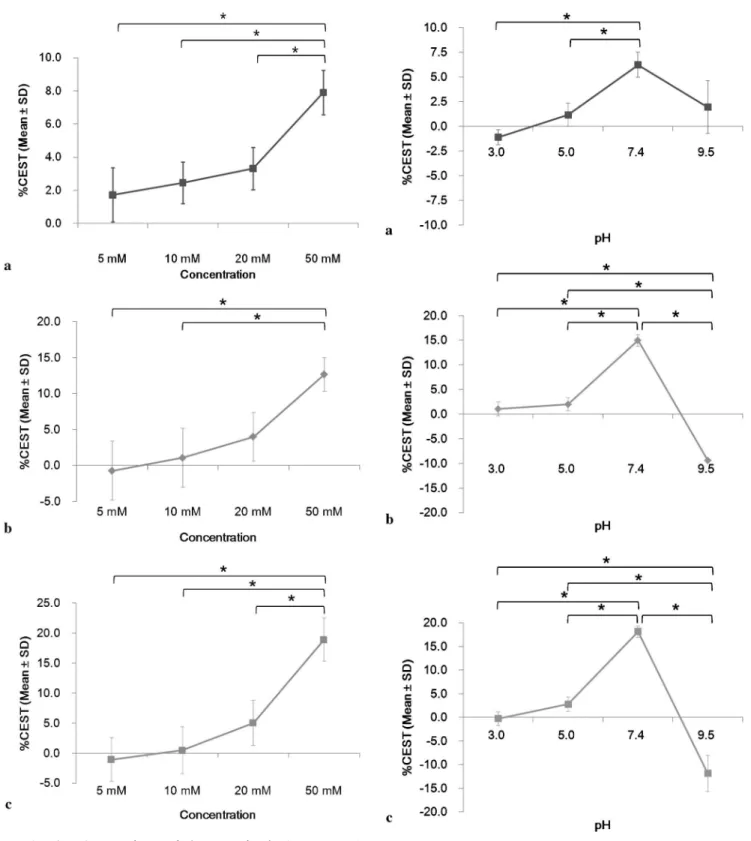
Figure 4 shows the concentration dependency of the CEST eŠect for the 3 agents and the results of pair-wise comparisons among the 4 concentrations.
Each agent showed signiˆcant concentration de- pendency of zCEST within a range from 5 to 50 mM (Pº0.05, ANOVA), with higher concentra- tion tending to result in stronger zCEST.
Figure 5 shows the pH dependency of the CEST eŠect and the results of pair-wise comparisons among the 4 pH conditions. We observed a sig- niˆcant pH dependency of the zCEST for each agent within a pH range from 3.0 to 9.5 (Pº0.05, ANOVA). For each agent,zCEST was maximized at a pH of 7.4, which is the near-physiological con- dition.
Discussion
We could observe the CEST eŠect of ytterbium- based PARACEST agents on a clinical MR scanner using a pulse sequence that complied with the safe- ty limits of the SAR. Each agent showed a strong
38
Fig. 2. Z-spectra for 3 paramagnetic chemical ex- change saturation transfer (PARACEST) agents at presaturation oŠset frequencies from 5000 Hz (39.1 ppm) to -5000 Hz (-39.1 ppm). Z-spectra of (a) [Yb(ttham)]Cl3, (b) [Yb(1bttpam)]Cl3, and (c) [Yb (4bttpam)]Cl3at concentrations of 5, 10, 20, and 50 mM at pH of 7.4.
Fig. 3. Magnitude (percentage) of chemical ex- change saturation transfer (zCEST) spectra of each paramagnetic CEST (PARACEST) agent at presatu- ration oŠset frequencies from 0 Hz (0 ppm) to-5000 Hz (-39.1 ppm).zCEST at (a) [Yb(ttham)]Cl3, (b) [Yb(1bttpam)]Cl3, and (c) [Yb(4bttpam)]Cl3 at con- centrations of 5, 10, 20, and 50 mM at pH of 7.4.
38 Y. Takayama et al.
Magnetic Resonance in Medical Sciences
CEST eŠect at its speciˆc presaturation oŠset fre- quencies, which were far from that of the bulk water. Moreover, the CEST eŠect diŠered sig- niˆcantly depending on the concentration and pH values of the solution. The CEST eŠect increased with an elevation of agent concentration and was particularly strong under near-physiological pH conditions.
CEST imaging is a novel molecular imaging tech-
nique believed capable of depicting even low con- centrations of endogenous mobile proteins and peptides in biological tissue. Although this tech- nique has been investigated more than 10 years, its practical use in a clinical setting remains di‹cult because the SAR or frequency resolution on a clini- cal MR scanner limit the strength of the CEST eŠect induced by endogenous mobile proteins and peptides. PARACEST agents have recently been proposed as a new type of MR imaging contrast agent to provide exogenous CEST imaging as an al- ternative to endogenous CEST imaging. The ability of these agents to produce strong CEST eŠects at oŠset frequencies far from that of bulk water over- comes the problem of underestimation of the CEST eŠect induced by direct saturation of water protons or a spill-over eŠect.2,23 Although several PARA- CEST agents have been developed, we used ytter-
Fig. 4. Comparison of the magnitude (percentage) of chemical exchange saturation transfer (zCEST) of each paramagnetic CEST (PARACEST) agent ob- tained among concentrations of 5, 10, 20, and 50 mM. The pH value was 7.4 for each agent. The mean and standard deviations (SDs) of zCEST of (a) [Yb(ttham)]Cl3 at -4000 Hz (-31.3 ppm); (b) [Yb(1bttpam)]Cl3at-2500 Hz (-19.5 ppm); and (c) [Yb(4bttpam)]Cl3 at -2000 Hz (-15.6 ppm). *Sig- niˆcantly diŠerent atPº0.05 by one-way analysis of variance (ANOVA) and Tukey's honestly signiˆcant diŠerence (HSD) test.
Fig. 5. Comparison of the magnitude (percentage) of chemical exchange saturation transfer (zCEST) of each paramagnetic CEST (PARACEST) agent at pH values of 3.0, 5.0, 7.4, and 9.5. The concentra- tion is 50 mM for each. The mean and standard devi- ations (SDs) of thezCEST of (a) [Yb(ttham)]Cl3at
-4000 Hz (-31.3 ppm); (b) [Yb(1bttpam)]Cl3 at
-2500 Hz (-19.5 ppm); and (c) [Yb(4bttpam)]Cl3at
-2000 Hz (-15.6 ppm). *Signiˆcantly diŠerent at Pº0.05 by one-way analysis of variance (ANOVA) and Tukey's honestly signiˆcant diŠerence (HSD) test.
40
40 Y. Takayama et al.
Magnetic Resonance in Medical Sciences
bium-based agents because ytterbium has been reported to allow the highest practical CEST eŠect among the lanthanide ions.15 We presumed these agents might be most eŠective in enhancing the CEST eŠect on a clinical MR scanner.
Each agent showed oŠset frequency-dependent CEST eŠects, which we observed at a frequency far from that of bulk water. Except for -500 Hz (-3.9 ppm), which is near the oŠset frequency of bulk water (0 ppm), [Yb(ttham)]Cl3 showed the strongest CEST eŠect at -4000 Hz (-31.3 ppm).
[Yb(1bttpam)]Cl3showed the strongest CEST eŠect at -2500 Hz (-19.5 ppm); and [Yb(4bttpam)]Cl3 showed the strongest eŠect at -2000 Hz (-15.6 ppm). For each agent, the relationship between the CEST eŠect and presaturation oŠset frequency were similar to the results reported at 7T.15The ad- vantage of PARACEST agents is that they have ex- changeable protons that resonate at speciˆc, sig- niˆcantly paramagnetically shifted oŠset frequen- cies.2In other words, their characteristic presatura- tion oŠset frequencies are dependent on their ligand structures. This feature is one of the promis- ing aspects of PARACEST agents for MR imaging.
As an example, if diŠerent types of CEST agents were administered, it would be possible to enhance the CEST eŠect of each agent separately by switch- ing oŠset frequencies at will. This could be useful for assessing the distribution of diŠerent PARA- CEST agents in the body.
We also observed the concentration and pH de- pendencies of the CEST eŠect on a clinical MR scanner. On in vivo imaging, the pharmacokinetic features of the PARACEST agents, such as circula- tion, metabolic pathways, and accumulation in the tissues, strongly aŠect concentration. Because this was an in vitro study, we did not investigate these features. Therefore, it may be premature to apply the feature of concentration dependency to clinical practice before investigating the relationship be- tween agent concentration and CEST eŠect in tis- sue in vivo. Regarding pH dependency, we ob- served a strong CEST eŠect under near-physiologi- cal pH. Because of the in‰uence of pH on the pro- ton exchange rates reported for other types of PARACEST agents,1,2,14 we speculated that the proton exchange rate between agents and bulk water might be rapid at around a pH of 7.4. This feature could be utilized for CEST-based pH monitoring on MR imaging regardless of the con- centration of the agent.1,2,7,10,14 For example, pH mapping of hypoxic tissue in malignant tumors would be clinically valuable because hypoxic condi- tions are known to be associated with poor re- sponse to chemo- or radiotherapy.24
Our study had other limitations as well. First, although we observed a CEST eŠect at 3T, it was substantially smaller (less than 20z) than that reported at 7T.15 As an example, we observed the maximum CEST eŠect of [Yb(4bttpam)]Cl3 of 20 mM and pH of 7.4 at -2000 Hz (-15.6 ppm) as about 5.0zat 3T, whereas it was reported as about 25.0zat 7T.15We speculated that this was not only due to weaker static magnetic ˆeld strength but also to limitations in the RF pulse conˆguration im- posed in clinical practice to comply with the safety limits of SAR. The limited power, duration, and waveform of the presaturation RF pulse are disad- vantages for CEST imaging and may be resolved by further optimizations of the presaturation RF pulse. Second, the pharmacological properties of our ytterbium-based PARACEST agents, such as the toxic eŠects, drug disposition, and excretion pathway in the animal and human body, are not understood. In our experiments, [Yb(4bttpam)]Cl3 generated the strongest CEST eŠect and [Yb (ttham)]Cl3showed the weakest CEST eŠect among the 3 agents. However, we cannot directly extrapo- late the results of ourin vitrostudy to the complex conditionsin vivo. Further study is needed to deter- mine the agents most suitable for clinical practice and to gather additional data on their e‹cacy be- fore direct application to clinical research. Third, correction for B0and B1inhomogeneity is necessary to calculate the CEST eŠect accurately. In our study, the size of the phantom was su‹ciently small and the in‰uence of B0 and B1 inhomogeneity was low, but not small and low enough to be ignored.
In conclusion, CEST imaging of ytterbium-based PARACEST agents might be feasible on a clinical MR scanner. However, further modiˆcations, such as adjustments to the presaturation radiofrequency pulse and imaging protocols.
References
1. Ward KM, Aletras AH, Balaban RS. A new class of contrast agents for MRI based on proton chem- ical exchange dependent saturation transfer (CEST). J Magn Reson 2000; 143:79–87.
2. Zhou J, van Zijl PC. Chemical exchange satura- tion transfer imaging and spectroscopy. Prog Nucl Magn Reson Spectrosc 2006; 48:109–136.
3. Mori S, EleŠ SM, Pilatus U, Mori N, van Zijl PC.
Proton NMR spectroscopy of solvent-saturable resonances: a new approach to study pH eŠectsin situ. Magn Reson Med 1998; 40:36–42.
4. Guivel-Scharen V, Sinnwell T, WolŠ SD, Balaban RS. Detection of proton chemical exchange be- tween metabolites and water in biological tissues. J Magn Reson 1998; 133:36–45.
5. GoŠeney N, Bulte JW, Duyn J, Bryant LH Jr, van Zijl PC. Sensitive NMR detection of cationic- polymer-based gene delivery systems using satura- tion transfer via proton exchange. J Am Chem Soc 2001; 123:8628–8629.
6. Zhou J, Lal B, Wilson DA, Laterra J, van Zijl PC.
Amide proton transfer (APT) contrast for imaging of brain tumors. Magn Reson Med 2003; 50:1120–
1126.
7. Zhou J, Payen JF, Wilson DA, Traystman RJ, van Zijl PC. Using the amide proton signals of intracel- lular proteins and peptides to detect pH eŠects in MRI. Nat Med 2003; 9:1085–1090.
8. Sun PZ, Zhou J, Huang J, van Zijl PC. Simpliˆed quantitative description of amide proton transfer (APT) imaging during acute ischemia. Magn Re- son Med 2007; 57:405–410.
9. Sun PZ, Murata Y, Lu J, Wang X, Lo EH, Soren- sen AG. Relaxation-compensated fast multislice amide proton transfer (APT) imaging of acute ischemic stroke. Magn Reson Med 2008; 59:1175–
1182.
10. Sun PZ, Sorensen AG. Imaging pH using the chemical exchange saturation transfer (CEST) MRI: correction of concomitant RF irradiation eŠects to quantify CEST MRI for chemical ex- change rate and pH. Magn Reson Med 2008; 60:
390–397.
11. Sun PZ, Benner T, Kumar A, Sorensen AG. In- vestigation of optimizing and translating pH-sensi- tive pulsed-chemical exchange saturation transfer (CEST) imaging to a 3T clinical scanner. Magn Reson Med 2008; 60:834–841.
12. Zhang S, Winter P, Wu K, Sherry AD. A novel europium(III)-based MRI contrast agent. J Am Chem Soc 2001; 123:1517–1518.
13. Aime S, Barge A, Delli Castelli D, et al. Paramag- netic lanthanide(III) complexes as pH-sensitive chemical exchange saturation transfer (CEST) con- trast agents for MRI applications. Magn Reson Med 2002; 47:639–648.
14. Woods M, Woessner DE, Sherry D. Paramagnetic lanthanide complexes as PARACEST agents for medical imaging. Chem Soc Rev 2006; 35:500–511.
15. Burdinski D, Lub J, Pikkemaat JA, Moreno Jal áon D, Martial S, Del Pozo Ochoa C. Triethylenetetra-
mine penta- and hexa-acetamide ligands and their ytterbium complexes as paraCEST contrast agents for MRI. Dalton Trans 2008; (31):4138–4151.
16. Burdinski D, Lub J, Pikkemaat JA, Langereis S, Gr äull H, ten Hoeve W. The thulium complex of 1,4,7,10-tetrakiss[N-(1H-imidazol–2-yl)carbamoyl]
methylt-1,4,7,10-tetraazacyclododecane (dotami) as a paraCEST contrast agent. Chem Biodivers 2008; 5:1505–1512.
17. Huang CH, Morrow JR. A PARACEST agent responsive to inner- and outer-sphere phosphate ester interactions for MRI applications. J Am Chem Soc 2009; 131:4206–4207.
18. Mani T, Tircs áo G, Togao O, et al. Modulation of water exchange in Eu(III) DOTA–tetraamide com- plexes: considerations for in vivo imaging of PARACEST agents. Contrast Media Mol Imaging 2009; 4:183–191.
19. Li AX, Suchy M, Jones CK, Hudson RH, Menon RS, Bartha R. Optimized MRI contrast for on- resonance proton exchange processes of PARA- CEST agents in biological systems. Magn Reson Med 2009; 62:1282–1291.
20. Hancu I, Dixon WT, Woods M, Vinogradov E, Sherry AD, Lenkinski RE. CEST and PARACEST MR contrast agents. Acta Radiol 2010; 51:910–
923.
21. Terreno E, Castelli DD, Cravotto G, Milone L, Aime S. Ln(III)-DOTAMGly complexes: a versa- tile series to assess the determinants of the e‹cacy of paramagnetic chemical exchange saturation transfer agents for magnetic resonance imaging ap- plications. Invest Radiol 2004; 39:235–243.
22. Shapiro MG, Atanasijevic T, Faas H, Westmeyer GG, JasanoŠ A. Dynamic imaging with MRI con- trast agents: quantitative considerations. Magn Reson Imaging 2006; 24:449–462.
23. Stancanello J, Terreno E, Castelli DD, Cabella C, Uggeri F, Aime S. Development and validation of a smoothing-splines-based correction method for improving the analysis of CEST-MR images. Con- trast Media Mol Imaging 2008; 3:136–149.
24. Vaupel P, Mayer A. Hypoxia in cancer: signiˆ- cance and impact on clinical outcome. Cancer Metastasis Rev 2007; 26:225–239.