i | P a g e
Internal erosion and piping
failure of landslide dams
OKEKE, Chukwueloka Austin Udechukwu
Department of Geoscience
Interdisciplinary Graduate School of Science and
Engineering
Shimane University, Japan
ii | P a g e
ABSTRACT
Landslide dams are formed in valley-confined settings where favourable geomorphological and hydro-climatic factors result in the downslope movement of weathered slope materials, causing the blockage of river valleys and the creation of barrier lakes. Landslide dams are potentially dangerous natural phenomena, which are made up of heterogeneous masses of unconsolidated or poorly consolidated sediments, and thus may fail by seepage or piping. Failure of landslide dams could trigger catastrophic outburst floods and debris flows, which could inundate the downstream areas, causing loss of lives and infrastructural damage. Therefore, timely evaluation of landslide dams is important for prevention of catastrophic dam failures and mitigation of disasters caused by downstream flooding of the released water masses. This research performs a series of field investigations, flume experiments and large-scale physical experiments to study the potentials for internal erosion and piping failure of landslide dams.
An integrated geophysical approach comprising the microtremor chain array and self-potential surveys were successfully used to characterize the internal structure of landslide dams and delineate potential seepage zones. The microtremor chain array survey results revealed the internal structure of the landslide dams while the self-potential survey results indicated areas of anomalous seepage or zones of high water saturation. In most of the surveyed sites, the presence of an anomalous seepage was confirmed by a very good correlation between the areas of low phase velocities (80 to 200 m/s) and high negative SP anomalies.
A series of experiments were performed to study the hydromechanical constraints for landslide dam failure by piping. The experiments were conducted in a 2m*0.45m*0.45m flume, with a flume bed slope of 5°. Uniform dams of height 0.25 m
iii | P a g e
were built with either mixed or homogeneous silica sands. Two laser displacement sensors were used to monitor the behaviour of the dams during the internal erosion process while a linear displacement transducer and a water-level probe were deployed to monitor the onset of internal erosion and the hydrological trend of the upstream lake. Five major phases of the breach evolution process were observed: pipe evolution, pipe enlargement, crest settlement, hydraulic fracturing and progressive sloughing. Two major failure modes were observed: seepage and piping-induced collapse. It is found that an increase in soil density and homogeneity of the dam materials reduced the potential to form a continuous piping hole through the dams. The rate of pipe enlargement is related to the erodibility of the soil, which itself is inversely proportional to the soil density.
Extensive laboratory experiments were performed to evaluate the critical hydraulic and geometrical conditions for seepage-induced failure of landslide dams. The experiments were conducted in a flume tank specifically designed to monitor time-dependent transient changes in pore-water pressures within the unsaturated dam materials under steady-state seepage. Two critical hydraulic gradients corresponding to the onset of seepage erosion initiation and collapse of the dam crest were determined for different upstream inflow rates, antecedent moisture contents, compactive efforts, grain size ranges, and dam geometries. The deformation behaviour of the dams was significantly influenced by particle density, pore geometry, hydraulic conductivity, and the amount of gravel and pebbles present in the materials. The results indicate that the critical seepage velocity for failure of the dams decreased with an increase in downstream slope angle, but increased with an increase in pore geometry, dam height, dam crest width, upstream inflow rate, and antecedent moisture content.
Large-scale (outdoor) physical experiments were conducted to evaluate the premonitory factors for internal erosion and piping failure of landslide dams. Several
iv | P a g e
monitoring sensors comprising pore-water pressure sensors, linear displacement transducers, and turbidity sensors were installed at different parts of the dam to monitor the hydrodynamic changes that occur during the internal erosion and piping. Furthermore, self-potential measurements were made during the experiments by installing several electrodes on the dam crest. The experimental results indicated that the emergence of a high turbidity (300~450 NTU) effluent seepage at the downstream face of the dam coincided with a very high negative self-potential anomaly. This was also found to correlate with the development of high pore-water pressures (4~8 kPa) which subsequently led to a gradual decrease in the dam height (settlement). These large-scale (outdoor) physical experiments provide important information regarding the premonitory factors for piping failure of landslide dams.
The integration of the geophysical surveys, flume experiments, and large-scale (outdoor) physical experiments provides a framework for a better understanding of the likelihood of piping-induced failure of landslide dams. The results of this comprehensive research would aid in the development of accurate dam breach models for the prediction of the breaching time, flood hydrograph and an early warning system for disaster risk reduction.
v | P a g e
ACKNOWLEDGEMENTS
First and foremost, I would like to express my appreciation to my supervisor, Professor Fawu Wang, for his guidance, supervision and encouragement throughout the duration of this project. I thank him immensely for providing me the platform, and relevant mental and academic skills with which to maximize my potentials. I had the privilege of being under the guidance of Professors Kiyoshi Masumoto, Tetsuya Sakai and Hiroto Ohira, who have with patience, understanding and good humour supported this project. While the research was outside their individual areas of specialization, they demonstrated their readiness to assist me whenever I needed their advice.
I am very grateful to the staff and students of Disaster Prevention Engineering Research Laboratory of Shimane University, especially Messr. Yohei Kuwada, for his immense contributions to my research.
I am grateful to the financial backing from the Ministry of Education, Culture, Sports, Science and Technology (MEXT), Japan for funding this project.
Above all, I thank my dearest wife Ngozi, and son Owen, who have been my source of joy throughout the duration of this project. Their patience, love and understanding were instrumental to the completion of this project.
And finally to my parents and siblings for their unalloyed support and encouragement throughout my academic life in Japan.
vi | P a g e
LIST OF FIGURES
CHAPTER 1
Figure 1.1 Geologic map of the European Alps 12
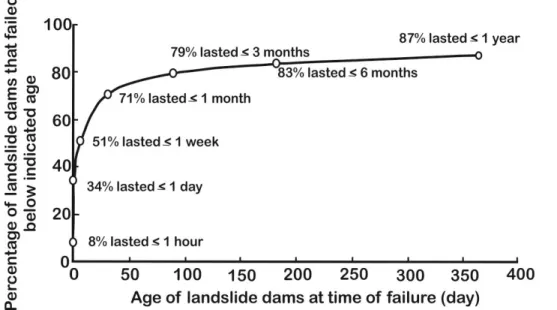
Figure 1.2 Regional geologic map of the Himalayan orogen 15 Figure 1.3 Source area of the May 2012 rock fall and avalanche into the Seti River Gorge in the Nepal Himalaya 16 Figure 1.4 Tectonic and topographic map of the South Island of New Zealand 17 Figure 1.5 Formation and failure of the Yigong landslide dam 21 Figure 1.6 Topographic map of the Longmenshan mountain range 22 Figure 1.7 Distribution of 17 landslide dams in the Kii Peninsula 26 Figure 1.8 Locations of 5 landslide dams selected for emergency investigations 26 Figure 1.9 Types of landslides that have formed landslide dams 28 Figure 1.10 Subdivision of the 353 inventoried landslide dam cases 29 Figure 1.11 Triggering mechanisms of river-damming landslides 30 Figure 1.12 Length of time before failure of landslide dams 31 Figure 1.13 Types of landslides that have created landslide dams 32 Figure 1.14 Comparison of failure modes of landslide dams and earth dams 33 Figure 1.15 The May 1937 piping failure of a dam in Arizona (USA) 34 Figure 1.16 Hydraulic flow regimes and erosion zones during overtopping 36
CHAPTER 2
Figure 2.1 The 2002 piping failure of the Lonesome Dove Reservoir levee 41 Figure 2.2 Jugholes in an auxiliary spillway of Diablo Arroyo Site 1 42 Figure 2.3 Grain size distribution curves of materials susceptible to suffusion 44
Figure 2.4 Experimental groundwater sapping chamber 48
vii | P a g e
Figure 2.6 Schematic diagram of a soil element subjected to seepage forces 54 Figure 2.7 The relationship between hydraulic gradient and seepage exit angle 56
Figure 2.8 The Usoi natural dam 57
Figure 2.9 The type of mass movement that formed the Usoi Dam 58 Figure 2.10 Fragmentation process that occur in block slides 59 Figure 2.11 Two end-member facies typical of volcanic natural dams 63
CHAPTER 3
Figure 3.1 Akadani and Kuridaira landslide and landslide dams 68 Figure 3.2 Map of Niigata indicating major landslides 70
Figure 3.3 The Kol-Tor landslide dam and lake 71
Figure 3.4 Microtremor measurements using an array of nested triangles 73 Figure 3.5 Schematic diagram of streaming potential 76 Figure 3.6 Direct measurement of self-potential using the total field method 77 Figure 3.7 Topographic map of Miyoshi area 79 Figure 3.8 Phase velocity profile of Miyosshi irrigation dam 79 Figure 3.9 Site maps of Akadani and Kuridaira landslide dams 82 Figure 3.10 Phase velocity profile on Akadani landslide dam 83 Figure 3.11 Self-potential profile on Akadani landslide dam 83 Figure 3.12 Phase velocity profile on Kuridaira landslide dam 84 Figure 3.13 Self-potential profile on Kuridaira landslide dam 84 Figure 3.14 Site map of Higashi-Takezawa landslide dam 85 Figure 3.15 Phase velocity profile on Higashi-Takezawa landslide dam 87 Figure 3.16 Self-potential profiles on Higashi-Takezawa landslide dam 88
Figure 3.17 Site map of Terano landslide dam 89
Figure 3.18 Phase velocity profile on Terano dam 90
viii | P a g e
Figure 3.20 Phase velocity and self-potential profiles on Kol-Tor landslide dam 92
CHAPTER 4
Figure 4.1 Exposed section of Akatani landslide dam 98
Figure 4.2 Experimental setup with sensor positions 99
Figure 4.3 Location of laser displacement sensors 100
Figure 4.4 Location of the linear displacement transducer inside the flume tank 101 Figure 4.5 Setup of the laboratory experiment 102
Figure 4.6 Laying of the encased pebbles used to initiate internal erosion 103
Figure 4.7 Schematic diagram of the landslide dam geometry 104
Figure 4.8 Photomicrographs of mixed materials of dam mixes A, B, C and D 105
Figure 4.9 Photomicrographs of uniform materials of dam mixes E, F, G and H 105 Figure 4.10 Side and front view of the flume tank 107
Figure 4.11 Evolution of the breaching process 113
Figure 4.12 Breach evolution of dams composed of mixed materials 115
Figure 4.13 Failure mechanism of dams built with dam mixes A and D 116
Figure 4.14 Breach evolution of dams composed of homogeneous materials 118
Figure 4.15 Failure mechanism of dams built with dam mix G and dam mix H 121 Figure 4.16 Relationship between Tb and dry bulk density 122
Figure 4.17 Relationships between Te, Tb and eo 123
Figure 4.18 Relationship between Te, Tb and Cu 124
Figure 4.19 Relationship between Te, Tb and Cc 125
Figure 4.20 Relationship between Te, Tb and D10 125
Figure 4.21 Relationship between settlement index and initial void ratio eo 126
Figure 4.22 Relationship between settlement index and Cu 126
Figure 4.23 Relationship between settlement index and Cc 127
ix | P a g e
CHAPTER 5
Figure 5.1 Experimental setup 140
Figure 5.2 Grain size distribution curves of the dam materials 145 Figure 5.3 Plan view and schematic diagram of the dam geometry 147 Figure 5.4 Schematic diagram for the determination of hydraulic gradients 149
CHAPTER 6
Figure 6.1 Typical failure mechanisms of the dams 153 Figure 6.2 Pore-water pressures and hydraulic gradients in dams built with
different materials 154
Figure 6.3 Photographic sequence of seepage-induced failure of dams built with
Gravelly dam I and Gravelly dam II 155 Figure 6.4 Transient variations in pore-water pressures in experiments conducted
with upstream inflow rates of 1.67 × 10⁻⁵ m3/s, 5 × 10⁻⁵ m3/s, 1 × 10⁻⁴
m3/s and 1.67 × 10⁻⁴ m3/s 157
Figure 6.5 Transient changes in hydraulic gradients in experiments conducted with upstream inflow rates of 1.67 × 10⁻⁵ m3/s, 5 × 10⁻⁵ m3/s, 1 × 10⁻⁴
m3/s and 1.67 × 10⁻⁴ m3/s 158
Figure 6.6 Photographic sequence of the typical failure mechanism of experiments conducted with upstream inflow rates of (a) 1.67 × 10⁻⁵ m3/s and (b)
1.67 × 10⁻⁴ m3/s 159
Figure 6.7 Trends of hydraulic gradients in dams built with an 𝑒𝑜 of 1.76 and antecedent moisture contents of (a) 5% (b) 10% (c) 15% (d) 20% 161 Figure 6.8 Trends of hydraulic gradients in dams built with an 𝑒𝑜 of 1.21 and
antecedent moisture contents of (a) 5% (b) 10% (c) 15% (d) 20% 162 Figure 6.9 Evolution of pore-water pressures in dams built with an 𝑒𝑜 of 1.76 and
x | P a g e
Figure 6.10 Evolution of pore-water pressures in dams built with an 𝑒𝑜 of 1.21 and
antecedent moisture contents of (a) 5% (b) 10% (c) 15% (d) 20% 164
Figure 6.11 Trends of hydraulic gradients in dams built with downstream slope angles of (a) 30° (b) 40° (c) 50° (d) 60° 171
Figure 6.12 Variations in pore-water pressures in dams built with downstream slope angles of (a) 30° (b) 40° (c) 50° (d) 60° 172
Figure 6.13 Trends of hydraulic gradients in dams built with dam heights of (a) 0.15 m (b) 0.20 m (c) 0.25 m (d) 0.30 m 173
Figure 6.14 Transient changes in pore-water pressures in dams built with dam heights of (a) 0.15 m (b) 0.20 m (c) 0.25 m (d) 0.30 m 174
Figure 6.15 Evolution of pore-water pressures and hydraulic gradients in dams built with dam crest widths of (a) 0.20 m (b) 0.25 m 175
Figure 6.16 Exfiltration, sapping and downstream toe debuttressing under steady-state seepage in dams built with dam crest widths of (a) 0.20 m (b) 0.25 m 176
Figure 6.17 Relationship between if1 and if2 and Qin 177
Figure 6.18 Relationship between if1 and if2 and w for eo =1.76 178
Figure 6.19 Relationship between if1 and if2 and w for eo =1.21 179
Figure 6.20 Relationship between if1 and if2 and downstream slope angle 180
Figure 6.21 Relationship between if1 and if2 and dam height 181
CHAPTER 7
Figure 7.1 Location map of the experimental site at Eshima Island 186Figure 7.2 The experimental facility. (a) A schematic diagram of the reservoir (b~c) Upstream side of the dam before the commencement of an experiment (d) The reservoir level at full capacity 187
xi | P a g e
Figure 7.3 Early stages of construction of the dam models showing: (a) The landslide at Mihata district, near Izumo, Japan (b) Toe part of landslide from where the landslide materials were sourced (c~f) Offloading of the
landslide materials at the experimental site in Eshima Island 189
Figure 7.4 Grain size distribution curves of the landslide materials used in the experiments 190
Figure 7.5 Early stages of construction of the dam models showing: (a~c) Laying of an artificial drainage channel at the center of the dam (d) Setup of geophones on the dam crest for microtremor array survey 190
Figure 7.6 Geometric characteristics of the dam models 191
Figure 7.7 Evolution of a poorly formed piping hole and the deformation mechanism of the dam during Experiment 1 192
Figure 7.8 Gradual unraveling of the downstream toe 193
Figure 7.9 Stage hydrograph and variation of turbidity of the hyperconcentrated flow in Experiment 1 194
Figure 7.10 Trends of if1 and if2 obtained during Experiment 1 195
Figure 7.11 Failure sequence of the dam model in Experiment 1 195
Figure 7.12 Deformation behaviour of the dam used in Experiment 2 197
Figure 7.13 Stage hydrograph and variation in turbidity of the seepage water during Experiment 2 197
Figure 7.14 Trends of pore-water pressures and variation in turbidity of the seepage water in Experiment 3 198
Figure 7.15 Stage hydrograph and deformation mechanism of the dam used in Experiment 3 under steady-state conditions 200
Figure 7.16 Time-dependent deformation behaviour of the dam model in Experiment 3 under steady-state conditions 201
xii | P a g e
Figure 7.18 Variations in turbidity and self-potential during internal erosion and piping in dam used in Experiment 1 204
xiii | P a g e
LIST OF TABLES
CHAPTER 1
Table 1.1 Selected historical cases of landslide dam disasters in China 19 Table 1.2 Historical data of landslide dams in Northern Nagano, Japan 23
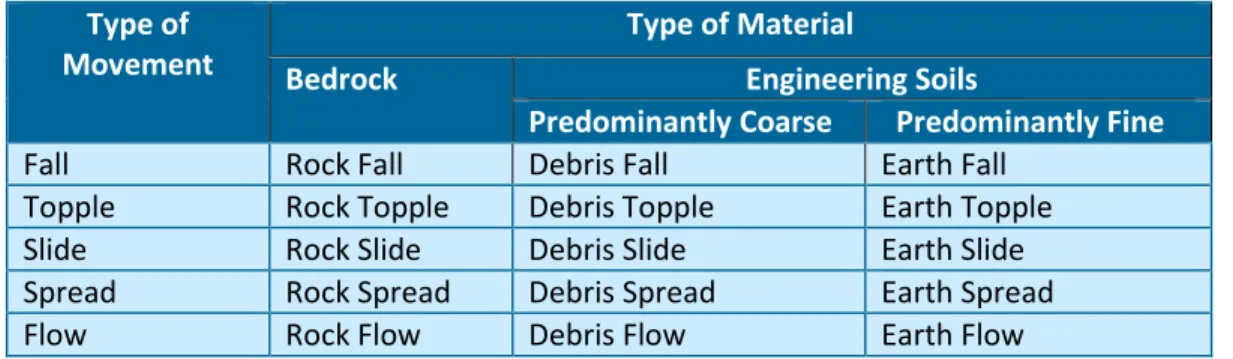
Table 1.3 Classification of landslides 27
CHAPTER 2
Table 2.1 Sedimentological properties of 5 selected rock avalanche deposits 60
CHAPTER 3
Table 3.1 Geomorphic characteristics of the Akadani and Kuridaira landslide d 68
CHAPTER 4
Table 4.1 Mechanical and hydraulic properties of the dam materials 106 Table 4.2 Experimental summary of dams composed of mixed materials 106 Table 4.3 Experimental summary of dams composed of uniform materials 107
CHAPTER 5
Table 5.1 Comparison of empirically-derived critical average gradients 𝑖𝑐 for initiation of backward erosion and piping in different soil types 137 Table 5.2 Summary of all the experiments at different testing conditions 141 Table 5.3 Summary of results of critical pore-water pressures and critical seepage
velocities obtained from the tests 142 Table 5.4 Mechanical and hydraulic characteristics of the materials used in the
xiv | P a g e
CHAPTER 7
Table 7.1 Summary of the physical properties of the materials used in the
experiments 188
Table 7.2 Classification of erosion resistance of different soils (Sherard 1953) 202 Table 7.3 Erosion resistant of soils from concentrated leaks (ICOLD 2013) 203
xv | P a g e
TABLE OF CONTENTS
TITLE PAGE i ABSTRACT ii ACKNOWLEDGEMENTS v LIST OF FIGURES viLIST OF TABLES xii
TABLE OF CONTENTS xiv
CHAPTER 1 INTRODUCTION 1
1.1 Background 1
1.2 Objectives and thesis outline 6
1.3 Geomorphic settings for landslide dams 9
1.3.1 The European Alps 10
1.3.2 The Himalayas 13
1.3.3 The southern Alps of New Zealand 16
1.4 Occurrence of landslide dams in China and Japan 18
1.4.1 Landslide dams in China 18
1.4.2 Landslide dams in Japan 20
1.5 Classification of river-damming landslides 27
1.6 Triggering mechanisms of river-damming landslides 28
1.6.1 Implications for longevity and stability of landslide dams 30
xvi | P a g e
1.7.1 Piping 33
1.7.2 Overtopping 34
1.7.3 Slope failure 36
CHAPTER 2 LITERATURE REVIEW ON SEEPAGE AND PIPING 37
2.1 Introduction 37
2.2 Definitions and nomenclature 37
2.2.1 Internal erosion 39
2.2.2 Piping 39
2.2.3 Backward erosion 42
2.2.4 Concentrated leakage erosion 42
2.2.5 Heave (or blow out) 43
2.2.6 Suffusion (Internal instability) 43
2.2.7 Internal migration (Stoping) 44
2.2.8 Contact erosion 45
2.3 Mechanism of internal erosion and piping 45
2.4 Seepage-induced failure of landslide dams and soil slopes 47
2.5 Effects of pore-water pressures on landslide dams and soil slopes 48
2.6 Governing equations for seepage in saturated-unsaturated soils 49
2.7 Effects of seepage gradient forces on landslide dams and soil slopes 52
2.8 The internal structure of landslide dams: implications for piping 55
2.9 Sedimentological classification of landslide dams (Facies analysis) 60
2.9.1 Flims sturzstrom (Swiss Alps) 61
2.9.2 Volcanic natural dams 62
xvii | P a g e
CHAPTER 3 GEOPHYSICAL INVESTIGATION OF THE INTERNAL STRUCTURE OF
LANDSLIDEDAMS 65
3.1 Introduction 65
3.2 Site descriptions 67
3.2.1 Akadani and Kuridaira landslide dams, Japan 67
3.2.2 Higashi-Takezawa and Terano landslide dams, Japan 69
3.2.3 Kol-Tor landslide dam, Kyrgyzstan 70
3.3 Geophysical surveys 71
3.3.1 Microtremor array survey 71
3.3.2 Self-potential survey 74
3.4 Results and discussion 77
3.4.1 Akadani and Kuridaira landslide dams 80
3.4.2 Higashi-Takezawa and Terano landslide dams 85
3.4.3 Kel-Tor landslide dam 91
3.5 Conclusions 93
CHAPTER 4 EXPERIMENTAL INVESTIGATION OF THE HYDROMECHANICAL CONSTRAINTS FOR PIPING FAILURE OF LANDSLIDE DAMS 95
4.1 Introduction 95
4.2 Experimental methods 97
4.2.1 Modification of the flume tank 98
4.2.2 Laser displacement sensors 100
4.2.3 Linear displacement transducer 101
4.2.4 Upstream water level probe 101
4.3 Experimental procedure and properties of the soils used 102
4.4 Results and discussion 108
xviii | P a g e 4.4.2 Pipe development 108 4.4.3 Pipe enlargement 109 4.4.4 Crest settlement 110 4.4.5 Hydraulic fracturing 111 4.4.6 Progressive sloughing 111
4.5 General description of the experiments 112
4.5.1 Failure mechanisms of dams built with mixed materials 114
4.5.2 Failure mechanisms of dams built with uniform materials 117
4.5.3 Effect of density on erodibility of the dam materials 118
4.6 Natural analogues of seepage and piping in landslide dams 123
4.7 Conclusions 128
CHAPTER 5 EXPERIMENTAL INVESTIGATION OF THE CRITICAL HYDRAULIC GRADIENTS FOR SEEPAGE-INDUCED FAILURE OF LANDSLIDE DAMS 130
5.1 Introduction 130
5.2 Brief review of seepage erosion in soils 134
5.3 Experimental methods 138
5.3.1 Testing facility 138
5.3.2 Soil characteristics 139
5.3.3 Landslide dam model construction and test procedure 140
5.4 Determination of critical hydraulic gradients 147
CHAPTER 6 RESULTS OF CRITICAL HYDRAULIC GRADIENTS FOR SEEPAGE-INDUCED FAILURE OF LANDSLIDE DAMS 150
6.1 General description of the experiments 150
6.2 Influence of dam composition 151
xix | P a g e
6.4 Influence of material condition 158
6.5 Influence of dam geometry 164
6.6 Discussion 166
6.7 Conclusions 167
CHAPTER 7 EXPERIMENTAL INVESTIGATION OF THE PREMONITORY CONDITIONS FOR PIPING FAILURE OF LANDSLIDE DAMS 182
7.1 Background 182
7.2 Experimental methods 185
7.2.1 Experimental setup and site descriptions 185
7.2.2 Soil characteristics and dam model construction 187
7.3 Results and discussion 191
7.3.1 Experiment 1 191
7.3.2 Experiment 2 196
7.3.2 Experiment 3 198
7.4 Conclusions 203
CHAPTER 8 CONCLUSIONS AND FUTURE WORK 205
8.1 Major conclusions 206
8.1.1 Geophysical assessment of the internal structure of landslide dam 206
8.1.2 Hydromechanical constraints on piping failure of landslide dams 206 8.1.3 Critical hydraulic gradients for seepage failure 207
8.1.4 Premonitory factors for internal erosion and piping in landslide dams 208
xx | P a g e
REFERENCES
1 | P a g e
CHAPTER 1
INTRODUCTION
1.1 Background
The impacts of climate change and global warming have triggered many natural disasters in numerous mountainous regions of the world. A large number of environmental changes have continued to modify the hydrogeologic system as a result of global warming. Every year, tens of thousands of fatalities are being recorded and several billions of dollars are lost due to damage caused by the prevalence of floods, river-damming landslides, debris flows, earthquakes, glacier outburst floods (GLOFs) and other hydroclimatologically-related disasters. The last two decades have witnessed an increasing trend in the frequency and intensity of precipitation and extremely high temperatures. These effects, in combination with rapid urbanization and deforestation, have triggered several natural disasters including landslides and associated disasters such as catastrophic outburst floods from the failure of landslide dams and glacier-ice dams. The relationships between climate change and the initiation of several geomorphological processes that trigger landslides and other mass movements have been documented in the literature (Bo et al 2008; Jakob and Lambert 2009; Crozier 2010; Stoffel and Huggel 2012). These processes are caused by a change in equilibrium between precipitation and evapotranspiration which alters the hydrologic regime of mountain slopes, triggering landslides that occasionally form secondary hazards such as landslide dams. For these reasons, an interdisciplinary research scheme comprising geomorphology, hydrogeology, hydroclimatology, and
2 | P a g e
disaster risk management needs to be developed and sustained for accurate evaluation and mitigation of natural dam hazards.
Landslide dams represent a significant geomorphic hazard that occurs in many mountainous regions of the world. High frequency of river-damming events has been observed in tectonically active regions of high seismic activity. These regions are usually characterized by favourable topographic boundaries such as oversteepened slopes and narrow valleys. Landslide dams are complex and composite in nature; their origin can be attributed to the blockage of stream-channels in confined valley settings by rock falls, landslides, rock avalanches and debris flows. The major factors controlling the formation of landslide dams are the geometry of the stream-channel, the velocity of the landslide and the volume of the displaced material (sediment budget). A few examples of the earliest historic records of landslide dam formation and failure in the European Alps include the 1219 damming of the Romanche River in France and subsequent failure which led to the downstream flooding that claimed thousands of lives (Bonnard 2011); the 1419 Ganderberg-Passeier Wildsee (Passer Valley, Italy) rockslide dam failure and outburst flood that claimed at least 400 lives; and the 1515 Val Blenio (Switzerland) rock avalanche dam failure and outburst flood that took about 600 lives (Li 1990). In China, two notable records of river-damming events are: (1) the 1737 BC earthquake-triggered landslide dam in the Yi and Lo Rivers in Hunan Province of central China (Xue-Cai and An-ning 1986); and (2) the 1786 M=7.75 earthquake-triggered landslide in Sichuan Province, southwest China, which dammed the Dadu River and breached ten days later, leading to catastrophic flooding of the downstream areas that claimed over 100,000 lives (Dai et al. 2005).
Not much has been reported on the immense contributions of landslide dams in the socioeconomic development of the human society. Rapid urbanization and industrialization witnessed in the 19th and 20th Centuries resulted in the stabilization
3 | P a g e
navigation, recreational activities, water supply, aquaculture and hydropower generation (Heim 1932; Terzaghi 1960; Schuster 2006; Coppola and Bromhead 2008). For instance, the Waikaremoana Lake, located on the east coast of the Northern Island of New Zealand, was formed ca. 2,200 years ago, by a rockslide dam with an estimated dam volume of 5.2 billion m3 (Adams 1981; Davies et al. 2006). This scenic
lake which generates a total output of 124 Megawatts of electricity remains one of the many cases where upstream waters are being utilized for hydroelectric power generation (Read et al. 1992). Other important examples are: (1) the 30 m high Rhodannenberg Dam built on the Klontalersee rockslide dam in Switzerland, which impounds a reservoir with a total volume of 56.4 × 10⁶ m3. This hydropower dam was
completed in 2010, with a capacity of generating 60 Megawatts of electricity; and (2) the 80 m high Zavoj (Pirot) Dam built on the 1963 rockslide dam that dammed the
Visocica River in Serbia (Evans et al. 2011).
Landslide dams pose enormous risks because of the potentially catastrophic outburst floods that could be triggered by the sudden release of stored water masses from the failure of the blockage. These floods, upon surging downstream, transform into debris flows and hyperconcentrated flows with peak discharges most times greater than 10,000 m3/s, thereby, threatening the lives of people living in the downstream
areas (O’Connor and Costa 2004). For example, the Diexi landslide dams (Dahaizi, Xiaohaizi and Diexi), formed by deep-seated mass movements triggered by the August 25, 1933, M=7.5 earthquake in northwestern Sichuan Province of China, claimed about 2,423 lives from outburst floods (that travelled with an average velocity of 20~25 km/hr) generated from the breaching of the dams (Chai et al. 2000). Peak discharges are controlled by several factors including dam geometry, downstream topography, failure mode, the internal structure of the blockage and lake volume. Therefore, a good knowledge of the complex processes involved in the evolution and
4 | P a g e
failure of river-damming landslides, coupled with the hydraulics of the outburst floods, is imperative for disaster risks assessment and mitigation.
Internal erosion and piping are common phenomena occurring in landslide dams and other water-retaining structures such as embankment dams and artificial levees. The prevalence of these processes in landslide dams has been attributed to the anisotropic and heterogeneous nature of landslide dam deposits which are mostly unconsolidated or poorly consolidated. This ultimately increases the probability of initiation of seepage and piping which sometimes results in dam breaching and failure. Seepage erosion triggers slope instability through three major interrelated mechanisms: (1) increase in pore-water pressure and its effects on the shear strength of the soil, (2) increase in seepage gradient forces that reduce the effective stress of the soil, and (3) mobilization and downstream entrainment of the eroded particles. Internal erosion and piping occur in many geologic materials including clay, silt, fine sand, volcanic ash, tuff, loess, colluvium, alluvium, claystone, siltstone and mudstone (Parker 1964). The development of internal erosion and piping in landslide dams has been attributed to the interplay between the internal structure of the dam and the discharge rate through the impoundment. Internal erosion and piping are usually favored by a coarse blocky carapace with large void spaces where anomalous seepage has the potential to form subsurface conduits or tunnels which acts as channels for the release of the lake waters impounded behind the dam. A typical example is the relatively stable Usoi landslide dam, where the rate of discharge through the dam has equaled the inflow rate into the upstream lake, thus maintaining a static water level which has contributed to the stability of the dam (Strom 2013).
Failure of landslide dams and earthen dams involves a complex, sporadic, nonlinear and homogeneous process (Singh et al. 1988). Hence, a good knowledge of sediment transport processes, including the hydraulics and hydrodynamics is needful for a
5 | P a g e
better understanding of the complex processes that lead to the initiation and development of internal erosion and piping. In general, piping failure of landslide dams has been ascribed to three major interrelated mechanisms: (1) initiation of internal erosion and piping; (2) progressive erosion and removal of sediments at the downstream face under steady-state seepage conditions; and (3) formation of an initial breach at the crest and subsequent enlargement by erosion (Singh et al. 1988). A lot of difficulties have been reported by researchers while simulating the internal erosion process which has been recognized as an important factor for the determination of the extent, magnitude and duration of the flood hydrograph. Timely assessment of landslide dams and prediction of the potential flood hydrograph are essential for effective planning and implementation of disaster management schemes. Similarly, a large number of results abound on numerical models developed for the simulation of piping in earthen dams and landslide dams (Singh et al. 1988; Gattinoni and Francani 2009). Yet, none of these methods have investigated the influence of hydromechanical properties of landslide dams on their potential failure mechanisms as relates to internal erosion and piping.
One major problem in dam engineering is the monitoring of seepage, especially in heterogeneous and anisotropic materials. Information on seepage processes (seepage velocity, seepage forces, seepage paths and hydraulic conductivity) are essential for predicting the hydraulic behaviour and the failure mechanism of landslide dams. The internal structure and the hydraulic behaviour of landslide dams can be assessed by the application of several geophysical exploration techniques. The microtremor (MTM) chain array survey and the self-potential (SP) measurement are two non-invasive geophysical techniques that are sensitive to soil and fluid properties. These techniques can be used to evaluate contrasting specific subsurface properties that can be attributed to varying seepage conditions. Hence, data acquired from the application of these geophysical techniques can be used wholly or in part to produce
6 | P a g e
a representative image of the hydraulic conditions and the internal structure of the impoundment.
1.2 Objectives and thesis outline
The purpose of the present research is to study the mechanisms of internal erosion and piping in landslide dams. This thesis is focused on the following four main objectives.
1. To determine the apparent phase velocity structure of landslide dams and evaluate their internal structure, stability and the potential for failure by piping. This is achieved through carrying out microtremor chain array surveys on selected landslide dams using a set of seismometers, 3 reels of connecting wires, a data logging device, portable batteries and laptop computers installed with a data logging software.
2. To identify zones of anomalous seepage that could likely develop into internal erosion, and provide information on the subsurface geologic structures influencing groundwater flow and seepage conditions. This is achieved through the conduction of self-potential investigations using Copper-Copper Sulphate (half-cell) reference electrodes.
3. To identify the various failure mechanisms of landslide dams under varying hydromechanical properties of the materials forming the dams, and to evaluate the geometric and hydraulic factors governing the onset of internal erosion and piping. This is achieved by performing a series of experiments in a flume tank equipped with monitoring sensors and transducers, using materials of differing physical properties.
4. To determine the critical hydraulic gradients for the onset of internal erosion and failure of landslide dams under differing hydraulic and geometrical conditions. This is achieved by using several precision sensors to track the
7 | P a g e
transient hydraulic conditions in dam models of varying geometrical and physical properties subjected to steady-state seepage conditions.
5. To investigate the premonitory conditions for internal erosion and piping in landslide dams, and to examine the relationship between the transient deformation behaviour of the dams and turbidity of the seepage water. This task is accomplished by performing large-scale (outdoor) model tests using strain gauges and laser displacement sensors to monitor the internal and external deformations that occur during internal erosion. Furthermore, turbidity sensors and pore-water pressure transducers will be used to track the onset of internal erosion and the dynamic behaviour of the dam models during piping.
The main body of this thesis comprises eight chapters. Chapter 1 introduces the research topic, states the major research objectives and discusses the geomorphic settings for landslide dams, including the triggering mechanisms of river-damming landslides and the failure modes of landslide dams.
Chapter 2 presents a comprehensive review of the literature on internal erosion and piping processes in landslide dams and soil slopes. This chapter comprises detailed definitions and nomenclature of the piping process; the various classifications of piping and mechanisms of internal erosion and piping are discussed. Furthermore, the mechanisms of seepage-induced failure of landslide dams and soil slopes are summarized, including the effects of pore-water pressures on the destabilization of soil slopes. The effects of seepage gradient forces on soil materials and the internal structure of landslide dams, considering its implications on the initiation of piping are presented as well.
In Chapter 3, an integrated geophysical approach is employed to characterize the internal structure of selected landslide dams and to study the variations in specific physical properties of the soil that could provide information on the potential zones
8 | P a g e
of anomalous seepage. Field investigation results using the microtremor chain array and the self-potential techniques are presented and discussed. Analysis of the results involves a detailed description of the internal structure of the dams based on variations in phase velocities and the identification of likely seepage zones in the dams.
Chapter 4 presents the results of a series of laboratory experiments on the hydromechanical constraints on the piping failure of landslide dams. The experimental programme, including the apparatus, materials and procedure are described. The test results, including the various breach evolution processes, the effect of density on erodibility of the materials and the characteristic failure mechanisms under differing materials are discussed.
Chapter 5 presents a series of experiments performed to determine the critical hydraulic gradients for the seepage-induced failure of landslide dams under varying physical properties of the dam materials. In addition, the details of the modified flume tank used in the investigation, including the soil characteristics, experimental procedure, and method adopted for the determination of critical hydraulic gradients are described.
Chapter 6 presents the results of the experimental investigation reported in Chapter 5. The variations in critical hydraulic gradients for the initiation of internal erosion and collapse of the dam crests under differing hydromechanical and geometrical conditions are described. In addition, the hydraulic behaviour of the dam models under steady-state seepage conditions, and the effects and variation of pore-water pressures and seepage velocities are discussed.
Chapter 7 presents the results of a series of large-scale (outdoor) experimental investigations performed to study the premonitory conditions for internal erosion and piping failure of landslide dams. The variations in turbidity of the seepage water with respect to the deformation behaviour of the dam models are discussed. Finally,
9 | P a g e
Chapter 8 presents the present research findings and recommendations for further research.
1.3 Geomorphic settings for landslide dams
A lot of studies have been done on the relationships between fluvial processes and the frequency of landslide damming events in connection with sediment delivery processes and the development of drainage networks (Whitehouse and Griffiths 1983; Hammack and Wohl 1996; Cenderelli and Kite 1998; Hewitt 1998; Hovius et al. 1997,
1998). Landslide dams are formed by the partial or complete blockage of stream-channels by displaced earth or rock materials. The phenomenon can occur in several kinds of geomorphic settings. These settings are usually characterized by steep-walled narrow valleys bordered by high rugged mountains; a feature commonly found in geologically active regions where uplift or mountain building associated with active tectonic activities increases the likelihood of initiation of river-damming landslides (Costa and Schuster 1988). Also, these regions are characterized by highly weathered and unstable source materials, including fractured and hydrothermally altered bedrock, and thick Quaternary sediments. The majority of the inherent factors that trigger landslide damming events in these regions include increases in local relief and hillslope gradient, and incessant weathering that reduce the shear strength of hillslope materials. These overarching factors are exacerbated by high orographic precipitations or snowmelts, coupled with active tectonic activities including earthquakes and volcanic eruptions.
The probability of formation of landslide dams is determined by several factors including the volume of the displaced material (sediment budget), the type of landslide, the velocity of the displaced material, and morphology of the stream-channel. Schuster et al. (1998) enumerated four kinds of factors that govern the spatial distribution of landslide dams based on the study of the landslide dams
10 | P a g e
formed by the 1989 Loma Prieta earthquake in California (USA). These factors are (1) seismic intensity (peak acceleration, duration of strong motion), (2) topography and high slope gradient, (3) lithology and weathering, and (4) soil moisture and groundwater content.
Geodynamically active regions where landslide dams form are characterized by orogenic processes (mountain building), which evolve from crustal shortening, vertical thickening, and denudation processes. These processes are augmented by other essential factors such as earthquakes and orographically enhanced precipitation on steep narrow gorges. The evolution of mountain belts at tectonic boundaries results in the development of narrow stream-channels and gorges which are bordered by steep hillslopes. Most significantly, a large number of these gorges and stream-channels are V-shaped, implying the effects of strong tectonic activity on river incision, which obviously leads to the geomorphological alteration of the postglacial terrain (Korup 2005). From past historical records, notable geomorphic regions where landslide dams are prevalent include the Andes of South America (Porter and Savigny
2002; Schuster et al. 2002), the European Alps (Huggel et al. 2002; Casagli et al. 2003; Crosta et al. 2013), the Himalayas (Hewitt 1998;Richardson and Reynolds 2000), the Canadian Cordillera (Clague and Evans 1994;Geertsema et al. 2006), the mountains of Central Asia (Strom 2010, 2013), the mountainous margin of the Tibetan Plateau (China) (Ouimet 2007; Korup and Montgomery 2008), and the Southern Alps of New Zealand (Korup et al. 2004, 2006). A brief summary of the tectonic evolution of some of these regions is given below.
1.3.1 The European Alps
The European Alps are the highest and largest mountain belts in Europe, extending more than 1000 km from the French and Italian Mediterranean coasts across Switzerland, northern Italy, and Austria into the central parts of the European
11 | P a g e
continent. Numerous catastrophic events associated with rock avalanche processes, landslide dams, glacier-ice dams and moraine dams have been recorded in many parts of the European Alps (Allen et al. 2011; Huggel et al. 2012; Stoffel and Huggel
2012; Crosta et al. 2013). These have been related to the orogenic processes that lead to mass accretion into the mountains, followed by isostatic uplifts, hillslope erosion processes that lead to high sediment yield, and the evolution of relief. Historical records of events predating the 13th Century indicate that several catastrophic
disasters such as glacial lake outburst floods (GLOFs), were triggered from the failure of many natural dams formed by deep-seated landslides, ice, snow and rock avalanches, and sturzstroms in many parts of the Western European (Swiss) Alps (Costa and Schuster 1988; Wassmer et al. 2004; Pollet and Schneider 2004; Gutiérrez
2005, pp. 548~550).
The tectonic style of the European Alps is characterized by a complex pattern of overthrusted nappes (Fitzsimons and Veit 2001; Kühni and Pfiffner 2001). The Alps evolved from continental convergence and collision between the Adriatic microplate (the smaller part of the African Plate) and the European Plate. The collision resulted in the southward subduction of the Penninic Ocean and subsequent intra-plate (continent-continent) collision during the Tertiary (Schmid and Kissling 2000). These orogenic processes resulted in the overthrust of the European continental margin (Helvetic domain) by the African continental margin (Australoalpine domain) (Figure
1.1). The orogenic processes that led to the evolution of the entire Alps into a high mountain range are as a result of isostatic compression and exhumation of the lighter continental crust (Bernet et al. 2001). Consequently, the topography of the Alps is roughly symmetrical, with the highest mountain summits in the central region. The mountain range of the Alps is characterized by a crystalline core comprised of pre-Alpine magmatic rocks and polymetamorphic sediments overlain by Mesozoic and Cenozoic metasedimentary sequences, both of which constitute the Penninic and
12 | P a g e
Helvetic thrust nappes (Wittmann et al. 2007). Other major tectonic units in the Alps include the Jura Mountains, the Molasse Basin, the nappe complexes of the Austroalpine and Southalpine zones, and the Po Basin (Kühni and Pfiffner 2001). The Southern Alps are separated from the Central Alps by the Tonale Line, which is an E-W trending portion of the Insubric Line (Schmid et al. 2004). Due to strong tectonic compression and deep incision of the Lepontine area, the mountain range of the Western (Swiss) Alps is narrower with higher elevations (4,807 m at Mont Blanc) than the Eastern Alps (Fitzsimons and Veit 2001). The prevalence of many catastrophic geomorphic processes in the Alps has been linked to several large-scale European climate patterns, coupled with the steep relief and elevation of the Alps (Frei and Schär 1998; Auer et al. 2005). All these have been included in the predisposing factors for the high frequency of occurrence of deep-seated landslides and landslide dams, glacier-ice dams and moraine dams in the Alps.
13 | P a g e
1.3.2 The Himalayas
The Himalayas are a geodynamically active region which is susceptible to extreme crustal activity that causes earthquakes. For this reason, denudation processes and natural damming of stream-channels and gorges are common phenomena in the region. The resultant effects have triggered several catastrophic outburst floods released from the breaching of landslide dams, glacier-ice dams and neoglacial moraine dams (Richardson and Reynolds 2000; Mool et al. 2001; Hewitt 2011). Most significant among these natural disasters are glacial lake outburst floods (GLOFs), which commonly occur in many river basins of the Nepal Himalaya, at altitudes of 4500~5500 m a.s.l. (Kattelmann 2003).
The evolution of the Himalayan mountain range began around 65 Ma as a result of the intra-plate (continent-continent) collision between the Indian and Eurasian Plates, along the Indus-Zangbo Suture Zone (Korup et al. 2006). For this reason, the Himalayan mountain range is characterized by a complex aggregate of structurally deformed and highly metamorphosed lithologic units which bear imprints of various stages of tectonic occurrences (Figure 1.2; Yin 2006). Partly forming the summits of the highest peaks on earth (Mt. Everest, 8848 m a.s.l.), is a 10~17 km thick unmetamorphosed parautochthonous sedimentary sequence of the Tibetan Himalaya (Proterozoic-Eocene) (Korup et al. 2006; Weidinger 2011). Further south abounds crustal thrust planes formed within the Indian Plate at 20~25 Ma (Weidinger 2011). The Main Central Fault (MCT), which is a longitudinal thrust fault characterized by mylonitization and retrograde metamorphic assemblages, delineates the boundary between the Higher Himalayas and the Lesser Himalayas (Yin 2006; Webb et al.
2007). The Higher Himalayas (or Greater Himalayan Crystalline Complex) mark the axis of orogenic uplift and signify a multiphase deformational event, which is mainly composed of ductily deformed metamorphic rocks including quartzite, migmatite, paragneiss and mica schists (Gehrels 2003; Wang et al. 2013). The Main Boundary
14 | P a g e
Thrust (MBT) marks the southernmost tectonic boundary where the unmetamorphosed clastic rocks of the Miocene-Pliocene Himalayan foredeep comprising the molasse-type Siwalik Formation are overthrust by the nappe systems (comprised of metasedimentary rocks) of the Lesser Himalayas (Meigs et al. 1995; Robinson et al. 2006). The southern end of the Himalayan foredeep (Sub-Himalayan sequence) is bordered by the Main Frontal Thrust (MFT), which uplifts sediments of the Siwalik Group southward over the Indo-Ganjetic plain (Baker et al. 1988; Wesnousky et al. 1999;DeCelles et al. 2001; Yin 2006).
The principal factors that favour the occurrence of natural dams in many parts of the Himalayas stem from the high rate of exhumation of about 1~15 mm/year and the high topographic relief (Korup et al. 2006). This is exacerbated by the summer monsoon rainfall (1500 mm/yr~6000 mm/yr) that results in high fluvial processes and sediment yield of 102− 104 t km-2/yr (Korup et al. 2006). Most noteworthy is the fact
that the duration and intensity of precipitation are orographically controlled by the barrier formed by the Himalayan mountain chain (Bookhagen et al. 2005; Wulf et al.
2010). The occurrence of deep-seated slope deformations and giant rock flows within pre-existing fissures and joints have continued to modify the Himalayan postglacial terrain (Figure 1.3; Korup et al. 2006). Similarly, the high frequency of formation of glacier dams and moraine dams in many parts of the Himalayas (Delany and Evans
2011; Weidinger 2011), and in the headwaters of the Indus and Tsangpo rivers have been attributed to a dynamic coupling between the rate of erosion and exhumation in the cores of the Himalayan Syntaxes (Korup et al. 2010;Hewitt 2009, 2011).
15 | P a g e
16 | P a g e
Figure 1.3 Source area of the May 2012 rock fall and avalanche into the Seti River
Gorge in the Nepal Himalaya. The rocks in the source area are highly tilted metamorphosed sedimentary rocks which are covered with snow (Image source: NASA earth observatory file image)
1.3.3 The Southern Alps of New Zealand
Historical records of landslide dam formation in New Zealand show that a large number of these events occur in the Southern Alps. The types of landslides that form these dams are predominantly deep-seated block slides and rock avalanche processes (Whitehouse and Griffiths 1983; Korup 2005; Allen et al. 2009, 2011). The southern part of New Zealand is straddled by a 500 km-long mountain range of the Southern Alps, which evolved from an oblique continental collision of the Indo-Australian Plate and the Pacific Plate, primarily along a 600 km Alpine Fault (Figure
1.4) (Kamp and Tippett 1993; Sutherland 1995). The collision resulted in the upturning and rapid exhumation of the leading edge of the Pacific Plate which is
17 | P a g e
comprised of partly metamorphosed greywacke of the Torlesse Terrane (Fitzsimons and Veit 2001; Herman et al. 2007). High rate of uplift (5~8 mm/yr) along the plate boundary resulted in the formation of a mountain range, which is characterized by an asymmetrical cross-section with sharp topographic expressions, deeply dissected valleys and peak summits higher than 3000 m a.s.l., a few kilometers from the Tasman Sea (Fitzsimons and Veit 2001).
Figure 1.4 Tectonic and topographic map of the South Island of New Zealand
(Castelltort et al. 2012)
The mountain range of the Southern Alps is considerably young and is being modified by high uplift forces and denudation processes. High fluvial sediment yield of 102~104 t/km2/y from the western Southern Alps (WSA) has been related to the
18 | P a g e
extremely steep and intensely dissected slopes that are being modified by high fluvial erosion and debris avalanche processes (Whitehouse 1988; Korup et al. 2006). This is because precipitation is orographically enhanced, especially at the steeper faces of the western divide where up to 14,000 mm/y of rainfall has been recorded (Henderson and Thompson 1999). Highly glaciated landforms dominate the axial Southern Alps (ASA), while the eastern divide (ESA) are predominated by intermontane basins and broad valleys where huge volumes of glacigenic deposits are preserved (Korup 2011).
1.4 Occurrence of Landslide Dams in China and Japan
1.4.1 Landslide Dams in China
Several forms of natural disasters frequently occur in China, most times resulting in an untold number of deaths and infrastructural damage worth several billions of Chinese RMB. High frequency of occurrence of landslides and river-damming events in most parts of China has been attributed to the complex geological structure of many Chinese mountain regions including the Loess Plateau area, the Hengduan mountain areas of Southwest China, as well as in the Provinces of Hubei Xizang, Guizhou, Sichuan, Gansu, Shaanxi, Yunnan and Shanxi (Li 1990). These rugged mountains are characterized by high rates of rock weathering and mass shattering, coupled with orographically enhanced precipitation of high intensity and frequent earthquakes which make up the predisposing factors for the occurrence of landslides and landslide dams (Li 1990).
Historical records of geomorphic disasters in China indicate that the occurrence of landslides and landslide dams predates the 11th Century BC (Table 1.1). The June 11,
1786, landslide dam disaster which occurred in Luding area, Sichuan Province of China, remains the worst recorded landslide dam disaster in the world. This
19 | P a g e
landslide dam was triggered on June 1, 1786, by the Mw 7.75 earthquake in the Kangding-Luding area. The landslide dammed the Dadu River and failed ten days later resulting in catastrophic outburst floods that traveled downstream, claiming about 100,000 lives (Dai et al. 2005).
Table 1.1: Selected historical cases of landslide dam disasters in China
No Year Province/Region Affected Area No. of Fatalities
Source 1 1786 Sichuan Luding 100,000 Dai et al. 2005
2 1933 Sichuan Maowen 2,429 Li 1990
3 1951 Taiwan Tsao-Ling 154 Li 1990
4 1965 Sichuan Zepozhu - Costa and Schuster
1991
5 1967 Sichuan Tanggudong none Dai et al. 2005
6 2000 Tibet Bomi 30 Shang et al. 2003
7 2008 Sichuan Beichuan* - Xu et al. 2009
8 2008 Sichuan Tianchi* - Wang et al. 2013
9 2014 Yunnan Ludian* - Zhang et al. 2014
On April 9, 2000, a huge landslide with a volume of 3 × 10⁸ m3 occurred in the
Zhamu Creek, in Bomi county, the southeastern region of Tibet (Shang et al. 2003). The entire drainage area of the Zhamu Creek is 20.2 km2, with length, width and
mean longitudinal slope of 9.7 km, 50~200 m, and 52.6%, respectively. The high occurrence of landslides in the area has been attributed to the collision between the Indian plate and the Eurasian plate, resulting in an uplift- and slip rate of 3 mm/year and 10 mm/year, respectively. The landslide evolved as a wedge failure and entrained colluvial materials downstream before transforming into a debris flow that subsequently blocked the Yigong River (Figure 1.5b). The landslide dam occupied an area of 2.5 km2, with minimum and maximum heights of 60 and 100 m, respectively,
and minimum and maximum bottom widths of 2200 and 2500 m, respectively. The upstream and downstream slope angles of the impoundment were 5 and 8, respectively. Prior to the breaching of the landslide dam, remote sensing images
20 | P a g e
analyzed by Shang et al. (2003) provided evidence of the likely occurrence of piping and seepage at the downstream end of the blockage. However, the landslide dam was overtopped by the upstream lake 62 days after its formation resulting in about 30 deaths and causing a large number of damage to infrastructures (Figure 1.5c). The devastating effects of the Ms 8.0 Wenchuan earthquake resulted in a large number of landslide dams in the Sichuan Province of China. The earthquake occurred in the Longmenshan mountain range at exactly 14:28 (Beijing time) on May 12, 2008 (Figure 1.6). The epicenter was located on the north-east trending Longmenshan thrust fault zone (LTFZ) at a focal depth of 14~19 km (an active crustal region) (Fan et al. 2012), as a result of the collision between the Indian plate and the Eurasian plate (Dai et al. 2011). Data analysis revealed that a total number of 828 river-damming landslides were triggered by the earthquake (Fan et al. 2012); 61% of these resulted in complete blockage of rivers, while 39% caused partial blockage and stream-channel diversion. Although a good number of these natural blockages had not failed as at the time the database was generated, studies carried out by Xu et al. (2009) indicated that some of these dams could potentially fail by seepage and piping, considering the nature of the materials composing them.
1.4.2 Landslide Dams in Japan
The Japanese archipelago is located within the Pacific Ring of Fire where frequent crustal movements (tectonic activities) have resulted in a large number of earthquakes and volcanic eruptions. The geologic and geomorphic features of the Japanese Islands are being modified by the subduction of the Pacific Plate and the Philippine Sea Plate. These have triggered several natural disasters including earthquakes, volcanic eruptions, typhoon-induced landslides and debris flows, and catastrophic outburst floods (Sassa 1998, 2005; Chigira and Yagi 2006; Hayashi et al.
21 | P a g e
Figure 1.5 Time history of formation and failure of the Yigong landslide dam. a. Yigong River before the damming
event b. Post-damming setting of the Yigong River c. Post-failure setting of the Yigong River (Image credit: NASA Earth Observatory)
22 | P a g e
Figure 1.6 Topographic map of the Longmenshan mountain range and surrounding
region showing the distribution of main shocks and aftershocks of the 2008 Wenchuan earthquake (Image: NASA Earth Observatory)
The Japanese Islands are characterized by steep and rugged watersheds coupled with high-intensity rainfall and snowmelts. These characteristic features have resulted in high fluvial processes in many mountain slopes which initially, have been destabilized by repeated earthquake ground motions. Oguchi et al. (2001) identified 6(six) major geomorphological and hydrological variables influencing the rate of fluvial processes in Japan. These include high-intensity precipitation, catastrophic hydro-geomorphological events associated with earthquakes and volcanic eruptions, high sediment yield, steep watersheds, large flood discharge and efficient transport, and frequent slope failures and landslides.
23 | P a g e
The occurrence of landslide dams in several part of the Japanese Islands has been attributed to the abundance of steep and unstable mountain slopes with average modal angle of 35 (Katsube and Oguchi 1999), high-gradient streams, narrow gorges, coupled with frequent hydrologic and seismic events (Swanson et al. 1986; Oguchi et al. 2001). Historical data from Tabata et al. (2002) and Inoue et al. (2013) indicated that the occurrence of landslide dams in Japan predates the 9th Century BC, and
occurred mostly in active tectonic boundaries. A typical example is the high distribution of landslide dams in Northern Nagano Prefecture, Japan (Table 1.2). The occurrence of landslide dams in this region has been attributed to the geomorphic history of the area which is located in the great central belt of Japan (the Fossa
Magna) (Mizuyama et al. 2011; Inoue et al. 2013).
The 1847 Zenkoji Earthquake (𝑀𝑠 7.4) and the 1858 Hietsu Earthquake (𝑀𝑠 7.1)
triggered two mass movements that dammed the Sai River and the Joganji River. The high sediment (ca. 1.3 to 2 × 10⁸ m3) yielded from the latter event resulted in the
failure of the landslide dam and consequently caused several damages due to the release of the impounded waters which resulted in catastrophic outburst floods.
Table 1.2: Historical data of landslide dams in Northern Nagano Prefecture, Japan
(Mizuyama et al. 2011)
N o
Landslide Dam Date Formed Causative factor Longevity Dammed River
1 Aoki Lake 30,000 years ago Unknown Still existing R. Takase 2 Old Chikuma 22-8-887 Goki Shichido
Earthquake
303 days R. Chikuma 3 Old Aiki 20-6-888 Secondary debris
avalanche
600 years R. Aiki 4 Kashima River 7-1441 Heavy rain 3 days R. Kashima 5 Mt. Manaita 28-1-1502? Essa Earthquake Unknown R. Hime 6 Mt. Shimizu 28-1-1502? Essa Earthquake Unknown R. Nakatani 7 Mt. Iwato 28-4-1714 Shinshu Otari
Earthquake
24 | P a g e
8 Tobata 24-6-1757 Heavy Rain 54 hours R. Azusa
9 Mt. Iwakura 08-5-1847 Zenkoji Earthquake 19 days R. Sai 10 Kiriake 08-5-1847 Zenkoji Earthquake Failed
gradually
R. Nakatsu 11 Mt. Amamizu 08-5-1847 Zenkoji Earthquake A few days R. Shinano 12 Yanakubo Lake 08-5-1847 Zenkoji Earthquake Still existing R. Yanakubo 13 Ikari 08-5-1847 Zenkoji Earthquake 16 days R. Dojiri 14 Somuro 08-5-1847 Zenkoji Earthquake Failed
gradually
R. Somuro 15 Oyasawa 08-5-1847 Zenkoji Earthquake Unknown R. Susobana 16 Garagara Sawa 16-6-1891 Heavy Rain Failed
gradually
R. Matsu 17 Mt. Hieda 08-8-1911 Heavy Rain 3 days R. Hime 18 Taisho Lake 06-6-1915 Volcanic Eruption Still existing R. Azusa 19 Mt. Kazahari 21-4-1939 Snowmelt - Flood Failed
gradually
R. Hime 20 Mt. Akahage 04-5-1967 Snowmelt - Flood 101 days R. Odokoro 21 Mt. Kozuchi 16-7-1971 Heavy Rain Failed
gradually
R. Hime 22 Oku Susobana 05-5-1997 Snowmelt - Flood Still existing
due to engineered spillway
R. Susobana
The October 23, 2004, Mid Niigata Prefecture earthquake (𝑀𝑤 = 6.8) triggered
thousands of all kinds of landslides. As many as 30 small-scale landslide dams were formed in the Imogawa River and adjoining tributaries (Chigira and Yagi 2006). The data excludes those formed by deep-seated mass movements that created huge blockages in the Imogawa River, especially in Higashi-Takezawa and Terano districts. Many of the small-scale landslide dams breached several hours after their formation. Their short lifespan has been related to the materials forming the dams which were mostly comprised of highly weathered bedrock and regolith (Wang et al. 2007). However, emergency countermeasure works (construction of spillways, water diversion pipes/tunnels, and installation of drainage 12 pumps) were carried out on the Terano and Higashi-Takezawa landslide dams to avert potential dam breaching
25 | P a g e
and the release of water from the impounded lakes upstream of the dams (Sassa
2005).
The passage of a severe tropical cyclone, Typhoon Talas (named Typhoon No. 12 in Japan), over the Japanese archipelago in September 2011 brought cumulative precipitation of 1,000 to 1,500 mm in the southern part of the Kii Peninsula, and 2,436 mm in 5 days in some districts in Nara Prefecture. The Kii Peninsula of Japan has been considered as one of the regions prone to deep catastrophic landslides and associated mass movements (SABO 2010). The arrival of the cyclone destroyed inhabited areas and affected municipal buildings, leading to a severe infrastructural damage worth close to $600 million USD. Data obtained from erosion and sediment control division of the Ministry of Land, Infrastructure, Transport and Tourism showed that in Nara Prefecture alone, 14 fatalities were recorded while 10 people were declared missing. About 13 houses were inundated by debris flows and floods, 50 houses were completely destroyed while 70 houses were partially destroyed. Wakayama Prefecture recorded 52 deaths with 5 people declared missing. A total of 1,985 houses were partially destroyed, and a record 2,642 buildings were flooded, with the complete destruction of 365 buildings (Fujita 2012). About 207 landslides, landslide dams, debris flows and other sediment-related disasters were triggered in 21 prefectures with Mie, Nara and Wakayama Prefectures recording the highest number of cases. The volume of sediments produced by the effect of the cyclone was estimated to be about 100 million m3 (Hayashi et al. 2013). Field investigations
carried out immediately after the disaster confirmed that deep catastrophic landslides were triggered in 72 locations and 17 landslide dams were formed in different locations as a result of these deep-seated movements, five of which were discovered to be at risk of failure due to the rate of increase in the level of the barrier
26 | P a g e
Figure 1.7 Distribution of 17 landslide dams triggered by Typhoon Talas in the Kii
Peninsula. The images in red borders represent dams where emergency investigations were carried out (Hayashi et al. 2013).
Figure 1.8 Locations of the 5 landslide dams selected for emergency investigations