総 説 東女医大誌 90(4): 71-78, 2020.8
炎症性疾患
(3)炎症と気道ムチン
東京女子医科大学呼吸器内科学講座 タケヤマ キヨシ武山
廉
(受理 2020 年 7 月 7 日) Inflammatory Disease(3) Role of Airway Mucins in Inflammatory Lung Diseases
Kiyoshi Takeyama
Department of Respiratory Medicine, Tokyo Women s Medical University, Tokyo, Japan
Homeostasis of the airways is maintained through a mucociliary clearance, which is a biological defense system that traps inhaled fine particles with mucus and eliminates them from the lower respiratory tract by ciliary movement. However, in airway inflammation, mucin gene expression in mucus-producing cells is stimulated by various inflammatory mediators, cytokines, growth factors, and reactive oxygen species that are produced by re-cruited inflammatory cells, such as neutrophils and eosinophils, thereby increasing the production and secretion of airway mucus. On the other hand, the ciliary transport function is remarkably impaired by inflammatory epi-thelial cell damage and changes in the biophysical properties of mucus, resulting in an airway hypersecretory condition. In particular, mucin 5AC, which is produced by goblet cells, plays a central role in the formation of mu-cus plugs, which contributes to the poor prognosis of airway hypersecretory diseases. Recently, a molecular bio-logical analysis of airway mucins revealed the function, distribution, and gene regulatory mechanism of mucin in various pathological conditions of airway inflammation. This paper reviews the mechanism of action underlying airway hypersecretion and its therapeutic approaches in airway inflammatory diseases.
Key Words: mucin, MUC5AC, MUC5B, goblet cell, epidermal growth factor receptor (EGFR)
はじめに
気道に吸入された外来異物は気道粘液によって捕
捉され,線毛運動によって気道外に排出されている.
この永続的な粘液の新陳代謝は,肺内環境の恒常性
維持に主要な役割を果たしている.気道粘液中の固
形成分は,高分子糖タンパク質ムチンであり,mucin
5AC(MUC5AC)と mucin 5B(MUC5B)がおもに
含有されている.両ムチンは,健常時には気道の物
理化学的バリアとして自然免疫の一端を担ってい
る.しかし,炎症時には産生量が著しく増加するこ
とで疾患の予後を悪化させる.近年,MUC5AC 遺伝
子の発現増強が気道過分泌病態の形成に中心的役割
を担うことがわかってきた.本稿では気道ムチンに
焦点をあて,炎症性肺疾患における気道過分泌病態
Corresponding Author: 武山 廉 〒162―8666 東京都新宿区河田町 8―1 東京女子医科大学呼吸器内科学講座 Email: [email protected] doi: 10.24488/jtwmu.90.4_71Copyright Ⓒ 2020 Society of Tokyo Women s Medical University. This is an open access article distributed under the terms of Creative Commons Attribution License (CC BY), which permits unrestricted use, distribution, and reproduction in any medium, provided the original source is properly credited.
Figure 1 Mucociliary transport system in the lower air-ways.
Two major secreted mucins, MUC5B and MUC5AC, form a gel layer with distinct morphological structures. MUC5B is secreted by submucosal glands as strands. MUC5AC is secreted by goblet cells as threads and thin sheets. After being secreted onto the airway surface, the two mucins associate to form a gel layer where MUC5B strands are partially bundled by MUC5AC sheets. These distinct mor-phological structures may contribute to efficient mucocili-ary transport. Based on reference 4.
Ciliated cell Gel layer Sol layer Submucosal gland MUC5B (strands) Mucous cell (MUC5B) Serous cell Goblet cell (MUC5AC) MUC5AC (threads) (sheets)
発現メカニズムとその治療について概説する.
1.気道粘液線毛輸送系
気道は,粘液と線毛が協調して作用し,外因性お
よび内因性の有害物質を排除している.この粘液線
毛輸送による防御効率は,気道分泌細胞から産生さ
れる糖タンパク質ムチン,気道上皮細胞の能動イオ
ン輸送により調節される水分,そして線毛細胞によ
る線毛運動により規定されている
1).気道管腔内は全
域にわたり気道粘液によって 2 層性に被覆されてい
る.上層のゲル層(ムチン)は,物理的バリアとな
り病原微生物・有害粒子を捕捉している.このゲル
層は,下層のゾル層(水分)内を線毛が 12∼15 回/
秒でストロークすることで喉頭方向へと輸送・排出
されている
2).気道粘液中のムチンは,粘膜下腺の粘
液細胞から産生される MUC5B が最大量を占めて
いる.次いで,杯細胞から産生される MUC5AC と
MUC5B がこれに加わっている
3).近年,両ムチンは
気道粘液中で明確な分布形態を示すことが明らかに
な っ た.こ れ は 粘 液 細 胞 か ら 鎖 状 に 分 泌 さ れ る
MUC5B を,シート状になった MUC5AC が束ねる
ようにしてゲル層を形成することで規定されている
(Figure 1)
4).
2.炎症性肺疾患と気道分泌
気道過分泌を特徴とする炎症性肺疾患では,粘液
線毛輸送機能の低下が病態発現に関与している.ま
ず,疾患増悪因子であるアレルゲン,タバコ煙,細
菌,ウイルスは,気道上皮の剝離,脱落,浮腫を惹
起して線毛機能を低下させる.一方,気道に集積し
た炎症細胞は,炎症性メディエーター,サイトカイ
ン,成長因子,オキシダントを放出することで杯細
胞の過形成化と粘膜下腺の肥大化を促進する.これ
らの変化により,炎症局所ではムチンの過剰産生と
排出低下をきたし,粘稠度の高い粘液が気道腔内に
貯留する.貯留粘液は,壊死細胞から放出される
DNA や線維状アクチン(F-actin)によってさらに硬
化する
5).近年,MUC5AC と MUC5B について,炎
症病態における役割が明らかになってきた.MUC5
AC は,粘液栓の形成や気道過敏性の獲得に関与し
ており,気道過分泌病態の発現に中心的な役割を果
たしている
6)7).一方,MUC5B は,肺胞マクロファー
ジの成熟と抗菌活性サイトカイン
interleukin(IL)-23 の産生を担う生体防御に不可欠なムチンで あ
る
6).しかし,肺線維症では,MUC5B が細気管支―肺
胞上皮領域で過剰発現し,蜂巣肺の形成に関与する
ことが明らかになってきた
8)(Figure 2).この MUC
5B 過剰産生には,小胞体ストレスのセンサータンパ
ク で あ る endoplasmic reticulum-to-nucleus
signal-ing 2(ERN2 )を介した X-box-bindsignal-ing protein 1
(XBP1S)発現増強が関与している
9).
1)好中球性炎症と気道ムチン
好中球性炎 症 を 主 体 と す る 慢 性 閉 塞 性 肺 疾 患
(chronic obstructive pulmonary disease:COPD),
びまん性汎細気管支炎(diffuse panbronchiolitis:
DPB),気管支拡張症では,気道への細菌定着やタバ
コ煙暴露によって気道上皮における IL-8 発現が増
強する
10).これにより,好中球は気道に遊走し,活性
化した好中球からエラスターゼやオキシダントが放
出される.好中球からのエラスターゼ放出は,気道
上 皮 を 通 過 す る 好 中 球 が cluster of differentiation
11a(CD11a)を介して杯細胞と接着することで誘導
されている
11)12).好中球由来の炎症産物は,ヒト粘膜
下腺,杯細胞に対する強力なムチン分泌(脱顆粒)刺
激因子
13)14)であるだけで は な く,杯 細 胞 に お け る
MUC5AC
遺伝子発現を増強することで過分泌病態
に関与している
15)16).実際,重症 COPD 患者では喀痰
中の MUC5AC 含有量は非喫煙者の 10 倍高値であ
Figure 2 Role of airway-secreted mucins in health and disease.
Homeostasis of airway epithelium is maintained by two major gel-forming mucins, MUC5B and MUC5AC. Both mucins act as a biological defense in a healthy state. However, during airway inflammation, excessively produced mucins impair mucociliary transport. MUC5B is involved in the honeycomb formation, and MUC5AC is involved in both mucus plug forma-tion and airway hyperresponsiveness.
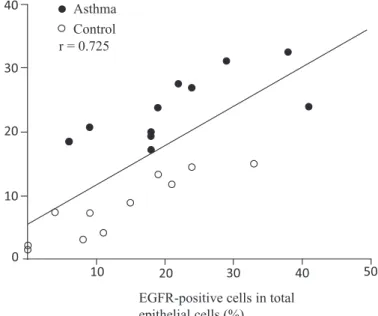
Figure 3 Correlation between EGFR immunoreactivity and MUC5AC production in air-way epithelium.
EGFR immunoreactivity of airway epithelial cells showed a significant positive correlation with the area of MUC5AC-positive staining in airway epithelium (r = 0.725, p < 0.0001). Reprinted with permission of the American Thoracic Society.
Copyright © 2020 American Thoracic Society. All rights reserved.
Takeyama K, Fahy JV, Nadel JA: Relationship of epidermal growth factor receptors to goblet cell production in human bronchi. Am J Respir Crit Care Med 163: 511-516, 2001. The American Journal of Respiratory and Critical Care Medicine is an official journal of the American Thoracic Society.
ることが報告されている
17).好中球性炎症に起因す
る気道ムチンの増加は,疾患の重症度や予後に関わ
る重要な因子と考えられる
18).
2)好酸球性炎症と気道ムチン
喘息は慢性の好酸球性気道炎症を主体とし,気道
上皮では杯細胞の過形成が認められる.この杯細胞
Figure 4 Mechanism of mucus plug formation in patients with asthma.
High levels of IL-13 result in increased production of MUC5AC in goblet cell. The secreted MUC5AC-containing mucus gels tether to the goblet cells. IL-13 also increases transport of thiocyanate into the airways. The thiocyanate reacts with oxidants induced by activated eosinophils, thereby promoting crosslinking of MUC5AC in airway lumen. Both epithelial tethering and crosslinking of MUC5AC contribute to mucus plug formation in patients with asthma.
Ciliated cells
Goblet cells
Crosslinking thiocyanate oxidation IL-13 IL-5 MUC5ACEosinophils
Mucus plug Tethering C M gへの分化誘導には type 2 T helper cell(Th2)サイト
カインが関与しており,なかでも IL-13 はその中心
的役割を果たしている
19)∼22).また,喘息気道では
MUC5AC 産生量 と epidermal growth factor
recep-tor(EGFR)の発現量に有意な正の相関が示されて
いる(Figure 3)
23).気道に集積した好酸球は EGFR
リ ガ ン ド で あ る transforming growth factor alpha
(TGFα)の 産 生 細 胞 で あ り
24),さ ら
に,platelet-activating factor(PAF)の産生を介して MUC5AC
遺伝子の発現増強に関与している
25).近年,気道好酸
球数と粘液栓の程度には正の相関関係がみられるこ
とが CT 画像を用いた粘液栓のスコア化によって示
された
26).粘液栓の形成には,杯細胞から脱顆粒した
MUC5AC が気道上皮に繋留し
27),IL-5 によって活性
化された好酸球から生じる酸化ストレスと,IL-13
によって気道腔に流入した thiocyanate との相互作
用で MUC5AC が重合化する,などの機序が示唆さ
れている
28)(Figure 4).一方,MUC5B は,好酸球に
発 現 す る sialic acid-binding immunoglobulin-like
lectin-F(Siglec-F)と結合することで好酸球にアポ
トーシスを誘導し,抗炎症的に作用することが示さ
れている
29).
3.気道炎症におけるムチン MUC5AC 発現調節
気道炎症では,炎症性サイトカイン,成長因子,
タンパク分解酵素,酸化ストレスなどが MUC5AC
遺伝子発現増強因子として報告されている
30).主要
な MUC5AC 発現調節経路には,EGFR 経路と IL-13
経路が同定されている
2).上記刺激は,直接的もしく
は間接的に両経路を活性化して MUC5AC 発現を増
強する(Figure 5).
1)EGFR 経路
EGFR は健常成人の気道上皮ではほとんど発現が
認められない.しかし,炎症時には,tumor necrosis
factor alpha(TNFα)によって発現が増強すること
が報告されている
31)32). EGFR リガンドは, TGFα,
amphiregulin が好酸球やマスト細胞から産生され
ている
24)33).また TGF
α は,好中球由来のエラスター
ゼや酸化ストレスによる duox1/TNFα-converting
enzyme(TACE)活性化を介して気道上皮からも切
離される
34).気道炎症では,EGFR 経路の活性化に必
要な受容体とリガンドが と も に 増 加 す る こ と で
MUC5AC 発現が強力に誘導される.また EGFR 経
路には,タバコ煙や好中球由来の酸化ストレスによ
るリガンド非依存的な活性化機序が存在する
15)35).
Figure 5 Signaling pathways of airway MUC5AC expres-sion by inflammatory cells.
Recruited inflammatory cells are involved in MUC5AC expression via the 13 and EGFR pathways. In the IL-13 pathway, Th2 cell-derived IL-IL-13 enhances SPDEF ex-pression via JAK/STAT6, which subsequently enhances TMEM16A and CLCA1 expression, and FOXA2 inhibition, resulting in up-regulation of MUC5AC expression. The EGFR pathway is activated by EGFR ligands produced by eosinophils and mast cells. TGFα is also cleaved from epithelial cells due to DuoX1-TACE activation caused by neutrophil-derived elastase and ROS. HIF-1, FOXA2, TMEM 16A, and CLCA1 are commonly involved in both EGFR and IL-13pathways. MUC5AC FOXA2 MAPK13 STAT6 RAS/Raf ERK1/2 MEK1/2 SPDEF CLCA1
IL-4RD/
IL-13RD1
EGFR
IL-13
TGFD
Amphiregulin
Th2 lymphocyte
Mast cell
Eosinophil
HIF-1
TMEM
16A
TACE
Duox1
Pro-TGFD JAK1
Neutrophil
Elastase
ROS
PKCTGFD
2)IL-13 経路
IL-13 はアレルギー性過分泌疾患における気道上
皮杯細胞化生に主要な役割を果たしている.しかし,
MUC5AC
遺伝子プロモーターには IL-13 の情報伝
達 分 子 で あ る signal transducer and activator of
transcription 6(STAT6)結合部位は存在していな
い
36).し た が っ て MUC5AC 遺 伝 子 発 現 誘 導 に は
STAT6 を介した中間ステップが必要と考えられ
る.現在,IL-13 誘導性の MUC5AC 発現は,janus
kinase 1(JAK1)/STAT6 を 介 し て sam pointed
domain-containing
ETS
transcription
factor
(SPDEF)の発現が増強し
37)38),①粘液産生抑制に関
与する転写因子 the forkhead box transcription
fac-tor(FOXA2)を抑制する
39),②カルシウム活性化ク
ロライドチャネルである transmembrane member
16A(TMEM16A)
40)と そ の 関 連 タ ン パ ク
calcium-activated chloride channel regulator 1(CLCA1)
41)の
発現を増強し,mitogen-activated protein kinase13
(MAPK13)を活性化する
42),などの経路が有力視さ
れている.
3)EGFR 経路と IL-13 経路の関連性
IL-13 は,in vitro では気道上皮細胞からの EGFR
リガンドの発現を誘導していない
39).しかし,in vivo
では炎症病態を誘導することで EGFR リガンドが
増加し,MUC5AC の産生を促進することが報告さ
れている
43).現在,IL-13,EGFR 両経路に共通する
MUC5AC 発現調節分子として,MUC5AC 遺伝子プ
ロモーターに接続領域を有する hypoxia-inducible
factor-1(HIF-1)
36)44),FOXA2
39),TMEM16A
40)45),
CLCA1
41)46)などが同定されている.両経路は共通す
る転写因子を介して MUC5AC 産生を調節している
ものと考えられる(Figure 5).
4.気道過分泌の治療
気道過分泌の治療ストラテジーには,要因の除去,
粘液排出促進,ムチン産生および分泌抑制,水分調
節,抗炎症などが挙げられる(Table 1).現行の治
療では,気道粘液の排出促進薬(去痰薬),マクロラ
イド薬,抗コリン薬,理学療法などが主流である.
去痰薬は,粘液の溶解,修復,潤滑を行うことで排
出効果を促進する作用がある.また,14 および 15
員環マクロライド系抗菌薬は,抗菌作用以外に気道
分泌量減少,ムチン産生抑制,線毛運動賦活化など
の作用を併せ持つことが報告されている
47)∼49).気管
支拡張薬である抗コリン薬は,気道粘液の減少効果
を有することが基礎および臨床研究により明らかに
されている
50)51).一方,気道粘液の病的過剰産生の制
御には MUC5AC の発現抑制が有効である可能性が
示唆されている.MUC5AC 遺伝子の発現調節経路を
阻害する薬剤の効果は,様々な過分泌病態を模倣し
た細胞,動物モデルで確認されている
52)∼57).ムチンの
分泌抑制には,杯細胞の脱顆粒を調節するタンパク
で あ る myristoylated alanine-rich C-kinase
sub-strate(MARCKS)の阻害薬や TMEM16A 阻害薬の
効果が期待されている
58)∼60).
結
語
ムチンは気道粘液の主要な構成成分であり,粘液
線毛クリアランスに不可欠な要素である.しかし,
気道炎症では過剰に産生され,過分泌病態を惹起す
る.とくに杯細胞における MUC5AC 過剰発現は,本
病態の中心的役割を担っている.気道 MUC5AC 遺
伝子発現に関与する刺激因子と調節経路の詳細が明
らかになり,近い将来,ムチン産生抑制を治療スト
Table 1 Potential therapeutic targets to treat airway hypersecretion.
Mechanism of action Current Near future
Elimination of risk factors Smoking cessation Indoor cleaning
Stimulation of mucus discharge Mucolytics Mucin interactome regulator 55) Bronchopulmonary toilet
• Postural drainage • Physiotherapy • Nebulization
Inhibition of mucin production Macrolides 47)-49) SPDEF inhibitors 37) 38) 15) 16) 24) 31) 32) 34)-36) 52)
EGFR-TKIs CLCA1 inhibitors (Niflumic acid) 56) Th2 cytokine inhibitors 53) MAPK13 inhibitors 42)
Anti IL-13 Ab HIF-1 inhibitors (YC-1) 57) Anti IL-4R Ab
Inhibition of mucin secretion Long acting muscarinic antagonist 50) 51) MARCKS blockades (MANS peptides) 58) HSP-70 inhibitors (MAL3-101) 59) TMEM16A inhibitors (T16Ainh-A01) 60) Regulation of water secretion Indomethacin 54)
Macrolides Anti-inflammation Antibiotics Steroids Roflumilast
Elastase inhibitors 16)
Currently, stimulation of mucus discharge (mucolytics) is a common treatment strategy for airway mucus hypersecre-tion. The development of an inhibitor of MUC5AC production is expected in the near future.
EGFR-TKI, epidermal growth factor receptor-tyrosine kinase inhibitor; SPDEF, Sam pointed domain-containing ETS transcription factor; CLCA1, calcium-activated chloride channel regulator 1; MAPK13, mitogen-activated protein ki-nase13; HIF-1, hypoxia-inducible factor-1; MARCKS, myristoylated alanine-rich C-kinase substrate; HSP-70; heat shock protein-70.
ラテジーとする選択的な MUC5AC 阻害薬の開発が
期待される.
謝 辞
研究をご指導頂いた東京女子医科大学の玉置淳名誉 教 授,University California, San Francisco の Prof. Jay A. Nadel に深謝する.
開示すべき利益相反状態はない.
文 献
1)Wanner A : Clinical aspects of mucociliary trans-port. Am Rev Respir Dis 116: 73―125, 1977
2)Fahy JV, Dickey BF: Airway mucus function and dysfunction. N Engl J Med 363: 2233―2247, 2010 3)Widdicombe JH, Wine JJ: Airway gland structure
and function. Physiol Rev 95: 1241―1319, 2015 4)Ostedgaard LS, Moninger TO, McMenimen JD et
al: Gel-forming mucins form distinct morphologic structures in airways. Proc Natl Acad Sci U S A 114: 6842―6847, 2017
5)Rubin BK: Mucus structure and properties in cys-tic fibrosis. Paediatr Respir Rev 8: 4―7, 2007 6)Roy MG, Livraghi-Butrico A, Fletcher AA et al:
Muc5b is required for airway defence. Nature 505: 412―416, 2014
7)Evans CM, Raclawska DS, Ttofali F et al: The polymeric mucin Muc 5 ac is required for allergic airway hyperreactivity. Nat Commun 6: 6281, 2015 8)Hancock LA, Hennessy CE, Solomon GM et al:
Muc5b overexpression causes mucociliary dysfunc-tion and enhances lung fibrosis in mice. Nat Com-mun 9: 5363, 2018
9)Chen G, Ribeiro CMP, Sun L et al: XBP1S regu-lates MUC 5 B in a promoter variant-dependent pathway in idiopathic pulmonary fibrosis airway epithelia. Am J Respir Crit Care Med 200: 220―234, 2019
10)Massion PP, Inoue H, Richman-Eisenstat J et al: Novel pseudomonas product stimulates interleukin-8 production in airway epithelial cells in vitro. J Clin Invest 93: 26―32, 1994
11)Takeyama K, Agustí C, Ueki I et al: Neutrophil-dependent goblet cell degranulation : role of membrane-bound elastase and adhesion molecules. Am J Physiol 275: L294―L302, 1998
12)Nadel JA, Takeyama K : Mechanisms of hyper-secretion in acute asthma, proposed cause of death, and novel therapy. Pediatr Pulmonol Suppl 18: 54― 55, 1999
13)Cardell LO, Agustí C, Takeyama K et al: LTB (4)-induced nasal gland serous cell secretion mediated by neutrophil elastase. Am J Respir Crit Care Med 160: 411―414, 1999
14)Agustí C, Takeyama K, Cardell LO et al: Goblet cell degranulation after antigen challenge in sensi-tized guinea pigs. Role of neutrophils. Am J Respir Crit Care Med 158: 1253―1258, 1998
15)Takeyama K, Dabbagh K, Shim JJ et al: Oxida-tive stress causes mucin synthesis via transactiva-tion of epidermal growth factor receptor : role of neutrophils. J Immunol 164: 1546―1552, 2000 16)Kohri K, Ueki IF, Nadel JA: Neutrophil elastase
induces mucin production by ligand-dependent epi-dermal growth factor receptor activation. Am J Physiol Lung Cell Mol Physiol 283: L531―L540, 2002 17)Kesimer M, Ford AA, Ceppe A et al: Airway
Mu-cin Concentration as a Marker of Chronic Bronchi-tis. N Engl J Med 377: 911―922, 2017
18)Nadel JA, Takeyama K, Agustí C: Role of neutro-phil elastase in hypersecretion in asthma. Eur Respir J 13: 190―196, 1999
19)Wills-Karp M, Luyimbazi J, Xu X et al: Interleukin-13: central mediator of allergic asthma. Science 282: 2258―2261, 1998
20)Dabbagh K, Takeyama K, Lee HM et al: IL-4 in-duces mucin gene expression and goblet cell meta-plasia in vitro and in vivo.. J Immunol 162: 6233― 6237, 1999
21)Kondo M, Tamaoki J, Takeyama K et al: Interleukin-13 induces goblet cell differentiation in primary cell culture from Guinea pig tracheal epi-thelium. Am J Respir Cell Mol Biol 27: 536―541, 2002 22)Campbell L, Hepworth MR, Whittingham-Dowd J et al: ILC2s mediate systemic innate protection by priming mucus production at distal mucosal sites. J Exp Med 216: 2714―2723, 2019
23)Takeyama K, Fahy JV, Nadel JA: Relationship of epidermal growth factor receptors to goblet cell production in human bronchi. Am J Respir Crit Care Med 163: 511―516, 2001
24)Burgel PR, Lazarus SC, Tam DC et al: Human eosinophils induce mucin production in airway epi-thelial cells via epidermal growth factor receptor activation. J Immunol 167: 5948―5954, 2001
25)Lou YP, Takeyama K, Grattan KM et al: Platelet-activating factor induces goblet cell hyperplasia and mucin gene expression in airways. Am J Respir Crit Care Med 157: 1927―1934, 1998
26)Dunican EM, Elicker BM, Gierada DS et al: Mu-cus plugs in patients with asthma linked to eosino-philia and airflow obstruction. J Clin Invest 128 : 997―1009, 2018
27)Bonser LR, Zlock L, Finkbeiner W et al: Epithe-lial tethering of MUC5AC-rich mucus impairs mu-cociliary transport in asthma. J Clin Invest 126 : 2367―2371, 2016
28)Dunican EM, Watchorn DC, Fahy JV : Autopsy and Imaging Studies of Mucus in Asthma. Lessons Learned about Disease Mechanisms and the Role of Mucus in Airflow Obstruction. Ann Am Thorac Soc 15: S184―S191, 2018
29)Kiwamoto T, Katoh T, Evans CM et al: Endoge-nous airway mucins carry glycans that bind Siglec-F and induce eosinophil apoptosis. J Allergy Clin
Immunol 135: 1329―1340, 2015
30)Rose MC, Voynow JA : Respiratory tract mucin genes and mucin glycoproteins in health and dis-ease. Physiol Rev 86: 245―278, 2006
31)Takeyama K, Dabbagh K, Lee HM et al: Epider-mal growth factor system regulates mucin produc-tion in airways. Proc Natl Acad Sci U S A 96: 3081― 3086, 1999
32)Lee HM, Takeyama K, Dabbagh K et al: Agarose plug instillation causes goblet cell metaplasia by ac-tivating EGF receptors in rat airways. Am J Physiol Lung Cell Mol Physiol 278: L185―L192, 2000 33)Matsumoto K, Fukuda S, Nakamura Y et al:
Am-phiregulin production by human eosinophils. Int Arch Allergy Immunol 149: 39―44, 2009
34)Shao MX, Ueki IF, Nadel JA: Tumor necrosis fac-tor alpha-converting enzyme mediates MUC 5 AC mucin expression in cultured human airway epithe-lial cells. Proc Natl Acad Sci U S A 100 : 11618 ― 11623, 2003
35)Takeyama K, Jung B, Shim JJ et al: Activation of epidermal growth factor receptors is responsible for mucin synthesis induced by cigarette smoke. Am J Physiol Lung Cell Mol Physiol 280: L165―L 172, 2001
36)Young HWJ, Williams OW, Chandra D et al: Cen-tral role of Muc5ac expression in mucous metapla-sia and its regulation by conserved 5 elements. Am J Respir Cell Mol Biol 37: 273―290, 2007
37)Park KS, Korfhagen TR, Bruno MD et al: SPDEF regulates goblet cell hyperplasia in the air-way epithelium. J Clin Invest 117: 978―988, 2007 38)Kuperman DA, Huang X, Koth LL et al: Direct
ef-fects of interleukin-13 on epithelial cells cause air-way hyperreactivity and mucus overproduction in asthma. Nat Med 8: 885―889, 2002
39)Zhen G, Park SW, Nguyenvu LT et al: IL-13 and epidermal growth factor receptor have critical but distinct roles in epithelial cell mucin production. Am J Respir Cell Mol Biol 36: 244―253, 2007 40)Qin Y, Jiang Y, Sheikh AS et al: Interleukin-13
stimulates MUC 5 AC expression via a STAT 6-TMEM16A-ERK1/2 pathway in human airway epi-thelial cells. Int Immunopharmacol 40 : 106 ― 114, 2016
41)Yu H, Li Q, Kolosov VP et al: Interleuk13 in-duces mucin 5 AC production involving STAT 6 / SPDEF in human airway epithelial cells. Cell Com-mun Adhes 17: 83―92, 2010
42)Alevy YG, Patel AC, Romero AG et al: IL-13-induced airway mucus production is attenuated by MAPK13 inhibition. J Clin Invest 122: 4555 ― 4568, 2012
43)Shim JJ, Dabbagh K, Ueki IF et al: IL-13 induces mucin production by stimulating epidermal growth factor receptors and by activating neutrophils. Am J Physiol Lung Cell Mol Physiol 280 : L 134 ― L 140, 2001
44)Yu H, Li Q, Kolosov VP et al: Regulation of ciga-rette smoke-mediated mucin expression by hypoxia-inducible factor-1α via epidermal growth
factor receptor-mediated signaling pathways. J Appl Toxicol 32: 282―292, 2012
45)Crottès D, Lin YT, Peters CJ et al: TMEM 16 A controls EGF-induced calcium signaling implicated in pancreatic cancer prognosis. Proc Natl Acad Sci U S A 116: 13026―13035, 2019
46)Nagashima A, Shinkai M, Shinoda M et al: Clarithromycin suppresses chloride channel acces-sory 1 and inhibits interleukin-13-induced goblet cell hyperplasia in human bronchial epithelial cells. Antimicrob Agents Chemother 60: 6585―6590, 2016 47)Tamaoki J, Takeyama K, Tagaya E et al: Effect
of clarithromycin on sputum production and its rheological properties in chronic respiratory tract infections. Antimicrob Agents Chemother 39: 1688― 1690, 1995
48)Kanoh S, Rubin BK : Mechanisms of action and clinical application of macrolides as immunomodula-tory medications. Clin Microbiol Rev 23 : 590 ― 615, 2010
49)Takeyama K, Tamaoki J, Chiyotani A et al: Ef-fect of macrolide antibiotics on ciliary motility in rabbit airway epithelium in-vitro. J Pharm Pharma-col 45: 756―758, 1993
50)Takeyama K, Tamaoki J, Nakata J et al: Effect of oxitropium bromide on histamine-induced air-way goblet cell secretion. Am J Respir Crit Care Med 154: 231―236, 1996
51)Tagaya E, Yagi O, Sato A et al: Effect of tiotro-pium on mucus hypersecretion and airway clear-ance in patients with COPD. Pulm Pharmacol Ther 39: 81―84, 2016
52)Takezawa K, Ogawa T, Shimizu S et al: Epider-mal growth factor receptor inhibitor AG1478 inhib-its mucus hypersecretion in airway epithelium. Am
J Rhinol Allergy 30: 1―6, 2016
53)Shim JJ, Dabbagh K, Takeyama K et al: Suplatast tosilate inhibits goblet-cell metaplasia of airway epi-thelium in sensitized mice. J Allergy Clin Immunol 105: 739―745, 2000
54)Tamaoki J, Chiyotani A, Kobayashi K et al: Ef-fect of indomethacin on bronchorrhea in patients with chronic bronchitis, diffuse panbronchiolitis, or bronchiectasis. Am Rev Respir Dis 145 : 548 ― 552, 1992
55)Radicioni G, Cao R, Carpenter J et al: The innate immune properties of airway mucosal surfaces are regulated by dynamic interactions between mucins and interacting proteins : the mucin interactome. Mucosal Immunol 9: 1442―1454, 2016
56)Nakano T, Inoue H, Fukuyama S et al: Niflumic acid suppresses interleukin-13-induced asthma phe-notypes. Am J Respir Crit Care Med 173 : 1216 ― 1221, 2006
57)Zhou X, Tu J, Li Q et al: Hypoxia induces mucin expression and secretion in human bronchial epi-thelial cells. Transl Res 160: 419―427, 2012
58)Singer M, Martin LD, Vargaftig BB et al: A MARCKS-related peptide blocks mucus hyper-secretion in a mouse model of asthma. Nat Med 10: 193―196, 2004
59)Fang S, Crews AL, Chen W et al: MARCKS and HSP70 interactions regulate mucin secretion by hu-man airway epithelial cells in vitro. Am J Physiol Lung Cell Mol Physiol 304: L511―L518, 2013 60)Kondo M, Tsuji M, Hara K et al: Chloride ion
transport and overexpression of TMEM16 A in a guinea-pig asthma model. Clin Exp Allergy 47: 795― 804, 2017