痛風とその治療薬
著者 柳澤 輝行
・肥満obesityの分子薬理学
#2~65
・
高脂血症 hyperlipidemia治療薬
「脂質異常症dyslipidemia」
#66 ~97・痛風goutとその治療薬
#98 ~122allopurinolの機序に惹かれて薬理学者になろうとしました。
・関節リウマチrheumatoid arthritisの治療薬
#123~14420130510
分子薬理学分野 柳澤輝行
設問4:窒素代謝産物の代表
• urea
• creatinine
• uric acid
それぞれはどの生体物質の代謝排泄物か。
最も溶解性の低いものはどれか。
窒素代謝産物
• 尿素urea
• クレアチニンcreatinine
• 尿酸uric acid
が代表。
アンモニア(毒性)をどう処理するか、
環境の水の量により決定される。
高尿酸血症と痛風
高尿酸血症と痛風
窒素代謝産物
• 尿素 urea
• クレアチニン creatinine
• 尿酸 uric acid
が代表。
それぞれはどの生体物質の代謝排泄物か。
最も溶解性の低いものはどれか。
NH
4+ amino acid protein
purine nucleotides DNA/RNA
ATP, GTP
肺魚 lungfish
During droughts, lungfish become
terrestrial and excrete urea instead of
ammonia to conserve water.
痛風
薬理学II 20130510
柳澤輝行Gout: Hereditary metabolic disorder characterized by
recurrent acute arthritis, hyperuricemia and deposition of
sodium urate in and around the joints, sometimes with
formation of uric acid calculi.
National Library of Medicine - Medical Subject Headings/2012 MeSH/Scope Note http://www.nlm.nih.gov/cgi/mesh/2012/
National Library of Medicine - Medical Subject Headings
/MeSH Descriptor Data
MeSH Heading Gout
Tree Number C05.550.114.423
Tree Number C05.799.414
Tree Number C16.320.565.798.368
Tree Number C18.452.648.798.368
Musculoskeletal Diseases [C05] Joint Diseases [C05.550] Arthritis [C05.550.114] Rheumatic Diseases [C05.799]Congenital, Hereditary, and Neonatal Diseases and Abnormalities [C16] Nutritional and Metabolic Diseases [C18]
情報を組織化(整理)する5基準 1.位置(Location) 2.アルファベット(Alphabet) 3.時間(Time) 4.カテゴリー(Category) 5.階層順序(Hierarchy)
高尿酸血症と痛風
●高尿酸血症
hyperuicemia:血中にプリン代謝の最
終産物である尿酸uric acid: urateが過剰に存在する
状態
●痛風
gout
:尿酸が過剰に蓄積することで起こる疾患
で、急性関節炎の反復発作を特徴とし、しばしば痛風
結節と呼ばれる大きな結晶集塊の形成、慢性関節変
形、および腎障害・腎結石などの慢性症状を伴う。
■高尿酸血性腎症 : hyperuricemic nephropathy
痛風発作 sudden attack of gout.
James Gilroy (1799)急性痛風性関節炎
gouty arthritis
の臨床像
痛風発作sudden attack of gout
・社会的に活発な男性に多い。高タンパク食、飲酒。 ・突然足の親指の関節(第一中足指節関節)に針を刺すような痛みが出 現し、発赤・腫張する。 ・症状は24時間以内にピークに達し、約10日で自然に消失。 ・発作は手足のどの関節にも出現するが、全発作の70%は足の親指の 関節に起こる。 ・はじめて痛風発作があってから、その後出現しない時期が続く。(間歇 期) ・60%の人は1年以内に、40%の人は1年以上経過してから2回目の発 作が出てくる。
尿酸結晶urate crystal
発症機序
●尿酸の産生過剰 ・リンパ腫、白血病治療中の急速な細胞崩壊 ・Lesch-Nyhan症候群 ・高プリン体食品(肝臓、肉エキス、油漬イワシなど) ●尿酸の排泄低下 ・腎不全などの腎疾患 ・薬剤性(チアジド系利尿薬など)痛風により親指のMP関節に できた関節炎
Genetics & Medical conditions
• The occurrence of gout is partly genetic, contributing to
about 60% of variability in uric acid level. (Dietary
causes account for about 12% of gout.)
• SLC2A9
, SLC22A12 (URAT1)
and ABCG2
• Gout frequently occurs in combination with other
medical problems. Metabolic syndrome, a combination
of abdominal obesity, hypertension, insulin resistance
and abnormal lipid levels occurs in nearly 75% of
cases.
• A body mass index greater than or equal to 35
increases a male's risk of gout threefold.
高尿酸血症から急性痛風性関節炎の発症機序
高尿酸血症 関節への尿酸結晶の沈着、滑膜細胞による結晶の貪食 補体の 活性化 好中球(PMN)に対する走化性 好中球による 結晶の貪食 好中球の融解 結晶の 放出 単球(MNP, Mf)による結晶の貪食組織の損傷と炎症
リソソーム酵素 の放出 プロテアーゼ の放出 LTB4, PGs, フリーラジカル の放出 IL1, TNFa, IL6, IL8の放出 軟骨 滑膜 炎症時の組織 低pH → 結晶↑薬剤性高尿酸血症
●ヒドロクロロチアジド
hydrochlorothiazide
1. 利尿薬による細胞外液量↓ −→近位尿細管の尿酸濃度↑ −→尿酸の再吸収の効率↑ 2. 有機酸分泌機構において尿酸と競合−→尿酸分泌↓ 尿酸トランスポーター ●アセチルサリチル酸 Aspirin
尿酸排泄促進作用は、他のサリチル酸塩類同様、用量依存性が強 い。 ・低用量(1日1~2g) 尿酸排泄を低下し、血漿尿酸濃度を上昇するこ とがある。 ・中間量(1日2~3g) 通常、尿酸排泄を変化させない。 ・大量(1日5g以上) 尿中への尿酸排泄を誘導し、血漿尿酸値を低下 する。Classification of hyperuricemia is based on urinary urate excretion (UUE) and fractional excretion of urate (FEUA).
Pathophysiological model and proposed new classification of hyperuricemia.
痛風の治療薬と治療方針
●発作予感時 コルヒチン(チュブリン重合阻害) ●痛風発作時 インドメタシン、ナプロキセンなど(NSAIDs) ●高尿酸血症治療薬 (尿酸生成阻害)アロプリノール、フェブキソスタット (尿酸排泄促進)ベンズブロマロン、プロベネシド、スルフィピラゾン ●その他の治療法 尿アルカリ化薬 日常生活の改善:食事、水分補給、アルコール、ストレス、肥満 ニコチン酸の副作用としての高尿酸血症。滑膜細胞 尿酸塩結晶 IL1 PG PG Mf LTB4
colchicine
indomethacin,
naproxen, etc.
痛風関節の病態生理と痛風治療薬
カッツング・薬理学 p680
PMN 炎症 関連 酵素 PG IL1 PMN: polymorphonuclear leukocytes尿細管における尿酸排泄モデル
正常排泄
排泄低下
排泄促進薬
100 50 50 100 10 再吸収 (a) 分泌 (b) 分泌後の 再吸収 (c) 40 100 45 45 100 5 40 40 10 30 30 90 100 10 糸球体 近位 尿細管 遠位 尿細管 排泄 ろ過排泄促進薬の特徴
• 低用量では、(b)の尿酸分泌を抑制することがあ
る。 (痛風発作時に初めに用いてはならない
理由)
• 治療量では、(a)と(c)の再吸収を抑制することに
より、結果的に尿酸排泄を増加させる。
• 多量の尿酸を排泄している患者では尿酸結石
形の可能性がある。 (十分な尿量、アルカリ
化)
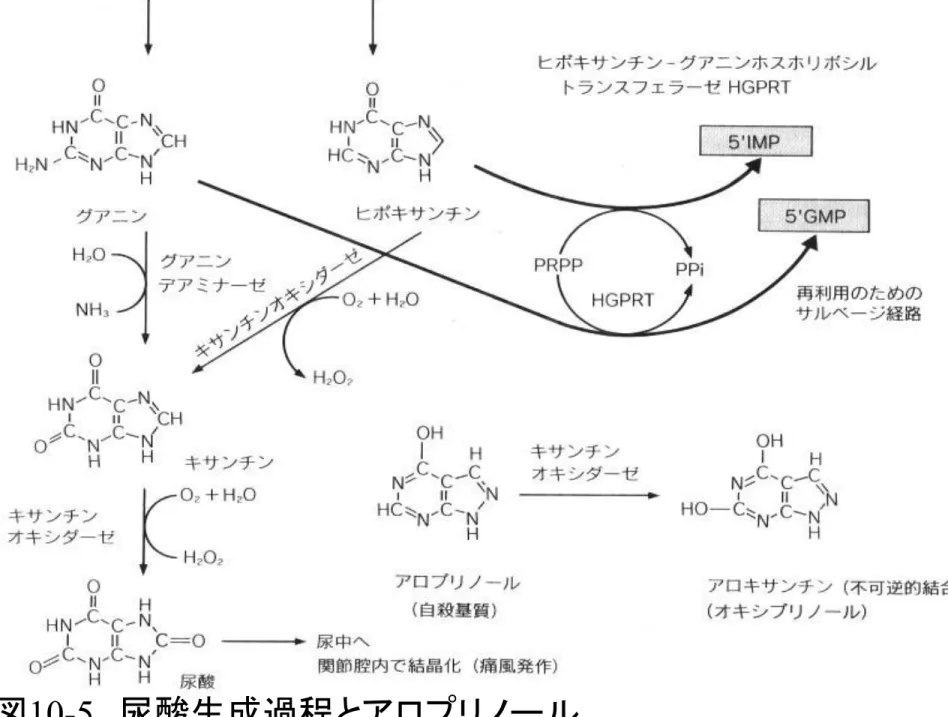
尿酸生成・阻害薬
p257
GMP
イノシン酸
(IMP)
アデニロコハク酸
AMP
グアノシン グアニン イノシン ヒポキサンチン アデノシン キサンチン尿酸
キサンチンオキシダーゼ キサンチンオキシダーゼサルベージ経路
自殺基質
allopurinol
Obituary: Gertrude Belle Elion (1918-99) Pioneer of drug discovery
RICHARD KENT AND BRIAN HUBER; GLAXO WELLCOME Nature 398, 380 (1999)
Gertrude Belle Elion was awarded a Nobel prize for developing drugs such as acyclovir and allopurinol.
Trudy Elion was one of only half a dozen women to receive a Nobel Prize for Physiology or Medicine this century. But
although this pioneer of rational drug design was proud of her achievements, she did not care for pomp and circumstance. What she really cared about was good science, which she believed
would yield effective treatments for disease. Between her
retirement in 1983 and her sudden death on 21 February 1999, aged 81, she never stopped working — in fact, few people would have been aware that she had officially retired.
Elion's innovative ways of working and thinking are as much a part of her legacy as the drugs that she discovered and the 45 patents on which her name appears. Indeed, she
trained and mentored two generations of scientists; students were swept up in her passion to pursue science and medicine; and
children were inspired by her infectious smile and boundless curiosity. This is Trudy Elion's real legacy, and one with which she would be very pleased
Febuxostat (TEI-6720, TMX-67)
非プリン型選択的キサンチンオキシダーゼ 阻害剤であり、1日1回の服薬で尿酸低下 作用を発揮する。(帝人ファーマ) uric acid 1960年以前、抗腫瘍薬として開発 × XOの阻害作用発見→痛風治療薬 ○Pacher P et al.: Therapeutic effects of xanthine oxidase inhibitors: Renaissance half a century after the discovery of allopurinol. Pharmacol Rev. 2006; 58: 87–114. doi:
10.1124/pr.58.1.6
Xanthine dehydrogenase,
dimer
活性部位
The FAD cofactor, the two iron/sulfur centers, the molybdopterin cofactor, and the salicylate also are included (Enroth et al., 2000).