IDENTIFICATION OF DETERMINISTIC
LINEAR SYSTEM WITH UNCERTAINTY
IN THE INITIAL PARAMETERS AND
NOISE - ORTHOTOPE CASE
Masahiro Tanaka
1. Introduction
On the identification of linear systems, a great deal of study has been done within the statistical framework (e.g. Eykhoff 1974, Cox and Hinkley 1974, Akaike 1981). But recently, the problem has also been discussed in the deterministic treatment (Fogel and Huang 1982, Norton 1987, Lozano-Leal and Ortega 1987, Kurzhanski 1988, Walter and Piet-Lahanier 1989). Namely, the unknown noise value as well as
the initial uncertainty of the parameter is defined as unknown
deter-ministic values bounded by convex compact sets, and the problem is
to estimate the set of admissible values of the parameters that satisfy
all the known relations. One of the main motivations for the
deter-ministic treatment is that it is not easy to assume the reasonable sta-tistical parameters (i.e. the mean value, the covariances, etc.) of the noise, especially from small amount of available data.
Although our objective is to find the minimal uncertainty, it is Usu-ally geometricUsu-ally so complex that we cannot simply express it as the
228 iSNEIJkWnvLBJwag (P-tc:•ntue eg260,261ii:})
fication problem in deterrninistic uncertainty has been treated by Kur-zhanski (1988).
Our obiective of this paper is to obtain the expression of the
uncer-tainty of unknown parameters when the unceruncer-tainty of the noise and the initial value are given by orthotopes. We also propose a practi-cally useful recursive scheme by approximating the uncertainty by an
orthotope at every stage.
2. Generai Formu}ation
We consider a linear system
y(le) == Cp (k) +v(k), le-1, .. ., N (2. 1)
where y(le)ERM is the measurement, p(le)EIRn is a known input, C is a matrix parameter to identified, and v(k)ERM is an unknown noise. The noise v(le) is supposed to be an unknown deterministic value,
but known to exist in a set Q(k), and C is also known to exist in
set Co a Pn'on', i. e.
v(le) EQ(le), le := 1, ...,N (2. 2)
CE Co (2. 3)
where Q(k) and Co are assumed to be convex and compact sets in
RM and RMX", respectively.
Our problem is to find the set of C that satisfies all the relations (2. 1) together with the constraints (2. 2), (2. 3).
Definition 2. 1. The smallets set of C that satisfies (2. 1) - (2. 3) for k:= 1, ..., s is written as C[s].
We define some notations that will be used in this paper.
Definitton 2. 2. The inner product of vectors sc and y is written as
<x,y>. ,
To deal with convex compact sets, it is convenient to use the
sup-port function p(q 1 S).
Definition 2. 3. The support function p (q1S) is defined as
p(q l S) = sup <q, s>
sES
Since the equation (2. 1) is not a convenient form to manipulate,
we will use the Kronecker product defined next.
Definition 2. 4. Define a matrix A as
an'''aln
A-= . .
aml ' ' ' amn
Then Kronecker product of
defined by
matrices A and B is expressed as AXB
AXB=
a"B . ' ' ai.B
ee
anrB ' ' ' annB230 iliNfiJtCtystLBthg (if.tu:•ftX eg260,261-:il)
By using the Kronecker product, (2. 1) can be written as
y(le)- (p '(le) XI.)li +v(le) (2. 4)
where the prime is the transpose of a matrix or a vector and C is a
column stacked vector of C, i.e.
Iii = ( 1cii, •-•, cmi 1, •••, 1Cim •••, Cmni )'
Using the relation (2. 2), the following inclusion holds:
y(le)E (p '(le) XI.)C+Q (k) (2. 5)
or equivalently
(P '(le) XI.)CEiy(le) -Q(k) (2. 6)
where the sum of a value x and a set S is defined as x+S =: {x +s 1 sES}
x-S= {x -s l sES}.
It is clear that, for any C that belongs to C[s],
ilf '(le)(p '(k)&I.)CS <llr(le), y(le)>+p(W(le) 1 -Q(h))
(2. 7)
<Z, C>Sp(A1Co) (2. 8)
hold for any rp(le)ERM, le=1, ..., s, and for any AERM". Taking
summation of (2. 7) over le and adding (2. 8), we have the relation
s
ÅíW ' (k) (p ' (k) XI.)C+<Z, C> Sp (A l Co)
s
+ z {<ur(h),y(le)>+p(IV(le) 1 -Q(le))}
k=[1
or wrltten as
s - -s
< Z lv(le)XI.)V(le)+Z, C>Sp(Z 1 Co) + Z {<W(le),y(k)>
k==l k==1
+p (W (le)1-Q(le))} (2. 9)
s
By redefining Z : = Z (P(le)XI.) LV'(le)+Z, we have
k=l
-s -s
<Z,C>$p(A- Z (p(le)XI.)rp(le) i Co) + Z {<U(le), y(le)>
k=1 k=1
+p (rp (le)l-Q (le))} (2. lo)
Lemma 2. 1. The true uncertainty set C[s] is given by the
follow-ing support function:
p(Z IC[s]) -f(A) (2. 11)
wheress
f(Z)-inflo(Z- Z lv(le)opI.)W(le) I C,) + : {<V(k),y(k)>
k=1 h=1
+p(!F(le) 1 -Q(k))} 1 iV(le)ERM, le= 1, ..., s}.
(2. 12)
Proof. This follows from (2.10) and the fact that f(1) is a convex, positively homogeneous function (Rockafellar 1970). O
Another expression of C[s] can be made in the following way. Al-though A and IY can be taken independently, they can be related by
using a matrix M(k), i. e.
rp'(k) ==Z 'M(le) (2. 13)
232 EiMfiik#nvLeth-E} (ff-tci".ue rg260,261-El) stituting (2. 13) into (2.10), we have
<A, C>$p(Z (I..m Z M(le) (P ' (le) opI.))Co)
k=1
s
+ Z {<A (fe) , M(le )y (le) > +p (A 1 M(le) (-Q(k)))} (2 . 14)
k=l or, equivalently,
<Z,C>Sp(Z 1 {(I.. - ZM(le) (P '(le)QI.))Co
k=:1
s
+ZM(le) fy (le) -Q(le))}) (2. 15)
lt= l
Therefore, the following assertions hold.
Lemma 2. 2. The necessary and sufficient condition fer CEC[s] that the relation (2.15) holds for any AEIRM" and any sequence
{M(1), ..., M(s)}, M(le)ERMnXM, le=1, ..., s.
Proof. It is clear from the above discussion.D
Lemma 2. 3. Define C(S, Cb M(1), . . . , M(s)) == (I.. - Z M(k) (P ' (le)XI.))Co
k=I
s
+ZM(le) fy (le) -Q(k))} (2. 16)
k=1 ThenCEC[s]
if and only if CEC(s, CQ M(1), . . ., M(s)). isLemma 2. 4. The set C[s] can be written as
C[s]-n ... nC(s, C. M(1), ..., M(s)) (2. 17)
M(1) M(s)
Similarly, if we begin the estimation process with C[s] at stage s, we obtain the inclusion
C[s+1] C (I..-M(s+1) (p ' (s+1) opI.))C[s]
+M(s+1)fy(s+1)+Q(s+1)):= C(s+1, C[s],M(s+1)) (2. 18)
and we also have the equality
C[s+1] == nC(s+1, C[s],M(s+1)). (2. 19)
M(s+1)
3. Exact Uncertainty Set with Orthotopes
It was shown in g2 that the true set of uncertainty is expressed
by the intersection of infinite number of sets (2.17)-(2.19). In this
section, we consider the problem when the uncertainty is expressed by an orthotope. An orthotope HCR" is defined as
H:=={(hi, ..., h.) 'l 1 h,-h9 1 S 6. h?, 6,:lenown, i-- 1, ..., n}.
Consider the original form of system (2. 1) where
v(k) = (vi(k), ..., v.(le)) ' with uncertainty
1 v, (k)-v? (h) L $ 6, (le), i- 1,...,m (3. 1)
234 iliMRJtlXstLBM-Ei} (P-ne:•ftX ag260,261-Sl-)
Cn ''' Cin
ee
C-• .
Cmi ' ' ' Cmn
Then we can decompose the system (2. 1) into scalar observation systems :
M(fe) ==:P '(h)C, + v, (k), i-- 1,...,m (3. 2)
where C, is an n-dimensional column vectorC,= (c,i,•••, c,n) '•
The a pn'on' uncertainty of C, is expressed as
C9, -= C• (O)n C?, (O)n... n C:,i (O) (3. 3)
Ol(O) - {C, 1 i a,'(j')C,-vg(O) 1 s 6g(O)}, 1'--1,...,n(3. 4)
Since we can treat the scalar observation system (3. 2)
independ-ently with respect to i, we will omit thisihereafter. Let the set of C which satisfy the relation (3. 2) at le be expressed as C(le) : C(le) - {C l 1y(k)-vO(k) -p'(le)C 1 S6(le)} (3. 5)
Then we have the following expression for the exact uncertainty set of C[s] after the observations y(1),...,y(s):
s
C[s] -COn {fi C(le)} (3. 6)
h=1
IDENTIFICATIONOFDETERMINISTICLINEARSYSTEM 235
H' (k) = {C I p ' (le)C=y (k) -vO (k) +6(le)}
Hr (le) = {C 1 p ' (h)C==y(k)-vO(h)-6(le)}. The support function of C(k) is given by
p(Å}p(le) I C(le))=Å}(y(le)-vO(le))+6(k) '
p(q I C(le))= oo for q,E aP(le), aER,
and the support function of C[s] is given by
p(q 1 C[s])-p(q 1 COnC(1)n... n C(s))
- inf lo(q(O) i CO) +p(q(1) 1 C(1))+... +p(q(s) 1C(s))l
q(O) +... +q(s) -q}
- inf lo (q (O) 1 CO) +p (E ip (1) l C(1))+ ... +p (E .p (s) 1 C(s)) 1 q(O) +EP(1) +... +eP (s) =q}
= inf {q '(O) CO +E,( y(1) - vO(1)) + ... +E,( y(s) - vO (s)) + + I qi(O) I 6i(O)+... + 1 q.(O) 1 6"(O)+ 1 ei l 6(1)+...+
1 E, 16(s) 1q(O) +Ep(1)+... +ep (s) -q} (3. 7)
The hyperplaneH== {x 1p'(le)x-y(k)-v?(le)+6(le)} (3.8)
is redundant ifp(p (le) l C(le)) >p(p(k) 1C[s]) (3. 9)
Also,H-- {x 1p'(le)x--(y(le)-vO(k))+6(k)} (3.10)
is redundant if236 ISMRJktytuLeMe (esR;•kX rg260,261il)
p(-p (h) i C(k)) >p(-p (le) 1 C[s]) (3. 11)
The minimization problem (3. 7) is a linear programming (LP)
prob-lem as follows.
.nroblem
min {q '(O)CO-tEi(y(1)-vO(1))+... +E,(y(s)-ve(s))+IV(1)
+... +IF(n) + g6(1) +... +Åë(s)} i q(O), Ei,••••e,,
rp(1) ,..., U (n), Åë(1),..., ip (s)} == f(q) (3. 12) subject to
q(O) +EP(1)+... +EP (s) -=q (3. 13)
-U(j)Sq(O)ew(O)$rp(i 1'-1,...,n (3. 14)
-ip(]')$EP(1') $Åë(i 1'-1,...,s (3. 15)
W(j')IO, ]'-1,...,n (3. 16)
Åë(1') )- O, 1'-1,...,s (3. 17)
The exact uncertainty set could be obtained by verying q in RM,
but it is sufficient to define it by choosing directions q to the origi-nal uncertainty directions and lo(le) ,le= 1,...,s}.
/
It is also possible to choose whatever kind of smallest polytope that is tangential to the uncertainty set to the defined directions.
4. Approximation by Orthotopes
In this section, we consider the approximation with orthotopes
4. 1 Smallest External Orthotope
It is obvious that the smallest external orthotope is the one whose
support function coincides with that of the true set (polytope) to the edge directions Å} hi, • ny • , Å} len•
Hence, the smallest external orthotope can be expressed as
C.. [s]={(xi,••-, x.) 'l -gi- $xt $ gi' ,•••, -gi $x. $ g.'} (4. 1)
where gj' =f(le,), g,- =f(-le,), 1'=1,...,n. Vector le, is an n-dimensi-onal vector with 1 at the j-th element and O's elsewhere, and f(Å}lej) is defined in (3. 12).
y
4. 2 Largest Internal Orthotope
Define the orthotope
C,. [s]={(xi,...,x.)'l -gi +x? $ xi $ ec? +4i,•••,
-4n +X9 $XnSXS +4n} (4• 2)
where xP Å} ;iEC[s]. For the internal orthotope, there does not exist
such an apparently unique optimal one like the external orthotope.
Thus, we define the problem :
max g(ei,;2,...,4.) (4.3)
gi• 42,•••,C. subject to
p(a(]') 1 Ci.[1'])$p(a(]') I C'(O)), 1'-1,...,n (4.4)
p(rra(d) i Ci.[]'])$p(-a(j') i C'(O)), 1'-1,...,n (4.5)
238 EiMAX#ffLeeee (ff-N:•kue eg260,261E})
p(P(le) 1 Ci.[le])$p(p(k) 1 C(k)), le ==l,...,s (4. 6)
p(-p(le) Ci.[k])$p(-p(le) 1 C(k)), le==1,...,s (4.7)
Let us express the vectors a(i p(le) by using elements as
a(1') = (a(i)(1'),...,a(")(1')) '
p(le) = (p(i) (le),...,p(n) (le)) •
Then (4. 4) - (4. 7) can be rewritten as
nn
Za(" (le)x,O + Z 1 a()' (h) 1 g S- vk (O) +6le (O), h=1, . . . , n
J=l J==1
(4. 8)
nn
-: a(') (k)x,O• +Z 1 a(') (k) 1 ;j S- -vle (O) +6k (O), k=1 , . . . , n
J==1 J=1
(4. 9)
ss
Zp(j)(le)x,O + X i p(i)(le) 1 CT, -Ky(le)-vO(le)+6(le), 1=[1
J=1
k= 1,..., s (4. 10)
nn
- ZP(i)(k)x,O + Z 1 p(i)(le) 1 4j <=. -y(le)+vO(k)+6(le), j=1
)=1
le - 1,...,s (4. 11)
4j -2 0, 1'=1,...,n (4. 12)
This minimization problem (4.3) is a nonlinear programming
(NLP) problem subject to (4. 8)-(4.12). If the objective function
(3. 20) is linear, it reduces to an LP problem. Note that the following relation clearly holds:
Cin [S]CC[S]CCex [S] (4• 13)
We showed that the exact uncertainty set was a polytope and the support function of the set was described by an infimum of a func-tion (3. 7), but the optimizafunc-tion needs solving LP problems at each step, and we need growing memory to express the exact set. Here, we consider the approximation of uncertainty by an orthotope with
edges parallel to the axes.
We can decompose the vector observation system into scalar obser-vation systems as g3 if the obserobser-vation uncertainty is described as
(3.1). Hence, we treat the parameters C separately row by row.
The available uncertainty at step s is defined as
C [s] ={(ci,•••, c.) ' 1 l cj - c9• 1 $ nj (s), 1' = 1, ..., n}
(4. 14)
and the uncertainty of the noise v(h) is
Q(s+1)={v(s+1) 1 1v(s+1)-vO(s+1) 1S6(s+1)}
(4. 15)
Then, the support function of C(s+1,C[s],M(s+1)) (2. 18) is given
by
p(q 1 C(s+1,C[s],M(s+1)))-p(q i (I.-M(s+1)p'(s+1))
XC[s]) +p(q l M(s+1) fy(s+1)-Q(s+1))) (4. 15)
where qER". Note that, in general, the support function of anortho-tope
S=: {S 1 I S, -S9• 1$ 6. i= 1, ..., n} (4. 16)
is given by
240 Sva'fi51tyREMIe (ff..tc:•ftX ag260,261g)
where •
so- (s?,..., S2)' ,
1
D= (6i,•••, 6n) '
and the notation 1ql defines a vector whose elements are the
abso-lute ,values of the original ones, i.e.
' iqI == (l qi I,•••,1 q. 1)'•
Hence, when C[s], Q(s+1) are defined by (4.14) and (4.15),the support function (4. 16) is written as
p(q 1 C(s+1, C[s], M(s+1)))=p((I-p(s+1)M' (s+1)q l C[s])
+p(M'(s+1)q 1 y(s+1)-Q(s+1))
- (q, CO(s+1, CO(s), M(s+1))) + ( [ (I-P(s+1)M'(s+1))q 1,
fi (s)) +(i M'(s+1)q 1,6(s+1)) (4. 19)
where'
CO (s + 1, CO (s), M(s + 1)) =- (I-M(s+1)P ' (s+1))CO(s)+M(s+1)(y(s+1)-vO(s+1)) (4. 20) fi (s) = (ni (s),..., n. (s)) 'Our objective is to obtain the orthotope whose every surface is
paral-lel to an axis, and tangential to C[s+1], which is the exact set of
uncertainty started from C[s], i. e.
C[s+1] : == n C(s+L C[s], M(s+1))
Let us express this orthotope by C' [s+1] = {ci(s+1) 1 a, $c,(s+1) $B. i=1,...,n}.
(4. 21)
Then obviouslyC[s+1] c C(s+1, C[s], M(s+1)) CC' [s+1] (4. 22)
p(lej1C'[s+1])=::B, J'-1,...,n (4. 23)
andp(-le, 1 C'[s+1])= -ai l'=1,...,n (4. 24)
where kjER" with 1 at j-th element and O elsewhere. Hence we
have the following assertions.
Lemma 4. 1. The boundaries of the uncertainty a. B, are given by
a, - max{-p(-lei l C(s+LC[s], M(s+1)))} (4. 25)
M(s+1)
B,-min lo(le, 1 C(s+1,C[s],M(s+1)))}. (4.26)
M(s+1)
Proof. The proof ,is straightforward from the relation (2. 19). [I]
Lemma 4. 2. The optimal M'(s+1) which yields the minimum of
(4.26) is given by ,
M= M'(1') == (m i* (1'),•--, m.*(1'))'
M"(]') =(? S{hf,(;!l)i<,,f(2) Or Pi(S+1) =O (4• 27)
242 iliNfi;kifRreMil (M-tu:•faX eg260,261-El})
f(1) =c,O (s)+n, (s) (4. 29)
and 1 f(2) -c,O• (s) -P ' (s + 1)C(s) +fy(s+1)-vO(s+1)) pj(s+1) Å~ pj (,1+ 1) + ( le, -p (s + 1) p, (.1+ 1) , n (s)) + 6, (s + 1) 1 (4. 30) Pi(s+1)Proof. Substituting q=le, into (4. 19), we have
p(le, 1 C(s+1, C[s], M(s+1))-C,O(s)-m,(s+1)p • (s+1)cO(s)
+m,(s+1)(y(s+1)-vO(s+1))+( 1 fej-p(s+1)mf(s+1) l,
n(s)) +1 m, (s+1) 16(s+1) (4. 31)
Hence, it is clear that m,(s+1)=O or m,(s+1)=1/P,(s+1) gives the
extremal of (4.31). With m,(s+1)=O we have f(1), and with mj(s+
1)=1/Pj(s+1) we have f(2). Comparing f(1) and f(2), we obtain the
minimum value. D
Corollarry 4. 1. The optimal M'(s+ 1) which yields the maximum
of (4.25) is given by
m,' (i') -{iif f(3gt>hf.;4.)i,O,' P' (S+i) =O (4. 32)
mle*(1')=arbitrary for le ,Ej. (4. 33)
where
and
1
+fy(s+1)-vO(s+1))
f(4) -Cj9 (s) -p ' (s+1)C(s)pj(s+1)
Å~ p, (,1+ 1) - ( le, -p (s+1) p, (,1+ 1) , n(s)) - 6j (s+1)xl
(4. 35) iP,• (s + 1) lProof. This follows from the result of Lemma 4. 2. D
The center CO(s+1) and the size rr(s+1) of the uncertainty are
easily computed by
C9 (s+1)-(ai+B,)/2 (4. 36)
zi (s+1) =: (B,-a,)/2. (4. 37)
The obtained uncertainty will be used as the initial uncertainty for the next step. Thus the recursive scheme has been completed.
Lemma 4. 3. The recusive scheme yields the relation:
C[s+1]cC[s]
for any sE[1, N] . Proof. Since
n C(s+1, C[s], M(s+1))cC[s] (4. 38)
M(s+1)
we have the inequality
p(le, l n C(s+1, C[s],M(s+1))) $p(h, 1 C[s]), iE[1, n].
M(s+1)
(4. 39)
244 lliNA'1ettuLgfil} (P-rc:asue ag260,261i;) • p(lei 1 C[s+1]) -p(lei i n C(s+1, C[s], M(s+1))) (4.
M(s+1)
we have '
p(le,IC[s+1]) $p(k,IC[s]) (4.
p(-- le, I C[s+1]) $p(- k, I C[s] ). (4.
Since C[s+1] and C[s] are orthotopes with surfaces of same
tions, the inclusion
C[s+1] cC[s] (4.
holds. D
Example. The system is described by
y(s)-P'(s)C+v(s), sE[1,N] (4.
where y(s),v(s)ER, and p(s),CEER2. Let us denote the vectors
elements as
P(S) == (Pi(S), P2(S))'
C= (Ci, C2) '
The true value of C is
Ctttte = (3, 3) '
and the uncertainty is defined as
1 C, -4 l $ 2, l C, -3. 5 l r< 2 (4.
v(s) SO. 3, sE [1, N] (4.
40) 41) 42) direc-43) 44) with 45) 46)The noise v(s) is generated randomly from a uniform distribution which satisfies (4.46). The input p(s) is also given randomly such
that
p,(s)2+p,(s)2=1 (4. 47)
is fulfilled.
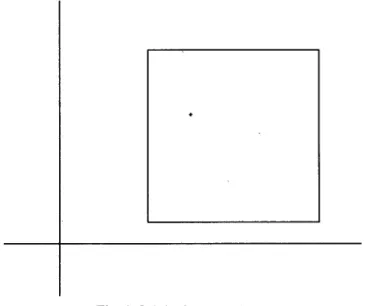
Table 1 is the result of recursive estimation developed in this
sec-tion. Figures 1-5 show the uncertainty at each step respectively.
We can see that, although the obtained uncertainties are fairly large than the informational domain, they converge to the true point as the step lncreases.
246 EMfifttyffLgfig (Y-Nft•kue eg260, 261g)
:x-
.Fig.2 Uncertainty for s=1
Fig.4 Uncertainty for s=3
248 liNfiktsRLeJwail (P-KS•faue ag260, 261g)
Table 1. Uncertainty by the recurslve schme.
ITERATION
C, C2MIN
MAX
MIN
MAX
o 2,OOO 6.000 O.500 4.500 1 pnnn"-vvv 6.000 2.377 3.704 2 2,OOO 4.178 2.377 3.704 3 2.000 4.178 2.679 3.704 4 2.000 4.178 2.679 3.464 5 2.394 4.178 2.679 3.464 6 2.394 3.507 2.679 3.464 7 2.610 3.507 2.679 3.464 8 2.610 3.373 2.679 3.464 9 2.610 3.373 2.679 3.464 10 2.610 3.373 2.679 3.464 20 2.968 3.171 2.864 3.042 30 2.968 3.159 2.864 3.042 40 2.968 3.159 2.864 3.042 50 2.968 3.159 2.934 3.042 60 2.974 3.159 2.934 3.042 70 2.974 3.159 2.934 3.042 80 2.974 3.014 2.969 3.015 90 2.974 3.014 2.969 3.015 100 2.974 3,O14 2.969 3.015 200 2.986 3.007 2.997 3.015 300 2.988 3.007 2.997 3.015 400 2.991 3.005 2.997 3.015 500 2.994 3.005 2.997 3.015 600 2.994 3.005 2.997 3.005 ' 700 2.994 3.005 2.997 3.005 800 2.994 3.001 2.997 3.005 900 2.994 3.001 2.997 3.005 1000 2.996 3.001 2.998 3.004
5. Conclusions
In this paper, the identification problem with deterministic
uncer-tainty was discussed. The exact unceruncer-tainty set was formulated by
the intersection of convex sets. Next, for the uncertainty expressed by orthotopes, it was shown that the solution set was given by the
solu-tion of LP or NLP problems. A recursive scheme was proposed, where the uncertainty was approximated by an orthotope whose
edges are parallel to the axes at every stage.
References
Akaike, H (1981) Modern development of statistical methods, in Trends and thogress in Systems ldentification (ed. by Eykhoff), Pergamon Press. Cox, D.R. and D.V. Hinkley (1974) Theoretical Statistics, Chapman and Hall, London.
Eykhoff, P. (1974) System Identification: Parameter and State Estimation, J.
Wiley and Sons, New York.
Fogel, E. and Y.F. Huang (1982) On the value of information in system
identification-bounded noise case, Automatica, Vol. 18, No.2, pp.229-238.
Kurzhanski, A.B. (1988) Identification-a theory of guaranteed estimates, WP-88-55, IIASA Worhing Paper, IIASA, Laxenburg, Austria.
Lozano-Leal, R. and R. Ortega (1987) Reformulation of the parameter identificaqtion problem for systems with bounded disturbances, Automatica, Vol.23, No.2, pp.247-251.
Norton, J.P. (1987) Identification and application of bounded-parameter models, Automatica, Vol.23, No.4, pp.497-507,
Rockafellar, R.T. (1970) Convex Analysis, Princeton University Press.
Walter, E. and H. Piet-Lahanier (1989) Exact recursive polyhedral scription of the feasible parameter set for bounded-error models, IEEE Trans. Autonzatic Control, VoL34, No.8, pp.911-915.