CONTENTS
CONTENTS I
LIST OF FIGURE V
LIST OF TABLE IX
LIST OF PUBLICATION X
ABSTRACT XII
ACKNOWLEDGEMENT XIII
CHAPTER 1 INTRODUCTION 1
1.1 Motivation 2
1.2 Research Objective 3
1.3 New Finding Knowledge 4
1.4 Significance of Research 4
1.5 Scope and Limitation 6
1.6 Outline of Thesis 6
CHAPTER 2 LITERATURE REVIEW 9
2.1 Introduction 9
2.2 Scope of Literature Review 11
2.3 Type of assistance 21
2.4 Mechanical design 24
2.5 Actuation and power transmission 32
2.6 Comparison within the development device system and existing device
systems 37
2.7 Conclusions 42
CHAPTER 3 BIOMECHANICS OF HUMAN HAND 46
3.1 Introduction 46
3.2 Hand anatomy and biomechanics 48
3.2.1 Bones and Joints 50
3.2.2 Muscles 53
3.2.3 Tendons and ligaments 54
3.3 Requirements of the Hand Exoskeleton 56
CHAPTER 4 FEASIBILITY ANALYSIS 60
4.1 Introduction 60
4.2 Kinematic analysis 63
4.3 Anthropometric Studies 68
4.4 Range of Motion (ROM) Analysis of Index Finger 70
4.5 Preliminary Experiment with Rehabilitation Physician 72
4.6 Evaluation Experiment Set-up 73
4.6.1 Pre-Assessment Procedure: Device set up 73
4.6.2 Pre-Assessment Procedure: Position of Therapist and Subject 78
4.6.3 Post-Assessment Procedure: Data Analysis 78
4.6.4 Assessment Procedure: Parameters Measurement 78
CHAPTER 5 PROTOTYPE DEVELOPMENT 81
5.1 Introduction 81
5.2 Hardware System 82
5.2.1 Microcontroller 82
5.2.2 Motor Driver 84
5.2.3 DC Servo Motor 85
5.2.4 Rotary Encoder 86
5.2.5 Voltage Sensor 87
5.2.6 Current Sensor 87
5.3 Software System 89
CHAPTER 6 MECHANICAL DESIGN 91
6.1 Introduction 91
6.2 System Requirement 92
6.3 System Functionality 93
6.4 Robotic Exoskeleton Prototype Development 94
6.5 System Implementation 97
6.5.1 Lead Screw Mechanism 97
6.5.2 Link Cam Mechanism 99
6.5.3 Safety Factor Consideration 100
CHAPTER 7 CONTROL ARCHITECTURE 102
7.1 Introduction 102
7.2 PWM Control 105
7.3 Position Measurement 107
7.4 Speed Measurement 111
7.5 Force Measurement 114
CHAPTER 8 PROTOTYPE EVALUATION 116
8.1 Introduction 116
8.2 Kinematic experiment without load 116
8.2.1 Experiment model 116
8.2.2 Experiment results and discussion 117
8.3 Kinematic experiment when attached the system on human finger 120
8.3.1 Experiment model 120
8.3.2 Experiment results and discussion 120
CHAPTER 9 CONCLUSION AND RECOMMENDATION 132
9.1 Summary 132
9.2 Recommendation & Future Work 133
9.3 Conclusions 134
REFERENCES 136
APPENDICES 154
LIST OF FIGURE
Figure 1 Examples of mechanical structures of robotic devices for finger
rehabilitation 30
Figure 2 Hand Movements about the joints axis 49
Figure 3 Bones and joints of a human hand [103] 52
Figure 4 Hand digits (fingers and thumb) and their intrinsic muscles 54
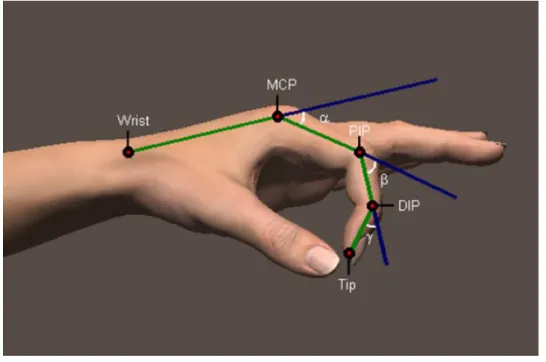
Figure 5 Anatomy of a human finger [99] 55
Figure 6 Example of mechanism for matching the centre of rotation or eleminating
the need for precise alignment [128] 58
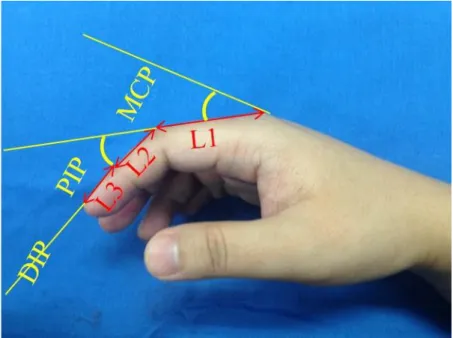
Figure 7 Position of the phalangeal joints 61
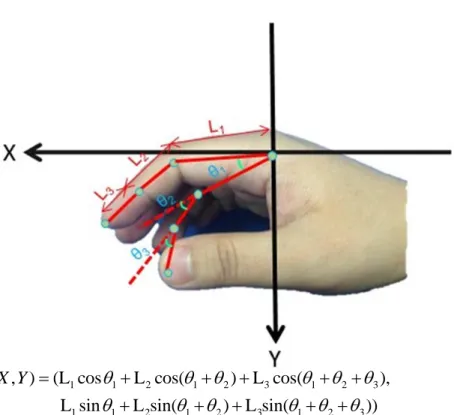
Figure 8 The three link mechanism model of the index finger 63
Figure 9 Index finger antropometric parameter 68
Figure 10 Anthropometric analysis results for each part of the index finger 69
Figure 11 Color marker based image processing using calibrated monotype camera to determine range of motion joint of normal index fingers 71
Figure 12 Range of Motion (ROM) of index finger during flexion and extension
motion 71
Figure 13 Flowchart of Experimental Protocol 73
Figure 14 Placement of force sensor to right hand of index finger 74
Figure 15 Placement of colour marker to right hand of index finger(Left). Example of finger joint angle measurement using goniometer (Right). 75
Figure 16 Data logger used in data collection 76
Figure 17 Motion Capture Analysis Software (Kinovia) 77
Figure 18 Position setting of therapist and subject during normal rehabilitation
session 77
Figure 19 Simulation of the relation of torque, force and displacement of index finger during normal rehabilitation session 80
Figure 20 Electronic design diagram of the finger exoskeleton module 81
Figure 21 Overview of Arduino Nano 3.0 82
Figure 22 Motor Driver L298 with current sensing 84
Figure 23 DC servomotor integrated with quadrature encoder 85
Figure 24 Rotary encoder principle 86
Figure 25 Voltage Sensor and Current Sensor 87
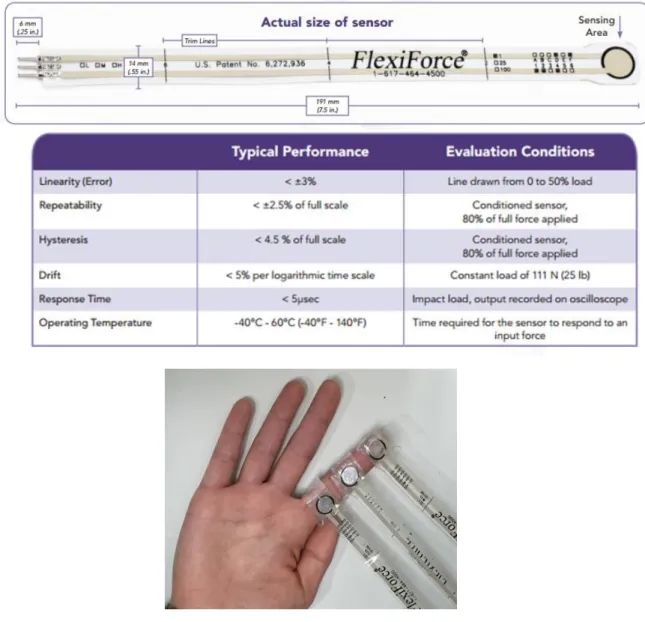
Figure 26 Force Sensor Structure and the operating principle 88
Figure 27 Software involved in the development process 90
Figure 28 Functions of robotic exoskeleton for finger and hand rehabilitation 95
Figure 29 Block diagram and system architecture of a control system in robotic exoskeleton where DC servo motor integrated with lead screw mechanism for finger and hand rehabilitation 96
Figure 30 Trapezoidal thread profile, 97
Figure 31 Free Body Diagram (FBD) of lead screw mechanism with force action
reaction effect 98
Figure 32 Link Cam mechanism in our index finger rehabilitation device 100
Figure 33 Fundamental mechanism of the link cam mechanism 101
Figure 34 State diagram for a foolproof robotic exoskeleton based system 104
Figure 35 Block diagram of a typical PWM power controller in Open Loop Control
scheme 106
Figure 36 PWM waves with different duty cycle 106
Figure 37 Timing Chart to explain the pseudocode how to read the pulses in single
channel, X1 109
Figure 38 Timing Chart to explain the pseudocode how to read the pulses in double
channel, X2 109
Figure 39 Timing Chart to explain the pseudocode how to read the pulses in
quadrature channel, X4 110
Figure 40 Velocity estimate based on pulse frequency measurement 113
Figure 41 Velocity estimate based on pulse frequency measurement 113
Figure 42 Overview Control Architecture of the development device system 115
Figure 43 Electrical characteristic of robotic finger module during extension and
flexion movement 118
Figure 44 Kinematic analysis of robotic finger module during extension and flexion
movement 119
Figure 45 Electrical characteristic of robotic finger module attached to healthy subject during extension and flexion movement 121
Figure 46 Kinematic analysis of robotic finger module attached to healthy subject
during extension and flexion movement 122
Figure 47 Experiment setup for force and current sensor calibration and
measurement 124
Figure 48 Experiment results for force and current sensor calibration and
measurement 125
Figure 49 Experiment results for static streching 127
Figure 50 Experiment results for slow dynamic streching 128
Figure 51 Experiment results for fast dynamic streching 129
LIST OF TABLE
Table 1 Robotic devices for system assisting finger rehabilitation 13
Table 2 Glossary of terms regarding type of assistance 23
Table 3 Glossary of terms related to mechanical design of robots for finger and
hand rehabilitation 31
Table 4 Glossary of terms related to actuation of robots for finger and hand
rehabilitation 36
Table 5 Comparison within the development device system and existing device
systems 39
Table 6 Parameter of the three link model 64
Table 7 Spesification of Arduino Nano 3.0 82
LIST OF PUBLICATION
Journals
[1] Mohd Nor Azmi Ab Patar, T. Komeda, C. Y. Low, and J. Mahmud, “System Integration and Control of Finger Orthosis for Post Stroke Rehabilitation,”
Procedia Technology, vol. 15, pp. 756–765, 2014. (Scopus)
[2] M. N. A. A. Patar, T. Komeda, L. C. Yee, and J. Mahmud, “Model-based systems engineering of a hand rehabilitation device,” Jurnal Teknologi, vol. 76, no. 4, pp.
101–106, 2015. (Scopus)
[3] M. N. A. bin Ab Patar, T. Komeda, C. Y. Low, and J. Mahmud, “Patient-Driven Hand Exoskeleton Based Robotic with Active Control System for Early Post Stroke Rehabilitation,” Applied Mechanics and Materials, vol. 799–800, pp. 1063–
1068, 2015. (Scopus)
Chapter in Book
[4] M. N. A. B. A. Patar, T. Komeda, J. Mahmud, and C. Y. Low, “Model Based Design of Finger Exoskeleton for Post Stroke Rehabilitation Using a Slotted Link Cam with Lead Screw Mechanism,” in Industrial Engineering, Management Science and Applications, Lecture Notes in Electrical Engineering, Springer Berlin Heidelberg, 2015, pp. 95–103.
International Conference Proceedings/Papers
[1] M. N. A. Bin Ab Patar, T. Komeda, and J. Mahmud, “Force assisted hand and finger device for rehabilitation,” in ISTMET 2014 - 1st International Symposium on Technology Management and Emerging Technologies, Proceedings, 2014, pp.
133–138. (IEEE Conf)
[2] M. N. A. A. Patar, T. Komeda, T. Mori, T. Seki, Y. Saito, J. Mahmud, and C. Y.
Low, “Hand rehabilitation device system (HRDS) for therapeutic applications,” in 5th IEEE RAS/EMBS International Conference on Biomedical Robotics and Biomechatronics, 2014, pp. 381–386. (IEEE Conf)
[3] Mohd Nor Azmi Bin Ab. Patar, Takashi Komeda, Low Cheng Yee, Jamaluddin Mahmud, " A Robotic Hand Exoskeleton for Re-Training Hand Function after Stroke," in The 2nd International Biotechnology, Chemical Engineering and Life Science Conference (IBCELC), Hokkaido, Japan, 2015 (Conf. Paper)
[4] Mohd Nor Azmi Ab Patar, Takashi Komeda, Cheng Yee Low, and Jamaluddin Mahmud, “Robotic hand exoskeleton with active control system for early post stroke rehabilitation,” in Intensive Workshop of 10th South East Asian Technical University Consortium Symposium (SEATUC), 22-24 February 2016
(Conf. Paper)
[5] Mohd Nor Azmi Ab Patar, Takashi Komeda, Jamaluddin Mahmud and Cheng Yee Low,” Force And Angle Sensing Efficacy Of Finger Device For Early Acute Stroke Rehabilitation” in Malaysia-Japan Joint International Conference (MJJIC 2016), 6 - 7th September 2016, Kuala Lumpur, Malaysia. (Conf. Paper)
ABSTRACT
A finger robotic exoskeleton developed to restore and rehabilitate hand and finger functions. The robotic exoskeleton is an active actuated mechanism implemented in rehabilitation systems in which each finger attached to an instrumented lead screw mechanism that allows force and position control, according to the normal human setting. The robotic device, whose implementation based on biomechanics measurements, is able to assist the subject in flexion and extension motions. It is also compatible with various shapes and sizes of human fingers. Main features of the interface include an integration of DC servomotor and lead screw mechanisms, which allow independent motion of the five fingers with small actuators. The device is easily transportable, possess user safety precautions and offer multiple modes of training potentials. This study presented the measurements implemented in the system to determine the requirements for the finger and hand rehabilitation device, the design and characteristics of the whole system.
Keywords: Continuous Passive Motion (CPM); Active Robotic Exoskeleton;
Spasticity; Motor Hand Function; Contracture Prevention
ACKNOWLEDGEMENT
I would like to express the deepest appreciation to my supervisor, Professor Takashi Komeda, who continually and convincingly conveyed a positive vibration towards research and the excitement of finding new experience in a learning adventure. Without his supervision and constant help, this research and dissertation would not have been possible.
I would like to thank my mentors and committee members, Associate Professor Lee Hokyoo for continuous encouragement and helping me in completing this research. Associate Professor Dr. Jamaluddin Mahmud and Dr.-Ing Low Cheng Yee from Faculty of Mechanical Engineering Universiti Teknologi MARA, whose helping me in building mechatronic system design, Dr. Fazah Akhtar Hanapiah from Faculty of Medicine Universiti Teknologi MARA, whose contribute in helping with clinical data collection.
My special gratitude goes out to my wife Ainon Zahariah Binti Samsudin, my daughter; Nur Batrisyia Azzahra and my son, Umar Bazli, for inspired me to complete this work and my families for all the sacrifices in making my dream a success. A very special thank you to my colleagues and Komeda Laboratories members for all the support they have lent me over all these years.
Thank you very much
.
CHAPTER 1
INTRODUCTION
In recent years, strokes have been one of the third largest causes of death in the world behind cancer and heart disease [1]. There are many stages in a stroke and the main focus is in the early acute patient care, which is to perform passive range of motion to prevent muscle contractures [2]. In many countries, finger disabilities and injuries mostly caused by strokes. A healthy finger is an important aspect in a human’s daily life. However, abnormal conditions, such as disabilities, injuries, deformation and diseases of the hand, can influence patients’ in their activities of daily living (ADL).
Post stroke rehabilitation at the acute stage usually starts with one-to-one therapies conducted by physiotherapists in acute-care clinics [3]. To reduce the total cost of the treatment, patients typically sent back to their homes when their ability to walk improves even though they have not fully recovered the function of the upper extremity, especially the distal segments such as hands and fingers. In many cases, it will take a long period to recover the function of flexion, extension, abduction and adduction of the fingers. Thus, leaving the fingers in flexed or extended positions leads to difficulties in ADL, such as feeding, dressing, grooming and personal hygiene.
One of the approaches in solving finger disabilities and injuries is undergoing finger rehabilitation [4]. The finger rehabilitation is a physiotherapy approach, which aims to recover partially or entirely the finger motor function of the patient. The physiotherapy approach based on how to manipulate the paretic
limb, which supported by a physiotherapist. The approach may accomplished with daily and frequent rehabilitation of up to several months, depending on the severity of the fingers and the condition of the patient. In order to recover to a normal life, the patient requires time and must undergo consistent rehabilitation, assisted by a physiotherapist [5]. However, since the number of physiotherapists is limited, it will not be easy for the patient to do the rehabilitation that requires support from a physiotherapist at all times. Due to the limited numbers of physiotherapists, there are needs to develop a rehabilitation system where patients can conduct their own rehabilitation exercises without the aid of therapists.
Furthermore, most of the literature reviews on hand rehabilitation robotic devices focus on the recovery of motor functions, specifically the extension and flexion movements of the hand. However, there are limited established approaches or publications available on the recovery of the sensory functions of the hand. In other words, the recovery of the sensory functions of the hand has yet to be explored by researchers. Therefore, improvements in the sensory functions of the hand are just as crucial to the recovery of the motor functions of the hand.
1.1 Motivation
Many people are suffering from some kind of hand or finger disability.
They require either one to one rehabilitation with a physiotherapist or using assistive devices such as orthotics and prosthetic devices. In general, rehabilitation of stroke or spinal cord injuries procedure by physiotherapist where a therapist need to guide the hand and finger, according to passive range of motion and prevent the muscle contracture in finger and hand of the patients. This is necessary to cause some positive feedback to get nervous feedback thru the spine to the brain
and some recovered in brain after stroke or some recovered in the spine after spinal cord injury. However, this is very personally intensive, it is exhausting for the therapist, expensive and therefore this training is limited in time and the effect. It is much better to do longer training and training that is more intensive and could possible worth of this kind of human support.
Robotic-based rehabilitation therapy has proven their effectiveness. Robot- assisted rehabilitation can address these shortcomings and complementary to the traditional rehabilitation strategies. Robots designed to accurately control interaction forces and progressively adapt assistance/resistance to the patients’
abilities can record the patient’s motion and interaction forces to quantify objectively and precisely the motor performance, monitor progress, and automatically adapt therapy to the patient’s state.
The motivation of this research is to improve the hand or finger rehabilitation by manipulating the robotic technology. The scope of this dissertation is to design a novel mechanism system that would support the early acute stage patients while the robotic assist in distal part of upper limb movement such as flexion and extension during static and dynamic stretching.
1.2 Research Objective
In order to counter the problem, few objectives have been determined as listed below;
i. To develop a novel and autonomous prototype system that is capable of providing repetitive finger movement of the early acute patient during the rehabilitation process especially in static and dynamic stretching conditions.
ii. To suggest a simulation model that will model the range of motion (ROM) of healthy finger movement in a dynamic environment.
iii. To deploy an active finger rehabilitation prototype with evaluation of the hardware and software integration during static and dynamic stretching conditions.
1.3 New Finding Knowledge
This research resulted in a basis mechatronic design methodology concept solution exclusively for a finger rehabilitation device that combined both hardware and software development and for assistive devices in general. The novel principle solution attained from this research will lead to a new exploration as follow;
i. The importance of a model-based system engineering (MBSE) approach as an effective medium for innovation process in multidisciplinary researchers.
ii. Development of a simple and non-invasive force finger measurement in clinical data collection.
iii. Formulation of a finger trajectory and range of motion during flexion and extension motion
1.4 Significance of Research
The proposed basis principle solution on development of mechatronic design system for hand and finger rehabilitation device will provide a complete guideline for other assistive device development process. Most of the development process typically consists of researchers mostly from multidisciplinary domain such as medical, engineering, and business experts.
The finger rehabilitation device developed for prevention contracture and spasticity of the hand or fingers. It ensures patient safety and has great potential implemented for an individualized rehabilitation session for patients who have to undergo therapy in their home. A novel rehabilitation approach for finger and hand motor functions recovery targeting early acute stroke survivors using an active exoskeleton robotic device. The device designed based on anthropometric measurement data of hand ergonomics. It is able to assist the subject in flexion and extension movements. Main specification of the device includes a differential system with a current sensing element and a lead screw mechanism, which allows independent movement of each finger using small actuators. The device is safe, easy to deploy, integrated with sensing element and offers multiple training possibilities. Furthermore, it observed to offer an objective and reliable instrumented tool to monitor patient’s progress and accurately assess their motor function.
On top of that, it leads to the improvement in the rehabilitation process, providing a new tool in robotics technology, which offers a new way to reduce the burden of the physiotherapists in a repeatable and measurable manner. Physical rehabilitation is key for recovering motor control and function for patients with neurological disorders. Conventional therapy procedures tend to be labor intensive and non-standardized, especially in the area of hand and finger rehabilitation. The positive impact in terms of improving patient safety, increasing medical reliability, reducing medical errors and decreasing health care costs is far reaching.
1.5 Scope and Limitation
i. All measurements are collected through Vernier SensorDAQ for data acquisition using LabVIEW software and all sensory manipulations is not involving invasive procedure.
ii. The mathematical modelling simulation program coded in LabVIEW language and the real experiment implemented in an open-source microcontroller platform based, ARDUINO used to integrate hardware and software.
iii. Our finger exoskeleton for the current development only limit to range of anthropometric study of the index finger conducted from a population sample of 30 people to determine ideal exoskeletal size.
iv. All measurements from healthy volunteer age between 20 – 33 years of ages with no signs of finger contracture, disease, injury, burn mark, surgery mark of finger abnormality at the area of testing.
1.6 Outline of Thesis
The research title is “DEVELOPMENT OF FINGER CONTRACTURE PREVENTION SYSTEM FOR EARLY POST STROKE REHABILITATION”.
This section briefly described the content of this research thesis, so that the readers could follow the steps taken in the design process of the development.
Chapter 1: The first chapter provides a general introduction and background of the whole research including problem statement, research objective, and significance of research, scope and limitation and outline of the thesis.
Chapter 2: The second chapter explains literature review section, which describes previous study related to this research. Existing robotic devices for stroke rehabilitation presented and discussed, with a specific interest for devices dedicated to hand rehabilitation.
Chapter 3: The third chapter describes the biomechanical aspects involved in the hand and fingers joint movement, the current problems and idea to develop the new finger rehabilitation tool.
Chapter 4: The forth chapter elaborated feasibility analysis about the activity done by the authors for the preliminary study before development of a hand exoskeleton
Chapter 5: The fifth chapter focusing on prototype development. This section explained details on the hardware and software in the system.
Chapter 6: The mechanical design of the robot-based finger exoskeleton discussed in detail in this chapter. In the following sections, particular attention will focus on the design and development of the robot-based finger exoskeleton, as it is the main contribution of this thesis.
Chapter 7: The seventh chapter shows the control aspects of our system that include PWM control, position measurement using rotary encoder, and speed
measurement from the frequency to voltage (F/V) converter circuit and torque control via the feedback of the current sensor.
Chapter 8: This chapter expressed some experiment results of our system in two main cases of hanging on a frame which without load and wearing the system on a healthy subject.
Chapter 9: The last chapter of this thesis give explanation on the conclusion of the entire research discovery and future recommendation for forthcoming improvement.
CHAPTER 2
LITERATURE REVIEW
2.1 Introduction
The mobility element is important in daily life of a healthy person to carry out basic activities of daily living (ADL). Disorders in mobility will significantly decrease a quality of life, especially the affected patients with upper limb disorders.
It effected in limit the independence in mobility of the patients in daily life activity such as feeding, dressing, grooming and personal hygiene. Opportunely, there are various instruments and approaches to recovery the motor function of the upper limb, such as functional electrical stimulation (FES), orthoses and physical therapy.
However, positive effect of physical therapy, especially in area of finger rehabilitation usually depends on onset, duration, intensity and task orientation in the training session [6]. Besides, the patient’s health condition, motivation and effort also contribute to the positive outcome [7]. Intensive and repetitive task in coordinating motor activities establish a substantial burden for the therapists during assisting patients. Moreover, the duration of primary rehabilitation become shorter to reduce cost expensed during the rehabilitation session [8]. These problems will possibly worsen in the future as life possibility continues to growth accompanied by the frequency of both moderate and severe motor disabilities in the elderly population and subsequently increasing their need of physical assistance.
Consequently, as a long-term countermeasures regarding these critical problems,
fundamental researchers studies and explores a wide range of devices exactly in assisting physical rehabilitation. Robotic devices with the function of repetitive tasks on patients are amongst these technically innovative devices. In fact, robotic technology already implemented in clinical practice as well as clinical evaluation.
However, since the number of devices describe in the literature, to date only a few of them have succeeded to target the subject group as the details shown in Table 1.
Moreover, it look like the outcome of the previously implemented devices in clinical practice is not reveal a confident result as expected [7]. Innovative and novel solutions are need to consider. Most of the literature reviews on robotic devices for finger rehabilitation focus more on the development of the devices that already go through clinical assessment. However, there are no other publication presents a systematic review of different robotic technology counteract for finger rehabilitation, including those in the development stage. A critical review of different technical solutions would offer inventors of robotic devices for finger rehabilitation as assessment approaches already considered, and therefore others can get lesson on how to success from pioneer researchers as well as failure explorations. Later, a comparison of various robotic devices would simplify the development of novel and better devices for robotic finger rehabilitation. The motivation of this chapter is to review current technical approaches for physical therapy of the upper limb, especially on distal part such as hand and finger.
The review of robotic devices covered of advanced technology systems. As defined in this chapter, the design in advance technology systems must involve of the integration of sensors, actuators, and control units. Therefore, only mechanical- driven systems omitted from this review. Although we made an effort to categorize as many systems as possible, it is necessary to acknowledge that there are still
many systems left unmentioned. However, this chapter proposed to be a valuable basis of evidence for engineers, scientists and physiotherapists who involved in the development of novel robotic devices for physical rehabilitation.
2.2 Scope of Literature Review
At the beginning, we identified literature related to the subject matter based on searches in PubMed, the Institute of Electrical and Electronics Engineers (IEEE), Science Direct and Google Scholar databases using different combinations of the following keywords such as hand, finger, rehabilitation, therapy, training, movement, motion, assistance, assistive, support, robot, exoskeleton, orthosis, extension, flexion, motorised, and mechatronic. In addition, related literature from the selected publications also included in the review as well. The evidence obtained from this literature compilation added to the data learned from professional caregivers, manufacturers’ catalogues, websites, as well as direct communications with physician and physiotherapist, manufacturers and patients. As previously mentioned, the scope of this review is generally limited to the devices that support or retrain movement or manipulation abilities of disabled individuals. This review excludes systems developed for movement assessment, occupational purposes or improving physical abilities of healthy people. However, we considered and specialized systems, supporting finger movements, especially in the potential area of rehabilitation purposes [9]. This review also excludes devices that substitutes movements of the disabled extremity but do not replaced the movement itself like wheelchair mounted manipulators or autonomous robots. Even though these devices recover the patient’s quality of life, they vary significantly from the systems defined in this review and form a separate category of devices. Some
companies manufacture sensor based equipment for rehabilitation of various joints and muscles where it function like training devices found at fitness centres. Those devices application mostly to strengthen muscles, joints and provide some predefined resistance in isometric exercises or active force in continuous passive motion exercises. These devices also establish a different category from the systems incorporated in this review since their functions related to certain task.
Even though difficult to classify clearly, the previously mentioned also excluded from this review.
In this chapter, the terminology number of degrees of freedom (DOF) defines the summation of all independent movements such as linear motion or angular motion that available in all the joints of the device. The number of DOF stated in determining the exact position and orientation of all segments of the device. In addition, there are sections in this chapter supplementary to explain the most essential terminology for readers who are not familiar with the technical terms.
Table 1 Robotic devices for system assisting finger rehabilitation System Name,
references Degree of Freedom(DOF)
Supported movements
Main Control
Inputs Actuators Type, Field of application
Stage of development;
additional information Amadeo,
Tyromotion GmbH
5 Fingers(each) -
Flexion/Extension
End-point position and
force
Electric motors
Stationary system (end-effector-
based);
physical therapy
Commercial system;
Clinical study, C1: 7 acute stroke [10]
Chen [11]
5
Independent linear movement of each
finger
Fingers position and forces,
sEMG
5 DC linear motors
Stationary system (end-effector-
based);
physical therapy
Clinical study, C0: 1 healthy
subject
Gloreha, Idrogenet srl
5
Independent passive movement
of each finger
Fingers positions 5 Electric motors
Portable Gloreha Lite,
Movable Gloreha Professional (end-effector- based, cable-
driven);
physical therapy
Commercial system;
Clinical Study, C1: 9 stroke and 3 other diseases, 4 chronic stroke C2:10
subacute stroke
CyberGrasp, CyberGlove Systems LLC; [12]
5 Resistive force to
each finger Joint angles 5 DC motors
Force- feedback
glove;
interactions with virtual environment
Commercial system for
many application, used in some clinical studies
[13],[14]
Hand of Hope, Rehab-Robotics Company Ltd. [15]
5
Each finger separately- Flexion/Extension
sEMG DC linear
motors
Portable system(orthosi
s); physical therapy
Commercial system;
Clinical Study,C1:8 chronic stroke
HandCARE, Dovat [3]
5
Independent linear movement of each
finger (1 finger at a time)
Fingers positions
and forces 1 DC motor
Stationary system(end- effector based,
cable-driven);
physical therapy
Clinical Study,C1:5 chronic stroke
and 8 healthy subjects
Ertas [16]
1
Concurrent Flexion/Extension
of 3 joints of a single finger
Joint angles 1 DC motor
Finger exoskeleton
(under actuated mechanism);
tendon physical
therapy
Clinical Study, C0: 4 healthy
subjects
Fuxiang [17]
4 Index finger- Flexion/Extension
Joint positions and torques
Linear stepping motors
Modular-finger exoskeleton (Continuous
Passive Motion Device);
Physical Therapy
Clinical Study,
C0: 3 healthy subjects
HEXORR, Schabowsky [18]
2
Thumb- Flexion/Extension, Other fingers move
together- Flexion/Extension
Fingers positions and forces
1 DC motor, 1 AC motor
Stationary system (End- Effector based,
cable driven);
Physical Therapy
Clinical Study, C1: 5 chronic
stroke and 9 healthy subjects
HIFE, Mali [19]
2 1 Finger –
Flexion/Extension
End-point
position DC motors
Haptic interface (end-
effector- based);
Physical Therapy
Prototype
InMotion HAND,Interactive Motion Tech., Inc.;
Masia [20]
1
All fingers together-Grasp and
Release
Not mentioned DC brushless motor
Add-on module for
InMotion ARM;
Physical Therapy
Commercial System
Kline [21] 1 All fingers
together-extension
Joint angles,
sEMG Pneumatic
Wearable glove; grasp
Clinical Study, C1: 1 stroke
assistance and healthy subject(not
provide specific number) Lucas [22]
1
1. Index finger - flexion
2. (passive extension)
sEMG 2 Pneumatic 1.
Wearable orthosis;
grasp assistance
Clinical Study, 2. C1: 1 Spinal
Cord Injury (SCI)
MRAGES, Winter [23]
5 3. Each Fingers – Flexion/Extension
Finger Positions and torques
5
MagnetoRheol ogical fluid (MRF) brakes
3.
Force- Feedback glove; Physical
Therapy
Prototype
MR_CHIROD v.2, Khanicheh [24]
1
4. All fingers together-Grasp and Release
Finger position and torques
electrorheologi cal fluid (ERF) brakes
4.
5.
6.
Exercising device (handle-like);
Physical Therapy
Clinical Study, C0: healthy subject (not
provide specific number)
fMRI compatible
Mulas [25]
2
5. Thumb –
Flexion/Extension, 6. Other fingers move
together-
Flexion/Extension
sEMG, pulleys position
2 DC servo motors
Wearable orthosis;
Physical Therapy
Clinical Study, C1: 1 subacute
stroke
Nathan [26]
1
7. All fingers together Grasp and Release (passive release)
Hand-held trigger, index
and thumb fingers joint
angles
Functional Electrical Stimulation (FES)
Wearable orthosis (glove);
Physical Therapy
Clinical Study, C1: 2 stroke and 1 healthy
subject
PowerGrip, Broaden Horizons,
Inc.
1
8. Thumb, Index and middle finger together Grasp and Release
Switches or
sEMG 1 DC motor
Wearable orthosis; grasp
assistance
Commercial system
Reha-Digit, Reha- Stim; Hesse [27]
1
9. 4 fingers (except the thumb) together Flexion/Extension
None DC motor
Portable system (rotating handle);
Physical Therapy
Commercial system;
Clinical Study, C2: 8 subacute
stroke C1: 1 chronic
stroke
Rosati [28]
1
10. 4 fingers (except the thumb) together –Flexion/Extension
Not Selected Yet DC motor (SEA)
Wearable orthosis;
Physical Therapy
Design
Rotella [29]
4
11. Index finger Flexion (Passive Extension)
12. Thumb-flexion, other fingers together flexion
Not specified Electric motors
Wearable orthosis; grasp
assistance
Design
Rutgers Master II- ND, Bouzit [30]
4
13. Thumb, index, middle, and ring
finger –
Flexion/Extension
Actuator translation and
inclination
4 Pneumatic
Force Feedback
glove;
interactions with virtual environment
Research Device for Hand therapy
Salford Hand Exoskeleton, Sarakoglou [31]
7
14. Index, middle, and ring finger – Flexion/Extension,
15. Thumb –
Flexion/Extension
Joint angles and
end point force DC motors
Wearable orthosis (exoskeleton);
Physical Therapy
Clinical Study, C0: healthy subject (not
provide specific number)
Tong [32]
10 16. Each finger –
Flexion/Extension sEMG 10 Electric linear motors
Portable system (wearable
orthosis);
Physical Therapy
Clinical Study, C1: 2 chronic
stroke
TU Berlin Hand Exoskeleton, Wege
[33]
4
17. 1 finger – Flexion/Extension, Abduction/
18. Adduction
Joint Angles 4 DC Motors
Finger Exoskeleton;
Physical Therapy
Clinical Study, C0: 1 healthy
subject
TU Berlin Hand Exoskeleton, Fleischer [34]
20
19. Flexion/Extension and Abduction/
20. Adduction of all major joints of each finger
Joint Angles, End point force,
sEMG
DC motors
Wearable orthosis (exoskeleton);
Physical Therapy
Prototype
Worsnopp [35]
3 21. Index Finger – Flexion/Extension
Joint angles and torque
6 DC
Brushless Servo Motor
Finger Exoskeleton;
Physical Therapy
Prototype
Xing 2
22. Thumb-
Flexion/Extension, other fingers move together-
Flexion/Extension
Position, Force 2 Pneumatic (PAMs)
Wearable orthosis;
Physical Therapy
Clinical Study, C0: 3 healthy
subjects
2.3 Type of assistance
The most important terminology introduced in this section explained in Table 2.
Devices for hand rehabilitation may provide different types of motion assistance: active, passive, haptic and coaching.
Active devices provide active motion assistance and possess at least one actuator, thus they are able to produce movement of distal part such as hand and fingers. Most of the devices discussed in this review are active (see Table 1). Such assistance of movements is required if patient is too weak to perform specific exercises. However, even with active devices, an exercise considered passive when patient’s effort is not required. For instance, devices providing continuous passive motion exercise are active, but those exercises categorized as passive because the subject remains inactive while the device actively moves the joint through a controlled range of motion. It is not necessary to apply active assistance to resist patient’s movement, to increase patient’s force or to ensure the patient is following the desired trajectory.
As an alternative, passive devices may be applied where the devices are equipped with actuators providing only resistive force for instance as brakes. Such actuators consume less energy and cheaper than the heavier actuators for active assistance. Devices using only resistive actuators include both devices for physical therapy, for instance MEM-MRB [36] and PLEMO [37], and systems for tremor suppression, for example WOTAS [38] orthosis and a system proposed by Loureiro, et al [39].
Haptic devices create another group of systems interacting with user through the sense of touch. Haptic devices similarly classified as any active or passive, depending on
their type of actuator. In this review, haptic devices independently categorized because of their main function is not to cause or resist movement but rather to provide tactile sensation to the user.
Other non-actuated devices for hand rehabilitation, which do not generate any forces but provide different feedback. These systems labelled as coaching devices throughout this review. Due to coaching devices embedded with sensor, they serve as input interface for interaction with therapeutic games in virtual reality (VR) for example T-WREX [40], Armeo Spring from Hocoma AG or for tele rehabilitation, which remotely supervised therapy. Coaching systems using video-based motion recognition, for example, Microsoft Kinect would also belong to this category if it were not for their lack of any mechanical part in contact with the patient. Therefore, these systems will not discuss further in this review.
Passive and non-actuated systems are less complex, safer and cheaper than the active systems. They are usually involved with an innovative modification in the development process with more active characteristics. However, the main characteristic that identifies non-actuated or passive devices is the lack of the ability to perform movement. They may be an option for continuation of the rehabilitation process, rather than for training of people with significant movement disorders at an early stage of rehabilitation.
Table 2 Glossary of terms regarding type of assistance
Term Description
Active device A device capable to move limbs. Under
such condition, this device requires active actuators, which may increase the weight. It may also apply to subjects which completely unable to move their limb.
Passive device A device unable to move limbs, but may resist the movement when exerted in the wrong direction. This type of device may only be used for rehabilitation of subjects which able to move their limbs. It is usually lighter than active device since it possesses no actuators other than brakes.
Haptic device A device that interfaces with the user through the sense of touch. Usually it provides some amount of resistive force, often also some other sensation such as vibration. It is sometimes also able to generate specific movements. However, the force generates is usually small. Haptic devices commonly used in rehabilitation settings with virtual environments.
Coaching device A device that neither assists nor resists movement. However, it is able to track the movement and provide feedback related to the performance of the subject. As haptic devices, coaching devices also commonly used in rehabilitation settings with virtual environments.
Active exercise An exercise in which subjects actively move their limb, although some assistance of the device may provide. Such type of the exercise may performed using any of the above listed types of devices.
Passive exercise An exercise in which the subject remains passive, while a device moves the limb.
This type of exercise requires an active device. Continuous passive motion (CPM) training is an example of passive exercise with active devices.
2.4 Mechanical design
The most important terminology introduced in this section explained in Table 3.
Once comparing the mechanical structure of robotic devices for movement rehabilitation divided into two categories of devices. There are end-effector based and exoskeleton based. The difference between the two categories is how the movement is transfer from the device to the patient’s distal part such as hand and fingers.
End-effector based devices contact the patient’s limb only at its most distal part that attached to patient’s upper limb for instance end effector. Movements of the end effector change the position of the upper limb to which it attached. However, segments of the upper limb create a mechanical chain. Thus, movements of the end effector also indirectly change the position of other segments of the patient’s body as well. Compared to end effector, exoskeleton based devices have a mechanical structure that mirrors the skeletal structure of patient’s limb. Therefore, movement in the particular joint of the device directly produces a movement of the specific joint of the limb.
The advantage of the end-effector based systems is their simpler structure and thus less complicated control algorithms. However, it is difficult to isolate specific movements of a particular joint because these systems produce complex movements. The manipulator allows up to six unique movements, which consists of three rotations and three translations. Control of the movements of the patients’ index finger is possible only if the sum of possible anatomical movements of patients’ finger in all assisted joints is limited to three. Increasing the number of defined movements for the same position of the end of the manipulator results in redundant configurations of the patient’s index finger, thus inducing risk of injuries and complicated control algorithms.
The typical end-effector based systems include serial manipulators such as implemented in MIT Manus [41] and ACRE [42], parallel mechanism as implemented in CRAMER [43] and a system developed by Takaiwa and Noritsugu [44], and cable driven robots as in NeReBot [45]. The mechanical structure of HandCARE [3] is a series of end- effector based cable driven robots, where each induce movement of one finger. In this system, a clutch system allows independent movement of each finger using only one actuator.
Application of the exoskeleton-based approach allows for independent and concurrent control of particular movement of patient’s finger in many joints, even if the overall number of assisted movements is higher than six degree of freedom. However, in order to avoid patient injury, it is necessary to adjust lengths of particular segments of manipulator to the lengths of the segments of the patient finger. Therefore, setting up such device for a particular patient, especially if the device has many segments, may take a significant amount of time. Furthermore, the position of the centre of rotation of many joints of human body, especially of the finger are complex [46], may change significantly during movement. Special mechanisms are necessary to ensure patient safety and comfort when an exoskeleton-based robot assists the movements of these joints [46]. For this reason, the mechanical and control algorithm complexity of such devices is usually significantly higher than the end effector based devices. The complexity increases as the number of DOF increases.
In case of systems for the rehabilitation of the whole limb the number of DOF reaches nine like implemented in ESTEC exoskeleton [47] or ten in IntelliArm [48].
Some systems for fingers or hand rehabilitation have a higher number of DOF as
implemented system as proposed by Hasegawa, et al. with eleven DOF [49] and the hand exoskeleton developed at the Technical University (TU) of Berlin with twenty DOF [34].
Even though at such a high number of DOF, some of these devices remain wearable where the user able to walk within a limited area because of wire harness to power source and the connections to control unit as in ESTEC and hand exoskeleton developed at the TU Berlin. The system proposed by Hasegawa is portable system where area of the user may walk is not limited.
Apart from purely exoskeleton based or end-effector based devices, there are many systems combines a few approaches. In the Armeo Spring system (Hocoma AG) designed as an exoskeleton for instance focus only the distal part where it is including the elbow, forearm and wrist. Therefore, the limb posture is statically fully determined as in exoskeleton-based systems and the shoulder joint is not constrained, allowing easy individual system adaptation to different patients. A similar concept applied in Biomimetic Orthosis for the Neurorehabilitation of Elbow and Shoulder known as BONES [50]. In the case, a parallel robot consists of passive sliding rods pivoting with respect to a fixed frame provides shoulder movements. The application of sliding rods allows internal and external rotation of the arm without any circular bearing element. The distal part allowing for flexion and extension of the elbow, which resembles the exoskeleton structure. In the Mirror Image Motion Enabler (MIME)-RiceWrist rehabilitation system [51] the end-effector based MIME [52] system for shoulder and elbow rehabilitation integrated with the parallel wrist mechanism used in MAHI exoskeleton and after some modification its known as RiceWrist.
Another example is the six DOF Gentle/S [53] system allowing for relatively large reaching movements three actuated DOF of the end-effector based commercial haptic interface which is HapticMaster, made in the Netherlands [54] and arbitrary positioning of the hand which connection mechanism are three passive DOF. The Gentle/G system further supplemented with a three active DOF hand exoskeleton to allow grasp and release movements. This nine DOF system is known as GENTLE/G [55].
The Haptic Environment for Reaching and Grasping Exercise (HEnRiE) [56] is similar system based on the Gentle/S system. In addition to the three active DOF of HapticMaster, HEnRiE includes a connection mechanism with two passive DOF for positioning of the hand and grasping device where two parallelogram mechanism allowing parallel opening and closing of fingers attachments with only one active DOF.
Some systems combine more than one robot at the same time. This approach considered as the combination of end-effector approach, where only the most distal parts of robots attached to the upper limb of patient with the exoskeleton based approach, where movements of few segments are directly controlled at the same time. Usage of two robots in controlling the movements of the limb may allow for mimics the operations performed by therapist using two hands. Examples of systems using two-robot concept include REHAROB [57] using two manipulators with six DOF. Intelligent Pneumatic Arm Movement (iPAM) [58] and UMH [59], both having six DOF in total. Researchers at the University of Twente, in Enschede, Netherlands, attempted to use two HapticMaster systems to provide coordinated bilateral arm training, but limitations in hardware and software caused the virtual exercise to behave differently to the real life [60].
In some cases, industrial robots also implemented in rehabilitation domain. The REHAROB uses IRB 140 and IRB 1400H from ABB Ltd., while MIME uses PUMA 560 robot. In general, the usage of industrial robots is reduce cost, however, such robots have significantly higher impedance than the human upper limb and according to Krebs, et al.
[20] , should not be in close physical contact with patients. Therefore, most of the robots used for rehabilitation of the upper limb designed with a low intrinsic impedance. Some of those devices are have back drivable characteristic for instance HWARD [61] and RehabExos [62]. Therefore, the patient’s force is able to cause movement of those devices when they are in passive states. Back drivability increases safety of the patient because the device does not constrain patient movements. It also able implemented as an assessment tool to measure patient’s range of motion.
Most of the devices presented in Table 1 allow movements in three dimensions.
However, there are also planar robots where the systems allow movements only on a specified plane like as in MEchatronic system for MOtor recovery after Stroke (MEMOS) [63] and Quasi-3-DOF Rehabilitation System for Upper Limbs (PLEMO) [37].
Besides, the MIT Manus system also during the initial stage allowed movements only on horizontal axis [41]. Later, an anti-gravity module added possibility to perform vertical axis movements [64]. Design the device as a planar robot reduces the range of movements that exercised for particular joint. It also reduces the cost of the device.
Furthermore, when the working plane well selected, the range of training motion may meet the requirements in most of therapeutic application. Some of planar devices allow changes in the working space between horizontal and vertical [65] or even almost freely selecting the working plane like as in PLEMO and Hybrid-PLEMO [66]. It further
increases the range of possible exercise application while keeping the cost of the device at a minimum.
In the ARM Guide [67] and ARC-MIME [68] systems, patients practice reaching movements where the working space is limited to linear movements because of the forearm typically follows a straight line trajectory. Therefore, the orientation of the slide that assists forearm movements adjustable to reach multiple workspace regions and fit different applications.
Modularity and re-configurability are concepts that could reduce therapy cost by adopting therapeutic devices for various disabilities or stages of patient recovery.
However, there are still only a few systems using these concepts. For instances, InMotion ARM robot, the commercial version of MIT Manus, previously called InMotion 2.0 from Interactive Motion Technologies, Inc., extended by InMotion WRIST robot, previously InMotion 3.0, developed at MIT as standalone system [69] and InMotion HAND add-on module, previously InMotion 5.0 for grasp and release training. Another example of modular system is MUNDUS [70], consists of various modules that included depending on the patient condition, starting from muscle weakness to lost completely of residual muscle function. Input command for residual voluntary muscular activation usually used head or eyes motion or brain signals. However, the complexity of the system might make difficult in the stage of commercialization.
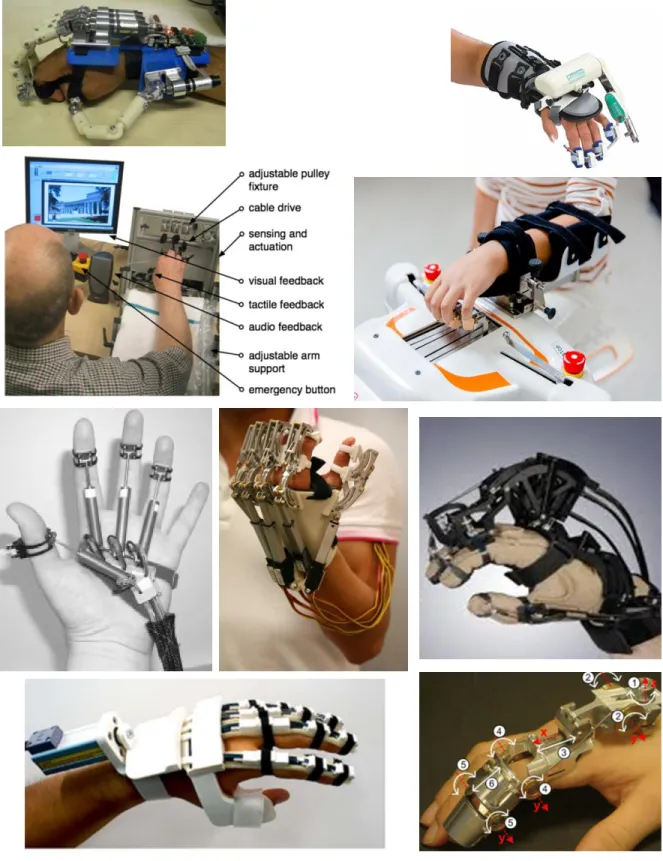
Figure 1 Examples of mechanical structures of robotic devices for finger rehabilitation
Table 3 Glossary of terms related to mechanical design of robots for finger and hand rehabilitation
Term Description
End-effector based device Contacts a subject’s limb only at its most distal part. It simplifies the structure of the device. However, it may complicate in the control of the limb position, which related to multiple possible degrees of freedom.
Exoskeleton-based device A device with a mechanical structure that mirrors the skeletal structure of the limb.
Each segment of the limb associated with a joint movement attached to the corresponding segment of the device. This design allows independent, concurrent and precise control of movement in a few limb joints. However, it is more complex than an end-effector based device. Orthoses restricting or assisting movement in one or more joints also considered as exoskeleton- based devices.
Planar robot A device typically end-effector-based
moving in a specific plane. Design of planar robots decreases costs and the range of movements that be used in exercised.
Although this device performs movements in a plane, joints of the limb still move in a three-dimensional space.
Back-drivability A property of mechanical design shows that the patient is able to move the device, even the device is in passive state. It increases patient safety by not constrains movements limb and keeps the patient’s limb in a comfortable position.
Modularity A property of a device indicates that
optional parts may adapt to a specific condition or simply perform additional exercises.
Re-Configurability A property of a device shows that its mechanical structure can be modified without adding additional parts to adapt to the condition of the subject or to perform other form of training
2.5 Actuation and power transmission
The most important terminology in this section described in Table 4. Previously, energy supply to the actuators categorized in three forms, which are electric current, hydraulic fluid and pneumatic pressure. The selection of the energy source determines the type of actuators used in the system. Most of the devices for hand and finger rehabilitation used electric actuators but there are also other systems with pneumatic and hydraulic actuators. The electric actuators are most common because of their characteristic in easily providing and storing electrical energy besides their relatively higher power. Various types and sizes of electrical motors and servomotors are currently available commercially. Some authors like Caldwell and Tsagarakis [71] claimed that electric actuators are too heavy compared to pneumatic and its characteristics are also high impedance to implement in rehabilitation application. However, the relatively high power to weight ratio of pneumatic actuators achieved by neglecting the weight of power source. Integration of an elastic element in series with the actuators may also alleviate the high impedance of electric motors. This concept lead to the development of the Series Elastic Actuators (SEAs). This actuators mechanism decrease inertia and user interface impedance in providing an accurate and stable in force control, thus increasing the protection of the patient from injury. The drawback of this elastic element system is the lower functional bandwidth. Nevertheless, rehabilitation domain does not usually required high bandwidths. The combination of SEAs with electric motors explored in MARIONET [72] and UHD [73] systems, as well as in systems proposed by Vanderniepen, et al. in MACCEPA [74] actuators and Rosati, et al. [28].Service area of this system is limited
A few systems used pneumatic actuators. Pneumatic actuators are lighter and lower characteristic impedance than electric actuators. This actuators require pneumatic pressure, thus the system is generally either stationary like used in Pneu-WREX [75], its service area limited as in ASSIST [76] or the compressor installed on the patient’s wheelchair as system proposed by Lucas, et al.[22]. Special type of pneumatic actuators called Pneumatic Artificial Muscles (PAMs), Pneumatic Muscle Actuators or McKibben type actuators frequently used in rehabilitation robotics as example in Salford Arm Rehabilitation Exoskeleton [77] or system as proposed by Kobayashi and Nozaki [78].
These types of actuators consists of an internal bladder surrounded by braided mesh shell with flexible with non-extensible threads. When pressurized the bladder, the actuator increases its diameter and shortens according to its volume, consequently providing tension at its ends [79]. Such physical configuration makes PAM’s weight generally light compared to other actuators instead also have slow and non-linear dynamic response especially for large PAMs. Therefore, they are not practical for used in clinical rehabilitation scenarios [80]. Furthermore, at least two actuators are necessary permissible to provide antagonistic movements because of the unidirectional contraction mechanism. The ASSIST system has a special type of PAM with rotary pneumatic actuators that allows bending movements [76].
Hydraulic actuators, which identified in this review, are not standard and use actuators developed specifically for that purpose. The main reasons to avoid the usage of industrial hydraulic actuators take account of weight, impedance, fluid leakages and difficulties to provide fluid. Typically, these types of systems are large and noisy. Mono and bi-articular types of Hydraulic Bilateral Servo Actuators (HBSAs) as used in the
wheelchairs mounted exoskeleton proposed by Umenura,et al. [81]. Miniaturized and flexible fluidic actuators (FFA) applied in the elbow orthosis proposed by Pylatiuk, et al [82]. Hydraulic SEAs used in two other systems like as the Dampace system [83], which equipped with powered hydraulic disk brakes. The Limpact system [84], developed by the same group uses an active rotational Hydro-Elastic Actuator (rHEA).
In passive systems, it is a necessary the desired to modify the amount of resistance during the exercise. This modification increases the resistance when the patient proceeds with the desired trajectory and provide haptic feedback for VR interactions. In existing systems, different solutions for providing of adjustable resistive force. Powered hydraulic brakes, for instance controlled by electro motors in a SEA used in Dampace system [83]. Magnetic particle brakes used in ARM Guide [67], in its successor ARC- MIME [68] to resist other than longitudinal movements of the forearm, and in the device for training of multi finger twist motion proposed by Scherer, et al [85]. A few groups have also investigated the application of brakes incorporating magnetorheological (MRF brakes) and electrorheological fluids (ERF brakes). These fluids change their rheological properties like viscosity depending on the applied magnetics or electric field. Those properties realized and achieved brake behaviours with high performance in rapid and repeatable brake torque [37]. MRF brakes used in MRAGES [23] and MEM-MRB [36]
systems. ERF brakes used in PLEMO [37] and MR_CHIROD v.2 [24] systems. The same group, which developed PLEMO, also proposed ERF clutches to control the force provided by an electric motor in active systems. This kind of an actuation system implemented in EMUL [86], Robotherapist [87] and Hybrid-PLEMO [66] devices.
The usage of contraction ability in natural actuators, which is body muscles can fully optimized instead of external actuators. In Functional Electrical Stimulation (FES), an electrical stimulation the muscle contraction. FES significantly reduces the weight of the device. In therapeutic domain, FES allows patients to exercise muscles to improve muscle bulk and strength towards preventing muscular atrophy [88]. It has shown that FES supplemented the conversional physiotherapy and enhance the rehabilitation outcome [89]. However, FES may cause strong involuntary muscle contractions and can be painful for patients. Furthermore, it is difficult to control movements using FES because of the nonlinearity in force characteristic during contracting muscles, muscles fatigue and dependency of the achieved contraction on the quality of the contact between stimulating electrodes and the body tissue. There are two commercial systems using FES for upper limb rehabilitation which are Ness H200 (Bioness, Inc., US) and NeuroMove (Zynex Medical, Inc., US).
It is a crucial to reflect their location when selecting actuators, especially in exoskeleton based mechanical structures. The actuators be able to place distally, close to the joints on which they actuate as implemented in ArmeoPower system. This specification simplifies the power transmission by using direct drives. However, it increases the weight and inertia of the distal part of the device makes it more difficult to control the system. On the other hand, locating the actuators in proximal part of the device, usually in the part that remain constrained will reduce the weight and inertia of the distal part. However, a power transmission in mechanism will complicate the mechanical structure and lead to difficult in control due to the friction occurs during movements. For instances, the same group who developed InMotion HAND system
proposed an earlier prototypes of the hand module with eight active DOF integrated with cable driven mechanism for power transmission. The friction in that mechanism and its level of complexity was too high for clinical application [20]. Nevertheless, there are systems in which power transmission using cables and gear drives successfully applied like example in CADEN-7 [9] and SUEFUL-7 [90].
Table 4 Glossary of terms related to actuation of robots for finger and hand rehabilitation
Term Description
Electric actuators Actuators powered by electric current.
They are the most common due to their characteristic in easily provide a relatively high power and able to store energy. There are a wide range of selection of commercially available electric actuators.
However, some of them are heavy and their impedance is too high for rehabilitation settings.
Hydraulic actuators Actuators powered by hydraulic pressure usually oil. They are able to generate high forces. Their system is relatively complex in considering the maintenance of pressurized oil under pressure from leakage issues. Commercial hydraulic actuators are also heavy, therefore, only specially designed hydraulic actuators used in rehabilitation robotics.
Pneumatic actuators Actuators powered by compressed air.
They have lower impedance and weigh less than electric actuators. Special compressor or containers with compressed air required for appropriate power.
Pneumatic Artificial Muscle (PAM);
McKibben type actuator
A special type of pneumatic actuator with an internal bladder surrounded by braided mesh shell with flexible but non-extensible threads. Due to their specific design, an


![Figure 6 Example of mechanism for matching the centre of rotation or eleminating the need for precise alignment [128]](https://thumb-ap.123doks.com/thumbv2/123deta/9766123.1850127/72.892.177.781.102.961/figure-example-mechanism-matching-rotation-eleminating-precise-alignment.webp)