Evidence-Based Clinical Practice Guidelines for Nephrotic Syndrome 2014
July 27th, 2015
Authors
Clinical Guidelines for IgA Nephropathy 2014 Advisory Committee
Committee chairman
Shinichi Nishi Kobe University
Committee member
Yoshifumi Ubara Tranonom Hospital
Yasunori Utsunomiya Jikei University
Koichi Okada Saitama Medical University
Yoko Obata Nagasaki University
Hiroyasu Kai Tsukuba University
Hideyasu Kiyomoto Tohoku University
Shin Goto Niigata University
Tsuneo Konta Yamagata University
Yoshie Sasatomi Fukuoka University
Yoshinobu Sato Japan Community Health care
Organization Sendai Hospital
Tomoya Nishino Nagasaki University
Kazuhiko Tsuruya Kyushu University
Kengo Furuichi Kanazawa University
Junichi Hoshino Toranomon Hospital
Yasuhiro Watanabe Saitama Medical Hospital
Chief Chairman of the Clinical Practice Guidelines for Progressive Kidney Diseases
Kenjiro Kimura St. Marianna University
Leader of the Research for Progressive Kidney Diseases of the Ministry of Health, Labour and Welfare
Seiichi Matsuo Nagoya University
Cooperative Medical Society
The Japanese Association for Infectious Diseases The Japanese Society for Pediatric Nephrology The Japanese Society of Nephrology
Preface
1. Background of this guideline
In Japan, original researches on nephrotic syndrome (NS) were initially performed by the Ministry of Health, Labour and Welfare (MHLW) NS research group. The first definition of NS was reported by the MHLW NS research group in 1973. Subsequently, the criteria for treatment effects were documented in 1974. Based on the continued clinical researches and social actions by the HLWM NS research group, the definition of refractory NS was determined in 1999. NS already treated with various agents, including steroids, that does not reach complete or incomplete remission within 6 months after the initiation of treatment is known as refractory NS.
In 2002, the HLWM NS research group published the “Guideline for Refractory Nephrotic Syndrome (Adult Cases).” This was the first NS guideline in Japan. Consequently, this group and the Japanese Society of Nephrology (JSN) published the second guideline, “Guideline for Nephrotic Syndrome,” in 2011. Currently, the collaborative working group of the MHLW and JSN aimed to publish and establish the third NS guideline in 2014. The new guideline aims to provide recommendations in clinical settings according to evidence-based medicine and it uses a description of clinical questions (CQs) according to the policy of publication for the clinical practice guidelines of the Medical Information Network Distribution Service (MINDS).
In 2012, an international guideline for glomerulonephritis, including NS, the
“Guideline for Glomerulonephritis,” was published by the Kidney Disease Improving Global Outcome (KDIGO). Thus, the working group of the third NS guideline examined the contents of the KDIGO guideline as an important reference and re-evaluated Japanese treatment strategy in the past and the contents of previous guidelines already published in our country. We attempted that the third clinical guideline was considered to be appropriate for recent clinical practices for NS in Japan.
2. The Intended Purpose, Anticipated Users, and Predicted Social Significance of the Guidelines
The third NS guideline is intended as a reference for physicians engaging in the treatment of patients with NS. Practical clinical information on NS was included in this guideline for both specialists and nonspecialists of nephrology.
We described essential knowledge concerning NS in the first part and proposed many CQs associated with treatment in the later part. The response to each question was written as a statement with a recommendation grade.
In the last part, we proposed a summary of a treatment strategy. In this summarized strategy, we proposed new treatment ideas based on previous ideas. The new strategy with algorithm figures may be helpful for the decision for treatment by physicians seeing nephrotic patients.
We found only limited articles on the treatments of adults with NS. The number of subjective patients was small in these articles. Therefore, the strategy addressed in this guideline did not absolutely force physicians to follow the stereotyped protocol, but rather we expected that our strategy would be helpful in decision making for the treatment of an individual patient with NS. Because aging patients with NS having various complications are increasing, the individual decision for the treatment of each patient is also necessary. We want to strongly insist that this guideline is not a decision basis for medical malpractice lawsuits or trials.
2. Patients within the scope of the guidelines
This guideline is intended as a reference for the treatment of patients with primary NS. In the preparation process of the guideline, we used evidence articles of pediatric patients if we could not find evidence articles of adult patients. In a part of the guideline, we referred to non-nephrotic cases.
Recurrent NS occurring after kidney transplantation and NS associated with pregnancy were excluded from this guideline. For pregnant cases with NS, we hope that you refer to the “Clinical Guideline for Pregnancy of Kidney Disease Patients” that was edited by the JSN.
3. Preparation procedure
At first, we collected evidence articles available for guideline preparation. The working group of the NS guideline was set up. Nephrologists with sufficient knowledge and experience voluntarily participated in this working group.
On September 9, 2011, a progressive kidney disease research group supported by the MHLW research foundation, which acts to control refractory disease, opened the first collaborative meeting concerning 4 major nephrology diseases, including IgAN, NS, rapidly progressive glomerulonephritis, and polycystic kidney disease. Dr. Tsuguya Fukui, the president of St. Luke’s
International Hospital, was invited as an adviser of this meeting. The members of the 4 working groups of the guideline learned the significant meaning of the guideline and the procedures for guideline preparation from his lecture. Thereafter, we began to write our guideline using common concepts.
Consequently, our working group of the NS guideline determined CQs with the Delphi method and free cross-talk communication. The survey of reference articles was performed using the PubMed database. For a basic survey, evidence articles were collected from already published papers until July 2012, and important articles were selected on demand from papers published after July 2012. Through several working group meetings and E- mail discussions, our working group summarized the contents of the NS guideline. In addition, several collaborative meetings concerning the 4 major kidney diseases, IgAN, NS, rapidly progressive glomerulonephritis, and polycystic kidney disease, were opened. In these meetings, the first CQs were properly revised. From August 2013 to October 2013, our working group asked for a review of the guideline by designated reviewers belonging to related academic societies. At the same time, we announced that we welcomed public comments from the members of the JSN. According to the suggestions from reviewers and public comments, we revised our guideline, established the final version, and publically answered the comments on the home page of the JSN.
4. Contents of the guideline
The contents of this guideline are related to those in Chapter 11 of the “2013 CKD Clinical Guideline Based on Evidence” and the guidelines for the 4 major kidney diseases, IgA nephropathy, NS, rapid progressive glomerulonephritis, and polycystic kidney, which were created based on research on progressive kidney diseases that was funded by scientific research aid from the MHLW.
5. Evidence levels and recommendation grades
Evidence was classified into 6 levels based on study design, and it was arranged roughly from the most reliable study type (Level 1) to the least reliable (Level 6). These levels do not necessarily represent rigorous scientific standards; they are intended for use as a convenient reference for quickly assessing the significance of various clinical data during the physician’s
decision-making process.
[Evidence Levels]
Level 1: Systematic review/meta-analysis.
Level 2: At least 1 randomized controlled trial (RCT).
Level 3: A non-RCT.
Level 4: An analytical epidemiologic study (cohort study or case-control study) or a single-arm intervention study (no controls).
Level 5: A descriptive study (case report or case series).
Level 6: Opinion of an expert committee or an individual expert, which is not based on patient data.
However, for systematic review/meta-analysis, the evidence level was decided based on the designs of underlying studies. If underlying study designs were mixed, the lowest level underlying the study was used to determine the overall evidence level. For example, meta-analysis of cohort studies would be Level 4, but the same Level 4 would also be assigned to meta-analysis including both RCTs and cohort studies.
In addition, a decision based on committee consensus was that all subanalyses and post hoc analyses of RCTs should be categorized at evidence Level 4. Accordingly, it was decided that the evidence level of findings representing the primary endpoints of a RCT would be Level 2, but that the evidence level of findings that were determined through subanalysis or post hoc analysis of that RCT would be Level 4.
When a statement related to a certain treatment was presented, consideration was given to the level of evidence serving as the basis of that statement, and a recommendation grade was assigned as follows:
[Recommendation Grades]
Grade A: Strongly recommended because the scientific basis is strong.
Grade B: Recommended because there is some scientific basis.
Grade C1: Recommended despite having only a weak scientific basis.
Grade C2: Not recommended because there is only a weak scientific basis.
Grade D: Not recommended because scientific evidence shows treatment to be ineffective or harmful.
If we found only a weak scientific basis for a certain statement concerning treatment, the members of the committee discussed the matter and decided on C1 or C2 for the recommendation grade. Thus, discrimination between C1 and C2 statements was based on expert consensus.
7. Issues on the preparation of this guideline (1) Little evidence on Japanese patients
Compared with evidence articles regarding NS in foreign adult patients and Japanese children, evidence articles concerning Japanese adults with NS are less. Therefore, our statements were strongly affected by evidence from overseas countries and children with NS. It is doubtful whether the evidence from overseas country is suitable for Japanese nephrotic patients. Therefore, we paid careful attention to differences in the clinical status of NS between overseas countries and Japan. In Japan, observational and intervention studies of adults with NS have gradually progressed, and further active studies are expected in this field.
(2) Compatibility with the CKD clinical guideline and past NS guidelines We paid careful attention to compatibility with the contents of Chapter 11 of the “2013 CKD Clinical Guideline.” There were no major conflict points between the current guideline and the past 2 guidelines, the “Guideline for Refractory Nephrotic Syndrome (Adult Cases)” and the “Guideline for Nephrotic Syndrome.” The current guideline was prepared according to the policy of the MINDS. The previous Japanese NS guidelines were not compliant with that policy. Therefore, some statements of the current guideline were distinct from the statements of previous guidelines. The statements and algorithm of this guideline were determined by mutual understanding of members belonging to the working group.
(3) Issues on medical resources
In general, the clinical guideline must consider medical resources associated with recommended statements. However, the current guideline did not discuss issues on medical cost; thus medical financial problems did not affect the contents of our guideline. In the next guideline, this point may be included.
(4) Guideline reflecting the opinions of patients
During the preparation processes of the clinical guideline, we needed to introduce the opinions of patients. However, this time, we unfortunately could not include the opinions of patients. We should refer to the opinions of
patients in the next guideline, particularly in the case that the guideline is used for patients.
8. Financial sources and conflict of interest
All financial sources for this guideline were paid by the JSN and used for traffic fees, conference fees, etc. No payments were made to the members of the working group of this guideline.
All members of the working group of the guideline submitted documents for their conflicts of interest to the JSN. The submitted documents were kept with the JSN. We were asked to revise the guideline according to the suggestions from many reviewers from associated societies to avoid conflicts of interest. We asked for public comments from the members of the JSN.
Finally, we revised this guideline referring to the suggestions from reviewers.
9. Publication and Future Revisions (1) Public information on the guideline
This guideline was published in the Japanese version of the journal of the JSN and was concurrently released as a book in Japanese (by Tokyo Igakusha, Tokyo). This guideline was also uploaded to the homepage of the JSN. An English-translated condensed version was published in Clinical and Experimental Nephrology, which is the English version of the journal of the JSN. We hope this guideline will also be published on the MINDS website.
Finally, we are planning to inform general physicians and medical staff regarding the contents of this guideline for the purpose of education them on the clinical strategy for NS.
(2) Practice and adherence to this guideline
We are planning to evaluate the states of practice and adherence to this guideline through a survey on the practical acts in the issue with grade B recommendation.
(3) Setting of necessary research themes in the future
From the statements with a C1 recommendation, we will choose new research questions and determine the necessary research themes in the CKD field.
This point will be discussed in the Committee of CKD Action of the JSN.
Active clinical research on the treatment strategy that focuses on Japanese adult patients with NS using approved immunosuppressive agents in our country are absolutely necessary because our country has approved only
limited immunosuppressive agent use in the insurance system compared with overseas countries.
(4) Plan for revision
Revision of this guideline should be done 3 or 5 years later because new evidence is gradually increasing and new immunosuppressive agents are expected to be approved in the insurance system. At that time, we must document information from the perspective of patients and medical economy.
Content
I. Disease entity・Definition (Pathogenesis)]
II. Diagnosis
1. Symptomatology・Clinical manifestation 2. Laboratory findings
III. Epidemiology・Prognosis
1. Incidence・Prevalence・Recurrence rate
2. Remission rate・Nonresponsive rate・Renal prognosis 3. Incidence of complication
IV. Treatment
1. Clinical questions for treatment
1) Minimal change nephrotic syndrome ・ Focal segmental glomerulosclerosis
CQ 1. Is oral steroid recommended for reducing urinary protein level and preventing the decline of renal function in minimal change nephrotic syndrome?
CQ 2 . Is cyclosporine recommended for reducing urinary protein level and preventing the decline of renal function in minimal change nephrotic syndrome?
CQ 3 . Is steroid therapy recommended for reducing urinary protein and preventing the decline of renal function in focal segmental glomerulosclerosis?
CQ 4. Is cyclosporine recommended for reducing urinary protein level and preventing the decline of renal function in focal segmental glomerulosclerosis?
CQ 5. Is the addition of immunosuppressive agents recommended for reducing urinary protein level or preventing the decline of renal function in frequently relapsing nephrotic syndrome?
CQ 6. Are immunosuppressive agents administered in conjunction with steroids recommended for reducing urinary protein and preventing the decline of renal function in steroid-resistant focal segmental glomerulosclerosis?
2) Membranous nephropathy
CQ 7. Is no treatment or supportive treatment alone without immunosuppressive agents recommended for reducing urinary protein level and preventing the decline of renal function in membranous nephropathy with nephrotic syndrome?
CQ 8. Is steroid-alone treatment recommended for reducing urinary protein level and preventing the decline of renal function in membranous nephropathy?
CQ 9. Is cyclosporine recommended for reducing urinary protein level and preventing the decline of renal function in membranous nephropathy?
CQ 10. Is mizoribine recommended for reducing urinary protein level and preventing the decline of renal function in membranous nephropathy?
CQ 11. Are alkylating agents recommended for reducing urinary protein level and preventing the decline of renal function in membranous nephropathy?
CQ 12. Are conservative treatments recommended for reducing urinary protein level and preventing the decline of renal function in membranous nephropathy showing a non-nephrotic range of proteinuria?
3) Membranoproliferative glomerulonephritis
CQ 13. Is steroid treatment recommended for reducing urinary protein level and preventing the decline of renal function in idiopathic membranoproliferative glomerulonephritis showing nephrotic syndrome?
4) Steroid treatment
CQ 14. Is oral steroid treatment recommended during intervals between steroid pulse treatments (i.e., at days when no steroid pulse treatment is given)?
CQ 15. Is the increase of oral steroid doses or the change of administration routes recommended for patients with systemic edema?
CQ 16. Is alternate-day administration as a means of steroid dose reduction effective for inhibiting the incidence of adverse effects?
CQ 17. Is reducing the steroid dose compared with that of the first treatment recommended for the treatment of recurrent nephrotic syndrome?
CQ 18. Is there a standard period for steroid maintenance therapy after
nephrotic syndrome has remitted?
5) Immunosuppressive agents not allowed by medical insurance (at the time of description of this guideline in 2013)
CQ 19. Is rituximab recommended for reducing urinary protein level and preventing the decline of renal function in nephrotic syndrome?
CQ 20. Is mycophenolate mofetil recommended for reducing urinary protein level and preventing the decline of renal function in nephrotic syndrome?
CQ 21. Is azathioprine recommended for reducing urinary protein level and preventing the decline of renal function in nephrotic syndrome?
6) Nephrotic syndrome in the elderly
CQ 22. Are immunosuppressive agents recommended for elderly patients with nephrotic syndrome?
7) Adjunctive and supportive treatments
CQ 23. Are renin-angiotensin system (RAS) inhibitors recommended for reducing urinary protein level in nephrotic syndrome?
CQ 24. Are diuretics recommended for reducing edema in nephrotic syndrome?
CQ 25. Is albumin administration recommended to improve hypoalbuminemia in nephrotic syndrome?
CQ 26. Are antiplatelet and anticoagulant agents recommended for reducing urinary protein level and preventing thrombosis in nephrotic syndrome?
CQ 27. Are statins recommended to improve dyslipidemia and life prognosis in nephrotic syndrome?
CQ 28. Is ezetimibe recommended to improve lipid metabolism abnormalities and life prognosis in nephrotic syndrome?
CQ 29. Is low-density lipoprotein (LDL) apheresis recommended for reducing urinary protein levels in refractory nephrotic syndrome?
CQ 30. Is the extracorporeal ultrafiltration method (ECUM) recommended for refractory edema and ascites in nephrotic syndrome?
CQ 31. Is the trimethoprim-sulfamethoxazole combination recommended for preventing infectious disease during immunosuppressive therapy in nephrotic syndrome?
CQ 32. Is immunoglobulin supply recommended for preventing infectious disease in nephrotic syndrome?
CQ 33. Is treatment with antitubercular agents recommended for preventing tuberculous infection in nephrotic syndrome?
CQ 34. Is immunosuppressive therapy recommended for patients with hepatitis B-positive nephrotic syndrome?
8) Lifestyle and dietary instruction
CQ 35. Is the prevalence rate of cancer in patients with membranous nephropathy higher than that in the general population?
CQ 36. Is bed rest/exercise restriction recommended in nephrotic syndrome?
CQ 37. Is vaccination recommended in patients with nephrotic syndrome during treatment with corticosteroids and immunosuppressive drugs?
CQ 38. Are there any preventive measures against steroid-induced femoral head necrosis in nephrotic syndrome?
CQ 39. Is the avoidance of mental stress recommended to prevent the onset and relapse of nephrotic syndrome?
CQ 40. Is a fat-restricted diet recommended to improve dyslipidemia and life prognosis in nephrotic syndrome?
I. [Disease entity・Definition (Pathogenesis)]
Nephrotic syndrome is a clinical syndrome showing specific features of heavy proteinuria and hypoalbuminemia or hypoproteinemia as its consequence. It is caused by increased permeability of serum protein through the damaged basement membrane in the renal glomerulus. The definition of nephrotic syndrome includes both massive proteinuria (>3.5 g/day) and hypoalbuminemia (serum albumin <3.0 g/dL) (Table 1,4). Primary nephrotic syndrome has no background diseases, whereas secondary nephrotic syndrome has any background diseases. As a result of massive proteinuria and hypoalbuminemia, this syndrome is frequently accompanied by edema, dyslipidemia, abnormalities in coagulation/fibrinolysis, reduced renal function, and immunological disorders. The effect of treatment is determined by the urinary protein level after treatment (Table 2,3).
II. [Diagnosis]
1. Symptomatology ・Clinical condition
The predominant symptom of nephrotic syndrome is edema. In the early phase, edema appears in local parts such as the eyelids; in the advanced phase, generalized edema occurs with pleural effusion and ascites. Nephrotic syndrome is sometimes induced by upper respiratory infection or allergic reaction provoked by insect bites. It is important to evaluate the possibilities of secondary glomerular diseases in elderly patients with nephrotic syndrome.
2. Laboratory findings
Patients with nephrotic syndrome show various urinary abnormalities and renal dysfunction (Table 5,6). The degrees of proteinuria and hematuria differ with each histological type of nephrotic syndrome. High urinary specific gravity and various kinds of cast formation, including hyaline, granular, waxy, and fatty, are frequently noticed in nephrotic syndrome. Hematological abnormalities such as hypoalbuminemia, hypercholesterolemia, renal and liver dysfunction, electrolyte disorders, coagulation/fibrinolysis disorders, hormonal disorders, and anemia are usually found in patients with nephrotic syndrome.
III. [Epidemiology・Prognosis]
1. Incidence・Prevalence・Recurrence rate
The researchers of the Committee for the Standardization of Renal Pathological Diagnosis and the Working Group for the Renal Biopsy Database of the Japanese Society of Nephrology had set up the J-RBR/J-KDR (Japan Renal Biopsy and Kidney Disease Registry) since 2007, and the epidemiology of nephrotic syndrome in Japan was gradually revealed. In the analysis of cases registered to the J-RBR until the end of 2010, primary glomerular disease was the most frequently occurring glomerular disease and diabetic nephropathy was the most frequent among the secondary glomerular diseases.
The total cases of membranous nephropathy (MN) and minimal change nephrotic syndrome (MCNS) were close to 80% among the primary glomerular diseases. In the analysis of nephrotic syndrome patients aged 65 years, the ratios of diabetic nephropathy and amyloid nephropathy were highest, next to primary glomerular disease .
MCNS, focal segmental glomerulosclerosis (FSGS), MN, and membranoproliferative glomerulonephritis are known to relapse frequently.
However, a wide range of relapse rates was reported in previous articles; thus, prospective follow-up surveys such as the Japanese Nephrotic Syndrome Cohort Study (JNSCS) are expected to provide precise rates.
2. Remission rate・Nonresponsive rate・Renal prognosis
Remission rates, nonresponsive rates, and prognosis vary across the histological types of nephrotic syndrome. MCNS shows a higher remission rate of 90%, whereas the recurrence rate is also higher at 30–70%. Compared with MCNS, FSGS shows a lower remission rate and poorer renal prognosis resulting in end-stage renal disease. About half of the cases of FSGS are nonresponders to steroid treatment. The responsive rates and renal prognosis vary across the variant types of FSGS. In the data in Japan, the renal survival rate was 33.5% at the 20-year follow-up examination. MN showed a high remission rate in Japanese patients. Complete or incomplete remission by single steroid treatment was achieved in 73.1%. Approximately 30% of cases showed spontaneous remission. However, the renal survival rate was 59% at the 20-year follow-up examination.
3. Incidence of complications
Various complications develop in patients with nephrotic syndrome. Although cohort studies performed abroad revealed a high incidence of cardiovascular events, the actual state in Japan seems to be different. Treatment with glucocorticoids and/or immunosuppressants, and nephrotic syndrome itself, often make patients susceptible to infection, the true rate of which remains to be determined. Reports from abroad also highlighted a high incidence of thromboembolic events. Furthermore, the westernized lifestyle makes the Japanese population more susceptible to thrombosis and therefore should receive research attention. Malignant tumors have been considered a common complication in patients with nephrotic syndrome. However, according to recent surveys, the co-occurrence rate of malignant tumors with nephrotic syndrome seems relatively low in Asian countries such as Japan and China compared with that in Western countries. Acute renal failure is another representative complication in patients with nephrotic syndrome, especially in the elderly.
V. [Clinical Questions for Treatment]
1. Treatment of glomerular diseases
[Minimal change nephrotic syndrome and focal segmental glomerulosclerosis]
CQ1. Is oral steroid recommended for reducing urinary protein level and preventing the decline of renal function in minimal change nephrotic syndrome?
Recommendation grade: B
In minimal change nephrotic syndrome, we recommend oral steroids be prescribed for reducing urinary protein level at the initial treatment.
Recommendation grade: C1
In minimal change nephrotic syndrome, we recommend oral steroid alone be prescribed for preventing the acute decline of renal function at the initial treatment.
Recommendation grade: not graded
Steroid pulse therapy may be considered when absorption of oral steroids seems difficult.
[Summary]
Oral steroid therapy is usually administered as the initial treatment for
minimal change nephrotic syndrome. In the evaluation of efficacy, a high response rate of 90% was found. Steroid pulse therapy may be considered when absorption of oral steroids seems difficult because of intestinal edema, diarrhea, and other conditions.
CQ2. Is cyclosporine recommended for reducing urinary protein level and preventing the decline of renal function in minimal change nephrotic syndrome?
Recommendation grade: C1
In minimal change nephrotic syndrome, we recommend prescribing cyclosporine with steroid for reducing urinary protein level in steroid- resistant and relapsing cases.
Recommendation grade: not graded
However, it is not clear whether cyclosporine is effective for preventing the decline of renal function.
[Summary]
Compared to steroid alone treatment, the combination treatment of cyclosporine and steroid is effective for reducing urinary protein level and shortening the duration of achieving remission in relapsing cases of minimal change nephrotic syndrome. However, it is not clear whether cyclosporine is effective for preventing the decline of renal function.
CQ3. Is steroid therapy recommended for reducing urinary protein level and preventing the decline of renal function in focal segmental glomerulosclerosis?
Recommendation grade: C1
In focal segmental glomerulosclerosis, we recommend steroid therapy be prescribed for reducing urinary protein level and preventing the decline of renal function at the initial treatment.
Recommendation grade: not graded
Steroid pulse therapy may be considered when absorption of oral steroids seems difficult.
[Summary]
Oral steroid therapy as an initial treatment is effective for focal segmental glomerulosclerosis, showing a remission induction rate of 20–50%. However, the efficacy of steroids varies depending on histological variants. The
concomitant use of immunosuppressants is necessary for steroid-resistant cases.
CQ4. Is cyclosporine recommended for reducing urinary protein level and preventing the decline of renal function in focal segmental glomerulosclerosis?
Recommendation grade: C1
In focal segmental glomerulosclerosis, we recommend the combination treatment of cyclosporine and steroid be prescribed for reducing urinary protein level.
Recommendation grade: not graded
The combination treatment of cyclosporine and steroid seems to be effective for preventing the decline of renal function in focal segmental glomerulosclerosis.
[Summary]
The combination treatment of cyclosporine and steroid is effective for inducing remission in focal segmental glomerulosclerosis. Evidence showing that the combination treatment of cyclosporine and steroid is effective for preventing the decline renal function is limited; however, some extent of efficacy is expected. The possibilities of cyclosporine nephrotoxicity with the long-term use of the drug are unclear.
CQ5. Is the addition of immunosuppressive agents to steroid recommended for reducing urinary protein level or preventing the decline of renal function in frequently relapsing nephrotic syndrome
Recommendation grade: C1
In frequently relapsing nephrotic syndrome in adults, we recommend cyclosporine or cyclophosphamide be additionally prescribed with steroid for reducing urinary protein level.
Recommendation grade: C1
The addition of mizoribine to steroid decreases the relapse rate of frequently relapsing nephrotic syndrome in children; however, it is not known whether the same is true in adults. Mizoribine may be considered depending on the cases.
Recommendation grade: not graded
It is not clear whether the addition of cyclosporine, cyclophosphamide, or mizoribine to steroid can inhibit the decline in renal function.
[Summary]
The addition of oral cyclosporine or cyclophosphamide to steroid is effective for the reduction of urinary protein level in frequently relapsing nephrotic syndrome in adults. However, the efficacy of mizoribine is unknown.
Although renal function might be preserved by maintaining complete remission, there is no clear evidence indicating that these additional immunosuppressive agents are effective for preventing the decline of renal function.
CQ6. Are additional immunosuppressive agents to steroid recommended for reducing the urinary protein level and preventing the decline of renal function in steroid-resistant focal segmental glomerulosclerosis?
Recommendation grade: C1
In steroid-resistant focal segmental glomerulosclerosis in adults, we recommend additional cyclosporine (3.5 mgkg-1day-1) treatment with low- dose steroids for reducing urinary protein.
Recommendation grade: not graded
However, it is not known whether the addition of other immunosuppressive agents is effective for reducing the urinary protein level and preventing the decline of renal function in steroid-resistant focal segmental glomerulosclerosis in adults.
[Summary]
The addition of cyclosporine is effective for reducing the urinary protein level in steroid-resistant focal segmental glomerulosclerosis in adults. Maintaining the remission of nephrotic syndrome is associated with preventing the decline of renal function. However, the addition of chlorambucil and mycophenolate mofetil is not superior to that of cyclosporine for reducing urinary protein level. There are no sufficient data indicating that these immunosuppressive agents have direct renoprotective effects in adult cases of steroid-resistant focal segmental glomerulosclerosis
[Membranous nephropathy]
CQ7. Is no treatment or supportive treatment alone without immunosuppressive agents recommended for reducing the urinary protein level and preventing the decline of renal function in membranous nephropathy with nephrotic syndrome?
Recommendation grade: C1
In some patients with membranous nephropathy with nephrotic syndrome, we suggest that no treatment or supportive treatment alone without immunosuppressive agents may reduce the urinary protein level.
Recommendation grade: not graded
We do not recommend no treatment or supportive treatment alone without immunosuppressive agents in the long term because it cannot prevent declining renal function in patients with membranous nephropathy showing nephrotic syndrome.
[Summary]
No treatment or supportive therapy alone without immunosuppressive agents is effective for reducing the urinary protein level in some patients with membranous nephropathy showing nephrotic syndrome; however, these are not expected to prevent the decline of renal function. In particular, this type treatment may worsen the renal prognosis of patients with severe urinary protein excretion.
CQ8. Is steroid-alone treatment recommended for reducing the urinary protein level and preventing the decline of renal function in membranous nephropathy?
Recommendation grade: C1
In membranous nephropathy, we recommend steroid-alone treatment for preventing the decline of renal function.
Recommendation grade: not graded
It is not clear whether treatment with steroid alone is effective for reducing the urinary protein level.
[Summary]
Compared with no treatment, steroid-alone treatment is not effective for reducing the urinary protein level in membranous nephropathy. In a retrospective study in Japanese patients with membranous nephropathy, the remission rates did not show any significant differences between three
treatment groups (steroid alone, steroid and cyclophosphamide, and supportive treatment); however, treatment with steroid alone and the combination of steroid and cyclophosphamide showed significant effectiveness in preventing the decline of renal function compared with supportive treatment.
CQ9. Is cyclosporine recommended for reducing the urinary protein level and preventing the decline of renal function in membranous nephropathy?
Recommendation grade: C1
In steroid-resistant membranous nephropathy, we recommend the combination of steroid and cyclosporine be given for reducing the urinary protein level and preventing the decline of renal function.
[Summary]
The combination treatment with steroid and cyclosporine is effective for reducing the urinary protein level and preventing the decline of renal function compared with treatment with steroid alone. Between steroid with cyclosporine and steroid with alkylating agents, the superiority of treatment with steroid and cyclosporine has not been recognized.
CQ10. Is mizoribine recommended for reducing the urinary protein level and preventing the decline in renal function in membranous nephropathy?
Recommendation grade: C1
In steroid-resistant or refractory membranous nephropathy, we suggest that the addition of mizoribine is effective for reducing the urinary protein level.
Recommendation grade: not graded
It is not clear whether the addition of mizoribine is effective for preventing the decline in renal function.
[Summary]
It has been reported that the addition of mizoribine to steroid reduces the urinary protein level in patients with membranous nephropathy. However, this effect of mizoribine has not been confirmed in appropriately sized randomized control trials. The dose of mizoribine should be carefully reduced in patients with chronic renal failure.
CQ11. Are alkylating agents recommended for reducing the urinary protein level and preventing the decline of renal function in membranous nephropathy?
Recommendation grade: C1
In membranous nephropathy, we recommend the addition of cyclophosphamide to steroid for reducing the urinary protein level and preventing the decline of renal function. Because of the frequent adverse effects and the very few evidences showing the efficacy of alkylating agents in Japanese patients, we suggest that the use of alkylating agents be considered carefully.
[Summary]
In overseas countries, it is generally accepted that the combination treatment with steroid and alkylating agents is superior to steroid-alone treatment for inducing the remission of nephrotic syndrome in membranous nephropathy.
Although the study is retrospective, the results suggest that the efficacy of steroid-alone treatment is similar to that of the combination treatment with steroid and alkylating agents in Japanese patients. Attention should be given to the high frequency of adverse effects of alkylating agents.
Cyclophosphamide has fewer adverse effects than chlorambucil.
CQ12. Are conservative treatments recommended for reducing the urinary protein level and preventing the decline of renal function in non-nephrotic membranous nephropathy?
Recommendation grade: C1
In some patients with non-nephrotic membranous nephropathy, we suggest that conservative treatment with RAS inhibitors, lipid-lowering agents, or antiplatelet agents may be effective for reducing the urinary protein level in some cases.
Recommendation grade: not graded
However, it is not clear whether those conservative treatments are effective for preventing the decline of renal function.
[Summary]
Conservative therapies with RAS inhibitors, lipid-lowering agents, or antiplatelet agents are effective for reducing the urinary protein level in some patients with membranous nephropathy accompanied by a non-nephrotic
rage of proteinuria. However, these conservative treatments are not expected to prevent the decline of renal function.
[Membranoproliferative glomerulonephritis]
CQ13. Is steroid recommended for reducing the urinary protein level and preventing the decline of renal function in idiopathic nephrotic membranoproliferative glomerulonephritis?
Recommendation grade: C1
In children with idiopathic nephrotic membranoproliferative glomerulonephritis, we suggest that steroid be prescribed for reducing the urinary protein level and preventing the decline of renal function.
Although the benefit of steroid in adults with nephrotic membranoproliferative glomerulonephritis is not known, we suggest that steroids may be effective for reducing the urinary protein level and preventing the decline of renal function in some adult patients.
[Summary]
Observational studies suggest that steroid is beneficial for reducing the urinary protein level and preventing the decline of renal function in children with idiopathic membranoproliferative glomerulonephritis. Although evidences concerning the treatment of adult patients with idiopathic membranoproliferative glomerulonephritis are inconsistent, we suggest that steroid is the acceptable treatment agent in some adult patients with idiopathic membranoproliferative glomerulonephritis.
2. How to use steroids
CQ14. Is oral steroid treatment recommended during intervals between steroid pulse treatment (i.e., at days when steroid pulse treatment is not given)?
Recommendation grade: not graded
Oral steroid treatment should be considered at least on days when steroid pulse therapy is not given.
[Summary]
The half-life of methylprednisolone is short, i.e., 1–3 h, whereas that of oral steroids is long, i.e., 12–36 h. Therefore, oral steroid treatment is considered necessary on days when steroid pulse therapy is not given.
CQ15. Is the increase of oral steroid doses or the change in administration routes recommended for patients with systemic edema?
Recommendation grade: C1
In patients with severe intestinal edema associated with systemic edema, we suggest that increasing the dose of oral steroid or changing the prescription routes be considered.
[Summary]
The efficacy of oral steroid seems to be diminished in patients with systemic edema. Therefore, it may be necessary to consider intravenous steroid therapy or steroid pulse therapy in patients with systemic edema.
CQ16. Is alternate-day steroid administration as a means of steroid dose reduction effective for inhibiting the incidence of adverse effects?
Recommendation grade: Not graded
The efficacy of alternate-day steroid administration is not clear because there are few relevant reports in adult nephrotic syndrome.
[Summary]
Limited evidence exists on whether alternate-day steroid treatment for nephritis as a means of dose reduction is effective for inhibiting adverse reactions. Further studies are warranted.
CQ17. In the treatment of recurrent nephrotic syndrome, is reducing the dose of steroid compared with that of the first treatment recommended?
Recommendation grade: C1
We recommend that the steroid dose be decided appropriately depending on the relapse condition of individual patients.
Recommendation grade: not graded
Concerning steroid treatment of recurrent nephrotic syndrome, opinions differ about whether the dose should be the same or reduced compared with that in the first treatment.
[Summary]
In steroid treatment of recurrent nephrotic syndrome, opinions differ about whether the treatment should be different from the initial treatment. There are two conflicting opinions: (i) recurrent nephrotic syndrome should be treated in the same way as the initial treatment, and (ii) recurrent nephrotic
syndrome should be treated with prednisolone at a dose of 20–30 mg/day. No consensus has been reached.
CQ18. Is there a standard period for steroid maintenance therapy after nephrotic syndrome has remitted?
Recommendation grade: C1
We recommend that a period for steroid maintenance treatment be set after nephrotic syndrome has remitted.
Recommendation grade: not graded
The duration of this period should be decided according to the disease types and pathologies of individual patients.
[Summary]
There is no clear evidence suggesting a standard period for steroid maintenance therapy after nephrotic syndrome has remitted.
3. Immunosuppressive agents not allowed by medical insurance (at the time of description of this guideline in 2013)
CQ19. Is rituximab recommended for reducing the urinary protein level and preventing the decline of renal function in nephrotic syndrome?
Recommendation grade: C1
It is not clear whether rituximab is effective for reducing the urinary protein level and preventing the decline of renal function. In cases of frequently relapsing or steroid-resistant nephrotic syndrome, we suggest that rituximab may be effective for reducing the urinary protein level and preventing the decline of renal function. (The use of rituximab for nephrotic syndrome is not allowed by medical insurance.)
[Summary]
Rituximab may be effective for reducing the urinary protein level in nephrotic syndrome; however, clinical studies are rare in adult cases. Rituximab could be an option for the treatment of nephrotic syndrome, but we cannot conclude that it is an effective agent.
CQ20. Is mycophenolate mofetil recommended for reducing the urinary protein level and preventing the decline of renal function in nephrotic syndrome?
Recommendation grade: C1
It is not clear whether mycophenolate mofetil is effective for reducing the urinary protein level and preventing the decline of renal function. In cases of frequently relapsing or steroid-resistant nephrotic syndrome, we suggest that mycophenolate mofetil may be effective for reducing the urinary protein level and preventing the decline of renal function. (The use of mycophenolate mofetil for nephrotic syndrome is not allowed by medical insurance.)
[Summary]
Mycophenolate mofetil may be effective for reducing the urinary protein level in nephrotic syndrome; however, clinical studies are rare in adult patients with nephrotic syndrome. Mycophenolate mofetil could be an option for the treatment of nephrotic syndrome, but we cannot conclude that it is an effective agent.
CQ21. Is azathioprine recommended for reducing the urinary protein level and preventing the decline of renal function in nephrotic syndrome?
Recommendation grade: C2
In nephrotic syndrome, we do not recommend azathioprine as an initial treatment because it is not clear whether this agent is effective for reducing the urinary protein level and preventing the decline of renal function.
Recommendation grade: C1
We suggest that azathioprine may be prescribed as a second treatment agent for the purpose of steroid dose reduction or in patients with steroid-resistant nephrotic syndrome.
[Summary]
Azathioprine may be effective for reducing the urinary protein level in nephrotic syndrome; however, clinical studies of adult cases of nephrotic syndrome are rare. Azathioprine could be an option for the treatment of primary nephrotic syndrome, but we cannot conclude that it is an effective agent. We do not recommend this agent for initial treatment.
4. Nephrotic syndrome in the elderly
CQ22. Are immunosuppressive agents recommended for elderly patients with nephrotic syndrome?
Recommendation grade: C1
In elderly patients with nephrotic syndrome, we recommend the careful use of immunosuppressive agents, with adequate attention to adverse effects. The efficacy and safety of immunosuppressive agents is unclear in elderly patients with nephrotic syndrome.
[Summary]
Few clinical studies have evaluated the efficacy of immunosuppressive agents in elderly patients with nephrotic syndrome; however, the efficacy for reducing the urine protein level was reported to be similar to that in younger patients. In contrast, the incidence rate of adverse effects in elderly patients is higher than that in younger patients. The incidence rate of adverse effects of chlorambucil is higher than that of cyclophosphamide.
5. Adjunctive and supportive treatments
CQ23. Are renin-angiotensin system (RAS) inhibitors recommended for reducing the urinary protein level in nephrotic syndrome?
Recommendation grade: B
In patients with hypertension and nephrotic syndrome, we recommend RAS inhibitors for reducing the urinary protein level. It is not clear whether RAS inhibitors are effective for patients with nephrotic syndrome without hypertension.
[Summary]
A number of studies have shown that RAS inhibitors reduce the urinary protein level in patients with membranous nephropathy, membranoproliferative glomerulonephritis, and focal segmental glomerulosclerosis with nephrotic syndrome; however, complete remission by RAS inhibitors alone has been seldom reported. Furthermore, very little is known about the effect of RAS inhibitors in patients with nephrotic syndrome without hypertension.
CQ24. Are diuretics recommended for the reduction of edema in nephrotic syndrome?
Recommendation grade: B
In edematous patients with nephrotic syndrome, we recommend oral diuretics, particularly loop diuretics, for reducing edema.
Recommendation grade: B
The use of intravenous diuretics should be considered if the effect of oral diuretics is insufficient, as they effectively reduce the volume of body fluids.
[Summary]
Oral loop diuretic monotherapy or oral loop diuretics combined with thiazide diuretics are effective for edema reduction in patients with nephrotic syndrome. Intravenous loop diuretics are considered appropriate for patients with severe edema. No study has compared the effects of single injection, multiple injection, and continuous injection.
CQ25. Is albumin administration recommended for improving hypoalbuminemia in nephrotic syndrome?
Recommendation grade: D
Albumin administration does not improve hypoalbuminemia or edema in patients with nephrotic syndrome and may exacerbate hypertension;
therefore, its use is not recommended in patients with nephrotic syndrome.
Recommendation grade: C1
However, in cases of severe shock or pulmonary edema, albumin administration may have a temporary but useful effect.
[Summary]
It is not clear whether albumin administration improves edema or has a diuretic effect in patients with nephrotic syndrome. Rather, it may exacerbate hypertension.
CQ26. Are antiplatelet and anticoagulant agents recommended for reducing the urinary protein level and preventing thrombosis in nephrotic syndrome?
Recommendation grade: C2
In nephrotic syndrome, we do not recommend antiplatelets and anticoagulants because it is not clear whether these agents are effective for reducing the urinary protein level when used as monotherapies.
Recommendation grade: C1
In nephrotic syndrome, we suggest that anticoagulants may be prescribed for preventing thrombosis (preventative administration is not covered by insurance). The efficacy of antiplatelet agents for preventing thrombosis is not clear.
[Summary]
There is very little evidence to suggest that urinary protein levels are reduced in patients with nephrotic syndrome by antiplatelet and anticoagulant monotherapies; thus, their effectiveness is unclear. However, warfarin has been reported to reduce the incidence of fatal pulmonary embolism.
CQ27. Are statins recommended to improve lipid metabolism abnormalities and life prognosis in nephrotic syndrome?
Recommendation grade: C1
In nephrotic syndrome, we recommend that statins be prescribed for lipid metabolism abnormalities because they have been proven effective for improving such conditions.
However, it is not clear whether statins inhibit the incidence of cardiovascular disease and improve life prognosis.
[Summary]
Statins can lower triglyceride, total cholesterol, and LDL cholesterol levels and increase HDL cholesterol levels in patients with nephrotic syndrome, similar to its effect in healthy persons. However, there are no prospective studies with primary endpoints such as the prevention of cardiovascular disease or the improvement of life prognosis, and its effectiveness on prognosis is unclear.
CQ28. Is ezetimibe recommended for improving lipid metabolism abnormalities and life prognosis in nephrotic syndrome?
Recommendation grade: C2
In nephrotic syndrome, we do not recommend ezetimibe monotherapy because it is not clear whether ezetimibe alone improves the lipid metabolism abnormalities or life prognosis of patients.
[Summary]
Studies verifying the clinical effect of ezetimibe monotherapy in patients with
nephrotic syndrome have not been conducted, and the effect of this treatment on improving dyslipidemia or life prognosis is unclear.
CQ29. Is LDL apheresis recommended for reducing the urinary protein levels in patients with refractory nephrotic syndrome?
Recommendation grade: C1
In patients with refractory nephrotic syndrome and high LDL cholesterol levels, we recommend LDL apheresis for reducing the urinary protein level.
[Summary]
LDL apheresis is reported to be effective in reducing the urinary protein levels in approximately 50% of cases of refractory nephrotic syndrome.
CQ30. Is the extracorporeal ultrafiltration method (ECUM) recommended for refractory edema and ascites in patients with nephrotic syndrome?
Recommendation grade: C1
In nephrotic syndrome, we recommend the extracorporeal ultrafiltration method (ECUM) for removing body fluids in refractory edema and ascites that are difficult to control using drug-based treatment.
[Summary]
ECUM has been reported be effective in improving edema and ascites in patients with nephrotic syndrome.
CQ31. Is the trimethoprim-sulfamethoxazole combination recommended for preventing infectious diseases during immunosuppressive therapy of the nephrotic syndrome?
Recommendation grade: C1
In nephrotic syndrome, we recommend treatment with the trimethoprim- sulfamethoxazole combination for preventing pneumocystis pneumonia during immunosuppressive therapy.
[Summary]
Although there are no direct evidences in nephrotic syndrome, guidelines for other similar immunosuppressive conditions recommend the prophylactic administration of the trimethoprim-sulfamethoxazole combination for pneumocystis pneumonia. Therefore, this drug combination is recommended
for preventing pneumocystis pneumonia during immunosuppressive therapy of nephrotic syndrome.
CQ32. Is immunoglobulin supply recommended for preventing infectious diseases in nephrotic syndrome?
Recommendation grade: C1
In nephrotic syndrome, we suggest supplying immunoglobulin to patients with hypogammaglobulinemia for preventing infectious diseases. (Prevention treatment with immunoglobulins is not covered by medical insurance.) [Summary]
Although there is limited evidence, immunoglobulin supply could prevent infectious diseases in patients with nephrotic syndrome presenting with hypogammaglobulinemia. However, the risks and economic disadvantages of this treatment should be carefully considered.
CQ33. Is treatment with antituberculous drugs recommended for preventing tuberculous infection in nephrotic syndrome?
Recommendation grade: C1
In nephrotic syndrome, we recommend antitubercular agents for patients who are suspected to have latent tuberculosis. (Prevention treatment with antitubercular agents is not covered by medical insurance.)
[Summary]
Immunosuppressive therapy for nephrotic syndrome increases the risk of progression of latent tuberculosis to active tuberculosis. There are few reports about the treatment of latent tuberculosis in patients with nephrotic syndrome; however, this treatment is necessary in patients with nephrotic syndrome undergoing immunosuppressive therapy.
CQ34. Should immunosuppressive therapy be administered to patients with hepatitis B-positive nephrotic syndrome?
Recommendation grade: C1
In nephrotic syndrome, we recommend that immunosuppressive therapy be administered after the initiation of hepatitis B treatment.
[Summary]
Before administering immunosuppressive therapy for nephrotic syndrome, hepatitis B infection should be evaluated first. In case infection is present, immunosuppressive therapy should be administered after the treatment of hepatitis B infection.
6. Lifestyle and dietary instruction
CQ35. Is the incidence of cancer in patients with membranous nephropathy higher than that in the general population?
Recommendation grade: not graded
The incidence of cancer among patients with membranous nephropathy is not higher in Japan than in Europe and the United States. However, it is unclear whether the incidence of cancer in patients with membranous nephropathy is higher than that in the general population in Japan.
[Summary]
The incidence of cancer in patients with membranous nephropathy is lower n Japanese patients than in Europeans and Americans. However, it is unclear whether the incidence of cancer in patients with membranous nephropathy is higher than that in the general population in Japan.
CQ36. Is bed rest and/or exercise restriction recommended in nephrotic syndrome?
Recommendation grade: C2
In nephrotic syndrome, we do not recommend bed rest and/or exercise restriction because it is not clear whether these measures have beneficial effects.
[Summary]
There have been no studies directly proving the beneficial effects of bed rest or exercise restriction in patients with nephrotic syndrome. Excessive bed rest is undesirable from the viewpoint of preventing pulmonary thrombosis and embolism, as well as deep vein thrombosis due to the hypercoagulable condition of nephrotic syndrome and the congestive condition associated with long-term bed rest. Moderate exercise is considered acceptable.
CQ37. Is vaccination recommended in patients with nephrotic syndrome during treatment with corticosteroids and immunosuppressive drugs?
Recommendation grade: B
During the treatment of patients with nephrotic syndrome with corticosteroids and immunosuppressive agents, we recommend administering inactivated vaccines against influenza virus and Streptococcus pneumoniae according to the risk of infection.
[Summary]
Few studies have proved the direct blocking effect of vaccination against influenza virus and Pneumococcus in patients with nephrotic syndrome undergoing treatment with steroid or immunosuppressive agents. Nephrotic patients have a high infection risk, and vaccination can provide safety benefits for these patients. Therefore, we recommend vaccination in patients with nephrotic syndrome, except in cases where vaccination is inappropriate.
However, the efficacy and safety of live vaccine in nephrotic syndrome are controversial.
CQ38. Are there any preventive measures against steroid-induced femoral head necrosis in nephrotic syndrome?
Recommendation grade: not graded
There are no studies on the preventive measures against femoral head necrosis (FHN) in patients with nephrotic syndrome. The use of only the essential dose of steroid may prevent steroid-induced FHN.
[Summary]
No study has directly evaluated the preventive measures for steroid-induced FHN. In nephrotic syndrome, avoiding the excess use of steroid may prevent steroid-induced FHN.
CQ39. Is the avoidance of mental stress recommended to prevent the onset and relapse of nephrotic syndrome?
Recommendation grade: C1
In steroid-dependent or frequently relapsing nephrotic syndrome in children, the avoidance of mental stress is effective for preventing relapse; thus, we recommend the avoidance of mental stress in these patients. However, it is
not clear whether the avoidance of mental stress is effective for preventing relapse of nephrotic syndrome in adult patients.
[Summary]
There have been no reports that evaluated the relation between the new onset of nephrotic syndrome and mental stress. In children with nephrotic syndrome, the strong relation between the relapse of nephrotic syndrome and mental stress has already been suggested. However, the relation between the onset or relapse of nephrotic syndrome and mental stress in adulthood has not been investigated thus far. Further studies are required in the future.
CQ40. Is a fat-restricted diet recommended for improving dyslipidemia and life prognosis in patients with nephrotic syndrome?
Recommendation grade: C1
We recommend that patients with nephrotic syndrome be given a fat- restricted diet for the treatment of dyslipidemia. It is not clear whether a fat- restricted diet improves the prognosis of nephrotic patients.
[Summary]
In patients with nephrotic syndrome, a fat-restricted diet consisting of low cholesterol-containing food and vegetables/beans ameliorates dyslipidemia.
No study has proved that a fat-restricted diet improves the life prognosis of these patients.
2. [Dietary Instruction]
Salt restriction is essential for the alleviation of edema in nephrotic syndrome.
Some patients with nephrotic syndrome show inhibited plasma renin activity (PRA) and elevated atrial natriuretic peptide (ANP) level that are comparable to the condition of salt accumulation described in the overfilling hypothesis.
The efficacy of strict protein restriction is controversial; therefore, extreme protein restriction is not recommended in patients with nephrotic syndrome.
The published guideline from the Japanese Society of Nephrology,
“Guidelines of lifestyle and diet therapy for patients with chronic kidney disease,” recommends a protein intake of 1.0–1.1 g/kg body weight (BW)/day in minimal change nephrotic syndrome and 0.8 g/kg BW/day in other nephrotic syndromes. To keep the nitrogen balance, a calorie intake of 35 kcal/kg BW/day is recommended.
3. [Treatment Interpretation and Treatment Algorithm]
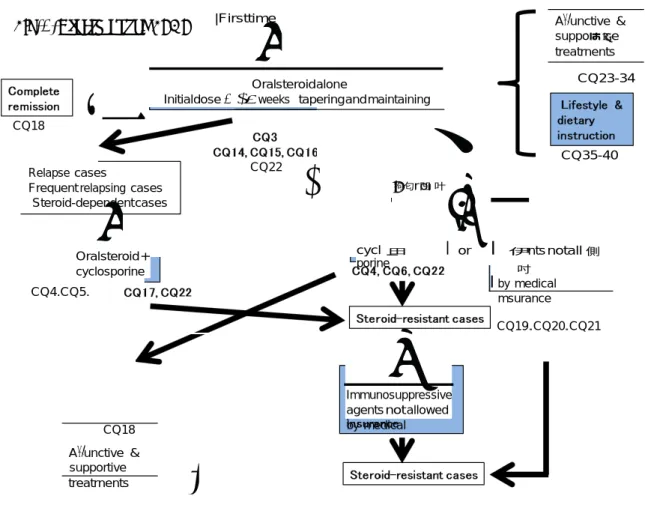
We summarized the treatments by histological types. The treatment strategies and the statements or answers of related clinical questions are comprehensively described for each strategy. Concerning adjunctive and supportive treatments or lifestyle and dietary instructions, some of the statements or answers of related clinical questions are listed.
The treatments mentioned here referred to the previous Japanese guideline
“Clinical guideline for refractory nephrotic syndrome 2002” and the second revised version, “Clinical guideline for nephrotic syndrome 2011,” published by the Research Group on Progressive Renal Disease of the Ministry of Health, Labor and Welfare. Additionally a novel idea is introduced in the treatment strategies based on published papers.
Unfortunately, we could not endorse all of mentioned treatment strategies and treatment algorithms through our clinical questions. We provided the clinical questions to a maximum extent for decision making.
Patients with nephrotic syndrome are aging; thus, they have many medical complications. Treatment for these patients must be decided on a case-by-case basis rather than strictly adFigurehering to the guidelines. For the selection of agents, we provide the opinions of members of the guideline committee, with reference to the previous two guidelines in Japan. We consider that we cannot use the same types or doses of agents as those recommended by articles published overseas.
Use of treatment agents not allowed by medical insurance depends on the decision established in 2013, when the present guideline is published. In the future, this decision may change.
1) Minimal change nephrotic syndrome (MCNS) 1. Initial treatment
Oral prednisolone is administered at a single daily dose starting at 0.8–1 mgkg-1day-1 (maximum 60 mg/day), and continued for 1–2 weeks after remission. Thus, the initial dose is maintained for 2–4 weeks. Tapering of prednisolone is performed through the following program: a 5–10 mg dose reduction every 2–4 weeks. After the prednisolone dose is reduced to 5–10 mg/day, the minimum dose must be continued for preventing relapse for approximately 2 years, and then gradually tapered and discontinued.
Steroid pulse therapy should not be performed readily; however, it may be
considered for cases in which absorption of steroid from the gastrointestinal tract is doubted (Fig. 1)
In the evaluation of efficacy, MCNS shows a high response rate to initial oral steroid treatment (CQ1).
We recommend that oral steroid alone be prescribed for preventing the acute decline of renal function at the initial treatment (CQ1).
Steroid pulse therapy may be considered when absorption of oral steroids seems difficult (CQ1).
Oral steroid administration should be considered on days when patients are not receiving steroid pulse treatment (CQ14).
In patients with severe intestinal edema associated with systemic edema, we suggest that increasing the dose of oral steroid or changing the administration routes be considered (CQ15).
The efficacy of alternate-day steroid administration is not clear because there are few relevant reports in adult nephrotic syndrome (CQ16).
There is no clear goal about the duration of continued steroid therapy after remission; however, at least 24 weeks may be necessary in MCNS (CQ18).
2. Relapse cases
Steroids are administered at equal or lower doses than the initial dose at the relapse of nephrotic syndrome.
As for steroid therapy for recurrent nephrotic syndrome, the opinions differ as to whether the dose of treatment should the same as that of the first treatment or lower than that of the first treatment (CQ17).
3. Frequently relapsing, steroid-dependent, and steroid-resistant cases Immunosuppressive agents such as cyclosporine (1.5–3.0 mgkg-1day-1), cyclophosphamide (50–100 mg/day), or mizoribine (150 mg/day) are administered in addition to steroid.
The efficacy of mizoribine has been confirmed in children but not in adults.
Therefore, the choice of mizoribine for adult patients is suggested here.
During treatment with immunosuppressive agents, the patient’s age and
complications should be considered. Elderly patients easily develop complications.
In MCNS, we recommend that cyclosporine with steroid be prescribed for reducing the urinary protein level in steroid-resistant and relapse cases (CQ2, CQ5).
In frequently relapsing nephrotic syndrome derived from MCNS and FSGS in adult patients, we recommend cyclosporine or cyclophosphamide be additionally prescribed to steroid for reducing the urinary protein level (CQ5).
The addition of mizoribine to steroid decreases the relapse rate in children with frequently relapsing nephrotic syndrome, whereas it is not known whether the same is true in adults. Mizoribine may be considered depending on the cases (CQ5).
In steroid-dependent or steroid-resistant nephrotic syndrome derived from MCNS and FSGS, we recommend cyclosporine or cyclophosphamide be additionally administered with steroid for reducing the urinary protein level (CQ5).
Recently, MCNS is found even in elderly patients. Few clinical studies have evaluated the efficacy of immunosuppressive agents in elderly patients with nephrotic syndrome; however, the efficacy of these agents for reducing the urine protein level was reported to be similar to that in younger patients. The incidence rate of adverse effects in elderly patients is higher than that in younger patients. Careful observation is necessary in the treatment of elderly patients with nephrotic syndrome (CQ22).
4. Immunosuppressive agents not covered by medical insurance (at the time of description of this guideline in 2013)
The use of agents not covered by medical insurance in Japan, such as rituximab, mycophenolate mofetil, and azathioprine, may be considered for patients resistant to agents allowed by medical insurance. However, it is not clear whether these agents are effective for reducing the urinary protein level and preventing the decline of renal function in nephrotic syndrome. For patients with frequently relapsing or steroid-resistant nephrotic syndrome, we suggest that these agents may be effective for reducing the urinary protein level and preventing the decline of renal function (CQ19, CQ20, CQ21).