1
Improvement of Membrane Bioreactor Operations for Color and Oil Removal from Wastewater
(排水からの色度と油分の除去を目指した膜分離活性汚泥法の運転方法の改善)
SHAHATA AHMAD MOHAMMEDADEL A (シャハタ アハマド モハンマドアデル アー)
A dissertation submitted in partial fulfillment of the requirement for the degree of Doctor of Engineering
Examination Committee Professor Taro URASE Professor Atsushi SATO Professor Toru MATSUI Professor Yuichi TADA Assoc. Professor Takuo AKIMOTO
School of Bioscience and Biotechnology Tokyo University of Technology, Japan
Tokyo, Japan March 2016
2
INDEX
INDEX ... 2
ACKNOWLEDGEMENTS ... 5
ACKNOWLEDGEMENTS (Arabic) ... 6
ABBREVIATIONS ... 6
ABSTRACT ... 7
論文要旨 ... 11
CHAPTER 1: INTRODUCTION ... 14
1.1 General Information ... 14
1.1.1 Water Resource and Wastewater Reclamation ... 14
1.1.2 Industrial Wastewater ... 15
1.1.3 Membrane Bioreactor (MBR) ... 15
1.2 Study Objectives ... 18
1.3 Structure of the Dissertation ... 19
CHAPTER 2: LITERATURE REVIEW ... 20
2.1 Color and Oil in Wastewater ... 20
2.1.1 Color in Water ... 20
2.1.2 Color of Melanoidins ... 20
2.1.3 Effect of pH on Removal of Color in Wastewater ... 22
2.1.4 Sugar Industry Wastewater ... 23
2.1.5 Sources of Oil in Wastewater ... 24
2.1.6 Oil and Gas Industry Wastewater ... 24
2.1.7 Saline Wastewater ... 25
2.2 Membrane Bioreactor ... 27
2.2.1 Definition, Configuration and History of Membrane Bioreactor ... 27
2.2.2 Advantages and Disadvantages of Membrane Bioreactor Process ... 30
2.2.3 Biodegradation and Bacterial Community in MBR ... 33
2.3 Operational Conditions of MBR for the Removal of Color and Oil ... 38
2.3.1 Low pH Operation in MBR ... 38
2.3.2 Thermophilic Operation in MBR ... 38
3
CHAPTER 3: MATERIALS AND METHODS ... 41
3.1 Low pH Operation ... 41
3.1.1 Reactor Operation ... 41
3.1.2 Feed Solution ... 42
3.1.3 Preparation of Sludge ... 42
3.2 Thermophilic Operation ... 43
3.2.1 Reactor Operation ... 43
3.2.2 Feed Solution ... 44
3.2.3 Preparation of Sludge ... 45
3.3 Water Quality Analysis ... 45
3.3.1 MLSS ... 45
3.3.2 COD ... 46
3.3.3 Color ... 46
3.3.4 pH ... 46
3.3.5 Oil and Grease ... 47
3.3.6 Inorganic Nitrogen... 50
Chapter 4: RESULTS AND DISCUSSIONS ... 51
4.1 Low pH Operation ... 51
4.1.1 Reactor Operation ... 51
4.1.2 Removal of COD ... 54
4.1.3 Removal of Color ... 56
4.1.4 Possible Mechanism for the Removal of Color ... 57
4.2 Thermophilic Operation ... 61
4.2.1 Reactor Operation ... 61
4.2.2 Removal of COD ... 63
4.2.3 Removal of Color ... 66
4.2.4 Nitrogen in the Reactor ... 68
4.2.5 Removal of Oil in the Reactors ... 68
CHAPTER 5: CONCLUSION ... 71
5.1 Low pH Operation ... 72
5.2 Thermophilic Operation ... 73
4
5.3 Recommendations for Future Work ... 75
PUPLICATION ... 77
REFERENCES ... 78
APPENDICES ... 91
Low pH Operation Experiment Raw Data of the Experiment on the Low Operation ... 91
Raw Data on the Experiment Thermophilic Operation ... 96
Experiment Pictures ... 101
5
ACKNOWLEDGEMENTS
I would like to express my sincere gratitude and appreciation to my advisor Prof. Dr.
Taro Urase for providing me with insights and guidance to recognize my mistakes, giving me a valuable suggestions and constant encouragement.
I would also like to thank Prof. Dr. Atsushi Sato, Prof. Dr. Toru Matsui, Prof. Dr. Yuichi Tada, and Prof. Dr. Takuo Akimoto for their serving as members of my dissertation committee.
I gratefully acknowledge Cultural Office of Royal Embassy of Saudi Arabia for the encouragement on all aspects of my study in Japan. Furthermore, I would like to acknowledge Ministry of Education in Saudi Arabia for the support by the King Abdullah Scholarship Program.
Finally, and most of all, I would like to give my special thanks to my father Dr.
Mohammedadel Shahata, mother Aziza Reda, older brother Nader Shahata, sister Salma Shahata, brother Omar Shahata, future wife and kids, best friend ever Alaa Al-kassim and friends in Tokyo University of Technology for their eternal support, love and encouragement.
6
ACKNOWLEDGEMENTS (Arabic)
ءادهإ
ةيادبلا في
، لماك ا في هكل لضفلا بسني هيل إف ،هلاع في لج ،لله دلحماو ركشلا -
هدحو لله ىقبي لماكلاو -
.لمعلا اذه دلحما دعبو
لى ا هجوت أ لله ورتا سيارو أ روتكلدا روسيفوبرلا
رتم سلما هعمدو هتربإثم لاولف ،هقح تماكل ي أ هيفت نل يلذا ريدقتلاو ركشلبا تم إم
لمعلا اذه .
لوصوم ركشلا في إهدعبو ةعمإج في ةشقإنلما ةنلج قيرف لى ا
ةرقولما إيجولونكتلل ويكوط .
ريدقتلاو ركشلا كل لى ا
جمنارب ينفيشرلا ينمرلحا مدإخ جيرإلخا ثإعتب لال زيزعلا دبع نب الله دبع لكلما
يملعتلا ةرازوب لةثتملماو
ليإعلا و لى ا ا ةيفإقثلا ةيقحللما .رتم سلما عملدا لىع نباإيلا في ةيدوعسل
يدوجو ببس لى ا ،)بي أ( حإجنلا برد لي يرني يلذا رونلا لى ا ..نيودنإسيو قيرطلا لي نوئيضي نكا نم لى ا لمعلا اذه يده أ
ةعشم ًإئماد هدج أ يلذا برقلما برلدا قيدص لى ا ، )رعم ،ىملس ،ردنا( بيإبح أ تيوخ ا لى ا ،)مي أ( ةإيلحا في لم أ
لا ءىفطنت
.تياردقب قثوو نيعمد نم عيجم لى او ،يدلاو أ م أو لبقت سلما ةجوز لى ا ،)سمإقلا ءلاع سدنهلما(
صاخ ءادهإ
"هب عفتني ٌملعو ...
عضاوتلما ثحبلا اذه يده أ .. ثإعتب لل ةصرفلا حتا أ نم لى ا
لى ا أ ملهو أو هيل ا سإنلا برق نم هئإنب
..
إنكرإشي إنعم نوكي ن أ تينتم يلذل حإجنلا تارثم
..
لضف أ لبقت سبم ًإنطو نيبنل إنب قثو نم لى ا .
.
له روفغلما ةينإسن لاا لكم حور لى ا ..
ينفيشرلا ينمرلحا مدإخ دوعس ل أ زيزعلا دبع نب الله دبع لكلما
.. الله ةحمر
ABBREVIATIONS
BOD biochemical oxygen demand
7 COD chemical oxygen demand CaCl2.2H2O calcium chloride
DO dissolved oxygen
EPS extracellular polymeric substance FOG fat, oil and grease
FGD flue gas desulphurization
GC/MS gas chromatography–mass spectrometry HRT hydraulic retention time
H2SO4 sulfuric acid
MBR membrane bioreactor
MLSS mixed liquor suspended solids M/F food-to-microorganism ratio MgSO4.7H2O magnesium sulfate
NaCl sodium chloride NaOH sodium hydroxide NH3-N ammoniacal nitrogen NO3- nitrate
NH3 ammonium
SRT sludge retention time SS suspended solids
SMP soluble microbial products TEP transparent exopolymer particles TMP transmembrane pressure
TN total nitrogen
WWTP wastewater treatment plant
ABSTRACT
8
Membrane bioreactor (MBR) process is the technology that has gained a considerable numbers of applications into wastewater treatment processes in recent days. It is a type of modification to conventional activated sludge process under which solid/liquid separation is undertaken through membrane filtration. One of the greater advantages of the MBR process is the operation at a high sludge retention time, which enables keeping in the reactors a variety of microorganism which can extend the removable compounds in biological wastewater treatment. In addition, high effluent water quality without the presence of suspended particles by the introduction of MBR is attractive for the reuse of industrial wastewater.
The characteristics of industrial wastewater are quite different depending on its source.
Biomass process including molasses distillation and sulfuric acid hydrolysis often generates wastewater having acidic characteristics. Saline and high-temperature wastewater containing a variety of organic compounds is a difficult target for wastewater treatment.
The produced water from oil and gas production activities, shipboard wastewater, and textile wastewater are the examples of this type of wastewater.
The aim of this study is to investigate the performances of membrane bioreactors (MBR) for wastewater treatment under high temperature operation and acidic operation to improve the removal of color and oil from industrial wastewater. The removal of color was focused because the remaining yellow or brown color in treated industrial wastewater usually originates from high molecular weight organic matters which are recalcitrant to biological degradation. Oil was also focused because oil in wastewater often disturbs the treatment of
9
industrial wastewater by forming aggregates especially under low temperature conditions.
High temperature operation is preferable to avoid the problems of oil in wastewater.
Few literature can be found for the operation of MBR below pH 3. There are few studies showing the advantage of thermophilic MBR for the treatment of dilute wastewater.
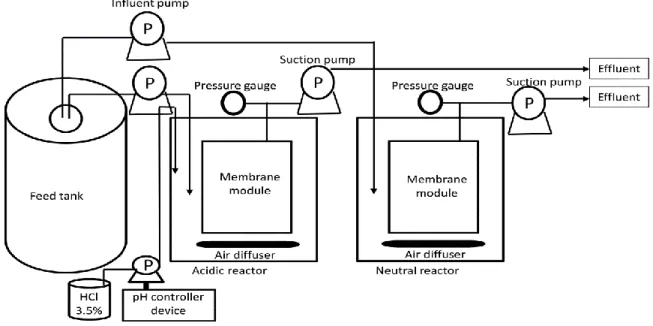
In the first experiment, the advantage of acidic operation below pH of 3, which operation was out of the usually accepted condition for membrane bioreactors (MBRs), was examined targeting the treatment of sulfuric acid hydrolysis wastewater generated in the biomass processing without pH neutralization. Stable operation of both an acidic reactor and a neutral pH reactor was observed for 91 days, though higher trans-membrane pressure was observed for the acidic reactor, which accumulated proteins and polysaccharides in the supernatant. COD removal for the acidic reactor was 48.5% and that for the neutral pH reactor was 63.6% when biologically pretreated molasses wastewater was fed to the reactors. Higher percentage removals of COD (89.0% for the neutral pH reactor and 84.0%
for the acidic reactor) were observed, when molasses wastewater (COD 650 mg/L) was directly fed to the reactor because of higher concentration of biologically degradable organic matter in the feed solution. In spite of lower COD removal in the acidic reactor, higher removal of color was observed spectrophotometrically with the low pH operation.
Higher color removal in the acidic reactor was due to the enhanced adsorption of colored substances in the acidic environment followed by gradual biological degradation judging from the increased tendency of the removal of color.
The second experiment was targeting for the treatment of saline and high temperature wastewater containing oil and organic matters of different biodegradability. A thermophilic
10
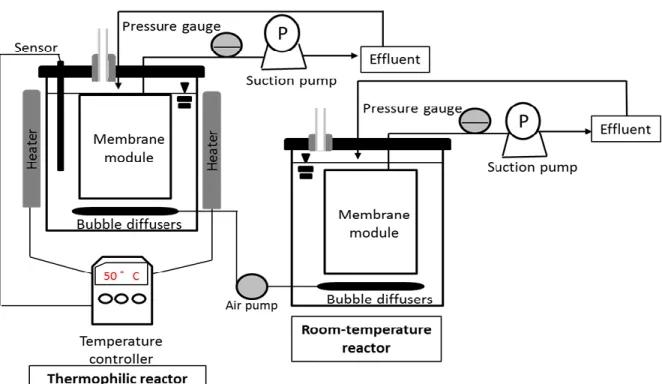
condition (50oC) beyond the usual operating condition for MBR was examined to avoid the disturbance for the treatment by oil in wastewater. The performances obtained for 35 days were compared with those of a room-temperature reactor. The removal of COD was comparable for the two reactors. The half-life time of mineral oil (C15-C22 alkanes) was around 2 hours for the thermophilic reactor, while that of room-temperature reactor was around 3 hours. However, the operation at the high temperature condition decreased the removal of melanoidin color from 58% to 44% compounds. The fouling of the membrane was more severe for the thermophilic reactor. The room-temperature reactor maintained a volume flux of 0.22 m/day, while keeping the volume flux at the same level was difficult for the thermophilic reactor. It was suggested that lower flux operation of the membrane and worse effluent quality have to be considered, if high-temperature operation is required.
These results on MBR operation with extreme conditions showed that the membrane fouling is the most serious problem, though low pH operation is preferable for the color removal and thermophilic operation is preferable to avoid the problems caused by oil in wastewater. Future research for the stable operation will be needed on the mitigation of the accumulation of proteins and polysaccharides in the supernatant of MBRs to realize the operation with the extreme conditions.
11
論文要旨
膜分離バイオリアクター(MBR, membrane bioreactors)は排水処理における適用例が近 年増加している。この技術は,標準的な排水処理技術である活性汚泥法に対して,膜によ る微生物懸濁液の固液分離を付加した技術である。MBR による排水処理の利点として,標 準活性汚泥法に比べて,長い汚泥滞留時間で運転が可能である点が挙げられ,そのことに よって,多様な微生物を反応タンクに保持することができ,より幅広い物質の分解が可能 になることが期待される。さらに,MBR を導入することによって,懸濁物質を全く含まな い高品質の処理水を得ることができることから,産業排水の再利用の点でも MBR は魅力的 な技術である。
産業排水には,発生源ごとに様々な特徴がある。バイオマスに関連したプロセスでは,
糖蜜の蒸溜や硫酸による分解抽出過程で生じる廃水など,極端な酸性廃水が生じる場合が ある。また,塩を高濃度に含む高温かつ様々な性質の有機物を含む排水は処理の難しい排 水と位置づけられる。こうした塩と難分解性物質を含む処理の難しい排水として,石油や 天然ガスの掘削に伴って生じる石油随伴水や船舶のバラスト排水,染色排水がある。
本研究の目的は,色度や油分の除去率を向上させるために,MBR を従来運転可能と考え られていたよりも,低 pH あるいは高温で運転することが可能であるかを調べることであ る。産業排水中の色度は,高分子の有機化合物によって生じることが多く,一般に生物分 解の難しい物質である。また,排水中の油分は低温で処理すると,装置内で固着し生物処 理を妨害する。これまで,pH 3 以下の酸性条件で MBR を運転した研究はほとんどない。
また,希薄な産業排水に対して,50℃以上の高温処理を試み運転上の利点を報告した研究
12
はほとんどない。油分含有排水であれば,油分による処理の妨害を避ける点で,高温での 運転による利点が生じる可能性がある。
第一の実験として,製糖関係のバイオマス硫酸抽出廃水の処理を念頭に,通常,生物処 理で運転される限界を超えて,pH3 程度の酸性条件での MBR の運転を想定した実験をおこ なった。酸性条件では上澄水に微生物が生産するタンパク質や多糖類が蓄積し,膜が目詰 まりし易く,運転には高い膜操作圧力が必要であった。一方,COD で評価した場合には,
酸性条件では中性条件に比べて除去率が低かったが,分光学的測定においてはより高い色 度成分の除去率が酸性条件で見られた。酸性条件での高い色度成分の除去率は,着色物質 が酸性条件でより汚泥に吸着しやすいためであると考えられた。また,色度除去率の経時 変化から,いったん吸着した色度成分はリアクター内に蓄積せず,微生物によってゆっく り分解されたと考えられる。
第二の実験では,石油随伴水処理を念頭に,MBR の高温運転を行った。実験の結果,鉱 物性の油の半減期は高温のリアクターでやや短く,油分がリアクター内に蓄積することは なかった。しかし,高温条件下でリアクターを運転した場合,色度成分の除去率は室温条 件での結果に比べて低下した。また,膜の目詰まりは高温条件のリアクターでより顕著で あった。
これらの結果から,MBR の極端な低 pH 運転には,色度の除去の点で利点があり,高温 運転においては,油分による処理の妨害を緩和する効果が見られることがわかった。しか し,膜の目詰まりに対しては,低 pH 運転も高温運転も不利であることがわかった。膜の 目詰まりを緩和する具体的な方策は本研究では明らかにされなかったが,MBR 法を産業排
13
水の処理のために,従来の運転条件の限界を超えて低 pH や高温条件で運転する利点と問 題点が本研究によって明らかにされた。
14
CHAPTER 1: INTRODUCTION
1.1 General Information
1.1.1 Water Resource and Wastewater Reclamation
In the near future, the availability of fresh clean water will become limited in wider areas of the world, although at the same time an increasing quantity and quality of water will be required to maintain and support the growing population. Many developing countries of the world already face a shortage of clean drinking water and irrigation water for food production, while in industrialized countries, such as the U.S. and Japan, the quality of available water for public and industrial use will be a larger issue than the quantities.
The process of water treatment that is reliable, effective and cost-efficient in removing a wide range of pollutants is highly needed. The recycling or reuse of wastewater is one way of supplementing available water supplies. The recent developments in membrane technology have made the recycling of wastewater a realistic possibility. The perception of recycled water by the public is less than favorable. In the U.S. the public is generally accepting of the reuse of water for irrigation, but strong opposition of its use for drinking water has been encountered. In areas with greater water scarcity, such as Singapore, the acceptance of recycled water is much greater (Howell, 2004). The additional treatment required for reuse comes at an increased cost, which may not be justified in areas with sufficient water supplies.
15 1.1.2 Industrial Wastewater
Industrial wastewaters have very varied compositions depending on the type of industry and materials processed. Some of these wastewaters contain extremely high organic matter.
Because of very high organic concentrations, industrial wastewaters may also be severely nutrients deficient. Unlike domestic wastewater, pH values beyond the range of 6–9 are also frequently encountered. Such wastewaters may also be associated with high concentrations of dissolved metal salts. The flow pattern of industrial wastewater streams can be very different from that of domestic wastewater since the former would be influenced by the nature of the operations within a factory rather than the usual activities encountered in the domestic setting (Biesterfeld et al., 2001).
1.1.3 Membrane Bioreactor (MBR)
Membrane bioreactor (MBR) process is a kind of technology that has gained increasing applications into the wastewater treatment within the recent times. It is a kind of modification made for the conventional activated sludge process in which case liquid/solid separation is done via filtration through membranes instead of the secondary sedimentation tank (Mittal, 2011).
They have proven to be highly effective in the removal of both inorganic and organic contaminants together with biological entities that arise from wastewater. Although once considered uneconomical, membrane technology costs have decreased by 80% over the past 15 years, making the use of membranes and MBR a viable option for the first time (Layson, 2004).
16
With new advances in membrane design and technology, the MBR processes appear to have a promising future in industrial wastewater treatments (Cicek et al., 1998). In recent years, the annual publication related to MBR technology reached nearly 400 per year and some of them were applied to industrial wastewater treatments. A recent market survey published in Water21 (December 2009) indicated that 566 out of the 800 full-scale MBR plants in operation in Europe are for industrial applications. Although a considerable number of papers have been published, there are still some challenging issues with MBR systems, particularly membrane fouling control. Fouling of the membrane that results into a high consumption of energy and high requirements for expensive cleaning chemicals has always limited the usage of MBR process due to the high cost of operation. Therefore, it is necessary to estimate the cost and the feasibility for the introduction of MBRs in the treatment of industrial wastewater. Although a number of reviews on MBR technology were published in the last few years, most of these reviews focused on municipal wastewater treatment with MBRs (Judd, 2004; Ng and Kim, 2007). Meanwhile, Liao et al., (2006) reviewed anaerobic MBR progress by focusing on applications for treatment of municipal and some industrial wastewaters. Cicek (1998) reviewed the applications of MBR technology for agricultural wastewater treatment. Previous reviews did not cover most of the recent studies regarding various industrial wastewater treatments with MBR systems. Consequently, there is a short of summary of the MBRs for industrial wastewater treatments in the literature. With the rapid development of MBR technology for industrial wastewater treatments, a detailed analysis and review of past academic research progress on industrial wastewater treatments would be valuable.
17
One of the greater advantages of the process of MBR is based on the fact that it can be operated at a high sludge retention time (SRT) when compared to the conventional activated sludge process. The high SRT operation is favorable for the growth of microorganism that are growing at a slow rate which might also degrade the recalcitrant and the toxic compounds like petroleum hydrocarbons (Kraakman, 2012).
The other advantages that are associated to MBR comprise of high quality effluent free from bacteria and pathogens, plant of a small size, and higher organic loading (Gawad, 2014). Not only a number of successful pilot plants but a number of full scale units are already in use at everywhere in the world. The current existing applications of MBRs comprise of municipal wastewater treatment for relatively small communities, industrial wastewater treatment, and lastly landfill lechate treatment.
Many operational conditions affect MBR performance such as hydraulic residence time (HRT), sludge retention time (SRT), temperature, pH, feed-to-microorganism ratio (F/M), mixed liquor suspended solid (MLSS), aeration and biomass properties. The effect of these parameters on MBR performance and membrane fouling has been the subject of some studies. Among these operation conditions, the values of pH and temperature are the most influential operation conditions since it is directly related to the microorganisms and membranes in reactors.
Thermophilic treatment is attractive for industries producing high-temperature and high organic content wastewaters. Several studies have been conducted on thermophilic MBRs, and MBR has been found as the most reliable system at higher temperature. However, there
18
has to be a trade-off between the cost and the quantity of treated wastewater when appropriate HRT and temperature are being selected.
1.2 Study Objectives
The removal of color and oil in wastewater generated from industries is economically difficult. Physical and chemical treatment methods are often suffered from high cost and/or insufficient performance. The residual color and oil sometimes causes a foul smell generating from wastewater (Abeynayaka and Visvanathan, 2011). Therefore, it is important to develop a cost effective method for removing oil and color. Biological treatment is still a good choice for the removal of oil and color, though there is a limitation for the removal of persistent compounds. The application of MBR to the treatment of industrial wastewater may provide a good solution for that.
Biological processes including molasses distillation and sulfuric acid hydrolysis in sugar industry often generate wastewater having acidic characteristics (Satyawali and Balakrishnan, 2008; Onodera et al., 2013). Direct treatment of acidic wastewater without pH neutralization is a target of this study to reduce the use of chemicals in wastewater treatment. Another target of the application of MBR is high-temperature oily wastewater, because oil in wastewater often disturbs the treatment of wastewater by forming aggregates especially under low temperature condition. However, the operation of MBR under high- temperature condition above 50ᵒC or highly acidic condition below pH of 3 is not promising, though the advantage of thermophilic MBR has been shown for high-strength wastewater (Simstich et al., 2012) (Abeynayaka and Visvanathan, 2011).
19
In this study, MBRs were examined for the treatment of industrial wastewater to extend the range of operational conditions for the acidic range and/or high temperature range, because few literatures can be found for the operation below pH 3 and above 50ᵒC. Effects of high-temperature operation and/or acidic operation on the fouling of the membranes as well as removable range of contaminants were investigated in this study.
1.3 Structure of the Dissertation
This paper comprises of 5 main chapters including: Chapter 1 Introduction (general information, study objectives and the structure of the paper), Chapter 2 Literature review (comprising of the review of a number of literatures that are relevant to the removal of color and from wastewater using both conventional methods and membrane bioreactors), Chapter 3 Materials and Methods for the experimental investigations (Experimental set-up , membrane, domestic reactor operation), Chapter 4 Results and discussion and Chapter 5 Conclusion. All these sum up to 5 major chapters are included in the paper.
20
CHAPTER 2: LITERATURE REVIEW
2.1 Color and Oil in Wastewater 2.1.1 Color in Water
There are two definition of color in water; one is "true color" and the other is “apparent color”. True color can only be judged in water from which turbidity has been removed.
Apparent color includes not only color due to substances in solution, but also that due to suspended particles.
Suspended material in water bodies may be a result of natural causes and/or human activity. Transparent water with a low accumulation of dissolved materials appears blue and indicates low productivity. Dissolved organic matter, such as humus, peat or decaying plant matter, including biologically treated wastewater, can produce a yellow or brown color. Water rich in phytoplankton and algae usually looks green, reddish or deep yellow water. Soil runoff produces a variety of yellow, red, brown and gray colors.
2.1.2 Color of Melanoidins
Molasses, produced from sugar production industry, is widely used in fermentation processes because it still contains organic matter which can be further used by fermentation processes. Anaerobic treatment (biomethanation) is widely applied for the treatment of molasses wastewater (Satyawali and Balakrishnan, 2008; Onodera et al., 2013). However, the removal of color in anaerobic treatment is not significant (Satyawali and Balakrishnan,
21
2008). The main colored constituents of the molasses wastewater are melanoidins (Chandra et al., 2008).
Melanoidins are dark brown to black colored natural condensation products of sugars and amino acids. They are produced by non-enzymatic browning reactions known as Maillard reactions (Plavsic et al., 2006). Naturally melanoidins are widely distributed in food (Painter, 1998), drinks and widely discharged in huge amount by various agro-based industries especially from distilleries using sugarcane molasses and fermentation industries as environmental pollutants (Kumar and Chandra, 2006; Gagosian and Lee, 1981). The structure of melanoidins is still not completely understood but it is assumed that it does not have a definite structure as its elemental composition and chemical structures largely depend on the nature and molar concentration of parent reacting compounds and reaction conditions as pH, temperature, heating time and solvent system used (Ikan et al., 1990;
Yaylayan and Kaminsky, 1998). Food and drinks such as bakery products, coffee and beer having brown colored melanoidins exhibited antioxidant, antiallergenic, antimicrobial and cytotoxic properties as in vitro studies have revealed that products from Maillard reaction may offer substantial health promoting effects. (Plavsic et al., 2006).
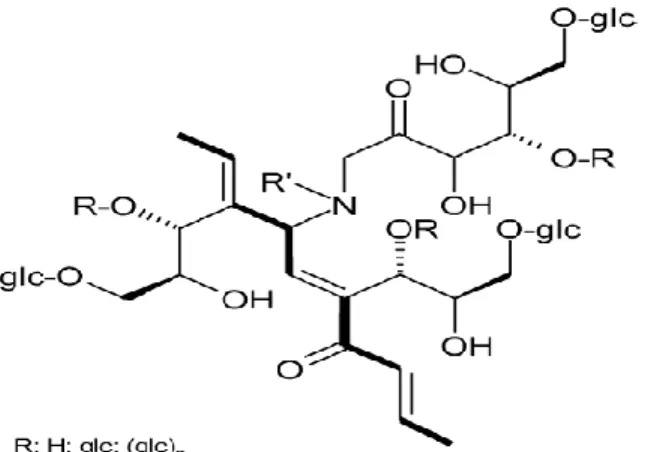
The basic structure of melanoidin is given in Figure 1 (Logan, 2007). Melanoidins have physiologically positive effects such as anti-oxidative activity including strong scavenging activity against reactive oxygen species (Vanhecke et al., 2006; Walker and Reamy., 2009).
The formation of melanoidins is affected by the reactants and their concentrations, types of catalysts and buffers, reaction temperature, time, pH value, water activity, presence of
22
oxygen and metal ions. During heat treatment, the maillard reaction accompanied by formation of a class of compounds known as maillard products. The reaction proceeds effectively >50 ºC and is favoured at pH 4 to 7 (Azadbakht et al., 2005).
Figure 1: Basic melanoidin structure formed from carbohydrates and amino acid (Logan, 2007).
2.1.3 Effect of pH on Removal of Color in Wastewater
Environmental factors like pH, colored substances, aeration and nutrients play vital roles in bacterial removal of the color derived from molasses based wastewater as the metabolism and activity of enzymes are greatly influenced by these environmental factors.
Alkane et al. (2006) reported that pH has a crucial role in melanoidins color removal. An increase in pH of medium resulted in less microbial color removal and the increase in color intensity in the effluent. The increase in color may be due to the polymerization of melanoidins (Alkane et al., 2006). The decrease in color removal efficiency in highly alkaline pH might be due to the fact that the melanoidins responsible for color were more
23
soluble in the alkaline pH, whereas the melanoidins might be precipitated and removed easily in the acidic pH condition.
2.1.4 Sugar Industry Wastewater
Sugar industries are one of the largest agro-based industry. The industry utilized around 1500–2000 L of water and generated about 1000 L of wastewater per ton of can processing (Asaithambi and Matheswaran, 2011). Wastewater mainly comes from floor washing, condensation, leakage, spillage of sugarcane from valve and pipelines, syrup and molasses in different sections. The composition generated from sugar industry has high content of organic material because of the presence of sugar and organic material in the beet or cane.
Sugar industry produced untreated effluent of BOD 1700–6600 mg/L, COD 2300–8000 mg/L and total suspended solid 5000 mg/L. Discharge of the effluent without proper treatment can create serious environment problem, therefore, it is need to treat properly before to discharge in water receiving body. Conventional treatment methods used to treat sugar industry wastewater include preliminary filtration of suspended solids, flow and load equalization, biological treatment and sedimentation for sludge removal. Aerated ponds are also candidates for the treatment of sugar industry wastewater but high oxygen consumption limits the process. Some process such as electrochemical oxidation, membrane separation and biochemical oxidation have been reported to treat sugar industry wastewater (Sahu and Chaudhari, 2015).
Aerobic treatment of organic wastewater have been approached as an acceptable process due to its performance for high COD and BOD removal. However all convention available
24
biological process for treatment of sugar industry wastewater may not be feasible and appropriate due to large land requirement as well as high capital of operational cost.
Biological processes including molasses distillation and sulfuric acid hydrolysis in sugar industry often generate wastewater having acidic characteristics (Chandra et al., 2008;
Figaro et al., 2009). Direct treatment of acidic wastewater without neutralization is favorable to reduce the use of chemicals in wastewater treatment.
2.1.5 Sources of Oil in Wastewater
Fat, oil and grease (FOG) is simply comprise of compounds from glycerol or alcohol with fatty acids which are present in the form of liquid phase in the normal temperature Conditions (Davies et al., 2004). Majority of the oil and fat are available in wastewater generated from domestic dwellings and the majority of such oil are considered to be contributed by nuts, meats, margarine, vegetable oils, butter among other fatty/oil contained in food items. Oil in wastewater can also originate from factories, workshops and garages.
The other possible sources comprise of road oils, gasoline, kerosene, soaps and so on (Imtiazuddin, 2012). FOG usually creates a kind of thin layer film, which is translucent within the wastewater surface and hence has the possibility of interfering aquatic lives and the WWTPs functioning.
2.1.6 Oil and Gas Industry Wastewater
Industrial wastewater have a complex chemical composition and contain organic (fats, lubricants, cutting liquids, heavy hydrocarbons (tars, grease, crude oils and diesel oil), and
25
light hydrocarbons (kerosene, jet fuel and gasoline) (Srinivasan, and Viraraghavan, 2010). and inorganic compounds, with about 20 % all the known chemical elements. Disposal of oily wastewaters into the environment can result in environmental pollutions and serious damages to the ecosystem. In addition, even in the case of very low concentrations in the environment, heavy metals can be accumulated in plants and animal tissue. Further risks to human health may arise, e.g. the risk of skin cancer from skin contact with used motor oils.
Although many of these elements are required by living organisms for their normal function, they become toxic effects at high concentrations.
Biological treatment of high-temperature industrial wastewaters and process waters under thermophilic conditions is an attractive alternative in many cases. The minimized need to use heat exchangers renders configuration of the process simpler, i.e. more cost- efficient and reliable. Thermophilic aerobic treatment is particularly suitable for operating as a high concentration wastewater treatment since the degradation rates achieved are higher than they are under mesophilic conditions, which in turn mean more compact reactor configurations (Jahren 1999; LaPara and Alleman 1999). Low sludge yield under thermophilic conditions has obvious benefits due to reduced sludge disposal and handling costs.
2.1.7 Saline Wastewater
High Salinity in wastewater often reduces the removal of color and oil in the treatment process. Saline wastewater, which is generated by activities such as fish processing, petroleum, flue gas desulphurization (FGD) and leather industries as well as wastewater
26
after the use of seawater is characterized by the high salinity and nutrient content at the same time. Salinity and nutrient concentrations of different wastewater sources are summarized in the Table 1. It is apparent that the concentrations vary depending on the activities as well as processes conducted in the respective industries. Salinity has a significant chemical and physical effect on the properties of water or wastewater such as solubility of oxygen, pH as well as alkalinity. In MBR treatment of saline wastewater the adhesion of proteins and polysaccharides onto membrane surface is promoted due to the reduction of electric double layer, resulting in severe fouling.
Table 1. Characteristics of saline wastewater.
Nitrogen removal of saline wastewater is essential to meet wastewater discharge criteria before treated wastewater is guided into a water body. Conventional nitrogen removal processes for protein or ammonia contained in saline wastewater are conducted by nitrification, followed by anoxic denitrification with addition of an external carbon source (Fontenot et al., 2007).
27
Halotolerant or halophilic nitrifiers must be present for the nitrification of saline wastewater. The utilization of halophilic microbial consortia or even of enrichments from non-saline ecosystems like manure, that were adapted to saline conditions, reduces the effect of salt stress on bacterial metabolism (Dincer and Kargi 2001, Antileo et al., 2002, Mariangel et al., 2008).
2.2 Membrane Bioreactor
2.2.1 Definition, Configuration and History of Membrane Bioreactor 2.2.1.1 General
Membrane bioreactor (MBR) is a very novel technology among the treatment technologies of wastewater, possessing a number of advantages over the traditionally known conventional activated sludge processes. Membrane bioreactor technology is a type of technology that comprise of membrane separation and biological degradation in wastewater treatment.
Innovations and investigation into the process of MBR in the treatment of wastewater have been intensively conducted within the last few decades (Kundu et al., 2013). For the purpose of meeting the requirement in place for the reuse of wastewater and the kind of strict standards required for effluent in the near future, MBR process application has apparently become an alternative which is very attractive when compared to other
28
conventional forms of water treatment. This is majorly based on its wide range of usability and the characteristics of performance (Wang et al., 2014).
2.2.1.2 Configuration
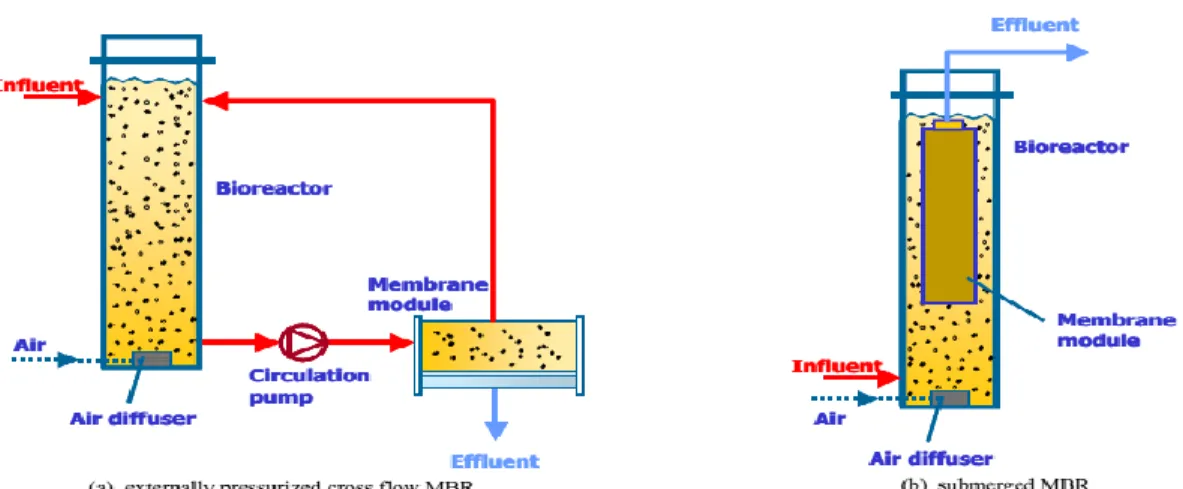
Figure 2 shows two configurations that are very different by membrane modules allocation in MBR system (Zhidong, 2010). The first configuration in this case is the cross- flow MBR where the pressurized module of the membrane is separately installed from the tank used in aeration (Zhidong, 2010). The second configuration is submerged MBR under which the membrane get submerged inside the bioreactor and thepermeate is directly suctioned by filtration (Zhidong, 2010). This second configuration (submerged MBR) has been reported by many literatures as superior characteristic to a cross-flow MBR which is externally pressurized with regards to the power consumption and the simplicity of the installation.
Figure 2: Different configurations of MBR process (Garbhani and Farajnezad, 2012).
29 2.2.1.3 History
MBR was developed as a combination of the membrane technology and the activated sludge in which the separations of solids was achieved through filtration instead of settling using gravity. The original version as from 1960s did employ the cross-flow configuration (Gawad, 2014). This configuration is still applied for some applications, in spite of a larger energy consumption (Alther, 2001). Since the mid of 1980s, the membrane units became to be submerged directly into the aeration tank leading to a substantial decrease of the required amount of energy from 6 kWh/m3 for the cross-flow type to 1 kWh/m3 for the previous versions of the immersed membranes.
A recent review by Alther (2001) showed that a high growth rate of the number of existing plants and their capacity installed in the market have reached more than 10 % annually within the past decade (Gawad, 2014). At the same time, literatures have reported a significant decline in the cost incurred annually from around $0.90/m3 one decade ago to more than $0.08/m3 in 2015 basically as a result of lower cost of membrane together as a result of the increased efficiency of energy to less than 0.4 kWh/m3(Gawad, 2014). While numerous MBR plants are reported to have small capacity and they are likely to be chosen in the case of decentralized treatment, the installed upper limit of the capacity of MBR dramatically expands. Some of the examples of currently existing MBR plants in the world comprise of tertiary treatment at Qinghe (Qinghe Special Steel Corporation disaster), Beijing (400,000 m3/d in 2011), Kaarst in Germany (48,000 m3/d in 2005) and King County in the USA (136,000 m3/d in 2011). Despite these advances in the cost reduction.
30
MBR is still considered as a new technology that has a very limited design and experience of operation when compared to the activated sludge which was invented for more than a century (Gawad, 2014).
2.2.2 Advantages and Disadvantages of Membrane Bioreactor Process 2.2.2.1 Advantages of Membrane Bioreactor Process
MBR for wastewater treatment have always been proved to have a number of advantages when compared to other processes that are conventional biological wastewater treatment (Zhidong, 2010). The major advantages here are high quality of the treated water, the smaller size of the treatment unit, less production of sludge and the flexibility involved in the operation.
The first advantage is the high quality of treated water compared with the conventional activated sludge process in which the quality of effluent is mainly depended on the sludge settling in the sedimentation tank (Zhidong, 2010). In the case of MBR, liquid/solid separation is performed using filtration by membranes (Garbhani and Farajnezad, 2012).
The final effluent therefore do not contain suspended matter which enable the direct discharge of the final effluent into the surface water and the reusing of such effluent for the purpose of cooling, flushing of toilet, and/or watering of lawn.
Flexibility in operation is the second advantage that MBR has over other conventional activated sludge process that are used in wastewater treatment (Garbhani and Farajnezad,
31
2012). The solid retention time (SRT) can be controlled as an operating parameter without dependence on the hydraulic retention time (HRT).
Compact size of the plant is the third advantage of MBR over other conventional methods of wastewater treatment. Due to the fact that the operation of MBR does not depend on the gravity settling of sludge, high concentration of biomass is likely to be maintained up to around 30g/L within the system (Garbhani and Farajnezad, 2012). MBR has an ability of treating wastewater at high volumetric loading rate and it can reduce the size of the existing bioreactor (Garbhani and Farajnezad, 2012). Additionally, the secondary settling tanks, thickener of sludge or further treatment for SS and BOD removal are not very critical in the MBR process, hence the plant become highly compact in size.
Low rate of production of excess sludge constitutes another advantage of MBR process over other wastewater treatment processes. Studies undertaken on MBR reveals that the rate of the production of excess sludge is usually very low (Wang et al., 2014). The amount of excess sludge from MBR process is considerably lower than the conventional activated sludge process (Garbhani and Farajnezad, 2012). The low M/F (food-to-microorganism ratio (g BOD/g MVLSS/day) ratio and the longer SRT within the reactor is the main reason for the low excess sludge production in MBR process (Wang et al., 2014).
2.2.2.2 Fouling of Membrane
MBR and activated sludge also differ from each other in one very special aspect. The operation of MBR relies majorly on the ability of membrane module to treat all the flow
32
that are incoming into the plant. If permeability of the membrane is impaired due to some reasons, then it become impossible for the plant to process all the flow volume although the water quality of effluent in the case will still remain high in a consistent way (Abeynayaka and Visvanathan, 2011). This is a contrast with the typical operation of the activated sludge where the hydraulic capacity of the plant is not frequently a problem but the quality of effluent is highly variable. The fouling of membrane and the consequent reduction of the volume flux is the most important problem for the operation of membrane bioreactors (Abeynayaka and Visvanathan, 2011). This problem can lead to be very important in the case of large plants where the safety margin is critically small due to the costs of plant.
A number of studies have always been devoted to the mechanisms and causes of the fouling together with its control (Trivedi and Doare, 2014). It has always been reported that one of the major causes of fouling is the concentration polarization of solid and proteins and polysaccharides in the mixed liquor of activated sludge. The concentration polarization takes place when the forward flux of the solutes become more than the backtransfer away from the membrane (Trivedi and Doare, 2014). The fouling has been reported to be sometimes reversible (by lowering the flux of the membrane) or increasing the intensity of back transfer.
The fouling is likely to be associated with a higher concentration of solids and colloidal matters present in the mixed liquor. A literature illustrates that in the event that the concentration of solids in the solution applied to membrane filtration become more than the threshold, the permeability of the membrane decreases at a rapid rate (Kundu et al., 2013).
33
The decrease in the permeability is caused by the formation of cake and gel layer at the surface of the membrane built up by the filtration. The decrease in the volume flux is however sometimes reversible and can be controlled by decreasing the mean filtration flux (relaxation of membrane) by increasing backward transport with the operation of an increased aeration (Kundu et al., 2013). In order to increase the backward transport, the cross-flow filtration concept was introduced (Zainal Abidin et al., 2014).
2.2.3 Biodegradation and Bacterial Community in MBR 2.2.3.1 Microbial Activity and MBR Operation
In MBRs, microorganisms maintain their growth by oxidation and synthesis as well as endogenous respiration processes using organic/inorganic substances in the wastewaters.
Meanwhile, metabolic products excreted from living microorganisms and lysis substances from dead cells are generated. Membranes submerged into reactors inevitably interact with these substances under hydrodynamic conditions. Importantly, once first layer was formed on membrane surfaces by microorganisms and their metabolic matters, further adherence of foulants on membrane surfaces will be controlled by surface properties and structure natures of the initial cake layer. Therefore, the characteristics of microbial flocs and SMP perform key roles on their interactions with membranes in MBRs. Generally, microbial growth and metabolism depend on feed characteristics and imposed environment (e.g., oxygen level, temperature, steady-state/unsteady-state operation). Thus, MBR operating conditions involved in these factors influence the microbial behaviors such as the presence
34
of microbial species, physiological characteristics of microbial flocs, and their metabolic products.
2.2.3.2 Effect of Feed Composition on Bacterial Community in MBR
MBRs have been applied to treat a wide range of industrial and municipal wastewater with variable nutrient inputs (e.g., carbon, nitrogen, and phosphorus contents). Substrate loading and composition are found to be the primary factors influencing bacterial community in MBRs. Wu et al. illustrated that bacterial community structure dynamically shifted in different ways under various organic, nitrogen, or phosphorus loadings in MBRs (Wu et al., 2011). Ahmed et al. reported that when different external carbon sources were provided in MBRs, dominance of α, β, γ-subclass of Proteobacteria was dissimilar (Ahmed et al., 2008). Concomitantly, the differences in the nutrient sources could influence physiological properties of biomass (e.g., concentration, particle size, viscosity, floc structure) as well as chemical compositions and distributions of EPS in MBRs, which have an effect on membrane fouling profiles (Wu et al., 2011; Feng et al., 2012). Wu et al.
reported that the membrane fouling tendency of biomass in the low-loading MBR (0.57 g COD/L day) was insignificantly different from that in the medium-loading MBR (1.14 g COD/L day), which was apparently lower than that in the high-loading MBR (2.28 g COD/L day). This is attributed to the higher bound EPS contents in the high-loading MBR.
On the other hand, the nutrient amount available for bacteria is inversely related to sludge retention time (SRT) employed in MBRs. For example, at the same organic loading, MBRs with a shorter SRT have a higher food to microorganisms (F/M) ratio. A large body of
35
research pointed out that a high F/M ratio in the MBR is beneficial to bacteria for the synthesis of cellular material (including growth of new cells and the production of excreted substances), which as a result aggravates membrane fouling (Wu et al., 2011; Trussell et al., 2006).
2.2.3.3 Effect of Environments on Bacterial Community in MBR 2.2.3.3.1 Oxygen Level
Aerobic growth of microorganisms is strongly dependent on the amount of oxygen available because oxygen is a key terminal electron acceptor to yield energy in their metabolic pathways. In MBRs, imposed dissolved oxygen (DO) level may facilitate propagation of some microbial species, but may disfavor others. Vibration of oxygen amount in a reasonable range (e.g., high DO vs. moderate DO) may not markedly change the microbial community compositions in the MBRs. Almost similar dominant species, for example, Betaproteobacteria, Dechloromonas, Rhodocyclus, Comanonas, and Nitrospira, are found under such DO conditions. However, lowering DO levels to a threshold (e.g., less than 0.5 mg/L) led to noticeable changes in the microbial community structure (i.e., enhanced denitrifying bacterial growth) and distinct decreases of diversity of predominant microbial populations in MBRs (Gao et al., 2011; Tocchi et al., 2012). On the other hand, the oxygen level available in MBRs influences microbial metabolisms such as generation, composition, and distribution of EPS (Wu et al., 2011; Gao et al., 2011). Accordingly, membrane performances associated with microbial behaviors can be greatly affected by DO levels. Gao et al. emphasized that insufficient DO amounts in MBRs facilitated EPS
36
production in the mixed liquor and EPS accumulation in the cake layers, which induced higher membrane fouling rates (Gao et al., 2011). In other studies, it was observed that lowing DO levels reduced the sizes of microbial flocs, which tend to form dense and compact cake layers on the membranes and give rise to higher resistances (Ma et al., 2006;
Jin et al., 2006).
2.2.3.3.2 Temperature
In MBRs, microorganisms use their enzymes to hydrolyze and degrade the organic/inorganic matters and the levels of enzyme activities are sensitive to seasonal temperatures. The activities of some enzymes (such as phosphatase and esterase) positively responded to temperature increases in a suitable range, while some enzymes (e.g., glucosidase) may achieve maximum activity at a low temperature when domestic wastewater was treated by the MBR (Molina-Munoz et al., 2010). Reduced enzyme activities lead to less biodegradation of organic substances, resulting in higher concentrations of organic substances retained in the reactors. Meanwhile, environmental temperatures influence microbial growth rate and microbial community compositions in MBRs. Favorable temperatures facilitate propagation of suitable microbes, but unsuitable microbial species may disappear or reduce their quantity in the reactors. In some situations, with temperature changing, almost similar microbial community composition may be present in MBRs, but the microbial diversity developed in a highly dynamic pattern (Calderón et al., 2012; Simstich et al., 2012). Furthermore, temperatures affect not only properties of microbial flocs such as viscosity and size, but also releasing EPS levels.
37
Miyoshi et al. reported that when the temperature decreased from 21.5 to 17.7 °C, almost comparable soluble polysaccharides and protein amounts were observed, while further decreasing the temperature to 12.7 °C significantly induced higher soluble polysaccharides and protein levels in the MBRs (Miyoshi et al., 2009). A similar finding was concluded by Van den Brink et al. and his colleagues. Therefore, higher membrane fouling rates were obtained at lower temperatures (Miyoshi et al., 2009; Van den Brink et al., 2011).
2.2.3.3.3 Unsteady-State Operation of MBRs
Stable operation of MBRs is desirable in order to maintain steady reactor performance and membrane filtration process. However, in pilot-plants or full-scale MBRs, unsteady states such as seasonal fluctuation of wastewaters, intermittent feeding, shifts in the oxygen supply, pH change, and discontinuous or irregular disposal of waste sludge may happen.
Microorganisms in MBRs respond to these variations by developing suitable microbial community or varying their metabolic and synthesis processes to increase their tolerance.
Significant bacterial population changes have been observed in the startup period of MBRs when wastewater compositions, organic loadings, and SRTs were varied, even though the stable MBR performances (such as membrane permeability and organic carbon removal rate) were achieved. (Wu et al., 2011; Miura et al., 2007). On the other hand, a few studies pointed out that unsteady organic loading rates led to higher soluble polysaccharides contents in the reactor, which increased fouling rates. Yogalakshmi and Joseph illustrated that the soluble EPS in the MBRs increased by 22%–66% after transient sodium chloride shock. Wu et al. observed that when the levels of soluble polysaccharides and soluble TEP