lSSN O304−2146
Japanese Joumal of Tropical Medicine and Hygiene
第16巻第2号 昭和63年6月15日
内 容
原 著
西ケニアにおける地方病型カポシ肉腫とアフリカ型バーキットリンパ腫の部
族および地理的分布の一致性(英文)……一 ・鳥山 寛 85−102 輸入動物の寄生虫 IV.輸入チンパンジーにおける寄生虫感染状況
…・影井 昇,熊田 三由,小山 力,森 裕介
笠岡 貞信 103−111
Control of/464θs Vectors of Dengue Fever/Dengue Haemorrhagic Fever
in Singapore………・一………・………一…・・……・…………Chan Kai Lok 113−120 Management of Malaria with Special Reference to Drug Resistance
−Tranakchit Harinasutβand Danai Bunnag l2レ130 第29回日本熱帯医学会総会講演抄録(1)
目 次…・………・・一 フォーラム…・…………・…・….……一
講演・……… ………一
英文抄録……
131−133 134−135 136−152 153−179
会 報
昭和63年度第1回幹事会記録……
第12回日本熱帯医学会九州支部大会報告
投稿規定
181−182 183−184
日熱医会誌
Japan.」.T.M.H. 日本熱帯医学会
ETHNOGEOGRAPHICAL COINCIDENCE OF ENDEMIC KAPOSI'S SARCOMA AND AFRICAN BURKITT'S LYMPHOMA IN WESTERN KENYA
KAN TORlYAMA
Received September 25 1987/Accepted March 1 1988
Abstract: Geopathological studies on endemic Kaposi's sarcoma (KS) and African Burkitt's lymphoma (BL) in western Kenya were performed, and revealed that KS and BL had relatively same geographical and ethnical distribution. The westem region of Kenya stands almost exactly astride the equator. It accounts for almost one third of the whole country in area and about one half in population. Westem Kenya is composed of three provinces; Nyanza Province, Western Province and Rift Valley Province. Out of 25,343 surgical pathological specimens at provincial hospitals in Nyanza, Western and Rift Valley for 8 years during 1979 to 1986, 124 and 135 cases were histologically diagnosed as KS and BL respectively. Frequency in all malignant tumors was 2.92% (KS) and 3.18%
(BL). The high incidence of KS was found between the age of 50 and 59, while all BL cases were found under 22 years. The male to female ratio was 8.4:1.0 in KS and 1.2:1.0 in BL. The incidence of KS and BL per 100,000 population in each provinqe is as follows:
a) 2.12 (KS) and 3.54 (BL) in Nyanza Province, b) 1.80 (KS) and 1.20 (BL) in Western Province, and c) 1.ll (KS) and 0.68 (BL) in Rift Valley Province. Nyanza Province and Western Province are tropical savannah areas,,whereas Rift Valley Province is a tropical highland. The incidence of KS and BL per 1'OO,'dbO pbpulation among main ethnic groups in western Kenya is as follows: the Luo,'the main inhabitants of Nyanza Province around Lake Victoria, showed the highest incidence of KS (2.56) and BL (4.35), followed by the Luhya, the main inhabitants of Westem Province, the Kalenjin, the inhabitants of the tropical highland in Rift Valley Province, and the Kisii, the inhabitants of highland area of Nyanza Province. The Luo are descended from the Nilotic groups and the Luhya belong to the Bantu. No case of KS and only a few cases of BL were found among the inhabitants of desert or semi‑de ert areas. No other tumors showed above mentioned characteristics. The geographical and ethnical coincidence of KS and BL was more clear in the child population than in the adult. These results suggest that there is a geographical coincidence of KS and BL based on same etiological cofactors including high temperature, high humidity, unknown transmissible agents, and probably genetic factors and life styles.
This was mainly demonstrated in Nyanza Province around Lake Victoria in western Kenya.
INTORODUCTION
Kaposi's sarcoma (KS; initially called Idiopathisches Multiples Pigment Sarkom der Department of Pathology, Institute of Tropical Medicine, Nagasaki University
12‑4 Sakamoto‑machi, Nagasaki 852. Japan
Research Clearance Permit, Republic of Kenya No. OP. 13/001/8 c 224/12, 36.
Supported by Grants under the Monbusho (The Ministry of Education, Science and Culture, Japan) International Scientific Research Program No. 504153, 56043047, 58041054, 59043049, 61041063, and 62043059.
86
Haut) was first described in eastern Europe (Kaposi, 1872). Up to the present day, many cases of KS have been reported from European and Ndrth American countries and a relative‑
ly high incidence of KS has appeared among the inhabitants of eastern Europe and Mediter‑
ranean countries, as well as those of Jewish origin in central Europe (Bluefarb, 1957; Oettle, 1962; Rothman, 1962). The first report of African KS from French Cameroon was made by Jojot and Laigret in 1922. Nowadays, it is well known that endemic KS is more prevalent in African continent than any other part of the world (Oettle, 1962; Maclean, 1963). When the ratio of endemic KS to all malignant tumors was considered, the highest value was found in central Africa with the incidence of endemic KS decreasing with distance away from this area (Cox and Helwig, 1959; Cook, 1962; Davies and Lothe, 1962; Keen, 1962; Oettle, 1962;
Maclean, 1963; Slavin et al., 1969; Taylor et al., 197la; Schmid, 1973; Toriyama et al., 1987a) . It has been reported that cytomegalovirus (CMV) is etiologically concerned with KS in Africa (Burkes et al., 1985). Since the occurrence of the first Aquired Immunodeficiency Syndrome (AIDS) case (Centers for Disease Control, 198la) , KS has been considered one of the main complications of AIDS (Centers for Disease Control, 198lb; Friedman‑Kien et al., 1981). Several cases of African endemic KS contained viral inclusions, and European and American patients with KS were found to possess increased serum‑levels of antibody to CMV when compared with normal controls and patients with other malignancies (Giraldo et al., 1972a, 1972b, 1975; Boldogh et al., 1981). However, KS in AIDS (epidemic type) is a little different from endemic KS in Africa in its manifestations (Toriyama et al., 1987b) . In North America, the incidence of malignant B‑cell lymphoma which is also related to AIDS has been increasing (Ziegler et al., 1982, 1984; Levine et al., 1984, 1985) .
Burkitt's lymphoma (BL) , a malignant B‑cell lymphoma, is also endemic throughout most of tropical Africa (Burkitt, 1962). Epstein‑Barr virus (EBV) is now known to be the causative agent of BL (Epstein et al., 1964; Old et al., 1966; de Schryver et al., 1969; Henle et al., 1969, 1973; Gunven et al., 1970; zur Hausen et al., 1970; Kaschka‑Dierich et al., 1976) . It has been suggested that EBV may initiate a lymphoid tumor of a susceptible individual whose immunological response has been altered by malaria, especially Plasmodium falcipa‑
rum (Hutt, 1970).
Across African continent between the latitudes of approximately 15' north and south of the Equator, BL appears to be highly prevalent (lymphoma belt) (Burkitt, 1962, 1966, 1969) . Although it is supposed that the lymphoma belt and the areas with the high incidence of KS are overlapping (Burkitt, 1970) , no reports clarifying the geographical and ethnical coinci‑
dence of endemic KS and African BL have been published up to the present day. It is the aim of this study to discuss in more detail the geographical and ethnical distribution as well as some etiological cofactors between endemic KS and African BL in western Kenya.
MATERIALS AND METHODS
This study was based on the histopathological examinations of surgical specimens, almost all of which were performed in the Histology Departments of two hospitals, the Rift Valley Provincial General Hospital in Nakuru and the Nyanza Provincial General Hospital in Kisumu, Kenya. During the eight‑year period between 1979 and 1986, a total of 25,343 surgical specimens from Nyanza, Western, and Rift Valley Provinces in western Kenya were examined histologically for KS and BL. Relevant information and clinical data were
collected as accurately as possible, with attention being paid to age, sex, ethnic group, ,place of residence, and macroscopic appearances. The diagnoses of'KS and BL were ba ed on clinical and histological grounds. Histological examinations were performed using ,H. E., periodic acid Schiff (P.A.S.), reticulum, el stic van Gieson and Azan Mallory stains. A demographic structure was obtained from the Kenya Population Census 1979 (Government of Kenya, 1979)
Table 1 Incidence of Kaposi's sarcoma (KS) and Burkitt's lymphoma (BL) amongst malignant tumors (1979‑1986)
Year No. of specimen mal ig. No. of No, of KS KS (%)
No. of
BL BL
surg tumor malig. tumor mal ig. tumor (%)
1979 1 , 179 Male Female Unknown
(TotaD 102
76 7 185
2 o o 2
1 . 96
1 . 08
4 1 O 5
3.
1.
92 32
2 . 70
1980 3 , 359 Male Female Unknown
(TotaD
262 318 3 583
12 1 O 13
4 . 58 O . 31
2 . 23
4 O O 4
1 . 53
o . 69
1981 3 , 652 Male Female Unknown
(TotaD 336 368 5 709
22 5 28
6 . 55 1 . 36 20 . OO 3 . 95
9 9 O 18
2 . 68 2 . 54
2 . 54
1982 4 401 Male Female Unknown
(TotaD 213 315 25 553
24 2 l
27
ll . 27 1 . 36 4 . OO 4 . 88
6 7 O 13
1 . 98 2 . 22
2 . 35
1983 3 , 905 M ale
Female Unknown
(TotaD 303 253 19 575
8 o 8
2 . 64
l . 39
6 15 O 21
1 . 98 5 . 93
3 . 65
1984 2 , 493 Male Female Unknown
(TotaD 198 216 415
8 o o 8
4 . 04
1 . 93
15 3
19
7.
100 . 4.
58 39 oo 58 1985 3 , 914 Male
Female Unknown
(Total) 323 424 9 756
18 3 O 21
5 . 57 o . 70
2 . 65
17 16 O 33
5.
3.
26 77
4 . 37
1986 2 , 440 Male Female Unknown
(TotaD 180 271 16 467
15 2 O 17
8.
o.
33 74
3 . 64
12 10 O 22
6.
3.
67 69
4 . 71
Total 25 , 343 Male 1
Female 2 Unknown
(TotaD 4
,
,
917 241 85 243
109 13 124
5 . 69 o . 58 2 . 35 2 . 92
73 61 135
3.
2.
1.
3.
80 72 18 18
88
Table 2 Age and sex distribution of 124 tases of Kaposi's sarcoma (KS)
Table 3 Age and sex distributiori of 135, cases of Burkitt's lymphoma (BL)
Age Group Sex
Age Group Sex
Male Female Unknowa Total Male Female Unknown Total
0‑4 5‑9
10‑14 15‑19 20‑24 25‑29 30‑34 35‑39 40‑44 45‑49 50‑54 55‑59
60 and over
"Child"*
"Adult" * *
Unknown
6 4 3 1 4 7 5 9 7 15 7 17
1
14 5
o 2
o o o 2
o o o 3
o
0'
o o o o o o o o o o o o o 2
6 6 4 2 4 8 4 5 10 9 16 7 17
l
17 8
0‑4 5‑9
10‑14 15‑19
20 and over
"Child"*
Unknown
18 30 14 O 5 5
2 29 17 6 4 2
O o o O O o
20 60 31 7 l 9 7
Total 73 61 1 135
* Exact age is unknown, probably under 14 years of age.
* * Exact age is unknown, probably over 15 years of age.
Total 109 13 2 124
RESULTS
Incid ence of KS and BL amongst malignant tumors
During the eight‑year period between 1979 and 1986, out of 25,343 surgical specimens, 4,243 specimens were malignant tumors. Among them 124 cases were histologically diagnosed as KS and 135 cases as BL. Table I shows the ratio of KS and BL to all malignant tumors during the period; 1.08% and 2.70% in 1979, 2.23% and 0.69% in 1980, 3.95% and 2.54%
in 1981, 4.88% and 2.35% in 1982, 1.39% and 3.65% in 1983, 1.93% and 4.58% in 1984, 2.65%
and 4.37% in 1985, and 3.64% and 4.71% in 1986 respectively. The total incidence of KS and BL amongst all malignant tumors in western Kenya for the eight‑year period was 2.92% and 3.18% respectively.
Age and sex distribution of KS and BL
Tables 2 and 3 indicate the age and sex distribution of KS and BL respectively. The high incidence of KS cases was found between the age of 50 and 59, while all BL cases were found under 22 years. The male to female ratio was 8.4:1.0 in KS and 1.2:1.0 in BL. The highest incidence of BL cases was found in the 5‑9‑year‑old age group. The analyses of sex distribution revealed that males had significantly higher rates in KS (p<0.001) and BL (p<
0.05) than females (by the Chi‑square test, using 4,243 cases of malignant tumors) .
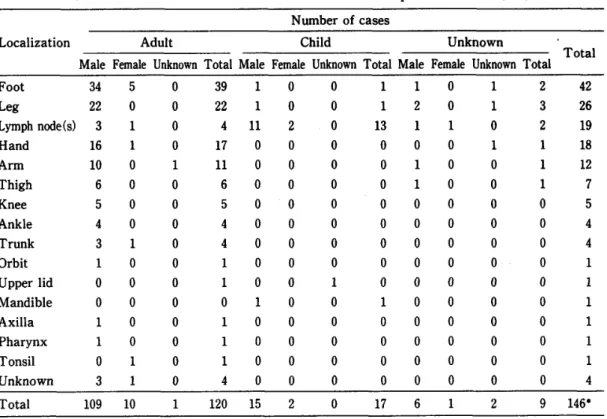
Table 4 Anatomical distribution of 124 cases of Kaposi's sarcoma (KS) Number of cases
Localiz'ation Adult Child Unknown
Total Male Female Unknown Total Male Female Unknown Total Male Female Unknown Total Foot
Leg
Lymph node (s)
Hand A rm Thigh Knee Ankle Trunk
Orbit Upper lid Mandible Axilla
Pharynx Tonsil
Unknown
34 22 3 16 lO 6 5 4 3
O O
O 3
5 o
o o o o
o o o o o
o o o o
o o o o o o o o o o o
39 22 4 17 ll 6 5 4 4 l l O l 1 l 4
11 O O O O O O O O
O O O O
o o 2 o o o o o o o o o o o o o
o o o o o o o o o o
o o o o o
13 O O O O O O O O
O O O O
l 2
O
O O O O O O O O O O
O O
l O O O O O O O O O O O O O
O l O O O O O O O O O O O O
2 3 2 l
O O O
O O O
O O
42 26 19 18 12 7 5 4 4 l 1 l 1 1 1 4
Total l09 10 120 15 2 17 6 1 2 O 9 146‑
* including multiple lesions.
Table 5 Anatomical distribution of 135 cases of Burkitt's lymphoma (BL)
Localization Number of cases
Male Female Unknown Total
Oral cavity (includ. Nasal cavity)
Maxilla and Mandibula (includ. Cheek, Orbit and Eye) Abdominal mass
Unknown lymph node Ovary
Neck (includ.' Cervical lymph node and Thyroid) Inguinal lymph node and Groin
Kidney
Axillary lymph node Mediastinum
Spleen
Head
Shoulder H and Hip
Mesenteric lymph node
Unknown
17 19 8 9 O 8 3 1 O O 1 l
O
1
4
12 9 7 6 14 5 2 2 1 O O 1 O O O O
o o o o O o O O O o o O O o O o
29 29 15 15 14 13 4 3 2 1
1
1
4
Total 73 61 l 135
90
Table 6 Geographical and sex distribution of Ka osi's sarcoma (KS) and Burkitt's ,lymphoma (BL)
Prbvince District Number of KS Number of BL
Male Female Unknown Total M ale Female Unknown Total Western Bungoma
Busia
Kakamega
(TotaD
9 5 14 28
O 3 4
O O
10 5 18 33
O 1 9 10
O O 12 12
O O O o
O 21 22
Nyanza Siaya Kisumu South Nyanza
Kisii (Total)
8 24 11 7 50
2 O 1 4
o O O O O
10 24 12 8 54
3 32 11 47
2 31 4 5 42
O 1 O O
5 64 15 6 90 Rift Valley Turkana
West Pokot Trans Nzoia Uasin Gishu Elgeyo Marakwet
B aringo
Nandi Nakuru Kericho Narok
Others (Total)
O 3 2 4
3 13 3 1 O 31
O O O O O O O 2 l 1 O 4
O O O o O o o O
O 3 2 4
3 16 2 O 36
O O 2 O O
1 2 6 4 O O 15
l 1 O O O O 3 O O 7
O O O O O O o O o O O
3 O O 2 9 5 o o 22
Unknown o 1 O 1 1 o O l
Total 109 13 2 124 73 61 1 135
Anatomical distribution of KS and BL
The anatomical distribution of KS and BL are shown in Tables 4 and 5 respectively. The most common sites of primary lesion of KS in adults were the foot, followed by the leg, hand and arm. In children, the primary lesion of KS was predominantly of lymph node (s) origin.
The most common sites of primary lesion of BL were the oral Qavity, followed by the maxilla, mandibula, abdominal davity, Iymph nodes and ovary.
Geographical distribution of KS and BL
Tables 6 and 7 show the geographical distribution of KS and BL. Out of 124 collected cases of KS, 54 were from Nyanza Province, 36 from Rift Valley Province and 33 from Western Province (Table 6). The estimated incidence of KS per 100,000 population in each province and district for the eight‑year period was as follows: Nyanza Province showed the highest incidence of 2.12, followed by 1.80 in Western Province and 1.11 in Rift Valley Province (Table 7). Kisumu District in Nyanza Province showed the highest incidence of 4.98, followed by Nakuru District of Rift Valley Province with 3.06 and Siaya District of Nyanza Province with 2.11 (Table 7) .
Table 7 Geographical distribution of Kaposi's sarcoma (KS) in western Kenya (per 100,000 population)
and Burkitt's lymphoma (BL)
Province District Population m OOOs' KS KS
BL BL
100,000 population lO0,000 population Western Bungoma
Busia
Kakamega (TotaD
503 . 9 297 . 8 l , 030 . 9 l , 832 . 7
10 5 18 33
1 . 98 1 . 68 l . 75 1 . 80
O
21 22
O . OO O . 34 2 . 04 1 . 20
Nyanza Siaya Kisumu South Nyanza
Kisii
(TotaD
474 . 5 482 . 3 817 . 6 869 . 5 2 , 544 . O
10 24 12 8 54
2 . 11 4 . 98 1 . 47 O . 92 2 . 12
5 64 15 6 90
l . 05 13 . 27 l . 83 O . 69 3 . 54
Rift Valley Turkana West Pokot Trans Nzoia Uasin Gishu Elgeyo Marakwet Baringo Nandi Nakuru Kericho Narok Others (Total)
142 . 7 158 . 7 259 . 5 300 . 8 148 . 9 203 . 8 299 . 3 522 . 7 633 . 3 210 . 3
211.4
3 , 240 . 4
O 3 2
1
3 16
2 O 36
O . OO 1 . 89 O . 77 1 . 33 O . 67 O . 49 1 . OO 3 . 06 O . 63 O . 96 O . OO
1.11
3 o O
2 9 5 o o 22
O . 70 O . 63 1 . 16 O . OO O . OO O . 49 O . 67 l . 72 O . 79 O . OO O . OO O . 68
Unknown 1 1
Total 7,617.0 124 1 . 63 135 l . 77
* A demographic structure was obtained ment of Kenya, 1979) .
f rom the Kenya Population Census 1979 (Govern‑
Table 8 Ethnical distribution of Kaposi's sarcoma (KS) and Burkitt's lymphoma (BL) (per 100,000 population)
Ethnic Group Population in 'OOOs KS
(1979, estimated) 100,000 population KS B L
BL
lO0,000 population
Luo Luhya
Kalen jin Kisii
Teso Kikuyu Turkana Arab Unknown
1 2 1
3, 955 . 9 119 . 7 652 . 2 944 . 1 132 . 7 202 . 8*
207 . 2
50 35 17 9 11 O O
2 . 56 l . 65 1 . 03 O . 95 O . 75 O . 34
85 22 13 11 O O
2
4 . 35 1 . 04 O . 79 1 . 17
O . 48
* Exact number of their population in western Kenya is unclear.
92
Table 9 Ethnical incidence of Kaposi's sarcoma (KS) and Burkitt's lymphoma (BL) amongst malignant tumors No. of
Ethnic Group malig. tumor KS malig. tumor (%) BL malig. tumor (%) Luo
Luhya
Kalen jin
Kisii
Teso
Kikuyu
Others
Male Female Unknown
(TotaD Male Female Unknown
(TotaD Male Female Unknown
(TotaD Male Female Unknown
( TotaD
Male Female Unknown
(TotaD Male Female Unknown
(TotaD (TotaD
625 765 6
1 , 396
347 391 9 747 402 472 22 896 165 153 319 8 9
l
18 181 303 18 502 365
46 4 O 50 30 4 35 15 2 O 17 8 O 9 1 O O 1 9 2 O ll
7 . 36 O . 52
3 . 58 8 . 65 O . 26 44 . 44 4 . 69 3 . 73 O . 42
l . 90 4 . 85 O . 65
2 . 82 12 . 50
5 . 56 4 . 97 O . 66
2 . 19 O . 27
48 36
l
85 10 12 O 22 8 5 O 13 5 6 O 11 O O O O O O O O 4
7 . 68 4 . 70 16 . 67 6 . 09 2 . 88 3 . 07
2 . 95 l . 99 1 . 06
1 . 45 3 . 03 3 . 92
3 . 45
1 . 10
Total 4,243 124 2 . 92 135 3 . 18
Out of a total of 135 collected BL cases, 90 were from Nyanza Province, and 22 each from both Western Province and Rift Valley Province (Table 6) . The estimated incidence of BL per 100,000 population in each province and district for the eight‑year period was as follows: Nyanza Province showed the highest incidence of 3.54, followed by 1.20 in Western Province and 0.68 in Rift Valley Province (Table 7). Kisumu District in Nyanza Province showed the highest incidence of 13.27, followed by Kakamega District of Western Province with 2.04, South Nyanza District of Nyanza Province with 1.83, Nakuru District of Rift Valley Province with 1.72, Trans Nzoia District of Rift Valley Province with 1.16 and Siaya District of Nyanza Province with 1.05 (Table 7). High incidence rates of both diseases appeared in Kisumu, Siaya and South Nyanza Districts of Nyanza Province, in the tropical savannah around Lake Victoria, Nakuru District of Rift Valley Province, in the tropical highland, and Kakamega District of Western Province, in the tropical savannah. When the numbers of cases of KS and BL were compared by region, there was a significant positive
correlation (r=0.819, p< 0.001) , i. e., a high incidence of KS (BL) cases were found in regions which exhibited a high incidence of BL (KS) cases.
Figures 2, 3 and 4 are adapted from figures in Health and Disease in Kenya (Vogel et al., 1974) showing these factors for references. The occurrence of KS and BL was analysed in relation to the altitude, mean annual temperature and mean annual rainfall in western Kenya.
Among the factors the annnual rainfall correlated with the occurence of KS, but it was not significant statistically. As for BL, the temperature gave the highest correlation value, but again without significance.
Ethnical distribution
Table 8 shows the ethnical distribution of KS and BL per 100,000 population for the eight
‑year period between 1979 to 1986. In the case of KS, the Luo, the main inhabitants of Nyanza Province, around Lake Victoria showed the highest incidence with 2.56, followed by the Luhya, the main inhabitants of Western Province, with 1.65, the Kalenjin, the inhabitants of the tropical highland in Rift Valley Province, with 1.03, and the Kisii, the inhabitants of highland area of Nyanza Province, with 0.95. On the other hand, the highest incidence of BL was seen among the Luo with 4.35, followed by the Kisii with 1.17, the Luhya with 1.04, and the Kalenjin with 0.79. Table 9 shows the ethnical incidence of KS and BL amongst malignant tumors. The Luhya had a higher rate of KS than the Kisii (p<0.05) , Kikuyu (p<
0.05) and Kalenjin (p<0.01) . There was no significant difference between the Luhya and the Luo (by the Chi‑square test, using 4,243 cases of malignant tumors) . The number of cases of Teso was so small that could not be analysed. The highest incidence of both KS and BL appeared in the Luo, Luhya and Kisii. The analysed results showed a clear association between the ethnic group and the occurrence rate of KS (p<0.025) or BL(p<0.001) .
Table 10 Child type Kaposi's sarcoma (KS) in western Kenya
Case Age Sex Site of lesion Ethnic group District Province
1 2 3 4 5 6 7 8 9 10 11 12 13 14 15 16 17
l
ly6m ly8m ly9m ly9m 2y6m
5 6 7 7 8 9 10 11 12 12 Child *
M M M M M M
F
M M
M M
F
M M M M
Inguinal lymph node Generalized lymph nodes Generalized lymph nodes Generalized lymph nodes Generalized lymph nodes Unknown lymph node Generalized lymph nodes Unknown lymph node Generalized lymph nodes Mandibula
Elbow lymph node Foot
Unknown lymph node Leg
Upper lid
Cervical lymph node Generalized lymph nodes
Luhya Luo Luo Luhya Luo Luhya Luo Luo Luo Luo
Kisii
Luo Luhya Luo Luo Luo Luo
Busia South Nyanza
Kisumu Kakamega
Siaya Kisumu
South Nyanza
Kisumu Kakamega
Siaya
Kisii
South Nyanza
Kakamega Kisumu
Busia
Kisumu Kisumu
Western Nyanza Nyanza Western Nyanza Nyanza Nyanza Nyanza Western Nyanza Nyanza Nyanza Western Nyanza Western Nyanza Nyanza
* Exact age in unknown.
94
ETHIOP工A
SUD為N
UGハ劃D真
11
9 8
15
団強蜜
2
4
victoriaLake
ε
10
1 5
5
16
18 14
了
丁為NZ為N工A 19
田ester爲 Proviロce 1.BungOma 2.Busia 3.Kaka皿ega
HyanzaProvince
4・siaya 5.Kisumロ 6● So1ユth 餌yanza 7.Kisii
Rift Vaユエey Province
12
17
15
20
8.
9.
工0.
11.
12.
13.
14.
15.
16.
17.
18.
19.
Tuτkana 質est Pokot Samburu Trans Hzoia Baτinqo
日1geyo勘ra㎞et 口asin Gishu Laikipia Nandi Nakuru Kericho Narok 20.Kajiado
The Re 1ic of YA
e ator
工ndian
Ocean
Figure l Map of westem Kenya showing districts. (Adapted flgures in Vogel8∫α」.:Health and Disease in Kenya、
African Literature Bureau,1974)
from East
Figure2
Figure3
Lo醐th級500量 500一■500 巧00−2500 2500 量a』閣己0厚●=
■
Map of westem Kenya showing altitudes above sea leve1.
(Adapted from figures、in Voge1召オα」、:Health and Disease in Kenya.East African Literature Bureau,1974)
0
こ
ぼ エ副製卸雑η姻
ご じ ロ ロ し コヨ
□圃目目皿園 む の お お ね ゆコ
Map of westem Kenya showing mean annual temperature.
(Adapted from figures in Vogel窃認.:Health and Disease in Kenya.East African Literature Bureau,1974)
96
]
I
Lel l 5OO lOOO 15OO 2000
t a SOO lOOO
‑ 15OO
‑ 2000 l ard ov・:F
Figure 4 Map of western Kenya showing mean annual rain fall.
(Adapted from figures in Vogel et al.: Health and Disease in Kenya. East African Literature Bureau, 1974)
KS in children and BL
Table 10 shows the 17 cases of KS found in children (under 14 years old) between 1979 and 1986. Twelve cases in all appeared in Nyanza Province, followed by 5 cases in Western Province, while no case vvas reported from Rift Valley Province. Kisumu District had the largest number with 6 cases, followed by South Nyanza District and Kakamega District with 3 cases each, Busia District and Siaya District with 2 cases each, and Kisii District with one case. Significantly more cases were found in Kisumu District than Busia District (p<0.05) or Kisii District (p<0.01) . As for ethnic group, 12 cases of KS in children were from the the Luo, with 4 cases of the Luhya and one case of the Kisii. KS in children were more prevalent in the Luo than in the Luhya (p<0.05) or the Kisii (p<0.05) . There was a significant level of association of KS in children with region (p<0.05) and ethnic group (p<0.05) . Majority of BL cases were found in children under 14 years old (Table 3). Ethnically, the Luo had a higher rate of BL than the Kisii, Luhya, and Kalenjin (p<0.01) (Table 8). Geographically, Kisumu District had a higher rate of BL than Kakamega, South Nyanza, Siaya and Kisii Districts (p<0.01) (Table 7) (by the Chi‑square test, using the number of KS in children and BL against the total populations in each ethnic group and region) . The occurrence rate of BL in ethnic groups and regions showed a clear association of BL with ethnic group and with region. The geographical and ethnical distributions of KS and BL coincided far more in children than in the adult population.
DISCUSSION
The Republic of Kenya stands almost exactly astride the equator; its area is 569, 137 km2 and its population is 15,327,000 (Bhushan, 1982)'. Western Keny (Western, Nyanza and Rift Valley Provinces) accounts for one third of the whole country, 1 , ,578 km2, in area and, about one half, 7,617,000, in population (Bhushan,, 1982). It is bounded by S̲udah' and Ethidpia on the north, Uganda on the west and Tanzania on the south, and consists of three provinces, namely, Western, Nyanza and Rift Valley Provinces. These provinces are divided into three, four and thirteen districts respectively ( Figure I ) . These areas experience a wide variation of climatic conditions (Figure 2, 3 and 4) . The most northern part, Turkana District, and the most southern part, Kaj iado District, are dry desert or dry tropical savannah and have mean annual rainfalls of 100 to 200 mm and 300 to 700 mm respectively, and mean annual tempera‑
tures of 33 to 36'C and 22 to 33'C respectively. The altitudes of these areas are 650 m and 650 to 1,000 m respectively. On the contrary, the central part of Rift Valley Province is tropical highland with an altitude of 1,500 to 2,000 m, a mean annual rainfall of 1,200 to 2,000 mm and a mean annual temperature of 18 to 22'C. Westem Province is tropical savannah with an altitude of 1,200 to 2,000 m, a mean annual rainfall of 1,250 to 1,750 mm and a mean annual temperature of 26 to 30'C. Nyanza Province is tropical savannah situated around Lake Victoria with altitude of 1,lOO to 1,800 m, a mean annual rainfall of 1,000 to 1,750 mm and a mean annual temperature of 26 to 34'C.
When the geographical distribution of endemic KS and African BL per 100,000 popula‑
tion and the incidence of both diseases amongst maliguant tumors in western Kenya were considered, coincidences of both diseases were observed in Kisumu District around Lake Victoria in Nyanza Province, Kakamega District in Western Province, Siaya District in Nyanza Province and Nakuru District in Rift Valley Province. Kisumu and Siaya Districts around Lake Victoria and Kakamega District consist of relatively moist tropical savannah whereas Nakuru District is situated in tropical highland which has relatively moist climatic conditions. Although the author could not detect any apparent statistical significances, it is likely that some environmental factors, such as high temperature (mean annual temperature over 26'O and humidity (annual rainfall over 1,000 mm) , influence the causation of KS and BL in western Kenya. And ethnically, a high incidence of KS and BL appeared among the Luhya, descended from the Bantu, and the Luo, descended from the Nilotic groups. These ethnic groups are from different origins (Fedders and Salvadori, 1979) , but are living in moist and high temperature areas. These findings suggest that some environmental factors and some transmissible agents influence more the causation of endemic KS and African BL rather than genetic factors.
Although EBV is now known as the causative agent of BL (Epstein et al., 1964; Old et al., 1966; Henle et al., 1969, 1973; de Schryver et al., 1969; Gunven et al., 1970; Kaschka‑
Dierich et al., 1976) , most studies of American cases have failed to demonstrate an associa‑
tion between high titers of anti‑EBV and BL, and it was suggested that, even if EBV is etiologic for BL, it is only one of several factors (Linder and Purtio, 1984) . Also it has been suggested that EBV may initiate a lymphoid tumor if it infects a susceptible individual whose immunological response has been altered by malaria, especially P. falciparum (Hutt, 1970) . As a result of similar etiological conditions, CMV has been linked with endemic KS in Africa
(Burkes et al., 1985) .
98
With special reference to KS ip children, it has been ,suggested that preceding p, ersistent infection with malaria, especially P. falciparum before C lV infection may play a role as one of the e・tiological factors of KS (Safai et al., 1980) . It was recognized that continuotis
=stimulation with foreign antigens might cause' a relative immunodeficiency in Africa (Oettle, 1962; Master et al., 197.Q; Taylor t ,al., 197lb) . Although the tropical saVannah around Lake V.,ictoria, in westerh Kenya is a holoendemic area of P. falciparum (Vogel et al., 1974), it is not known whether malaria infections could be an etiological cofactor of endemic KS and African BL or not. However, some environmental cofactors, including climatic conditions, life styles 'of the inhabitants and other unknown causative agents, might play a role in the causation of endemic KS and African BL. Furthermore, unknown transmissible agents might be one of the etiological cofactors of the both diseases, in a similar way to the relationship between epidemic‑'KS and malignant B‑cell lymphoma in AIDS.
According to this statistical study on the geographical distribution of endemic KS and African BL, ,ai relalatively high temperature and moist climatic conditions were considered to be related to the high incidence of endemic KS and African BL in western Kenya. No case of KS and. only ,a few cases of BL were found among the inhabitants of desert or semi‑desert areas. No other tumors showed above mentioned tendencies. The=geographical and ethnical coincidence of KS and BL was more clear in the child populatio.n than in the adult. These results suggest that there is a geographical coincidence of KS and BL based on same etiological cofactors including high temperature, high humidity, unknown transmissible agents, ' and probably genetic factors and life styles. This was mainly demonstrated in Nyanza Province around Lake Victoria in western Kenya.
ACKNOWLEDGEMENTS
The author is grateful to Prof. Hideyo Itakura and all the members in Department of Pathology, Institute of Tropical Medicine, Nagasaki University for their critical discussion and kind help during the course of this study. The author is greatly indebeted to relevant officers of Government of Kenya, especially Dr. Noah O. Kamidigo, for their kind permission to study the Kenyan materials. The author's thanks are extended to Dr. Nobu Ohwatari, Department of Environmental Physiology, and Dr. Eisaku Kimura, Department of Par‑
asitology, Institute of Tropical Medicine, Nagasaki University for their kind advices for the statistical analysis of the research data.
REFERENCES
1 ) Bhushan, K. (1982) : :enya; 1982‑1983, Uhuru 18 year book, Newspread International, Nairobi 2 ) Bluefarb, S. M. (,1957): Kaposi's sarcoma, multiple idiopathic hemorrhagic sarcoma., pp 171.
Charles. C. Thoma̲.s, Springfield. Jllinois, U. S. A.
3 ) Boldogh, I.. Beth,.E., Huang, E. S.. Kyalwazi, S. K. and Giraldo, G. (1981): Kaposi's sarcoma.
IV. Detection of CMV DNA, CMV RNA and CMNA in tumor biopsies. Int. J. Cancer, 28, 469
‑474
4 ) Burkes, R. L., Gal, A. A., Stewart, M. L. Gill, P. S., Abo, W. and Levine, A. M. (1985):
Simultaneous occurence of Pneumocystis carinii pneumonia, cytomegalovirus infection, Kaposi's sarcoma, and B‑immunoblastic sarcoma in a homosexual man, JAMA., 253(23) , 3425
‑3428
5 ) Burkitt, D. B. (1962): Determining the climatic limitations of children's cancer common in Africa, Brit. Med. J., II, 1019,‑1023
6 ) Burkitt, D. B. and Wright. D. (1966): Geographical and tribal distribution of the African lymphoma in Uganda. Brit. Med. J., I, 569‑573
7 ) Burkitt, D. P. (1969)i Etiology of Burkitt's lymphoma‑an alternative hypothesis to a vectored virus, J. Nat. Cancer Inst., 42, 19‑28
8 ) Burkitt. D. P. (1970): Geographical distribution, in Burkitt's lymphoma, ed. by Burkitt, D. P.
and Wright, D. H., 66, 186‑197, E & S Iivingstone, Edinburgh & London .
9 ) Centers for Disease Control (198la): Pneumocystis pneumonia‑Los Angeles. M. M. W. R., 30, 250‑252
10) Centers for Disease Control (198lb): Follow‑up on Kaposi's sarcoma and Pneumocystis pneumonia, M. M. W. R., 30, 409‑410
11) Cook. J (1962) : The clinical features of Kaposi's sarcoma in the East African Bantu, Acta. Un.
Int. Cancer, 18, 388‑393
12) Cox. F. H. and Helwig. E. B. (1959): Kaposi's sarcoma, Cancer, 12, 289‑298
13) Davies, J. N. P. and Lothe, F. (1962): Kaposi's sarcoma in African children,'Acta. Un. Int.
Cancer, 18, 372‑375
14) de Schryver. A.. Fribert., S., Jr., Klein, G., Henle, W., Henle. G., de The, G., Clifford, P., and Ho, H. C. (1969) : Epstein‑Barr virus (EBV) associated antibody patterns in Carcinoma of the post
‑nasal space, Clin. Exptl. Immunol., 5, 443‑459
15) Epstein. M. A., Achong. B. G. and Barr, Y. M. (1964): Virus particles in cultured lymphoblasts from Burkitt's lymphoma, Lancet I , 702‑703
16) Fedders, A. and Salvadori, C. (1979) : Peoples and cultures of Kenya, Transafrica, Nairobi and Rex Collins, London
17) Friedman‑Kien, A. E. (1981): Disseminated Kaposi‑like sarcoma syndrome in young homosex‑
ual men, J. Am. Acad. Dermatol., 5, 468‑470
18) Giraldo, G., Beth. E.. Coeur, P., Vogel. C. L. and Dhru, D. S. (1972a): Kapsoi's sarcoma: a new model in the search for viruses associated with human malignancies, J. nat. Cancer Inst., 49, 1495‑1507
19) Giraldo, G. Beth. E. and Haguenau. F. (1972b): Herpes‑type virus particles in tissue culture of Kaposi's sarcoma from different geographic regions, J. nat. Cancer Inst., 49, 1509‑1526 20) Giraldo, G., Beth. E., Kourilsky. F. M., Henle, M., Henle, W., Mike, V., Huraux, J., Anderson,
H., Gharbi. M., Kyalwazi, S. K. and Puissant, A. (1975): Antibody patterns to herpesviruses
in Kaposi's sarcoma: serological association of European Kaposi's sarcoma with
cytomegalovirus, Int. J. Cancer, 15, 839‑848 ,
21) Government of Kenya (1979): Kenya Population Census 1979
22) Gunven, P., Klein, G., Henle, G., Henle, W. and Clifford, P. (1970): Epstein‑Barr virus in Burkitt's lymphoma and nasopharyngeal carcinoma, Nature, 228, 1053‑1056
23) Henle. G.. Henle, W., Clifford. P., Dihel, V., Kafuko, G. W., Kirya, B. G., Klein, G., Morrow, R.
H., Munube, G. M. R., Pike, M. C. Tukei, P. M. and Ziegler. J. L. (1969) : Antibodies to EB virus in Burkitt's lymphoma and control groups, J. nat. Cancer Inst., 43, 1147‑ll57 ‑ ' 24) Henle. W. and Henle. G. (1973) : Evidence for an oncogenic potential of the Epstein‑Barr virus,
Cancer Research 33, 1419‑1423
25) Hutt, M. S. R. (1970): Introduction and historical background in Burkitt's lymphoma. in Burkitt's lymphoma, ed. by Burkitt, D. P. and Wright, D. H., 66 1‑5, E & S Livingstone, Edinburgh & London
26) Jojot and Laigret, J. (1922): Un cas de tumeurs superficielles multiples observe au Cameroum, Bull. Soc. Path. exot., 15, 956‑958