as well as the group receiving concurrent chemoradiotherapy (CCRT). The 3-year OS rates were 94.4% (for patients with T1N0 disease) and 92.9% (for patients with T2N0 disease) among the patients treated with upfront surgery. In patients with stage I to stage II HPV-related OPSCC, the 5-year recurrence-free survival and OS rates were 91.4% and 92%, respectively, in the patients treated with CCRT with relatively high-dose cisplatin (≥160 mg/m2; 114 patients) and 74.3% and 69.5%, respectively, in the patients treated with low-dose cisplatin (<160 mg/m2; 17 patients). CONCLUSIONS: Despite it being a retrospective observational trial with a lack of information regarding toxicity and morbidity, the results of the current study demonstrated that patients with T1-T2N0 HPV-related OPSCC could be treated with RT alone because of the equivalent outcomes of RT and CCRT, and patients with stage I to stage II HPV-related OPSCC other than those with T1-T2N0 disease could be treated with CCRT with cisplatin at a dose of ≥160 mg/m2. Cancer 2020;126:4177-4187. © 2020 American Cancer Society.
KEYWORDS: head and neck squamous cell carcinoma (HNSCC), human papillomavirus (HPV), Japan, oropharyngeal carcinoma, p16.
INTRODUCTION
Recently, various reports from the United States and Western Europe have indicated a relationship between oropharyngeal squamous cell carcinoma (OPSCC) and human papillomavirus (HPV).1,2 In addition to alco- hol consumption and tobacco smoking, it now is widely recognized that HPV is a cancer-initiating and import- ant prognostic factor for OPSCC. In January 2017, the American Joint Committee on Cancer (AJCC) TNM clas- sification was revised to the eighth edition, in which HPV- related OPSCC (HPV-OPSCC) was specified separately as an independent entity. In this staging classification, it was reported that the 5-year crude survival rate was 90%
in patients with stage I disease, 80% in patients with stage II disease, and 60% in patients with stage III disease.3
Thus, we must reconsider the treatment intensity and treatment strategy for each new prescribed staging system. However, to establish a new treatment guide- line for new staging, questions remained: 1) Should all patients with AJCC eighth edition stage I disease be treated using the same treatment protocol?; and 2) Should concurrent chemoradiotherapy (CCRT) be performed with the same dose of cisplatin as that used among patients with HPV-negative head and neck squamous cell carcinoma (HNSCC)? Ideally, these questions should be investigated using well-designed, randomized, prospective clinical trials. However, these prospective studies require several years to obtain re- sults. Thus, as an alternative, we designed a nationwide, multi-institutional, retrospective observational study to answer these questions to establish new treatment guidelines for patients with HPV-OPSCC.
The national Head and Neck Cancer Registry of Japan has been maintained by the Japan Society for Head and Neck Cancer to accumulate data regarding head and neck cancers diagnosed in Japan and implement surveys.
The enrollment of newly diagnosed patients was restarted in 2011 and the numbers of patients enrolled have been increasing year by year. In 2016, a total of 11,716 patients were newly enrolled from 184 institutions. The registry currently covers greater than one-half of the estimated
annual number of head and neck cancers in Japan. Thus, we believe this registry reflects actual clinical practice in Japan.
In the current study, we extracted patients with OPSCC from the Head and Neck Cancer Registry of Japan from 2011 through 2014 and assessed their p16 status. Clinical and pathological information and onco- logical outcomes of the patients with p16-positive disease then were collected.
MATERIALS AND METHODS
Multi-Institutional Observational Study
The current study was a noninterventional, multi-insti- tutional, collaborative study of the actual state of medical care for patients with HPV-OPSCC. Therefore, all treat- ments and tests were conducted as part of normal clinical care, and in accordance with the ethics policy for clinical studies (partially revised on February 28, 2017). The se- lection criteria were: 1) the presence of a primary oro- pharyngeal neoplasm; 2) the neoplasm was pathologically confirmed as SCC; and 3) ≥75% of the tumor cells were positive for p16 immunostaining. The exclusion criteria were: 1) a history of past treatments for head and neck cancer; and 2) the presence of active double cancer (syn- chronous double cancer or metachronous double cancer with a disease-free period of <5 years).
The current study was approved by the ethical com- mittee of the Japan Society for Head and Neck Cancer (#2016-02) and those of the participating institutions.
Written informed consent for participation in the current trial was obtained from all patients at the time of registra- tion or at the time of enrollment in the study.
Enrollment Procedure
In the current study, all enrollments took place via a web- based case report form. The principal investigators of the participating institutions initially accessed the members- only site on the website of the Japan Society for Head and Neck Cancer by using the University Hospital Medical Information Network (UMIN) identification. They then logged onto the UMIN Internet Data and Information
Center for Medical Research registration server located on the members-only site using the issued UMIN identifica- tion. The following data were defined as observation items and were noted on the patient enrollment form (resource) on the web-based case report form. Collected data were sub- mitted to the Wakayama Clinical Data Center and cleaned.
Patient data included date of birth, age at the time of the initial examination, sex, and p16 positivity.
Pretreatment clinical information included the location of the primary tumor (sublocation: lateral wall, anterior wall, upper wall, and posterior wall), T classification (T0, T1, T2, T3, or T4), N classification (N0, N1, N2, or N3), M classification (M0 or M1), staging (calculated auto- matically), smoking history (nonsmoker or smoker with a pack-year history <10 years, >10 years but <20 years, or
>20 years), and alcohol use (nondrinker, social drinker,
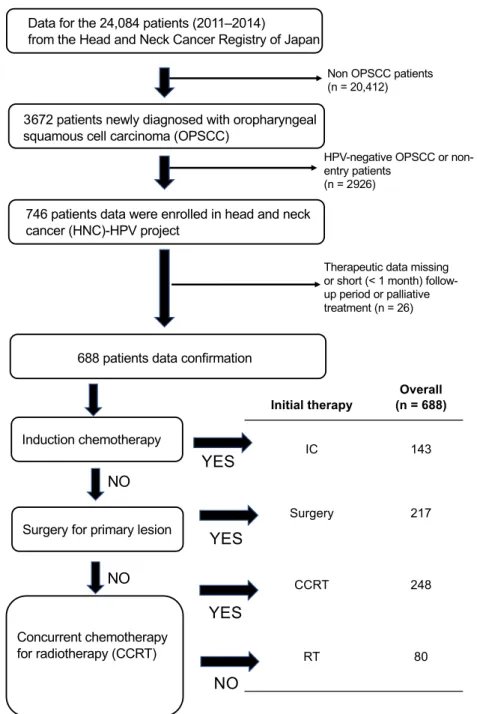
Figure 1. Patient enrollment, data cleaning, and classification of therapeutic modality. CCRT indicates concurrent chemoradiotherapy;
HNC, head and neck cancer; HPV, human papillomavirus; IC, induction chemotherapy; OPSCC, oropharyngeal squamous cell carcinoma.
1-2 drinks per day, >3 drinks per day, and details of drinking habits not provided). Information regarding radiotherapy, chemotherapy, and chemoradiotherapy in- cluded induction chemotherapy (none, cisplatin, taxane, cetuximab, 5-fluorouracil [5-FU], cisplatin plus 5-FU, taxane plus 5-FU, cisplatin plus taxane plus 5-FU, other, and unknown), number of courses, radiotherapy (RT), treatment aims (curative irradiation, preoperative irradia- tion, postoperative irradiation, and palliative irradiation), irradiation method (3-dimensional, intensity-modulated RT, or other), start date of RT, date of RT completion, RT duration (automatically input), total dose, concurrent chemotherapy (none, cisplatin, taxane, cetuximab, 5-FU, and other), accumulated cisplatin total dose, prophylactic percutaneous endoscopic gastrostomy (with vs without), and treatment response (complete response, partial re- sponse, no change, or progressive disease). Surgical treat- ment included the time and/or aims of surgery (surgery as the initial treatment or after RT, including salvage sur- gery for preservation after first-line treatment, palliative surgery, and other), surgical procedure for the primary lesion (none, transoral approach, or transcervical), neck dissection (without, unilateral only, or bilateral), patho- logical T classification (T0, T1, T2, T3, T4, Tx, and un- defined), surgical margin (negative vs positive), closed margin (<5 mm), and pathologic N classification (N0, N1, N2, Nx, and undefined). Information regarding clin- ical outcome included the entry date, oral intake (normal, tube supplementation, or intravenous supplementation), functional outcome swallowing scale (stage 0, 1, 2, 3, 4, or 5), tracheostomy (with vs without), total laryngectomy (with vs without), oncological outcome (alive and recur- rence free, alive with cancer, death from cancer, and death from other causes), details of death from other causes, site of disease recurrence (none, primary tumor site, neck, distal, primary tumor site plus neck, primary tumor site plus distal, neck plus distal, primary tumor site plus neck plus distal), date of confirmation, confirmation method (pathological testing, computed tomography, magnetic resonance imaging, positron emission tomography, or other), and treatment of disease recurrence (surgery, RT, chemotherapy [including immunotherapy], chemoradio- therapy, or palliative therapy).
Statistical Analysis
The major endpoint of the study was overall survival (OS), and the secondary endpoint was recurrence-free survival (RFS). An OS event was defined as death and an RFS event was defined as death or first recurrence of HPV-OPSCC.
Univariate OS was evaluated using the Kaplan-Meier
method and the log-rank test. Variables were analyzed using multivariable survival analysis using multiple Cox regression models. The hazard ratios (HRs) and 95% con- fidence intervals (95% CIs) were calculated to determine the effect of each variable on the outcome, with an HR
<1.0 and P < .05 considered to be indicative of statistical significance. The cisplatin dose was defined as the accumu- lated total amount of cisplatin. All analyses were performed by using R statistical software (version 3.4.0; R Foundation for Statistical Computing, Vienna, Austria [http://www.R- proje ct.org]) and SAS statistical software (version 9.4; SAS Institute Inc, Cary, North Carolina) by statistical experts (M.O. and T.Y) independent of the data center.
RESULTS
Among the 24,084 patients with HNSCC who were newly registered between 2011 and 2014, a total of 3672 patients were diagnosed as having OPSCC, in- cluding HPV-positive OPSCC and HPV-negative OPSCC. Of these, 688 patients who were newly di- agnosed as having immunohistochemically confirmed TABLE 1. Patient Demographics (N = 688)
Characteristic Overall
Follow-up, y
Mean (SD) 3.81 (2.03)
Median (range) 4.18 (0.0966-7.63)
Sex
Female 130 (18.9%)
Male 558 (81.1%)
Age, y
Mean (SD) 62.9 (10.7)
Median (range) 63.0 (31.0-91.0)
T category (8th edition TNM stage)
T1 127 (18.5%)
T2 331 (48.1%)
T3 120 (17.4%)
T4 110 (16.0%)
N category (8th edition TNM stage)
N0 124 (18.0%)
N1 346 (50.3%)
N2 193 (28.0%+E9)
N3 25 (3.6%)
8th edition TNM stage of disease
I 343 (49.9%)
II 210 (30.5%)
III 124 (18.0%)
IV 11 (1.6%)
Smoking history
None 193 (28.1%)
<10 pack-y 66 (9.6%)
10<pack-y<20 90 (13.1%)
>20 pack-y 339 (49.3%)
Alcohol use
None 170 (24.7%)
Occasional use 122 (17.7%)
<2 drinks/d 198 (28.8%)
>3 drinks/d 162 (23.5%)
Unknown 36 (5.2%)
p16-positive HPV-OPSCC from 2011 to 2014 had coherent clinical information and follow-up data avail- able after undergoing curative-intent therapy at 35 in- stitutions. Data entry regarding clinical outcome was initiated in January 2018 and ended in December 2018 (see Supporting Fig. 1). Of the 688 patients, we clas- sified the patients according to the initial treatment
modality for the primary lesion as: 1) the induction chemotherapy (IC) group; 2) the surgery group; 3) the CCRT group; and 4) the RT group. IC was defined as induction chemotherapy irrespective of the following treatment, such as surgery, RT, or chemoradiotherapy.
Surgery was defined as upfront surgery for the primary lesion irrespective of the following treatment, such as
Figure 2. Kaplan-Meier survival curves for 688 patients. (A) Overall survival (OS) and (B) recurrence-free survival (RFS) of each therapeutic modality. (C) OS and (D) RFS of eighth edition TNM staging (8th). (E) OS and (F) RFS of seventh edition TNM staging (7th). Significant prognostic differences were observed between each group using the log-rank test. (A) P = .017, (B) P = .032, (C) P < .001, (D) P < .001, (E) P < .001, and (F) P < .001. CCRT indicates concurrent chemoradiotherapy; IC, induction chemotherapy;
RT, radiotherapy.
RT or CCRT. RT and CCRT were defined as thera- peutic RT with or without concomitant chemotherapy, irrespective of the following treatment, such as salvage surgery (Fig. 1).
Characteristics of the Patients and Prognostic Factors
Table 1 shows the clinical and follow-up data of the 688 patients with HPV-OPSCC. In this data set, the median follow-up was >4 years, and the median age was 63 years (range, 31-91 years). Nonsmokers comprised approxi- mately 28.1% and nondrinkers comprised approximately 24.7% of the patients. Patients classified with stage I dis- ease according to the eighth edition of the TNM clas- sification (eighth edition stage I) comprised 49.9% of the patients. Supporting Table 1 shows the prognostic factors for RFS and OS. The prognostic factors were cTNM stages according to the eighth edition of the TNM clas- sification (eighth edition cTNM), location of the primary tumor, and age >75 years for OS and RFS.
Survival According to Initial Treatment and Clinical Seventh and Eighth Edition TNM Stages Supporting Table 2 shows the treatment modality for each seventh and eighth edition TNM stage of disease.
In the seventh edition TNM classification, approxi- mately 60% of the patients were classified as having stage IVA disease, and use of the eighth edition of the TNM classification demonstrated evenly distributed stages. Surgery (73.7%) and RT (52.5%) tended to be selected as the initial treatment modality in patients with eighth edition stage I disease, and IC (27.3%) tended to be used among patients with eighth edition stage III disease. Figure 2 shows the survival curves for RFS and OS. With regard to the initial treatment mo- dality, the groups treated with CCRT, IC, and surgery demonstrated similar RFS (Fig. 2A) and OS (Fig. 2B).
As was expected, the eighth edition of the TNM clas- sification accurately predicted RFS (Fig. 2C) and OS (Fig. 2D) in the current study. It is interesting to note that the seventh edition of the TNM classification also accurately predicted RFS (Fig. 2E) and OS (Fig. 2F).
Because the eighth edition TNM stages were classified retrospectively, there were some discordances between the 2 classifications.
RT Versus Surgery in Patients With T1- T2N0 Disease
We compared oncological outcomes according to treat- ment modality for patients with T1-T2N0 disease (79 patients). Among those patients with T1N0 (23
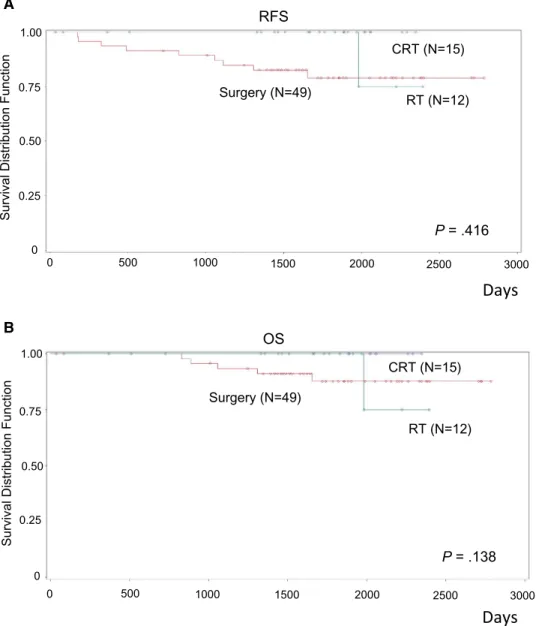
patients) and T2N0 (56 patients) disease, the 3-year OS and RFS rates were 100% in the groups treated with CCRT (15 patients) and RT (12 patients), but the 3-year OS rates in the surgery group were 94.4% for patients with stage I disease (19 patients) and 92.9%
for patients with stage II disease (30 patients). Table 2 shows the clinical and follow-up data among these 3 groups. Figure 3 shows the survival curves for RFS and OS. No significant prognostic difference was observed among the 3 groups.
Reduced Dose of Cisplatin With RT in Patients With Stages I and II Disease
We performed statistical analysis of the prognostic fac- tors according to the CCRT regimens such as cisplatin (161 patients), cetuximab (37 patients), other regimens (50 patients), and RT alone, as well as the eighth edition TNM classification and the age and sex of the patients treated with RT (80 patients) and CCRT (248 patients).
According to Cox regression multivariate analysis, the eighth edition TNM stages and the combination of cis- platin and RT were found to be significant prognostic factors for both RFS and OS (HR, 0.36 [95% CI, 0.21- 0.64] and HR, 0.37 [95% CI, 0.19-0.71], respectively) (Table 3).
We next compared the oncological outcomes be- tween the patients with eighth edition stage I to stage II disease who underwent treatment with cisplatin and TABLE 2. Demographics of Patients With T1-T2N0 Disease (N = 79)
Characteristics Surgery
N = 49 RT N = 12 CCRT N = 15 Age, y
≤75 41 (83.7) 6 (50.0) 13 (86.7)
>75 8 (16.3) 6 (50.0) 2 (13.3 )
Sex
Female 9 (18.4) 2 (16.7) 4 (26.7)
Male 40 (81.6) 10 (83.3) 11 (73.3)
Subsite
Lateral 33 (67.3) 11 (91.7) 11 (73.3)
Anterior 6 (12.2) 1 (8.3) 3 (20.0)
Superior 7 (14.3) 1 (6.7)
Posterior 3 (6.1)
Smoking history
None 13 (26.5) 8 (66.7) 4 (26.7)
≤10 pack-y 9 (18.4) 2 (13.3)
10<pack-y≤20 3 (6.1) 3 (20.0)
>20 pack-y 24 (49.0) 4 (33.3) 6 (40.0)
Alcohol use
None 12 (24.5) 7 (58.3) 3 (20.0)
Occasional use 5 (10.2) 2 (13.3)
≤2 drinks/d 17 (34.7) 1 (8.3) 6 (40.0)
>2 drinks/d 14 (28.6) 3 (25.0) 4 (26.7)
Unknown 1 (2.0) 1 (8.3)
Abbreviations: CCRT, concurrent chemoradiotherapy; RT, radiotherapy.
RT based on the cumulative cisplatin dose. We used the following subcategories: 1) subcategory 1: cisplatin at a dose of >0 mg/m2 but <160 mg/m2; 2) subcategory 2:
cisplatin at a dose of ≥160 mg/m2 but <240 mg/m2; and 3) subcategory 3: cisplatin at a dose of ≥240 mg/m2. Furthermore, Cox regression analysis demonstrated that categories 2 and 3 were significant favorable prog- nostic factors for RFS and OS (category 2 RFS: HR, 0.14 [95% CI, 0.04-0.44] and category 2 OS: HR, 0.14 [95% CI, 0.04-0.52]; and category 3 RFS:
HR, 0.16 [95% CI, 0.06-0.46] and category 3 OS: HR, 0.15 [95% CI, 0.04-0.55]) (Table 4). We also compared
the relatively high-dose cisplatin group (≥160 mg/m2; 114 patients) and low-dose cisplatin group (<160 mg/m2; 17 patients). The 5-year RFS and OS rates in the rela- tively high-dose cisplatin group were 91.4% and 92%, respectively, whereas those in the low-dose cisplatin group were 74.3% and 69.5%, respectively. The 5-year RFS and OS between these 2 groups were significantly different (HR, 0.21 [95% CI, 0.07-0.62] and HR, 0.18 [95% CI, 0.06-0.51], respectively) (Fig. 3). In ad- dition, no statistical difference was observed between the accumulated cisplatin dose and stage of disease (see Supporting Table 3).
Figure 3. Kaplan-Meier survival curves of 76 patients with T1-T2N0 disease. There were no significant differences noted between the patients treated with surgery, radiotherapy (RT), and concurrent chemoradiotherapy (CCRT). No cases of disease recurrence were noted among the patients treated with RT alone. RFS indicates recurrence-free survival.
P = .416 RT (N=12) Surgery (N=49)
OS A
B
RFS
CRT (N=15)
P = .138 Surgery (N=49)
RT (N=12) CRT (N=15)
500 1000 1500 2000 2500 3000
500 1000 1500 2000 2500 3000
ĂLJƐ
ĂLJƐ
0 0.25
0 0.75
Survival Distribution Function
0.50
0.25
0 0.75
Survival Distribution Function
1.00
1.00
0.50
0
DISCUSSION
In the current nationwide, multicenter study, we suc- cessfully collected high-quality data reflecting real- world evidence of HPV-related HNSCC in Japan. This new insight has provided several conclusions. First, T1- T2N0 HPV-OPSCC appeared to be well managed with the use of RT and CCRT, and a few cases of disease recurrence were observed among patients in the surgery group. Due to the seemingly equivalent outcomes noted with RT and CCRT, we would advocate for the use of RT alone in patients with T1-T2N0 disease. Second, in patients with eighth edition stage I to stage II dis- ease, the optimized cisplatin dose was ≥160 mg/m2 for the combination of cisplatin and RT. Because HPV- OPSCC is known for its outstanding response to RT and chemotherapy, it is quite understandable that the dose of cisplatin required for the treatment of patients with eighth edition stage I to stage II HPV-OPSCC was
lower than the previously reported dose (200 mg/m2) in patients with traditional HNSCC.4 Although these results did not derive from the prospective clinical tri- als, and we were unable to obtain data regarding tox- icity and morbidity, we believe that these simple and convincing results based on real-world data could be a milestone for future clinical practice and would provide preliminary evidence for future clinical trials.
The incidence of oral and pharyngeal cancers has been increasing in Japan. In 2015, the number of oral and pharyngeal cancer cases was estimated at approx- imately 18,000 patients.5 Among these individuals, OPSCC is reported to develop in approximately 4600 individuals per year. In a previous Japanese multicenter study conducted from 2008 to 2010, HPV-OPSCC ac- counted for approximately 50.3% of cases,6 suggesting that the annual number of HPV-OPSCC cases in Japan is approximately 2300. Therefore, we collected approx- imately 9% (784 of 9200 cases) of the nationwide re- al-world data.
A previous, multicenter, retrospective International Collaboration on Oropharyngeal cancer Network for Staging (ICON-S) study7 for HPV-OPSCC had a significant impact on the eighth edition TNM stag- ing amendment. The ICON-S study included 1907 patients from 6 institutions who were diagnosed with HPV-OPSCC and mainly were treated with RT (98%);
the results demonstrated that the seventh edition TNM staging was not appropriate, especially for patients with clinical stage I to stage IVA disease. Even in the ICON-S study cohort, the number of patients with T1N0 disease was 19, and the number of patients with T2N0 disease (71 patients) was nearly the same as that in the current study cohort (23 patients with T1N0 disease and 56 patients with T2N0 disease). Recently, Yoshida et al8 reported that the OS of patients with eighth edition stage I, N0 HPV-related HNSCC who underwent RT did not improve with concurrent chemotherapy based on the analysis of the propensity score matching pa- tients from the National Cancer Data Base (4473 pa- tients overall and 461 patients with N0 disease). Further study would be needed to validate whether patients with T1-T2N0 HPV-OPSCC could be regarded as favorable cohort similar to patients with HPV-negative HNSCC.
In the National Comprehensive Cancer Network guide- line, the recommended treatment modality for patients with T1-T2N0 HPV-OPSCC is surgical resection of the primary lesion with or without neck dissection or definitive RT.9 As of March 2019, use of the da Vinci Surgical System for transoral surgery in patients with TABLE 3. HR of Each Covariate in the RT or CCRT
Treatment Groups (N = 328)
RFS No. HR (95% CI) P
8th edition TNM stage of disease
I 145 (44.2%) Reference
II 116 (35.4%) 1.75 (1.07-2.86) 0.025
III 66 (20.1%) 2.46 (1.44-4.18) <.001
IV 1 (0.3%) 24.06 (2.97-194.87) 0.003
Age, y
<75 265 (80.8%) Reference
>75 63 (19.2%) 1.26 (0.75-2.10) 0.381
Sex
Female 59 (18.0%) Reference
Male 269 (82.0%) 1.17 (0.65-2.11) 0.606
Concomitant chemotherapy
None 80 (24.4%) Reference
Cisplatin 161 (49.0%) 0.36 (0.21-0.64) <.001
Cetuximab 37 (11.3%) 1.36 (0.75-2.45) 0.31
Other regimen 50 (15.2%) 0.61 (0.32-1.19) 0.148 OS
8th edition TNM staging
I 145 (44.2%) Reference
II 116 (35.4%) 1.82 (1.01-3.28) 0.048
III 66 (20.1%) 3.24 (1.75-5.99) <.001
IV 1 (0.3%) 13.09 (1.58-108.24) 0.017
Age, y
<75 265 (80.8%) Reference
>75 63 (19.2%) 1.17 (0.63-2.16) 0.615
Sex
Female 59 (18.0%) Reference
Male 269 (82.0%) 1.06 (0.53-2.11) 0.88
Concomitant chemotherapy
None 80 (24.4%) Reference
Cisplatin 161 (49.0%) 0.37 (0.19-0.71) 0.003
Cetuximab 37 (11.3%) 1.20 (0.59-2.42) 0.613
Other regimen 50 (15.2%) 0.51 (0.23-1.14) 0.102 Abbreviations: 95% CI, 95% confidence interval; CCRT, concurrent chemo- radiotherapy; HR, hazard ratio; OS, overall survival; RFS, recurrence-free sur- vival; RT, radiotherapy.
OPSCC has not been approved by Japanese public medical insurance, although the US Food and Drug Administration did approve its use for patients with T1-T2 OPSCC.
The combination of cisplatin and RT has been a standard of care for patients with advanced HNSCC over the past 20 years.10 Recently, even noninferiority trials of cetuximab and RT failed to demonstrate a positive result.11
Figure 4. Kaplan-Meier survival curves of 131 patients treated with concomitant chemoradiotherapy with cisplatin (CDDP) monotherapy. Patients treated with relatively high-dose cisplatin (≥160 mg/m2) were found to have a significantly more favorable prognosis compared with patients treated with low-dose cisplatin (<160 mg/m2) with regard to (A) overall survival (OS) (hazard ratio [HR], 0.18; 95% confidence interval [95% CI], 0.06-0.51 [P = .0013]) and (B) recurrence-free survival (RFS) (HR, 0.21; 95% CI, 0.07-0.62 [P = .0047).
HR: 0.21 (0.07ʹ0.62), P = .0047 CDDP≥160 mg/m2(N=114)
CDDP<160 mg/m2(N=17)
OS
CDDP≥160 mg/m2(N = 114)
CDDP<160 mg/m2(N = 17)
HR: 0.18 (0.06ʹ0.51), P = .0013 A
B
RFS
500 1000 1500 2000 2500
ĂLJƐ
3000ĂLJƐ
500 1000 1500 2000 2500 3000
0
Survival Distribution Function
0.00 0.25 0.50 0.75 1.00
0
Survival Distribution Function
0.00 0.25 0.50 0.75 1.00
In the current study, CCRT tended to demonstrate supe- riority to surgery using multivariate regression analysis for RFS (P = .08). In addition, we suggested a reduction in the total dose of cisplatin in cisplatin-based CCRT. Treatment deintensification for patients with HPV-OPSCC has been an important topic in the treatment of head and neck can- cer, and numerous clinical trials currently are ongoing.12-14 Chera et al reported that a deintensified chemoradiother- apy regimen of 60 grays of intensity-modulated RT with concurrent low-dose cisplatin provides a favorable outcome in patients with AJCC eighth edition T0-T3, N0-N2 dis- ease.15 Recently, Ferris et al demonstrated that the transoral resection of p16-positive OPSCC is safe and results in a good oncologic outcome; the authors presented a promising deintensification approach at the 2020 American Society of Clinical Oncology annual meeting.16 However, none of these trials reduced the dose of cisplatin in the low-in- tensity arm compared with the standard-therapy arm. We must note that our suggestion to reduce the dose of cisplatin
was supported by the accumulating total dose in the ret- rospective observational study but not a total dose in the intention-to-treat analysis. Thus, well-designed prospective clinical trials are needed to validate our proposal.
There are several limitations to the current study that should be considered. First, the number of patients still was relatively small for analyzing the impact of adju- vant therapies such as postoperative RT and postoperative chemoradiotherapy. Second, although all data were sub- mitted by board-certified head and neck surgeons, this was a retrospective observational study that could determine correlations but could not determine the best treatment modality. Third, information regarding extranodal exten- sion and functional outcomes such as long-term complica- tions after treatment with the combination of cisplatin and RT were limited. To address these issues, we currently are conducting a nationwide, prospective, observational study based on the national Head and Neck Cancer Registry of Japan. Currently, approximately 2000 patients with HPV- OPSCC have been newly enrolled each year. This study will provide us with more reliable real-world evidence.
The results of the current study, based on a na- tionwide observational study, enabled us to report the optimized treatment modality for HPV-OPSCC.
Furthermore, we believe that this study provides basic ev- idence for future clinical trials.
FUNDING SUPPORT
Supported by grants from the Japan Agency for Medical Research and Development (grants 16ck0106225h0001 to Katsunari Yane and 18ck0106223h0003 to Ken-ichi Nibu).
CONFLICT OF INTEREST DISCLOSURES
Masafumi Okada received grants from the Japan Agency for Medical Research and Development for work performed as part of the current study.
The other authors made no disclosures.
AUTHOR CONTRIBUTIONS
Yuki Saito: Conception and design; development of the methodology;
acquisition and analysis of the data; and writing, review, and revision of the article. Ryuichi Hayashi: Administrative, technical, or material support and review of the article. Yoshiyuki Iida: Acquisition of the data and review of the article. Takatsugu Mizumachi: Acquisition of the data and review of the article. Takashi Fujii: Acquisition of the data and review of the article. Fumihiko Matsumoto: Acquisition of the data and review of the article. Takeshi Beppu: Acquisition of the data and review of the article. Masafumi Yoshida: Acquisition of the data and review of the article. Hirotaka Shinomiya: Acquisition of the data and review of the article. Ryosuke Kamiyama: Acquisition of the data and review of the article. Mutsukazu Kitano: Acquisition of the data and review of the article. Kazuhiko Yokoshima: Acquisition of the data and review of the article. Yasushi Fujimoto: Acquisition of the data and re- view of the article. Takanori Hama: Acquisition of the data and review of the article. Taku Yamashita: Acquisition of the data and review of the article. Kenji Okami: Acquisition of the data and review of the article. Kouki Miura: Acquisition of the data and review of the article.
TABLE 4. HR of Each Covariate in the Patients Treated With Cisplatin and RT Among the Patients With Stage I to II Disease (N = 131)
RFS N HR (95% CI) P
8th edition TNM staging
I 76 (58.0) Reference
II 55 (42.0) 2.03 (0.77-5.33) 0.153
Age, y
<75 125 (95.4) Reference
>75 6 (4.6) 7.84 (2.06-29.87) 0.003
Sex
Female 29 (22.1) Reference
Male 102 (77.9) 0.91 (0.28-2.95) 0.874
Concomitant chemotherapy 0 mg/m2< Cisplatin
<160 mg/m2
17 (13.0) Reference 160 mg/m2≤ Cisplatin
<240 mg/m2
50 (38.2) 0.14 (0.04-0.44) <.001 240 mg/m2≤ Cisplatin 64 (48.9) 0.16 (0.06-0.46) <.001 OS
8th edition TNM staging
I 76 (58.0) Reference
II 55 (42.0) 2.23 (0.72-6.97) 0.167
Age, y
<75 125 (95.4) Reference
>75 6 (4.6) 13.49 (3.21-56.67) <.001
Sex
Female 29 (22.1) Reference
Male 102 (77.9) 0.55 (0.15-1.95) 0.354
Concomitant chemotherapy 0 mg/m2< Cisplatin
<160 mg/m2
17 (13.0) Reference 160 mg/m2≤
Cisplatin<240 mg/m2
50 (38.2) 0.14 (0.04-0.52) 0.004 240 mg/m2≤ Cisplatin 64 (48.9) 0.15 (0.04-0.55) 0.004 Abbreviations: 95% CI, 95% confidence interval; HR, hazard ratio; OS, overall survival; RFS, recurrence-free survival; RT, radiotherapy.
Takuo Fujisawa: Acquisition of the data and review of the article.
Daisuke Sano: Acquisition of the data and review of the article. Hisayuki Kato: Acquisition of the data and review of the article. Shujiro Minami:
Acquisition of the data and review of the article. Masashi Sugasawa:
Acquisition of the data and review of the article. Muneyuki Masuda:
Acquisition of the data and review of the article. Ichiro Ota: Acquisition of the data and review of the article. Shigemichi Iwae: Acquisition of the data and review of the article. Ryo Kawata: Acquisition of the data and review of the article. Nobuya Monden: Acquisition of the data and review of the article. Takayuki Imai: Acquisition of the data and review of the article. Takahiro Asakage: Acquisition of the data and review of the article. Masafumi Okada: Analysis and interpretation of the data and review of the article. Takanori Yoshikawa: Analysis and interpretation of the data and review of the article. Kensuke Tanioka: Analysis and interpretation of the data and review of the article. Megumi Kitayama:
Analysis and interpretation of the data and review of the article. Mariko Doi: Analysis and interpretation of the data and review of the article.
Satoshi Fujii: Acquisition of the data and review of the article. Masato Fujii: Development of the methodology, analysis of the data, and review and revision of the article. Nobuhiko Oridate: Development of the methodology, analysis of the data, and review and revision of the article. Munenaga Nakamizo: Development of the methodology, analy- sis of the data, and review and revision of the article. Seiichi Yoshimoto:
Development of the methodology, analysis of the data, and review and revision of the article. Akihiro Homma: Development of the methodology, analysis of the data, and review and revision of the article.
Ken-ichi Nibu: Conception and design; development of the methodol- ogy; analysis of the data; writing, review, and revision of the article; fund- ing acquisition; and study supervision. Katsunari Yane: Conception and design; development of the methodology; analysis of the data; writing, review, and revision of the article; and funding acquisition.
REFERENCES
1. D’Souza G, Kreimer AR, Viscidi R, et al. Case-control study of human papillomavirus and oropharyngeal cancer. N Engl J Med.
2007;356:1944-1956.
2. Shi W, Kato H, Perez-Ordonez B, et al. Comparative prognos- tic value of HPV16 E6 mRNA compared with in situ hybridiza- tion for human oropharyngeal squamous carcinoma. J Clin Oncol.
2009;27:6213-6221.
3. Lydiatt WM, Patel SG, O’Sullivan B, et al. Head and neck can- cers-major changes in the American Joint Committee on Cancer Eighth Edition Cancer Staging Manual. CA Cancer J Clin.
2017;67:122-137.
4. Strojan P, Vermorken JB, Beitler JJ, et al. Cumulative cisplatin dose in concurrent chemoradiotherapy for head and neck cancer: a systematic review. Head Neck. 2016;38(suppl 1):E2151-E2158.
5. University Hospital Medical Information Network. Report of Head and Neck Cancer Registry of Japan. Clinical Statistics of Registered Patients 2016. Accessed March 28, 2020. https://cente r3.umin.ac.jp/
umin-blog/edit/jshnc/ wp-conte nt/uploa ds/2019/07/22c08 8b6b1 6786e 6f1ff e799d 662e8 85.pdf
6. Hama T, Tokumaru Y, Fujii M, et al. Prevalence of human papilloma- virus in oropharyngeal cancer: a multicenter study in Japan. Oncology.
2014;87:173-182.
7. O’Sullivan B, Huang SH, Su J, et al. Development and valida- tion of a staging system for HPV-related oropharyngeal cancer by the International Collaboration on Oropharyngeal cancer Network for Staging (ICON-S): a multicentre cohort study. Lancet Oncol.
2016;17:440-451.
8. Yoshida EJ, Luu M, Mallen-St Clair J, et al. Stage I HPV-positive oropharyngeal cancer: should all patients receive similar treatments?
Cancer. 2020;126:58-66. doi:10.1002/cncr.32501
9. National Comprehensive Cancer Network. Head and neck cancers.
Version 1.2020. Accessed March 28, 2020. https://www.nccn.org/
profe ssion als/physi cian_gls/pdf/head-and-neck.pdf
10. Al-Sarraf M, Pajak TF, Marcial VA, et al. Concurrent radiotherapy and chemotherapy with cisplatin in inoperable squamous cell carcinoma of the head and neck. An RTOG study. Cancer. 1987;59:259-265.
11. Gillison ML, Trotti AM, Harris J, et al. Radiotherapy plus cetuximab or cisplatin in human papillomavirus–positive oropharyngeal cancer (NRG Oncology RTOG 1016): a randomised, multicentre, non- inferiority trial. Lancet. 2019;393:40-50.
12. Swisher-McClure S, Lukens JN, Aggarwal C, et al. A phase II trial of Alternative Volumes of Oropharyngeal Irradiation for De-intensification (AVOID): omission of the resected primary tumor bed following transoral robotic surgery for human papilloma virus re- lated squamous cell carcinoma of the oropharynx. Int J Radiat Oncol Biol Phys. 2020;106:725-732.
13. Misiukiewicz K, Gupta V, Miles BA, et al. Standard of care vs re- duced-dose chemoradiation after induction chemotherapy in HPV+
oropharyngeal carcinoma patients: the Quarterback trial. Oral Oncol.
2019;95:170-177.
14. Patel RR, Ludmir EB, Augustyn A, et al. De-intensification of therapy in human papillomavirus associated oropharyngeal cancer: a systematic review of prospective trials. Oral Oncol. 2020;103:104608.
15. Chera BS, Amdur RJ, Green R, et al. Phase II trial of de-intensified chemoradiotherapy for human papillomavirus-associated oropharyn- geal squamous cell carcinoma. J Clin Oncol. 2019;37:2661-2669.
16. Ferris R, Flamand Y, Weinstein G, et al. Transoral robotic surgical re- section followed by randomization to low- or standard-dose IMRT in resectable p16+ locally advanced oropharynx cancer: a trial of the ECOG-ACRIN Cancer Research Group (E3311) [abstract]. ASCO2020 Virtual Scientific Program; May 29-31, 2020. Abstract #6500. Accessed May 28, 2020. https://meeti nglib rary.asco.org/recor d/18734 0/abstract