<特集補遺「所有・存在表現」>
ラオ語における所有・存在表現
Possession and Existence in Laoルアンスワンナウォン アーモーンラット Luangsouvannavong Amonelath
東京外国語大学大学院総合国際学研究科
Graduate School of Global Studies, Tokyo University of Foreign Studies
要旨:本稿は特集「所有・存在表現」(『語学研究所論集』第18号、2013、東京外国語大学)に寄与する。
本稿の目的は38個の例文項目に対するラオ語データを与えることである。
Abstract: This report contributes to the special cross-linguistic study on ‘Possession and Existence’ (Journal of the Institute of Language Research 18, 2013, Tokyo University of Foreign Studies).
キーワード:ラオ語、 所有、存在
Keywords: Lao language, Possession, Existence
1. はじめに
本稿では、ラオ語の所有・存在表現についてのデータを記述する。筆者自身がラオ語を母語とするイ ンフォーマントである。氏名はLUANGSUVANNAVONG Amonelath(ルアンスワンナウォン アーモー ンラット)、1993 年生まれの女性、ラオス・ビエンチャン出身、ビエンチャン都育ちである。日本語学 習歴は7年間で、2014年から2015年まで日本で一年交換留学生として日本に滞在した。その後帰国し て、2017年に国費留学生大学院生として再び日本に戻り、現在は東京外国語大学大学院総合国際学研究 科博士前期課程2年である。
本稿におけるラオ語の音韻表記は鈴木(2003)に依拠する。また、日本語の例文に対して、異なる構 文を持つ複数のラオ語の文が考えられる場合は、1), 1’), 1’’)…として記載している。さらに、ラオ語にお いて、同じ構文内の同じ位置で日本語に対応するラオ語語彙が複数ある場合は、(…/…)とし、どちらの 語彙も使用できることを示すほか、(…)で示したものは省略が可能であることを示している。また、本 稿のグロスで使用している略語については、本稿末に一覧を記載する。以下にラオ語の言語データを示 す。
2.言語データ
1a あの人は青い目をしている。
1a) phùu nân míi tǎa sǐifâa person DEM.that have eye blue
本稿の著作権は著者が保持し,クリエイティブ・コモンズ 表示 4.0 国際ライセンス(CC-BY)下に提供します.
https://creativecommons.org/licenses/by/4.0/deed.ja
1b 青い目の人・目が青い人
1b) phùu (thii/ míi) tǎa sǐifâa person (REL/have) eye blue
2a あの女は髪が長い
2a) phùuɲíŋ phùu nân phǒm ɲáaw woman CLF DEM.that hair long
2b あの女の髪が長い
2b) phǒm khɔ̌ɔŋ phùuɲíŋ phùu nân ɲáaw
hair PREP.of woman CLF DEM.that long
2c 長い髪の女
2c) phùuɲíŋ (thii/míi) phǒm ɲáaw woman (REL/have) hair long
2b)2c)の「khɔ̌ɔŋ」は髪の毛の長い性格はあの女のものだということを示す。
3a あの人には髭がある
3a) phùu nân míi nùat
person DEM.that have mustache
3b 髭の男
3b) phùusáay (thii) míi nùat man (REL) have mustache
4a あの人には(見る)目がある 4a) phùu nân tǎathə̌ŋ
person DEM.that have sharp eyes
4b 見る目のある人
4b) phùu (thii) tǎathə̌ŋ
person (REL) have sharp eyes
以上の例では、「tǎathə̌ŋ」の「tǎa」は「目」、「thə̌ŋ」は「着く」という意味である。tǎathə̌ŋで「鋭い目」、 即ち「見る目がある」という意味になる。
5a あの人は22歳だ
5a) phùu nân ɁǎaɲuɁ sáawsɔ̌ɔŋ pǐi
person DEM.that age twenty-two year
5b 22歳の人
5b) phùu (thii/míi) ɁǎaɲuɁ sáawsɔ̌ɔŋ pǐi person (REL/have) age twenty-two year
6a あの人は優しい性格だ 6a) phùu nân cǎydǐi
person DEM.that kind
6b 優しい性格の人
6b) phùu thii cǎydǐi
person REL kind
7a あの人は背が高い
7a) phùu nân sǔuŋ
person DEM.that high
7b 背の高い人
7b) phùu thii sǔuŋ
person REL high
8 あの人は背が190センチもある。
8) phùu nân sǔuŋ thə̌ŋ hɔ̌ɔykâwsíp sáŋtimɛɛt person DEM.that high up to one hundred-ninety centimeter 人間の背の長さについて指示する際に「thə̌ŋ」を使う。
9a その石は四角い形をしている
9a) kɔ̂ɔnhǐin kɔ̂ɔn nân pěn hûup siiliam rock CLF DEM.that COP shape RDP.square
9b 四角い(形の)石
9b) kɔ̂ɔnhǐin hûup siiliam rock shape RDP.square
10a あの人には才能がある
10a) phùu nân míi phɔɔnsawǎn person DEM.that have talent
10b 才能のある人
10b) phùu thii míi phɔɔnsawǎn
person REL have talent
11a あの人は病気だ
11a) phùu nân bɔɔ sabǎay
person DEM.that NEG fine
11b あの人は熱がある
11b) phùu nân pěn khày
person DEM.that COP fever
11c 病気の人
11c) phùu thii bɔɔ sabǎay
person REL NEG fine
11a) と11c) の「病気」には「bɔɔ sabǎay」という表現を使う。「bɔɔ」は否定時「sabǎay」は「元気だ」
という意味である。
12a あの人は青い服を着ている
12a) phùu nân nuŋ sɯà sǐifâa
person DEM.that wear cloth blue
12b 青い服の男
12b) phùusáay sɯ̀a sǐifâa man cloth blue
13a あの人はメガネをかけている 13a) phùu nân say wɛɛntǎa
person DEM.that wear glasses
13b メガネの男
13b) phùusáay thii say wɛɛntǎa
man REL wear glasses
以上の例では、13a) と13b) の両方共「say」(身につける)という動詞を使わなければならない。
14a あの人には妻がいる
14a) phùu nân míi mía lɛ̂ɛw
person DEM.that have wife PRF
14b 既婚の人
14b) phùu thii tɛɛŋŋáan lɛ̂ɛw person REL marry PRF
14c 妻のいる人
14c) phùu thii míi mía
person REL have wife
15a あの人には3人子供がいる
15a) phùu nân míi lûuk sǎam khón person DEM.that have child three CLF
15b 3人の子持ちの人・あの人の3人の子供
15b) phùu thii míi lûuk sǎam khón
person REL have child three CLF
15c 妊娠している女性
15c) phùuɲíŋ thii kǎmláŋ thɯ̌ɯpháa woman REL PROG pregnant
16 タコには足が8本ある。
16) pǎamɯ́k míi nuàt pɛ̀ɛt sèn octopus have mustache eight CLF
17a その飲み物にはアルコールが入っている。
17a) khɯaŋdɯɯm nân míi làw pǒn yuu
beverage DEM.that have alcohol mix exist
17b アルコール入りの飲み物
17b) khɯaŋdɯɯm thii míi làw pǒn
beverage REL have alcohol mix
17a) は「yuu」を使うが、17b) は使わない。
18a あの人はお金を持っている。
18a) phùu nân míi ŋə́n person DEM.that have money
18b お金持ちの人
18b) phùu thii míi ŋə́n
person REL have money
19a おまえのところには犬がいるか?
19a) mɯ́ŋ míi mǎa bɔ̌ɔ?
2.you have dog Q
19b 犬のいる人
19b) phùu thii míi mǎa
person REL have dog
20a おまえは(自分の)ペンを持っているか?
20a) mɯ́ŋ míi bík (khɔ̌ɔŋ tǒnɁěeŋ) bɔ̌ɔ?
2.you have pen PREP.of myself Q
20b ペンを持っている人
20b) phùu thii míi bík
person REL have pen
21 あの人は(誰か別の人の)ペンを持っている。
21) phùu nân míi bík (khɔ̌ɔŋ phùu ʔɯɯn)
person DEM.that have pen PREP.of CLF other 21) は、あまり使わない。
22a あの人は運がいい。
22a) phùu nân sôok dǐi person DEM.that luck good
22b 幸運な人
22b) phùu thii sôok dǐi
person REL luck good
23a ここは石が多い。
23a) yuu nîi míi kɔ̂ɔnhǐin lǎay LOC.at DEM.that have rock many
23b 石の多い土地
23b) dǐn thii míi kɔ̂ɔnhǐin lǎay
land REL have rock many
24a その部屋には椅子が3つある。
24a) hɔ̀ɔŋ nân míi taŋ sǎam nuay
room DEM.that have chair three CLF
24b 3つ椅子のある部屋
24b) hɔ̀ɔŋ thii míi taŋ sǎam nuay
roon REL have chair three CLF
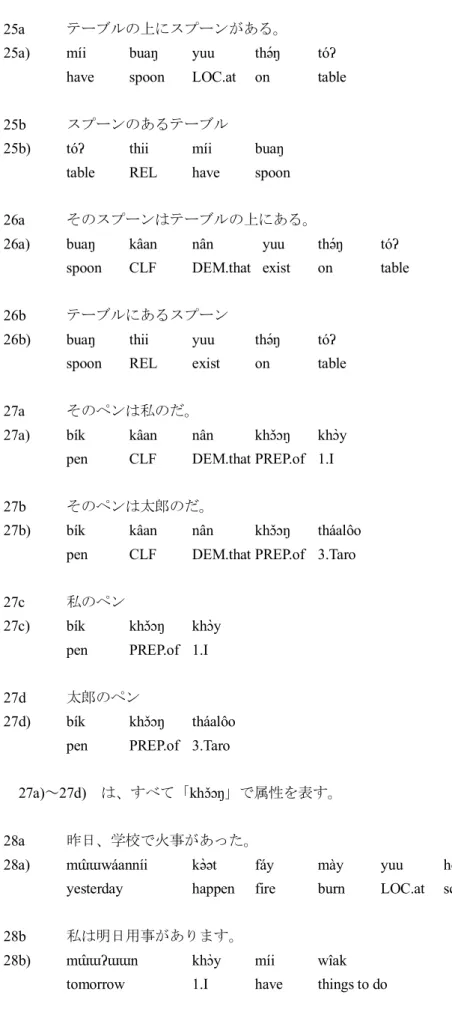
25a テーブルの上にスプーンがある。
25a) míi buaŋ yuu thə́ŋ tóʔ
have spoon LOC.at on table
25b スプーンのあるテーブル
25b) tóʔ thii míi buaŋ
table REL have spoon
26a そのスプーンはテーブルの上にある。
26a) buaŋ kâan nân yuu thə́ŋ tóʔ spoon CLF DEM.that exist on table
26b テーブルにあるスプーン
26b) buaŋ thii yuu thə́ŋ tóʔ
spoon REL exist on table
27a そのペンは私のだ。
27a) bík kâan nân khɔ̌ɔŋ khɔ̀y pen CLF DEM.that PREP.of 1.I
27b そのペンは太郎のだ。
27b) bík kâan nân khɔ̌ɔŋ tháalôo pen CLF DEM.that PREP.of 3.Taro
27c 私のペン
27c) bík khɔ̌ɔŋ khɔ̀y pen PREP.of 1.I
27d 太郎のペン
27d) bík khɔ̌ɔŋ tháalôo pen PREP.of 3.Taro
27a)~27d) は、すべて「khɔ̌ɔŋ」で属性を表す。
28a 昨日、学校で火事があった。
28a) mɯ̂ɯwáanníi kə̀ət fáy mày yuu hóoŋhían yesterday happen fire burn LOC.at school
28b 私は明日用事があります。
28b) mɯ̂ɯʔɯɯn khɔ̀y míi wîak
tomorrow 1.I have things to do
28a)は「kə̀ət」(起こる)を使うが、28b)は「míi」(ある・持つ)を使う。
29 (この世には)お化けなんていない。
29) (náy lòok nîi) bɔɔ míi phǐi dɔ̀ɔk (LOC.in world DEM.this) NEG have ghost PTCL
30 (そこには)英語を話す人もいるが、話さない人もいる。
30) (yuu hàn) míi khón wâw pháasǎa ʔǎŋkít dây tɛɛ kɔɔ
ɲáŋ míi khón wâw pháasǎa ʔǎŋkít bɔɔ dây
(LOC.in DEM.that)have person speak language English PSBL but LNK still have person speak language English NEG PSBL
31 私より英語ができる人は(ほかに/もっと)います。
31) ɲáŋ míi khón thii wâw pháasǎa ʔǎŋkít keŋ kuwaa khɔ̀y
still have person REL speak language English good then 1.I
32 ちょっとあなたにお願いがあります。
32) khɔ̀y míi lɯ̂aŋ yàak hày câw suay nɔ̀ynɯŋ
1.I have things want CAUS 2.you help little 以上の例では、すべて「míi」を使われている。
33a 冬の雨
33a) fǒn ladǔunǎaw rain winter
33b 東京の家
33b) hɯ́an thii yuu tǒokǐaw house REL LOC.at Tokyo
34a 彼の泳ぎ
34a) withíi lɔ́ɔy nâm khɔ̌ɔŋ láaw way swim water PREP.of 3.he
34b 犬の鳴き声
34b) sǐaŋ haw khɔ̌ɔŋ mǎa
sound bark PREP.of dog
34c 火山の爆発
34c) kāan páʔthú khɔ̌ɔŋ phúukhǎwfáy NMLZ erupt PREP.of volcano
34d 車の運転
34d) kāan kháp lot NMLZ drive car
34e チャンの小説
34e) náwáníɲáay khɔ̌ɔŋ cǎn novel PREP.of 3.Chan
34a)、34b)、34c)と34e)は「khɔ̌ɔŋ」を使うが、34d)は使わない。
35a チャンさんのお母さん
35a) mɛɛ khɔ̌ɔŋ thaan cǎn mather PREP.of HON 3.Chan
35b 机の横に 35b) khàaŋ tóʔ
behind table
35c 机の前に
35c) nàa tóʔ
infront of table
35d 机(のところ)に来て!
35d) máa bɔɔn tóʔ
come LOC.at table
35e あの人の次
35e) tɔɔcàak phùu nân next to person DEM.that
35b)~ 35e)では、35a)のみ「khɔ̌ɔŋ」を使う。
36a バラの花びら
36a) kìip dɔ̀ɔk kǔlǎap petal flower rose
36b 果物のナイフ
36b) mîit pɔ̀ɔk màakmây knife peel fruit
36c 紙の飛行機 36c) ɲón cîa
plane paper
36d チューリップの絵
36d) hùup tɛ̂ɛm dɔ̀ɔk thíwlip picture draw flower tulip
36e 花の匂い
36e) kin dɔ̀ɔkmây smell flower
36f 英文の手紙
36f) cótmǎay thii khǐan pěn pháasǎa ʔǎŋkít letter REL write PREP.as language English
36g 日本語の先生
36g) ʔǎacǎan sɔ̌ɔn pháasǎa ɲiipun Teacher teach language Japan
36h 井戸の水
36h) nâm bǎadǎan water subterranean 36h’) nâm sàaŋ
water build
36i 雨の日
36i) mɯ̂ɯ thii fǒn tók
day REL rain fall
37a 妹の花子
37a) nɔ̂ɔŋsǎaw sɯɯ háanáakǒʔ young.sister name 3.Hanako
37b 社長の田中さん
37b) hǔanàa bɔ̌ɔlisát sɯɯ táanáakaʔ president company name 3.Tanaka
36a)~37b) は、すべて「khɔ̌ɔŋ」を使わない。
38 となりの家の友達のお父さんの車のタイヤ(が昨日突然パンクしたんだって。)
38) (dâyɲín waa mɯ̂ɯwáanníi) tǐinlot khɔ̌ɔŋ phɔɔ muu thii yuu khàaŋ hɯ́an (hua yaaŋ kaɁthánhǎn)
(hear COMP yesterday) tire PREP.of father friend REL LOC.at next house (puncture CONJ suddenly)
38) では、「khɔ̌ɔŋ」を使う。
3. おわりに
以上が今回収集した、ラオ語における所有・存在表現のデータである。
〈使用グロス一覧〉
1 first person DEM demonstrative PTCL particle
2 second person HON honorific PSBL possible
3 third person LNK linker PROG progressive
CAUS causative LOC location Q question particle
CLF classifier NEG negation RDP reduplication form
CONJ conjunction NMLZ nominalizer REL relative
COP copula PRF perfect
COMP complement maker PREP preposition
参考文献
鈴木玲子(2003)「ラオ語の「行く・来る」」『東南アジア大陸部言語の「行く・来る」』慶応義塾大学 言 語文化研究所
執筆者連絡先:[email protected] 原稿受理:2019年12月26日