†1 †1 †2 †1
Huizhi LIANG
†1 †3 †3 †4 †5 †2 4 3 . 3 4 4 3 0 4 . d da . a 3 : , ,Development of Knowledge of Texts and
On-site Evaluation Technologies for Exercise Coaching
Takuichi NISHIMURA
†1Satoshi NISHIMURA
†1Yasuyuki YOSHIDA
†2Zilu LIANG
†1Huizhi LIANG
†1Shinichi NAKAI
†3Rie NAKAI
†3Hisae KONOSU
†4Kazuya IMAIZUMI
†5Takeo MARUYAMA
†2Abstract: Today, the ratio of the lifestyle-related diseases has increased to approximately 30%, and Nation as well as people is getting more and more health-conscious. In particular attention has been made to quality of movement because it is key for injury prevention, sports progress, and beauty. And various coaching methodologies have been proposed to increase the effectiveness of the coaching with example movements, verbal explanation and onomatopoeia. However, as the physical movement has large amount of degree of freedom, the coaching tend to subjective and with little objective evidence. In order to make the coaching more explicit and to evaluate the body movement on coaching site, we propose new framework to enhance the coaching. The key words and the related movements are evaluated and structured by using biomechanics and knowledge engineering technologies. And onsite evaluation technologies will be proposed by using Accelerometer or pressure sensors. This framework will develop health promotion community, including teachers and physical therapists.
Keywords: Health Promotion, Coaching Support, Quality of Motion, Trunk, Injury Prevention
1.
4
0
4
.
4
o
4
4
. 3
†1
AI Research Center, AIST †2
Institute for Liberal Arts, Tokyo Institute of Technology †3
Dance Jardan Omori Sanno Studio †4
Japan Dance Sport Federation †5
Faculty of Healthcare, Tokyo Healthcare University
4
.
a
3
4
.
4
B
.
4
4
. 3
0
3
3
.
4
G
4
.
da
4
3
1
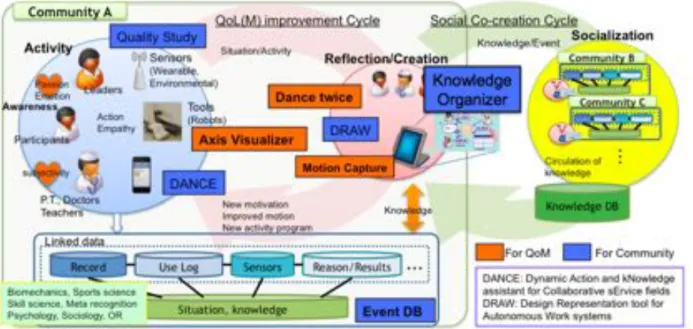
Figure 1 Proposed framework of support technologies for objective and explicit coaching.
4
d
4
da
a
4
[1]
4
4
GG
4
4
4
G
.
2.
[2]4
ad
3
d
e-Learning
[3]4
3
0
d
3.
0
da
a
3
G
(1)
4
d
4
d
3
4
o
d
4
0
4
(2)
(1)
3a
da
(1)
(2)
(3)
スムースに前進 着地する 送り出す 蹴ると速度が早 くなるが、その 後、遅くなる 上体を前方 へ進める 後ろ足はさらに伸ばす 曲がったままだ と、歩幅が小さ くなる 前足を伸ば す かかとから ソフトに引 き寄せる 強くかかとをつ くと速度が落ち る 図形の意味 やり方 起こってほ しく ないこと 乗り越える
Figure 2 Image of proposed research effects.
a
4
d
4
0
4
[4]
(3)
(1)
[5]
4
d
a
3a
d
4
4
da
0
4
4
d
3
d
0
4
[6]
4.
0
4
d
4
d
3
4
o
4.1
0
ad
0
4
ad
4
ad
d
4
d
3
4
4.2
o
o
0
4
Figure 3 Motion capture room and markers.
Figure 4 A sample of electromyography and the positions.
4.3
4
0
0
4
4
a
3a
4.4
d
3a
3a
4
[5]
4
d
4
4
4
G
4
d
0
o
[7]
REAR, LEAR, RSHO,
LSHO, RHIP, LHIP, RANK, LANK
RSHO 3a LSHO
(x,y)
RHIP,
LHIP
(good)
B
(bad)
Figure 5 A scene of trunk torsion movement.
3a
Good
-35
3a
35
Bad
-60
3a
60
4
4
4
d
B
3
ad
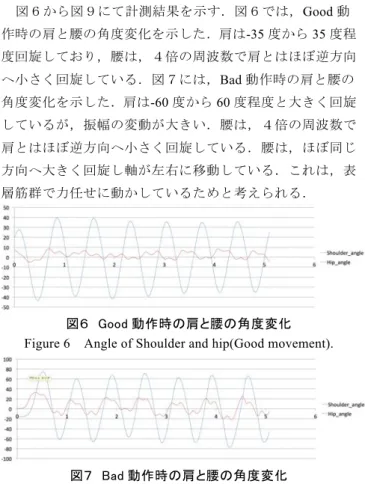
Figure 6 Angle of Shoulder and hip(Good movement).
Figure 7 Angle of Shoulder and hip(Bad movement).
4
4
B
4
3
%
4
4
3a
Figure 9 Floor torque and trunk angle(Bad movement).
d
4
4
5.
5.1
ad
4
a
[4]
d
0
4
ad
3a
4
4
da
0
[4]
ad
5.2
d
4
DANCE[8]
0
d
a
d
2016-694
(
3
3
)
(
)
(
[5]
)
(
[5]
)
(Wii
)
a
[4]
Figure 10 An example of Knowledge expression(Change center of gravity).
6.
6.1
d
0
0
d
3
a
3a
d
Figure 11 A sample of accelerometer.
スムースに前進 着地する 送り出す 蹴ると速度が早 くなるが、その 後、遅くなる 上体を前方 へ進める 後ろ足はさらに伸ばす 曲がったままだ と、歩幅が小さ くなる 前足を伸ば す かかとから ソフトに引 き寄せる 強くかかとをつ くと速度が落ち る図形の意味
やり方 起こってほ しく ないこと 乗り越えるFigure 12 A sample of electroencephalograph.
6.2
4
a
0
7.
0
0
Figure 13 Health promotion community support.
NEDO
(24500676,
25730190)
d
3a
[1] (2003) -- , ,20(1):15-26 [2] , - 0 -, ,61:111-116, 2014. [3] , 26 , e , https://www.ristex.jp/examin/service/pdf/H26_houkoku_ASAMA.pdf [4] , a, , 28 , SIG-KST-028-04, 2016. [5] a, Axis Visualizer : , 2016, 3B15, 2016.[6] Verghese J, et al., Leisure activities and the risk of dementia in the elderly, New England Journal of Medicine 2003;348:2508-2516, 2003.
[7] , https://www.dh.aist.go.jp/database/gait2015/index.html#marker, 2015. [8] , , , , , , , 2015 ( 29 ) , 1K5-NFC-05b-2, 2015. [9] a 2 2015. [10] a Axis Visualizer : -
Visualize Quality of Motion (QoM) -, 2016, 3B15, 2016.
[11] a

![Figure 2 Image of proposed research effects. a 4 d 4 0 4 [4] (3) (1) [5] 4 d a 3a d 4 4 da 0 4 4 d 3 d 0 4 [6] 4](https://thumb-ap.123doks.com/thumbv2/123deta/8003242.1738050/3.892.154.700.118.277/figure-image-proposed-research-effects-d-d-da.webp)