Thai University Students in Japan:
Academic, Social and Cultural Difficulties and
Adjustments
Master‟s Thesis
Submitted to the Graduate School of Asia Pacific Studies
Ritsumeikan Asia Pacific University
VICHAI Passaporn
51109602
In Partial Fulfillment of the requirements
For the Degree of
Master's of Science in Asia Pacific Studies
2011
Abstract
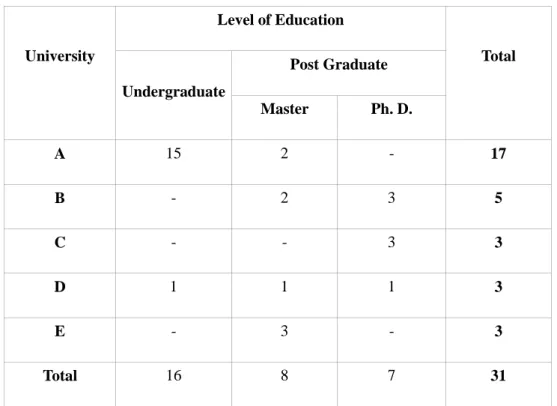
This thesis explores the difficulties and adjustments of Thai international students in Japan. I first examine the international students‟ problem issues in Japan and the government policies. Then, introduce the international academic adjustment model as a conceptual framework. Based on the model, the semi-structured interviews with 31 Thai students from 5 universities were conducted.
This research found that Thai students faced various academic and socio-cultural difficulties as they adjusted to studying in. Specifically, it was found academic difficulties include language barriers, unfamiliar teaching and learning approaches, insufficient knowledge in the field of study, relationship distance with professors and insufficient support from the university. Socio-cultural challenges include insufficient Japanese language proficiency, and difficulties in interacting socially with Japanese. Students in different groups encountered different levels of difficulties. Graduate students showed a better general academic adjustment than undergraduates, while the latter adjust more quickly to socio-cultural dynamics.
In coping with the difficulties, students were more likely to seek help from their co-national friends rather than approach professors or student affairs staff. The coping strategies adopted by students might be a reflection from the poorly prepared measures put in place to help international students. The government and universities should consider student‟s perspectives in policymaking. It is also necessary for the prospective students to prepare for these difficulties in advance.
要約 日本の高等教育においては近年国際化と留学生の増加が進み、留学 生が抱える問題と要望を認識する必要が出て来ている。本論文は日本の大 学におけるタイ人留学生の適応問題に焦点を当て研究する。この研究では アカデミック・アジャストメント・モデルと呼ばれる留学生の適応に関す るモデルを修正の上で用い、5つの大学から計31人のタイ人留学生に半 構造的インタビューを行った。 日本での学習と生活に関するインタビューを行った結果、タイ人留 学生は学業面と社会文化的な側面の両面で様々な問題に直面していること が分かった。学業面での問題は、言語障壁や自国とは異なる教育システム、 研究分野の知識・理解不足、教師との親密感や大学からのサポート不足な どが挙げられる。また社会文化的な問題には、日本語能力不足と日本人と の関係がある。更に分かったことは、大学院生と学部生ではそれぞれ学業 面と社会文化的側面との適応性に正反対の結果が見受けられたことである。 つまり大学院生は学部生より学業面で適応しやすいが、学部生は院生より
社会文化的適応に優れていることが判明した。 学生達は自らが抱える適応性の問題を解決するため、その糸口を教 師やスーパーバイザーに相談するのではなく、同じ出身国の学生に助けを 求める傾向がある。この様な傾向の原因は留学生へのサポートシステムが 不足しているからではないかと考えられる。よって政府と大学の双方とも が留学生へのプログラムやシステムを見直すべきである。特に今後重要と なるのは、政府と大学は留学生が抱える学業面と社会文化的面への適応性 を念頭に置いた政策をより強く打ち出すことで、未来の留学生たちに同じ 適応性での問題を繰り返さないことである。
Acknowledgement
I would like to sincerely express my gratitude to my supervisor, Professor Ishii Yuka, for the advice she has gave me. She has patiently brought me up to this stage. Without her guidance and support, this research would not be possible.
I would like to express my thanks to the Economic Research Institute for ASEAN and East Asia (ERIA), which allowed me to be a part of ERIA/JENESYS Next Leaders Program. I gained a lot of academic knowledge and experience during these two years in Japan. I also acknowledge Ritsumeikan Center for Asia Pacific Studies (RCAPS) for the financial support that enabled me to conduct the field work necessary for this research.
I am deeply grateful to all Thai students involved in this research. This research could not be completed without their useful information. My thanks would also go to Maxwell Caughron, Benja Sem, Joseph Quarshie, and Siddhartha Sarmafor revising my thesis and saving me from my many mistakes. I would also thank my lovely roommate, my colleagues in the Graduate School, and my close friends in Japan. They are always there for me whenever I need them. Finally, my deepest gratitude goes to my parents, Siripong and Sirinrat Vichai. It would never be possible for me to come this far without their support, encouragement and unconditional love.
May 2011 Passaporn Vichai
Table of Contents
Abstract i
Acknowledgement iv
Table of Contents v
List of Tables and Figure vii
Chapter 1: Introduction
1.1 Background Statement 1-4
1.2 Studies Concerning International Students in Japan 4-14
1.3 International Student Policies in Japan 14-21
1.4 Spotlight on Thai Students 21-24
1.5 Thai Students and Japan 24-27
1.6 Aim of the Study and Research Questions 27-28
1.7 Chapter Outline 28
Chapter 2: Theoretical Framework: A Guide to the Case Study of Thai Students in Japan
2.1 Perspectives Concerning Cross-Cultural Adaptation 29-32
2.2 Academic Adjustment Model 32-40
2.3 Social Network and Adjustment 40-44
2.4 Research Design 44-56
Chapter 3: Life in Japan: Interviews with Thai Students
3.1 Pre-departure Preparedness, Orientation & Advising Experiences 57-65
3.2 Housing 65-69
3.4 Extracurricular Involvement 83-84
3.5 Financial and Employment Status 84-91
3.6 Academic Difficulties and Achievements 91-102
3.7 Suggestions from Interviewees 102-108
3.8 Summary 108-109
Chapter 4: Behind the Problems: Problem Clarification and Analysis
4.1 Academic Difficulties 110-119
4.2 Socio-Cultural Difficulties 119-123
4.3 Comparison of students in different groups 123-127
Chapter 5: Conclusion
5.1 Summary of findings 128-131
5.2 Practical Implications 131-138
5.3 Suggestions for Future Study 138-139
List of Tables and Figure
List of Tables
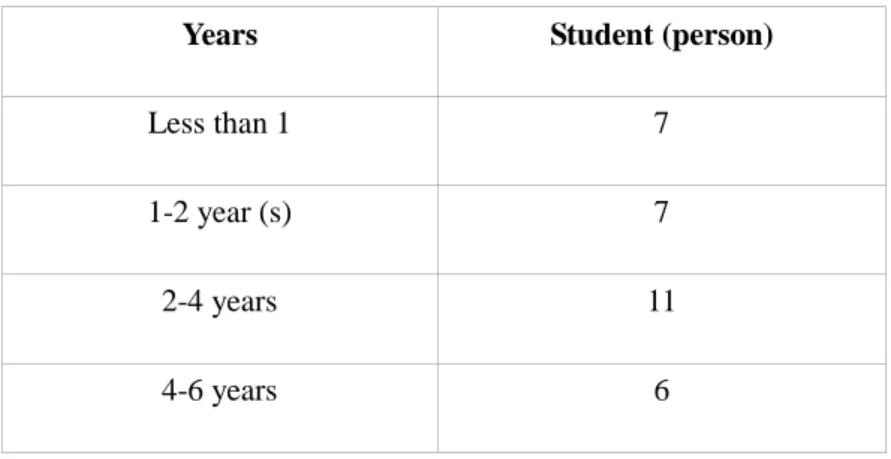
Table 1: Association of the adjustment factors and interview questions Table 2: Information based on university and level of education Table 3: Information based on the length of stay in Japan
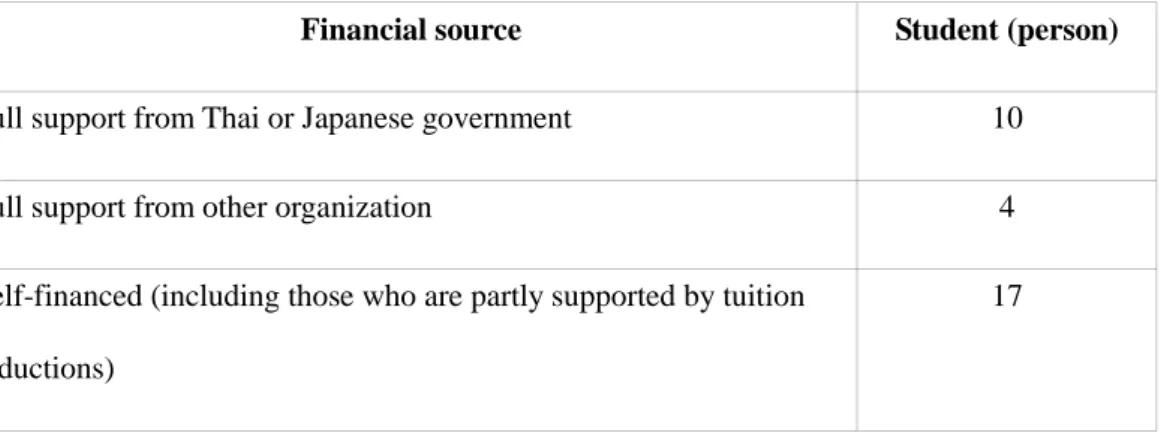
Table 4: Information based on the previous study abroad experience Table 5: Information based on financial source
Table 6: Relations of the factors in the International Academic Adjustment Model and the answers of interviewees
List of Figure
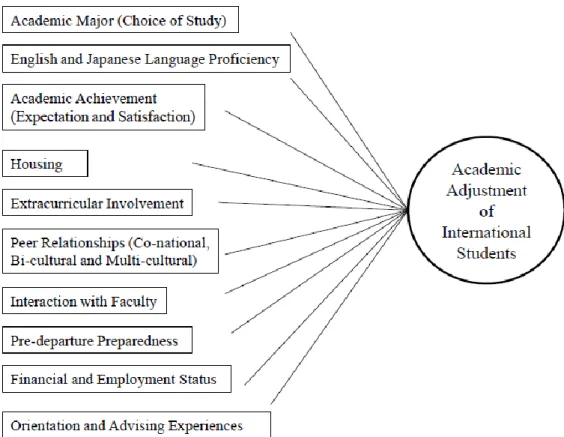
Figure 1: International Academic Adjustment Model by Jennifer We Dunn Figure 2: Modified International Academic Adjustment Model
Chapter 1: Introduction
1.1 Background of the Study
Long criticized for being closed to foreign influences, in July 2008, Japan‟s Ministry of Education, Culture, Sports, Science and Technology (MEXT) with the other 5 ministries; namely, the Ministry of Justice, the Ministry of Health, Labor and Welfare, the Ministry of Economy, Trade and Industry, the Ministry of Land, Infrastructure, Transport and Tourism, and the Ministry of Foreign Affairs settled on a general framework to open the country to foreign immigration. This plan sets a long term goal of eventually accepting 300,000 international university students by 2020 (MEXT, 2008). The government considers accepting international students as playing a significant role in strengthening international goodwill; deepening mutual understanding and friendly relations through the formation of human networks; contributing internationally to human resource development; creating an international environment for university and school campuses; and perhaps most importantly as a human resource that can be developed to contribute to the Japanese economy Japan (Ministry of Justice, 2010). In addition to these benefits, the plan is also seen as a policy solution to deal with Japan‟s low birthrate and aging population problems. Moreover, the plan is also be seen as a response to the criticism that Japan has failed to make a contribution to world-wide education needs commensurate with her financial position (Goodman, 2005).
Japan marks the second time that the Japanese government has attempted to recruit international students. In 1983, the first attempt was made to accept 100,000 international students. The 2008 plan differs from the one in 19831. The previous plan does not focus only on how to increase the number, but it also includes the efforts by the government to support students more comprehensively, beginning with encouraging them to study in Japan and continuing support services, throughout their working lives after graduation. MEXT introduced the objectives of the current policy, divided into five areas:
1. To invite international students to study in Japan and motivate them to studying in Japan and expansion of one stop services
2. To improve entrance and screening procedures including entrance examination and admission to Japanese university and Japanese culture
3. To promote the globalization of universities. - to make universities more attractive to both foreign and domestic students
4. To create an environment of tolerance– to make efforts to create an environment where students feel at ease and can
1 It was claimed that there are some significant differences between the old 1983 plan and the new 2008 plan. Shao (2008) pointed the three differences out which are; 1.) The 1983 was a passive plan aimed to help other Asian countries, but the 2008 is very active plan as a national strategy for economic development. 2.) The purpose was changed from helping other countries to exporting education model. 3.) The expectation towards international students changed from a link between Japan and other countries to permanent foreign workers that can contribute to Japanese society.
concentrate on their studies
5. To promote the social acceptance of students after graduation/completion and in doing so contribute to the globalization of Japanese society as a whole
(Higher Education Bureau, MEXT, 2009)
The number of international students in Japan has been increasing continuously. According to the Ministry of Justice (2009), the number of registered college students exceeded 100,000 for the first time at the end of 2002, and reached 138,514 as of the end of 2008 with an increase of 6,054 or 4.6%, compared with the end of 2007.
Although the goal of eventually recruiting 300,000 international students may seem overly ambitious to be achieved by the 2020 target, the broader focus of this plan is directly linked improve scholarship supported and self-financed overseas students to study and even work after graduation in Japan, leading to the increasing numbers of students. The current plan‟s goals coincide with international students' plea for a better understanding of their needs, in order to create a hospitable environment, and be able to recruit more international students in the future.
Focusing on the experiences and needs of Thai students studying in Japan as a case study, this research attempts to explore the adjustment strategies and difficulties of international students, studying and living in Japan‟s unique culture. I hope that the research will bring out the students‟ perspectives in order to
contribute to the Japanese education stakeholders involved including the government, university, as well as students who all want the new policy to succeed for everyone‟s mutual benefit.
1.2 Previous Studies Concerning International Students in Japan
University creates a diverse learning community where students have both the time and space for personal growth through exposure to new and different ideas, people and lifestyles (Thom, 2010: 157). In addition to the personal and profession growth opportunities, unavoidably, students have to deal with anxiety and fear in adjusting to a new academic and social environment. Apart from the stress of adapting to different academic responsibilities, which is the common problem for most students irrespective of whether they are domestic or international, foreign students are additionally confronted with adjusting to their new cultural environment. As a non-English speaking country and long history for being unaccommodating to foreigners (Lim, 2009: 9), Japan seems to be basically disadvantaged in attracting international academics and students. Students from Asian countries, where some common values are shared, also face difficulties in adjusting to Japanese life. The Japanese language barrier is the main problem faced by students from ASEAN countries, and high cost of living appears to be another major problem facing East Asian students (Sato, 2010: 111). It is expected that the government, university, as well as local organizations can help by providing support to meet these needs and improve the lives and cultural adjustments of international students.
Many supporters seem to be prepared for a large influx of international students, but it cannot be said that they are doing enough. Many students are suffering from the limited financial support, expensive house rental fees as well as academic stress. According to Tanaka, Takai, Kohyama and Fujihara, Japan has actively recruited international students although essential policies and measures for international students, including accommodation, language learning, counseling services and even scholarship information, have not been properly prepared. As a result, many students leave Japan with the disappointment in Japanese university system (Tanaka et. al., 1994: 56). Even though their study was conducted over 15 years before this study, their conclusions remain relevant to the present situation.
The issue of international students in Japan had not been seriously studied until 1990s, when the Nakasone government announced the 1983 international students plan and the number of international student started to increase dramatically in 1980s (Tanaka et. al., 1990). Even though Japan currently has a very short literature on international students‟ adaptation and adjustment strategies, compared to the Western countries looking at the same issues, what literature there is does identify some of the major concerns and will be presented in subsequent chapters.
1.2.1 Socio-Cultural Struggles
Shigematsu examined the feelings of 96 Korean students regarding relationships with Japanese hosts by asking the students to write free-answer
responses on stress, general living condition and health issues. The answers were divided into three main categories. Economic matter was the first category, which catalogued complaints about the hardships of financing their education, the high cost of living, steep monetary exchange rates and the need to take a part time job that may have negatively affected their health or study habits. The second category examined academic aspects of student adjustment; including the merits and demerits of studying abroad compared to studying in the students‟ home country, freedom, the excitement of new experiences in a new environment, and experiencing cultural differences. In the same section, some students wrote about the difficulties of research, the lack of adequate faculty guidance and a general inability to enjoy life in Japan due to combined academic and financial pressure. This final group of responses students experienced in Japanese society and human relations was the main focus of Shigematsu's study (Shigematsu, 2002).
The data related to Japanese society responded by students were divided into four themes as listed below;
1. Moral vs. Prejudiced – some students expressed that high importance on maintaining cultural manners, minding rule, and national ideas of morality in Japanese society made a positive impression on students studying in Japan. Students felt that the Japanese cultural sense of responsibility made it easier for them to live in Japan. However, some students felt that the complex rules and Japanese customs had created a Japan that was only suitable for those born into it. Perceptions of strong group-consciousness of the Japanese were mentioned as a barrier for international students that
negatively affected their studies and lives in Japan.
2. Diligent vs. Inhuman – while some students admired the hard work ethos and sense of responsibility of Japanese, some students negatively viewed those attitudes as a combination of poor communication skills; lack of human relations; spiritual emptiness; and a general lack of interpersonal contact, interest or attempt to understand foreign people.
3. True feelings vs. Behaviors – many students mentioned that a problem in their relationship with Japanese is the distinction between true feelings (private feelings) and formal behavior (what people will to express to public). Students also claimed that it was difficult to establish relationship with Japanese people or even trust them because of these barriers.
4. Resignation vs. Perseverance – this theme discussed how students coped with the conflict or problems they faced in Japan. Some students felt that if a problem is too big to overcome so they just simply resigned themselves from the problematic situation, hurry graduation and escaped from Japan. Some students simply rejected adapting to Japanese culture because they felt they had been rejected by Japanese society first. On the other hand, some students tried to develop a more open perspective.
(Shigematsu, 2002: 78-81)
Shigematsu's research concluded that understanding the cultural differences between students‟ and Japanese culture is a very important issue that the government should concern about. To help students‟ financial problems, the
government can simply help solving by providing the scholarship or financial grants or loans. However, human relation difficulties are more difficult to resolve and still remain a problem for Japan that should be studied more thoroughly if it hopes to successfully increase both the number and quality of international students into the country.
1.2.2 International Student Stresses
International students‟ stress is caused by many factors. Those stressors have been classified variously in different researches (Holmes & Rahe, 1967; Moyer, 1987; Yo & Matsubara, 1990). Yo and Matsubara grouped stressors into six factors; sickness and death, language problems, everyday problems, academic problems, relationship problems, and environmental differences (Yo & Matsubara, 1990: 1-11). Based on these groupings, Jou and Fukada (1996) investigated the unique stress factors and the influence of stressors for Chinese students in Japan. Jou and Fukada classified the stressors experienced by Chinese students into five somewhat overlapping factors; 1) interpersonal problems; 2) academic problems; 3) health/living problems; 4) financial anxiety; and 5) environmental problems. Focusing on the academic problems, the stressors for students included progress in research, presentations for major courses, thesis writing, classes, the possibility of graduation late or having to remain an extra year, preparation for a college entrance examination or a graduate course, and a lack of improvement in Japanese language abilities (Jou & Fukada, 1996: 504-505).
with all other stressors. This finding indicates the high priority on academic achievement Chinese students placed in their lives as a whole. Moreover, according to the research, "the higher the academic stressor score was, the higher the scores of the other four factors" (Jou & Fukada, 1996: 507).
1.2.3 Social Support and Adaptation
Tanaka, Takai, Minami, and Fujihara studied social network formation of newly arriving international students in Hiroshima University and found a positive impact of social networks on students' lives. The study revealed that new students were concerned and felt uncomfortable about their academic life, Japanese language ability, social skills and these concerns were reflected in change to their mental and physical condition. However, social networks among those students able to establish positive relationships with Japanese were beneficial in several ways. In the study, those supports included more positive attitudes toward language, culture, study, consultation, amusement, money, and information (Tanaka et. al., 1990).
In terms of academic adjustments, the importance on support from Japanese professors, Japanese students, other foreign students and off-campus Japanese friends were also examined in the study on social support systems available for Chinese students adjusting to life and study in Japan (Jou & Fukada, 1995). It was found that the more support was needed, the poorer students' adjustment was, and on the contrary, the more support was actually received, the better students' adjustment was. Moreover, it was also reported that Chinese
students needed the least support from off-campus Japanese friends and received the most support from other foreign students (Jou & Fukada, 1995: 310). The students who received the support from Japanese professors reported the better adjustment. Therefore they suggest that because the research and study are the main goals of students studying in Japan, professors would have more influence than other three sources. Therefore, the study of Jou and Fukada recommended that increased support from professors could improve students' overall adjustments considerably.
1.2.4 Perceived Problems of Asian International Students in Japan
Suhara studied the particular barriers of 488 respondents from Asian international students in Japan by surveying on the condition of self-financed students (Suhara, 1996). The results of the survey showed that in the students overall comfort with life in Japan financial and accommodation problems played an important role. This is consistent with other studies, which had similar results (Ebuchi, 1991; Jou & Fukada, 1996; Shao, 2008; Zhang, 2009). However, the study also mentioned other aspects related to these main problems. Following Suhara's survey outcomes, these problems are, therefore, reviewed in the following section.
1. Financial and employment problem
Compared to other Asian countries, Japan has very high cost of living. While the average monthly expense of Japanese university students in 1987 was
¥125,800, international students' average expense in Suhara's study was ¥99,000 and about half of them had less than the average (Suhara, 1996: 109). Even though some financial support was provided, students commented that it is difficult to get the scholarship, especially for first and second year students. Moreover, there was also a comment from one student that in the case of the prestigious Monbusho scholarship, where the Japanese government provides a large amount of money to one student; the same amount would be more suitable to support two students (Suhara, 1996: 110).
Due to financial difficulties, international students turned to part-time jobs to support their lives in Japan. Based on a 2007 JASSO's survey, 71.1% of international students held at least one time job accepted that having a part-time job was important to support their cost of living in Japan (JASSO, 2007: 20). Currently, about 81% of international students in Japan are doing part-time work (JASSO, 2007: 17). However, JASSO's survey only focused on the financial aspects of student‟s working part time focusing on income and working hours, but it did not closely examine any negative experience of students regarding employment and working condition.
Finding part-time job is not easy for every student. Many students experienced being refused employment based on the fact that they were international students and couldn‟t speak the necessary level of Japanese. These experiences made them feel that they are being discriminated against based on their nationality (Suhara, 1996: 114). Moreover, according to Suhara's experience as an advisor for international students, some students faced far worse situations
in their part time jobs such as not being paid properly (Suhara, 1996: 193-194). Even in the present, student related organizations such as, The Asian Students Culture Association warn the students about not being paid properly for their part time jobs2.
Even though some studies indicated that there is no significant relationship between working and academic achievement (Furr& Elling, 2000; Bradley, 2006), students who work are likely to report that the employment frequently interferes their academic progress (Furr& Elling, 2000: 464). Similarly, Suhara also gives a voice to a Malaysian student exhausted from the part-time job which steals her study time. She said "I need the true student life. Did I come to Japan to study or to work?? I don't know!!" (Suhara, 1996: 143). It seems to be difficult for self-financed international students to live in Japan. Son studied the attitudes of Chinese students towards Japan and concluded that many self- financed Chinese students have negative image of Japan because of the bad experiences and the hard time they experienced in their part-time jobs (Son, 2004: 226).
1. Accommodation Problems
As previously mentioned, housing is another common problem faced by international students in Japan. Many students have been denied housing by the real estate agents for the same reason some students are denied part-time employment -- that they are not Japanese. Some students found accommodations through the real estate agents were rented housing that did not match with their
expectation or felt that the rent exceeded their expected budget (Suhara, 1996: 190-191). More than half of students complained that their rooms are expensive, very small and/or far from school (Suhara, 1996: 117). Rather than going to real estate agents, many students seek housing from friends' recommendations (Suhara, 1996: 114-118). Asian international students felt that they were not accepted as tenants because the perceived Japanese to be cautious when dealing with foreigners and they often hold biased opinions on Asian international students from poorer countries (Shao, 2008: 7).
The above problem may be less like to occur if international students and Japanese students cohabited. Nevertheless, some students commented that they cannot get along well with Japanese because they do not have open minds, and they have the more formal relationships to be shallow (Suhara, 1996: 118).
2. Problems Concerning Campus Life and Relationships with Japanese
As mentioned earlier, international students find it difficult to befriend Japanese. Suhara describes difficulties as: different interests, the lack of interest in foreign students on the part of the Japanese, and a lack of Japanese language proficiency for international students. Regarding divergent interests, Suhara explained that Japanese and international students have different view towards university. Japanese students study hard until they are accepted by the university, and they spend most of their time in the university relaxing and enjoying life before starting the hard work again after the graduation. However, for international students it is different and university is less a place to enjoy oneself
than a place to study diligently. This difference of perception, then, leads to the different lifestyles and different ways of behaving at school (Suhara, 1996: 197-198).
The problem concerning the uneasy relationship between Japanese students and international students has been mentioned in various studies. Many international students, who cannot or do not want to get along with Japanese and society, choose to stay together either as an international group or group of students from one country and finally end up with little cultural adjustment or improvement in the Japanese language (Pearson-Evens, 2006).
From the above summary of Suhara's study on the barriers of Asian international students in Japan, it needs to be noted that he did not explicitly mention Japanese language proficiency in his survey but it did exist as a problem in each of the issues he did focus upon. Japanese ability affected the chance to get part-time employment, build relationships with Japanese, and even the possibility of getting adequate housing. Therefore, we can confidently state that language ability is another determinate on the success or failure of international students' lives in Japan.
1.3 International student policies in Japan
Japan aims to recruit international students for study in Japan and it was found that Japanese students sponsored by the government to study abroad were often fewer than international students sponsored from the same country, and these Japanese students received smaller scholarships (Chu, Chu & Jin, 2010).
Japan began its first coordinated attempt to increase the number of international students studying in Japan in 1983 when it released the clearly named: "Plan to Accept 100,000 International Students" during the Nakasone government. The plan aimed at promoting mutual understanding between Japan and other countries, together with contributing to human resource cultivation for developing countries. The target was reached in 2003 when almost 110,000 students enrolled in Japanese higher education. This achievement was caused by and encouraged rapid growth of the number of international students, especially from mainland China. Chinese students account for two-thirds of the total students studying in Japanese universities, and students from all Asian countries (including China) account for 93% of the total international students in Japan (Newby. et. al., 2009: 80).
In 2008, the "300,000 International Students" plan was presented by the Fukuda government. This plan aims at recruiting 200,000 more international students by 2020. As previously mentioned, from the past to the present international students in Japan have faced many problems. Therefore, to correspond to the "300,000 International Students" plan and improve the situation of international students, the government, with the cooperation from universities and other organizations, has created many policies supporting international students. The policies reviewed here include: information and preparation support before departure; scholarship and financial support; accommodation assistance; and academic related support (JASSO, 2009; JASSO, 2010; JSPS, 2010; MEXT, 2004; MEXT, 2009; MEXT, 2010).
1.3.1 Preparation and information support
In April 2004, the Japan Student Services Organization (JASSO) was established by the Japanese government in order to provide comprehensive support to the students, both in Japan and in overseas countries. JASSO is the main organization providing information about Japan and Japanese universities to the students interested in studying in Japan. A remarkable activity by JASSO is the Japan Education Fair which is held every year in Taiwan, Korea, Indonesia, Thailand, Vietnam, Malaysia and China. The activity is organized to give the general program information sessions and seminars, including lectures by former students, individual consultation for concerns about studying in Japan, and academic information at the booths set up by JASSO, universities and other educational institutions (MEXT, 2004). Today Japan Student Services Organization (JASSO) has its overseas representative offices in four countries; Indonesia, Republic of Korea, Thailand and Malaysia, and provides the Examination for Japanese University Admission for International Students (EJU) representatives in thirteen countries, in Asia and Russia (JASSO, 2010)3.
Despite impressive funding, operating representative offices in four countries might not be sufficient to reach the level of a "one stop service" for studying abroad like the British Council, which operates in 110 countries worldwide with 8.5 million annual visitors (Shao, 2008:9).
In the case of foreign government sponsored students, the Japanese government assists by providing preparatory education, including language study
3 Retrieved from Overseas Representatives Office-JASSO:http://www.jasso.go.jp/about/
jeic_e.html. and EJU Overseas Representatives-JASSO: http://www.jasso.go.jp/eju/ contact_e.html, on January 26, 2010.
and further cooperation with universities and institutions as required. Currently, this commitment covers the students from China, Indonesia, Malaysia, Thailand, Singapore, The United Arab Emirates, and Kuwait. In addition, the Northeast Normal University in Changchun, Jilin Province, China hosts the Japanese university preparatory program for its students before study in Japan (MEXT, 2009).
1.3.2 Scholarship and Financial Support
Scholarship and financial support are important factor influencing the increase of international students. Scholarships make a very big difference in the lives of students it is awarded to. The most well-known one is the Monbusho scholarship given directly by the Japanese government. Since the program was started in 1954, the scholarship has been awarded to 62,000 international students from 160 countries and regions over the world. According to JASSO, there are seven types of scholarship included in the program, which are for 1) Young Leader‟s Program (YLP) students or students who have practical work experience (1 year); 2) Research students (up to 2 years); 3) Teacher training students (up to 1.5 years); 4) Undergraduate students (5 to 7 years); 5) College of Technology students (4 years); 6) Specialized training college students (3 years); and 7) Japanese Studies students (1 academic year). The students receive the monthly allowance differently according to the type of scholarship. The Young Leader‟s Program (YLP) students are allotted ¥258,000, research students and teacher training students are allowed approximately ¥155,000 and the others are allowed
¥125,000. All scholarship types include tuition fees, transportation costs and Japanese language training before enrolling in the academic program, with the exception of the Young Leader‟s Program (YLP) students and Japanese Studies students (JASSO, 2009).
Apart from the directly funded government supported scholarship, there are also scholarships given by JASSO, prefectural, local, private organizations. As a whole, 89.9% of international students in Japan are privately financed, while the government scholarship benefits only 7.6% of all international students. In order to support the majority of students, JASSO created the “Honor Scholarship4” for qualified students in undergraduate and graduate level. Moreover, JASSO also provides the financial support up to ¥80,000 per month for the short-term exchange students under the agreement between Japanese university and home university abroad (JASSO, 2009).
Besides, the Japanese local government and private organizations also provide specific scholarships to students studying in either specific geographic districts or in specific academic disciplines. As of December 2009, there are more than 229 scholarship programs organized by 46 foundations throughout the country. About 3,800 students benefited by these local government scholarship programs in 2008 (JASSO, 2009).
1.3.3 Accommodation Assistance
Japan has a high population density, especially in the big cities. It is even
4 The scholarship allows 65,000 JPY per month for graduate students and 48,000 JPY for undergraduate and pre-college language students.
more difficult for international students to find the reasonably priced and safe accommodation due to limited financial resources and government support. In addition to monthly or weekly rent students need to find a guarantor and pay expensive advance deposit and the management fees (known as key money) to the real estate agent (Shao, 2008:7). Therefore, in order to ensure the availability of and low-rent housing for international students, the government advises universities and local public organizations to provide housing. As of May 2009, there are 31,429 international students (23.7%) living in the public housing. However, the remaining 101,291 students (76.3%) are still living in the private rented housing (JASSO, 2009).
1.3.4 Academic Related Support
According to the 2008, "300,000 International Students Plan”, leading universities across the country have been chosen as core universities to sponsor internationalization, known as Global 30 Project. The policy aim of this project is to elevate Japan‟s international competitiveness amongst the world‟s top universities and to create an attractive environment for international students. The selected universities will receive annual financial assistance of ¥200 to 400 million over the next 5 years and, with this aid each university attempt to recruit 3,000 to 8,000 international students (JSPS, 2010; MEXT, 2010). To process the grant selection, the Society for the Promotion of Science (JSPS) established the Global 30 committee, consisting of members from various academic institutions. In order to be selected, each university has to invest their efforts in three main
areas; 1) an academic curriculum that provides classes in English, 2) a proper system and environment for international students and 3) a strategic promotion of international cooperation. Up to 2009, 13 universities were selected; seven of them national universities and six private5.
However, even though many leading universities are now providing the courses and degrees in English, the Monbusho scholarship students are still provided with intensive Japanese language training for six to twelve months before enrolling in the their respective universities normal academic program.
As summary, the main problems facing international students in Japan, as determined from the literature, are socio-cultural problems, financial problems, and academic & language related problems. Social relations and language ability seem to be the most important issues in the international students' adaptation to life and study in Japan. Language proficiency has strong impact on academic achievement, and also opens the door to part time working chances during the study period and employment opportunities upon graduation. Moreover, language is the key tool for establishing the relationship with local Japanese people. When they create social networks, they receive various support; for instances, information about part-time job and accommodation opportunities, language, study, consultation, and even money, from different networks. The student‟s
5 The selected national universities are Tohoku University, University of Tsukuba, University of Tokyo, Nagoya University, Kyoto University, Nagoya University, Osaka University and Kyushu University. The selected private universities are Keio University, Sophia University, Meiji University, Waseda University, Doshisha University and Ritsumeikan University (Retrieved January 26, 2010, from University of Tsukuba: http://www.global.tsukuba.ac.jp/ en/what's/what's_1_e.htm).
relationship with their professors also leads to the better academic adjustment and relationships with Japanese friends helps student to develop a deeper understanding about Japanese society, feel comfortable to live and study in Japan, as well as advance their language skills.
Even though the Japanese government is trying to ease the living and study conditions of international students by providing the information about studying in Japan through scholarship and financial support, accommodation assistance, and other academic support through universities, the human relation and other socio-cultural problems are more complicated and cannot be solved simply.
All the problems mentioned in the previous studies are strongly interrelated. It is logical that the students with different levels of language proficiency and different social relation experience differently in Japan. As a result, students approach the difficulty and problems differently. One important variable in the how students adjust is their nationality, which often defines the "cultural distance" (Church, 1982: 547). It is assumed that adjustment will be more difficult for visitors coming from home cultures that are more different from the host culture (Church, 1982: 547). Therefore, if we want to examine the lives of international students in Japan by studying a group of students from a particular country, choosing the country is the very important issue that we have to be concerned with.
1.4 Spotlight on Thai Students
Chinese (JASSO, 2009; Newby et.al., 2009), many studies on international students in Japan focus on these Chinese students as case studies, as reviewed previously. While the studies on Chinese students are expected to provide the significant implications for other international students and for Japan's internationalization of education, this research sees that the unique situations faced by Chinese students in Japan cannot be generalized to explain the experiences of international students from other places.
Focusing on the Japanese language education in China, the number of Chinese studying Japanese language accounts for 22.7% of all Japanese language learners oversea, second only to Korea with 26.4% (Japan Foundation, 2010). In China, Japanese began being studied widely in 1970s and it has since been included into many primary and secondary school curriculum. In some schools, Japanese is taught as the first foreign language, prior to English. In addition, Japanese teaching programs are broadcasted on television and radio as well. Unsurprisingly, Japan Foundation reported that Japanese learning in China is special and distinctive, based not only on the high number, but also the high level of both Japanese learners and teachers (Japan Foundation, 2006b).
The importance of language proficiency in the intercultural adaptation was also recognized by many researchers (Church, 1982, Pascarella & Terenzini, 1991, Lewthwaite, 1996, Dunn, 2006, Zhang, 2009). Based on these studies, this research proposes that students' adjustment should be studied from the various viewpoints, not only the viewpoints of Chinese students. It considers that perhaps Thai students are more suggestive to the general situation of international
students' adjustment in Japan, in terms of language proficiency. Moreover, Thai students seem to share more common characteristics to other international students from Southeast Asian countries.
Similar to other countries, the Japanese language in Thailand is offered as a second or even third foreign language in elementary and secondary school, and not every student in the country has access to Japanese language education. Japanese language is without question the primary language used in all aspects of Japanese life. Functional Japanese is crucial for students who seek part-time work or full time employment in Japan. It is necessary for international students to be able to communicate in both Japanese and English, which is quite a challenge for international students who are not first language speakers of either of them.
In Thailand, for instance, the majority of Thai educational institutions use the Thai language as the L1 for instruction, English as the first foreign language and Japanese as a second foreign language is an option provided in few secondary schools. For school in Thailand not using Thai as the primary language, international schools providing education in English are account for 1.5% of all educational institutions in Thailand6.
Chaisamrej studied acculturation and communication techniques of Thai students studying in American universities and found that language difficulty caused high stress for many students. Many Thai students were afraid of confrontation with host nationals because of poor listening, speaking and discussion skills, in addition, they admitted that it took longer time for them
compared to other English native classmates to finish a paper or read an article. From Chaisamrej's study, language ability does not only play an important factor for academic achievement, but it is also a tool for friendship establishment and successful integration into host society (Chaisamrej, 2005: 175-176).
Continuing the discussion on Japanese language education in Thailand, according to a survey conducted by The Japan Foundation (2006a), French and German are normally provided in Thai secondary school as an elective foreign language course. As of 2006, there were 296 schools providing French courses and 38 schools for German course. The number of secondary school providing Japanese language course is not mentioned but it can be implied that there are less than 38 places. As such there are not many students who are already fluent in both English and Japanese prior to the enrollment in university in Japan.
Moreover, Thai and Japanese languages are different in many aspects. There are no Chinese characters used in the Thai language and Chinese characters are not widely used in Thai society with the exception of the Chinese-Thai population. Grammatically, the word order in Japanese is opposite of that of Thai and English. For many international students, learning Japanese does not only mean remembering characters and word meanings, but it also includes comprehending and reorganizing a very different linguistic structure.
1.5 Thai Students and Japan
The history of Thai students in Japan started in 1897 when the first batch of Thai students, supported by scholarship from the King of Thailand (TSAJ,
2010) came to Japan. Later in 1954, the Japanese government implemented a policy giving scholarships to international students, the number of Thai students increased.
After the second half of 1980s, the number of Thai students increased sharply, due to the strong economic growth in Thailand, a growing interest in benefiting from Japan's strong economic, and technological prowess, and the implementation of the Japanese governments "100,000 international students" plan, declared in 1983 as described previously. With the fear that it might not be able to achieve the plan, Japan began to alter the visa restrictions to ease student immigration entry after the number of international students‟ visas was declined in 1996. This resulted in a rapid increase of Thai students, especially of self-financed students, journeying to Japan in the same year. Additionally, some students who had intended to study in the US also decided to instead study in Japan due to security reasons and the implementation of stricter American visa policies after the September 11, 2001 terrorist attack.
From the past to the present, many Thai graduates of Japanese universities have played important roles in the country's development. Famous former Thai students to have studied in Japan include the present Governor of Bank of Thailand Mrs. Tarisa Watanagase, former Finance Minister Dr. Thanong Bidhaya, former Communications Minister Thanpuying Lersak Sombatsiri, the President of King Mongkut's Institute of Technology Ladkrabang (KMITL)Associate Professor Dr. Kitti Tiresesth, former Finance Minister Dr. Sommai Huntrakul, and former Agriculture Minister Dr. Preeda Kannasutra. The contributions of these famous
former students underline the quality and charismatic impact a Japanese university education in the eyes of Thai people.
As of 2009, there are 2,360 Thai students studying in Japan, accounting for 1.8% of all international students in the country the sixth largest national student body by country behind China, Republic of Korea, Taiwan, Vietnam and Malaysia (JASSO, 2009). Focusing only on the number of students with "College Student" status in the alien registration, there are 2,502 Thai students registered in 2008, an increase of 552 students from 1,950 in 2004. The number presents the significant increase of 28% within four years (Ministry of Justice, 2009). Currently, Japan is ranked in the top five countries chosen as a study abroad destination for Thai students (UIS, 2010).
Outside of the classroom, Thailand and Japan have been important economic partners. Japanese companies dramatically moved much of their manufacturing operations and started subsidiaries in Thailand in 1980s. In 2007, 32.5% of all foreign direct investment in Thailand was from Japan making it Thailand's largest trading partner (MOFA, 2010). Japan and Thailand signed the Japan-Thailand Economic Partnership Agreement (JTEPA), which has been in effect since November 2007. Both countries are expecting to enhance and increase the trade, investment and cooperation. Moreover, Japan has joined hands with in the Association of Southeast Asian Nations (ASEAN) as a member (with China and South Korea) as an ASEAN +3 (APT) country and has further participated in not only economic but political, security and socio-cultural cooperation as well. This all means that highly-skilled Thai students and graduates who can
communicate in Japanese will become a valuable resource for both Thailand and Japan in future strengthening of cooperation and relations. Therefore, it is important to study the adaptation and difficulty of Thai students, which will provide for the future cultural and economic facilitators between the two countries.
1.6 Aim of the Study and Research Questions
University students have to deal with academic adjustment in new educational environments. For international students, the adjustment can be more complicated and stressful than for domestic students. Besides the study, they also have to learn to live with the new culture in the new country. This research presumes that, far from home, international students face various difficulties in living and studying in Japan. By studying the case of Thai students in Japan, this study attempts to explore the difficulties and the adjustments to those difficulties of Thai students striving for academic success in the socio-cultural setting of Japan by posing the following research questions;
1. What are the difficulties for Thais studying and living in Japan? 2. How do they cope with those difficulties?
These two questions seek to unveil the difficulties Thai students feel are the barriers to academic success and achievement in socio-cultural adaptation. I hope that this study will contribute to the literature on international education by providing original study on Thai students in Japan as analyzed from the
perspective of a Thai student who herself lives and studies in country. Moreover, this study is expected to be, more or less, a useful reference for students, especially Thai and other Asian students who expect to might in Japan in the future.
1.7 Outline of the Study
Chapter 1 has introduced the issue of International students in Japan by providing a brief review of literature on international students' problem issues and the Japanese government's policies. In the latter half of the first chapter, I focused on Thai students and studying in Japan.
The issue of international student is very broad and has many aspects to study. In order to shape the scope for this study, Chapter 2 provides an international academic adjustment model and a social network pattern used in this research as the theoretical framework for data collection and analysis. From the theoretical framework, the methodology and case study design are explained.
Chapter 3 and 4 analyze the results of interview. Chapter 3 describes the research findings, followed by Chapter 4 which analyzes the difficulties in adjustment of Thai students in Japan. These results will be related to the accepted related theories and previous research, and discussions on the results of this research generate practical policy recommendations as conclusion in Chapter 5.
Chapter 2: Theoretical Framework:
A Guide to the Case Study of Thai Students in Japan
From Chapter 1, we have seen that international students in Japan have faced various problems in adjusting to their lives as students in Japanese universities; and that the Japanese government and other institutions are making efforts at supporting and welcoming more international students to Japan. This second chapter introduces the previous studies on cross-cultural adaptation and presents the theoretical framework used in this study. Also in this chapter, cross-cultural adaptation is examined from various perspectives and approaches. The academic adjustment approach will be applied by using Dunn's modified International Academic Adjustment Model.
2.1 Cross-Cultural Adaptations Perspectives
It should be noted here that both adjustment and adaptation have similar definitions. According to Oxford Advanced Learner's Dictionary7, to adapt is defined as "to become adjusted to new conditions" while to adjust is defined as "to become or make somebody or something suited to new conditions or to adapt oneself". Therefore, both terms are used interchangeable
Studies on cross-cultural adaptations of international students and workers have been examined from different approaches. Guzman and Burke (2003) divided these studies into four categories depending on the perspective of research.
The first group are the studies generate generalized stages of cross-cultural adaptation, including the developmental model of intercultural sensitivity (Bennett, 1993), the four stages of culture shock (Oberg, 1996), the five stages process of experiential learning (Pederson, 1995), the U-curve model of cross-cultural adjustment (Lysgaard, 1955), the W-curve model (Gullahorn and Gullahorn, 1963), and the model of acculturation stress (Anderson, 1994).
The second group of studies is those analyzing problems, faced by international students and workers including communication barriers, financial problems and cultural differences (Church, 1982; Eui, 1975; Harre, 1995; Hull, 1978; Klineberg & Hull, 1979; Spaulding & Flack, 1976; Yeung, 1980).
The third group is the predictors of cross-cultural adjustment such as, the adaptability, openness and intercultural understanding of the immigrant (Black, Mendenhall, & Oddou, 1991; Brislin, Landis, & Brandt, 1983; Cui & Awa, 1992; Gudykunst, Hammer, & Wiseman, 1977; Hammer, Nishida, & Jezek, 1988; Hannigan, 1990; Kealey & Ruben, 1983; Klemp, 1979).
The fourth and final group of studies examines the performance criteria of different cultural environments (Arthur & Bennett, 1995; Benson, 1978; Hawes & Kealey, 1980; Hopkins, 1982; Hough & Dunnette, 1992; Stoner, Aram, & Rubin, 1972; Vulpe, Kealey, Protheroe, &MacDonald, 2001; Westwood & Barker, 1990; Wiseman, 2002).
However, there are several critiques on all of the perspectives that have been taken to date. Guzman and Burke, for instance, commented that
stages without clearly delineating criteria for successful cross-cultural adjustment and performance within the respective stages. In regard to the study of international student and worker problems, the problems faced by students and workers in a foreign environment are often identified...without conceptually defining these problems in terms of variables that could be measured, such as performance dimensions and associated actions or behaviors. In addition, despite the wide variety of factors hypothesized as predictors of cross- cultural adjustment, there are few studies examining the usefulness of these predictors..." (Guzman and Burke, 2003: 660).
Several other studies question and refute stage theorists‟ assumptions that every person begins a cross-cultural experience with honeymoon stage eventually achieves the feeling of satisfaction. The study of Ward, Okura, Kennedy and Kojima (1998) reported that Japanese students faced a lot of adjustment problems in New Zealand from the beginning of their sojourn, which should be a honey moon stage according to the stage theorists. In addition, Ayano (2006) studied the experiences of Japanese students in Britain and found that her samples suffered from psychological strain throughout their year abroad, and could not identify a
Even though the current literature can capture useful social and cultural perspectives concerning cross-cultural adjustment of international students, none of them focuses on the factors that influenced academic adjustment which should be the prime goal of students. This study differs from the perspectives mentioned above and focuses specifically on adjustment factors that relate to academic achievement and, therefore, Jennifer Wu Dunn‟s 2006 International Academic Model is adopted as the theoretical framework.
2.2 Academic Adjustment Model
The International Academic adjustment model was proposed by Jennifer Wu Dunn (2006) in her research on academic adjustment of Chinese students in the United States. The model was developed after a review of adjustment issues conducted by Pascarella and Terenzini (1991). Dunn developed the model while adhering to the fundamental fact that international students are, first of all, students and by concentrating to this fact her study differs considerably from other studies on the cultural adaptation strategies of migrating students.
Dunn concluded that international students‟ difficulties arose because they identify themselves primarily as students and only secondarily as a foreigner (Dunn, 2006: 6-7). Therefore, her model emphasizes the elements related to adjusting to the academic environment that defines a students' life. Dunn's study asserts that fitting in an academic environment is crucial for all students to complete their educational and career goals. However, this universal students‟ struggle becomes more complex and difficult for international students due to the
additional cross-cultural factors which can lead to the additional problems not faced by domestic students.
Based on these perspectives she tested her new model by surveying 225 mainland Chinese graduate students enrolled in the University of Minnesota. Dunn found that the ten factors in her theoretical model strongly correlated with and could even predict the successful academic adjustments of international students. Following up on Dunn‟s successful research, Zhang Wei adopted the International Academic Adjustment Model as a guideline for further testing using data collected in the study on academic adaptation experiences of Chinese students in Japan in 2009 (Zhang, 2009).
Figure1: International Academic Adjustment Model by Jennifer Wu Dunn
Source: Dunn, 2006: 19
Based on success of the two studies above, this research similarly employs the International Academic Adjustment Model as a theoretical and methodological framework to explore the adjustment of Thai students in Japan. The framework allows study over a wide range of adaption factors, and is well suited contextually into the problem issues and policies as reviewed in the previous chapter. Moreover, its applicability has been used to analyze international students in the same host country (Japan) and was recently developed. However to make the model fit with this study, some definitions were modified for each factor of adaption. All
definitions are based on Dunn's model explanation (Dunn, 2006) and Zhang Wei's study (Zhang, 2009). The factors examined and the redefinitions of some factors for use in this study are discussed presently;
Figure 2: Modified International Academic Adjustment Model
Academic Major: Dunn found that the students‟ choice of academic major
have an impact on international students' adjustment. She referred to the previous studies that students from different majors have different study skills sets. Moreover, majors tend to have impact on students' class attendance (Dunn, 2006: 20-21). Zhang Wei defined this factor as the relevance of current major to the
previous field of study (Zhang, 2009: 25). Based on Zhang's definition, the academic major in this research refers to the choice of study, the relevance of the current study to the student‟s previous education, and the reason for the choice in case that the present study is different from previous one.
English and Japanese Language Proficiency: in the original Academic
Adjustment Model, Dunn proposed that English Language Proficiency as an important adjustment factor. She referred to many studies which found that language is a serious barrier for international students (Dunn, 2006: 21-23). Corresponding to Dunn's literature review, Zhang understandably changed the English Language Proficiency component to Japanese Language Proficiency because the language environment in academic and social life for his/her target group was Japanese (Zhang, 2009: 24). However, in this research, I will examine both English and Japanese language proficiency, because these are the two main languages used by Thai students studying in Japanese universities. The studied populations are all studying in Japan's leading universities marked out for internationalization where English is primarily used in academic life, and Japanese is used in social and work life.
Academic Achievement: Dunn's defines academic achievement in terms of
academic performance and grades, which she sees as relevance to overall academic satisfaction (Dunn, 2006: 23-24). In order to find the correlation between Grade Point Average (GPA) and academic achievement, Dunn included questions about GPA in the questionnaire (Dunn, 2006: p.40). Taking a different approach, Zhang does not focus on GPA, she considered the level of Academic
Achievement as the student's self-perception of academic expectation and adaption status in self-perception (Zhang, 2009: 26). Based on Zhang's definition, this research attempts to examine the academic expectation, satisfaction, and dissatisfaction from the students' viewpoint rather than simply from grade performance as Dunn chose as an indicator.
Housing: Dunn explained that for American college students, distance
from the residence to campus plays significantly positive role on academic attainment. Moreover, for international students, roommate choice also affects the cross-cultural adjustment (Dunn, 2006: 24-25). Extending from Dunn's factor explanation, Zhang also included how students found for their accommodations, the level of convenience, and problems with the accommodation in her study (Zhang, 2009: 24). It should be noted that for both studies, “housing” referred to the living environment, accommodation searching, housing services, and real estate agency, difficulties and inconvenience in living, as well as the issue of roommate compatibility.
Extracurricular Involvement: Dunn referred to three types of social
networks defined by Bochner, Mcleod and Lin (1977) to explain that interpersonal networks and social interaction positively related to international students' overall level of adjustment (Dunn, 2006: 25-26). Differing from Dunn, Zhang focused on the content and frequency in which international students were involved in the extracurricular activities organized within the university (Zhang, 2009: 26). For this research I extend from Zhang's indicators and define a student‟s level of extracurricular involvement to extracurricular activities both on and off campus,
and how their perception of those activities.
Peer Relationships: Dunn emphasized the importance of social
participation and isolation in academic adjustment. For international students, social interaction with domestic students was also mentioned as an important factor (Dunn, 2006: 26-29). Zhang did not adopt the social participation and isolation concepts from Dunn. She focused on on- campus (in-class) relationships; how students interact and cooperate (Zhang, 2009: 25). In this research, Zhang's concept is combined with Dunn‟s definition of the Extracurricular Involvement and refers to all types of relationships built up since moving to Japan. Therefore this study does not only include friends made in classroom, but also friendship networks built through club activities, the local community outside classroom, and the co-national network as well. Further detail on co-national network will be explained later in 2.3 Social Networks and Adjustment.
Interaction with Faculty: Dunn felt that interaction with faculty the
increases a students' degree of social integration. Moreover, the wide differences between students' expectations and those of teachers, as well as culturally and personally different teaching and learning styles of both the teacher and the student can negatively impact international students' general level of adjustment (Dunn, 2006: 29-31). Following Dunn, Zhang covered all of these issues in her study (Zhang, 2009: 25), and as the methodology is sound this study will as well. Therefore, the Interaction with Faculty factor refers to the student‟s experiences from interaction with professors and the extent to which students seek help from their professors. It also covers the problems in student-professor relations