INVITED PAPER
Special Section on SQUID & its ApplicationsDevelopment and Applications of SQUIDs in Korea
Yong-Ho LEE†a), Hyukchan KWON†, Jin-Mok KIM†, Kiwoong KIM†, Kwon-Kyu YU†, In-Seon KIM†, Chan-Seok KANG†, Seong-Joo LEE†, Seong-Min HWANG†,andYong-Ki PARK†,Nonmembers
SUMMARY As sensitive magnetic sensors, magnetometers based on superconducting quantum interference devices can be used for the detection of weak magnetic fields. These signals can be generated by diverse origins, for example, brain electric activity, myocardium electric activity, and nu- clear precession of hydrogen protons. In addition, weak current induced in the low-temperature detectors, for example, transition-edge sensors can be detected using SQUIDs. And, change of magnetic flux quantum generated in a superconducting ring can be detected by SQUID, which can be used for realization of mechanical force. Thus, SQUIDs are key elements in precision metrology. In Korea, development of low-temperature SQUIDs based on Nb-Josephson junctions was started in late 1980s, and Nb-based SQUIDs have been used mainly for biomagnetic measurements; magneto- cardiography and magnetoencephalography. High-TcSQUIDs, being de- veloped in mid 1990s, were used for magnetocardiography and nondestruc- tive evaluation. Recently, SQUID-based low-field nuclear magnetic reso- nance technology is under development. In this paper, we review the past progress and recent activity of SQUID applications in Korea, with focus on biomagnetic measurements.
key words: SQUID, magnetocardiography, magnetoencephalography, low-field nuclear magnetic resonance
1. Introduction
Development of superconducting quantum interference de- vices (SQUIDs) in Korea started from around 1988 at Ko- rea Research Institute of Standards and Science (KRISS).
At that time, the main purpose of the development was for using the SQUID sensors in precision metrology of elec- tromagnetic signals, like cryogenic current comparator in quantum Hall resistance standard, and biomagnetic applica- tion was the second application area. A clean room was built for Nb Josephson process at KRISS, which was used for fab- ricating both Nb DC-SQUIDs and Nb Josephson junction arrays for voltage standards. In 1991, a DC-SQUID planar gradiometer was fabricated and test for measuring magne- tocardiogram signals in unshielded environment. From this time, the main stream of SQUID development at KRISS was directed for biomagnetic measurements.
In the early 1990s, other research groups in Korea, LG Central Laboratory, Samsung Advanced Institute of Tech- nology, etc., started to develop SQUID technology, using high-temperature superconducting films [1], [2]. These pri- vate institutes had main interests on biomedical applications
Manuscript received September 5, 2012.
Manuscript revised November 30, 2012.
†The authors are with KRISS, 1 Doryong, Yuseong, Daejeon, 305-340, Republic of Korea.
a) E-mail: [email protected] DOI: 10.1587/transele.E96.C.307
and partly on non-destructive evaluation. They succeeded in measuring magnetocardiography (MCG) signals using high- TcSQUID inside a compact shielding enclosure. However, commercial products were not released after their develop- ments, and in around 2000, private institutes stopped re- search and development on high-temperature SQUIDs.
Meanwhile, KRISS continued to develop SQUIDs, us- ing both low-Tcand high-TcSQUIDs for biomagnetic appli- cations. Using high-TcSQUIDs, 16-channel MCG system was developed in 1996. But, poor stability of YBCO films made the reliable operation of the whole channels difficult.
And reproducible fabrication of YBCO SQUIDs was a big task to increase the number of channels or the number of systems to be assembled. Therefore, the high-temperature SQUID research had to be limited to the area in which num- ber of sensors is few.
In the area of low-Tc SQUID, KRISS developed second-generation SQUID, double relaxation oscillation SQUID (DROS), and applied DROS sensors to multichan- nel MCG and magnetoencephalography (MEG) systems.
Recently, KRISS had technology transfer of MCG system to a German company, Biomagnetik Park GmbH, and installed MCG systems successfully in two hospitals in Hamburg, Germany. And, practical MEG systems were developed, and MEG systems were installed in domestic and abroad hospital for brain researches.
In the sections below, the technical progress on the de- velopment of MCG and MEG systems were described. And, recent research topics on low-field nuclear magnetic reso- nance, detection of weak current in transition-edge sensor, and detection of flux change in micro-scale superconduct- ing ring were introduced.
2. Multichannel Magnetocardiography Systems
2.1 Compact Readout Electronics
Though SQUIDs are sensitive magnetic sensors, the readout of SQUID output voltages using room-temperature electron- ics is not trivial work. Especially, in multichannel SQUID systems, the complexity of the electronics should be opti- mized in terms of its noise and cost. Straightforward method of simplifying SQUID readout electronics is to increase the flux-to-voltage transfer coefficient of SQUIDs so that di- rect readout of SQUID output voltage can be done using room-temperature DC preamplifier of modest input voltage Copyright c2013 The Institute of Electronics, Information and Communication Engineers
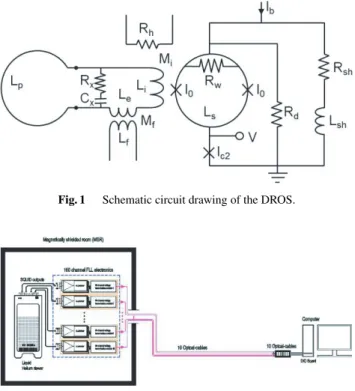
Fig. 1 Schematic circuit drawing of the DROS.
Fig. 2 SQUID control with optical cables.
noise. Among the SQUID schemes having higher flux-to- voltage transfers than standard DC-SQUIDs, KRISS devel- oped double relaxation oscillation SQUID (DROS) sensors, and adopted them in several MCG and MEG systems. The DROS consists of a hysteretic DC SQUID (signal SQUID) and a hysteretic junction (reference junction) in series, and shunted by relaxation circuit of an inductor and a resis- tor. DROS works as a comparator of critical currents be- tween the signal SQUID and the reference junction. Fig- ure 1 shows the schematic drawing of the DROS. In typi- cal DROSs, the flux-to-voltage transfers are about 1 mV/Φ0. When DC preamplifier made of SSM2210 transistors with input voltage noise of 1 nV/√
Hz at 100 Hz was used, the equivalent flux noise of the preamplifier is about 1μΦ0/√
Hz at 100 Hz. In terms of flux noise power, preamplifier adds about 10% of the total flux noise power, meaning that the contribution of preamplifier to the total system noise is neg- ligible in practical multichannel systems [3], [4].
Typically, the output of flux-locked loop (FLL) circuit are passed though the analog signal processing (ASP) cir- cuit, which consists of high-pass filter, low-pass filter, notch filter and amplifier. This ASP circuits can distort phases of signals, especially when the signal frequency components are close to the cut-offfrequencies of the filters. KRISS de- veloped FLL circuits having digitization circuit in each FLL board, so that the digitized multichannel FLL outputs are measured directly by computer via fiber-optic cables. Fig- ure 2 shows the SQUID measurement and control circuits.
By removing ASP rack, consumption of electric power was reduced much.
2.2 Planar Gradiometer Systems
Planar gradiometers having both SQUID sensor and thin- film pickup coil on the same wafer or on the same plane of the substrate (printed circuit board) have advantage of higher intrinsic balancing than axial gradiometers. 64- channel MCG systems having first-order planar gradiome- ters of baseline 40 mm were developed in KRISS, and were installed at 4 hospitals; Yonsei University Hospital (Seoul), Samsung Medical Center (Seoul), Kyung Hee University Hospital (Seoul), and National Taiwan University Hospital (Taipei). These planar gradiometer arrays measure magnetic field components tangential to the chest surface. Since tan- gential components have field peak just above the current source, sensor coverage area or dewar inner-bottom diam- eter can be reduced, resulting in reduced boil-off rate of cryogenic liquid. In addition, tangential-component mea- surement provides more spatial information in current dis- tribution compared with vertical-component measurement.
Thus, for localization of spatially-dense current distribution, tangential measurement can provide more accurate localiza- tion results [5].
However, possible disadvantage of planar gradiome- ters for multichannel systems is longer fabrication time for the thin-film pickup coils, which should be done using pho- tolithographic process on Si-wafers. And, due to mismatch in thermal expansion (or contraction) coefficients between pickup coil (made on Si-wafer) and supporting substrate (usually made of fiber-glass reinforced plastic), generated cracks in the pickup coil. Thus, for reliable multichan- nel systems, thin-film pickup coils needed to be replaced by wire-wound axial gradiometers, unless reliable mount- ing method to eliminate cracks of thin-film pickup coils is developed.
2.3 Compact Axial Gradiometer Systems
For reliable pickup coils in multichannel MCG systems, KRISS developed compact wire-wound axial gradiometers.
In wire-wound pickup coils, superconductive connection is needed between pickup coil wires and input coil pads. Con- ventional axial gradiometers have screw blocks for mechan- ical connection between pickup coil and input coil. This bulky connection structure generates stray pickup area. To eliminate the stray pickup area, superconductive shielding enclosure is needed, which should be positioned at suffi- ciently large distance from the distal (compensation) coil of the gradiometer so as not to reduce its balancing fac- tor. KRISS developed a simple superconductive connection method between pickup coil and input coil, where the ends of the pickup coil wire are connected directly into the in- put coil pads using ultrasonic bonding of annealed Nb wire.
In addition to simple assembling process, the effects of this simple bonding structure are that 1) stray pickup area due to the connection structure is negligible, 2) superconduct- ing shielding tube is not needed, 3) and SQUID chip can
be put near the distal coil of the gradiometer. Due to the reduced distance between SQUID chip and distal coil, the liquid level to cool the whole gradiometer could be lower, resulting in longer refill interval of liquid He.
In liquid He dewar, neck and bottom of the dewar are two main heat input routes. To reduce heat input from the dewar neck, the neck diameter was made smaller than the bottom diameter. The 64-channel sensor array was divided into 4 parts, each with 16 gradiometers, and each part was installed separately on the dewar bottom. In this assembly, mechanical support is not needed, so that mechanical vibra- tion can be reduced [6].
2.4 Magnetically Shielded Room
Depending on the noise condition and MCG signals to be measured, optimum combination of magnetically shielded room (MSR) and pickup coil is needed. In urban sites, long-baseline first-order gradiometer inside a moderately shielded room is practical combination. Considering the high cost of Permalloy, it is necessary to reduce the amount of Permalloy used in the MSR. As the thickness of Permal- loy plates decreases, its permeability increases. Thus, by overlapping thin (typically 0.35 mm) plates, the total weight of Permalloy could be reduced than using thick plates, typi- cally 1 mm thick.
3. Transfer of MCG Technology
3.1 Key Feature of KRISS MCG System
While keeping the high sensitivity of MCG systems, eco- nomic aspect of the systems is very important for both man- ufacturer and hospital. The MCG system KRISS devel- oped has characteristics of high sensitivity (white noise level around 3 fT/√
Hz at 100 Hz), compact flux-locked loop elec- tronics by using DROS sensors, compact pickup coil struc- ture by simplifying superconductive bonding structure, low boil-offrate of liquid He (about 3 L per day) while keeping the diameter of sensor array large enough, and light MSR by using higher-permeability thin Permalloy plates.
3.2 Technology Transfer to Biomagnetik Park GmbH In August 2010, KRISS made a contract with Biomagnetik Park GmbH (BMP), Germany, for licensing MCG technol- ogy. And KRISS installed two MCG systems in Hamburg hospitals, in September of 2011 and April of 2012, respec- tively. Figure 3 shows a picture of the MCG measure- ment using the system installed at Asklepios Klinik Ham- burg Harburg, Hamburg. For the medical device, BMP got the Conformite Europeenne (CE) certificate in January of 2012. Using the first system installed in Asklepios Klinik Hamburg Harburg, about 1,000 patients were measured for stress-MCG test, and the results showed very high diagnos- tic accuracy in diagnosing ischemic heart disease; sensitiv- ity of about 98% and specificity of over 90%.
Fig. 3 MCG installed at Asklepios Klink Hamburg Hanburg, Germany.
3.3 High Temperature SQUIDs for MCG
SQUID magnetometers based on high-temperature YBCO thin film on bi-crystal SrTiO3 substrates were fabricated and applied for small-scale multichannel MCG system. The white noise level of these magnetometers are in the range of 30∼50 fT/√
Hz at white. This sensitivity allows measure- ments of MCG signals with acceptable signal-to-noise level, if averaging of repetitive signals is done. 16-channel MCG system was fabricated, but the poor reliability of SQUIDs made it difficult to operate all the SQUIDs working for sev- eral days. Thus, fewer SQUID, seems more practical to re- duce the work load for sensor fabrication and to provide re- liable operation. For example, in an MCG system having 6 SQUIDs in a row, the patient bed was moved 6 times to make 6×6 measuring sites, which is just sufficient to cover the major MCG information [7]. In addition, a small and portable single-channel MCG system with table-top shield- ing box was developed. Since this single-channel system has short SQUID-to- sample separation, about 2 mm, higher signal amplitude can be obtained even for mice. Using this system, MCG measurements on rats and mice were done [7], [8].
4. Multichannel Magnetoencephalography Systems
4.1 Whole-Head MEG System
Several MEG systems were developed in KRISS, with sev- eral types of magnetic sensors, and several cooling meth- ods. Whole-head MEG systems having integrated magne- tometers of 150 or 250 channels were fabricated. But, mag- netometer system needs thick magnetically shielded room, and practical applications in urban environment were lim- ited. Axial gradiometers with 50-mm baseline seem suitable
Fig. 4 MEG installed at Yonsei University Hospital Seoul.
for MEG measurements in moderately shielded rooms [9].
Two axial gradiometer systems were installed in 2 hospitals (Seoul and Taipei) for brain research [10], [11]. These mag- netometer systems and first-order axial gradiometer systems were cooled directly with liquid He. Figure 4 shows the whole picture of the MEG system installed at Yonsei Uni- versity Hospital, Seoul.
Wire-wound magnetometers installed in the vacuum space, so called sensor-in-vacuum, was developed and tested to have reduced boil-offrate of liquid He.
5. Other SQUID Applications
5.1 Nuclear Magnetic Resonance at Ultra-Low Field Low-field nuclear magnetic resonance (LF-NMR) at micro tesla magnetic field with SQUID as the signal detector is under development at KRISS. The main goal of the devel- opment is to image the direct neural current. Though the imaging field intensity of LF-NMR is much weaker than the conventional NMRs, the pre-polarization field for LF-NMR is not so weak, at least several tens of mT is needed. To enhance the NMR signals with lower pre-polarization field, dynamic nuclear polarization (DNP) method is applied [12].
Preliminary application of the LF-NMR to detect NMR sig- nals from food is under way.
5.2 Micro-Calorimeter for Radiation Detection
Transition-edge sensor or metallic magnetic calorimeter with SQUID as the current sensor was developed at KRISS for radiation detection from x-ray toγ-ray. Absorbed par- ticle energy is converted into thermal energy of a gold ab- sorber, and its temperature rise was detected using SQUID, which shows much better energy resolution than conven- tional Si-based detectors [13].
5.3 Measurement of Ultra-Small Force Using SQUID Micro-bridge SQUID fabricated at the end of a cantilever chip was developed to detect very weak force or weight.
KRISS developed the flux-quantum force device capable of detecting 10−5g, and generating force of about 10 pN. This technology could be used for future quantum force standard
[14].
6. Conclusion
In Korea, the major development and applications of SQUIDs were directed to biomagnetic measurements, us- ing mainly low-Tc SQUIDs. Multichannel MCG systems were shown to have good technical competitiveness, and the MCG technology was transferred to BMP in Germany. In MEG technology, some optimization of MEG systems to improve practicality was done. But, big improvement seems remain which could eliminate the weekly refill of liquid He and reduce the weight of the MSR. For the area of high-Tc
SQUIDs, much effort was given, but commercial applica- tions were not successful yet, due to limited yield of SQUID fabrication and lack of reliability of the SQUIDs. And some few-channel systems for small-animal MCG or biological study are going on. The LF-NMR technology is under de- velopment, and its practical application study is under way.
Acknowledgments
The authors acknowledge Dr. Y.H. Kim and Dr. J.H. Choi for providing information on SQUID applications for radia- tion detection and small-force measurement, respectively.
References
[1] S.H. Moon, B. Oh, H.T. Kim, B.C. Min, Y.H. Lee, H.C. Kwon, J.M. Kim, Y.K. Park, and J.C. Park, “Two-channel high-Tc SQUID magnetometers for magnetocardiograms,” J. Kor. Phys. Soc., vol.31, pp.342–346, 1997.
[2] J. Gohng, E.H. Lee, I.H. Song, J.H. Sok, S.J. Park, and J.W. Lee,
“Directly coupled DC-SQUIDs of YBCO step-edge junctions fabri- cated by a chemical etching process operating at 77 K,” IEEE Trans.
Appl. Supercond., vol.7, no.2, pp.3694–3697, 1997.
[3] Y.H. Lee, H. Kwon, J.M. Kim, Y.K. Park, and J.C. Park, “Noise characteristics of double relaxation oscillation superconducting quantum interference devices with reference junction,” Supercond Sci. Technol., vol.12, pp.943–945, 1999.
[4] Y.H. Lee, H. Kwon, J.M. Kim, K. Kim, I.S. Kim, and Y.K. Park,
“Double relaxation oscillation SQUID system for biomagnetic mul- tichannel measurements,” IEICE Trans. Electron., vol.E88-C, no.2, pp.168–174, Feb. 2005.
[5] Y.H. Lee, J.M. Kim, K. Kim, H. Kwon, K.K. Yu, I.S. Kim, and Y.K. Park, “64-channel magnetocardiogram system based on double relaxation oscillation SQUID planar gradiometers,” Supercond. Sci.
Technol., vol.19, pp.S284–S288, 2006.
[6] Y.H. Lee, K.K. Yu, J.M. Kim, H. Kwon, and K. Kim, “A high- sensitivity magnetocardiography system with a divided gradiometer array inside a low boil-offdewar,” Supercond. Sci. Technol., vol.22, 114004, 2009.
[7] I.S. Kim, S.H. Oh, K.W. Kim, Y.H. Lee, S.G. Lee, and Y.K. Park,
“Development of a 6-channel high-TcSQUID magnetocardiography system,” IEEE Trans. Appl. Supercond., vol.17, no.2, pp.804–807, 2007.
[8] I.S. Kim, S. Ahn, C.H. Lee, and Y.H. Lee, “Development of a mouse biomagnetic measurement system by using a high-Tc SQUID mag- netometer,” IEEE Trans. Appl. Supercond., vol.21, no.3, pp.493–
496, 2011.
[9] Y.H. Lee, K.K. Yu, H. Kwon, J.M. Kim, K. Kim, Y.K. Park, H.C.
Yang, K.L. Chen, S.Y. Yang, and H.E. Horng, “A whole-head mag- netoencephalography system with compact axial gradiometer struc- ture,” Supercond. Sci. Technol., vol.22, 045023, 2009.
[10] Y.S. Park, B.S. Kim, D.K. Lee, S.K. Lee, H. Kwon, K. Kim, Y.H.
Lee, and J.W. Chang, “Assessment of non-motor hearing symptoms in hemifacial spasm using magnetoencephalography,” Acta Neu- rochir, vol.154, pp.509–515, 2012.
[11] K.L. Chen, H.C. Yang, S.Y. Tsai, Y.W. Liu, S.H. Liao, H.E. Horng, Y.H. Lee, and H. Kwon, “The stability of source localization in a whole-head magnetoencephalography system demonstrated by au- ditory evoked field measurements,” J. Appl. Phys., vol.110, 074702, 2011.
[12] S.J. Lee, K. Kim, C.S. Kang, S.M. Hwang, and Y.H. Lee,
“Pre-polarization enhancement by dynamic nuclear polarization in SQUID-based ultra-low-field nuclear magnetic resonance,” Super- cond. Sci. Technol., vol.23, 115008, 2010.
[13] Y.S. Jang, G.B. Kim, K.J. Kim, M.S. Kim, H.J. Lee, J.S. Lee, K.B.
Lee, M.K. Lee, S.J. Lee, H.C. Ri, W.S. Yoon, Y.N. Yuryev, and Y.H. Kim, “Development of decay energy spectroscopy using low temperature detectors,” Appl. Rad. Isotope, vol.70, pp.2255–2259, 2012.
[14] J.H. Choi, M.S. Kim, Y.K. Park, and M.S. Choi, “Quantum-based mechanical force realization in piconewton range,” Appl. Phys.
Lett., vol.90, 073117, 2007.
Yong-Ho Lee received the B.S. in Physics from Kyungpook National University in 1984, and M.S. and Ph.D. degrees in Physics from Ko- rea Advanced Institute of Science and Technol- ogy in 1986 and 1989, respectively. Since 1989, he has been working in Korea Research Institute of Standards and Science to study SQUID sen- sors and biomagnetic measurements.
Hyukchan Kwon received the B.S. and M.S. degrees in Nuclear Engineering from Seoul National University in 1979 and 1981, re- spectively, and Ph.D. degree in Brain Engineer- ing from Hokkaido University in 2005. Since 1981, he has been working in Korea Research Institute of Standards and Science to study SQUID sensors and biomagnetic measurements.
Jin-Mok Kim received the B.S. degree in Electrical Engineering from Kyungpook Na- tional University in 1984, and Ph.D. degree in Electrical Engineering from Kyushu University in 2008. Since 1984, he has been working in Ko- rea Research Institute of Standards and Science to develop SQUID electronics.
Kiwoong Kim received the B.S., M.S. and Ph.D. degrees in Physics from Korea Advanced Institute of Science and Technology in 1995, 1997 and 2002, respectively. Since 2002, he has been working in Korea Research Institute of Standards and Science to study biomagnetic sig- nal processing and analysis.
Kwon-Kyu Yu received the B.S. and M.S.
degrees in Electronic Material Engineering from Kyungsang National University in 1995 and 2000, respectively. Since 2003, he has been working in Korea Research Institute of Stan- dards and Science to study high-Tc SQUIDs, low-TcSQUIDs and biomagnetic instrumenta- tions.
In-Seon Kim received the B.S. and M.S.
degrees in Electrical Engineering from Kyung- pook National University in 1980 and 1982, re- spectively, and Ph.D. degree in Material Science from Tokyo Institute of Technology in 1993.
He joined Korea Research Institute of Standards and Science in 1984. He is currently developing high-TCSQUID sensors and systems for mag- netocardiography.
Chan-Seok Kang received the B.S., M.S., and Ph.D. degrees in Physics from Korea Uni- versity in 2000, 2002, and 2009, respectively.
Since 2009, he has been working in Korea Re- search Institute of Standards and Science to study magnetocardiography and low-field nu- clear magnetic resonance.
Seong-Joo Lee received the B.S. degree in Physics from Seogang University in 2002, and M.S. and Ph.D. degrees in Physics from Korea Advanced Institute of Science and Technology in 2004 and 2009, respectively. He joined Ko- rea Research Institute of Standards and Science in 2009. He is currently developing low-field NMR and MRI using SQUIDs.
Seong-Min Hwang received the B.S., M.S., and Ph.D. degrees in Physics from Korea in 1997, 1999 and 2005, respectively. From 2005 to 2008, he worked as Post Doctor in Physics from University of Pittsburgh. Since 2009, he has been working in Korea Research Institute of Standards and Science to develop low-field NMR and MRI using SQUIDs.
Yong-Ki Park received the B.S. and M.S.
and Ph.D. degrees in Material Science from Seoul National University in 1975, Korea Ad- vanced Institute of Science and Technology in 1977 and Northwestern University in 1985, re- spectively. Since 1985, he has been working in Korea research Institute of Standards and Sci- ence to study SQUID sensors and biomagnetic measurements.