Japan Advanced Institute of Science and Technology
Title ビスイミノアセナフテン構造を有する材料の合成と電
気化学エネルギーデバイスへの応用
Author(s) Patnaik, Sai Gourang Citation
Issue Date 2018‑09
Type Thesis or Dissertation Text version ETD
URL http://hdl.handle.net/10119/15536 Rights
Description Supervisor:松見 紀佳, マテリアルサイエンス研究科
, 博士
Synthesis of Bisiminoacenaphthene (BIAN) Based Materials and Their Application to
Electrochemical Energy Devices
Sai Gourang Patnaik
Japan Advanced Institute of Science and Technology
Doctoral Dissertation
Synthesis of Bisiminoacenaphthene (BIAN) Based Materials and Their Application to
Electrochemical Energy Devices
Sai Gourang Patnaik
Supervisor: Professor Noriyoshi Matsumi
School of Materials Science
Japan Advanced Institute of Science and
Technology
The current thesis is focused on compounds of the family bis(aryl)acenaphthenediimine (Ar-BIAN) (Figure 1). They have long been employed as ligands for transition metals and their metal complexes have been utilized as catalysts in wide spectrum of reactions.
However only recently the rich redox chemistry of Ar- BIAN based compounds have been evaluated. These compounds are characterized by high chemical stability and have wide scope for functionalization owing to the availability of suitable precursors. And more importantly, they have the inherent ability to act as electron sponge in a reversible
manner. Feudskin and coworkers have shown that these group of ligands can easily take up to four electrons from reactive metals like Na/Li and form corresponding complexes, which can also disproportionate to come back to their original state. This ability to stabilize various reactive metals in redox active manner can thus have interesting applications in energy storage devices. By utilizing these group of materials on electrode surface, their electron reservoir property can help in providing better interfacial characteristics, especially when
the interface is a dynamic one. Hence, in an effort to capitalize on these unexplored but potential properties of these group of materials, we synthesis various functional materials with end applications in Li-ion and Li- air based energy devices. (Figure 2)
Chapter 2: BIAN based polymer binder First line of research was focused on designing BIAN based binder materials for Li-ion batteries (LiB’s). The application of band gap engineered binders can have great effect on the ultimate device performance, even though binder constitute only a small fraction of the gravimetric weight of the electrode. Our results showed that, use of BIAN based functional diamine polymer binder leads to performance improvement resulting from an enhanced SEI.
Bis-imino-acenaphthequinone (BIAN)- Fluorene copolymer (π conjugated polymer
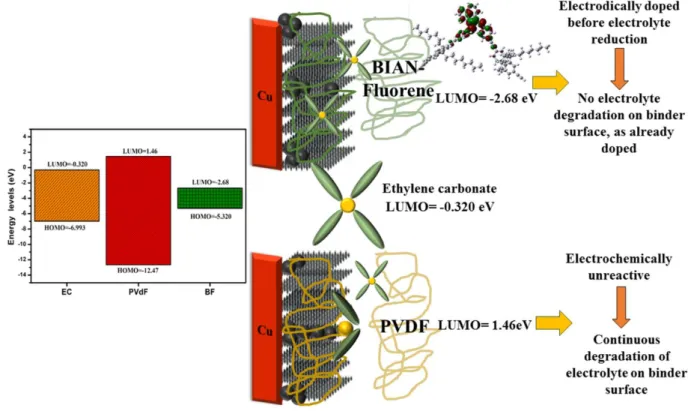
bearing BIAN and fluorene units) binder (Figure 3) was designed, synthesised and adopted for preparation of graphite electrode laminate in lithium-ion batteries. Density functional theory calculations using Gaussian 09 showed that the polymer had Lowest unoccupied molecular orbitals (LUMO) levels lower than that of the LUMO of carbonate based electrolytes and hence would undergo reduction before the reduction of the Figure 1. Bis(aryl)acenaphthenequinonediimine
Figure 2. Graphical abstract of current research
Figure 3. Functional components of BIAN-Fluorene biunder
electrolyte reduction derived SEI. Compared to the traditional PVDF binder, the electrode with BIAN-Fluorene binder exhibited significantly enhanced electrochemical performance in terms of rate capability, specific capacity and cycling behavior. At a rate of 1C, the electrode with BIAN-Fluorene binder exhibited more than 250 mAhg-1 capacity after 100 cycles while the electrode based on PVDF binder only delivered 165 mAhg-1. The significant improvement of cycling performance was due to the improvement of adherence of the electrode laminate to the current collector and improved interface.
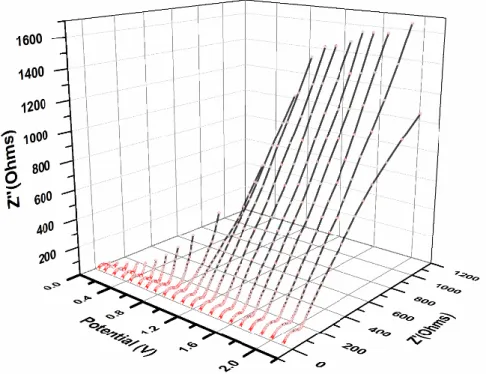
Electrochemical impedance spectroscopy (EIS) and dynamic electrochemical impedance spectroscopy (DEIS) studies showed the formation of an improved interface with BIAN- Fluorene based binder.
Chapter 3: BIAN based polymeric electrocatalyst
The second application was to use BIAN based materials as electrocatalyst for Oxygen reduction reaction (ORR) in fuel cells and Li-air batteries. We could design active site defined polymeric electrocatalyst for ORR, for the first time. The performance of the catalyst was in par with other metal free ORR catalysts and with much higher stability than conventional Pt/Vulcan based electrocatalysts. The further development of this kind of active site defined polymeric electrocatalayst and their corresponding metal coordinated analogues will thus be a big leap in transition from random high energy consuming annealed carbon based electrocatalysts to defined materials under ambient conditions.
Design, synthesis and performance evaluation of functional polymer material with defined active sites for oxygen reduction reaction (ORR) catalytic activity in aqueous as well as non-aqueous media is reported.
BIAN-paraphenylene (BP) copolymer having imine backbone (Figure 5) was synthesized via solution based polycondensation. The as
synthesized polymer itself showed considerable ORR activity, comparable to that of other reported metal free heteroatom doped carbon materials. The composites of the polymer with graphene oxide (GO) sheets (GO/BP) were also synthesized under moderate temperature conditions (4000C) with the polymer remaining intact. The composites showed further enhanced electrochemical activity owing to the synergistic effect of GO and active site defined polymer material. We also tried to evaluate
the nature and basis of catalytic activity on polymer surface by different techniques. The cyclic voltammograms showed two distinct ORR peaks, indicating two different active sites. This was also in agreement with Mulliken charge distribution analysis from Density functional theory (DFT) studies, which
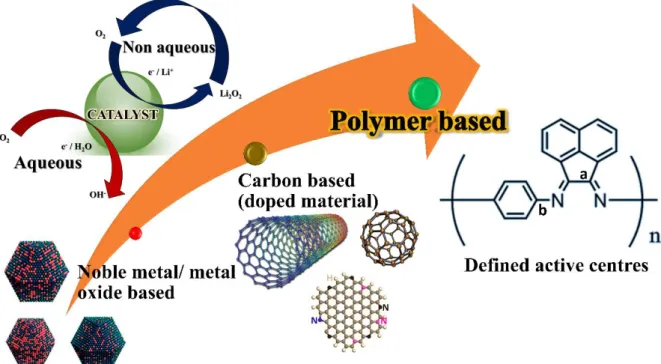
Figure 5. Schematic showing evolution of ORR catalysts and current polymeric catalyst
Figure 4. Graphical abstract of functioning of the novel polymer binder
polymer itself and its composites with GO showed excellent stability for ORR in non-aqueous medium and ether based solvents with dissolved lithium salts. ORR in non-aqueous solvents being the pre-requisite for utilization in Li- air batteries, the polymeric catalyst material is thus a promising alternative to conventional catalysts for ORR (Figure 6). Also, the polymer itself can be used as an ORR active binder for electrode slurry preparation, thereby enhancing catalyst performance.
Chapter 4: BIAN based functional additive for high voltage cathodes
Inspired with these results, we further designed BIAN based band gap engineered additives for performance and storage enhancement of high voltage cathodes for LIB’s (Figure 7). The results were quite promising, giving very good cycling stability and capacity retention upon storage. We also performed XPS studies to understand the surface evolution during cycling at high voltage and found that, BIAN based additive reduces irreversible electrolyte oxidation on electrode surface as compared to the case without any additives.
Keywords: Bisiminoacenaphthene, binders, Li-ion batteries, oxygen reduction reaction, electrocatalysts, high voltage cathodes, electropolymerisation
Figure 6. Graphical summary of BIAN based ORR active polymer activity
Figure 7. Graphical summary of BIANODA based functional additives for high voltage cathodes
“Synthesis of bisiminoacenaphthene (BIAN) based materials and Their application to electrochemical energy devices”. This work was performed under the supervision of Prof.
Noriyoshi Matsumi at the School of Materials Sciences, Japan Advanced Institute of Science and Technology during the period 2015-2018.
The importance of electrochemical technologies as alternative energy source has become very prominent over the years due to various drawbacks of traditional fossil fuel based technologies.
With the greatest advantage of mobility and environmental friendly nature, electrochemical technologies like batteries and fuel cells have emerged as technology of the future, with so many applications already in commercialisation process. In this area, polymer and material chemistry plays and important role as the performance of any electrochemical device depend largely on the type materials used. Similarly, bisiminoacenaphthene (BIAN) based materials have long been the first love of many organometallic chemists due to their excellent ability to almost all transition metals atoms. Their electron reservoir nature have abled them to coordinate even to s and p block elements. However, there are no reports of their utilisation in energy devices in the electrodes. This thesis thus draws from these basic properties of BIAN based materials and is an effort to realise their properties next to electrodes in various electrochemical set ups. Briefly, the thesis deals with BIAN based materials for application as electrode binder, polymer electrocatalysts and as novel additives for high voltage cathodes.
The thesis ends with a general summary where the author also introduces other probable application of BIAN based materials.
Sai Gourang Patnaik
School of Materials Science
Japan Advanced Institute of Science and Technology September 2018.
of Materials Sciences, Japan Advanced Institute of Science and Technology during the period 2015-2018. The author thus extends his heartfelt gratitude to his supervisor Prof. Noriyoshi Matsumi for his constant support, guidance and motivation throughout the course of this work.
The author also takes this opportunity to thank the members of the review committee, Prof.
Kaoru Dokko, Assoc. Prof. Yuki Nagao, Prof. Yoshifumi Oshima, and Assoc. Prof. Toshiaki Taniike for their valuable time to evaluate this thesis.
The author also acknowledges the opportunity given by Prof. Masahiro Miyauchi to perform the minor research project in his Lab in Department of Metallurgy and Ceramics Science, Tokyo Institute of Technology. The author also expresses his gratitude to Assistant Prof. Akira Yamaguchi for his valuable inputs during the work carried out at Tokyo Institute of Technology.
In the course of work at JAIST, the author is thankful for the useful suggestions and contributions to this thesis made by former Assistant Prof. Raman Vedarajan (currently scientist at ARCI, India). The author is also thankful to Assistant Prof. Rajasekhar Badam for his valuable inputs. The author is also grateful to all the past and current lab members of Matsumi lab for all their cooperation, discussions and help during this work.
The author also extends heartfelt gratitude to Dr. Takahiro Kitano from TEC ONE Co. Ltd for all his timely help, discussion and inputs during the experimental work. His long standing experience in battery fabrication was a great asset for the author to troubleshoot device fabrication problems.
Last but not least, the author is eternally indebt to his parents, close friends and dear ones who stood by the author at all the times, providing much needed emotional and mental strength to keep the good work going.
At last, the author extends deep sense of reverence and gratitude to the almighty for the good spirit all around.
Sai Gourang Patnaik
School of Materials Science
Japan Advanced Institute of Science and Technology September 2018.
Acknowledgement Chapter 1. Introduction
1.1. Abstract……….1
1.2. Introduction to electrochemical power sources………2
1.2.1. Electrochemical power sources 1.2.1.1. Batteries……….4
1.2.1.2. Fuel cells………..15
1.2.1.3. Electrochemical Capacitors………. 17
1.3. Polymeric/Organic materials in energy devices………. 19
1.3.1. Polymer electrolytes………19
1.3.2. Polymer electrodes………..20
1.3.3. Polymer binders………...23
1.3.4. Polymeric membrane separators…….………24
1.4. BIAN based materials……….26
1.5. Objective and scope of thesis………..32
References………..34
Chapter 2. BIAN based Functional Polymer Binder for Li-Ion Battery Anodes 2.1. Abstract………...39
2.2. Introduction……….40
2.3. Experimental Section………..42
2.3.1. Synthesis & characterisation………42
2.3.2. Instrumentation……….48
2.3.3. Electrode Fabrication………...48
2.3.4. Electrochemical measurements/Instrumentation……….49
2.3.5. Dynamic Electrochemical Impedance Spectroscopy (DEIS)………..50
2.4. Results and Discussions………..51
2.4.1. Theoretical studies………51
2.4.2. Electrochemical characterisation………..53
2.4.3. Physical characterisation………..64
Chapter 3. BIAN Based Electroactive Polymer with Defined Active Centers as Metal Free Electrocatalysts for ORR in Aqueous and Non-aqueous Media
3.1. Abstract………...73
3.2. Introduction……….74
3.3. Experimental section………...76
3.3.1. Materials and methods……….76
3.3.2. Synthesis………..76
3.4. Results and Discussions………..78
3.5. Conclusion……….101
References………102
Chapter 4. BIAN Based Functional Additive for High Voltage LiMn1Ni1Co1O2 Cathodes 4.1. Abstract………106
4.2. Introduction………...107
4.3. Experimental section……….109
4.3.1. Materials and methods………...109
4.3.2. Synthesis………110
4.4. Results and discussions……….114
4.5. Conclusion……….133
References………134
Chapter 5. General Conclusions 5.1. Conclusions………...138
5.2. Future prospects………140
Publications and Conferences..………..142
Curriculum viate……….145
1
Chapter 1 Introduction
1.1 Abstract
Electrochemical power sources are integral part of our day to day energy requirements.
From portable electronic gadgets to electric vehicles, electrochemical technologies have been used widely these days owing to their numerous benefits compared to traditional energy sources. Polymeric materials have been widely used in many electrochemical devices as binders, separators, electrolytes etc. and hence serve as important constituents of most of the final devices that we use today. The chapter also introduces bisiminoacenaphthene (BIAN) based materials and their interesting properties that can be game changers in various energy devices like Li-ion batteries and in fuel cells as catalysts.
2
1.2 Introduction to electrochemical power sources
The beginning of industrial revolution saw vast quantities of fossil fuels being utilized to power the economy and contributed to wide scale development of the society as a whole. Fossil fuels are basically organic matter made from the remains of flora and fauna subjected to high pressure and heat, deep within the earth over long time. There are three main types of fossil fuels namely
1. Coal, 2.Petroleum, and 3.Natural Gas
During the industrial revolution, fossil fuels were easily available energy source. Steam engines, the main mode of transportation during that period, used coal as a fuel source from early on to compensate for a lack of firewood and charcoal. The most important benefit of coal was that, an inexhaustible supply was available just few feet below the ground. Also, coal being the most abundant fossil fuel on the planet, has been used in thermal power stations all over the world for generation of electricity. Gradually with the advent of better technology to undertake drilling and mining, various other forms of fossil fuels like petroleum products, natural gas etc. became easily accessible and hence saw wide scale application. Petroleum products have been used as transportation fuels, fuel oils for heating and electricity generation, asphalt and road oil, and feedstocks for making the chemicals, plastics, and synthetic materials that are in nearly everything we use. Natural gas and bitumen are less popular compared to coal and petroleum products, but have been used as a source of energy for heating, cooking, and electricity generation.
They are also used as a fuel for vehicles and as a chemical feedstock in the manufacture of plastics and other commercially important organic chemicals.
3 However fossil fuels come under the category of non-renewable energy materials and hence have limited availability. More important point of concern about their utilization is their adverse effect on the environment. With increase in global warming and greenhouse effect due to large amount of carbon dioxide in the environment, sustainable utilization of energy resources has caught wide scale attention. In this regard, various renewable energy sources have been constantly banked upon in the recent years. Solar energy, wind energy, hydroelectricity etc. have got persistent research focus and hence have been in the forefront of research focus all over the world. However, to supply ready energy and fulfill the intermittent gap between full-fledged usages of these renewable sources and traditional fossil fuel based energy resources, alternative power options are necessary.
Electrochemical energy production is one of the most promising technologies of 21st century and has been under serious consideration as an alternative power source.
Tremendous effort has been made in developing existing technologies as well as in exploring new technologies in this area. Electrochemical energy can thus be the best available alternative energy source if it can meet the requirements of sustainability and nature friendly approach. Many of the existing technologies have been totally revamped and some of them have gained commercial success too. With companies like Tesla and Toyota gearing up for full scale battery operated vehicles and fuel cell based vehicles already available in prototype (Toyota Mirai and Mercedes Benz F-cell), the future of electrochemical techniques seems quite promising. There is way to go in this area still with various challenges like wide scale applicability, durability, longevity etc. This calls for focused research input and fundamental understanding of various electrochemical techniques, which is the main purpose of this thesis.
4
1.2.1 Electrochemical power sources
Over the years, tremendous development in various electrochemical techniques has brought various unexplored domains into current research focus for energy storage and conversion. But, on a fundamental level, three major systems of application can be defined, which are
I. Batteries II. Fuel cells
III. Electrochemical capacitors
All the above three systems are similar in the fact that the energy providing processes occur at the two phase boundary of electrode/electrolyte interface and more importantly, the electron and ion transport processes are well separated in all the three systems1. 1.2.1.1 Batteries
In very simple terms, a battery can be defined as a chemical power source that can generate certain amount of electrical energy when required. Coming to the chemistry part of it, in a battery, electrical energy is generated by conversion of chemical energy via redox reactions at the respective electrodes (anode and the cathode) (Figure 1). Reactions at the anode occur at lower electrode potentials than at the cathode. The more negative electrode is designated the anode, whereas the more positive one is denoted as cathode.
Individually, a battery comprises of a cathode, an anode and an ion-conducting electrolyte.
The electrolyte performs the dual role: Acting as a separator between the electrodes and ion-conducting media between the electrodes. Also, an external connection between the electrodes provides the pathway for the electron movement, thereby resulting in the
5 completion of the electrochemical circuit. Using this as the general concept, batteries can
be made with all sorts of different electrolytes and electrodes. The most basic mode of classification of the batteries is based on their ability to be recharged. As per this criteria, batteries can be classified into two types, namely primary and secondary (Table 1).
Primary batteries are the ones that cannot normally be recharged; whereas secondary batteries can be recharged. Primary cells cannot be recharged because their cell chemistry is such that they don’t allow reversibility of the chemical reactions that provide energy in the first place. This demerit thus limits their repeated utilization without the need of refilling or reconstruction. To overcome this liability and obtain more reversible chemistry, secondary batteries were developed which allow repeated usage just by reversing the direction of the chemical reactions inside. The reasons as to why the primary batteries cannot be recharged are explained below
1. Electrolyte instability: Most primary cells utilize aqueous electrolytes, which can get electrolyzed at higher potentials upon reversing, releasing gases. These released
Figure 1. Example of a battery (Daniel cell) showing the different components and its thermodynamics (adapted from 1)
6 gases in turn can lead to cell rupture and other problems like loss of contact, thereby making it impossible to recharge these kind of cells.
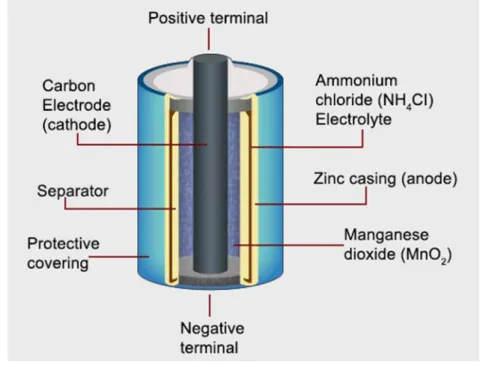
2. Structural change in electrodes: During discharging in a primary cell set up, part of electrode material itself undergoes dissolution into the electrolyte solution by undergoing specific chemical change (oxidation or reduction). However, when the reverse potential is applied to recharge the cell, the subsequently formed electrode does not revert back to its original state, thereby, making recharging difficult and unsafe. For example, in a standard dry cell consisting of and outer zinc electrode(Figure 2)2 the discharge process occurs by dissolution of zinc ions into the electrolyte. This causes zinc to be stripped out of the electrode at certain places.
However, on applying the reverse potential, zinc does not get deposited on the exact same places from where it was tripped out and hence leads to irregular growth of electrode during recharging. In a similar manner, the lead acid batteries also see the formation of large insoluble lead sulphate crystals when reverse potential is applied in an effort to recharge them.
3. Insulator damage/ Short circuit: Direct contact between the two opposite electrodes results in internal cell short circuit leading to permanent damage to the cell. Most efforts to recharge primary cells leads to formation of irregular dendrite growth, which can pierce through the insulator or separator between the two electrodes, leading to short-circuit.
7
Table 1. Examples of different kind of developed technologies in the primary and secondary batteries category (Wikipedia)
Figure 2. Components of a typical primary type cell (dry cell)
8 A secondary battery can be recharged after utilization unlike primary batteries. This ability comes from inherent redox couples that operate with thin the individual cells. It is composed of one or more electrochemical cells. During charging cycle, the cathode is oxidized, releasing electrons, and the anode is reduced, taking up electrons. The flow of electrons in the external circuit can thus be utilized to obtain electricity. The electrolyte chosen is such that it does not get oxidized or reduced in the entire operating potential window, and hence maintain a steady flow of ions during the entire operation. By exploiting their reversible electrochemistry, these portable power sources can thus be used and re-used a great number of times. Depending on the technology used, rechargeable batteries can cycle up to 200 times and some may even reach thousands.
Considering their recharging ability, they are considered renewable (for a finite time span) which makes them environmentally friendly and also do not evolve poisonous gases. And to add to that, because of their re-usability, there are fewer batteries going into the landfills.
Secondary battery technology is not a new phenomenon and different types of these rechargeable cell technologies are available today depending on the type of electrodes, electrolyte and design used. Few of the most popular types are described below Nickel Cadmium Batteries (NiCds)
NiCds have been very popular among the secondary category owing to their longevity, ability to retain constant operating potential during discharging a low maintenance. The cathode is nickel hydroxide, a cadmium compound serves as anode and aqueous KOH is used as electrolyte (Figure 3). During charging, nickel hydroxide in cathode (Ni(OH)2)
9 changes to nickel oxide hydroxide (NiOOH).
Whereas cadmium hydroxide (Cd(OH)2) in the anode releases Cd2+ ions. When the battery is discharged, cadmium ions reacts with NiOOH to form back Ni(OH)2 and Cd(OH)2.
Cd + 2H2O + 2NiOOH ⇆ 2Ni(OH)2 + Cd(OH)2
Lead Acid Batteries (LABs)
LABs are undoubtedly the most developed batteries chemistries with more than 150 years since their inception. It is a mature technology and utilized in lighting, UPS and high current demanding applications. The LABs are made up of electrode plates dipped in aqueous sulphuric acid. The plates have
grooves containing the active material.
The plates are divided into positive and negative plates. Pure lead serves as the cathode and lead oxide serves as the anode (Figure 4). A fully charged LAB can thus discharge its current when connected to an external resistance. During discharge, sulphuric acid in contact with the active
Figure 3. Components of a NiCd battery
Figure 4. Components and working of a LAB
10 materials (both anode and cathode), leads to formation of lead sulphate internally. The lead cathode releases positive ions to form lead sulfate and the lead oxide anode supplies electrons in presence of sulfuric acid to form lead sulfate. This leads to the formation of an electric potential across the battery. During charging, the lead sulfate breaks down, and combines with oxygen from ionized water to give back the respective electrode materials. The electrolyte in the LABs is a mixture of sulphuric acid and water. The prime befits of LABs is their low cost and high abuse tolerance. They also have very high shelf life when stored without the electrolyte, thus making them ideal for variety of applications.
Pb (metal) + PbO2 + 2H2SO4 ⇆ 2PbSO4 + 2H2O
Lithium Ion Batteries (LIBs)
LIBs have very high gravimetric energy density and exceptionally low rate of self- discharge, making them ideal candidates for portable electronics and even electric vehicles. A typical Li-ion cell has a four- layer structure. A cathode composed of lithium rich transitional metal oxides, an anode made of lithium intercalation materials, like graphite or silicon, a separator, which is a fine porous polymer film
and an electrolyte made up of lithium salt in an organic solvent which can transport Li ions between the electrodes (Figure 5)3. Unlike the traditional batteries, which are based
Figure 5. Components and working of LIB
11 on dissolution of electrode components, LIBs work on "intercalation" phenomenon and hence have an active edge over other technologies. During charging, lithium in cathode becomes Li+ and moves from layered cathode material, goes through the electrolyte and gets intercalated into the anode. During
discharge, Li+ ions get dissociated from the anode and migrate across the electrolyte and are inserted back into the crystal structure of the host compound of cathode.
At the same time, the electrons travelling in the external circuit are accepted by the host to balance the charge. The process is thus completely reversible theoretically.
Thus the lithium ions pass back and forth
between the electrodes during charging and discharging, while the flow of electrons in the external circuit provides electrical energy.
The materials utilized for the anode, cathode and electrolyte, decide the final performance, capacity, cost, and safety of a particular category of a LIB. However, despite their different categories due to differences in material composition, they share common or general characteristics. Below are the general advantages of LIBs over other rechargeable batteries
Less maintenance: Most traditional battery chemistries like NiCds and LABs require maintenance in the form of schedule cycling to ensure their capacity retention. For example. In NiCds as well as LABs, the deposition of various crystalline substances
Figure 6. Comparison of energy densities of various rechargeable batteries
12 become very severe if not discharged for long time. Hence it becomes very essential to periodically discharge them for maintaining their good capacity. But in case of Li-ion batteries there is no requirement for scheduled discharging because of the improved chemistry of electrolyte and electrodes
Low self-discharge: Almost all batteries face the problem of self-discharge, i.e. the battery start to drain their capacity even without load. Self-discharge occurs because of the same redox reactions that provide energy happening on their own even when no load is connected to the battery. This inevitable in any kind of battery and can never be eliminated fully. However, in LiBs, this phenomenon is almost negligible compared to other battery chemistries. In typical LiBs it is less than 3% a month (it’s around 15 % per month in NiCds)
High energy density: Even though the discharge characteristic of LIBs are much similar to that of NiCds, the energy density of a typical LIB is almost double of that of NiCd.
This high energy density is because of the cathode materials, especially the cobalt based materials which have less weight but provide very high capacity compared to other battery chemistries. This property of LiBs of being capable of delivering high capacity without being too bulky is very useful in modern day gadgets like smart phones, laptops and other portable electronics. The much higher power density offered by LIBs compared to other rechargeable chemistries (Figure 6)4 is thus a big merit.
Fast charging: LiBs charge much faster compared to any other battery chemistries and also have almost no memory effect.
13 Variety of types available: LiBs have the best benefit of having different options specific to the application. The availability of different cathode and anode materials, different electrolytes and additives which have been well optimized, makes it very easy to choose from a variety of options depending on the need of the end application.
Table 25 draws a comparison of various characteristics of different rechargeable batteries.
As evident from the comparison, LIBs definitely enjoy more promising chemistry compared to other6. Also, fortunately, the technology has been successfully extended to various other reactive metals like sodium and magnesium, at least in experimental set ups, thereby already providing viable alternatives for the future. Inspired by the same logic there are other technologies like Li-Sulphur batteries which are still in infant stage but promising.
14
Table 2. Comparison of various characteristics of different rechargeable batteries
15 1.2.1.2 Fuel cells (FC)
FCs generate electricity by performing electrochemical transformation of oxygen and hydrogen based fuel into water. This is different from batteries where limited stored chemical potential energy is converted into electricity. In FCs as long as the outer flow of fuels is maintained, continuous electricity production can be achieved like combustion engines. The only difference is that there is no actual combustion involved. Thus, they are characterized by benefits like very less emissions, high efficiency, reliability, durability, scalability and quiet operation.
Like batteries, FCs also have two electrodes, namely the cathode and anode. Chemical reactions takes place at the electrodes to generate electricity. The electrolyte in the FCs is normally an ion conducting material that helps transfer the ions generated at the electrodes to the opposite side. Since the electrode reactions are sluggish, catalysts are used to speed up the rate kinetics. Hydrogen atoms enter a FC in the anodic side, where a catalytic reaction removes an electron from the hydrogen. This makes the hydrogen atoms positively charged. The stripped electrons flow through the external circuit, providing current for work. Oxygen enters the FC at the cathodic side, takes up electrons and then goes through the electrolyte to the anode, where it combines with protons, generating water as a byproduct (Figure 7). Both anodic as well as the cathodic reactions are kinetically sluggish and hence need catalysts to speed up the process7.
A wide variety of FCs of various scales (few W to MW range) are now commercially available having varied operating regimes and widely varying performance characteristics. These devices can be categorized firstly by the type of electrolyte and then by the type of fuel used. Fuel cells can be further categorized by the operating temperature,
16 with polymer electrolyte membrane fuel cells (PEMFC) typically have the lowest operating temperatures below 100°C and with SOFCs the highest operating around 800°C or above8 (Figure 8).
Figure 7. Components and working of a conventional fuel cell
17 1.2.1.3 Electrochemical Capacitors (EC)
ECs store energy by charge separation at electrode-electrolyte interface. They store electrical energy in the electrical double layer that forms at the interface due to charge separation (Figure 9). This charge separation is achieved by potential dependent reversible adsorption of ions from the electrolyte. Charge separation leads to potential difference which can then be utilized using an external circuit. The energy stored can thus be increased by increasing the surface area of the electrodes and decreasing the distance between the electrodes. However, there is a limit to the potential difference that can be obtained, which depends on the electrochemical stability of the electrolyte/dielectric separating the two electrodes. This is totally different from the way batteries operate.
Figure 8. Types of fuel cells based on operating temperature
18 In batteries, energy storage involves chemical and physical changes in the electrode i.e.
faradaic chemical conversion. However, in case of capacitors, the formation and dissolution of the double layer doesn’t involve any chemical change in the electrodes i.e.
completely non faradaic process. This leads to enhanced stability and cyclability unlike batteries which are prone to degradation upon repeated cycling.
The term EC refers to charged carbon-carbon systems as well as carbon battery electrode and conducting polymer electrode combinations sometimes called ultracapacitors, supercapacitors or hybrid capacitors, depending on the type of materials used.
There are two types of ECs: those with 1) symmetric types: where both positive and negative electrodes are made of the same high-surface-area material (for e.g. Carbon) and 2) asymmetric type: where each electrode is made up of different material (for e.g. one high-surface-area carbon and the other a higher capacity battery-like electrode).
Symmetric ECs have specific energy values up to ~6 Wh/kg and higher power performance than asymmetric capacitors where designs having specific energy values approach 20 Wh/kg.
Figure 9. Components and working of a simple electrochemical capacitor
19
1.3 Polymeric/Organic materials in energy devices
Polymeric materials are ubiquitous in almost all the energy devices. Polymeric materials play an important role in batteries, fuel cells as well as capacitors. They find various applications including electrolyte, electrode/active material, binder for electrodes and separators. Unlike inorganic materials, polymers are characterized by higher degree of synthetic ease and flexibility and hence allowing better customization for specific applications. The following sections briefly describe the various applications of polymers in electrochemical devices.
1.3.1 Polymer electrolytes
A polymer electrolyte can be referred to as a solid solvent that possesses ion transport properties similar to that of the common liquid ionic solution. Polymers can be tailored as ion conductors via appropriate modifications. When combined with appropriate salts, their ionic conductivity can be put to use as an electrolyte. The first report of such electrolyte was Poly-(ethylene oxide) (PEO) with silver salts by Peter wright in 1973. The same group also showed PEO as a host for sodium and potassium salts, thus producing a solid electrical conductor polymer/salt complex9 in 1975. This was followed by the historic report by Armand10 et.al about the utilization of PEO as a polymer electrolyte for Li salts. The coordination of lithium ions through columbic attraction with the negatively charged oxygen atoms on the PEO chains (Figure 10) led to their facile dissociation of lithium salts and further dissolution in the PEO matrix11. The PEO story served as a wonderful prototype material in the 1980s for investigating alternative models of ion transport, and for developing the concept of polymer batteries. Table 3 shows a list of polymer hosts and their highest reported ionic conductivities of their complexes11. The
20 high flexibility, easy processability, and low interfacial resistance of polymer electrolytes over inorganic ceramic electrolytes were huge leap in the field of solid state ionics. Owing to their potential benefits, they have been successfully applied in many electrochemical devices such as lithium batteries, nickel – metal hydride (Ni/MH) batteries, fuel cells/direct methanol fuel cells, supercapacitors, electrochemical sensors, analogue memory devices, dye-sensitized solar cells and electrochromic devices12.
1.3.2 Polymer electrodes
The discovery of polyacetylene based conducting polymer (CPs) by Heeger, MacDiarmid and Shirakawa13, changed the traditional notion about insulating nature of polymers.
Followed by their historic discovery, numerous other conducting polymers like polyaniline, polythiophene, polypyridine, polypyrrole14,15 were discovered and successfully applied in various different fields. One of their major applications was as electrode materials in electrical storage devices including primary and secondary batteries, capacitors and in fuel cells. Pure CPs as well as their composites with other materials have shown promising results as electrode active materials or constituents. This huge success of CPs comes from high electrical conductivity, selectivity to electrode reactions, and low catalytic activity towards side reactions, better mechanical properties, and easy fabrication. Most frequently studied CPs as active materials in batteries and capacitors are poly(indole), poly(pyrrole), poly(thiophene), and poly(aniline).
21
Table 3. Common polymer hosts studied with the examples of polymer electrolyte complexes and their respective highest ionic conductivities achieved at ambient temperature
Figure 10. Cartoon showing different ways through which ion transport takes place in polyethylene chains
22 Nonconjugated Redox-Active Polymers (RPs) are another class of polymers which have been extensively studied as electrode materials. Unlike CPs, RPs include a nonconjugated backbone having redox active pendant groups, which are the active components. The localized redox sites thus provide distinct redox potentials, which make them very easy to design16. Carbonyl and sulfur-based redox-active materials are most popular in this category. In carbonyl based redox active materials, lot of work has been performed using quinone and polyimide based redox active materials, giving promising outcomes. In cases of sulfur based polymers, most work is still in budding stage with focus on disulfides and thioethers, Apart from these two, several further nonconjugated polymers having redox sites like carbazole, triphenylamine, viologen, and ferrocene units have also been investigated17.
Similarly, conducting redox polymers (CRPs) having π-conjugated polymer backbone and covalently attached redox units are characterized by synergistic benefits of both the classes and hence interesting properties (Figure 11). The polymer backbone can provide conductivity while it is oxidized or reduced (i. e., p- or n-doped) and the concurrent redox chemistry of the pendant provides charge capacity. The combination of these two components enables CRPs to provide both high charge capacity and high power capability18–20. This dyad polymeric framework provides a solution to the two main problems associated with organic electrode materials based on small molecules: the dissolution of the active material in the electrolyte, and the sluggish charge transport within the material. Also, as the charge storage is based on charge transfer rather than intercalation, excellent rate performance could be achieved21.
23 1.3.3 Polymer binders
A polymer binder is a material that serves the purpose of binding together all the constituents of the electrode to each other and on to the current collector. Even though binders (Figure 12) constitute only 10-20 wt % of the total electrode weight, it plays an important role in maintaining the electrode integrity by ensuring the adherence of the active materials on metallic current collectors such as copper or aluminum.
This becomes very significant especially with active materials like silicon which undergo enormous volume expansion (almost 300% of initial volume22) during functioning. One other significant role of binders is to maintain the electrode integrity at higher potential
Figure 12. Structure of (a) polyvinylidene fluoride, (b) styrene butadiene rubber, and (c) polytetrafluoroethylene.
Figure 11. Schematic representation of electron conduction in a) conjugated polymers, b) non-conjugated redox polymers and c) conjugated redox polymers
24 ranges in presence of catalytic metal centers. Such oxidative conditions can easily decompose the polymeric material, thus making it a challenging task for polymeric binders to maintain mechanical stability. Also, over the years, the role of binders have evolved significantly, with multifunctional binders that serve different other purpose apart from maintaining mechanical integrity. Functional binder materials have been successfully reported which contribute to enhance interface formation, aid in better charge transfer reactions at the interface, help in trapping acidic impurities thereby increasing shelf life and longevity etc23.
1.3.4 Polymeric membrane separators
Separators are porous membranes placed between electrodes of opposite polarity, which permit movement of ions; at the same time, they prevent direct electrical contact between the electrodes. Separators play a key role in the performance of batteries, fuel cells and capacitors. They should be very good electronic insulators and at the same time should have the capability of conducting ions, either by intrinsic nature or after being soaked in the respective electrolyte solution. They should minimize any process that adversely affects the electrochemical energy efficiency of the cell.
Separators in batteries are generally microporous membranes made up of polyolefins like polyethylene (PE) and polypropylene (PP) due to their excellent mechanical properties during repeated cycling, chemical and electrochemical stability in a wide potential range.
Other examples include polyethylene terephthalate and PVDF, but are less common than PE or PP because of cost factor. Commercial membranes for batteries come in pore sizes in the range 0.03–0.1 μm and 30–50% porosity24.
25 Fuel cells on the other hand use ion exchange membranes, depending on the type of the setup. Cation Exchange Membranes (CEM) are proton-conductive polymer films that allow only protons to cross-over in proton exchange membrane fuel cells and water electrolyzers (mostly based on fluorinated polymer with sulfonic acid groups). Anion Exchange Membrane (AEM) conduct anions and are impermeable to gases such as oxygen or hydrogen in Direct Methanol Fuel Cell (DMFC) or Direct-Ethanol Fuel Cell (DEFC) (hydrocarbon polymer backbone with quaternary ammonium groups)
26
1.4 BIAN based materials
Bis(imino)acenaphthenes (BIAN) have been well known from years as robust ligands for catalytically active transition metal centers. Their rich electronic and spectral properties have been well explored over the years and stable complexes of BIAN based ligands with almost all d block metals have been reported25. This fascinating ability to support metal centers and other interesting properties of BIAN based materials comes from three
important structural features of the BIAN base framework (Figure 13) (i) Conformational rigidity of the diimine linkage
(ii) Synthetic flexibility to tune the R substituents,
(iii) Ability to act as an electron reservoir in a reversible manner
Figure 13. Structure and important properties of BIAN based ligands
27 The ability of naphthalene to get reduced to radical anions with alkali metals have been reported before26. Similarly, diimines can delocalize electron density through their antibonding orbitals and stabilize a variety of complexes27. Thus a combination of a naphthalene ring and a diamine unit with 14 e- pi system (Huckel system) confers well
BIAN Complex Application Reference
Electrocatalysts
for H2
evolution
28
Active
hydrogenation catalyst
29
28 BIAN ligands
as redox
equivalents for enhanced reactivity
30
First report of coordination to main group elements by BIAN lligands
31
Reversible reduction to mono, di , tri and tetra anion form by sodium
32
Ability to form stable and redox active complexes with magnesium
33
29 electron delocalization ability on the part of the resulting BIAN ligand. Because of this high electron affinity, BIAN based ligands can easily form complexes with a variety of different metal centers. Also, their redox non-innocent nature31 allows the resulting complexes to undergo disproportionation reactions. Table 4 shows a variety of interesting BIAN complexes along with their applications and references. In recent times, more interesting properties of BIAN based materials have been explored with rich and diverse stereo electronic properties. This is exhibited by increasing reports of stable BIAN complexes with both s and p block elements25.
Feduskin and coworkers have extensively studied and reported the interaction between various BIAN based ligands with Gr-1 and Gr-2 elements35. Owing to their electron reservoir nature, these ligands easily react with metallic Na, Li and Mg. The reaction of BIAN based ligands with Na proceeded in a stepwise manner in diethyl ether. The authors were able to monitor Na complexes of mono, di, tri and tetra anions of the ligand and within five hours the tetra anion Na complex could be isolated (sensitive to moisture and air) Systematic X ray structure analysis indicated that the first two electrons are centered at the diimine system and the other two electrons are positioned at the naphthalene part32.
Coordinating ability to stabilize boron centres
34
Table 4. Structure and application of some interesting BIAN based complexes
30 This can be easily explained from the fact that in BIAN based ligands the low lying LUMO, having high contribution from nitrogen atoms, can easily interact with electron rich entities. In another report by the same group, the complexes of Li with BIAN based ligands were synthesized and studied systematically by UV-Vis and ESR measurements.
The stable complexes of Li were also studied using single crystalline XRD studies. The behavior with Li metal was also similar to that of Na35. Their experiments revealed that each of the differently reduced anionic form with both Na and Li could be isolated from solution. Also, the mono and the di anionic form could easily undergo disproportionation to species which can be oxidized or reduced by one electron. Similarly, using BIAN based ligands, monomeric magnesium complexes could also be synthesized by treating BIAN based ligand with equal amount of MgI2 and sodium in toluene at reflux33. This tremendous flexibility to undergo facile redox reactions thus opens up the scope for utilization in energy devices. However, there have been limited reports of their utilization in energy devices. This can be because of several reasons including lack of stability of the intermediate anionic complexes which are highly reactive.
The first successful report in utilization of redox active imine based materials was reported by Armand36 et.al. They showed that polymeric schiff bases, synthesized by simple condensation reaction, can be utilized as redox active centers for reversibly storing Na+ ion. They observed two step interaction of the polymer with sodium in voltage range between 0.005 to 1.6 V vs Na+/ Na, corresponding to two different processes. They also showed that the obtainable redox voltage from each step, can be varied by tuning the substituents in the phenyl rings without compromising the planarity and conjugation (Figure 14). More interestingly, one configuration i.e. (-N=CH-Ar-HC=N-) was found to be active but the isoelectronic reverse configuration (-CH=N-Ar-N=HC-) was inactive
31 for Na+ ion storage. The capacity was not very high but their work stimulated the interest in polyimines as redox active moieties for various applications.
Figure 14. Polymeric Schiff’s base for Na+ ion storage
32
1.5 Objective and scope of thesis
The ability of BIAN based ligands to stabilize various reactive metals in redox active manner can have interesting applications in energy storage devices. This is especially implicated by their reversible interaction with metals like Na/Li. However, till date there have been no reports utilizing their properties in electrochemical power sources. This is because most of the research on BIAN based ligands have been focused on basic understanding of the ligands and not from application point of view.
By utilizing these group of materials on electrode surface, their electron reservoir property can help in providing better interfacial characteristics, especially when the interface is a dynamic one. This kind of assumption is logical, taking into account their redox active nature. However, no reports exist on application of Ar-BIAN based polymers/ materials, drawing upon their redox chemistry in energy storage devices.
Also. There are very few reports of polymeric materials having BIAN based system in their main chain. Hence, in an effort to capitalize on these unexplored but potential properties of these group of materials, we synthesize various functional materials with end applications in Li-ion and Li-air based energy devices. (Figure 15)
Chapter 2 elaborates the enhancing effect of band gap engineered BIAN based polymer binder on the solid electrolyte interface (SEI) in Li-ion batteries. The application of band gap engineered binders can have great effect on the ultimate device performance, even though binder constitute only a small fraction of the gravimetric weight of the electrode.
Chapter 3 showcases the application of active site defined BIAN based polymeric electrocatalyst for the first time. The further development of this kind of active site defined polymeric electrocatalayst and their corresponding metal coordinated analogues
33 will thus be a big leap in transition from undefined high energy consuming annealed carbon based electrocatalysts to defined materials under low temperature conditions.
Chapter 4 elucidates a novel approach for additive design, answering multiple problems faced by Li-rich high voltage cathodes. This is of great commercial importance as performance improvement can be easily achieved by mere addition to existing commercial electrolytes.
Chapter 5 summarizes the properties and scope of these group of materials with discussion on importance of function specific design of materials for Li-ion and Li-air batteries.
Figure 15. Schematic abstract of the thesis
34
References
(1) Winter, M.; Brodd, R. J. What are Batteries, Fuel Cells, and Supercapacitors?
Chem. Rev. 2004, 104 (10), 4245–4269.
(2) Understanding the Working Principle and Uses of a Dry Cell Battery
https://sciencestruck.com/dry-cell-battery-working-principle-uses (accessed Apr 11, 2018).
(3) Wang, J.; Ding, L.; Wang, S.; Ashman, P. J.; Wang, H.; A, J. M. C. Tuning the Structure and Property of Nanostructured Cathode Materials of Lithium Ion and Lithium Sulfur Batteries. J. Mater. Chem. A 2014, 2, 19941–19962.
(4) Mechanism behind rechargeable lithium-ion batteries|Automotive energy supply corporation http://www.eco-aesc-lb.com/en/about_liion/ (accessed Apr 11, 2018).
(5) Secondary (rechargeable) batteries – Battery university
http://batteryuniversity.com/learn/article/secondary_batteries (accessed Apr 11, 2018).
(6) Goodenough, J. B.; Park, K. S. The Li-Ion Rechargeable Battery: A Perspective.
J. Am. Chem. Soc. 2013, 135 (4), 1167–1176.
(7) Thermodynamic efficiency of hydrogen fuel cells - YouTube
https://www.youtube.com/watch?v=-oGF7kIbtqI (accessed Apr 11, 2018).
(8) IPM Technology |Isondo Precious metals fuel cell | Catalyst converters | Isondo precious metals http://www.isondopm.com/technology/ (accessed Apr 11, 2018).
35 (9) Wright, P. V. Electrical Conductivity in Ionic Complexes of Poly(ethylene
Oxide). Br. Polym. J. 1975, 7 (5), 319–327.
(10) Armand, M. B. Polymer Electrolytes. Ann. Rev. Mater. Sci 1986, 16, 245–261.
(11) Ngai, K. S.; Ramesh, S.; Ramesh, K.; Juan, J. C. A Review of Polymer
Electrolytes: Fundamental, Approaches and Applications. Ionics (Kiel). 2016, 22 (8), 1259–1279.
(12) Sequeira, C.; Santos, D. Polymer Electrolytes: Fundamentals and Applications;
Woodhead publishing materials, 2010.
(13) Shirakawa, H.; Louis, J.; Macdiarmid, A. G. Synthesis of Electrically Conducting Organic Polymers : Halogene Derivatives of Polyacetylene, (CH)x. J. C. S.
Chem. Comm 1977, No. 578, 578–580.
(14) Das, T. K.; Prusty, S. Review on Conducting Polymers and Their Applications.
Polym. Plast. Technol. Eng. 2012, 51 (14), 1487–1500.
(15) Geniès, E. M.; Boyle, A.; Lapkowski, M.; Tsintavis, C. Polyaniline: A Historical Survey. Synth. Met. 1990, 36 (2), 139–182.
(16) Wang, H.; Liu, Y.; Li, M.; Huang, H.; Xu, H. M.; Hong, R. J.; Shen, H.
Multifunctional TiO2 nanowires-Modified Nanoparticles Bilayer Film for 3D Dye-Sensitized Solar Cells. Optoelectron. Adv. Mater. Rapid Commun. 2010, 4 (8), 1166–1169.
(17) Muench, S.; Wild, A.; Friebe, C.; Häupler, B.; Janoschka, T.; Schubert, U. S.
Polymer-Based Organic Batteries. Chem. Rev. 2016, 116 (16), 9438–9484.
36 (18) S. Sherry Zhu and Timothy M. Swager. Design of Conducting Redox Polymers:
A Polythiophene-Ru(bipy)3 Hybrid Material. 1996, 6323 (8), 657–659.
(19) Yang, L.; Huang, X.; Mamedov, F.; Zhang, P.; Gogoll, A.; Strømme, M.; Sjödin, M. Conducting Redox Polymers with Non-Activated Charge Transport
Properties. Phys. Chem. Chem. Phys. 2017, 19 (36), 25052–25058.
(20) Heller, A. Electron-Conducting Redox Hydrogels: Design, Characteristics and Synthesis. Curr. Opin. Chem. Biol. 2006, 10 (6), 664–672.
(21) Liang, Y.; Chen, Z.; Jing, Y.; Rong, Y.; Facchetti, A.; Yao, Y. Heavily N- Dopable Conjugated Redox Polymers with Ultrafast Energy Storage Capability.
J. Am. Chem. Soc. 2015, 137 (15), 4956–4959.
(22) Technol, J. E. S.; Choi, N.; Ha, S.; Lee, Y.; Jang, J. Y.; Jeong, M.; Shin, W. C.;
Ue, M. Recent Progress on Polymeric Binders for Silicon Anodes in Lithium-Ion Batteries. J. Electrochem. Sci. Technol. 2015, 6 (2), 35–49.
(23) Shi, Y.; Zhou, X.; Yu, G. Material and Structural Design of Novel Binder Systems for High-Energy, High-Power Lithium-Ion Batteries. Acc. Chem. Res.
2017, 50 (11), 2642–2652.
(24) Lee, H.; Yanilmaz, M.; Toprakci, O.; Fu, K.; Zhang, X. A Review of Recent Developments in Membrane Separators for Rechargeable Lithium-Ion Batteries.
Energy Environ. Sci. 2014, 7 (12), 3857–3886.
(25) Hill, N. J.; Vargas-baca, I.; Cowley, A. H. Recent Developments in the
Coordination Chemistry of Bis ( Imino ) Acenaphthene ( BIAN ) Ligands with S- and P-Block Elements. Dalt. Trans. 2009, 9226 (2), 213–384.
37 (26) Mingos, D. Michael P., R. H. C. Comprehensive Organometalic Chemistry III;
2006.
(27) Rodríguez, A. M. B.; Gabrielsson, A.; Motevalli, M.; Matousek, P.; Towrie, M.;
Sebera, J.; Záliš, S.; Vlček, A. Ligand-to-Diimine/metal-to-Diimine Charge- Transfer Excited States of [Re(NCS)(CO)3(α-Diimme)] (α-Diimine = 2,2′- Bipyridine, Di-iPr-N,N-1,4-Diazabutadiene). a Spectroscopic and Computational Study. J. Phys. Chem. A 2005, 109 (23), 5016–5025.
(28) Budnikova, Y. H.; Khrizanforova, V. V; Fedushkin, I. L.; Karasik, A. A.;
Khrizanforova, V. V; Fedushkin, I. L.; Karasik, A. A. Iron or Nickel Complexes Bearing Diphosphine and BIAN Ligands as Electrocatalysts for H2 Evolution.
Phosphorus, Sulfur, and Silicon 2016, 191 (11--12), 1644–1645.
(29) Jacobi von Wangelin, A.; Schaarschmidt, D.; Villa, M.; Miesel, D.; Hildebrandt, A.; Ragaini, F. Synthesis and Catalysis of Redox-Active Bis(imino)acenaphthene (BIAN) Iron Complexes. ChemCatChem 2017, 9 (16), 3203–3209.
(30) Clark, K. M. Synthesis and Reactivity of Low-Coordinate Titanium Synthons Supported by a Reduced Redox-Active Ligand. Inorg. Chem. 2016, 55 (13), 6443–6448.
(31) Wang, J.; Ganguly, R.; Yongxin, L.; Soo, H. Sen. Synthesis and the Optical and Electrochemical Properties of Indium(III) Bis(arylimino)acenaphthene
Complexes. Inorg. Chem. 2017, 56, 7811–7820.
(32) Fedushkin, I. L.; Skatova, A. A.; Chudakova, V. A.; Fukin, G. K. Four-Step Reduction of Dpp-Bian with Sodium Metal: Crystal Structures of the Sodium
38 Salts of the Mono-, Di-, Tri- and Tetraanions of Dpp-Bian. Angew. Chem Int. Ed.
2003, 42 (28), 3294–3298.
(33) Fedushkin, I. L.; Morozov, A. G.; Chudakova, V. A.; Fukin, G. K.; Cherkasov, V. K. Magnesium (II) Complexes of the Dpp-BIAN Radical-Anion: Synthesis, Molecular Structure, and Catalytic Activity in Lactide Polymerization. Eur. J.
Inorg. Chem. 2009, 3 (33), 4995–5003.
(34) Baranov, E. V; Maslov, O.; Yu, S. Boron Complexes of Redox-Active Diimine Ligand. Dalt. Trans. 2013, 42, 7952–7961.
(35) Fedushkin, I. L.; Chudakova, V. A.; Skatova, A. A.; Fukin, G. K. Solvent-Free Alkali and Alkaline Earth Metal Complexes of Di-Imine Ligands. Heteroat.
Chem. 2005, 16 (7), 663–670.
(36) Castillo-martínez, E.; Carretero-gonzulez, J.; Armand, M. Polymeric Schiff Bases as Low-Voltage Redox Centers for Sodium-Ion Batteries. Angew. Chem Int. Ed. 2014, 53, 5341–5345.
39
Chapter 2
BIAN based Functional Polymer Binder for Li-Ion Battery Anodes
2.1 Abstract
Bis-imino-acenaphthene (BIAN)-Fluorene copolymer (π-conjugated polymer bearing BIAN and fluorene units) binder was designed, synthesised and adopted for preparation of graphite electrode in lithium-ion batteries. Compared to the traditional poly(vinylene difluoride) (PVDF) binder, the electrode with BIAN-Fluorene binder exhibited significantly enhanced electrochemical performance in terms of rate capability, specific capacity and cycling behaviour. At a rate of 1C, the electrode with BIAN-Fluorene binder exhibited more than 250 mAhg-1 capacity after 100 cycles while the electrode based on PVDF binder only delivered 165 mAhg-1. The significant improvement of cycling performance was obtained from the improved adherence of the electrode composite to the current collector and enhanced interface.
Electrochemical impedance spectroscopy and dynamic electrochemical impedance spectroscopy studies showed the formation of an improved interface with BIAN-Fluorene based binder.
40 Lithium-ion batteries (LIBs) employing graphite carbon anodes are widely used in consumer electronics and hence over the past few years, intense research has been pursued to improve the efficiency of LIBs. Staggering volume of work has been published concerning the development of anodes, cathodes, electrolytes and electrolyte additives. In anode side, apart from graphite and silicon, various other materials like lithium titanium oxide (LTO), conversion anode materials (type A and type B) have been explored and researched extensively1,2. In the cathode side, various solid host networks for Li ions based on layered (LiTS2, LiCoO2, LiMnO2, LiNiO2), spinel (LiMn2O4, LiCo2O4), olivine (LiFePO4, LiMnPO4) and tavorite(LiFeSO4F) based structures have been studied2. But relatively overlooked component is the binder material. Binders help in achieving the very vital task of adhering the anode active material or cathode host lattice, along with the conductive additives, to the current collector (Figure 1). However, compared to the huge volume of literature devoted to anodes and cathodes, only handful of work focussing on rational development of binders have been published3–11. Only recently, binders are gaining importance with regard to volume expansion of Si anodes, but still, concerted efforts for customised binders for different groups of active materials, having multiple functions, are yet to be achieved. Over the years, PVDF has been the primary choice as binder in electrodes of LIBs, owing to its good electrochemical, chemical, thermal stability, acceptable adhesion to the electrode materials and current collector and ability to absorb electrolyte12–14. But PVDF as binder also possess unsurmountable difficulties like slow dissolution in non-aqueous electrolytes to a viscous fluid, leading to less structural integrity of the electrode material and hence less capacity and short life cycle 15–17. Moreover, the prime disadvantage of PVDF is that it fails to maintain a conducting linkage between the active material (graphite in this case) and the conductive additives (acetylene black) upon
Figure 1. Cartoon showing different components of the electrode composite