Japan-Iran Tourism Relations:
Opportunities and Limits of promoting Iran’s Culture and Heritage
in Japan
A Thesis Submitted for the Award of
Doctor of Philosophy
at
Ritsumeikan Asia Pacific University
Beppu, Japan
By
Kazem Vafadari Mehrizi
Supervisor:
Malcolm Cooper
CERTIFICATION
This thesis which is submitted to the graduate school of Asia pacific Studies at Ritsumeikan Asia Pacific University for the award of Doctor of Philosophy is entirely my original work except where due reference is made or acknowledged. The document has not been used for qualifications at any other academic institution.
Kazem Vafadari Mehrizi 8 June 2007
TABLE OF CONTENTS
LIST OF TABLES ... VII
LIST OF FIGURES ... X
LIST OF APPENDIXES ...XI
ACKNOWLEDGEMENTS ... XII
ABSTRACT ...XIV
CHAPTER 1... XV
INTRODUCTION ... XV
BACKGROUND TO THE STUDY... 1
Research problem ... 3 OBJECTIVES... 4 METHODOLOGY... 5 Primary data... 5 Secondary data ... 9 RESEARCH LIMITATIONS... 9 THESIS OUTLINE... 10
CHAPTER 2... 14
SURVEY OF THE EXISTING LITERATURE ... 14
ON ... 14
CULTURAL TOURISM AND JAPANESE OVERSEAS TRAVELLERS ... 14
INTRODUCTION... 15
CULTURAL AND HERITAGE TOURISM... 16
Towards a definition of culture and cultural tourism ... 17
Who is a cultural visitor? ... 18
Moral and Mass Tourism... 18
Tourism, Authenticity and Hybrid Cultures ... 19
THE JAPANESE OVERSEAS TRAVEL MARKET... 21
Preferred Destinations... 22
Travel Motivation ... 22
Preferred Activities at Destination ... 23
Travel Mode... 24
Shopping ... 26
Preferred Shopping Items ... 27
Cultural analysis and marketing implications ... 28
Aging and Japanese travel propensity... 29
Buyer behavior in Japanese travel trade... 30
The Japanese Travel Life Cycle (JTLC) ... 31
CONCLUSION... 36
CHAPTER 3... 39
CULTURAL HERITAGE OF PERSIA AND ISLAMIC IRAN... 39
INTRODUCTION... 40
PERSIAN IDENTITY AND THE HISTORY OF IRAN... 40
Arab Invasion: Persians Adopt Islam... 42
The Samanids... 43
Iran under the rule of the Turks of Central Asia (Seljuks and Qaznavids)... 45
Mongols ... 46
Safavids... 47
Afshar and Zand ... 48
Qajar and Pahlavi ... 49
SHIISM... 51
PERSIAN LITERATURE... 53
CONCLUSION... 54
CHAPTER 4... 58
TOURISM AND POLITICS IN IRAN... 58
INTRODUCTION... 59
Tourism and Governments... 61
Tourism policy and planning ... 63
IRAN’S NATIONAL TOURISM PLAN... 64
Objectives of the Plan... 65
Economic Benefits ... 66
The Current Situation and Prospects of the Iranian Tourism Industry ... 67
Iran’s National Tourism Plan and Japan’s Overseas Travel Market... 69
THE TOURISM INDUSTRY OF IRAN:AN OUTLOOK... 70
Facilities for Tourism ... 73
TOURISM AND INTERNATIONAL RELATIONS IN IRAN... 74
Pre-revolutionary Iran... 75 The 2500th Anniversary of Foundation of Persian Empire: Cultural Heritage
advertisement or Power Legitimisation?... 77
The Islamic revolution: a turning point in Iran’s international relations and Tourism ... 78
Wars and security concerns ... 79
Media and the Real Iran ... 81
JAPAN-IRAN TOURISM RELATIONS... 83
Non-institutionalized “Working Tourists”... 84
The Rise of the Iranian Diaspora in Japan ... 85
JAPAN’S IRANIANS:NEGOTIATING CULTURAL COMPLEXITY WITHIN THE MODERN NATION STATE... 90
Faces of the Diaspora: the Dilemma of Perception and Representation ... 92
The Little Iran: Narrative of Iranians gathering in Tokyo’s Ueno and Yoyogi Park94 The Role of the Iranian Diaspora in Political Conflict ... 95
CONCLUSION... 96
CHAPTER 5... 100
PRESENT-DAY JAPAN AND ATTITUDES TOWARD IRAN: ... 100
A SURVEY STUDY CONDUCTED IN OITA PREFECTURE (2005-6).... 100
Part One: Introduction ... 101
RESEARCH PROBLEM AND HYPOTHESES... 102
SUB-HYPOTHESES... 102
Iran and Persia... 102
Iran and Arab Culture ... 103
Iran’s Climate ... 104
Ordinary life in Iran ... 105
METHODOLOGY:THE QUESTIONNAIRE AND THE RESEARCH PROCEDURES.. 105
Questions 1 and 2: Representations ... 105
Question 3: World Map ... 106
Questions 4 and 5: Population & Size... 106
Question 6: Climate... 106
Question 7: Food ... 106
Question 8: Demographic situation ... 107
Question 9: Salary ... 107
Question 10: Language ... 107
Question 11: The relationship between Iran and Persia ... 108
Question 12: Would you like to visit Iran? ... 108
Sample size ...110
Sample Stratification ... 111
DATA ANALYSIS... 114
Part Two: Initial Research Findings ... 116
OPEN ELICITATION QUESTIONS REGARDING THE NAMES "IRAN" AND "PERSIA" ... 116
Analysis of the responses to questions 1 & 2...117
REPRESENTATIONS AND SYMBOLS... 117
Petroleum...117
Persian carpets ...119
Pistachio ... 122
Persian Cat ... 123
SAFETY AND SECURITY CONCERNS... 124
War, Iraq and Other Related Issues ... 124
The Middle East Region ... 127
The Nuclear Issue ... 128
Iraq ... 130
Danger ... 131
Poverty... 132
POLITICAL ISSUES... 132
Ayatollah Khomeini ... 132
Pahlavi Dynasty, the ruler of Iran before Islamic revolution of 1979... 134
Anti -US Country and Terrorism... 135
Tehran ... 136
Islamic Revolution ... 136
Iranian immigrants in Japan and other Political Issues ... 138
RELIGION... 139
Islamic country ... 139
Hijab / Chador... 141
Turban and Beard ... 142
CLIMATE AND ENVIRONMENT... 143
Desert ... 143
Earthquake ... 145
THE HISTORY OF IRAN... 146
Persia and its historical sites in the “Image of Iran” ... 146
CULTURAL ELEMENTS... 148
The Silk Road... 148
Cultural Misunderstanding ... 149
Soccer ... 151
Art, Tradition and culture in the image of Iran ... 151
Art, Culture, Tradition and Persian Bazaar in the Image of “Persia” ... 152
Undefined Positive Issues... 153
LACK OF INFORMATION ABOUT IRAN AND “PERSIA” ... 154
IRAN AND ITS GEOGRAPHICAL LOCATION ON THE MAP... 155
POPULATION AND SIZE OF IRAN COMPARED WITH JAPAN... 157
Population ... 157
The Size of Iran... 158
CLIMATE... 159
FOOD... 160
THE DEMOGRAPHIC SITUATION OF IRAN... 161
AVERAGE INCOME AND LIFE LEVEL... 162
LANGUAGE... 163
IRAN, THE NEW NAME OF PERSIA... 164
THE ATTITUDE TOWARD IRAN AS A TOURIST DESTINATION... 165
Part Three: Conclusion ... 171
CHAPTER 6... 173
TRAVEL AGENCIES AND THE EXISTING TOURISM BUSINESS... 173
BETWEEN JAPAN AND IRAN ... 173
INTRODUCTION... 174
TOURISM INDUSTRY AND TRAVEL AGENCIES:THEORETICAL BACKGROUND... 175
Methodology ... 176
JAPANESE TOURISTS AND THE MIDDLE EAST... 177
JAPANESE TRAVEL AGENCIES AND IRAN /PERSIA... 179
JTB and its “Persia” Tours ... 180
The small number of Iran Visitors and Japanese Travel Agencies... 181
The characteristics of the Iran tour in the Japanese itinerary ... 182
JAPANESE TOURISTS IN IRAN... 183
Unfamiliarity with Iran as a tourist destination... 184
Tourist activities... 187
The International Image problem... 189
Experience with Japanese tourists in Iran ... 193
The experience with Japanese tour operators in Iran... 198
Misinformation and disinformation... 200
Destination Promotional Opportunities and Iran ... 202
TOURISM PROMOTION AND EDUCATION FUNCTION... 203
IRANIAN TRAVEL AGENCIES AND THEIR CURRENT BUSINESS ENVIRONMENT... 205
CONCLUSIONS AND AFTERTHOUGHTS... 209
Chapter 7 ... 212
Conclusions and Recommendations ... 212
SUMMARY AND RECAPITULATION... 213
Review of Research Objectives ... 213
Cultural Heritage Tourism and Japanese Travelers: Theoretical Background... 215
The Cultural Heritage of Persia... 218
Japanese Society and its Attitude toward Iran ... 220
The Role of Travel Agencies: Intermediaries or Monopoly Positions... 226
The Iranian Government and its Attitude toward Japanese Tourism: Cultural Marketing or Crude Imagery Only? ... 229
Tourism Planning in Iran... 232
RECOMMENDATIONS... 233
1. Iran: A Rewarding Tourist Destination behind the Walls of Unfamiliarity ... 233
2. Promoting Iranian Tourism in Japan: Suggestions and Solutions ... 236
Further Research ... 240
REFERENCES ... 242
Interviews and personal correspondence ... 242
Books and Articles ... 243
LIST OF TABLES
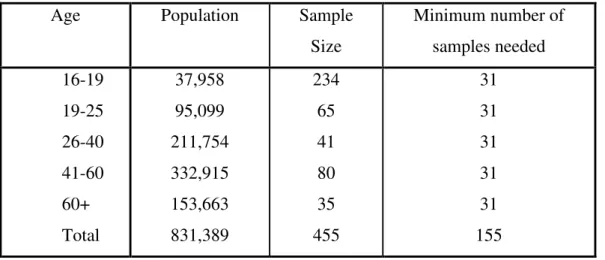
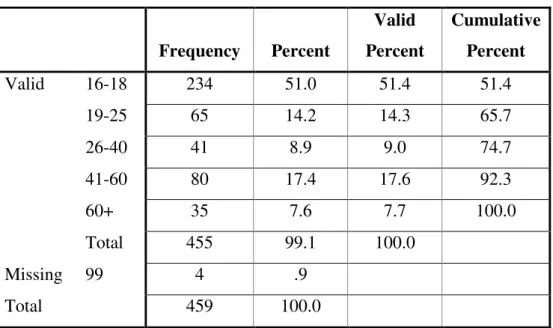
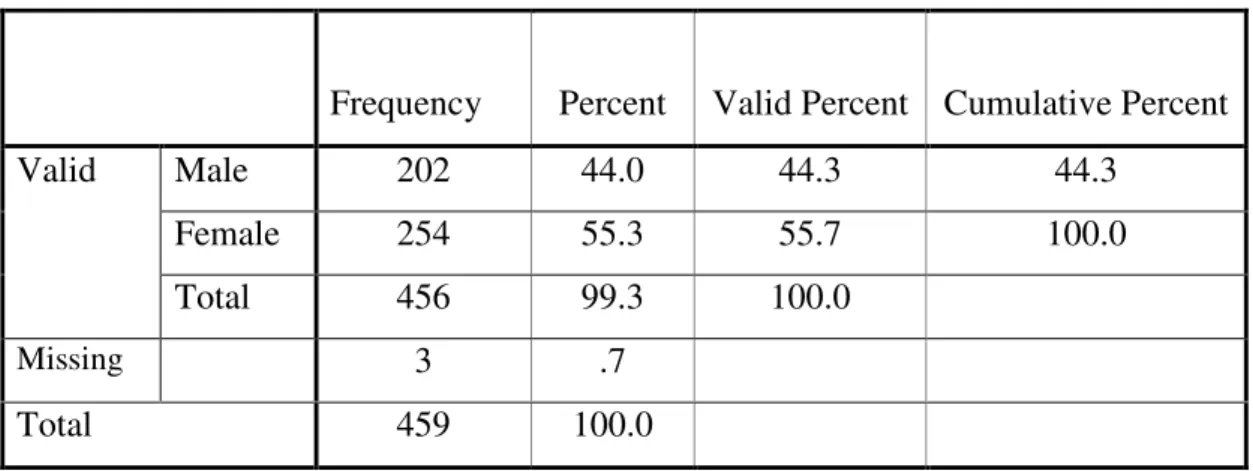
Table 4.1 Annual Tourist Arrivals in Japan by Top15 Nationalities (Unit: Thousands) 89 Table 5.1.1: Sub-Hypotheses regarding knowledge of Iran held by the Japanese 109 Table 5.1.2: Survey Population, actual and minimum sample size of each stratum 111 Table 5.1.3: Classification of the respondents according to their Age 114 Table 5.1.4: classification of respondents according to their sex 115 Table 5.1.5: Classification of data and the number of variables 115 Table 5.2.1: Oil in image of Iran compared with Persia in the same group 118 Table 5.2.2: The expression of “Oil” among the different groups 119 Table 5.2.3: Persian Carpet in image of Iran compare with Persia in the same group 120 Table 5.2.4: The expression of “carpet” among the different groups 120 Table 5.2.5: The expression of “Pistachio” as an image of Iran among the respondents
123 Table 5.2.7: War in the image of Iran compared with Persia 125 Table 5.2.8: The expression of “War” among the different groups 126 Table 5.2.9: Middle East in image of Iran compare with Persia at the same group 128 Table 5.2.10: Nuclear Program in image of Iran compare with Persia at the same group
129 Table 5.2.11: The expression of the “Nuclear problem” among the different groups 130 Table 5.2.12: The expression of “Iraq” as an image of Iran among the respondents 131 Table 5.2.13: The expression of “Danger” as an image of Iran among the respondents
132 Table 5.2.14: The expression of “Poverty” as an image of Iran among the respondents
132 Table 5.2.15: Ayatollah Khomeini in Image of Iran compared with Persia 133 Table 5.2.16: The expression of “Khomeini” among the different groups 134 Table 5.2.17: Pahlavi dynasty in the Image of Iran compared with Persia 134 Table 5.2.18: The expression of “Pahlavi Dynasty” among the different groups 135 Table 5.2.19: The expression of “Anti-U.S” and Terrorism as an Image of Iran among
the respondents 136
Table 5.2.20: The expression of “Tehran” as an Image of Iran among the respondents 136
Table 5.2.21: The expression of “Islamic Revolution” as an Image of Iran among the
respondents 137
Table 5.2.22: The expression of “Political Issues and Iranian immigrants in Japan” as an
Image of Iran 138
Table 5.2.23: Average number of tourist arrivals in Japan from Iran 139 Table 5.2.24: Religion in the Image of Iran compared with Persia 141 Table 5.2.25: The expression of “Religion” among the different groups 141 Table 5.2.26: The expression of “Hijab” as an Image of Iran among the respondents 142 Table 5.2.27: The expression of “Turban” as an Image of Iran among the respondents
143 Table 5.2.28: Desert in the Image of Iran compared with Persia 144 Table 5.2.29: The expression of “Desert” among the different groups 145 Table 5.2.30: Earthquakes in the Image of Iran compared with Persia 145 Table 5.2.31: The expression of “Quake” among the different groups 146 Table 5.2.32: The expression of “Persia” and “Historical Sites” as an image of Iran 147 Table 5.2.33: The expression of “Ancient History” as an image of Persia 148 Table 5.2.34: Silk Road in image of Iran compare with Persia at the same group 149 Table 5.2.35: Cultural Misunderstanding in the Image of Iran compared with Persia 150 Table 5.2.36: The expression of “Cultural misunderstandings” among the different
groups 150
Table 5.2.37: The expression of “Soccer” as an Image of Iran among the respondents 151 Table 5.2.38: The expression of related issues to Art, Tradition and Culture as an Image
of Iran 152
Table 5.2.39: “Art, Culture, Tradition and Persian Bazaar” in the Image of Persia 153 Table 5.2.40: “Undefined Positive issues” in the Image of Persia 154 Table 5.2.41: Having no idea of “Iran” compared with “Persia” 154 Table 5.2.42: Having no idea of “Iran” comparing with “Persia” among the groups 155 Table 5.2.43: Japanese image of the geographical location of “Iran” 156 Table 5.2.44: The image of the geographical location of Iran among Japanese people
with different ages 157
Table 5.2.45: Having no idea of the geographical location of Iran among Japanese
people 157
Table 5.2.46: Japanese image about the population of Iran compared with the
population of Japan 158
Table 5.2.48: Climate of Iran in image of Japanese people 160 Table 5.2.49: The staple food of Iran in the Image of Japanese people 161 Table 5.2.50: Japanese image of the proportion of Iran’s population under 30 162 Table 5.2.51: Average income (per month) of salary man in Iran in the image of
Japanese 163
Table 5.2.52: Japanese image of the language of people in Iran 164 Table 5.2.53: Japanese awareness about Iran as the new name for Persia 165
Table: 5.2.54: Desire to Visit Iran 166
Table 5.2.55A: Reasons for positive answer for travel interest to Iran among different
ages 168
Table 5.2.55B: Reasons for positive answer for travel interest to Iran among different
ages 169
Table 5.2.56: Reasons for Negative Attitude toward Visiting Iran Among Different
Ages 170
LIST OF FIGURES
Figure 3.1: Map of Persian Empire 500 BC ... 41
Figure 3.2: Map of Modern Iran... 50
LIST OF APPENDIXES
Appendix 1. Iran quiz: questionnaire for survey study conducted in Oita Prefecture (2005-6) ... 260
Appendix 2. Questionnaire Designed For Tourism Professionals Based On Likert Scale ... 263
Appendix 3. Survey Study in the exhibitions of “the Glory of Persia” in Sapporo , Fukuoka and Osaka ... 268
ACKNOWLEDGEMENTS
This thesis is the result of four years of work whereby I have been supported, accompanied and guided by many individuals and organizations. I would like to express my gratitude to all those who gave me support to complete this thesis.
I am deeply grateful to my direct supervisor Professor Malcolm Cooper for his great support throughout this work, for his enthusiasm and integral view on research. He could not even realize that how much I have learned from him.
I wish to express my warm and sincere thanks to Professor Masayuki Inoue, Director General for International Affairs (MEXT) Japan and Vice President Japan-Iran Cultural Exchange Association for his support and recommendations that enabled me to contact and conduct research with Japanese professionals with interest in Persian history and culture.
I would like to thank Professor Ogata, for his advice and sharing his valuable collection of data on Japan-Iran tourism relations with me. I thank Professor Eades for his strict critiques and challenges that kept me in the right track. I also thank Professor Yamagami and Professor Mani for their detailed review and constructive criticism during the preparation of the thesis. I appreciate Professor Qotbi for his advice.
I am grateful to Mrs. Kageyama, secretary general for Japan-Iran Cultural Association, the staff of the Cultural Section of the Embassy of Iran, Iran Air Tokyo Office and Sakura Travel Pty in Oita city for facilitating my research. I also thank the staff of Sapporo, Fukuoka and Osaka Museums, and the Asahi Group for their great help in conducting surveys during the exhibition of “the Glory of Persia” for this thesis. I thank my friend and classmate Mr. Iwata for his great help translating my questionnaires into Japanese.
I warmly thank the editors of the Ritsumeikan Journal of Asia Pacific Studies for the opportunity to publish some of the results of this thesis and also the staff of the
Academic Society of Iranians in Japan (ASIJ) in Tokyo and Iranian Alliance across Borders (IAAB) in New York for accepting my papers in their conferences.
The last but not the least, I owe my loving thanks to my wife and my little son, who lost a lot while I was studying and conducting research abroad, for their encouragements which empowered me to finish the job.
ABSTRACT
Governments in the 21st century can not be indifferent to the importance of continued economic expansion of the global tourism industry and to increased competition in the international tourism market. However, competition in tourism is different from other industries as the production cannot be exported and tourists are forced to move to the destination as consumers. In this concept, not only the quality and price of tourism products but also the image of the destination in a target market plays a key role in determining the flow of tourists. This thesis analyzed the image of Iran as a destination in current Japanese society, describing how the Iranian tourism industry is suffering from an image problem despite being able to offer a rich culture to the visitor and a tremendous number of cultural heritage attractions in Iran.
Success in a target market without recognizing culturally different travelers is doubtful. Reasons may differ for people from one society to another to leave their own familiar environment in order to visit an unfamiliar or even a strange one, and accordingly a single tourism promotional plan does not always apply for different markets. For Japanese overseas travelers, as this thesis argues, the main (or only) reason to visit Iran would be to study the cultural heritage of Persia and Islamic Iran. Furthermore, cultural tourism makes up a main part of the Japanese international market, which makes tourism promotion at least theoretically possible between the two countries. This study declares that a pragmatic way of tourism promotion for Iran in Japanese market would be to start with the cultural promotion of Persia/Iran in Japan instead of expecting actual visits to Iran from the beginning.
The internal political environment of Iran and its international relations, the geopolitical situation of the region that Iran is a part of, and the unfamiliarity with Iran as a tourist destination in Japan are the main challenges for the Iranian tourism industry in promoting to the Japanese overseas travel market. While the possibility for a change in the political situation exists, it will take time to remove the wall of unfamiliarity and change the image of Iran among the Japanese. As new research in the field, this thesis suggests new ways of promoting Iranian tourism in Japan to be taken by Iranian tourism officials and paves the way for further research.
CHAPTER 1
INTRODUCTION
Background to the Study
In recent years the growth of the contribution of Japanese international travelers to the world’s travel market has been significant. According to UNWTO, 797 million people traveled out of their own country in 2005. The number of Japanese tourist traveling abroad in 2005 exceeded 17.41 million, the second highest ever behind the 17.82 million travelers in 2000 (JTB report, 2006). In this context, Japanese tourists are distinguished in existing tourism literature as being very important on a world-wide basis, especially for cultural and heritage tourism. A new marketing opportunity in the case of Japanese senior travelers may be significantly increased from 2007, the beginning of retirement of the Japanese baby boomer generation with a strong interest both in domestic and foreign travel (Nita 2006).
The share of different countries and regions of the Japanese international travel market varies according to the preferences of the Japanese travelers. For example, Hawaii has been the most preferred destination during 2005 and 2006 with Australia in second place (JTMC 2006), however the share of the Middle East region in Japan’s tourism market is inconsistent with the potential of Middle Eastern countries to attract Japanese tourists. The region, which has been referred by historians as the Fertile Crescent is the cradle of civilizations and the birth place of many of the world’s main religions. However, only some countries in the Middle East region have been relatively successful in this context. For example 60,000 Japanese tourists visited Egypt in 2003 and 80,000 to 100,000 Japanese tourists travel to Turkey a year (Daily Yomiuri, 1999), but tourism
in many countries of the region such as Iran, Syria, Jordan and Lebanon has not reached these levels.
The Middle Eastern country of Iran is an important example in this case. According to UNESCO Iran is ranked as one of the ten top countries in the world in terms of its ancient and historical sites. There are a million historical monuments in Iran with more than 12,000 of them registered officially (Mashai, 2005).1 However, there has been a dramatic change in Iran’s social and economic situation since the Islamic revolution in 1979 and the tourism industry is not an exception. For example, in the 1970s some 60 percent of all tourists to Iran were Americans, spending an estimated 1 billion dollars each year but this trade almost disappeared after the revolution (Mideast Mirror, 1998)2. In the case of Japanese tourists to Iran, while 24,106 Japanese travelled to Iran a year before the Islamic revolution, a share of almost 0.6% of the overall Japanese international market, but this market segment rapidly declined during the years after the revolution.3 Today, the number of Japanese tourists in Iran is only 3,000 a year.
Japan has a good chance of becoming interested in Iran as a destination because of the Japanese curiosity about cultural and heritage tourism. The factors which exist in the current Iranian society, making it different with other cultural destinations in the region, is the absence of sea, sand, sex and alcohol. However, Japanese senior travelers seem not to be worried about this as much as many western tourists. Though sun and sand and
1
Esfandiar Rahim Mashai , Islamic nations prioritized in tourism investment ,Iran Daily, 28December 2005, http://iran-daily.com/1384/2462/html/economy.htm , accessed 12 November 2006.
2 Mideast Mirror, January 6, 1998, IRAN; Vol. 12, No. 2, The case for a U.S.-Iran thaw 3
KOKUSAI KANKO SINKOU KAI (international tourism promotion society), KIKAKU CHOUSA BU(project investigation department), Japan, different years
surf holidays are not expected to disappear, they have declined in relative importance as more and more visitors seek challenging educational and/or relatively unique experiences.4
In the case of Iran, the wreck of the tourism industry can be attributed to many factors. One of the most important of these is in political relations with the rest of the world. But, there has been almost no political problem between Iran and Japan. In this context, the fact that Japan has remained the major customer of Iranian Oil even after the Iranian revolution brings comparative advantage as well as allowing Iranian tourism policy makers to focus on Japan as a target market.
The main objective of this study is to provide the Iranian tourism industry with the opportunity to revive itself internationally and in Japan. It attempts to take advantage of existing literature on the Japanese overseas travel market as well as the information produced by the author through an extensive field work in Japan during 2003-2006 to have this adopted by Iranian tourism promotional policies for Japan. It is to be noted that the framework of this study is in cultural and heritage tourism promotion. Therefore the objective of this research is more to promote the awareness of Iranian history and culture in Japan than mass tourism marking itself.
Research problem
How to narrow the gap between Iran’s potentials and market realities to attract international tourists is the main problem on which this dissertation focuses. In this
context, Japan is targeted as the major source of international tourists in East Asia. Therefore, each section of this dissertation contributes in some extent to the answer to the following question:
“Why has the tourism industry in Iran not taken off since the Islamic revolution of 1979 and what are the problems of promoting it in Japan and the rest of East Asia?”
Objectives
Although this study focuses on Japanese overseas travelers as the target market for Iranian tourism industry, the results of this research will bring insight into the ways to market Iran in East Asia. The objectives of this study are mainly to provide Iranian tourism policy makers and tourism specialists with up-to-date and detail information on the opportunities and obstacles of promoting Iranian tourism in Japan but many of these could be generalized to promote Iranian tourism in the international climate. The objectives are summarized as follows:
• To define the reasons of the collapse of the Iranian tourism industry after the Islamic revolution of 1979;
• To explain the role of Iran’s international relations in tourism promotion; • To visualize the image of Iran as a tourist destination in present-day Japan; • To determine the performance of Iranian tourism authorities in bringing about
awareness of Iranian tourist attractions internationally and in Japan;
Methodology
This study employs an interdisciplinary approach. International relations, political science, history, and sociology are the fields in which the arguments are placed. Tourism Promotion, Cultural and heritage tourism and the impact of international relations on tourism are under focus in this research.
There was therefore a need to adopt a methodology for this thesis to link qualitative and quantitative data as well as qualitative observations of the relationships between culture, tourism and politics. In order to do this consumer surveys were adopted to clarify the existing situation of Iran as a tourist destination in present-day Japan without which one can not expect to develop a special marketing plan to promote Iranian tourism in Japan.
The fact that only small number of Japanese tourists with special interests in culture and ecotourism may visit Iran has also lent a monopolistic nature to the tourism business between Iran and Japan. Therefore, personal relations and interaction with Iranian travel agencies and their Japanese counterparts, and the use of recommendations, were adopted by the author as the best method for conducting both quantitative and qualitative research activities in this area. The methodologies are more fully explained bellow.
Primary data
The information produced in this study is based on extensive fieldwork in Japan and Iran during the years between 2004 and 2006. The author stayed mainly in Oita
Prefecture to conduct the research but made two research trips to Tokyo and Tehran firstly in February, 2004 and secondly in August, 2005.
A series of structured, semi structured and open-ended interviews were conducted by author with five different groups which can be mainly classified as travel agencies; tour guides; Japanese tourists in Iran; Iranian tourism officials and others. There are also some distinguished individual sources of information for this research among the interviewees like Inoue Masayuki, the Japanese Director General for International Affairs, Japan’s Ministry of Education , Culture , Sports, Science and Technology (MEXT) ; Sakiko Kageyama, Secretary General of Japan-Iran Cultural Association5; Javad Kazemi, Director of Cultural Affairs of the Iranian Embassy in Tokyo; Abolfazl Mohammadirad, Iran Airline’s General Manager for the far east region; Alireza Ayoubi Marketing Manager of Iran Air office in Tokyo (the only conductor of direct flights between Tokyo and Tehran) and Kszumassa Ono, a Japanese specialist in Persian history. Professor Ogata Masakatsu was the unique provider of statistical information on different years about tourism relations between Iran and Japan through his membership of “KOKUSAI KANKO SINKOU KAI” (International Tourism Promotion Society) and his collection of reports from the above mentioned organization.
5
日本イラン 文化交流協会(Nihon-Iran Bunka Kouryu Kyoukai)。Founded on June 1977 under Japan-Iran association, it was named as “Anjomane Farsi” which means the association of Persian language. The present name was adopted on November 2002 when it became independent from Japan-Iran association to present the cultural activities undertaken by association more generally than the old name. About 110 members who are mainly Japanese and a few Iranians gathering 4-5 times a year together as their regular meetings including seminars, dinner parties and excursions all supported by volunteer work of the members. The members share interest in Persian/Iranian history, literature and culture. Lectures are mainly in Japanese but Persian speakers are invited too. The association is located in Tokyo and has a small library on Iranian studies in Japanese.
The total number of travel agencies in Japan that conduct tours to Iran does not exceed 15 and they are mainly located in Tokyo. Consequently, the travel agencies that are selected for this research were located Tokyo and Tehran, except that Sakura Travel Company located in Oita prefecture accepted the role of author’s assistant in the field work and in conducting the survey in Oita Prefecture.
Information on the typical Iran /Persia tour which is offered to Japanese tourists was derived through analyzing contents of advertising literature including pamphlets and websites of Japanese travel agencies about Iran. This study attempts to take a comparative view of Iran and some other prospering Middle Eastern destinations such as Egypt and Turkey, in the way that they appear to the Japanese tourist in current tourism advertising literature.
The story of tourism relations between Iran and Japan in early 1990s, which is almost untold in the Iranian press, is based on English versions of Japanese newspapers accessed through the LexisNexis6 search system, which provides excellent service to access and search the news saving the time and easier to access that was expected by author initially. The main Japanese press sources were: the Asahi Shimbun, Japan corporate News Network (JCNN), The Japan Times, Japanese Business Digest, JCN Newswire, Jiji press Ticker Service, the daily Yomiuri, The Nikkei Weekly (Japan)
A survey was conducted by author in Oita Prefecture, Kyushu to provide new and original information on the Japanese image of Iran as tourist destination. The author was supported by the Sakura travel agency of that city in conducting the survey; 459 respondents from different cities in Oita Prefecture took part in the survey and provided unique and reliable information as a source of quantitative data for this study. The quantitative data provided by the survey were entered in a SPSS data base file and analyzed to support the information from other sections of the research.
The section of this thesis on the history of Iran’s international relations highlights conspicuous events in Iran-America relations since the Islamic revolution of 1979. The electronic version of three American newspapers:” The New York Times”, “The Washington Post” and “Los Angeles Times” have provided the author with the broadcasting literature about Iran in the international climate through the LexisNexis search engine.
While in Japan, the author became a member of the Japan-Iran Cultural Association established in 1977, through which correspondence with Japanese having an Iranian/Persian interest was achieved. The author also became a member of the Academic Society of Iranians in Japan (ASIJ) to share the experiences of Iranian students as cultural ambassadors in Japan. While in Iran the author stayed three weeks in the Japan External Trade Organization (JETRO) office in Tehran to examine the current situation of business tourism relations between Iran and Japan.
Secondary data
This study is based on comprehensive reading of English and Farsi materials. The literature on cultural and heritage tourism in both English and materials is reviewed as well as the tourism literature from different countries including the Middle East about Japanese tourists. Thanks to the number of Japanese tourists around the world there are plenty of research materials, especially journal articles with focus on Japanese travelers which pave the way for research in the field. An extensive reading of Farsi and English materials on the history of Persia/ Iran has also provided the author with the background for this research.
Research Limitations
Lack of research and reliable academic work on Iran’s tourism industry in general and especially on Japan-Iran tourism relations has meant that this thesis must break new ground. In particular the number, quality and nature of available data on different sectors of Iranian tourism industry (such as transportation, accommodation and even the number of international and domestic tourist in Iran) does not provide clear and solid guidance to the level of analysis desired.
The fact that there is limited number and dispersion of Japanese tourists to Iran means that there is an image problem and unfamiliarity with Iran as a tourist destination among Japanese which resulted in a lack of interest to take part in this research from Japanese tourists and travel agencies.
In addition, the monopolistic nature of the tourism business between Iran and Japan and a lack of clear information about the operation of Iranian tour operators and their
Japanese counterparts meant that the author has to rely on Sakura Travel Agency and Japan-Iran cultural association for made of information analysed below.
The absence of a national tourism plan in Iran for about two decades and the very young Tourism Master Plan which is to be implemented currently are contributed to a lack of literature in the Iranian context of the performance of the Iranian tourism industry both within the country and in relation to overseas travel. This was not made earlier by the fact that there is lack of courses on the tourism industry in Iranian higher education institutes and universities, which in other markets can provide at least research on tourism.
Thesis Outline
This thesis has seven chapters. Chapter 1 is an introduction and overview of the research and contains a summary of the other chapters. Chapter 2 takes a look at the literature on cultural and heritage tourism. Studies on Japanese overseas travelers, who are on focus in this research, were looked through to bring insight to the search for literature sources. Iran’s potential and opportunities to attract Japanese tourists are also considered in this chapter.
Chapter 3 looks at the history of Iran and the ancient Persian civilization in order to examine the existing potential to promote cultural heritage tourism in Iran. Although going in detail through the long history of Persia and Islamic Iran is beyond the scope of this dissertation, this chapter introduces the authentic elements of Iranian culture and civilization which distinguish the nation from other countries of the region, especially
the Arab States of the Middle East. Kingship (Shahanshah) and religion (Zoroastrianism and Islam) are introduced in this chapter as the two basic elements of Iranian culture. It argues that it was the power of culture that could unite Iranians as one nation throughout their history after being invaded by different nations. In sum, the chapter presents the history of Iran as a showcase which represents how cultural heritage and authenticity is enabled to be alive and preserved in interaction with other nations.
Chapter 4 reports on the story of the Iranian tourism industry during the years before and after the Islamic revolution. This chapter shows how the tourism industry in Iran is affected by political issues and international relations. Avoiding being purely a discussion of political issues, this chapter assesses the impact of Iran’s international relations on the tourism industry and forms a view of Iran in the current international climate. Iran-US relations have an important position in this chapter. The “2500th anniversary of Persian monarchy” as reported as a singular event prior to the Islamic revolution provides a clear explanation of changes in the political climate of Iran before and after the Islamic revolution and its effect on the tourism industry in Iran. It also focuses on social and economical relations between Iran and Japan after the Islamic revolution in Iran with emphasis on the phenomenon of Iranian workers in Japan. America’s attempts at limiting economic relations between Iran and Japan, the Iranian oil industry and Japan (the major customer of Iranian oil) are also discussed in this chapter.
Chapter 5 covers the mail part of the extensive field work carried out in Japan. The results of a survey conducted by the author in Oita Prefecture during 2004 and 2005 are
scrutinized to bring insight to the whole research as well as to offset the lack of data in the field. It also peruses and deliberates on the results of interviews with Japanese tourists and Japanese tour guides in Iran in order to pave the way for a comprehensive investigation of the image problem which exists currently amongst the Japanese about Iran. Misinformation and some times disinformation about Iran, its tourist attractions and security as well as a lack of information about the country are determined as being the main encumbrances and restraints in promoting Iran as a tourist destination in Japan.
Chapter 6 discusses the reminder of the field work and starts by examining the role of travel agencies as intermediaries or cultural brokers in the tourism industry. It distinguishes the role of travel agents conducting the job of tourism business between Iran and Japan, comparing other travel markets according to the small size and limited market. The chapter places particular attention on the limited tourism relationship that is run by a few travel agencies both in Iran and Japan. It also examines the experiences of travel firms which are undertaking the job and the market situation they face. It contains the author’s experiences of interviewing Japanese travelers and tour guides in Iran as well as Japanese travel agencies. The chapter concludes with analysis of the limiting factors in marketing Iran as a tourist destination in today’s Japanese society and discusses whether or not the current efforts from Iran are enough to revive this market.
Chapter 7 is the conclusion and incorporates the findings, suggestions and discussions of the study, which are followed by highlights of the efficiency of current Iranian tourism promotion policies and activities in Japan. Further research requirements and
notes on new opportunities to pave the way for tourism promotion between Iran and Japan, resulting from this study are also discussed in this chapter.
CHAPTER 2
SURVEY OF THE EXISTING LITERATURE ON
Introduction
The need to study different cultures and authentic experiences is one of the main ideas which cultural tourism depends on in theory and practice. Tourists from wealthier and developed countries are seeking for new environments to be less effected by western culture and something different from their own environment. As discussed later in this chapter, cultural tourism is practiced mainly by higher educated people in its moral framework, but provides many opportunities for less developed countries to benefit from the tourism industry as well as the chance to experience the enhancement of development within the structure of their own cultural background. In this concept, an understanding of culturally different tourists as well as a comprehensive knowledge of one’s own culture is needed to build up a sustainable cultural tourism relationship within which both tourists and hosts benefit.
This chapter focuses on the literature on cultural tourism and Japanese overseas travel market which is one of the world’s largest sources of international tourists interested in culture. As the overall aim of this thesis is to find the ways of tourism promotion between Japan and Iran as one of the top ten countries in the world in the terms of its cultural and heritage sites, this chapter provides the literature review background which admits the possibility of attracting Japanese tourists to Iran theoretically, by the means of cultural and heritage tourism.
Cultural and Heritage Tourism
The interaction between culture and tourism has existed throughout the history of tourism but has gained additional importance currently (Klein, 2001). Cultural tourism has also been under consistent focus in the tourism literature. However, the fast growth of cultural and heritage tourism is the new phenomenon of the 21st century. Growing up to fifteen percent per year, cultural tourism has influenced different sectors of the global tourism industry and has come under attention again in the tourism literature (WTO, 2001). In a new book Richards (2007) has collected research from different worldwide geographical locations and a wide range of viewpoints in cultural tourism, in which there is a big debate about the effect of globalization on local authenticity. A big concern in cultural tourism today is whether or not local identity will be replaced by global pastiche or will they have enough power to remain creative while keeping their local enrichment to satisfy cultural visitors.
Richards (2007) argues that the current field of cultural tourism is increasingly complex. Complexity is being added by the process of globalization and localization, the rapidly changing cultural field, and the changes in the nature of tourism demand. Tourism literature contains both optimistic and pessimistic approaches toward the future of cultural tourism. Whether one adopts a pessimistic or an optimistic view of cultural tourism depends to a large extent on one’s position. In the optimistic point of view cultural and heritage tourism can be means for learning and exploring environments and hopefully awakening interest in other cultures as well. However, in many cases the cultural pessimist looks at changes at cultural products, bemoaning the loss of “authentic” culture. Therefore, in terms of research on cultural tourism we should be
shifting our attention away from concepts of culture as a collection of products toward a more fluid concept of cultural acquisition as a process which the tourist and the host community can modify as appropriate.
Towards a definition of culture and cultural tourism
Meethan (2003) argues that one of the reasons defining culture is seen as a problematic approach over time is that the definition can refer both to the way groups distinguish themselves from one another as well as referring to characteristics within those groups. Culture however, can be used as an instrument for different purposes which includes political and economic. In this context, for the purpose of tourism marketing for example, culture is used to label and describe the speciality or unique characteristics of the market such as art and literature, most typically associated with developed economies. However, there is a different approach in the case of less developed countries or regions in the world where cultural tourism tends to be seen on basis of ethnic differences, national identity, values and beliefs which might be different within the domestic tourist market.
Bonink (1992) has reviewed the definitions of cultural tourism in the literature, revealing two main views. In the view of some authors the description of physical attractions such as sites and monuments could define cultural tourism (Fyall, 1998; Gee, 1997). According to others, the desire to visit cultural sites and motivation is under focus in the definition (Poria et al, 2001; Zeppel and Hall, 1991). Jamal and Kim (2005) collected the existing definitions of heritage tourism, which also revealed two main approaches; the descriptive approach, from historic buildings to art works (Yale, 1991)
and the conceptual approach, which explains the desire and the motivation to experience (Zeppel and Hall, 1992, Prentice, 1993; Poria et al, 2001). In most cases however, the term cultural tourism is used as general concept incorporating heritage tourism, art tourism, ethnic tourism, historical tourism and other areas of culture.
Who is a cultural visitor?
Visitor identification of cultural tourists composes a main section of the literature on cultural tourism. MacDonald (1999) reviewed the literature on definition of cultural tourists revealing three different approaches: demographic aspects of cultural tourists, their travel motivation and the characteristics of cultural tourists as moral travellers. Higher cultural capital, higher education and income are for example the typical characteristics that cultural tourists share compared with other travellers. In this context, education is undoubtedly a main component of tourist characteristics in the selection of cultural tourism no matter the geographical origin of the traveller (Bauer, 1996; Richard 1996). However, the positive relation between education and cultural tourism is bilateral, cultural tourism can give an incentive to the desire for education as well (Schouten, 2007).
Moral and Mass Tourism
Butcher (2003) has a new look at cultural tourism as a component which exists under a more comprehensive concept of “moral tourism”. The morality in tourism as Butcher argues is in contrast with “mass tourism”. The different values, goods and behaviour brought by mass tourism are seen as intrusions and tourists themselves are regarded as despoilers (Levenstein, 1998) if they are considered as mass tourists. As Butcher argues,
the destructive influence of mass tourism on the host destination is not limited to the natural environment. In this context, the cultural environment of the host is also under attack by mass tourists who are more willing to impose their own culture on a place rather than accepting a culturally difference experience. In its extremist way it can even be regarded as a form of imperialism (Nash, 1989). In the eyes of those who are convinced of the negative side of mass tourism, the sensuality of mass tourists can not be satisfied even by sun, sand, sea, sex and so on with no moral limit, cultural degradation must be part of the equation to give them satisfaction (Bucher, 2003). Moral tourism on the contrary is regarded constructive to local cultures (Bucher, 2003). For the moral tourist, the need for learning about the other, the cultural difference is dominating enough to take the trouble to learn about other’s language and culture. To respect the host’s culture while adopting a cautious approach in contact with new cultures and taking care of one’s behaviour respecting the cultural values of the host is assumed necessary in moral tourism in order to learn other cultures and discover the “real” destination.
Tourism, Authenticity and Hybrid Cultures
There has been a dominant approach over the last two decades toward the concepts of authenticity and cultural changes in tourism studies as well as toward the role of tourism in commodification. This assumes that tourism has a tendency to destroy the authenticity of local cultures. It is a problematic and debatable part of the tourism literature. Cohen (1988) believes that the commodification of culture prevents tourists’ genuine desire for authentic experience, which is the core purpose of cultural tourism. In contrast, according to Wood (1997) the processes of cultural intervention serve to
demarcate and differentiate between people. In this context, the processes within which cultural changes occur are the systematic conditions for maintaining cultural distinctiveness.
Authenticity is undoubtedly an important part of tourism in general and cultural tourism in particular. Tourists have been always seeking for authentic experiences to enrich their travel experience. In this context, the criteria through which authenticity can be measured have been extensively discussed in the tourism literature. Richards (2007) quoted Taylor (2001), according to whom “authenticity has become the philosopher’s stone for an industry that generally seek to procure other people’s ‘realities’. In tourism, authenticity poses as objectivism. It holds the special powers both of distance and of truth”. It is believed that the more a destination has been keeping away from western cultural contacts the more it appears authentic to the eyes of tourists today. However, it is doubtful if cultural and social relations really have a negative impact on authenticity. In his discussion of the impact of tourism on local cultures forcing them to become an imitator of western behaviour, Schouten (2007) reveals that this can be true and untrue at the same time. The use of western technological advances in every day life is a clear example of cultural impact as Schouten mentions: “who would not prefer a cool drink from a fridge over a warm one?”, But cultural identity is also powerful enough to resist the domination of this globalization and cultural commodification.
There is also a need to rethink the role of tourism in cultural changes today by considering the rapid growth of virtual tourism. As Richards (2007) argues, by the means of long-distance travel such as media and internet one can get familiar with other
communities: “the exotic is no longer far away in geographical terms, but on our door step”. The phenomenon of globalisation which provides new conceptual viewpoints for tourists and locals in the new world will possibly bring changes in the way that the role of tourism in cultural changes is thought of. By analysing and rethinking the structure of cultural and social contacts, this new process will provide the platform from which to survey the post modern landscape of tourism; to the Japanese component of this I now turn.
The Japanese Overseas Travel Market
The millions of Japanese travelling abroad every year attract tourism experts from destinations all over the world. More than 17 million Japanese tourists travelled overseas in 2005(JTB, 2006). As a consequence, Japanese tourists have been the subject of numerous research projects. Many studies have examined the behaviour of Japanese tourists in order to understand the psychological motives of individual travellers that influence various travel-related decisions and the level of satisfaction with the destination (Chon, 1987). However, searching for any particular study on Japanese tourists in Iran to be used for this paper was without result.
Regarding the characteristics of Iran as a travel destination, in this section the relevant findings on Japanese tourists by tourism professionals from different destinations are defined to bring insight to the marketing of Iran as a destination in Japan.
Preferred Destinations
Japanese tourists can be considered fairly typical in their preferences for destinations with natural scenery and good beaches as well as cities rich in historical spots and modern culture (Morris, 1990). However, in comparison with other nationalities, they have been found to consider good shopping and “crime free” reputations as extremely important. Morris (1988) and Polunin (1989) also found them to be increasingly leisure and service oriented. In addition, Sheldon and Fox (1988) found that Japanese tourists were strongly influenced by food services in their choice of destinations.
With a rich culture and history, Iran inherited the Persian civilisation and culture. The country is among the top ten countries in the world in terms of historical sites and civilization (Malekzahed 2006), and Japanese travellers are very interested in visiting historical sites. According to the “Opinion Survey of Overseas Travel Preferences” (JTM, 2006) about 40 percent of the Japanese tourists mentioned visiting historical sites as their preferred purpose of travel. This fact should make it at least theoretically possible to promote Iranian tourism successfully in Japan.
Travel Motivation
Studies have confirmed that the travel-related benefits sought by tourists affect their choice of destination and behaviour at the destination (Woodside, 1976; Crompton, 1977). Cha (1995) studied the travel motivations affected Japanese tourist behaviour and found six distinct “push-factors”; relax, knowledge, adventure, travel bragging,
family and sports. Further, Japanese travellers were segmented into three groups; sports seekers, novelty seekers and family/relaxation seekers.
Concerning Iran as a destination, it’s obviously not “family and sports” or “rest and relaxation” that should be expected as the motivation factors for Japanese travellers to visit Iran. However, as an unseen destination there would be many new things for Japanese tourists to discover about Iran due to the lack of awareness about Iran in Japan. Consequently, it is critical for the Iranian tourism industry to take the advantage of Japanese curiosity as a motive to attracting them in a new destination like Iran.
Preferred Activities at Destination
Market segmentation reveals that preferred activities differ with age and social status. Lang, O’Leary and Morrison (1993) segmented female Japanese travellers into 5 distinct clusters, each with their own particular activity preferences. The “Outdoor Sports” grouping showed tremendous interest in water and beach based activities as well as shopping and local food sampling. The “Sightseers” enjoyed sightseeing, sampling local food and short guided excursions. The “Life-Seeing” group preferred activities such as getting to know the host community, sampling local food, attending festivals, shopping and sightseeing in cities. Tourists belonging to the “Activity Combo” cluster had broad interests and participated in many different activities. “Naturalists” had a strong interest in visiting, historical, archaeological and commemorative sites as well as national parks. They also engaged in shopping and sightseeing in cities. Among the above groups, “Naturalists” are considered as the target
typical tour itinerary. The main activity arranged for Japanese tourist in Iran is to visit the historical monuments and shopping.
In spite of high demand for “life-seeing” by Japanese tourists in other destinations, the existing full packaged tours to Iran do not meet this group’s desire to know their host community. Japanese tourists will not be able to find much traditional and ethnic food in Iranian restaurants as people cook in their houses. A typical package tour takes Japanese to Iran to visit the place while the tourists are isolated from the ordinary life in Iran. The Iranian tourism industry it appears is not prepared to provide the opportunity for Japanese tourists to experience direct communication with people in Iran.
Japanese tourists in Iran can however enjoy its remarkable natural contrasts throughout the year. As the heritage sites in Iran are mainly located in the countryside, tourists have the chance to experience the natural environment and within the distance of few miles the traveller can experience major changes of seasons. There is also a great difference in vegetation and landscape between the littoral provinces along the Caspian Sea and the dry lands of the central desert as well as the eastern and western provinces. For Japanese tourists who visited the country in former times, Iran’s natural environment itself was attractive as well as the historical sites even though they did not expect it before their trip. However, the Iranian climate in the image of Japanese is mainly like a deserted unwelcoming land which is difficult to explore by travellers.
Travel Mode
of time than other international travellers. Independent travel is still only popular among the young and the wealthy. It has been postulated that this propensity to travel in groups is rooted in the collectivism of Japanese society which places great value on togetherness (Pizam, 1997). It may also be that a lack of confidence in communicating in foreign languages leads Japanese tourists to prefer to travel with a tour escort who can mediate between them and the host community (Carlile, 1996). It is also true that the discounted rates obtained by wholesalers for accommodation and other tourist services due to bulk purchasing keeps the prices of tours within the reach of consumers and helps to maintain their popularity (Carlile, 1996).
Japanese tourists on Iran are usually travelling in a group, escorted by an Japanese speaking Iranian tour guide who works for the land operator as well their own tour guide hired by the Japanese travel agency. It is very rare to see Japanese tourists in Iran travelling independently. By travelling with a group in Iran, Japanese tourists seem to be seeking for risk avoiding experiences rather than obtaining a discounted rate from a wholesaler for ‘pure independent travel’. Due to the small size of the market, there are only few tour operators among Japanese travel agencies for Iran. Consequently, there is no competition leading to the chance of getting a discounted rate like the popular destinations for Japanese overseas travellers.
Length of Stay
Many studies have found that Japanese tourists tend to stay for shorter periods of time than other international tourists (Nozawa, 1992; Jansen-Verbeke, 1994; Carlile, 1996;
of Europe usually stayed in one country for an average of only two nights though there is evidence to suggest that this trend does not hold true across all demographic groups. Nozawa (1992) found that elderly Japanese travellers preferred longer stays in single destinations. Possible reasons for short stays include the difficulty of taking long holidays due to long working hours and loyalties to employers (The Economist, 1988; Nozawa, 1992). Nozawa (1992) stated that the shorter stay will remain a characteristic of the Japanese market although longer stays in a single destination may increase in popularity as the expense of multi-destination tours in the market matures.
Japanese tourists in Iran stay longer than other international tourists, especially tourists from the Arab States in the Middle East. The majority of Japanese tourists in Iran are elderly visors who stay usually one week (Mousavi 2004).
Shopping
Numerous studies have found Japanese tourists to be enthusiastic and also sophisticated shoppers while on trips abroad (Keown, 1989; Nozawa, 1992; Jansen-Verbeke, 1994; Pizam, 1997). Japanese tourists have been found to spend two to five times more in tourist destinations than their counterparts from other countries (USTTA, 1991; Morris, 1990; Bailey, 1991). A strong Yen and high disposable income in the past have certainly been major contributing factors to this tendency but cultural factors also may have played their part. The twin customs of senbetsu and omiyage have been found to be strong influences on spending in tourist destinations (Graburn, 1983; Keown, 1989; Ahmed & Krohn, 1992; Nozawa, 1992; Jansen-Verbeke, 1994). Before going abroad,
friends and colleagues give money as a present (senbetsu) and wish them a pleasant vacation. The tourist is then obliged to reciprocate by buying presents (omiyage) of roughly equal value to the money received to bring back home. This kind of gift-buying can account for up to three-quarters of the travellers’ overall spending budget (Keown, 1989).
Persian carpets with their worldwide celebrity are particular buys among Iranian souvenirs which also represent Iranian culture. Visiting carpet museums in Tehran is a definite part of the Japanese group tour itinerary. Even though a Persian carpet may be too expensive to be purchased as usual Omiyage, elderly Japanese tourists demand them as especial gifts for their children when they get married for example.
Preferred Shopping Items
Japanese tourists tend to buy “authentic” goods associated strongly with the particular destination. These may include such items as fashion goods or perfumes from France or flower bulbs and chinaware from Amsterdam. It is also common for Japanese tourists to draw up a shopping list of specific items and decide on where to buy them before departure (Jansen-Verbeke, 1994). Price has also been found to be a major influence on Japanese tourist shopping behaviour, mainly because of relatively lower prices compared to Japan.
Cultural analysis and marketing implications
The understanding of culturally different tourists has become one of the most important aspects of the modern tourism industry. In order to respond effectively to the needs of tourists seeking a satisfying travel experience, tourist marketers and operators have to be sensitive to the standards and norms accepted within their culture. Since Japan is a major source of international tourism for many countries, it is vitally important that tourist marketers take into account the cultural attributes of Japanese tourists. According to a study by Reisinger in 1998, Japanese tourists are extremely keen on detail, aesthetics, quality and service. They are more demanding and have higher service expectations than other international tourists. Such fastidiousness has deep roots in Japanese culture and manifests itself in a highly developed sense of how services should properly be provided and presented. Without an awareness of the cultural factors behind this, tourist service providers and marketers are unlikely to be as effective as they could be in meeting the needs of Japanese travellers. For example, punctuality is regarded by Japanese society not only as a sign of good manners and respect to others, but also as measure of professionalism and good performance. Accordingly, tourism service providers should not delay services for Japanese tourists, as this would be an indication of the provider’s inability to deliver quality and a sign of incompetence (Heung, 2000).
Japanese travellers are renowned among Iranian tour operators as more demanding tourists. They will stay in 5 star hotels and ride on comfortable equipped buses only. The few Japanese tourists among international tourists in Iran are distinguished people and only some of the prestigious travel agencies in Tehran are operating tours for
Japanese. The travel agencies are careful with the job and they hardly ever remember any complaint from their Japanese counterparts.
Aging and Japanese travel propensity
Aging populations are now a common trend in much of the industrialized world and Japan is no exception. The subject of Japan’s “Silver Market” and “Older travellers” has already been taken up by researchers into tourist marketing and as the population ages, it will become an ever more important concern (You, 2000).
One of the most important questions regarding the travel behaviour of older age groups is whether or not the maturing of the population has a negative impact on travel, especially international travel. The assumption is that a progressive loss of energy and mobility will lead to a diminished propensity to travel (You, 2000). However, running counter to this trend are the effects of medical advances and improved diet, housing and public health conditions which could contribute to better mobility, not worse. Moschis (1996) states that the image of the elderly as infirm is exaggerated. It has been found that most elderly people remain active well into their seventies despite their ailments. Furthermore, the elderly are at a stage of life in which travel becomes increasingly possible as they are free from family and work responsibilities. For many seniors, travel is even the primary status symbol in lives characterized by their leisure pursuits (Pederson 1994).
Japan, the world’s healthiest nation,7 is also the most rapidly aging country in the word.8 The mass retirements of baby-boomers beginning in 2007 will be an important phenomenon that will attract different business including the travel industry in Japan. For example, a JTB subsidiary organizes tours to regions such as the Middle East, Africa and Latin America in response to the tendency of seniors to visit countries they have yet to visit.9 This enormous customer market of retiring baby-boomers represents a new business potential for the Iranian tourism industry. The new class of tourists with plenty of leisure time in their hand, are usually not seeking for sea, sand, alcohol etc, (which are not available in Iran anyway) will make them much more attractive in comparison to younger generations. Consequently, it’s realistic to consider these as a target market for Iranian tourism industry.
Buyer behavior in Japanese travel trade
This section doesn’t refer to Japanese tourists to Iran directly, but to the travel industry and tourism management in general. As mentioned in other parts of this thesis, collectivism is an important characteristic in Japanese culture and social network activity is affected by culture. Money and Crotts (2000) studied buyer-seller relationships in the international travel trade. They showed how social network activity operates differently in both West and Japanese cultures, and why these differences
7 Usui Chikako, Japan’s aging Dilemma? special report No 107, Woodrow Wilson International Center for Scholars,
Washington, 2003, cited in http://wwics.si.edu/events/docs/ACFE9.pdf accessed: March 2005,p 19
8 Amy, Mc Greedy. The demographic dilemma Japan’s aging society, Asian program special report No 107, P1 9Hiroyuki Nitta, Capitalizing on Retirement of Japan’s First Baby-Boomers, JETRO Japan Economic Report,
April-May 2006, p8 ,www.jetro.go.jp/en/market/trend/special/pdf/jem0605-1e.pdf, accessed Nov 21 2006.