Development Processes of Indigenous Knowledge
on Tsunami Risk Reduction to Increase
Community Resilience: The Case of the Smong in
Simeulue Island, Aceh, Indonesia
著者
Alfi Rahman Bin Rusli Bawaihi
学位授与機関
Tohoku University
学位授与番号
11301甲第18181号
Doctoral Dissertation
Development Processes of Indigenous Knowledge
on Tsunami Risk Reduction to Increase
Community Resilience:
The Case of the Smong in Simeulue Island, Aceh,
Indonesia
(コミュニティ・レジリエンス向上に向けた津波リスク軽
減に関する在来知の形成プロセス⎯インドネシア国アチ
ェ州シミル島に伝わる「
Smong」の事例研究⎯)
ALFI RAHMAN BIN RUSLI BAWAIHI
Table of Contents
Table of Contents ... i
List of Figures ... iii
List of Tables ... v
Abbreviations and Acronyms ... vi
Chapter 1 Introduction ... 1
1.1 The Importance of Indigenous Knowledge Studies on Tsunami Disaster ... 1
1.2 Learning from Disaster Experiences and the Smong Story: Saving Lives during the 2004 Indian Ocean Tsunami ... 3
1.3 Research Purpose ... 5
1.4 Research Significance ... 5
1.5 Structure of the Study ... 6
Chapter 2 Literature Review ... 8
2.1 Tsunami: the Underrated and Devastated Hazard ... 8
2.2 Knowledge and Disaster Risk Reduction ... 13
2.3 Indigenous Knowledge ... 16
2.3.1 Indigenous knowledge discourses ... 16
2.3.2 Characteristic of indigenous knowledge ... 18
2.3.3 Integration of indigenous knowledge with science and DRR ... 20
2.4 Indigenous Knowledge and Its Relation to Community Resilience ... 26
Chapter 3 Research Analytical Framework and Methods ... 35
3.1 Introduction ... 35
3.2 The Analytical Framework ... 35
3.3 Methods ... 41
Chapter 4 The Simeulue on the History, Earthquakes, and Tsunamis ... 48
4.1 Geography and Sociodemography of Simeulue Island ... 48
4.2 Simeuluean History ... 52
4.2.1 Simeulue under period of Aceh Kingdom ... 52
4.2.2 Simeulue under period of Dutch colonialism ... 53
4.2.3 Simeulue under period of Japan invasion ... 53
4.2.4 Simeulue under period of Indonesia independent ... 54
4.3 The History of Disasters through Smong Story ... 55
Chapter 5 Findings ... 59
5.1 The Research Group Categorize Results ... 59
5.2 Smong Story Development Processes on the 1907 and 2004 Tsunamis ... 61
5.3 Post the 2004 Indian Ocean Improvement and its Implication to the Development of Smong ... 70
5.4 Smong Story Recognition Development on the Group C Categorize ... 77
Chapter 6 Discussion ... 83
6.1 The Recognition of the Smong Story through the Underrated in Translating the Complexity of Tsunami as a Natural Disaster ... 83
6.2 The Failure in Translating and Reacting on the Future of Tsunami Event ... 85
Chapter 7 Conclusion, Limitations and Recommendations ... 88
7.1 Conclusion ... 88
7.2 Limitations ... 90
7.3 Recommendations ... 91
List of Figures
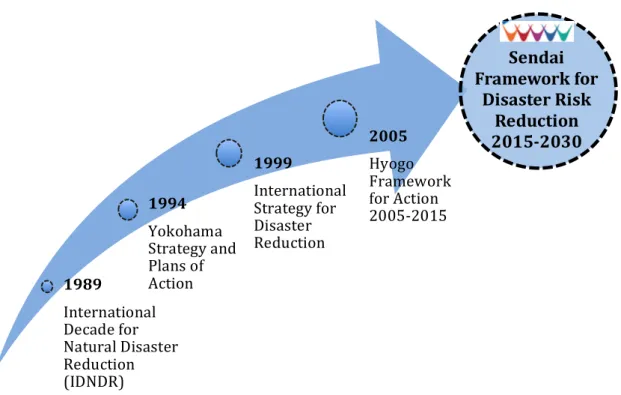
Figure 1. Twenty-six years of international commitments to Disaster Risk Reduction.
... 12
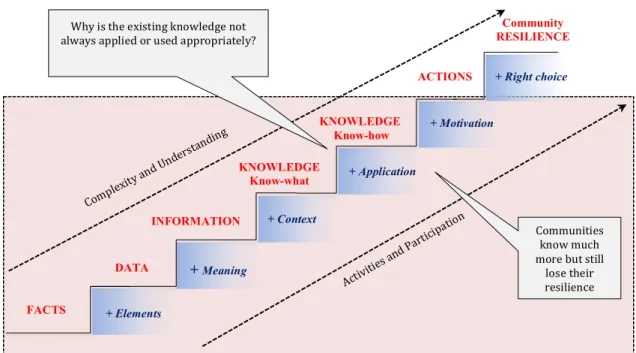
Figure 2. Knowledge ladder through community resilience. ... 14
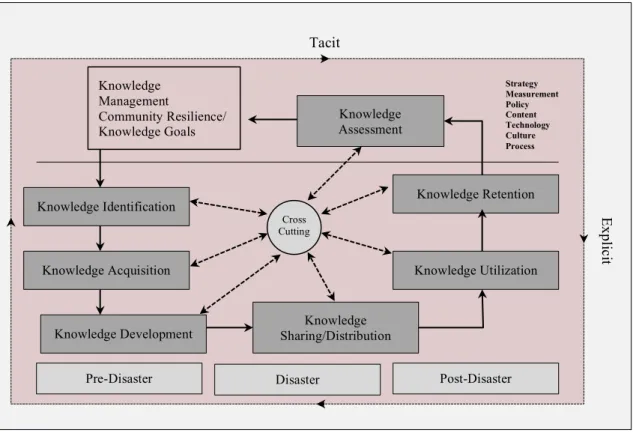
Figure 3. Framework of knowledge management to enhance community’s resilience. ... 15
Figure 4. Framework for indigenous knowledge in disaster risk reduction. ... 21
Figure 5. Process framework integrating indigenous knowledge and scientific knowledge. ... 22
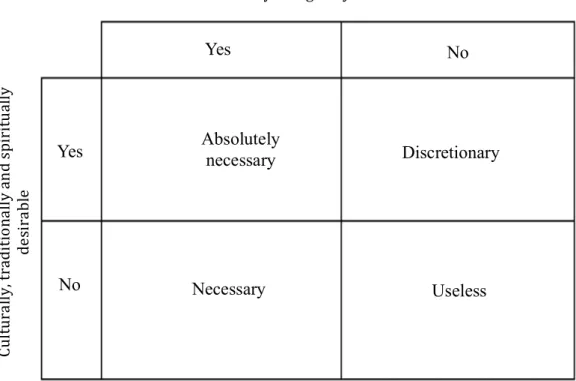
Figure 6. The categorization of IK by its physiological and cultural/traditional need. ... 23
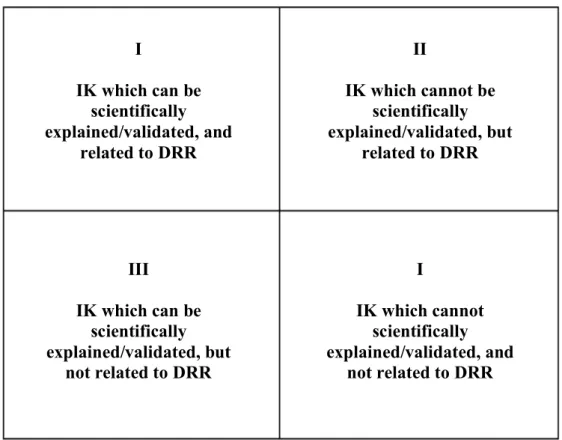
Figure 7. The categorization of indigenous knowledge on disaster risk reduction and its relationship to the scientific validation. ... 24
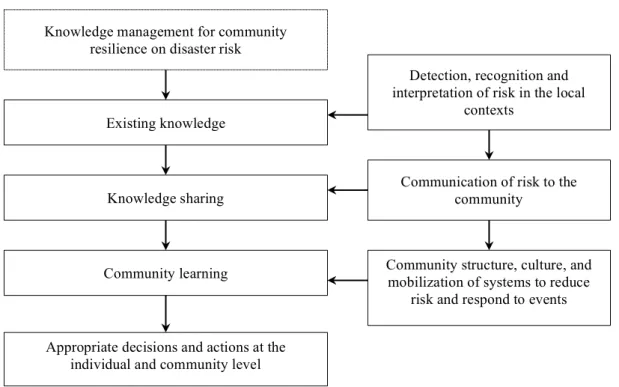
Figure 8. Knowledge utilization leading community in managing disaster risk ... 30
Figure 9. Knowledge life cycle. ... 32
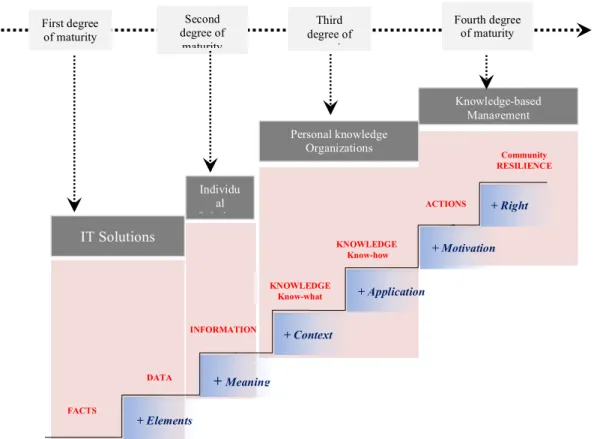
Figure 10. Degree of maturity of knowledge-based management. ... 33
Figure 11. Framework for integrating knowledge, actions and stakeholders for disaster risk reduction. ... 36
Figure 12. The analytical framework of indigenous knowledge toward community’s resilience. ... 37
Figure 13. The analytical framework of the development process of the Smong story toward community’s tsunami resilience ... 38
Figure 14. Map of research point location ... 42
Figure 15. Map of the Island of Simeulue and the Aceh Province. ... 48
Figure 16. The Siemeuluean old man was drying and keeping cloves traditionally in front of his house in Sibigo village, Simeulue Island. ... 50
Figure 17. The Siemeulue Bulls. ... 51
Figure 18. The remained of first mosque pillar in Salur village, Simeulue Island. ... 52
Figure 19. One of the Japanese fortresses which were built during colonial times in Simeulue Island that survived and remained from the 2004 Indian Ocean tsunami. ... 54
Figure 20. The uplifts caused by Earthquakes in Simeulue Island (a) Uplift associated with the December 26, 2004, (b) Uplift associated with the March 28, 2005, earthquake on the Island. ... 56
Figure 21. Tectonic setting and ruptures of major earthquakes along the Simeulue Island. ... 56 Figure 22. Map of the island of Simeulue showing the research locations of the
interviews and the distribution of local languages. ... 59 Figure 23. An example of the Smong story of tsunami risk from Nafi-nafi. ... 67 Figure 24. The summary of the Smong story that related to DRR in Nafi-nafi ... 68 Figure 25. The Simeuluean responded and reacted on the 2002 earthquake and the
2004 earthquake followed the tsunami. ... 69 Figure 26. An example of Smong lyrics to tell of tsunami risk from Nandong. ... 72 Figure 27. The Simeuluean traditional fishermen were singing Nandong while
fishing. ... 73 Figure 28. The physical evidence of 1907, 2004, and 2005 earthquakes and tsunamis
on Simeulue Island. (a) The uplift associated with the March 28, 2005, earthquake in the south of the island; (b) The uplift associated with the December 26, 2004 earthquake in the north of island; (c) One of eight pillars (Sandi Salapan) of the Babussalihin mosque that survived the 1907 and 2004 tsunamis; (d) The Babussalihin Mosque in Salur village affected by the 1907 and 2004 earthquake and tsunamis; (e) One of the Sandi Salapan inside
Babussalihin Mosque that was reconstructed after the 2004 tsunami ... 75 Figure 29. Lasikin airport in Simeulue Island constructed post the 2004 Indian Ocean tsunami. ... 76 Figure 30. The Simeuluean responded and reacted on the 2002 earthquake and the
2004 earthquake followed the tsunami and the failure probability in responding and reacting to the future disaster. ... 86
List of Tables
Table 1. Cause of Tsunami in the Pacific and Eastern Indian Ocean Regions Over the
Last 200 Years ... 9
Table 2. Largest Known Death Tolls from Tsunami in the Pacific and Indian Ocean Over the Last 2000 years ... 9
Table 3. The Definition of Knowledge ... 13
Table 4. The Definition of Indigenous Knowledge ... 18
Table 5. Word Count Related to Local Context Including Indigenous Knowledge from Each of Disaster Risk Reduction Frameworks ... 25
Table 6. Definitions of Resilience in Terms of Disaster Discourses ... 27
Table 7. Key Terms of the Analytical Framework of the Development Process of the Smong Story toward Community’s Resilience ... 39
Table 8. Field Survey and Time Schedule ... 43
Table 9. Summary of Megathrust Earthquakes Near Simeulue Island between 1800 and 2005 ... 57
Table 10. Categorization of the Groups of Interviewees (N=25) and Respondents (N=100) Their Relationship to the 1907 and 2004 Tsunamis, along with How They Received the Smong Story ... 60
Table 11. The Number (N=25) of Interviewees Group A and Group B by Location, Age, and Gender ... 61
Table 12. The Frequency Table Group C Categorize (N=100) ... 78
Table 13. The Correlation of Variable ... 79
Table 14. The Summaries of the Smong Story Development Processes ... 81
Table 15. The Simeulue Island Circumstances and Its Relationship to the Development of Smong story ... 84
Abbreviations and Acronyms
BPBD Badan Penanggulangan Bencana Daerah (Local Disaster Management Agency)
BPS Badan Pusat Statistic (Central Agency on Statistic) BRR Badan Rehabilitasi dan Rekonstruksi (Rehabilitation and
Reconstruction Agency) DRR Disaster Risk Reduction
FAM Free Aceh Movement
IDNDR International Decade for Natural Disaster Reduction
IK Indigenous Knowledge
KM Knowledge Management
MAA Majelis Adat Aceh (Acehnese Adat Board) MoU Memorandum of Understanding
MTsN Madrasah Tsnawiyah Negeri (Islamic of Junior High Public School)
Mw Magnitude scale of earthquake
NGO Non-governmental Organization
PETA Pembela Tanah Air (Defenders of the Homeland) SFDRR Sendai Framework for Disaster Risk Reduction SMP Sekolah Menengah Pertama (Junior High School)
SMPIT Sekolah Menengah Pertama Islam Terpadu (Islamic of Junior High Private School)
SMPN Sekolah Menengah Pertama Negeri (Junior High Public School)
UN United Nations
UNISDR United Nations of International Strategy of Disaster Reduction WCDRR World Conference on Disaster Risk Reduction
Chapter 1
Introduction
1.1 The Importance of Indigenous Knowledge Studies on Tsunami Disaster On Sunday morning, December 26, 2004 an earthquake of Mw of 9.2, followed by
a tsunami, devastated Aceh Province, Indonesia and other coastal countries in the Indian Ocean (Chlieh et al., 2007; Meltzner et al., 2006). The epicentre of this earthquake was located 250 km Southwest of the Aceh, and created a 1,500 km rupture (Chlieh et al., 2007), and a slippage of up to 20 meters which resulted in a series of powerful waves that pounded the coastal areas along the Indian Ocean (Subarya et al., 2006). The tsunami swept violently up to 6 km inland over the shorelines of Aceh and also nearby Simeulue Island (BRR, 2005). More than 125.000 people were killed, and an additional 93,285 people declared missing (BRR, 2009c). Some 500,000 survivors lost their homes, while as many as 750,000 people lost their livelihood (BRR, 2009a, 2009c).
Globally, there has been an upward trend in natural disasters, affecting over 200 million people each year since 1994 (United Nations, 2015), and between 1990 and 2000, over 14 major tsunamis assaulted the world’s coastlines, causing tremendous devastation and loss of lives (Bryant, 2014).
Understanding this upward trend of disasters is essential for evaluating the challenges accurately that such cataclysms pose and there is a growing need to find appropriate ways to reduce disaster risk through the community resilience. The 2004
Indian Ocean tsunami revealed the weaknesses in warning systems, while the 2011 Japan tsunami revealed the flaws in perception and preparation (Bryant, 2014). For example, with a large proportion of the world’s population living on coastlines, potential effects of tsunamis cannot be ignored (Bryant, 2014).
The changes in a community after a disaster are also unavoidable. The sustainability of the community and its ability to survive from the impact of a disaster should be linked to the community’s vision, identity, and strategy. In the era of globalization, when managing risk, protecting and enhancing the existing knowledge and resources of community members and their resources is the key factor in enhancing community resilience (Nonaka & Ayano, 2010).
The Sendai Framework for Disaster Risk Reduction (SFDRR) 2015–2030 highlighted the role of local resources for disaster risk reduction (DRR). Enhancing disaster preparedness for effective response and "build[ing] back better" in the recovery, rehabilitation, and reconstruction process (UNISDR, 2015). It means that the lessons learned from the previous event should be used as resources to save lives and reduce the worst impact of disaster.
A good practical example of an existing local resource of indigenous knowledge (IK) for managing risk has been found in the Smong story in Simeulue Island, Aceh Indonesia. The Smong is now widely referred to a tsunami. Simeulue Island and the other small islands around it are situated in the southwest Aceh Province, Indonesia; the island has been devastated by earthquakes and tsunamis.
Earthquakes and tsunamis occur frequently in Simeulue Island, natural disasters are a part of the collective history, and most Simeuluean people have their own story describing their experience with disaster. The 2004earthquake of Mw of 9.2 is one
including Simeulue Island.
The story of the Smong resonates within the Simeuluean people, and the story
can be seen as starting from the earthquake of Mw of 7.6 that hit off Aceh on Friday,
January 4, 1907. The quake developed a giant wave that reached the land, and more than 50% of (some estimates go up to 70%) the Simeuluean people were killed (Sanny, 2007). The disaster happened on Friday when most of the people were gathering in mosques for Friday prayers.
The worst impact of the 1907 tsunami was the pain that resonated in the hearts of Simeuluean people. The survivors tried to deal with the disaster by recounting the
story of the Smong. When the earthquake of Mw of 9.2 occurred on December 26,
2004, the Smong story successfully alerted the Simeuluean people of the impending danger, and they ran away from the coastal areas to higher places.
When the 2004 tsunami hit Aceh on December 26, the Smong story successfully alerted people to run to higher ground, allowing them to survive. Three people were reportedly killed, showing the positive impact of the Smong story as warning signal.
The success of the Smong story, and the knowledge gained from the people living and confronting such disasters, has also stimulated a new interest in the concept of indigenous knowledge (IK) for DRR.
1.2 Learning from Disaster Experiences and the Smong Story: Saving Lives during the 2004 Indian Ocean Tsunami
Simeulue Island is located in an earthquake and tsunami prone area, and the Simeuluean people have recorded their experiences of natural disaster through the story of the Smong. The Smong story has also attracted researchers and provided
practitioners opportunities to conduct a study on how these stories can help save lives and reduce the impact of disaster.
Researchers had been working beside aid workers to find out the secret to the survival of Simeuluean people. What they found seemed simple; the locals have a traditional story about the Smong: the giant wave that follows an earthquake and the subsequent recession of seawater, which runs up onto the land, destroying buildings and drowning everything in its path.
Some scholars also recorded the Smong story as the Simeuluean people’s IK against tsunami risk, but these scholars focused on the limitation assumption. McAdoo et al. (2006), for example, described the Smong story’s purpose as an attempt to avoid disaster during a tsunami. Syafwina (2014) focused on the Smong story as an early warning system for the community, and earlier, Baumwoll (2008) also described the interrelationship between the value of IK from the Smong story and DRR. Some of the information was taken from the perspective of the local leaders or stakeholders, so there was insufficient information from the standpoint of the community members as a whole.
Even though the story of the Smong during the 2004 Indian Ocean tsunami is powerful, some questions remain even after 12 years has passed after the tsunami: How was the Smong story successfully transmitted from the 1907 tsunami to save people's lives in the 2004 tsunami? And how could the Smong story be linked to people who did not experience the 2004 tsunami and community strategy in managing tsunami risk? The current study was carried out to confirm the development processes of the Smong story from the community members where it is embedded.
1.3 Research Purpose
The purpose of the study was to analyze the development process of indigenous
knowledge based on a case study of the Smong story on tsunami risk through the community’s resilience in Simeulue Island, Aceh, Indonesia. To analyze the Smong development process the following are examined:
1. To analyze the development process of Smong within the community members among different generations between the 1907 and 2004 earthquakes and tsunamis;
2. To examine the Smong story contents in terms of how the Smong could have contributed to save people lives in the 2004 Indian Ocean tsunami;
3. To examine the Smong knowledge among the post 2004 tsunami generation who did not directly experience the 2004 Indian Ocean tsunami;
4. To make the recommendations for future continuation of the Smong in strengthening the community’s resilience.
1.4 Research Significance
The role of IK for DRR through community resilience has not been widely explored. The research is limited and on briefly touches on this issue of understanding of the development process of IK especially for managing tsunami risk. In particular, the significance of this research lies in exploring the development process of indigenous knowledge through community action. Several significant contributions of this research could be as follows:
1. The lessons learned from this research will contribute to indigenous knowledge for DRR discourses, DRR practitioners and communities in strengthening the community’s resilience in managing risk;
2. This research will contribute to strengthen the integration of IK with a range of DRR efforts;
3. The SFDRR 2015-2030 addressed the role of IK that indigenous peoples, through their experience and traditional knowledge, significantly contribute to DRR, and this research is also part of an action to realize SFDRR 2015-2030.
1.5 Structure of the Study
The structure of the study divided into seven chapters. Chapter 1 is an introduction that aims to provide the research background, purposes, and significance, which will to help to understand the research.
The Chapter 2 is the literature review, which describes the interrelationship between knowledge, IK for DRR through community resilience. Chapter 3 provides the analytical framework of this research and foregrounds the frequency of earthquakes and tsunamis that occur on Simeulue Island, and the framework that will provide the whole of the research flow and the methods. Chapter 4 gives the background of information on Simeulue Island which provides the history of demographic features, and disaster experiences through the Smong story.
Chapter 5 shows the results of the analysis of the development process of the
Smong story as indigenous knowledge from the 1907 and 2004 tsunamis, and how it
could be linked to future DRR efforts. Then, Chapter 6 provides the discussion especially for the recognition of the Smong story, focusing on the group of people who did not experience the 2004 Indian Ocean tsunami, and/or were born after that time.
Finally, the dissertation closes with conclusion which includes research limitations and proposed recommendations for future research.
Chapter 2
Literature Review
2.1 Tsunami: the Underrated and Devastated Hazard
Before 1990, the public perceived tsunamis as originating primarily from large, distant, underwater earthquakes that mainly occurred in the Pacific Ocean (Bryant, 2014). The 2004 Indian Ocean tsunami changed disaster paradigms significantly (Bernard & Robinson, 2009; Rodriguez, Wachtendorf, Kendra, & Trainor, 2006). Scientists also found many facts suggesting that Indian Ocean coastal areas had been devastated by several tsunamis (Rubin et al., 2017).
Scientists also found many facts if the Indian Ocean coast areas has been devastated by several tsunamis (Rubin et al., 2017). The tsunamis occurred along the Indian Ocean was not only perceived as series of stages of natural phenomena that destroyed the coastal area or caused lose lives, but it has also been understood more than it. Every community has their way of dealing with the tsunami. It is important to assess the deeper understanding on how the local community accepted and perceived the tsunami events in helping them to make a decision when the same situation occurs.
Table 1 shows earthquakes triggered the largest number of tsunamis, resulting in the most number of deaths. This is an answer to why most of the researchers in this field put specific attention on the natural phenomena caused by big earthquakes, followed by receding seawater, and, finally large waves crashing onto and devastating
shorelines.
Table 1. Cause of Tsunami in the Pacific and Eastern Indian Ocean Regions Over the Last 2000 Years
Cause Number of event Percentage of events Number of deaths Percentage of deaths Landslides 66 4.4 14,661 2
Earthquakes 1,242 83 664,880 90
Volcanic 67 4.5 51,643 7.2 Unknown 122 8.1 5,364 0,7 Total 1,497 100 716,548 100 Note. Source: Bryant (2014).
Table 2. Largest Known Death Tolls from Tsunami in the Pacific and Indian Ocean Over the Last 2000 years
Date Fatalities Location
26 December 2004 228,432 Indonesia- Indian Ocean 22 May 1782 50,000 Taiwan
27 August 1883 36,417 Krakatau, Indonesia 28 October 1707 30,000 Nankaido, Japan 15 June 1896 27,122 Sanriku, Japan 20 September 1498 26,000 Nankaido, Japan 13 August 1868 25,674 Arica, Chile 11 March 2013 23,295 Tohoku, Japan 27 May 1293 23,024 Sagami Bay, Japan 04 February 1976 22,778 Guatemala
29 October 1746 18,000 Lima, Peru 21 January 1917 15,000 Bali, Indonesia
21 May 1792 14,524 Unzen, Ariake Sea, Japan 24 April 1771 13,486 Ryukyu Archipelago 22 November 1815 10,253 Bali, Indonesia
May 1765 10,000 Guanzhou, South China Sea 11 August 1976 8,000 Moro Gulf, Philippines
Researchers in this field put the specific attention on the natural phenomena caused by big earthquake followed by receding of seawater and seawater reached and devastated the land. Over the past 2000 years there have been 716,548 deaths attributed to tsunamis in these two oceans. The largest total death is concentrated in Aceh, Indonesia where more than 200,000 people were killed by the 2004 Indian Ocean tsunami (see Table 2) (BRR, 2009b; Bryant, 2014; Gusiakov, 2009).
Natural disasters are endogenous factor to society and disaster risk arises when hazards interact with the physical, social, economic, and environmental vulnerabilities and exposure of populations (UNISDR, 2013).
The understanding of tsunamis as a natural phenomenon has increased and scientists have placed increased attention on understanding it more comprehensively. This consideration came from the fact that tsunamis are more complex than just big waves, and these catastrophic events have caused more deaths and influenced greater infrastructure, social and economic destruction (Bernard & Robinson, 2009).
A tsunami is defined as a wave or series of waves in a wave train, generated by the sudden, vertical displacement of a column of water (Bryant, 2014). This displacement could be due to seismic activity, explosive volcanism, landslides above or below water, asteroid impact or certain meteorological phenomena (Bryant, 2014; Kafle et al., 2016). Tsunamis could be generated in oceans, bays, lakes, rivers or reservoirs, which means there are many phenomena that could be referred to as a tsunami.
A hundred year ago researchers began to use the term tsunami. According to Cartwright & Nakamura (2008), the first occurrence of the word tsunami is found in a journal kept by a retainer of the shogun Tokugawa Ieyasu. In receiving news about
the Sanriku earthquake of 2 December 1611, fishermen around the Sanriku region called it a tsunami, and they might have used the term because its effects were most evident when they arrived back at their harbour, only to find their villages had been washed away.
So, the term tsunami derives from the Japanese language, and means harbour (tsu) and wave (nami) (Bryant, 2014; Dictionaries, n.d.; Duffin, 2011; Gusiakov, 2009; Zimmer, n.d.). This is probably true because the phenomena frequently occurred and struck the coast of Japan, with 25.2% of all tsunami events originating here (Bryant, 2014; Gusiakov, 2009). The Japanese language also has other terms to describe tsunamis, such as onami (large wave), shikai namisu (waves rise in all direction), and kaisho (roaring and resounding sea) (Cartwright & Nakamura, 2008).
Many languages have a special word for this type of disaster coming from the sea such as tidal waves, seismic sea waves (English), raz de mare, vagues sismiques (French), flutwellen (German), maremoto (Spanish), vlogengolden (Holland), hai-i (Chainese), loka (Fijian) (Gusiakov, 2009).
Subsequently, the Japanese term has been adopted worldwide and many scholars and scientists have used tsunami to describe the phenomena even though many parts of the world also experience tsunamis, and have their own term to describe it. Figure 1 describes twenty-six years of international commitment in reducing the impact of natural disaster. It has been adopted and received as a platform to implement in each country, based on the local context. However, there is much work to do, and international commitment on these issues should be strong, because international understanding will also change and depend on the dynamic global changes.
Figure 1. Twenty-six years of international commitments to Disaster Risk Reduction. Adapted from Aitsi-Selmi et al. (2015).
The Sendai Framework for Disaster Risk Reduction 2015–2030 (SFDRR) was released as a result of World Conference on Disaster Risk Reduction 2015 (WCDRR) and was needed to ensure that the DRR reflects our evolved understanding of the complexity of disaster risk in the twenty-first century.
The implementation requires a comprehensive collaboration among all sectors, including the role of local communities in order to prevent, prepare for, respond to, and recover from disasters (Aitsi-Selmi et al., 2015; Gaillard & Mercer, 2013b). As a result, the highly interdependent DRR efforts call serious attention and consideration to this issue. Sendai Framework for Disaster Risk Reduction 2015-‐2030 2005 Hyogo Framework for Action 2005-‐2015 1999 International Strategy for Disaster Reduction 1994 Yokohama Strategy and Plans of Action 1989 International Decade for Natural Disaster Reduction (IDNDR)
2.2 Knowledge and Disaster Risk Reduction
The various definitions of research knowledge can be described from many points of views (see Table 3). Most definitions refer to the hierarchy of the knowledge that is common recognized by scientists and researchers. The hierarchy of knowledge is data, information, knowledge and wisdom (see also Figure 2).
Table 3. The Definition of Knowledge
Reference Definition Davenport, De Long, &
Beers (1998)
A fluid-mix of framed experience, values, contextual
information, and expert insight that provides a framework for evaluating and incorporating new experiences and information Fred (1981) Identified with information-produced (or sustained) belief, but the information a person receives is relative to what he or she already knows about the possibilities at the source
Nonaka (1994) Justified true belief and also dynamic human process of justifying personal beliefs as part of an aspiration for the truth
Zins (2007) Knowledge is a personal cognitive framework that make it possible for human to use information
Trumble (2007) Information and skills acquired through education or experiences or an awareness or familiarity gained by experiences of a fact or situation
Bennet & Bennet (2008) Knowledge is the capacity (potential or actual) to take effective action in varied and uncertain situations
McInerney (2002) Knowledge is the awareness of what one knows through study, reasoning, experience or association, or through various other types of learning
Knowledge is more subjective and intangible compared to information and data, and can be said to be what an individual takes from information and data and that they incorporate into their beliefs, values, procedures, actions etc., (Zins, 2007).
The critical role of knowledge in reducing the worst impacts of disasters has also been addressed in the Sendai framework for disaster risk reduction (SFDRR) for 2015–2030. The SFDRR’s first priority of action relates to the important role of knowledge to community resilience.
Figure 2. Knowledge ladder through community resilience.
Adapted from North & Kumta (2014) and Weichselgartner & Pigeon (2015).
However improved knowledge by itself has also not automatically reversed the downward trend of community resilience (Skyrme, 2007; UNISDR, 2015). In other words, disaster awareness has strengthened disaster knowledge but, in the process, communities have lost still more of their resilience. Therefore, questions remain as to why existing knowledge is not always applied or not used appropriately, and how this knowledge can be maintained by improving on existing knowledge, especially community knowledge (see Figure 2)
Researchers must examine the nature of this knowledge, including understanding knowledge production processes, the existence of different type of knowledge and their sources, and the transfer and use of information that increases knowledge. These processes can be improved, thereby greatly contributing to community resilience in the face of disaster (Spiekermann et al., 2015).
Knowledge is vital issue in the DRR strategies involving social constructions
DATA + Meaning INFORMATION + Context KNOWLEDGE Know-what + Application KNOWLEDGE Know-how + Right choice ACTIONS + Motivation Community RESILIENCE FACTS + Elements Comple xity an d Unde rstandi ng Activit ies and P articip ation Communities know much more but still
lose their resilience Why is the existing knowledge not
(Gaillard & Mercer, 2013b; Weichselgartner & Pigeon, 2015). Lessons learned from every disaster have proved that reusing and sharing knowledge can enhance community resilience to manage disaster risk (Seneviratne, Baldry, & Pathirage, 2010; Zschocke & de León, 2010). The challenge of implementing knowledge in the construction of community resilience is the lack of systematic management strategies for developing and applying community knowledge (Raymond et al., 2010). For example, knowledge management models of community resilience have not been widely recognized by academics and practitioners as a tool to support community knowledge development. However, communities’ existing knowledge may present challenges, which prevent it from being used efficiently and effectively (North & Kumta, 2014).
Figure 3. Framework of knowledge management to enhance community’s resilience. Adapted from Probst, Romhardt, & Raub (2000).
The present study sought to see the development of IK through the community’s
Knowledge Management Community Resilience/ Knowledge Goals Tacit Ex pli cit Disaster Post-Disaster Pre-Disaster Knowledge Identification Knowledge Acquisition
Knowledge Development Sharing/Distribution Knowledge
Knowledge Utilization Knowledge Retention Knowledge Assessment Strategy Measurement Policy Content Technology Culture Process Cross Cutting
appropriate action that could overcome such problems and provide a successful and efficient way to encourage existing knowledge in the strengthening of community resilience to disaster risk.
Figure 3 shows the framework of knowledge management to enhance community resilience as a basic approach to understanding the flow of knowledge in communities. Effective local community resilience that manages risks and recovers from crises involves steps in knowledge management: 1) identification, 2) acquisition, 3) development, 4) sharing/distribution, 5) utilization, and 6) retention. Another important thing in knowledge management is assessment, which is responsible for maintaining and ensuring that knowledge can sustainably achieve community goals (Probst et al., 2000).
2.3 Indigenous Knowledge
2.3.1 Indigenous knowledge discourses
In recent years, IK has emerged as a significant resource in dealing with many research and development issues. The growing interest in IK is perhaps directly related to growing concern about the degradation of the environment (George, 2011).
The question is “What is indigenous knowledge?” To understand the meaning of IK, using the terminology of Mwadime (2011) is that IK differs from the known forms of “formal knowledge” of scientific, Western, modern societies because IK is deeply rooted in its environment, history, and experiences. IK should be captured as the information base for a community which facilitates communication and decision-making (Warren, Slikkerveer, & Brokensha, 1995).
on disasters have yet to lead to increased efforts to translate indigenous knowledge into initiatives that increase communities’ resilience against disasters’ impacts (Shaw, Uy, & Baumwoll, 2008). Indigenous knowledge has traditionally been regarded as inferior to science and technology (Agrawal, 1995), which has negatively affected communities’ development processes (Gadgil, Berkes, & Folke, 1993).
The term IK arises from the experiences of many academics and practitioners. Some other terms are found in the literature referring to indigenous knowledge, such as folk, local, rural people’s, indigenous technical, and traditional environmental knowledge.
Previous research justifies viewing indigenous knowledge not only as underlying technical solutions to daily problems or only information functioning as an early warning but also as containing non-technical insight, wisdom, ideas, perception, and innovative capabilities that deal with physical, environmental, ecological, biological, or geographical phenomena (Gadgil et al., 1993).
This is the reason that most academics and practitioners working in the field of indigenous knowledge have based their interpretations on geography, anthropology, and sociology. Indigenous knowledge could also be a more acceptable alternative to researchers of many backgrounds and areas of interest.
Many definitions have been developed in a variety of fields in the literature to help understand IK and distinguish it from other concepts. Some of these IK definitions can be seen in Table 4. In the context of this study, the definition of IK is the cumulative body of knowledge (Berkes, 1993) from the practices of culture and beliefs that were formed over numerous generations (Baumwoll, 2008; Gadgil et al., 1993; Grenier, 1998) pertaining to the long histories of
interactions with the people’s natural surroundings or environment (UNESCO n.d.).
Table 4. The Definition of Indigenous Knowledge
Reference Definition
Berkes (1993) Cumulative body of knowledge and beliefs, handed down through generation by cultural transmission, and about the relationship of living beings (including human) with one another and with their environment
Gadgil et al. (1993) The shared knowledge where the local community has evolved over time, through trial and error Warren et al. (1995) The information base for a society which facilitates
communication and decision-making
Grenier (1998) The unique, traditional, local knowledge existing within and developed around specific conditions Kok (2005) The knowledge that has been created and developed
over the period of time
Ellis & West (2004) The knowledge that is embedded in individual and group action
Baumwoll (2008) The approaches and practices of a culture which develop from an advanced understanding of its specific environment which has formed over numerous generations of habitation
Mercer et al. (2010) Considered to be a body of knowledge existing within or acquired by local people over a period of time through accumulation of experiences, society-nature relationship, community practices and institutions, and by passing it down through generations
UNESCO (n.d.) The understanding skills and philosophies developed by society with long histories of interaction with their natural surroundings. For rural and indigenous peoples, local knowledge informs decision-making about fundamental aspects of day-to-day life
2.3.2 Characteristic of indigenous knowledge
The term IK arose from the experiences of many academics and practitioners. Some other terms are found in the literature that refer to IK, such as folklore, local, rural people’s, indigenous technical, and traditional environmental knowledge. The
Oxford Dictionary of Literary Terms defines tradition as a body of works, styles, convention, or beliefs which are represented as having been handed down from the past to the present (Baldick, 2015). Hence IK is imbedded in the culture, and the traditions of the local people and traditions are shaped by existing knowledge and both a have strong influence on behaviour and decision making (George, 2011).
IK is a repetitive process from generation to generation and an unsystematic accumulation of new data over generations (Sillitoe & Marzano, 2009). IK has several essential characteristics (Agrawal, 1995; Baumwoll, 2008) that differentiate it from other types of knowledge as follows: It is embedded, and originated in particular communities; It is maintained through non-formal transmission; It is collectively owned; and it is developed over several generations.
Most IK, especially in developing countries, is not documented and is transmitted orally from generation to generation; its gradual disappearance is due to the influence of globalization, racism, marginalization, environmental pressures and as individuals who lived life in the old way depart this life (S. E. Edwards & Heinrich, 2006; Moahi, 2007). IK could potentially be disrupted through the breakdown of traditional, oral communication channels; the movement of communities to another place on a daily basis; and a lack of interest in learning indigenous knowledge (Grenier, 1998; Moahi, 2007).
In recent years, IK has emerged as a significant resource of knowledge when dealing with some research issues. However, the increasing number of IK and practices documented in research on disasters have yet to lead to increased efforts to translate IK into initiatives that increase communities’ resilience against the impact of disasters (Shaw et al., 2008).
and the sharing of information across countries have increased the vulnerability of the existing IK in communities. IK also faces a potential disruption as a result of traditional and oral communication channels being weakened, the movement of the community to another place, and the local people no longer being interested in
learning it (Grenier, 1998). The lack of risk and disaster knowledge are significant
drivers that increase the impact of disasters; it is all the more necessary to develop strategies to tackle these threats simultaneously and integrate the strategies within community resilience contexts.
2.3.3 Integration of indigenous knowledge with science and DRR
IK has received increasing attention in the fields of DRR by both scientists and practitioners in recent years (Hiwasaki, Luna, Syamsidik, & Shaw, 2014; Inglis, 1993). Work on IK began to permeate the DRR discourse in the 1970s. However, this research expanded quite slowly, and the link between indigenous knowledge and DRR remained vague and indirect. By the 1980s, IK was still being ignored within the established disaster management discourse even as more attention was given to the role and value of IK in other fields (Baumwoll, 2008).
IK has traditionally been regarded as inferior to science and technology (Agrawal, 1995), which has affected the recognition of IK in academic literature (Gadgil et al., 1993). Even though SFDRR currently includes the significant role of IK to reduce the impact of disaster risk and protect lives, the question still remains as to whether IK is based on scientific evidence or not.
According to (Bryant, 2014), there were local stories which recorded tsunamis and accepted by the local community as story and a way for the community to translate the natural phenomena. For example, Aboriginal people have a belief that the sea like humans has an angry. As the sea grows rough and
the wind blows, Aboriginal people know the ocean is angry and impatient because their ancestors still refuse to return to where they should exist (Bryant, 2014).
Figure 4. Framework for indigenous knowledge in disaster risk reduction. Adapted from Dekens (2007).
The integration of IK and scientific knowledge has been addressed by some researchers such as Raymond et al. (2010), Mercer et al. (2010). They propose the processes and mechanisms available for integrating different types of
Indigenous Knowledge System
Composed of Influenced by In context of Resulting in Based on With effects on
Knowledge types • Technical knowledge • Ecological knowledge • Historical knowledge • Others Structures • Levels of government • Private sector • Others Natural hazards and others • Tsunami • Earthquake • Floods • Landslides • Others Observation • Nature and history of natural hazards • Evolution of people’s social and physical vulnerabilities to natural hazards Disaster Preparedness
at local level
Anticipation • Forecasting and warning systems • Time thresholds • Escape routes
and safe places for human • Roles, skills and
key actors Livelihood security and sustainability • Income level and stability • Food security • Environment • Others Practices • Individual, household and community level • Technical and non-‐ technical • Short and long term • Others Processes • Culture • Institutions • Policy • Laws • Others Global factors and trends • Wars, conflicts • Climate change • Institutional, economic and cultural globalization • Migrations • Population • Others Adaptation • Human assets • Socio-‐cultural assets • Financial assets • Natural assets • Physical assets Community resilience building • Sharing • Learning • Networking • Diversifying • Re-‐organizing • Self-‐organizing • Others Beliefs, values, worldviews • Socio-‐cultural, religious-‐belief system • Respect, reciprocity, sharing humility • Others Communication • Stories, songs, poems, proverbs • Taboos, ceremonies • Local art • Local terminology • Others
knowledge in helping the community to make the appropriate decision.
The broad explanation of IK and its relationship to DRR proposed by Dekens (2007) (see Figure 4) considers knowledge not as static; it is being lost and gained all the time.
The framework proposed by Dekens (2007) does not cover how to apply IK to disaster preparedness, nor how to integrate it into disaster-related activities, plans, and policies, but the aims are to promote sensitivity towards and an understanding of IK on disaster preparedness. His assumption here is that IK and practices, whether they are relevant or not in a specific context for a specific project, should not be ignored. IK always needs to be taken into account.
Figure 5. Process framework integrating indigenous knowledge and scientific knowledge. Adapted from Mercer et al. (2010).
A similar idea is also described by Mercer et al. (2010): a process framework which represents the main processes or steps to be taken in order to reach and identify an integrated IK strategy; and, scientific knowledge that would best reduce vulnerability to environmental hazards (see Figure 5).
Community engagement: • Collaboration with community and stakeholders • Identification of community goals • Establishing a
rapport and trust
Identification of intrinsic and extrinsic components contributing to hazard vulnerability through: • Community situation analysis • Identification of priorities Indigenous strategies: • Past and present • Examples may
include: land use planning, building methods, food strategies, social linkages, environmental strategies, etc. Integrated strategy: • Addressing intrinsic components to hazards • Dependent on effectiveness level of each strategy identified
Reduced vulnerability
Scientific strategies:
• Past and present • Examples may
include: land use planning, building methods, food strategies, social linkages, environmental strategies, etc. Step 1: Community engagement Step 2: Identification of vulnerability factors Step 3: Identification of indigenous and scientific strategies Step 4: Integrated strategy
IK in the literature in particular provides abundant evidence of human activities and behaviours that utilise complex but implicit scientific principles (George, 2011). Figure 6 describes the categorization of IK in its relationship to the physiologically desirable, and the cultural, traditional and spiritual acceptability the community proposed by Mwadime (2011). It will be absolutely necessary for both aspects to respond to community needs, and would be useless otherwise.
Figure 6. The categorization of IK by its physiological and cultural/traditional need. Adapted from Mwadime, (2011).
Mwadime (2011) has also proposed a way to understand IK based on a scientific explanation that should consider the community explanation of their IK, such as what the scientists commonly see, and what scientists also need to see.
Most of IK functioned as the basis for decision making in solving life problems in the community. From this point of view the validation of IK should integrate how one community learns from another, whether valid and reliable or not, and should work together in the process of finding new approaches between
Yes No Yes No Absolutely necessary Discretionary Necessary Useless Physiologically desirable Cu lt ur al ly , t ra di ti on al ly a nd sp ir it ua lly de si ra bl e
IK and scientific knowledge in the struggle to find solutions for their problem (Mwadime, 2011).
Figure 7. The categorization of indigenous knowledge on disaster risk reduction and its relationship to the scientific validation.
Adapted from Hiwasaki et al. (2014).
In the categorization of IK on the availability of scientific explanation, the relationship and relevance to DRR proposed by Hiwasaki et al. (2014) Figure 7 shows that quadrant I was significanlly related to DRR, and was targetd by many scientists and practioniers. But the consideration of other quadrants must be accepted as facts and should not be avoided.
The researchers should be understood and translated in the right manner from a scientist’s point of view. But, some stories have elements of truth, and are also reliable, for example, the story of Krakatau and the Burin Peninsula. The description of the tsunami generated by the eruption of Krakatau in 1883 is based
I IK which can be scientifically explained/validated, and related to DRR II IK which cannot be scientifically explained/validated, but related to DRR III IK which can be scientifically explained/validated, but not related to DRR I IK which cannot scientifically explained/validated, and not related to DRR
upon historical scientific records, mainly from the diary of Van Guest, the colonial volcanologist. And the Burin Peninsula story is linked to the Grand Banks earthquake and tsunami of 1929.
Table 5. Word Count Related to Local Context Including Indigenous Knowledge from Each of Disaster Risk Reduction Frameworks
Word Yokohama Hyogo Sendai People-centred 0 1 (People cantered
EWS) 2 Participatory/participation (community) 3 3 (one of them in a footnote) 2
Indigenous 1 (NGOs) 1 (knowledge) 4 (2 as people, 1 as knowledge, 1 as both) Traditional Knowledge 6 (methods, coping
mechanisms, expertise)
1 (as same time as indigenous knowledge) 3 (twice with indigenous) Local level 1 8 15 Local context 0 1 2
Local needs 0 1 3 (1 direct, 2 in spirit) Local communities 3 2 4 Community-based 0 2 (once organizations, once trainings) 2 (both in references to organizations Community (as in local,
not international or scientific
5 4 9
Total 19 25 50
Note. Adapted from Poterie & Baudoin (2015).
The recognition of indigenous knowledge’s role in SFDRR 2015-2030 now includes that indigenous peoples, through their experience and traditional knowledge, significantly contributed to the development and implementation of plans and mechanisms, including early warning systems (UNISDR, 2015). Table 5 describes the word count related to the local context, including IK from each International Framework, on disaster reduction. This recognition of IK in
reducing risk was significantly recognised in SFDRR compared with both former frameworks.
Most IK is intangible and, consequently, not easily codified (World Bank, 1998). It is hard to communicate real but tacit knowledge to people with a different level of knowledge (Polanyi, 2009). Some approaches have been developed to manage knowledge effectively and successfully transfer tacit knowledge into explicit formats, but researchers need to have a clear understanding of the dynamic nature of knowledge itself (McInerney, 2002). Development initiatives that pay attention to local ways and perceptions are more likely to be relevant to people’s needs and to generate sustainable interventions (Sillitoe & Marzano, 2009).
However, importantly, this does not mean that all IK and practices are appropriate or sustainable. Therefore, the next important step in providing policy recommendations involves assessing how to integrate local knowledge into activities: what timeframes can IK and practices provide support; for whom and for what objectives; how it can be combined with other knowledge for disaster preparedness; and in which contexts local knowledge and practices contribute to the improvement of disaster preparedness activities (Dekens, 2007).
2.4 Indigenous Knowledge and Its Relation to Community Resilience
The first conceptualization of resilience was recognized in the field of Systems Ecology, and introduced in the literature on disasters in the 1970s, but only spread widely in the 1990s (Hiwasaki et al., 2014). The concept of community resilience is defined in different ways depending on the background and viewpoint of each researcher, and, thus, this concept has many interpretations in academic discourse.
The word “resilience” derives from the Latin word resilio, which means “to jump back,” and definitions emphasize a capacity for successful adaptation in the face of stress, disturbance, or adversity (Norris, Stevens, Pfefferbaum, Wyche, & Pfefferbaum, 2008).
Resilience is defined in many ways. Most of the definitions show only the scope of the capacity to recover after a disaster (Aldrich, 2012; Brown & Kulig, 1996; Coles & Buckle, 2004; Paton & Johnston, 2001).
Table 6. Definitions of Resilience in Terms of Disaster Discourses
Reference Definition
Brown & Kulig (1996) The ability to recover from or adjust easily to misfortune or sustained life stress
Paton & Johnston (2001) The capability to bounce back and to use physical and economic resources effectively to aid recovery following exposure to hazards
Coles & Buckle (2004) A community’s capacities, skills, and knowledge that allow it to participate fully in recovery from disaster Norris et al. (2008) The ability of community members to take meaningful,
deliberate, collective action to remedy the impact UNISDR (2009) The ability of system, community or society exposed to
hazards to resist, absorb, accommodate to and recover from the effect of a hazard in a timely and efficient manner, including through the preservation and
restoration of its essential basic structures and functions Comfort et al. (2010) The capacity of a social system (e.g., an organization,
city, or society) to proactively adapt to and recover from disturbances that are perceived within the system to fall outside the range of normal and expected disturbances Aldrich (2012) Communal, not individual, level, focusing on the ability
of a neighbourhood, ward, or area to engage in positive, networked adaptation after crisis
The definition of resilience in the term of disaster discourses could be found in Table 6. It seems as though the term resilience is missing the ideas of process and the
development, meaning the resilience accumulated and embedded within the community.
Resilience is also perceived as the capability to reduce vulnerability (Paton & Johnston, 2001). In many cases after reconstruction phases, the community recovers and improves significantly, but the population’s vulnerability increases. Every improvement has a negative consequence because of the limitation of a decision maker and the developer to see the big picture. The dynamic and flexible movement in society must be considered to achieve the sustainability of improvement (Jørgensen, 2008; Sillitoe & Marzano, 2009).
The scope of resilience here includes the ability of communities to manage, respond to, and recover from disasters by reusing existing knowledge. A focus on resilience means putting greater emphasis on what communities can do for their members and how to strengthen these capabilities (Twigg, 2009). This makes it possible to use local perspectives and initiatives to build resilience that increases communities’ capacity to recover effectively (Aldrich, 2012).
In community disaster-based management, IK is recognized by practitioners and scientists as a source of resilience (Bohensky & Maru, 2011; Semali & Kincheloe, 2011) for the community in adapting to the changes of the environment (Aldrich, 2012; Comfort et al., 2010; Hiwasaki et al., 2014; Sillitoe & Marzano, 2009). IK has proved its roles in protecting the community when a disaster occurs. IK is developed from the depth of a community’s understanding in adapting and dealing with their changing surroundings (Dekens, 2007; Mercer et al., 2010). But IK is the missing link in the interrelation of IK to the community’s strategy because of the loss of development knowledge.
IK can enhance the resilience of a community’s systems because this knowledge is acquired through experience, learning, and intergenerational transmission. IK has also demonstrated the ability to deal with complexity and uncertainty (Berkes, 1993; Sillitoe & Marzano, 2009).
Although the concept of community resilience to disaster is complex and based on multiple factors, one of the specific characteristics that builds up community resilience is a focus on knowledge and education. More specifically, this includes the possession of appropriate technical and organizational skills and knowledge of risk reduction and disaster response at a local level. Community resilience, thus, more particularly refers to how local communities develop their capacity to cope with disaster by reusing local resources.
The definition of resilience used in this study is communities’ capacity to adapt to, reduce, manage, and recover from the worst impacts of hazards by utilizing their local resources through appropriate, actionable decisions in pre-disaster, disaster, and post-event phases.
The adaptive component of resilience in the context of local communities is their capacity to make suitable and actionable decisions in the face of events. The proposed model argues that communities’ existing knowledge is central to resilience when managing risk, including their ability to sustain systems and respond to, and recover from, disasters.
For this study, resilience means the capability of bouncing back and the ability to recover from a disaster (Brown & Kulig, 1996; Coles & Buckle, 2004; Paton & Johnston, 2001). The community and their local resources should be central to resilience in managing risk, and this includes the community’s ability to sustain systems to recover from disasters. A focus on resilience means putting greater
emphasis on what communities can do for their members and how to strengthen these capabilities (Semali & Kincheloe, 2011; Twigg, 2009).
Figure 8. Knowledge utilization leading community in managing disaster risk
More specifically, appropriate decisions are one of the most important ways to reduce the loss of life during crises. Comfort et al. (2010) divide crisis management systems into four subsets of decisions: 1) detection of risks, 2) recognition and interpretation of risks in the immediate context, 3) communication of risks to the community, and 4) community structure and mobilization of systems to reduce risk and respond to events (Comfort et al., 2010) (see Figure 8).
In the present conceptualization of knowledge to enhance community resilience, utilization of knowledge is one of many processes within communities’ knowledge management system. Indigenous knowledge is a source of resilience because when indigenous knowledge is integrated into socio-ecological systems, these have demonstrated the ability to deal with complexity and uncertainty (Berkes, Colding, & Folke, 2000).
Knowledge management for community resilience on disaster risk
Existing knowledge
Knowledge sharing
Community learning
Detection, recognition and interpretation of risk in the local
contexts
Communication of risk to the community
Community structure, culture, and mobilization of systems to reduce
risk and respond to events Appropriate decisions and actions at the
The interrelationship between IK and the community’s resilience in disaster discourses is that the community does not only take the right decision and action and recover efficiently but also must be seen as the complexity of the communities in formulating what they need in protecting themselves rather offer something new from the outside perspective.
Kaklauskas et al. (2009) introduces the knowledge model for post-disaster management; they focused on evaluating the post-disaster management life cycle, stakeholders, and micro- and macro-environment (Kaklauskas, Amaratunga, & Haigh, 2009). The knowledge model also demonstrated that the integration of explicit and tacit knowledge could be gained and put in the context of various aspects of post-disaster stages.
In community disaster-based management, IK is recognized by practitioners and scientists as a source of resilience (Bohensky & Maru, 2011; Semali & Kincheloe, 2011) for the community in adapting to the changes of the environment (Aldrich, 2012; Comfort et al., 2010; Hiwasaki et al., 2014; Sillitoe & Marzano, 2009). IK has proved its roles in protecting the community when a disaster occurs. IK is developed from the depth of a community’s understanding in adapting and dealing with their changing surroundings (Dekens, 2007; Mercer et al., 2010). But IK is the missing link in the interrelation of IK to the community’s strategy because of the loss of development knowledge.
IK can enhance the resilience of a community’s systems because this knowledge is acquired through experience, learning, and intergenerational transmission. IK has also demonstrated the ability to deal with complexity and uncertainty (Berkes, 1993; Sillitoe & Marzano, 2009).
setting and hence would be difficult to transfer to another setting (Agrawal, 1995; Baumwoll, 2008) or if it could potentially be applied and replicated outside where it was developed. Although IK is generated in specific local context in response to the specific local problems, it is often influenced by knowledge generated in other forms knowledge (George, 2011).
Figure 9. Knowledge life cycle.
Modified from J. S. Edwards et al. (2009) and J. S. Edwards (2001).
Figure 9 shows the life cycle of knowledge in a community on how the community receives, perceives, stores, and uses or forgets the knowledge. J. S. Edwards & Taborda (2016) pointed out that an understanding of knowledge and process has always been important to a community (organizations) for strengthening a community’s strategy.
It is important to understand the role of IK for DRR by knowing the role knowledge discourses itself. Weichselgartner & Pigeon (2015) described the role of knowledge for DRR from qualitative levels by understanding facts, data, information, and knowledge through wisdom. This concept could give insights into potential conceptualizations of knowledge that could advance disaster research and policy.
RECEIVE PERCEIVE STORE TRANSMIT/USE REFINE FORGET
Figure 10. Degree of maturity of knowledge-based management. Modified from North & Kumta (2014).
More specifically, North & Kumta (2014) introduced the knowledge maturity model, which was based on the idea that knowledge management could help understand the interrelationship of knowledge within a community’s actions. The knowledge maturity model also provides a common understanding of the terminologies involved in knowledge based management implementation (see Figure 10).
The model is divided into four levels of maturity of knowledge. This model could explain the recognition of knowledge that has evolved in a community. Level four represents an ideal condition that is achieved by deeply shared values, teamwork, active exchange of knowledge among a group of people, active search for innovation, and an open and trustworthy culture (North & Kumta, 2014).Another major tsunami could happen at any time (Bryant, 2014; McAdoo et el., 2006) in the future, so
Knowledge-based Management Personal knowledge Organizations Individu al Solutions IT Solutions First degree of maturity Second degree of maturity Third degree of maturity Fourth degree of maturity DATA + Meaning INFORMATION + Context KNOWLEDGE Know-what + Application KNOWLEDGE Know-how + Right choice ACTIONS + Motivation Community RESILIENCE FACTS + Elements
indigenous knowledge needs to be integrated into the entire early warning system through a local understanding of risks. A successful application of indigenous knowledge can allow locals to recognize the emerging threat in sufficient time to take informed action, thereby reducing risk and mobilizing appropriate responses and actions for the entire community, with the great benefit of reducing loss of life. Indigenous knowledge has a significant role in local communities, including how to manage dynamic interactions in community systems that move from the level of individuals’ “know-how” to individual and community-level action.
Chapter 3
Research Analytical Framework and Methods
3.1 Introduction
The analytical framework in this study is constructed by taking into account the context of the knowledge that is in the community. IK grows and develops as a way of making community decisions in response to repeated natural phenomena (Posey & Dutfield, 1996). IK grew out of past experience and was kept traditionally through this cultural (Posey & Dutfield, 1996).
The analytical framework in this study is based on the consideration of the development process of knowledge in the community. It emphasizes historical records of earthquakes and tsunamis which occurred in the Simeulue Island with a focus on the development process of the Smong story and how the community translated the natural phenomena through action.
3.2 The Analytical Framework
Gaillard & Mercer (2013) set up a road map as a framework for integrating knowledge and action in DRR. They also justify that indigenous knowledge and scientific knowledge are all valuable and compulsory to sustainable DRR.
Figure 11 outlines a framework for integrating knowledge, actions and stakeholders for DRR. This framework emphasizes a starting process which integrates
multi-stakeholder dialogue in issues and potential solutions, which lead to the final actions (Gaillard & Mercer, 2013a). The Gaillard and Mercer framework proposes away to reduce the gap between knowledge and action.
Figure 11. Framework for integrating knowledge, actions and stakeholders for disaster risk reduction. Adapted from Gaillard & Mercer (2013).
Generally, the framework is divided into three key players: the local community where the IK was developed, embedded and implemented; the outsiders who are related and interested in the Smong story; and the facilitator who bridges between the community and outsiders. The analytical framework in this study can be seen in Figure 12, and specifically how the framework was adapted to the Smong case can be seen in Figure 13. The framework describes the interrelationship of disaster experiences which were accepted and accumulated as IK within the community.
The framework describes the interrelationship of disaster experiences which accepted and accumulated as IK within the community. The accumulated of IK is also perceived and worked well in saving lives in the next event of disaster or probably forgotten by some of generation due to the lack of IK transmission.
Scientific knowledge
Outside actors: e.g. scientists, governments, NGOs Top-‐down initiatives Local Knowledge Inside actors: Communities including marginalized groups Bottom-‐up Initiatives Risk
assessment Dialogue Action