Investment Treaty Tribunals
著者
XU Shu
学位授与機関
Tohoku University
学位授与番号
11301甲第16565号
Study on the Creeping Jurisdiction of
Investment Treaty Tribunals
Legal and Political Studies Graduate School of Law
Tohoku University
B2JD1015 Xu Shu
I
List of Abbreviations
ASEAN Association of Southeast Asian Nations
BIT Bilateral Investment Treaty
ECJ European Court of Justice
ECT Energy Charter Treaty
FDI Foreign Direct Investment
FTA Free Trade Agreement
FTC Free Trade Commission
ICC International Chamber of Commerce
ICJ International Court of Justice
ICSID International Centre for the Settlement of Investment
Disputes
ICSID Convention Convention on the Settlement of Investment Disputes
between States and Nationals of Other States
IMF International Monetary Fund
ISAP Investor-State Arbitration Provision
LCIA London Court of International Arbitration
NAFTA North American Free Trade Agreement
New York Convention Convention on the Recognition and Enforcement of Foreign
Arbitral Awards
OECD Organization for Economic Co-operation and Development
PCA Permanent Court of Arbitration
SCC Stockholm Chamber of Commerce
Tribunal Investment Treaty Tribunal
UNCITRAL United Nations Commission on International Trade Law
UNCTAD United Nations Conference on Trade and Development
Vienna Convention Vienna Convention on the Law of Treaties
WTO World Trade Organization
Washington Convention Convention on the Settlement of Investment Disputes
II
List of Figures and Tables
Figures
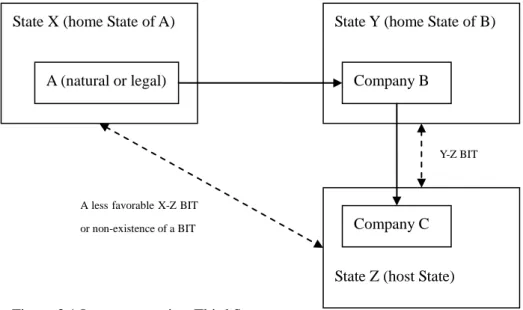
Figure 2.1 Number of ICSID Cases 1972-2014 Figure 3.1 Investments via a Third State Figure 3.2 Round-Trip Investments
Figure 5.1 FDI Inflows into China 1990-2013 Figure 5.2 FDI Outflows from China 1990-2013
Tables
III
Abstract
The rapid increase in the number of international investment treaties means the significance of investor-state arbitration provisions (ISAPs) has become more and more obvious. As the enforcement mechanism of international investment treaties, ISAPs furnish a powerful “weapon” for investors to challenge contracting states directly at the international level. Investment treaty tribunals establish their jurisdiction and scrutinize whether the measures of contracting states are consistent with their treaty obligations on the basis of ISAPs. While investment treaty tribunals enjoy a high level of interpretive authority delegated by contracting states, they are also accused of expansive rulings on jurisdiction, i.e., establishing jurisdiction beyond states’ consent.
After a comprehensive examination of the practice of investment treaty tribunals on jurisdictional issues, this dissertation finds that investment treaty tribunals generally adopt an expansive approach towards jurisdiction and that the expansion of jurisdiction is still ongoing. There are multiple ways available for investment treaty tribunals to break through jurisdictional boundaries. These ways correlate with each other and work in harmony. They include expansive interpretations of “covered investors”, “covered investment” and “investment disputes”, weakening of preconditions to jurisdiction, expansive application of most-favored-nation clauses and “umbrella clauses”, restrictive application of “fork-in-the-road clauses”, flexible interpretation of the temporal scope of investment treaties, relaxing the burden of proof for investors, and frequent use of obiter
dictum.
The creeping jurisdiction of investment treaty tribunals is an inevitable result attributed to internal and external causes. Aggressive pushing by investors, the ambiguity of investment treaty provisions, intense competition in attracting foreign investment among host states, and under-estimation of arbitration risks by host states are external driving forces. And the inherent capability and inclination of investment treaty tribunals in interpreting ISAPs expansively are institutional foundations to achieve the creeping jurisdiction. It can manifest in three aspects. Firstly, although being
ad hoc dispute settlement bodies, investment treaty tribunals have the competence to
decide their own jurisdiction and enjoy a high level of interpretive authority. Secondly, the established techniques of legal reasoning may enhance the credibility of the creeping
IV
jurisdiction. The flexible application of treaty interpretation rules and the de facto precedent effect are two frequent techniques employed by investment treaty tribunals. Thirdly, arbitrators with pro-investor inclinations strongly support the expansion of jurisdiction in deciding investor-state disputes. Arbitrators’ personal background, close relationship with investors, and commercial legal thinking will strongly influence their value preferences for arbitration outcomes.
This dissertation does not presume that the creeping jurisdiction is illegitimate or unjustifiable. Rather, it focuses on the competition and interaction between investment treaty tribunals and contracting states in the creeping jurisdiction issue. On one side, investment treaty tribunals have the capability and inclination to expand their jurisdiction. On the other, contracting states also have the capability to control the depth and breadth of the creeping jurisdiction of investment treaty tribunals. For a radical expansion of jurisdiction that goes far beyond the acceptability of contracting states, contracting states may minimize their adverse impact by selecting arbitrators prudently, initiating state-state arbitration proceedings, requesting annulment of the award, and resisting enforcement of the award. Seeking to revise arbitration rules to strengthen the involvement of non-disputing states in investor-state arbitration, improving ex ante and
ex post controls by contracting states over investment treaty rules, and even exiting
from international investment treaties and investor-state arbitration mechanisms may also remind tribunals to respect the common intentions of contracting states. It is worth noting that whether and how to control the creeping jurisdiction of tribunals depends on policy priorities and interests weighed among contracting states. However, the capability of contracting states to control the creeping jurisdiction of tribunals is limited when these counter measures fail to function. The negotiating costs involved in the contracting and re-contracting process of investment treaties and the costs of exit from investment treaty regime may substantially prevent contracting states from taking action against the jurisdictional expansion by investment tribunals.
Key words: Investment Treaty Tribunals; Creeping Jurisdiction; International
V
Table of Contents
List of Abbreviations... I
List of Figures and Tables ... II
Abstract ... III Table of Contents ... V Chapter 1: Introduction ... 1 1.1 The subject ... 1 1.2 Theoretical approach ... 5 1.3 Methodology ... 9 1.4 Scheme ... 11
Chapter 2: The Legal Basis of Investor-State Arbitration ... 14
2.1 Disputing parties of investor-state arbitration ... 14
2.2 Subjective requirement for the jurisdiction of investor-state arbitration ... 16
2.2.1 Reaching of mutual consent to arbitration ... 16
2.2.2 The irrevocability of consent to arbitration... 19
2.3 Objective requirements for the jurisdiction of investor-state arbitration ... 20
2.3.1 Covered “investment” ... 20
2.3.2 Covered “investment disputes” ... 23
2.3.3 Covered “investors” ... 25
2.3.4 Temporal coverage ... 28
Chapter 3: Approaches to Achieve the Creeping Jurisdiction in the Practice of Investor-State Arbitration ... 30
3.1 Expansive interpretation of covered “investment” ... 30
3.1.1 Commercial contracts ... 31
3.1.2 Financial securities... 35
3.1.3 “In accordance with the host state law” requirement ... 39
3.2 Expansive interpretation of covered “investors” ... 41
3.2.1 Shareholder claims and multiple recoveries ... 41
3.2.2 Tolerating “treaty shopping” of investors ... 47
VI
3.4 Weakening of preconditions to arbitration ... 67
3.5 Expansive application of most-favored-nation clauses... 73
3.5.1 Avoiding preconditions to arbitration ... 74
3.5.2 Broadening the coverage of matters subject to arbitration ... 80
3.5.3 Logic barriers to the expansive approach ... 82
3.6 Expansive application of “umbrella clauses” ... 86
3.6.1 Distinction between contract claims and treaty claims ... 87
3.6.2 Elevating contract claims to treaty claims ... 87
3.6.3 Interplay between expansive application of “umbrella clauses” and other expansive approaches ... 92
3.7 Restrictive application of “fork-in-the-road clauses” ... 95
3.8 Flexible interpretation of the temporal scope of investment treaties ... 100
3.9 Relaxing the burden of proof for investors ... 102
3.10 Frequent use of obiter dictum ... 106
Chapter 4: Causes and Institutional Foundations of the Creeping Jurisdiction of Investment Treaty Tribunals ... 110
4.1 Causes of the creeping jurisdiction of investment treaty tribunals ... 110
4.1.1 Aggressive pushing by investors ... 110
4.1.2 Ambiguity of investment treaty provisions ... 115
4.1.3 Pro-investor preference of investment treaty tribunals ... 117
4.1.4 Intense competition in attracting foreign investment among host states and under-estimation of arbitration risks by host states ... 119
4.2 Institutional capacity of investment treaty tribunals to achieve the creeping jurisdiction ... 122
4.2.1 The doctrine of competence-competence ... 123
4.2.2 Interpretive authority of investment treaty tribunals ... 124
4.2.3 The ad hoc nature of tribunals does not limit their law-making power ... 126
4.3 Legal techniques employed by investment treaty tribunals to achieve the creeping jurisdiction... 130
4.3.1 Flexible application of treaty interpretation rules ... 130
4.3.2 Strengthening the de facto precedent effect of prior awards ... 143
4.4 Arbitrator incentives to achieve the creeping jurisdiction ... 154
VII
4.4.2 Arbitrators’ conflicts of interest ... 159
4.4.3 Arbitrators’ pro-arbitration inclination ... 164
Chapter 5: Competition and Interaction between States and Tribunals with respect to the Creeping Jurisdiction ... 167
5.1 Factors influencing the acceptability of investment arbitration awards by contracting states ... 168
5.2 Coping strategies provided by the investor-state arbitration mechanism ... 174
5.2.1 Selecting arbitrators prudently ... 174
5.2.2 Initiating state-to-state arbitration proceedings ... 178
5.2.3 Requesting annulment of the award ... 180
5.2.4 Resisting enforcement of the award ... 183
5.3 Reforming the investor-state arbitration mechanism ... 188
5.3.1 Revising arbitration rules to strengthen the involvement of non-disputing states in investor-state arbitration ... 188
5.3.2 Enhancing transparency is not always in the interest of contracting states ... 192
5.3.3 Building an appeal mechanism is not workable ... 195
5.4 Improving ex ante and ex post controls by contracting states ... 198
5.4.1 Ex post control: making full use of subsequent joint interpretation to bind tribunals ... 198
5.4.2 Ex ante control: increasing the preciseness of treaty commitments ... 201
5.5 Final choice: exiting from investment treaties or investor-state arbitration mechanisms ... 214
5.6 The practice of China and its shifting position ... 222
Chapter 6: Conclusions ... 238
Appendix I: List of Chinese BITs with Broad ISAPs ... 240
Appendix II: List of Chinese BITs with Narrow ISAPs ... 247
Appendix III: List of Chinese BITs with No ISAP ... 257
Appendix IV: List of Chinese FTAs ... 259
Bibliography ... 262
1
Chapter 1: Introduction
1.1 The subject
It is not uncommon for disputes to arise between a foreign investor and the host state. Traditionally, a foreign investor has no choice but to bring such disputes to the local courts of the host state after attempts at amicable negotiation fail. If the end result of local remedy disappoints the investor, the investor may seek diplomatic protection by its home state. However, granting diplomatic protection is strictly limited under customary international law. Even if the national state (the home state) of investors is entitled to exercise diplomatic protection, it is the state as the sole judge to decide whether and how to exercise this discretionary right. On one hand, local remedy in the host state seems unattractive to foreign investors. On the other hand, the effectiveness of diplomatic protection is subject to legal constraints of international law and unpredictable policy considerations of the national state. The generation of investor-state arbitration mechanism, however, aims to avoid such dilemmas. It provides legal standing for foreign investors to pursue their own claims against the host state at the international level.
Investor-state arbitration, also generally known as investment treaty arbitration or international investment arbitration, is a dispute settlement mechanism resolving investment disputes arising between a foreign investor and a contracting state (the host state) on the basis of an applicable international investment treaty. A foreign investor may submit an investment dispute to arbitration if an alleged breach of substantial obligations by the host contracting state under an applicable international investment treaty exists. For an investment treaty tribunal to acquire jurisdiction on the arbitration claims, the host state must have consented to the arbitration of such investment disputes. A valid “consent” of the host state to arbitration is the jurisdictional foundation of an investment treaty tribunal. Therefore, how to find and interpret state’s consent to arbitration is at the core of the jurisdictional issue of investor-state arbitration.1
1 In this dissertation, the terms “jurisdiction” and “competence” are used interchangeable. Distinguishing these two terms is of little significance. See Hugh Thirlway, The Law and Procedure of the International Court of Justice 1960-1989: Part Nine, British Yearbook of International Law, Vol. 69, 1998, pp. 4-6; Christoph Schreuer, The ICSID Convention: A Commentary, Cambridge University Press, 2nd edition, 2009, p. 532. On the contrary, there
2
The investment arbitration between the foreign investor and the host state may take place under various institutional and procedural frameworks such as the International Centre for Settlement of Investment Disputes (ICSID), International Chamber of Commerce (ICC), Stockholm Chamber of Commerce (SCC), London Court of International Arbitration (LCIA), Permanent Court of Arbitration (PCA) 2 and ad hoc tribunals constituted under the arbitration rules adopted by the United Nations Commission on International Trade Law (UNCITRAL). Of these various institutions and arbitration procedural frameworks, ICSID is the only institutional system specifically designed under the Convention on the Settlement of Investment Disputes
between States and Nationals of Other States (ICSID Convention or Washington Convention) to deal with investment disputes and is the most widely used. According to Article 25(1) of the ICSID Convention, the jurisdiction of the Centre shall extend to any legal dispute arising directly out of an investment between a Contracting State and a national of another Contracting State, which the parties to the dispute consent in writing to submit to the ICSID. The ratification of the ICSID Convention by a contracting state, however, shall not constitute the consent required by Article 25(1). Therefore, the ICSID tribunal may exercise jurisdiction over an investment dispute only if a contracting state (the host state) and a national of another contracting state (the foreign investor) “consent in writing” to submit such dispute to arbitration. Besides, under the Arbitration Rules of other arbitral institutions (SCC, ICC, LCIA, etc.), the arbitration agreement between the parties is also required for the submission to arbitration.
Unlike interstate arbitration or international commercial arbitration, investor-state arbitration is a unique arbitration mechanism designed to settle disputes arising from the regulatory, rather than a reciprocal, legal relationship between state and individual. At first glance, it seems rather difficult to reach an arbitration agreement between the host state and foreign investor. However, the formal requirement of an arbitration agreement has been abandoned in the jurisdictional practice of investor-state arbitration. Investor-state arbitration provisions (ISAPs) contained in most international investment treaties are considered to be “unilateral offers of arbitration” by the contracting states.
is also an argument that the terms “jurisdiction” and “competence” differ in the reach of dispute settlement function. See Gerald Fitzmaurice, The Law and Procedure of the International Court of Justice, 1951-4: Questions of Jurisdiction, Competence and Procedure, British Yearbook of International Law, Vol. 34, 1958, pp. 8-9.
2 It is notable, however, that these arbitral institutions do not participate in the adjudication of specific cases of investor-state arbitration but rather facilitate the constitution and operation of ad hoc arbitral tribunals.
3
Foreign investors may accept such standing offers simply by initiating the investor-state arbitration proceeding should a dispute arise. A majority of investor-state arbitration cases invoked such unilateral offers embodied in ISAPs as the basis of jurisdiction.
There are currently more than 3,200 international investment treaties in force, which differ in the level of investment protection.3 The formulation of ISAPs is also highly diverse.4 Distinct ISAPs in different investment treaties vary in the preconditions, breadth and depth of investor-state arbitration. For instance, some investment treaties contain narrow ISAPs restricting the access of investors to investor-state arbitration only to those disputes over “the amount of compensation for expropriation”. While other investment treaties contain broader ISAPs that authorize investors to submit to arbitration for “any legal dispute concerning an investment”. Even if a dispute is clearly covered by the language of ISAPs, contracting states are still free to impose preconditions limiting the submission to arbitration. Many investment treaties provide that before an investor can initiate investor-state arbitration proceedings, he must first resort to domestic courts of the host state for a certain period, often 18 months. How to construe states’ consent to arbitration from various ISAPs to acquire jurisdiction is the primary task of investment treaty tribunals.
ISAPs are labeled as the “teeth” of investment treaties. They furnish a powerful “weapon” for investors to challenge contracting states directly at the international level. Investment treaty tribunals establish jurisdiction and scrutinize whether the measures of contracting states are consistent with their treaty commitments on the basis of ISAPs. The establishment of their jurisdiction is the decisive step leading to the judicial review power of tribunals. Unless impenetrable legal barriers exist, tribunals tend to affirm their jurisdiction over investors’ claims and to conduct judicial review of lawfulness of state measures under applicable investment treaties. Expansive interpretation of ISAPs could lead to the strengthening of investment protection regime. Tribunals have accordingly played a significant role in interpreting, and thus developing, investment treaty law. The broad interpretive authority enjoyed by tribunals makes them an important body to enhance the credibility of treaty commitments and to strengthen the
3 See United Nations Conference on Trade and Development (UNCTAD), World Investment Report 2014, United Nations Publication, 2014, p. 114.
4 See Joachim Pohl, Kekeletso Mashigo & Alexis Nohen, Dispute Settlement Provisions in International Investment Agreements: A Large Sample Survey, OECD Working Papers on International Investment, No. 2012/3, 2012, pp. 7-8.
4
binding force of procedural and substantial treaty rules on contracting states.
The past two decades have witnessed a dramatic increase in the number of investor-state arbitration cases. More importantly, tribunals tend to favor expansive readings of their own jurisdiction. Tribunals increasingly extend their jurisdictional reach beyond the boundary of states’ consent through the flexible interpretation of ISAPs. As a result, governments are starting to face a greater number of arbitration claims by foreign investors. The more claims that are brought to investment treaty tribunals, the more these tribunals have opportunities to interpret and even develop ISAPs. For example, prior to 1996, only 38 cases had been brought before ICSID tribunals. However, since the late 1990s, the number of cases has grown considerably. As of May 31, 2015, ICSID has registered 523 cases, of which 328 cases have concluded and 195 cases are still pending.5 Of the concluded cases decided by tribunals, only 25% declined jurisdiction.6
This dissertation will focus on four specific issues: (1) What are the characteristics of investor-state arbitration in comparison with other international dispute settlement mechanisms? (2) Whether and how do investment treaty tribunals establish jurisdiction beyond states’ consent? (3) Why do investment treaty tribunals have the capability and inclination to expand their jurisdiction? (4) How do contracting states and investment treaty tribunals compete and interact regarding the creeping jurisdiction of tribunals?
The term “creeping” in this dissertation indicates the gradual and even imperceptible process of expanding jurisdiction by investment treaty tribunals. According to the Oxford Dictionary, “creeping” is an adjective word meaning “occur or develop gradually and almost imperceptibly”. The phrase “creeping jurisdiction” is no stranger to academics of international law. It has been applied by a number of publicists to the extension of maritime claims by coastal states.7 Apart from this, the concept of “creeping jurisdiction” has also been used to characterize the process of extending their jurisdictional mandate by international dispute settlement bodies, such as the European Court of Human Rights.8 This dissertation, therefore, similarly applies this concept to
5 See the website of ICSID, https://icsid.worldbank.org/apps/ICSIDWEB/cases/Pages/AdvancedSearch.aspx. 6 ICSID Secretariat, ICSID Caseload – Statistics (Issue 2015-1), 2015, p. 14.
7 See, e.g., Stuart Kaye, Freedom of Navigation in a post 9/11 World: Security and Creeping Jurisdiction, in David Freestone, Richard Barnes & David M. Ong (eds.), The Law of the Sea : Progress and Prospects, Oxford University Press, 2006, pp. 347-364.
8 See, e.g., Aslan Gunduz, Creeping Jurisdiction of the European Court of Human Rights: the Bankovic Case vs the Loizidou Case, available at http sam.gov.tr wp-content uploads 2 12 Aslan unduz.pdf .
5
describe the progressive and imperceptible process of jurisdictional expansion by investment treaty tribunals.
1.2 Theoretical approach
Academics are divided regarding the nature of investor-state arbitration, resulting in several competing conceptualizations, including the public international law paradigm, the international commercial arbitration paradigm and the public law paradigm. The public international law paradigm treats investor-state arbitration as a creature of public international law and puts the treaty parties (the host state and the home state of investors) in a superior position relative to investors, as the latter are not treaty parties.9 The commercial arbitration paradigm, however, emphasizes “equality of arms” between the disputing parties (the claimant investors and the respondent host state).10 The public law paradigm, by contrast, shifts attention away from both the treaty parties and the disputing parties toward the interests of the public at large and views investor-state arbitration as a form of internationalized judicial review.11
This dissertation employs the public international law paradigm while being sensitive to particular concerns of the commercial arbitration paradigm and the public law paradigm. Balancing the interests of treaty parties, disputing parties and the public at large is the underlying policy consideration of this dissertation. Take the origin of investment tribunals’ powers for instance. The public international law paradigm assumes that the treaty parties are the delegating principals of investment tribunals’ powers, while the commercial arbitration paradigm believes that tribunals’ authority derives from the autonomy of the disputing parties. Following the public law paradigm, however, tribunals should be accountable to the interests of public welfare. It is true that the mechanism of investor-state arbitration is created and defined by international investment treaties. But the assumption that investment tribunals are only agents of
9 See, e.g., Zachary Douglas, The Hybrid Foundations of Investment Treaty Arbitration, British Yearbook of International Law, Vol. 74, 2003, pp. 151-155.
10 See, e.g., Thomas W. Wälde, Procedural Challenges in Investment Arbitration under the Shadow of the Dual Role of the State Asymmetries and Tribunals’ Duty to Ensure, Pro-actively, the Equality of Arms, Arbitration International, Vol. 26, 2010, pp. 3-42.
11 See, e.g., Gus van Harten, Investment Treaty Arbitration and Public Law, Oxford University Press, 2007; William W. Burke-White & Andreas von Staden, Private Litigation in a Public Law Sphere: The Standard of Review in Investor-State Arbitrations, Yale Journal of International Law, Vol. 35, 2010, pp. 283-296; Anthea Roberts, Clash of Paradigms: Actors and Analogies Shaping the Investment Treaty System, American Journal of International Law, Vol. 107, No. 1, 2013, p. 54.
6
treaty parties may not match up with reality. International investment treaties provide investors with a high level of substantive rights and more importantly, give them procedural rights to enforce those substantive rights. Both the claimant investor and the respondent state share the right to appoint arbitrators. Also notably, the interests of investment protection in hard cases may compete with public interests, such as the protection of health, safety, the environment and labor rights. Therefore, the treaty parties have lesser control over the arbitration process compared to inter-state mechanisms of arbitration or adjudication. Investment tribunals are unlikely to view themselves as pure agents of the treaty parties or the disputing parties.
The purpose of this dissertation is to comprehensively study the jurisdictional creep of investment treaty tribunals. In an effort to achieve this goal, it is necessary at this stage to raise the following three theoretical questions.
Firstly, is there a fine line between expanding jurisdiction beyond the intention of treaty parties and exercising jurisdiction within the mandate? Where is the borderline? Theoretically, the expansion of jurisdiction may consist of two scenarios. In the first scenario, a tribunal is faced with several possible interpretations of the arbitration agreement (more specifically, ISAPs) and adopts the most expansive interpretation. In the second scenario, the terms of ISAPs are clear and the jurisdictional reach of a tribunal is limited in its preconditions, breadth or depth. But the tribunal chooses to push the boundary and to expand its jurisdictional reach. However, the distinction of these two scenarios is a matter of degree. There is no such universal and clear-cut borderline. The claimant investors and the respondent states usually have opposite stances in understanding the scope of ISAPs. For instance, with respect to the scope of “covered investment”, the claimant investors have no hesitation in contending that every kind of asset is covered by investment treaties. The respondent states, however, argue that assets not having the characteristics of investment, such as commercial contracts and sovereign bonds, are not “covered investment” under investment treaties.12
Similarly, in determining the nature of preconditions to arbitration, the claimant investors usually believe they are not mandatory and can be avoided, while the respondent states would hold that failure to fulfill the requirement of preconditions leads to non-existence of jurisdiction.13 In investor-state arbitration, tribunals often face
12 See infra chapter 3.1.
7
opposing arguments on the interpretation of ISAPs. It is the task of this dissertation to examine how tribunals reach their own judgments while facing disputing parties’ opposite interpretations.
Secondly, how much jurisdiction is legitimate and appropriate? Is the jurisdictional creep illegitimate or not? To be clear, jurisdiction is not a value-free label. It is often a matter of perspective. This dissertation does not presume that the expansion of jurisdiction by investment tribunals is illegitimate or unjustifiable. Academics differ greatly in deciding whether there is a legitimate crisis in establishing jurisdiction broadly by investment tribunals. Some argue that the tribunals’ broad interpretation of ISAPs, such as most-favored-nation clauses and umbrella clauses, goes beyond the intention of treaty parties and thus strikes the legitimate basis of investment arbitration.14 Others, on the contrary, believes that establishing jurisdiction through most-favored-nation clauses and umbrella clauses are permissible interpretations since the treaty terms are broad themselves.15 These two lines of interpretation hold the same “all or nothing” philosophy. At one extreme, the broad application of ISAPs is considered to be illegitimate. At the opposite extreme, proponents of expansive readings of ISAPs claim that it is exactly what treaty parties desire. However, neither the simplification nor the exaggeration of legitimacy tells the whole story of investment arbitration. A grey zone inevitably exists. ISAPs may be subject to wide or narrow interpretations as if they were accordions. The adoption of wide interpretations by tribunals is not necessarily a bad or good thing. What this dissertation tries to study is why tribunals tend to favor expansive interpretations and how treaty parties subsequently react. It is argued in this dissertation that treaty parties’ explicit reception or implicit tolerance of the jurisdictional expansion by tribunals may repair its legitimacy.
The issue of jurisdictional creep originates from the lack of compulsory jurisdiction.
14 See, e.g., M. Sornarajah, A Coming Crisis: Expansionary Trends in Investment Arbitration, in Karl P. Sauvant (ed.), Appeals Mechanism in International Investment Disputes, Oxford University Press, 2008, pp. 55-61; Chen Huiping, The Expansion of Jurisdiction by ICSID Tribunal: Approaches, Reasons and Damages, Journal of World Investment & Trade, Vol. 12, 2011, pp. 671-687.
15 See, e.g., Emmanuel Gaillard, Establishing jurisdiction through a Most-Favored-Nation clause, New York Law Journal, Vol. 233, No. 105, 2 June 2005; Emmanuel Gaillard, Investment Treaty Arbitration and Jurisdiction Over Contract Claims-The SGS Cases Considered, in Todd Weiler (ed.), International Investment Law and Arbitration: Leading Cases From the ICSID, NAFTA, Bilateral Treaties and Customary International Law, Cameroon May, 2005, pp. 325-346. Notably, Emmanuel Gaillard was the counsel for the investor SGS in both cases of SGS v. Pakistan and SGS v. Philippines. For further details, see infra chapter 3.6.2.
8
An international dispute settlement body without mandatory jurisdiction inevitably wanders between judicial restraint and judicial activism in the issue of jurisdiction. To borrow the words of Judge Pieter Kooijmans: if the result of jurisdictional analysis is too restrictive, the international dispute settlement body will undermine its authority, if it is too ambitious it will endanger its position, since States may become more reluctant to accept its jurisdiction or more inclined to withdraw the acceptance already given.16 Jurisdictional analysis of the international dispute settlement body is not a mechanical process without value judgment, but rather a manifestation of how it locates itself. International tribunals can be very creative and capable of considerably extending the scope and reach of their jurisdiction.17 Value preferences of investment tribunals and the influence of arbitral decisions on behavior patterns of treaty parties will be the focus of this dissertation.
Thirdly, does the expansion of jurisdiction by investment tribunals in specific cases represent an overall trend in expanding jurisdiction? Investment tribunals are one-off or
ad hoc tribunals created for the resolution of individual disputes. There is no single
standing tribunal for all investment disputes. Therefore, there is the possibility of different ad hoc tribunals giving different interpretations for the same legal issue. Many scholars believe that the phenomenon of inconsistent decisions rendered by different tribunals is serious enough to pose a legitimate crisis to the system of investor-state arbitration. It seems to be largely exaggerated. The reality is that participants in the community of investor-state arbitration, including arbitrators, lawyers, treaty parties, disputing parties and scholars, rely upon prior arbitral awards. A closer examination of arbitral practice reveals that tribunals do in fact follow an informal and de facto system of precedent.18 Tribunals generally try to avoid openly criticizing prior awards. It is a common feature that tribunals cite prior awards to support their judgments and seek to contribute to the coherent development of international investment law beyond individual cases. Tribunals have an interest in preserving and enhancing the international regime of investment protection, especially the system of investor-state arbitration. The expansive readings of ISAPs lead to a greater reach of jurisdiction and
16 Pieter Kooijmans, The ICJ in the 21st Century: Judicial Restraint, Judicial Activism, or Proactive Judicial Policy, International and Comparative Law Quarterly, Vol. 56, 2007, p. 743.
17 Fuad Zarbiyev, Judicial Activism in International Law-A Conceptual Framework for Analysis, Journal of International Dispute Settlement, Vol. 3, No. 2, 2012, pp. 247-248.
9
authority for tribunals. Prior awards that accord with such value will be followed and refined by later tribunals and will become a strong precedent difficult to overturn.
1.3 Methodology
This dissertation is based primarily on normative analysis, empirical study, interest analysis and comparative study.
Normative analysis is utilized throughout this dissertation for the following reasons. Firstly, the delegation of international investment treaties is the basis of investment treaty arbitration. Although investment treaty tribunals cannot isolate them from policy considerations and interest balancing, they do not stray too far from the normative basis. Normative basis is the very reason why investment treaty tribunals exist. An award without concrete normative reasoning is a tree without roots or water without a source. Secondly, normative analysis on international investment treaties may help us judge the ordinary meaning of treaty terms as objectively as possible and thus measure the degree of jurisdictional expansion by international investment tribunals. Thirdly, a high level of legal reasoning may enhance the authority of investment treaty tribunals. Tribunals’ underlying policy considerations and interest balancing may only appear in the form of legal reasoning. Examining the legal techniques used by investment treaty tribunals may give insight into potential strategies for dealing with their expansive rulings on jurisdiction.
The primary body of materials used in the study undertaken for this dissertation is the great mass of international investment treaties and investor-state arbitration awards. International investment treaties cited in this dissertation can be accessed at the
UNCTAD Database of International Investment Treaties
(http://investmentpolicyhub.unctad.org/IIA) and the International Treaty Arbitration website (http://italaw.com/). The lists of Chinese bilateral investment treaties and free trade agreements are also available at the Ministry of Commerce of China website (http://tfs.mofcom.gov.cn/aarticle/Nocategory/201111/20111107819474.html) and the
China FTA Network website (http://fta.mofcom.gov.cn/english/index.shtml).
Investor-state arbitration cases can be accessed at the ICSID Database of Cases (https://icsid.worldbank.org/apps/ICSIDWEB/cases/Pages/AdvancedSearch.aspx) and the International Treaty Arbitration website (http://italaw.com/). Treaties and cases that are not available at these sites will be otherwise noted in this dissertation.
10
This dissertation also comprehensively scrutinizes the legal stances of investment treaty tribunals towards jurisdiction based on the method of empirical study. To examine whether and to what extent tribunals expand their jurisdiction, focus should be on the actual utilized methods of interpretation and legal reasoning by tribunals, but not on what tribunals claim to be. Even if a tribunal claims to strictly adhere to the applicable investment treaty, its judgment may turn out to be an expansive ruling. What matters is what tribunals do, not what they say they are doing.
For instance, whether and to what extent arbitral decisions have precedential effect in investor-state arbitration cannot be answered in the abstract. Empirical study of arbitral cases is needed to reach a relatively objective and prudent conclusion. With regard to the composition of arbitrators and their preferences, empirical study of arbitrators’ nationality, area of expertise, identities other than arbitrators, number of appointments and their voting history is helpful. While it is true that empirical analysis may not provide decisive evidence on the pro-investor inclination of arbitrators, it at least proves the high probability of such inclination.
A law reflects the demands of certain people. The same is true of international law. Interest analysis equally applies in this dissertation. Investor-state arbitration involves multiple stakeholders, including the investor, the host state, the home state of the investor, and the investment tribunal. This dissertation intends to seek a balanced approach in examining the jurisdictional expansion of investor-state arbitration since the investor, the host state, the home state and the tribunal may have different interests.
The expansion of jurisdiction by investment tribunals will change the static interest balancing of relevant stakeholders. Aggressive pushing by investors is among the most direct driving force for the jurisdictional expansion. The establishment of jurisdiction does not necessarily bring a favorable award on merits for investors. However, as a popular litigation strategy, the establishment of jurisdiction will be a weighty bargaining chip for investors against the host state. For the host state, the expanding jurisdiction of investment tribunals increases the risks of losing in investor-state arbitration and being pressured into settlement under the table. Further, the greater likelihood of success in investor-state arbitration will stimulate other investors to bring more cases. For the investment tribunals, the expansion of jurisdiction may increase the size of investment arbitration “cake” and strengthen the binding force of procedural and substantial treaty rules on contracting states. However, if the tribunals’ rulings on jurisdiction extend far
11
beyond the acceptability of respondent states (the host states), respondent states might choose to exit the mechanism of investment arbitration, thus endangering the existence of investment arbitration “cake”. For the home state of the investor, the expansion of jurisdiction by investment tribunals is a double-edged sword. The home state is likely to have an interest in both enhancing the treaty protection of investment abroad and reducing the risk of being sued in future investor-state arbitration cases.
Lastly, this dissertation applies the method of comparative study to examine the self-contained characteristics of investor-state arbitration. One of the original intentions of the establishment of investor-state arbitration mechanism was to be the “depoliticization” of investment disputes, i.e., the removal of disputes from the political and diplomatic arena to a judicial forum.19 Under the mechanism of investor-state arbitration, investors generally do not have to exhaust local remedies and retain control of international claims without relying on the political discretion of their home states. This dissertation examines the jurisdictional issues of investor-state arbitration against the wide backdrop of international dispute settlement and identifies similarities and differences with other mechanisms of international dispute settlement, such as diplomatic protection, inter-state arbitration and international commercial arbitration. The focus is specifically on ad hoc nature of investor-state arbitration and the asymmetrical structure in activating the arbitration process would be the focus.
1.4 Scheme
This dissertation is divided into six chapters. Following the introduction, chapter 2 provides a brief description of the legal foundation of investor-state arbitration. Characteristics of disputing parties, both subjective and objective requirements for the jurisdiction of investment arbitration are to be elaborated. It will be the starting point for the discussion of the jurisdictional creep.
Chapters 3, 4 and 5 are the main parts of this dissertation showing a progressive logic in structure. The arguments put forward in these three chapters are correlated and support each other. Chapter 3 answers the fundamental question of whether and how investment treaty tribunals establish jurisdiction beyond states’ consent. After a comprehensive examination of the practice of investment treaty tribunals on
19 Ibrahim F.I. Shihata, Towards a Greater Depoliticization of Investment Disputes: The Roles of ICSID and MIGA, ICSID Review-Foreign Investment Law Journal, Vol. 1, No. 1, 1986, p. 1.
12
jurisdictional issues, this dissertation finds that investment treaty tribunals generally adopt an expansive approach towards jurisdiction and that the expansion of jurisdiction is still ongoing. There are multiple ways available for investment treaty tribunals to break through jurisdictional boundaries. These ways are correlated with each other and work in harmony. They include expansive interpretations of “covered investors”, “covered investment” and “investment disputes”, weakening of preconditions to jurisdiction, expansive application of most-favored-nation clauses and “umbrella clauses”, restrictive application of “fork-in-the-road clauses”, flexible interpretation of the temporal scope of investment treaties, relaxing the burden of proof for investors, and frequent use of obiter dictum.
After the relatively technical analysis of chapter 3, chapter 4 further deals with fundamental issues behind the phenomenon of jurisdictional expansion. Specifically, why investment treaty tribunals have the capability and inclination to expand their jurisdiction? Both external and internal causes are examined in this chapter. Aggressive pushing by investors, the ambiguity of investment treaty provisions, intense competition in attracting foreign investment among host states, and under-estimation of arbitration risks by host states are external driving forces. And the inherent capability and inclination of investment treaty tribunals in interpreting ISAPs expansively lies upon the following three aspects. Firstly, although being ad hoc dispute settlement bodies, investment treaty tribunals have the competence to decide their own jurisdiction and enjoy a high level of interpretive authority. Secondly, the established techniques of legal reasoning may enhance the credibility of the creeping jurisdiction. The flexible application of treaty interpretation rules and the de facto precedent effect are two frequent techniques employed by investment treaty tribunals. Thirdly, arbitrators with pro-investor inclination strongly support the expansion of jurisdiction in deciding investor-state disputes. Arbitrators’ personal background, close relationship with investors and commercial legal thinking will strongly influence their value preferences for arbitration outcomes.
On the basis of the foregoing analysis, chapter 5 puts forward the counter measures available for contracting states to deal with the jurisdictional creep. The concept of acceptability is introduced to measure the extent of tolerance contracting states have for the jurisdictional creep of investment treaty tribunals. The preciseness of investment treaty provisions, the caseload of investor-state arbitration, the quality of legal reasoning,
13
the extent of precedential effect of prior awards, the composition of tribunal members and their preferences, and the finality and worldwide enforceability of awards influence the acceptability of contracting states for the expansion of jurisdiction by tribunals. For a radical expansion of jurisdiction that goes far beyond the acceptability of contracting states, contracting states may minimize their adverse impact by selecting arbitrators prudently, initiating state-state arbitration proceedings, requesting annulment of the award and resisting enforcement of the award. Seeking to revise arbitration rules to strengthen the involvement of non-disputing states in investor-state arbitration, improving ex ante and ex post controls by contracting states over investment treaty rules, and even exiting from international investment treaties and investor-state arbitration mechanisms may also remind tribunals to respect the common intentions of contracting states. It is worth noting that whether and how to control the creeping jurisdiction of tribunals depends on policy priorities and interests weighing among contracting states. However, the capability of contracting states to control the creeping jurisdiction of tribunals would be limited when these counter measures fail to function and the costs of exit from investor-state arbitration mechanisms remain high.
14
Chapter 2: The Legal Basis of Investor-State Arbitration
2.1 Disputing parties of investor-state arbitration
International arbitration can be divided into inter-state arbitration, arbitration between private parties20 and arbitration between state and private party according to the varying characteristics of disputing parties. Inter-state arbitration has its origin in public international law. It is designed to adjudicate inter-state disputes in accordance with public international law. Arbitration between private parties, also known as international commercial arbitration, by contrast, deals with private rights and obligations of private parties. The procedure and enforcement mechanism of commercial arbitration relies heavily on the governing domestic law. Arbitration between state and private parties may be further split into two categories according to the subject matter of disputes: (1) private arbitration between state and private party, and (2) public arbitration between state and private party. The first category arises from commercial disputes between an individual (or a company) and a state acting in a private capacity, for instance by purchasing or selling commodities. It is therefore treated as a subset of international commercial arbitration. In the latter category, however, the disputes arise as part of the regulatory, rather than a reciprocal, legal relationship between state and private party. It is the latter category that investor-state arbitration falls into.
Investor-state arbitration allows foreign investors to sue the host state before an arbitral tribunal if they believe that their treatment standard under the applicable investment treaty has been violated. Foreign investors, as private parties, are entitled to challenge a wide range of governmental regulatory measures in a final and binding arbitral decision. Of course, without the consent of the host state, an arbitral tribunal has no power to scrutinize and adjudicate the regulatory measures of the host state concerning investment. Since no state can be compelled to accept the jurisdiction of an international dispute settlement body. The rapidly increasing number of international investment treaties21, however, delegates the necessary power to arbitral
20 In this dissertation, private parties include natural persons, legal persons and other private economic organizations.
21 International investment treaties mainly include bilateral investment treaties (BITs) and bilateral and multilateral free trade agreements containing investment chapters (FTAs), such as the North American Free
15
tribunals.
According to the statistics of UNCTAD, as of the end of 2013, there are currently 3236 international investment treaties in force (2902 BITs and 334 other international investment treaties), involving a vast majority of developed countries and developing countries.22 Many capital-importing states chose to sign investment treaties passively or even actively with other capital-exporting states to attract foreign investments and stimulate the development of their economies.23 Most of these investment treaties provide foreign investors with a high standard of substantive legal protection and more importantly, entitle foreign investors to submit their investment disputes with the host state directly to international arbitration. The direct access of investors to international arbitration under investment treaties, as the “teeth” of investment treaties,24 could have some “bite” on the host state.25 It is noteworthy, however, that investment treaties do grant both substantive and procedural rights to investors even though investors are not one of the treaty parties. The argument that the right to resort to investment arbitration ultimately belongs to the home state but not to the investor has not been supported by the theory and state practice.26
In contrast to inter-state arbitration where states may appear both as claimants and as respondents, in investor-state arbitration states only appear as respondents. This difference lies in the particular form of mutual consent to investor-state arbitration.
Trade Agreement (NAFTA), the Energy Charter Treaty (ECT), the ASEAN Comprehensive Investment Agreement (ACIA) and the China-New Zealand FTA.
22 See United Nations Conference on Trade and Development (UNCTAD), World Investment Report 2014, United Nations Publication, 2014, p. 114.
23 For the policy considerations of capital-importing states in signing investment treaties, see, e.g., Andrew T. Guzman, Why LDCs Sign Treaties That Hurt Them: Explaining the Popularity of Bilateral Investment Treaties, Virginia Journal of International Law, Vol. 38, 1998, pp. 638-688; Jeswald W. Salacuse & Nicholas P. Sullivan, Do BITs Really Work? An Evaluation of Bilateral Investment Treaties and Their Great Bargain, Harvard International Law Journal, Vol. 46, 2005, pp. 67-130; Jeswald W. Salacuse, The Treatification of International Investment Law, Law and Business Review of the Americas, Vol. 13, 2007, pp. 156-166.
24 A. C. Sinclair, The Substance of Nationality Requirement in Investment Treaty Arbitration, ICSID Review-Foreign Investment Law Journal, Vol. 20, No. 2, 2005, p.357.
25 Mary Hallward-Driemeier, Do Bilateral Investment Treaties Attract FDI? Only a bit…and they could bite, World Bank, DECRG, June 2003.
26 There was an argument that the investor was asserting the right of his national state by stepping into the shoes of the state while submitting the investment disputes to investment arbitration. This argument can be easily refuted since many investment treaties contain the provision of subrogation which expressly confirm the treaty right of investors. According to this provision, a state is subrogated to the rights of an investor if the state or its agency pays political risk insurance to such investor. Also, it can hardly be denied that individuals have the capacity to enjoy rights under international law if such rights have been conferred on these individuals by an international treaty between states. For a detailed analysis, see Ben Juratowitch, The Relationship between Diplomatic Protection and Investment Treaties, ICSID Review-Foreign Investment Law Journal, Vol. 23, No. 1, 2008, pp. 23-26; Zachary Douglas, The Hybrid Foundations of Investment Treaty Arbitration, British Yearbook of International Law, Vol. 74, 2003, pp. 160-183.
16
Consent is the cornerstone of arbitration. Investor-state arbitration is no exception. In arbitral practice, investor-state arbitration provisions (ISAPs) contained in most international investment treaties are considered to be “prior and unilateral offers” of arbitration by the contracting states. Foreign investors may accept such standing offers contained in an investment treaty at any time simply by initiating the investor-state arbitration proceeding should a dispute arise. Once the investor completes the acceptance o arbitration, an arbitration agreement is deemed to be concluded and the host state shall not revoke its consent to arbitration unilaterally.27 ISAPs, as the consent of the host state, cannot replace the need for consent by the foreign investor. However, treaty parties cannot compel any of their nationals to consent to investor-state arbitration. Without a prior expression of consent on the part of the investor, the host state simply has no right to submit investment disputes to investment arbitration. It is thus clear that asymmetry exists between the investor and the host state and that only the investor is entitled to activate arbitration process. Therefore, foreign investors are able to challenge the regulatory measures of the host state by starting the arbitration process while the host state can only passively participate in the arbitration process.
2.2 Subjective requirement for the jurisdiction of investor-state arbitration
2.2.1 Reaching of mutual consent to arbitrationThe consensual nature is considered to be the fundamental characteristic of arbitration. The arbitration agreement is the cornerstone for the jurisdiction of an arbitral tribunal.28 Unless and until there is consent, there is no jurisdiction. The same goes with investor-state arbitration. Consent of the disputing parties (both the investor and the state) is an indispensable condition for the jurisdiction of investor-state arbitration.29 According to Article 25(1) of the ICSID Convention, the ICSID tribunal may exercise jurisdiction over an investment dispute only if a contracting state (the host state) and a national of another contracting state (the foreign investor) “consent in writing” to submit such dispute to arbitration. Further, under the Arbitration Rules
27 See infra chapter 2.2.
28 Andrea Marco Steingruber, Consent in International Arbitration, Oxford University Press, 2012, pp. 16-21, 71-72.
29 International Bank for Reconstruction and Development, Report of the Executive Directors of the International
Bank for Reconstruction and Development on the Convention on the Settlement of Investment Disputes between States and Nationals of Other States, 1965, para. 23.
17
of other arbitral institutions (SCC, ICC, LCIA, etc.), the arbitration agreement between the parties is also required for the submission to arbitration.
Traditionally, an arbitration agreement can only be perfected in the form of a written contract. Such formality of a contractual relationship, however, is abandoned in the practice of investment arbitration. More and more investment tribunals treat the advance consent of host states embodied in ISAPs of investment treaties as their jurisdictional mandate.30
During the first 30 years after its establishment in 1965, ICSID was a “sleeping beauty” with a very limited caseload. Only 38 cases had been brought before ICSID tribunals before 1996. The main reason for the inactivity of early ICSID is that reaching a direct arbitration agreement between the host state and the foreign investor is extremely difficult. The host state lacks incentive to reach arbitration agreement with foreign investors except when the foreign investor has weighty bargaining chips. Thus the host state would not easily reach an arbitration agreement in the form of a contract before or after the occurrence of investment disputes.
However, the widespread development of international investment treaties has awakened the activities of ICSID and has changed the destiny of investment arbitration. Figure 2.1 below shows there has been a dramatic rise in the number of ICSID cases since the late 1990s. It can be explained by the rapidly increasing number of investment treaties giving consent to ICSID arbitration by the treaty parties. Beginning with 1990s, the world has witnessed a sharp expansion of international investment treaties in encouraging and protecting foreign investment. As an important element of encouragement and reciprocal protection of investment, the ISAPs giving consent to investor-state arbitration is incorporated into investment treaties.
Nowadays, an overwhelming majority of investment arbitration cases are based on ISAPs rather than direct contracts between the investor and the host state. As of the end of 2014, of the 497 cases registered by ICSID, only 18.3% of them invoked investment contracts between the investor and the host state as the basis of consent to establish ICSID jurisdiction, while 72.3% of ICSID cases invoked international investment treaties as the basis of consent to establish jurisdiction. The remaining
30 Besides, there is a possibility of jurisdiction based on forum prorogatum. The doctrine of forum prorogatum applies when the host state pleads to the merits without raising an objection to the jurisdiction of a tribunal even though the host state does not give its consent to arbitration. In investment arbitration, there is not yet a case of jurisdiction forum prorogatum. For further analysis of forum prorogatum, see Chittharanjan Amerasinghe, Jurisdiction of Specific International Tribunals, Koninklijke Brill NV, 2009, pp. 94-108.
18
9.4% invoked investment law of the host state as their jurisdictional basis.31
In AAPL v. Sri Lanka case32, the investment tribunal invoked the ISAP in the UK-Sri Lanka BIT as the basis for jurisdiction for the first time.33 This practice was generally accepted without question by later investment tribunals, including ICSID tribunals and other ad hoc investment tribunals.34 In the view of investment tribunals, the ISAP contained in an international investment treaty or an arbitration provision expressed in a domestic law of the host state, can be considered as being a standing offer to arbitration in writing. Such standing offers can be subsequently accepted by the investor through the filing of a request for arbitration and an arbitration agreement is deemed to be concluded between the host state and the investor. Thus, the consent by the host state and the consent by the investor can be separable in terms of space and time. They need not be simultaneously recorded in a single instrument like the traditional way of expressing mutual consent to arbitration.
31 ICSID Secretariat, ICSID Caseload – Statistics (Issue 2015-1), 2015, p. 10.
32 Asian Agricultural Products Limited v. Democratic Socialist Republic of Sri Lanka, ICSID Case No. ARB/87/3, Final Award, 27 June 1990.
33 The applicable investment treaty in this case was the UK-Sri Lanka BIT. Article 8(1) of the UK-Sri Lanka BIT stipulates that: “Each Contracting Party hereby consents to submit to the International Centre for the Settlement of Investment Disputes (hereinafter referred to as “the Centre”) for settlement by conciliation or arbitration under the Convention on the Settlement of Investment Disputes between States and Nationals of Other States opened for signature at Washington DC on 18 March 1965 any legal dispute arising between that Contracting Party and a national or company of the other Contracting Party concerning an investment of the latter in the territory of the former. ”
34 Christoph Schreuer, The ICSID Convention: A Commentary, Cambridge University Press, 2nd edition, 2009, pp. 207, 212-213. 1 0 4 0 1 2 1 0 0 2 23 4 0 1 4 0 1 0 0 2 1 3 3 3 10111012 14 19 31 2727 23 37 21 2526 38 50 40 38 0 10 20 30 40 50 60 1972 1973 1974 1975 1976 1977 1978 1979 1980 1981 1982 1983 1984 1985 1986 1987 1988 1989 1990 1991 1992 1993 1994 1995 1996 1997 1998 1999 2000 2001 2002 2003 2004 2005 2006 2007 2008 2009 2010 2011 2012 2013 2014
19
While traditional arbitration requires a direct arbitration agreement between the parties, investor-state arbitration may be possible without such a contractual relationship between the state and the foreign investor. There is no arbitration agreement in the traditional sense of investment arbitration. It was therefore treated as nothing short of a revolution of classic arbitration theory, which postulates that arbitration is the creature of a contract.35 This revolution has also been labeled as “arbitration without privity” by leading scholars.36
Interestingly, arbitration without privity seems to generate no backlash from treaty parties. On the contrary, more and more states choose to conclude bilateral or regional investment treaties giving unilateral consent to investment arbitration in ISAPs. Naturally, the host state’s consent can be conditional. ISAPs containing advance consent may prescribe certain conditions, time limits or formalities limiting the acceptance by the investor. Distinct ISAPs in different investment treaties vary in the preconditions, breadth and depth of treaty parties’ consent. How to construe states’ consent to arbitration from various ISAPs to acquire jurisdiction is the primary task of investment treaty tribunals.
2.2.2 The irrevocability of consent to arbitration
The irrevocability of consent to arbitration, being one of the key elements of arbitration, manifests the maxim pacta sunt servanda. The binding and irrevocable nature of consent equally applies to disputing parties’ consent to investment arbitration. The last sentence of Article 25(1) of ICSID Convention stipulates that “when the parties have given their consent, no party may withdraw its consent unilaterally.” However, the irrevocability of consent operates with the condition that mutual consent of disputing parties is perfected. Only after the consent of the host state is accepted by the investor can the consent have the nature of irrevocability. The host state may withdraw its consent to arbitration embodied in an investment treaty or a domestic legislation at any time before the investor accepts the consent.
Therefore, it is advised by some scholars that investors accept the consent as early as possible in avoiding the risk that the consent may be withdrawn by the host state.37 The investor may express its consent at an early stage before instituting arbitration
35 Andrea Marco Steingruber, Consent in International Arbitration, Oxford University Press, 2012, p. 26; Jacques Werner, Trade Explosion and Some Likely Effects on International Arbitration, Journal of International Arbitration, Vol. 14, 1997, p. 6.
36 Jan Paulsson, Arbitration Without Privity, ICSID Review-Foreign Investment Law Journal, Vol. 10, No. 2, 1995, pp. 232-257.
37 Christoph Schreuer, The ICSID Convention: A Commentary, Cambridge University Press, 2nd edition, 2009, p. 213; Andrea Marco Steingruber, Consent in International Arbitration, Oxford University Press, 2012, p. 207.
20
proceedings or even before the arising of investment disputes. A written statement to the host state accepting the consent of the host state embodied in ISAPs is enough to constitute an acceptance to arbitration. In a number of cases investors had, in fact, formally expressed their consent before submitting their request for investment arbitration.38 Once the investor accepts the consent of the host state by initiating an arbitration proceeding or expressing a written acceptance at an early stage, the host state can no longer revoke its consent unilaterally. Even if the investment treaty or the investment law containing the consent of the host state is subsequently terminated or repealed, the consent will be insulated from the legal effect of the investment treaty or the investment law. The jurisdiction of arbitral tribunal established accordingly cannot be abolished unilaterally by the host state through terminating the investment treaty or repealing the investment law.
2.3 Objective requirements for the jurisdiction of investor-state
arbitration
Treaty parties are free to subject their consent to limitations and conditions. Failure to fulfill these requirements would bar the establishment of jurisdiction. Specifically, these requirements relate to the subject matter of investment disputes (jurisdiction
rationae materiae), to the disputing parties (jurisdiction rationae personae) and to the
timing requirements (jurisdiction rationae temporis). Requirements relating to the nature of investment disputes determine the scope of covered “investment” and covered “investment disputes” subject to the jurisdiction of investor-state arbitration. Requirements in relation to the disputing parties determine the scope of covered “investors” entitled to submit investment disputes to investor-state arbitration. And the timing requirements refer to the timing of investment and of investment disputes. These requirements are objective in nature and are outer limits of the jurisdiction of investment arbitration.
2.3.1 Covered “investment”
The existence of a covered investment is crucial to the jurisdiction of investment
38 See, e.g., Lanco v. Argentina, ICSID Case No. ARB/97/6, Decision on Jurisdiction, 8 December 1998, para. 44; Azurix v. Argentina, ICSID Case No. ARB/01/12, Decision on Jurisdiction, 8 December 2003, para. 56; El Paso v. Argentina, ICSID Case No. ARB/03/15, Decision on Jurisdiction, 27 April 2006, para. 36; Pan American v. Argentina, ICSID Case No. ARB/04/8, Decision on Preliminary Objections, 27 July 2006, para. 37; ADC v. Hungary, ICSID Case No. ARB/03/16, Award, 2 October 2006, para. 363.