Development of Functional Titanate and Titanium
Oxide Mesocrystal Materials and Their Applications
Dengwei Hu
September 2014
Kagawa University
I
Contents
Chapter I General Introduction ... 1
1.1 Overview on mesocrystals ... 2
1.1.1 Mesocrystals and their formation mechanisms... 2
1.1.2 Properties characteristic of mesocrystals ... 6
1.1.3 Recent advances in mesocrystal materials... 8
1.2 Carbonates and simple metal oxides mesocrystals ... 10
1.2.1 CaCO3 mesocrystals ... 10
1.2.2 BaCO3 mesocrystals ... 13
1.2.3 ZnO mesocrystals ... 15
1.2.4 TiO2 mesocrystals ... 18
1.3 Metal oxide perovskites mesocrystals... 24
1.3.1 PbTiO3 mesocrystals... 25
1.3.2 SrTiO3 mesocrystals ... 26
1.3.3 BaTiO3 mesocrystals ... 27
1.3.4 Ba1-xCaxTiO3 mesocrystals ... 29
1.3.5 Ba1-x(Bi0.5K0.5)xTiO3 mesocrystals... 30
1.3.6 (K, Na)NbO3-based mesocrystals ... 31
1.4 Topochemical synthesis ... 32
1.4.1 Approach of topochemical synthesis ... 33
1.4.2 Solvothermal soft chemical process for topochemical synthesis ... 34
1.4.3 Layered protonated titanate HTO as precursor for topochemical synthesis 35 1.5 Fabrication of oriented ferroelectric ceramic materials ... 36
1.5.1 Application of oriented engineering to oriented ceramics ... 37
1.5.2 Application of domain (wall) engineering to oriented ceramics ... 39
II
1.7 References ... 44
Chapter II ... 54
Topotactic Transformation Reaction from Layered Titanate to Platelike [100]-oriented Bi0.5Na0.5TiO3 Mesocrystals... 54
2.1 Introduction ... 54
2.2 Experimental section ... 57
2.2.1 Preparation of layered titanate H1.07Ti1.73O4·nH2O (HTO) precursor... 57
2.2.2 Synthesis of BNT powder samples. ... 58
2.2.3 Physical Characterization. ... 58
2.3 Results and discussion... 58
2.3.1 Formation of BNT mesocrystal in HTO-Bi2O3-Na2CO3 reaction system. .. 58
2.3.2 Formation of BNT in TiO2-Bi2O3-Na2CO3 reaction system. ... 65
2.3.3 Formation of BNT mesocrystal in HTO-TiO2-Bi2O3-Na2CO3 reaction system. ... 68
2.4 Conclusions ... 73
2.5 References ... 73
Chapter III... 77
Fabrication of [100]-oriented Bi0.5Na0.5TiO3 Ceramics with Small Grain Size and High Density Based on Bi0.5Na0.5TiO3 Mesocrystal Formation Mechanism... 77
3.1 Introduction ... 77
3.2 Experimental procedure ... 80
3.2.1 Preparation of oriented BNT ceramics. ... 80
3.2.2 Physical characterization ... 80
3.3 Results and discussions ... 81
3.3.1 Fabrication of oriented BNT ceramic using HTO-Bi2O3-Na2CO3 reaction system. ... 81
3.3.2 Fabrication of oriented BNT ceramic using HTO-TiO2-Bi2O3-Na2CO3 reaction system. ... 84
III
3.3.3 Influence of chemical composition on oriented BNT ceramics. ... 87
3.3.4 Influence of sintering conditions on oriented BNT ceramics ... 90
3.3.5 Formation mechanism of oriented BNT ceramics in the RTGG process. ... 94
3.3.6 Piezoelectricity of oriented BNT ceramics. ... 95
3.4 Conclusions ... 96
3.5 References ... 97
Chapter IV ... 100
Solvothermal Topoche mical Synthesis of Mesocrystalline Ba0.5Sr0.5TiO3 and BaTiO3/SrTiO3 Nanocomposite via Topochemical Mesocrystal Conversion ... 100
4.1 Introduction ... 100
4.2 Experimental Section ... 103
4.2.1 Materials and preparation of H4x/3Ti2-x/3O4·H2O (x = 0.8) (HTO) precursor. ... 103
4.2.2 Solvothermal syntheses of BaxSr1-xTiO3 solid solution and BT/ST nanocomposite. ... 103
4.2.3 Characterization. ... 104
4.3 Results and Discussion... 105
4.3.1 Synthesis of BaTiO3/HTO nanocomposites. ... 105
4.3.2 Solvothermal treatments of BT/HTO nanocomposites in Sr(OH)2 water solution. ... 113
4.3.3 Influence of different nanostructures of BT/HTO nanocomposites on nanostructure of Ba0.5Sr0.5TiO3 mesocrystals. ... 116
4.3.4 Solvothermal reaction of BT/HTO nanocomposite with S r(OH)2 in water-ethanol mixed solvent. ... 117
4.3.5 Nanostructural and compositional studies on BT/ST nanocomposite. ... 122
4.3.6 Topochemical conversion mechanisms of platelike mesocrystalline Ba0.5Sr0.5TiO3 and BT/ST nanocomposites. ... 128
IV
4.3.8 Nanostructural comparison with conventional two-dimensional BT/ST
superlattice. ... 135
4.4 Conclusions ... 137
4.5 References ... 138
Chapter V... 142
Topochemical Mesocrystal Conversion of Titanate Single Crystals to Mesocrystalline Nanocomposites of TiO2 Polymorphs with Photocatalytic Response... 142
5.1 Introduction ... 142
5.2 Experimental Section ... 144
5.2.1 Materials and Synthesis. ... 144
5.2.2 Physical analysis. ... 145
5.2.3 Photocatalytic characterization. ... 146
5.3 Results and Discussion... 146
5.3.1 Transformation of HTO to TiO2 by heat-treatment. ... 146
5.3.2 Nanostructural study on topochemical convention reaction from HTO to TiO2... 151
5.3.3 Phase compositions and lattice constants of products. ... 162
5.3.4 Conversion reaction mechanism of HTO to TiO2 mesocrystals... 165
5.3.5 Photocatalytic response of mesocrystalline nanocomposites. ... 169
5.4 Conclusions ... 173 5.5 References ... 174 Chapter VI Summary ... 179 Publications ... 185 Publication in Journals ... 185 Publication in Conferences... 185 Acknowledgme nt ... 187
1
Chapter I General Introduction
The study of nanocrystals has increasingly become an intense and major interdisciplinary research area because nanocrystals with distinct properties can serve as building units to construct hierarchically structured materials.1 , 2 The electronic, optical, transport and magnetic properties of the nanomaterials depend on not only the characteristics of individual nanocrystals, but also the coupling and interaction among the aligned nanocrystals with the same orientational crystal-axis.3 Ordered self-assembly or directed self-assembly of nanocrystals to polycrystal with superstructures, and polycrystals with nanocrystal-axis-orientation are particularly eye-catching. In this field, mesocrystals, a new class of material, which are polycrystals constructed from oriented nanocrystals or microcrystals. In particular for materials chemistry, mesocrystals can offer unique new opportunities for materials design, and be applied to catalysis, sensing, and energy storage and conversion.4 Therefore, they have attracted considerable attention of chemists and physicists in recent decade, and are becoming a hotspot research field. However, the understanding mesocrystals are very limited, such as the preparation approaches, the formation processes, microstructures and characteristics, and the developments of the various types and high performance applications.
In this chapter, some reviews on the synthesis, the formation mechanisms, characterizations, and the applications of conventional mesocrystals, the general introduction for the topochemical synthesis, the layered protonated titanate as a precursor for topochemical synthesis of the mesocrystals, and the fabrication of oriented ceramics materials are described. Furthermore, the purposes of this dissertation are clarified.
2
1.1 Overview on mesocrystals
1.1.1 Mesocrystals and their formation mechanisms
Ordered alignment of nanocrystals into polycrystals constructed from oriented submicro/nanocrystals by bottom- up approaches opens up the possibilities of fabricating new materials and devices, which is one of the key topics of modern materials science. 5 The obtained assemblies not only have properties based on the individual nanocrystal, but also exhibit unique collective properties and advanced tunable functions.6,7,8 It is also well known that, in classical crystallization process, the thermodynamic driving force for crystallization is the supersaturation of the solution, and the crystallization starts from dissolved atoms or molecules, or in case of salts from different ions. 9 However, in the formation processes of the crystalline assemblies, some mesoscopic transformations, and metastable or amorphous precursor nanocrystals into polycrystals can take place.4 The manner of some assembled crystallizations is obviously different from the classical crystallization.
Based on not only the detailed investigations of the nanostructures and possible formation mechanisms of the crystalline assemblies, but also the various crystallization pathways as well as the necessary analytics of the experimental evidence, H. Cölfen and S. Mann brought forward that the crystal growth mechanisms of the crystalline assemblies may be an aggregation-based process via a mesoscale transformation.10 Before long, a cogitative concept of mesocrystal was proposed and developed to explain the whole crystallization process by H. Cölfen and M. Antonietti in 2005.4 Mesocrystal is deemed to an abbreviation for a mesoscopically structured crystal. Mesocrystal is defined as an orientational superstructure of crystalline assembly, a polycrystal constructed and formed from crystallographically well-aligned and oriented submicro/nanocrystals with mesoscopic size (1–1000 nm).2,9,10,11
3
In this case, the formation of the crystalline assemblies is contrasting with the classical atom/ion/molecule mediated crystallization pathway. A nonclassical crystallization theory to explain the formation of the crystalline assemblies, that is, crystal- unit mediated crystallization pathway, was suggested by H. Cölfen.4 Based on the crystalline theory proposed by H. Cölfen etc., the different possible formation mechanisms of mesocrystals were well summarized with a schematic diagram by some reviews, 2,12 as shown in Figure 1.1. In the description below, the different nanocrystals, mesocrystals, single crystals, and original ions or/and molecules are abbreviated to N-x, M-x, S-x, and O-x, respectively, where x corresponds to the ordinal number. In the schematic diagram, firstly, nanocrystals are formed via a classical nucleation and crystal growth from original ions or/and molecules (Figure 1.1, O-1 and O-2). These nanocrystals are temporarily stabilized by the organic additives, or original ions or/and molecules and partly organic substances, or original ions or/and molecules only (Figure 1.1, N-1, N-2, and N-3, respectively). Secondly, the stabilized nanocrystals undergo a nonclassical crystallization (a mesoscale oriented self-assembly process of nanocrystals) (Figure 1.1, N-1→M-1, N-2→M-2, and N-3→M-3, respectively), or a classical crystal growth of the formation of bridged nanocrystals (Figure 1.1, N-2→M-2, N-3→M-2) to form the different possible mesocrystals. In these processes, the organic additives may preferentially attach onto the specific surfaces of nanocrystals and therefore give rise to strongly anisotropic mutual interactions between nanocrystals. If the lattice energy of the formed mesocrystals is high, these metastable intermediates can be gradually transformed into the single crystals finally via the crystallographic fusion app roach (process of mesocrystal→single crystal-1 in Figure 1.1). In addition, a single crystal can be transformed into mesocrystal via the topochemical conversion reaction (processes of single crystal-1→M-3, single crystal-1→M-4, and single crystal-1→M-4→M-5 in
4
Figure 1.1), and the transformation of the mesocrystal into the single crystal can be also realized by the topochemical conversion reaction (processes of M-4→single crystal-2, M-4→M-5→single crystal-2 in Figure 1.1). All the different kinds of the mesocrystals of the detailed formation mechanisms have been described as clear as possible by the L. Zhou and P. O‟Brien.2
Figure 1.1 Schematic diagrams of different possible formation mechanisms of mesocrystals. O-1 and O-2 show possible original states: O-1, organic substances are not existent; O-2, organic substances are existent. N-1, N-2, and N-3 correspond to nanocrystalline intermediates: N-1, fully covered by organic substances; N-2, partly covered by organic substances; N-3, not covered by organic substances.2 M-1, M-2, M-3, M-4, and M-5 correspond to possible forms of mesocrystals: M-1, the component nanocrystals are isolated and bridged by the organic substances; M-2, the component nanocrystals are connected partly by themselves and partly by organic substance; M-3, M-4, and M-5, the component bridged nanocrystals are only connected by themselves. The transformation of M-4 into M-5 maybe process directly or pass multiple steps. The formation of porous mesocrystal: O-2→N-3→M-2→M-3; the formation of sponge mesocrystal: O-1→N-3→M-3, or single crystal-1→M-4 (→M-5); the formation of microporous or nonporous
5
mesocrystal: single crystal-1→M-4(→M-5); the formation of microporous or nonporous single crystal: M-1 or M-2 to single crystal-1, M-4→(or M-5→) single crystal-II.
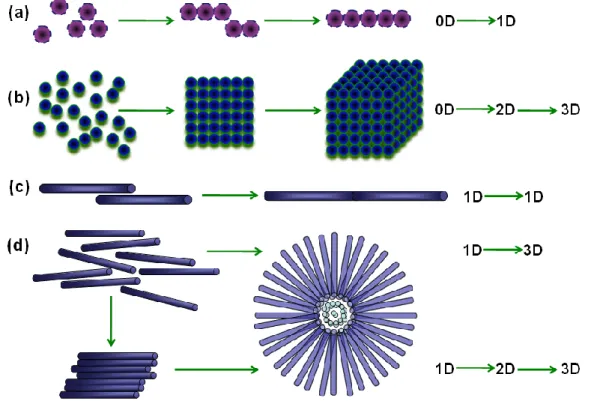
Figure 1.2 Var ious organizing dimensional schemes for self-construction of nanostructures by possible oriented attachment or assembly mechanisms.
Figure 1.1 only shows some plane graphs for the explanations of the formation mechanisms of the mesocrystals. In order to further understand the formation mechanisms of the mesocrystals, the possible formation mechanisms of the self-attachment or assembly of the mesocrystals with different dimensions and morphologies can be visually illustrated in Figure 1.2. The targeted mesocrystals with different dimensions can be formed by the transformation of the zero-dimensional (0D) or one-dimensional (1D) original crystalline units into the 1D, 2D, or three-dimensional (3D) assembles depending on the self-construction. In addition, a schematic illustration of the formation mechanism for the desired mesocrystals with different dimensions formed by the in situ topochemical conversion reaction from original designed precursors is shown in Figure 1.3. The formation mesocrystals can
6
still maintain the morphologies of the original precursors after one or multiple-step transformations, suggesting the morphologies of the mesocrystals are decided by the original precursors. Usually, this reaction occurs via accompanying the ion exchange, intercalation, deintercalation, and topochemical micro/nanocrystal conversion (TMC).
Figure 1.3 Var ious dimensional schemes for 1 and/or n-step in situ topochemical conversion reaction for formations of mesocrystals from original precursors.
1.1.2 Properties characteristic of mesocrystals
It is well known that the nanocrystal building units with the structural multiplicity and nanoscale size can provide additional opportunities for self-assembly. A variety of self-assemblies or topochemical bridge connections for the formations of the mesocrystals can offer new possibilities for superstructure formations, resulting in the mesocrystals present some different characteristic properties. The mesocrystals from functional materials are highly attractive due to the emergent properties of mesocrystalline materials, such as single crystal- like behavior, high crystallinity, high porosity and inner connection bridged by organic components and/or inorganic nanocrystals.11 The mesocrystals can exhibit the following characteristic properties.
7
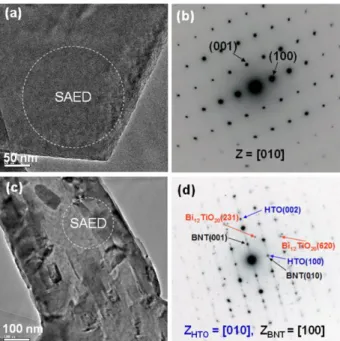
in electron diffraction and X-ray scattering. For example, the (NH4)3PW12O40
dodecahedron mesocrystal shows a single crystal- like SAED pattern as shown in Figure 1.4.13 In addition, all the submicro/nanocrystal units for the construction of the mesocrystal present the same direction of the interplanar spacing. These are due to that the mesocrystals are constructed from submicro/nanocrystals, and each submicro/nanocrystal is crystal-axis-oriented each other.
Figure 1.4 (a) SEM image, (b) TEM image, and (c) SAED pattern of (NH4)3PW12O40 dodecahedron mesocrystal. (d) Schematic illustration of (NH4)3PW12O40 dodecahedron mesocrystal shown in (a). Reproduced and adapted with permission from Reference [13]. Copyright @ 1996 The Chemical Society of Japan.
Secondly, the mesocrystals show so me special properties of well-aligned and oriented crystalline assembly, which is unrivalled for single-crystalline, normal polycrystalline, and amorphous materials. Namely, some of desired properties can be
8
satisfied by using the mesocrystal superstructure rather than using the same material in single-crystalline, unordered polycrystalline aggregate, and amorphous.
Thirdly, the mechanical properties of the mesocrystals are unusual because of the primary crystallites sharing a common crystallographic orientation.14 They can exhibit higher ductility and toughness than the corresponding single crystalline materials, and almost all the mesocrystals exhibit the fracture surfaces like amorphous glasses, but unlike the single crystals. 15
Finally, the composite mesocrystal simultaneously present over two kinds of the functional properties, and prevail on the materials having a large improvement in some application areas. For instance, mechanical toughness and dielectric dissipation in one film, or optical and magnetic properties can be combined in one system. It is said that these properties would never mix on this nanoscale.9 They combine the high crystallinity with small crystal size, high surface area and high porosity of the mesocrystal as well as good handling since the mesocrystal has a size in the nanometer to micrometer range. The existence of the superlattice structure is also the main reason and is highly attractive due to causing the emergent properties of mesocrystalline materials.
A mesocrystalline assembly process does not occur by an ion-by- ion manner, however, ionic strength and ionic species of the solution are still important variables in controlling crystallization to form mesocrystals. In particular for surfactant phases and microemulsion involved crystallization processes, phase equilibrium and physical characteristics of the product can strongly depend on ionic species and ionic strength especially if the catanionic lyotropic phases are applied.11
1.1.3 Recent advances in mesocrystal mate rials
9
mesocrystalline materials has been developed,2 and an increasing number of the mesocrystals preparations for applications to a wide range of the functional materials have been reported. A variety of mesocrystals have bee n developed. The progresses have led to an increasing understanding of the formation mechanism and expanding of the potential applications of mesocrystals. In the research area of the formation mechanism, the carbonates mesocrystals were studied at the earliest and most. The initial eclaircissement of the mesocrystalline formation was derived from the mesocrystalline carbonates chemistry, which is primary source of the mesocrystal theory today. 4,10,1617 18 19 20 21 22 23 24 25 26 27 28 29 3031 But one of the most early referring the indications of the mesocrystal intermediates was not derived from CaCO3 but the investigation of the
BaSO4 crystal with the porous structure.32 After exploration of some intermediate
metal oxides mesocrystals, the mesocrystals with even higher definition were reported for CaCO3 made in silica gels in 1986.33 Henceforth, CaCO3 mesocrystals are
increasingly studied and developed via controlling the polymorph and morphology. But it is little-known that all the carbonate mesocrystals are involved with the high performance applications. Next, the study on the metal oxides mesocrystals not only becomes increasingly but also becomes the hottest. Especially in ZnO and TiO2
mesocrystals, the preparation approaches, the formation mechanisms, microstructures, and the high performance applications have been getting increased attention. At present, the ZnO and TiO2 mesocrystals have been used to catalysis, sensing, and
energy storage and conversion.11, 34 The perovskite metal oxides mesocrystals have been also developed unsubstantially, but they are likely to widely apply the high performance electro-optic field, ferroelectric materials, and other functional composite materials.
Although some mesocrystals have been developed, and some formation mechanisms of the mesocrystals have been exposed, the mesocrystals are still a new
10
study field for the solid material. The metal oxide and carbonate mesocrystals are predominantly investigated, and there are still understood limitedly, some formation mechanisms are still very difficult to be clear. The varieties of the mesocrystals are not enough, the application studies of the other mesocrystals are hardly found out. In the following, the carbonates, metal oxides, and perovskite mesocrystals are briefly introduced and summarized, respectively. The goal is to further understand the approach, formation mechanism, and functional application of the mesocrystals, and is ready for the development and application of new kinds of functional mesocrystals.
1.2 Carbonates and simple metal oxides mesocrystals
1.2.1 CaCO3 mesocrystals
CaCO3 (calcium carbonate) is one of the most abundant minerals in nature existing
in such as the sedimentary rocks35 and the biological skeletons and tissues.36 It includes three kinds of crystalline polymorphs: calcite (dominated phase at lower temperature), aragonite (dominated phase at higher temperature), and vaterite (usually at higher supersaturation).37 Some new strategies of CaCO3 chemistry have been
developed and further extended for the controlling morpho logies and crystallization, the various inorganic or organic–inorganic composite materials, superstructure materials, and improved functional materials.38,39 Many studies on CaCO3 materials
have effectively promoted the development of the mesocrystal chemistry and provided theoretical basis of the mesocrystal chemistry. Almost all the CaCO3
mesocrystals were prepared by a similar gel-sol reaction or a block copolymerization reaction.29 Several representatives are described below.
11
Figure 1.5 (a) SEM and (b) TEM images of calcite (CaCO3) aggregate with characteristic pseudooctahedral morphology obtained from polyacrylamide gel. (Inserted in (b): SAED pattern of calcite mesocrystal). Reproduced and adapted with permission from Reference [ 40]. Copyright @ 2003 Mineralogical Society of American.
For calcite mesocrystals, some specific synthesis processes have been carried out by the following researches. A typical calcite mesocrystal with a pseudo-octahedron morphology constructed from rhombohedral nanocrystals has been prepared by the self-assemble in a polyacrylamide gel, as shown in Figure 1.5.40 This calcite mesocrystal was formed by a precipitation process from an aqueous solution containing Ca2+ and sulfide. The aggregate and crystallographic block with rough surfaces are constructed from well-aligned nanocrystalline building units. The tightly packed nanocrystals and the organic matrix between the individual nanocrystal interspaces can be observed from the TEM image (Figure 1.5b). The inserted SAED pattern reveals a high orientation of the crystallographic block, suggesting a mesocrystal structure. The calcite mesocrystal can be also prepared by applying the CO2 vapor diffusion into a Ca(OH)2 solution.20 Compared to the other approaches for
the preparation of CaCO3 crystals, the CO2 vapor diffusion approach has the
advantage of avoiding the interference of the extraneous ions, minimizing ionic strength and approaching a pH close to biological conditions at the end of the crystallization reaction. This approach is beneficial to the growth of calcite
12
mesocrystals. The vapor diffusion approach allows for further investigation of the driving forces for the oriented and/or self-assembling of nanocrystals toward mesocrystals.
And in general, the metastable mesocrystalline CaCO3 polymorphs can be easily
synthesized. The vaterite mesocrystals with hexagonal morphology could be synthesized from a metastable phase transfo rmation by using a gas diffusion approach and an N-trimethylammonium derivative of hydroxyethyl cellulose as additive.19 The microstructure characterizations of the obtained vaterite mesocrystal is shown in Figure 1.6, revealing the obtained hexagonal vaterite mesocrystal is constructed from vaterite nanoparticles and presents a [001] zone axis. The formation mechanism of the vaterite mesocrystal is promising for controlling the assembling formation of complex, highly oriented structured materials, and also provides some evidence for the mesocrystallization processes.
Figure 1.6 (a) TEM image and (b) corresponding SAED pattern recorded from [001] zone axis of hexagonal vaterite (CaCO3) mesocrystal. (c) HRTEM image of vaterite plate with clear ly resolved lattice fringe of (110) plane (d = 0.355 nm). Two vaterite nanoparticles have the same orientation but are separated by the crystal boundary (indicated by arrows). Reproduced with permission from
13
Reference [19]. Copyright © 2006 WILEY-VCH Verlag GmbH & Co. KGaA, Weinheim.
Very recently, a medicinal CaCO3 mesocrystal as small drug carriers has been
synthesized by a facile binary solvent approach under the normal temperature and pressure.41 This kind of medicinal CaCO3 mesocrystal is a new highly ordered
hierarchical mesoporous CaCO3 nanospheres (CCNSs). The hierarchical structure was
constructed by multistage self-assembled strategy. Due to the large fraction of the voids inside the CCNSs which provides the space for physical absorption, the CCNSs can stably encapsulate the anticancer drug with the high drug loading efficiency, and the component CaCO3 nanoparticles can be dispersed well in the cell culture. The
CCNSs can enhance the delivery efficiencies of the drug to achieve an improved inhibition effect on the diseased cell growth. This research implies that the CCNSs are a promising drug delivery system for the certain medications in cancer therapy, and also expands the applications of the mesocrystals.
1.2.2 BaCO3 mesocrystals
Comparing with CaCO3 mesocrystals, the studies of the BaCO3 (barium carbonate)
mesocrystals are relatively less. Typical helices BaCO3 mesocrystals composed of the
nanorods can be structured by a face selective adsorption of a stiff polymer and subsequent self-assembly of nanocrystal building units.29 In this block copolymerization process, the helices BaCO3 mesocrystals were formed from a
self-assembly process of the elongated orthorhombic BaCO3 nanorods. The combined
surface-active agents were utilized to produce the mesocrystalline BaCO3 helices from
BaCO3 nanorods (Figure 1.7). The participant stiff polymer leads to form helix
arrangement via a selective self-assembly. Firstly, the selective adsorption of the stiff polymer onto the favorable (110) planes of the CaCO3 nanocrystalline rod occurs,
14
giving rise to a staggered arrangement of the aggregate nanocrystals which are controlled according to helix direction. Secondly, a nanocrystalline rod approaches an aggregate in the other directions and presents with favorable and unfavorable adsorption sites. The favorable adsorption sites only match with the (011) planes are required and the unfavorable adsorption sites match the other planes, such as (020) and (011) planes (Figure 1.7c). This selective adsorption process results in a twist for the formation of the helices of the mesocrystalline aggregate.9 This is a classic example that the 3D mesocrystal is formed from 1D nanocrystalline building units.
Figure 1.7 (a) SEM and (b) high-expanded SEM images of helical BaCO3 mesocrystals formed by programmed self-assembly of elongated nanopartic les as template. (c) Relevant planes of nanocrystalline BaCO3 block. (d) Proposed formation mechanism of helical superstructure. Reproduced with permission from [29]. Copyright @ 2005 Nature Publishing Group.
The spherical and dumbbell- like BaCO3 mesocrystals can be prepared from a
dynamic growth program by self- assembly processes and gelation reactions. 42 Nanocrystalline BaCO3 superstructures exhibit unusual morphologies are obtained by
15
the CO2 vapor diffusion technique in the presence of poly(ethylene
oxide)-block-eicosa aspartate (PEO-b-Asp(20)) bioconjugate.27 This formation process is also a block copolymerization reaction. In this formation reaction, the highly effective bioconjugate acts as a crystal growth modifier, which can lead Ba2+ and PEO-b-Asp(20) to form the poly(ethylene oxide)-block polyaspartate block copolymer. In this case, a well-defined mesocrystal yielded. Different from the commonly mesocrystals, the morphology of BaCO3 mesocrystals can be systematically
controlled along different twinned growth patterns by conditioning a broad range of the concentrations of polymer and Ba2+.
1.2.3 ZnO mesocrystals
ZnO (zinc oxide) has attracted many attentions, and is a promising metal oxides material for the applications to the optical, electronic, piezoelectric, pyroelectric, and photocatalysis fields due to its wide band gap (3.37 eV at room temperature) and large exciton energy (60 meV).43,44 ZnO single crystals normally prefers to grow along the [0001] direction because of its noncentrosymmetric structural anisotropy.45 Some approaches in which the growth along the [0001] direction of ZnO crystals may be substantially suppressed are through the introduction of organic additives as stabilizing agent, or the adjusting of the pH value of the reaction solution.46,47 But these approaches are no guarantee of success, and easily give rise to the formation of the ZnO mesocrystals with {0001} facet sometimes. 48 The conventional synthesis of the ZnO mesocrystals in the organic additives or solvent does not get rid of the bondage of the exposed {0001} facet. Therefore, the plentiful organic additives or solvents are usually used for the preparation of the ZnO mesocrystals via a block polymerization reaction. Some typical examples are enumerated in the sections below. The microtubular ZnO mesocrystals were developed by using poly[(acrylic
acid)-16
co-(maleic acid)] sodium salt (PAMS) as template molecule via a typical block polymerization reaction.49 In the formation process, initially, ZnO nanoclusters can be spawned by thermolysis of a zinc citrate-ethylenediamine composite and by hydrothermal treatment of natural water-oxidation of zinc foil. Then, the ZnO composite nanoclusters with rod-like micellar aggregates were formed by the self-assembly of ZnO nanoclusters and PAMS mixture. The ZnO composite nanoclusters subsequently coagulated to generate some metastable composite multimers. At last, the metastable composite multimers were coaxed into self-assembled nanoplates to form the mesocrystalline ZnO microtubes via the layer-by- layer approach. The formed microtubular ZnO mesocrystals are constructed from the well-assembled nanoplates growing along the [0001] direction, suggesting a [0001]-axis directional self-assembly of building units. The mesocrystalline ZnO microtubular with distinctive hollow interstices may allow using as microcarriers or microreactors for drug and catalyst.
For another example, ZnO mesocrystals with ellipsoidal superstructures can be formed via the zinc hydroxyl double salt (Zn-HDS) mesocrystals as intermediate.48 The Zn-HDS mesocrystals are formed from self-assembly of Zn-HDS nanocrystals existing in cetyltrimethyl ammonium bromide (CTAB) at room temperature. The ZnO mesocrystals were formed through vertical attachment on (0001) planes of basic Zn-HDS nanocrystals. ZnO nanoplatelets and nanorings were subsequently formed from the assembly of ZnO mesocrystals through vertical attachment on (0001) planes. ZnO ellipsoidal superstructures were finally formed from the further assembly of the ZnO nanoplatelets and nanorings also through vertical attachment on (0001) facets. The formed ZnO mesocrystal has not still gotten rid of growing along the [0001] direction. The polar Zn-(0001) planes with high population of the obtained ZnO materials are likely to present high photocatalytic activity.
17
Rather than using organic additives, a facile and green room temperature ionic liquid as deep eutectic solvent was investigated to prepare the ultrafast formation of ZnO mesocrystals growing along the [0001] direction also.50 The prepared ZnO mesocrystals are mesoporous materials with high specific surface areas. They present excellent photocatalytic activities which are comparable with that of the commercial photocatalyst P25. The present approach is convenient, and can be readily extended to develop the other functional mesocrystals with a wide range of applications.
Recently, ZnO mesocrystalline microspheres have been prepared on a large scale via a nonclassical crystallization pathway by a facile solution-based approach.51 On account of no any template additives in the reaction system, the butanol solvent plays an important role for the formation of the spherical mesocrystal morphology. In the formation process, firstly, under the inhibitory effects of butanol, the Zn2+-terminated (0001) plane is suppressed along the c-axis, a large number of ZnO clusters nucleate and produce the primary ZnO hexagonal nanoplates. Secondly, the positive and negative charges of the ZnO hexagonal nanoplates produce dipolar moments, resulting in the stacking of the hexagonal nanoplates. Such a hexagonal nanoplate structure has a strong dipole moment along the c-axis. Finally, a sphere mesocrystal with two concaves on the poles along the c-axis is evolved. The as-prepared ZnO mesocrystals with microsphere morphology show stable and intense yellow fluorescence, which can be expected to have potential in microscale photonic or electronic applications. 51
It is noteworthy that the utilization of the large surface area of doped ZnO mesocrystal precursor was developed for biosensor very recently. 52 In this investigation, Ru (ruthenium) polypyridyl functionalized ZnO mesocrystals as bionanolabels were prepared. A solid mixture containing Zn(NO3)2· 6H2O, 1-octadecene and dodecylamine as starting material were heated to obtain the ZnO
18
mesocrystals before the dispersed solution and wash of the crude product. Although some unique planes of the obtained ZnO mesocrystals can be observed from SEM and TEM images, the report does not give that these planes belong to which crystal plane. The large surface area of ZnO mesocrystals was beneficial for loading a high content Ru polypyridyl composite, giving rise to the excellent improvement of the electrochemiluminescence. It is worth to propose that the biological recognition and biosensing platform are expected to the application of Ru polypyridyl functionalized ZnO mesocrystals. This investigation provides a novel reference and a promising prospect for the development of the ZnO mesocrystals.
These studies on ZnO mesocrystals could provide an example for better understanding the formation mechanisms of other simple metal oxides mesocrystals in the presence of organic additives.
1.2.4 TiO2 mesocrystals
TiO2 (titanium dioxide) is among the most widely investigated metal oxides
materials for its unique properties and many promis ing applications in environment, energy, photocatalysis, and sensing areas.53,54,55,56 It has several kinds of crystal structures which have been reported,57,58 including anatase, rutile, TiO2(B), brookite, TiO2(II),
TiO2 (H), etc. In these titanium dioxide polymorphs, rutile is a thermodynamic stable
phase, and the others are metastable phases. Anatase is the most stable phase in the metastable phases.
TiO2 nanocrystals have increasingly investigated and developed in functional metal
oxides material fields because of their many outstanding physicochemical properties and wide application in electrical, optical, mechanical, catalytic, and sensing areas.
59 , 60
At present, many TiO2 mesocrystals, such as nanorod- like,61
, 62, 63 ,
64
cable-like,65 hollow spheres,66 nanowires,67 ellipsoid,34 and bipyramid- like68,69 mesocrystals have
19
been synthesized. The differences in lattice structures and morphologies cause different electronic band structures and different surface geometric structures, which determine the performance and the chemical activity of TiO2. The reported anatase
TiO2 mesocrystals with the [010] zone axis have potential application in lithium ion
batteries because of their potential advantages in porous mesocrystalline structure, current rate capability, and safety.34 The aligned [001] oriented rutile nanorods present excellent broadband and quasi-omnidirectional antireflective properties as electrode material for dye-sensitized solar cells (DSSCs),64 and show a large reversible charge– discharge capacity and excellent cycling stability as anode material for lithium ion batteries.62 Anatase mesocrystal- like porous nanostructures exhibit a multifunctional response, including good electrochemical performance and good capabilities for photocatalytic degradation and enzyme immobilization.70 TiO2 mesocrystals usually
exhibit excellent photocatalytic performance due to their high surface area, high porosity, and oriented subunit alignment.65,70,71,72 It is noteworthy that the efficient flexible dye-sensitized solar cells (DSSCs) have been fabricated by the growth of the aligned anatase TiO2 nanorods on a Ti- foil substrate for using as a photo-anode.73
These mesocrystalline TiO2 nanorod arrays on Ti substrates with excellent
antireflective properties could become a promising candidate as the photo-anode in flexible DSSCs with enhanced light harvesting performance.
Just the same to the other mesocrystals, there also have three kinds of approaches, including direct synthesis, oriented topochemical conversion, and crystal growth on support, for the acquisition of the TiO2 mesocrystals.74 , 75 In this section, some
classical formation processes and the applications of the TiO2 mesocrystals are
enumerated.
The direct synthesis approach is the most common process for the preparation of the TiO2 mesocrystals in an organic solvent or gel-sol system. The organic additives
20
played an important role in the self-assembly process for the formation of TiO2
mesocrystals. The unique spindle-shaped nanoporous anatase TiO2 mesocrystals with
tunable sizes were directly developed on a large scale through mesoscale assembly in the tetrabutyl titanate-acetic acid system without any additives under the solvothermal conditions.34 A complex mesoscale assembly process was put forward for the formation of the anatase mesocrystals, as shown in Figure 1.8.34 In this formation
program, organic titanium firstly reacts with organic acid by a
hydrolytic/nonhydrolytic condensation reaction to from amorphous fiber- like titanium acetate complex precursors with Ti-O-Ti bonds. After two times of continuing condensation processes, the other crystalline spherical- like precursors come into being at the expense of the amorphous precursor. Subsequently, the crystalline spherical-like precursors gradually release soluble titanium including the nucleation and growth of anatase nanocrystals. Subsequently, the formed anatase nanocrystals assemble along the [001] direction, accompanying with the entrapment of in situ produced butyl acetate, leading to the formation of the spindle shaped anatase mesocrystals elongated along the [001] direction. The acetic acid molecules played multiple key roles during the nonhydrolytic processing of the [001]-oriented anatase mesocrystals. The obtained anatase mesocrystals with nanoporous exhibits remarkable crystalline stability and improved performance as anode materials for lithium ion batteries.
Also, the stable rutile mesocrystalline hollow spheres were developed by a direct
hydrothermal synthesis approach simply.66 The presence of
N,N′-dicyclohexylcarbodiimide (DCC) and serine and their synergistic effects is essential for the formation of rutile mesocrystalline hollow spheres from a transparent TiCl4
solution. An oriented attachment process with side-by-side and end-to-end ways was carried out for mesocrystallization of rutile. It can be concluded that the obtained rutile mesocrystalline hollow spheres were formed by self-assembly of rutile nanorods
21
growing along the [1-10] direction. This kind of rutile mesocrystals can be stable for longer time at lower temperature. The stability of mesocrystals at higher temperature in the solution can be enhanced also when some organic additives are properly utilized.
Figure 1.8 Schematic illustration of formation mechanism of nanoporous anatase mesocrystals without any additives. Reproduced w ith permission from Reference [34]. Copyright @ 2008 Amer ican Chemical Society.
In addition, Wulff- shaped and nanorod- like nanoporous rutile mesocrystals with a [010] zone axis constructed from ultrathin rutile nanowires were directly prepared in the surfactant sodium dodecyl benzene sulfonate (SDBS). 76 In the preparation program, SDBS played an important role in the homoepitaxial self-assembly process, in which titanate nanowires as the primary building units were assembled to mesocrystals. The obtained rutile mesocrystals were applied as the electrode materials in rechargeable lithium- ion batteries and demonstrated a large reversible charge– discharge capacity, excellent cycling stability and high rate performance. These
22
favourable properties are attributed to the intrinsic characteristic of the prepared mesocrystalline rutile with nanoporous nature and larger surface area.
For oriented topochemical conversion approach, a mesocrystal of ferroelectric NH4TiOF3 exhibiting a sandwich crystal structure with layers of corner sharing
octahedra of (TiOF3)- stacked and sandwiched by (NH4)+ tetrahedra along the
c-direction, was used as precursor to prepare the first anatase TiO2 mesocrystals.77,78
Before the formation of the anatase mesocrystals, it is necessary to prepare a precursor of NH4TiOF3 mesocrystal. An aqueous solution containing (NH4)2TiF6,
H3BO3, and some present surfactants were firstly prepared. These present surfactants
play an important role in both the controlling hydrolysis of (NH4)2TiF6 and the
self-assembly processes. The N H4TiOF3 mesocrystals can be obtained after stirring and
subsequent thermal treatment of the aqueous solution. The anatase mesocrystals can be formed from the oriented topochemical conversion of the NH4TiOF3 mesocrystals
by not only washing the NH4TiOF3 mesocrystals using a H3BO3 solution but also
annealing 450 oC for 2 h in air. The anatase mesocrystals yield via the oriented topochemical conversion because NH4TiOF3 and anatase TiO2 have similar critical
parameters in the {001} facets with a very small average lattice mismatch. In the {001} facets of the two mesocrystals, the titanium atoms locating in octahedra centers of crystal spaces have same arrangements. The {100}, {010}, and {001} facets of the NH4TiOF3 nanocrystals corresponds to the obtained anatase nanocrystals, and their
several electric diffractions from one particle present the same directions of the facets and same [001] zone axis, as illustrated in Figure 1.9. It has been implied that the similarities in crystal structures between NH4TiOF3 and TiO2 provide the possibility
23
Figure 1.9 Schematic illustration of topochemical conversion of NH4TiOF3 mesocrystal to anatase mesocrystal. The SAED patterns show the single crystal diffraction behavior of both systems. Reproduced with permission from Reference [78]. Copyright @ 2008 American Chemical Society.
In addition to the direct synthesis approach and oriented topochemical conversion approach, the TiO2 mesocrystals can also be developed by the crystal growth on
support approach. The crystal growth on support approach may be beneficial to construct of the heterostructure surfaces/interfaces, mesocrystalline assemblies, and formation composite. The anatase mesocrystals with petallike morphology have been classically prepared on multiwalled carbon nanotubes (MCNTs) with controllable surface area and crystalline orientation.65 In the prepared process, the MCNTs were firstly added to a TiF4 aqueous solution, and then carried out an ultrasonic water bath.
24
petallike TiO2 crystals constructed tiny TiO2 nanocrystals. Each petal grows along the
[001] direction and has a single-crystal diffraction, suggesting that the petallike anatase is mesocrystalline. The obtained MCNTs supported mesocrystals of anatase mesocrystals were used as composite catalysts, and proved to be highly active and robust for photocatalytic degradation of methyl orange.
Very recently, the development of efficient photocatalysts based on anatase TiO2 microcrystals with {101} facets was processed. A new approach has been
carried out for improving the photooxidation activity of photocatalysts by combining metal oxide superstructures and oxygen/hydrogen-evolving co-catalysts support. Cobalt phosphate complexes (CoPi) and Pt nanoparticles as supports were selected as model co-catalysts and photochemically deposited on anatase mesocrystals.81 It was found that the photogenerated holes in anatase mesocrystals are transferred to the Co species in CoPi under the ultra violet light irradiation, and the CoPi-doped anatase mesocrystals have higher activity than standard anatase mesocrystals. The approximately 300 times for photooxidation activity of the anatase mesocrystals can be further enhanced by introducing Pt nanoparticles on specific sur faces. The site-specific modification of co-catalyst supports tailored by anisotropic electron flow in the mesocrystal superstructures significantly can retard the charge recombination between the holes and electrons. Such developed strategy is very promising for developing novel photocatalytic materials for the applications of environmental renovation and water splitting.
1.3 Metal oxide perovskites
mesocrystals
Metal oxide perovskites have a general formula ABO3, where the large cations
25
are influenced by the sizes and valences of the cations in the A-site and B-site.82
Consequently, the perovskites exhibit outstanding chemical and physical properties, which include catalytic, oxygen-transport, ferroelectric, pyroelectric, piezoelectric, and dielectric behavior.83,84,85 However, only a handful of the investigations on the perovskite mesocrystals have been reported, and almost none of application studies on the perovskite mesocrystals have been carried out, especially in titanate and niobate.
1.3.1 PbTiO3 mesocrystals
PbTiO3 (lead titanate) is one of important piezoelectric materials with high
piezoelectric constant although it is not attracted considerable attention today because of the consideration of environmental pollution. Study on the PbTiO3 mesocrystals is
a little-known. As we all know, only two reports investigated the PbTiO3 mesocrystals
prepared using the SDBS surfactant process. Similar to the case of the preparation of rutile mesocrystals,76 the SDBS surfactant also played an important role for the self-assembly of the nanoscale building units in the PbTiO3 mesocrystals. The nanoscale
PbTiO3 mesocrystals with bur- like and affluent porosity were synthesized by
self-assembly of PbTiO3 nanocrystals under hydrothermal conditions using SDBS
surfactant.86 The bur- like mesocrystalline nanostructures exhibit a novel geometrical shape with cores of agglomerated nanocrystals and outershells of nanorods. In the formation process, firstly, the PbTiO3 nanocrystals agglomerate into the nascent
nanocrystal with the cube morphology. Secondly, the nascent nanocrystal assembles to form the PbTiO3 mesocrystal. Finally, the nanocrystals in PbTiO3 mesocrystal
continuously grow up into PbTiO3 nanorod. The PbTiO3 nanorods with diameters in
30−100 nm are expected to be used as a template for the development of the oriented piezoelectric ceramics.
26
prepared on PbTiO3 and SrTiO3 substrates by using this SDBS surfactant process also. 87
The prepared mesocrystal layer is constructed from three parts. The lower part of
the mesocrystal layer is relatively porous, the middle part is more dense, and the surface part consists of nanorods growing along the [001] direction. In the prepared PbTiO3 mesocrystal program, an epitaxial layer is firstly formed on the PbTiO3 and
SrTiO3 substrates by ion-by- ion growth method, subsequently, by the self- assembly of
nanocrystals into a mesocrystalline layer. The mesocrystalline layer can further grow up and ripen into arrays of single crystalline nanorods via a redissolution/ reprecipitation mechanism.
1.3.2 SrTiO3 mesocrystals
SrTiO3 (strontium titanate, ST) is often used as a dielectric and photoelectric
material, and also is widely used as a substrate for epitaxial growth of other oxides films.88 Only a few of ST mesocrystals have been reported. The ST mesocrystals with cubic morphology have been prepared by precipitation approach from a suspension of hydrolyzed TiOCl2 aqueous gel.89 The obtained ST mesocrystals was formed via an
epitaxial self- assembly of nanocrystals with a size of 4−5 nm. The formation process is a spontaneous process and not inducing any additives. In addition, ST mesocrystals with a [010] zone axis along the direction of the wire- like morphology can be prepared by an oriented topochemical conversion approach.90 In this formation process, the H2Ti3O7 nanowire as a precursor was thermally treated to form anatase
nanowire firstly. The solvothermal and hydrothermal treatments of the anatase nanowire in Sr(OH)2 solutions were carried out to form the mesocrystalline ST. The
formation of mesocrystals is resulted from a topochemical reaction between anatase single crystal particles as the templates suspended in a liquid phase and ionic/molecular species in solution. This formation mechanism of the mesocrystals is
27
very general and likely applicable to a variety of compounds encountered in precipitation processes, solvothermal and hydrothermal reactions, molten salt synthesis, and liquid-phase sintering.
Very recently, the other ST mesocrystals with cubic morphology were prepared via sol–precipitation coupled with a hydrothermal process using oleic acid (CH3(CH2)7CH=CH(CH2)7COOH) as a capping agent.91 In the formation process,
initially, selective adsorption of oleic acid causes Sr–Ti–O nanorods to grow along the [100] direction from the Ti-based sol. Then these nanorods aggregate with a similar orientation to form the small crystalline ST particles. Finally, the crystallographic fusion takes place in the small crystalline ST particles along the [001] direction of ST crystal structure. The prepared ST mesocrystals with edge length of about 10 nm size show a [001] zone axis. The mesocrystal structure forms from the oriented fusion of these small crystalline units. The selective absorption of oleic acid probably limits the formation of single crystals from the fused particles. The band- gap energies values of the obtained ST mesocrystals are considerably larger than the non-oriented band-gap energy of pure ST. Although the band-gap energy typically increases as the particle size decreases, the ST mesocrystals with a larger particle size yield a higher band-gap energy, which may be related to the characteristic mesocrystalline structure.91
1.3.3 BaTiO3 mesocrystals
BaTiO3 (barium titanate, BT) is an important dielectric, piezoelectric, and
ferroelectric materials, and attracted much attention because of its potential commercial applications in ceramic capacitors, chemical sensors, and nonvolatile memories.92 At present, the BT mesocrystals with platelike or spherical morphologies can be prepared by a hydrothermal soft chemical process via an in situ topochemical conversion reaction in our previous works.93, 94 ,95 In the prepared processes, a
28
protonated layered titanate of H1.07Ti1.73O4·H2O (HTO) crystal with a
lepidocrocite-like layered structure was used as a precursor. For the preparation of the platelepidocrocite-like BT mesocrystals, the protonated layered titanate was treated in a Ba(OH)2 water solution
under the hydrothermal conditions to transform the layered titanate to BT. The obtained platelike BT particles constructed from nanocrystals, and each nanocrystal presents the same [110]-direction orientation, suggesting the formation of platelike BT mesocrystal. There are two simultaneous reaction mechanisms in the formation of BT mesocrystal under the hydrothermal conditions. One is a dominative in situ topochemical conversion reaction in the crystal bulk of the protonated layered titanate, the other is a subordinate dissolution-deposition reaction on the surface of the matrix particles. This is the first time to report the preparation of the titanate mesocrystals with the hydrothermal soft chemical process and the in situ topochemical conversion reaction. The platelike BT mesocrystals have been applied to fabricate the [110]-oriented BT ceramic material that shows a very large piezoelectric constant d33 value
of 788 pC/N.96
For the preparation of the BT mesocrystals with spherical morphology, firstly, the layered titanate HTO crystals were used to occur in the intercalation reaction with the
n-hexadecyl trimethyl ammonium hydroxide (HTMA-OH) or n-hexadecyl trimethyl
ammonium bromide (HTMA-Br). And then, the layered titanates with increasing interlayer spacing with HTMA+ were treated in the Ba(OH)2 water solution under the
hydrothermal soft chemical conditions to form BT particles with book-like morphology via the in situ topochemical conversion reaction. Then the book- like BT particles were stirred to shatter the book- like shape and transformed into the BT nanoparticles. Finally, the ordered self-assemble of the BT nanoparticles to the BT agglomerations were carried out under stirring condition. In this case, the BT mesocrystals with spherical morphology were formed. The morphology of the product
29
particles can be changed dramatically by adding the cationic surfactant in the reaction system. These investigations reveal that the hydrothermal soft chemical process and the in situ topochemical conversion reaction are useful for the preparation of mesocrystals.
In addition, the confetti- like, sphere- like, and hollow-sphere BT mesocrystals were prepared by an ultrasonic irradiation approach.97 In this synthesis process, the BaCl2
and TiCl4 as the starting materials were mixed to form a Ti-based suspended sol.
NaOH aqueous solution as a peptizing agent was added into the Ti-based suspended sol. The BT mesocrystals preferred to grow along the [100] axis can be obtained after the ultrasonic of the mixture suspension. The morphology and the size of the BT mesocrystals were affected by the concentration and primary units. The formed BT mesocrystals compose by oriented nanocrystals which aggregate by the self-attachment between (110) planes, and show a single crystal like diffraction pattern.
1.3.4 Ba1-xCaxTiO3 mesocrystals
Although BT exhibits large piezoelectricity, its Curie temperature (Tc= 130 oC) is low, and a phase transition from tetragonal phase to orthorhombic phase around 0 oC. Thus, the working temperature of BT as the piezoelectric material is limited in a range of 0–130 oC, which is too narrow for practical piezoelectric applications. Doping BT with alkaline earth metal (Ca, Sr) or alkaline metal (K, Na) is an effective method to improve the temperature performance of the piezoelectric materials. Therefore, recently, a large number of studies focus on the Ba1-xCaxTiO3, Ba1-x(Bi0.5K0.5)xTiO3,
and Ba1-x(Bi0.5Na0.5)xTiO3 materials. 98
99 100
101
The platelike Ba0.9Ca0.1TiO3 ((BCT))
mesocrystals with [110]-orientation were developed by our previous work using a novel two-step process.98 In the first step, the platelike layered titanate HTO crystals are solvothermally treated in a Ba(OH)2–Ca(OH)2 mixed solution. In the second step,
30
the solvothermally treated samples were heated to form the platelike BCT mesocrystals. The obtained BCT mesocrystal is constructed from well-aligned BCT nanocrystals with a size of about 10–20 nm, and show a single-crystal- like electron diffraction pattern. The BCT mesocrystals were utilized to fabricate an [110]-oriented BCT ceramic, and the ceramic shows a high preferred orientation (76%) and small grain size of about 1–2 µm. Such BCT oriented ceramic has potential application to the high performance piezoelectric materials.
1.3.5 Ba1-x(Bi0.5K0.5)xTiO3 mesocrystals
Figure 1.10 Schematic illustrations of formation mechanism of the platelike Ba0.5( Bi0.5K0.5)0.5TiO3 (BBKT) mesocrystals from HTO via an in situ topochemical structural conversion reaction.
The Ba0.5(Bi0.5K0.5)0.5TiO3 (BBKT) mesocrystals have been developed also by our
group recently.99 Such complex perovskite mesocrystals are very difficult to be prepared via the conventional methods due to their complex chemical compositions. Platelike BBKT mesocrystals were prepared via a novel two-step solvothermal soft chemical process. Incipiently, the platelike layered titanate HTO crystals were
31
solvothermally treated in a Ba(OH)2 solution to form BaTiO3/HTO (BT-HTO)
mesocrystalline nanocomposites. Then the BT-HTO mesocrystalline nanocomposites are hydrothermally treated in BiCl3-KOH solution to form BBNT mesocrystals. In the
formation process of the BBKT mesocrystals, firstly, Ba2+ ions intercalate into the bulk of HTO crystal through the interlayer pathway by a H+/Ba2+ exchange reaction, and then the Ba2+ ions react with the TiO6 octahedral layers of HTO crystal in the
crystal bulk to form the BT nanocrystals with [110]-orientation on the HTO framework via an in situ topochemical conversion reaction. Secondly, Bi3+ reacted with the residual HTO to produce the Bi12TiO20 nanocrystals on the surface of BT
nanocrystals by a heteroepitaxial growth mechanism in the nanocomposite. Finally, the BBKT mesocrystals with [110]-orientation is obtained by the reaction of BT and Bi12TiO20 in KOH solution via the hydrothermal reaction. The visual formation
mechanism of the BBKT mesocrystals is illustrated in Figure 1.10.
1.3.6 (K, Na)NbO3-based mesocrystals
Among all the candidates of lead- free piezoelectric materials, alkali niobate materials based on (K, Na)NbO3 have drawn much attention since Saito et al. reported
that the piezoelectric constant of (K, Na)NbO3 oriented ceramics reach amazingly up
to 416 pC/N.102 Furthermore, a significant feature of (K, Na)NbO3 ceramics lies in the
inherent compatibility with nickel electrode, which is absent in the PZT materials but very important for industry due to the significant reduction in processing cost.103 One of the effective approaches for enhancing piezoelectricity is the reducing of the grain size of the ceramic. The ceramics with small grain size can be fabricated using mesocrystals. Not long ago, in the fabrication processes of K0.5Na0.5NbO3 (KNN) and
(Li0.04K0.44Na0.52)(Nb0.85Ta0.15)O3 (LKNNT) piezoelectric ceramics, a unique core–
32
nanosized subgrains, whereas the shell region consists of larger-sized but similar self-assembled subgrains. The coarse core–shell grains show a single-crystal- like selected area electron diffraction pattern, suggesting the mesocrystallization has occurred in the formation process of the core–shell grains. In the formation process, the nanosized subgrains aggregate by the self-assemble approach to form a typical core–shell grain structure. The KNN based ceramics with the core–shell grains present the highest dielectric constants and the lowest dielectric losses due to their highest densities. However, the piezoelectric constant d33 values tended to decline in these fabrication
processes.
Another rare instance, in the formation of the single-crystalline orthorhombic KNbO3 nanorods process, an intermediate KNbO3 mesocrystal was observed.105 The
KNbO3 nanorods were prepared from Nb2O5 by hydrothermal synthesis at 180 oC in a
KOH solution using sodium dodecyl sulfate surfactant. The morphology of the KNbO3 product was strongly influenced by the addition of the surfactant and the
concentration of the reactants. The nanorod growth mechanism is based on self-assembly of cube-shaped or facetted KNbO3 nanocrystals along [001] growth
direction into mesocrystals, which further grown into the nanorods with a [010] zone axis. The orthorhombic to tetragonal and te tragonal to cubic phase transitions of KNbO3 nanorods occurred at significantly lower temperatures, which may be due to
the formation of intermediate KNbO3 nanocrystal in the phase transition process.
1.4 Topochemical synthesis
Topochemical synthesis is a very classical and useful approach for the preparation of the targeted particles with the desired morphologies.106,107 In contrast to the other reactions, the topochemical conversion reaction can be described as special phase
33
transformations of the parents crystals into the daughter crystals, and are driven by the crystal structures rather than by the chemical nature of the reactants. Therefore, the crystallographic directions of parent and daughter crystals have some certain topological correspondences. Some mesocrystals can be prepared by the topochemical syntheses method as described above.
1.4.1 Approach of topochemical synthesis
The conventional synthesis approaches including solid state reaction process, molten salt process, and hydrothermal/solvothermal process can be utilized for the topochemical synthesis. For the normal solid-solid reaction process, the ball- milled precursor powders with desired compositions should be annealed at high temperatures. This reaction occurs simply via solid-state diffusion at a high temperature. The obtained produces usually have the characteristics of isometric morphology such as cubic or spherical, large particle size, and compositional inhomogeneity.108,109 Hence, as a general rule, the solid state process is seldom utilized for the topochemical synthesis.
The molten salt process is usually carried out in a low molten salt as a reaction medium, and itself can also act as a reagent. The crystal growth occurs easily in the molten salt medium, the product particles usually have its original crystal morphology, uniform and large particle size. The precursor host particles can react easily with the guest ion or molecule species in the molten-salt via host- guest mechanism to achieve desired composition and morphology of the products.110111112 Therefore, the molten salt process can usually be used for the topochemical synthesis.
The hydrothermal/solvothermal process is a liquid chemical reaction process under high pressure of above 1 atm and high temperature of above boiling point of the solvent used. When an aqueous solution is used as the solvent, it is called
34
hydrothermal process. When an organic solvent or organic and aqueous mixed solvent is used, it is called solvothermal process. These processes are widely applied to prepare the ceramics powders. The basic mechanism of crystal nucleation and growth under the hydrothermal and solvothermal conditions is the dissolution-deposition reactions. The particle size is controlled by the crystal growth rate, reaction time, and reaction temperature. The particle morphology is dependent on the crystal growth direction or the non-classical self-assemble direction that is not easy to be controlled in the normal cases. The advantages of the hydrothermal/solvothermal process are preparations of the products with a controllable morphology, a controllable crystal facet, a uniform size distribution, a small crystal size at a relatively low temperature. The hydrothermal/solvothermal process is a potential method for the topochemical synthesis.
1.4.2 Solvothermal soft chemical process for topochemical synthesis
The solvothermal soft chemical process is a useful and unique method for the preparation and design of functional inorganic materials.93,113,114 The advantages of the hydrothermal/solvothermal process are suitable for the soft chemical synthesis, especially in effectively maintaining the precursor morphologies in the synthesis process. The solvothermal soft chemical process typically comprises two steps: the first step is the preparation of a framework precursor with layered structure and insertion of structural directing-agents (template ions or molecules) into its interlayer space by a soft chemical reaction; the second step is the structural transformation of the structural directing-agent- inserted precursor into a desired structure by a solvothermal reaction. The crystal structure of the product can be controlled by the structural directing-agent used, and the product particle morphology is dependent on the precursor morphology used. This process has been utilized for the synthesis and
35
design of metal oxides and organic- inorganic nanocomposites with controlled structure, morphology, and chemical composition.115,116 As described above, the 2D platelike perovskite mesocrystals, such as BaTiO3,93,94,117 Ba1-xCaxTiO3,98 and Ba 1-x(Bi0.5K0.5)xTiO399 mesocrystals can be topochemically synthesized from 2D platelike
protonated titanate single crystals using the solvothermal soft chemical process.,
1.4.3 Layered protonated titanate HTO as precursor for topoche mical synthesis
Figure 1.11 Schematic diagrams of HTO (H4x/3Ti2-x/3O4·H2O (x = 0.8)) crystal with (a) [100] zone axis structure and (b) three-dimensional (3D) structure.
Increasing interest has recently been paid to layered titanates with variety 2D structures due to their interesting interlayer chemistry.118 One of the most studied layered titanate is lepidocrocite (γ–FeOOH)-type protonated titanate, which has a composition of H4x/3Ti2-x/3O4·H2O (x = 0.8) (H1.07Ti1.73O4·H2O, abbreviated to HTO)
and shows excellent ion-exchange/intercalation reactivities, and can be readily exfoliated/delaminated into its molecular single sheets with a distinctive 2D morphology and a small thickness.118, 119 In the HTO crystal structure, the TiO6