Study on Mitigation of Allelopathy and Autotoxicity in Replanting Problem of Asparagus (Asparagus officinalis L.)
アスパラガスの連作障害におけるアレロパシーおよび自家中 毒の軽減に関する研究
Rumana Yeasmin
June 2013
Study on Mitigation of Allelopathy and Autotoxicity in Replanting Problem of Asparagus (Asparagus officinalis L.)
アスパラガスの連作障害におけるアレロパシーおよび自家中 毒の軽減に関する研究
A DOCTORAL THESIS
By
Rumana Yeasmin
Submitted to the
United Graduate School of Agricultural Sciences Tottori University, Japan
SUPERVISORS: Prof. Eiji NISHIHARA (Ph.D.), Sadahiro YAMAMOTO (Ph.D.) Tsugiyuki MATSUNAGA (Ph.D.)
In partial fulfillment of the requirements for the degree of
DOCTOR OF PHILOSOPHY (PH.D.) IN
GLOBAL ARID LAND SCIENCES JUNE 2013
i
TABLE OF CONTENTS
CHAPTER I
General introduction…...………...1
CHAPTER II Root residue amendment on varietal allelopathy and autotoxicity of replanted asparagus (Asparagus officinalis L.)……….………...13
Introduction……….13
Materials and methods………15
Results and discussion………21
CHAPTER III Allelochemicals inhibit the growth of subsequently replanted asparagus (Asparagus officinalis L.)………...33
Introduction……….33
Materials and methods………34
Results and discussion………38
CHAPTER IV Inference of allelopathy and autotoxicity to varietal resistance of asparagus (Asparagus officinalis L.)………..45
Introduction………...45
Materials and methods………46
ii
Results and discussion………49
CHAPTER V Activated carbon and phosphorus reduces the negative impact of root residue amendment on subsequent………59
Introduction………59
Materials and methods………60
Results and discussion………67
CHAPTER VI Activated carbon and phosphorus application influences the growth of continuously replanted ………….………...76
Introduction……….76
Materials and methods………77
Results and discussion………79
CHAPTER VII SUMMARY AND CONCLUSIONS……….86
REFERENCES………...91
ACKNOWLEDGMENTS………100
SUMMARY AND CONCLUSIONS IN JAPANESE…………...104
iii
LISTS OF TABLES Table
1. Soil physico-chemical properties………16 2. Growth inhibition of two asparagus varieties with different
rotational combinations (RC) after the first and second ………...22 3 a. Effects of root residue amendment on soil physic-chemical properties
after the first, second (first replanting), and third ………..27 3 b. Effects of root residue amendment on soil nutrient after the first,
second (first replanting), and third (second replanting) plantings………..29 4. Percent (%) inhibition in asparagus seedling growth due to
autotoxicity or allelopathy for UC157 (U) or Gijnlim (G) after the …………..50 5. Effects of the identified organic acids at different
concentrations (mg L
-1) on growth and nutrient uptake ……….55
6. Characteristics of palm sell activated carbon……….62
7. Effects of phosphorus (P) and activated carbon (AC)………85
iv
LISTS OF FIGURES Figure
1. Asparagus production area in Japan...………...3 2. (a) Asparagus field with 6 years old root residues (b) with 15 years
old root residues……….5
3. (a) 15 years old asparagus root, (b) 6 years old asparagus ………..…..7 4. (a) A micrograph of palm activated charcoal under bright field
illumination on a light microscope, (b) Palm activated carbon……….9 5. Asparagus replanting under green house condition ………...17 6. The potential of allelopathy and autotoxicity between two asparagus
varieties for the nutrient uptake ……….25 7. (A) Variable factor map (PCA) for total variation in the inhibitory
effects of root residue amendment after the first ………..31 8. Asparagus replanting under laboratory condition………...36 9. Percentage of inhibition of asparagus seedling growth at first (a) and
second (b) replantings…..………...40 10. Concentration (mg l
-1) of organic acids at first planting (a) and first
(b) and second (c) replantings……….42 11. Inhibitory concentrations (IC
50) for lettuce root (a) and
shoot (b) growth...44
12. (a) First planting media for asparagus, Fig 15 (b) Third replanting
v
Media for asparagus….………...51 13. Percent (%) inhibition in asparagus seedling nutrient
uptake due to autotoxicity or allelopathy after ………...………...53 14. Variable factor map (PCA) for total variation in ……….…58 15. Asparagus replanting with AC and RR………...64 16. Asparagus replanting under laboratory condition with AC and RR……….66 17. Percentage of inhibition of asparagus seedling roots (a) and (b) shoots growth after the third planting………68 18. Percentage of inhibition of asparagus seedling nutrient uptake for N (a), P (b), K (c) after the third planting……….70 19. Effects on soil physic-chemical properties to pH (a), EC (b), C: N ratio (c) after the third planting………...72 20. Variable factor map (PCA) for total variation after the three
planting with………...74 21. Percent inhibition of asparagus seedling roots growth after the
first (a), second (b) and third (c) replanting………81 22. Percent inhibition of asparagus seedling P uptake after the first (a),
second (b) and third (c) replanting…..………...82 23. Percent inhibition of soil P uptake after the first (a), second (b)
and third (c) replanting………..86
1
CHAPTER I
GENERAL INTRODUCTION
Asparagus (Asparagus officinalis L.) is a hardy perennial vegetable native to the seacoasts of Europe and eastern Asia, where it has been cultivated for over 2,000 years. Early settlers brought asparagus to North America, where it has been grown in home gardens since colonial times. Commercial asparagus production began in this country in the middle of the nineteenth century. The top asparagus importers were the United States (92,405 tones), followed by the European Union (external trade) (18,565 tones), and Japan (17,148 tones) (according to Global Trade Atlas and U.S. Census Bureau statistics, 2004). The United States' production for 2005 was on 218.5 square kilometers (54,000 acres) and yielded 90,200 tones (National Agricultural Statistics Service, 2006) making it the world's third largest producer, after China (5,906,000 tones) and Peru (206,030 tones) (FAOSTAT, 2007). As of 2007, Peru is the world's leading asparagus exporter, followed by China and Mexico. It has been a major cash crop in this cold district for a long time. White asparagus production rapidly changed into green asparagus farming. Green asparagus exceeded white in production yield in 1978, and production has been expanded until today. This vegetable is one of the rapidly exploited cash crops as a conversion caused by rice planting regulation in rice field area or decline of sericulture in mountain areas. In 1998, twenty-four thousand tons of total green and white asparagus were produced in 6,500 ha all over Japan. Major cropping types are combinations of the cropping style (greenhouse forcing planting, greenhouse semi-forcing and open field).
The major production areas in Japan are distributed in cold areas (Nagano, Hokkaido, Fukushima Prefectures) and warm areas (Saga, Kagawa, and Nagasaki Prefectures).
Production areas of green asparagus have mainly converted from white asparagus in Hokkaido, from rice in Fukushima, from mulberry for sericulture in the Nagano Highland
2
and as one of the greenhouse crops of warm areas in Nagasaki and Saga. Therefore, the former three and latter two areas are usually categorized into land-utilizing cultivation and intensive cultivation. Once, green asparagus was introduced into the open field all over the country, but stem blight caused non-economic production conditions in the lower, warm areas.
Spotted distribution of the production areas, the various cropping styles and the economical position of the crops among growers caused widespread technological gaps. For example, the yield in Nagano was 3.49 t / ha on the open field in 1997 compared with 2.18 t / ha in Hokkaido (Ministry of Agriculture Forestry and Fisheries, Monthly Statistics of Agriculture Forestry and Fisheries, 2010). Asparagus is the most important income crop in Nagano;
however, this is only one of the economic crops such as potato, wheat and beet in Hokkaido.
Therefore, farmers cannot devote enough time to asparagus cultivation in economic returns exists in the low level areas. The use of plastic film covers contributes to stable yields in Hokkaido. The farmer's motivation is dropping because of low yield and vicious, downward spiral for because it protects against diseases and prolongs the harvest period in Nagano. In Saga, spear yields reached 19.3 t / ha in greenhouses, there are only greenhouse productions in this district. This yield is approximately nine times the yield in open field in Hokkaido.
According to ministry of agriculture, forestry and fisheries of Japan in 2010, asparagus production area in Japan showed in Fig. 1. The development of the continuous harvesting cultivation system was a breakthrough. Spear growth is supplied from not only rhizome and storage root but also assimilated products from four or five fern in this method. They can continue to harvest through three seasons. Special measures are also taken against as above in this area. Now it is widely cultivated as one of vegetable crop. Asparagus has been used from early times as a vegetable and medicine, owing to its delicate flavor and diuretic properties.
The second century physician Galen described asparagus as "cleansing and healing."
3
Fig. 1 Asparagus production area in Japan
Ref. Ministry of Agriculture, Forestry and Fisheries of Japan in 2010
4
Nutrition studies have shown asparagus provides essential nutrients: six spears contain some 135 micrograms (μg) of folate, almost half the adult RDI (recommended daily intake), 545 μg of beta carotene, and 20 milligrams of potassium," notes an article in Reader's Digest, August, 2011. It is also a good source of vitamin B6, calcium, magnesium and zinc, and a very good source of dietary fiber, protein, vitamin A, vitamin C, vitamin E and K, thiamin, riboflavin, rutin, niacin, folic acid, iron, phosphorus, potassium, copper, manganese and selenium.
Asparagus has shown a marked decline in productivity after many years of continuous harvesting. Grogan and Kimble (1959) found that asparagus production on former asparagus land is less profitable than that on flesh land. Infact, first asparagus establishment generally is not affected, but after a few years of normal yields, both growth and yield are declined by the replanting problem. Fig. 2 (a) and (b) showed the asparagus field with 6 and 15 years old root residues. With the increasing of root residue asparagus growth decreased. The symptoms of this phenomenon are similar to those described for asparagus early decline. In almost all reports on replant problems, the phenomenon could be related to an early decline of the preceding asparagus crop. In addition, the economic life of asparagus in replanted fields averages only half that of plants planted in new land (Blok and Bollen, 1993). Shafer and Garrison (1986) found that since asparagus possesses large storage roots that are continually dying as the crown grows, large amounts of live, senescing, and dead asparagus root material could be present in fields at any one time which could be responsible for replanting problem.
Fig. 3 (a) and (b) showed the 6 and 15 years old asparagus root residues. These roots and
residues apparently release numerous toxic chemical compounds as “allelochemicals” that can inhibit seed germination and seedling, growth of different species as well as asparagus growth, peroxides activity of asparagus seedling and respiration of the crown (Hartung and Stephens et al., 1983).
5
Fig. 2 (a) Asparagus field with 6 years old root residues
Fig. 2 (b) Asparagus field with 15 years old root residues
6
Allelochemicals released from the roots and decomposing roots, unbalanced nutrient supply, cold and drought stress and nematodes (Schofield, 1991). Blok and Bollen (1993) conducted an experiment to find out the effect of replanting problem on asparagus, at two locations, each with fields where asparagus production was terminated 1 and 10 years before, biomass of root residues was 4180 and 11060 kg dw ha−1 after 1 year and 420 and 1140 kg dw ha−1 after 10 years.
Asparagus yield have been much decreased caused by replanting due to allelopathic and autotoxic potentiality (Putnam, 1985). The term “Allelopathy” means an interaction between plants, plant and insects, plant and microorganisms, and plant and animals through bioactive natural chemicals. Allelopathy is already a time-honored concept, starting from the definition of Dr. Hans Molisch in 1937. Allelopathy is an action of natural bioactive chemicals produced by plants to other life. Recently, allelopathy is getting more and more important.
Because, this concept helps in the organic or natural farming without or less use of synthetic agrochemicals (herbicide, insecticide, fungicides, etc.). In the past, the meaning of these chemicals in plants seemed to be a pool of energy or reducing agents, or simple wastes. But recently, the allelopathy hypothesis describes the real meaning of these “secondary metabolites” as a tool of immobile plants to protect them from surrounding plants or other life that might attack them, or a tool to communicate each other or to communicate with other life for their survival (Inderjit, 2001). Autotoxicities are considered as special cases of allelopathy, although the same compounds may exert interspecies effects. Autotoxicity is defined as a form of allelopathy in which a species inhibits growth of members of that same species through the production of chemicals that are released into the environment (Blok and Bollen, 1993). This mechanism will result in reduced competition between members of the same species. In cultivation, autotoxicity can make it difficult or impossible to grow the same
7
Fig. 3 (a) 15 years old asparagus root residues
Fig. 3 (b) 6 years old asparagus root residues
8
species after harvest of a crop. Asparagus stems, root and old litter extracts can inhibit asparagus seed germination (Young and Chou, 1985). These inhibitory compounds were identified as phenolic acids and saponins (Lake et al., 1993). Vokou et al. (2003) reported that any allelopathic interaction involves at least one allelochemical. Such chemicals are liberated from live or decaying plant biomass through volatilization, leaching, root exudation or decomposition of plant residues, further affecting positively or negatively microbes and the processes in which they are involved. In general, roots appear to be a more important source than above-ground parts. Within the soil environment the free movement of allelochemicals, is now known to influence a wide variety of soil related and crop management processes, including soil fertility, nitrogen transfer, weed control, crop compatibility within rotations, residue management, plant growth, and the development and the maintenance of disease suppressive soils (Einhellig, 2002). It has been commonly assumed that there are more than 500,000 plant species and more than 30,000 secondary natural chemicals in this world. However, we are sure that there are still many natural chemicals unidentified to us.
Recently, AC has been used to test for allelopathic effects on plant growth; however, use of AC to test for allelopathy may lead to erroneous results if one does not control for confounding effects of AC on both test and focal species growth. Most studies using AC in allelopathy experiments do test for effects of AC on the growth of test species in the absence of the
9
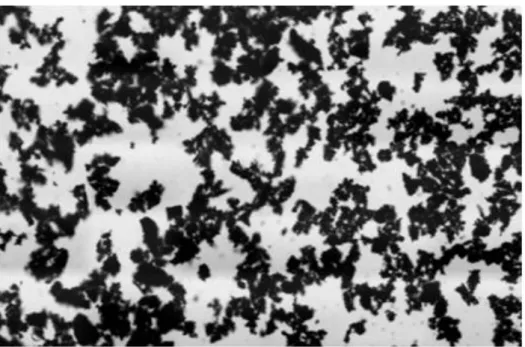
Fig. 4 (a) A micrograph of palm activated charcoal under bright field illumination on a light microscope. Ref. Laine et al., 1989
Fig. 4 (b) Palm activated carbon, as viewed by an electron microscope.
Ref. Nishihara et al., 2005
10
potentially allelopathic agent to control for unwanted growth effects of AC that accompany its intended use as a minimizer of allelopathic effects. AC affects the growth of several plant species, likely via its effects on potting medium properties, especially nutrient availability (Lau et al., 2007). Inderjit and Callaway (2003) recommend fertilizing pots to minimize the effects of trace concentrations of nutrients contributed by AC. A variety of studies have used activated carbon (AC) to neutralize the effects of allelochemicals (Mahall and Callaway, 1992; Nilsson, 1994; Callaway and Ashehoug, 2000; Inderjit and Callaway, 2003; Kulmatiski and Beard, 2006). Fig. 4 (a) and (b) showed the micrograph of palm activated charcoal under bright field illumination on a light and electron microscope, respectively. AC, with a large surface area and pore volume, as well as its polarity, has a tremendous adsorptive capacity and complex chemical and physical properties. The activity can be separated into adsorption, mechanical filtration, ion exchange, and surface oxidation (Cheremisinoff and Morresi, 1978).
Overall Scope and Study Objectives:
1) To identify the variety of asparagus which is more resistant to allelopathy and autotoxicity under replanting conditions.
2) To investigate the mechanism of allelopathy and autotoxicity in aparagus which is exudated from the roots of asparagus.
3) Replanting is a serious problem in crop production, therefore to be able to mitigate the problem by using activated carbon and phosphorus.
11
FLOW CHART OF REVIEW OF LITERATURE
Replanting problem (Grogan and Kimble, 1959)
Found the causes of replanting problem (Shafer and Garrison, 1986)
Allelochemical (Hartung et al., 1989) Allelopathy (Molisch, 1937)
Asparagus root, stem, leaf source of allelochemical (Young and Chou, 1985) Root residue, desease, and unbalanced nutrient supply caused asparagus replanting problem (Young, 1984)
Asparagus root exudates deleteriously affect the neighboring plants (Wacker et al. 1990) Asparagus allelopathy and autotoxicity (Putnam et al., 1982).
Identified inhibitory compounds, phenolic acids and saponins (Lake et al., 1993)
Varietal allelopathy and Varietal autotoxicity (Wu et al., 2007)
Autotoxicity is defined by Blok and Bollen (1993)
Allelopathy is defined by Rice (1984)
12
FLOW CHART OF EXPERIMENT
Assessment of Varietal allelopathy and autotoxicity in asparagus
Greenhouse condition Laboratory condition
Pot Experiment
Root residue amendment
Root residue unamendment
Identify organic acids by HPLC
Bioassay Test Oxalic, Succinic, Tartaric acids by HPLC
Plant Box Experiment
Soil analysis Growth analysis Nutrient analysis Root and shoot
length Fresh, Dry weight
Growth analysis Nutrient analysis Root and shoot
length, Fresh, Dry weight
N, P K, Ca, Mg pH, EC, C: N
ratio N,P K,Ca, Mg
N, P K, Ca, Mg
To recover growth and nutrient uptake
Activated Carbon
Phosphorus
Soil analysis Growth analysis Nutrient analysis
13
CHAPTER II
Root Residue Amendment on Varietal Allelopathy and Autotoxicity of Replanted Asparagus (Asparagus officinalis L.)
1. Introduction
Root residue exudates of asparagus inhibited the roots and shoots growth of asparagus own seedlings, suggesting autotoxicity was a possible mechanism for the problem of declined yield and replanting problem (Young, 1984). Root residues entering into the soil can affect growth and yield through changes in microbial activities and N immobilization or availability (Hungate et al., 1997). Batish et al. (2009) reported that phenolics were present in root residue amended soils, and growth reduction in root residue amended soils was concomitant with the amount of phenolic compounds. Root residues can lead to increased N immobilization in cropping systems by increasing the amount of carbon relative to nitrogen (Lam et al., 2012). Crop residues added to soils have been shown to reduce the recovery of fertilizer (Kongchum et al., 2007). However, other potential causes for the replanting problems, include allelopathy and autotoxicity. Allelopathy refers to the effects of one plant on another caused by the release of inhibitory substances into the environment through root exudation, followed by leaching and volatilization, or through the decomposition of plant residues (Batish et al., 2007). Autotoxicity is a form of intraspecific allelopathy that occurs when a species releases chemical substances that inhibit or delay the germination and growth of plants of the same species (Putnam, 1985). Additionally, the chemical interactions between varieties within the same crop species can be classified as "varietal allelopathy" and "varietal autotoxicity" (Wu et al., 2007). Varietal allelopathy occurs when plants of a given variety release chemical substances that inhibit or delay germination and growth of other varieties of the same crop species. On the other hand, varietal autotoxicity occurs when plants of a given
14
variety release chemical substances that inhibit or delay germination and growth of the same variety. The chemicals involved in allelopathic interactions are present in all plant parts such as leaves, roots, stems, inflorescence and even pollen grains (Rice 1984). Among these modes, the role of roots is significantly more as these are in direct contact with soil and contribute allolechemicals into the growth medium. Rather, root exudates play an important role in plant-plant interactions and deleteriously affect the neighboring plants (Bais et al., 2006). Many researchers have confirmed the allelopathic activity of chemical substances released by asparagus (Hazebroek et al., 1989; Lake et al., 1993; Peirce and Miller, 1993;
Shafer and Garrison, 1986; Yang, 1982; Young, 1984; Young and Chou, 1985) and allelochemicals are considered to be one of the potentially important causes of the asparagus replanting problem (Putnam, 1985).
Allelopathy and autotoxicity are related to environmental stresses such as nutrient deficiencies. The allelochemicals change the concentration of soil nutrients. In addition, the concentration of soil nutrients also influences the concentration of allelochemicals in the plant. The avoidance of allelopathic effects between plants, or the exploitation of beneficial interactions in a rotation or a mixed cropping system, may have direct bearing on crop yield (Rizvi and Rizvi, 1992). Improved yields associated with crop rotation are often attributed to reduced disease incidence, and believed to be due the successful management of natural communities (Cook, 1993). Moreover, little is known about varietal allelopathic and autotoxic interaction in terms of continuous replanting of asparagus in soil amended by root residues. Therefore, the purpose of this investigation was to evaluate asparagus varietal resistance to allelopathy and autotoxicity, with a bias in the adequate rotational patterns that would be beneficial in mitigating the replanting problem caused by root residues amended soil.
15 2. Materials and Methods
2.1 Planting Materials
Two asparagus seed varieties; UC157 (called as Welcome in Japan) and Gijnlim of USA and European origin, respectively were procured from a local commercial seed company in Japan.
2.2 Characteristics of the Sandy Soil
Physico-chemical properties of the soil are illustrated in Table 1. Sandy soil used in this experiment was first sterilized at 121°C for 15 min in an automatic high pressure steam sterilized autoclave (MLS-2420; Sanyo, Tokyo, Japan). Prior to showing, the soil was characterized for EC and pH of the soil: water suspension (1:5 w/v). EC and pH were measured with EC and pH meters (Horiba DS-14 and Accumut M-10, TOA electronics Ltd., Tokyo, Japan, respectively). Exchangeable cations (K+, Ca2+, Mg2+, and Na+) were measured using an atomic absorption spectrophotometer (Model Z-2300; Hitachi Co., Tokyo, Japan) after extraction with neutral ammonium acetate.
2.3 Assessment of Varietal Resistance to Allelopathy and Autotoxicity
Fresh pre-germinated 20 days old seedlings of UC157 and Gijnlim were separately sown in sandy soil- filled pots (790 cm3), and left to grow for 50 days in the greenhouse conditions at the Field Science Center, Tottori University, Tottori City, Japan (Fig. 5). The greenhouse conditions were 20°C to 25 °C, 10 h to 12 h light and 10 h to 12 h dark, 70 to 80% relative humidity and
16 Table 1 Soil physico-chemical properties
Soil Parameter Value
EC (1:5) water 0.03 ds· m-1
pH 6.36
Total N 0.02%
Available-P 1.5 mg P2O2 100 g-1
Exchangeable K+ 0.06 cmol·kg-1
Exchangeable Ca2+ 0.34 cmol·kg-1
Exchangeable Mg2+ 0.45 cmol·kg-1
Exchangeable Na+ 0.10 cmol·kg-1
CEC Cation exchange capacity 2.40 cmol·kg-1
Bulk density 1.47 g·cm-1
Infiltration rate 30 mm·min-1
Hydraulic conductivity 0.05 cm·sec-1
Texture Sand
17
Fig. 5 Asparagus replanting under greenhouse condition
18
150-200 µmol· m–2 ·s–1 light intensity. First planting of each variety without root residue amendment served as the control. After 50 days, seedlings of both Gijnlim and UC157 were harvested, their roots cut off, washed thoroughly, air-dried and incorporated back into the same pot soil at 2 g·kg–1 soil.Again, pre-germinated 20 days old individual seedlings of both UC157 and Gijnlim were replanted in the root residue-soil mixture for the second (first replanting) planting for another 50 days. The third (second replanting) planting also followed the same procedure as above. Prior to the third plantings, additional fresh root residues (at the same rate) were incorporated into each pot. During all cultivation cycles and treatments, irrigation was done at 50 ml·day-1 per pot; fertilization immediately after each planting, and then at 15 day intervals with 100 ml of a solution containing 10 mg·L-1 of N (NH4Cl 1.5 mg·L-1 + 8.2 mg·L-1 HNO3), 8 mg·L-1 P, 27 mg·L-1 K, 4.0 mg·L-1 Ca, 0.1 mg·L-1 Mn and 0.1 mg·L-1 B. All treatments were replicated three times. The inhibition (%) was calculated using the equation:
Inhibition (%) = (1 – Xt /Xc) × 100 (1)
In this equation, Xc denotes the length or dry weight of the roots or shoots of the control and Xt represents the corresponding length or dry weight in the second (first replanting) and third (second replanting) planting. The above equation was used to compare the performance of the two varieties UC157 (U) and Gijnlim (G) in the following rotational combination patterns according to Layout 1 for varietal allelopathy: UG, GU (first replanting) and UGU, UUG, UGG, GUG, GGU, GUU (second replanting) and autotoxicity: UU, GG (first replanting) UUU, GGG (second replanting), respectively.
2.4 Plant Growth and Nutrient Uptake Measurements
19
Layout 1: Rotational cultivation system
20
After harvesting at the end of each planting, all seedlings were carefully separated into roots and shoots, thoroughly cleaned, blotted dry between absorbing paper and their lengths were measured. Root and shoot dry weights were measured after oven drying at 70°C for 72h. To determine nutrient uptake and the growth inhibition by the root residues following procedures were performed. All dry roots and shoots were combined and ground to a fine powder using a stainless ball mill, and analyzed for total nutrients N, P, K, Ca and Mg using standard procedures. Total N content was determined by the dry combustion method with an automated C-N coder (Model MT 700; Yonaco, Tokyo, Japan). Total major mineral nutrients K, Ca and Mg were determined after digestion with a H2O2-H2SO4 mixture. Total P in the digested mixture was determined colorimetrically with a spectrophotometer (Model U-2001, Hitachi Co., Tokyo, Japan) using the phosphomolybdate blue method (Murphy and Riley, 1962). The total amounts of K, Ca, and Mg were determined with an atomic absorption spectrophotometer (Model Z-8100, polarized Zeeman; Hitachi Co., Tokyo, Japan). Inhibition, expressed as a percentage, for nutrient uptake was calculated by using equation 1.
2.5 Chemical Analysis of Soil after Subsequent Replanting
To check whether root-residue incorporated into the soil alters soil nutrient status;
Asparagus officinalis root residue amended soils were analyzed for pH, electrical conductivity (EC), C: N ratio, and total N, P, K, Ca and Mg. The pH and EC of soil were measured in 1: 10 soil–water extracts by using the pH and EC meters (HM-30S and CM - 30R-DKK, TOA electronics Ltd., Tokyo, Japan), respectively. Total mineral nutrients N, P, K, Ca and Mg were measured as described above.
2.6 Statistical Analysis
21
Experimental data presented are the means of three replicates. Statistical analyses were executed using Stat view software. One-Way analysis of variance (ANOVA) was used to compare the percentage of inhibition in growth and nutrient uptake by Tukey‟s protected multiple- comparison test at P<0.05. The percentage data was transformed according to Lam et al. (2012) to conduct the appropriate tests for normality and equality of variance before proceeding with the analysis. Data is presented as mean ± SE of the three replications.
Principle component analysis (PCA) was performed using XLSTAT 2011 to clarify total data variability with respect to co-relationships between growth, nutrient uptake, and soil physicochemical characteristics after the first and second replanting. Moreover, each rotational combination was treated as categorical data, converted to dummy variables and PCA performed along with other variables. Due to very low cumulative contribution ratio, some dummy variables were omitted.
3. Results & discussion
3.1 Varietal Resistance to Allelopathy and Autotoxicity
The potential of allelopathy and autotoxicity on root and shoot growth pattern between two asparagus varieties with different rotational combinations are illustrated in Table 2.
Asparagus root residues significantly (P ≤ 0.05) affected root and shoot growth in both varieties under different rotational combinations when compared to the unamended (control) soil; with the second replanting showing a higher inhibition than the first. However, the negative effect was more on root than shoot. In allelopathic treatments after the first replanting, the highest and lowest inhibition of root (26 and 10 %) and shoot (21 and 8%) growth occurred in the UG and
22
Table 2 Growth inhibition of two asparagus varieties with different rotational combinations (RC) after the first and second replantings
Percent inhibition Length Dry Weight
PT Treatment Root Shoot Root Shoot
First RP Autotoxicity UU 49±2.1a 45±1.8a 48±4.6a 46±2.6a GG 29±2.6b 25±1.5b 29±7.3b 26±4.9b Allelopathy UG 18±0.6b 14±1.6b 26±2.1b 21±1.4b GU 10±1.3c 8±0.8c 17±1.5c 14±4.2c Second RP Autotoxicity UUU 83±0.3a 72±3.6a 91±0.7a 78±1.6a GGG 53±2.1b 49±1.4b 54±0.9b 52±1.9b Allelopathy UUG 49±1.0c 46±1.2c 52±0.6c 47±1.1c GUU 45±2.1c 37±1.8c 49±0.6c 41±0.7c UGG 43±0.3c 36±8.3c 43±0.7c 38±1.0c GGU 38±0.3c 32±5.3c 38±1.8c 35±1.6c UGU 34±0.8c 29±6.2c 36±2.5c 31±0.6c GUG 31±4.2d 24±1.4d 31±1.3d 28±1.9d
Note: Data presented as mean ± SE, (n = 3). Lettering in the table refers to comparisons for the first and second replanting (Tukey‟s protected multiple-comparison test, P ≤ 0.05).
Inhibition percent was calculated by using equation 1. U, UC157; G, Gijnlim; the order of the letters represents the two varieties used in the first, second (first replanting), and third (second replanting) plantings, respectively. Listed length and weight suggests the values are actual lengths (cm) and weights (g). Here, PT denotes to planting time.
23
GU rotations, respectively. After the second replanting, the highest and lowest inhibitions were found in the UUG and GUG rotations, respectively.
Growth inhibition was significantly (P ≤ 0.05) higher in UC157 than in Gijnlim in the first and second replanting in the same rotation with each of variety (Table 2). For example, in autotoxic treatments, both the UU (49%) and UUU (91%) rotations showed significant (P ≤ 0.05) higher growth inhibition than the GG (29 %) and GGG (54%) rotations. This inhibited growth is likely caused by varietal and rotational differences in the susceptibility to the type and total quantity of allelochemical constituents. Inhibitory effects of allelochemicals varied with varietal differences (Chung et al., 1997). Exudates from root residues are one of the major sources of potential allelochemicals to the soil rhizosphere (Rice, 1984, Bertin et al., 2003). They contain a variety of chemical compounds including amino acids, organic acids, sugars, phenolic acids, and other secondary metabolites, and serve as an important medium of root-based interactions with other microorganisms (bacteria, actinimycetes, pathogens, fungi, and insects) in the soil (Walker et al., 2003). In this study, root and shoot growth inhibition ranged from 10 to 91% and 8 to 78 %, respectively in the same combination or the different combinations with each of variety. Lam et al. (2012) reported that root residue amendment treatments were decreased root and shoot biomass by 16 and 19 % respectively. Therefore, root residues could have released some allelochemicals into the soil through exudation or degradation of the root residue and these might be interfering the growth of asparagus.
Increased autotoxication in asparagus root residues due to accumulation of allelochemicals from subsequent replanting could have been responsible for growth inhibition (Young and Chou, 1985).
3.2 Nutrient Uptake Inhibition
24
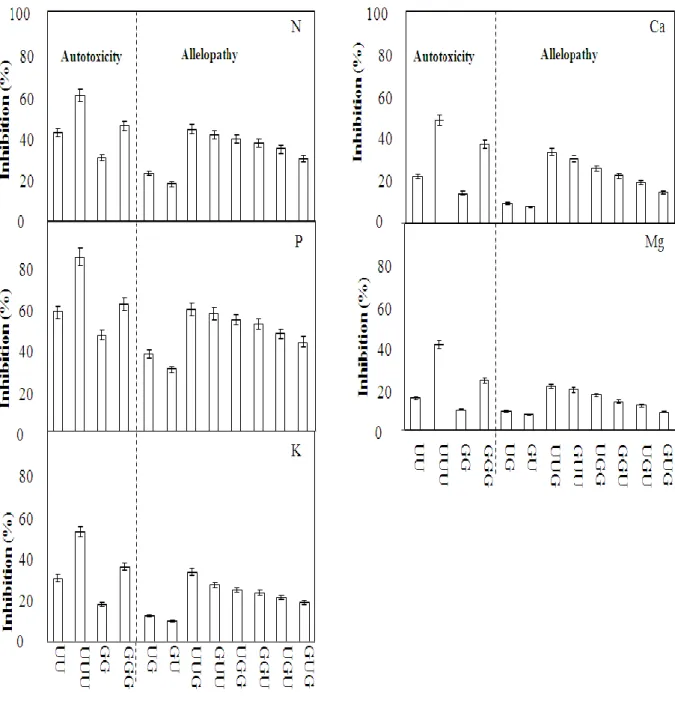
The inhibition of nutrient uptake in both UC157 and Gijnlim, with different rotational combinations is illustrated in Fig. 6. There were significant (P ≤ 0.05) differences in the uptake of mineral nutrients N, P, K, Ca and Mg in the two asparagus varieties and their rotational combinations. The highest inhibition was found for P, followed by N, while the other nutrient widely varied in the different rotational combinations of asparagus varieties.
The inhibition for uptake of total N, P, K, Ca and Mg ranged from 18 to 60; 29 to 83; 10 to 52; 8 to 48; 7 to 40 %, respectively. Generally, root residue might release allelochemicals into the soil which could be accumulated in the root and shoot systems and affect the nutrient uptake. In allelpathic treatments after the first replanting, the highest and lowest inhibitions for nutrient uptake were found in the UG and GU rotations, respectively. After the second replanting, the highest and lowest inhibitions were found in the UUG and GUG rotations, respectively. Similarly, in the autotoxic treatments, both the UU and UUU rotations showed significantly (P ≤ 0.05) higher inhibition than the GG and GGG rotations. Therefore, varying the rotational combination could reduce the accumulation of the same autotoxins or allelochemicals or their same concentration. Rice (1984) also found that more allelochemicals are produced under the conditions of mineral nutrient deficiency without rotational cultivation. Fisher and Benson (1983) noted that while there were significant interactions (P
≤ 0.05) between N and P for several aspects of asparagus growth at the higher concentrations of N, there was usually a positive response to increasing P. In this study, as the N uptake was reduced that might reduce the capability of detoxification by the increasing of allelochemicals which might be one reason for the uptake of P. This could be attributed to an increase in N immobilization following residue incorporation (Montoya-Gonzalez et al., 2009).
25
Fig. 6 The potential of allelopathy and autotoxicity between two asparagus varieties for the nutrient uptake (N, P, K, Ca and Mg) inhibition under different rotational combinations (RC) Note: Inhibition (%) was calculated by using equation 1. U, UC157; G, Gijnlim; the order of the letters represents the varieties used in the first, second (first replanting), and third (second replanting) plantings, respectively. Values in each combination are differ significantly (Tukey‟s protected multiple-comparison test, P ≤ 0.05). Bars presented as mean ± SE, replication; n = 3.
26
Moreover, Wacker et al. (1990) reported about several allelochemicals were isolated and characterized from asparagus root tissue, including ferulic acids and which could inhibit P uptake in plant roots (Glass, 1973; McClure et al., 1978). Furthermore, plants have evolved special mechanisms to deal with nutrient deficiencies (Handreck, 1997), such as the release of allelochemicals and mycorrhizal symbiosis. Even though sterilized soil was used in this investigation; some microorganisms propagated along with the experimental period and replant treatments in the greenhouse which could be responsible for the nutrient uptake.
Melloy et al. (2010) found that biomass of residue borne fungal pathogen was generally higher. Since, allelochemical activity could persist in soil with the same rotation and enhance microbial biomass that might be responsible for subsequent reduction of growth and nutrient uptake. However, the effect of previously grown plants on subsequent asparagus P content correlates well with the growth of asparagus. In contrast, the inhibition of K, Ca and Mg uptake was also followed the same tendency as those of N and P. But it might be necessary to determine the particular reason for that inhibition especially for P. Therefore, we are currently taking steps to exploring the specific causes of these problems and how to improve growth and nutrient uptake especially for P.
3.3 Effect of Subsequent Replanting on Physico-Chemical Properties of the Soil
Physico-chemical properties of the replanted soil with different rotational combinations are illustrated in Table 3 (a) and (b). There were significant (P ≤ 0.05) differences in the soil pH, EC, C: N ratio in the root residue amended soils compared to control soil (Table 3 a).
However, pH in the amended and unamended (control) soils ranged from 3.5 to 6.8 and 6.6 to 7.0, respectively. EC of the root residue amended soils ranged from 0.7 to 2.3 ds·m-1, which is higher than that of unamended (0.4 to 0.6 ds·m-1) soils. Amount of C: N ratio in the amended and unamended soils ranged from 2.5 to 8.7 and 8.5 to 10.6, respectively.
27
Table 3 (a) Effects of root residue amendment on soil physic-chemical properties after the first, second (first replanting), and third (second replanting) plantings under different rotational combinations (RC)
PT Treatment RC pH (H20) EC (ds·m-1) C:N ratio
First P Control U 6.6±0.02b 0.6±0.01a 8.5±0.01b
Control G 7.0±0.01a 0.4±0.05b 10.6±0.03a
First RP Aut. UU 4.2±0.03c 1.2±0.03a 4.1±0.09c
GG 4.6±0.01b 1.0±0.01b 6.4±0.02b
Alle. UG 5.5±0.02b 0.9±0.02b 6.9±0.01b
GU 6.8±0.05a 0.7±0.03c 8.7±0.04a
Second RP Aut. UUU 3.5±0.06d 2.3±0.01a 2.5±0.09d
GGG 3.7±0.01c 2.1±0.05b 2.9±0.08c
Alle. UUG 4.1±0.02b 2.0±0.03b 3.4±0.05c
GUU 4.3±0.05b 1.8±0.02b 3.7±0.04b UGG 4.6±0.04b 1.7±0.05b 3.8±0.05b GGU 4.7±0.03b 1.6±0.00c 4.1±0.02b UGU 5.1±0.01b 1.4±0.04d 4.3±0.04b
GUG 5.4±0.03a 1.3±0.01d 4.6±0.01a
Note: Data presented as mean ± SE, replication; n= 3. U, UC157; G, Gijnlim; the order of the letters represents the two varieties used in the first, second (first replanting), and third (second replanting) plantings, respectively. Aut., Alle. and PT denotes toautotoxicity, allelopathy, and planting time, respectively. Lettering in the table refers to comparisons for the first and second replanting (Tukey‟s protected multiple-comparison test, P ≤ 0.05).
28
There were significant (P ≤ 0.05) difference between the two asparagus varieties and their rotational combinations after subsequent replanting in nutrient uptake; N, P, K, Ca and Mg (Table 3B). Amount of N, P, K, Ca and Mg ranged from 0.97 to 0.15, 0.33 to 0.04, 8.6 to 0.91, 0.93 to 0.12, 0.94 to 0.11 mg·g-1, respectively. Root residue amended treatment showed the decreasing trend in the soil nutrient uptake. Since pH was decreased with the increasing of planting time, ultimately soil became more acidic that might be caused by asparagus root residue (Table 3a). Thus, soil pH might have contributed to the higher or lower P and the other nutrient concentration. In addition, the alteration of C: N ratio in soils, leading to rapid assimilation of N by microorganisms, is known to reduce plant growth (Shilling et al., 1992) as well as nutrient uptake. This was probably because residue incorporation increased C substrate availability and stimulated dentrification (Baggs et al., 2003). In this study, EC was increased with the increasing of planting time. This parallels earlier reports that addition of residues or decomposing material of allelopathic plants into the soil can increase EC (Xuan et al., 2005). Moreover, allelochemical compounds in asparagus root residues might be activated in soil even in a fairly short time because of environmental conditions such as air, temperature, types and water content. Total N, P, K, Ca and Mg in soils reduced with the frequency are quite incomprehensible because of processes and properties of biogeochemical cycle of these elements in soils. Normally, soil total K, Ca and Mg chronically change, and mainly depend on weathering of parent material horizon. In this study, total N, P, Ca and Mg were lowered in soils with the application of plant residues (Table 3b). It suggested total N, P, Ca and Mg lost in very short period. Allelochemicals like benzoic, vanollic, cinamic and ferulic acids showed inhibition in P uptake; likewise, benzoic and trans-cinnamic acids reduced growth, lowered the amounts of soil P, K, Mg, Mn, Cl-1, and SO4-2 (Baziramakenga et al. 2005).
29
Table 3 (b) Effects of root residue amendment on soil nutrient after the first, second (first
replanting), and third (second replanting) plantings under different rotational combinations (RC)
PT
Treatment RC
N P K Ca Mg
(mg·g-1)
First P Control U 0.85±0.04 b 0.28±0.0b 5.7±0.05b 0.81±0.02b 0.66±0.01b
Control G 0.97±0.01 a 0.33±0.02a 8.6±0.01a 0.93±0.00a 0.94±0.02a
First RP Aut. UU 0.51±0.05c 0.19±0.03c 1.8±0.01c 0.63±0.01c 0.34±0.02c
GG 0.56±0.06b 0.21±0.01b 2.6±0.02b 0.70±0.02b 0.42±0.01b
Alle. UG 0.63±0.03b 0.23±0.00b 3.8±0.03b 0.77±0.03b 0.49±0.03b
GU 0.68±0.02a 0.25±0.02a 6.3±0.04a 0.84±0.01a 0.72±0.01a
Second RP
Aut. UUU 0.15±0.01d 0.04±0.01d 0.91±0.02d 0.12±0.03d 0.11±0.07d
GGG 0.21±0.02c 0.06±0.01c 1.6±0.02c 0.15±0.03c 0.14±0.04c
Alle. UUG 0.25±0.08c 0.07±0.07c 1.7±0.04c 0.20±0.03c 0.17±0.03c
GUU 0.29±0.06c 0.09±0.03c 2.4±0.08b 0.27±0.04c 0.20±0.02c
UGG 0.34±0.04b 0.10±0.01b 2.7±0.04b 0.34±0.01b 0.24±0.05b
GGU 0.39±0.03b 0.13±0.02b 2.8±0.04b 0.41±0.04b 0.27±0.01b
UGU 0.44±0.09b 0.17±0.04b 2.9±0.03b 0.48±0.03b 0.31±0.03b
GUG 0.49±0.07a 0.21±0.01a 3.1±0.01a 0.55±0.04a 0.37±0.02a
Note: Data presented as mean ± SE, replication; n= 3. U, UC157; G, Gijnlim; the order of the letters represents the two varieties used in the first, second (first replanting), and third (second replanting) plantings, respectively. Aut., Alle. and PT denotes to autotoxicity, allelopathy, and planting time, respectively. Lettering in the table refers to comparisons for the first and second replanting (Tukey‟s protected multiple-comparison test, P ≤ 0.05).
30
In addition, pH related to increases in nutrient availability and/or reductions in Al 3+
availability (Lehmann et al., 2003; Rondon et al., 2007). Moreover, Major et al. (2010) reported that soil N (1.37 to 0.31 µg g·soil-1), P (27.4 to 0.1 µg g·soil-1), K (58.3 to 2.1 µg g·soil-1), Ca (288.8 to 7.6 µg g·soil-1) and Mg (91.8 to 5.5 µg g·soil-1) showed decreasing trend due to 2 to 3 years continuous cropping. The present investigation also revealed that with the increasing of planting time soil nutrient showed decreasing trend. Therefore, it is likely that allelochemical compounds could be readily leached from the residues. After entering into the soil, allelochemicals are influenced by microorganisms (Inderjit, 2001).
However, their negative effect depends greatly upon a variety of biotic and abiotic factors, soil type, presence of microorganisms and soil conditions, and further toxification and detoxification mechanisms in the soil (Blum et al., 1999). In addition, microbial degradation or transformation of allelochemicals in soil determines the expression of allelopathy and autotoxicity. Based on the observed results, the present study evidences that root residues of Asparagus officinalis suppress the growth of asparagus by releasing allelochemicals into the soil rhizosphere through alteration of soil nutrients.
3.4 Overall Physico-Chemical Characteristics Variability
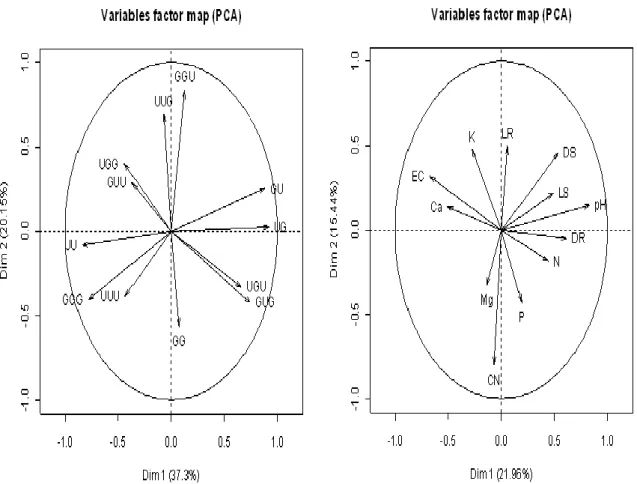
Principle component analysis (PCA) of the total variation in different rotational combinations in the inhibitory effect of root residue amendment after the first, second replanting is shown in Fig 7 (a) and variability among physiochemical characteristics in Fig 7 (b). Fig 7 (a) showed the combination, respectively. C: N ratio and pH showed very high factor loading, and dry weight of root is denoted by Dim 1. Dim 2 denotes the various physicochemical characteristics monitored throughout all replantings. The strong positive correlation among C: N ratio, N, and P suggest that C: N ratio might have been regulated for the P and N
31
Fig. 7 (a) Variable factor map (PCA) for total variation in the inhibitory effects of root residue amendment after the first and second replanting in different rotational combinations (RC). (b) Variable factor map (PCA) for total variation in the physiochemical characteristics throughout all replanting
Note: LR, LS, DR and DS denote the length and dry weight of the root and shoot, respectively. U, UC157; G, Gijnlim; the order of the letters represents the varieties used in the first, second (first replanting), and third (second replanting) plantings, respectively.
32
nutrients throughout the root residue amendment treatments, although negative correlation observed with EC. This result indicated that with an increased EC, the soils were nutrient poor with root residues amendment. This reconfirms the significant inhibitory effect of root residue amendment in all replanting stages as earlier described in this study. Moreover, among the physico-chemical interactions, N and P were positively correlated with the root and shoot growth, but negatively correlated with EC. There is now ample evidence that plant residue produces sufficient quantities of allelochemical substances to influence the growth and nutrient uptake of other plants (Batish et al., 2009). In the present study, results revealed that the rotational effect, therefore, is probably related to the mobilization of P as well as other nutrients through plant exudation; this inhibits the growth of any of the tested varieties.
Based on the observed results, the present study evidences that root residues suppress the growth and nutrient uptake of asparagus and through alteration of soil nutrients and physicochemical properties. Thus, to improve asparagus growth and nutrient uptake, soil nutrient status and soil physicochemical properties, one is variety selection, the other is removal of plant residue to reduce allelopathic and autotoxic impacts in the ecosystem.
33
CHAPTER III
Allelochemicals inhibit the growth of subsequently replanted asparagus (Asparagus officinalis L.)
1. Introduction
Successive culture of the same crop on the same land for years causes soil sickness or replanting injuries (Tsuchiya 1990). Many studies have reported on yield reductions following its replanting in old asparagus fields (Hartung and Stephens 1983; Young and Chou 1985; Schofield 1991; Motoki et al. 2006). Possible reasons for these problems include allelopathy and autotoxicity. Allelopathy is the inhibitory and/or stimulatory effects of one plant, either microbial or higher plant, on another by the production of chemical substances that is released into the environment (Putnam and Tang 1986). Autotoxicity is a form of intraspecific allelopathy that occurs when a species releases chemical substances that inhibit or delay the germination and growth of plants of the same species (Putnam 1985).
Allelochemicals produced by one crop species influence the growth, productivity, and yield of other crops or the same crop (Batish et al. 2007). For allelopathy to be an ecologically relevant mechanism influencing growth of plants, allelochemicals must accumulate and persist at phytotoxic levels and come in contact with the target plant (Inderjit 2005).
Allelochemicals are considered to be one of the potentially important causes of the asparagus replanting problem (Putnam 1985). The phytotoxic compounds exuded by crop plants as root exudates could be employed to suppress growth in the vicinity (Kong et al. 2008).
Limited data have been reported on the identification of allelochemicals from root exudates.
Fujii (1993) developed the plant box bioassay method, in which the source of the allelochemicals is planted in an agar growing medium and the test plants are planted in a grid surrounding this source, to evaluate allelopathic activity of allelochemicals exuded from roots.
34
Through the use of this technique, the allelopathic activities of more than 2000 kinds of plants have been evaluated. Growing plants in a nutrient solution allows exuded allelochemicals to accumulate and affect plant growth. Furthermore, wheat seedling allelopathy diminished after the addition of activated charcoal to the agar growth medium (Wu et al. 2000), indicating the involvement of allelochemicals exuded by wheat seedlings into the agar growth medium. Kitahara et al. (1972) isolated three organic compounds (growth regulators) from asparagus ferns: asparagusic acid (1, 2-dithiolane-4-carboxylic acid), dihydroasparagusic acid (β, β1-dimercaptoisobutyric acid); and (S)-acetyldihydroasparagusic acid (β-S-acetyl-β1-mercaptoisobutyric acid). Although these compounds strongly inhibit seedling growth, they were present at extremely low concentrations in asparagus tissues. In this chapter, a replanted culture system was used to identify the inhibitory component of the asparagus autotoxins which are responsible for growth inhibition and to quantify their toxicity on lettuce growth with bioassays.
2. Materials and methods 2.1 Asparagus replant
A replant culture system was employed to identify growth inhibitory activity of asparagus.
Gijnlim crops have increased in area owing to its enhanced yield performance as compared to UC157 (Motoki et al. 2008). In this experiment, seeds of two asparagus cultivars, UC157 and Gijnlim of USA and European origin, respectively were obtained from a local commercial seed company (Sakata Seed Corporation, Japan). According to Fujii et al. (1992), the plant boxes (65 × 65 × 100 mm, Magenta, USA) were used as an evaluation of allelopathic activity in a bioassay method, filled with 250 ml autoclaved agar (Nacalai Tesque, Inc., Kyoto, Japan) medium in a clean bench (M-377, Sanyo, Osaka, Japan). After cooling the autoclaved agar 0.75% (w/v) (gelling temperature 30-31o C) to 40 o C, it was poured into the plant box and,
35
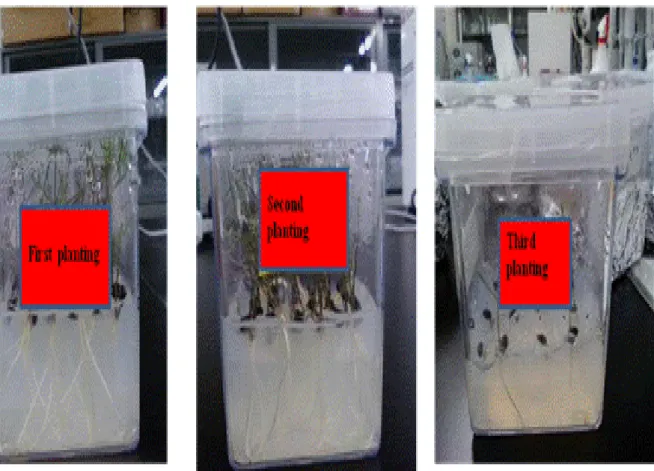
kept on ice. The chapter was investigated the growth inhibition under laboratory condition (Fig. 8).
Therefore, to find the effects of growth inhibition in the same cultivar, after gelatinizing the agar, a total of 12 seeds of UC157 and Gijnlim were separately sown on agar medium in each plant box.
Prior to sowing, asparagus seeds were covered with a double layer of gauze and surface- sterilized in 70% ethanol and then rinsed in deionized water several times. Sterile culture techniques were adopted to rule out the possibility of interference by microorganisms in the culture medium. The plant boxes were wrapped with cling film between the cap and upper part of the box to prevent drying and also covered with aluminum foil to darken the roots.
They were incubated at: 25° C; 12h light/12h dark; relative humidity 80% and 200 µmol m–2 s–1 intensity of light in growth chamber (MLR-351H; Sanyo, Tokyo, Japan) for 50 days. The control planting was the first planting of each cultivar of asparagus. After the growth of asparagus seedlings for 50 days, all the seedlings were uprooted from agar medium and the roots rinsed twice with 5 ml of distilled water to remove the residual agar. Investigating the growth inhibition with different cultivar by rotational cultivation, to find the effects of growth inhibition in the same cultivar, 12 seeds of both UC157 and Gijnlim were separately replanted (second planting, first replanting) in the same agar, the agar media that was used for first planting and left to grow in the same conditions as above for another 50 days. The third planting (second replanting) also followed the same procedures as above. All treatments were replicated three times.
2.2 Allelochemicals
The concentration of oxalic, succinic and tartaric acids in the medium were analysed by taking a sample of agar at a depth of 33 mm, which was the middle of depth at each plant box, according to the method of Fujii et al. (1991) with some modifications. The growth
36
Fig. 8 Asparagus replanting under laboratory condition
37
medium was collected after each planting from each plant box for HPLC (ELITE LaCrom, Hitachi Co., Tokyo, Japan, column oven L-2350) analysis. The agar media was taken from the plant box in a liquid form using a porous tube (HPP- type, DIK-300B, Daiki Rika Kogyo Co., Ltd., porous part: resinous, size: porous part 2.5 x 1.5 x 50 mm, PVC tube 2.7 x 1.0 x 100 mm, pressure: 200 kPa, suction, in water, sucking in -1bar: 1 ml min-1, syringe: 7 ml l-1 to 16hrs, about pF2.3, dead space: 0.5ml). This liquid samples along with the standard oxalic, succinic and tartaric acids in 20 µl quantities syringe were analysed with an HPLC and eluted with 0.1 M phosphate buffer. Concentrations in the sample were calculated by comparing peak areas of samples with those of the standards. Analysis condition was as follows: guard cartridge column: ODS - RS (6.0 LD X 15mm), pak DC- 613, temperature in column: 40°C.
Quantitative analysis was performed by the internal standard method (Wu et al. 2001). All samples were run in triplicate.
2.3 Organic acid bioassay
Lettuce seedlings were selected to test the inhibitory concentration of identified organic acids according to Nishihara et al. (2005). To determine if an organic acid from asparagus roots was responsible for growth inhibition of lettuce, 0, 50, 100, 150 and 200 mg l-1 solutions of oxalic, succinic, and tartaric acids were prepared. Then, five seeds of lettuce (Lactuca sativa L.) were placed in 27 mm Petri dishes, containing a 27 mm filter paper (Adventec, Toyo Roshi, Ltd., Japan) moistened with 500 µl of the solution of each organic acid. In the control, seeds were placed in Petri dishes on filter paper, moistened with 500 µl of deionized water. The Petri dishes were incubated in a growth chamber under the conditions described above. After 5 days, root and shoot lengths (mm) were measured. This experiment treatment was replicated three times. Inhibition, expressed as a percentage, was calculated using the following equation:
38 Inhibition (%) = (1 – Xt /Xc) × 100 (1)
Where, Xc denotes the lengths of the roots or shoots of the control and Xt represents the mean values of the corresponding lengths of the treatments.
2.4 Plant growth measurements and statistical analysis
After removing the plants from the medium, plants were divided into roots and shoots and their fresh biomass (mg) was measured. Inhibition, expressed as a percentage, was calculated using the following equation:
Inhibition (%) = (1 – Wt /Wc) × 100 (2)
Where, Wc denotes the fresh biomass of the roots or shoots of the control and Wt represents the mean values of the corresponding fresh biomass in the second (first replanting) and third (second replanting) planting, respectively. Experimental data presented are the means of three replicates; Statistical analyses were executed using Stat View software. The percentage data was loge-transformed before analysis where necessary to equalize variances between treatments (Lam et al. 2012). Logarithmic approximation was used for trendline. The concentration of organic acids required to cause 50% inhibition (IC50 value) of lettuce growth was calculated using an exponential function (Nishihara et al. 2005).
3. Results & discussion 3.1 Growth
The percentage of asparagus growth inhibition after the first and second replanting is shown in Fig. 9. Root and shoot growth inhibition were significantly higher in UC157 than in Gijnlim, with the second (Fig. 9b) replanting showing a higher inhibition than the first (Fig.
9a). Root (81%) growth was more severely inhibited than shoot (19%) growth, since the root was more closely in contacted with the growing medium. Figure 1 illustrates the growth of
39
the asparagus seedlings was retarded under replanting conditions. This implied that asparagus plants contain growth inhibitors that are capable of reducing the growth of its own seedlings under replanting condition. Increased autotoxicity in asparagus root exudates due to accumulation of allelochemicals from subsequent replantings might have been responsible for asparagus growth inhibition (Young and Chou 1985). Allelochemical compounds including amino acids, organic acids, sugars, phenolic acids, and other secondary metabolites, serve as an important medium of root-based interactions with other microorganisms including bacteria, actinimycetes, pathogens, fungi, and insects in the growing media (Walker et al. 2003).
Therefore, with increased number replanting, the allelochemicals could become more concentrated and cause severe growth inhibition. Similar findings were reported for Chenopodium murale grown under laboratory condition where the root and shoot growth was reduced by 44 and 32%, respectively (Batish et al. 2007). Inhibitory effects of allelochemicals varied with cultivar (Chung et al. 1997). This result revealed that the growth inhibition by allelochemicals would be expected to reduce the competitiveness of the affected plants under replanting condition.
3.2 Allelochemicals
To understand chemically mediated allelopathy and autotoxicity in managed crop ecosystems, identification of allelochemicals or phytotoxins and their potential action mechanisms with replant problem is required. Therefore, in this study, allelochemicals, which could be exuded by asparagus roots, and their concentrations in the agar growing media were analysed. Asparagus cultivars exuded differential concentrations of oxalic, succinic and tartaric acids into the growth medium after replantings (Fig. 10). After the first planting (Fig.
10a), UC157 and Gijnlim both produced small amount of organic acids.
40
Fig. 9 Percentage of inhibition of asparagus seedling growth at first (a) and second (b) replantings. Tukey‟s protected multiple-comparison test at p< 0.05 was used to compare means Bars presented as mean ± SE.
(b) (a)
41
The average levels of organic acids exuded by asparagus seedlings into the agar growth medium increased with the replanting times. Both UC157 and Gijnlim produced higher concentrations of oxalic, succinic and tartaric acids in the second (Fig. 10c) than in the first replanting (Fig. 10 b) although both cultivars had the tendency to produce similar ratios of the three acids. Organic acids released in asparagus root exudates into the medium could be responsible for the replanting problem (Fig. 10). Many organic compounds are inhibitory to growing plants (Rice 1984). Wu et al. (2001) noted that sorghum plants exuded sorgoleone, a hydroquinone that is quickly oxidized to a benzoquinone, which can inhibit weed growth at extremely low concentrations (0.01-0.125 mM). For allelopathy to be an ecologically relevant mechanism influencing the growth of plants, allelochemicals must accumulate and persist at phytotoxic levels and come in contact with the target plant (Inderjit 2005). Moreover, Miller et al. (1991) reported on allelopathically active fractions, tested by a curly cress germination bioassay, included ferulic, isoferulic, malic, citric, fumaric, caffeic (CA) and methylenedioxycinnamic (MDA) acids, and noted that no single compound was responsible for the allelopathic activity of asparagus extracts, although MDA did severely inhibit curly cress growth at concentrations of 25 ppm or above. In addition, organic compounds are known to be of great significance in allelopathy (Inderjit 1996). The present study demonstrated that asparagus seedling roots are able to exude varied amounts of organic acids into the agar growth medium and could be responsible for growth inhibition of asparagus cultivars.
3.3 Bioassay
Concentrations of oxalic, succinic and tartaric acids inhibitory to lettuce seedlings (IC50) were determined (Fig. 11). The data support that the asparagus growing media contained allelochemicals that exert an allelopathic effect on lettuce.
42
Fig. 10 Concentration (mg l-1) of organic acids at first planting (a) and first (b) and second (c) replantings. Tukey‟s protected multiple-comparison test at p < 0.05 was used to compare means Bars presented as mean ± SE.
(a) (b) (c)