A Qualitative Study of Confusing Experiences among Japanese Adult Patients with Type 1 Diabetes
Ikuko Nishio, Masami Chujo and Hideyuki Kataoka
Department of Adult and Elderly Nursing, School of Health Science, Tottori University Faculty of Medicine, Yonago 683-8503, Japan
ABSTRACT
Background In this study, we investigated the pow- erlessness of patients with type 1 diabetes (T1D), and described the structure of powerlessness that these indi- viduals experienced. In order for patients to recover from this state, we recommend that they take steps to regain their power.
Methods Fifteen Japanese adults with T1D partici- pated in this study. Data were collected from all subjects between July 2013 and March 2014 via in-depth semi- structured interviews. Qualitative data analysis was conducted according to a grounded theory approach.
Finally, the core category was identified, which allowed us to build a new powerlessness structure for T1D.
Results The results suggested a core category, ‘Wan- dering a tangled path,’ comprising four categories, eight subcategories, and twenty-six concepts. These four categories were as follows: ‘being burdened by T1D,’
‘suffering from insulin-related troubles,’ ‘being unable to cope with difficulties in self-management,’ and ‘facing social prejudice.’ In the state of powerlessness, negative emotional experiences snowballed, with patients feeling more and more depressed until they ultimately reached
‘rock bottom.’
Conclusion We found that as negative emotional ex- periences related to powerlessness increased, negative feelings intensified until the patients reached rock bot- tom. Powerlessness is like ‘wandering a tangled path,’ a state in which T1D patients struggle to cope with reality on their own when faced with both internal and external events. ‘Wandering a tangled path’ is at the core of pow- erlessness. A primary characteristic of the structure of powerlessness is suffering from confusing experiences.
To help patients cope with T1D without being crushed by powerlessness, nurses must pay attention to signs of powerlessness. Powerlessness is not just an emotional state, but a combination of feelings, perceptions, and thoughts; therefore, it is important to comprehensively understand patients’ narratives.
Corresponding author: Ikuko Nishio [email protected] Received 2015 December 18 Accepted 2016 January 22 Abbreviation: T1D, type 1 diabetes
Key words confusion; experience; powerlessness; type 1 diabetes
Diabetes is a common life-long health condition. Diabe- tes is classified as Type 1 or Type 2. In type 1 diabetes (T1D), pancreatic beta cells are destroyed, resulting in low insulin secretion and leading to a state of absolute insulin deficiency. According to the Ministry of Health, Labor and Welfare, approximately 8,000 people in Japan currently suffer from this condition, which often devel- ops during childhood or adolescence. T1D is character- ized by deficient insulin production and requires daily insulin administration.1 Therefore, patients with T1D require lifelong self-care, including daily management of their blood glucose levels, to maintain their health and prevent future complications. They also must suitably modify their behavior after diagnosis, since it is impor- tant that they learn to self-manage their condition.
Good self-managers have been defined as individu- als who have learned the skills required to cope with their illness, knowing how to continue with their daily activities, and being able to regulate the ever-changing emotions related to their chronic illness.2 For patients with T1D, self-management can be difficult because they experience physical, emotional, and social distress and often need to communicate about these issues with co- workers and supporters.3 Although some T1D patients excel in managing their distress, others struggle to do so.
This phenomenon is evident across academic, social, and developmental domains. When T1D patients are faced with difficulties, they often perceive their own lack of power. To recover from this state of powerlessness, they must take steps to regain their power.4 Powerlessness was defined as the perception where one lacks the capac- ity or authority to act to affect the outcome of the current situation or immediate circumstances,5 and NANDA- I describes the feeling of powerlessness as “The lived experience of lack of control over a situation, including a perception that one’s actions do not significantly affect an outcome.”6 Gibson reported that in order for patients to become empowered, they must understand the factors underlying their own powerlessness.7 However, very few studies of powerlessness have been conducted, and the papers published to date only consider the phenomenon from the perspective of patients’ subjective experiences
and do not examine the inherent nature of powerless- ness.8, 9
Many studies have attempted to understand the psy- chology of T1D patients from the perspective of medical professionals. However, it is also important to under- stand patients’ experiences from an internal perspective.
Therefore, in this study, we sought to shed light on the nature of powerlessness in the experiences of T1D pa- tients, who lead lives with various constraints, as well as the structure of powerlessness. This elucidation of pow- erlessness should be of great value in identifying effec- tive nursing support, which empowers T1D patients and helps them recuperate and improve their personal lives.
SUBJECTS AND METHODS Study aim
The purpose of this study was to elucidate the power- lessness (i.e., the state in which an individual perceives a lack of personal control over certain events or situations that affects outlook, goals, and lifestyle) of patients with T1D, and to describe the structure of powerlessness ex- perienced by T1D patients.
Design
To ascertain the structure of the process underlying powerlessness in adults with T1D, we used the grounded theory method because it focuses on exploring processes and understanding them in a new way based on avail- able data.10 The process of generating grounded theory involves systematic collection of data through field ob- servations, interviews, meetings, and inspection of docu- mentation where appropriate and possible.
This approach was suitable because it allowed us to use the participants’ own words to understand the effects of a T1D diagnosis on the meaning of powerlessness.
Participants
Inclusion criteria were as follows: being a Japanese speaker, diagnosis of T1D, and age ≥ 20 years. All participants resided in Tottori Prefecture, Japan, and were recruited from two diabetes outpatient clinics that specifically serve adults with T1D. All patients were recruited from the short-term wards of these clinics. Ap- proximately 5% of patients who visit these wards have a diagnosis of T1D with symptoms of hypo- or hyper- glycemia, and nurses in these wards provide self-care management and group therapy with the ultimate goal of discharging the patient. We recruited 15 individuals with T1D who were recommended by health professionals, and whose reactions, behaviors, and facial expressions were observed before conducting the study. Because it was difficult to identify appropriate and willing partici-
pants, additional recruitment relied on recommendations from a doctor who specializes in diabetes. The details of the study were explained to all clinic patients, who were then invited to participate; interested patients who agreed to participate contacted the researchers for fur- ther information.
Data collection
Data were collected from fifteen patients with T1D between July 2013 and March 2014 via in-depth semi- structured interviews that took place in clinic waiting rooms. One of the authors conducted all interviews. Par- ticipants were asked to share their experiences since be- ing diagnosed with T1D, including difficulties, pain and helplessness related to T1D in their daily lives, percep- tion of difficulty in self-management and diabetes con- trol issues, the significance of living with diabetes, and support from family and friends. The participants were initially informed of the topics and were then asked to freely reflect on and discuss their experiences of living with T1D. The researchers were careful not to ask lead- ing questions in order to obtain particular answers.
Follow-up questions were posed to obtain more de- tailed descriptions or explanations. The interviews (which each lasted for 60–75 minutes) were audio-recorded, transcribed verbatim, and stored for analysis.
Ethical considerations
This study was approved by the ethics committee of Tottori University (Record Number 2307, January 2013).
Informed consent was obtained from all patients using the procedure approved by the ethics committee, and the confidentiality of the participants’ information was pro- tected. Furthermore, patients were told that they could stop the interview at any time they wished and could refuse to answer any unwanted questions. Pseudonyms were allocated to all patients to ensure confidentiality, and all data were stored securely during the research process.
Data analysis
The qualitative data analysis was conducted according to a grounded theory approach.10, 11 The grounded theory approach is the way established by a qualitative study. In each interview, the first author listened to the interview tape several times and read the typed transcripts in their entirety, ensuring a full understanding of the raw data.
The verbatim translations were then coded and analyzed in the same manner as the interview transcripts.12 QSR NVivo 10 software was used to sort and retrieve data from the interviews. All transcripts were translated into English and subjected to the same coding and analysis
process as the Japanese interview transcripts; the results did not differ from those obtained from the Japanese- language analysis. The next step was line-by-line in vivo coding. The codes were then compared to identify dif- ferences and similarities, and then sorted into categories and subcategories.13 Subsequently, we identified linkages among these categories, subcategories, and concepts.
This process of immersion in the data is typical for analysis of grounded theory approach, and improves the trustworthiness of qualitative studies.
Finally, the core category was identified, which allowed us to build a new powerlessness structure for T1D. The structure is the connection of words to words.
In other words, the core category (i.e., the category to which all other subcategories are related) was labeled and used to build a conceptual framework of powerless- ness in adult T1D patients. The core category was estab- lished upon completion of the 15th interview. We repeat- edly compared the raw data with theoretical sampling, leading to a gradual focusing of the theory. Once the central category had been conceptualized, the raw data and resultant analytical memos, codes, and categories were re-examined to validate and explore.
RESULTS
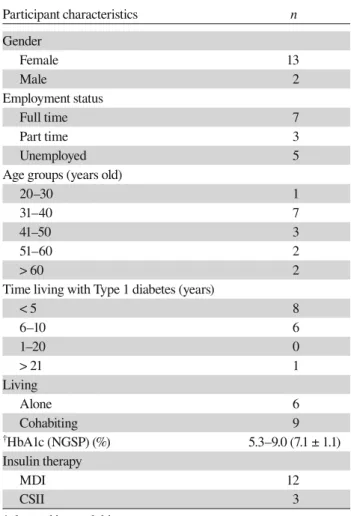
Table 1 shows study participants’ basic attributes. Table 2 shows an outline of the concepts, subcategories, cate- gories and core category. The core category, identified as
‘wandering a tangled path,’ comprised four categories, eight subcategories, and twenty-six concepts.
Hereafter, categories, subcategories and concepts will be denoted within quotation marks. Our investi- gation into the phenomenon of powerlessness in T1D patients revealed that they experienced ‘wandering a tangled path.’ This powerlessness comprised four cat- egories including ‘being burdened by T1D,’ ‘suffering from insulin-related troubles,’ ‘being unable to cope with difficulties in self-management,’ and ‘facing social prejudice’. A schematic description of the theory is pre- sented in Figure 1. Patients find it difficult to decide their own path, and move back and forth among these four experiences (Fig. 1). In the state of powerlessness, nega- tive emotional experiences snowballed, with patients feeling more and more depressed until they ultimately reached ‘rock bottom.’
Category 1: Being burdened by Type 1 diabetes This category comprises two subcategories, ‘feeling resistance toward T1D’ and ‘facing the reality of T1D.’
‘Feeling resistance toward T1D’ is associated with senti- ments such as “I can’t believe that I developed T1D” fol- lowing diagnosis. These in turn trigger feelings of disap-
Table 1. Demographic characteristic of the 15 study participants with type 1 diabetes
Participant characteristics n
Gender
Female 13
Male 2
Employment status
Full time 7
Part time 3
Unemployed 5
Age groups (years old)
20–30 1
31–40 7
41–50 3
51–60 2
> 60 2
Time living with Type 1 diabetes (years)
< 5 8
6–10 6
1–20 0
> 21 1
Living
Alone 6
Cohabiting 9
†HbA1c (NGSP) (%) 5.3–9.0 (7.1 ± 1.1)
Insulin therapy
MDI 12
CSII 3
†glycated hemoglobin.
CSII, continuous subcutaneous insulin infusion; MDI, multiple daily injection; NGSP, National Glycohemoglobin Standardization Program.
pointment and powerlessness, such as “I don’t feel like trying,” “I have a negative image of T1D,” and “I can’t accept having T1D” resulting from the need to strictly maintain a stable blood glucose level via insulin therapy starting from the time of diagnosis:
“You know there is nothing I can do about this. It was beyond my control (that I got T1D).” (Partici- pant O)
‘Facing the reality of T1D’ is associated with the mindset that the patient will never be cured despite con- tinuing to take insulin injections, which was expressed as follows: “even though I need long-term care, I will not recover before I die.” In regard to insulin injections, patients stated that “taking injections makes me realize that I am sick” and “the pain and scars from the injec- tions do not go away,” which forced them to face the reality that they had T1D:
Table 2. Outline of the concepts, subcategories, categories and core category
Core category Categories Subcategories Concepts
Wandering a tangled path
Being burdened by T1D
Feeling resistance toward T1D
I can’t believe that I developed T1D I don’t feel like trying
I have a negative image of T1D I can’t accept having T1D
Facing the reality of T1D
Even though I need long-term care, I will not recover before I die Taking injections makes me realize that I am sick
The pain and scars from the injections do not go away
Suffering from insulin-related troubles
Being at the mercy of insulin
I can’t openly take my injections
I always have to carry my injections with me My injections have priority over work Being overconfident and
developing hypo- and hyperglycemia
I get hyperglycemia after forgetting to take my insulin injection I get hyperglycemia from overeating
I became hypoglycemic because I had no time to eat
Being unable to cope with difficulties in self-management
Being unable to self-manage as expected
Management is needed when the patient’s condition is poor, and maintenance is needed when the patient’s condition is good Unable to cope with hypoglycemia on my own
Poor blood glucose control continued for unknown reasons Efforts to self-manage are not worthwhile
Nervousness over the smallest physical changes
Facing social prejudice
People around me refuse to understand
I cannot explain the difference with T2D to those around me I cannot convey the hardship of hypoglycemia to those around me
Not being treated normally
Things do not necessarily change solely as a result of my illness I get tired of excessive concern
It hurts to be considered as a sick person
Loss of employment and relationships with friends Not being acknowledged
by society
Despite wanting employment, I am not hired because of my ill- ness
Companies and hospitals do not guarantee a living
Fig. 1. A new powerlessness structure for Japanese adult patients with T1D: Patients find it difficult to decide their own path, and move back and forth among these four experiences.
“The fact that I had to give myself an insulin injec- tion made me realize that I had a disease. I used to feel that way every time I injected insulin back then.” (Participant D)
“The (insulin) injections leave a mark; they have even left bruises. The (insulin) injection leaves a noticeable mark that doesn’t go away for a while.”
(Participant I)
Category 2: Suffering from insulin-related troubles This category consisted of two types of feelings, includ- ing ‘being at the mercy of insulin’ and ‘being overcon- fident and developing hypo- and hyperglycemia.’ ‘Be- ing at the mercy of insulin’ involved a sense of being controlled by insulin due to the constant need to find times and places to take insulin injections, or being in situations where injections cannot be taken due to super- seding considerations. Patients were overwhelmed by a sense of powerlessness and lost their confidence. Nar- ratives included statements such as, “I can’t openly take my injections,” “I always have to carry my injections with me,” and “My injections have priority over work.”
“I just hated the injection. I don’t like that I had to take a break from work to inject in the restroom.”
(Participant B)
‘Being overconfident that I would not become hypo- or hyperglycemic’ resulted from overconfidence in patients that led them to develop hyperglycemia despite understanding that overconfidence can be a cause of hypo- and hyperglycemia. This was expressed in state- ments such as “I get hyperglycemia after forgetting to take my insulin injection,” “I get hyperglycemia from overeating,” and “I became hypoglycemic because I had no time to eat:”
“I often forgot about it [the insulin injection]. When I forgot the [insulin] injection, something went wrong with me and I began feeling tired and thirsty.
I started to realize that I wasn’t doing well.”
(Participant G)
Category 3: Being unable to cope with difficulties in self-management
This category consisted of a feeling of ‘being unable to self-manage as expected,’ which was further explained as follows: “management is needed when the patient’s condition is poor, and maintenance is needed when the patient’s condition is good.” This concept arose from patients’ need to constantly prepare coping methods for situations in which their blood glucose level becomes unstable, and to maintain their blood glucose level when it is stable. When they develop hypoglycemia, patients are sometimes unable to cope with their blood glucose
levels. When hypoglycemia is particularly severe, some patients stated that they are “unable to cope with hypo- glycemia on my own.” Furthermore, some patients felt
‘stuck’ and ‘powerlessness’ when they were unable to self-manage as expected, such as when “poor blood glu- cose control continued for unknown reasons,” “efforts to self-manage are not worthwhile,” or when they experi- enced “nervousness over the smallest physical changes:”
“Adjusting my insulin dose according to the volume I eat is a little stressful. The pain of injecting [insulin]
hasn’t been a problem. I worry [instead] about the numbers [blood sugar levels] and about messing up the dose because I don’t quite know how to adjust it.” (Participant K)
“My job kept me so busy that I had no time for it [the insulin injection]. I didn’t even have time to eat.
Therefore, results were always bad on my regular [clinic] visits. I couldn’t do anything about it. It became a kind of dilemma for many years. I was sometimes reluctant to go to the clinic knowing that I would be told something bad [by the doctor] or get scolded again.” (Participant J)
Category 4: Facing social prejudice
This category consists of three types of subcategory, including ‘people around me refuse to understand,’ ‘not being treated normally,’ and ‘not being acknowledged by society.’ The sentiment that ‘people around me refuse to understand’ resulted from the failure of other people to distinguish T1D from type 2 diabetes (T2D), and was described by patients as “I cannot explain the difference with T2D to those around me” or “I cannot convey the hardship of hypoglycemia to those around me,” in part because patients appear well despite having hypoglyce- mia:
“I guess that I don’t look too tired to my colleagues when I’m hypoglycemic. No one can understand the suffering I go through unless they have the same condition.” (Participant A)
‘Not being treated normally’ arises from the drastic change in the way people treat T1D patients; in par- ticular, others can decrease their level of involvement with the patient and become less familiar, resulting in sentiments such as “things do not necessarily change solely as a result of my illness,” “I get tired of excessive concern,” “it hurts to be considered as a sick person,”
and experiences such as “loss of employment and rela- tionships with friends.” T1D patients consequently feel distress as a result of coming out of their illness:
“People built a wall around me. They treated me like a sick person. They felt they should not invite me out. They asked me if I could eat this and that
and I would say, ‘Yes, of course!’” (Participant D)
“I didn’t like it when people treated me like an in- valid just because I had this condition. They said things like ‘Don’t you have to get an [insulin] injec- tion?’ or ‘Are you okay?’ over and over again.”
(Participant E)
‘Not being acknowledged by society’ was related to finding employment and continuing to work, and includ- ed narratives such as, “Despite wanting employment, I am not hired because of my illness,” and “Companies and hospitals do not guarantee a living.”
T1D patients had a sense of powerlessness and perceived that they were regarded as disabled and aban- doned by society, including their companies and hospi- tals:
“I was told by my boss that I could not be a care- giver because my body required care. I basically got ÀUHGµ3DUWLFLSDQW%
“Even if you wanted to work, you would still have the monthly clinic visits. That was a disadvantage.
I was completely able to work but [I believed that]
companies might not want to hire me. I saw that as a disadvantage.” (Participant C)
Storyline
Patients start on insulin therapy as soon as they are diagnosed with T1D. Daily insulin injections intensify the patient’s awareness that they are sick, and they are consequently weighed down by the sense that they are
‘being burdened by T1D.’ Insulin therapy not only in- volves simple injections of insulin, but also enhances the feeling of ‘suffering from insulin-related troubles’ due to the constraints it places on daily life. The burden of self-management increases in association with this feel- ing. Furthermore, a worsening blood glucose level and inability to self-regulate insulin despite their best efforts result in a sense of ‘being unable to cope with difficul- ties in self-management.’ Because others did not under- stand diabetes, the patients lost jobs or were unable to find employment. In addition, T1D patients feel that oth- ers consider them as sick people or treat them with bias, thus they feel oppressed by society and become aware of
‘facing social prejudice.’
DISCUSSION
Characteristics of powerlessness in T1D patients This study elucidated powerlessness as revealed by the personal experiences of patients, from the perspective of the onset of T1D as an important event in their lives.
Our results demonstrated that the powerlessness of T1D patients is characterized by ‘wandering a tangled path’
resulting from a life dominated by T1D and alienation
from society. We also revealed that as negative emo- tional experiences related to powerlessness increase, negative feelings intensify until the patients reach rock bottom.
In the first category, ‘being burdened by Type 1 dia- betes,’ patients had the negative emotional experience that they had to accept their circumstances specifically that they could not survive without insulin, in response to their sudden diagnosis of T1D. Kleinman reported,
“Illness is the experience of suffering, and is given meaning through its association with the individual’s personality and with local community such as the cul- ture and society to which the individual belongs.” 14 Feelings such as “Why did I develop T1D?” and “I don’t really want to take insulin” dominate patients’ con- sciousness, and can be expressed as strong negative feel- ings. Our results showed that, in this category, patients perceived having T1D and requiring insulin as ‘debts’
because they did not fully accept T1D. This was the be- ginning of the gradual process of powerlessness.
In the second category, ‘suffering from insulin- related troubles,’ patients had an emotional experience in conjunction with the start of insulin therapy. The blood glucose level patterns of T1D patients are affected by meal size, meal content, amount of activity, and physical condition, and the insulin dose varies according to these conditions. The timing of insulin injections and insulin dose used should therefore be considered as extremely important regardless of the circumstances.1 Moreover;
patients also take injections without letting other people know in environments where their illness cannot be made public. At work, patients endure situations in which they cannot take their injections or forget to take their insulin. Patients not only struggle with insulin self- regulation, but also suffer from the effects of spending time and energy on insulin therapy in their daily lives.
In this category, patients are at the mercy of insulin therapy.
In the third category, ‘being unable to cope with difficulty in self-management,’ patients sought to incor- porate self-management of T1D, in the form of insulin therapy, as a new habit in their daily lives. This study re- vealed that patients not only found that adjusting insulin was a major burden, but also experienced self-denial (e.g., shame, misery, and hardship) because they were unable to stabilize their blood glucose level despite their best efforts. The negative emotions leading to stronger self- denial and increasing powerlessness were more intense than in the previous category. Fleming et al describe the modes of service characterizing pediatric care as provid- ing a family centered, social orientated, informal and re- laxed mode, comparatively, the adult care is described as
more individual centered, disease orientated, formal and direct mode.15 Lundin reported the difference between care culture in pediatric and adult diabetes care, and in- dicated that the patients become less ‘visible’ after being transferred to adult diabetes care.16 In this category of decreasing ‘visibility,’ patients feel unable to cope with self-management because they come to a standstill.
In the fourth category ‘facing social prejudice,’ pa- tients were confronted with unfair treatment in job inter- views and in the workplace due to misunderstanding and prejudice from surrounding people who lacked accurate information about T1D. Relationships with friends and family were distorted as a result of discrimination. Pa- tients were distressed and hurt by the people around them. Wallerstein determined that an external locus of control is a risk factor for powerlessness, and our results were consistent with this idea.17 In this category, patients had negative emotional experiences due to the presence of an external locus of control. They recognized that they were incapable of achieving anything on their own and could not organize their own feelings. Powerlessness is not the result of limited individual resources or abili- ties, but the result of being continuously deprived of so- cial support, resources, economic and political power.17 In this study, we also found that powerlessness arises from both limited abilities and resources at an individ- ual’s disposal, as well as from being socially oppressed and deprived of opportunities for self-determination.
In this category, powerlessness increases and patients gradually fall to psychological rock bottom.
Our results demonstrated that the powerlessness of T1D patients is characterized by ‘wandering a tangled path’ resulting from a life dominated by T1D and alien- ation from society. We found that as negative emotional experiences related to powerlessness increased, negative feelings intensified until the patients reached rock bot- tom.
The definition of “powerlessness” in T1D patients Based on the above discussion, “powerlessness” in T1D patients can be defined as follows. Powerlessness is like
‘wandering a tangled path,’ a state in which T1D patients struggle to cope with reality on their own when faced with both internal and external events. This wandering a tangled path is not characterized by simple negative feel- ings, perceptions, and thoughts, but by complex combi- nations of the three.
The structure of powerlessness consists of four ex- periences: ‘being burdened by T1D,’ ‘suffering from insulin-related effects,’ ‘being unable to cope with diffi- culty in self-management,’ and ‘facing social prejudice.’
‘Wandering a tangled path’ is at the core of powerless-
ness. A primary characteristic of the structure of power- lessness is suffering from confusing experiences.
Nursing practices from the perspective of power- lessness
Our results suggest three options to improve nursing practice.
First, nurses should carefully listen to how T1D pa- tients accept their diagnosis, and to explore the meaning in this illness. To help patients cope with T1D without being crushed by powerlessness, nurses must pay at- tention to signs of powerlessness. To avoid failing to notice these signs, it is important for nurses to intention- ally create situations in which patients can talk about their personal history and thoughts, including lifestyle constraints and difficulties and the volatile feelings and emotions associated with T1D, and to identify signs of powerlessness in patients’ narratives.
Second, we identified four precautions regarding nursing practice: i) the structure of powerlessness re- vealed in this study is a single model that can be utilized as reference model; ii) patients must have opportunities to talk about their experiences - if a patient has expe- rienced powerlessness, it is important to wait until the patient expresses him or herself; iii) Powerlessness is not just an emotional state, but a combination of feelings, perceptions, and thoughts; therefore, it is important to comprehensively understand patients’ narratives; and iv) when attempting to understand patients with T1D, nurs- es must not forget that while patients may wish to stop treatment despite continuing insulin therapy for a long time, they are still enduring their situation in their own way. Their thoughts are not limited to enduring insulin itself, but include their reactions to physical changes and the fact that there is no understanding or cooperation from others. These thoughts actually bring out the emo- tional characteristics of T1D patients.18, 19
Third, in the fourth category, ‘facing social preju- dice,’ powerlessness was associated with the experience of a psychological rock bottom. In this case, ‘rock bot- tom’ signifies the worst possible state of being; thus, after reaching rock bottom, things can only get better.
Wardian described “positive thinking” as the key to overcoming diabetes.20 Painful, distressing, and diffi- cult experiences can provide valuable opportunities for learning and growth that improve our internal strength and resilience (i.e., Resilience is the human capacity to deal with overcome, learn from, or even be transformed by the inevitable adversity).21 It is therefore important for nurses to share their feelings with patients and to think of ways to manage and regulate feelings in collaboration with patients.
As our data clearly demonstrate, T1D is not just a physical condition, but also a profoundly social and psy- chological one. On this basis, we conclude that access to insulin should probably come hand-in-hand with access to personal, emotional, and psychological support. In- deed, it is in the context of this and other chronic physi- cal conditions that the need for psychological attention and intervention becomes most acute.
Acknowledgments: We thank all patients with type 1 diabetes who participated in this study.
7KHDXWKRUVGHFODUHQRFRQÁLFWRILQWHUHVW
REFERENCES
1 American Diabetes Association. Standard of medical care in diabetes 2015. Diabetes Care. 2015;38:S5-S76.
2 Lorig K, Holman H, Sobel D, Laurent D, Gonzalez V, Minor M.
Living a healthy life with chronic conditions. 3rd ed. Boulder:
Bull Publishing Company; 2006. p. 1-14.
3 Nishio I, Chujo M. The Suffering from Illness Experience of Young Adults with Type 1 Diabetes. J Yonago Med Ass.
2014;65:49-56. Japanese.
4 Miller J F. Coping with chronic illness: Overcoming pow- erlessness. 3rd ed. Philadelphia: F. A. DAVIS COMPANY;
2000. p. 55-88.
5 Johnson DE. Powerlessness: A significant determinant in pa- tient behavior? J Nurs Educ. 1967;6:39-44. PMID: 4381304.
6 NANDA International DEFINING THE KNOWLEDGE OF NURSING [Internet]. Kaukauna: NANDA International, Inc.
[cited 2015 November 25]. Available from: www.nanda.org.
7 Gibson CH. A concept analysis of empowerment. J Adv Nurs.
1991;16:354-61. PMID: 2037742.
8 Jesus Pereira MT, Magela SG, Guimarães OD, Cunha-Espósito VH, Aguinaldo de Almeida S, Masako FL. Feelings of pow- erlessness in patients with diabetic foot ulcers. Wounds.
2014;26:172-7. PMID: 25856218.
9 Foster D, Lauver LS. When a diabetic foot ulcer results in
amputation: a qualitative study of the lived experience of 15 patients. Ostomy Wound Manage. 2014;60:16-22. PMID:
25380097.
10 Glaser BG, Strauss A. The Discovery of Grounded Theory:
Strategies for Qualitative Research. Hawthorne NY: Aldine de Gruyter; 1967. p. 37-46.
11 Glaser BG. Doing grounded theory: issues and discussions.
San Francisco: The Sociology Press; 1998. p. 8-20.
12 Glaser BG. Theoretical Sensitivity: Advances in the Meth- odology of Grounded Theory. San Francisco: The Sociology Press; 1978. p. 31-37.
13 Glaser BG. Basics of Grounded Theory Analysis. Mill Valley, CA: Sociology Press; 1992. p .101-16.
14 Kleinman A, Eguchi S, Gokita S, Ueno T. The illness nar- ratives: Suffering, healing and the human condition. Tokyo:
Seisin-syobou; 1996. p. 39-67. Japanese.
15 Fleming E, Carter B, Gillibrand W. The transition of adoles- cents with diabetes from the children’s health care service into the adult health care service: a review of the literature. J Clin Nurs. 2002;11:560-7. PMID: 12201882.
16 Lundin CS, Ohrn I, Danielson E. From multidimensional support to decreasing visibility: a field study on care culture in paediatric and adult diabetes outpatient clinics. Int J Nurs Stud. 2008;45:180-90. PMID: 16979642.
17 Wallerstein N. Powerlessness, empowerment, and health:
Implications for health promotion Programs. Am J Health Promot. 1992;6:197-205. PMID: 10146784.
18 Nishio I, Chujo M, Ohkura T, Kataoka H. Opinions and sat- isfaction regarding continuous subcutaneous insulin infusion therapy in adult patients with type 1 diabetes. Yonago Acta Med. 2015;58:101-7. PMID: 26538796.
19 Nishio I, Chujo M. Type 1 Diabetes Patients Using Continuous Subcutaneous Insulin Infusion Therapy: Feeling Burdened Correlated with Factors. Yonago Acta Med. 2015;58:123-8.
PMID: 26538798.
20 Wardian J, Sun F. Removing barriers to promote more posi- tive thinking for people with diabetes: implications for social work. Soc Work. 2015;60:175-82. PMID: 25929015.
21 Grotberg EH. Resilience for Today: Gaining Strength from Adversity. Greenwood: Praeger Publishers; 2003. p. 1-3.