平成30年度厚生労働科学研究費補助金(厚生労働科学特別研究事業)
臨床研究ならびに医療における手術・手技にかかる国内外の規制の調査研究
手術・手技にかかる諸外国の法規制等の研究
研究分担者 冨尾 淳1)、佐藤 元2)
1)東京大学大学院医学系研究科・公衆衛生学 2) 国立保健医療科学院・政策技術評価研究部
A. 研究目的
手術・手技の研究および診療における監視・
規制については、医薬品、医療機器等のそれら と比較して明確でない場合が多い。手術・手技 に関する先進諸国の監視・規制の現状を把握し、
わが国の今後の法制度の整備への示唆を得るこ とを目的とした。
B. 研究方法
文献調査と関係機関のヒアリングにより調査 を実施した。調査対象はわが国と医療・研究レ ベルが近くまた診療・学術上の交流も多い国で あること、また医薬品・医療機器の開発研究・
臨床試験の監視制度を整備すると共に、手術・
手技に関する監視・規制についての議論が近年 もたれていることが過去の調査より把握されて いる米国、英国、フランス、ドイツを対象とし た。
1. 文献調査
Medline等のデータベース、欧米諸国の規制
当局および主要外科系学会のウェブサイト等を 検索し、手術手技の実施、実施者、実施施設に 関する法令および指針。以下の資料を収集した。
手術手技に関連する臨床研究の規制および指針
(被験者保護、質の標準化、監視の観点から)
2. 関係機関のヒアリング
わが国と医療・研究レベルが近くまた診療・
学術上の交流も多い国であること、また医薬 研究要旨
目的:手術・手技に関する先進諸国の規制の現状を把握し、わが国の法制度への示唆を得ること。
方法:文献および関係機関のヒアリングを行い、イギリス、フランス、ドイツ、米国における手術・
手技にかかる研究および診療の規制の状況について調査した。
結果:いずれの国においても、医薬品および医療機器を用いた手術・手技の研究については法的規 制が整備されていたが、これらを用いない場合の研究は法的規制の対象とならない場合が多かった。
診療として実施される場合、保険償還上規制対象となる事例、医療機関単位での管理目的で審査・
承認が行われる事例がみられたが、研究と診療の明確な区分は困難であり、効果・安全性が十分に 確認されない状況で新規手術・手技が用いられる可能性があることが明らかになった。その一方で、
英国NICE/NHSによる新規侵襲的治療プログラムや、米国大学における(累積)症例報告の研究と
しての扱い規定など、これらの課題への解決に向けた試みも見られた。また、新規手術・手技の導 入および研究・長期評価を行うプロセスが開発・提案され EU を含む一部公的機関においても利用 が開始されていた。
結論:研究と臨床的導入(治療)を明確に区分し、監視対象とすることは困難であるが、手術・手 技の特性を考慮しつつ、診療上導入された新規医療技術の評価を行い、その結果を評価、さらには 共有・公開する手順・制度の構築が望まれており、海外ではいくつかの先駆的な試みが見られた。
臨床導入の初期の段階からの登録と継続的な評価体制の構築、また診療・研究の評価を行い知識化 していくための課題整理は、安全かつ効果的な新規手術・手技の導入において有効であると考えら れ、わが国の制度設計を行う場合に参考にすべきと考えられた。
品・医療機器の開発研究・臨床試験の監視制度 を整備すると共に、手術・手技に関する監視・
規制についての議論が近年もたれていることが 過去の調査より把握されている米国、英国、フ ランス、ドイツを対象とした。実施期間は2019 年1月から3月で、必要に応じてメールによる フローアップを行なった。
表1 調査対象国・機関
3. 調査項目
• 手術手技の実施、実施者、実施施設に関 する法令および指針
• 手術手技に関連する臨床研究の規制お よび指針(被験者保護、質の標準化、監 視の観点から)
• 手術手技に関する臨床研究の国別の実 施状況(国際共同研究を含む)と介入の 類型化(機器、術式、管理体制など)
• 手術手技に関連した被験者保護および 生命倫理、研究倫理の観点から問題とな った事例
• 間接的に手術手技を規制する規制法令、
指針等
(倫理面への配慮)
本研究では、個人データ等を扱っていないので 倫理面への配慮は必要ない。
C. 研究結果
1. イギリス(イングランド)
1)一般的な研究規制の概要
医薬品および医療機器を扱う研究は、それぞ れ 臨 床 試 験 規 則 (Medicines for Human Use (Clinical Trials) Regulations, Statutory Instrument No. 1031 (2004), (Amendment) (EU Exit) Regulations 2019 No. 744)、 医 療 機 器 規 則
(Medical Devices Regulations (2002), Medical Devices (Amendment) Regulations 2008 No 2936)
の各法令により規定される。手術・手技を含む 医薬品または医療機器を用いない研究について は法的規制の対象外である。
新規手術・手技を研究として導入する場合は、
医療研究機構(Health Research Authority, HRA)
の規定を遵守し、倫理委員会(Research Ethics Committee)の審査・承認を得る必要がある。当 該行為が研究(Research)に該当するか否かは HRAにより定義が定められており、Research以 外(Service Evaluation、Audit、Usual care)に分 類される場合は、倫理委員会による事前の承認 は不要である。
法 令 以 外 の 規 定 と し て 、General Medical Council (GMC)によるGood Medical Practiceおよ びGood Practice in Researchに研究に関する規定
国・地域 機関名
ドイツ
連邦保健省(BMG) 連邦合同委員会(G-BA) 連邦教育・研究省(BMBF) 連邦医薬品医療機器庁(BfARM) 臨床研究コーディネーションセンタ ーネットワーク(KKSN)
ベルリン大学(シャリテ病院)
ハイデルベルグ大学
フランス
高等保健機構(HAS)
フランス保健省(DGS・DGOS) フランス医薬品安全庁(ANSM) パリ大学(デカルト)・ジョルジュポ ンピドー欧州病院
パリ政治学院(SciencesPo)
英国
国立健康研究所(NIHR) 国民保健サービス(NHS) 国立医療技術評価機構(NICE) 医療研究機構(HRA)
ブリストル大学
オックスフォード大学(IDEAL Collaboration)
サウザンプトン大学
インペリアル・カレッジ・ロンドン レスター大学
米国
国立衛生研究所(NIH) 米国食品医薬品局(FDA) 連邦被験者保護局(OHRP) 米国外科学会(ACS) ハーバード大学 コーネル大学 ペンシルベニア大学 ジョンスホプキンス大学 デューク大学
が定められている。また、王立外科学会(Royal College of Surgeons)のGood Surgical Practiceに も研究に関する規定がある。
2)研究登録
イギリスにはWHOのPrimary Registryは設置 されていない。医薬品、医療機器の研究につい てはそれぞれEU-CTR、EUDAMEDに登録され るが、手術・手技の研究については登録義務は ない。
3)手術・手技の導入に関する規制
手術・手技を対象とした法令や指針は定めら れていない。
4)新規手術・手技の定義および診療と研究の 類型化
新規手術・手技に関する明確な定義はない。
当該行為が研究(Research)に該当するか否かは HRAにより定義が定められており、Research以 外(Service Evaluation、Audit、Usual care)に分 類される場合は、倫理委員会による事前の承認 は不要である。既存治療の改変や手術・手技を 研究の一部として行うか否かについては、医師 の裁量に委ねられている部分が大きい。
研究の枠組以外で新規手術・手技が導入され る場合については、National Institute for Health and Care Excellence (NICE)により、Intervention procedures guidance が策定されており、一部の
NHS Trust(NHSの医療機関の経営単位)では、
このガイダンスのもとに新規手術・手技の評価 委員会(New Interventions Procedure Committee などと呼ばれる)を設置し、導入の可否の判断 および導入後の事後評価を行っている。この場 合の新規性はNHSトラスト・施設単位で定めら れ、既存の手術・手技を当該施設で初めて実施 する場合なども含まれる。また、申請すべき手 術・手技に関する規定はなく、申請するか否か は医師の判断に委ねられている。
NHSトラストによっては、手術・手技を含め 新規医療(あるいは既存治療の改変)の事前審 査を求め、またその治療結果について委員会へ の報告を求める規則を有する。委員会は、その 評価に基づいて、当該医療をトラスト内で継続 して実施することの許認可を行うものである。
5)手術・手技の研究に関する近年の動向 オ ッ ク ス フ ォ ー ド 大 学 を 中 心 と し た IDEAL
Collaboration は、より効果的かつ安全な新規手
術・手技の導入に向けた臨床研究のための枠組 と推奨(IDEAL Framework and Recommendations)
を示し、手術・手技の研究推進への基盤整備を 進めている。例えば、
National Institute of Healthcare Research (NIHR)
のSurgical Technology Evaluation Portal は、医療 機器製造者等とNHSの外科医(研究者)をマッ チングして、新規医療機器・医療技術の研究開 発を推進するプログラムだが、研究推進のプロ セスでIDEAL Frameworkを利用している。
2. フランス
1)一般的な研究規制の概要
人を対象とする臨床研究は、医薬品、医療機 器に限らず、手術・手技を対象とした研究や観 察研究を含めてCode de Santé publique(CSP)
による規制対象となる(2012年の改正法loi n°
2012-300 du 5 mars 2012 relative aux recherches impliquant la personne humaine、
通称ジャルデ法。l’ordonnance n° 2016-800 du 16 juin 2016により修正の後施行)。これに より、研究はリスクに応じて以下の3区分に分 類され、段階的な規制が定めれらている(Code de la Sante Public (CSP) L.1121-1)。 1. 通常の医療では正当化できない介入を伴う
介入研究
2. 軽微なリスクおよび拘束しか伴わない介入 研究(具体的なリストは保健大臣がデクレ
(命令)により定める)
3. 実施する行為および使用する製品がすべて 通常の使用の範囲内で行われ、リスクや拘束 を伴わない非介入研究
上記1に該当する研究は、研究開始に先立っ て倫理委員会に相当する人保護委員会(Comités de Protection des Personnes, CPP )の好意的 な意見(favorable opinion)と規制当局である 国立医薬品・医療用品安全管理機構(Agence Nationalede Sécurité du Médicament et des Produits de Santé, ANSM)の承認が必要となる。
これに対して、上記2または3に該当する研究 は、CPP の好意的な意見を得られれば、規制当 局への申請を行わずに研究を開始することがで きる(CSP L.1121-4)。なお、データベース等を
用いる観察研究については CPPの審査は不要で あり、保健医療分野の研究と評価の専門委員会
(Comité d’Expertise pour les Recherches, les Etudes et les Evaluations dans le domaine de la Santé, CEREES)の意見を得た上で、情報 処理と自由に関する国家委員会(Commission Nationale de l'Informatique et des Libertés, CNIL)の承認を得ることで実施することができ る(loi du 26 janvier 2016 de modernisation de notre système de santé prévoit により規 定)。
法 令 に よ る 規 制 の 他 、 フ ラ ン ス 医 師 会
(Conseil National de l'Ordre des Médecins)
による医療倫理規定(Le code de déontologie médicale)があり、第15条に人を対象とした研 究に関する倫理規定が定められている。
2)研究登録
フランスにはWHOのPrimary Registryは存在 せず、臨床研究の登録も義務付けられていない。
3)手術・手技の導入に関する規制
社会保険制度による国民皆保険であり、保険 が適用される診療行為については高等保健機構
(Haute Autorite de Sante, HAS)が効果と安 全性、医療技術評価をおこなった上で支払い対 象とするか判断する(CSP, L1151-1〜L1151-3)。 支払い対象として承認された後、保健製品経済 委 員 会(Comite Economique de Produits de Sante, CEPS)が関連企業との協議のもとで価格 を 設 定 し 、 疾 病 保 険 金 庫 全 国 連 合(Union National des Caisses d’Assurance Maladie, UNCAM)が支払い率を定める。
保健省が保険診療の対象となる医薬品および 医療機器のリスト、UNCAM が診療行為のリスト
(いずれもポジティブリスト)を作成し、確定 する。支払い対象可とされた場合でも、長期的 な予後などについては不明な場合も少なくない が 、 そ の よ う な 場 合 は 、post-registration study を行う(Code de la Sécurité Sociale (CSS), L163-18)。
4)新規手術・手技の定義および診療と研究の 類型化
保険診療としての導入に際しては上記の規制 があるが、自由診療として実施される場合には 法令上の監視規則は存しない。また、ある手術
手技が、新規・革新的なものであるか既存手術・
手技の枠内(支払対象としての範囲内とも解さ れる)にあるものかに関する明確な規定・判断 基準はなく、この観点から言えば、新規の手術・
手技の導入にかかる直接的な法的規制はない。
医師の倫理指針を遵守した行動が求められるの みである。
医療における技術革新(innovation)の推進 目的で、近年いくつかの例外的な制度が設けら れている。DGOSはinnovationを「初めて普及、
販売、商品化された診断、治療、スクリーニン グの技術であり、臨床研究により効果と安全性 が検証されたものであり、医薬品及び医療機器 に関しては製造販売許可が得られたもの」と定 義している(Instruction n°DGOS/PF4/2014/33 du 28 janvier 2014)。なお、技術的なものだけ でなく、診療体制などの組織的なものも、イノ ベーションの対象とみなされる。
DGOSによると、医療または手術・手技のイノベ ーションは以下の要件を満たすものとされる。
• 単なる技術の進歩以上の新たな特徴を示すも の
• 普及の前段階にあること
• 患者及び医療従事者の使用に関連したリスク が研究により評価されていること
• 臨床的なベネフィットが大きく、現状では満た されていない医療ニーズに答えるものである こと、または医療費を大幅な削減を可能にする 臨床的ベネフィットがあること
新規手術・手技を保険による償還対象とする か否かの決定は、HAS の審査・判断により行わ れる。償還対象となった診療行為のうち、長期 的な予後などについて十分な知見が得られてい ない場合は、臨床導入後も継続評価が行われる。
一定の要件を満たす革新的な医療機器または 手術・手技のうち、臨床的ベネフィットの評価 が不十分だが、潜在的な効果が期待されると判 断された場合は、期間限定で試験的な臨床導入 が許可され、公的助成により臨床的ベネフィッ ト の 継 続 評 価 の 対 象 と な る ( Forfait Innovation と 呼 ば れ 、 英 語 で は innovation
packageと訳される)。また、革新的な医療機器
や手術・手技のうち、技術的、経済的な理由等 により適用範囲を限定すべきと判断された場合
は、提供可能な医療機関、医師を限定して償還 対象とする枠組みもある(CSP L1151-1)。
3. ドイツ
1)一般的な研究規制の概要
医薬品および医療機器を扱う研究は、それぞ れ医薬品法(Arzneimittelgesetz, AMG)、医 療機器法(Medizinproduktegesetz, MPG)の 各法令により規定され、各法令は該当の EU 規則に対応している。手術・手技を含む医薬 品または医療機器を用いない研究については 法的規制の対象外である。
法令以外の規制として、ドイツ連邦医師会に よ る 「 医 師 の 職 業 規 定 」
( (Muster-)Berufsordnung für die in Deutschland tätigen Ärztinnen und Ärzte (Stand 2018)。連邦レベルの基本モデルをも とに州単位で作成される)の15条に研究に関 する規定が定められている。同条は 1)人また は特定できる人由来の試料・データを用いる 研究に対する事前の倫理委員会による審査の 義務付け、2)研究結果出版時の利益相反の開 示、3)ヘルシンキ宣言(人間を対象とする医 学研究の倫理的原則)の遵守、の3項からな る。
2)研究登録
WHOのPrimary RegistryとしてGerman Clinical Trials Register (Deutschen Register Klinischer Studien, DRKS)が設置 されている。臨床試験のDRKSへの登録につ いて法的な定めはない。しかし、研究助成機 関(MBMFやDFGなど)により登録が求め られる場合がある。主要な助成機関である連 邦 教 育 ・ 研 究 省 (Bundesministerium für Bildung und Forschung, BMBF)、ドイツ研
究 振 興 協 会 ( Deutsche
Forschungsgemeinschaft, DFG)などの規定 により登録が求められる場合がある(なお、
ドイツでは連邦保健省(Bundesministerium für Gesundheit, BMG)は研究助成を行なっ ていない)。
3)手術・手技の導入に関する規制
手術・手技を対象とした法令や指針は定め られていない。
4)新規手術・手技の定義および診療と研究 の類型化
新規手術・手技に関する明確な定義はない。
研究と診療の区分についても明確な区分はな く、医師等の判断による。当該手術・手技を 研究として行う場合、医薬品または医療機器 を扱う場合は上述の法令による規制対象とな るが、例えば、CEマーク認証取得済みの医療 機器を用いた研究で、当該医療機器を認証対 象の目的で使用し、かつ侵襲や負荷の大きい 実験でない場合は、法令による規制対象外と なり(MPG §23b)、法令上は、倫理委員会に よる審査および認証機関への届出の対象外と なる。医薬品、医療機器のいずれも用いない 手術・手技に関する研究についても法令上の 規制はない。しかし上述の「医師の職業規定」
にある通り、規範上は研究実施に先立って倫 理委員会の審査・承認を得て実施することが 求められる。
新規手術・手技を公的医療保険Gesetzliche Krankenversicherung (GKV) による償還対 象とするか否かについては、最高意思決定機 関 で あ る ド イ ツ 連 邦 合 同 委 員 会
(Gemeinsame Bundesausschuss, G-BA)の 審査・判断の結果を受けて保健省が決定する。
外来診療では G-BA に承認された診療行為の みが実施可能とされるが、入院診療について はその限りではなく、医師の判断で新規手 術・手技の導入が可能である(この場合、標 準診療の範囲内での償還対象となる)。新規手 術・手技を含む新たな検査・治療法のうち、
G-BA の審査過程で効果が期待されるものの 検証が不十分と判断された場合、期間限定で の条件付き償還対象(”Potential”と呼ばれる)
となり、臨床導入後の症例の登録、評価が義 務付けられ、この結果に基づき最終的な審査 が行われる(社会法典第5編(Fünftes Buch Sozialgesetzbuch, SGB V)§137e)。
ドイツでは臨床試験(特にランダム化比較 試験(RCT))の実施件数が、他の先進国に比 較して少ないという指摘があり、2003年、ド イツ外科学会(Deutsche Gesellschaft für Chirurgie, DGCH)にドイツ外科学会研究セ ン タ ー (Studienzentrum der Deutschen
Gesellschaft für Chirurgie, SDGC)が設置さ れ、外科領域の多施設RCTの推進が図られて いる。ドイツ国内においては、ハイデルベル グ大学が大きな推進力となった模様である。
さらに、2006年には臨床研究コーディネーシ ョ ン セ ン タ ー ネ ッ ト ワ ー ク
( Koordinierungszentren für Klinische Studien Netzwerk, KKSN)、および外科臨床 試験ネットワーク(CHIR-Net)が BMBFの助 成を受けて設置された。いずれもドイツ全国 をカバーするネットワークであり、臨床研究
(RCT、システマティック・レビュー、メタ アナリシスなど)の計画、実施、評価につい て、専門職の派遣や若手外科研究者の育成な どを行っており、上述のIDEAL Framework を活用した研究基盤が整備されつつある。
4. 米国
1)一般的な研究規制の概要
臨床研究に関する法令は、医薬品を扱う研 究と医療機器を扱う研究により大きく分けら れる。医薬品(生物製剤を含む)については、
連邦規則集(Code of Federal Regulations, CFR)Title 21 Part 312 (21 CFR 312)におい て、新薬臨床試験許可申請(Investigational New Drug Applications)について規定されて おり、食品医薬品局(FDAの承認が得られて いない生物製剤を含むすべての医薬品(先進 医薬品も含まれる)およびFDAの承認が得ら れた医薬品の適応外使用については、研究の 実施にあたりFDAの許可が必要となる。医療 機器については、FDAの市販承認の有無によ らずあらゆる医療機器を用いた臨床研究が規 制対象となるが、診断機器の研究については 免除される(21 CFR 812.2)。FDAが管轄す る 医 薬 品 や 医 療 機 器 を 扱 わ な い 臨 床 試 験
(例:手術・手技や認知行動療法などに関す る臨床試験)はFDAによる規制対象とはなら ないが、連邦政府の助成を受けた研究につい ては、FDAの所管によらずコモン・ルール(45 CFR 46 サブパートA)による規制対象とな り 、 倫 理委 員会 (米国 では Institutional Review Board, IRB)による審査が必須とな る。
手術・手技に関する研究で、FDAが管轄する 医薬品等も扱わず、連邦政府の助成も受けて いない研究については、連邦レベルの規制対 象とはならないが、州による規制の対象とな ることもある。ただし、連邦認証(Federal wide Assurance FWA)を得た機関については、
連邦政府の助成を受けていない研究を含むす べての研究に対してもコモン・ルールを適用 することが可能である。
2)研究登録
臨床試験の登録および結果情報の提出に関 する規則(42 CFR 11.22)により、以下の項 目をすべて満たす場合は、国立衛生研究所
(National Institute of Health, NIH)の国立 医学図書館(National Library of Medicine, NLM ) が 管 理 運 営 す る レ ジ ス ト リ ClinicalTrials.govに登録することが求められ る。
1. 介入研究である
2. FDAにより規制される医薬品、生物学的製剤 または医療機器の評価を行う
3. 医薬品または生物学的製剤のフェーズ1試験 ではない。または、医療機器のフィージビリティ 研究ではない。
4. 以下のいずれかに該当する
− 少なくとも1つの研究施設が米国内(海外領土 を含む)にある
− FDAのIND申請またはIDEにより実施される
− 米国内(海外領土を含む)で製造され、米国外 の国に研究目的で輸出された医薬品、生物学的 製剤または医療機器の研究であるまた、当該研 究が NIH の助成を部分的にでも受けている場 合は、全ての介入研究(FDA の規制対象とな ら な い 手 術 ・ 手 技 等 を 含 む ) で ClinicalTrials.govへの登録が必須となる(NIH Policy on the Dissemination of NIH-funded Clinical Trial Information)。
3)手術・手技の導入に関する規制
手術・手技を対象とした法令や指針は定め られていない。
4)新規手術・手技の定義および診療と研究 の類型化
新規手術・手技に関する明確な定義はない。
上述のコモン・ルールでは、研究(research)
は 一 般 化 可 能 な 知 見 ( generalizable
knowledge)の創出を目的とした系統的探究
(systematic investigation)と定義されてい る(45 CFR 46.102(d))。新規手術・手技の導入 を研究と捉えるか、診療の一環、あるいは品 質改善活動(Quality Improvement Activities と呼ばれる)と捉えるかについては、連邦レ ベルの規定はなく、施設レベルあるいは個々 の医師の判断に委ねられている。したがって、
連邦助成を受けた研究の枠組みで導入される 新規手術・手技については監視対象となるが、
該当しない場合は少なくとも監視対象となら ない。
診療目的で(研究意図を明示せず)行われ る手術・手技について、これらが後日、症例 報告として発表・論文化されるような場合、
これを研究と見なすか否か、倫理審査委員会 の審査対象とするか否かについては、施設に より扱いが分かれている。しかし、報告症例 数が複数に上る累積症例報告などについては 研究として扱い、個人情報保護を含めて審査 委員会にかけるべきとする大学附属病院も存 している。一方、NIHなど連邦予算により研 究機関として運営されている施設で行われる 診療行為は、それが初期に計画された研究(評 価すべき介入手段)の一部とされていない場 合でも、原則的に研究として扱われる。
Society of University Surgeons (SUS)は 2008年の意見表明において、革新的な手術・
手技を適正に監視する機能として、施設単位 でsurgical innovation committee(SIC)を 設置することを推奨している。しかし米国外 科学会の外科部門長会(Society of Surgical Chairs)を対象とした調査によると、2013年 時点で上記意見表明を把握していた対象者は 半数に満たず、SICまたは同等の委員会を設 置していた施設は23%で、審査もほとんど実 施されていなかった。また、「通常診療のバリ エーション」、「イノベーション」、「研究」の 区分については86%の施設で検討されていた が、公式な検討が行われていたのは42%であ った(McNair L. & Walter B. 2015 Ann Surg)。
D. 考察
対象としたいずれの国においても、医薬品お よび医療機器を用いた手術・手技の研究につい ては法的規制が整備されていたが、これらを用 いない場合の研究は法的規制の対象とならない 場合が多く、実務上は医師会等による倫理指針、
あるいは国際医学編集者会議(International Committee of Medical Journal Editors,
ICMJE)による学術雑誌投稿規定による規定が
運用されていた。
診療として実施される場合も、基本的には新 規手術・手技の導入は特に医薬品、医療機器を 用いない場合は、医師の裁量に委ねられる傾向 がみられた。
ドイツ、フランスの例にあるように、保険 償還上の規制もあるが、例えば標準診療の枠 内の支払いで新規手術・手技を用いて治療を 行う場合は、実施が可能であり、継続的に監 視するシステムも存在していないため、有害 事象等が発生するまで検知は不可能である。
一方、英国のNHSトラストで実施される医療 機関単位での新規手術・手技の審査・承認体 制は、事前の審査が行われる点で、適切に運 用されれば安全と効果を担保する機能が期待 される。上述のように、NHSトラスト・医療施 設によっては、新規の手術・手技の導入に関 して事前の審査、事後の評価を要件化してい る例があり着目される。しかし現状では、申 請の判断の実際面においては、医師の恣意的 判断に任されている部分が大きく、確実な監 視体制とはなっていない。
手術・手技について直接的な規制がないこ とについてはいくつかの理由が考えられる。
Darrowは、1)外科医に対する間接的な規制
で十分である、2)患者ごとに手術・手技は 異なるため規制になじまない、3)介入の性 質上RCTの実施が困難である、4)大量生産 される医薬品と異なり、手術・手技は様々な 場所に分散した外科医により小規模な単位で 実施されるため、個々の外科医にとって効果 と安全性を確保してコストを削減することへ のインセンティブが生じにくい、などの理由 を挙げている(Darrow J. 2017 Cornell J. L.
& Pub. Pol'y)。確かに医薬品や医療機器と比
較して、規制対象としにくい側面があるが、
侵襲の程度などは必ずしも医薬品・医療機器 に比べて小さいとは言えず、実際に有害事象 も散見されることから、このまま規制対象と しないという選択肢はないだろう。また、上 記1)の理由とも関連するが、米国でSICが 普及しない理由として、手術・手技に対する 監視の必要性に対する外科医の認識が低く、
Mortality & Morbidityカンファレンス等によ る事後評価で十分という風潮が強いこと挙げ られており、医師の意識変容のための教育も 必要であるという意見もある。
外科医の専門団体により始められた IDEAL
Collaboration の取り組みは、安全で効果的な手
術・手技の導入を推進するという点で評価でき る。しかし、EUにおける医療機器の評価プロセ スなどで一部利用が始まっているとの由である が、現時点ではまだ広く普及しているとはいえ ない。徐々に行われている公的機関の研究助成 や技術開発プログラム等での利用の促進、また
ICMJEによる学術雑誌投稿への要件化などによ
り普及が推進するものと考えられる。さらに、
長期的な評価、既存の標準診療の再評価を可能 にするために、手術・手技に関する研究・診療 の標準化されたデータベースの確立も必要だと 考えられる。
E.結論
いずれの国でも、手術・手技を扱う研究に特 化した法的規制は存在していない。しかし、英 国HRAや米国の連邦規則(コモンルール)、さ らに(今回は調査対象としなかったが)オラン ダにおける研究規則のように、ヒトに対する介 入研究をその目的・手段によらず一律に扱うこ とを原則とする制度が存在し、考慮に値するも のと思われる。研究として行われない場合であ っても、倫理委員会あるいは診療委員会の事前 審査対象とする例、また事後の評価・報告を求 める制度も参考となる。研究と臨床的導入(治 療)を明確に区分し、監視対象とすることは困 難であるが、英国NICE/NHSの取り組み、また 米国の一部施設に見られるように、研究と診療 との概念区分を明確にした上でこれらの実際面 での不可分性を考慮した経験の知識化、科学的
根拠の創出に向けた制度設計が望まれる。
手術・手技の特性を十分に考慮しない制度は その実効性が乏しいものとなる危惧がある。ド イツ、フランスの試みやIDEAL Collaborationの 取り組みにみられるような、臨床導入の初期の 段階からの登録と継続的な評価体制の構築は、
安全かつ効果的な新規手術・手技の導入におい て有効であると考えられる。
F. 健康危険情報 なし
G. 研究発表
1. 論文発表 なし
2. 学会発表
なし
H. 知的財産権の出願・登録状況
(予定を含む。)
1. 特許取得 特になし
2. 実用新案登録
特になし 3.その他 特になし
資料 佐藤元 2019 英国における新規医療技術監視
Department of Health/ NICE によるNew Interventional Procedures Programme
1 Department of Health:
Health Service Circular HSC2003/011
2 National Institute for Health and Care Excellence (NICE) Interventional Procedures Programme
3 Oxford University Hospitals/ NHS Foundation Trust
Policy for Introducing New Technologies & Procedures Technologies Advisory Group (TAG) Committee Variation on existing technology/ procedure form TAG Committee application form
4 Mersey Care/ NHS Trust (Liverpool)
Corporate policy and procedure for the introduction of all new interventions (Duties, Process, Flow chart)
5 University Hospitals Bristol/ NHS Foundation Trust
Policy on introducing New Interventional Procedures into routine clinical practice (normal/special arrangements for consent and for audit, responsibilities)
6 Portsmouth Hospitals/ NHS Trust
New clinical interventions and technologies introduction policy
(Proposal for the Introduction of a new procedure / technique, Equality Impact Screening) 7 Newcastle upon Tyne Hospitals/ NHS Foundation Trust
Introduction and Development of New Clinical Interventional Procedures New Interventional Procedure Registration Form
Proctors for new surgical interventions/ Proctor’s evaluation form 8 Solent/ NHS Trust
Policy for the Implementation of National Guidance
(Integrated Governance and Performance [IGAP] Committee) 9 Epsom and St. Heller University Hospitals/ NHS Trust
Clinical quality and assurance report
10 Notes
Health Service Circular
Series Number: HSC 2003/011 Issue Date: 13 November 2003 Review Date: 12 November 2005 Category: Clinical Effectiveness
Status: Action
sets out a specific action on the part of the recipient with a deadline where appropriate
The Interventional Procedures Programme
Working with the National Institute for Clinical Excellence to promote safe clinical innovation
For action by: NHS Trusts - Chief Executives For information to: NHS Trusts – Chairman
Primary Care Trusts - Chief Executives Medical Schools – Deans Medical Directors Directors of Nursing
National Care Standards Commission National Patient Safety Agency Commission for Health Improvement Further details from: Paul Woods
Department of Health Room 415 Wellington House
133/155 Waterloo Road London
SE1 8UG 020 7972 4811
Additional copies of this document can be obtained from:
Department of Health PO Box 777
London SE1 6XH
Fax 01623 724524
Health Service Circular
HSC2003/01 1
The Interventional Procedures Programme
Working with the National Institute for Clinical Excellence to promote safe clinical innovation 1. From 13 November 2003, medical practitioners planning to undertake new interventional
procedures (see definition on page 4) should seek approval from their NHS Trust’s Clinical Governance Committee before doing so. The Chair of the Clinical Governance Committee should notify the procedure to the Interventional Procedures Programme at the National Institute for Clinical Excellence (NICE) unless it is already listed there. In a case where the procedure has to be used in an emergency (see below) the procedure should be notified to the Clinical Governance Committee within 72 hours.
2. The only exception to the process is when the procedure is being used only within a protocol approved by a Research Ethics Committee (REC).
Purpose of the Programme
3. NICE’s Interventional Procedures Programme assesses the safety and efficacy of new interventional procedures. The programme’s aims are to protect the safety of patients and to support doctors, other clinicians, Clinical Governance Committees, healthcare organisations and the NHS as a whole in managing clinical innovation responsibly.
How the programme works
4. Medical practitioners intending to carry out a new interventional procedure should seek the approval of their NHS Trust’s Clinical Governance Committee. If the procedure is not listed on NICE’s website (www.nice.org.uk/ip), the Chair of the Committee should notify the procedure to NICE via the website. A new notification will initiate the following procedure:
D NICE will prepare a brief overview of the evidence on the procedure’s safety and efficacy and consult its Specialist Advisors
D A NICE advisory committee will decide either to issue guidance on the procedure or to seek more information before doing so. As part of this process, NICE may commission a systematic review of research on the procedure, or set up a national register to collect data about patients who have been treated with it D NICE consults publicly on all its guidance and its advisory committee will consider
responses to consultation before guidance on any procedure is issued.
5. Patients, managers, commissioners and others can also notify procedures directly to NICE through its website.
What the NHS should do
6. The success of the Interventional Procedures Programme is dependent on appropriate engagement from the NHS.
7. Any doctor considering use in the NHS of a new interventional procedure which he/she has not used before, or only used outside the NHS, should seek the prior approval of their NHS Trust’s Clinical Governance Committee.
Health Service Circular HSC2003/011
If the procedure is the subject of NICE guidance, the Committee should consider whether the proposed use of the procedure complies with the guidance before approving it.
8. If no NICE guidance on the procedure is available, the Committee should only approve its use if:
D the doctor has met externally set standards of training
D all patients offered the procedure are made aware of the special status of the procedure and the lack of experience of its use. This should be done as part of the consent process and should be clearly recorded. Patients need to understand that the procedure’s safety and efficacy is uncertain and be informed about the anticipated benefits and possible adverse effects of the procedure and alternatives, including no treatment
D the Committee is satisfied that the proposed arrangements for clinical audit are sound and will capture data on clinical outcomes that will be used to review continued use of the procedure.
9. The Committee should also take account of the Clinical Negligence Scheme for Trusts standard 5.2.6.
10. It is recognised that in rare circumstances, where no other treatment options exist, there may be a need to use a new procedure in a clinical emergency so as not to place a patient at serious risk. If a doctor has performed a new interventional procedure in such circumstances he/she must inform the Clinical Governance Committee within 72 hours. The Committee will consider approval of the procedure for future use as above.
11. When NICE is collecting data under this Programme, doctors should supply the
information requested on every patient undergoing the procedure. NHS Trusts are encouraged to support this to enable the NHS to have access more speedily to guidance on the procedure’s safety and efficacy. The collection of data from patients will be governed by the Data Protection Act.
12. The only exception to the above process is when the procedure is being used only within a protocol approved by a Research Ethics Committee (REC). In this case, notification to NICE is not needed, as patients are protected by the REC’s scrutiny. However, RECs should notify Trust Clinical Governance Committees when they approve a protocol involving an interventional procedure. Use outside the protocol should only occur after approval from the Clinical Governance Committee as set out above.
13. If an adverse incident occurs in association with a new interventional procedure, this should be reported to the National Patient Safety Agency in the normal way via the national reporting and learning system for adverse events to be implemented across the NHS in 2003.
14. CHI 's review teams assess how well clinical governance is working in Trusts by making enquiries about each of the seven components of clinical governance at corporate and directorate levels and in clinical teams. This involves collecting information systematically about review issues and will include how Trusts’ Clinical Governance Committees introduce new interventional procedures.
Health Service CircularHSC2003/011
Definitions
15. An interventional procedure is one used for diagnosis or treatment that involves incision, puncture, entry into a body cavity, electromagnetic or acoustic energy.
16. An interventional procedure should be considered new if a doctor no longer in a training post is using it for the first time in his or her NHS clinical practice.
Associated Documentation
17. Further information can be found on the NICE website www.nice.org.uk/ip and the Programme can be contacted via [email protected]
This Circular has been issued by:
Professor Aidan Halligan Deputy Chief Medical Officer
The National Institute for Health and Care Excellence (NICE) Interventional Procedures Programme
Purpose of the Programme
1. NICE’s Interventional Procedures Programme assesses the safety and efficacy of interventional procedures to determine whether they work well enough and are safe enough for use in the NHS.
The programme’s aims are to protect the safety of patients and to support doctors, other clinicians, Clinical Governance Committees, healthcare organisations and the NHS as a whole in managing clinical innovation responsibly.
2. The process and methods of the Interventional Procedures Programme are designed to ensure that robust guidance is developed for the NHS in an open, transparent and timely way, with appropriate input from consultees and other stakeholders, including patients, from across the UK.
Definitions and scope
3. An interventional procedure is one used for treatment or diagnosis that involves incision, puncture, entry into a body cavity, electromagnetic or acoustic energy.
4. An interventional procedure may be assessed by the Interventional Procedures Programme if it is not yet generally considered established clinical practice in the NHS or UK independent sector, or if it is an established clinical procedure, the efficacy or safety of which has been called into question by new information or advice.
Summary of requirements of medical practitioners and NHS or independent health care providers
5. Individual provider organisations will wish to have a process in place for the introduction of any new procedure into their organisation. Health care professionals planning to undertake in the NHS a new interventional procedures or an established clinical procedure, the efficacy or safety of which has been called into question by new information or advice must, before doing so, obtain approval using the appropriate governance structures of the organisation in which the procedure is to be performed. The Medical Director (or nominated deputy) of the organisation should ensure any new procedure falling within the scope of the Interventional Procedures Programme at the National Institute for Health and Care Excellence (NICE) is notified to NICE.
6. The only exception to this process is when the procedure is being used solely within a protocol approved by a Research Ethics Committee (REC).
What the NHS should do
7. The safe introduction of procedures into the NHS is dependent on the effective
engagement of all NHS organisations with the operation of the Interventional Procedures Programme.
8. All NHS providers of healthcare should ensure they have governance structures in place to review, authorise and monitor the introduction of new interventional procedures or the use of established clinical procedure, the efficacy or safety of which has been called into question by new information or advice. These structures should ensure that any health care professional considering using a new interventional procedure which he/she has not used before, or has only used outside the NHS, seeks prior approval to do so using the appropriate governance structures of the organisation in which the procedure is to be performed. This also applies to procedures which may be used in an emergency.
9. If the procedure is the subject of published NICE interventional procedures guidance, the organisation should consider whether the proposed use of the procedure complies with that guidance before allowing it to be undertaken in the organisation.
10. If the procedure is not the subject of published NICE interventional procedures guidance as listed on NICE’s website but falls within the definition and scope of the Interventional
Procedures Programme, the Medical Director of the organisation (or nominated deputy) should notify the procedure to NICE, if the health care professional has not already done so.
11. Health care professionals wishing to carry out a new interventional procedure or an established clinical procedure, the efficacy or safety of which has been called into question by new
information or advice must always obtain approval to do so using the appropriate governance structures within the organisation in which the procedure is to be performed.
12. If NICE is in the process of developing guidance on the procedure, the organisation should only approve its use if:
a. The health care professional has appropriate experience and training.
b. All patients offered the procedure are made aware of the special status of the procedure in the NHS. This should be done as part of the consent and shared decision-making process, and should be clearly recorded. Health care professional should ensure that patients understand that the procedure’s safety and efficacy are uncertain. They should inform patients about the anticipated benefits and possible adverse effects of the procedure and alternatives, including no treatment.
c. The organisation is satisfied that the proposed arrangements for clinical audit (which may include comparative or multicentre audit) are sound, and will capture data on clinical outcomes that will be used to review continued use of the procedure.
13. Once NICE has published its guidance on the procedure, the organisation should consider whether the proposed use of the procedure complies with the guidance before approving its continued use in their organisation, bearing in mind that NICE’s final published guidance recommendations may need different arrangements to be put in place from those set out in section 12.
14. The organisation must ensure that any procedure on which there is interventional procedure guidance is coded using the coding provided by NICE in the published guidance.
15. When the recommendation about a procedure from NICE includes collecting data on outcomes and safety, health care organisations should ensure systems are in place to support health care professionals to supply the information requested on every patient undergoing the procedure. The data on the outcomes and safety of that procedure should be reviewed by the organisation. The individual undertaking the procedure should also be expected to discuss their outcomes as part of their annual appraisal to allow reflection, learning, and individual
improvement.
16. The only exception to the above process is when the procedure is being used only within a protocol approved by a Research Ethics Committee (REC). Once the research is completed, the procedure should be notified to the NICE Interventional Procedures Programme in the normal way.
If an adverse incident occurs in association with a new interventional procedure, this should be reported, investigated and escalated in line with local policies. Device- related incidents should be reported to the competent authority.
17. This process does not mandate commissioning of specific procedures. Cost- effectiveness evaluation is not within the scope of the NICE Interventional Procedures Programme.
18. An outline description of the programme is set out in the Annex to this document.
Date: March 2017
Annex How the NICE Interventional Procedures Programme works
Any individual may notify a procedureto the NICE Interventional Procedures Programme by completing the online interventional procedures notification form. A new notification will initiate the following process:
NICE will decide whether to develop guidance on the procedure, seeking more information from its specialist advisers and checking for a CE mark if needed.
The interventional procedures programme team will prepare a brief to initiate the assessment of the procedure. This is a short internal document covering key aspects of the procedure. The programme team seeks advice from appropriate specialist Committee members and the programme's specialist advisers when preparing the brief. Once the brief has been reviewed by the Committee, developing guidance on the procedure becomes part of the formal work of the programme.
NICE will prepare an overview of the evidence on the procedure’s safety and efficacy. Specialist advice, patient commentary and evidence from device companies if available will elicited and taken into
consideration as outlined in the IP programme manual.
The NICE interventional procedures advisory committee consisting of members who are independent of NICE will make draft recommendations on the efficacy and safe use of the procedure.
The NICE interventional procedures advisory committee may ask questions of Specialist Advisors and device companies before formulating its draft recommendations.
NICE publishes a consultation document consisting of the draft recommendations on the NICE website for four weeks.
At a further Committee meeting, the NICE interventional procedures advisory committee reviews the consultation document, and considers all the comments received during consultation, responds to them and makes any appropriate changes to the draft guidance.
Before guidance publication, there is a three week resolution stage. This process is a final quality assurance step where stakeholders who commented during the consultation period and who have
completed a confidentiality statement are sent the final recommendations. NICE considers any requests for resolution and makes a formal response. The resolution process is not needed when no consultation comments are received or if stakeholders who provided consultation comments do not return their confidentiality statement.
Guidance is published on the NICE website once the resolution process is complete or sooner if there was no requirement for a resolution stage.
In some circumstances, NICE does not produce guidance on a procedure after receiving a notification. The most common reasons for this are that the procedure:
a. does not fit the programme’s remit;
b. is not new;
c. involves a modification to an existing procedure whose safety and efficacy are sufficiently well understood;
d. relies on using a medical device but no device is available that has regulatory approval for the intended purpose.
Further information about the interventional procedures programme, including the programme manual can be found on the NICE website:
Oxford University Hospitals
Policy for introducing New Technologies & Procedures V4.1 November 2018
Page 9 of 17
Policy for introducing New Technologies & Procedures
Category: Policy
Summary:
This policy describes the process for introducing new
technologies and procedures for clinical use within the Oxford University Hospitals NHS Foundation Trust
Equality Impact Assessment undertaken:
September 2016
Valid From: October 2017
Date of Next Review: 3 years from the approval date
Approval Date/ Via: Clinical Policies Group 4 October 2016 Distribution: Trust-wide
Related Documents: Policy for Consent to Examination or Treatment Author(s): TAG Chair and Deputy Head of Clinical Governance Further Information: Deputy Head of Clinical Governance
This Document
replaces: Version 4.0
Lead Director: Medical Director Issue Date: November 2018
Oxford University Hospitals
Policy for introducing New Technologies & Procedures V4.1 November 2018
Contents
Introduction………..
Page 3
Policy Statement………. 3
Aim………... 3
Scope ……….. 3
Definitions………. 3
Responsibilities……… 3
Chief Executive……….. 4
Medical Director…………..……….. 4
Technologies Advisory Group Committee………. 4
Chair of TAG Committee……….……… Divisional Directors….…………..……… 4
Clinical Directors…...………. 4
Individual Clinicians……….. 4
All Staff……… 4
Process for introducing a New Technology / Procedure……… 4
Process for introducing a New Technology / Procedure in a clinical emergency……….. 5
Training……….. 6
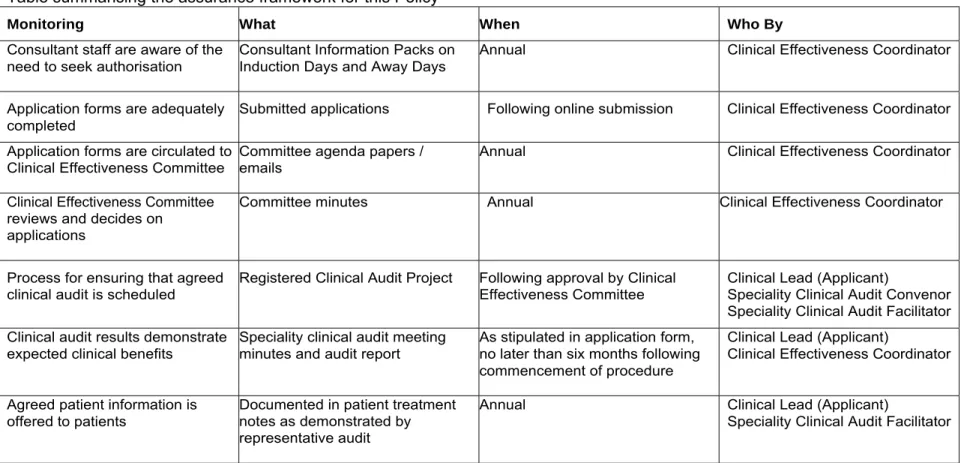
Monitoring compliance……… 7
Review of this policy……… 7
References………... 7
Equality Impact Assessment……….. 7
Appendices: ………. 9
Appendix 1: TAG Committee Terms of Reference……… 9
Appendix 2: Form describing variation to existing technology/procedure………. 12
Appendix 3: TAG application form……… 14