Genetic Analyses of HIV‑1 Strains Transmitted from Mother to Child in Northern Vietnam
著者 ファン チ トゥ チュン
著者別表示 Phan Thi Thu Chung journal or
publication title
博士論文本文Full 学位授与番号 13301甲第4294号
学位名 博士(医学)
学位授与年月日 2015‑09‑28
URL http://hdl.handle.net/2297/44649
doi: 10.1089/aid.2014.0335
Creative Commons : 表示 ‑ 非営利 ‑ 改変禁止 http://creativecommons.org/licenses/by‑nc‑nd/3.0/deed.ja
Genetic Analyses of HIV-1 Strains Transmitted from Mother to Child in Northern Vietnam
Chung Thi Thu Phan,1,2Hung Viet Pham,1,2Xiuqiong Bi,1Azumi Ishizaki,1Matilda Saina,1 Cam Dac Phung,3 Dung Thi Khanh Khu,2 and Hiroshi Ichimura1
Abstract
We previously reported mother-to-child transmission of HIV-1 in nine (6.7%) of 135 children on nevirapine prophylaxis in Vietnam. In the current study, we investigated the appearance and profile of antiretroviral drug (ARV) resistance mutations, the predicted coreceptor usage, and the genetic diversity of HIV-1 strains isolated from the eight pairs of HIV-1-infected mothers and their children, who were followed up to 12 months after birth. Portions of the pol and env C2V3 regions of the HIV-1 strains were analyzed genetically. HIV-1 CRF01_AE RNA was detected in four (50%) children at delivery. Y181C, a nevirapine resistance mutation, appeared in two (25%) children 1 and 3 months after birth, respectively. No ARV resistance mutation was detected in the mothers, though three mothers were on ARV prophylaxis. Five mothers and their children harbored CCR5-tropic (R5) viruses. Two mothers harbored both R5 and CXCR4-tropic (X4) viruses, but their children harbored only R5 viruses even though the X4 viruses were dominant in the mothers. In the remaining one mother, HIV-1 RNA was not amplified and her child harbored both R5 and X4 viruses at birth, but only X4 virus 12 months after delivery. The infants’ viruses were more homogeneous than their mothers’ viruses (mean distance: 0.5% vs. 1.1%, respectively). This is the first molecular epidemiological study of vertical HIV-1 infections in Vietnam. These findings may provide useful knowledge for the prevention of mother-to-child transmission of HIV-1 and the antiretroviral treatment of children in Vietnam.
Introduction
V
ertical transmission of human immunodeficiency virus type 1 (HIV-1) accounts for the majority of pedi- atric AIDS cases in the world. In 2012, more than 260,000 children less than 15 years of age were newly infected with HIV-1, more than 95% of these cases via mother-to-child transmission (MTCT).1,2MTCT of HIV-1 can occurin utero, intrapartum, and postpartum through breastfeeding. Perina- tally acquired infections account for the majority of all HIV-1 cases in children, with an estimated MTCT rate of 14–48%without prevention.3–6 However, the timing and actual mechanisms of perinatal transmission are not clear.
The chemokine receptors CCR5 and CXCR4 are the main coreceptors for HIV-1 entry into target cells.7Based on che- mokine coreceptor usage, HIV-1 can be classified as a CCR5- tropic (R5), CXCR4-tropic (X4), or dual tropic (R5X4) virus.8 A strong selection for viral variants using CCR5 as a coreceptor occurs during transmission, as most children are infected with R5 viruses.9–12
Prevention of mother-to-child transmission (PMTCT) of HIV-1 is one of the key components of the worldwide re- sponse to the pandemic and is based on the prophylactic use of antiretroviral drugs (ARVs). In developed countries, MTCT of HIV-1 has been reduced to less than 2% by combination an- tiretroviral therapy (ART), selective caesarian delivery, and avoidance of breastfeeding.13,14In developing countries, sin- gle-dose nevirapine given to mothers infected with HIV-1 and their children in the intrapartum and immediate postnatal pe- riod is the most common intervention to reduce the MTCT of HIV-1. Single-dose nevirapine can reduce the risk of MTCT of HIV-1,15but it may lead to the emergence of nevirapine-re- sistant HIV-1 variants in children who are infected with HIV-1 despite the prophylaxis.16 One study of HIV-1-infected Ugandan women and their children who received single-dose nevirapine to prevent MTCT showed nevirapine resistance mutations in 11 of 24 (46%) children by 6–8 weeks of age.16 In Vietnam, the first pregnant woman infected with HIV-1 was reported in 1993. The number of HIV-1-infected preg- nant women increased from 4,000 in 2007 to almost 5,000 in
1Department of Viral Infection and International Health, Kanazawa University, Graduate School of Medical Sciences, Kanazawa, Japan.
2National Hospital of Pediatrics, Hanoi, Vietnam.
3Department of Microbiology, National Institute of Hygiene and Epidemiology, Hanoi, Vietnam.
ªMary Ann Liebert, Inc.
DOI: 10.1089/aid.2014.0335
797
2012, and the number of children living with HIV-1 increased from 3,750 in 2007 to 5,700 in 2012.17–19PMTCT was of- ficially introduced in Vietnam in 2006. According to the guidelines of the Vietnamese government in 2005, all HIV-1- infected pregnant women and their children should receive single-dose nevirapine free of charge.20 However, of the HIV-1-infected pregnant women in Vietnam, only 9.2% in 2006, 32.3% in 2009, and 44.0% in 2011 had access to the PMTCT program, and 27.9% received single-dose nevir- apine in 2011.21Most of the women who had access to the PMTCT program resided in urban areas, such as Hanoi and Haiphong.18,21One study reported that 7.6% of the HIV-1- infected pregnant women were on combination ARVs, 51.9%
on single-dose nevirapine, and the remaining 40.4% without ARVs; only 46.2% of their children received single-dose nevirapine for PMTCT in 2008.18
MTCT of HIV-1 was observed in nine (6.7%) of the 135 children, who were all on single-dose nevirapine prophylaxis and were born to mothers with and without ARV prophylaxis be- tween 2004 and 2006 in Northern Vietnam.22However, limited data are available on the factors associated with vertical trans- mission of HIV-1, such as the transmission of drug-resistant HIV-1 and selection based on coreceptor usage in Vietnam.
In the present study, we investigated the appearance and profile of drug resistance-associated mutations in infants under nevirapine prophylaxis, the predicted coreceptor usage, and the genetic diversity of HIV-1 strains in mothers and their infants in Hanoi and Haiphong, Northern Vietnam.
Materials and Methods Study subjects
A total of 135 HIV-1-infected mothers and their children admitted to the Obstetrics and Gynecology hospitals in Hanoi and Haiphong, Northern Vietnam, were enrolled in our pre- vious study.22 Blood samples were collected from the mothers on the day of delivery and from their infants within 1–2 days after birth between 2004 and 2006. Blood samples were also collected from the infants 1, 3, 6, and/or 12 months after birth, although some mother-and-child pairs, especially those who lived far from the hospital, could not come to the hospital at all the sample collection times. Plasma was sep- arated from the blood samples within 8 h of collection and stored at -80C until analysis.
For the current study 38 mother-and-child pairs including one with a child vertically infected with HIV-1 were ex- cluded for the lack of their mothers’ plasma samples. Plasma samples from the remaining 97 pairs were still available and transferred to Kanazawa University for further analyses (Fig.
1). Of the 97 children samples eight were confirmed to be positive for HIV-1 RNA (Table 1). Of the eight HIV-1- infected children, one (HP25) was born to a mother given zidovudine/lamivudine/nelfinavir 1–3 weeks before delivery, two (HN51and HN88) were born to mothers given single- dose nevirapine at delivery, and five (HN23, HN46, HN47, HN60, and HP13) were born to mothers without any pro- phylaxis. After birth, all children were given single-dose nevirapine (2 mg of liquid nevirapine/kg body weight) within 48 h of delivery and fed formula, and one child (HP25) whose mother received combination ART before delivery was given liquid zidovudine for 7 days after birth according to the Vietnamese national guidelines.20All of the plasma samples
collected from the eight HIV-1-infected children within 1–2 days after birth were available, but only a part of the samples collected from these children 1, 3, 6, and/or 12 months after birth were available as shown in Table 1. None of the children visited any other institutes or started ARV during the follow-up.
This study was approved by the ethical committees of the Hanoi National Hospital of Pediatrics, the National Institute of Hygiene and Epidemiology, the Obstetrics and Gynecol- ogy hospitals in Vietnam, and Kanazawa University in Japan.
RNA extraction, RT-PCR, cloning, and sequencing
RNA was extracted from 100ll of plasma using the SMITEST EX-R&D nucleotide extraction kit (Genome Science Laboratories, Fukushima, Japan) according to the manufacturer’s instructions. One-step reverse transcriptase polymerase chain reaction (RT-PCR) (SuperScript III One- step RT-PCR system with Platinum Taq DNA polymerase, Invitrogen, Carlsbad, CA) and nested PCR with AmpliTaq Gold (Applied Biosystems, Japan) or KOD FX (Toyobo, Osaka, Japan) were used to amplify HIV-1polandenv.
The HIV-1pol-PR region (coding amino acids 1 to 99) was amplified by nested RT-PCR with the primers DRPRO5/
DRPRO2L in the first round and DRPRO1M/DRPRO6 in the second round. The HIV-1pol-RT region (coding amino acids 1 to 220) was amplified using the primers DRRT1L/RTout in the first round and DRRT7L/DRRT6L in the second round.
To amplify HIV-1pol-RT, the primer pairs RT18/K104 and K101/K102 were used in the first and second round, re- spectively, when the PCR reaction with the previous primer pairs failed.23–25RT-PCR was performed with one cycle at 55C for 30 min and one cycle at 94C for 2 min, then 40 cycles at 94C for 15 s, 55C (for DRPRO5/DRPRO2L and DRRT1L/RTout primer pairs) or 50C (for the other primer sets) for 30 s, and 68C for 1 min, with a final extension of 68C for 5 min.23–25Nested PCR forpol-PR was performed with one cycle at 95C for 10 min, followed by 40 cycles at 95C for 30 s, 55C for 30 s, and 72C for 1 min, with a final extension at 72C for 10 min using Ampli Taq Gold. Nested PCR forpol-RT was performed with one cycle at 94C for FIG. 1. Mother-to-child transmission in the study group.
AZT, zidovudine; 3TC, lamivudine; NFV, nelfinavir; NVP, nevirapine. #AZT liquid was administered for 7 days after birth. *All children were given single-dose liquid nevirapine within 48 h of birth and fed with formula.
798 PHAN ET AL.
1 min and 35 cycles at 98C for 10 s, 55C for 30 s (for DRRT7L/DRRT6L primer set) or 45C for 30 s (for KT101/
K102 primer set), and 68C for 5 min using KOD FX.23–25 The HIV-1 envC2V3 region (366 bases) was amplified using the primers JA167mod/JA170mod in the first round and JA168mod/JA169mod in the second round. Amplifica- tion was performed with one cycle of 95C for 2 min and 40 cycles of 95C for 30 s, 55C for 30 s, and 68C for 1 min, with a final extension of 72C for 10 min.26
The amplified products were detected by staining the gel with ethidium bromide after electrophoresis. The amplified products of the PR and RT regions were sequenced directly with BigDye Terminator v1.1 on an ABI PRISM 310 Genetic Analyzer (Applied Biosystems). The amplified products of theenvC2V3 region were cloned using the TOPO TA kit (Invitrogen) as described previously.27Eleven to 42 clones were sequenced for each sample using BigDye Terminator v1.1 on a 3500XL sequencer (Applied Biosystems).
Drug resistance
HIV-1polPR and RT sequences were analyzed for drug resistance mutations using the Stanford University HIVdb sequence analysis program (http://hivdb.stanford.edu/pages/
algs/HIVdb.html) and the International AIDS Society-USA March 2014 list.28,29Drug resistance variants were defined as
the presence of one or more major resistance-related muta- tions as specified by the consensus mutation figures of the International AIDS Society-USA.29
Coreceptor usage
HIV coreceptor usage was predicted based on the net charge of amino acids in theenvV3 region, which was calculated by subtracting the number of acidic amino acids [aspartate (D) and glutamate (E)] from the number of basic amino acids [lysine (K) and arginine (R)]. A net charge less than +5 in the V3 region has been shown to predict CCR5 usage (R5 virus), whereas a net charge of more than +5 has been shown to predict CXCR4 usage (X4 virus), and a net charge equal to +5 indicates R5 variants unless accompanied by an arginine or lysine residue at position 11 or 25 of the V3 amino acid sequences.30
Phylogenetic analysis
A phylogenetic tree was constructed based on the HIV-1env C2V3 region to elucidate the genetic variations between the mothers’ and their children’s viruses using Clustal W (version 1.83) with the neighbor-joining method, and its reliability was estimated by 1,000 bootstrap replications. The distance of the env C2V3 region at each time point in each subject and be- tween mother and infant pairs was analyzed by Mega5.31 Table1. Characteristics of HIV-1Strains Isolated from Mothers and Their Children
in Northern Vietnam
Drug resistance mutations Distance within each subject (SE)
Sample ID NRTI NNRTI PI
Coreceptor
usage Nucleotide Amino acid
HN23 M None None None R5 0.25 (0.14) 1.98 (0.46)
C-0 n/a n/a n/a n/a
C-1 n/a n/a n/a n/a
C-3 n/a n/a n/a n/a
C-6 n/a n/a Fail R5 0.11 (0.09) 0.00 (0.00)
HN46 M n/a n/a n/a n/a
C-0 None V106I None R5/X4 2.05 (0.52) 4.25 (1.24)
C-12 None None None X4 1.10 (0.39) 2.26 (0.91)
HN47 M None None None R5 1.37 (0.34) 2.57 (0.79)
C-0 n/a n/a n/a n/a
C-1 None None None R5 0.26 (0.11) 0.62 (0.29)
HN51 M n/a n/a None R5 0.07 (0.04) 0.00 (0.00)
C-0 None None None R5 0.17 (0.07) 0.42 (0.20)
C-1 None Y181C None R5 0.14 (0.06) 0.11 (0.09)
HN60 M None None None R5 0.00 (0.00) 0.00 (0.00)
C-0 n/a n/a n/a n/a
C-1 None None None n/a
C-3 None None None R5 0.52 (0.25) 1.35 (0.60)
HN88 M None None None R5 0.83 (0.28) 1.67 (0.74)
C-0 n/a n/a n/a n/a
C-3 None None None R5 0.07 (0.05) 0.21 (0.16)
HP13 M None None None R5/X4 2.29 (0.78) 6.78 (1.64)
C-0 None None None R5 0.11 (0.06) 0.21 (0.14)
HP25 M None None None R5/X4 2.82 (0.59) 4.86 (1.17)
C-0 None None None R5 0.06 (0.06) 0.00 (0.00)
C-3 None Y181C None R5 0.89 (0.34) 1.39 (0.80)
M, mother; C, children; C-0, at delivery; C-1, 1 month; C-3, 3 months; C-6, 6 months; C-12, 12 months after birth; NRTI, nucleoside reverse transcriptase inhibitors; NNRTI, nonnucleoside reverse transcriptase inhibitors; PI, protease inhibitor; None, no resistance mutation was detected.Italics, minor mutations;Bold, major mutation; R5, CCR5; X4, CXCR4; Fail, PCR (+) but population sequencing was not successful; n/a, no PCR amplification. Distance is expressed as the percent nucleotides or amino acid.
Results
HIV-1 vertical transmission and drug resistance mutations
Of the eight HIV-1-infected children, four were positive for HIV-1 RNA at birth and the remaining four were negative
at birth and became positive for HIV-1 RNA 1 (HN47 and HN60), 3 (HN88), or 6 (HN23) months after birth (Figs. 1 and 2 and Tables 1 and 2). All HIV-1 strains detected in the mothers and their infants were CRF01_AE (data not shown), although HIV-1 RNA was not amplified in the sample from one mother (HN46). In the HIV-1 strains detected in the
FIG. 2. Phylogenetic trees (A–H) of HIV-1 env C2V3 nucleotide sequences in children and/or their mothers. The bootstrap values of 1,000 replicates above 70% are indicated next to the node.
: mother’s virus, R5 variant; : mother’s virus, X4 variant;:: child’s virus at birth, R5 variant; : child’s virus at birth, X4 variant;-: child’s virus 1 month after birth, R5 variant;A: child’s virus 3 months after birth, R5 variant; : child’s virus 6 months after birth, R5 variant; : child’s virus 12 months after birth, X4 variant.(Continued/)
800 PHAN ET AL.
FIG. 2. (Continued)
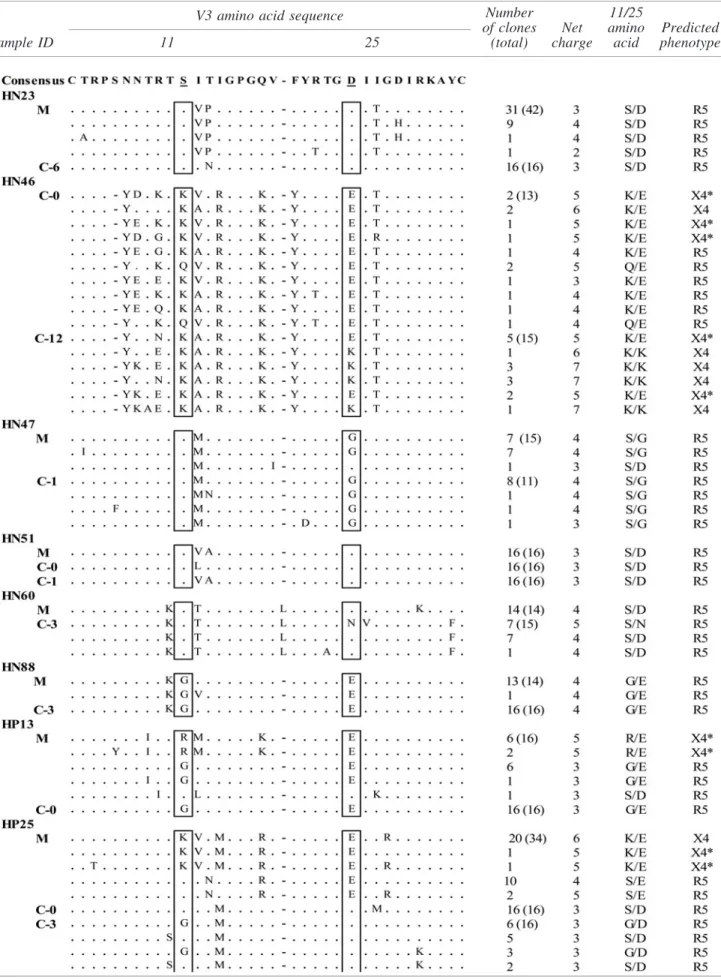
Table2. V3 Amino Acid Sequence Alignment and Predicted Coreceptor Usage ofHIV-1Strains Isolated from Mothers and Their Children in Northern Vietnam
V3 amino acid sequence
Sample ID 11 25
Number of clones
(total)
Net charge
11/25 amino acid
Predicted phenotype
A net charge of less than and more than+5 in the V3 region indicated CCR5-using (R5) and CXCR4-using (X4) variants, respectively, and a net charge of+5 indicated R5 variants * unless accompanied by an arginine (R) or lysine (K) residue at position 11 or 25 of the V3 amino acid sequence.
802
mothers, no reverse transcriptase inhibitor (RTI) or protease inhibitor (PI) resistance mutations were found. No ARV re- sistance mutations were detected in the children at birth, but Y181C, a nonnucleoside reverse transcriptase inhibitor (NNRTI) resistance mutation, appeared in two (25%) chil- dren 1 (HN51) and 3 (HP25) months after birth, respectively.
No NRTI or PI resistance mutations were found in these children during the follow-up period (Table 1).
Genetic diversity of HIV-1 in the mother–children pairs Clonal sequencing of the HIV-1 env C2V3 region was performed and the genetic distance of the clones within each subject was calculated (Table 1). The mean genetic distance of the nucleotide sequences in the mothers ranged from 0.00% to 2.82% (median value: 1.09%) and from 0.06% to 2.05% (median value: 0.50%) in the children. In five pairs, the children’s sequences had less diversity than their moth- er’s sequences. In two pairs, the children’s sequences had higher diversity than their mother’s sequences (0.17% at birth and 0.14% 1 month after birth vs. 0.07% in HN51 and 0.52%
vs. 0.00% in HN60). Thus, the children’s sequences were generally more homogeneous than their mothers’ sequences.
In the child HP25, the viral genetic diversity increased from 0.06% at birth to 0.89% 3 months after birth, whereas in the child HN51 it decreased slightly from 0.17% at birth to 0.14% 1 month after birth.
Predicted HIV-1 coreceptor usage
The multiple alignments of the amino acid sequences of the HIV-1envV3 region and the predicted coreceptor usage of HIV-1 strains isolated from the eight mother-and-child pairs are shown in Table 2. Five mothers and their children (HN23, HN47, HN51, HN60, and HN88) harbored R5 viru- ses. Two mothers (HP13 and HP25) harbored both R5 and X4 viruses, whereas their children harbored only R5 viruses. In the remaining one mother (HN46), HIV-1 RNA could not be amplified and her child harbored both R5 and X4 viruses at birth, but only X4 virus 12 months after delivery.
Phylogenetic analysis of HIV-1 env C2V3 regions
To examine the viral genetic relationship between each mother and her child, we performed phylogenetic analyses based on the HIV-1envC2V3 nucleotide sequences (Fig. 2).
In five mother–child pairs (HN23, HN47, HN88, HP13, and HP25), the HIV-1 strains of the children formed more homo- geneous clusters than the strains of the mothers (Fig. 2A, C, and F–H), whereas in the HN51 and HN60 pairs the mothers’ viruses formed more homogeneous clusters than the children’s viruses (Fig. 2D and E). In the HP25 child, the viral population was very homogeneous at birth, but its diversity spread significantly 3 months after birth (Fig. 2H). In the HN51 pair, the child’s viruses formed two independent clusters, at birth and 1 month after birth.
Interestingly, the child’s virus population 1 month after birth was much closer to the mother’s virus population than the child’s virus population at birth (Fig. 2D). In the HP13 and HP25 pairs, the mothers’ virus populations consisted of both R5 and X4 viruses, whereas their children’s consisted of only R5 viruses, even though X4 viruses were dominant in their mothers (Fig. 2G and H). In the remaining pair, HN46, in which maternal HIV-1 RNA was not amplified, the child’s viruses exhibited high di-
versity at birth as well as 12 months after birth, and the virus population at birth consisted of both R5 and X4 viruses (Fig. 2B).
Discussion
In the current study, we investigated the appearance and profile of ARV resistance mutations, the predicted coreceptor usage, and the genetic diversity of the HIV-1 strains isolated from eight pairs of HIV-1-infected mothers and their children in Northern Vietnam. All of the children were given single- dose nevirapine at birth and followed for up to 12 months.
This is the first molecular epidemiological study of vertical HIV-1 infection in Vietnam.
Of the eight HIV-1-infected children, four were positive for HIV-1 RNA at birth, suggestingin uterotransmission of HIV-1, and four children became positive 1, 3, and 6 months after birth, suggesting intrapartum transmission of HIV-1. All of the children were fed formula. Therefore, most of the children who failed PMTCT of HIV-1, even with single-dose nevirapine within 48 h after birth, might be infected with HIV-1in uteroand intrapartum.
The HIV-1 strains harboring a major nevirapine resistance mutation, Y181C, appeared in two (25%) of the eight children 1 and 3 months after birth. This finding is consistent with a previous study in Ethiopia that reported a prevalence of 26%
for the drug resistance mutation in children who received single-dose nevirapine from 2001 to 2007, and that Y181C was the most dominant mutation in the children.32 Other studies have reported nevirapine resistance mutations among 33–38% of HIV-infected children when both the children and their mothers were exposed to single-dose nevirapine.33–36
In the current study, the nevirapine resistance mutation was not detected in the children at birth, and no ARV resistance mutations were detected in their mothers, suggesting that the drug resistance mutation developed in the children indepen- dently after nevirapine administration. These findings com- pletely agree with previous reports that most resistance mutations to nevirapine in children are selectedde novowhen the virus is exposed to nevirapine rather than being transmitted from their mothers.16Our findings together with previous re- sults strongly suggest that longer treatment with ARV, such as 4–6 weeks of once-daily nevirapine or twice-daily zidovudine, which is recommended in the WHO ART guidelines 2013,37 should be considered as a PMTCT of HIV-1 in the children, instead of single-dose nevirapine. It is also suggested that ARV resistance testing is necessary for the children who failed PMTCT of HIV-1 before starting antiretroviral therapy. To the best of our knowledge, this is the first report of the appearance and profile of ARV-resistant HIV-1 in children given single- dose nevirapine at birth for PMTCT in Vietnam.
In the present study, two children (HP13 and HP25) born to mothers who had both R5 and X4 viruses harbored only R5 viruses at birth, despite the X4 viruses being dominant in the mothers, demonstrating selected transmission of R5 virus from mother to child. These findings are consistent with previous studies in which the R5 phenotype was predominantly trans- mitted from mother to child.38,39In contrast, one child (HN46) harbored both R5 and X4 viruses at birth with relatively high diversity, suggesting that multiple HIV-1 strain transmission occurred in utero and evolved to some extent by delivery.
However, whether HIV infection was initiated with both R5 and X4 viruses or only R5 virus(es) that evolvedin uteroto
produce X4 virus populations in this child cannot be deter- mined because no data were available on the mother’s virus and X4 and R5/X4 viruses can be transmitted from mother to child before, during, or shortly after delivery.40
In the current study, we found that the viral populations of the children were more homogeneous than those of their mothers at delivery, suggesting ‘‘bottleneck transmission’’ of HIV-1 variants from mother to child.31However, in the two mother–child pairs, the children’s viral populations at birth and 1 month (HN51) and 3 months (HN60) after birth ex- hibited higher genetic diversity than their mothers’ viral populations, suggesting recent infection of the mothers with HIV-1 and rapid viral replication and evolution in these children after birth. This is in agreement with a study from Sweden in which the children’s viral populations were more heterogeneous than the mothers’ viral populations.31
Phylogenetic analyses showed that single-strain infection occurred in five of the eight mother–child pairs, few-strain infection in two, and multiple-strain infection in one during vertical transmission. This finding is consistent with previous studies on MTCT of HIV-1 showing that either single or multiple variants can be transmitted vertically,42–44 but multiple-strain infection during vertical transmission seems to be less frequent than infection initiated by a single or a few closely related maternal variants.41–47Phylogenetic analyses also showed relatively longer genetic distances between the viral populations of mothers and their children in all pairs, except for HP13, which could be due to the transmission of a minor variant from the mother to her child.48
In the current study, evolution of HIV-1 strains (HP25), viral population shifts (HN46 and HN51), and switch of cor- eceptor usage from R5 to X4 (HN46) were also observed in the children. However, the small number of HIV-1-infected mother–child pairs and incomplete sample collection from the children during the follow-up are acknowledged limitations in this study. Multicentric cohort studies are necessary to confirm these findings and to investigate the mechanism and risk fac- tors associated with HIV-1 vertical transmission in Vietnam.
Sequence Data
The sequences obtained in this study were deposited in GenBank under accession numbers KP006809 to KP007125 forenvand KP007126 to KP007143 forpol.
Acknowledgments
This study was supported by the Ministry of Education in Vietnam (the 322 scholarship program). We are grateful to all participants enrolled in this study at Hanoi and Haiphong Hospitals. We thank our colleagues: Dr. Ha, Ms. Ngoc (Na- tional Institute of Hygiene and Epidemiology, Hanoi, Vietnam), Ms. Thuy (National Hospital of Pediatrics, Hanoi, Vietnam), and the members of the Viral Infection and International Health Department of the Graduate School of Medical Science, Ka- nazawa University, Kanazawa, Japan.
Author Disclosure Statement
No competing financial interests exist.
References
1. UNAIDS/WHO: Global report: UNAIDS report on the global AIDS epidemic 2012. UNAIDS 2012. www.unaidstoday.org.
2. The Working Group on Mother-To-Child Transmission of HIV: Rates of mother-to-child transmission of HIV-1 in Africa, America, and Europe: Results from 13 perinatal studies. J Ac- quir Immune Defic Syndr Hum Retrovirol 1995;8(5):506–510.
3. European Collaborative Study: Risk factors for mother-to- child transmission of HIV-1. Lancet 1992;339(8800):1007–
1012.
4. Coovadian HM, Rollins NC, Bland RM,et al.:Mother-to- child transmission of HIV-1 infection during exclusive breastfeeding in the first 6 months of life: An intervention cohort study. Lancet 2007;369(9567):1107–1116.
5. John GC and Kreiss J: Mother-to-child transmission of hu- man immunodeficiency virus type 1. Epidemiol Rev 1996;
18(2):149–157.
6. Kourtis AP, Lee FK, Abram EJ, et al.: Mother to child transmission of HIV-1: Timing and implications for pre- vention. Lancet Infect Dis 2006;6(11):726–732.
7. Deng H, Liu R, Ellmeier W,et al.:Identification of a major co-receptor for primary isolates of HIV-1. Nature 1996;
381(6584):661–666.
8. Berger EA, Doms RW, Fenyo EM,et al.:A new classifi- cation for HIV-1. Nature 1998;391(6664):240.
9. Casper CH, Clevestig P, Carlenor E,et al.:Link between the X4 phenotype in human immunodeficiency virus type 1-infected mothers and their children, despite the early presence of R5 in the child. J Infect Dis 2002;186(7):914–
921.
10. Nyamache AK, Muigai AW, Ng’ang’a Z, and Khamadi SA: Profile of HIV type 1 coreceptor tropism among Kenyan patients from 2009 to 2010. AIDS Res Hum Ret- roviruses 2013;29(8):1105–1109.
11. Salvatori F and Scarlatti G: HIV type 1 chemokine receptor usage in mother-to-child transmission. AIDS Res Hum Retroviruses 2001;17(10):925–935.
12. Scarlatti G, Hodara V, Rossi P, et al.: Transmission of human immunodeficiency virus type 1 (HIV-1) from mo- ther to child correlates with viral phenotype. Virology 1993;197(2):624–629.
13. Mofenson LM and Munderi P: Safety of antiretroviral prophylaxis of perinatal transmission for HIV-infected pregnant women and their infants. J Acquir Immune Defic Syndr 2002;30(2):200–215.
14. Newell ML and Thorne C: Antiretroviral therapy and mother-to-child transmission of HIV-1. Expert Rev Anti Infect Ther 2004;2(5):717–732.
15. Jackson JB, Musoke P, Fleming T,et al.:Intrapartum and neonatal single-dose nevirapine compared with zidovudine for prevention of mother-to-child transmission of HIV-1 in Kampala, Uganda: 18-month follow-up of the HIVNET 012 randomised trial. Lancet 2003;362(9387):859–868.
16. Eshleman SH, Mracna M, Guay LA,et al.:Selection and fading of resistance mutations in women and infants re- ceiving nevirapine to prevent HIV-1 vertical transmission (HIVNET 012). AIDS 2001;15(15):1951–1957.
17. UNAIDS/WHO: AIDS epidemic update. UNAIDS 2007.
http://data.unaids.org/pub/EPISlides/2007/2007_epiupdate_
en.pdf.2007.
18. Nguyen TA, Oosterhoff P, Ngoc YP, et al.: Barriers to access prevention of mother-to-child transmission for HIV positive women in a well-resourced setting in Vietnam.
AIDS Res Ther 2008;5(7):1–12.
19. Ministry of Health, Viet Nam administration of HIV/AIDS control: Viet Nam HIV/AIDS estimates and projections 2007–2012. Ha Noi 2009.
804 PHAN ET AL.
20. Ministry of Health, Socialist Republic of Viet Nam:
Guidelines for Diagnosis and Treatment of HIV/AIDS.
2005 (No. 06/2005/QD-BYT).
21. Viet Nam National Committee for AIDS, Drugs and Pros- titution Prevention and Control: Viet Nam AIDS Response Progress Report 2012. Following Up the 2011 Political De- claration on HIV/AIDS. Ha Noi 2012. www.unaids.org/en/
dataanalysis/knowyourresponse/countryprogressreports/
2012countries/ce_VN_Narrative_Report.pdf.
22. Ha TT, Anh NM, Bao NH,et al.: HIV-1 mother-to-child transmission, post-test counselling, and antiretroviral pro- phylaxis in Northern Viet Nam: A prospective observa- tional study. Scand J Infect Dis 2012;44(11):866–873.
23. Lihana RW, Lwembe RM, Bi X,et al.:Efficient monitoring of HIV-1 vertically-infected children in Kenya on first-line antiretroviral therapy. J Clin Virol 2011;52(2):123–128.
24. Ishizaki A, Cuong NH, Thuc PV,et al.:Profile of HIV type 1 infection and genotypic resistance mutations anti- retroviral drugs in treatment-naive HIV type 1-infected individuals in Hai Phong, Viet Nam. AIDS Res Hum Ret- roviruses 2009;25(2):175–182.
25. Phan TTC, Ishizaki A, Phung DC,et al.:Characterization of HIV type 1 genotypes and drug resistance mutations among drug-naive HIV type 1-infected patients in Northern Viet- nam. AIDS Res Hum Retroviruses 2010;26(2):233–235.
26. Mild M, Bjo¨rndal A, Medstrand P, and Fenyo¨ EM: Isola- tion of human immunodeficiency virus-type 1 (HIV-1) clones with biological and molecular properties of the primary isolate. Virology 2006;350(1):58–66.
27. Ndembi N, Yumo H, Takehisa J, et al.: HIV type 1 in- fection in Pygmy hunter gatherers is from contact with Bantu rather than from nonhuman primates. AIDS Res Hum Retroviruses 2003;19(5):435–439.
28. HIV Drug Resistance Database, Stanford University. Febru- ary 2014. http://hivdb.stanford.edu/pages/algs/HIVdb.html.
29. Wensing AM, Calvez V, Gunthard HF,et al.:2014 Update of the drug resistance mutations in HIV-1. Top Antivir Med 2014;22(3):642–650.
30. Lwembe R, Lihana RW, Ochieng W,et al.:Changes in the HIV type 1 envelope gene from non-subtype B HIV type 1- infected children in Kenya. AIDS Res Hum Retroviruses 2009;25(2):141–147.
31. Nowak P, Karlsson AC, Naver L,et al.:The selection and evolution of viral quasispecies in HIV-1 infected children.
HIV Med 2002;3(1):1–11.
32. Persaud D, Bedri A, Ziemniak C,et al.:Slower clearance of nevirapine resistant virus in infants failing extended nevirapine prophylaxis for prevention of mother-to-child HIV transmis- sion. AIDS Res Hum Retroviruses 2011;27(8):823–829.
33. Arrive´ E, Newell ML, Ekouevi DK,et al.:Prevalence of resistance to nevirapine in mothers and children after sin- gle-dose exposure to prevent vertical transmission of HIV- 1: A meta-analysis. Int J Epidemiol 2007;36(5):1009–1012.
34. Stringer JS, McConnell MS, Kiarie J,et al.:Effectiveness of non-nucleoside reverse-transcriptase inhibitor-based an- tiretroviral therapy in women previously exposed to a sin- gle intrapartum dose of nevirapine: A multi-country, prospective cohort study. PLoS Med 2010;7(2):1–13.
35. Moorthy A, Gupta A, Bhosala R,et al.:Nevirapine resis- tance and breast-milk HIV transmission: Effects of single and extended-dose nevirapine prophylaxis in subtype C HIV-infected infants. PLoS One 2009;4(1):1–8.
36. Wind-Rotolo M, Durand C, Cranmer L,et al.:Identification of nevirapine-resistance HIV-1 in the latent reservoir after single-dose nevirapine to prevent mother-to-child transmis- sion of HIV-1. J Infect Dis 2009;199(9):1301–1309.
37. Consolidated guidelines on the use of antiretroviral drugs for treating and preventing HIV infection. June 2013. http://
apps.who.int/iris/bitstream/10665/85321/1/9789241505727_
eng.pdf.
38. Cavarelli M, Karisson I, Zanchetta M, et al.:HIV-1 with multiple CCR5/CXCR4 chimeric receptor use is predictive of immunological failure in infected children. PLoS One 2008;3(9):e3292.
39. Salvatori F and Scarlatti G: HIV type 1 chemokine receptor usage in mother-to-child transmission. AIDS Res Hum Retroviruses 2001;17(10):925–935.
40. Huang W, Eshleman SH, Toma J, et al.: Vertical trans- mission of X4 tropic and dual tropic HIV-1 in five Ugandan mother-infant pairs. AIDS 2009;23(14):1903–1908.
41. Wade CM, Lobidel D, and Brown AJ: Analysis of human immunodeficiency virus type 1 env and gag sequence variants derived from a mother and two vertically infected children provides evidence for the transmission of multiple sequence variants. J Gen Virol 1998;79(5):1055–1068.
42. Wolinsky SM, Wike CM, Korber BT, et al.: Selective transmission of human immunodeficiency virus type-1 variants from mothers to infants. Science 1992;255(5048):
1134–1137.
43. Dickover RE, Garratty EM, Plaeger S, and Bryson YJ:
Perinatal transmission of major, minor, and multiple ma- ternal human immunodeficiency virus type 1 variants in utero and intrapartum. J Virol 2001;75(5):2194–2203.
44. Scarlatti G, Leitner T, Halapi E, et al.: Comparison of variable region 3 sequences of human immunodeficiency virus type 1 from infected children with the RNA and DNA sequences of the virus populations of their mothers. Proc Natl Acad Sci USA 1993;90(5):1721–1725.
45. Verhofstede C, Demecheleer E, De Cabooter N,et al.:Di- versity of the human immunodeficiency virus type 1 (HIV-1) env sequence after vertical transmission in mother-child pairs infected with HIV-1 subtype A. J Virol 2003;77(5):3050–3057.
46. Ahmad N, Baroudy BM, Baker RC, and Chappey C: Ge- netic analysis of human immunodeficiency virus type 1 envelope V3 region isolates from mother and infants after perinatal transmission. J Virol 1995;69(2):1001–1012.
47. Persaud D, Pierson T, Ruff C,et al.: A stable latent res- ervoir for HIV-1 in resting CD4 (+) T lymphocytes in infected children. J Clin Invest 2000;105(7):955–1003.
48. Ceballos A, Andreani G, Ripamonti C, et al.:Lack of viral selection in human immunodeficiency virus type 1 mother-to- child transmission with primary infection during late pregnancy and/or breastfeeding. J Gen Virol 2008;89(11):2773–2782.
Address correspondence to:
Hiroshi Ichimura Department of Viral Infection and International Health Graduate School of Medical Sciences Kanazawa University 13-1 Takaramachi Kanazawa 920-8640 Japan E-mail:[email protected]