Abbreviations: CT, computerized tomography; GOS, Glasgow Outcome Scale; GSH, glutathione; SAH, subarachnoid hemorrahge; WFNS, World Federation of Neurological Surgeons
Ameliorated Outcome of Subarachnoid Hemorrhage Patients Treated
with Reduced Form Glutathione
Hisayo Okamoto, Hirochika Takeuchi, Michiharu Tanabe, Keiichi Akatsuka, Makoto Nishiyama, Takashi Watanabe and Tomokatsu Hori
Division of Neurosurgery, Institute of Neurological Sciences, Faculty of Medicine, Tottori University, Yonago 683-0826, Japan
This study was designed to investigate the effects of glutathione (GSH) on delayed vasospasm and the outcome of subarachnoid hemorrhage (SAH) patients. Seventy-seven SAH patients who were admitted to 4 hospitals and operated on within 72 h after SAH, were injected intravenously with GSH (2.4 g/day) every 6 h for 14 days. Seventy SAH patients who were not treated with GSH in the same period were selected as the control group. Patient background, the outcome at 3 months after SAH according to the Glasgow Outcome Scale and the occurrence of symptomatic vasospasm were in-vestigated. There were no statistically significant differences in patient backgrounds between the 2 groups. Regarding patient outcome, 57 patients (74%) showed good recovery, 8 (10%) were moderately disabled, 9 (12%) were severely disabled, 2 (3%) were in vegetative survival and 1 (1%) died in the GSH group, versus 39 (56%), 9 (13%), 15 (21%), 3 (4%) and 4 (6%) in the control group, respectively. These overall outcomes in the GSH group were significantly better than those in the control group (P < 0.05). In the GSH group, 31 patients (40%) showed symptomatic vasospasm, signif-icantly lower than 46 (66%) in the control group (P < 0.01). Administration of GSH could be a good treatment for SAH patients.
Key words: glutathione; lipid peroxide; patient outcome; subarachnoid hemorrhage; vasospasm
Although outcomes of patients who suffer from subarachnoid hemorrhage (SAH) have been im-proving over the last decade because of upgrad-ing in microsurgical techniques and patient man-agement, along with the development of vari-ous anti-spasmogenic drugs, these outcomes are not yet satisfactory to most neurosurgeons espe-cially in elderly patients and patients graded into the worse group according to their condi-tions on admission. Disney and colleagues (1988) reported that 6 of 79 SAH patients (7.6%) aged more than 60 years and 30 of 184 patients (16.3%) classified as Grade III, IV or V on the Hunt and Hess scale showed good recovery on the Glasgow Outcome Scale at 3 months after the onset. Lipid peroxidations based on free radical reactions were reported to increase in the cerebrospinal fluid, vascular vessels and
serum after SAH and were thought to play a pertinent role in the pathogenesis of delayed cerebral vasospasm (Asano et al.,1981; Sasaki et al.,1981a, 1981b; Romero et al.,1984; Shimizu et al.,1988; Watanabe et al.,1988a, 1988b, 1992). Recently in Japan, anti-lipid peroxidative drugs or radical scavengers such as nizofenone fuma-rate (Ohta et al., 1986), ozagrel natrium (Suzuki et al., 1989), AVS [1,2-bis(nicotinamide)-propane, (Asano et al., 1984, 1996)], ebselen (Watanabe et al., 1990, 1997; Saito et al., 1998) and MCI-186 [3-methyl-1-phenyl-pyrazolin-5-one (Nakagome et al., 1990; Watanabe et al., 1994)] have been applied to SAH patients to prevent the occurrence of vasospasm and have had some considerable effects on patient out-comes. These agents are however all artificial and foreign to the human body. Activation of
natural anti-lipid peroxidative systems such as the glutathione (GSH) cycle which are inherent in living organisms was considered to lower the lipid peroxide content and to have beneficial effects on delayed vasospasm (Watanabe et al., 1988b). Reduced form GSH is converted to its oxidized form by GSH peroxidase, reducing lipid peroxides in the process and the oxidized form GSH is converted back to GSH by GSH reductase. Administration of GSH was expect-ed to rexpect-educe lipid peroxide levels, since it was very difficult to increase these 2 enzyme activ-ities. We observed that GSH injected intra-venously decreased lipid peroxide contents in the serum and 5-lipoxygenase activity in the basilar artery compared with the untreated group and simultaneously ameliorated angio-graphical delayed vasospasm of the basilar artery in a canine two-hemorrhage model (un-published data). The present study was design-ed to investigate the effects of GSH on delaydesign-ed cerebral vasospasm and the outcome of SAH patients. We administered GSH to SAH pa-tients randomly and compared the findings with data from patients who were not treated with GSH.
Subjects and Methods Patient Group
The SAH patients admitted to Tottori University Hospital, Nojima Hospital, Tokyo Police Hospital and National Yokohama Hospital between January 1986 and January 1993 and underwent clipping surgery within 72 h after SAH were nominated for this study. No patients were ruled out in terms of sex, age, site of ruptured aneurysm or clinical state before operation, the only exception being a patient under 20 years old. The number of total SAH patients in the 4 hospitals in the above period was 478, of whom 291 were operated on within 72 h after SAH, 75 were operated on after 72 h, and 112 received no operation.
Of the 291 candidates, 77 patients were se-lected at random before surgery and treated with 2.4 g/day of GSH after informed consent
was obtained. Every 6 h, 0.6 g of GSH which was dissolved with 100 mL of saline, was admini-stered to the patient intravenously for 1 h. This treatment was started just after operation and was continued for 14 days. In this GSH group, no other drugs which were generally accepted as therapeutic against delayed vasospasm were administered. Temporary administration of cal-cium antagonists and steroids for the purpose of decreasing arterial blood pressure and reducing brain swelling after the surgery were permitted. As a control group, 70 patients were select-ed randomly from the remaining 214 candi-dates, retrospectively. These patients were treated with at least one of several therapeutics such as nizofenone fumarate, ozagrel natrium, AVS, Ebselen and MCI-186.
In both groups, no other aggressive treat-ments such as cisternal perfusion therapy or hypervolemic hypertensive therapy were per-formed.
Clinical Assessment
After admission, each patient’s neurological condition was assessed using the Japan Coma Scale and/or the Glasgow Coma Scale, and the presence or absence of paresis was assessed every day and at any time when required. The patient’s state before the operation was graded from I to V according to the World Federation of Neurological Surgeons (WFNS) SAH scale (Drake, 1988).
A computerized tomography (CT) scan was taken on admission and classified according to Fisher’s grouping (Fisher et al.,1980). When the patient’s state deteriorated due to rerupture of the aneurysm before surgery, a further CT scan was performed and was employed as a pre-operative test. Serial CT scans were done to diagnose cerebral infarctions due to the vaso-spasm. The CT scan taken immediately after the operation could reveal brain damage due to surgery.
The site of the ruptured aneurysm was de-termined from the results of the first cerebral angiography, the CT scan and the operation. In most cases, the second angiography was per-formed between Day 21 and Day 60, not to
veri-fy the angiographical vasospasm but to confirm the proper clipping of the aneurysmal neck.
Deterioration in the neurological conditions of patients which occurred between Day 4 and Day 16 was judged to be due to symptomatic vasospasm when other possible causes such as brain damage due to surgery, hydrocephalus, serum electrolytes disorder, meningitis and epi-lepsy were excluded.
Patient outcome was assessed 3 months after SAH and was graded as good recovery, moderately disabled, severely disabled, vegeta-tive survival and dead by the Glasgow Outcome Scale (GOS).
Statistical Analysis
The data based on the clinical variables from the 2 groups were examined by Student’s t-test, or the chi-squared test, or the Mann-Whitney U test with the level of significance set at 0.05.
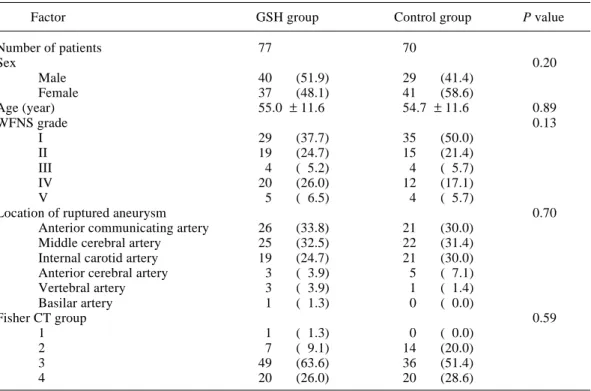
Table 1. Characteristics of patients in the 2 treatment groups
Factor GSH group Control group P value
Number of patients 77 70 Sex 0.20 Male 40 (51.9) 29 (41.4) Female 37 (48.1) 41 (58.6) Age (year) 55.0 ± 11.6 54.7 ± 11.6 0.89 WFNS grade 0.13 I 29 (37.7) 35 (50.0) II 19 (24.7) 15 (21.4) III 4 ( 5.2) 4 ( 5.7) IV 20 (26.0) 12 (17.1) V 5 ( 6.5) 4 ( 5.7)
Location of ruptured aneurysm 0.70
Anterior communicating artery 26 (33.8) 21 (30.0)
Middle cerebral artery 25 (32.5) 22 (31.4)
Internal carotid artery 19 (24.7) 21 (30.0)
Anterior cerebral artery 3 ( 3.9) 5 ( 7.1)
Vertebral artery 3 ( 3.9) 1 ( 1.4) Basilar artery 1 ( 1.3) 0 ( 0.0) Fisher CT group 0.59 1 1 ( 1.3) 0 ( 0.0) 2 7 ( 9.1) 14 (20.0) 3 49 (63.6) 36 (51.4) 4 20 (26.0) 20 (28.6)
Shown are number and (%), except age expressed as mean ± SD.
There were no statistically significant differences in patients’ backgrounds between the 2 groups. CT, computerized tomography; GSH, glutathione; WFNS, World Federation of Neurological Surgeons.
Comparability of treatment groups Distribution of sex, age in years, site of ruptured aneurysm, preoperative WFNS grade and Fisher’s preoperative grouping by CT scan in both the GSH and the control groups are indi-cated in Table 1. As far as these factors were concerned, there were no statistically signif-icant differences between the 2 groups (P > 0.1). P values were obtained by the use of the chi-squared test for sex and site of ruptured aneurysm, Student’s t-test for age, and the Mann-Whitney U test for the WFNS grade and Fisher grouping by CT, respectively (Table 1). Symptomatic vasospasm and infarction due to vasospasm
Table 2 shows the incidence of symptomatic vasospasm and infarction due to vasospasm in
both groups. The incidence of symptomatic vasospasm in the GSH group was 31/77 (40%), which was significantly lower than the value of 46/70 (66%) in the control group (P < 0.01, chi-squared test). Infarction due to vasospasm was revealed on the CT scan in 22 cases (29%) in the GSH group and 25 cases (36%) in the con-trol group. The difference between these fig-ures was not statistically significant, although the incidence of infarction due to vasospasm in the GSH group was lower than that in the con-trol group.
Patient outcome
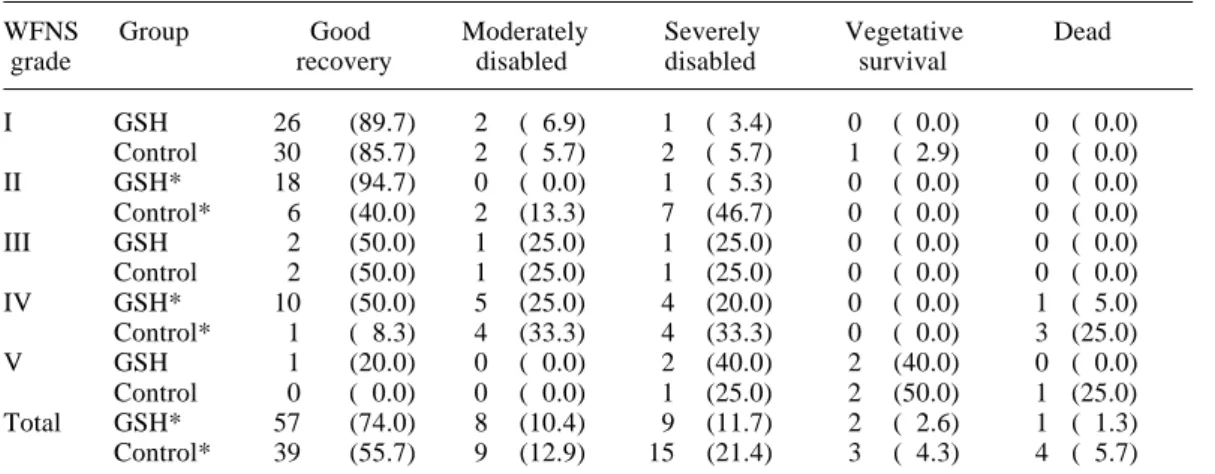
Table 3 shows the patient outcome of both groups in each preoperative WFNS grade. In all grades, 57 of the 77 patients (74%) in the GSH group demonstrated good recovery at 3
Table 3. Outcome of all patients in the 2 treatment groups by WFNS grade
WFNS Group Good Moderately Severely Vegetative Dead
grade recovery disabled disabled survival
I GSH 26 (89.7) 2 ( 6.9) 1 ( 3.4) 0 ( 0.0) 0 ( 0.0) Control 30 (85.7) 2 ( 5.7) 2 ( 5.7) 1 ( 2.9) 0 ( 0.0) II GSH* 18 (94.7) 0 ( 0.0) 1 ( 5.3) 0 ( 0.0) 0 ( 0.0) Control* 6 (40.0) 2 (13.3) 7 (46.7) 0 ( 0.0) 0 ( 0.0) III GSH 2 (50.0) 1 (25.0) 1 (25.0) 0 ( 0.0) 0 ( 0.0) Control 2 (50.0) 1 (25.0) 1 (25.0) 0 ( 0.0) 0 ( 0.0) IV GSH* 10 (50.0) 5 (25.0) 4 (20.0) 0 ( 0.0) 1 ( 5.0) Control* 1 ( 8.3) 4 (33.3) 4 (33.3) 0 ( 0.0) 3 (25.0) V GSH 1 (20.0) 0 ( 0.0) 2 (40.0) 2 (40.0) 0 ( 0.0) Control 0 ( 0.0) 0 ( 0.0) 1 (25.0) 2 (50.0) 1 (25.0) Total GSH* 57 (74.0) 8 (10.4) 9 (11.7) 2 ( 2.6) 1 ( 1.3) Control* 39 (55.7) 9 (12.9) 15 (21.4) 3 ( 4.3) 4 ( 5.7) Shown are number and (%).
GSH, glutathione; WFNS, World Federation of Neurological Surgeons. Outcome was evaluated according to the Glasgow Outcome Scale. * P < 0.05 by Mann-Whitney U test.
months in the GOS versus 39 of 70 patients (56%) in the control group. Regarding the other outcomes, moderately disabled, se-verely disabled, vegetative survival and dead in the GSH group consisted of 8 pa-tients (10%), 9 (12%), 2 (3%) and 1 (1%), respectively, while these outcomes were observed in 9 patients (13%), 15 (21%), 3 (4%) and 4 (6%) in the control group. The outcomes in WFNS grades II and IV and also in all patients of the GSH group, were significantly better than those of the control group as shown in Table 3 (P < 0.05, Mann-Whitney U test). Figure 1 which shows patient outcomes according to the GOS at 3 months is divided into 2 classes, namely good recovery and others (moderately disabled, severely dis-abled, vegetative survival and dead) in each preoperative WFNS grade. The number of pa-tients whose preoperative WFNS grade was I and represented a good recovery outcome was 26 of 29 (90%) in the GSH group and 30 of 35 (86%) in the control group; and in the cases of WFNS grades II, III, IV and V, 18 of 19 (95%), 2 of 4 (50%), 10 of 20 (50%) and 1 of 5 (20%) showed good recovery at 3 months in the GSH group versus 6 of 15 (40%), 2 of 4 (50%), 1 of 12 (8%) and 0 of 4 (0%) in the control group, respectively.
Table 2. Incidence of symptomatic vasospasm and infarction due to vasospasm in the 2 treat-ment groups
Factor Group
GSH Control
Symptomatic vasospasm 31* (40.3) 46* (65.7) Infarction due to vasospasm 22 (28.6) 25 (35.7)
Shown are number and (%). *P < 0.01 by chi-squared test.
Total 0 50 100 Incidence (%) GR Others Grade I II III IV V GSH Control GSH Control GSH Control GSH Control GSH Control GSH Control [29] [35] [19] [15] [ 4] [ 4] [20] [12] [ 5] [ 4] [77] [70] Good recovery
Fig. 1. Bar graph showing outcomes of all patients in the reduced form glutathione (GSH) and the control groups in each preoperative World Federation of Neurological Surg-eons (WFNS) grade. Dark bars and light bars indicate good recovery and the other outcomes based on the Glasgow Out-come Scale, respectively. The number of patients is indicated in brackets.
Table 4. Outcome of elderly patients in the 2 treatment groups by WFNS grade
WFNS Group Good Moderately Severely Vegetative Dead
grade recovery disabled disabled survival
I GSH 8 (80.0) 1 (10.0) 1 (10.0) 0 ( 0.0) 0 ( 0.0) Control 4 (50.0) 1 (12.5) 2 (25.0) 1 (12.5) 0 ( 0.0) II GSH 5 (83.3) 0 ( 0.0) 1 (16.7) 0 ( 0.0) 0 ( 0.0) Control 3 (30.0) 2 (20.0) 5 (50.0) 0 ( 0.0) 0 ( 0.0) III GSH 1 (50.0) 1 (50.0) 0 ( 0.0) 0 ( 0.0) 0 ( 0.0) Control 0 ( 0.0) 1 (50.0) 1 (50.0) 0 ( 0.0) 0 ( 0.0) IV GSH 2 (33.3) 1 (16.7) 2 (33.3) 0 ( 0.0) 1 (16.7) Control 0 ( 0.0) 0 ( 0.0) 3 (60.0) 0 ( 0.0) 2 (40.0) V GSH 1 (20.0) 0 ( 0.0) 2 (40.0) 2 (40.0) 0 ( 0.0) Control 0 ( 0.0) 0 ( 0.0) 0 ( 0.0) 2 (100.0) 0 ( 0.0) Total GSH* 17 (58.6) 3 (10.3) 6 (20.7) 2 ( 6.9) 1 ( 3.4) Control* 7 (25.9) 4 (14.8) 11 (40.7) 3 (11.1) 2 ( 7.4)
Shown are number and (%).
GSH, glutathione; WFNS, World Federation of Neurological Surgeons.
Outcome was evaluated according to the Glasgow Outcome Scale. “ Elderly patients “ is defined as patients aged 60 years or older.
* P < 0.05 by Mann-Whitney U test.
Vasospasm and outcome in elderly patients
In elderly patients 60 years or older, the incidence of symptomatic vasospasm in the GSH group was 12/29 (41%) which was significantly lower than 25/27 (93%) in the control group (P < 0.001, chi-squared test). Infarctions due to delayed vasospasms as shown on the CT scan occurred in 9 cases (31%) in the GSH group and 14 cases (52%) in the control group. This difference was not statistically significant. Table 4 shows the outcome of elderly patients in each preoperative WFNS grade. Concerning all patients, 17 of 29 cases (59%) in the GSH group and 7 of 27 cases (26%) in the control group demonstrated good re-covery at 3 months. Regarding the other classes of outcomes, moderately dis-abled, severely disdis-abled, vegetative sur-vival and dead in the GSH group were observed in 3 (10%), 6 (21%), 2 (7%) and 1 case(s) (3%), respectively, while these were observed in 4 (15%), 11 (41%), 3 (11%) and 2 cases (7%) in the control group. These outcomes in the GSH group were
significantly better than those in the control group (P < 0.05, Mann-Whitney U test). In
each preoperative WFNS grade, the outcome in the GSH group showed a tendency to be better than that in the control group, although the differences were not statistically significant. As shown in Fig. 2, the ratio of the patients whose outcomes were good recovery to the pa-tients of the GSH group in each preoperative WFNS grade seemed to be higher than that in the control group.
Discussion
Although this was a retrospective study, the as-sumption was that it was worthwhile to com-pare the clinical outcomes of these 2 groups, since there were no statistically significant differences in the backgrounds among patients, such as sex, age, preoperative WFNS grade, site of ruptured aneurysm or Fisher’s grouping by CT scan. Of these factors, the patient’s pre-Fig. 2. Bar graph showing outcomes of elderly patients aged over 60 in the reduced form glutathione (GSH) and the control groups in each preoperative World Federation of Neurological Surgeons (WFNS) grade. Dark bars and light bars indicate good recovery and the other outcomes based on the Glasgow Outcome Scale, respectively. The number of patients is indicated in brackets.
Total 0 50 100 Incidence (%) GR Others Grade GSH Control GSH Control GSH Control GSH Control GSH Control GSH Control [10] [ 8] [ 6] [10] [ 2] [ 2] [ 6] [ 5] [ 5] [ 2] [29] [27] I II III IV V Good recovery
operative condition, amount and loca-tion of subarachnoid clot, and patient’s age were suggested to be crucial for eventual outcome (Fisher et al., 1980; Disney et al., 1988). The mean age in both groups was about 55 and almost equal to each other. The ratio of the number of patients classified into WFNS grades IV and V to all patients in the GSH group was 33%, which was higher than the 23% value in the control group, although the P value in compar-ing the 2 groups by the Mann-Whitney
U test was 0.13, which was rather low.
The incidence of Fisher’s groups 3 and 4 in the GSH group was 90% which was higher than the 80% value in the control group. Thus, if the patient outcomes in the GSH group would be better than those in the control group, as indeed they were, these results would be reli-able, since the GSH group was at a dis-advantage compared to the control group in terms of the latter 2 factors. Moreover, only GSH was administered as an agent against delayed vasospasm in the GSH group, while one or more kinds of drugs were used in the control group as mentioned above.
GSH has been applied to other kinds of diseases such as hepatitis, toxicosis, toxemia of pregnancy, exanthema, dermatitis, cataracts, etc., but the cost for the administration of GSH to SAH patients is not covered by health insur-ance in Japan. Therefore, it was impossible for us to use GSH for all SAH patients. This fortu-nately enabled us to compare the outcome of the GSH group with that of the control group. GSH is a drug which we can safely use for patients, because it shows almost no side-effects such as allergy, hypotension of arterial blood pressure or platelet dysfunction. Administration of GSH for 14 days also costs far less than any other treatment against vasospasm currently in use in Japan. This is and will be a very important mat-ter regardless of whether the health insurance system covers its use or not.
As shown in Tables 2 and 3, the administra-tion of GSH for 2 weeks not only reduced the
incidence of symptomatic vasospasm but also ameliorated the outcome in SAH patients, al-though it did not significantly reduce the inci-dence of infarction caused by delayed vasospasm. Regarding each preoperative WFNS grade, pa-tient outcomes in the GSH group in grades II and IV were significantly better than those in the control group as clearly shown in Fig. 1, while there were no statistically significant dif-ferences between the outcomes of the 2 groups in grades I, III and V. The numbers of patients of both groups in grades III and V were 8 and 9, respectively, which were too small to compare statistically. In grade I, 90% of patients in the GSH group and 86% in the control group recov-ered to the level of good recovery according to the GOS at 3 months. This suggests that patients who suffered from mild SAH would recover well irrespective of which drug is administered. Also, in the elderly patients 60 years or older, the administration of GSH significantly reduced the incidence of symptomatic vaso-spasm and ameliorated the clinical outcome, but did not significantly reduce the incidence of infarction due to vasospasm. As shown in Fig. 2, GSH treatment tended to improve patient outcome in each preoperative WFNS grade, although there were no statistically significant differences probably because of the small number of cases.
In the younger patients under 60 and clas-sified into preoperative WFNS grades I to III, 32 of 34 patients (94%) in the GSH group and 31 of 34 patients (91%) in the control group showed an outcome at 3 months of good recov-ery. In the case of younger patients who were in good condition after SAH, clinical outcomes were already too good to be improved. It may be almost impossible for an agent against delay-ed vasospasm to significantly ameliorate an outcome of just 9% of patients, since these pa-tients would suffer from surgical brain damage and various kinds of complications at a certain rate. In WFNS grade IV, 8 of 14 younger tients (57%) in the GSH group and 1 of 7 pa-tients (14%) in the control group showed good recovery in the GOS. In the younger and severe SAH patients, GSH treatment tended to show beneficial effects in patient outcome.
Good effects from GSH in outcomes were observed in patients who were older than 60 or suffered from severe SAH. This has to be stressed when we investigate effects of anti-spasmogenic drugs on SAH patient outcomes. Actually, Petruk and colleagues (1988) reported that nimodipine treatment increased the rate of good outcomes in poor-grade SAH patients in a double-blind study, although Öhman and col-leagues (1991) and Mercier and colcol-leagues (1994) reported that nimodipine treatment had no effect on overall outcome in either good-grade patients or all patients. The mean ages in years of SAH patients in recent studies were from 44 to 55 (Öhman et al., 1991; Haley et al., 1992, 1993, 1994; Shibuya et al., 1992), which were equal to or lower than those in our study. If the mean age in our study would have been 45, there might have been no statistically signifi-cant difference in overall outcomes between the GSH group and the control group. The age of SAH patients is becoming higher with the in-creasing span of life; actually, the mean age of SAH patients in Tottori University Hospital was 64 in the past year. We should thus make a great effort to treat these elderly SAH patients and should learn how to manage them effec-tively.
Above all, the administration of GSH had beneficial effects on not only the occurrence of symptomatic vasospasm but also on the out-come of the SAH patient, although the inci-dence of infarction due to delayed vasospasm was not significantly reduced by GSH treat-ment. In recent reports dealing with anti-spasmogenic agents, nimodipine (Petruk et al., 1988; Öhman et al., 1991; Mercier et al., 1994), nicardipine (Haley et al., 1993), AT877 (Shibuya et al., 1992), AVS (Asano et al., 1996) and ebselen (Saito et al., 1998) could not alter the overall outcome of SAH patients, although these drugs had beneficial effects on some para-meters such as symptomatic vasospasm, infarc-tion shown on CT scan, etc. These findings revealed that these drugs could not only have beneficial effects on delayed vasospasm but also detrimental effects on patients, even if the occurrence of delayed vasospasm could affect only a small part of the outcome of SAH
pa-tients. Öhman and colleagues (1991) reported results contrary to ours, namely that the admin-istration of nimodipine reduced the incidence of infarction due to delayed vasospasm but did not ameliorate patient outcome. These conflicting results suggest that the occurrence of infarction shown on CT scan could have a rather less ef-fect on patient outcome according to the GOS.
Regarding the amount of GSH for SAH pa-tients, we began with 2.4 g/patient/day, that is 1/5 of the dose (per body weight) with which the experimental SAH dogs were treated, and continued to use this dose for all patients. Therefore we have no information concerning the effects of other doses. Lesser doses of GSH may exert the same effects on vasospasm as ob-served in this study, or higher doses may have more effects than that in the case of 2.4 g/day.
In conclusion, intravenous administration of 2.4 g/day of GSH for 14 days ameliorated the overall outcome of SAH patients, concomitant-ly decreasing the incidence of symptomatic vasospasm. GSH can be used rather easily be-cause of its rare detrimental effects and its low cost, and GSH administration does not inhibit any other treatments for SAH patients. There-fore, GSH treatment should be a good choice for management of SAH patients, or at least this should be added to treatments which have been already available for such patients.
Acknowledgments: We greatly appreciate that Drs. Hisashi Shishido and Takeo Nojima in Nojima Hospital (Kurayoshi, Japan), Drs. Eiju Watanabe and Yoshiaki Mayanagi in Tokyo Police Hospital (Tokyo, Japan) and Dr. Masaharu Oda in National Yokohama Hospital (Yokohama, Japan) gave us valuable data.
References
1 Asano T, Sasaki T, Koide T, Takakura K, Sano K. Experimental evaluation of the beneficial effect of an antioxidant on cerebral vasospasm. Neurol Res 1984;6:49–53.
2 Asano T, Takakura K, Sano K, Kikuchi H, Nagai H, Saito I, et al. Effects of a hydroxyl radical scavenger on delayed ischemic neurological deficits following aneurysmal subarachnoid hem-orrhage: results of a multicenter, placebo-controlled double-blind trial. J Neurosurg 1996;
84:792–803.
3 Asano T, Tanishima T, Sasaki T, Sano K. Pos-sible participation of free radical reactions initi-ated by clotlysis in the pathogenesis of vasospasm after subarachnoid hemorrhage. In: Wilkins RH, ed. Cerebral arterial spasm. Baltimore: Williams and Wilkins; 1981. p.190–201.
4 Disney L, Weir B, Grace M. Factors influencing the outcome of aneurysm rupture in poor grade patients: a prospective series. Neurosurgery 1988;23:1–9.
5 Drake CG. Report of World Federation of Neu-rological Surgeons Committee on a universal subarachnoid hemorrhage grading scale. J Neurosurg 1988;68:985–986.
6 Fisher CM, Kistler JP, Davis JM. Relation of cerebral vasospasm to subarachnoid hemorrhage visualized by computerized tomographic scan-ning. Neurosurgery 1980;6:1–9.
7 Haley EC Jr, Kassell NF, Torner JC. The Inter-national Cooperative Study on the timing of aneurysm surgery: the North American experi-ence. Stroke 1992;23:205–214.
8 Haley EC Jr, Kassell NF, Torner JC. A ran-domized controlled trial of high-dose intravenous nicardipine in aneurysmal subarachnoid hemor-rhage: a report of the Cooperative Aneurysm Study. J Neurosurg 1993;78:537–547.
9 Haley EC Jr, Kassell NF, Torner JC, Truskowski LL, Germanson TP. A randomized trial of two doses of nicardipine in aneurysmal subarachnoid hemorrhage: a report of the Cooperative Aneu-rysm Study. J Neurosurg 1994;80:788–796. 10 Mercier P, Alhayek G, Rizk T, Fournier D, Menei
P, Guy G. Are the calcium antagonists really useful in cerebral aneurysmal surgery? A retro-spective study. Neurosurgery 1994;34:30–37. 11 Nakagome T, Yamakawa K, Tsubaki S, Sasaki T,
Saito I, Takakura K. Effect of a new free radical scavenger, MCI-186, on experimental cerebral vasospasm. In: Sano K, Takakura K, Kassell NF, Sasaki T, eds. Cerebral vasospasm. Tokyo: University of Tokyo Press; 1990. p. 141–142. 12 Ohta T, Kikuchi H, Hashi K, Kudo Y.
Nizofe-none administration in the acute stage following subarachnoid hemorrhage. J Neurosurg 1986; 64:420–426.
13 Öhman J, Servo A, Heiskanen O. Risks factors for cerebral infarction in good-grade patients after aneurysmal subarachnoid hemorrhage and surgery: a prospective study. J Neurosurg 1991; 74:14–20.
14 Petruk KC, West M, Mohr G, Weir BKA, Benoit BG, Gentili F, et al. Nimodipine treatment in poor-grade aneurysm patients, results of a multi-center double-blind placebo-controlled trial. J Neurosurg 1988;68:505–517.
15 Romero SD, Chyatte D, Byer DE, Romero JC, Yaksh TL. Measurement of prostaglandins in the
cerebrospinal fluid in cat, dog, and man. J Neuro-chem 1984;43:1642–1649.
16 Saito I, Asano T, Sano K, Takakura K, Abe H, Yoshimoto T, et al. Neuroprotective effect of an antioxidant, ebselen, in patients with delayed neurological deficits after aneurysmal subarach-noid hemorrhage. Neurosurgery 1998;42:269– 278.
17 Sasaki T, Murota S, Wakai S, Asano T, Sano K. Evaluation of prostaglandin biosynthetic activity in canine basilar artery following subarachnoid injection of blood. J Neurosurg 1981a;55:771– 778.
18 Sasaki T, Wakai S, Asano T, Watanabe T, Kirino T, Sano K. The effect of a lipid hydroperoxide of arachidonic acid on the canine basilar artery: an experimental study on cerebral vasospasm. J Neurosurg 1981b;54:357–365.
19 Shibuya M, Suzuki Y, Sugita K, Saito I, Sasaki T, Takakura K, et al. Effect of AT877 on cerebral vasospasm after aneurysmal subarachnoid hemorrhage: results of a prospective placebo-controlled double-blind trial. J Neurosurg 1992; 76:571–577.
20 Shimizu T, Watanabe T, Asano T, Takakura K, Seyama Y. Activation of the arachidonate 5-lipoxygenase pathway in the canine basilar artery after experimental subarachnoid hemorrhage. J Neurochem 1988;51:1126–1131.
21 Suzuki S, Sano K, Handa H, Asano T, Tamura A, Yonekawa Y, et al. Clinical study of OKY-046, a thromboxane synthetase inhibitor, in prevention of cerebral vasospasms and delayed cerebral ischemic symptoms after subarachnoid
hemor-rhage due to aneurysmal rupture: a randomized double-blind study. Neurol Res 1989;11:79–88. 22 Watanabe T, Asano T, Shimizu T. Arachidonic
acid lipoxygenase products participate in the pathogenesis of delayed cerebral ischemia. In: Bazan NG, Braquet P, Ginsberg MD, eds. Neurochemical correlates of cerebral ischemia. New York: Plenum Press; 1992. p.139–159. 23 Watanabe T, Asano T, Shimizu T, Seyama Y,
Takakura K. Participation of lipoxygenase products from arachidonic acid in the pathogene-sis of cerebral vasospasm. J Neurochem 1988a; 50:1145–1150.
24 Watanabe T, Egawa M. Effects of an antistroke agent MCl-186 on cerebral arachidonate cascade. J Pharmacol Exp Ther 1994;271:1624–1629. 25 Watanabe T, Hori T, Asano T, Saito I, Takakura
K, Sano K. Effects of Ebselen (PZ-51) on experi-mental and clinical cerebral vasospasm. In: Sano K, Takakura K, Kassell NF, Sasaki T, eds. Cere-bral vasospasm. Tokyo: University of Tokyo Press; 1990. p.139–140.
26 Watanabe T, Nishiyama M, Hori T, Asano T, Shimizu T, Masayasu H. Ebselen (DR3305) ameliorates delayed cerebral basospasm in a canine two-hemorrhage model. Neurol Res 1997;19:563–565.
27 Watanabe T, Sasaki T, Asano T, Takakura K, Sano K, Fuchinoue T, et al. Changes in gluta-thione peroxidase and lipid peroxides in cerebro-spinal fluid and serum after subarachnoid hemor-rhage: with special reference to the occurrence of cerebral vasospasm. Neurol Med Chir 1988b; 28:645–649.