“Eradicate Extreme Poverty:
The Need for a Legally Binding Commitment for Aid Delivery” (July 2013)
Lau Sim Yee
*Abstract
The paper argues that abject poverty in the developing world is a negative factor in the international economy, and thus it exerts an enormous cost to the global community. From the threat of crisis of existence facing the masses of poorest of the poor and also from the perspective of global public goods, this paper suggests a new framework of international aid.
The proposed new aid framework comprises two stages.
The first stage is a legally binding aid assured by an international treaty framework for the purpose of alleviating absolute poverty in the developing world. The contributors to this legally binding aid system are advanced countries, emerging economies and developing countries. The second stage is for the purpose of enhancing productivity and thus income in less developed countries̶where absolute poverty has been eliminated̶by conventional ODA with modifications. The focus of this second stage is capacity building and the enhancement of economic institutions for promoting industrial development, technology transfer, financial deepening, trade and investment, higher education, enhancement of social economic infrastructures and institutions. (JEL: F35, F53)
Introduction
The world economy has grown quite impressively in the last few decades. World gross domestic product (GDP) was about US$12 trillion (constant 2000 US$) in 1970, and it has grown to about US$40 trillion in 2009, an annual growth rate of 3 percent. In terms of GDP per capita, it has lifted from US$3,303 (constant 2000 US$) in 1970 to US$5,868 in 2009, an annual growth rate
*
Professor, Faculty of Economics and Business Administration, Reitaku University, Email: [email protected] The author benefitted from the discussions and comments in two research meetings organized by the SPF in Kyoto and Tokyo on 26-27 May 2011, 17-18 February 2012. I am grateful to Chano Junko, Hanyu Jiro, Patrick Heneghan, Ito Motoshige, Itoh Yukiko, Kawai Masaharu, Amir Ullah Khan, Rajiv Kumar, Graham Leicester, Wolfgang Michalski, Takagi Yuji, Sonobe Tetsushi, Yamano Takashi, Eshref Trushin.
Journal of Economic Studies
Vol.21, No.2, September 2013
of 1.5 percent. Notwithstanding such impressive growth performance, there are still millions of people who live below the World Bankʼs international absolute poverty line̶US$1.25 a day in 2005 PPP. Chen and Ravallion (2012) estimate that, as of 2008, there are about 1.3 billion people in the world who live below US$1.25 a day. The mean consumption of this group of extremely poor people in 2005 is US$0.87 a day.
While income growth has reduced poverty incidence especially in China between 1990 and 2005, However, the number of people who live below international absolute poverty line in South Asia and Sub-Saharan Africa is still large, 570.9 millions and 386.0 millions, respectively.
Chinaʼs experience shows that long-term economic growth is the best approach for reducing poverty. But, 1. 3 billion people who presently live in poverty-ridden lands with an unimaginable perverse daily life of hunger, sickness and cold do not have the luxury of time to wait for economic takeoff. The United Nations (UN) Millennium Development Goals (MDGs) call for worldwide collective actions in reducing global poverty. Those targets include halving the proportion of absolute poverty and hunger by 2015. These goals are ambitious but most of them are not likely to be achieved, particularly in regions where prevailing trends persist or get worse 1) .
The collective income of people who live below international absolute poverty line is less than 1.0 percent of world GDP 2) . Therefore, it is not difficult to imagine that these people are marginalized by the growth process. Equally critical, most of these extremely poor people are vulnerable to even a slight fall in their income or a small rise in prices of their basic necessities.
Unfortunately, such economic fluctuations indeed have been repeated in recent years because of greater volatility caused by globalization. As a consequence, particularly in light of the relentless globalization process, a larger concern for the international community is how to intervene effectively to end global poverty.
Many scholars of development economics, researchers and practitioners in aid agencies point out that a great deal of development assistance to poor countries̶especially the least developed countries (LLDCs) where most of the poorest people live̶does not necessarily have a correct policy and governance context to make it effective. Moreover, the aid is blamed for causing decline in export, an increase in aid “ addiction ” and the deepening of structural corruption. In fact, aid has not contributed enough either to the relief of poverty or the stimulation of economic growth. According to circumstances, some kinds of assistance even have a negative influence on the economic growth of the least developed countries (LLDCs).
No one would wish to argue that the abject poverty of masses of the people, in especially the LLDCs, is acceptable on moral judgment. And the most needed aid is to assist those individuals, families and communities whose basic necessities for food and nourishment, health and hygiene and elementary education are not met at present due to absolute and severe poverty. From this view point, the human race has not done enough to eliminate masses of
1) United Nations, 2010, “Millennium Development Goals: 2010 Progress Chart.” MDGs define absolute poverty as $1.
00 at 1993 PPP (more precisely $1.08), there were 1,247.5 millions in 1990, and the numbers of poor were 931.3 millions in 2005. New estimates by Chen and Ravallion (2012) show that at $1.00 at 2005 PPP, there were 1,303.2 millions and 805.9 millions in 1990 and 2008, respectively.
2) In 2005 PPP.
extremely poor people in the developing world. This is partly because the privation of the poverty is not evident to those people who have better amenities in higher income countries.
As a consequence, the urgency of putting priority to give adequate resources for alleviating absolute poverty is not as high as it should be.
Increasing the volume of Official Development Assistance (ODA) and the effectiveness of that aid has become the main issues for debate in the international community. However, beyond the absolute volume of ODA, a big problem of the present aid system is the conviction that no consensus exists in terms of setting aidʼs priorities. If safeguarding the foundations for the continued existence of humanity and pursuing an inclusive prosperity on a global scale are seen as international public good, then it can be argued that poverty puts such goals in danger.
Poverty is an unacceptable negative factor at present, a consequence of how we run the international system. As such it is akin to another notable negative externality affecting us all̶climate change. From such a position, there are a lot of motives and reasons for providing aid to alleviate global poverty for the benefit of the health of the entire global system.
Against this background, this paper intends to propose a new aid framework in which the obligation of international aid delivery is legally binding. The rest of this paper is organized as follows. Section 1 examines current aid situations and their relationship with abject poverty.
Section 2 looks at the gains and losses of globalization. Section 3 provides an argument why a legally binding commitment for mitigating poverty and inequality is needed. Section 4 explains the scope of our proposed new international aid framework. Section 5 examines how to support our proposed new international aid system. The last section concludes this paper.
1. International Aid and Abject Poverty
ODA has played a vital role in promoting economic development in a part of the developing world since 1961. ODA is the flow of official financial resources, which consist of a grant element of 25 percent, from the developed countries̶made up of member countries in Development Assistance Committee (DAC) within the Organization for Economic Cooperation and Development (OECD)̶to the developing countries for the purpose of promoting their economic development and welfare. ODA flows comprise financial contribution directly from donor agencies to developing countries ( i. e., bilateral ODA ) and to inter-governmental institutions (i.e., multilateral ODA).
In the last five decades, there were many attempts by the international community to
specify a numeric target for ODA by each developed country. For example, in 1964 United
Nations Conference for Trade and Development (UNCTAD) suggested 1 percent of gross
national income (GNI) of a developed country as ODA to developing countries. In 1969 the
Pearson Commission in its report on Partners in Development called for each developed
country to set two specific targets̶total aid should amount to 1 percent of GNP, and official aid
should amount to 0.7 percent of GNP̶in order to support the developing world to achieve
self-sustaining growth by the end of the 20
thCentury 3) . Furthermore, this report insisted that
these targets were to be achieved “ by 1975 and in no case later than 1980. ” Pearson
Commissionʼs recommendation was taken up in a UN resolution in October 1970, and thus to date UN continues to solicit each developed country to fulfill its ODA contribution by the 0.7 percent of gross national income (GNI) 4) . Similarly, DAC has also adopted 0.7 percent in terms of ODA-GNI ratio as its target for each of its members 5) . However, 0.7 percent of GNI adopted by UN and DAC has no legal obligation, and thus most of the developed countries do not have to fulfill their commitments to achieve the target. For example, the U.S. declared that “it did not subscribe to specific targets or time tables, although it supported the more general aim of the [ UN] resolution.” Recently, there were renewed efforts to endorse the 0.7 percent target at the highest level. In 2005, 15 members of the European Union ( EU ) have agreed to reach a minimum 0. 56% of GNI by 2010, and then achieve targets of 0. 7% of GNI by 2015 6) . Furthermore, at the Gleneagles Summit in 2005, the 0.7 percent target pledged by the EU was also used as a reference for appealing to commitments from advanced countries to increase ODA 7) .
The flow of ODA has risen from slightly below US$40 billion (in constant 2008 USD billion) in 1960 to slightly above US$120 billion (in constant 2008 USD billion) in 2009, a growth rate of 2.2 percent every year 8) but in terms of ODA-GNI ratio, it has dropped from about 0.5 percent to 0.31 percent. By and large, ODA rose in real terms in the past decades but as a percentage of GNI, it has dropped to below 50 percent line of the 0.7 percent target requested by the UN and DAC. One of the main reasons alluded to with regards to the drop of ODA-GNI ratio is the low economic growth rate and economic difficulty in each donor country. While admittedly, such explanation has merit but it should be emphasized that ODA contribution should not be regarded as a zero-sum game. On the contrary, it should be contended that during adverse economic environment, ODA could play an even more important role in maintaining economic development in developing countries particularly in the LLDCs, where extremely poor people are more vulnerable to economic recession. It is obvious that because the obligation of ODA delivery by the donors is non-legal binding, the gap between commitment and delivery fluctuates in tandem with the economic situation of a donor country.
As a consequence, the shortfall from the 0.7 percent target has been significant for most of the donors. In fact, there were only 5 (Sweden, Norway, Luxembourg, Denmark and Netherland) out of 23 countries that delivered above 0.7 percent in 2009. As a result, the total amount of ODA delivered by 23 countries was US$119.6 billion̶an equivalent of 0.31 percent of their total GNI, a deficit of US$152.7 billion from the 0.7 percent target.
It is not clear if the aid delivery gap has influenced the persistence of under development in the LLDCs 9) but it is certainly obvious that there are 1.3 billion of poorest
3) Lester B. Pearson, 1969, Partners in Development: Report of the Commission for International Development, p. 18, Pall Mall Press (London).
4) GNI is quite similar to GNP except it excludes the indirect taxes.
5) “History of the 0.7% ODA Target,” DAC Journal 2002 Vol. 3, No. 4, pp. III-9-III-11.
6) Europe End Poverty 2015 Millennium Campaign, 2005, “ Aid Quantity, ” URL: www. objectivo2015.
org/europe/documents/AQglossary.pdf (May 20, 2011)
7) “The Commission for Africa Report vs. the Gleneagles Communiqué on Africa,” Official Documents, Gleneagles Summit 2005, URL: http://www.g8.utoronto.ca/summit/2005gleneagles/index.html (May 20, 2011).
8) United Nations (2010), pp. 9-11.
people who do require substantial assistance to escape from poverty. Furthermore, it is certain that the poor masses of people who live below international absolute poverty line have become more vulnerable because of the intensive competition induced by globalization. The present progress of globalization has promoted rapid growth in a small group of developing countries known as the emerging economies 10) It might also has created a disparity gap not only between the advanced countries and developing countries but also between developing countries themselves. In fact, the poorest people̶about one in every five persons̶who live in destitution could not have received any benefits whatsoever from globalization. Instead, they might become even more vulnerable and they are also likely to be marginalized by the repeated economic volatility caused by globalization which is a process that demand economic openness.
If abject poverty in the developing world is defined as a negative externality to the international economy, then it imposes a massive cost to the global community 11) . In this context, the global community needs to intervene collectively for the purpose of eliminating that negative component, by concentrating their aid in order to alleviate abject poverty in the developing world as its utmost priority in international development cooperation. Otherwise, achieving a more inclusive, equitable and sustainable growth of the world economy is simply a wish that might not be realized. In these contexts, alleviation of abject poverty is positioned as a global public good, whereby the poverty reduction relies on the provision of basic needs such as food, health and sanitation, clean water and education. Otherwise, achieving a more equitable and sustainable growth of the world economy is simply a wish that might not be realized.
2. Globalization: Gains and Losses
The gains from globalization increase net income of developed and developing world. The net income is raised through the improvement of efficiency of resource allocation and productivity driven by globalization which is basically appreciated positively or appreciated as the inevitable outcome. Thus, from this perspective, it is thought neither preferable to hold down the progress of globalization, nor to move backward to protectionism. Rather, it is considered that tendencies such as rapid cross border movements of people, goods, capital, information, and market liberalization are likely to intensify along with the deepening and widening of globalization process.
9) Stephen Browne (2007), pp.25-26.
10) An emerging economy or country is usually known as a country who is in transition phase from a developing country stage to an advanced country stage. According to the Economist, presently there are 27 emerging economies.
See URL: http://www.economist.com/blogs/dailychart/2011/06/overheating-emerging-markets-0.
11) The private cost of producing a good that gives negative externality (e.g., pollution) is lower than the cost to
society of producing that good. Put differently, for each unit of cost for producing a good that emits pollution, the social
cost includes the private cost of the goodʼs producers and the costs of those people who are affected by the pollution. If
the concept of negative externality is applied to abject poverty, then the cost of international community of advancing
globalization but neglecting abject poverty includes the cost of driving income growth in a group of countries and the
costs of those people who are marginalized by the growth.
However, at the same time, it is possible that there are negative effects that could be created by the progress of globalization 12) . One of the most serious negative consequences could be the widening of disparity and the existence of a large population of extreme poverty.
Such negative effects of globalization are thought to be brought by variation in the initial conditions. The assessment of globalization effects is divided in terms of whether globalization has expanded or has reduced disparity. It is quite easily to observe the effect of income rise in the emerging countries, but Kumar and Dickerson (2010 ) show that disparity has widened between the developing countries and advanced countries. On the other hand, with regard to poverty reduction, there is little or no significant improvement if it is to be judged from the situation whereby the progress of MDGs is insufficient to reach the targets. Prevailing trends persist, particularly in Sub-Saharan Africa, Southern and Western Asia, Commonwealth Independent States Asia, and Latin America and the Caribbean regions 13) . In this connection, it is uncertain whether globalization has any influence on the prevailing trend.
As the effect of the impact of globalization, the worldʼs trade volume has increased at an average of 6.1 percent per year from 1991 to 2010. It is believed that the impressive growth of world trade in the last two decades is the result of liberalization and the trade integration. The expansion of the world trade has an effect of substantially increase the income of the world including developing countries. While globalization clarifies winners and losers through enhanced competitiveness, extremely poor people cannot take part in the international market place because they are living in subsistence. Therefore, their critical path to becoming involved in international market place is the eradication of abject poverty. From this standpoint, the idea of an appropriate management of the international economy that does not basically harm the progress of globalization seems to have validity.
However, the progress of globalization does not produce equal outcomes in terms of the rise of income between the advanced countries, emerging countries, and developing countries.
Moreover, it is thought that the safety net alone is not sufficient for the LLDCs. Globalization process demands the market in each country to compete in same conditions, and consequently, globalization causes the elimination of “special and differentiate treatment (SDT)” for less developed countries in the field of trade. Furthermore, in the case of no appropriate domestic income redistribution policy and others in the developing world̶particularly in the LLDCs, the progress of globalization does not automatically narrow the disparity gap and the reduction of poverty incidence. From hindsight, such a tendency is indeed notably significant in the LLDCs.
The merit of the LLDCs derives from the progress of globalization which is smaller than the advanced countries and the emerging countries. Depending on circumstances, it is thought unconditional progress of globalization is to be opposed because disparity might even be expanded. It is paradoxical if it is so. In order to draw out the maximum advantage of globalization on a world scale, it might be necessary to tolerate the inclusion of preferential treatments to the LLDCs in certain part of the progress of globalization. More specifically,
12) See Jospeh Stiglitz (2006).
13) See UN (2000a).
handicaps are possessed by the LLDCsʼ individuality. For instance, if foreign reserves have been depleted, a protection policy for trade that induces the buildup of foreign reserves has to be permitted until it reaches a certain level.
This protective policy existed in GATT in the 1950s because it formed part of the protection measures to promote specific agriculture and industry. It is succeeded by WTO in the form of SDT for developing countries and the LLDCs. Therefore, protection policies in trade areas in the form of SDT provisions exist in WTO. The problem is, along with the progress of globalization, whether it is necessary to expand the present scope of SDT being extended to developing countries and the LLDCs, such as in the field of agriculture for the food insecurity, in the trade related aspects of intellectual property rights ( TRIPS ) for pharmaceutical vulnerable, or in the services for culturally important. If it is to be expanded, then the question is what are the necessary contents and others that have to be examined.
The progress of globalization surely has brought about positive effect of economic welfare for the overall international community. Therefore, it is thought that the effect will rise with the deepening and the expansion of globalization in the future. However, the observed reality also shows that most low income countries, especially the LLDCs, are not able to benefit from globalization. As a result, these countries are expected to widen the gap with the middle income countries (particularly, emerging economies) and upper income countries (particularly, advanced countries) 14) . This reality is fueling the anti-globalization tendency, and in fact, it has brought social unrest in a part of low income countries. Many people in low income countries who cannot enjoy the fruits of economic growth by competing in globalization, consequently, oppose the advancement of globalization because it exerts a harmful influence on their labor rights and the state sovereignty. However, globalization also brings an increase in the gap between population and results in further widening of discrepancy.
A possible backlash and the negative effects of globalization in a part of the developing world on the one hand, link with the fact that the net effect of globalization could be mutually beneficial to all countries across the developed and the developing world if the progress of globalization is appropriately managed. On the other hand, it is necessary to examine how the international community can contribute to minimize the negative effects or maximize the net effect of globalization in a equitable way. For this reason, we argue that there is a two stages approach in reducing the negative effects created by the progress of globalization. The first stage is to bring up the bottom layer of extreme poverty in the low income countries ( especially, LLDCs ). The second stage is aimed to strengthen the capacity and market institutions that are key drivers for long-term economic growth in a developing country.
14) In 2010, the World Bank classifies a country with less than US$1,005 per capita as low income, between US$1.
006-US$3,975 as lower middle income, between US$3,976-US$12,275 as upper middle income, more than US$12,276 as
high income.
3. Why a Legally Binding Commitment for Mitigating Poverty and Disparity in Globalization is Needed
Chen and Ravallion (2012 ) estimate that 1.9 billion people lived below the new international absolute poverty line of US$1.25 a day (in 2005 PPP) in 1990 15) . On that basis, then MDGsʼ target for halving the absolute poor is to be about 950 millions by 2015. These destitute people exist without any sort of connection to globalization. They are in the situation in which they are not able to secure the minimum income for sufficient accessibility to food, hygiene and health, safe drinking water, elementary educations which are their basic requisites. Equally critical, this group of extremely poor people is not able to respond to economic crises, disasters and the pandemic. Moreover, if poverty stricken people are left by the international community, the number will not reduce, and they will even be more isolated from the progress of globalization in the future. In such circumstances, imposing a free market democracy on these extremely poor people in the developing world for the sake of promoting globalization is likely to initiate social unrest that might threaten international stability 16) . For these reasons, therefore, it is necessary firstly to lift poverty ridden people out of the bottom to a sustainable level. After achieving that, it is essential to assist them to attain certain level sof basic capabilities, and also to support them to build institutional capacity and favorable economic environment conducive to connecting them to the process of globalization.
It is thought that assistance provides these poorest people who are faced with serious economic hardships is a commonly shared humanitarian obligation of the human race. We believe that aid should not be regarded as an expression of benevolent concedes from the rich to the poor. Instead, we insist that there are at least three reasons for a richer country or for the international community to deliver aid: first, the situation where the common obligation for man to assist people, family, and community who are facing the crisis of existence; second, when the peace of the international society and stability might be ruined if the abject poverty, the disparity, and discrimination persists for a certain region or countries; third, because of inadequate social economic infrastructure in low income and in a spectrum of low-middle income countries, it is necessary to provide assistance that promotes a sustained economic growth (this is the conventional ODA). Among them, obviously, the first one is of the highest priority.
In September 2000, the UN set the MDGs (8 goals and 21 targets) under such recognition and the UN intends to achieve those 21 quantifiable targets by 2015. However, it is entrusted to this commitment without legal obligation for the contribution of resources needed to achieve the MDGs. It is for this reason, in which the prevailing trends of financial contribution is to persist that those 21 targets could not be met within the time limit. According to MDG Task
15) The old international absolute poverty line was US$1.08 a day (in 1993 PPP), and there were 1.3 billion people.
Using the new international absolute poverty line of US$1.25, then the estimate of numbers of absolute poverty added about 500 millions people.
16) Amy Chua (2004) argues in great length regarding how exporting free market democracy to under developed
countries̶especially ethnic divided countries̶generates negative impacts and political consequences of
globalization.
Force Report, in order for MDGs to achieve the 2015 targets, an annual increment of approximately US$35 billion would be needed from 2010 to 2015. In 2009, while the UN target for ODA was set at US$272.2 billion, the actual amount disbursed was US$119.6 billion, and thus there was a delivery gap US$152.7 billion. If such a level of delivery gap persists, it is obvious that MDGs will not be met by 2015.
As such, the promise of aid from the advanced countries to support the development process in the developing world has not been fulfilled, and the gap between commitment and actual delivery has in fact widened because of economic difficulties in many advanced countries in the last few years. However, economic hardship should not be an excuse for widening delivery gap, but rather, in our opinion, the non-legal nature of binding aid commitment is considered as the major reason, if not the sole reason, for the unfulfilled promises by the advanced countries. In order to correct this inadequacy, we must put the lifting of extremely poor people from the bottom as the commonly shared humanitarian obligation of the human race. Moreover, because abject poverty is the negative effect of the way international community manages global economy, it is reasonable to intervene collectively for the purpose of eliminating that negative effect by creating an internationally legal binding aid system. This type of mandatory international cooperation is not unprecedented. It is exemplified by the Kyoto Protocol to the UN Framework Convention on Climate Change (UNFCCC) 17) .
Kyoto Protocol is a legally binding international agreement, whereby the advanced countries listed in Annex 1 of UNFCCC commit themselves to reduce greenhouse gas emissions in accordance to each individual partyʼs numerical target inscribed in Annex B of Kyoto Protocol in between 2008-2012 (the first commitment period). If an Annex 1 country or party is not in compliance with its emission target at the end of the first commitment period, then that country or party is required to make up the difference plus a penalty of additional 30 percent in the second commitment period.
In addition, in order for each country to accede to a legally binding international agreement, UNFCCC adopts a principle known as “mutually but differentiated responsibili- ties,” in which the signatory parties agreed that: the largest share of historical and current global emissions of greenhouse gases originated in developed countries; per capita emissions in developing countries are still relatively low; the share of global emissions of originating in developing countries will grow to meet social and development needs. On the basis of this principle, Kyoto Protocol allows the following three flexible mechanisms, viz., international emission trading, joint implementation, and clean development mechanism, in order for an Annex 1 country to achieve its committed target in the first commitment period. Similar to Kyoto Protocol to the UNFCCC, we contend that financial commitment for international cooperation efforts in alleviating abject poverty could be made in the form of a legally binding agreement.
As described earlier, international development cooperation in the form of ODA flows
17) See Appendix 1 for a summary of UNFCCC and Kyoto Protocol.
has surged from about US$40 billion in 1960 to about US$120 billion in 2009, but in fact only a relatively small number of developing countries have benefited by moving up above upper middle income level. Critics assert that this unimpressive result was attributed to ineffective delivery and execution of aid both in the donor and recipient countries. Therefore, in recent years, in order to achieve MDGsʼ targets, the international community has increasingly put particular emphasize on aid effectiveness, so as to maximize the impact of aid.
In 2005, the Paris Declaration on Aid Effectiveness has adopted the following five principles for making aid more effective 18) . (1) Ownership: developing countries set their own strategies for poverty reduction, improve their institutions and tackle corruption. (2) Alignment: donor countries align behind these objectives and use local systems. (3) Harmonization: donor countries coordinate, simplify procedures and share information to avoid duplication. (4) Results: developing countries and donors shift focus to development results and results get measured. (5) Mutual accountability: donors and partners are accountable for development results. Furthermore, the Accra Agenda for Action proposed that aid community must put particular emphasis on the following three main areas. Firstly, ownership, whereby countries have more say over their development processes through wider participation in development policy formulation, stronger leadership on aid co-ordination and more use of country systems for aid delivery. Secondly, inclusive partnerships, whereby donors in the DAC and developing countries, as well as other donors, foundations and civil society participate fully in international development cooperation. Thirdly, delivering result, in which aid is focused on real and measurable impact on development.
While it is to be highly commended for the efforts in attempting to maximize aid impact, it should be highlighted that the ignorance of the fact in which the total absolute amount to be derived from ODA-GNI ratio from all donors was less than half of the target suggested by UN, DAC and individuals. As such, the present practice of non-legal binding commitment on the part of donors is not sufficient̶even with massive improvement of aid effectiveness̶to achieve substantial outcome of economic development and welfare in the developing world, particularly in the LLDCs. Needless to say, a legally binding commitment of aid target is not a panacea, but it is certainly a necessary condition for improving economic welfare in the developing world.
4. The Scope of New International Aid Framework
Aid volume from DAC member countries has surged impressively in the last decade. The group has contributed US$52 billion in 2000 to US$120 billion in 2009, about 2.5 times increase in 10 years. However, in spite of an impressive surge of aid volume, there are still 1.3 billion people who live in absolute destitution. It is certain that there is no link between aid volume and poverty reduction in the present aid system. But, as promoted in UN conferences and claimed by many “ big push ” advocates, aid effectiveness and the magnitude of aid are crucial to
18) OECD-Development Co-operation Directorate (2005/2008)
extricate those masses of poorest people from the poverty trap. In this context, thus the present aid framework is inadequate. In order to resolve this problem, it is imperative to organize a new approach in international development cooperation for the elimination of the poor, the vulnerable and the marginalized, and also for the purpose of minimizing the negative effects of globalization such as widening of disparity, and enabling every country to reap fruits from globalization. First, we need to set up a legally binding international treaty which obliged every signatory country or party to commit a mandatory aid contribution for alleviating global abject poverty. Second, the conventional practice of international development cooperation through ODA has to be modified so that this kind of development assistance is more focused on the promotion of development in low income and lower middle income countries.
For lifting the impoverished people from the bottom, it is first necessary and essential to get rid of the poverty trap. Hence, it is crucial and compulsory for every member of the international community to eliminate starvation and the threat of diseases and to improve literacy and to raise basic income. In other words, by a legally binding international treaty, the international community has to make certain what others in the developed countries have one should also has in the less developed countries and the LLDCs. These suggest the need to provide sufficient supply of food, hygiene and safe water, elementary education, and also to give the emergency aid in the event of economic crisis, disaster, and outbreak of pandemic, especially in the LLDCs. By doing so, we would achieve inclusive, equitable, better economic well being and sustainable global economy̶which are global public imperatives. From this reasoning, we anticipate an international legal binding aid approach will play a vital role in suppressing the negative effects of globalization.
When the lifting of the masses of poor people from absolute poverty is achieved when the poorest people in low income countries, especially in the LLDCs, have risen from the poverty trap then it means they have cleared the critical path for taking part in the process of globalization. However, it should be noted that in reality, even if these masses of people are out of the poverty trap, it still does not recognize that they could benefit from globalization immediately. For elimination of the poorest of the poor does not automatically guarantee the achievement of long-term economic growth process. In other words, alleviation of abject poverty is a necessary condition but not a sufficient condition for driving long-term economic growth. In this connection, it is indispensable for the rich countries to continue their assistance to low income and lower middle income countries̶in other words, countries that have successfully eliminated absolute poverty by the help of the legally binding aid system̶in order to help them to narrow their gap in productivity and living standard vis-a-vis richer countries. This is the objective of the second stage of our proposed aid system. Further, if those countries where absolute poverty have been eliminated by the legally binding aid (i.e., the first stage) but are not being further assisted to achieve self-sustainable capability, some of them might fall back to the abject poverty trap. Hence, the second stage is the preventive measure for this drawback. The proposed new international aid framework is illustrated in Diagram 1.
More specifically, the focus in this second stage for the donor countries is to utilize their
ODA to place emphasis on low income and lower middle income countries in building their
capacity to drive long term development. Less developing countries require to enhance market institutions that, among other things, guarantee property rights, create incentives, enhancement of production, labor and capital markets, facilitate market coordination to improve efficiency, industrial development, enhancement of skill and knowledge, technology transfer, financial deepening, trade and investment. These are crucial contributory factors for raising productivity and income level. Equally critical, even with improved market institutions, the less developed countries still face major challenges in international market place because they could not perform the same as advanced and emerging countries who have more sophisticated or experienced capabilities.
From this viewpoint, it is essential for advanced countries to tolerate the use of handicap in the form of special measures (such as SDT in WTO) by the less developed countries within a certain time limit or with specific individual targeted criteria. Without preferential treatment, as the result of free competition, less developed countries will certainly remain poor̶if not poorer, and worst still, they might become even more vulnerable and marginalized by the globalization process, which consequently could undermine global stability.
5. How to Support the New Aid Framework
Similar to UNFCCC we contend that from the perspective of global public goods, international assistance for alleviating absolute poverty in the developing world is the common obligation for humankind because the masses of extreme poor people are facing the crisis of existence. In this regard, every country has a common but differentiated responsibility to contribute collectively in eliminating negative effects caused by global abject poverty in the form of lifting economic welfare of the extreme poor. In order to achieve this goal, it is vital to establish a new international treaty which imposes a legally binding aid provision by the international community for the purpose of eliminating masses of the extremely poor people. In this new framework, the financial contribution should be shared by all countries but the share should be differentiated in accordance to the level of development. Specifically, we propose three different sources of mandatory aid provision, viz., the advanced countries, emerging countries or countries in the upper middle income level, low income countries. Within this principle, advanced countries group, emerging countries or countries in upper middle income group are legally obligated to commit a target in terms of ODA-GNI ratio, respectively, whereas low
Diagram 1
Conventional international development Cooperation, but with modifications
Legally binding financial assistance to the extremely poor Lifting the
extremely poor from the bottom
Lifting the extremely poor from the bottom
income countries group are mandated to contribute in the form of self-help efforts, which is to be measured by matching the amount of aid to be received from donors for instance in the form of administrative costs. Aid in this stage is with a grant element of 100 percent.
The target beneficiaries for this legally binding aid are those poorest of the poor who live below US$1.25 a day in the low income countries and the LLDCs. In this category, China and India are excluded because they are the two largest emerging countries, then as of 2005, there are about 740 million people. In addition, this legally binding aid should focus on the delivery of four types of basic needs, viz., food, health and sanitation, safe drinking water, and elementary education. Annual amount of total aid for this stage could be decided by the conference of parties of this aid treaty.
For the purpose of illustration, if the total annual aid required is to be US$200 billion, then it is about 0.5 percent of ODA-GNI ratio of DAC members in 2009. However, because this legally binding framework also requires emerging countries or upper middle level income countries to contribute a portion, for example US$50 billion, then the actual mandatory commitment of DAC member countries become US$150 billion. In addition, a recipient is also mandated to contribute a share of their domestic financial resources̶self-help efforts̶to match the amount of aid it received such as in the form of administrative costs. Although this pool of resources from the recipients is small, nonetheless, it enables resources from the advanced and emerging countries to become more precious than without the match from recipients. Also, we suggest to pool resources mandated by this aid treaty into a fund to be managed by an inter-governmental organization such as the World Bank or UNDP, or by a new organization which can be created by the parties of conference for that purpose. The condition of using this fund and the amount of aid required by a recipient should be discussed between the board of the fund and the recipients. For ensuring aid effectiveness, we suggest establishing the following two mechanisms, within the agency that manages this mandatory aid. First, it is requisite to put in place an independent auditing mechanism for the purpose of conducting inspection of all usage of aid. Second, the specific amount of aid to a recipient should be supported by independent but rigorous analysis in order to avoid ineffective aid 19) .
The approaches of implementing development cooperation in the second stage of the proposed new aid system can be drawn from the experiences of conventional ODA but with modifications. The mission of this second stage is to raise productivity and thus income by capacity building and the enhancement of economic institutions, as mentioned earlier. In addition, for the developing countries that could not perform the same as advanced countries and emerging countries, it is crucial to tolerate the introduction of handicap of the competition in the form of special measures (such as SDT in WTO) within a certain time limit or with a specific individual targeted criteria.
The financial source for the second stage is to rely on ODA but with revised
19) Empirical evidences suggest that if aid to GDP ratio is more than a certain threshold, aid effectiveness turns into
diminishing returns, especially to natural resource rich LLDCs Paul Collier (2007). Equally critical, too much or too
little aid also creates disincentives for change William Easterly (2007). Further, rigor analyzes are valuable inputs for
examining the viable approaches for maximizing outcome.
mechanisms. In this connection, we suggest it is essential for advanced countries to encourage emerging countries to contribute in terms of monetary resources and development experiences 20) . Aid in this stage is with a grant element ranging from 25 percent to 100 percent.
Provision of pure public goods likes general hospital, school, irrigation, road, and related social and physical infrastructures, which are the necessary building blocks for enhancing development, are the coverage of assistance in this second stage. However, as the target recipients for this stage are made up of those low income countries (where abject poverty has been eliminated) and lower middle income countries, therefore, certain development cooperation activities by the classification of catering aid such as infrastructure related project-type interventions determined by DAC should be excluded 21) . For example, building an expressway, or building a high speed rail, or building a state of the art international airport, or creating an industrial park, or constructing a nuclear power plant in a middle income country should not be supported by ODA in the second stage of this proposed new aid framework. For any one of these projects can be regarded as a quasi-public good or a club good, which has the property of excludability but non-rivalry 22) . Because of the aspect of excludability, a development project such as building an expressway or a state of the art airport or other type of infrastructures, it allows a constructor or a provider to adapt user pays principle, in which the charges of using that quasi public good are collected to finance the project cost 23) . From this reasoning, therefore, these forms of developmental project can be supported by another means like private finance initiative. If the expected return of an infrastructure project is negative or too low, it implies it is not financially viable and thus it should not be financed. In these contexts, by narrowing the coverage scope, the resources in the second stage of the new aid framework will be utilized more productively.
Conclusion
This paper argues that global abject poverty is a negative factor to the international economy, and thus it exerts an enormous cost to the global community. In spite of impressive global economic growth in the past decades, presently 1.3 billion people who live below US$1.25
20) Several emerging countries like China, India, Turkey and Malaysia are already providing financial assistance and technical assistance to developing countries. Development experiences of emerging countries are more valuable and relevance than advanced countries because their stages of development are closer to less developed countries than those of advanced countries.
21) OECD-DAC requires reporting donor countries to classify their ODA in the following types of aid: (A) budget support; (2) core contributions and pooled programs and funds; (3) project-type interventions; (4) experts and other technical assistance; (5) scholarships and student costs in donor countries; (6) debt relief; (7) administrative costs not included elsewhere; (8) other-in-donor expenditures.
22) A public good has the property of non-rivalry and non-excludability. Non-rivalry means that consumption of the good by one individual does not reduce availability of the good for consumption by others. Non-excludability means no one can be effectively excluded from using the good. A quasi public good has the property of non-rivalry but it can exclude a beneficiary who does not want to pay for consuming the good. This type of good is also known as a club good.
23) When the project cost is fully repaid by the charges collected from users over a certain period of time (e.g., 10
years or 20 years), then the usage of that infrastructure can be free of charge.
a day are facing the crisis of existence because their basic needs for food, nourishment and hygiene, safe drinking water, and elementary education are not met due to severe poverty.
Furthermore, these masses of abjectly poor people are also the most helpless to economic downturn. In this regard, these are the underlying factors that make us to contend that every country has a common but differentiated responsibility to lift the masses of poor people above global absolute poverty line. Further, this paper also reasons that the international community needs to intervene collectively for the purpose of mitigating those negative effects, by concentrating their aid to alleviate abject poverty in the developing world as its utmost priority in international development cooperation. By doing so, the alleviation of abject poverty is positioned as a global public goods, whereby the poverty elimination relies on the provision of basic needs such as food, health and sanitation, clean water, education. Otherwise, achieving a more inclusive, equitable and sustainable growth of the world economy is simply a wish that might not be realized.
From the threat of crisis of existence facing the masses of poorest of the poor and also from the perspective of global public goods, this paper suggests a new framework of international aid. The proposed new aid framework has two stages. In order to alleviate 1.3 billion masses of abjectly poor people, this paper argues that there is a need to establish a legally binding aid system assured by an international treaty framework. This is the first stage.
This legally binding aid framework is to emphasize the certainty of delivering aid to the LLDCs and other low income countries for the right to basic needs like food, safe drinking water, sanitation and hygiene, elementary education, responses to economic crises, natural disasters and pandemics. The contributors to this legally binding aid system are advanced countries, emerging economies and developing countries. For the view of eliminating negative effects caused by global abject poverty, the financial contribution for the first stage̶which is a legally binding commitment̶could be regarded as the cost of internalizing that externality.
The purpose of the second stage in our proposed new aid framework is to raise productivity and thus income by capacity building and the enhancement of economic institutions. More specifically, it is to promote industrial development, technology transfer, financial deepening, trade and investment, higher education, enhancement of social economic infrastructures and institutions, which in turn contribute to the improvement of productivity.
Equally important, if developing countries that could not perform the same as the advanced countries and the emerging countries, it is necessary for richer countries to tolerate the use of handicap policies by less developed countries to compete in international market place in the form of special measures (such as SDT in WTO) within a certain time limit or with a specific individual targeted criteria.
This two-stage aid framework is to first lift the poorest people away from poverty trap and then follow by supporting the enhancement of the capabilities of low income and lower middle income countries to participate in the globalization. Under this necessary condition, countries from the developing world are able to arrive to undertake their role in globalization.
Even though the outcome of globalized competition produces disparity for less developed
countries with advanced and emerging countries, it is thought that the intensity of disparity
could be minimized over time because the effects of the preferential treatments warranted in the second stage of this new aid framework will prevail. This is the preferable process of globalization.
References
Browne, Stephen, 2007, Aid &Influence: Do Donors Help or Hinder?, Earthscan.
Chua, Amy, 2004, World on Fire, Arrow Books.
Chen, Shaohua and Ravallion, Martin, 2008, “The Developing World is Poorer than We Thought, but No Less Successful in the Fight Against Poverty,” The World Bank.
Chen, Shaohua and Ravillion, Martin, 2012, “An Update to the World Bankʼs Estimates of Consumption Poverty in the Developing World,” URL: http://siteresources.worldbank.org/INTPOVCALNET/Re- sources/Global_Poverty_Update_2012_02-29-12.pdf (15 November 2012)
Collier, Paul, 2007, The Bottom Billion: Why the Poorest Countries Are Falling and What Can be Done About It, Oxford University Press.
Dollar, David and Kraay, Aart, 2002, “Growth is Good for the Poor,” Journal of Economic Growth, Vol. 75, No. 3, pp. 195-225.
Easterly, William, 2006, “The Big Push Deja Vu: A Review of Jeffrey Sachʼs The End of Poverty,” Journal of Economic Literature Vol. XLIV March, 989. 96-105.
―――, 2007, The White Manʼs Burden, Penguin.
International Institute for Sustainable Development, 2003, “ Special and Differential Treatment, ” IISD Trade and Development Brief Series No. 2.
Kumar, Rajiv and Dickerson, Micheal, 2010, “Globalization and Inequality,” an unpublished background paper prepared for SPFʼs project on “Globalization and Disparity,” The Sasakawa Peace Foundation.
OECD-Development Co-operation Directorate, 2005/2008, The Paris Declaration on Aid Effectiveness and Accra Agenda for Action, OECD, URL: http://www.oecd.org/ dataoecd/30/63/43911948.pdf (May 22, 2010).
United Nations, 2010, MDG Gap Task Force Report 2010: The Global Partnership for Development at a Critical Juncture.
Sachs, Jeffrey, 2006, The End of Poverty, Penguin.
Stiglitz, Joseph E., 2003, Globalization and Its Discontents, W.W. Norton and Company.
―――, 2006, Making Globalization Works, W.W. Norton and Company.
United Nations, 1992, United Nations Framework Convention on Climate Change, URL:// http://unfccc.
int/essential_background/convention/status_of_ratification/items/2631.php (May 18, 2011)
―――, 1998, Kyoto Protocol to the United Nations Framework Convention on Climate Change, URL: http:
//unfccc.int/resource/docs/convkp/kpeng.pdf (May 20, 2011)
―――, 2010 (a), “Millennium Development Goals: 2010 Progress Chart”
―――, 2010 (b), The Millennium Development Goals Report.
United Nations General Assembly, September 8, 2000, “ Resolution 55/2: United Nations Millennium Declaration,” URL: http://www.un.org/millennium/declaration/ares552e.htm (May 20, 2011)
( Received for publication, July 10, 2013
Revision accepted for publication, September 9 , 2013 )
Table 1 Number of Poor People Who Live Below US$1.00 a Day
Region 1981 1990 2002 2005 2008
East Asia & Pacific 939. 5 669. 0 336. 9 185. 2 154. 7
Of which China 730. 4 499. 1 244. 7 119. 7 97. 4
Eastern Europe & Central Asia 4. 1 4. 9 5. 6 3. 6 1. 3
Latin America & Carribbean 28. 9 38. 5 47. 0 35. 8 28. 2
Middle East & North Africa 6. 8 4. 8 4. 5 4. 3 3. 8
South Asia 405. 7 413. 6 389. 1 346. 8 315. 1
Of which India(
*) 296. 1 282. 5 276. 1 266. 5
-Sub-Saharan Africa 160. 8 233. 9 313. 4 310. 4 302. 8
Total 1, 545. 3 1, 364. 75 1, 096. 5 886. 1 805. 9
Total exclude China and India 5181. 8 583. 1 575. 7 499. 9
-Note: (*) figures for2005, from Chen and Ravallion (2008), p.34 Source: Chen and Ravallion (2012), p.4
Table 2 Number of Poor People Who Live Below US$1.25 a Day
Region 1981 1990 2002 2005 2008
East Asia & Pacific 1096. 5 926. 4 523. 1 332. 1 284. 4
Of which China 835. 1 683. 2 363. 1 211. 9 173. 0
Eastern Europe & Central Asia 8. 2 8. 9 10. 6 6. 3 2. 2
Latin America & Carribbean 43. 3 53. 4 62. 7 47. 6 36. 8
Middle East & North Africa 16. 5 13. 0 12. 0 10. 5 8. 6
South Asia 568. 4 617. 3 640. 5 598. 3 570. 9
Of which India (
*) 420. 5 435. 5 460. 5 455. 8
-Sub-Saharan Africa 204. 9 289. 7 390. 4 394. 9 386. 0
Total 1, 937. 8 1, 908. 6 1, 639. 3 1, 389. 6 1289. 0
Total exclude China and India 700. 2 789. 9 803. 3 721. 9
-Note: (*) figures for2005, from Chen and Ravallion (2008), p.34 Source: Chen and Ravallion (2012), p.5
Table 3 Mean Consumption of the poor ($1.25)
Region 1981 1990 2002 2005
East Asia & Pacific 0. 67 0. 83 0. 88 0. 94
Of which China 0. 67 0. 82 0. 87 0. 94
Eastern Europe & Central Asia 0. 96 0. 91 0. 85 0. 83
Latin America & Carribbean 0. 83 0. 83 0. 82 0. 83
Middle East & North Africa 0. 99 0. 97 0. 99 0. 98
South Asia 0. 84 0. 88 0. 92 0. 93
Of which India 0. 84 0. 89 0. 93 0. 93
Sub-Saharan Africa 0. 74 0. 69 0. 72 0. 73
Total 0. 73 0. 82 0. 86 0. 87
Source: Chen and Ravallion (2008), p.37.
Table 4 Headcount Index (%) Living Below $1.00 a Day
Region 1981 1990 2002 2005 2008
East Asia & Pacific 66. 1 40. 6 17. 8 9. 5 7. 8
Of which China 73. 5 44. 0 19. 1 8. 1 7. 4
Eastern Europe & Central Asia 1. 0 1. 1 1. 2 3. 4 0. 3
Latin America & Carribbean 7. 9 8. 8 8. 9 5. 0 5. 0
Middle East & North Africa 4. 0 2. 2 1. 6 2. 0 1. 2
South Asia 43. 6 36. 1 26. 9 23. 7 19. 9
Of which India (
*) 42. 9 33. 3 26. 3 24. 3
-Sub-Saharan Africa 40. 4 45. 6 41. 6 44. 7 37. 3
Total 41. 6 30. 8 20. 7 20. 6 14. 0
Note: (*) figures for2005, from Chen and Ravallion (2008), p.32 Source: Chen and Ravallion (2012), p.4
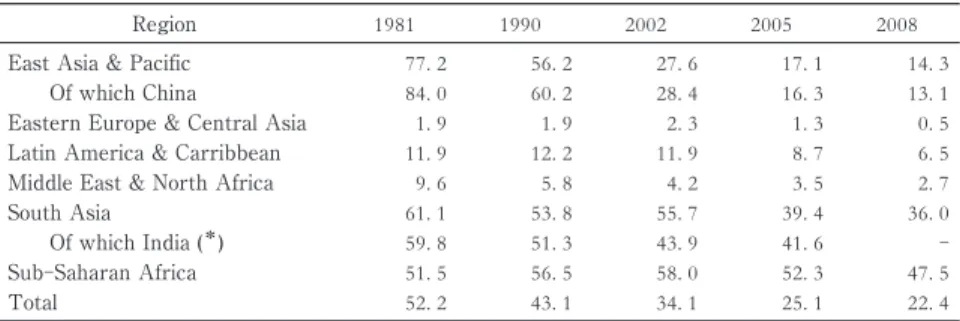
Table 5 Headcount Index (%) Living Below $1.25 a Day
Region 1981 1990 2002 2005 2008
East Asia & Pacific 77. 2 56. 2 27. 6 17. 1 14. 3
Of which China 84. 0 60. 2 28. 4 16. 3 13. 1
Eastern Europe & Central Asia 1. 9 1. 9 2. 3 1. 3 0. 5
Latin America & Carribbean 11. 9 12. 2 11. 9 8. 7 6. 5
Middle East & North Africa 9. 6 5. 8 4. 2 3. 5 2. 7
South Asia 61. 1 53. 8 55. 7 39. 4 36. 0
Of which India (
*) 59. 8 51. 3 43. 9 41. 6
-Sub-Saharan Africa 51. 5 56. 5 58. 0 52. 3 47. 5
Total 52. 2 43. 1 34. 1 25. 1 22. 4
Note: (*) figures for2005, from Chen and Ravallion (2008), p.32 Source: Chen and Ravallion (2012), p.5