The perceived role of social interaction in the co-creation of tourism experiences:
A study of Chinese visitors to Japan
201781
韓 星 指導教員名
:プラート カロラス
2019
年度提出
Abstract
Tourism scholars and practitioners have increasingly started acknowledging the tourist’s role as a co-creator of tourism experiences. Based on the service-dominant logic and customer- dominant logic, a growing body of literature on tourist experiences has addressed the importance of tourists’ social interactions with various types of social actors in shaping the co- creation of tourism experiences. However, previous studies have largely focused on the service organizations and service personnel as the counterparts of tourists in interactions that co-create the tourist experiences, leaving tourists’ social interactions with residents and other tourists largely unexplored. In addition, there is a relative lack of research on East-Asian tourists’
experiences in East-Asian contexts. Addressing these plural research gaps, this study investigates Chinese tourists’ social interactions with various types of social actors, including service providers, residents, and other tourists, during their visit to Japan. In the current study, special attention was paid to the tourist-tourist interaction, as Chinese outbound tourists show more diversified perceptions towards social interactions with other tourists.
This study applied a two-stage research approach. The first phase consisted of 29 semi- structured in-depth exploratory interviews with 42 Chinese outbound tourists in Japan to gain an initial insight into the social aspects of Chinese tourists’ experiences. The investigation covered both direct and indirect (or ‘inward’) social interactions between Chinese tourists and three types of social actors: service providers, residents, and other tourists. The findings revealed three types of tourists’ direct social interactions with other social actors based on the factors influencing the occurrence of the interactions. The three types of interactions are labeled protocol-oriented interaction, help-related interaction and sociable interaction. Protocol- oriented interaction is the most frequently reported type of interaction in this study; it is mechanical in nature and occurs when a tourist feels obliged to be polite by initiating or
responding to the other individual’s courtesy because they must share time or space with one another. Tourist encounters with service providers when purchasing or receiving a product or service also fall into this category. The second most frequently reported type of interaction is related to the tourists’ need to get help from other people (including other tourists, residents, and service providers), or the tourists’ response to help requests from other people (mainly other tourists). Sociable interaction occurs out of the interactants’ intrinsic motivation to socialize. Besides the direct interactions, interviewees also reported a substantial number of indirect or inward interactions with other people, especially with other tourists. It suggests that other people may influence the tourist experience without direct interaction taking place, which further confirms the important impact of the social aspect of the tourist experience.
By covering tourists’ perceptions of social interactions with all three types of social actors, the first stage of qualitative study was able to compare Chinese tourists’ social interactions with different types of social actors and the relative impacts of each of these types of interaction on their travel experiences. The result indicates that compared with service providers and residents, Chinese outbound tourists held a wider range of views towards other tourists and these in turn reflect various attitudes towards the co-creation of the tourism experience with other tourists.
The second stage of quantitative study investigated the factors influencing tourist participation in tourist-tourist (T2T) interaction, as well as the impact of the interactions on tourist satisfaction. Specifically, the study differentiates tourists’ interactions with other Chinese tourists and with non-Chinese tourists. Tourist motivation, tourist possession of physical operant resources and cultural operant resources were proposed as the antecedents of T2T Interaction. Tourist extraversion was proposed as the overarching factor influencing the three antecedents. Furthermore, a positive relationship between tourist-tourist interaction and tourist satisfaction was proposed. Data were collected among 300 Chinese outbound tourists and
analyzed using Structural Equation Modeling as well as other techniques. The results support all the hypotheses except for the relationship between tourist extraversion and possession of cultural operant resources, and the relationship between tourist possession of cultural operant resources and T2T Interaction. The unique role of cultural operant resources in Chinese tourists’
interactions with other tourists is thus emphasized in this study. Data analysis also uncovered that Chinese tourists distinguish in T2T Interaction between whether the counterparts are other Chinese tourists or non-Chinese tourists. In addition, this study demonstrated that tourists with different demographic characteristics and travel styles exhibit different patterns regarding the social aspects of their tourism experiences.
This research provides a theoretical foundation to understand Chinese outbound tourists’
perceptions of social interactions, directly or indirectly, with not only the host people (including service providers and residents), but also other tourists (including in-group and out-group tourists). The quantitative study on tourist-tourist interactions addresses the emerging role of other tourists as important participants in co-creating tourist experiences and presents the first endeavor to develop a model to investigate this phenomenon. On a practical level, the study offers tourism practitioners a better understanding of Chinese outbound tourists’ complicated perceptions and expectations towards the role of different types of social actors in their tourism experiences. It is proposed that these insights may assist tourism practitioners and destinations to better develop strategies to facilitate positive social interactions and at the same time avoid or alleviate negative interactions, so they can better co-create valuable experiences with tourists.
Acknowledgements
I have been blessed with tremendous support from innumerable people who have offered expertise, time, and help during the past three years. The thought that I will be able to express my gratitude in the thesis after completing the research has been supporting me to deal with the difficulties that accompany this journey. Finally, it is the time.
I would like to first express my sincere gratitude to my supervisor, Professor Carolus Praet. It is his inspiring guidance and encouragements that made this research possible. Besides the academic support, Professor Praet has also been constantly providing generous support to help me out of difficult situations beyond academic issues. Moreover, he is so considerate of my limitations as a beginner researcher and devotes great patience to help me improve. I am truly grateful for having the privilege to do this research under your supervision.
My sincere appreciation also goes to Associate Professor Liyong Wang. He has involved in this study from the beginning and has been a brilliant advisor and reliable friend to me during the entire process. He has also participated in the qualitative data collection and analysis, which improved the efficiency of the study a lot. I also own you a lot for pouring all my tedious and sometimes silly questions to you.
Associate Professor Maree Thyne has offered invaluable suggestions on this research. I also extend my sincere appreciation to Associate Professor Kazuhiro Suzuki, Professor YujiSakagawa, and Professor Makoto Matsuo, who have offered critical and insightful guidance on my statistical analysis. This research has been improved greatly thanks to your involvement.
I would also like to thank the members of my Ph.D. committee: Professor Makoto Anazawa, Professor Hajime Ito, Professor NaotakeHirasawa and Professor Yongki Kim for the insightful
and encouraging comments. I benefited a lot from your suggestions in each of the mid-term presentation sessions of my thesis.
I was fortunate enough to be selected by the Fuji Xerox Kobayashi Fund Research Grant program and received the research fund to conduct the qualitative part of this study. I also sincerely thank Otsuka Toshimi Scholarship Foundation and Rotary Yoneyama Memorial Scholarship Foundation, for not only the generous financial support but also the kindness and goodwill from the lovely people of the two foundations.
A special thank you to Mr. Wada, Mr. and Ms. Usi, Mr. Suzuki, Mr. Ito, Asuka, Thomas Goodwin, Emma Herbert, and Cyndy Kuta, who give me care, joy, and encouragement, and make Otaru a sweet home to me.
My heartfelt gratitude also goes to Professor Kara Chan, who plays an important role in my academic study and positively influences my research and personal life in so many ways. I owe you a thousand thanks for introducing me to this wonderful Ph.D. journey and giving me the confidence to face all kinds of challenges along the way.
At last, my deep appreciation goes to my family. My parents have always been supportive of my study abroad, even though that means they had onlyfew days to see me at home during the last three years. My husband has been a great companion during my research. He took good care of my daily life so that I could fully concentrate on mystudy. He also acted as an active listener hearing my thoughts and anxieties about this research and showed great patience to help me clear my mind. The unconditional love from my parents and husband makes me feel so fortunate, which motivates me to end the acknowledgement with a big “I love you”.
Table of Contents
Abstract ... i
Acknowledgements... iv
List of Tables ... ix
List of Figures ... x
Chapter 1 Introduction ... 1
1.1 Theoretical background ... 1
1.2 Research context ... 4
1.2.1 Tourism development in Japan and the impact of Chinese tourists ... 4
1.2.2 Travel attractiveness and constraints of Chinese tourists to Japan ... 5
1.3 Chapter outline ... 8
Chapter 2 Literature review ... 10
2.1 Value co-creation ... 10
2.1.1 Value co-creation under the perspective of the Service-Dominant logic ... 10
2.1.2 Value co-creation under the perspective of the Customer-Dominant logic ... 12
2.2 The tourist experience ... 14
2.3 Tourist social interaction and experience co-creation ... 19
2.3.1 The role of service providers ... 20
2.3.2 The role of residents ... 21
2.3.3 The role of other tourists ... 23
2.4 Analysis of previous literature ... 26
Chapter 3 Research objective and research design ... 29
Chapter 4 Qualitative Study ... 32
4.1 Introduction ... 32
4.2.1 Research instrument ... 34
4.2.2 Research locations ... 34
4.2.3 The sampling method ... 35
4.2.4 The interview procedure... 36
4.2.5 Research participants... 37
4.2.6 Data analysis ... 38
4.3 Research Findings... 42
4.3.1 Overview ... 42
4.3.2 Direct interaction ... 44
4.3.3 Indirect interaction ... 58
4.3.4 Perceived role of interaction with different social actors ... 65
4.3.5 Factors influencing Chinese tourists’ social interaction ... 76
4.4 Conclusion and discussion ... 80
4.4.1 The role of social interaction ... 83
4.4.2 The complexity of the role of ‘other tourists’ ... 86
4.4.3 Limitations and insights for the following quantitative study... 87
Chapter 5 Quantitative study ... 90
5.1 Research questions and hypotheses development ... 93
5.1.1 The overarching role of extraversion ... 94
5.1.2 The antecedents of T2T Interaction ... 95
5.1.3 The outcome of T2T Interaction ... 98
5.2 Construct measurement ... 100
5.2.1 T2T Interaction ... 100
5.2.2 Extraversion ... 101
5.2.3 Motivation ... 102
5.2.4 Physical Operant Resources ... 108
5.2.5 Cultural Operant Resources ... 108
5.2.6 Satisfaction ... 108
5.3 Survey instrument and data collection ... 110
5.3.1 Survey instrument ... 110
5.3.2 Data collection... 111
5.4 Data analysis ... 112
5.4.1 Data parceling ... 112
5.4.2 Data screening ... 115
5.5 Research findings ... 117
5.5.1 Demographic characteristics of respondents ... 117
5.5.2 Measurement model test... 119
5.5.3 Structural model test ... 127
5.5.4 Effect of respondent individual characteristics on research constructs... 130
5.5.5 Effect of respondent individual characteristics on T2T Interaction ... 139
5.5.6 Tourist participation in T2T Interaction ... 145
5.6 Overview of quantitative study ... 149
5.6.1 The influence factors and outcome of T2T Interaction ... 150
5.6.2 Tourist individual characteristics and participation in T2T Interaction ... 152
5.6.3 Limitations and directions for future research ... 155
Chapter 6 Discussion and conclusion ... 157
6.1 Discussion ... 157
6.2 Implications ... 161
6.2.1 Theoretical contribution and implications... 161
6.2.2 Managerial implications ... 164
6.3 Limitations and avenues for future research ... 167
References ... 170
Appendices ... 191
Appendix 1 Summary of literature review on conceptual research ... 192
Appendix 2 Summary of literature review on empirical research ... 197
Appendix 3 English interview questions ... 209
Appendix 4 Chinese interview questions ... 210
Appendix 5 English survey questionnaire ... 211
List of Tables
Table 4-1 Interviewee characteristics ... 38
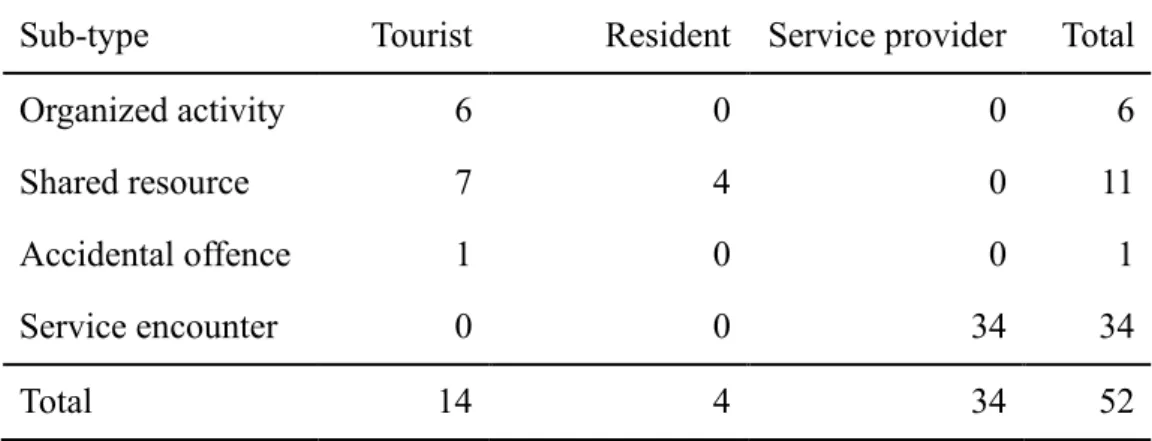
Table 4-2 Overview of tourist interaction with other social actors ... 43
Table 4-3 Breakdown of counterparts of protocol-oriented interaction ... 47
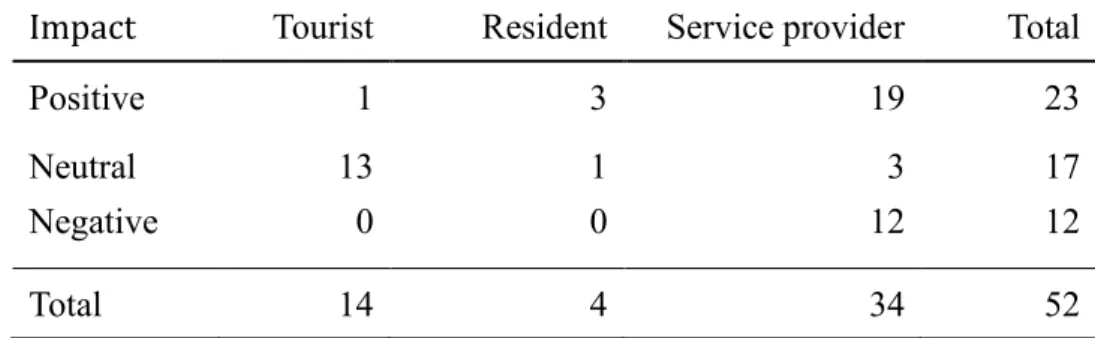
Table 4-4 Breakdown and impact of protocol-oriented interaction ... 49
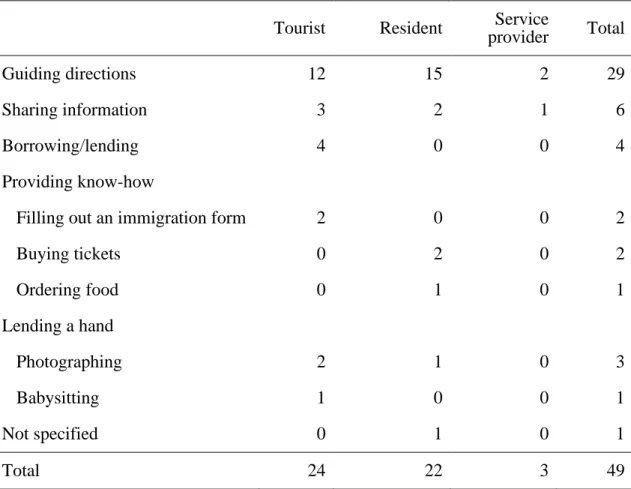
Table 4-5 Breakdown of help-related interaction ... 50
Table 4-6 Breakdown and impact of help-related interaction ... 54
Table 4-7 Breakdown and impact of sociable interaction ... 57
Table 4-8 Impact and counterpart of indirect interaction ... 59
Table 4-9 Indirect interactions with other tourists ... 60
Table 5-1 A summary of extant studies on travel motivation factors ... 103
Table 5-2 Measurement of travel motivation ... 107
Table 5-3 Parceling for T2T Interaction ... 114
Table 5-4 The skewness and kurtosis of the measurement items ... 116
Table 5-5 Demographic information and travel characteristics of respondents ... 118
Table 5-6 Test of the initial measurement model ... 122
Table 5-7 Test of the modified measurement model ... 123
Table 5-8 Measurement model fit ... 125
Table 5-9 Descriptive statistics of measurement items ... 126
Table 5-10 Results on the hypothesized relationships between the constructs ... 128
Table 5-11 Correlations among the constructs ... 131
Table 5-12 Recategorization of respondent individual characteristics for MANOVA ... 133
Table 5-13 MANOVA results for the constructs ... 137
Table 5-14 Correlations among the measurement items of T2T Interaction ... 139
Table 5-15 MANOVA results for T2T Interaction items ... 143
Table 5-16 Paired-samples t-test result of tourist participation in T2T Interaction ... 148
Table A-1 Summary of literature review on conceptual research ... 192
Table A-2 Summary of literature review on empirical research... 197
List of Figures
Figure 2-1 The tourist experience conceptual model of influences and outcomes ... 16
Figure 3-1 The current research’s scope and positioning ... 30
Figure 4-1 An example of the coding process ... 41
Figure 4-2 Protocol-oriented interaction ... 44
Figure 4-3 Help-related interaction ... 49
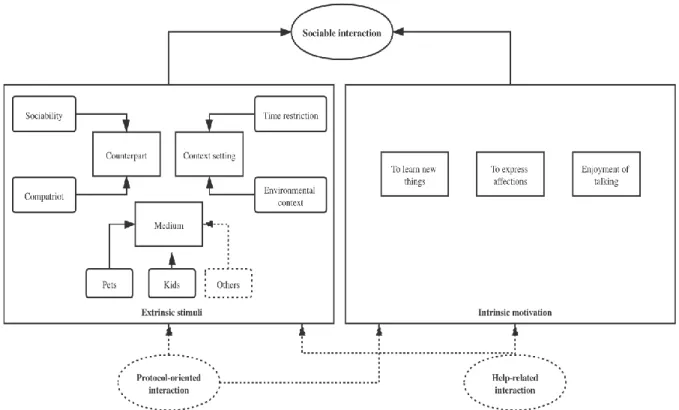
Figure 4-4 Sociable interaction ... 55
Figure 4-5 Interviewees' evaluation of interactions with different groups of social actors ... 65
Figure 4-6 Tourist perceived role of other tourists ... 72
Figure 4-7 Overview of findings of the qualitative study ... 82
Figure 5-1 The relationship between the qualitative and quantitative studies ... 92
Figure 5-2 Illustration of the hypotheses ... 99
Figure 5-3 Structural model test result... 127
Figure 5-4 The T2T Interaction model of influences and outcome ... 150
Chapter 1 Introduction 1.1 Theoretical background
The core function of tourism is the creation (Sternberg, 1997) and consumption (de Jager, 2009) of experiences. Recent developments in the tourism industry suggest that tourists -and especially the so-called Free Independent Traveler (FIT) type- are increasingly looking for travel experiences that allow them to actively participate in the experience creation process (Campos et al., 2015), and that tourists are becoming less likely to passively accept the what has been described as the “commercial, artificial and superficial” (Binkhorst & Den Dekker, 2009) experience staged at the destination. Empowered by the advancement of information technology, tourist experiences increasingly occur beyond the conventional service context (e.g., transportation, accommodation, dining, and places of entertainment), and involve tourist active involvement in the entire process of traveling. Accordingly, both scholars and practitioners have increasingly started acknowledging the tourist’s role as a co-creator, or even the sole creator, of the tourism experience (Campos et al., 2015; Binkhorst & Den Dekker, 2009; Rihova et al., 2013).
Tourist experiences typically take place in the presence of or in collaboration/co-creation with other people, and as a result usually involve some level of social interaction. The study of Maunier and Camelis (2013) revealed that human factors (including interactions with inhabitants and other visitors) account for more than 20% of the critical incidents that tourists report influence their satisfaction with the travel experience. Academic studies on the social aspect of the tourism experience and its impact on experience co-creation mostly focus on tourists’ interactions with service providers (e.g., Minkiewicz, Evans & Bridson, 2013; Salvado, 2011), the local community (e.g., Azevedo, 2009; Richards, 2010), and other tourists (e.g., Reichenberger, 2017; Rihova et al., 2013). Intentionally or not, these three groups of social
actors become participants in value co-creation, or sometimes even value ‘co-destruction’ (Plé
& Cáceres, 2010) in the tourism experience.
The role of social interactions in the co-created tourism experience is receiving increasing research attention. Yet little is known about how tourist social interactions with various types of social actors manifest themselves, and in which ways they may impact the tourist experience.
Specifically, we know very little about how individual tourists attach personal meanings to social interactions and how they perceive the social aspect of their tourism experiences.
Moreover, previous studies on tourist social interaction and co-creation have been largely conducted in western destinations and usually involve western tourists. Given the growing importance of East Asia in the global tourism industry as a destination and source market, academic studies focusing on East-Asian destinations and involving East-Asian tourists are urgently needed. More specifically, while Chinese tourists constitute an important and ever- growing source market for outbound1 tourists in global tourism (Li et al., 2013; WTO, 2018), research on Chinese tourists is still relatively rare.
In order to address the plural research gaps revealed above, this research is concerned with Chinese tourist social interactions with various types of social actors including service providers, residents and previously unacquainted other tourists during their visit in Japan. Japan is now the second largest tourism destination in Asia and mainland China is its largest source market of inbound tourists (Kennedy & Lotus 2015; Tan, 2018). The research reported in this thesis aims to generate a broad picture of how Chinese tourists perceive the social aspects of their travel experience, in what ways they engage in social interactions and how they evaluate
1 The term ‘outbound’ tourists to describe Chinese tourists traveling from China to other countries and ‘inbound’ to describe Chinese tourists traveling to Japan are used interchangeably throughout this dissertation. From a Chinese perspective the tourists traveling to Japan are ‘outbound’ tourists, whereas the same tourists are ‘inbound’ tourists from the perspective of
the value and impact of social interactions.
Due to a relative lack of previous research on this topic and on the Eastern-Asian tourism market, this study first employs an exploratory qualitative research, followed by a larger scale quantitative study. The first stage of qualitative research employs in-depth interviews to investigate tourist social interaction from the tourist perspectives, as opposed to the destination/service provider’s perspective, to account for the subjective nature of tourist experience and to allow individual meanings and perceptions to emerge from the tourist narrative. The research design of quantitative study is both based on the findings of the first stage of qualitative research as well as on extant research on related topics, and aims to further investigate and numerically validate the issues that emerged from the in-depth interviews of the qualitative study.
1.2 Research context
1.2.1 Tourism development in Japan and the impact of Chinese tourists
The setting for this research is Japan as an international tourist destination. The tourism industry in Japan has undergone tremendous development during recent years. Specifically, the past decade has witnessed a striking increase in international tourist arrivals to Japan. The number of international visitors to Japan has nearly quadrupled from 5.2 million in 2003 when Japan initiated the “Visit Japan Campaign” to 28.69 million in 2017 (JNTO, 2018a).
International visitors spent about 4.5 trillion yen (about $41.7 billion) in Japan in 2017, up 17.8% from the previous year. The tourism industry has been “one of the few bright spots in Japan's economy” (Spitzer, 2015), and pundits and governmental publications often highlight the tourism industry’s contribution to national and regional economic regeneration. With the initial target of increasing inbound tourists to 20 million by 2020 having already been achieved in 2016 (JNTO, 2016), the Japanese government has doubled the goal to 40 million by 2020, and aims at 60 million foreign tourists by 2030. The goal of tourist spending is set at 8 trillion yen and 15 trillion yen by 2020 and 2030 respectively (MLIT, 2018).
Among the source markets of the Japanese tourism industry, China is a particularly lucrative segment because of its constant growth in both the number of tourists and its contribution to the economy. Japan has emerged as the most preferred travel destination for Chinese tourists since 2014 (Wei, 2015). Mainland China has been the largest source market since 2015, with 4.99 million Mainland Chinese tourists visiting Japan that year (JNTO, 2018a). In 2017, this number jumped to 7.36 million, and Mainland Chinese now comprise 25.6% of the inbound visitors to Japan (JNTO, 2018b).
What is perhaps even more important is the spending power of Chinese tourists. Almost 40 percent of inbound tourist consumption in 2016 was contributed by Chinese tourists. This
market spent 783.2 billion yen in 2016, which is roughly the same as the value of Japan's annual auto parts exports (Economist Intelligence Unit, 2016). To be specific, the travel expenditure of Chinese tourists was 228,337 yen per capita, with on average 122,859 yen being spent on shopping. In comparison, tourists from Source Korea spent 66,358 yen per person, and only 19,563 yen was spent on shopping (JNTO, 2018b). China is thus regarded as an all-important market for Japan’s tourism industry (Tan, 2018).
Besides the phenomenal development of Chinese tourists visiting Japan, the striking growth of the Chinese outbound market also draws worldwide attention. China has been the world's top source market since 2012 and keeps the fastest-growing pace (WTO, 2013, 2018). In 2017, Chinese tourists made a total of 143 million outbound trips, a 6% increase over the previous year. The spending on international tourism of Chinese tourist rose 5% in 2017, with US$ 258 billion spent overseas. China has been the world’s top tourism source market in terms of spending for six years in a row for since it surpassed the former top spender Germany and second largest spender United States in 2012 (WTO, 2018). There has been a call to better understand the Chinese market given the sheer size of the country’s outbound tourist population and spending power (Li et al., 2013). Along with the Japanese government’s commitment to further develop tourism industry, the investigation of Chinese tourist social interactions in Japan will help both academic scholars and tourism practitioners to design better tourist experience and thus improve tourist satisfaction.
1.2.2 Travel attractiveness and constraints of Chinese tourists to Japan
China and Japan had a close and complicated relationship in history and may result in unique travel attractiveness and constraints among Chinese tourists to Japan. The attractions and constraints may not only impact on the contexts within which tourists are coming into contact with various types of social actors, but may also influence the antecedents and contents of the
social interactions, and may consequently affect how Chinese tourists hold personal meanings to the social interactions. It is thus necessary to introduce the attractiveness and constraints perceived or experienced by Chinese tourists to Japan.
It is suggested that the development of Chinese outbound tourism to its neighboring countries, such as Japan might be closely related and restricted by the historical, cultural, political relationships between the two parties (Lin et al., 2017). Researchers investigated the impact of Sino-Japanese history on Chinese tourists’ emotional encounters when visiting Japan and found that it seldomly constitute constraints for Chinese tourists visiting Japan (Ji, Li & Hsu, 2016).
Moreover, they (Ji, Li & Hsu, 2016) found that direct interactions with local Japanese people facilitate Chinese tourists to have a closer look at the Japanese society and to appreciate the hospitality of the Japanese people. Lin et al.’s study (2017) also reveal the historical factor are the most important constraints for Chinese people who have not visited Japan, whereas for the ones who have visited Japan previously, the impact of historical factor drops significantly.
Cultural aspects also constitute a major constraint for Chinese tourists, which are demonstrated in Chinese tourists perceived cultural and psychological distance with Japan people and language barriers when visiting Japan.
Regarding the attractions of Japan, Lin et al.’s study (2017) find that for Chinese people who have not visited Japan, Japanese cartoons, films and television play the most important role stimulating their travel motivation. Visiting family or friends who are studying or living in Japan is also an important reason for some Chinese tourists (Lin et al., 2017). Whereas for the ones who have visited Japan, they are most attracted by the cultural environment, and Japanese product and services. Chinese tourists frequently patronize cultural and historical sites in Japan, as they are attracted by the similarity between Chinese culture and Japanese culture and are at the same time trying to discover something new and unique in Japan. Chinese tourists have a
great trust in Japanese products, visiting Japan is thus seen as a great shopping opportunity to them (Lin et al., 2017).
Moreover, the hospitality and profession of Japanese service personnel, as well as the highly civilized and polite local Japanese people, are highly appreciated by Chinese tourists, which are found both in previous literature (Ji, Li & Hsu, 2016; Lin et al., 2017), but also repeatedly mentioned by participants in this current study.
1.3 Chapter outline
This thesis consists of six chapters. Chapter 1 explains the role of the tourist as the co-creator of the tourism experience. It also introduces tourist social interaction with various groups of social actors as a major vehicle for tourist experience co-creation to take place. This chapter also presents the rationale for choosing Japan as the research context. This rationale includes the rapid increase of tourist numbers visiting Japan, and the important economic and cultural impact of Chinese tourists on Japanese tourism development. Finally, the chapter discusses the attractiveness and constraints for Chinese tourists when choosing Japan as a destination, and outlines the context within which Chinese tourists may encounter various groups of social actors.
Chapter 2 contains a review of the literature pertinent to the topics of this dissertation. It begins with a review of the development of perspectives on value co-creation starting with the so- called Service-Dominant (S-D) logic and discusses a recent shift among some researchers to the so-called Customer-Dominant (C-D) logic. The chapter also reviews the previous literature on the tourism experience with a special focus on the topics of tourist social interaction and experience co-creation. Finally, the chapter presents findings of a systematic analysis of the literature on tourism experience co-creation, and outlines plural research gaps in the extant literature which will be addressed in the remaining chapters of this dissertation.
Chapter 3 outlines the scope and research objectives of this study and introduces the overall research plan.
Chapter 4 describes the qualitative part of this research. It first introduces the research method used in the qualitative study, including the design of the research instrument, the interview procedure, and the techniques utilized in data analysis. It then reports the research findings,
different types of social actors. The last part discusses the research findings, reflects on the limitations of the qualitative study and sets the stage for the following quantitative study.
Chapter 5 concentrates on the quantitative part of this research. Based on the findings and insights from the qualitative study described in chapter 4, the research hypotheses and construct measurement are developed and explained. Then it reports the procedure and methods adopted in data collection and analysis. The results of a measurement model test and structural model test are illustrated subsequently. It also analyzes the effect of the respondent demographic characteristics and travel features on the research constructs and reports the results. The last section summarizes the findings of the quantitative study and discusses the limitations and avenues for future study.
Chapter 6 revisits the research objective of this study and discusses the role of social interaction in the tourism experience. This chapter also includes the theoretical contributions and managerial implications of this research, followed by a discussion on limitations and future research directions.
Chapter 2 Literature review 2.1 Value co-creation
2.1.1 Value co-creation under the perspective of the Service-Dominant logic
‘Value’ is regarded as the central concept in marketing and consumer research (Woodruff, 1997). Traditionally, ‘value’ is viewed as embedded in the output of the producer, and is evaluated by consumers’ trade-off between the benefit they get and the cost they pay (Zeithaml, 1988). With this perspective, the role of the firm and the consumer is clearly distinguished, seeing the firm as the sole creator of the value, and the consumer as the sometimes-passive recipient of the offering of the firm. However, recent consumer research points out the increasingly active role of consumers and criticizes the outcome-oriented perspective of value creation (Tronvoll et al., 2011) for being too static and lacking a more dynamic and process- oriented perspective of value creation (Korkman, 2006;Vargo & Lusch, 2004). Subsequently, Vargo and Lusch (2004) introduce the concept of the Service-Dominant logic (hereafter: S-D logic). This perspective has been widely adopted by other scholars (e.g., Grönroos, 2008;
FitzPatrick et al., 2013; Prebensen, Vittersø & Dahl, 2013).
The S-D logic brings up a fundamental shift of the focus on resources. Compared to the traditional marketing notion focusing mostly on ‘operand resources’ (tangible resources on which the operation or act is performed; e.g., natural resources such as water and land) as the unit of exchange, the focus of the S-D logic shifts to the ‘operant resources’ (the invisible and intangible resources which can be employed to act on operand resources or other resources;
e.g., consumers’2 skills and knowledge) (Vargo & Lusch, 2004). These operant resources of
2 Similar to Vargo and Lusch (2004) and other authors writing on the topics of Service-Dominant and Customer-Dominant logic, this dissertation uses the terms ‘customer’ and ‘consumer’ interchangeably; the term ‘customer’ is thus used in the
consumers now assume the central role, as they enable consumers to co-create value through using, experiencing, or by getting involved in the process of the firm’s value propositions to better meet their individual needs (Vargo & Lusch, 2004). Vargo and Lusch also introduced the related concepts of ‘value-in-use’ (Vargo & Lusch, 2004) and ‘value-in-context’ (Vargo &
Lusch, 2008), suggesting that value is obtained by the consumer when s/he uses the firm’s resources (Vargo & Lusch, 2004). In the S-D logic, the roles of firms and consumers are not distinct, as value is always co-created through the active and dynamic firm-consumer interaction and integration of resources of both sides (Vargo & Lusch, 2004, 2008).
Because of the shift towards the S-D logic perspective, the related notion of ‘co-creation’ has received considerable attention in service marketing studies. Ostrom and colleagues (2010) report that the investigation on how co-creation contributes to service experiences is one of the top ten research priorities in the service marketing field. In the context of tourism studies, Li and Petrick (2008) also suggest the S-D logic as one of the three alternative marketing perspectives worthy of further exploration. Similarly, the notion of co-creation is widely employed in tourism studies (Binkhorst & Den Dekker, 2009; Campos et al., 2015; de Jager, 2009). Scholars point out that as tourists have become increasingly mature, they look for participatory types of tourism which allow them to actively create unique and memorable experiences (Morgan, Elbe & de Esteban Curiel, 2009). In line with the shift in marketing perspectives on the provider-customer relationship, tourism studies also embrace the idea that the relationship between producers and tourists is increasingly blurred and that this necessitates a fresh perspective (Azevedo, 2009). Scholars now view the tourist experience as being co- created by the visitors and now even regard the involvement of the tourist into the experience generation as an important source of innovation (de Jager, 2009; Park & Vargo, 2012).
However, as the resource-integrating activities are often regarded as work-like tasks for
consumers, some scholars have questioned how this approach can explain the process of actual consumer value generation by assuming that consumers merely perform resource-integrating tasks (Korkman, 2006; Heinonen et al., 2010). Several scholars argue that although the S-D logic has extended the understanding of the active role of consumers, it is too provider-oriented as it views consumers as “partial employees” (Grönroos & Voima, 2013; Heinonen et al., 2010;
Korkman, 2006). The S-D logic is thus criticized as being merely an update of the previous goods-dominant logics with a more advanced provider-dominant view, and that it is insufficient for providing important implications for management (Heinonen et al., 2010). In accordance with the S-D logic’s assertion that the operant resources play the crucial role in the value creation (Vargo & Lusch, 2004), some scholars argue that since the operant resources belong to the consumers, it should be the consumers who control the creation of the value. (Heinonen et al., 2010; Grönroos & Voima, 2013).
2.1.2 Value co-creation under the perspective of the Customer-Dominant logic
Based on the view that consumers control value creation, Heinonen and colleagues (2010) propose the Customer-Dominant logic (hereafter: C-D logic). Heinonen et al. (2010) claim that the C-D logic is not merely an upgrade of the S-D logic, but rather a different approach that is truly shifting the focus to consumers and their role as the co-creators of value. The C-D logic emphasizes the importance of a holistic understanding how consumers use, experience, and judge services to create their own value, rather than focusing on how to better create tailored value to fulfill consumers’ needs from the perspective of the firm (Heinonen et al., 2010;
Grönroos & Voima, 2013). The traditional research on customer perception towards the offerings under the provider-dominant perspective is regarded as trying to answer the question of how consumers use and experience offerings in their context (Heinonen et al., 2010). In contrast, the C-D logic claims that it is more crucial for firms to develop an in-depth insight
their customers’ lives (Heinonen et al., 2010).
While narrowing the focus on consumers, the C-D logic at the same time calls for a broader view on the customer’s time frame. In contrast to ‘value-in-use’ under the S-D logic, which assumes that value emerges when customers use a service, the C-D logic introduces the notion of ‘value-in-experience’ and suggests that value can be experienced before purchase, during use/consumption, and/or after use/consumption (Heinonen et al., 2010). Thus, this C-D logic seamlessly applies to the tourism industry where experiences play an essential role. Following this same logic, a study by Quinlan Cutler and Carmichael (2010) postulates the idea that tourism is a multi-phased experience involving anticipation, travel to site, on-site activity, return travel, and recollection.
The C-D logic further suggests that the focus should not be only on the value creation interactions between the firm and its customers, but that it should also take other actors who also participate in the process of value creation into account (Heinonen et al., 2010; McColl- Kennedy & Tombs, 2011). Campos et al.’s (2015) study echoes this notion, claiming that tourist co-creation behaviors and processes nowadays develop beyond the firm’s scope. Tourists today not only frequently interact with the service providers, but also encounter the local community and other tourists during the multi-phased tourism experiences. Rihova et al. (2013, 2015) advocate that Vargo and Lusch’s (2004) S-D logic should be extended to incorporate these intense social interactions beyond the traditional consumption contexts. It thus appears that the C-D logic may offer a more comprehensive and up-to-date approach to understanding the tourism experience.
2.2 The tourist experience3
Experience is the core of tourism, as scholars state tourism’s central productive activity is the creation of the touristic experience (Sternberg, 1997), and “tourists are in fact and by definition looking for experiences” (de Jager, 2009, p.2). Tourism has been called an industry that sells experience (Ihamäki, 2012; Kim, 2010; Volo, 2009). Numerous scholars have investigated the tourism experience, yet studies have been very diverse in the perspectives used to approach tourism experience (Quinlan Cutler & Carmichael, 2010). Tourism experience studies range from the satisfaction and dissatisfaction factors (Hasegawa, 2010; Maunier & Camelis, 2013) to the memorable nature of the tourism experience (Kim, 2010, 2014; Tung & Ritchie, 2011).
However, there is no universal definition of what exactly constitutes the tourism experience.
Quan and Wang (2004) interpret the tourist experience from the social science perspective and point out that the tourist experience is “in sharp contrast” to the daily experience (e.g.
opposition to ordinary, routine, familiar). In the conceptual model of the tourist experience introduced by Quan and Wang (2004), the tourist experience is constituted of two dimensions:
peak touristic experience and supporting consumer experience, which are the contrast, intensification, or extension of daily routine experiences. The peak experience is regarded as constituting the major motivations for tourism, whereas the supporting experience is driven by basic consumer needs on the journey, such as eating, sleeping and transport, which do not constitute the major motivations for tourism. The boundary between the peak experience and the supporting experience is not fixed, as empirical study on tourist food consumption find that food consumption can be either the peak touristic experience or the supporting consumer experience, dependent upon specific circumstances (Quan & Wang, 2004).
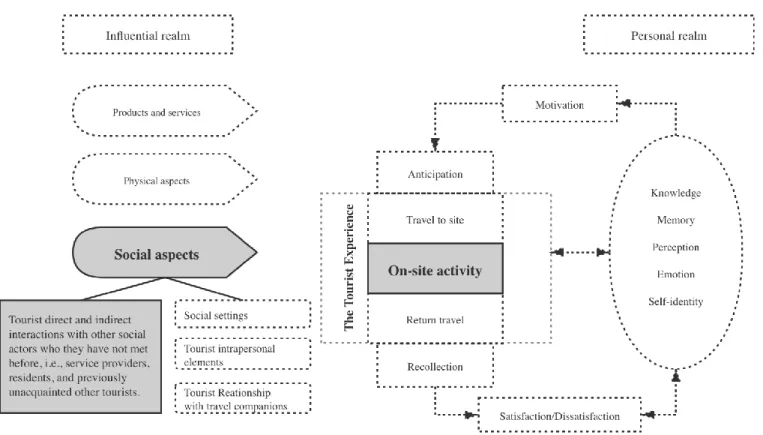
Quinlan Cutler and Carmichael (2010) address the complexity of the tourism experience and introduce a tourist experience conceptual model which includes not only the actual tourist experience, but also the influential realm, and the personal realm (see Figure 2-1). In Quinlan Cutler and Carmichael (2010)’s model, the tourist experience is a multi-phased process consisting of anticipation, travel to site, on-site activity, return travel, and recollection. The tourist experience is influenced by the influential realm and the personal realm. The influential realm refers to the aspects that are outside the individual yet impact on the tourist experience, whereas the factors of the personal realm are within the individual. The influential realm encompasses physical aspects, social aspects and product/service aspects. Specifically, social aspects include social settings, personal relationships, and interactions with hosts, personnel, and other tourists. Tourist experiences commonly take place in the presence of other social actors, who may influence a tourist’s evaluation of the quality of the experience and consequently may have an impact on the level of satisfaction with the experience. From this stance, other tourists are co-producers of experiences as they are also necessary elements in tourism activities or events. The personal realm encompasses factors such as knowledge, memory, and perception, which influence the motivations and expectations towards the tourism experience as well as shape the final evaluation of satisfactions of the tourist experience (Quinlan Cutler & Carmichael, 2010)
Figure 2-1 The tourist experience conceptual model of influences and outcomes (Quinlan Cutler & Carmichael, 2010, p.8)
Several other scholars (e.g., Campos et al., 2015; Reichenberger, 2017; Rihova et al., 2013;
Scott, Laws & Boksberger, 2009) share the same view on the holistic nature of the tourism experience, and acknowledge the social aspect as an important factor contributing to the tourist experience. Tourist social interaction, interchangeably referred as social contact (i.e., Fan et al., 2017; Reisinger & Turner, 2003), is explored from various perspectives to understand the role it plays in the tourist experience (e.g., Campos et al, 2016; Pearce, 2005a; Reichenberger, 2017;
White & White, 2008). It is suggested that tourist interactions occur out of the desire to exchange information (Murphy, 2001), to seek for companionship, security, and belonging (Cary, 2004; Pearce, 2005b; Rihova et al., 2013), or to cope with anxieties as ‘temporary strangers’ in unfamiliar environments (Greenblat & Gagnon, 1983). For example, tourists may
search for destination information by reading reviews by other tourists online and even communicate with other tourists to gather more detailed information about the destination.
Tourist word-of-mouth after they return from a trip and sharing of travel stories and pictures further promote interactions with other (potential) tourists. In addition, while traveling on site, tourists will inevitably encounter various types of service personnel. Moreover, the local community also plays an important role in the tourist experience. The observation of residents’
daily lives without directly interacting with them, in addition to participation in the daily lives of locals through direct social contact, may provide a unique cultural reward or become a source of a memorable experience for many tourists.
Scholars suggest that the social interaction of tourists contribute to additional enjoyment (Moore, Moore & Capella, 2005), social development (Tung & Ritchie, 2011), engagement in the experience (Minkiewicz, Evans & Bridson, 2013) stimulation of thoughts, feelings, and creativity (Ballantyne, Packer & Falk, 2011), and thus generate positive appraisals and memorable experiences (Campos et al, 2016; Tung & Ritchie, 2011). Specifically, scholars point out that Chinese customers tend to prefer personal attention and customization over efficiency and time savings, which appear to be highly valued in the West (Schmitt & Pan, 1994). This leads to scholars advocating that destination marketers need to investigate the entire tourism experience from the perspective of the tourist, instead of focusing only on the core service suppliers (Zouni & Kouremenos, 2008).
White and White (2008) suggest that the tourism experience can be viewed as produced by tourists through the interactions with the environment and to a larger extent, with other people, including the local people and fellow tourists. Their study also revealed that even the mere presence of other people might influence the tourist experience, which is consistent with the findings of Yagi’s (2001) and Praet et al.’s (2015) study. Social interaction has emerged as a
vital element which shapes tourist experiences, as scholars increasingly recognize the emotional, aspirational and participative aspects of customer experience over the functional and rational dimensions (Morgan, Elbe & de Esteban Curiel, 2009). As mentioned earlier in Chapter 1 (p.1), Maunier and Camelis’ study (2013) revealed that the “human factors”
(including the host population, other tourists, personal social network, and personal health) amount for more than 20% of the critical incidents reported by tourists that influence their satisfaction with the travel experience. Scholars call for a more comprehensive investigation of the role of social interactions in the tourism experience (Binkhorst & Den Dekker, 2009;
Campos et al., 2015; Li & Petrick, 2008; Maunier & Camelis, 2013). Lugosi and Walls (2013) suggest that more careful design, integration and management of the social interactions are needed, to ensure an emotional connection, loyalty and satisfaction with brands and destinations.
2.3 Tourist social interaction and experience co-creation
Acknowledging tourist social interaction as an essential factor of the tourist experience, scholars suggest a fresh perspective of the relationship between destination and tourist.
Prahalad and Ramaswamy (2003, p. 12) argue that ‘‘a new point of view is required; one that allows individual customers to actively construct their own consumption experiences through personalized interaction, thereby co-creating unique value for themselves’’. From this perspective, scholars stress that destinations should be viewed as a context in which tourists create their own experiences, rather than that destinations simply provide staged experiences to tourists (Scott, Laws & Boksberger, 2009). Instead of distinguishing between supply and demand, company and customer, tourist and host, tourism should be viewed as a “holistic network of stakeholders all connected in experience environments in which everyone operates from different time and spatial contexts” (Binkhorst & Den Dekker, 2009, p. 318).
Under the perspective of blurred relationships between destination and tourists, scholars describe tourists as co-creators of their experience (Scott, Laws & Boksberger, 2009; Prahalad
& Ramaswamy, 2004a; Reichenberger, 2017). Scholars (Binkhorst & Den Dekker, 2009;
Boswijk, Thijssen & Peelen 2007; Prahalad & Ramaswamy, 2004a, 2004b) argue that it is the experience of the co-creation itself that each individual consumer desires and attaches value to.
In contrast, other scholars also suggest that consumers’ behaviors to co-create value for themselves may “intentionally or inadvertently diminish value for other customers” (McColl- Kennedy & Tombs, 2011, p.5). Co-creation experience is thus regarded as the “next practice”
or “second generation” of the experience economy (Binkhorst & Den Dekker, 2009; Prahalad
& Ramaswamy, 2004a). This necessitates destinations to carefully examine tourist social interactions with the aim to facilitate the co-creation of experiences and to avoid the diminishment (McColl-Kennedy & Tombs, 2011) or even ‘co-destruction’ of tourism value (Plé & Cáceres, 2010).
Previous studies reveal three major types of social actors who participate in tourist social interaction and thus co-create tourist experiences: service providers (e.g., Minkiewicz, Evans
& Bridson, 2013; Salvado, 2011), the local community (e.g., Azevedo, 2009; Richards, 2010), and other tourists (e.g., Reichenberger, 2017; Rihova et al., 2013). To better understand the tourist experience, it is necessary to know what kind of role these three groups of social actors play in tourism experiences.
2.3.1 The role of service providers
Placing tourists at the center of their tourism experiences highlights a fresh look at the role of service providers in co-creating unique and memorable tourist experiences. Arnould and Price (1993) argue that the interaction and relationship between the tourist and the service personnel directly influence the tourist’s emotional reactions regarding extraordinary experiences. From this stance, the service provider, especially the frontline employee, is regarded as an important operant resource to co-create customer experiences, and eventually contributes to improving the organization’s competitive advantage (Lusch, Vargo & O’Brien, 2007).
Scholars have studied various types of tourism service providers in diverse tourism contexts.
For example, the tour guide is regarded as one of the key front-line players to transform the tourists’ visit from a tour into an experience (Ap & Wong, 2001). Arnould and Price’s study (1993) on river rafting suggests that the tour guide plays a subtle yet important role in delivering an extraordinary experience. Mossberg (1995) also indicates that tourist satisfaction with the tourism experience is largely influenced by the performance of the tour guide. Besides the tour guide, the front-line personnel in hospitality contexts also play an essential role in creating the tourist experience. Lashley (2008) states that hospitality is essentially a relationship based on hosts and guests. Hemmington (2007) further stresses that the main distinctive characteristic of hospitality lies in the host-guest relationship.
In the context of an emerging experience economy, to create unique customized hospitality and tourism experiences, a better understanding of the capabilities required by frontline personnel to better capture the nuances of tourists’ social behavior and to positively and effectively engage with customers is urgently needed (Morgan, 2006). Bharwani and Jauhari (2013) introduce emotional intelligence, cultural intelligence, and hospitality experiential intelligence as three key dimensions of Hospitality Intelligence (HI) for frontline personnel to guarantee effective customer engagement and positive co-creation of memorable customer experiences.
2.3.2 The role of residents
Residents are an indispensable part of the tourism destination and thus play an important role in the social aspects of tourist experiences. The local community is even seen as an appealing
‘tourism attraction’ for the tourist. Morgan and Xu (2009) suggest that the tourist’s interaction with the local culture and people contribute to a unique and memorable tourism experience. Kim’s study (2010) confirms this perspective, indicating that the local culture of a destination (e.g., the local people were friendly and the area made a good impression on tourists) is one of the determinants of the memorable nature of travel experiences. Brown’s study (2005) on participants in volunteer tourism reveals that they are strongly motivated by the desire to physically and emotionally immerse oneself in the local culture and community.
The notion that the hospitality of residents is of vital importance for the tourism industry and the tourist is widely accepted (e.g., Lin, Chen & Filieri, 2017; Bimonte & Punzo, 2016; Gursoy, Jurowski & Uysal, 2002). Support and the goodwill of the local population lead to the success of tourism development, and are equally vital for positive and memorable experiences of tourists. In contrast, negative or hostile attitudes towards tourists may destroy a destination’s tourism value and are likely to discourage the willingness to interact with the local community
on the part of tourists. Huang and Hsu (2005) find that mainland Chinese tourists to Hong Kong sensed the negative feelings regarding Hong Kong people’s self-superiority attitude over them.
They suggest that such negative feeling may discourage the revisit intention of mainland Chinese tourists. Also, Li et al. (2011) point out that Chinese people perceived discrimination from the local people as one of the constraints influencing their travel motivation to Australia.
In contrast, studies suggest that Chinese tourists feel the friendliness and hospitality of Japanese people, which reduces their concern and anxiety when traveling in Japan (Ji, Li & Hsu, 2016;
Lin et al., 2017).
Acknowledgement of the important role of residents in the tourism experience has led researchers to investigate residents’ perception of the impacts of tourism and attitudes towards co-creating tourist experiences (Bimonte & Punzo, 2016; Lin, Chen & Filieri, 2017; Gursoy, Jurowski & Uysal, 2002). This topic is widely explored from the perspective of social exchange theory, which suggests that people are likely to engage in an exchange if they believe that they can gain benefits without incurring unacceptable costs (Gursoy, Jurowski & Uysal, 2002;
Rasoolimanesh et al., 2015). According to this perspective, residents’ decision to participate in exchange depends on their belief that the benefits of doing so will outweigh the costs. Gursoy, Jurowski and Uysal (2002) break down the benefits and costs into five dimensions: economic benefits, social benefits, social costs, cultural benefits, and cultural costs and confirm the impacts of benefits and costs by an empirical study among 414 residents of the United States.
Lin, Chen and Filieri’s study (2017) also view residents as important participants in co-creating tourist experiences. Their study on urban residents in China reveals that the resident’s attitude toward co-creating value with the tourist is positively influenced by perceived economic and social-cultural benefits of tourism development, while perceived costs have a negative influence.
Bimonte and Punzo (2016) find that the tourist-host interaction may influence host people’s attitudes, perceptions, and lifestyles as well as tourists’ perceptions and satisfactions. Fan et al.
(2016) also report that tourist-host interaction has a negative influence on tourist perceived cultural distance (i.e., perceived cultural distance can be lessened due to tourist-host interaction). As international tourism generally involves social interactions between residents and tourists from different cultural backgrounds, the positive impact of the tourist-host interaction on eliminating the perceived cultural distance offers valuable implications for destination management. Fan et al., (2016) recommend destination management to involve residents into the local tourism industry by encouraging them to actively interact with tourists.
2.3.3 The role of other tourists
Tourism experiences often take place in the presence of and/or in collaboration with other tourists. The social interactions (both direct and indirect) and shared experiences with other tourists constitute an important part of the tourism experience. The increasing number of global tourists is likely to intensify the impact of tourist-tourist interaction on the tourism experience.
Studies in services marketing suggest the importance and positive impact of customer- customer interaction. Moore, Moore and Capella’s study (2005) on the interactions between hair salon customers finds that customer-customer interaction is a strong predictor of loyalty to the firm and positive word-of-mouth. Several studies on customer-customer interaction are conducted in dining contexts and view guests as a part of the servicescape. Andersson and Mossberg (2004) examine the impacts of various aspects including cuisine, restaurant interior, service, dining company, and other consumers on guests’ dining experience and find that both dining company and other consumers in a restaurant are important factors contributing to guest satisfaction. Gustafsson et al. (2006) find that social interactions between guests have a positive influence on the atmosphere and satisfaction in various dining contexts. Besides the positive