Vol at i l e f at t y ac i ds ( VFAs ) pr oduc t i on f r om
s w
i ne m
anur e t hr ough s hor t - t er m
dr y anaer obi c
di ges t i on and i t s s epar at i on f r om
ni t r ogen and
phos phor us r es our c es i n t he di ges t at e
著者
H
uang W
ei w
ei , H
uang W
enl i , Yuan Ti an, Zhao
Zi w
en, Cai W
ei , Zhang Zhenya, Lei Zhongf ang,
Feng Chuanpi ng
j our nal or
publ i c at i on t i t l e
W
at er Res ear c h
vol um
e
90
page r ange
344- 353
year
2016- 03
権利
( C) 2015. Thi s m
anus c r i pt ver s i on i s m
ade
avai l abl e under t he CC- BY- N
C- N
D
4. 0 l i c ens e
ht t p: / / c r eat i vec om
m
ons . or g/ l i c ens es / by- nc - nd/ 4
. 0/
U
RL
ht t p: / / hdl . handl e. net / 2241/ 00137459
1
Volatile fatty acids (VFAs) production from swine manure through short-term 1
dry anaerobic digestion and its separation from nitrogen and phosphorus
2
resources in the digestate
3
4
Weiwei Huang a, Wenli Huang a, Tian Yuan a, Ziwen Zhao a, Wei Cai a, Zhenya Zhang a, *,
5
Zhongfang Lei a, **, Chuanping Feng b
6
a
Graduate School of Life and Environmental Sciences, University of Tsukuba, 1-1-1 Tennodai,
7
Tsukuba, Ibaraki 305-8572, Japan
8
b
School of Water Resources and Environment, China University of Geosciences Beijing, Key
9
Laboratory of Groundwater Circulation and Evolution (China University of Geosciences Beijing),
10
Ministry of Education, Beijing 100083, China
11
12
*Corresponding author. Tel./fax: +81 29 853 4712.
13
**Corresponding author. Tel./fax: +81 29 853 6703.
14
Email addresses: [email protected] (Z. Zhang), [email protected]
15
(Z. Lei).
16
Abstract
18
The sustainability of an agricultural system depends highly upon the recycling of
19
all useful substances from agricultural wastes. This study explored the feasibility of
20
comprehensive utilization of C, N and P resources in swine manure (SM) through
21
short-term dry anaerobic digestion (AD) followed by dry ammonia stripping, aiming
22
at achieving (1) effective total volatile fatty acids (VFAs) production and separation;
23
(2) ammonia recovery from the digestate; and (3) preservation of high P
24
bioavailability in the solid residue for further applications. Specifically, two ammonia
25
stripping strategies were applied and compared in this work: (I) ammonia stripping
26
was directly performed with the digestate from dry AD of SM (i.e. dry ammonia
27
stripping); and (II) wet ammonia stripping was conducted by using the resultant
28
filtrate from solid-liquid separation of the mixture of digestate and added water.
29
Results showed that dry AD of the tested SM at 55 °C, 20% TS and unadjusted initial
30
pH (8.6) for 8 days produced relatively high concentrations of total VFAs (94.4
mg-31
COD/g-VS) and ammonia-N (20.0 mg/g-VS) with high potentially bioavailable P
32
(10.6 mg/g-TS) remained in the digestate, which was considered optimal in this study.
33
In addition, high ammonia removal efficiencies of 96.2% and 99.7% were achieved
34
through 3 hours’ dry and wet stripping (at 55 °C and initial pH 11.0), respectively,
35
while the total VFAs concentration in the digestate/filtrate remained favorably
36
unchanged. All experimental data from the two stripping processes well fitted to the
37
pseudo first-order kinetic model (R2 = 0.9916-0.9997) with comparable theoretical
38
maximum ammonia removal efficiencies (Aeq, > 90%) being obtained under the tested
3
dry and wet stripping conditions, implying that the former was more advantageous
40
due to its much higher volumetric total ammonia-N removal rate thus much smaller
41
reactor volume, less energy/chemicals consumption and no foaming problems. After 8
42
days’ dry AD and 3 hours’ dry ammonia stripping, the separated liquid containing
43
VFAs and the recovered ammonia were both marketable products, and the solid
44
residues with averagely higher C/N ratios of 25.7 than those of raw SM (18.0)
45
meanwhile maintaining a relatively high bioavailable P content of 8.1 mg/g-TS can
46
serve as better feedstock for methane fermentation.
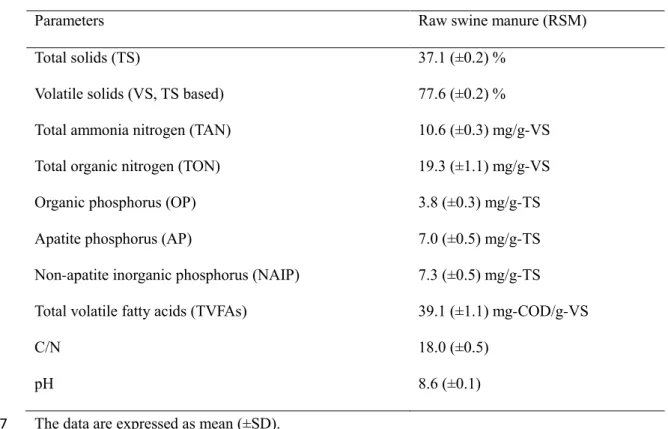
47
48
Keywords: Swine manure;Dry anaerobic digestion; Volatile fatty acids; Dry
49
ammonia stripping; Phosphorus fractionation
50
1. Introduction
52
Intensive livestock industry annually produces staggering amounts of animal
53
manure in China. Generally, manure wastes are generated in two forms, i.e. liquid
54
manure (animal excrement) flushed by water which runs through a sloping concrete
55
floor, and solid manure (a mixture of manure and urine with bedding materials).
56
These manure wastes represent a huge burden to the environment. According to a
57
report published by MEP China (2014), the livestock husbandry in China annually
58
releases 10.7 million tons of chemical oxygen demand (COD) and 0.6 million tons of
59
ammonia-N, resulting in serious environmental issues. For this reason, appropriate
60
methods for manure treatment and management are demanding for the sustainability
61
of our society.
62
Anaerobic digestion (AD) has been recognized as a promising practice for
63
animal manure stabilization due to its potentials for bioenergy production through
64
organic matters decomposition, reduction in greenhouse gas emission and
65
deactivation of pathogens (Abbasi et al., 2012; Massé et al., 2011). Traditionally, AD
66
is performed in wet state with total solids (TS) content 15% (always ≤ 10% TS), and
67
a large volume of water is required to achieve such a low TS condition. Despite its
68
efficacy for biogas production, wet AD has some shortcomings such as large reactor
69
volume, high construction cost, and discharge of large volume of digestate with high
70
contents of organics and nutrients (mainly N and P), posing a serious threat to the
71
surrounding water bodies. On the other hand, although this digestate can be re-utilized
72
and applied on farmlands, a large proportion of N in the liquid digestate occurs as
5
ammonia-N which can easily lose and release during storage and land spreading,
74
leading to insufficient nutrients utilization and air pollution. What’s more, ammonia-N
75
can be further nitrified in soil environment into nitrate, a highly movable form
76
through the soil matrix to the aquifer, contributing to groundwater contamination
77
(Alburquerque et al., 2012).
78
To optimize the economic efficiency for AD of livestock manure and to avoid the
79
production of large quantities of liquid digestate, dry AD (TS ≥ 20%) can be adopted
80
for the treatment of solid manure fraction obtained through solid-liquid separation,
81
meanwhile the liquid fraction can be treated separately. Operation of AD in dry
82
conditions contributes to smaller biogas facilities, easy handling of the digestate and
83
minimal loss of nutrients that can be fully recovered and utilized as fertilizers
84
(Karthikeyan and Visvanathan, 2013). Rico et al. (2015) reported a high methane
85
yield of 265 ml/g-VS from thermophilic dry AD of dairy manure using percolate
86
recirculation technology. High rate psychrophilic (20 ºC) dry AD of dairy manure at
87
35% TS has been proven to be possible when sufficient quantity of well acclimatized
88
inocula was used (Saady and Massé, 2015). Chen et al. (2015) further justified the
89
technical and economic feasibility of a continuous plug-flow dry AD reactor operated
90
at ambient temperature for swine manure treatment. Although being advantageous in
91
size and costs of required facilities, dry AD of livestock manure frequently encounters
92
ammonia inhibition and volatile fatty acids (VFAs) buildups which would to a greater
93
extent exert inhibition effect on methanogenic activity, hindering its full application to
94
treat livestock manure in practice. During dry AD of swine manure, noticeable
inhibition to methane production was observed when ammonia-N concentration
96
exceeded 3000 mg/L (Chen et al., 2015). In a solid-phase AD system developed for
97
dairy manure treatment, high concentration of accumulated VFAs also brought about
98
decrease in organics degradation rate and daily methane yield (Rico et al., 2015).
99
Hence, it is important to timely remove and recover these useful while inhibitory
100
substances to guarantee high efficiencies of a dry AD system. Up to now, however,
101
little information is available as per this aspect.
102
This study sought to maximize the utilization of the three major resources (C, N
103
and P) in the manure so as to reduce its risk to the environment, aiming at realizing
104
the specific goals outlined as follows: (1) VFAs production from short-term dry AD of
105
animal manure and its separation; (2) ammonia recovery from the digestate by
106
stripping; and (3) preservation of high bioavailable P in the solid residue for further
107
application (as solid fertilizer or feedstock for composting and/or methane
108
fermentation). Swine manure (SM) was chosen as an example of livestock manure in
109
this study.
110
In order to obtain separated VFAs solutions and ammonia-N resource from SM, a
111
two-step process involving dry AD followed by ammonia stripping was adopted as
112
illustrated in Fig.1a. For ammonia stripping and final acquisition of the VFAs
113
solutions, two strategies were tested in this study: (I) stripping of ammonia directly
114
from the digestate in dry state followed by water dilution, mixing and solid-liquid
115
separation (i.e. dry ammonia stripping); and (II) addition of water to the digestate,
116
then solid-liquid separation, and finally ammonia stripping from the filtrate (i.e. wet
7
ammonia stripping). Both the ammonia recovered from the digestate and the final
118
liquid extract containing VFAs have market values. To the best of our knowledge, the
119
feasibility of ammonia stripping from the digestate at TS ≥ 20% has not yet been
120
documented.
121
In this study, VFAs production efficiency was investigated under different dry
122
AD conditions, and the fractionations of P before and after dry AD were revealed.
123
Much attention was paid to the performance of ammonia stripping through the two
124
proposed strategies, which was further compared in terms of technical and economic
125
feasibility. Finally, the availability of VFAs, N and P resources in the liquid extract
126
and solid residue obtained after the two-step treatment process was evaluated. Results
127
from this study are expected to provide new concepts and useful information for the
128
integral and comprehensive utilization of manure wastes in practice.
129
130
2. Materials and methods
131
2.1. Swine manure 132
Raw swine manure (RSM) was collected from a pig farm in Ibaraki, Japan.
133
Chopped straw was used as bedding materials in the pig house. Solid RSM containing
134
straw was sampled directly from the floor of pig house. The obtained RSM was mixed
135
thoroughly and stored at 4°C before experimental analyses, and its main
136
characteristics are presented in Table 1 based on five tests in parallel.
137
138
The SM was anaerobically incubated at controlled experimental conditions, i.e.
140
temperature ranging from 25 °C to 55 °C, TS content from 20% to 35%, and initial
141
pH from 7.0-12.0, respectively. The initial system pH was adjusted with 6 M HCl
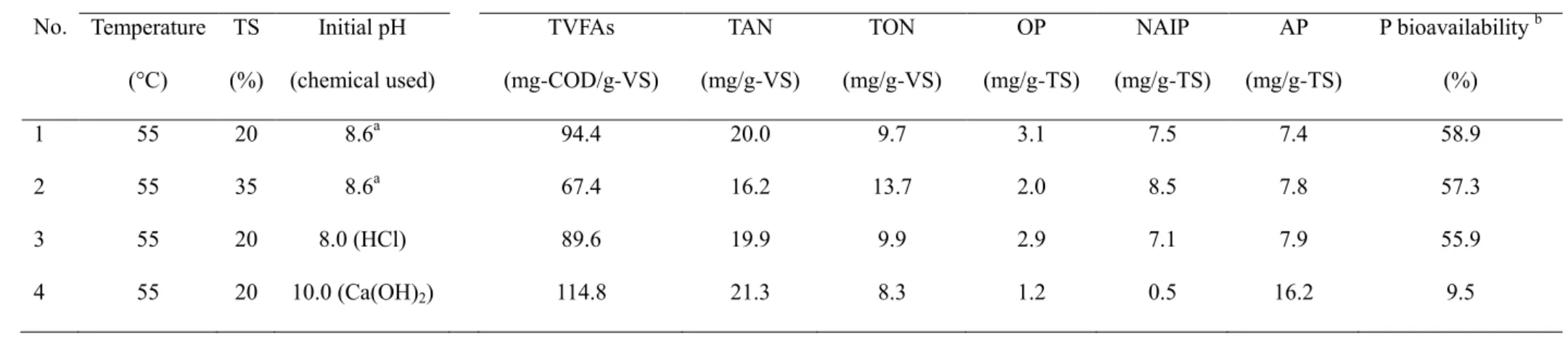
142
solution or solid Ca(OH)2. In this section, Ca(OH)2 was used due to its low cost, wide
143
availability, and better performance for VFAs production than other alkalis like
144
NaOH, KOH, and CaO according to our preliminary tests (Fig. S1, Supporting
145
Information). For the dry AD trials, 12 identical cylindrical reactors (4.4 cm in
146
diameter, 7 cm in height) with working volume of 100 ml were used. The manure was
147
first added with water and mixed thoroughly to achieve a designed TS content, and 90
148
g of the mixture was loaded into each reactor. The reactors were then flushed with N2
149
for 2 min, and sealed with silicone stoppers before being placed in a temperature
-150
controlled water bath and incubated at the designed temperature for 8 days. During
151
the incubation three of them were sacrificed for determination of related parameters
152
every other day.
153
To get sufficient amount of VFAs and ammonia enriched digestate for the
154
stripping experiments (Fig. 1b), an anaerobic reactor (18.8 cm in diameter, 14.5 cm in
155
height) with a working volume of 4 L was operated for 8 days without mixing under
156
the optimal conditions determined in the above trials. The digestate was then
157
homogenized and stored at 4 °C before used for ammonia stripping experiments.
158
159
2.3. Ammonia stripping 160
Ammonia stripping from the solid digestate was conducted in an enclosed
9
system as illustrated in Fig. 1b. For dry ammonia stripping, 130 g digestate was
162
loaded into a 500 ml glass vessel equipped with motor-driven propeller. As for wet
163
ammonia stripping, 130 g liquid was introduced into a bubbling reactor with a
164
working volume of 500 ml and a buffer tank was followed to prevent the foams from
165
entering the acid solution bottle. Air was firstly pumped into a vessel containing water
166
to pre-warm the gas and to compensate the moisture loss from the stripping reactor. It
167
was then flushed into the digestate containing vessel through a circular tube with
168
small openings (2) at the bottom or purged into the bubbling reactor and carried the
169
volatile ammonia into the HCl absorption bottles (500 ml×2, 1.5 M) for entrapment.
170
The gas was circulated among the vessels and acid solutions at a gas flow rate of 216
171
ml/min. Temperature and pH were tested respectively at two levels (35 °C, 55 °C and
172
initial pH of 10.0 and 11.0) for a stripping duration of 3 hours. NaOH was applied for
173
pH adjustment in the ammonia stripping experiments due to its efficacy and retention
174
of P availability. Concentrations of ammonia and total volatile fatty acids (TVFAs) in
175
the solid digestate/liquid filtrate were detected every 30 min during the stripping
176
process.
177
For solid-liquid separation, the mixture of water and digestate was centrifuged at
178
9000 rpm for 20 min and then filtered by filter papers. Characteristics of the VFAs
179
containing solution and the final solid residue obtained through the two proposed
180
strategies (Fig. 1a) under their optimal stripping conditions were also tested.
181
182
TS content was measured by drying the manure sample at 105 °C till constant
184
weight, and volatile solids (VS) content was determined by igniting the dried manure
185
at 600 °C for 3 hours. C/N ratio of the manure was measured using an organic
186
element analyzer (Perkin-Elmer 2004 CHN, USA). The manure pH was measured
187
with a semi-solid pH meter (Testo 206, Germany). Total Kjeldahl nitrogen (TKN) was
188
determined by adding known amount of deionized water into 1 g solid manure and
189
then analyzing the mixture in accordance with standard method (APHA, 2012). Total
190
organic nitrogen (TON) was calculated as the difference between TKN and total
191
ammonia nitrogen (TAN).
192
For analysis of soluble products, 4 g manure sample (wet weight) was diluted
193
with 40 ml deionized water. The mixture was centrifuged at 9000 rpm for 20 min and
194
then filtered through a 0.45 µm microfiber filter. Measurements of TAN, ortho-P and
195
soluble chemical oxygen demand (SCOD) were conducted in accordance with
196
standard method (APHA, 2012). The filtrate was acidified by 3% phosphoric acid
197
solution to pH around 4.0 before VFAs analysis by a Shimadzu GC-14B/FID packed
198
with Unisole F-200 30/60 column. The column and the injector temperatures were set
199
at 150 °C and 180 °C, respectively. The pressure of N2 carrier gas was maintained at
200
200 Kpa. In this study, the concentrations of VFAs were presented as equivalent COD
201
values calculated from the theoretical formula of each VFA component.
202
To reveal the dynamic change of P species in SM before and after dry AD,
203
fractionation of P was conducted according to Standards, Measurements and Testing
204
(SMT) Programme extraction protocol (Medeiros et al., 2005; Ruban et al., 1999).
11
Details of P fractionation are illustrated in Fig. S2 (Supporting Information). P in the
206
solid SM was classified into 2 categories: organic phosphorus (OP) and inorganic
207
phosphorus (IP). Two main forms of IP were fractionated, i.e. bio-available non
-208
apatite inorganic phosphorus (NAIP) loosely bound on exchange sites or associated
209
with Al, Fe and Mn oxide, and Ca-bound apatite phosphorus (AP) which is not able to
210
be utilized by most microorganisms and plants (Manning et al., 1984; Ruban et al.,
211
1999). Total phosphorus (TP) was the sum of OP and IP. The fractions of P that can be
212
potentially released and utilized by microorganisms and plants were termed
213
potentially bioavailable P (i.e. OP and NAIP).
214
215
2.5. Kinetics of ammonia stripping process 216
Pseudo first-order kinetic model expressed as Eq. (1) was applied for process
217
analysis in order to disclose the mechanisms of ammonia stripping at dry or wet state.
218
At = Aeq (1-e-kt) (1)
219
where t (min) is the stripping duration, and k (min-1) the TAN removal rate constant. 220
Aeq and At (%) represent the TAN removal efficiency at equilibrium and time t,
221
respectively.
222
In addition to TAN removal efficiency, effective TAN removal duration (τe, min)
223
defined as the stripping duration for achieving 80% TAN removal was used to
224
indicate the performance of the stripping process.
225
226
One-way analysis of variance (ANOVA) was used to analyze the statistical
228
difference among the experimental scenarios by using Microsoft Office Excel 2010.
229
Significance was assumed if p 0.05.
230
231
3. Results and discussion
232
3.1. VFAs production from swine manure during 8 days’ dry AD 233
3.1.1. Effect of temperature 234
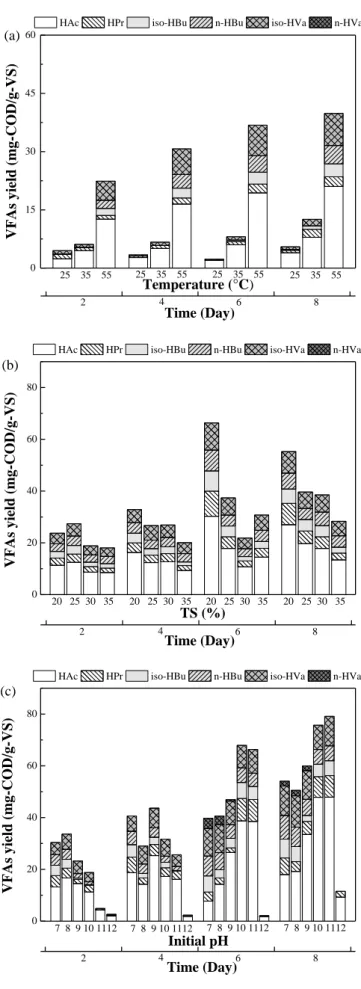
The effect of temperature on net VFAs yield at 25% TS without initial pH
235
adjustment (pH~8.6) is shown in Fig. 2a. It is clear that an increase in temperature
236
favored the production of VFAs. After 8 days’ dry AD, a low TVFAs yield of 5.5 mg
-237
COD/g-VS was obtained at 25 °C. In comparison, the final TVFAs yield was
238
increased by 1.3 and 5.8 times at 35 °C and 55 °C, about 12.6 and 37.2 mg-COD/g
-239
VS, respectively. The VFAs detectable during dry AD of SM were mainly short-chain
240
fatty acids with 2-5 C atoms, including acetic, propionic, iso-butyric, n-butyric, iso
-241
valeric and trace of n-valeric acids. Acetic acid (HAc) was the dominant VFAs
242
product at all tested temperatures, accounting for 71.7%, 62.9% and 56.6% of the
243
TVFAs produced after 8 days’ dry AD of SM at 25 °C, 35 °C and 55 °C, respectively.
244
Propionic acid (HPr) was the second most prevalent VFAs product at 25 °C and
245
35 °C, respectively accounting for 11.9% and 16.4% of the TVFAs generated at the
246
end of fermentation, whereas iso-valeric acid (iso-HVa) was the second major VFAs
247
at higher temperature of 55 °C, and its percentage in the produced TVFAs remained
248
pretty stable between 22.2-24.2% (p = 0.3962 > 0.05) throughout the whole dry AD
13
process at this thermophilic temperature. In view of VFAs production efficiency,
250
55 °C was considered to be the most favorable among the three tested temperatures.
251
252
3.1.2. Effect of TS content 253
In this section, dry AD of SM was performed at 55 °C and different TS contents
254
(without initial pH adjustment), and the profiles of VFAs yield are shown in Fig. 2b.
255
At 20% TS, the TVFAs yield increased with fermentation time and reached a
256
maximum of 66.4 mg-COD/g-VS on day 6. After that, obvious VFAs consumption
257
was observed, leading to decreased final TVFAs yield to 55.3 mg-COD/g-VS at the
258
end of fermentation. As for TS contents of 25%, 30% and 35%, the highest TVFAs
259
yields were recorded as 39.6 mg-COD/g-VS on day 8, 38.5 mg-COD/g-VS on day 8,
260
and 30.7 mg-COD/g-VS on day 6, respectively. During the dry AD of SM at 55 °C,
261
HAc was the most abundant VFAs product at all tested TS levels, followed by iso
-262
HVa.
263
It is noteworthy that under the same operational conditions (55 °C, TS 25%, and
264
initial pH~8.6), the results of VFAs yield and its composition obtained in these
265
experiments were slightly different from those presented in section 3.1.1. A similar
266
phenomenon was also noticed for ammonia production and P fractionation, most
267
probably attributable to the complexity of dry AD process and heterogeneous nature
268
of the SM investigated. Considering the efficiency of VFAs production, 20% TS was
269
applied in the following tests.
270
271
The effect of different initial pH on VFAs production at 55 °C and 20% TS is
273
demonstrated in Fig. 2c. As shown, the highest yields of TVFAs were detected on day
274
8 at all tested initial pH levels, which followed a descending order as pH 11.0 (79.1
275
mg-COD/g-VS) > pH 10.0 (75.7 mg-COD/g-VS) > pH 9.0 (60.0 mg-COD/g-VS) >
276
pH 7.0 (54.0 mg-COD/g-VS) > pH 8.0 (50.5 mg-COD/g-VS) > pH 12.0 (11.5 mg
-277
COD/g-VS). Obviously, initial pHs of 11.0 and 10.0 were beneficial for VFAs
278
accumulation. Despite a slightly higher TVFAs yield was obtained at initial pH 11.0
279
than that at pH 10.0, their difference was statistically insignificant (p = 0.4589 >
280
0.05). After 8 days’ dry AD at 55 °C, 20% TS and initial pH 8.0-10.0, high volumetric
281
TVFAs production rate of 979.7 to 1468.6 mg-COD/L/d was achieved in this study.
282
After 8 days’ fermentation, the proportion of HAc yield to TVFAs yield was in
283
the following order: pH 12.0 (80.4%) > pH 10.0 (63.2%) > pH 11.0 (60.5%) > pH 9.0
284
(55.8%) > pH 8.0 (38.0%) > pH 7.0 (33.3%). It is apparently that the proportion of
285
HAc increased almost linearly with the increase of initial pH, suggesting that HAc
286
production pathway is more dominant and robust than the production of other VFAs
287
under alkaline dry AD conditions.
288
As pointed out by Lin et al. (2013), initial pH adjustment could alter the
289
microbial communities in SM thus affecting its hydrolysis and acidification processes.
290
It is interesting to notice that, when operated at 55 °C, 20% TS and similar initial pHs
291
of 8.0 (adjusted with HCl), 8.6 (unadjusted) and 9.0 (adjusted with Ca(OH)2), the
292
patterns of VFAs accumulation were quite different (Figs. 2b and 2c). At adjusted
293
initial pHs 8.0 and 9.0, the TVFAs yield increased gradually during the dry AD
15
process and reached a maximum on day 8 although impermanent stagnation seemed
295
to occur during days 2-4 and days 4-6, respectively. In comparison, quicker TVFAs
296
accumulation was observed at unadjusted initial pH 8.6 with higher maximum TVFAs
297
yield on day 6. This observation was most probably brought about by the disturbance
298
of chemical (HCl or Ca(OH)2) addition on the microbial communities localized in
299
SM, that is, some adaptation or acclimation was necessary for the fermentation
300
bacteria to accommodate to the resultant microenvironment like elevated ionic
301
strength or free ammonia.
302
303
3.2. Ammonia recovery by stripping 304
During dry AD of SM, substantial amount of ammonia-N was released gradually
305
through organic matters decomposition. Fig. S3 (Supporting Information) illustrates
306
the effects of different temperature, TS content and initial pH on ammonia production
307
after the 8 days’ dry AD trials. Similar to the production of VFAs, thermophilic
308
temperature (55 °C), lower TS (20%) and moderate alkaline initial pH (8.0-10.0) were
309
beneficial for the production of ammonia. Despite a higher TAN yield obtained after
310
dry AD at initial pH 10.0, ANOVA analysis indicated statistically insignificant
311
difference in the final TAN yield among initial pH 8.0-10.0 (including the scenario of
312
initial pH 8.6, i.e. without initial pH adjustment).
313
For the purpose of maximizing the utilization of C, N and P resources in the
314
digestate as well as minimizing chemicals consumption (detailed discussion was
315
given in section 3.3), ammonia stripping was conducted with the digestate obtained
after 8 days’ dry AD at 55 °C, 20% TS and unadjusted initial pH. Table 2 lists the
317
main resources available in the digestate after dry AD under 4 typical experimental
318
conditions in this study.
319
320
3.2.1. Dry ammonia stripping 321
Fig. 3a displays the removal efficiencies of TAN from the solid digestate under
322
different stripping conditions. An increase in both initial pH and temperature gave rise
323
to higher concentrations of free ammonia nitrogen (FAN) (Hansen et al., 1998),
324
contributing to higher removal efficiencies of TAN from the digestate. The highest
325
TAN removal efficiency of 96.2% was achieved at 55 °C and initial pH 11.0 after 3
326
hours’ stripping. Quantitative analysis of the amount of TAN entrapped by acid
327
solution or water and that escaped from the digestate revealed a high TAN recovery
328
efficiency ≥ 95.5% under all stripping conditions.
329
As illustrated in Fig. 3b, most probably as a consequence of ammonia removal
330
the digestate pH dropped in all circumstances, from 10.0 to 8.9 and 8.5, and from 11.0
331
to 9.6 and 9.1 when the stripping was conducted at 35 °C and 55 °C, respectively. On
332
the other hand, the concentration of TVFAs in the digestate remained pretty stable
333
throughout the whole stripping process. As it is known, VFAs are volatile under acidic
334
conditions while they become stable and exist as ionic forms in alkaline solutions. In
335
the stripping systems, due to the fact that pH was maintained at pH > 7.0, the escaped
336
TVFAs from the reactor were considered insignificant. In these trials, averagely
337
92.5% of the TVFAs were successfully retained in the digestate after 3 hours’
17
stripping at 55 °C and initial pH 11.0. Only 4.7% and 2.1% of TVFAs were averagely
339
detected in the scrubbing solutions and the water containing bottle (vessel 3 in Fig.
340
1b), respectively. And the loss of TVFAs from the stripping system was most probably
341
brought about by measurement errors. Based on the experimental results (Fig. 3a), the
342
effective TAN removal duration (τe), about 60 min and 90 min, was obtained for the
343
stripping process at initial pH 11.0 and pH 10.0 (55 °C), respectively. The former
344
(55 °C and initial pH 11.0) was considered to be the optimal dry ammonia stripping
345
condition in this study.
346
347
3.2.2. Wet ammonia stripping 348
The removal efficiencies of TAN during wet ammonia stripping are shown in
349
Fig. 3c. At the end of stripping (the 3rd h), the removal efficiencies of TAN were
350
detected to be 79.1% at 35 °C and initial pH 10.0, 91.5% at 55 °C and initial pH 10.0,
351
and 95.0% at 35 °C and initial pH 11.0, respectively. The highest TAN removal
352
efficiency was achieved at 55 °C and initial pH 11.0, which increased rapidly to
353
98.7% after stripping for 2 hours, and then climbed slowly to 99.7% after 3 hours’
354
stripping. TAN balance analysis again revealed good performance of TAN recovery
355
by using the stripping/absorption processes. Greater than 94.0% of the stripped TAN
356
from the filtrate was able to be entrapped by the acid solution and water in all cases
357
studied.
358
As shown in Fig. 3d, the filtrate pH declined during the process of stripping from
359
10.0 to 8.8 (35 °C) and 8.4 (55 °C), and from 11.0 to 9.7 (35 °C) and 9.1 (55 °C),
respectively. On the other hand, the decrease of TVFAs in the filtrate was found to be
361
less than 11% in all the tested scenarios. For instance, an average decrease of 6.3%
362
after stripping was detected when the stripping was conducted at 55 °C and initial pH
363
11.0. Moreover, to a great extent the lost TVFAs could be re-entrapped by the
364
scrubbing solutions (~ 61%) and water containing vessel 3 (~ 32%, Fig. 1b). Again,
365
based on Fig. 3c, the effective TAN removal duration (τe) was determined to be
366
around 65 min and 85 min, respectively for wet stripping at initial pH 11.0 and pH
367
10.0 (55 °C), which was almost similar to that of dry ammonia stripping process (Fig.
368
3a).
369
370
3.2.3. Comparative analysis 371
Two ammonia stripping strategies (dry or wet) were employed for ammonia
372
recovery from the digestate, which were further compared in terms of technical and
373
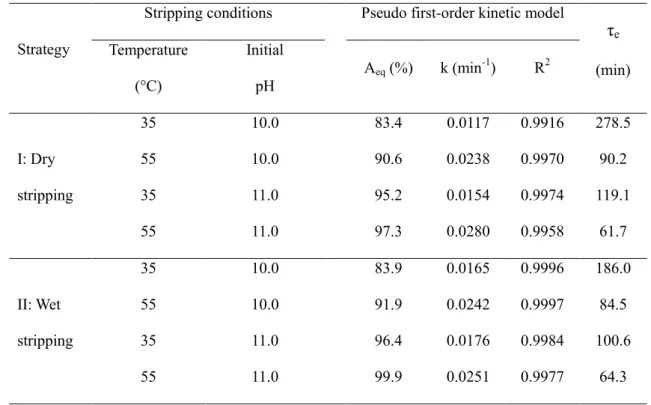
economic aspects. According to the results of kinetic analysis presented in Table 3,
374
the experimental data from both dry and wet ammonia stripping processes fitted well
375
to the pseudo first-order kinetic model (R2 = 0.9916-0.9997). Interestingly, when
376
operated under the same temperature and initial pH conditions, almost similar Aeq
377
values were obtained by either dry or wet ammonia stripping. This observation
378
indicated that TS content could only affect the kinetics of TAN removal since similar
379
Aeq values were achieved under both dry and wet stripping conditions while a higher
380
TAN removal rate constant (k) for wet stripping process. Results indicated that the
381
extent to which ammonia stripping could proceed was driven by the substrate
19
FAN/TAN ratio closely related to system pH and temperature, whereas the ammonia
383
removal rate was largely affected not only by the effective contact between gas and
384
substrate, but also the influencing factors like gas distribution and existing form,
385
viscosity and fluidity of the substrate. Among all the tested scenarios, 55 °C, the
386
optimal temperature for VFAs production, was also found to be the optimal
387
temperature for both dry and wet ammonia stripping in this study. In addition, for
388
these two stripping strategies, about 60-65 min and 85-90 min were necessary for
389
achieving 80% of TAN removal from the digestate or filtrate when ammonia stripping
390
was conducted at 55 °C with initial pH 11.0 and pH 10.0, respectively (Table 3).
391
In the stripping system developed in this study, the gas was circulated among the
392
vessels and acid absorption solutions in a close loop, to a great extent avoiding
393
unnecessary ammonia loss and OH- consumption resulted from the reaction between 394
NaOH and CO2 in the air. From this work, dry ammonia stripping possesses the
395
following advantages compared to traditional wet stripping. Firstly, dry ammonia
396
stripping can avoid the foaming problems which always occur in wet systems.
397
Secondly, much higher volumetric TAN removal rates (0.75-0.99 g/L-digestate/h)
398
were obtained in the dry ammonia stripping systems operated at 20% TS, in
399
comparison to those (0.14-0.17 g/L-filtrate/h) of wet ammonia stripping systems. In
400
addition, processing of the digestate in semi-solid state requires much smaller reactor
401
and thus less construction investment. And thirdly, the consumptions of energy for
402
heating as well as chemicals (i.e. both alkalis applied to raise digestate/filtrate pH
403
during ammonia stripping and acids used for re-neutralization of the ammonia
stripped digestate/filtrate before being further processed) are considerably saved.
405
Zhang and Chen (2009) stated that it’s feasible to use struvite precipitation for
406
simultaneous recovery of ammonia-N and soluble ortho-P from sludge fermentation
407
liquor. This process, however, is less beneficial for the liquid extract from fermented
408
manure mainly due to the following two considerations. (1) Numerous organic
409
compounds and inorganic ions co-existing in the liquid would definitely affect the
410
purity of struvite precipitates. (2) The theoretical molecular ratio of N:P in struvite is
411
1:1, while the molecular ratio of TAN to ortho-P in the liquid extract was close to
412
13:1. The concentration of water extractable ortho-P (~90 mg/L) in the fermented
413
manure was disproportionally lower than that of TAN (~540 mg/L) due to the fact that
414
most P was fixed in biomass or formed precipitates with the co-existing metallic ions
415
like Fe2+/3+ and Ca2+ (Huang et al., 2015). In this context, dry ammonia stripping
416
offers a promising alternative for direct separation and recovery of ammonia-N from
417
the dry AD digestate.
418
419
3.3. Changes in P bioavailability in the digestate 420
3.3.1. During VFAs fermentation 421
Fig. 4a depicts the analytical results of P fractions and pH variations in RSM and
422
the digestates obtained from the 8 days’ dry AD at different temperatures. As shown,
423
TP remained stable at around 18.0 mg/g-TS in all tested manure samples. The
424
increase in temperature, however, has some positive effect on the conversion of OP to
425
IP. Generally, the P group in OP compounds is bound to C by an ester bond. Thus OP
21
is mineralized as a byproduct of the C cycle, during which enzymatic hydrolysis is an
427
essential step for the degradation of OP to IP (Tiessen, 2011). Various enzymes such
428
as nucleases, phytase, phospholipase, and phosphatases are involved in this enzymatic
429
hydrolysis process, and the activity of each enzyme depends highly upon system
430
temperature and pH (Tiessen, 2011; Turner et al., 2005). After the 8 days’ dry AD
431
process, the proportion of potentially bioavailable P decreased slightly from 61.3%
432
(RSM) to 59.8%-58.6%. This is to some extent consistent with the finding of Güngör
433
and karthikeyan (2008) who declared that AD of dairy manure was capable of
434
reducing the immediately available P in the solid phases. On the other hand, the
435
system pH dropped from 8.6 to 8.0, 7.8 and 7.7 after dry AD at 25 °C, 35 °C and
436
55 °C, respectively, most probably resulting from VFAs accumulation (Fig. 2a).
437
Results of P fractionation and pH in RSM and the digestates after the 8 days’ dry
438
AD at 55 °C and different TS contents are displayed in Fig. 4b. It was observed that at
439
the end of experiments, the conversion efficiency of OP increased from 18.4% to
440
47.4% with TS increased from 20% to 35%. This observation might be partially
441
explained by the increase in their final pHs from 7.7 at 20% TS to 8.3 at 35% TS. A
442
strong correlation relationship was found between the OP conversion efficiency and
443
the final pH of the digestate by using linear regression analysis (R2 = 0.9960). Unlike
444
the production of VFAs, TS content was not the limiting factor dictating the
445
conversion efficiency of OP to IP. Instead, system pH played a more important role in
446
OP mineralization. A proper increase in the system pH might be beneficial for the
447
microbial degradation of OP. In this work a greater extent of OP mineralization
seemed to be accompanied by a slightly higher final pH (like 35% TS).
449
Fig. 4c displays the effects of initial system pH on P speciation after the 8 days’
450
dry AD at 55 °C and 20% TS. An increase in initial pH from 7.0 to 10.0 contributed to
451
an increased OP conversion efficiency from 15.8% to 68.4%. Further increase of
452
system pH to 11.0 or 12.0, however, led to a decline in OP conversion efficiency. On
453
the other hand, a larger proportion of AP in IP was detected in the digestate when dry
454
AD was conducted at higher initial pHs. This phenomenon was due to the fact that in
455
this study Ca(OH)2 was employed to adjust the initial pH of SM to alkaline conditions
456
under which Ca2+ and PO
43- could react with OH- to form apatite (Van Kemenade and
457
De Bruyn, 1987), contributing to a higher amount of AP in the digestate. The lowest
458
potentially bioavailable P was detected to be 1.7 mg/g-TS at initial pH of 10.0,
459
accounting for 9.5% of TP in the digestate.
460
461
3.3.2. During ammonia stripping 462
Table 2 also lists the availabilities of TVFAs, TAN and P species in the digestate
463
after dry AD under 4 typical conditions. In spite of the highest TVFAs and TAN yields
464
obtained in the digestate from dry AD at 55 °C, 20% TS and initial pH 10.0, its
465
bioavailable P (OP + NAIP) was very low. In contrast, after 8 days’ dry AD at 55 °C,
466
20% TS and no adjustment of initial pH, relatively high concentrations of TVFAs,
467
TAN and bioavailable P in the digestate were obtained simultaneously. In order to
468
optimize the costs relating to chemicals consumption and to meet the requirements of
469
multipurpose utilization of the digestate, the optimal dry AD condition was
23
determined as 55 °C, 20% TS and unadjusted initial pH. The digestate obtained after 8
471
days’ dry AD under the optimal conditions underwent dry or wet ammonia stripping;
472
thereafter the availability of C, N and P in the separated liquid solution and solid
473
residue were explored.
474
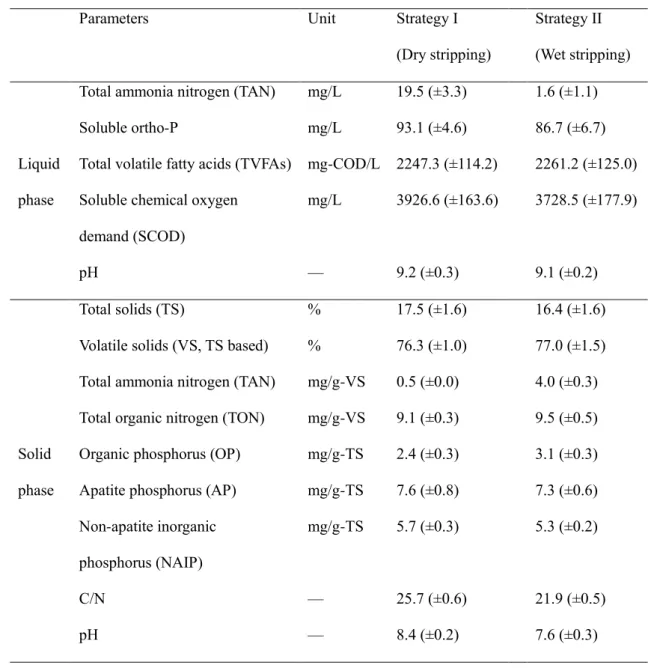
Table 4 presents the main characteristics of the liquid and solid phases obtained
475
by strategies I and II, respectively, at stripping conditions of 55 °C and initial pH 11.0.
476
As it can be seen, the final concentration of TVFAs was almost same in the liquid
477
phase by using both stripping processes, around 2250 mg-COD/L. As for P
478
availability, slightly higher concentration of soluble ortho-P was detected in the liquid
479
after dry ammonia stripping, possibly due to thermal-alkaline hydrolysis of the
480
organic solids during the stripping process. As expected, a slightly lower
481
concentration of OP was detected in the solid residue after strategy I, about 2.4 mg/g
-482
TS in comparison to 3.1 mg/g-TS of OP in the solid residue acquired with strategy II.
483
AP and NAIP concentrations were almost similar regardless of different stripping
484
strategies applied. In summary, the potentially bioavailable P in the solid residue was
485
able to be maintained at a relatively high level of 8.1-8.4 mg/g-TS (51.6%-53.5% of
486
TP) after ammonia stripping and solid-liquid separation through both strategies. Most
487
notably, the C/N ratios in the solid residues after strategies I and II were detected to be
488
25.7 and 21.9, respectively, both higher than that of RSM (C/N=18.0, Table 1) and
489
falling within the optimal C/N range (20-30) for biomethane production (Esposito et
490
al., 2012).
491
3.4. Implication of this study to practice 493
After the two-step treatment process under optimal conditions, the obtained
494
liquid rich in VFAs (Table 4) might be utilized as external carbon source to enhance
495
biological nutrients removal after being further processed (like extraction or
496
adsorption) or used for other industrial purposes. The recovered ammonia, on the
497
other hand, is a valuable raw material that can be used for synthesis of chemical
498
fertilizers (e.g. urea), antibacterial agents and many commercial cleaning products.
499
The solid residue with much lower N content while maintaining a relatively high
500
content of bioavailable P can serve as feedstock for dry methane fermentation or
501
composting for solid fertilizer production. In brief, it is practically feasible to achieve
502
maximum utilization of C, N and P resources in livestock manure by combining short
-503
term dry AD and dry ammonia stripping technologies.
504
To make full use of livestock manure, future research on further enhancement of
505
VFAs production from dry AD of SM and dry methane production of the resultant
506
solid residue should be followed up. Specifically, in addition to cost-effectiveness
507
analysis of the whole system, attentions should also be paid to the preservation and
508
retention of the bioavailable N and P resources in the digestate and utilization of the
509
digestate as high quality fertilizers as well.
510
511
4. Conclusions
512
This paper presented a novel strategy for stabilization and utilization of SM
513
using short-term dry AD followed by dry ammonia stripping, specifically focusing on
25
the changes in VFAs, TAN and P bioavailability throughout the treatment procedure.
515
From this work, the following conclusions can be arrived at:
516
(1) Thermophilic temperature, lower TS of 20% and moderate alkaline initial pH
517
of 8.0-10.0 are beneficial for the accumulation of VFAs and ammonia during short
-518
term dry AD of SM. After 8 days’ dry AD under above conditions, high volumetric
519
TVFAs and TAN production rates of 979.7-1468.6 mg-COD/L/d and 181.3-214.0
520
mg/L/d were achieved, respectively.
521
(2) In the thermophilic dry AD system, proper increase in system pH (brought
522
about by increasing TS from 20% to 35%) was beneficial for the microbial
523
degradation of OP. Mineralization of OP was found to be significantly enhanced when
524
SM was fermented under 20% TS and 55 °C by using Ca(OH)2 to adjust initial pH,
525
which lowered the amount of bioavailable P (OP + NAIP). Considering full
526
utilization of C, N and P resources in the SM, the short-term dry AD without initial
527
pH adjustment (pH~8.6) is suggested in practice.
528
(3) The two-step procedure involving short-term dry AD and dry ammonia
529
stripping not only provides an alternative for the production and separation of VFAs
530
from ammonia and P resources, but also serves as pretreatment to reduce ammonia
531
buildups. Thus the treated SM residue is also expected to have high potential for dry
532
methane fermentation, which has been manifested by our followed-up experiments
533
(data not shown).
534
535
Acknowledgements
This work was supported by JSPS KAKENHI Grant Numbers 25281046 and
537
15K00599.
538
539
References
540
Abbasi, T., Tauseef, S.M., Abbasi, S.A., 2012. Anaerobic digestion for global
541
warming control and energy generation—An overview. Renew. Sust. Energ. Rev. 542
16, 3228-3242.
543
Alburquerque, J.A., de la Fuente, C., Ferrer-Costa, A., Carrasco, L., Cegarra, J., Abad,
544
M., Bernal, M.P., 2012. Assessment of the fertiliser potential of digestates from
545
farm and agroindustrial residues. Biomass Bioenerg. 40, 181-189.
546
APHA, 2012. Standard Methods for the Examination of Water and Wastewater, 22nd
547
Edition edited by E.W. Rice, R. B. Baird, A.D. Eaton and L.S. Clesceri.
548
American Public Health Association (APHA), American Water Works
549
Association (AWWA) and Water Environment Federation (WEF), Washington,
550
D.C., USA.
551
Chen, C., Zheng, D., Liu, G., Deng, L., Long, Y., Fan, Z., 2015.Continuous dry
552
fermentation of swine manure for biogas production. Waste Manage. 38, 436
-553
442.
554
Esposito, G., Frunzo, L., Giordano, A., Liotta, F., Panico, A., Pirozzi, F., 2012.
555
Anaerobic co-digestion of organic wastes. Rev. Environ. Sci. Biotechnol. 11,
556
325-341.
557
Güngör, K., Karthikeyan, K.G., 2008. Phosphorus forms and extractability in dairy
27
manure: A case study for Wisconsin on-farm anaerobic digesters. Bioresource
559
Technol. 99, 425-436.
560
Hansen, K.H., Angelidaki, I., Ahring, B.K., 1998. Anaerobic digestion of swine
561
manure: Inhibition by ammonia.Water Res. 32, 5-12.
562
Huang, H., He, L., Lei, Z., Zhang, Z., 2015. Contribution of precipitates formed in
563
fermentation liquor to the enhanced biogasification of ammonia-rich swine
564
manure by wheat-rice-stone addition. Bioresource Technol. 175, 486-493.
565
Karthikeyan, O.P., Visvanathan, C., 2013. Bio-energy recovery from high-solid
566
organic substrates by dry anaerobic bio-conversion processes: a review. Rev.
567
Environ. Sci. Biotechnol. 12, 257-284.
568
Lin, L., Wan, C., Liu, X., Lee, D.-J., Lei, Z., Zhang, Y., Tay, J. H., 2013. Effect of
569
initial pH on mesophilic hydrolysis and acidification of swine manure.
570
Bioresource Technol. 136, 302-308
571
Manning, P.G., Birchall, T., Jones, W., 1984. The partitioning of non-apatite inorganic
572
phosphorus in sediments from lakes Erie and Ontario. Can. Mineral. 22, 357-365.
573
Massé, D., Gilbert, Y., Topp, E., 2011. Pathogen removal in farm-scale psychrophilic
574
anaerobic digesters processing swine manure. Bioresource Technol. 102, 641
-575
646.
576
Medeiros, J.J.G., Cid, B.P., Gómez, E.F., 2005. Analytical phosphorus fractionation in
577
sewage sludge and sediment samples. Anal. Bioanal. Chem. 381, 873-878.
578
MEP China (Ministry of Environmental Protection of the People's Republic of
579
China), 2014.
http://zls.mep.gov.cn/hjtj/nb/2013tjnb/201411/t20141124_291868.htm (accessed
581
on 14th December, 2015).
582
Rico, C., Montes, J.A., Muñoz, N., Rico, J.L., 2015. Thermophilic anaerobic digestion
583
of the screened solid fraction of dairy manure in a solid-phase percolating reactor
584
system. J. Clean. Prod. 102, 512-520.
585
Ruban, V., López-Sánchez, J.F., Pardo, P., Rauret, G., Muntau, H., Quevauviller, P.,
586
1999. Selection and evaluation of sequential extraction procedures for the
587
determination of phosphorus forms in lake sediment. J. Environ. Monit. 1, 51-56.
588
Saady, N.M.C., Massé, D.I., 2015. High rate psychrophilic anaerobic digestion of
589
high solids (35%) dairy manure in sequence batch reactor. Bioresource Technol.
590
186, 74-80.
591
Tiessen, H. 2011. Phosphorus Availability in the Environment. in: eLS, John Wiley &
592
Sons, Chichester. DOI: 10.1002/9780470015902.a0003188.pub2.
593
Turner, B.L., Frossard, E., Baldwin, D.S. 2005. Organic phosphorus in the
594
environment. CABI, Wallingford.
595
Van Kemenade, M.J.J.M., De Bruyn, P.L., 1987. A kinetic study of precipitation from
596
supersaturated calcium phosphate solutions. J. Colloid and Interface Sci. 118,
597
564-585.
598
Zhang, C., Chen, Y., 2009. Simultaneous nitrogen and phosphorus recovery from
599
sludge-fermentation liquid mixture and application of the fermentation liquid to
600
enhance municipal wastewater biological nutrient removal. Environ. Sci.
601
Technol. 43, 6164-6170.
Tables
604
605
Table 1. Characteristics of raw swine manure used in the experiments.
606
Parameters Raw swine manure (RSM)
Total solids (TS) 37.1 (±0.2) %
Volatile solids (VS, TS based) 77.6 (±0.2) % Total ammonia nitrogen (TAN) 10.6 (±0.3) mg/g-VS
Total organic nitrogen (TON) 19.3 (±1.1) mg/g-VS
Organic phosphorus (OP) 3.8 (±0.3) mg/g-TS
Apatite phosphorus (AP) 7.0 (±0.5) mg/g-TS
Non-apatite inorganic phosphorus (NAIP) 7.3 (±0.5) mg/g-TS
Total volatile fatty acids (TVFAs) 39.1 (±1.1) mg-COD/g-VS
C/N 18.0 (±0.5)
pH 8.6 (±0.1)
The data are expressed as mean (±SD).
607
608
31
Table 2. Availability of nutrient elements and total volatile fatty acids in the digestate under 4 typical experimental conditions after 8 days’ dry
610
AD.
611
No.
Fermentation conditions Compositions of nutrient elements and TVFAs in the digestate Temperature
(°C)
TS (%)
Initial pH (chemical used)
TVFAs (mg-COD/g-VS)
TAN (mg/g-VS)
TON (mg/g-VS)
OP (mg/g-TS)
NAIP (mg/g-TS)
AP (mg/g-TS)
P bioavailability b
(%)
1 55 20 8.6a 94.4 20.0 9.7 3.1 7.5 7.4 58.9
2 55 35 8.6a 67.4 16.2 13.7 2.0 8.5 7.8 57.3
3 55 20 8.0 (HCl) 89.6 19.9 9.9 2.9 7.1 7.9 55.9
4 55 20 10.0 (Ca(OH)2) 114.8 21.3 8.3 1.2 0.5 16.2 9.5
aNo initial pH adjustment. bP bioavailability (%)=100 × (OP + NAIP)/TP.
612
AP-apatite phosphorus, NIAP-non-apatite inorganic phosphorus, OP-organic phosphorus, TAN-total ammonia nitrogen, TON-total organic nitrogen, TS-total solids,
613
TVFAs-total volatile fatty acids, VS-volatile solids.
Table 3. Stripping rate constants associated with the pseudo first-order kinetic model
615
and effective TAN removal durations under different stripping conditions.
616
Strategy
Stripping conditions Pseudo first-order kinetic model
τe
(min) Temperature
(°C)
Initial
pH Aeq (%) k (min
-1) R2
I: Dry stripping
35 10.0 83.4 0.0117 0.9916 278.5
55 10.0 90.6 0.0238 0.9970 90.2
35 11.0 95.2 0.0154 0.9974 119.1
55 11.0 97.3 0.0280 0.9958 61.7
II: Wet stripping
35 10.0 83.9 0.0165 0.9996 186.0
55 10.0 91.9 0.0242 0.9997 84.5
35 11.0 96.4 0.0176 0.9984 100.6
55 11.0 99.9 0.0251 0.9977 64.3
33
Table 4. Main characteristics of the final liquid solutions and solid residues obtained
618
from the two operation strategies under their corresponding optimal stripping
619
conditions (both at 55 °C and initial pH 11.0).
620
Parameters Unit Strategy I
(Dry stripping)
Strategy II (Wet stripping)
Liquid phase
Total ammonia nitrogen (TAN) mg/L 19.5 (±3.3) 1.6 (±1.1) Soluble ortho-P mg/L 93.1 (±4.6) 86.7 (±6.7)
Total volatile fatty acids (TVFAs) mg-COD/L 2247.3 (±114.2) 2261.2 (±125.0)
Soluble chemical oxygen demand (SCOD)
mg/L 3926.6 (±163.6) 3728.5 (±177.9)
pH — 9.2 (±0.3) 9.1 (±0.2)
Solid phase
Total solids (TS) % 17.5 (±1.6) 16.4 (±1.6) Volatile solids (VS, TS based) % 76.3 (±1.0) 77.0 (±1.5) Total ammonia nitrogen (TAN) mg/g-VS 0.5 (±0.0) 4.0 (±0.3)
Total organic nitrogen (TON) mg/g-VS 9.1 (±0.3) 9.5 (±0.5)
Organic phosphorus (OP) mg/g-TS 2.4 (±0.3) 3.1 (±0.3)
Apatite phosphorus (AP) mg/g-TS 7.6 (±0.8) 7.3 (±0.6)
Non-apatite inorganic
phosphorus (NAIP)
mg/g-TS 5.7 (±0.3) 5.3 (±0.2)
C/N — 25.7 (±0.6) 21.9 (±0.5)
pH — 8.4 (±0.2) 7.6 (±0.3)
The data are expressed as mean (±SD).
621
623 624 625 626 627 628 629 630 631 632 633 634 635 636 637 638 639 640 641 642 643 644 645 646 647 648 649 650 651 652 653 654 655 656 657 658 659 660 661 662 663 664
Fig. 1 -Schematics of (a) the procedure for VFAs separation from the fermented 665
swine manure; and (b) the recirculating system for ammonia stripping and recovery.
666
Solid residues
Water
(1 g digestate ← 5 g water)
Centrifugation and filtration
Filtrate Alkali RSM
Dry anaerobic fermentation (8 d)
(a)
Alkali
Air
stripping Centrifugation and filtration
Air stripping
Filtrate Water (5 g water1g digestate)
VFAs containing carbon source for bio-nutrient removal
Strategy I: Dry ammonia stripping Strategy II: Wet ammonia stripping Investigation of VFAs and ammonia accumulation and changes in P fractionation
N/P availability
analysis
I: Stripping at TS 20%
9 5 4 7 1 2 3 6
II: Stripping from filtrate
(b)
10
11
35
1-gas pump, 2-gas flow meter, 3-vessel with water, 4-vessel with digestate, 5
-667
temperature controlled thermostat, 6-propeller, 7-motor, 8-circular hollow tube with
668
openings at the bottom, 9-acid absorption bottles, 10-porous ceramic head, 11-buffer
669
bottle.
670
0 15 30 45 60
HAc HPr iso-HBu n-HBu iso-HVa n-HVa
VFAs yield (mg-COD/g-VS)
(a)
Time (Day)6 8
4 2
Temperature (°C) 25 35 55 25 35 55
25 35 55 25 35 55
1
672
0 20 40 60 80
HAc HPr iso-HBu n-HBu iso-HVa n-HVa
VFAs yield (mg-COD/g-VS)
(b)
20 25 30 35 20 25 30 35
20 25 30 35
Time (Day)6 8
4 2
20 25 30 35
TS (%)
673
0 20 40 60 80
HAc HPr iso-HBu n-HBu iso-HVa n-HVa
7 8 9 10 1112 7 8 9 10 1112
7 8 9 10 1112 7 8 9 10 1112
(c)
VFAs yield (mg-COD/g-VS)
Initial pH
Time (Day)6 8
4 2
674
675
37
55 °C without pH adjustment) and initial pH (c, 55 °C and 20% TS) on dry AD for the
677
production of VFAs. Acetic acid (HAc), propionic acid (HPr), iso-butyric acid (iso
-678
HBu), n-butyric acid (n-HBu), iso-valeric acid (iso-HVa) and n-valeric acid (n-HVa).
679
680
0 30 60 90 120 150 180 0
20 40 60 80 100 120 (a)
35 °C, initial pH 10.0 55 °C, initial pH 10.0
35 °C, initial pH 11.0 55 °C, initial pH 11.0
TAN removal efficiency (%)
Stripping time (min)
682
0 30 60 90
120 150 180 0
30 60 90 120 150 180
0 30 60 90
120 150 180 0
30 60 90 120 150 180 0
20 40 60 80 100 120 140
55 °C pH=11.0 35 °C pH=11.0
55 °C pH=10.0 35 °C pH=10.0
T
V
FA
s
(m
g-C
OD
/g-V
S
)
Stripping time (min)
TVFAs
0 2 4 6 8 10 12
(b)
pH
pH
39
0 30 60 90 120 150 180
0 20 40 60 80 100 120
35 °C, initial pH 10.0 55 °C, initial pH 10.0
35 °C, initial pH 11.0 55 °C, initial pH 11.0
TAN removal efficiency (%)
Stripping time (min) (c)
684
0 30 60 90
120 150 180 0
30 60 90 120 150 180
0 30 60 90
120 150 180 0
30 60 90 120 150 180 0 700 1400 2100 2800 3500
55 °C pH=11.0 35 °C pH=11.0
55 °C pH=10.0 35 °C pH=10.0
T V FA s (m g-C OD /L )
Stripping time (min)
TVFAs 0 2 4 6 8 10 12 (d) pH pH 685 686
Fig. 3 - Effects of different operational conditions on (a) ammonia removal efficiency 687
and (b) variations of pH and TVFAs during dry ammonia stripping, and those of
688
different stripping conditions on (c) ammonia removal efficiency and (d) changes of
689
pH and TVFAs during wet ammonia stripping.
690
RSM 25 35 55 0 5 10 15 20 25 pH
Percent of TP
(%)
Temperature (°C)
AP NAIP OP
OP, NAIP, AP
(mg/g -TS ) (a) 0 2 4 6 8 10 pH 0 20 40 60 80 100 120 140 692
RSM 20 25 30 35
0 5 10 15 20 25
Percent of TP (%)
TS (%)
(b)
OP, NAIP, AP
(mg/g-TS
)
AP NAIP OP
0 2 4 6 8 10 pH pH 0 20 40 60 80 100 120 140 693
RSM 7 8 9 10 11 12
0 5 10 15 20 25
Percent of TP (%)
Initial pH
AP NAIP OP (c)
OP, NAIP, AP
(mg/g -TS ) 0 2 4 6 8 10 pH pH 0 20 40 60 80 100 120 140 694
Fig. 4 - Profiles of pH and P fractionation in raw swine manure (RSM) and the 695
digestate under different dry AD conditions tested: (a) operation temperature at 25 °C,
41
35 °C and 55 °C (25% TS and no initial pH adjustment); (b) TS content of 20-35% (at
697
55 °C without pH adjustment); and (c) initial pH varied from 7.0 to 12.0 (at 55 °C and
698
20% TS), respectively.
699
700