
Development of Gardens in Ancient China, and Pure Land and Pure Land Gardens
LU Zhou
Professor, Tsinghua University, People’s Republic of CHINA
As one of the oldest groups of gardens in the world, Chinese gardens date back to the time before the Yin dynasty. After the Sui and Tang dynasties, Chinese gardens started to show a tendency to place emphasis on “Yi Jing,” which eventually became one of the basic features of Chinese gardens. Chinese gardens, which are the main component and embodiment of the culture of China, influenced the development of gardens in East Asian countries (via Japanese envoys to China during the Tang and Sung dynasties), as well as gardens in Europe in the 18th and 19th centuries (via Western missionaries). When the development process of Chinese gardens is observed, one can find that traditional factors in China, including philosophy, faith, and religion, are all reflected in theme and format characteristics of the gardens.
As one of the religious sects of Chinese Buddhism, the Jingtu religion had a certain level of influence on Chinese society after the Tang and Sung dynasties, and spread to the East Asian region as well. While the Jingtu religion had significant influence on development of Japanese gardens, it did not leave clear traces in the development process of Chinese gardens.
Dunhuang murals, which include a group of works entitled
“visual aspect of the pure land”, depict beautiful sceneries of the Pure Land in the West to which people are attracted.
In most of these paintings depicting the Pure Land world, Buddha and Bodhisattvas sit solemnly on a large flat bed which floats on a lotus pond surrounding an architecture, while immortals of music and flying immortals show their beautiful appearances and dances. It is worth conducting research on
“how the layout of architectures and water surfaces is related to the development of China’s traditional gardens,” and
“whether such layout represents the culmination of gardens and temples.”
1. Chinese gardens in the Han, Wei, and Two Jins dynasties (the Tung-Chin and 55 Western Chin dynasties)
The Chinese gardens date back to the time before the Yin and Zhou dynasties. Indeed, descriptions about the gardens are found in “Shi-Jing.” Many of the gardens in those days were designed in formats similar to botanical gardens, and were built for Emperors and feudal lords. Those gardens also had such functions as temporary palaces (used by Emperors on tours), farms, and hunting grounds. These gardens transformed into grand imperial gardens after the Qin and Han dynasties, but the functions as temporary palaces, farms, and hunting grounds, etc. were preserved. It should be noted that the elements of imperial gardens (including architectures, water, and hills) gradually turned into basic components of gardens. During the short history of the Qin dynasty, which became the first unified empire in Chinese history, many palaces and gardens were built. Because the emperors believed blindly in the legends of divine immortals and pursued perennial youth and longevity, the gardens were built in the style of “large water surfaces and islands, which were modeled on oceans and islands on which immortals were said to have lived, according to the legends.”
Thus, water surfaces and islands also became symbolic and important elements of imperial gardens.
After the Qin dynasty was replaced by the Han dynasty, it became commonly accepted that “the Han dynasty has its own way of establishing social institutions.” It is obvious, however, that many of the basic concepts of the Qin dynasty were inherited in terms of urban architecture, as well as design of palaces and gardens (large water surfaces of gardens, etc.). The imperial gardens built during the Han
dynasty were extensive in scale. Basically, the large majority of these gardens were pieces of natural landscapes with limited artificial modifications (including construction of a huge pond and introduction of natural streams) designed for playing, hunting, and growing plants. This garden-building style influenced the gardens of aristocrats and wealthy people at the time. According to literature, the garden of Yuan Guanghan (name of a wealthy person) was characterized by rapid streams carried in from outside the garden, expansive water surfaces home to birds and fish, sandbars and artificial hills, etc., as well as a number of trees and flowers. As well, animals such as rhinoceros were kept.
After the upheaval in the Three Kingdom Period, clans gained power while emperors lost power, and repeated political change became the social characteristic of the Two Jins dynasties. In those days, the literati and literates (civilian bureaucrats) had a tendency to admire Huang-di and Laozi, which led to the development of Xuanxue (philosophy of Laozi and Zhuangzi). They yearned for mountain-and- water landscapes, and enjoyed freewheeling lifestyles, etc.;
Xuanxue and seclusion turned into the symbols of the literati and literates. In this society, the literati and literates who sought spiritual toughness and dignity deserved fame and popularity. The imperial families constantly summoned prominent figures in seclusion back to the Imperial Court.
The aesthetic sense and taste of society were also influenced by this group of people. In those days, large imperial gardens and personal gardens were built in smaller numbers, and the taste of the literati (aesthetic sense about the nature and affection for objects), and the lifestyles of prominent figures as well, had a deep impact on the culture at the time.
永和九年, 岁在癸丑。莫春之初, 会于会嵇山阴之兰亭, 修 契事也。群贤毕至, 少长咸集。此地有崇山峻岭、茂林修 竹, 又有清流激湍, 映带左右。引以为流觞曲水, 列坐其 次。虽无丝竹管弦之盛, 一觞一咏亦足以畅叙幽情矣。
→ In 353 (the 9th year of Yonghe period), in the year of Guichou, in the early days of late spring, we gathered at Lanting in the recess of Huijishan to hold a purification ceremony. An array of wise men, as well as young
and old people, gathered. This area was blessed with towering mountains and steep ridges, deep forests, and bamboo trees growing into the sky. The clear stream, partly rapid, was glittering near us. The water was carried in to provide a meandering stream on which cups of rice wine were floated. The people who gathered took a seat one by one. Although harps and whistles were not heard, the guests composed poems before cups of rice wine reached them for drinking. This setting is adequate to produce the profound atmosphere in the deep natural environment. (Note 1)
The atmosphere and aesthetic sense described in Wang Xizhi’s “Preface of the Lanting Gathering” are major characteristics of the literati and literates in China, and of China’s traditional culture as well.
The era of Two Jins dynasties is also important because this is the period in which Buddhism developed in China.
During this period, Buddhism (which was brought to China during the Han dynasty) started to spread from the Court to the public. Interestingly enough, however, many renowned priests of the Tung-Chin dynasty (including Huiyuan) as well as priests from the Western Regions, were familiar with the teachings of Huang-di and Laozi. Huiyuan kept company with prominent figures at the time, and founded Bailianshe which is believed to be the oldest organization in the Jingtu religion of Chinese Buddhism. Bailianshe can be described as a group of hermits whose number was growing at the time. The aesthetic sense and taste which served as the basis when Huiyuan selected an appropriate location and built Donglinsi were no different from those of prominent figures who were familiar with Xuanxue at the time. The following description is found: “The temple built by Huiyuan takes full advantage of the beauty of mountains. It is located against the backdrop of xianglufeng, and there is a waterfall in the nearby valley. The foundation is built with rocks, and pine trees are planted. Also found on the premises are a clear spring and stone steps, with rooms filled with baiyun” (Note 2).
2. The Jingtu religion and “Pure Land Amitabha”
murals
The Jingtu religion is a religious sect that developed in China, and the research activities on its history have revealed that the history dates back to St. Huiyuan (334–416) during the Tung-Chin dynasty. The following description is found:
“Huiyuan mastered a broad spectrum of studies including Xuanxue, and also excelled in Confucianism” (Note 3).
Influenced by society, politics, culture, etc. of the Chin dynasty, Huiyuan believed deeply in the teaching of karma, and wished for metempsychoses in Amida Pure Land in the West. Also,
“because Huiyuan believed in the idea of immortality of the soul, and had a deep fear of karma of life and death, he expressed an aspiration for metempsychoses in the Pure Land. In the first year of Yuanxing, he worked with Liu Yimin, Zhou Xuzhi, Bi Yingzhi, Zong Bing, Lei Cizong, Zhang Laimin, Zhang Jishou, etc. to build a temple in front of the statute of Amitayus of the temple, and they promised to see each other in the Pure Land in the West. At that time, he asked Liu Yimin to write that “on July (Wuchenshou) 28 (yiwei) in the year of the tiger, Priest Shi Huiyuan deeply felt the reason of unfathomable depths, and, overwhelmed by solemn feelings, ordered 123 pious fellows to gather, and offered incense and flowers in front of the statute of Amida in Yinbanruoyuntai jingshe at Mt. Lu, and made a vow in a reverential manner” (Note 4). This is believed to be the origin of the Jingtu religion in China, and Donglinsi built on Mt. Lu by Huiyuan in around 386 was considered the birthplace of the Jingtu religion.
It is noteworthy that many prominent figures in those days who were well versed in Xuanxue were associated with Huiyuan at Mt. Lu, and some of those who belonged to the Jingtu religion organization called Bailianshe, initiated by Huiyuan, also had a profound knowledge of Xuanxue. In a sense, Bailianshe can be seen as “a group of hermits,” and their aesthetic sense also reflected the essence of Xuanxue.
It was Tanluan of the Northern Wei dynasty who officially initiated the Jingtu religion. There is the following description:
“Tanluan of the Northern Wei dynasty lived near Wutaishan, was well versed in literature and science by reading Chinese
classics in and outside China, and had mastered Shi-lun on the Buddha Nature (four books regarding Buddhism).
Later, he went to Liang in the south, and was given an important post by Emperor Wu. After he returned to Luoyang, he met Bodhiruci (a priest from India), received lectures about “Guan-wu-liang-shou-jing,” and was finally spiritually awakened. In his later years, Tanluan lived at Shibi Xuanzhongsi in fenzhoubeishan and dedicated himself to preaching the teachings of the Pure Land. He also wrote two books (“Lijingtu Shierji” and “the Anleji”) and disseminated his ideas. This is why he was revered as the founder of the Jingtu religion by the people in later ages” (Note 5). Daochuo, who succeeded Tanluan, worked on development of the Jingtu religion at Xuanzhongsi, and wrote two volumes of
“Treatise on the Pure Land.” Daochuo was called the second founder of the Jingtu religion.
Shandao (613–681), who is considered the third founder of the Jingtu religion, wrote “Kuan-wu-liang-shou-fo-ching- sho,” “wangshenglizanji” “Jingtufashizan,” etc. It is particularly worthy to note that Shandao drew as many as 300 scrolls of
“Pure Land Amitabha” paintings, and that he deemed the production of “Pure Land Amitabha” to be a kind of ascetic practice and an act of charity. Murals based on these themes were often seen at temples in those days. Thus, these murals can be considered as one of the methods of spreading the Buddhist faith. Mogao Grottoes, Dunhuang which were excavated during the Tang dynasty still retain murals based on the theme of Pure Land Amitabha.
“Pure Land Amitabha” murals that still exist in Dunhuang mainly depict the paradise world in the west. On the murals, the paradise world in the west is composed of a magnificent architecture, qibaolianchi, bagongcheshui, flowers in blossom, Bodhisattvas, musicians, flying immortals, etc. It should be noted, however, that it is difficult to draw such paintings just out of imagination; there must be actual models on which these images were based. It can be assumed that all of the emperors’ palaces and large temples, etc. served as the motif to create these “Pure Land” murals. Research activities on the remains of palaces built during the Tang dynasty have
revealed the relationship between the architecture layout on Pure Land Amitabha and the Court buildings built during the Tang dynasty. It is evident that elements such as the pond and lotus flowers were drawn based on Buddhist sutras.
These elements can be seen as accessories to “qibaolianchi”
and “bagongcheshui.”
The appellation of “Pure Land pond” was used at some of the temples after the Sung dynasty. There is no direct evidence, however, to show that Pure Land Amitabha illustrations reflect special layout rules of the Jingtu religion temples. In reality, virtuous conduct of “contributing homes to the temples,” which was popular in Chinese society at the time, had a great impact on the layout of temples.
3. Chinese gardens during the Tang and Sung dynasties
In many cases, the culture in ancient China reflected the cultural characteristics of the literati and literates. The ideas and spirit of the literati and literates, who can be referred to as “the social elite,” constituted the mainstream consciousness of society. The literati and literates also spearheaded the ideas and spirit of society. When the development of Chinese gardens after the Tang dynasty is observed, one can find that two trends started to emerge.
The first trend is the garden style in pursuit of magnificence and gorgeousness, as represented by imperial gardens. These gardens showed extravagant and luxurious aesthetic sense and taste, which correspond to blue-and-green mountain- and-water landscape paintings as represented by Li Zhaodao and Li Sixun in the history of art in China. The second trend is the simple and sophisticated garden style, as represented by the literati gardens. These gardens showed aesthetic sense and taste in pursuit of poem’s locale, which corresponds to the literati paintings which placed emphasis on the taste for brushes and Chinese ink that were gaining popularity.
The imperial garden at the Da-ming Palace is the most important one among imperial gardens built during the Tang dynasty. In the center of this imperial garden was taiyechi of 1.6 ha. Islands were built in the pond, and many architectures
were arranged around the pond. Meanwhile, the Xingqing Palace is the most famous palace built during the Tang dynasty. The garden had a pond in its center. The area of the pond remains is approximately 1.8 ha. Palace architectures, which were arranged around the pond, were used by the emperors to welcome envoys from abroad, conduct “Tien- shi” (the final stage in civil service examinations), and observe events hosted. The Xi-Yuan Palace in the eastern capital of Luoyang also had an artificial pond named “beihai” with three islands. However, existing literatures do not show records of layout similar to “Pure Land Amitabha,” or architecture layout influenced by “Pure Land Amitabha.”
During the Tang dynasty, personal gardens grew increasingly popular. In particular, the literati gardens gained popularity. Wang Wei’s Wangchuanzhuang was considered a model of Chinese gardens built with emphasis on Yi Jing.
Bai JuYi also built many gardens during his life. Wang Wei and his friends expressed themselves through the scenic beauty at Wangchuanzhuang by appreciating the landscape and composing poems. Wang Wei compiled the poems in the Collection of Wangchuan and landscape paintings in Wangchuantu. These works have a significant meaning in the history of landscaping in China, which can be considered as a turnaround to break new ground in Chinese gardens.
The literati’s personal gardens were testing grounds to advocate and practice Yi Jing-oriented garden building. In
“shanzhongyupeixiucaidishu,” Wang Wei wrote as follows:
“When I climb Huazigang at night, I can see the ripples of Wangshui moving up and down with the moonlight. In the distance, I can see the lights of hanshan blinking from outside the forests.”
“In spring, plants grow, and hills become beautiful. Agile tiao jump on water surfaces; white sea gulls spread their wings; green grass is wet with morning dew; pheasants crow on the wheat field in the morning. The season is coming soon. Do you have time to visit me and have fun together?”
The description seems to give readers an impression of noble and cheerful Yi Jing.
Bai JuYi wrote about his garden as follows: “On the xiaoyuan
(small garden) in Xinchang, pine trees come in contact with the door. At the quiet house in Lidao yard, you can find bamboo trees around the pond. It is not appropriate to call this a humble house. Forests, springs, winds, moon, etc. are assets of my house.” In the mind of Bai JuYi, forests, springs, winds, moon, etc. are the objectives to build gardens. In his gardens, plants have mind, and everything (including stones and bamboo trees) has dignity. Thus, “water with plain nature is my friend, and self-effacing bamboo trees are my master,”
and “At the pond in the evening, the lotuses disappear into the darkness, and the bamboo trees which can be seen from the autumn window have deep mind.”
The garden building method during the Tang dynasty can be regarded as an extension of the hermit culture created during the Two Jins dynasties and Nan-bei-chao. This method sought to achieve mountain forests and a quiet house in an urban area, and the ideal of spiritual freedom. The spirit of the class of people, who influenced the lords while being respected by the common people, had a ready impact on the gardens, which led to a frame of mind to appreciate a garden as a kind of work of art.
The literati and literates during the Sung dynasty were given important posts by emperors, thus acquiring high social status and wielding significant influence over society.
The development of the literati paintings (mountain-and- water landscape paintings in particular) resulted in further maturation of techniques placing emphasis on the expression of Yi Jing while attaching importance to “picturesqueness like poems and paintings” of gardens, which further promoted advancement of garden design with xieyi-like expression techniques of paintings. During the Sung dynasty, personal gardens became so popular that “a number of pagodas were built over the distance of 30 里 (15 km) and it became difficult to see where quiet hills are located.” Against these backdrops, the literati gardens gradually grew to maturity during the Sung dynasty, and a new garden style emerged, characterized by “simple and noble,” “plain,” “elegant,” “natural,” etc.
After the Sung dynasty, there was a tendency for emperors to think and act like the literati, and the characteristics of
the literati gardens were increasingly expressed in building imperial gardens. For example, design techniques for “Gen Yue,” which is the most famous imperial garden built during the Sung dynasty, are not much different from those for the literati gardens at the time, except that Gen Yue was large in size and a number of exotic stones and plants were collected from different areas. Emperor HuiZong of the Sung dynasty wrote as follows to explain this point: “Rocks, valleys, caves, tingge, pagodas, trees, plants, etc. are arranged high or low, far or near, out or in, lively or dying. When I walk around and look up, it feels as if I were at the bottom of a valley among deep mountains.” This trend continued for centuries until the Qing dynasty.
Temple gardens comprise a major part of Chinese gardens.
However, neither existing temple gardens nor reliable archaeological materials are available. In addition, most literature descriptions regarding temple gardens in those days are very simple. For example, in the case of Dajianfusi in Chang- an, “it is said that there was the Free Life Pond at the dongyuan of the temple, and the pond with its circumference of about 200 steps was called Hongchibei during the Han dynasty”
(Note 6). In the case of Guangmingsi in Changlefang, “There are hills and ponds in the garden. Many old trees rise high. It is as quiet as a valley in the mountains” (Note 7). At some of the temples, the garden ponds were reclaimed. For example, in the case of Zhaofusi in Chongyifang, “there used to be a pond in the precincts of the temple, but it was reclaimed with soil from Yongledongjie.” In the case of Daxingshansi, “there used to be a curved pond in the back of the temple ... it is now a piece of land again” (Note 8). Existing materials do not clearly indicate whether temple gardens built during the Tang dynasty had a unique, highly established style or a relatively mature style. It is noteworthy that high priests after the Tang dynasty often exhibited the extremely strong dispositions of the literati, and many of them were closely associated with prominent figures at the time. This is why temple gardens showed characteristics of the literati gardens. Under these circumstances, a garden style giving priority to a kind of standardized format could not have overwhelming influence.
During the Sung dynasty, the Jingtu religion prospered and developed in China. However, the influence of the Jingtu religion was far smaller than that of Zen Buddhism. Literature cannot be found regarding the unique layout and garden format of the Jingtu religion temples. To the contrary, the Ling yin Temple, an important Zen Buddhism temple in Jiangnan, was not simply considered to be a temple; it was also considered to be a famous scenic spot at the time. Regarding this point, the following description is found: “Among the mountain- and-water landscapes in the southeast, Yuhang is ranked top;
among the county, the Ling yin Temple is ranked top; among temples, Lengquanting is ranked top. Lengquanting is located in the water at the foot of a mountain in the southwestern part of the temple. Though not very tall or large, Lengquanting commands a wonderful landscape, enabling visitors to see the whole area. The beautiful plants in the spring elevate mood and promote blood circulation gently and innocently. In summer, a cool breeze blows from the spring, which drives anxiety and drunkenness away, and soothes people’s minds. Trees on the hills are roofs, and rocks are folding screens. Clouds rise from the building, and water and stone steps are level”
(Note 9). Obviously, pursuit of nature and rustic beauty is a characteristic of temple gardens and environment at the time.
The nature and rustic beauty accompanied by specific cultural elements are considered a kind of garden format reflecting, at least, a refined taste. This is the Yi Jing that is expected to be attained in any category: personal gardens, temple gardens, and imperial gardens as well.
4. Water and water gardens in Chinese gardens
Water is an important element in Chinese gardens. Water gives movement to gardens, and embodies poetic and painting inspirations. Poems composed by Bai JuYi about gardens give clear descriptions about water. Water landscapes of Zhuyupian, Yihu and Jinxiequan can be found in Wang Wei’s Wangchuanzhuang. Water is also an integral component in imperial gardens, where water is not simply one of the landscape elements but also a certain meaning symbolizing, for instance, the territory and the land of divine immortals, etc.
It can be said that the balance between water and mountains reflects China’s traditional world view. The notion of “The Virtuous Find Pleasure in Hills; the Wise Find Pleasure in Water” was reflected in building gardens. The fact that water symbolizes wealth in China also gave incentives to people who built gardens to attach importance to bodies of water.
During the Qin dynasty, the following description is found:
“the First Emperor carried in the water of the Wei River to build a pond, which measured 200 丈 (660 m) in the east-west direction and 20 里 (10 km) in the north-south direction. He also built the Penglai hill, and carved a whale (200 丈 (660 m) long) out of stone” (Note 10).
Regarding the Kunming Pond excavated by Emperor Wu during the Han dynasty, there are the following descriptions:
“Yuzhangtai and a stone whale are in the pond, and the stone-carved whale is 3 丈 (9.9 m) long. The whale roars and shakes its mane and tail every time it thunders or rains.” “A dragon boat was floated on the pond, and women serving in the palace were often on the boat. Zhang feng gai was put up, colorful flags were hoisted, songs were sung, musical instruments were played, and the emperor himself proceeded to the Yuzhangtai” (Note 11). “Emperor Wu built a pond to appreciate the moon, and Wanghutai next to the pond to look up at the moon. When the moonlight was reflected on the pond, he put courtiers on the ship and let them play in the moonlight. The pond was called Ying’echi or Tiaochangong”
(Note 12), etc. A pond was also built in the Jiangzhang Palace, with three hills built in the pond to symbolize islands of the immortals. Water was considered an important element in the personal gardens of some powerful clans and wealthy people. In “Xijing za ji,” a description is found about Yuan Guanghan’s personal garden: “A violet stream of water was introduced, ... islands were built with sand, and waves were created with a raging torrent.”
Regarding Longteng Chateau which was built during the Hou Yan period (in the 5th century), the following description is found: “Tianhequ was built to carry water into the palace.
Quguanghai and Qingliangchi were also built for the Foo clan who served as zhaoyi (a title name in bureaucracy)” (Note 13).
In around the 6th century, Gao Wei, who became the final lord of the Northern Qi, built Xianduyuan. In the garden, five hills symbolizing five famous mountains in China were built, and four streams carried in from the Zhang river were referred to as four seas.
Regarding the Luoyang Castle of the Northern Wei dynasty, the following description is found: “In Hualin-yuan, Wei Tianyuanchi which was likened to an ocean was built, and Wendi Jiuhuatai was located on the pond” (Note 14).
In Chengxi of Luoyang, “the Xiyouyuan had Lingyuntai built by Wendi during the Wei dynasty ... bihaiquchi was built under the Lingyuntai, and Xuanciguan (10 丈 (33 m) high) was constructed in the east of the Lingyuntai. A wooden Lingzhidiaotai (20 丈 (66 m) high from the pond) was built in the east of the Xuanciguan... Against the backdrop of diaotai was located a stone whale, which looks as if it is emerging from the ground and jumping into the sky. The Xuanguang Palace is located in the south of diaotai; Jiafudian is located in the north;
Jiulongdian is located in the west. Water spewed by jiulong in front of the Jiulongdian turned into the pond” (Note 15).
In imperial gardens built during the Tang dynasty, techniques were used to arrange a water surface at the center of a landscape. Similar techniques are employed at major palace gardens such as the Da-ming Palace and Xingqing in Chang-an, and Xi-Yuan Palace in the eastern capital of Luoyang. During the Tang dynasty, Tongguangdian was constructed on the remains of the Weiyang Palace of the Han dynasty. Zhaofangting and Ningsiting were built on both sides. The Liubeidian on the premises of the Luoyang Palace also has a layout in which ting are arranged on both sides of a pond. The archaeological remains of Bohai shangjing jinyuan also show a similar layout. The beautiful scenery of these imperial gardens may serve as models for people to paint pictures of the world of the Pure Land in the West. Built during the Sung dynasty for training of the navy, the Chin-ming Pond also seems to represent the intention to achieve an orderly and symmetric layout.
Due to the development of personal gardens (the literati gardens in particular), expression of Yi Jing became the central
objective of garden design. Imitation and reproduction of the natural world by means of winds, moon, clouds, water surfaces, islands, hills, etc. became the mainstream style in building gardens, and the orderly and symmetric layout went out of the mainstream. Although such techniques were sometimes used for imperial gardens at the end of the feudal age (e.g., a symmetric relationship between the qianshajianzhujun and the Kunming Lake at the Summer Palace), the techniques for these gardens do not have the religious meaning of the Pure Land world. On the other hand, many gardens including imperial gardens joined the trend to express Yi Jing like the literati gardens (Chengde bishu shanzhuang, etc.).
As for temples, qibaolianchi and bagongdeshui that are discussed in Buddhist scriptures remained popular themes to be represented at temples. However, no descriptions can be found regarding a kind of standardized style. At Xiyuan (in Suzhou), a famous temple garden, the Free Life Pond is arranged at the center, with Sutaichunman xuan on the east shore and ting located on the pond. The east and west shores were connected by two Jinqqiao. Some traces of “Pure Land Amitabha” can be recognized from the layout. The Yuan Tong Temple in Kunming has a symmetric layout where a pond is surrounded by architectures, which is very similar to the “Pure Land Amitabha” layout. In the photographs taken during Minguo, however, the traces of the pond are gone. The “Pure Land pond” built at the Baoguo Temple in Ningbo during the Southern Sung dynasty is similar to a water garden, but has neither a flat bed in the pond, nor architectures. It is safe to say that the name was simply used without religious connotations and that the pond did not reflect a kind of standardized style. Yuzhaofeiliang at the Jinci ShengMuDian has a similar format, but the relationship with Pure Land faith cannot be confirmed.
5. Conclusion
The development process of Chinese gardens can be seen mostly as a process of being influenced increasingly by the literati. Some of the oldest imperial gardens in China show
an ever-growing tendency to be influenced by the literati.
In this process, a top priority was given to emphasis on picturesqueness like poems and paintings. The method of emphasizing picturesqueness like poems and paintings in Chinese gardens was different in each region, and continued to change as time went by. A standardized style never entered the mainstream in Chinese gardens.
Water and water gardens are important landscape elements of Chinese gardens, but they were diversely varying elements in these gardens. Indeed, a fixed style did not exist.
Pure Land Amitabha can be seen as a representation of understanding by priests, carpenters, people who hold memorial services, etc. about the Pure Land world in Buddhism. At temples in China, the appellation of “Pure Land pond” was used, and “Pure Land” and “Pure Land Amitabha” in Dunhuang murals reflected to some extent the architectures and gardens during the Tang dynasty, but it should be noted that the format and layout of architectures and gardens were not used as a kind of standardized style at temples (including the Jingtu religion temples) and gardens in China. There are no existing temples and gardens in China which use the name of “Pure Land” and fully match the Pure Land Amitabha paintings in Dunhuang.
Notes
1 ) 『蘭亭集序』
2 ) 『高僧伝・慧遠』
3 ) 『漢・魏・両晋・南北朝仏教史』湯用彤、武漢大学出版
社、2008、P242
4 ) 『漢・魏・両晋・南北朝仏教史』湯用彤、武漢大学出版
社、2008、P246
5 ) 『隋・唐仏教史稿』湯用彤、武漢大学出版社、2008、
P179 6 ) 『長安誌』
7/8) 『酉陽雑俎・寺塔記』
9 ) 『冷泉亭記』
10 )『元和郡県図誌』
11 ) 『三輔故事』
12 ) 『三輔黄図』
13 ) 『晋書・慕容熙載記』
14/15) 『洛陽伽藍記』
References
1 『漢・魏・両晋・南北朝仏教史』湯用彤、武漢大学出版
社、2008
2 『隋・唐仏教史稿』湯用彤、武漢大学出版社、2008
3 『中国古典園林史』周維権、清華大学出版社、1999
4 『江南園林史』中国建築工業出版社、1984
5 『中国古代建築史』第二・三巻、中国建築工業出版社、
2001、2003
*Translator’s Notes Notes
1 ) Preface to Poems Composed at the Orchid Pavilion 2 ) Biography of a High Priest: Huiyuan
3 ) Tang, Yongtong. A History of Buddhism in the Han, Wei, Jin and Northern and Southern Dynasties. 2008. Wuhan University Press. p242
4 ) Tang, Yongtong. A History of Buddhism in the Han, Wei, Jin and Northern and Southern Dynasties. 2008. Wuhan University Press. p246
5 ) Tang, Yongtong. A History of Buddhism in the Sui and Tang Dynasties. 2008. Wuhan University Press. p179 6 ) Records of Changan City
7 and 8): Miscellaneous Morsels from Youyang: Records of Temples and Pagodas
9 ) Records of the Cold Spring Pavilion 10 ) Records and Maps of Yuanhe County 11 ) Ancient Stories in the Three Capital Districts 12 ) Yellow Chart of the Three Capital Districts 13 ) History of the Jin Dynasty: Biography of Murong Xi 14 and 15) Stories about Buddhist Temples in Luoyang References
1 Tang, Yongtong. A History of Buddhism in the Han, Wei, Jin and Northern and Southern Dynasties. 2008. Wuhan University Press
2 Tang, Yongtong. A History of Buddhism in the Sui and Tang Dynasties. 2008. Wuhan University Press
3 Zhou, Weiquan. A History of Chinese Classic Gardens.
1999. Tsinghua University Press
4 A History of Gardens in Jiangnan. 1984. China Architecture
& Building Press
5 A History of Chinese Ancient Architecture Vols. 2 and 3.
2001, 2003. China Architecture & Building Press
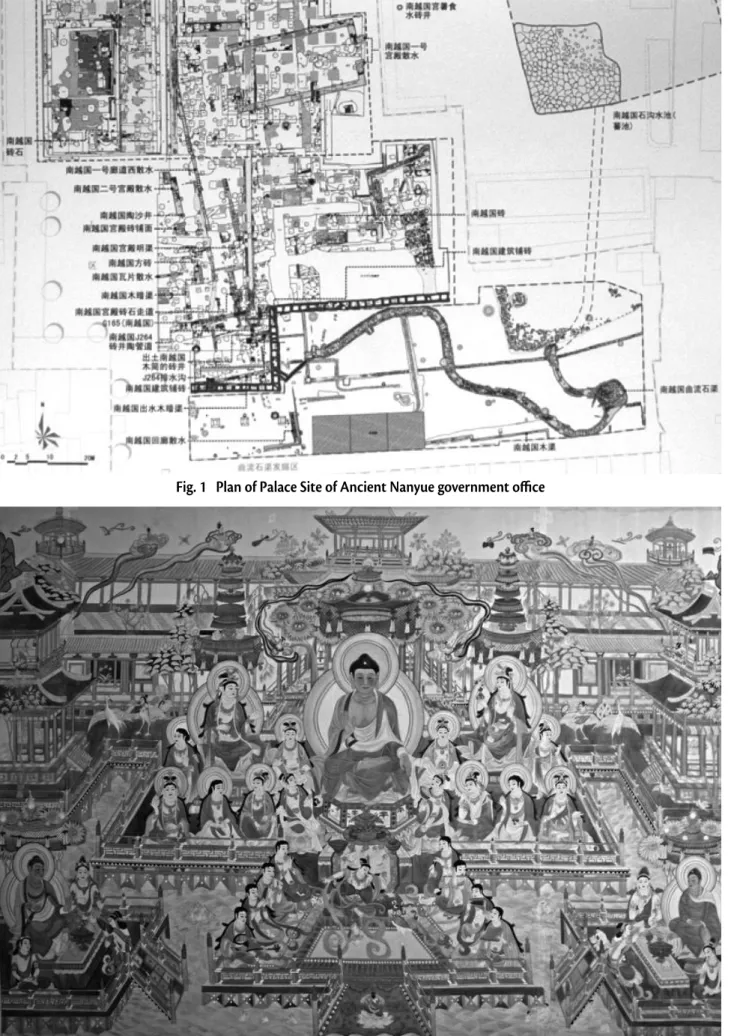
Fig. 1 Plan of Palace Site of Ancient Nanyue government office
Fig. 4 Hangong-tu picture [Zhao Baiju]
(early Nan Song period; 12c)
Fig. 3 Taieychi pond (A: Southern shore of the Penglai island, B: Architectural ruins on Northern shore)
A B
<Jinming-chi-Dao-biao-tu picture>
Fig. 8 Bìshu Shanzhuang [Mountain Resort for Avoiding the Heat] (Chengde)
Fig. 10 Zhuozheng Yuan [Humble Administrator's Garden] (Suzhou)
A
B
A
B
(The Precinct in Wudai period) (The present conditions)
Fig. 12 Shengmu-dian hall and Yuzhaofei-liang bridge (Jinci)
Fig. 13 Xiyuan garden (Suzhou); Plan and Reconstructed Structure
![Fig. 4 Hangong-tu picture [Zhao Baiju]](https://thumb-ap.123doks.com/thumbv2/123deta/9898950.1911896/10.892.92.810.128.342/fig-hangong-tu-picture-zhao-baiju.webp)
![Fig. 8 Bìshu Shanzhuang [Mountain Resort for Avoiding the Heat] (Chengde)](https://thumb-ap.123doks.com/thumbv2/123deta/9898950.1911896/12.892.87.809.124.702/fig-bìshu-shanzhuang-mountain-resort-avoiding-heat-chengde.webp)
![Fig. 10 Zhuozheng Yuan [Humble Administrator's Garden] (Suzhou)](https://thumb-ap.123doks.com/thumbv2/123deta/9898950.1911896/13.892.84.812.127.371/fig-zhuozheng-yuan-humble-administrator-s-garden-suzhou.webp)

