Blood mercury level after administration of methyl mercury to an irritable bowel syndrome model rat using the improved method of cold
vapor atomic absorption spectrophotometry Takeshi Minami
1, 2)and Sayaka Miura
2)1Graduate School of Science and Engineering Research, and 2 Department of Life Sciences, School of Science and Engineering, Kindai University 3-4-1 Kowakae,
Higashi-osaka, Osaka 577-8502, JAPAN (Received December 1, 2015)
Abstract
The number of people suffering from irritable bowel syndrome (IBS) continues to increase. It is thought that in IBS the absorption of substances from food differs from that in normal people. The aim of the present study was to clarify the difference in absorption of mercury between normal and IBS using a model rat. Cold vapor atomic absorption spectrophotometry for mercury measurement can measure the inorganic mercury level, but not the organic mercury level. An improved analytical method for the measurement of mercury was developed. Indomethacin was orally administered to rats to make an IBS model rat. When methyl mercury was p.o. administered to rats on the day after indomethacin administration, the blood mercury level did not differ from the control group until six hours later. However, when methyl mercury was administered to rats two days after, the blood mercury level was observed to be higher than that of the control group from 1 hour to 6 hours. From the present results, we concluded that IBS sufferers may absorb a lot of mercury from meals in comparison with healthy people.
Keywords: methyl mercury, irritable bowel syndrome model rat, blood mercury, intestinal absorption
1. Introduction
Mercury has been on the earth since before humans evolved, but environmental mercury was not usually detrimental in the biosphere. In the natural world, there are three kinds of mercury: metallic, inorganic, and organic.
It is well known that artificial pollution with methyl mercury, one of the organic mercury compounds, caused Minamata disease. Minamata disease occurred when humans ate fish polluted by methyl mercury. Although Minamata disease was caused by industrial pollution with and Sayaka Miura
methyl mercury, methyl mercury in the marine environment is also biosynthesized from inorganic mercury by a natural aerobic bacterial methylation, and methyl mercury bioaccumulates in a larger fish through the food chain [1, 2].
However, as the Minamata Convention on Mercury agreed at 2013 [3], the risk of mercury toxicity increases year by year because mercury consumption has been gradually increasing.
It is known that eating fish is associated with a substantial health benefits, but since methyl mercury accumulates in fish, fish is also the most significant source of human exposure to methyl mercury [4]. Furthermore, eating raw, large fish, which may carry higher levels of methyl mercury, is popular in recent times.
Irritable bowel syndrome (IBS) is one of the most common functional disorders of the gastrointestinal tract and it is thought that 10 to 15 % of Japanese have symptoms of IBS. There are three kinds of symptom in IBS: constipation type, diarrhea type, and alternating type of diarrhea and constipation. In general, the effects of gastrointestinal absorption are studied in healthy people, and similarly the influence of the absorption of food materials is studied in experimental animals. Is the ratio of gastrointestinal absorption in IBS patients the same as that of healthy people? It is known that indomethacin, a non-steroidal
anti-inflammatory drug, induces intestinal ulceration in a rat model of IBS [5-8].
The aim of the present study was to clarify whether the ratio of intestinal absorption of methyl mercury differs between healthy people and IBS patients.
For this purpose, the
indomethacin-induced IBS model rat was used.
2. Materials and Methods
Chemicals. Methyl mercuric chloride (75 %) was purchased from Tokyo Chemical Industry Co., Ltd. (Tokyo, Japan). Diluted sulfuric acid solution (1+1), potassium permanganate (KMnO4) solution (50 g/l), hydroxylammonium chloride solution (80 g/l), and tin (II) chloride (SnCl2) solution (100 g/l) for mercury analysis were purchased from Kanto Chemical Co. Inc. (Tokyo). Nitric acid for ultratrace analysis and mercury standard solution (1000 mg/l) were from Wako Pure Chemical Ind. Ltd. (Osaka, Japan).
Animals. Male Sprague-Dawley rats (200-260 g; Shimizu Laboratory Supplies Co. Ltd., Kyoto, Japan) were maintained in a controlled sterile environment (12 hour light/dark cycle, 22 ± 1 ˚C, and 50 % relative humidity). All rats had ad libitum access to standard diet pellets (MF, Shimizu Laboratory Supplies Co.
Ltd.) and tap water. After one week of acclimatization, the rats were randomly
allocated into six treatment groups as explained below. All experimental procedures involving rats were approved by the Experimental Animal Research Committee of Kindai University.
Measurement of mercury level using a cold vapor atomic absorption spectrophotometer. Diluted sulfuric acid solution (0.5 ml) and SnCl2 solution (0.5 ml) were added to 5ml of sample. After bubbling air for three minutes, the absorbance of 253.7 nm was measured by using a cold vapor atomic absorption spectrophotometer (HG-550, Hiranuma Sangyo Co. Ltd., Ibaraki, Japan).
Mineralization of methyl mercury. Methyl mercury was dissolved by 0.1 M-NaOH solution and diluted 1,000 times with diluted sulfuric acid solution. Two hundred microliters of KMnO4 solution was added to the same volume of the diluted solution, and mineralization was treated by changing the heating time and temperature. Next, 400 μl of hydroxylammonium chloride solution was added to the solution, followed by ultrapure water to make 1 ml of the total volume. Finally, 100 μl of the solution was added to 4.9 ml of ultrapure water and the mercury level was measured.
Treatment of mineralization of blood methyl mercury. Blood (15 μl) was diluted with ultrapure water (135 μl).
Nitric acid (5 μl) and KMnO4 solution (100 μl) were added to 60 μl of the above solution, and heated at 70 ˚C for 4 hours.
After heating, 200 μl of hydroxylammonium chloride (200 μl) and ultrapure water (635 μl) were added.
Fifty microliters of this solution was added to ultrapure water and the total volume was adjusted to 5.0 ml for mercury measurement.
Administration of indomethacin and methyl mercury. Rats were divided into three groups (n=6/group) one day after starvation, Control group rats were administered water (2 ml/kg, p.o.) instead of indomethacin, and then methyl mercury (4 mg/kg, p.o.) was administered.
One Day group rats were administered indomethacin (25 mg/kg, p.o.), and methyl mercury (4 mg/kg, p.o.) was administered one day later. Two Day group rats were administered indomethacin, and two days later the rats were administered methyl mercury.
Blood was collected every 30 min until 6 hours after methyl mercury administration from the tail vein using a heparinized capillary tube.
Statistical analysis. All values are expressed as mean ± SD. Means of each group were compared using the Students' t-test. A p-value < 0.05 was considered statistically significant.
3. Results
Table I shows the condition of mineralization for the measurement of mercury in methyl mercury. When methyl mercury was maintained at room temperature for 2 hours after the addition of KMnO4 solution, the recovery ratio of mercury was very low, and the ratio increased as the heating temperature increased. When the solution was heated at 70 ˚C for 2 hours, the recovery ratio was approximately 100 %, but was largely inconsistent. Extending the heating time, less inconsistency was seen when the solution was heated at 70 ˚C for 4 hours.
The recovery ratio of methyl mercury in blood is shown in Table II. The recovery ratio was low when no nitric acid was added to the blood. However, when 5 μl of nitric acid was added to 50 μl of ten-fold diluted blood and KMnO4
solution before mineralization at 70 ˚C for 4 hours, a recovery ratio close to
100 % was obtained. However, the recovery ratio exceeded 100 % when the volume of nitric acid was increased.
Therefore, the volume of nitric acid added to blood was fixed at 5 μl.
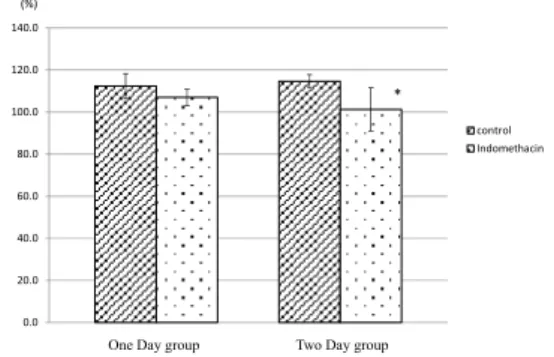
Figure 1 shows body weights just before methyl mercury administration.
Body weight showed a gradual decrease in comparison with the control group even one day after the administration of indomethacin. Body weight was significantly decreased after two days.
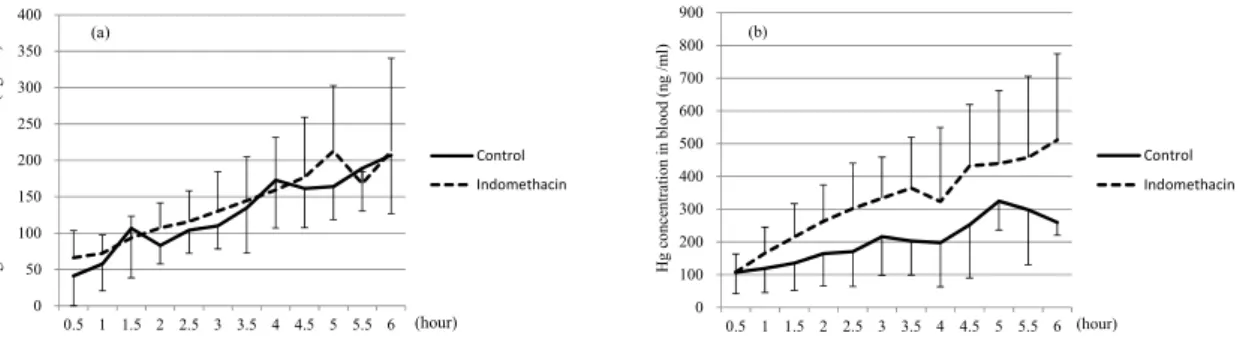
Figure 2 shows the blood mercury levels from methyl mercury administration after administration of indomethacin. Mercury levels in blood of the One Day group were about same as in the Control group until 6 hours after methyl mercury administration (Fig. 2a).
However, when methyl mercury was administered two days after the administration of indomethacin (Two Day group), the blood mercury level gradually increased until six hours, compared with control group, but the difference was no significant (Fig. 2b). Finally, the cumulative mercury contents in blood
Table I. Effect of temperature and hours for the mineralization of methyl mercury
RT for 2 hrs 16.5 ± 0.4 40 ºC for 2 hrs 29.3 ± 0.0 50 ºC for 2 hrs 42.2 ± 0.4 70 ºC for 2 hrs 110.0 ± 11.4 70 ºC for 3 hrs 104.4 ± 7.9 70 ºC for 4 hrs 101.4 ± 6.6 Recovery ratio (%)
RT: room temperature
0.0 20.0 40.0 60.0 80.0 100.0 120.0 140.0
control Indomethacin
One Day group Two Day group
* (%)
Figure 1. Effect of indomethacin on the body weight of rats
The body weight before indomethacin administration was expressed at 100 % and compared with the weight after administration. 1 day: Percentage of body weight one day after indomethacin administration. 2 days: Percentage of body weight two days after indomethacin administration.
Control group: water (2ml/kg) instead of indomethacin was p.o. administered. *p<0.05 vs. control group.
Table II. Effect of nitric acid on the recovery ratio of mercury in blood
Recovery ratio (%)
0 μL 52.3 ± 2.3
5 μL 106.0 ± 2.9
10 μL 118.6 ± 9.1
during six hours after the administration of methyl mercury were measured (Figure 3). There were no significant differences between control and indomethacin administration groups (One Day and Two Day groups). However, the mercury content in the Two Day group gradually became higher than that in the One Day group.
4. Discussion
Methyl mercury is taken into the body daily from meals, especially from seafood.
As methyl mercury has a neurotoxic effect, the Joint Food and Agriculture Organization/World Health Organization Expert Committee on Food Additives
(JECFA) and Japan Food Safety Commission have urged restrictions on intake of methyl mercury and have recommended limiting consumption of larger fish [9, 10]. Methyl mercury is absorbed almost exclusively from the gastrointestinal duct and is rapidly distributed via the blood stream to all organs and tissues [11]. IBS patients have recently increased in number, and increased intestinal permeability is typically observed in IBS [12]. If abnormal transfer of methyl mercury from the intestinal lumen into the systemic circulation occurs, the risk of neurotoxicity of methyl mercury increases. Therefore, we tried to observe the blood mercury level using indomethacin-induced IBS model rats.
Cold vapor atomic absorption spectrophotometry is a high-resolution and -sensitivity method for the measurement of inorganic mercury, but not for organic mercury. When methyl mercury in water was reacted with
0 50 100 150 200 250 300 350 400
0.5 1 1.5 2 2.5 3 3.5 4 4.5 5 5.5 6
Control Indomethacin
Hg concentration in blood (ng /ml)
(hour) (a)
0 1000 2000 3000 4000 5000 6000 7000
control indomethacin
1 day 2 days
One Day group Two Day group
Cumulative Hg content in blood (ng)
Figure 3. Cumulative mercury content in blood after methyl mercury administration
The cumulative mercury content was expressed as the additional blood mercury content every 30 min until 6 hours. 1 day: methyl mercury was p.o. administered one day after indomethacin administration. 2 days: methyl mercury was p.o. administered two days after indomethacin administration. Control: water (2 ml/kg) instead of indomethacin was p.o. administered.
0 100 200 300 400 500 600 700 800 900
0.5 1 1.5 2 2.5 3 3.5 4 4.5 5 5.5 6
Control Indomethacin
(hour) Hg concentration in blood (ng /ml) (b)
Figure 2. Mercury concentration in blood
Blood was collected from the tail vein after administration of methyl mercury at 30 min intervals from 0.5 hour to 6 hours. (a) One Day group: methyl mercury was p.o. administered one day after indomethacin administration.
(b) Two Day group: methyl mercury was p.o. administered two days after indomethacin administration. Control:
water (2 ml/kg) instead of indomethacin was p.o. administered.
KMnO4 at 70 °C for 4 hours, mercury was mineralized (Table I). When blood was used, it was necessary to add a small volume of nitric acid for mercury measurement, but the excessive nitric acid produced a positive error in the recovery ratio of mercury (Table II).
The etiology of IBS remains unclear, but it is suggested that the efficiency of endogenous prostaglandins is one of the main factors in the induction of IBS [13, 14]. Indomethacin induces intestinal ulceration in animals, creating a model of IBS, and this is followed by reduced prostaglandin synthesis by inhibiting cyclooxygenase activity. In addition, it is reported that indomethacin increases inflammatory factors such as iNOS activity, NO production and TNF-α [13-15]. As revealed by body weight (Fig.
1), it is thought that the damage to rats was greater two days after indomethacin
administration than one day after. In addition, as the feces of rats receiving indomethacin looked dry and blackish, it is thought that a constipation type symptom was induced in the indomethacin-administered rats.
Furthermore, the blood mercury level gradually increased after indomethacin administration. Therefore, we thought that the amount of mercury taken in the body might be greater in IBS patients compared with healthy people, when they eat larger fish.
In conclusion, we suggest that IBS patients take more care to avoid meals from which they might absorb a lot of methyl mercury, compared with healthy people. Nevertheless, regular consumption of fish is associated substantial health benefits as fish contains essential nutrients for human health.
References
[1] Yasutake, A., Matsumoto, M., Yamaguchi, M., Hachiya, N. (2003) Tohoku Journal of Experimental Medicine, 199, 161-169.
[2] Honda, S., Hylander, L., Sakamoto, M. (2006) Environmental Health Perspective Medicine, 11, 171-176.
[3] Chemicals Branch, Division of Technology, Industry and Economics, United Nations Environment Programme. http://www.mercuryconvention.org/Convention/tabid/3426/
Default.aspx
[4] Anderson, H.A., Hanrahan, L.P., Smith, A., Draheim, L., Kanarek, M., Olsen, J.
(2004) Environmental Research, 95, 315-324.
[5] Imai, T., Onose, J.-i., Hasumura, M., Takizawa, T., Hirose, M. (2006) Toxicology Letters, 164, 71-80.
[6] Silva, M.A., Porras, M., Jury, J., Vergara, P., Perdue, M.H. (2006) Inflammatory Bowel Diseases, 12, 457-470.
[7] Sklyarov, A.Y., Lesyk, R.B., Panasyuk, N.B., Fomenko, I.S., Havrylyuk, D.Y. (2011) Biopolymers and Cell, 27, 147-153.
[8] Otari, K.V., Gaikwad, P.S., Shete, R.V., Upasani, C.D. (2012) Inflammopharmacology, 20, 277-287.
[9] JECFA (Joint Food and Agriculture Organization/World Health Organization Expert Commitee on food Additives) (2003) http://www.who.int/entity/ipcs/food/jecfa/
summaries/en/summary_61.pdf.
[10] Japan Food Safety Commission (2005) http://www.fsc.go.jp/english/topics/
methylmercury_risk_assessment.pdf.
[11] Galli, C.L., Restani, P. (1993) Pharmacological Research, 27, 115-127.
[12] Rapin, J.R., Wiernsperger, N. (2010) Clinics, 65, 635-643.
[13] Hayashi, s., Kurata, N., Yamaguchi, A., Amagase, K., Takeuchi, K. (2014) Journal of Pharmacology and Experimental Therapeutics, 349, 470-479.
[14] Takeuchi, K., Yokota, A., Tanaka, A., Takahira, Y. (2006) Digestive Diseases and Sciences, 51, 1250-1259.
[15] Sakthivel, K.M., Guruvayoorappan, C. (2016) Journal Immunotoxicology, 13, 127-135.