Building Community Resilience in Tsunami Risk
Area: Evidence from Pancer Hamlet, Banyuwangi
District, Indonesia
著者
Oscar Radyan Danar
学位授与機関
Tohoku University
学位授与番号
11301甲第17628号
Building Community Resilience in Tsunami Risk Area:
Evidence from Pancer Hamlet, Banyuwangi District, Indonesia
(津波危険区域におけるコミュニティレジリエンスの構築
―インドネシア,バニュワンギ県パンチェル村における事例の検討―)
OSCAR RADYAN DANAR 2016
i LIST OF CONTENTS
List of Contents... i
List of Tables ... vii
List of Figures ... ix
Glossary of Term ... xi
Chapter 1 – Introduction ... 1
1.1. Background ... 1
1.2. Research Aim and Objectives ... 4
1.3. Scope of Study ... 5
1.4.Previous Studies and Research Originality ... 5
1.5.Research Benefit ... 10
1.6.Research Limitation ... 10
1.7.Research Methodology ... 11
1.7.1 Qualitative, Case-Study and Evidence-Based Approach ... 12
1.7.2 Research Site ... 12
1.7.3 Semi-Structured Interview and Literature Review ... 14
ii
Chapter 2 – Theoretical Framework ... 18
2.1. Introduction... 18
2.2. Disaster Risk Reduction ... 18
2.2.1. Disaster ... 18
2.2.2. Disaster Risk Reduction ... 20
2.3. Community Resilience ... 26
2.4. Disaster and Human Security ... 29
2.4.1. Concept of Human Security ... 29
2.4.2. Disaster and Human Security ... 29
2.4.3. Disaster and Freedom from Fear ... 30
2.5. Disaster Risk Governance ... 31
Chapter 3 – First Phase in Building Tsunami-Resilient Community: Understanding the Risk ………. 33
3.1. Introduction... 33
3.2. First Priority: Understanding the Risk…….. ... 33
3.3. Data and Assessment ... 38
3.3.1.Previous Tsunami Impact Assessment ... 38
3.3.2. Future Tsunami Risk Assessment ... 39
iii
3.4. Community Tsunami Awareness ... 43
3.4.1. Tsunami Risk Map Development ... 43
3.4.2. Informal Tsunami Education and Training ... 45
3.4.3. Tsunami Risk Campaign ... 45
3.5. Knowledge and Education ... 48
3.5.1.Curriculum Integration into Formal Education ... 48
3.5.2. Traditional and Local Knowledge Role ... 49
3.6. Dialogue and Cooperation ... 51
3.6.1.Dialogue with Relevant Stakeholders ... 51
3.6.2. Cooperation with Other Areas ... 51
Chapter 4 – Tsunami Risk Governance in Building Community Resilience……… 53
4.1. Introduction... 53
4.2. Second Priority: Strengthening Disaster Risk Governance to Manage Disaster Risk…….. ... 54
4.3. Planning and Policy ... 58
4.3.1.Leadership for Tsunami Risk Reduction ... 58
4.3.2. Planning, Policy and Budgeting ... 60
4.4. Community Participation ... 62
4.4.1. Community Involvement ... 62
iv
4.5. Institutional Strengthening ... 68
4.5.1.Specific Unit for Tsunami Risk Reduction ... 68
4.5.2. Empowering Local Authority ... 69
4.5.3. Human Resources Capacity ... 71
Chapter 5 – Structural and Non Structural Measures: Investing in Tsunami Risk Reduction………..………… 72
5.1. Introduction... 72
5.2. Third Priority: Investing in Disaster Risk Reduction for Resilience…….. ... 73
5.3. Socio-Economic Protection ... 77
5.3.1.Disaster Insurance Usage ... 77
5.3.2. Financial Transfer Mechanism in Case of Emergency ... 80
5.4. Infrastructure Resilience ... 80
5.4.1. Strengthening Pivotal Infrastructure... 80
5.4.2. Relocating Pivotal Infrastructure ... 81
5.5. Tsunami Risk Mainstreaming into Spesific Sector ... 83
Chapter 6 – Community Tsunami Preparedness………..………85
v 6.2. Fourth Priority: Enhancing Disaster Preparedness for Effective Response and to
Build Back Better in Recovery, Rehabilitation and Reconstruction…….. ... 85
6.3. Tsunami Preparedness ... 89
6.4. Early Warning System... 100
6.4.1. Strengthening Early Warning System ... 100
6.4.2. The Role of Social Media ... 102
6.5. Emergency Situation ... 104
6.5.1. Logistic Management ... 104
6.5.2. Guidance on Post Tsunami Reconstruction ... 105
Chapter 7 – The Role of Governance Actors in Building Community Resilience……... 110
7.1. Introduction... 108
7.2. The Role of Local Government…….. ... 108
7.3. The Role of Private Sector... 109
7.4. The Role of NGOs ... 110
7.5. The Role of Other Actors ... 112
7.6. The Role of Governance Actors in Building Community Resilience ... 112
Chapter 8 – Conclusion ……….………….……... ……….115
vi
8.2. Tsunami Risk Governance in Building Community Resilience…….. ... 116
8.3. Investing in Tsunami Risk Reduction for Community Resilience…….. ... 117
8.4. Community Tsunami Preparedness…….. ... 117
8.5. The Role of Governance in Building Community Resilience…….. ... 118
8.6. Policy Implications…….. ... 119
vii List of Tables
Table 1.1. Tsunami in Indonesia 1990-2010 ... 1
Table 1.2. Local Government Capability in Managing Disaster ... 8
Table 1.3. Component of Resilience in Twigg Study ... 9
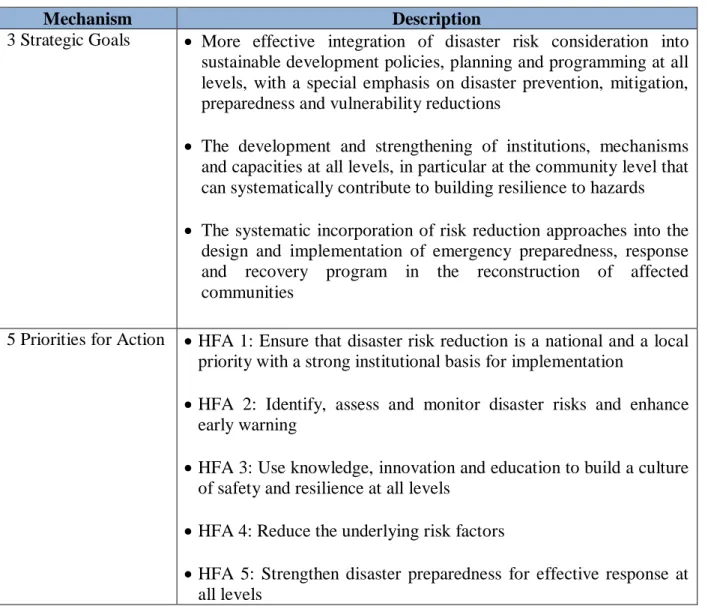
Table 2.1. Summary of strategic goals, priorities for action, indicators of progress, reporting process, key documents and supporting mechanism of the HFA ... 22
Table 2.2. Some Difference Between HFA & SFDRR... 25
Table 2.3. Different in Disaster Impact Between Rich and Poor Countries ... 26
Table 2.4. Framework of Academician’s, International Organization and Policy Makers About Community Resilience ... 27
Table 2.5. Traditional and Human Security ... 30
Table 3.1. Summary Table of Damage and Losses of Indian Ocean Tsunami in Indonesia ... 39
Table 4.1. Composition of Sumberagung Village and Pancer Hamlet Population ... 65
Table 4.2. The Role and Responsibility of Local Institution in Kuta Village, Bali ... 66
Table 4.3. Components of Disaster-Resilient Village Program ... 72
viii Table 5.2. Factors that Influence Resettlement in Banda Aceh, Indonesia and
Minamisanriku, Japan ... 83
Table 6.1. Temporary Evacuation Shelter Cluster ... 91
Table 6.2. Search and Rescue Cluster ... 92
Table 6.3. Health and Psychosocial Cluster ... 94
Table 6.4. Food and Nutrition Cluster ... 95
Table 6.5. Temporary Shelter Cluster ... 96
Table 6.6. Infrastructural Recovery Cluster ... 97
Table 6.7. Education Cluster ... 98
ix List of Figures
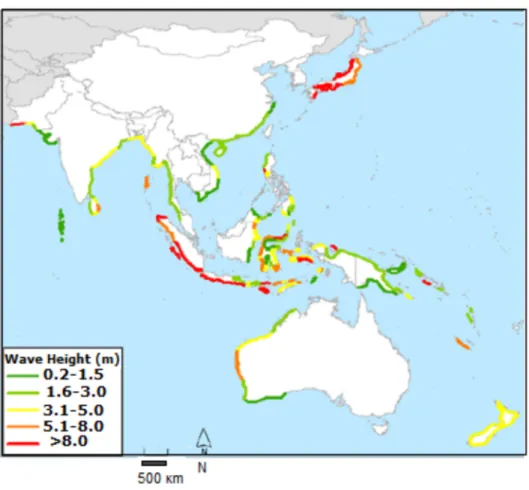
Figure 1.1. Tsunami Risk in Asia Pacific... 2
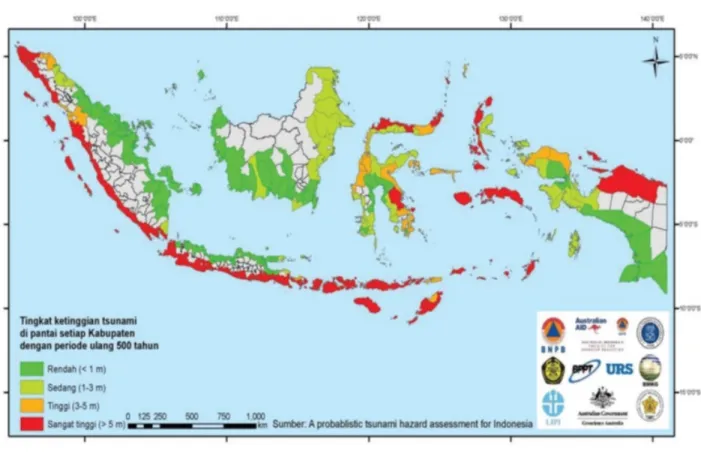
Figure 1.2. Map of Tsunami Risk in Indonesia ... 3
Figure 1.3. Indonesia Map and Research Site ... 13
Figure 1.4. Entrance Gate to Pancer Hamlet ... 13
Figure 1.5. Some Pictures of Semi-Structured Interviewa ... 16
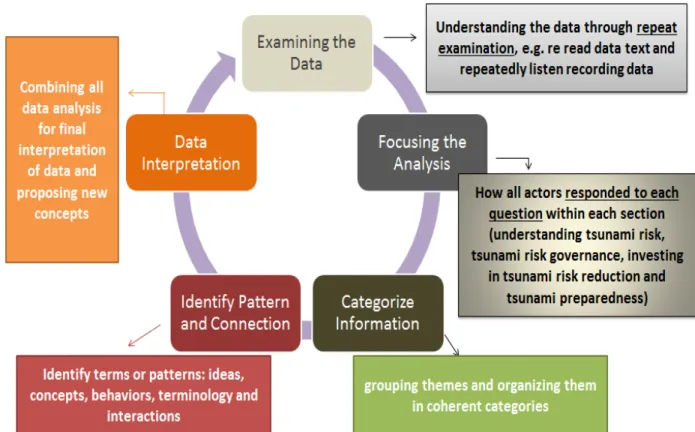
Figure 1.6. Data Analysis Technique ... 17
Figure 2.1. Disaster Classification ... 19
Figure 3.1. Guidance of Tsunami Risk Assessment by UNESCO ... 40
Figure 3.2. Vulnerability of Coastal Communities ... 42
Figure 3.3. ”Traditional” Map of Tsunami-Prones Areas in Pancer Hamlet ... 43
Figure 3.4. Tsunami Evacuation Map of Miyako City ... 44
Figure 3.5. Campaign Planning Overview ... 47
Figure 3.6. Conceptual Framework of Inter-Governmental Relation ... 52
Figure 4.1. Projection of Disaster Management Agency Budget Comparing to Others Sector in 2016... 61
x Figure 4.3. Organizational Structure of Disaster Management Agency in
Banyuwangi District ... 69
Figure 5.1. Fisherman Boats which are many of them are “Illegal” ... 79
Figure 6.1. Disaster Management Cycle ... 90
Figure 6.2. Technology-based EWS in Pancer Hamlet ... 104
Figure 6.3. Goals and Ways that Social Media can Help Build Community Disaster Resilience ... 103
Figure 6.4. Facebook and Twitter Account of BPBD Banyuwangi ... 104
Figure 6.5. Logistic Management System ... 105
Figure 6.6. Planning for the Recovery ... 107
Figure 7.1. The Pattern of Coordination and Cooperation among Actors ... 113
xi Glossary of Terms
BASARNAS Badan Search and Rescue Nasional (BASARNAS)/National Search and Rescue Agency
BNPB Badan Nasional Penanggulangan Bencana/National Disaster Management Agency
BNPP Badan Nasional Pencarian dan Pertolongan (BNPP)/National Search and Rescue Agency
BPBD Badan Penanggulangan Bencana Daerah (BPBD)/Local Disaster Management Agency
BMKG Badan Meteorologi, Klimatologi dan Geofisika (BMKG)/Meteorology, Climatology and Geophysics Agency
CHS Commission on Human Security
DESTANA Desa Tanguh Bencana (Destana) / Disaster-Resilient Village DINAS PU Dinas Pekerjaan Umum (Dinas PU)/Infrastructural Agency
DINSOS Dinas Sosial (Dinsos)/Social Agency
DKP Dinas Kebersihan dan Pertamanan (DKP)/Cleanliness and Gardening Agency
DISPENDIK Dinas Pendidikan (Dispendik) / Education Agency DISPENDUK Dinas Kependudukan (Dispenduk) /Population Agency
xii KODIM Komando Daerah Militer (Kodim)/Local Military Office
KORAMIL Komando Rayon Militer (Koramil)/Sub-district military level NGOs Non-Government Organizations (NGOs)
ORARI Organisasi Amatir Radio Indonesia (Orari)/Amateur Organization of Indonesian Radio
PDAM Perusahaan Daerah Air Minum (PDAM) Local Company of Drinking Water
PEMDA Pemerintah Daerah (Pemda) / Local Government
PERHUTANI Perusahaan Hutan Negara Indonesia (Perhutani) / Forest State Owned Enterprise of Indonesia
PMI Palang Merah Indonesia (PMI)/Indonesian Red Cross Agency POLSEK Kepolisian Sektor (Polres)/Sub-district police level
PUSDALOPS Pusat Pengendalian Operasi Penanggulangan Bencana (Pusdalops) /Center of Disaster Management Operation Control
PUSKESMAS Pusat Kesehatan Masyarakat/ Sub-District Health Center
RPJMD Rencana Pembangunan Jangka Menengah Daerah (RPJMD)/Mid-Term Development Plan
RPJMN Rencana Pembangunan Jangka Menengah Nasional (RPJMN)/Mid-Term Development Plan
RSUD Rumah Sakit Umum Daerah (RSUD)/Local Hospital
xiii SFDRR Sendai Framework for Disaster Risk Reduction (SFDRR)
TNI Tentara Nasional Indonesia (TNI)/Military of Indonesia UNDP United Nation Development Program
UPTD Unit Pelaksana Teknis Daerah (UPTD)/Technical Unit of Program Implementation
1 CHAPTER 1 - INTRODUCTION
1.1 Background
Indonesia is a country with a high potential risk of a tsunami. In the last two decades, at least 10 disasters occurred in Indonesia (see table 1.1), namely in Flores (1992); Banyuwangi, East Java (1994); Biak (1996); Maluku (1998); Banggai, North Sulawesi (2000); Aceh (2004); Nias (2005); West Java (2006); Bengkulu (2007); and Mentawai (2010).
Table 1.1: Tsunamis in Indonesia 1990-20101 No. Date Magnitude Center of
Earthquake
Location Tsunami Height (m)
1. 12/12/1992 7,8 Flores Sea Alor 26.2
2. 3/6/1994 7.8 Java Sea Banyuwangi 13.9
3. 18/2/1996 8.2 Biak and Irian Jaya Biak 2.75
4. 29/11/1998 7.7 P. Taliabu, Maluku Taliabu 18
5. 4/5/2000 7.6 Banggai, Sulawesi Banggai 6
6. 26/12/2004 9 West Sumatera Sea Meulaboh
(Aceh)
50.9
7. 28/3/2005 8.7 West Sumatera Sea Padang
Sidempuan
3
8. 17/7/2006 7.7 Pangandaran, Java Pangandaran 10
9. 12/9/2007 8.4 Bengkulu, Sumatera Bengkulu 0.98
10. 25/10/2010 7.2 Mentawai, Sumatera Mentawai 8
On a large-scale, tsunami disaster is less common than other types of disasters. However, the impact caused by a tsunami is gigantic compared to many other disasters. On a world map (see figure 1.1), a region that has the most potential tsunami are countries that are located in the Asia-Pacific region, including Indonesia.
2 In Indonesia, the area with a tsunami threat is widely spread throughout almost all parts of Indonesia, starting from the west coast of Aceh, West Sumatra, Bengkulu, Southern Java, Nusa Tenggara, Central and Northern Sulawesi and Maluku as well as Western and Northern Papua.
Figure 1.1: Tsunami Risk in Asia Pacific Source: UN-OCHA (2009)
As we can see from figure 1.2, the red region represents the area with the high potential of a tsunami in Indonesia. Based on the results of risk analysis, there are four major areas that have a high risk of tsunami probability. The areas are: (1) Mentawai Megathrust; (2) Sunda Strait Megathrust and the Southern Part of Java; (3) Southern Bali and Nusa Tenggara and (4) The North Part of Papua. Because of the very high potential of the tsunami risk, Indonesia's population that is exposed to the tsunami risk has reached 5,031,147 inhabitants. Therefore, DRR
3 in particular for a tsunami is a crucial way that should be conducted by the Indonesian Government in reducing the tsunami impact.
Figure 1.2: Map of Tsunami Risk in Indonesia2
DRR is a systematic effort undertaken to reduce the impact caused by a disaster. Realizing this situation, the United Nations (UN) has made a guide for DRR, derived from the "Yokohama Strategy and Plan of Action for a Safer World" that was approved as a DRR strategy plan for 1995-2005; the "Hyogo Framework for Action 2005-2015: Building the Resilience of Nations and Communities to Disasters" and the latest “Sendai Framework for Disaster Risk Reduction (SFDRR)" that become a guide for DRR for the next 15 years, 2015 till 2030. These guidelines apply at various levels, from a global, regional, national, and local level.
4 Data shows that countries and regions that have good DRR system will also be able to minimize the impact of disasters. For example, data from the 1994 UNDP Human Development Report indicates that drought or floods in Africa will lead to a greater impact than the impact it had in America. Between 1967 – 1991, 22% of global disasters occurred in America and 15% in Africa, however 60% of deaths caused by this disaster are in Africa, while only 6% of deaths occurred in America (UNDP, 1994).
Another set of data is associated with the Indian Ocean Tsunami in Indonesia, and the Great East Japan Earthquake in Japan. With the similar characteristic of an earthquake and tsunami, the impact of the disasters is different, particularly in terms of the number of victims. The earthquake and a tsunami in Aceh, Indonesia has caused more than 230,000 deaths, while the quake and tsunami in the Tohoku region "only" caused the death of approximately 20,000 people.
Community disaster resilience is one important key to reducing the impact of tsunami risks. This study conducted an analysis of community resilience in facing disaster threat by taking a community level (Hamlet) and focusing on tsunami hazard in Indonesia. It analyzed community resilience to face a tsunami through component that developed according to the Sendai Framework for Tsunami Risk Reduction (SFDRR) and expected to be able to provide an overview of how the condition of community resilience is using the theoretical and practical framework.
1.2 Research Aim and Objectives
The primary purpose of this study is to conduct an analysis of community resilience in facing disaster; focusing on tsunami threat in the framework of SFDRR. Specifically, the objectives of this study are to:
5 2. Explore, identify and examine tsunami risk governance in building a tsunami-resilient
community;
3. Elaborate and explain about investing of tsunami risk reduction for community resilience; 4. Describe, identify and analyze community tsunami preparedness;
5. Analyze the role of governance actors in building community resilience toward a tsunami.
1.3 Scope of Study
Based on research objectives, the scope of this study will focus on the tsunami-prone hamlet level. The research will take a case study in Pancer Hamlet, Banyuwangi District, Indonesia. Pancer Hamlet had experienced a tsunami that destroyed the community. It is expected that this study could be a lesson learned to be applied in other communities, particularly in Indonesia.
1.4 Previous Studies and Research Originality
Some previous studies that are discussed in this part are studies from Malalgoda and Amaratunga (2015); Djalante, et. al., (2012); Twigg (2009); UNISDR (2012) and Bevaola (2012). The Malalgoda and Amaratunga study entitled “A disaster resilient built environment in urban cities: the need to empower local governments” (2015) is a study that was conducted in three local governments in Sri Lanka. The paper proposes the ways and means of overcoming existing challenges and it provides recommendations as to how the local governments could be empowered in facilitating city resilience-building initiatives in the built environmental context.
Three case studies were conducted in Sri Lanka: Batticaloa, Galle, and the Kandy municipal council areas. Within these case studies, an extensive number of interviews were carried out to gather valid and reliable data relevant to the area of the study through semi-structured interviews
6 with the local and other government officials, policy makers, industry practitioners and experts who are engaged in the respective areas of the study.
There are some findings in the study. First, it is related to policy changes to make the municipal council responsible for creating a disaster resilient. Lack of authority is a major constraint for Sri Lankan municipal councils in contributing to city resilience. Policy level changes are required to delegate sufficient authority to municipalities and thereby enable them to make independent decisions. Second, it is developing tools and guidelines in promoting disaster-resilient planning, construction, and operation. Typically, the tools and guidance are developed by relevant central-level agencies and it is important that municipalities receive these tools and guidelines to be implemented at a local level. These include resilient building codes, disaster-resilient planning, construction and maintenance guidelines, hazard and risk maps and urban development plans. It has not become well-developed yet in three case studies. Third is the provision of necessary resources directly to municipal councils to facilitate better engagement. Other actors should be better engaged, including NGOs, international organizations, and the private sector. The fourth is the establishment of a separate unit within the municipality. Establishing a separate unit will facilitate regular monitoring of the built environment and help to identify ‘at risk’ buildings and infrastructure, vulnerable settlements and illegal structures that increase the risk of disasters.
Djalante, et. al. did a study entitled “Building Resilience to Natural Hazards in Indonesia: Progress and Challenges in Implementing Hyogo Framework for Action (HFA)” reviewing Indonesia’s progress and challenges in implementing HFA. Using literature review and interview with a representative of 26 organizations this study tried to explore the progress and challenge of the Indonesian Government based on five priorities in HFA.
7 This study gave several recommendations to build resilience to natural hazards in Indonesia. The first recommendation is to strengthen the participation and coordination of multiple stakeholders at the national level and to formulate a coordinated funding mechanism to improve DRR (as well as climate change adaptation (CCA)) coordination between different national ministries. The second recommendation is to improve the capacity and capability of local governments, especially about programme implementation. The role of local governments is extremely important since they are at the frontline when a disaster occurs. The third recommendation is to encourage the participation of a wide range of stakeholders at the sub-national and local levels and to support community-based DRR. Three things can be achieved through local participation: (1) improved capacity and capability for DRR of local governments; (2) improved learning processes through shared knowledge and experiences of different stakeholders; and (3) strengthening of local disaster preparedness and response. The fourth recommendation is to develop methods and tools for mainstreaming DRR into local development planning that is suitable to local conditions and acceptable to local governments.
Bevaola (2012) in her study “Bridging the Gap: the Role of Local Government Capability and the Management of Natural Disaster in Bantul, Indonesia”, discussed about six important capabilities that are needed by local government in managing disasters. Those capabilities are institutional capability, human resources capability, a policy for effective implementation capability, financial capability, technical capability and leadership capability. Table 1.2 shows that every capability has corresponding characteristics according to the research findings. Using a case study in Bantul District in Yogyakarta Province in Indonesia, this study is focusing on local-government level analysis rather that community-based analysis.
8 Table 1.2: Local Government Capability in Managing Disaster
Capability Findings
Institutional Lack of standard operating procedure in confronting disaster No training and education were available
Adopted disaster mitigation effort in the Middle-Term Development Plan
Human Resources Limitation on task delegation and division of labor Having additional tasks to understand local need better
Policy for Effective
Implementation
No national and local policy arrangement and institutions applied
No vulnerable area map and early warning system available No mitigation program for bureaucracy staff and community
Financial Limited amount of money allocated for disaster management
activities
Ability to switch the allocated budget for response and recovery stages
Having financial support from national, provincial and international donors
Technical Pay more attention to children’s and women’s needs
Manage logistic management adequately
Leadership The Bantul Mayor demonstrated responsive leadership
Collective leadership with multiple stakeholders ran smoothly Source: Bevaola, 2012, p. 772
Table 1.3 shows results of another study conducted by Twigg (2012), the author tried to build a components and characteristics of disaster-resilient communities. Components and characteristics of disaster resilient communities included in the Twigg study are based on the Hyogo Framework for Action (HFA), which is combined with other literature. In his study Twigg made five thematic areas that are later revealed as components of resilience, namely: (1) governance, (2) risk assessment, (3) knowledge and education, (4) risk management and vulnerability reduction and (5) disaster preparedness and response.
9 Table 1.3: Components of Resilience in Twigg Study
No. Thematic Areas Components of Resilience
1. Governance Policy, planning, priorities and political commitment Legal and regulatory systems
Integration with development policies and planning Integration with emergency response and recovery
Institutional mechanisms, capacities and structures; allocation of responsibilities
Partnership
Accountability and community participation 2. Risk Assessment Hazard/risk data and assessment
Vulnerability/capacity and impact data and assessment Scientific and technical capacities and innovation
3. Knowledge and
Education
Public awareness, knowledge and skills Information management and sharing Education and training
Cultures, attitudes, motivation Learning and research
4. Risk Management and Vulnerability
Reduction
Environmental and natural resources management Health and well being
Sustainable livelihoods Social protection Financial instruments
Physical protection; structural and technical measures Planning regimes
5. Disaster Preparedness and Response
Organizational capacities and coordination Early warning systems
Preparedness and contingency planning Emergency response and recovery
Participation, voluntarism and accountability Source: Twigg, 2011, p. 10
A further study from UNISDR (2012) is entitled “making cities resilient report 2012”. This study was conducted through in-depth interview with mayors and city officials using a question that has been prepared in advance. This study shows some enabling conditions for building resilience as follows:
10 1. Leadership and political will. Getting political momentum behind risk reduction is one of the enabling factors for improving disaster resilience. Particularly where substantial changes to the status quo are necessary, political will is vital in terms of introducing new and progressive risk reduction practices and policies.
2. Sustainable government engagement in risk reduction. Frequent turnover in political leadership can impact the continuity of DRR activities. One challenge is the length of the political term at the local level, which generally peaks at eight years. A great deal of resilience building can be done in the short term, but governance structures and the involvement of various actors must be in place to ensure the continuity and fulfillment of these shorter-term efforts and achieve sustainable resilience.
3. City to city learning and international cooperation. Engaging in partnerships and city-to-city learning exchanges is instrumental in building momentum for disaster risk reduction activities and sharing ideas on best practices. Alongside the Campaign, several other groups are working towards the same goal of empowering local governments to improve their resilience.
4. Integrating disaster risk reduction as a cross-scale and multi-sector issue. Mainstreaming risk reduction activities means hazard risks and vulnerabilities are being accounted for in ongoing urban programming, so that the consideration of risk reduction measures becomes institutionalised as part of the normal operations of municipal departments. Integrating DRR into development activities is an important way in which cities provide the enabling conditions for building resilience.
5. Addressing existing infrastructure deficits. History shows that cities with higher levels of socio-economic development have a head start when it comes to resilience building. This is illustrated by the much lower fatality rates resulting from disasters in developed countries as compared to low and middle-income countries.
There are also some rare studies that discussed community resilience in the framework of SFDRR since the SFDRR is a quite new framework that produced in 2015. Therefore, compared to previous studies, the originality of this study is developing components and proposing the role of governance actors that will become a practical guideline in building resilient communities, particularly in a tsunami-prone community. This practical guidance is the manifestation of the "Sendai Framework for Disaster Risk Reduction," as the latest “theoretical” guidelines agreed to by all countries in the DRR.
1.5 Research Benefit
11 1. This study will establish criteria and related technical components to build disaster
resilient communities, in particular, a tsunami.
2. Proposed governance actors can be developed to build a tsunami-resilient community. This study could be used as a reference and guide for various actors, such as what components and what kinds of efforts are necessary in building a tsunami-resilient community.
1.6 Research Limitations
Developing components and a proposed governance design to build resilient communities toward tsunami has advantages, but also at the same time it has limitations. In terms of benefits, by focusing on one type of disaster components and one type of proposed design are expected to be more concrete. However, there are also disadvantages and limitations of this topic. This research focuses only on a community level, particularly in a hamlet level and hence may only be extremely concrete for that situation. In addition to focusing on one type of potential disaster, namely a tsunami, the study will not address the potential threat of another hazard that may also exist.
1.7 Research Methodology
Research methodology is defined as the entire approach used in the process of practical studies, starting from theories used and the collection and analysis of data. Remenyi et al. (2003) described methodology as the “overall approach to a problem which could be put into practice in a research process, from the theoretical underpinning to the collection and analysis of data.” On a similar note, Collis and Hussey (2009) identified the methodology as the “overall approach to the entire process of the research study." Research methodology, as per the above definitions, is
12 focused on around the problems to be investigated in a research study and hence is varied according to the problems to be investigated.
1.7.1 Qualitative, Case Study and Evidence-Based Research
This study used a qualitative approach as the main research approach. Nevertheless, the quantitative data may also be used to support the qualitative method. The study also uses a case study research design. Yin (2003) describes a case study as an attempt investigation to a particular phenomenon in the field. A case study will be very useful, especially to answer the research question "how" and "why".
The study also uses a case study research design. Yin (2003) describes a case study as an attempted investigation to a particular phenomenon in the field. A case study will be very useful, especially to answer the research question "how" and "why". A case study is usually largely associated with the design of qualitative research, which aims to get closer to reality and in accordance with a phenomenon. A case study is often associated with a qualitative research design, which aims to get closer to the reality, to emphasize episodes, and to understand the context (Denzin & Lincoln, 1994). This study sought to answer the question of how efforts should be made to build disaster resilient communities, especially a tsunami.
In addition, this study uses an evidence-based approach. The evidence-based approach means using evidence from fieldwork to support the findings and analysis of research data. This means that data is substantial evidence to support the research into one of the essential tools in the whole research process.
1.7.2 Research Site
In accordance with the aim and purpose of research, this study using a case study in Pancer Hamlet, Banyuwangi District in East Java Province Indonesia. Pancer Hamlet that was stricken by a tsunami in 1994 and it will face a substantial risk for future re-exposure to
13 a tsunami and this is the primary consideration why Pancer Hamlet is chosen as the research site.
XXXXXA
Figure 1.3: Indonesian Map and Research Site3
Figure 1.4: Entrance Gate to Pancer Hamlet
3
14 As shown in figure 1.2 regarding map of tsunami risk in Indonesia, there are a lot of high tsunami risk zone in Indonesia. One of the tsunami risk area is southern part of Java, which is shown by the red zone areas. The red dot in figure 1.3 shows the location of Pancer Hamlet, Banyuwangi District that included as high tsunami-risk zone in Indonesia.
1.7.3 Semi-Structured Interview and Literature Review
The process of the field study in this research is conducted in two stages. The first stage is the initial stage of the study. The main aim of the first stage is to conduct a preliminary study. The study was undertaken in March-April, 2015. Furthermore, the researcher also trying to gather supporting data that was expected to be useful for research consideration. Moreover, the purpose of this initial study was to determine the suitability of the research site with the aim of the study and it was conducted as a preliminary semi-structured interview with key actors, namely local government officers and the Pancer Hamlet community to make better components and questions of a semi-structured interview. The second stage is the main stage of this research. The second stage of field study was conducted in April-June, 2016. This phase of the study seeks to conduct semi-structured interview with multiple stakeholders that is divided into four categories, namely: (1) community at risk in Pancer Hamlet; (2) Local Government Officers; (3) Non-Government Organizations and (4) Private Sectors. Semi-structured interview with community at risk conducted by random selection in Pancer Hamlet communities. Semi-structured interview also conducted with key informants such as the head of Pancer Hamlet and the people who have directly affected by the tsunami in 1994.4
Semi-structured interview with local government officers were conducted in particular with the Local Disaster Management Agency (BPBD) which in this case is represented by
15 the head of prevention and preparedness as well as the head of the program formulation. In addition, interviews conducted to the Head of Pesanggaran sub-district as head of sub-district who oversees Pancer Hamlet. Semi-structured interviews with NGOs were carried out to non-governmental organizations which focus on disaster issues such as BAFFELS (Banyuwangi’s Forum for Environmental Learning) and tourism community in Pancer Hamlet. Besides, this study also conducted semi-structured interview with private sectors which in this case were represented by organizations and fishing communities in Pancer Hamlet (see figure 1.5. as example of semi-structured interview pictures).
When the primary data collected through field study using semi-structured interview, secondary data collection are gathered through a literature review. The literature review is conducted through books, academic journals, newspapers and magazines, government reports and NGO reports as well as the documentation of the government act.
1.7.4 Data Analysis
Data analysis (figure 1.6) performed in this study refers to the analysis technique by Powell and Renner (2003). The first step is to do an examination of the data that have been obtained. Understanding the data through repeated examination such as reading data texts and listening to the recording data repeatedly is one key to knowing, understanding and analyzing the data. The first step of this analysis is a critical step to absorb the real condition of the research site based on the data.
The next step is to focus on the data that has relevance to the research focus and objectives. At this time, the most important thing is to examine how all actors responded to each question within each section that becomes the research focus of this study. The literature is also scrutinized according to the research focus.
16 Figure 1.5: Some Pictures of Semi-Structured Interview
After focusing on the data in accordance with the research focus the researcher will attempt to perform the categorization of the information and data. The categorization and grouping were conducted through the focus and in coherent categories. After categorization, the researcher tries to identify the pattern and connection. After understanding, examining and categorizing the data, the next step is to determine the pattern and connection namely basic ideas, concepts, behaviors, terminology and interactions.
The next part is to interpret the data that have been examined, categorized, identified and try to find the pattern and its connection. In a qualitative study, this step is a critical step because the interpretation of the researcher regarding the data is determining the research
17 result. Interpreting the data means combining all data analysis for final interpretation of data and proposing new concepts. All of these five processes are continually repeated.
Figure 1.6: Data Analysis Technique Source: Modification from Powell and Renner, 2003
18 CHAPTER II – THEORETICAL FRAMEWORK
2.1. Introduction
Disaster risk reduction (DRR), community resilience and human security are inseparable concepts. The concept of DRR has been examining for a long time, and a lot of DRR concepts have been produced by many experts, actors, and institutions. In this study, the focus of DRR mainly is based on the DRR concept that resulted from the formal institution, namely the United Nations and in particular UNISDR. In this part, the discussion is divided into two aspects namely, disaster and DRR. While the discussion on community resilience will mainly come from the paper of Danar and Pushpalal (2014) that discusses community resilience in the perspective of academicians, NGOs and policy makers (government). The discussion on disaster and human security is divided into three parts: 1) the concept of human security; 2) disaster and human security and 3) freedom from fear. In the theoretical framework, it is also discussed disaster risk governance concept.
In general, DRR is an essential prerequisite for the creation of disaster-resilient communities. Reducing the risk of a disaster could create a resilient community; a significant effort to improve human security. This chapter also presents the theory of governance as a guide in developing a proposed design for the role of actors in building community resilience.
2.2. Disaster Risk Reduction 2.2.1. Disaster
Disaster is an incident that suspends normal activities and threatens or causes severe community damage, which is categorized into natural and man-made disasters (Aldrich, 2012, p.3). In a methodological review Villagran (2006) concludes that a disaster is preceded
19 by at least two predispositions: the possibility that the triggering event will take place, usually called a hazard in this potential state; and a existing vulnerability, the pre-disposition of people, processes, infrastructure, services, organisations, or systems to be affected, damaged or destroyed by an event.
Shaluf (2007) explains there are three types of disasters (see Figure 2.1): 1) man-made disaster; 2) natural disaster; and 3) the combination of both types of disaster, namely a hybrid disaster. A man-made disaster is a disaster caused by human activity. It is divided into two parts, namely a socio-technical disaster and warfare disaster. Disasters that are categorized as socio-technical disaster are technological-disaster, transportation disaster, structure collapse and production failure. Warfare itself is divided into two, namely international and national warfare.
Figure. 2.1: Disaster Classification Source: Shaluf (2007)
20 A natural disaster is a disaster that is caused by “natural” factors. A natural disaster is divided into four parts, namely, natural phenomena beneath the earth's surface, natural phenomena of complex physical origin at the earth's surface, metrological/hydrological phenomena and biological phenomena. This study will focus on a tsunami as a "natural" disaster.
2.2.2. Disaster Risk Reduction (DRR)
There is no such thing as a 'natural' disaster, only natural hazards. DRR aims to reduce the damage caused by natural hazards like earthquakes, floods, droughts and cyclones, through an ethic of prevention (UNISDR, 2009). The rationale is used by the United Nations, in particular UNISDR, to understand the DRR. There is no 'natural' disaster, there is only “hazard”, if it is not well-managed, will potentially be a disaster.
DRR measures are taken to reduce the destruction and impact caused by natural hazards such as earthquakes, floods, droughts and strong winds, through disaster mitigation action. DRR is an effort to reduce the risk through systematic efforts to analyze and reduce the factors that lead to a disaster. The concept and practice of DRR, through systematic efforts to analyze and manage factors including reduced exposure to threats, reduced vulnerability of people and property, wise management of the land and the environment and improving the readiness of society to the adverse event.
The Yokohama conference (1994) produced a document called: Yokohama Strategy and Plan of Action for a Safer World. The focus of this report is specific DRR namely natural disasters. In 2005, The World Conference on Disaster Reduction (2005) published the "Hyogo Framework for Action 2005-2015: Building the Resilience of Nations and Communities to Disasters" which was a DRR strategy for 2005-2015. The Hyogo
21 Framework for Action (HFA) consists of 3 strategic goals, 5 priorities for action, 22 indicators of progress and 5 levels of progress (See Table 2.1).
Table 2.1: Summary of strategic goals, priorities for action, indicators of progress, reporting process, key documents and supporting mechanism of the HFA
Mechanism Description
3 Strategic Goals More effective integration of disaster risk consideration into sustainable development policies, planning and programming at all levels, with a special emphasis on disaster prevention, mitigation, preparedness and vulnerability reductions
The development and strengthening of institutions, mechanisms and capacities at all levels, in particular at the community level that can systematically contribute to building resilience to hazards The systematic incorporation of risk reduction approaches into the
design and implementation of emergency preparedness, response and recovery program in the reconstruction of affected communities
5 Priorities for Action HFA 1: Ensure that disaster risk reduction is a national and a local priority with a strong institutional basis for implementation
HFA 2: Identify, assess and monitor disaster risks and enhance early warning
HFA 3: Use knowledge, innovation and education to build a culture of safety and resilience at all levels
HFA 4: Reduce the underlying risk factors
HFA 5: Strengthen disaster preparedness for effective response at all levels
22 Source: UNISDR, 2011
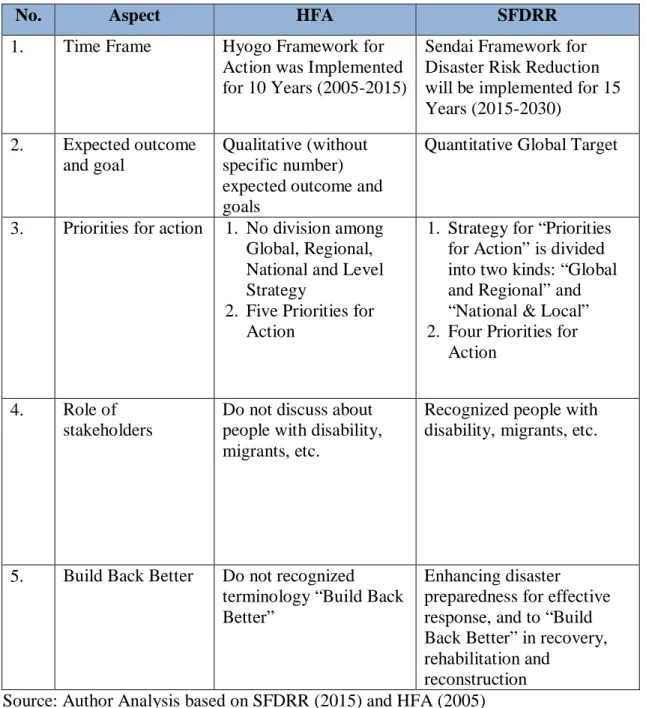
The latest document as a guide for DRR worldwide is the "Sendai Framework for Disaster Risk Reduction (SFDRR)" which is a guide to DRR since 2015-2030. There are some significant differences between SFDRR compared to Hyogo Framework. One of them
22 Indicators of Progress
HFA 1: 4 indicators (Existence of institutional and legal frameworks for DRR; Availability of resources; Community participation; Functioning national platform)
HFA 2: 4 indicators (Risk assessment and vulnerability information; Hazard and vulnerability information system; Early warning system; National, regional/trans-boundary and local risk assessments)
HFA 3: 4 indicators (Disaster information sharing and dissemination systems; school curricula and educational materials on DRR; Research, tools, analysis for risks assessments; public awareness strategy)
HFA 4: 6 indicators (DRR as part of development policies and plans; Social policies to reduce vulnerabilities; Policies that reduce economic vulnerability; Inclusion of DRR into built-environment planning; DRR consideration into recovery and reconstructions; Risk screening for major development projects)
HFA 5: 4 indicators: Policy and mechanisms for disaster management; Disaster preparedness and contingency plans with training and drills; Financial reserves and contingency mechanisms; Procedure for information exchange during response and recovery) 5 Levels of Progress Level 5: Comprehensive achievement has been attained, with the
commitment and capacities to sustain efforts at all levels
Level 4: Substantial achievement has been attained, but with some recognized deficiencies in commitment, financial resources or operational capacity
Level 3: There is some commitment and capacities to achieving DRR but progress is not substantial
Level 2: Achievements have been made but are relatively small or incomplete, and while improvements are planned, the commitment and capacity are limited
Level 1: Achievements are minor and there are few signs of planning or forward action to improve the situation
23 is the adoption of the priorities and strategies for DRR into regional and global levels as well as national and local, including the community level.
The research will develop components and practical models of SFDRR that will be based on four priorities of SFDRR (2015):
1. Understanding disaster risk
Policies and practices for disaster risk management should be based on an understanding of disaster risk in all its dimensions of vulnerability, capacity, exposure of persons and assets, hazard characteristics and the environment. Such knowledge can be leveraged for the purpose of pre-disaster risk assessment, for prevention and mitigation and for the development and implementation of appropriate preparedness and effective response to disasters.
2. Strengthening disaster risk governance to manage disaster risk
Disaster risk governance at the national, regional and global levels is of great importance for an effective and efficient management of disaster risk. Clear vision, plans, competence, guidance and coordination within and across sectors as well as participation of relevant stakeholders are needed. Strengthening disaster risk governance for prevention, mitigation, preparedness, response, recovery, and rehabilitation is therefore necessary and fosters collaboration and partnership across mechanisms and institutions for the implementation of instruments relevant to disaster risk reduction and sustainable development.
3. Investing in disaster risk reduction for resilience
Public and private investment in disaster risk prevention and reduction through structural and non-structural measures are essential to enhance the economic, social, health and cultural resilience of persons, communities, countries and their assets, as well as the environment. These can be drivers of innovation, growth and job creation. Such measures are cost-effective and instrumental to save lives, prevent and reduce losses and ensure effective recovery and rehabilitation.
4. Enhancing disaster preparedness for effective response, and to “Build Back Better” in recovery, rehabilitation and reconstruction
The steady growth of disaster risk, including the increase of people and assets exposure, combined with the lessons learned from past disasters, indicates the need to further strengthen disaster preparedness for response, take action in anticipation of events, integrate disaster risk reduction in response preparedness and that ensure capacities are in place for effective response and recovery at all levels. Empowering women and persons with disabilities to publicly lead and promote gender equitable and universally accessible response, recovery rehabilitation and reconstruction approaches are key. Disasters have demonstrated that the recovery, rehabilitation and reconstruction phase, which needs to be prepared ahead of the disaster, is a critical opportunity to build back better, including through integrating disaster risk reduction into development measures, making nations and communities resilient to disasters.
24 Table 2.2: Some Differences between HFA and SFDRR
No. Aspect HFA SFDRR
1. Time Frame Hyogo Framework for
Action was Implemented for 10 Years (2005-2015)
Sendai Framework for Disaster Risk Reduction will be implemented for 15 Years (2015-2030)
2. Expected outcome and goal
Qualitative (without specific number) expected outcome and goals
Quantitative Global Target
3. Priorities for action 1. No division among Global, Regional, National and Level Strategy
2. Five Priorities for Action
1. Strategy for “Priorities for Action” is divided into two kinds: “Global and Regional” and “National & Local” 2. Four Priorities for
Action
4. Role of stakeholders
Do not discuss about people with disability, migrants, etc.
Recognized people with disability, migrants, etc.
5. Build Back Better Do not recognized terminology “Build Back Better”
Enhancing disaster preparedness for effective response, and to “Build Back Better” in recovery, rehabilitation and
reconstruction Source: Author Analysis based on SFDRR (2015) and HFA (2005)
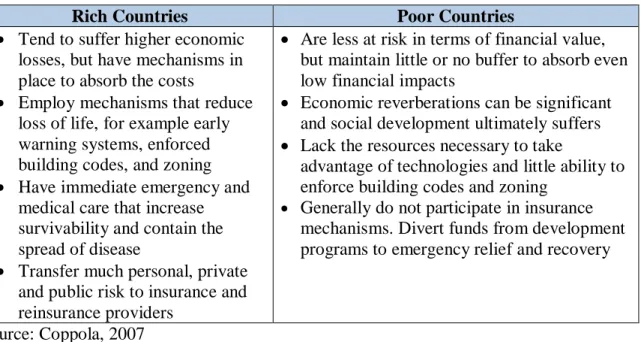
Table 2.3 shows that generally, developed countries have a better DRR system comparing to developing countries. Likewise, this situation also influences DRR in developed and developing country. This condition has been identified by Coppola (2007) in his study. The developed country tends to suffer high economic loss, but has mechanisms in place to absorb the costs. This is different with developing (poor)
25 countries which are less at risk regarding financial value but maintain low financial impacts.
Table 2.3: Different in disaster impact between rich and poor countries
Rich Countries Poor Countries
Tend to suffer higher economic losses, but have mechanisms in place to absorb the costs
Employ mechanisms that reduce loss of life, for example early warning systems, enforced building codes, and zoning Have immediate emergency and
medical care that increase survivability and contain the spread of disease
Transfer much personal, private and public risk to insurance and reinsurance providers
Are less at risk in terms of financial value, but maintain little or no buffer to absorb even low financial impacts
Economic reverberations can be significant and social development ultimately suffers Lack the resources necessary to take
advantage of technologies and little ability to enforce building codes and zoning
Generally do not participate in insurance mechanisms. Divert funds from development programs to emergency relief and recovery
Source: Coppola, 2007
A developed country has a mechanism that reduces death victims such as early warning systems, enforced building codes and zoning. While in a developing country, the lack of necessary resources to take advantage of technology and the lack of ability to enforce building codes and zoning exists. Another difference is a developed country has a private and public risk to insurance and reinsurance providers while developing countries generally do not participate in insurance mechanisms. The funding limitation is becoming a problem to divert funds from development programs to emergency relief and recovery.
26 2.3. Community Resilience5
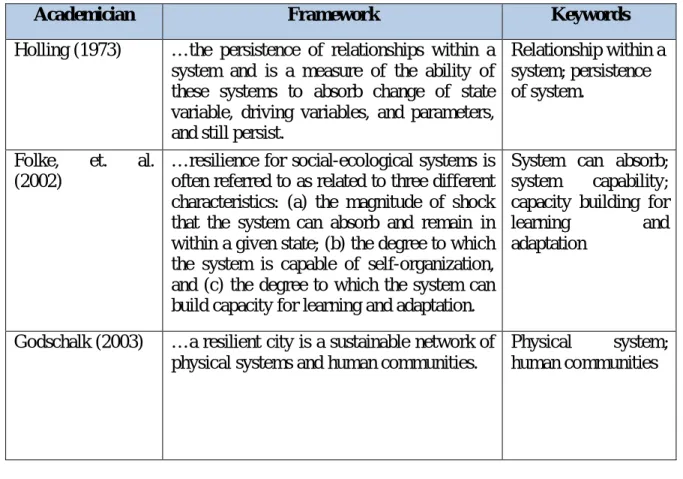
Table 2.4 refers to some papers and discussion about the meaning, concept and theoretical framework of community resilience. Danar and Pushpalal (2014) tried to make a categorization about the meaning of community resilience; which is divided into three perspectives, namely: academicians, international organizations and policy makers. The academician’s perspective will be based on Holling (1973), Folket, et. al (2002) and Godschalk (2003). The international organizations view using IFRC (2004) and UNISDR work (2009, 2012); while from policymaker perspective used from Japanese (2013) and Indonesian Government (2011).
Table 2.4: Framework of academician’s, international organizations & policy makers6
Academician Framework Keywords
Holling (1973) …the persistence of relationships within a system and is a measure of the ability of these systems to absorb change of state variable, driving variables, and parameters, and still persist.
Relationship within a system; persistence of system.
Folke, et. al. (2002)
…resilience for social-ecological systems is often referred to as related to three different characteristics: (a) the magnitude of shock that the system can absorb and remain in within a given state; (b) the degree to which the system is capable of self-organization, and (c) the degree to which the system can build capacity for learning and adaptation.
System can absorb; system capability; capacity building for
learning and
adaptation
Godschalk (2003) …a resilient city is a sustainable network of physical systems and human communities.
Physical system; human communities
5 Some of contents are taken from Danar& Pushpalal (2014) Building Community Resilience: Conceptual
Framework and its Application in Post Tsunami Resettlement. Procedia Economic and Finance Volume 18, 2014, Pages 489-496 doi:10.1016/S2212-5671(14)00967-8 (Peer Reviewed).
27 International
Organizations
Framework Keywords
IFRC (2004) …the capacity to survive, adapt and recover from a natural disaster.
Capacity to survive, adapt and recover. UNISDR (2009) …the ability of a system, community or
society exposed to hazards to resist, absorb, accommodate to and recover from the effects of a hazard in a timely and efficient manner, including through the preservation and restoration of its essential basic structures and functions.
Ability of system,
community or
society; resist, absorb and recover from the hazard effects.
USAID (2012) …the ability of people, households, communities, countries, and systems to mitigate, adapt to, and recover from shocks and stresses in a manner that reduces chronic vulnerability and facilitates inclusive growth
Ability to mitigate, adapt to and recover from shocks.
Policy Makers Framework Keywords
CAS, Japanese Government (2013)
…We are committed to creating a strong and flexible (resilient) country against any large disasters under the following basic principles: prevent human loss by any means; avoid fatal damage to important functions for maintaining administration as well as social and economic systems; mitigate damage to property and facilities and prevent expansion of damage and achieve swift recovery and reconstruction.
Prevent human loss; avoid fatal damage; mitigate damage to property and facilities; swift recovery and reconstruction BNPB, Indonesian Government (2010)
…the vision of disaster management in Indonesia is a nation that is resilient in facing disaster… in line with the Hyogo Framework for Action.
Hyogo Framework
for Action
In the context of this study community resilience is the ability of a community exposed to hazards to resist, absorb, accommodate to and recover from the effects of a hazard. One concept that also deals with the concept of community resilience is becoming a resilient-city. Resilient-city is a Resilient-city where the local authority/government and its people understand the risks and
28 information about disaster losses and potential disasters including anyone that approximately will be exposed and those who are vulnerable to disaster. On the other hand efforts to anticipate and mitigate disasters are also made, including through early warning as an attempt to protect the public from the physical, social and economic threat. The resilient city also has a strategy and a clear policy what will be done after the disaster, so they could quickly able to return to the original state or even better. According to UNISDR there are 10 points to make resilient-city (UNISDR, 2012):
1. Put in place organisation and coordination to understand and reduce disaster risk, based on participation of citizen groups and civil society. Build local alliances. Ensure that all departments understand their role in disaster risk reduction and preparedness.
2. Assign a budget for disaster risk reduction and provide incentives for homeowners, low income families, communities, businesses and the public sector to invest in reducing the risks they face.
3. Maintain up to date data on hazards and vulnerabilities. Prepare risk assessments and use these as the basis for urban development plans and decisions, ensure that this information and the plans for your city’s resilience are readily available to the public and fully discussed with them.
4. Invest in and maintain critical infrastructure that reduces risk, such as flood drainage, adjusted where needed to cope with climate change.
5. Assess the safety of all schools and health facilities and upgrade these as necessary. 6. Apply and enforce realistic, risk compliant building regulations and land use planning
principles. Identify safe land for low income citizens and upgrade informal settlements, wherever feasible.
7. Ensure that education programmes and training on disaster risk reduction are in place in schools and local communities.
8. Protect ecosystems and natural buffers to mitigate floods, storm surges and other hazards to which your city may be vulnerable. Adapt to climate change by building on good risk reduction practices.
9. Install early warning systems and emergency management capacities in your city and hold regular public preparedness drills.
10. After any disaster, ensure that the needs of the affected population are placed at the centre of reconstruction, with support for them and their community organisations.
29 2.4. Disaster and Human Security
2.4.1. Concept of Human Security
The concept of human security has long been interpreted as something small: as a security concept from external aggression, or as a form of protection against the threat of nuclear danger. The concept of “security” itself is closer to the concept of state rather than community.
Table 2.5: Traditional and human security7 Type of
Security
Referent object Responsibility to protect
Possible threats Traditional
security
The state The integrity of the state
Interstate war, nuclear proliferation, revolution Human security The Individual The integrity of
individual
Disease, poverty, natural disaster, violence, landmines, human tight
abuses
The concept of human security is more characterized to individuals and communities rather than the concept of the state. It begins precisely when the 1994 Human Development Report by UNDP, human security is divided into seven categories: economic, food, health, environmental, personal, community and political.
2.4.2. Disaster and Human Security
Natural disasters includes in one of the human security aspect, particularly environmental security. In “the rising tide of disaster”, the UNDP report, the frequency and severity of disasters have increased sharply over the past two decades.
As already mention before, the simple example of the relation between natural disasters and human security is the international disparities in developing and developed
30 countries. Drought or floods in Africa do much more damage than those in North America. Global disaster incidents between 1967 and 1991, 22% were in the Americas and 15% in Africa. But, 60% of the resulting deaths were in Africa and only 6% in the Americas. Poor nations obviously are less equipped to cope with natural disaster.8 It explains that for people
who are already in a vulnerable position, natural disasters can make them into more difficult conditions and even slipping into a vicious cycle of disaster-related poverty.
2.4.3. Disaster and Freedom from Fear
For the first time, freedom from fear terminology is introduced by Franklin Delano Roosevelt in 1940. According to Roosevelt with his popular speech, “Four Freedoms”, freedom from fear is one of the fundamental human rights which mean a world-wide reduction of armaments to such a point and in such a thorough fashion that no nation will be in a position to commit an act of physical aggression against any neighbor anywhere in the world (Roosevelt, 1940).
Annan argues that freedom from fear should be viewed in a broader term such as violence, organized crime, terrorism and weapons of mass destruction, poverty, infectious disease and environmental degradation such as natural disaster (Annan, 2005). In this sense, freedom from fear means freedom from a threat of natural disaster. Brauch (2005) in his work “Environment and Human Security, Towards Freedom From Hazard Impacts” published by United Nations University, contend that human security is not just about freedom from fear and freedom from want. He offers another pillar of human security, freedom from hazard impacts that associated with natural, as well as, man-made disaster. He elaborates that freedom from hazard impacts is in line and corresponding with sustainable development pillars, environmental security (Brauch, 2005).
31 If the freedom from fear is related to the threats; freedom from want is related to an adequate standard of living. According to article 25 point 1 of the Universal Declaration of Human Rights (UDHR), adequate standard of living means that everyone has the right to a standard of living adequate for the health and well-being of himself and of his family, including food, clothing, housing and medical care and necessary social services and the rights to security in the event of unemployment, sickness, disability, widowhood, old age or other lack of livelihood in circumstances beyond his control. It means, in freedom from want perspective, the top priority during and after natural disasters events is to fulfill the adequate standard of living for the victims. According to Sadako Ogata (2012) when she gave a lecture about natural disaster as a human security problem in Indonesia (Burhani, 2012):
“…for years, human security was concerned only with safety from violence. In fact, human welfare and well-being can also affect human security… Many families in southern Africa, for example, suffered from illness. When they wanted to go to hospital, however, they could not reach it because either it was too far away or they just did not have enough money to go to hospital”.
In the human security notions, the freedoms to enjoy basic needs, freedom from want, such as health, education, shelter and water are vitally important. These basic needs have to be fulfilled for the disaster victims. When people experience repeated crises and unpreventable disasters that cause them to fall the human security perspective is that there should be hands to catch them.9
2.5. Disaster Risk Governance
Disaster risk governance is one of the efforts to reduce disaster risk. The concept of disaster risk governance refers to how all actors such as policy makers, media, private sector and NGOs
32 are inter related, coordinate and contribute in reducing disaster risk. It is how these various actors participate in preventing, preparing and managing disaster (UNDP, 2015).
Governance could be understood in the context of descriptive and normative. In the context of descriptive, governance can be described as a complex networking and interaction among various actors associated with a particular policy domain. In the context of normative, good governance as the realization of governance; is an umbrella to create a positive change with regard to the principles of participation, representation, deliberation, accountability and empowerment (Jones, et. al., 2014).
Governance in the context of disaster risk reduction includes the adoption and promotion of policies, legislation, strong coordination mechanisms are characterized by a decision-making process that will enhance public participation and accompanied by the appropriate allocation of resources DRR. While disaster risk governance has a normative element which is used to manage and inform the actors on how to deal with the risk in the future (Van Niekerk, 2015). In the context of the purpose of this study, disaster risk governance is interpreted as the interaction and contribution of the various actors involved as part of efforts to reduce disaster risk.
33 Chapter 3 – First Phase in Building Tsunami Resilient Community:
Understanding the Risk
3.1. Introduction
This chapter is divided into five parts (1) first priority: understanding the risk, (2) data and assessment; (3) community tsunami awareness, (4) knowledge and education and (5) dialogue and cooperation. The first part will review about the first priority of SFDRR, understanding disaster risk in the national and local level. The second part discusses tsunami data and assessment. Data and assessment is an essential prerequisite in the process of DRR. Without data and assessment the tsunami risk reduction action is questionable. In the data and assessment part of this study previous tsunami impact assessment, future tsunami risk assessment, as well as community vulnerability assessment theoretically and its practice in Pancer Hamlet will be discussed.
The previous tsunami impact assessment is an effort made by various parties, especially local government, to perform evaluation and analysis of a past tsunami; while a future tsunami risk assessment is an attempt to analyze tsunami risk that may occur in the future. The next part discusses community tsunami awareness. This section discusses tsunami risk map development, tsunami education and training and tsunami risk campaign. The fifth part, namely dialogue and cooperation discusses about how to improve dialogue with relevant stakeholders and cooperation with other areas in a tsunami risk reduction.
3.2. First Priority: Understanding the Risk
Understanding disaster risk is a pivotal key stage in the process of DRR. Therefore, it is important to mention in many guidelines for DRR such as HFA and SFDRR. Although not