途上国都市におけるモーターサイクルと公共交通と
を組み合わせた移動に対する行動意図に関する研究
−ホーチミンシティでの調査をもとに
著者
HOANG LE QUAN
学位授与大学
東洋大学
取得学位
博士
学位の分野
国際地域学
報告番号
32663甲第402号
学位授与年月日
2016-09-25
URL
http://id.nii.ac.jp/1060/00008455/
DOCTOR’S THESIS
A study on travel intention for the integration of mass rapid transit with
motorcycle in developing-country cities: A case of Ho Chi Minh City
途上国都市におけるモーターサイクルと公共交通とを組み合わせ
た移動に対する行動意図に関する研究-ホーチミンシティでの
調査をもとに
HOANG LE QUAN
ホアン リ クアン
4810131002
Year 3
Doctor course
Course of Regional Development Studies
Graduate School of Regional Development Studies
Toyo University, Japan
Academic Year’s 2016
ABSTRACT
Motorcycle use is increasing steadily in developing countries. Many megacities have implemented policies and strategies as an attempt of mitigating urban transport problems, such as private vehicle growth, traffic congestion, and environmental pollution. Since it is unmanageable to develop transport infrastructure to meet increasing mobility demand, new transit alternatives such as mass rapid transit (MRT) and bus rapid transit (BRT) have been invested in solving urban transport problems in many metropolitan areas. The phenomenon of motorcycle growth and the need of MRT systems have presented many challenges for researchers and policy makers in cities within developing countries. While the implementation of MRT systems is regarded as an approach meeting high travel demand and improving public transport service, MRT developments may be undermined by the use of motorcycles. Since low-middle income people find motorcycle an affordable mode of transport in comparison to automobiles, the growth of motorcycle ownership and usage has accelerated the motorization process within cities in developing countries. However, some cities lack the economic resources required to implement MRT systems soon while the rate of motorcycle ownership is increasing. The issue is the likelihood that motorcycles will become the most prominent mode of urban transport, before MRT can be developed and public transport systems are able to provide an efficient service. Therefore, motorcycle management should be conducted before MRT development, in order to limit future obstacles for the integration of MRT and motorcycles. In this context, it is important to understand people‘s travel intentions regarding new transit alternatives, for implementing appropriate measures in motorcycle use. The main purpose of this study is to investigate the factors that influence peoples‘ travel intentions, in order to manage motorcycle use, with respect to MRT systems in cities within developing countries. It aims to suggest rational measures for motorcycle mobility, to enhance existing public transport, and to contribute to future integration of MRT with motorcycle in motorcycle-based context.
The study focuses on cities within developing countries, with characteristics such as high growth or modal share of motorcycle use; lacking or beginning construction of MRT systems; existing public transport services which are undeveloped or have poor performance; low and middle levels of income; fast urbanization and rapid motorization. Ho Chi Minh City (HCMC) in Vietnam has been selected as a representative city within a developing country for this research. The study was designed with the psychological approach to achieve three objectives : i) To analyse potential changes of travel behaviour in motorcycle-based contexts; ii) To explore motorcycle use intentions considering MRT performance; iii) To identify factors influencing the future choices of MRT use.
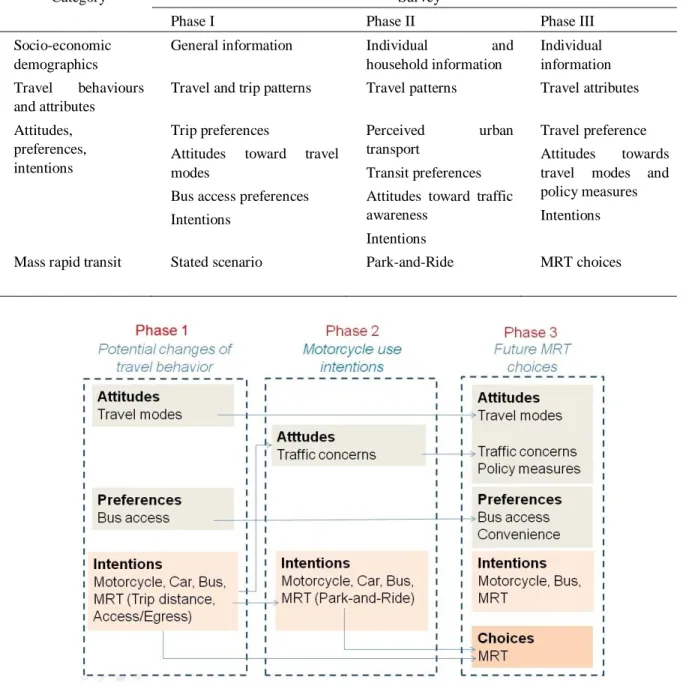
Three field questionnaire surveys were conducted to gather the required data in order to achieve the objectives of this study. The basis of the questionnaire structure includes: Socio-economic demographics, travel behaviours and attributes, attitudes and preferences, and MRT uses. Stated preference technique was applied for questions relating to MRT. Statistical techniques (t-test, analysis of variance, and discriminant analysis), Structural Equation Modelling, and the Binary logit model were used for the data analysis.
Since there is no MRT system in HCMC at this time, people do not have the option of using it as an alternative mode of transport. Many factors of previous studies such as travel patterns and built environments are only able to exist in the context of existing operating MRT systems. Therefore, factors relating to current travel behaviours should be considered to investigate their influences on behavioural intentions and future MRT choices. While bus use has little share in urban transport, attitudes toward travel modes might be important factors of mode choices and travel intentions. Moreover, motorcycle taxis represent a minor role in connecting bus services. How people perceive access to buses may affect their decisions to use buses in the future. It is found that different commuter groups will have different travel intentions based on diverse of attitudes, preferences, and motorcycle use frequency. People who are bus oriented intend to have bus use and to reduce motorcycle use. People with specific preferences in bus access and motorcycle taxi experiences have the intentions of mass rapid transit use. Long trip are preferred for future mass rapid transit use. It indicates that travel behaviours of motorcycle dependent cities have potential to be changed under new transit developments.
Similar to cities in developed countries, people living in residential developments have higher intentions of using their car, than other modes of transport. Motorcycle continues to be the main mode in new urban areas, but less motorcycle use is also considered. Increased use of buses is less intended in comparison with private vehicle use intention. In new urban areas, residential developments might encourage car accessibility by efficient infrastructure; however there is low accessibility for public transport systems. Unless conventional buses are improved, new residential developments impose challenges for public transport services. Therefore, urban development must be controlled in accordance with public transport development. The introduction of MRT systems can be enhanced by policy implications in parking management. While the use of private vehicles should be controlled in city centres, motorcycle should be used as MRT access in peripheral areas. Long journeys, parking constraints, and congestion make Park-and-Ride the most preferable choice for motorcycle users.
Although intention is an important predictor of mode choice behaviour, differences between intentions and actual choices may occur. Trip chaining complexity and traffic condition are found to be main factors affecting future MRT choices. Although Pro-Environment, Measure Acceptance, and Bus Safety Belief have relationships with MRT intentions, these factors are not predictors of MRT choices. On the contrary, Pro-Motorcycle and Pro-Automobile use has negative impacts on MRT choices while they are not associated with MRT intentions. Preference of driving motorcycles to access bus services affects both MRT intentions and choices. Different determinants of the intentions and choices of MRT use indicate that different policies should be implemented in urban transport planning, depending on the process of MRT implementation.
Following research, some policies for Ho Chi Minh City include: regulations of motorcycle taxi service, bus reforms in new urban developments, transit fare encouragement, parking controls in city centre and suburban stations, Park-and-Ride schemes for bus use and suburban area, campaign programs for safety and environment, and land use and transport planning integration. Although HCMC was selected as a case study, the research findings are also useful for other cities within developing countries
where motorcycle use is increasing in urban transport. Since motorcycle taxis are regarded as private services competing with taxis and conventional buses in Ho Chi Minh City, the effect of motorcycle taxi experience on future MRT choices may be slightly changed in other cities within developing countries. Survey populations should include more low income groups and car users to gain a variety of attitudes and preferences. Influences of para-transit and other public transport modes should be explored more when analysing and modelling MRT intentions and choices. Security problems are probably determinants of motorcycle use in some contexts within developing countries. Therefore, additional attitudes and preferences may be required to identify the impact of security problems on travel intentions. Travel distance may not have many influences on MRT choice in small and medium-sized cities. Survey instruments of this study can be revised and utilised to grasp people‘s attitudes, preferences, and intentions regarding other transit alternatives such as bus rapid transit and monorail.
As a phenomenon of motorisation, motorcycles become an important mode of transport within many cities in developing countries. The popularity of motorcycle use provides opportunities for private mobility and creates challenges for transport planning. Since MRT systems were introduced in megacities of developing countries, it is important to identify the new role of motorcycles to meet the goal of sustainable development. This study has explored factors influencing travel intention in a motorcycle-based city, in order to contribute to the integration of MRT and motorcycle use. Although this thesis focuses on travel intention, the influences of intention on mode choice behaviour were also explored. It is forecasted that motorcycles will soon be used as private modes of transport, and the implementation of MRT systems will begin late in African cities. Therefore, the findings of this thesis may be considered for motorcycle mobility management in those cities. Further studies should focus more on travel intentions regarding the difference in time, influences of trip chaining complexity on travel intentions, and travel intentions of low and high income people to provide comprehensive views. It aims to encourage motorcycle to become a part, rather than a dominant mode in the diversity of urban transport.
ACKNOWLEDGEMENT
I would like to express my sincere and heartiest gratitude to my beloved parents, family members, and relatives for their love, patience, and encouragement during my study in Japan.
I would like to thank my supervisors for their valuable instruction, and considerate assistance during my study at Graduate school of Regional Development Studies, Toyo University. Prof. Dr. Toshiyuki Okamura, my supervisor, offered me ample opportunities for improving my research skills and experiences. Without his support, very little of this research achievement would be possible. Prof. Dr. Toshiya Aramaki, my sub-supervisor, provided me with advices and feedbacks on my study. My thankfulness has also been extended to the members of examination committee, Prof. Norihisa Shima and Prof. Hideki Furuya, for their contribution in reviewing my thesis and giving constructive comments. I would also like to thank other professors who offered me chances for discussion about my research as well as broader ideas about regional development.
I am thankful to Prof. Hidetoshi Kitawaki and other staffs of Centre for Sustainable Development Studies for their considerate support when I worked as Research Assistant at there. Further, I am glad to extend my appreciation to Mr. Hashimoto Satoshi, Mr. Krai Klaysikaew, Ms. Nuki Kumiko, Ms. Thapa Sakhila, and Ms. Liu Yujuan for their kind help and enthusiastic guidance during my study at Toyo University.
I would like to acknowledge Ministry of Education, Culture and Sport, Science and Technology for providing me scholarship to finish my doctoral study in Japan. I extend my thanks to Toyo University for offering good academic environment and supporting me in conference travel. Moreover, I greatly appreciate all support from Department of Transportation (DOT) and University of Transportation (UT) for my surveys in Ho Chi Minh City, Vietnam. My thankfulness is extended to Ms. Dang Thi My Hanh for her instructions in data analysis. I owe debts to Mr. Nguyen Minh Chau (UT), Ms. Tran Thi Anh Thu (DOT), and Ms. Mai Thanh Nga for their kind helps on data collection. This research would not have been possible without their devoted cooperation.
Finally, I would like to thank those who involved in my study for their support and contribution.
TABLE OF CONTENT
ABSTRACT ... i
ACKNOWLEDGEMENT ... iv
TABLE OF CONTENT... v
LIST OF TABLES ... viii
LIST OF FIGURES ... x
LIST OF PHOTOS ... xi
LIST OF ABBREVIATIONS AND SYMBOLS ... xii
CHAPTER 1 ... 1
1. INTRODUCTION ... 1
1. 1 BACKGROUND ... 1
1. 2 STATEMENT OF PROBLEMS ... 4
1. 3 GOAL AND OBJECTIVES ... 5
1. 4 SCOPES AND LIMITATIONS ... 5
1. 5 DEFINITION OF TERMINOLOGIES ... 6
1. 6 STRUCTURE OF THESIS ... 6
CHAPTER 2 ... 7
2. LITERATURE REVIEWS ... 7
2. 1 MOTORCYCLE PHENOMENON ... 7
2.1.1 Causes for motorcycle growth ... 7
2.1.2 Functions and roles of motorcycle ... 9
2.1.3 Motorcycle use problems ... 10
2.1.4 Measures for motorcycle use ... 11
2. 2 MASS RAPID TRASIT IN DEVELOPING-COUNTRY CITIES ... 14
2.2.1 Implementation and performance ... 14
2.2.2 Impacts and problems ... 15
2.2.3 Factor influencing rail-based public transport ... 16
2. 3 PARK-AND-RIDE ... 18
2.3.1 History ... 18
2.3.2 Problems ... 18
2.3.3 Factors influencing Park-and-Ride choices ... 19
2.3.4 Park-and-Ride for motorcycle use ... 20
2. 4 ATTITUDES AND BEHAVIOURAL THEORIES ... 20
2. 5 TRAVEL INTENTION ... 21
2. 6 PLANNING PERSPECTIVES IN DEVELOPING COUNTRIES ... 24
2.6.1 Transport planning model ... 24
2.6.2 Perspectives from policy implementation ... 25
2.6.3 Perspective from academic view ... 27
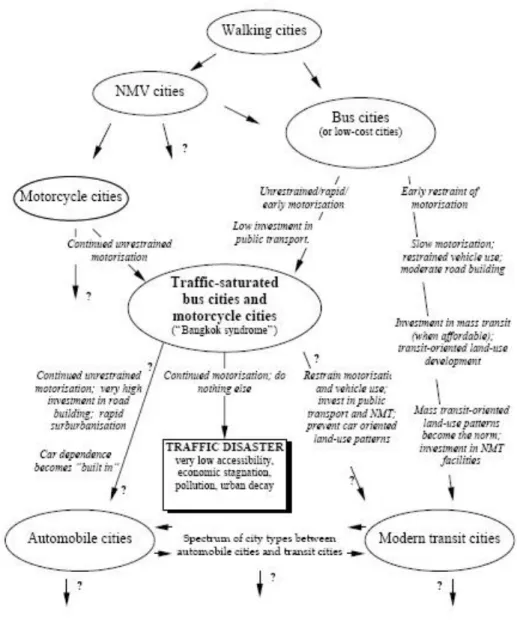
2.6.4 Perspective for motorcycle dependent cities ... 29
CHAPTER 3 ... 31
3. RESEARCH METHODOLOGY ... 31
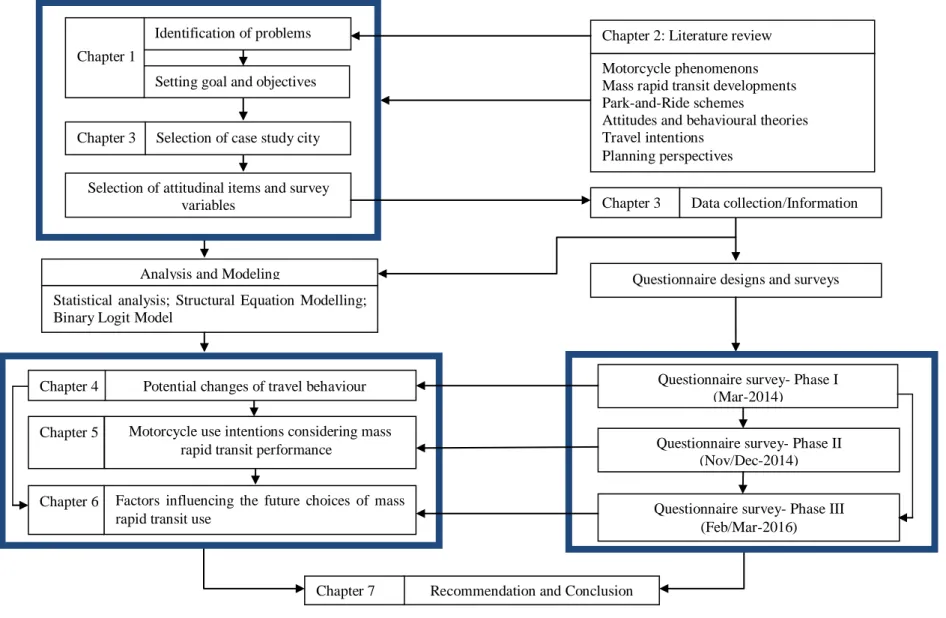
3. 1 RESEARCH FRAMEWORK ... 31
3.2.1 Socio-economic characteristic ... 33
3.2.2 Urban development ... 33
3.2.3 Urban transport problems ... 34
3.2.4 Public transport planning... 36
3. 3 STATED PREFERENCE METHOD ... 37
3. 4 DATA COLLECTION ... 38
3.4.1 Questionnaire design ... 39
3.4.2 Sampling and survey ... 41
3. 5 ANALYTICAL METHOD ... 45
3.5.1 Statistical analysis ... 45
3.5.2 Structural Equation Modelling ... 45
3.5.3 Binary logit model ... 46
CHAPTER 4 ... 48
4. POTENTIAL CHANGES OF TRAVEL BEHAVIOURS ... 48
4. 1 INTRODUCTION ... 48
4. 2 DATA MEASURES ... 49
4. 3 RESULTS ... 51
4.3.1 Attitudes, preferences, and behavioural intentions ... 51
4.3.2 Future mass rapid transit uses ... 54
4. 4 ANALYSIS AND COMPARISON... 54
4.4.1 Classification of commuters ... 55
4.4.2 Relationships among motorcycle uses, preferences, and attitudes ... 58
4.4.3 Relationships between distances and travel intentions ... 59
4.4.4 Relationships between motorcycle uses and travel intentions ... 60
4.4.5 Relationships between attitudes and travel intentions ... 61
4.4.6 Relationships between preferences and travel intentions ... 63
4. 5 SUMMARY OF FINDINGS ... 63
CHAPTER 5 ... 66
5. MOTORCYCLE USE INTENTIONS CONSIDERING MASS RAPID TRANSIT PERFORMANCE ... 66
5. 1 INTRODUCTION ... 66
5. 2 DATA MEASURES ... 68
5. 3 RESULTS ... 72
5.3.1 Perceived urban transport ... 72
5.3.2 Attitudes toward traffic concerns, transit preferences, and behavioural intentions 72 5.3.3 Park-and-Ride preferences ... 74
5. 4 ANALYSIS AND COMPARISON... 76
5.4.1 Factor analysis and quartile ... 76
5.4.2 Relationships between socio-demographics and travel patterns and behavioural intentions ... 78
5.4.3 Relationships between traffic concerns and behavioural intentions ... 79
5.4.4 Relationships between transit preferences and behavioural intentions . 80 5. 5 SUMMARY OF FINDINGS ... 81
5.5.1 Future public transport use ... 81
5.5.2 Future for new residential developments ... 82
5.5.3 Future motorcycle use ... 83
CHAPTER 6 ... 85
6. FACTORS INFLUENCING THE CHOICES OF MASS RAPID TRANSIT USE . 85 6. 1 INTRODUCTION ... 85
6. 2 DATA MEASURES ... 86
6.2.1 Socio- demographic variables ... 86
6.2.2 Travel variables... 88
6.2.3 Preference variables and attitudinal variables ... 88
6.2.4 Choice variables ... 88
6. 3 RESULTS ... 91
6. 4 DATA ANALYSIS ... 92
6.4.1 Discriminant analysis ... 94
6.4.2 Structural equation modelling ... 95
6.4.3 Binary logistic regression ... 96
6. 5 SUMMARY OF FINDINGS ... 97
CHAPTER 7 ... 100
7. POLICY RECOMMENDATION AND CONCLUSION ... 100
7. 1 SUMMARY OF FINDINGS ... 100
7.1.1 The emerging role of motorcycle... 100
7.1.2 Potential changes of travel behaviours ... 100
7.1.3 Motorcycle use intentions ... 101
7.1.4 Factors influencing the future choices of mass rapid transit use ... 101
7. 2 POLICY DEVELOPMENT ... 102
7.2.1 Implication for Ho Chi Minh City ... 102
7.2.2 Implication for developing-country cities ... 103
7. 3 FUTURE PROSPECTS ... 106
REFERENCES... 107
RESEARCH PUBLICATIONS ... 121
APPENDIX 1 ... 122
QUESTIONNAIRE SHEET FOR THE FIRST FIELD SURVEY ... 122
APPENDIX 2 ... 127
QUESTIONNAIRE SHEET FOR THE SECOND FIELD SURVEY ... 127
APPENDIX 3 ... 133
LIST OF TABLES
Table 2.1: Summary of motorcycle use analysis ... 13
Table 2.2 : Definition of mass transit ... 14
Table 2.3 : Literature reviews on travel intentions ... 23
Table 3.1: Data set of travel survey... 39
Table 3.2 : Questionnaire content ... 40
Table 3.3 : Stated preference studies relating to new transit alternatives ... 41
Table 3.4 : City, centre and site information ... 42
Table 4.1 : Socio-economic characteristics and travel patterns (n=198) ... 50
Table 4.2: Time and cost illustration for 10-km trip ... 51
Table 4.3 : Mean scores of trip preference statements ... 52
Table 4.4 : Factor loading of travel mode items ... 55
Table 4.5 : Description of attitudinal factor score... 56
Table 4.6 : Correlation among attitudinal factors ... 56
Table 4.7: Travel patterns of commuter groups ... 56
Table 4.8 : Attributes of commuter groups ... 57
Table 4.9 : Mean score (SD) of bus access preferences by motorcycle uses ... 58
Table 4.10 : Mean score (SD) of attitudinal factors by motorcycle uses ... 58
Table 4.11 : Mean score of bus access preferences by commuter groups ... 59
Table 4.12 : t-test results of future MRT uses by distances... 59
Table 4.13 : t-test results of future MRT uses by distances and commuter groups ... 60
Table 4.14 : Mean score (SD) of behavioural intentions by motorcycle uses ... 60
Table 4.15 : Mean score (SD) of future MRT uses by motorcycle uses ... 60
Table 4.16 : Mean score (SD) of bus access preferences and bus use intentions ... 63
Table 5.1 : Sample characteristics (n=215) ... 69
Table 5.2 : Questions on perceived urban transport ... 70
Table 5.3 : Illustration for motorcycle parking fee and MRT fare... 71
Table 5.4 : Park-and-Ride scenarios... 71
Table 5.5 : Park-and-Ride choices ... 71
Table 5.6 : Responses for attitudes toward traffic concerns ... 73
Table 5.7 : Responses for attitudes toward transit preferences ... 73
Table 5.8 : Responses to behavioural intentions ... 74
Table 5.9 : Factor loading of traffic concerns ... 77
Table 5.10 : Factor loading of transit preferences... 77
Table 5.11 : Value limitations and percentiles of factor scores normalised ... 78
Table 5.12 : Mean scores of behavioural intentions by socio-demographics and travel patterns... 78
Table 5.13 : Mean scores of behavioural intentions by traffic concerns ... 79
Table 5.14 : Mean scores of behavioural intentions by transit preference quartiles ... 80
Table 6.1 : Questionnaire content ... 86
Table 6.2 : Distribution of residence location ... 86
Table 6.3 : Distribution of samples‘ socio-demographics (n=219)... 87
Table 6.5 : Variables for Stated preference questions ... 89
Table 6.6 : Levels of Stated preference variables ... 89
Table 6.7 : Distribution of preference statements ... 91
Table 6.8 : Mean score and standard deviation of statement evaluation ... 92
Table 6.9 : Factor loadings, and Cronbach‘s alpha of factor extracted ... 93
Table 6.10 : Discriminants variables for motorcycle users (n=204) ... 94
LIST OF FIGURES
Figure 1.1 : Global urban population growth by city sizes ... 1
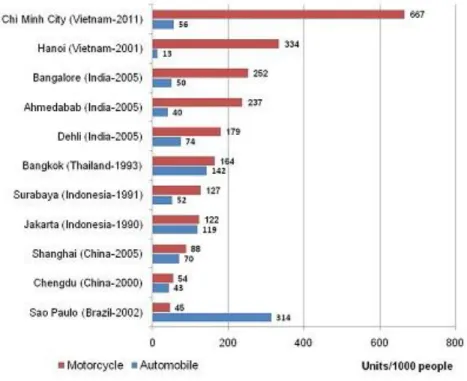
Figure 1.2 : Motorcycle and automobile ownership in cities within developing countries.. 2
Figure 2.1 : Norm Activation Theory (Schawatz, 1977) ... 21
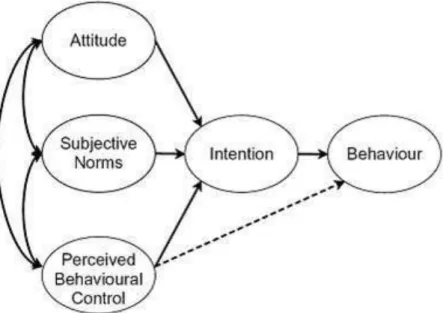
Figure 2.2 : Theory of Planned Behaviour (Ajzen, 1991) ... 21
Figure 2.3: Models of urban transport and land use in cities within developing countries 28 Figure 2.4: Relationships among planning perspectives in cities within developing countries ... 30
Figure 3.1 : Research framework ... 32
Figure 3.2 : Ho Chi Minh City Urban Planning Master Plan ... 33
Figure 3.3 : Growth of bus fleets ... 34
Figure 3.4 : Private vehicle growth in Ho Chi Minh City ... 35
Figure 3.5: Public transport ridership and travel demand forecast ... 35
Figure 3.6 : Mass rapid transit plan ... 36
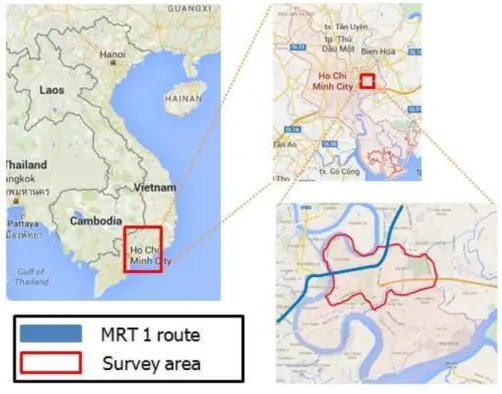
Figure 3.7: Survey areas ... 38
Figure 3.8 : Relationships among questionnaire designs ... 40
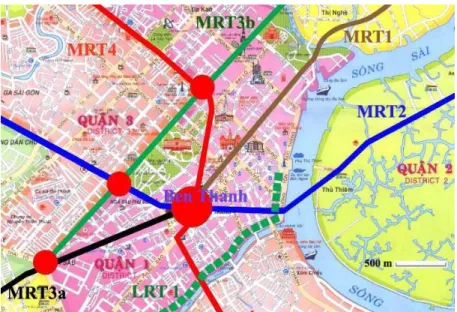
Figure 3.9 : MRT master plan map in city centre area of HCMC ... 42
Figure 3.10 : Location of phase-II survey sites... 43
Figure 3.11: SEM model example... 46
Figure 4.1 : Participants‘ response to travel mode attitudes ... 52
Figure 4.2 : Responses to bus access preferences ... 53
Figure 4.3 : Commuters‘ behavioural intentions ... 53
Figure 4.4 : Future MRT uses by trip types ... 54
Figure 4.5 : Access modes and egress modes for future MRT uses ... 54
Figure 4.6: Behavioural intentions by commuter groups ... 61
Figure 4.7 : Bus use intentions by travel mode quartiles ... 62
Figure 4.8 : Future MRT uses by commuter groups ... 62
Figure 5.1: Responses for perceived urban transport in central area ... 72
Figure 5.2 : Responses for perceived urban transport in local neighbourhood ... 72
Figure 5.3 : Responses for Park-and-Ride scenarios ... 75
Figure 5.4 : Responses for Park-and-Ride choices ... 75
Figure 5.5: Influences of transit preferences on behavioural intentions ... 80
Figure 6.1 : Trip chain characteristics ... 87
Figure 6.2 : MRT use with non egress trips (Scenario 1) ... 89
Figure 6.3 : MRT use with egress trips (Scenario 2) ... 89
Figure 6.4 : MRT fare to city centres by stations... 90
Figure 6.5 : Answer sample for MRT choices (Scenario 1) ... 90
Figure 6.6 : Answer sample for MRT choices (Scenario 2) ... 90
Figure 6.7 : Structure of attitudinal variables and intention ... 95
Figure 6.8 : Conceptual framework... 99
LIST OF PHOTOS
Photo 2.1 : Motorcycle traffic in developing-country cities ... 7 Photo 3.1 : Motorcycle traffic in Ho Chi Minh City ... 34 Photo 3.2 : Survey team, preparation, and interview process ... 44
LIST OF ABBREVIATIONS AND SYMBOLS
MRT Mass Rapid Transit
BRT Bus Rapid Transit
NMM Non-Motorized Modes
HCMC Ho Chi Minh City
DOT Department of Transportation
JICA Japan International Co-operation Agency
GDP Gross Domestic Product
VND Vietnamese Dong
CBD Central Business District
TPM Planning Transport Model
SP Stated Preference
RP Revealed Preference
TPB Theory of Planned Behaviour
SN Subjective Norm
PBC Perceived Behavioural Control
NAM Norm activation model
PN Personal Norm AC Awareness of Consequence AR Ascription of responsibility TA Travel Attitudes TI Travel Intention PT Public Transport
SPSS Statistical Package for the Social Sciences
ANOVA Analysis of Variance
SD Standard Deviation
AMOS Analysis of Moment Structures
SEM Structural Equation Modelling
Chi-sq/ DF Ratio of Chi-square to Degree of Freedom
GFI Goodness of Fit Index
AGFI Adjusted Goodness of Fit Index
CFI Comparative Fit Index
RMR Root Mean square Residual
RMSEA Root Mean Square Error of Approximation
R2 Percentage (%) of variance explained
VKT Vehicle Kilometres Travelled
CHAPTER 1
1. INTRODUCTION
1. 1 BACKGROUND
Urbanisation is occurring rapidly in the world. According to United Nation (2014), of the world‘s population, 3.9 billion people, over half are living in urban areas. Half of the world‘s urban population are residing in towns and cities of less than 500,000 inhabitants (see Figure 1.1). The number of megacities with more than 10 million habitants is predicted to grow from 28 in 2014 to 41 in 2030. Smaller and medium-sized cities are projected to contribute to the main growth of megacities. In Asia and Africa, medium-sized cities and cities with less than 1 million residents grow most rapidly among urban agglomerations. Urban population is forecast to grow to 6.4 billion people by 2050. The urbanizing growth of Africa and Asia is higher than that of other regions. Most of the urbanisation process is proceeding in developing countries (Gwilliam, 2013).
(Source : United Nation, 2014)
Figure 1.1 : Global urban population growth by city sizes
Beside rapid urbanisation, motorisation has been accelerating in many metropolitans. While the rate of car ownership achieves saturation point in developed countries, the growth of car ownership is higher than the rise of GDP in most Asian megacities (Senbil et al., 2007). Although automobiles are regularly referred to as the main indicator of motorisation, another aspect of the motorisation process is characterised by the high level of motorcycle ownership and use (see Figure 1.2). Motorcycle use is growing steadily in many low and medium economies. Motorcycles account for half of vehicle fleets in Asian countries, and become a dominant mode of transport in Laos, Cambodia, and Vietnam (Gwilliam, 2003; Chin, 2011). There is a high growth of motorcycle ownership in South Asian countries such as India, Pakistan, and Bangladesh. Although conventional buses and para-transit services retain a significant proportion in the emerging economies such as Thailand, Indonesia, and the Philippines, motorcycle rates are still increasing. In Latin American countries, the level of vehicle ownership is still low in comparison with North American and European countries. However, the growth of light duty vehicles and motorcycles contribute to the high rate of vehicle ownership, particularly in Brazil, Mexico, and Colombia (Hidalgo & Huizenga,
2013). In Kuala Lumpur (Malaysia) and Bangkok (Thailand), the rate of private motorised vehicles including motorcycles are the same as those of European developed countries (World Bank, 2001). In Southeast Asian region, the motorcycle growth in medium sized cities is extremely higher than that of large cities, although the rate of motorcycle ownership is still low (Kidokoro & Kubota, 2007). Therefore, there are more challenges for secondary cities lacking sufficient resources to mitigate urban transport problems, similar to those of megacities such as Bangkok, Kuala Lumpur, Manila, and Jakarta.
(Source : Compiled by author from many data sources)
Figure 1.2 : Motorcycle and automobile ownership in cities within developing countries Since motorcycle use becomes an important aspect of urban transport, particularly in Asia, the concept of ―motorcycle cities‖ has been introduced to indicate the cities following motorcycle-oriented transport (Barter, 1999). Ho Chi Minh City (Vietnam) where the modal share of motorcycles accounts for over 90% of urban transport is an example of a motorcycle city (JICA, 2004). The high modal share of motorcycles results in more served congestion and influences on bus performance (Van & Fuji, 2009). In South East Asia, some medium-sized cities have a high growth of motorcycle ownership, although there is a low rate of motorcycle ownership in comparison to megacities (Kidokoro and Kubota, 2007). In addition, Phnom Penh (Cambodia), Vientiane (Laos), and Ho Chi Minh City (Vietnam) have higher rates of motorcycle ownership and usage than others, such as Bangkok (Thailand) and Jakarta (Indonesia). In many sub-Saharan African cities such as Lagos (Nigeria), Douala (Cameroon), Cotonou (Benin), and Mombass (Kenya), motorcycles have been used for commerical purposes or public transport (Sietchiping et al., 2012). Within many developing countries motorcycles are gradually being recognised as an important mode in urban transport.
Chaotic urban development and poor transport systems contribute to rapid motorisation in developing countries (Susilo et al., 2007). Emerging motorisation coupled with increasing urbanisation causes serious concerns about the heavy economic, environmental, and social
costs of urban transport systems. Rapid motorisation and road network limitations lead to serious congestion problems, noise, air pollution, and traffic accidents (Shimizu et al., 2003). Moreover, economic growth leads to increased income, which in turn leads to accelerating personal mobility and private vehicle ownership. Consequently, travel demand overloads public transport service and transport infrastructure supply. It is typically characterised by the decline in public transport ridership and the rise in private vehicle use. It raises the question how the disadvantages of motorisation are resolved while personal mobility is still maintained (Sperling & Claussen, 2004).
Cities within developing countries have implemented policies and strategies to tackle urban transport problems, such as private vehicle growth, traffic congestion, and emission (Dissanayake et al., 2002). Since it is unmanageable to develop transport infrastructure to meet increasing mobility demand, public transport and MRT have been invested in to solve urban transport problems. Many megacities such as Bangkok, Beijing, Shanghai, Delhi, Teheran, Cairo, Sao Paulo, and Mexico City have implemented MRT systems to mitigate traffic congestion in the last decades (Koizumi et al., 2013). Other cities such as Jakarta, Hanoi, and Mumbai are in the process of project implementation.
Although MRT contributes to reduce the impacts of motorisation such as congestion and pollution, it raises debate about economic and operational efficiency (Gwilliam, 2003). Financial limitations are common obstacles for MRT implementation. Many Asian cities meeting requirements in population density and urban-scale for mass transit performance, fall short in terms of economic resources, only reaching low or medium levels (Townsend & Zacharias, 2010). In Bangkok (Thailand) and Manila (Philippines), some MRT lines have ridership lower than demand forcasted (Okada et al., 2003). High fares, limited MRT networks, access difficulties, and poor connections with other modes are main reasons for low ridership. In Latin American countries, bus systems compete with MRT rather than becoming feeder modes (Cervero, 1991). The growth of private vehicles results in more difficulties for public transport services.
The phenomenon of motorcycle growth and the need of MRT systems have presented many challenges for researchers and policy makers in developing countries. While the implementation of MRT systems is regarded as an approach meeting high travel demand and improving public transport services, MRT developments may be undermined by motorcycle use in the future. The growth of motorcycle ownership and usage has accelerated the motorisation process in low and middle economies because motorcycles are affordable modes of transport in comparision to automobiles. This results in a higher challenge to shift travellers from private vehicles to public transport and non-motorized transport (Fourace, 2003).
Beside the role of personal mode, motorcycles have been utilised as public transport in African countries or para-transit in Asian cities (Tsao, 2010; Prabnasak & Taylor, 2009; Un-Habitat, 2010; Abuhamoud et al., 2011; Guillen et al., 2013). Moreover, motorcycle is recommended to be a feeder mode of MRT systems or to be used as an access mode to BRT corridors (Vu, 2013a; Satiennam et al., 2013). It was suggested that urban rail network should keep an important role as the ―back bone‖ in urban transport system of Asian megacities (Morichi, 2005). In the future, motorcycles may become an important mode and MRT system will be developed to meet high travel demandin many cities in developing countries. While motorcycle use is negatively evaluated in terms of traffic safety, other mobility advantages such as congestion reduction, accessibility improvement, and flexible
travel are rarely recognised. Therefore, the integration of motorcycle and MRT should be carefully considered, ensuring personal mobility and positive roles of motorcycles, to enhance MRT performance. Since achieving this prospect is challenging, it is necessary to have appropriate policies for motorcycle use management before MRT development. Many cities within developing countries lack economic resources to implement MRT systems soon while the rate of motorcycle ownership and use is increasing rapidly. It is likely that motorcycles will become a dominant mode before MRT infrastructure is implemented in urban transport. In the condition of lacking new transit alternatives, it is crucial to understand people‘s travel intentions to establish the foundation for future integration of motorcycle and MRT.
1. 2 STATEMENT OF PROBLEMS
It is believed that motorcycle only kept a transition role between private car and public transport in early economic development (Pongthanaisawan& Sorapipatana, 2010). However, motorcycle use still exists in parallel to car use in developed economies such as the case of Taiwan. Using private vehicles over long periods of time will lead to vehicle dependence (Dupuy, 1999). Motorcycle dependence may result in more difficulties in shifting travellers from motorcycle to public transport. Therefore, it is necessary to explore the potential of changing travel behaviours in motorcycle-dependent cities. The intention of using public transport may be explained by underlying factors, such as attitudes and preferences rather than by socio-economic demographics and existing travel attributes.
Studies on travel behaviour have been conducted to explore the feasibility of shifting travellers from private vehicles to MRT. Classified by Zhao et al. (2002) and Brons et al. (2009), these researchers focus on 4 main groups: 1) Transit service; 2) Access characteristic; 2) Feeder service; 3) Land use; 4) Users‘ characteristics. However, automobiles are the main objective of these studies. Park-and-Ride schemes have been mentioned as solutions for shifting commuters from private vehicles to MRT. Tsao (2011) found that motorcycle users could be more convinced to use MRT than automobile users in Taiwan. Since it is convenient to ride motorcycles a short distance, motorcycle use can become a feeder mode for MRT in Asia (Vu, 2011). In addition, Park-and-Ride facilities around subway stations can accommodate more motorcycles than cars of the same area. However, it is unclear which factors might persuade motorcyclists accept both MRT and motorcycle use. Influences of motorcycle and MRT combination use on conventional public transport have not been explored yet.
Sustainable mobility has been increasingly integrated in transport policies and strategies in recent decades. Automobile and public transport were the main focus in studies of sustainable mobility, but there are few similar researches for motorcycle use (Rose, 2009). Motorcycle users may have different thinking in comparision with car users. For example, motorcycle riders have lower awareness on environmental pollution than automobile drivers (Chang & Lai, 2013). While habits of private vehicle have negative influences on travellers‘ intention to use MRT, the habit of car use is stronger than that of motorcycle use (Chen &Chao, 2011). Motorcycle users may become potential passengers for alternative transit. In developing countries, however, most motorcycle riders belong to low and middle income groups, who may become car users with increasing income instead of using MRT or continue to use motorcycle. Therefore, the intentions and the choices of motorcycle users may be critical and should be explored.
Stated Preference (SP) has been applied to forecast travel demand of new transit alternatives in the cities of developing countries (Fujiwara et al., 2003; Long et al., 2011; Bando et al., 2015). This method is often used to grasp people‘s thoughts, interests, and preferences for situations that have not happened yet (Van Zyl et al., 2001). However, SP data is also limited if respondents lack knowledge about new transit alternatives and are unfamiliar with complex question forms (Sivakumar et al., 2007). People who can not imagine MRT characteristics and performances can misunderstand the questions or provide unreliable answers. Therefore, hypothetical questions must be appropriate for travellers to understand. As a result, MRT demand can be forecast precisely, and appropriate policies can be proposed for motorcycle management in a sustainable manner.
In general, the study aims to answer the following questions:
-How attitudes and preferences influence travel intentions in motorcycle dependent cities?
-How future motorcycle use will be affected by following MRT development? -How MRT choices will be considered in different circumstances?
-What kinds of questions are appropriate to grasp people‘s attitudes, preferences, intentions, and choices without experiences on MRT in a motorcycle-based context?
1. 3 GOAL AND OBJECTIVES
The main purpose of this study is to investigate factors influencing travel intentions in order to manage motorcycle use with respect to MRT in developing-country cities. It aims to suggest rational measures for motorcycle mobility, to enhance existing public transport, and to contribute to the future integration of MRT with motorcycles in motorcycle dependent cities. To achieve the goal of this study, there are three specific objectives to be established, which are as follows:
- To analyse potential changes of travel behaviour in motorcycle-based contexts. - To explore motorcycle use intentions considering mass rapid transit performance. - To identify factors influencing the future choices of mass rapid transit use.
1. 4 SCOPES AND LIMITATIONS
The study focused on cities in developing countries, with the following characteristics: -Low and middle levels of income
-High growth in population, urbanisation, and motorisation -Increasing growth or high modal share of motorcycle
-Public transport service undeveloped or under poor performance
-Lacking an MRT system or at the beginning stages of constructing an MRT system This research selects Ho Chi Minh City (HCMC) as a typical case of a developing city for research implementation. HCMC is a major commercial centre and the most dynamic city in Vietnam. During the rapid urbanisation, the urban transport situation of HCMC has worsened, especially in the highly urbanised and emerging urban areas. The significant change in traffic conditions during the last decade was characterised by a rapid increase in the number of motorcycles and passenger cars, a reduction in that of bicycles and a declining trend of bus services. Private vehicles still account for the major share of daily transportation. Motorcycles became the primary mode while bus services hold a limited role and MRT have not yet been established. The rise of motorcycle use and the growth of car ownership occur
in many developing cities. However, the unusual characteristic of HCMC is the high rate of motorcycle ownership..
1. 5 DEFINITION OF TERMINOLOGIES
Motorcycle is defined as a road-based vehicle with two or three wheels (Nishitateno & Burke, 2014). Mopeds and motorised scooters are grouped as different kinds of motorcycle.
Mass rapid transit (MRT) indicates rail-based public transport that provides the highest capacity and fastest speed in comparision with other transit modes such as bus rapid transit, monorail, and tramway (Fouracre et al., 1990; Gardner & Kuhn, 1992; Fox, 2000). MRT can be understood as rail-based public transport if new transit alternatives have been implemented in a city within a developingcountry. However, bus rapid transit can be understood as MRT in case no rapid transit system is available in urban transport and existing bus service exists in poor perfomance.
Travel intention is defined as a willingness to select a specific mode in future travel (Tangphaisankun et al., 2011). Based on the Theory of Planned Behaviour, travel intention is understood as a behavioural intention in particular (Ajzen, 1991). The strength of travel intention indicates how much people attempt to perform travel behaviour.
1. 6 STRUCTURE OF THESIS
This study includes seven chapters and appendixes. While backgrounds, objectives, scopes and limitations of the study, and an outline of the theisis are descibed in Chapter 1, the remaining chapters are summarised as follows:
Chapter 2 presents motivations and literature reviews. General information about motorcycle growth, MRT system implementation, Park-and-Ride practice, and urban transport planning in the developing countries are provided. Problems of motorcycle use and existing policies for motorcycle mobility management are also analysed.
Chapter 3 explains research methodology. The selection criteria of the case study city, characteristics of the study area, data collection methods, and analysis methodologies are also presented. Information about Ho Chi Minh City is described to provide local characteristics.
Chapter 4 investigates the potential for changes in travel behaviour with respect to MRT in motorcycle-based contexts. The relationships among motorcycle use, attitudes, preferences, and intentions are also confirmed.
Chapter 5 explores future motorcycle use considering MRT performance in motorcycle dependent cities. Urban transport contexts, attitudes toward traffic concerns, transit preferences, behavioural intentions, and feasible combinations of motorcycle and MRT are examined.
Chapter 6 diagnoses the determinants for the choices of MRT use. Stated Preference technique is applied to achive acutal choices of MRT. The effects of policy measures are considered, to examine how mode choice behaviour will be changed.
Chapter 7 synthesises the results, proposes policy implications, recommends the possibility of further studies.
CHAPTER 2
2. LITERATURE REVIEWS
2. 1 MOTORCYCLE PHENOMENON
Many studies focusing on motorcycle use are classified in categories such as main user, trip features (purpose, distance, duration, street type), area for popular use or suggested, public transport use, functions/ potential role, and policy measures/ strategies (see Table 2.1). In particular, there are many thoughts provoked, presenting an overview of motorcycle growth as below.
2.1.1 Causes for motorcycle growth
Motorcycle is the popular mode of urban transport in many cities within developing countries (Nagai et al., 2003; Nishitateno & Burke, 2014; IRF, 2012). Motorcycles can be found across Asia and are spreading to Latin America (Sperling & Claussen, 2004). After the decline of state-owned public transport, motorcycles recently emerged as another form of public transport, meeting growing demand in sub-Sahara cities (Kumar, 2011). The rise of cheap motorcycles is accelerating the motorisation process, encouraging a leap from buses and bicycles to motorised private vehicles. In Brazil, the number of motorcycles increased 14 times from 1990 to 2008 and increased by 100% from 2005 to 2009 (Estupiñan et al., 2012). Similarly, the number of motorcycles increased three times in Sao Paulo in the duration between 1985 and 1997 (Vasconcellos, 2005).
(a) Khon Kaen (Thailand) (b) Vientiane (Laos)
(c) Phnom Penh (Cambodia) (d) Jaipur (India)
Increasing numbers of privately owned and used vehicles are common features of rapid motorisation in Asian countries (see Photo 2.1). It leads to significant changes in urban transport and travel behaviour in the near future (Morichi, 2007). Asian countries have a motorcycle ownership rate higher than 100 vehicles /1,000 people in comparison with other regions in the world (Hsu et al., 2007; Senbil et al., 2007). The annual rate of motorcycle growth is around 11% in Bali (Indonesia) and 14% in Hanoi (Vietnam) (Wedagama & Dissayake, 2010; Vu & Shimizu, 2005). Motorcycles account for a high proportion of motorised trips in mega cities such as Hanoi (81%) or HCMC (90%) (JICA, 2004). The increasing motorcycle use has resulted in the definition of ‗two-wheeler‘ cities (Koizumi et al., 2013). High rates of motorcycle ownership are concentrated in Southeast Asia (Prabnasak &Taylor, 2009; Cervero, 2013). It is explained that economic growth in rapid travel demand has increased in recent decades (Prabnasak et al., 2013). Motorcycles have become the main mode of low income people due to their low cost purchase, operation and convenient parking (Asri & Hidayat, 2005; Tsao 2010; Wen et al., 2012). In mid-sized cities, the growth of motorcycle ownership and use is increasing (Prabnasak et al., 2013; Satiennam et al., 2013).
This growth can be explained by a variety of reasons. It is found that economic development level, income increase, deterioration of public transport, traffic conditions, and land use affects motorcycle ownership and use in developing countries. Regular motorcycle use has become a part of lifestyle in East Asia (Prabnasak & Taylor, 2008).
Economic development levels have strong relationships with the growth of motorcycle ownership and use (Nagai. et al., 2003; Hsu & Lin, 2007; Pongthanaisawan & Sorapipatana, 2010). In developed countries, the motorcycle ownership ratio is much lower than the car ownership ratio. For example, in Japan, the rate of motorcycle ownership and use decreased by 20% in recent decades. In developing countries such as Thailand, Indonesia, India, the rate of motorcycle ownership is growing rapidly. Taiwan-a developed economy is a special case, maintaining a high proportion of motorcycles in urban transport. Malaysia whose income is between Taiwan and Vietnam has a declining rate of motorcycle ownership.
Although motorcycle ownership tends to increase in low economies, it also depends on economic growth. In other words, where the income is increased per capita there will be an impact on private vehicle ownership demand. Due to low purchase cost, motorcycles become the private mode of transport for the low-income population (Vu & Shimizu , 2005; Liu, 2006; Tsai & Lin, 2007; Leong et al., 2007). In low and medium economies such as China, Vietnam, and India, the rate of motorcycle ownership and use is particularly rapid since economic growth accelerates this process. Some Asian countries have motorcycle factories established so that low income people can afford motorcycle prices (Senbil et al., 2007). Continuous increase in fuel costs resulted in motorcycle registration growth in Manila (Philippines) since it was more economic for motorcycle use (Uy et.al, 2007). Low incomes would soon have personal vehicles when their income is improved. Increasing income affects motorcycle ownership sooner than car ownership. In some Asian countries, motorcycle ownership rate becomes high before there is significant increase in income (Senbil et al., 2007).
As a result of rapid motorisation, public transport services have become unbalanced and fail to meet travel demands in cities within developing countries (Zhang & Fujiwara, 2004; Lucas, 2011). The lack of public transport services results in motorcycle use in rural or city expansion areas (Nagai et al., 2003). Due to limited resources, many local governments are
facing difficulties in public transport development (Khisty, 1993). The deterioration of public transportation contributes to private vehicle increase. In some cases public transport services are underdeveloped, and private vehicles are selected to meet travel demand for increased activities (Feng & Sun, 2013; Chen & Lai, 2011). For example, the state of being slow, unreliable, dangerous, and overloading of buses and trains results in passengers‘ shifting to cars, motorcycles, and scooters in India (Pucher et al., 2005). Motorcycles provide door-to- door trips and trips by motorcycle are more reasonable, flexible, convenient, fast, and reliable than public transport trips (Pucher et al., 2004). In Indonesia, public transport fare is sometimes higher than the expenses incurred by motorcycle use (Lucas, 2011). In HCMC (Vietnam), most commuting trips are made by motorcycles since the bus services only meet 7% of travel demand (Department of Transportation, 2014). While it takes time to develop MRT systems, people continue to depend on motorcycles in commuting trips.
Motorcycle use not only exists in rural areas and suburbs but also in urban areas. Motorcycle use is characterised as a high mobility vehicle, and can be used to overcome traffic congestion in city centres in developing countries (Department of Transportation, 2004; Sano et al., 2005, Acharya & Morichi, 2007; Leong & Mohd Sadullaha , 2007; Chang & Wu, 2008). Traffic conditions contribute to increased motorcycle ownership in cities within both developing and developed countries. In Paris (France), traffic congestion also results in increased motorcycle use to save time travelling (Kopp, 2011). This phenomenon also occurred in London (United Kingdom) where motorcyclists are exempt from congestion charge in comparison with car users (Duffy, 2004).
Land use and transport infrastructure are considerately associated with widespread use of motorcycles. High densities and narrow streets cause difficulties for driving cars in city centres of Asian countries (Senbil et al., 2007). It is easier to find parking spaces for motorcycles since the parking area required is smaller than that of a car (Vu, 2015). An example of a city that is lacking a road system is Bangkok (Thailand), where main streets are saturated in peak hours and motorcycle users can move easily in local narrow streets (Cervero, 2013; Acharya & Morichi, 2007 ; Feng & Sun, 2013).
2.1.2 Functions and roles of motorcycle
Motorcycles are not only used for personal purposes but also for common uses such as public transport and trade in Asian developing countries and sub-Saharan African countries (Guillen & Ishida, 2004; Prabnasak & Taylor, 2009; UN-HABITAT, 2010b; Mateo-Babiano et al., 2011; Abuhamoud et al., 2011; Guillen et al., 2013). A motorcycle taxi is referred to as a ―xe om‖ in Vietnam, ―ojek‖ in Indonesia, ―habal-habal‖ in the Philippines, ―zemidjan‖ in Benin, ―Kabu Kabu‖ in Niger, ―bendskin‖ in Cameroon, ―Okada‖ or ―alalok‖ in Nigeria, ―boda boda‖ in Kenya and Uganda, and ―oleyia‖ in Togo (Rahman, 2007; Sietchiping et al., 2012; Vu & Iderlina, 2013). In Southeast Asian cities such as HCMC, Hanoi, Jakarta, Bandung, Bangkok, and Davao, motorcycle taxis are found everywhere including street intersections, bus stops, railway stations, shopping centres, and main entrances of residential areas (Cervero, 2000; Hanaoka, 2007). In Lagos (Nigeria), Douala (Cameroon), Cotonou (Benin) and Mombassa (Kenya), motorcycle taxis becamea popular mode of public transport. In medium-sized cities in Peru and Colombia, there are some cases where motorcycles are used as public transport (Estupiñan et al., 2012).
The introduction of motorcycle taxis was initiated by the private sector, in order to create part-time jobs for extra income and adapt to the needs of passengers (Iles, 2005; Guillen et al., 2013). Due to low capital and operating costs, motorcycle taxis appear to complement conventional buses. In Kenya, the development of the boda-boda service was the result of non-market control in fuel prices (Sietchiping et al., 2012). Rising fuel costs make ―boda-boda‖ provide more economic benefits, and motorcycle taxis are considered relatively affordable selections. Consequently, motorcycle taxis can compete with traditional taxis.
Motorcycle taxis have some advantages in comparison with traditional four-wheeled vehicles (Sietchiping et al., 2012). For example, motorcycles can provide door-to-door trips, access to urban areas lacking roads for cars, and save travel time (Acharya & Morichi, 2007; Vu, 2011; Chen & Lai, 2011). In Bangkok (Thailand), motorcycle taxis provide faster trips on the main roads during peak hours (Cervero, 2013).
2.1.3 Motorcycle use problems
Motorcycle use can become a problem for urban transport planning in developing countries, particularly in Asia (Guillen & Ishida, 2004; Gwilliam, 2003). Although motorcycle use provides some benefits such as low cost travel, low fuel consumption, manoeuvrability, and door-to-door travel, problems such as traffic risk, noisy pollution, and emissions are also mentioned (Prabnasak & Taylor, 2009; Prabnasak et al., 2013). The high rate of motorcycle ownership and use does not guarantee the goal of sustainable mobility if motorcycle users shift to car use (Gwilliam, 2003).
Although motorcycles can be useful for travelling during peak-hours, road space is also limited due to the lack of infrastructure development. Therefore, high traffic by motorcycle will result in inevitable traffic congestion (Pucher et al., 2004; Tran et al., 2012; Wen et al., 2012; Asri et al., 2013). HCMC (Vietnam), where modal share of motorcycle is over 90 %, suffers frequent congestions (Department of Transportation, 2014).
Riding motorcycles is very convenient and inexpensive (Satiennam et al., 2011). Moreover, motorcycles provide more speed and flexibility than a bus service affected by congestion. Therefore, it is very difficult to encourage a modal shift from motorcycles to alternatives. As a result, motorcycle use undermines the development of public transport services and restricts the use of other sustainable modes such as walking and bicycle (Gwilliam, 2003; Prabnasak &Taylor, 2008; Prabnasak &Holyoak et al., 2013).
Traffic accidents are common risks of motorcycle use in travel and trade (Prabnasak & Taylor, 2009; Tran et al., 2012; Wen et al., 2012; Prabnasak et al., 2013). Traffic accident rates are higher in Asian developing countries due to high motorcycle dependence (Satiennam et al., 2011). Increasing motorcycle ownership and use led to a loss of traffic safety and increase of traffic accidents (Asri & Hidayat, 2005; Pucher et al., 2005; Uy et.al, 2007; Rose, 2009; Asri et al., 2013). Motorcycle traffic flow, mixed with various flows makes traffic flow become more complicated and lead to transport systems to become more dangerous (Hsu et al., 2007). Accidents caused by motorcycle riding are increasing not only in number but also in severity (Sano et al., 2005). Motorcycle is shown as an unsafe mode of urban transport.
The environment is being polluted by the increase of private vehicle use (Pucher et al., 2004; Asri & Hidayat, 2005; Pucher et al., 2005; Wen et al., 2012). Motorcycle use leads to air pollution, noise pollution, environmental impact, and living quality degradation (Sano et al., 2005; Satiennam et al., 2011; Tran et al., 2012). Although new technology can reduce
pollution, motorcycles are still considered an unsustainable mode (Gwilliam, 2003). Due to high motorcycle dependence, many Asian developing countries are facing challenges of environmental pollution caused by motorcycles (Satiennam et al., 2011; Gwilliam, 2013).
2.1.4 Measures for motorcycle use
Many researches focus on safety awareness, environment protection, and traffic management as main themes of motorcycle use controls. In general, vehicle engine management, traffic restriction scheme, and restriction on private vehicle usage are recommended for reducing urban transport problems (Chin, 2011). Emission standard, vehicle standard, traffic safety regulation, vehicle registration quota, parking control, economic measure (taxes, fees, and prices) are suggested for motorcycle ownership and use controls (Feng &Sun, 2013).
For pull approaches, public transport improvement and development have been discussed. Nagai et al. (2003) represent the case that good public transport can manage the growth of motorcycle ownership. Additionally, the introduction of high quality public transport is likely to promote behaviour changes in motorcycle use (Prabnasak et al., 2013).
For push approaches, Vu and Shimizu (2005) found that high registration and annual ownership taxes decreased the annual rate of motorcycle ownership growth from 16% to 7% in Ha Noi (Vietnam). Satiennam et al. (2011) recommended increasing parking fees as a solution for motorcycle use reduction in Khon Kaen University. Wen et al. (2012) applied models of motorcycle ownership and usage to examine the influences of policy measures in registered motorcycles and total kilometres travelled. Increasing license tax/fuel fees and insurance costs affect the total number of motorcycles; however, total kilometres travelled will be reduced by raising gas prices and parking fees. Chen and Lai (2011) suggested policy implementation to reduce driving habits. For example, motorcycle parking on sidewalks should be prohibited and motorcycle use areas need to be restricted. It is believed that these measures can break motorcyclists‘ habitual actions. Furthermore, the authors noticed price mechanism might not be appropriate in a motorcycle-based context, since it results in complication in practice and becomes unrealistic for minor changes in motorcycle use cost. In Manila (Philippines), amendments to the helmet law is suggested, for standard helmet use in motorcycle purchases (Uy & F. Regidor, 2011). Regulations for motorcycle taxi operation are suggested for improving safety and service management (Vu & B. Mateo-Babiano, 2013). Safety requirements should be considered when using motorcycles for delivery (Sano et al., 2005).
For soft approaches, safety education is recommended to raise awareness in using motorcycle taxis (Vu & B. Mateo-Babiano, 2013). School programs might contribute to pupils‘ attitudes toward environmental friendly travel mode, in order to reduce private vehicle usage and fuel price (Chang & Lai, 2013).
In practice, transport policy becomes increasingly related to sustainable mobility, congestion problems, traffic safety, air quality, climate change, energy, security, and liveable urban. Private vehicle growth is a challenge affecting sustainable mobility and requires a fundamental change in transport policy settings (Toleman & Rose, 2008). While automobile and public transport services get the attention of sustainable mobility development, motorcycle use has not been focused on (Rose, 2009). Raising awareness about potential use
of motorcycles aims to promote transport policies in tackling congestion, enhancing accessibility, and reducing emissions (Department for Transport, 2005).
There are different approaches in implementing motorcycle control measures. While London authorities decided there should not be any charge for motorcycles in urban areas to encourage motorcycle use, Paris recently introduced a subsidy program for electronic motorcycle purchase (Duffy, 2004; Kopp, 2011). It can be explained that motorcycles maintain a small proportion of urban transport within cities in developed countries. However, many cities within developing countries face challenges in managing the increase in motorcycle demand. In Kunming and Shanghai (China), city authorities‘ limited motorcycle use in high-traffic areas of city centres (Cherry, 2007). In Yangon (Myanmar), motorcycles and other non-motorised modes such as trishaws and bicycles are banned in city centres (Fujiwara, 2003). In Vietnam, some policies such as limiting new motorcycle registration, or increasing import duties were implemented to restrict motorcycle ownership in the periods between 2003 and 2005 (Shimizu et al., 2003). However, the limitation of motorcycle ownership resulted in controversial issues in motorcycle-based contexts. These policies are regarded as ineffective if public transportation is not improved to become an alternative mode.
Even though public transport system is invested, shifting from two-wheel vehicles to public transport is not an easy task. Conventional buses are judged as crowded, insecure, dependent, and uncomfortable (Pucher et al., 2004). Railway system itself cannot solve traffic congestion and meet travel demand (Hanaoka, 2007). In the case of Bangkok (Thailand), the number of registered private vehicles still increased when BTS and MRT lines began operating.
The improvement of public transport can bring a certain level of success at the beginning. However, opportunities for bus services will be severely limited if private vehicle use is still high and is unlikely to decrease (Emberger et al., 2008). Furthermore, short-term achievements will soon be lost if travel demand growth is not restricted (May et al., 2003). Therefore, it is necessary to conduct both management solutions in motorcycle use and public transport development.
Some solutions have been implemented to change motorcycle functions, including the combination of motorcycle and public transport, the standardisation of motorcycle taxi services, and the formulation of motorcycle as public transport. In Taipei (Taiwan), Park-and-Ride policies contribute to parking spaces near MRT stations to facilitate motorcyclists and bicyclists who involve MRT use (Tsao, 2010). In Thailand, motorcycle taxi services are managed to encourage people to reduce private vehicle use or to use motorcycle taxis for public transportation access (Satiennam et al., 2013). Some African authorities are trying to regulate motorcycles in public transport system. For example, the government of Kenya reduced import tax for motorcycles used for public transport and as private taxis (Sietchiping et al., 2012).
Table 2.1: Summary of motorcycle use analysis
Author (Year) Case study cities(Countries/Areas) Main Users
Trip features (Purpose, distance, duration, street type)
Area for popular use or suggested Public transport use Functions/ Potential role Policy measures/ Strategies Nagai et al. (2003) Bangkok and other cities (Thailand) x x
Guillen & Ishida (2004) Davao (The Phililppines) x x x x
Sano et al. (2005) Bangkok (Thailand) x x x x x
Vu & Shimizu (2005) Hanoi (Vietnam) x
Acharya & Morichi (2007) Bangkok (Thaland), Jakarta (Indonesia), Taipei (Taiwan)
x x x
Lai and Lu( 2007) Taiwan x
Deng, Xu and Wang (2009) Guangzhou (China) x
Dissanayake and Morikawa (2010) Bangkok (Thailand) x
Tsao (2010) Taiwan x x x
Chen & Lai (2011) Taipei and Kaohsiung (Taiwan) x x x
Chin (2011). South Eastern Asia and the Pacific x x
Satiennam et al. (2011) Khon Kaen (Thailand) x x x
Vu (2011) Japan, Korea, Taiwan, Malaysia,
Thailand, Indonesia, Vietnam x x x
Uy & F. Regidor (2011) Manila (The Phililppines) x x
Wen et al. (2012) Taiwan x x
Chang. & Lai. ( 2013) Taiwan x
Feng & Sun. (2013) Asia megacities x x x x x
Jones et al. (2013) Hanoi (Vietnam) x
Guillen et al (2013) Davao (The Phililppines) x x x
Prabnasak et al. (2013) Khon Kaen (Thailand) x x
Satiennam et al. (2013) Khon Kaen (Thailand) x x x x x
2. 2 MASS RAPID TRASIT IN DEVELOPING-COUNTRY CITIES 2.2.1 Implementation and performance
There are many definitions relating to mass transit system (MRT) (see Table 2.2). The differences are not only based on transit capacity but on transportation type and geography. Previously, MRT was grouped in higher categories such as rail mass transit, mass transit, urban mass transit, and urban rail (Fouracre et al. , 1990; Tangphaisankun, 2009; Gwilliam, 2013; Koizumi et al. ; 2013, Bray & Sayeg , 2013). Gardner and Kuhn (1992) use the term ‗Mass transit‘ to indicate busway, light rapid transit, and metro. However, the term ‗Mass rapid transit‘ was used not only for tramway, light rapid transit, metro, and suburban rail but also for buses with reserved lanes (Fox, 2000; Fourace & Dunkerley, 2003). Guerra (2014) uses the term ‗High-capacity transit‘ to group bus rapid transit, metro, and commuter rail.
Table 2.2 : Definition of mass transit
Author Definition Description
Guerra (2014) High-capacity transit Bus Rapid Transit(BRT)
Metro
Commuter rail
Gwilliam (2013) Mass transit Bus Rapid Transit
Mass rapid transit
Bray and Sayeg (2013) Urban rail Light rail transit (LRT)
Monorail
Mass rapid transit (MRT)
Koizumi et al. (2013) Urban mass transit Bus Rapid Transit
Metro (subway, LRT, monorail)
Tangphaisankun (2009) Mass Transit Bus Rapid Transit
Light rail transit Mass rapid transit Subway
Fourace and Dunkerley
(2003)
Mass rapid transit Bus using dedicated rights of
way Tramway
Light Rapid Transit Metro
Suburban rail
Fox (2000) Mass rapid transit Busway
Light Rapid Transit Metro
Suburban rail
Gardner and Kuhn (1992) Mass transit Busway
Light rail transit Metro
Fouracre et al. (1990) Rail mass transit Light Rapid Transit