Supply Chain Management and Traceability of Food as an lncentive
著者 Shiraishi Hiroyuki
journal or
publication title
金沢大学経済学部論集
volume 27
number 2
page range 119‑127
year 2007‑03‑30
URL http://hdl.handle.net/2297/6257
Tr ae e abi l i t yofFoodasanl nc e mt i ve
Hi r o yukiShi r a i s hi
1.Imtroduction
Japanesecompaniesarenow forcedtogropeforawaytosurviveinthe globalcompetitionduetotheriseofthedeveloplngcountrieswherelaborcost isquitecheap・Inotherwords,todayapresslngneedforJapanesecompanies istoestablishanew basisofcompetitiveadvantageascompaniesofdevelop‑
i
ngcountriesgain competitivecapability in production.
A
n eしffectivelong‑rangestrategyforJapanistoconvertthebasisofcompeti‑ tiveadvantagefrom thetraditionalfactorssuchascapital,equlPment,andman‑
uallaborinto otherfactors,while SCM is quite effective on optlmlZlng production.TherefわreitcansafelybesaidthatSCM isthebestwaytokeep competitiveadvantageoftheJapanesecompanies.Becauseamanufactureris facingadifflCulty thatalmostalloftheeffortsincost‑cuttinghavereachedthe limits,itisnottoo muchto say 血atitistheonly breakthrough to keep Japanesecorporatecompetitiveness・
InSCM theeffectofoptimizingproductioninquantity hasatendencytobe‑ comegreaterasparticipatlngretailersincrease・Sothebuilderofanetworkfわr SCM mustpersuadeasmanyretailersaspossibletotakepartinit,andneeds toensureproperbenefitstoalltheparticipants・Thisstudywillshow thataccu‑
rateinform ationontheproductionhistoryanddistributioncareerofgoods,es‑ peciallyoffTood,canbeapowerfulincentivefortheretailers,becausesecurlng foodsafety hasbeenoneofthemajorconcemsformanyconsumers・
‑119‑
金沢大学経済学部論集 第27巻第2号 2007.3
Butso‑CalledtraceabilitytechnologywhosetypicalexampleisRFID (Radio FrequencyIdentiflCation)isnow underdeveloped,thatistosay,whenacom‑
panydeploystheteclmologyactually,obstaclesexist,includingdifficulty with accuratetagreadingsbasedontheusageenvironment・Inorderthatthecom‑
panymayuseitasthereliablebasisofSCM,themanufactureroftheRFID tagmustconductcontinuousexperimentsonratiosofthetagread‑offinanen‑
vironmentclose to actualusage conditions.ThispapershowsDaiNippon Printlng'strialasaremarkablecaseofsuchan attempt.
2.EffectofSCM
Toremovepossibility ofrunningoutofstockandtoavoidoverstockingare incompatiblewitheachother.ItiswidelyacceptedthatoneofSCM'smajor objectivesistobalancethetwoconflictinggoalsofmanagement.MinimlZlng urmecessaryInventorycouldleadtocostreduction.InitssenseSCM isanef‑ fectivesolutiontocutcostandtooptimizeproductioninquantity.
TodayltisdifficultforJapanesemanufacturerstoensureprofitsbasedonso‑
calledeconomiesofscale.TheyareconfrontedwithadifflCulty thatalmostall ofthemanagementstrategiestocuteverypossibleproductioncosthavecome toadeadlock.Also,theyarefacingadifficulty oftheagingsociety with ade‑ Creaslngbi血 rate.
Thereforeitisnoexaggerationtosaythatitistheonlybreakthroughwhich keepsJapanesecompaniesTcompetitivenessandpromisestheirsuccessinthefu‑
ture.TheeffectofoptimlZlngProductionquantitativelywhich SCM produces tendstobecomegreaterasparticipatingretailersincrease,becauseproduction processandmarketdemandsshouldbesynchronizedinordertoreduceinven‑
tory(Christopher,1997;Beech,1999),andthesynchronizationcanneverbe achievedwithoutaconsistentmanagementandcommonageofinfbm ation in theproduction/distribution chain from top tobottom (GISPR1,2005)・Sothe builderofanetworkf♭rSCM hastopersuadeasmanyretailersaspossiblet0
‑120‑
takepartinlt,andneedstoensureproperbenefltStOalltheparticipants.In otherwords,providingsomeincentiveisimportantwhenthebuilderinvitesre‑ tailerstoJ●●OlntheSCM network,anditistoform aTwin‑winrelationship'in thesupplychainasaresult.
3.TraceabilityofFood
Japaneseconsun ers'faithinthesafety oftheirfoodhasbeen shakenre‑ cently,partlyduetothespreadofnew diseaseslikeBSEandavianflu,which hascertainlyarousedakindofsocialunrest.Securingfoodsafety hasbeenone ofthetopconcemsformanyconsumerslatelylnSuchacontext.Itisabig changeintheenvironmentsu汀Oundinglogisticsandretailbushess.Atpresent thereisahighdemandforfToodtraceability thatcanprovideretailersandcon‑
sumerssomeaccurateinfomationontheproductionhistoryanddistributionca‑ reeroffood(seethefigureonthenextpage).
Inaddition,theretailersgenerallyhopetograsphow widely血edamagehas beenspread,quicklyafterthecausehasbeenfoundwhenafoodaccidentoc‑ curs(UbiquitousIDCenter,2004).Thenaftergraspingittheyaretoremove 也egoods丘om theshelvesandwith血aw thesoldones丘om thecustomersde‑ pendingonthesituation.
Accordingly,ifthebuilderofanetworkforSCM reahzesfoodtraceability there,itwillincreasetheretailerswhichtakepartinit.Inotherwords,histori‑
caldataconcemingfoodstoensuresafety isapowerfulincentivefortheretail‑ erstoJOlntheSCM netwo血
4.TraceabilityandRFID
Inaubiquitousnetworksociety,ascomputersautomaticallyidentifytheloca‑ tionsofvariousthingsintherealworldmdpeめ ‑ processlngOfinfわ‑ ation concemi ngspeciflCitemsandlocation data,thefunctiontoidentify physica1
‑1211
金沢大学経済学部論集 第27巻第2号 2007.3
Data
Left:HighConcem(%) Right:Concem(%)
Source:SurveyResultsforFoodSafe t
y AwarenessbyFoodSecurity BureauJapan (MaFiygur2005e)1 Food Saf
ety Awarenessand Traceability Object
sintherealworldisconsideredasamust.Forthesepurposes,theubiq‑
u
itousID teclmologiesgiveuniquemmbers,namely,ubiquitouscodes(ucodes for
short)toeveryphysicalobject.
IfucodesareglVen tO every Slnglephysic
alobject,itwillbepossibleto manageinform ationthatisunlquetOindividual
objectsevenofthesameprod‑
ucttype,suchaswhentheyweremadeandwhat
deliveryroutetheytook・In short,itwillrealize tracing them (YRPUbiquitous
Networking Laboratory, 200To a5).ctualizetraceability ofvariousgoods,amechanism
Currently,RFID tagsthatsupportanon‑contactcommunicationfunctionand areutilizableasaucodetagarebroughttointemationalattention(Ubiquitous ID Center,opcit.).Theyhaveawiderangeofapplicationsindistribution,trac‑ inggoodsandreducinginventoriesPagumo,Nakajima&Okano,2001).
AlthoughtheRFID tagsareveryusefulinSCM inthismarmer,theyhave notyetattainedcompletetraceability.As foralmostallofthegoods,clothes, shoes,tableware,andpartsofamachine,forinstance,evenifthetrackingrate isnotonehun血edpercent,ifitseemstobehighenough,retailersareo洗en satis丘edwithit.Butthetraceabilityoffわodisanothermatter.Thetrackingrate underahundredpercentismeaninglesshere.Apart&om theothergoods,as concemsfoodretailersandconsumersdemandfaultlessread‑off strongly.Food
traceability isaneffectiveincentivefortheretailerstojoinaSCM network, whilethebuilderofthenetworkisforcedtokeepperfectionintraclngfわod.
5.DaiNipponPrinting‑sTrial
InorderthatacompanymayusetheRFID tagsastherehablebasisof SCM,continuous testsonratiosoftagreadl0ffinanenvironmentclosetoac‑ tualusageconditionsmustbeconducted.A remarkablecaseofsuchanattempt isDaiNipponPrintlng'strial.
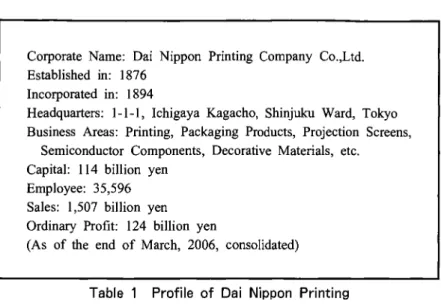
DaiNipponPrinting(DNPfわrshort)hasonehundredandthi吋 yearsoftra‑ dition intheprintingbusiness(seetheattached table).Today theirbusiness coversawideFleld,andthecompany‑sarmualtumoveramountstoaboutone
trillionandfourhundredbillionyen.
DNP hasdevelopedACCUWAVE seriesoforl●●glnalRFID tags・Theyhave f
unctionsoftraclngtheproduction,processlng,anddistributionoffoods,and multi‑sensortagsofthem makeitpossibletomonitortheproductsfstoragecon‑
ditions(DaiNipponPrinting,2005a)・
h addition,DNPopenedthe‑lIC TagSCM SolutionCenter‑Iinltabashi‑ward in Tokyo.Itisan experimentalfacility forlogisticsmanagementusing the
‑ 1
2 3 ‑
金沢大学経済学部論集 第27巻第2号 2007.3
CorporateName:DaiNipponPrintlngCompanyCo.,Ltd.
Establishedin:1876 Incorporatedin:1894
Headquarters:Ill‑I,IchigayaKagacho,ShinjukuWard,Tokyo BusinessAreas:Printing,PackagingProducts,ProjectionScreens,
SemiconductorComponents,DecorativeMaterials,etc. C叩ital:114billionyen
Employee:35,596 Sales:1,507billionyen OrdinaryProfit:124billionyen
(Asof血eendofMarch,2006,consolidated)
Table1 ProfHeofDaiNipponPrinting RFID tags.
AccordingtoourinvestlgationtotheDNP.SKansaiDepartmentofPackaglng and collected materials,thecompany enteredon thegradualintroduction of evaluationequipmentfrom2004,andinitiateddevelopingevaluationmethodol0‑ gleSforuseinspeciflClogisticsenvironments.Thecompanyhascamiedoutnu‑
merousexperimentssincethatphase,andbybuildinguprelevanttechnologl●eS andknow‑how hasbeen abletoestablish simulationtestmethodologleSina fieldsettlngaimedattheintroductionoftheRFID tags.ThefoundationofIC TagSCM SolutionCenteristhef血itoftheseefforts.
InJapan,withtheamendmentstotheRadioLaw Directives,ithasbecome possibletomakefulluseofUHFbandinRFID.Theobjectiveofthecenter istoselecttagreadersandsetuptheappropriateenvironmentf♭rtheiruseby mockingupspeci丘clogisticsenvironments,andconductingRFID tagreaderex‑
perimentsbeglnnmgWithUHFbands.
Inthisexperimentalfacility theyintendtodeveloptraceability systemsthat aretailoredtotheenvironmentsinwhichindividualitemsareused,suchasag‑ r
icultural,industrial,ormarineproducts・Such equipmentaSconveyorbelts,
palettesandforkliftsarearrangedinthecenter,makingitpossibletorepro‑
ducethemajorsettingsinvolvedinanysetoflogisticsoperationsfaithfully・
Makingadetailedexplanationabouttheconveyorbelts,theyusemostpreva‑
lentfb‑ sthatcompnsebelts,rollers,andchains,whichallow 也em tocom‑
pare theread‑off ratiosin each differentform at.The conveyorbeltsthey introducedoperateatupto180meterspermimte,也emostr叩idofanyRfID tagtestingfacility,makingitpossibletotestvariousfactorsincludingspeedof passagepastthetagreader,theangleorthereader,thepositionatwhichthe taglSattachedtothegoods,andtheoptimaldispositionofgoodsonthecon‑
VeyOr・
6.OrganizationalCharacteristicofDNP
Inordertocanγouttheexperimentsstatedabove,thecompanyshouldhave agreatvariety ofknowledge,thatistosay,knowledgeofelectronicdevices, beltconveyorsystems,assemblylineoperations,andsoon.Theonlycompany thathassuchbowledgecandotheexperiments.
DNPrespectsdiversity andcreatingknowledgethroughintegrationofdiver‑ sity.Theymakeanefforttocultivateanemergentevolutionalculture,namely, anorganizationalclimatewhichstirsupthemoralofeachemployee,activates theirindividualcreativity,andpromotesthem tofullyapplythecreativity.
AIso,theresearchfacilitiesofDNParelinkedwiththeteclmicaldepartments ofthevariousproductionfacilities,thecustomers(i・e・clientcompanies),and othercompaniesexceptthecustomers,so血at血eyc弧 CreateSOlutionstore‑ solveissuesonthefrOntlineofproductionandlogistics(DaiNipponPrinting, 2005b).Ac山allyDNPconductedsomeofthelogisticsmanagementtestsstated inthefbm erchapter,thetestsontrackingcontainersloadedwithbeverage‑use PET bottles,forinstance,cooperatlng With severalsoft‑drink manufacturers, NTT ComwareCo叩Oration,and Sun Microsystems・They takeadvantageof k
nowledgeandexpertisethattheyhaveaccumulatedinthisprocess,byuslng
‑125‑
金沢大学経済学部論集 第27巻第2号 2007.3
ittodeveloponglnalequlpmentandsystemswhichallow them too脆rincreas‑ 1nglyeffectivemanufacturingandloglSticstechnologleS・
Thus,based onthecorporatephilosophyofrespectingdiversity,underthe f
ree,open anddynamicculture,they aretryinghardtogathertogethertheir variousknowledgefrom theinsideandtheoutsideofthecompanytocreatethe bestproducts,tomaximizethesyntheticcapability.
7.Conclusion
A certainelectricalequlpmentmanufacturerannouncedonalargescalethat they succeeded in developing aprototypeforthesmallestRFID tag in the world(0.3sq.mm ),and thattagproductionefflCiency wasdramatically in‑
creasedbyemploylngadesignwheretheelectrodesaredeployedontheupper andundersideofthetag.
Insuchamanner,todaymanymanufacturersofRFID tagsareveryeagerto miniaturizethem andtoimprovetheirproductionefficiencystrateglCally.Such strategleSareimportantandeffectiveinthedevelopmentoftheotherdevices, tobesure.
Butwith regard to theRFID tags,itisextremely doubtfulwhethersuch
strategleSarerightornot.Tobefrank,wecamothelpstatlngtheyarewrong.
SCM isquiteeffectiveonoptlmlZlngProductionquantitatively.Thereforeit isnoexaggerationtosay血atSCM istheonlywaytokeepcompetitiveadvan‑
tageofJapanesecompanies,whiletraceabilityoffわodwillbecomemoreand moreimportanthereaRerin relationtoit.Totellthetruth,thinkingoffood traceability,raisingthetracingratioisamatterofgreaturgency,anditneeds variouslmowledge.
REFERENCES
Beech,Jeff(1999)'TheSupply‑demandNexus',inGattoma,Jolm (ed・)Strategt'cSIJPPly
ChainAlignment,Aldershot:Gower.
Christopher,Martine(1997)MarketingLogistics,Oxford:ButterworthHeinemarm.
DaiNipponPrinting(2005a)AnnualReport:SegmentInformation.
DaiNipponPrinting(2005b)Sustat'nableDevelopment. GISPRJ(2005)AnnualReport.
Nagumo,Toshitada,Nakajima,Hisao&Okano,Yasutake(2001)'IndustrialChangeand CorporateManagementintheEraofUbiquitousNetworksl,KnowledgeCreationand Integration,9(8).
UbiquitousID Center(2004)Tronshow2004.
YRPUbiquitousNetwomi ngLaboratory (2005)'StartofFeasibility StudyExperiments with theLargestSpecialty Men'sClothingShop,AoyamaTrading,AimingattheFu11‑ scaleImplementationofUID Teclmology‑bressrelease).
‑ 127‑