( 1 )
Print edition : ISSN 2188-3602 Received: February 27, 2015 Accepted : March 29, 2015 Published online : June 30, 2015
Glycative Stress Research 2015; 2 (2): 67-71 本論文を引用する際はこちらを引用してください。 連絡先:〒 610-0321 京都府京田辺市多々羅都谷 1- 3
同志社大学大学院生命医科学研究科アンチエイジングリサーチセンター 教授 米井嘉一
電話& FAX:0774-65-6394 メール:[email protected] Contact Address:Professor Yoshikazu Yonei
Anti-Aging Medical Research Center, Graduate School of Life and Medical Sciences, Doshisha University
1-3, Tataramiyakodani, Kyotanabe-shi, Kyoto, 610-0321 Japan Phone/Fax: +81-774-65-6394 Email: [email protected] Co-authors; Kawabata A, [email protected],
Original article
Arisa Kawabata, Masayuki Yagi, Mari Ogura, Yoshikazu Yonei
Anti-Aging Medical Research Center and Anti-Glycation Research Center, Graduate School of Life and Medical Sciences, Doshisha University Glycative Stress Research 2015; 2 (2): 67- 71
(c) Society for Glycation Stress Research
Postprandial blood glucose level after intake of a bowl of rice topped
with beef
(原著論文)
牛丼摂取後の血糖推移
抄録
KEY WORDS:
糖化ストレス、脂質、蛋白質、牛丼 川端有紗、八木雅之、小椋真理、米井嘉一 同志社大学大学院生命医科学研究科アンチエイジングリサーチセンター・糖化ストレス研究センター [目的]主食と副菜を併食することにより食後血糖値は抑制されると報告されている。本研究では、牛丼の摂取に より糖化ストレス抑制効果があるかを検討した。また生姜の有無についても比較した。 [方法]被験者は健常者男女 12 名(26.9 ± 5.9 歳)とし、書面にて同意を得た。試験当日は空腹時血糖値を測定し た後、被験食を 10 分間で摂取した。血糖値は被験食摂取開始から 15分、30 分、45 分、60 分、90 分、120 分後 に自己血糖測定器で測定した。糖化ストレスの評価は、血糖上昇値及び血糖上昇曲線下面積(area under curve: AUC)によって行った。米飯(230 g)、牛丼、牛丼+生姜(15 g)の 3 群の結果について、Tukey の多重比較 検定を行った。 [結果]米飯 AUC 5,000 以上の血糖上昇を認めた被験者 (11 名) について食後血糖を比較した。白米、牛丼生姜 なし、牛丼生姜ありの 3 群間で AUC に有意差はなかった。血糖値変化量は、摂取 15 分において牛丼生姜あり が白米に比べ有意に高かった(p = 0.006)。摂取 60 分において牛丼生姜なしが白米に比べ有意に低かった(p = 0.040)。 [結論]ファストフードであっても主食と副菜を組み合わせて摂取することで、糖化ストレスを緩和する可能性が ある。はじめに
ブドウ糖などの還元糖が、蛋白質と非酵素的に結合して 蛋白糖化反応最終生成物(advanced glycation endproducts: AGEs)になることを「糖化」といい、過剰な還元糖やア ルデヒド負荷による生体へのストレスは「糖化ストレス」 とよばれている1, 2)。 糖化ストレスは老化危険因子の一つ で、皮膚老化、糖尿病合併症等の進展要因になる。糖化ス トレスの軽減する方法として、食事摂取時における食後高 血糖の抑制、糖化反応の抑制、AGEs 分解・排泄の促進が ある。 我々の研究室では、主食の種類及び食物繊維添加が食後 血糖変化に及ぼす影響について検討し、グレープフルーツ の食前摂取により食後高血糖が軽減すること3)、食物繊維 の添加により食後の高血糖が抑制されることを確かめた4)。 また、うどんや米飯を単独で食べるよりも卵や野菜、マー ボー茄子といった副菜と一緒の食べる方が、血糖上昇曲線 下面積(area under curve: AUC)が小さくなることを報 告した5)。 今回は、白米単独ではなく牛丼にすることで食後血糖変化 に及ぼす影響について検討するとともに、紅生姜の有無につ いても比較した。本研究は、食育の観点から食後高血糖を 抑制し糖化ストレスを減らす方法を模索したものである。
方法
被験者
対象者は、前報と同様に4, 5) 同志社大学抗加齢医学研究 室に関係する者の中から被験者募集を行った。被験者の選 択基準は 2 0 歳以上の健常者で、以下の除外基準にあては まらない者とした。除外基準は食物、薬物アレルギーのあ る方、妊娠中、授乳中の方、現在薬剤による治療、観察中 の疾患のある方、糖尿病と診断された方、心肺機能に顕著 な障害を示す方、高血圧症の治療の薬剤を服用している方、 消化管の手術をうけたことがある方、感染症の疑いがある 方とした。その他として試験統括医師が不適当と判断する 方は除外した。 対象は同志社大学抗加齢医学研究室に関係する 12 名(男 性 5 名、女性 7 名、26.9 ± 5.9 歳、 BMI 20.6 ± 3.5)とし、 試験日に参加が可能であった者を解析対照とした。被験者 には十分な説明を行い文章にて同意を得た。血糖検査のプロトコール
前報と同様に4,5) 、日本 Glycemic Index(GI) 研究会によ る統一プロトコール6, 7) に従った。 検査前日は、過激な運動を控える、午後 8 時以降は食事 を摂らない。暴飲暴食・多量の飲酒・夜更かしを避ける。 検査前日・検査前・検査中に体調が悪くなった場合は、検 査を延期または中止する。 検査当日は、基準食及び被験食の摂取時間は 5 ~ 10 分 で行ない、一口 3 0 回程度噛む事とし、摂取開始(食べ始 めて)から15 分(2 回目)・30 分(3 回目)・45 分(4 回目)・ 60 分(5 回目)・90 分(6 回目)・120 分(7 回目)の血糖 を測定した。測定には自己血糖測定器(グルコカードマイ ダイア、アークレイ、京都市中京区)を使用した。被験食
本研究で用いた基準食及び被験食を以下に示した(Table 1)。表示されている栄養成分を用いて計算した。一部の食 材の栄養組成は日本食品標準成分表 2010 8)を用いて計算 した。 ・白米 230 g ・牛丼生姜なし(白米 230 g +牛丼の具) ・牛丼生姜あり(白米 230 g +牛丼の具+紅生姜 15 g) 本研究では、白米、牛丼の具、紅生姜を使用した。牛丼 の具、紅生姜は株式会社吉野家ホールディングスより提供 を受けた。基準食の白米は「サトウのごはん」(佐藤食品 工業(株)、新潟県新潟市)を用いた。白米、牛丼の具は会 社(吉野家(株)、東京都北区)で実際に提供されているメ ニューと比較するため、2014 年 10 月時点での流通商品を 冷凍パックとして提供を受け、加熱して用いた。 なお、試験食の糖質量は、前回の試験4, 5)と同様に 75 ± 5 g とし、糖尿病診断に用いられる経口 75 g グルコース負 荷試験に準拠した。 Steamed rice “Gyudon” pack * Red ginger * 230.0 135.0 15.0 Food items Consumption( g )338.1 263.3 2.6 Energy ( kcaL) 4.8 13.6 0.045 Protein (g) 0.0 20.9 0.060 Lipids ( g) 78.0 4.9 0.59 Carbohydrates (g) Table 1. Food consumption and nutrients in test food items.
Numerical figures for food items were calculated based on the provided nutrient information from Yoshinoya Holdings using the Standard Tables of Food Composition in Japan 2010 8). “Gyudon,” a rice bowl topped with beef. * Data from the distribution products at October 2014 were provided by Yoshinoya Holdings.
解析方法
被験食摂取後の経時的な血糖値から 0 分値を差し引いた 値をΔ血糖値、 摂取開始後 120 分までの濃度変化の最高 値を最高血糖変化値とした。血糖上昇曲線下面積(AUC) を計算した。統計解析には IMB SPSS Statics 22 (IMB Japan, 東京都港区)を用いた。3 群間の比較は Tukey の 多重比較検定を行った。両側検定で危険率 5 % 未満を有意 差ありとした。
倫理基準
本試験はヘルシンキ宣言(2004 年東京総会で注釈追加) に基づく倫理原則および個人情報保護法を遵守し、「医薬 品の臨床試験の実施の基準に関する省令(GCP)」(平成 9 年 3 月 27 日厚生省令第 2 8 号) 並びに厚生労働省・文部 科学省の「疫学研究に関する倫理指針」を参考にして実施 した。本研究は同志社大学倫理審査委員会を開催し、試験 の倫理性および妥当性について審議を行い、承認のもとに 実施した(申請番号:1228-2)。結果
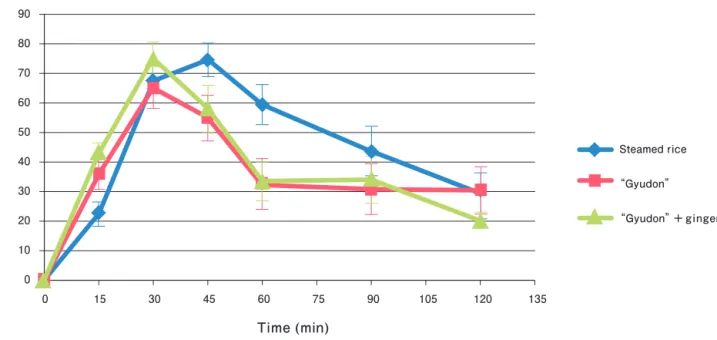
各血糖試験の血糖値の推移をFig.1に、AUC をFig. 2 に示した。米飯 AUC 5,000 以上の血糖上昇を認めた被験 者(白米 11 名、牛丼生姜なし 11 名、牛丼生姜あり 10 名) について食後血糖を比較した。理由は、AUC 5,000 以下の 者を加えて全例解析を行った結果、3 群間で有意差はみら れなかったからである。 AU C については白米、牛丼生姜なし、牛丼生姜ありの 3 群間で有意差はなかった。血糖値変化量は、摂取 1 5 分 において牛丼生姜ありが白米に比べ有意に高かった(p = 0.006 )。摂取 6 0 分においては、牛丼(生姜なし)が白米 に比べ有意に低かった(p = 0.040)。牛丼(生姜あり)と白 米の間には有意差はなかった。
考察
データ概要
今回の検討では、白米、牛丼生姜なし、牛丼生姜ありの 3 群間において AUC に有意差は見られなかった。血糖値 においては、摂取 15 分で白米が牛丼生姜ありと比べて有 意に低く、摂取 6 0 分で牛丼生姜なしが白米と比べ有意に 低かった。 食後 2 時間の血糖推移に影響を与える因子としては、 食物中に含まれる炭水化物、特に糖質により強く影響を受 ける。今回の結果では、糖質量は、白米のみよりも牛丼の 方が多いにも関わらず、 AUC において牛丼が高くならな かった(p = 0.300)。栄養成分を比較すると、牛丼は白米 のみと比べ約 9 g 蛋白が多く含まれていた。蛋白はインス リン分泌を促進させるグルコース依存性インスリン分泌刺 激ポリペプチドを(G I P )分泌させ、インスリンの分泌を 促進する9)。また、牛丼に含まれる脂質は白米のみと比べ 約 21 g 多い。脂質は消化管ホルモンや迷走神経を介して 胃の平滑筋運動に影響し、胃排泄速度を低下させる作用を 持っている10)。そのため、摂取 4 5 分以降の血糖値につい ては、牛丼に含まれる蛋白や脂質が血糖値を抑制したと考 えられる。 一方、摂取 15 分の血糖値では、白米が牛丼生姜ありと 比較して有意に低くなった。この要因として、牛丼のタレ に含まれる糖類によるものだと考えられる。胃排出能
食後血糖に影響する因子として胃排出能は大きな役割を 果たすと予想されるが、これまで議論が決して多くなかっ た。胃排出能が低下し、胃排出時間が遅くなれば、食後血 糖は上昇しにくくなり、反対に胃排出時間が短くなれば血 糖は上がりやすくなる。しかし極端な胃排出能低下は機能 性ディスペプシア(F D)の病態である。健常者において 胃排出時間を遅延させる因子としては加齢11)、機能性ディ スペプシア・消化管潰瘍及び胃酸分泌状12)、糖尿病性消 化管運動障害や糖代謝13, 14)、食事内容15-17)、食事温度15, 18) が挙げられる。食事内容については、健常者の胃排出能は 糖主成分食で最も速やかで、次いで脂質主成分食、蛋白主 成分食の順である15)。 食事・飲料の組み合わせで胃排出時間を比較した成績 では、唐揚 + お茶、麦ごはん+ お茶、豆腐+お茶の組み合 わせが胃排出時間 2 時間以上と長引き、次がパン+お茶 (2 時間)、 お茶単独 ( 1 時間) であった17)。 唐揚げ摂取によっ ても胃排出時間の影響で血糖上昇が緩和されると予想され る。 健常者 1 0 名(平均 34 歳)を対象に液状食(200 mL) の胃排出時間を測定した結果、脂肪の含有量は胃排出への 影響は少なく、高カロリー食ほど胃排出速度が遅くなるこ とが示された16)。 若年者(23.0 ± 0.6 歳)及び高齢者(73.3 ± 1.6 歳)に 脂肪を含まないスープ、 脂肪 (中性脂肪 24.6 g) を含む スープ、脂肪 +リパーゼを含むスープを投与して胃排出時 間を比較した試験では、高齢者で胃排出時間は長く、脂肪 ありで胃排出時間は長く、リパーゼにより通過時間は短縮 した11)。 胃排出時間の観点から牛丼の影響を考えると、牛丼は比 較的に蛋白含有量が多くカロリーも高いことから、牛丼摂 取により胃排出能は低下し、胃排出時間は長くなる。その 結果、食後血糖上昇は緩和されると予想される。栄養バランス
過度の糖質制限食は死亡リスクを上げる可能性がある 19)。そのため、食事の改善を考える時には、糖質制限をし ないで食後血糖を抑える方がよいと考えられる。食事の 三大栄養素(蛋白質・脂質・炭水化物)の摂り方の目安に PFCバランスというものがある。PFC バランスは食事の摂 取エネルギーの内、P(蛋白質):20%、F(脂質):25% 未 満、 C(炭水化物):50 ~ 60% が理想である20-23)。 PFCバランスをとることで、食後の血糖値の上昇を抑 えられ、必要とされるインスリン量が減り、膵臓の負担が 軽くなり、疲弊していた膵臓が回復してくる。そうするこ とで、ブドウ糖が筋肉や脂肪などの組織にしっかり取り込 まれ、血糖値は更に改善する24)。 今回の牛丼生姜なしの PFC バランスは、P = 12.45%、 F = 31.74%、 C = 55.82% であった。 食物繊維摂取による食後血糖上昇を緩和する作用も報告 している4)。牛丼の具には玉ねぎも多く含まれているが、 サラダなどを追加することで線維分が加わり、さらに食物 繊維摂取による食後血糖上昇の抑制作用が強まる可能性が ある。Fig 2. Comparison of AUC.
AUC of the blood glucose curve were compared among the following 3 tests after taking each meal of steamed rice 230 g (n = 11), “Gyudon” without ginger (n = 11), and “Gyudon” with ginger (n=10).
No significant difference was noted among the 3 groups; Tukey’s multiple comparison test. “Gyudon”; a rice bowl topped with beef. Data are expressed as mean ± standard error.
Fig 1. Postprandial blood glucose changes.
Blood glucose levels were compared among the following 3 tests after taking each meal of steamed rice 230 g (n = 11), “Gyudon” without ginger (n = 11), and “Gyudon” with ginger (n=10).
For changes in blood glucose level at 15 min: p < 0.05; “Gyudon” with ginger vs. steamed rice; at 60 min, “Gyudon” without ginger, p < 0.05; Tukey’s multiple comparison test. “Gyudon”; a rice bowl topped with beef. Data are expressed as mean ± standard error.
0 0 10 20 30 40 50 60 70 80 90 15 30 45 60 75 90 105 120 135 Time (min) B lo od g lu co se ( m g /d L) Steamed rice “Gyudon”+ ginger “Gyudon” 0 1,000 2,000 3,000 4,000 5,000 6,000 7,000 A U C Steamed rice “Gyudon”+ ginger “Gyudon”
一般的にはファストフードは高脂質や高蛋白質であるも のが多く、高カロリーであり肥満や糖尿病の原因となると 思われがちである。しかし、牛丼といった主食や副菜を組 み合わせた食事は糖化ストレス抑制の観点からは有効であ ることが示唆された。また高蛋白、高脂質の食材を米飯に 加えることで、米飯単独に比べ胃排出時間が長くなり、食 後高血糖の緩和に貢献する可能性がある。今回は、糖化ス トレスの観点から検証したため、脂質が含まれることで血 糖値上昇の抑制に好影響を与える結果となった。しかし、 過度に脂質を摂取すると、脂質異常をきたす恐れがでてく るため、脂質の摂り方には注意しなければならない。
結語
主菜と副菜を組み合わせて摂取することで血糖値上昇が 抑制され、糖化ストレスの観点からはファストフードを適 切に選択すれば米飯単独に比べて有効な食事となることが 示唆された。利益相反申告
本研究の遂行にあたり、株式会社吉野家ホールディング スより研究支援を受けた。Reference
1) Nagai R, Mori T, Yamamoto Y, et al. Significant of advanced glycation end products in aging-related disease. Anti-Aging Medicine. 2010; 7: 112-119.
2) Ichihashi M, Yagi M, Nomoto K, et al. Glycation stress and photo-aging in skin. Anti-Aging Medicine. 2011; 8: 23-29.
3) Ogura M, Yagi M, Nomoto K, et al. Effect of grapefruit intake on postprandial plasma glucose. Anti-Aging Medicine. 2011; 8: 60-68.
4) Matsushima M, Yagi M, Hamada U, et al. Effects of choice of staple food and the addition of dietary fiber on changes in postprandial blood glucose level. Glycative Stress Research 1:46-52
5) Matsushima M, Yagi M, Hamada U, et al. Prevention of postprandial hyperglycemia by the combination of a staple food and a side dish. Glycative Stress Research. 2014;1:53-59.
6) Japanese Association of the Study for Glycemic Index. Unified protocol (unified procedure). (in Japanese) http:// www.gikenkyukai.com/protocol.html
7) Sugiyama M, Wakaki Y, Nakayama N, et al. Research on rice eating and glycemic index. Journal of Japanese Society on Nutrition Care and Management. 2003; 3: 1-15. (in Japanese)
8) Kagawa Y. Standard tables of food composition in Japan2013. Kagawa Nutrition University Publishing Division, Tokyo, 2013. (in Japanese)
9) Von Post-Skagegard M, Vessby B, Karlstrom B. Glucose and insulin responses in healthy woman after intake of composite meals containing cod-, milk-, and soy protein. Eur J Clin Nutr. 2006; 60: 949-954.
10) Hara H. Regulation of gastrointestinal functions by dietary lipids. Journal of Japan Oil Chemists' Society. 1997; 46: 1237-1246. (in Japanese)
11) Nakae Y, Onouchi H, Kagaya M, et al. Effects of aging and gastric lipolysis on gastric emptying of lipid in liquid meal. J Gastroenterol. 1999; 34: 445-449.
12) Kawada A, Hosaka H, Kuribayashi S, et al. Gastrointestinal motility and functional dyspepsia. Nihon Shokakibyo Gakkai Zasshi. 2012; 109:1714-1721. (in Japanese)
13) Misu N, Kamiya T, Kobayashi Y, et al. Effects of oral glucose intake on gastric myoelectrical activity and gastric emptying. J Smooth Muscle Res. 2004; 40: 169-176.
14) Kaji M, Nomura M, Tamura Y, et al. Relationships between insulin resistance, blood glucose levels and gastric motility: An electrogastrography and external ultrasonography study. J Med Invest. 2007; 54: 168-176.
15) Mizuta S. Clinical research on gastric emptying in the gastric and duodenal ulcer. The Journal of Osaka Medical College. 1982; 41: 88-99. (in Japanese)
16) Urita Y, Miki K, Nakamura T. Influence of the content of liquid test meals on gastric emptying assessed by
13C-acetate breath test. Journal of Smooth Muscle
Research Japanese Section. 2002; 6: J121-J127. (in Japanese)
17) Kyou K, Aika N, Miyama S. Ultrasonographic assessment of gastric emptying. Journal of the Yonago Medical Association. 2008; 59: 179-184. (in Japanese)
18) Mishima Y, Amano Y, Takahashi Y, et al. Gastric emptying of liquid and solid meals at various temperatures: effect of meal temperature for gastric emptying. J Gastroenterol. 2009; 44: 412-418.
19) Noto H, Goto A, Tsujimoto T, Noda M. Low-carbohydrate diets and all-cause mortality: A systematic review and meta-analysis of observational studies. PLoS One. 2013; 8(1):e55030. doi: 10.1371/journal.pone.0055030.
20) Ministry of Health, Labour and Welfare. Outline of Results from 2012 National Health and Nutrition Survey. http:// www.mhlw.go.jp/file/04-Houdouhappyou-10904750-Kenkoukyoku-Gantaisakukenkouzoushinka/0000032813. pdf, accessed at Feb 23, 2015. (in Japanese)
21) Department of Health & Welfare, Okinawa Prefectural Government. Outline of Results from 2006 Okinawa Health and Nutrition Survey. http://www.kenko-okinawa21.jp/kankobutu/eiyo/H18gaiyou/index.htm, accessed at Feb 23, 2015. (in Japanese)
22) Ministry of Health, Labour and Welfare (Ed). Dietary Reference Intakes for Japanese 2010. Daiichi Shuppan, Osaka, 2009. (in Japanese)
23) The Japan Diabetes Society. Proposal about a diabetes diet for Japanese from Japan Diabetes Society. http://www. jds.or.jp/modules/important/?page=article&storyid=40, accessed at Feb. 23, 2015. (in Japanese)
24) Katayama T, Kidou A. An Illustrated Diabetes Mellitus. Shufunotomo, Tokyo, 2011. (in Japanese)