九州大学学術情報リポジトリ
Kyushu University Institutional Repository
権威主義体制下のエジプト・ムスリム同胞団の動員 戦略についての研究
モハメド, シャミ, ムクボア, アブデゥルカハル
https://doi.org/10.15017/1866239
出版情報:Kyushu University, 2017, 博士(比較社会文化), 課程博士 バージョン:
権利関係:
THE RECRUITING STRATEGIES AND MECHANISMS OF THE EGYPTIAN
MUSLIM BROTHERHOOD
UNDER AUTHORITARIAN REGIMES
Graduate School of Social and Cultural Studies, Kyushu University
Mohamed Chami Mkouboi Abdoulkahar
April, 2017
i
Abstract
This study examines and analyzes the role played by Islamic ideology, organizational structure, economic activities and social services, and media involvement in recruiting many Egyptians to support the Egyptian Muslim Brotherhood (EMB). The study scrutinizes the continuing impact of these factors since the inception of the organization in 1928 to date on the EMB’s political mobilization. The study argues that the interpretation of Islam, the anti-colonialism rhetoric, the renaissance of Islam and the move to establish an International Muslim bloc used by the organization are still relevant and were useful in bringing the Brotherhood to power in 2012.
Moreover, the organizational structure and the different branches supervised by the headquarters play a crucial role in consolidating the movement and sustaining its political and social engagements. Further, the economic activities and social and welfare services also play a vital role in the EMB’s political mobilization. Lastly, the Brotherhood effectively uses media in propagating its ideology and agenda, especially through the use of social media, which is currently one of the most effective media sources used by the organization to survive from the suppressive tactics used by the Egyptian government authority.
The EMB’s political mobilization is basically the combination of several strategies and mechanisms, from the monarchy era to date, headed by focusing more on preaching its ideology, providing economic activities and social services during the monarchy era in the 1930s, due to the none-burden usage of mosques by the organization and the miserable economic situations the country faced. Moreover, the EMB continued enlarging and consolidating its organizational structure in the 1960s and 1970s as the organization became national-wide, and, finally, using all available media tools provided by the information technology and the use of international broadcasts.
In the 1980s to date, the organization again shaped its ideology through preaching democracy, flexible interpretation of the Islamic sharia to fit the democratic and economic dynamisms enhanced by the 21st century. Furthermore, evaluating the roles played by the different sections embodied by the organizational structure has been achieved by the organization in order to preserve its existence from the various suppressive tactics used by Mubarak and later by Abdel Fattah al-Sisi’s regimes.
With the break of fear generated by the Egyptian Uprising in January 2011, the
EMB used all its political ideology, its organizational structure, its economic and social
services through its social media coverage and the Qatari Al-Jazeera channel to win the
parliamentary and presidential elections in 2012.
ii
It is obvious that the Brotherhood, now legally disbanded, but spiritually
intact in the minds of many Egyptians, is likely to continue surviving and evolve due to
its continuous revision of its political strategies and mechanisms. Even though it
underwent during mainly a period of brutal suppression under Abdel Fattah al-Sisi, the
organization might be able to constantly adjust its political tactics in order to come back
to the Egyptian political scene.
iii
Table of Contents
Abstract ... i
Table of Contents ... iii
List of figures... vi
Definitions of Terminology ... viii
Abbreviations... ix
Chapter I: Introduction ... 1
1. Background ... 5
2. Literature Review ... 6
3. Research Questions... 19
4. Analytical Frameworks ... 19
5. Objectives and Originalities of the Study ... 30
6. Significance of the Study ... 31
7. Boundaries and Limitations of the Study ... 32
8. Methodology ... 33
9. The Structure of the Study ... 34
Chapter II: Historical Overview and Current Episodes of the Egyptian History with the Muslim Brotherhood’s Resurgence ... 36
2.1. Egyptian Monarchy from 1923 to 1952 ... 36
2.2. Jamal Abdel Nasser’s Regime from 1952 to 1970 ... 39
2.3. Anwar Sadat’s Regime from 1970 to 1981 ... 42
2.4. Hosni Mubarak’s Regime from 1981 to 2011 ... 44
Chapter III: The Power of the Egyptian Muslim Brotherhood: The Impact of Ideology on Political Mobilization ... 47
3.1. Introduction ... 47
3.2. The Resurgence of Political Islam in Egypt from Late 19th Century ... 49
3.3. The founder of the Brotherhood: Hassan al-Banna from 1928 to 1949 ... 53
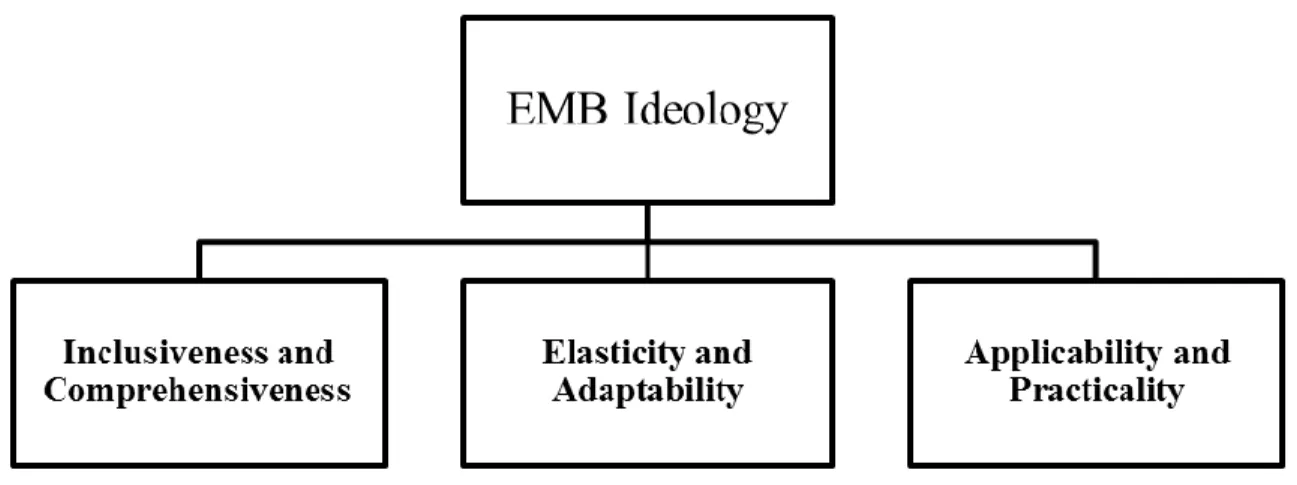
A. Inclusiveness and Comprehensiveness ... 57
B. Elasticity and Adaptability ... 58
C. Applicability and Practicality ... 59
3.4. The Second Supreme Guide of the Brotherhood: Hassan al-Hudaibi from 1949 to
1972 ... 64
iv
3.5. The Third Supreme Guide of the Brotherhood: Umar al-Tilmisani from 1972 to
1986 ... 71
3.6. The Fourth Supreme Guide of the Brotherhood: Mohamed Hamed Abu al-Nasr from 1986 to 1996 ... 74
3.7. The Fifth Supreme Guide of the Brotherhood: Mustafa Mashhour from 1996 to 2002 ... 76
3.8. The Sixth Supreme Guide of the Brotherhood: Ma’mun al-Hudaibi from 2002 to 2004 ... 78
3.9. The Seventh Supreme Guide of the Brotherhood: Mahdi Akef from 2004 to 2010 ... 80
3.10. The Eight and Last Supreme Guide of the Brotherhood: Mohamed Badie from 2010 to Present ... 81
A. Arab Spring ... 82
B. Egyptian Muslim Brotherhood’s Election Program ... 84
C. The Brotherhood’s Easy-going Approach to its Opposition Counterparts ... 86
D. Electoral Mechanisms Used to Bring Mohamed Morsi to Power ... 86
E. General Strategies and Electoral Politics to Bring the Brotherhood’s candidate to Power in 2012 ... 87
F. Egyptian Muslim Brotherhood’s Regime from 2012 to 2013 ... 87
Chapter IV: Egyptian Muslim Brotherhood’s Organization Sources and Activities ... 91
4.1. Introduction ... 91
4.2. The Role of the Organizational Sources ... 91
4.3. General Headquarters ... 94
4.4. The Leader’s Office (General Guide Office) ... 95
4.5. The General Consultative Assembly ... 96
4.6. The General Guidance Council ... 98
4.7. Administrative Office ... 99
4.8. District ... 99
4.9. Branch ... 100
4.10. The Family Section ... 101
4.11. The Various Divisions Within the Organization ... 106
4.12. Usage of EMB Branches for Electoral Purpose ... 108
Chapter V: The Egyptian Muslim Brotherhood’s Recruitment Strategies: Economic
Activities and Social Services along Its History ... 111
v
5.1. Introduction ... 111
5.2. Economic Activities ... 112
5.3. Social Services and Welfare ... 115
A. Health Services ... 116
B. Education Services ... 119
5.4. Informal Welfare Services ... 122
Chapter VI: Media Involvement and Communication Strategies and Mechanisms of the Egyptian Muslim Brotherhood ... 125
6.1. Introduction ... 125
6.2. The Brotherhood’s Publication Sections ... 125
6.3. Vertical Communication or Indoctrination ... 127
6.4. Conventional Communication Mechanisms of the Egyptian Muslim Brotherhood (Publications) ... 130
6.5. The Use of the Internet ... 131
6.6. The Use of the Local and International Media for the Last Brotherhood’s Presidential Election ... 134
Chapter VII: Conclusion ... 138
References ... 148
vi
List of Figures
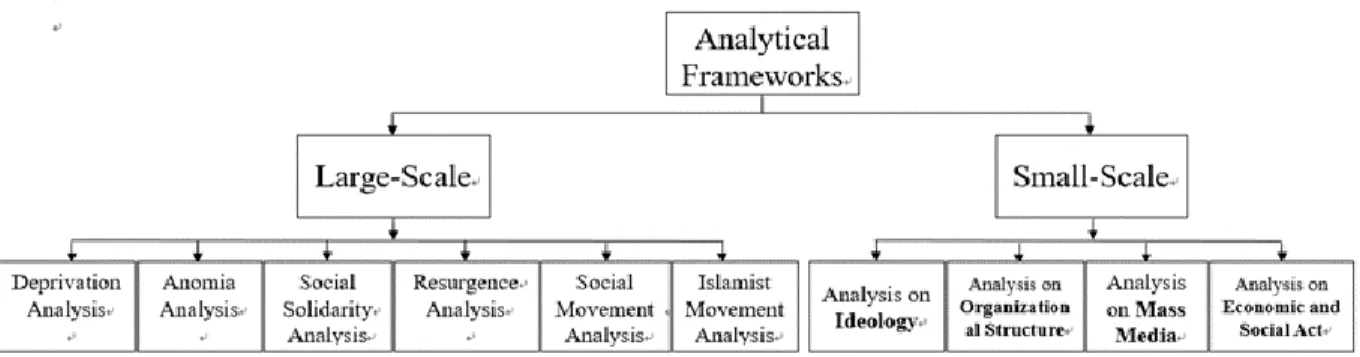
Figure 1. Theoretical Framework
Figure 2. Egyptian Muslim Brotherhood’s Framework of Ideology
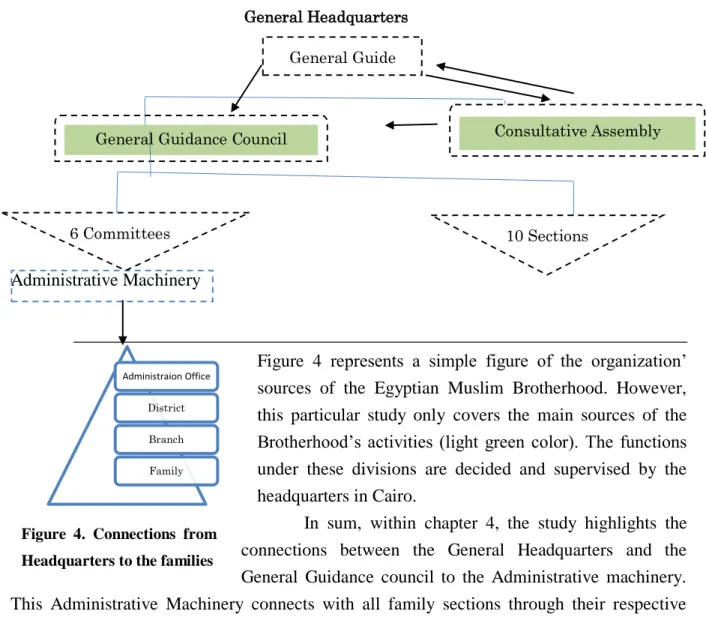
Figure 3. The different stages from non-membership to the Brotherhood membership Figure 4. Connections from Headquarters to the family section
vii
For all my family members, professors and friends, especially Mohamed Misbahou and Atin Supartini besides Moukrimah, Bisharah, Moutassem and Rafiqah, who supported me during my research period. Thank you all
for your encouragement and kindness.
viii
Definitions of Terminology
Middle East: is restricted to the Arab native-speaking countries, plus Turkey and Iran Strategies: Indirect Recruitment
Mechanisms: Direct Recruitment
Arab World: All countries where the Arabic language is the mother tongue. Iran and Turkey are excluded.
North Africa: Includes Morocco, Algeria, Tunisia, Libya, and a part of Egypt west of the
Gulf of Suez Canal.
Arab Uprising: Arab Spring or Arab Awakening: Huge protests against governments in some
countries including Egypt; started from Tunisia in 2010.
Ulama: An Arabic word meaning ‘scholars’.
Vanguard party: A concept invented by Lenin to describe the communist party as a revolutionary party, well committed to reach its goal.
Ijtihad: Arabic word with several interpretations: Diligence, judgment, conscientiousness,
assiduity, studiousness.
Supreme Caliph: In the past, Muslims’ leaders used to be called Caliph like the president or prime minister according to today’s concepts. However, a Caliph has more power than today’s presidents or prime ministers.
Islamism: Although it has diverse interpretations, it has the same meaning as Political Islam in this study.
Political Islam: The definitions have been highlighted in chapter 1. It is interpreted here as the ideology of the Brotherhood.
Khilafah: An Arabic word meaning Caliphate.
Sharia: Law or constitution generated by the Islamic school of thought.
U.S. State Department: The department of the U.S. federal government that sets forth and maintains the foreign policy of the United States.
Tasht: Name of an Egyptian communist party in the past.
The Meir Amit Intelligence and Terrorism Information Centre: An Israeli-based
research group with close ties to the Israel Defense Forces.
ix
Abbreviations
AARP American Association of Retired Persons AKP The Turkish Justice and Development Party Al-Islah (YCR): Yemeni Congregation for Reform
CDU the Christian Democratic Union of Germany CPSU The Communist Party of the Soviet Union EGP Egyptian pound
EMB Egyptian Muslim Brotherhood FJP The Freedom and Justice Party FO Free Officers
Hamas The Palestinian Hamas
ICP Italian Communist Party
LJCP The Libyan Justice and Construction Party MB Muslim Brotherhood in Jordan
ODEP Open Door Economy Policy PLO Palestine Liberation Organization PT period of time
SMB the Syrian Muslim Brotherhood
The Ennahda The (Renaissance) Movement Party of Tunisia
USDS United States Department of State
1
Chapter I Introduction
The Egyptian Muslim Brotherhood (EMB) is the oldest, the most controversial and most active Islamist movement compared to others such as al- Takfir wa’l Hijrah, al-Jihad al-Islami and al-Jama al-Islamiyya and also compared to its analogues in Palestine, Syria, Jordan, Kuwait, Morocco and so forth, not only in the Middle East region but also in the World. “During the period of its inception in the 1930s, there existed a few Islamic associations, youth movements and a political party which appealed to the same groups as the EMB, and propagated, at least in certain periods, a similar ideology. None of them, however, experienced an expansion comparable to that of the EMB” (Lia 1998, 2). The EMB and its analogues are large umbrella organizations encompassing individuals and factions with different and at times conflicting worldview, values and opinions (Wickham 2013, 7).
Rubin’s work leads him to conclude about the EMB’s expansionism; “[I]n the 1930s, EMB’s members reached tens of thousands, large arms caches and a strong base in the police and army” (Rubin 1990, 10). This robust movement is considered to be the heart and the soul of several Muslim Brotherhood movements in the Middle East and in the entire World (Pargeter 2010, 15). According to
Ben MorrisLindstrom-Ives, “due largely to its successful work as a benevolent society in Egypt along with growing protests against Zionist settlements in the British Mandate of Palestine, membership in the Brotherhood would increase from around 800 in 1936 to 200,000 by 1938. By 1938, the Brotherhood was for the first time in its history truly engaged in politics”
1(Lindstrom-Ives 2015, 9).
The organization is a social movement that functions as a political party in some instances. Since its foundation in 1928, under successive authoritarian Egyptian regimes, the Brotherhood has continued increasing its supporters within Egyptian society (Mitchell 1969, 5). The social, religious and political activities engaged in by the movement made it one of the main actors in Egyptian politics, especially after the organization formally dismissed its connections to violence, stating that Islamists who have engaged in violence have formally left the Brotherhood and often renounced it prior to their embrace of jihadism (Al-Baz 2010, 182).
The influence of the EMB reached its height in the 1940s and 1950s. Accordingly, it is argued, the Brotherhood’s institutions reached throughout Egyptian society, including a section called the Secret Apparatus which was responsible for military training. “By 1948, the
1
In a recorded interview with Aljazeera’s journalist Ahmed Mansour in 2006, Yusuf Nada, the noted businessman and Muslim Brotherhood financial strategist, who was in charge of the international Relations’
affaires of the EMB, claimed that the Muslim Brotherhood’s members in general are about 7,000,000.
However, this particular study did not verify nor consider this number because this study is exclusively
about the Muslim Brotherhood in Egypt only.
2
Muslim Brotherhood played a particularly prominent role in raising funds, purchasing weapons, running military training camps, and sending hundreds of volunteers to fight in Palestine. By this time, the Brotherhood’s membership had risen to over half a million.
Students, workers, civil servants, and the urban poor attended its meetings and enthusiastically echoed its ideology” (Rubin 1990, 11). Consequently, the EMB experienced conflicts, but also alliances, with most regimes, including the royal power that started in 1923 and ended in 1952 (Al-Baz 2010, 215). Furthermore, during the military regime that began on July 23, 1952, until the end of President Hosni Moubarak’s era on February 11, 2011, the organization used different strategies and mechanisms to mobilize supporters (Bal 2014, 263).
As for its agenda, the movement’s primary short-term goal has been to rule Egypt under influential Islamic policy (Rubin 1990, 17). However, the movement stresses its willingness to participate in the democratic process (Pargeter 2010, 9). In addition, it projects itself as pacific, although some of its branches were directly involved in violent action in the 1960s and 1970s as well (Pargeter 2010, 11). Consequently, the historical legacy of violence became a cause for condemnation of the movement. The secondary controversial characteristics of the EMB is its transnational agenda that emphasizes the unity of the entire Muslim World starting from the Arab region under its leadership (Monier & Ranko 2013).
“When one visits the EMB’s own wiki site, Ikhwanwiki, there is a section dedicated to its diverse presence and connections not only across the Middle East and North Africa (Morocco, Algeria, Tunisia, Libya, Egypt, the Palestinian Territories, Jordan, Lebanon, Syria, Iraq, Kuwait, Saudi Arabia, Bahraini, Qatar and Yemen) but also elsewhere across the globe including Indonesia, the United States of America, Germany, Bosnia Herzegovina, Chechnya, Sudan, Somalia, Djibouti, Senegal, Nigeria, Mauritania, Pakistan and Afghanistan”
(Milton-Edwards 2016, 5). This international plan causes severe political confrontations with national and regional governments (Fuller 2004). This suggests that the organization is considered as a political opponent of both the socialist and monarchy regimes in the Middle East in particular. In the international arena, the EMB is controversial among various powers, such as the United States, under successive administrations, the European Union and others (Vidino 2013).
In the past, during oppressive tactics by the governments when it appeared as a
threat in the eyes of government authorities, the organization has been cloaked in secrecy
(Pargeter 2010, 16). Its members have been banned in several Middle Eastern states. Under
some Middle East regimes, its members were subject to intimidation, detention and torture
(Reuters 2015). The fear of being connected to the Brotherhood has contributed to a culture
of suppression. This has inspired accusations of ‘double speak,’ creating the impression in
some quarters that the movement is not to be trusted (UCIS 2010). Ambiguity over many
issues, such as violence, the role of women, the role of non-Muslim minorities in Egypt and
3
others, has further contributed to this perception (Vidino 2013, 2). Although the Brotherhood has adopted a more open and transparent approach in recent years, the negative effects of this tradition of mystery continue to trouble the movement even though it was in conflict with the secessionist group known as Muhammad’s Youth (Shabab Muhammad) in 1939-40 (Lia 1998, 10) and currently in conflict with violent Islamist organizations such as al-Qaeda. “Perhaps the most frequently cited example of this latter point is the one-time Brother and now leading al-Qaeda as its ideologue, Ayman al-Zawahiri, who famously criticized the Brotherhood in his 1991 book: The Bitter Harvest (al-Hisad al-murr) for forsaking the Islamic obligations of jihad” (Rosen 2008).
In spite of the foregoing, the Egyptian Muslim Brotherhood “remains a potent force both in the Middle East and in the political Islamist movements more widely” (Pargeter 2010, 10). This is due in part because it falls within the tradition of the reformist school that emerged in Egypt in the late 19
thcentury (Rubin 1990, 31). This ideology was criticized as
“stern anti-Westernism, Fanatism and xenophobia by an American researcher, Christina P.
Harris in 1964” (Harris 1964). According to Brynjar Lia, “this was evidently the traditional view of the Muslim Brotherhood in the 1950s and 1960s” (Lia 1998, 4). Furthermore, the organization focuses on issues of public morality and the preservation of traditional values, as much as it has engaged in politics (Mitchell 1969, 2). During the Egyptian Uprising that started on January 25, 2011, a political opportunity was offered to the Brotherhood. Its active members worked days and nights to gain more sympathizers and supporters to participate in the struggle to remove Moubarak from power. These activities were well executed by the Brotherhood, due to its experience in the field of social services and welfare activities and others from its inception in 1928. In fact, its opponents often recognize the long experience of the Brotherhood in the field of political mobilization, especially ‘the Wafd,’ the Egyptian historical and nationalist political party (Rubin 1990, 32).
As a political power, the movement gained the attention of the international community as it worked to replace the Egyptian authority after the collapse of the Moubarak’s regime. This attention was due to the movement’s organizational and mobilization capability through its consolidated network across the country. According to the second chairman of the organization, Khairat al-Shateri, more than 200 international institutions, such as Embassies, journalists, political parties, foreign ministers and so forth from around the World, held meetings on a weekly basis with the organization’s leadership after the collapse of the Moubarak’s regime, in order to get accurate information about its ideology and its political agenda (Aljazeera 2011). In the case of the Israeli-Palestinian crisis, the U.S. expected the EMB to take a flexible approach towards the existing peace treaty, made in 1979 between the Egyptian and the Israeli authorities (Alpher & Shikaki 1998).
However, there was no trust from either the U.S. or the Israeli authorities toward the
organization according to the analysis suggested by the author of this work, due to mainly its
4
full support on Hamas, an Islamist organization fighting against the Israeli authorities since its formation in 1987 (Janssen 2009).
The events of the Egyptian Uprising in 2011, however, brought the Brotherhood to power through democratic elections held in 2012. Subsequently, the movement ruled the country from 30 June, 2012 to 3 July, 2013. This short regime was controversial in the eyes of its opponents because, in part, of an attempt to introduce a fundamentalist Islamic theocracy, lack of clear political and economic programs, monopolization of the judiciary, parliamentary and executive powers under the EMB’s leadership, and a failure to provide for the basic survival of the citizens (Sheira 2013, 18). Nevertheless, the organization and its supporters rejected all these allegations, accusing the military and other opponents of working to undermine the new regime through the old regime’s dominance of key positions of the state. These economic and judiciary failures led to an uprising against the regime of the Brotherhood. The military intervened and finally carried out a coup d’état against the new regime. This regime change was accomplished by the military with suppressive and brutal actions that cost many lives and caused severe injuries. According to Huwaidi (2013), the EMB lost 2700 members and supporters, with 16, 000 injured.
The quest for a deeper understanding of the EMB is a challenge researchers of Middle East studies continue to face. However, among the vital aspects of the study of the Muslim Brotherhood organization that should be presented, examined and analyzed are its main recruiting strategies and mechanisms. This study shows that the main recruiting mechanisms and strategies of the Brotherhood are the ideology, the organizational structure, its economic and social services and its media involvement. The author of this study came up with these four factors as results of intensive examination in a larger number of literature highlighting the rise of the EMB from its inception in 1928 to date. However, as far as this particular study is concerned, this dissertation provided detailed explanation of the EMB’s ideology, its organizational structure, its economic and social activities and the media involvement in order to present them as the principal arguments behind the EMB’s political mobilization. This study, therefore, determines how the oldest and foremost Islamist organization in the world has been able to attract an unprecedented number of members and public support, not only in the Egyptian presidential election 2012, but also in the Egyptian parliamentary elections of 2005 and 2012 and beyond, as well as in previous elections in professional organizations within Egyptian society. Since its formation in Egypt in 1928, the Muslim Brotherhood has spread to every state in the Islamic world and has claimed the allegiance of millions of people from virtually every segment of society.
At the height of its popularity, it had half a million active members in an Egyptian population of
less than twenty million in the 1930s through the 1950s, proportionally more than twice as large
as the American Association of Retired Persons (AARP) in the United States today. The Muslim
5
Brotherhood also spawned many of the militant Islamic groups that exist today, including organizations such as Hamas, the Islamic Jihad, and Jam’ah Islamiyah. Despite its importance, however, scholars still know little about the mobilization techniques practiced by the Egyptian Muslim Brotherhood. (Munson 2001, 487)
Accordingly, to present the findings of this study, the first part of chapter one presents a detailed background highlighting the special factors that have influenced the conceptualization and execution of this study. The second section acknowledges the major academic works linked to the research topic. The third part specifies the research questions by means of which the dissertation intends to identify clear answers behind the EMB’s recruiting phenomenon. The fourth section presents the analytical frameworks for the dissertation, separate from the review of literature. The fifth section specifically highlights the objectives of the study in order to facilitate for readers a clear understanding of the aim of the study. The sixth part covers the significance of the research in order to demonstrate the importance of this particular study. The seventh section indicates the boundaries and limitations of the whole dissertation, as the study did not cover all aspects of the EMB. The eighth section provides an overview of the research methodology used in this study. At the end of this chapter, the dissertation provides the organization of the study.
1. Background
The rise of the Egyptian Muslim Brotherhood, before and after the Egyptian Uprising on January 2011, raised a number of questions among scholars of the Middle East and the North African regions. The victory of the EMB’s candidate in the presidential election on June 30, 2012, inspired political scientists to focus on studying the different strategies and mechanisms followed by the organization to recruit supporters and members. Moreover, the unexpected removal of Muhammad Morsi from power by Marshal Abdel Fattah al-Sisi on July 3, 2013, followed by the dissolution of the EMB in 2014,
2increases the importance of such study as it might predict the future of the organization. Several studies have separately presented the different backgrounds and mechanisms that supported recruiting from the 1930s to 2016. Subsequently, building on the work of others, this dissertation intends to determine, explain and evaluate four different strategies and mechanisms, including the ideology used by the organization, the organizational structure and its impact on the recruiting process, the economic activities and its social services and finally the use of media to propagate the ideology and the activities of the organization for the purpose of mobilizing Egyptians to vote for this Islamist movement.
2
The 2014 dissolution of the EMB was the fourth dissolution. The organization was also dissolved in
1948, 1981 and 1954.
6
Among other factors contributing to the importance of the EMB is its international influence. After the Egyptian Uprising in 2011, representatives of approximately 200 international governmental and non-governmental institutions, including statesmen from EU members, U.S., Japan and beyond, visited the EMB’s leaders in order to meet and understand its political and social platforms (Aljazeera 2011). The reasons behind this importance might have been the EMB’s move to collaborate with the international community. This move might also have been the result of the stand of several human rights organizations against Moubarak regime during several trials against Egyptian political activists, including the EMB’s members; but also the international community was interested in understanding the EMB’s view on democracy, equality with the Christian minority (Copt), Pan-Islamism, radicalism, reform, the Palestinian issue and gender equality.
Furthermore, the EMB is seen as an Islamist organization that can be the alternative of the violent organizations, such as Al-Qaeda and the Islamic State of Iraq and Sham (ISIS) and others. In the EMB’s history, radical Islamists left the organization due to its pacific approach, especially during the leadership of Umar al-Tilmisani in the 1970s (Rubin 1990).
Since then, radical organizations that opposed the EMB’s pacifism have provided it with the opportunity to be considered as a non-terrorist organization, particularly after September 11, 2001. This position has led researchers to compare the EMB to other Islamist organizations.
Furthermore, due to the current conflict between the Egyptian government and the EMB, understanding the organization and its mobilization strategies and mechanisms is both timely and important.
2. Literature Review
Middle East scholars have been keenly aware of the general growth of Islamist movements, particularly in Egypt, since at least the early 1970s.
3Among other factors, scholars separately pointed out to explain the rise of the EMB are the expression of anti-Westernism, violent Muslim reactionism, transnational phenomenon, waning force, the force of gravitating towards the exclusivism and rigidity of the Hanbalite school and so forth (Lia 1998, 4).
However, even though much of such literature is devoted to understanding the rise of these movements, the most direct challenge to scholars is to explain and analyze the origins of this continuous growth. Accordingly, this study proposes an in-depth analysis of the Egyptian Muslim Brotherhood, which represents the oldest and principal Islamic movement in the world. Searching the scholarly works focused on the EMB such as (Mitchell 1969); (Rubin 1990); (Al-Anani’s 2007 & 2013); (Pargeter 2010); (Wickham 2013) and many others may
3 The resurgence of political Islam from the late 19th Century has been abundantly studied by several scholars of the Middle East. However, the main stream of their research was to provide explanations, concepts and theories behind the revival of the Islamist movements headed by the EMB.
7
help one to comprehend in detail the different strategies and mechanisms behind the continuous growth of Islamist organizations, knowing that the EMB is considered as the center of gravity of all Islamist movements in the world. However, we shall highlight brief historical overviews of the Egyptian socio-political situations [chapter 2] before presenting and analyzing the results of this study, specifically, 1) the impact of the EMB’s ideology on mobilizing supporters along its history [chapter 3], followed by 2) the organizational structure [chapter 4], 3) the economic activities and social services [chapter 5], and, finally, 4) the media involvement [chapter 6]. The study selected and highlighted the scholarly works covering these four factors and has explained and analyzed each of the them in order to show how important they are in terms of political mobilization within the Egyptian society.
① Egyptian History in the Light of the Egyptian Muslim Brotherhood’s Revival
Regarding the period of the Egyptian monarchy from 1923 to 1954, the U.S. state Department (1954), Mitchell (1969), Wendell (1978), Kepal (1993), Lia (1998), Al-Baz (2001), Munson (2001), Milton-Edwards (2016) and others, each separately mentions anti-colonialism, the renaissance of Islam and the aim to establish an international Muslim bloc as the core of the ideological trend within the Egyptian politics during the Egyptian Monarchy among various political movements, like other Northern African and Middle Eastern countries in general and beyond. In fact, the ant-imperialism was supported by almost all nationalist movements. Thus, the EMB presented itself as an effective organization capable to challenge mainly the British and French colonialism along with other nationalist movements, beside its Islamic ideology. However, the EMB’s status quo relationship with the monarchy in the 1930s, created political controversy among the existing nationalist movements. For instance, “[T]he Wafd, the only political party with a mass following accused the EMB of protecting the king’s autocratic prerogatives against the democratically oriented Wafdist movement. In 1937, the Muslim Brotherhood made an oath of allegiance on the Qur’an to the King in front of Abidin Palace on the day of the King’s coronation” (Lia 1998, 6-7).
For the history of the Egyptian political, social and economic conditions in general, earlier studies have stressed factors like deteriorating socio-economic conditions, widening class differences, large scale rural emigration to cities, unemployment among the rapidly growing, educated middle class, the process of Westernization and secularization, the inertia of religious establishment and the presence of a colonial power within the Egyptian society as the circumstances in which Egyptian people experienced for many decades (Lia 1998, 2).
During al-Banna’s early life, most Egyptians lived in the rural lands of the Nile Delta in
villages and hamlets where livelihoods were derived from centuries-old economic and social
8
relations (Keddie 1983). Historian Albert Hourani called this period one of ‘changing ways and thought’ where life in the countryside polarized; populations and cities grew; travel, education, and new media opened new intellectual horizons; and Islam both in its elite and mass form would emerge changed (Khalid 2005, 202). However, beside the anti-Westernism among Egyptian political movements, Islamism and secularism significantly divided the society. “In the 1960s, Islamism was essentially seen as a transitional phenomenon and waning force” (Lia 1998, 4). Mitchell wrote in his introduction that secular reform nationalism now in vogue in the Arab world will continue to operate to end the earlier appeal of the EMB (Mitchell 1969, xxiv). Furthermore, the Brotherhood found itself in distinction not only to secularist nationalist and socialist opponents but also to the elites of institutional Islam represented by al-Azhar University (Milton-Edwards 2016, 16).
During Jamal Abdel Nasser’s regime started officially from 1956 to 1970, the EMB’s political mobilization can be seen as having two phases: 1) In the beginning of the regime, the EMB enjoyed political opportunity as a political partner with the Free Officers headed by Nasser against the British imperialism. Subsequently, the EMB propagated its ideology without restrictions through its related social services sections and its publication sections.
Concerning this period, scholars of the Middle East studies intensively write about the resurgence of political Islam. 2) In the middle and the end of Nasser’s regime, the deadly confrontations between the government authority and the Brotherhood reduced the EMB’s political influence (Mitchell 1969; Munson 2001. ed.).
In the case of Anwar Sadat’s regime from 1970 to 1981, the Brotherhood enjoyed freedom of activities after a large number of its members were freed from jails. However, the organization concentrated among others more on promoting democracy through their two most widely read publications, al-Da‘wa and al-‘Itisam, based on Islamic etiquette (Hassan 2006, 7). The growth of the EMB’s political language during this period focused more on freedom of expression, while other competitive Egyptian Islamist movements continued preaching the Islamic values and practices in accordance with traditional methods. “When violence escalated between the government and the Islamists in Egypt, Sadat’s façade for civil rights and democracy further empowered the Brotherhood’s struggle and advanced them along a language that spoke of a democracy that was undeveloped and derailed within the country’s system” (Hassan 2006, 7).
Hosni Moubarak’s regime (1981- 2011) suppressed the Brotherhood through the
emergency law that provided the authority to arrest, detain, and interrogate Egyptian citizens
suspected of terrorism-related crimes for prolonged periods of time without adhering to
international standards of due process (UCIS 2010). This law increased the tension between
Moubarak’s regime and the Brotherhood. However, due to the economic failure of the
government, the Brotherhood got the political opportunity to raise its popularity through its
organizational structure, presenting itself as the alternative political power of Moubarak’s
9
regime. Within the framework of its organization, the social services and the propagation of its political agenda emerged in the Egyptian society side-by-side with other political and social movements.
Based on the current development brought by the Egyptian uprising in 2011, the EMB increased its popularity due to the break of the fear tactics used by Moubarak’s regime.
This newly political atmosphere opened the door to the EMB’s candidate, Mohamed Morsi, to win the presidential election on June 30, 2012.
In sum, the literature review highlighted by the above-mentioned scholars of Middle East studies suggests that the history of the EMB’s mobilization in the context of the Egyptian history can be explained by its anti-colonialism ideology, its Islamic renaissance, its struggle to unite Muslims under its umbrella and patronized an organizational structure.
These factors facilitated the organization to continue doing its social services and preaching its ideology through mosques, newspapers and other social media in the 20
thand 21
stcenturies. Therefore, the following section highlights the literature that explains the entire ideology of the EMB from the 1930s, the organizational structure, the economic and social services and the entire media involvement that involved bringing the EMB’s candidate to power in 2012.
② The Impact of the EMB’s Ideology on Mobilization
Among many other scholars, Mitchell (1969) highlights valuable work in his book, the Society of the Muslim Brothers. In the case of the role played by the EMB’s ideology in recruiting supporters, Mitchell emphasizes how Islam has been defined by the Brotherhood.
Accordingly, Mitchell notes that the EMB’s adherents considered Islam as a total system,
applicable to all times and to all places (Mitchell 1969, 14). In addition, the founder of the
Brotherhood advised his followers to not accept Islam being separated from politics and vice
versa (Mitchell 1969, 30). This is how the EMB’s Supreme Guides have interpreted Islamic
ideology since the 1930s. However, in his entire book, Mitchell did not prioritize the ideology,
the organizational structure, the economic and social activities neither the use of the media as
the EMB’s recruitment mechanisms or strategies compared to other factors. To evaluate
Mitchell’s work, Marius Deeb pointed out that it lacks historical perspective. The study of the
EMB’s ideology and its ideological confrontation with the state and other Egyptians political
actors, such as the Wafd Party, has been done at length compared to the study of the
organizational structure, the economic and social services and the communication and
indoctrination strategies of the EMB. This is to argue that, with Mitchell, the ideology seems
to be treated as the most important source of the EMB’s mobilization without being noticed
clearly as the primary source behind the EMB’s recruitment. In addition, Mitchell did not
analyze the four factors as the main arguments behind the EMB’s political support within the
10
Egyptian society.
Al-Anani (2007) mainly extended Mitchell’s work by adding further to the explanation of the EMB’s modern transformation, mainly in 2005 after it secured 25% of the Egyptian parliament in the election the same year. Al-Anani (2007) discusses the importance to the EMB ideology of the Islamic religion in its recruiting mechanism, after emphasizing the importance of religion for Egyptian society as a whole (Al-Anani 2007, 276). Based on interviews conducted during his field research, 75% of the EMB’s members claimed that they joined the organization due to its Islamist ideology (Al-Anani 2007, 75). However, al-Anani summarizes the main reasons behind joining the organization into two factors: one is the religion base, and the second is the sociology of hope, as described by the French sociologist Maurice Halbwachs (1877-1945). According to al-Anani’s explanation on Halbwachs’
analysis, people usually intend to distance themselves from this world due to the failure they are facing in their daily life. Overall, al-Anani mentioned the importance of the EMB’s ideology as Mitchell did, however, neither of them approaches the ideological aspect as one of the four factors behind the EMB’s political mobilization as this study does.
Munson (2001) claims in his article ‘Islamic Mobilization: Social Movement Theory and the Egyptian Muslim Brotherhood’, that the basic worldview of the Brotherhood is rooted in the Hanbali school of Islamic thought
4(Munson 2001, 489). He emphasizes that the EMB’s political growth was a reaction against foreign dominance and the poverty and decline of morals among Egyptians (Munson 2001, 490). He suggests that the EMB’s members believed that the solution to these problems was an embrace of Islamic teachings and an understanding that all Muslims comprise a single cohesive community and must work together to resist the corrupt practice of Western influence (Munson 2001, 490). He concludes his explanation by pointing out that the attractiveness of the EMB’s ideology is a legacy of the famed Islamic scholar, Jamal al-Din al-Afghani, who is credited with spawning modern Pan-Islamic thought (Harris 1964). From the previous explanation of the EMB’s ideology, Munson recognizes the importance of the ideology, but, as was the case with both Mitchell and al-Anani, there is no analysis in his work that considers beside the ideology, the organizational structure, the economic and social services and the media involvement as the main arguments behind the EMB’s political mobilization.
There are other scholars who discuss the importance of ideology in the recruitment and mobilization of the EMB’s members and sympathizers, such as Al-Baz (2001), Pargeter (2010), U.S. State Department Institute (1954), Said (1997), Ibrahim (2002) and the Project on Middle East Political Science (POMEPS) (2014). However, most of these arguments seem to be similar to those of Mitchell, al-Anani and Munson. This is to argue that these scholars did not emphasize on framing the different recruiting strategies and mechanisms used by the
4
In the Islamic school of thought, there are four famous schools:
Shafi, Maliki, Hanafi and Hanbali. Allinterpret the Islamic teaching sources through keeping the fundamental rules and regulations and differing
from each other in the details.
11
Brotherhood into ideology, organizational structure, economic activities and social services and finally the use of media.
③ Egyptian Muslim Brotherhood’s Organization Sources and Activities
There were several scholars cited by this study who investigated about the role played by the organizational structure. However, the works done by Mitchell (1969), Munson (2001) and al-Anani (2007) are connected to the results of this research. These three scholars agree that the existing organizational structures do not fundamentally differ from the old organizational structure (Al-Anani 2007, 95). However, the expansion of the organization in terms of members and activities brought about the expansion of activities in order to adapt to the social and political developments in Egypt.
Mitchell (1969), he provides details about the organization’s branches and their respective roles. In terms of recruitment, he emphasizes the role played by the propagation of the EMB’s message. He points out the role played by missionaries, labor and peasants, students, and professionals (Mitchell 1969, 171-172). In addition, he also highlights the liaison with the Islamic World.
5The most important part related to this particular study is the function of the family section. This section is the engine to recruit members through the organization’s structure, as this circle has the duty to search for new members as has been mentioned in chapter four. In his work, Mitchell could provide to his reader information on the different levels of the members, from the regular to the supreme leader of the organization.
However, as this particular study is concerned, Mitchell’s work did not highlight whether this role of the organization played a fundamental role in recruiting members or not. The entire work was about providing almost all necessary scholarly information regarding the oldest and principal political Islam organization in the world including its organizational structure.
The evidence presented by Munson (2001) is that the organizational structure played a great role in expanding the structure of authority in a network of branch offices spread over the country. He states that the branch leaders played a critical role as links between the regular members with the central leadership (Munson 2001, 487). The organization shifted coordination and communication responsibilities of the entire organization from one branch office to another. He also emphasizes the role played by the federated system in terms of consolidating the branches
6(Munson 2001, 487). In this regard, Munson explains the consolidation of the organization by members. Yet, he did not provide
5
The research topic of the author of this particular study in his master thesis highlighted and analyzed
Political Islam in the Middle East: Impact of the United States’Foreign Policy
on the Muslim Brotherhood’s Agenda. In the thesis, the author highlighted the EMB’s liaison.6
The expression ‘federated system’ is another presentation of ‘the organizational structure’ of the EMB.
Therefore, the reader should keep in mind the different uses of the EMB’s institution by scholars of the
Middle East studies.
12
an explanation about the role played by the organizational structure in terms of members’
recruitment. He states that the federation system is the core of the Brotherhood’s organizational strength. In addition, Munson compares the Brotherhood and the Egyptian communist organization. His comparative approach shows that the communist organization was concentrated and one-dimensional, while the Brotherhood’s was decentralized. Thus, the communist organization had little defense against the security agencies (Munson 2001, 510).
Again, the study does not analytically highlight and provide a weight of the role played by the organizational structure beside other recruiting factors as this study does.
Al-Anani (2007) claims that in general the current organizational structure does not differ much from the old one. He is much more specific in highlighting that the organization starts from the family section and ends up with the general guide (Al-Anani 2007, 95).
However, he adds that there have been serious changes in strategies as a result of new developments within Egyptian politics over the last three years. The changes correspond to the new objectives developed by the organization. For example, there were some changes in the case of promoting members, as direct elections currently became the mechanism of choosing key positions. Recently, the organization insisted on the importance of electing, instead of selecting their leaders. Furthermore, it is essential to understand that the whole organization is divided into administrative and technical sections. Here, the readers will notice that al-Anani’s work did not state how important the organizational structure was besides other factors in terms of recruitment.
The overall result of the above explanations was to highlight the different sections and their respective duties in light of the EMB’s consolidation of its organizational structure that helped the organization to survive until today. In addition, the organizational structure together with the EMB’s ideology, its economic and social services and its media constitute the argument behind the EMB’s political mobilization according to this particular study.
④ The Economic Activities and Social Services
The literature on Islamist Economic Activities and Social Services has been weighted toward Egypt. However, there was more attention on the Muslim Brotherhood’s economic activities and social services compared to other Egyptian Islamist organizations. The reason behind this emphasis on the Brotherhood might be the huge number of services provided by this organization and the EMB’s political influence in the country compared to others. Yet it remains true that the economic activities and social services play a major role in the Brotherhood’s political support. As the analysis of the study relies more on the work of Mitchell (1969), Masoud (2014) and Brooke (2014), we need to analyze the literature of these three scholars and then discuss other scholars’ existing works in short.
Mitchell’s contribution in this particular section mainly covers the reason behind the
13
creation of the welfare section, the cooperation between the EMB and the government in the 1940s, the original purpose of the EMB’s business enterprises. In the case of the creation of the welfare section, Mitchell states that when this section was established, it reflected the great upsurge in the activity of the organization in order to exemplify its belief in the totality and applicability of Islamic teaching. He indicates that for days and nights, schools and institutes were established for girls, boys and adults. In addition, welfare activity was supplemented by social work, largely in rural areas, and medical work in the form of hospitals, clinics and dispensaries (Mitchell 1969, 37). The important part, from the viewpoint of this particular study, is the preference of the rural, rather than urban areas for the welfare provision. This statement made scholars believe that the EMB’s political support was largely in the rural areas.
7Historically speaking, this is true, but with time and the urbanization of Egyptian society, this belief has started to lose validity as the Brotherhood displays an increasingly strong base within urban areas, such as in Cairo and Alexandria.
Another interesting point raised by Mitchell is the EMB’s cooperation with the government in the 1940s. This cooperation was due to the social services provided by both of them. In this issue, Mitchell notes that due to Law 49/1945, concerning organized charity and social work, the EMB submitted its records to the ministry of social affairs for inspection.
The ministry discovered that the organization was political, social and religious, and that the law recognized it as a welfare society. As a result of these multiple roles of the EMB, Mitchell notes, the organization was divided into two parts (Mitchell 1969, 36). This allowed the organization to receive money from the government. Accordingly, the organization found itself in a defensive position toward its political opponents, as it began to be treated as a government agent. This situation led al-Banna to call a special meeting to explain that any money coming to the organization from the government was a legitimate contribution to its welfare activities (Mitchell 1969, 48).
In the case of the original purpose of the EMB’s business enterprises, Mitchell mentions that it was a result of the development of the national economy. Accordingly, al-Banna was not the initiator of the business projects when it was first put into effect.
However, he strongly supported the concept by stating that the idea should not be considered only as a means to contribute to the national wealth, but also as a means to destroy the control of foreigners over the economy (Mitchell 1969, 274). Al-Banna’s argument ties in with the analysis that the reason behind the EMB’s foundation was to combat colonialism.
8The organization established a workhouse school for women in an effort to provide a means of livelihood for the destitute in the area involved, but this project remained a local and
7
The EMB ‘social services’ political strategy is considered as the key factor of the EMB’s mobilization according to several Muslim Brotherhood scholars such as Associate Professor at Nihon University, Yokota Takayuki, in one of his presentations in Kyushu University in 2012. However, based on this particular study, we need to consider also the role played by the ideology and the consolidation of the EMB’s organizational expertise as all the driving force of the social services’ performance of the organization.
8
‘Combatting colonialism’ is a part of the EMB’s ideology, especially in the 1930
th.
14
ineffective venture. However, the larger enterprises followed the rise of the EMB to fame on the Cairo scene (Mitchell 1969, 274-5).
Mitchell discusses in detail the economic activities and social services of the EMB.
Nevertheless, it seems unclear for this study whether the political support was mainly based on those activities or not. This is to argue that my study is about analyzing the work of Mitchell and providing a clear answer to the researchers who may want to know the political role played by the economic activities and social services, besides the ideology, the organizational structure and the media involvement of the organization.
Masoud’s work (2014) is basically about asking why political or social competitors to Islamists do not also pursue the same strategy of winning votes. He also questions whether there is anything preventing nonreligious parties from distributing the bottles of oil and bags of sugar that many of the Egyptian Muslim Brotherhood’s detractors credit with the movement’s rise to power in 2011 (Masoud 2014, 24). Among other answers, Masoud suggests three potential answers to this question.
The first potential answer holds that Islamists possess an organizational model built on a highly selective recruitment method, the inculcation of norms of loyalty to fellow members and obedience to superiors, and a regimented system of promotion that makes the organization more capable of concerted action than those who lack such a model (Masoud 2014, 24). In this analysis, Islamists are better able to provide services because their internal organizational structure makes them better at doing the job. However, there is a reason to doubt this account. The Egyptian Communist organizations did similar things, thoroughly vetting initiates, employing systems of clandestine cells and emphasizing loyalty among their members, yet they were unable to become anything more than fringe groups in Egyptian political life (Munson 2001, 497).
The second argument holds that Islamists are better able to provide services because of their religious nature. Masoud (2014) adds that, on one hand, their religious focus is supposed to make them more concerned with service provision than their rivals. This may be the case, and he clearly mentions that he has not collected data on the question. He gave an example to support his argument, looking at the operations of leftist parties in Latin America to illustrate that a concern for the poor is not a special characteristic of religious groups.
However, he reports that the experience of Leftist parties around the world belies the notion that Islamist organizations such as the Brotherhood have a monopoly on religion (Masoud, 2014, 24-5).
The third answer, and one that the study agrees with Masoud on, is that Islamist
organizations simply possess greater opportunities for service provision than their rivals in
Muslim countries. Ordinary citizens are embedded, providing religious leaders with
numerous conduits through which to reach potential voters especially when restrictions on
15
such activities are lessened.
9(Masoud 2014, 25)
In the case of Brook (2014), he states that most of the studies of Islamist groups written over the past three decades contain some version of the idea that “Islamists’ networks of hospitals, day cares, soup kitchens, and other social services help the group to win elections, Islamize the population or recruit and retain members, delegitimize the state, or demonstrate their commitment to Islam.” Brook emphasizes that “yet, rare was the study that provided enough empirical evidence to evaluate these causal claims.” Accordingly, he suggests that “there is a need to change this method; however, as a number of analytically sophisticated and empirically rich studies have begun to evaluate these arguments across a number of geographic contexts” (Brooke 2014, 12). However, Brook states that one answer is that Islamists’ facilities might be better equipped or their staff more highly trained. If so, the strategy might be to assess the objective quality of services Islamists offer and the provision of Islamist vocational training. But, he adds, that may also mean that people simply enjoy the experience at Islamists’ facilities more. He means that we should focus on exploring recipients’ subjective views of Islamists’ social service efforts. He questioned whether citizens are happy with the healthcare they received, or are satisfied with their child’s educational progress (Brooke, 2014, 13). Brook’s suggestion is interesting, as he prefers to look at the political impact of the services from the recipient’s perspective, not just judging the distribution of the welfare to the citizens and the political success of Islamist organizations such as the Brotherhood. To sum up this impact, Brook does not yet agree with the arguments demonstrating that the Brotherhood won the 2012 presidential election due to the social services the organization provided to the Egyptian society.
To summarize the main argument of this study highlighting the impact of the economic activities and social services on the EMB’s political support, there are several scholars who discuss the provision of social services and the economic activities of Islamist movements, including the EMB, among them Atia (2014), al-Arian (2014) and Lynch (2014).
However, Mitchell (1969), Masoud (2014) and Brooke (2014) analyzed this particular theme in such a way that much of the discussion has little connection to the main argument of this particular study. The main argument is that without the EMB Islamic interpretation, the organizational structure, the economic activities and social services and the media, the organization might not perform well in terms of political mobilization.
⑤ The Impact of the Media Involvement on the EMB’s Political Support
The media experience of the Brotherhood has been discussed by several scholars, such as
9
Several mosques in the Muslim world permanently place donation boxes outside or inside mosques for
the needy in the society. In addition, giving charity to the needy is one of the familiar customs within the
Muslims’ communities. Accordingly, members of political Islam’s organizations grow up with these
practices and subsequently they become experts in this domain.
16
Mitchell (1969), Munson (2001), Breuer (2014) and Khashaba (2014). In this section, the study presents the different approaches and analyses provided by each of these scholars in light of the main arguments of the study.
Mitchell (1969) notes that al-Banna admitted having learned the importance and the usefulness of the technique of propaganda from the West. Therefore, al- Banna thought about establishing a press to spread his message and to rebut the challenges of his adversaries (Mitchell 1969, 185). The use of the different publications, including newspapers, lectures, and meetings, was supervised by the media section of the organization for the purpose of mobilization and recruitment. This argument is not contradicted by any of the scholars cited by this work. However, the vital contribution of Mitchell is his observation on the change of the content of the publications.
10He noticed that from 1951, there was a noticeable change in tone and emphasis on the question of Islam, its nature, meaning, and destiny, but the method of exposition was much more specific (Mitchell 1969, 189). “This means a more consciously scientific approach to the problem of Islam. The section for the propagation of the message now began to make use of the talent available to it among its professional members in the fields of law, economics, society, education, chemistry, engineering and zoology” (Mitchell 1969, 189). Accordingly, the media involvement was oriented professionally by covering many aspects and many themes, not only about Islamic lectures.
One aspect of Mitchell’s work is the small size of the chapter in which he discussed about the media involvement of the EMB, perhaps because it was a newly adopted strategy compared to the emphasis on preaching the ideology in mosques and the importance of consolidating members through the organizational structure. This would seem to be essential, as indeed the media involvement in mobilizing support has been classified as the fourth most important reason for the EMB’s mobilization.
The second scholar who effectively discussed the political media’s involvement is Munson (2001). Munson precisely mentions ‘newsletters’ as the most effective publication used by the Brotherhood in the period of quasi-colonial British control of Egypt in the 1930s to 1950s (Munson 2001, 488). He states that the Brotherhood produced several new publications during that time and increased the frequency of its public rallies (Munson 2001, 489). In order to understand the role of the media’s political involvement, Munson notes that, after being released from prison in the period of Jamal Abdel-Nasser and Anwar Sadat, members were allowed to resume their public recruitment and propaganda activities through restarting the activity of the public section. In short, Munson’s valuable work highlights the use of the media by the Brotherhood without evaluating its impact on its political support.
The third scholar who has analyzed the use of the media is Breuer (2014). To keep recruiting members, Breuer states that during Nasser’s regime, the mosques constituted the
10
Changing the content of its publications based on the political transformation is one of the EMB’s
political strategies practiced by its editors.
17
group’s most important resource for communication and recruitment. He states that except for sport events, mosques were the only place where the public assembly of a large number of people was tolerated by the government (breuer 2014, 3). Moreover, Breuer notes that during Sadat’s regime through the late 1970s and early 1980s, a magazine called Al-Dawa played the principal role of publication, in a way that Hamza (2009) describes as the EMB’s most prolific and active media experience (Hamza 2009, 4). Breuer’s work is mainly describing the status of media during Nasser and Sadat’s regimes. Reading from his work, the study concluded that the media was very effective in recruiting members during that period.
11This is also to argue that the available media tools often play a crucial role whenever political freedom is restricted.
The fourth scholar describing the media involvement in mobilization is Khashaba (2014). His contribution is specific and valuable to this study. This is because Khashaba notes that in the Middle East-North Africa (MENA) region, the population growth is such that youth under the age of 24 constitute up to 65% (Khashaba 2014, 2). Therefore, regarding the communication strategies of Islamic faith-based parties, social media and the Internet as an alternative sphere for public discourse gained particular relevance under the secular regimes of Egypt, Tunisia, Algeria and Iraq (Khashaba 2014, 3).
To summarize and discuss the literature review of this dissertation, the study notes that there is an agreement among scholars of the Middle East studies about the general growth of the Islamist movements. However, as the study is more about the specific strategies and mechanisms of the EMB’s member recruitment, Mitchell’s (1969) observation that al-Banna taught the EMB’s adherents to never accept a distinction between Islam and politics is significant as politics is a part of Islam. In his book, the focus on the EMB’s ideology is larger than the role played by the organizational structure. This is to argue that al-Banna’s comprehensive Islam was challenging the Western modernization suggesting that the EMB’s ideology would successfully resolve the Egyptian political, social and economic problems. In the case of the organizational structure, he emphasizes the role played by the section of propagation, demonstrating the effective works implemented by professional preachers. In addition, he explains the important part of the family section as the engine to recruit members.
In chapter 4, the study presented and highlighted the different sections and their respective roles in order to demonstrate how effective the organizational structure is in terms of political mobilization. Moreover, like other scholars, Mitchell indicates that the economic and social services played a major role, mainly in the lower class living in the rural areas in the 1930s.
This latter argument is rejected by several scholars due to the rise of the EMB’s membership among educated middle class and elites. The use of newspapers and magazines to propagate the ideology of the organization was the available tool through which the EMB effectively
11