A Markedly Important Aspect of the Human
Ecology of Swidden Cultivation : the Labour
Requirements for Producing Staple Crops in
Solomon Islands and North Thailand
著者
NAKANO Kazutaka
journal or
publication title
南太平洋研究=South Pacific Study
volume
32
number
2
page range
71-103
South Pacific Studies Vol.32, No.2, 2012
A Markedly Important Aspect of the Human Ecology of
Swidden Cultivation: the Labour Requirements for
Producing Staple Crops in Solomon Islands and
North Thailand
NAKANO Kazutaka
Kagoshima University (Professor Emeritus)
Home address: 303 Community Setouchi, 444-1, Himi-hei, Saijo City, Ehime Prefecture, Japan 793-0073
Facsimile: +81-897-57-6266 E-mail: [email protected]
Abstract
This paper examines the human ecology of swidden cultivation, specifically the labour inputs required to grow two staple crops: sweet potato (Ipomoea batatas (L.) LAMK.) in Malaita, Solomon Islands, where it is cultivated under warm wet tropical conditions year round; and upland rice (Oryza sativa L.) farmed by the Karen swiddeners over the intensive monsoon period in North Thailand. Field data including those based on time and motion studies were collected through quantitative surveys during four periods on Malaita, between 1989 and 1995 and continuously from 1972 and 1974 in North Thailand. Working within a broad ecological framework. information was collected from farmers on how much time they gave to cultivation of one hectare of land from the point when it was cleared of relatively low growth fallow forest to harvesting of the crop. Malaita farmers did not impress me as very strenuous workers and my data confirmed this. The Malaita gardeners invested 2.4 times more time into a specific area of land during crop production. However, when labour input was measured against achieved calorific output, an apparently contradictory result was obtained. The calorific yield of sweet potato per hectare far exceeded that of upland rice. According to a model calculation, the ratio of labour input required to meet the respective necessary minimal calorific needs for one adult between Malaita and North Thailand is nearly 1:2. In other words, when measured based on calorific value of the principal staple crop, upland rice farmers have to invest twice as much time as potato farmers in securing their staple food requirements. Furthermore, another unignorable factor is that the climatically `always warm and rainy' conditions of Malaita make it possible for the labour input to be evenly distributed throughout the year, thus allowing farmers to avoid crowding of their input into one particularly busy season.
Key words: Karen, Kwara'ae, Malaita Island, sweet potato (Ipomoea batatas (L.) LAMK.), time and motion study, upland rice (Oryza saliva L.)
Received: 14 December, 2011 Accepted: 20 February, 2012
72 South Pacific Studies Vol.32, No.2, 2012
Prologue
A summary of this paper was read at the Spring Session of the Annual Academic Meeting of the Association of Japanese Geographers in March 1997. The Abstract of this paper is almost the same as that presented at the meeting. At that time I undertook to conduct a further field survey and prepare a manuscript for publication as soon as possible. Unfortunately, this intention was frustrated by drastic changes associated with the crisis which arose from the `Ethnic Tension' manifesting on both Guadalcanal and Malaita. Although I do not know what impact of this disturbance had on the daily lives of the people with whom I had lived, the crisis was deemed too dangerous for continuation of my fieldwork, and thus, I had to carry on with information already collected. I, however, was worried about the significance of the publication of this paper in such confused situation of the island and it seemed to be appropriate to delay publication until the crisis passed. At the present time when it appears to have been eased, I have come to acknowledge the significance that this paper can be highlighted also from a historical perspective.
Introduction
This paper is based on four field surveys conducted in the Kwara'ae area of Malaita Island, Solomon Islands, between 1989 and 1995, while building on two previously
published papers in this journal (NAKANO 1992, NAKANO and MIYAUCHI 1996). One of
these earlier papers traces vegetational succession on fallow land following termination of
cultivation (NAKANO 1992)(1), while the other reports changes in the physical and chemical
properties of surface soil on an area of land where the above mentioned vegetational surveys were conducted. In contrast with these previous papers, both of which emphasize aspects of natural ecology, the focus of this paper is human ecology and the swiddeners who work in the fields referred to in these two earlier publications. Special emphasis is placed on the labour inputs required to produce sweet potato (Ipomoea batatas (L.) LAMK.). Most of the potato swiddens (or gardens) listed in the following quantitative data were at the
terminal stage of the system of 'traditional (2) swidden cultivation' cycles. This was also true
of the upland rice (Oryza sativa L.) swiddens of the Karen people in North Thailand
described and discussed in detail more than 30 years ago in NAKANO (1980). In both cases,
the yield of respective staple foods at the time when the surveys were carried out was enough to meet domestic subsistence needs. It must be noted, however, that in the North Thailand case, wet rice production also made a notable contribution.
Since 1979 (BURT 1994), relentless efforts have been made by the ethnologist Ben BURT to engage in field studies of the Kwara'ae people. Notably, he has also maintained particular interest in acculturation of this ethnic group during the colonial era up until 1978.
Together with his comrade, Michael KWA'IOLOA, he has also published quite a few books
NAKANO: A Markedly Important Aspect of the Human Ecology of Swidden Cultivation 73
and 2001, KWA'IOLOA et al. 1990), within which certain aspects of swidden cultivation in
the Kwara'ae area are reported (KWA'IOLOA and BURT 1997, 2001), although their
approach seems to have concentrated mainly on mental and metaphysical factors as well as ethnobotany.
A definitive set of quantitatively detailed data concerning human ecology of sweet
potato gardens in Papua New Guinea was published in 1968 (RAPPAPORT 1984). These data
are further significant also in the respect that they were obtained from gardens located below the 1,500m contour. Similar data are available from the New Guinea Highlands, where sweet potato plants are not only cultivated in swiddens but also often cultivated
successively on land that need not necessarily be fallowed (BARRAU 1958). Highlands in
the tropics at elevations over 1,500m are in many respects similar to the Temperate Zone, and quite a few cases of almost continuous cultivation of sweet potato have been reported
(e.g. VASEY n. d., SILLITOE 1996). On the other hand, in non-volcanic upland areas at an
altitude lower than 1,500m above sea level, continuous cultivation is virtually impossible in the absence of chemical fertilizers.
The geographical region of the Solomon Islands, which includes Bougainville Island, is poorly documented, and reliable and precise data on the labour input for sweet potato production under `traditional swidden cultivation' are scarce. In 1989, the Ministry of Agriculture and Lands of Solomon Islands published twelve volumes containing the results of an official Rural Services Project survey, entitled "Socio-economic Survey of Smallholder Farming Systems in Solomon Islands" (Anonym 1989). Although most of these reports include survey data on the labour input of smallholders, the data are unfortunately expressed in terms of person • days per annum, and moreover, lack precision. Furthermore, there are also no preconditions for academic discussion; that is, the methodology used in arriving at the estimated values is not specified. On account of this unreliability, the official data were therefore given no further consideration in this study.
Labour input is one of the core factors in the model of Ester BOSERUP (1965) which
has been very influential in human ecological discussions regarding the dynamics of agricultural systems that begin with shifting cultivation. To confirm the applicability of her model to real cases, an accumulation of scientifically precise data is indispensable. Furthermore, those data should be expressed in terms of person • hours instead of person • days, and should also be based on secretly conducted time and motion studies arising from meticulous observations. Many social scientists rely on questionnaires to obtain quantitative data; however, often the subjects of such studies who are not illiterate deliber-ately note incorrect answers or values in the questionnaire sheets and return those to the researchers or their assistants who are mere strange visitors to them. Quantitatively reliable data can be obtained through vast efforts of objectively accurate observations.
Data on the labour inputs during the production of upland rice in swiddens in Southeast
Asia on person • hour/ha basis have been published by CONKLIN (1957), SCHLEGEL (1979),
and CONELLY (1992), all of whom collected their respective data in the Philippines. Of
these, CONELLY (1992), who also wrote a paper out of the interest in the applicability of
74 South Pacific Studies Vol.32, No.2, 2012
collection though his method is less precise than those of time and motion studies. His efforts are to be mentioned later in comparison with previous data obtained in North
Thailand (NAKANO 1980).
There are many forms of swidden cultivation that vary according to both the natural and socio-economic circumstances in which they operate. One of a great number of important factors that result in such differences is the nature of the principal crop. In
Solomon Islands, at present, the prime swidden or garden (3) crop is sweet potato. According
to WOOLFE (1992), who cites unpublished information originating from the FAO (1983 to
1985 statistics), this country ranks ahead of any other on the average per capita production of sweet potato. The contrast with upland Southeast Asia, where the principal crop of upland swiddens in most regions is dry or non-irrigated upland rice, could hardly be more different. Climate is another critical factor. Solomon Islands is located in a zone with a constantly warm wet climate with no pronounced dry season. The climate of Thailand, on the other hand, is distinguished by monsoon rains alternating with a long dry season.
Against this background, a comparison of quantitative data on the labour inputs into staple crop production in swiddens on Malaita Island and in North Thailand was expected to provide results that would highlight the different human ecological conditions. Unfortunately, the final number of samples obtained from Malaita Island on which the following discussions will be developed did not provide very accurate information for later analyses. Nevertheless, I believe that the data, which were collected in the form of time and motion studies, are sufficient for the discussions in this paper.
At present, cultivation of the majority of staple crops requires temporary and nearly complete clearing of the original vegetation. Swidden cultivation (3) also conforms to this principle. Although exceptions in accordance with both the natural and socio-economic environments of respective regions can be found, as exemplified in certain cases (e.g.
PADOCH 1982) where no weeding is carried out, the core operations of swidden cultivation
itself follow an almost universal sequence starting with the clearing of the original vegetation, followed by the burning of the cleared debris, the planting of crops, weeding, and lastly harvesting, which includes the operation of threshing in the case of cereal crops. Other activities that may be very important in some situations such as fencing, protecting, and guarding are not included in my list of core operations, because they are limited to the special circumstances of individual swiddens. When comparing the features of labour inputs into swiddens in different regions, we should first use only the core and shared operations to prevent confusion. Then, if warranted, other more idiosyncratic operations can be included at a later stage.
Survey Sites
In this paper, the quantitative data for the following discussions were obtained from regions; northerly Malaita Island, Solomon Islands, and northern Thailand. A detailed map
Legend
for
b
Settlement Stream Motorable
road Footpath from the terminal point of motorable road to Aitea Zone of shorter fallow gardens of Aitea Garden area in the buffer zone with the territory of Fuliabu Long fallow gardens cleared in 1995 Fig. 1. Maps depicting (a) the rough topography of northerly Malaita Island and the locations of Auki, the administrative centre of the island, and the survey sites, Aitea, Ura, and Magura; and (b) the detailed topography and land use at Aitea, the main survey site, along with the locations of neighbouring settlements. The counter lines in (b) are 20m intervals in altitude.
76 South Pacific Studies Vol.32, No.2, 2012
as well as in NAKANO (1980), the distribution of swidden clusters from 1968 to 1974 is
shown. These swiddens were scattered between an altitude of 1,050 and 1,300m above sea level. The two maps, which show the respective geographical positions of Malaita Island and the research site around the settlement of Aitea have already been publicized (NAKANO
1992). In addition to this settlement, Fig. 1a shows the locations of the other two settlements or villages, Magura and Ura, around which supplementary data were obtained. A more detailed map (Fig. 1b) depicts the topography and land use features of swiddens around the settlement of Aitea. The areas of individual swiddens (or gardens) are not large enough to show in detail on a topographic map of this scale. Mapping information to a satisfactory degree of exactness was also frustrated by the global positioning system (GPS), which at that time was subjected to deliberate jamming of the signal. I was therefore not able to mark the precise position of each garden on the official topographical map at a scale of 1:50,000. The gardens present in the early 1990s were located at an altitude between 360m and 460m above sea level.
The chemical properties of surface soil in the Mae Tho Yang swiddens are not necessarily bad with fairly abundant organic matter, higher values of cation exchange capacity, pH values slightly less than 7, and sufficient exchangeable potassium though
higher values of C/N ratio (NAKANO 1978). On the other hand, the Aitea gardens show
mixed qualities for the production of sweet potato (NAKANO and MIYAUCHI 1996); that is,
abundant organic matter, relatively low values of C/N ratio, medium values of exchangeable potassium whose level is believed to be closely related to the tuber yield of sweet potato in
the northwesterly region of Malaita Island (GOLLIFER 1972), and distinctively low values of
pH. Incidentally, the soil texture is classified as `heavy clay', and the bulk density of the
surface soil is noticeably low (NAKANO and MIYAUCHI 1996).
Whereas the climate of Mae Tho Yang typically follows the distinctive wet/dry dichotomy of the Asian Monsoon (NAKANO 1978), Aitea is `always warm and rainy'
(NAKANO 1992, and NAKANO and MIYAUCHI 1996) (5), although, in Malaita, the two types
of rainfall are distinguished by their origin; namely, the Inter-Tropical Convergence Zone (ITCZ) and the trade winds.
Population and Households of the Main Survey Sites
The population and households of the survey site, Mae Tho Yang, in North Thailand
at the end of 1973 is described in a table in NAKANO (1980). Here, a `household' is defined
objectively as a person or group of people who depend mostly on the foods harvested by that person's or group's swidden(s) plus, if held, wet paddy field(s). This definition is applied to both Mae Tho Yang and Aitea.
Table 1 lists the data collected at the end of November 1990 at Aitea. The total population at that time was 57, comprising 9 households. However, not all the members of a household necessarily lived in the family house. For example, the oldest male in Household No. 1, a brother of the husband of this family, the middle-aged widower in
Table 1. Population and households of Aitea settlement in November 1990. House-Total Household composition hold household Age category Remarks number size Sex 0-4 5-9 10-14 15-49 50+ Total 1 7 Male 1 1 2 The elderly man was a brother of the husband. Children 1 2 1 4 Female 1 1 2 7 Male Children 2 3 1 2 4 a A household consisting of a widower with his children, unmarried (though relatively old) sister, and a youngster who was a relative of the widower and had lived as a member of this household since 1984. Female 1 1 3 6 Male 0 c Children 2 2 Female 4 4 All of the four adult females were sisters. 4 12 Male 2 2 A child of a nominal relative, a sister of the youngster living at Household No.2 Children 3 4 1 8 and temporarily living together in this household. Female 2 2 5 9 Male 1 1 A nuclear family. Children 3 2 2 7 Female 1 1 aa 6 7 Male 1 1 A household consisting of a couple with their children and the husband's unmarried sister Children 2 1 1 4 (middle-aged though less than 50 years of age). The individuals making up the main Female 2 2 component of this household had returned from Honiara in the year of this census survey. 7 6 Male 1 1 A nuclea family. Children 1 3 4 The infant was born during this census survey. Female 1 1 8 2 Male 1 1 A newly-wedded couple who stayed in Honiara at the time of this census Female 1 1 survey. 9 1 Male 1 1 A young man who was in Honiara at the time of this census survey. Female 0 a Total 57 Male 10 1 11 (total Children 12 15 6 33 population) Female 13 13
78 South Pacific Studies Vol.32, No.2, 2012
Household No.2, whose children slept in the husband's sister's house, and the youngster (6) in Household No. 2 actually slept in the men's house. Moreover, although the following surmise was not confirmed, the adult bachelor listed as a resident of Household No. 9, who held his own garden and was in Honiara (the capital of Solomon Islands) when the survey was carried out, ought to have also slept in the men's house when the fact that his separate house was found nowhere in the settlement is also taken into consideration. The youngster in Household No. 4, however, always lived together with his parents.
Nominally, all the people living at the settlement form a close kinship group and are connected with one another by consanguinity or marriage. The husbands in Household Nos. 4, 5, 6, and 7 were true brothers who had been adopted along with their sisters by a man who held a prominent position in the main line of their kinship system in the previous generation. This Christian settlement was reportedly established in the mid- 1930s (7). According to informants, the population increased to a peak over 100 between the 1930s and 1978. Following independence (1978), however, many people moved away from the island to take jobs in Honiara. In addition, quite a few people also found areas suitable for gardening outside the territory of Aitea though within the Kwara'ae area. As a result, the population of Aitea declined to the level described in Table 1. In 1990, the average number of members of a household was 6.3. Unfortunately, no more further information about the population was obtained thereafter.
Methods Used to Collect Quantitative Data
In so far as it was applicable, the basic ground measurement data on Malaita Island were obtained using a tape measure and clinometer. The corresponding area in a respective drawing of an appropriate scale was then measured with planimetry apparatus (Planimex 25 manufactured by Nihon Regulator Co.).
In the course of fieldwork at both Mae Tho Yang and on Malaita Island, labour input per individual was measured using the method followed in time and motion studies by observing people's behavior with a stop watch in my right hand. When the farmer did not move for more than fifteen seconds this was not included as working hours, but instead was regarded as resting time. Incidentally, so far as possible, efforts were made to be unobtru-sive in that the subjects were not aware or affected by my presence. When operations were carried out by a team, the use of a stopwatch often became impractical, and thus, labour input into specified area in a term was using the following formula:
number of participants x time elapsed between one rest time and the next area
Sweet potato yield was determined by actually measuring the quantity (weight) of tubers dug in the course of harvests. The land area harvested was measured after completion of the operation.
NAKANO: A Markedly Important Aspect of the Human Ecology of Swidden Cultivation 79
the tubers at Aitea over a period of 28 successive days during which no sweet potatoes were sold. The mean consumption weight per day is not the same as that of the actual quantity of potatoes ingested since a proportion of the tuber quantity was lost during preparation. Many tubers were pared or peeled and, in addition, some small portions that were not ingested were thrown aside or out of the house. The weight of peelings removed during paring with a knife in the manner looking like roughly sharpening the tip of a stick was measured; however, estimation of the weight of skin torn, for instance, from boiled or hot-stone baked potatoes by people using their fingers was too difficult. In such cases, the weight of discarded skin was tentatively determined as half the weight of peelings removed with a knife. In a few households, whole tubers together with the skin were ingested, while in others, the tubers were pared with a knife before boiling or peeled to remove a thin layer of skin or the surface tissue layer plus skin, which could then easily be removed with fingers after cooking. The habits of respective households were also observed to establish how the potatoes were handled before the ingestion of them.
A further difficulty in estimating the quantity of tubers actually ingested was presented by the fact that, although no potatoes were sold, a few households gave small tubers to domestic pigs. Nevertheless, the majority of Aitea householders who kept pigs did not systematically feed them sweet potato and instead left them to fend for themselves. The number of adult pigs kept by households at Aitea was at most four. The pigs wandered freely in the settlement during the daytime and probably ate the discarded portions of tubers found outside the houses.
The daily consumption of potato tubers by a male adult was calculated using the following formula:
average daily consumption of the household its consumption unit
The consumption unit was determined using the values adapted from International
Scale of Man Units cited in HINTON (1969) and used in a previous publication (NAKANO
1980). These consumption units are linked to the sex and age group as follows:
Age (years) Male Female
0- 4 0.25 0.25
5- 9 0.50 0.50
10-14 0.75 0.75
15-49 1.00 0.80
50+ 0.90 0.80
Based on this index, the average consumption unit of a household at Aitea in November
1990 and the ratio between the values of the total population and total consumption unit
there were 4.01 and 1.55, respectively, excluding a baby who was born while my census
so South Pacific Studies Vol.32, No.2, 2012
Land Use for Gardening at Aitea in the Early 1990s
As roughly depicted in Fig. lb, gardens used for cultivation of sweet potatoes with not long fallow period, most of which were less than ten years were located to the north and northwest of the settlement. During the 1989 and 1990 observations, all gardens under cultivation were within this area. Most gardens of respective households were separated and lay apart from each other, and all were within a range of twenty minutes' walking distance
from the settlement. As mentioned in NAKANO (1992), in 1989 and 1990, continuous Or
successive planting of crops after one cycle of cultivation up to harvest was not carried out in most gardens, with one exception. In this exceptional case, the garden was used to grow tubers for a gala event, a special annual festival celebrating the life of a Christian Saint. Responsibility to host this event circulated between villages or settlements in the wider congregation, and in 1990, as well as 1989, this responsibility fell to Aitea. As a result, on the 27th November a large number of people from surrounding villages and settlements gathered at Aitea. Whereas the necessary sweet potatoes had been supplied from the gardens of respective households in the previous year, the old garden of 0.27 ha which was cultivated the previous year by Household No. 4 (Table 1) was planted again as a communal
`church garden' especially for the November event in 1990. It is worthwhile recording that
they complained about the heavy burden of weeding at this time. Incidentally, the gala occasion is not held on a definite day of a year. In 1989, it was held towards the end of July.
In most cases, individual households decided when they would move to new plots depending on respective predetermined schedules. A few, however, did not plan ahead but rather carefully monitored the rate and degree of recovery of vegetation on the fallowed land.
The entire area to the north and northwest of the settlement was covered neither by
bush nor juvenile forest, but by patches of regenerated forest on land fallowed for a considerable period. Some of these groves were deliberately avoided for various reasons, such as, at place where a murder or suicide had occurred in the old days or the grove was particularly valued for its non-timber forest products and so forth. Usufruct right over most of these groves belonged to people who had left Aitea sometime considerable years before, and in some cases, the emigrants had been already deceased. Generally speaking, the inhabitants of Aitea were cautious about gardening such lands unless they had received spontaneous notice that the garden had been relinquished by the holders of the usufruct rights. Nevertheless, sometimes, they also sought the special permission for use. In the early 1990s, the rights to land south of the settlement, which was covered by an old fallow forest, were not known because nobody could recall who last cleared it. As shown in Fig. lb, this area was used for gardening in 1995. Incidentally, after clearing an old fallow forest such as this, plots on which ash from burning has accumulated are reserved for planting of taros
(Colocasia esculeta (L.) SCHOTT), which, allegedly, require more fertile soil than sweet
potatoes.
NAKANO: A Markedly Important Aspect of the Human Ecology of Swidden Cultivation 81
gardening. Women complained about the heavy burden of weeding in gardens cleared of shorter fallow. In 1992, Household No. 5 began to garden at a land beside the foot path extending westward (Fig. 1b), where it reached the terminal point of a motorable road. Although I am not able to draw exactly the areal boundary of the territory of Aitea for various reasons, this land was located in the traditional buffer zone between the territories of Aitea and Fuliabu. Allegedly, permission was obtained for use from the inhabitants of Fuliabu. Although I do not know the specific details, a few parcels of land falling in this buffer zone were utilized for gardening by people living in the more populated villages along the west coast of the island, despite being a two-hour walk one way. For the inhabitants of these villages, land for domestic food production was in short supply not only because of the simple factor of overpopulation, but also due to the large amount of land given over to perennial cash crops, principally coconuts (Cocos nucifera L.) and cacaos (Theobroma cacao L.). Incidentally, there is also a grove of cacao trees beside the settlement of Aitea; however, during the survey period, all their fruits were found to have already developed the typical symptoms of black pod disease caused by the fungus
Phytophthora palmivora BUTLER, and accordingly, no cocoa beans were produced there.
Areca nut palm (Areca catechu L.) was, however, an important cash crop for the residents of Aitea, and a grove of palm trees for their production was established outside the garden area. Sometimes, the price of these nuts soared upward on the market.
During the 1995 visit, a large proportion of land in this buffer zone was being used for the production of sweet potatoes. In contrast, in 1990 this area was covered in the luxuriant regrowth of an old fallowed forest where the inhabitants of Aitea had cultivated taro before the cultivation of sweet potato had become popular on Malaita Island and, subsequently, however, had stopped the cultivation in an early time of the era of the cultivation of sweet potato. The main reason why the cultivation of sweet potato came to halt in the buffer zone was perhaps evading tense social relationships with the inhabitants of Fuliabu who follow the doctrine of the Evangelical Church rather than that of the Anglican Church followed by the inhabitants of Aitea. On the other hand, according to a few people's claim, the yield of the newer staple crop was poor on the red soil there and this forced the farmers temporarily to stop cultivation in the buffer zone, although this explanation was inconsistent with the opinion of the majority of Aitea gardeners about the productivity in 1995. This has been
already discussed in detail by NAKANO (2003) and is to be briefly mentioned later. Changes
in land use in the early 1990s therefore resulted in cultivation of sweet potato in the buffer zone once again, as shown in Fig. lb. The comparison between the official topographic map (scale, 1:50,000), which was last edited in 1970, and aerial photographs taken in 1992 reveals that the distance between Aitea and Fuliabu settlements in the 1960s was approximately half that in the early 1990s. Between the 1960s and 1990, it was the residents of Fuliabu who began to move away from neighbouring Aitea. This may have further alleviated the tense relationships between the two settlements. As a result of resuming the cultivation there, most women at Aitea were very pleased to be free of high labour inputs that would have had to be invested in weeding at more frequently worked gardens to the north and northwest of the settlement.
82 South Pacific Studies Vol.32, No.2, 2012
Incidentally, in the preceding official map, a marked area located contiguously to the
west of the settlement of Aitea is classified as "Other Cultivation". Some gardens in the
buffer zone mentioned above are included in this area. Regrettably, however, with regard
to the "Other Cultivation" there before 1970, no clear picture comes to mind from the
information that was collected.
Thus, from these findings it is clear that in both Aitea in the early 1990s and Mae Tho
Yang in the first half of the 1970s the fallow periods of swidden land had dropped to a
marginal five years or only a little more than five years, the stage beyond which
`tradi-tional swidden cultivation' could no longer be practiced. The farmers of Aitea were in a
relatively advantageous position only because they had the option of gardening in the old
fallow forests belonging to the people having emigrated in an old time and in abandoned
fallow land in the buffer zone on which regenerated forest was well established.
The following discussion focuses on farming in the area to the north and northwest of
and in the vicinity of Aitea with occasional comparative references to Mae Tho Yang in
North Thailand.
Procedure of the Gardening of Sweet Potato at Aitea
Some stages of gardening in the Kwara'ae area as a whole are described in KWA'IOLOA and BURT (2001), with specific emphasis on taro (C. esculenta) and yam (Dioscorea spp.) gardens rather than sweet potato.
As briefly mentioned in NAKANO (1992), at Aitea, a firm labour calendar could not be
constantly observed and documented. Since, at the living conditions there at that time, the tubers of sweet potato could not be stored for a long time after the harvest, and, in addition, they were not processed for storage by being sliced and dried, tubers had to be harvested from the ground as required. Unlike the Karen people of Mae Tho Yang who plant according to conditions dictated by the monsoon rains, the farmers of Aitea can plant sweet potatoes year round.
Aitea farmers cleared land by either double or single burning. The double burning approach was usually employed in periods of successive dry weather or after the felling of short fallow regrowth on land that farmers anticipated would becoming quickly invaded by weeds and vigorous regrowth. With this technique, sweet potato was usually planted a minimum of three months after clearing, with burning of the felled vegetation during the intervention period to prevent, to some degree, the regrowth of vegetation. As expected, the first fire often went out before all the debris was burnt. Farmers, however, did not mind such an incident at all. Accordingly, a second fire was not beyond their expectation. Any unburnt debris along with herbaceous regrowth, many saplings and new shoots from stumps had to be slashed with a machete and/or pulled out of the ground before the final, carefully supervised, intensive burning. Potatoes were planted shortly after this burn. Thus, prior to establishing the garden, any debris was burnt twice within a plot, with a considerably long interval in between.
NAKANO: A Markedly Important Aspect of the Human Ecology of Swidden Cultivation 83
In contrast, single burning approach could be used regardless of the weather even after successive rainy days. Substantial trees were felled and left to dry for some time. This is, in principle, similar to what is observed in the regions with a distinctive dry season. If the debris was sufficiently disposed of, only one burning is required. At Aitea, however, as
mentioned in NAKANO (1994), usually, the gardeners prefer to burn small patches bit by bit
shortly before planting and as needed. Otherwise, they might experience periods of severe potato shortage after overproduction. Furthermore, given the moist and warm conditions, the interval between felling and burning required to dry fully the debris was often relatively long. Thus, frequently by the time when they are ready to burn, the land was often covered with considerably thick, mostly leafy regrowth. Consequently, as in the double burning method, they once again had to clear the undergrowth a number of days before intensive burning because the period between the time of the clearing of vegetation and the burning of the debris was long enough for herbaceous plants to flourish under the warm and rainy conditions. Generally speaking, according to informants, the total amount of labour input required for the double burning method was somewhat less than that required for a single burning.
Often, for the purpose of fully drying the debris and stopping the germination of weeds
and regrowth, farmers, usually women, turned and spread the debris like mulching. In North Thailand, this step is not necessary at the end of the pronounced dry season (NAKANO
1980), and therefore, the clearing of land requires less labour input.
In order to complete the process of land clearing, any remaining half dried debris is to be burnt off This was done carefully and intensively. The dried plant material was raked into piles, which were often made on the tree stumps for the purpose of killing their buds by means of the heat of fire. Considerably thick tree trunks were often not only cut into a number of shorter pieces but also split into two or more narrow pieces. These short and narrow pieces of wood were then heaped together for burning. Once the fire had been set, a wooden poker was used to encourage air flow and to fan the flames. Thus, every effort was made to accelerate the intensity of the fire so that any damp material would burn. I actually observed a burning carried out in light rain, which was not utterly unlikely at the beginning of the operation. It took roughly half an hour to complete the burning of a pile, with felled material set alight in sequence. After one fire became a smoldering heap, the remaining embers were taken to another pile of heaped material. The bonfires were scattered evenly over the whole garden to ensure a wide distribution of charcoal and ash. After burning of a heap was completed, the remaining hot ash, the heat from which would continue to kill many of the seeds and buds of weeds in the surface layer of the soil, was spread out with a wooden rake. In addition, embers and small quantities of hot ash were also dropped onto the bases of the felled tree stumps for the purpose of similarly killing any buds of coppice shoots.
At Aitea, in contrast with Mae Tho Yang (NAKANO 1980), the burning operation therefore requires a higher labour input per area of land cleared owing largely to the conditions imposed by the respective climates.
84 South Pacific Studies Vol.32, No.2, 2012
fence around the gardens on Malaita Island, although the cases that all of the domestic pigs of a village or settlement were enclosed were not necessarily rare.
On Malaita, once an area had been cleared of virtually all vegetation, cuttings taken from vines of sweet potato plants rather than shoots which grew from germinated buds on the tubers were planted in relatively shallow holes dug using a digging stick. In tropical regions with a constant warm wet climate, this technique of planting stem cuttings is widely adopted (GOBLEY and STEELE 1976). At Aitea, such cuttings were taken from plants growing in gardens where no further harvest of tubers was expected. Owing partly to the morphology of the sweet potato plant, it was rare on Malaita to see a sweet potato garden entirely mixed with other crops.
Previously, I reported that the majority of gardens at Aitea seemed to be prepared
between December and April (NAKANO 1992). The reason for this preference was possibly
given to human rather than natural ecology based on the fact that this period falls between
the religious celebrations of Christmas and Easter. On the other hand, GOLLIFER (1980), a
crop scientist, suggested that the period during which the planting of sweet potato was concentrated was due to the climatic conditions. This view was based on the results of experiments carried out at defunct Dala Research Station close to the northwesterly coast of Malaita, not far from Aitea. He wrote that "the smallest tuber yields were associated with growth during the period of highest rainfall (p. 363)", and that "there were positive correlations between the yield of tubers and solar radiation and between the yield of vines and rainfall (p. 363)". According to the records of monthly precipitation at Auki Meteoro-logical Station (Fig. la) 10km south-southwest of Aitea, and based on the annual average
monthly rainfall over more than 30 years (8), January, February and March experience the
highest precipitation and June lowest, although, regarding the number of days with rainfall
within a month (8), there is little difference among months; that is, the range falls between 17
(August and November) and 22 (ironically, June) days. GOLLIFER's (1980) suggestion apparently follows, to some degree, the preferred planting season of Aitea farmers. All of the varieties planted in 1990 needed at least six months for tuber growth of satisfactory size. Owing to the abundant precipitation, vines planted in February produce a denser cover of leaves at an earlier stage of the growth cycle, thus helping prevent weed growth through
foliage cover. The theoretical consideration based on GOLLIFER's experimental results is
that tubers may grow well at a later stage because there is plenty of leaf to benefit from the higher quantity of solar radiation reaching the ground during this period. In line with this, some farmers suggested that sweet potatoes planted roughly between January and March were most productive. Nevertheless, since most residents at Aitea are strict Christians who faithfully follow the Christian calendar, the human ecology explanation behind planting
between Christmas and Easter (NAKANO 1992) should also be taken into account.
Potato vines are planted by firmly pushing them into smalls holes in the soil. Before 1993, these holes were created with wooden digging sticks; however, a steel tool (grubber) resembling a pickaxe with a flat blade on one side was introduced. Initially this was used by only one household and, when I visited in 1995, almost all the households respectively held it. Furthermore, a hoe was also used by one of them in 1995. Nevertheless, the
NAKANO: A Markedly Important Aspect of the Human Ecology of Swidden Cultivation 85
Photograph 1. A young male felling a tree with an axe to clear long fallow forest.
Photograph 2. A male slashing short fallow vegeta-tion with a machete.
Photograph 3. A female turning and spreading cleared vegetation to ensure drying, and thus, pre-vent the germination of weeds and regrowth.
Photograph 4. A male cutting a felled log into smaller pieces in light rain. Note the split log at the front. A burning heap can be seen behind him. The blots in this photograph occurred owing to the water drops at the camera film which originated from the raindrops onto my camera.
Photograph 5. A young male accelerating the inten-sity of the fire in a heap of plant debris.
Photograph 6. Hot ash dropped onto the base of tree stumps.
86 South Pacific Studies Vol.32, No.2, 2012
Photograph 7. A male sharpening a digging stick with a machete.
Photograph 8. Gardeners digging holes for planting sweet potato vines using wood sticks.
Photograph 9. A girl pushing a ball of sweet potato vine into a hole.
Photograph 10. A weeding team approximately one month after planting sweet potato.
Photograph 11. Complete coverage of the land sur-face by sweet potato plants.
Photograph 12. A female using a wood stick to probe the area around the base of a vine to locate sweet potato tubers.
NAKANO: A Markedly Important Aspect of the Human Ecology of Swidden Cultivation 87
traditional digging stick still remained a widely used tool. The traditional digging stick was typically longer than the height of farmer and 5 to 8cm in diameter. Very often, such a stick was gathered from the nearby forest and the tip was sharpened with a machete. It was swung in perpendicular arc from the shoulder to the ground, in the process breaking the fire and sun baked surface of the soil. To increase the diameter of the upper part of the hole, the stick was gripped with both hands then, with the tip in the ground, rotated horizontally in a circular motion. Based on observations of one male and three females (the male accomplished the task more quickly), it took about one minute (the mean value of the four people) to make one hole with the traditional digging stick. On the other hand, using a grubber, it took very nearly 30 seconds based on the mean value of three males and four females, with almost no difference in the speed of digging between the sexes. Incidentally, in 1995, I was provided with a chance to obtain the quantitative data on the speed of using a hoe but regrettably missed the opportunity because I absentmindedly forgot to measure the motion time needed to make a hole which its owner's wife dug. Regardless of the digging tool, one hole was dug every 1 m2 based on the value of a simple average of six cases.
As long as the weather remained favourable with no sudden and heavy rainfall occurs,
the planting of the sweet potato vines followed immediately after the digging of holes. Both tasks were considered a set and a day's work. To leave the holes exposed overnight was to risk having to dig them again in the event of heavy overnight rain. Inasmuch as the planting made it necessary for enough vines to be readily at hand, they were usually collected while the holes were being dug. Once collected, they were laid out evenly around the garden in easy reach of those who would plant them. I observed that it took very nearly twenty seconds (based on the mean value of five females) to make a ball of vine, push it into a hole, and cover the edges of the hole with soft soil. When the vines were in the ground, small mounds were then heaped around each plant. Thus, compared with the planting of
upland rice into very shallow holes in the swiddens of northern Thailand (NAKANO 1980),
the degree of disturbance to the ground and surface soil is much greater in sweet potato gardens (down to 15cm in depth).
In one month or so after planting, weeding began. At Aitea, no tool specifically for weeding was used, and shallowly rooted weeds could easily be pulled out of the ground with bare hands. Although women were principal weeders, men also helped sometimes. In most cases, the weed debris was thrown out of the garden to prevent them once again taking root. Ordinarily, only one weeding was required between planting and the first harvest since the vines quickly spread and provided almost complete ground coverage shortly after this weeding. Close to the first harvest, as a result of the natural and physiological life process of the crop, leaf and stem growth almost completely ceased, and weeds were once again able to grow in the spaces between the flat leaves. Because the gardeners at Aitea harvested the gardens three times while the crop was in the ground, they attempted to maximize the total harvest by weeding each time when they removed tubers (except for the last).
Up until the early 1990s seven varieties of sweet potato distinguished by the morphology and colour of the leaves and tubers as well as the taste and texture of the
RR South Pacific Studies Vol.32, No.2, 2012
cooked tubers were planted at Aitea. It took about six months for the tubers of all of these varieties to grow to an acceptable size. In 1995, however, early maturing varieties that reach maturity in three or four months were also grown. Those that matured at three months were very productive; however, with the exception of one variety, were not very popular because the taste was not sweet. On the other hand, even though the yield was similar to the late maturing varieties, those that matured in four months were very popular, owing partly to their sweet taste. With most varieties planted in shorter fallow swiddens, it took about eight months from planting to the time of the last harvest. On the other hand, gardens in the buffer zone cut from tall forest after a long fallow period yielded several successive harvests. Furthermore, it was not uncommon for the crop to remain harvestable for far more
than one year (NAKANO 2003). Nevertheless, even there, it was unusual for sweet potato to
be planted successively in the same garden shortly after all the vines have been removed.
The harvest itself was usually conducted using a thin wooden stick of about 50cm (or more) in length which was used to probe the area around the base of the vine. When the tip of the stick touched a tuber, the gardener inserted his/her hand(s) into the ground and dug a tuber out of the ground.
Quantitative Data for Further Discussion
In this section, unpublished quantitative data obtained in northerly Malaita over the
years from 1989 to 1995 are presented. They were collected by the author who himself
made precise measurements. They are used to make comparisons of the features of swidden
farming between northerly Malaita and northern Thailand and, in addition, sites in the
western Philippines and western Melanesia at an altitude of less than 1,500m above sea
level.
Garden area of a household
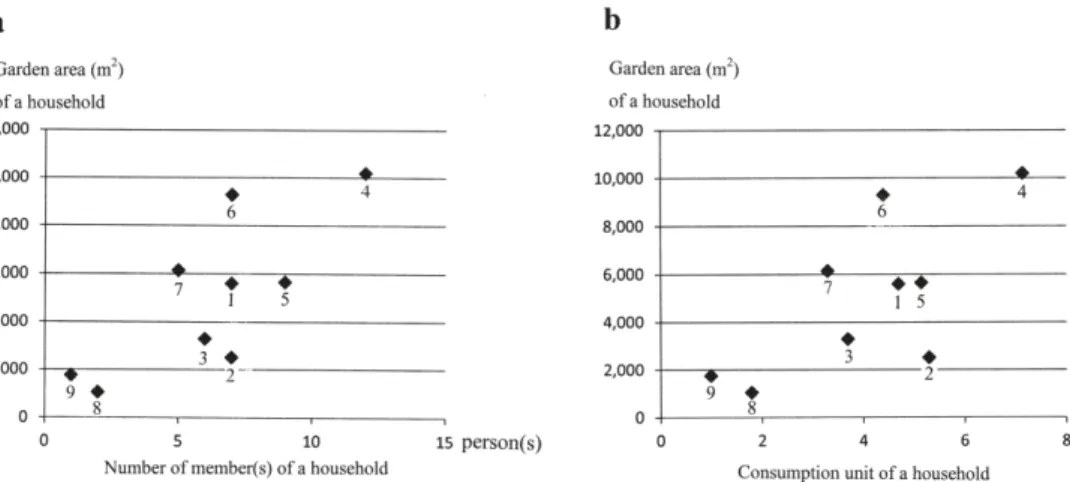
Figs. 2a and 2b indicate the garden area managed by each household at Aitea in November 1990 in relation to the number of members and the consumption unit of each household, respectively (both exclude a baby born during the field survey). The values of coefficient of correlation for each are both statistically significant at the 5% level and similar to each other. However, regarding its value of the garden area of each household in relation to the respective labour unit", which is based on the table adopted by BATHGATE (1973), the answer of the calculation concerning Aitea at that time is virtually zero. These facts suggest that the area of sweet potato gardens managed by Aitea households is related more directly to the demand of a household for their staple diet rather than the capability
of its labour force. This is in line with CHAYANOV'S model (McKINNON 1976). If so, this
indicates that the economy of Aitea at the time of the survey was, in principle, based on the
subsistence system. These results contradict BATHGATE'S (1973) findings in that increments
in the population of a household did not result in an expansion in garden area, which he seems to attribute to a tendency among subsistence producers to cultivate in excess of
NAKANO: A Markedly Important Aspect of the Human Ecology of Swidden Cultivation 89
Fig. 2. Garden areas (m2) managed by the respective households shown in Table 1 in relation to (a)
the number of member(s), and (b) their consumption unit in November 1990. The baby born at Household No. 7 during the survey is not included. The figures in both a and b present the respective Household Nos. in Table 1. The coefficient of correlation in (a) is 0.77 and in (b) is 0.71, both of which are statistically significant at the 5% level.
household requirements for insurance against crop failure. Taking his view into account, Figs. 2a and b suggest that three of nine households, namely, Nos. 4, 8, and 9 in Table 1, mostly determine the statistical significance. This might connote the frailness of such
significance. To resolve the contradiction between Fig. 2 and BATHGATE's results requires
more case studies and examination of the respective circumstances. One factor that should
be taken into account is the fact that, in the villages where BATHGATE performed his field
surveys, cash crops including produce for Honiara market and coconut palm for copra production constituted a considerable contribution to the village economy (BATHGATE
1973).
In November 1990, the ratio of the total garden area of respective households to the total consumption unit value for Aitea, excluding the baby born during the survey period, was 1,260 m2/consumption unit. It ought to be noted, however, that this ratio does not refer to a garden which could support an adult male for a year, since new gardens could be made at any time of year in accordance with demand. Nonetheless, this ratio does allow one to imagine roughly an ordinary size, under a system in which basic elements of a subsistence economy remained strongly in evidence, typically of a sweet potato garden, in which crops other than sweet potato are also very sporadically grown, in northerly Malaita in the early
1990s.
In addition to the gardens marked in Fig. 2, sweet potatoes were harvested towards the end of November 1990 in a special community garden with an area of 2,670 m2. The circumstances of this garden have been discussed in detail above.
90 South Pacific Studies Vol.32, No.2, 2012
Labour input
Quantitative data concerning labour input were actually measured by means of a time and motion study of each core operation, details of which were given in the introductory section, principally among people working in swiddens with shorter fallow periods and relatively little vegetation to clear. The operations of digging planting holes and planting vines were both considered to be neutral to specific conditions and the history of the gardens. The labour input data having been collected are as follows:
Operation of the cutting and felling of the original vegetation: Quantitative data on labour input into this operation were obtained from two cases at Aitea. Values were 87 and 56 person • hours/ha, respectively, with a simple average of 71.5 person • hours/ha.
Operation for taking care of the cut and felled land by preparing it for the burning of debris: Quantitative data for this operation were obtained from five cases at Aitea. The respective values were 283.3, 200.0, 235.0, 316.7, and 245.0 person • hours/ha with a simple average of 256.0 person • hours/ha.
Operation of the final weeding before burning: I could catch only one opportunity to estimate the value of labour input into this operation. The result of the measurement was
146.7 person • hours/ha.
Operation of the burning of vegetation debris: Although the quantitative data were obtained from three cases in total, the samples were scattered; that is, one farmer at Aitea, another case from Magura, and the last from Ura (the latter two villages, where the operations at the times of measurements were carried out by respective teams, are also marked in Fig. 1 a). Respective values were 310, 431.0, and 568.2 person • hours/ha, with a simple average of 436.4 person• hours/ha.
When I took these measurements, my knowledge on the farming processes up to burning, which are described in the preceding section, was insufficient. As a result, no distinction between double and single burning is presented. Moreover, I was not lucky enough to observe the initial stage of double burning, although I did observe a site several months after initial burning in which herbaceous plants and saplings together with new shoots from stumps were flourishing.
Operation of the digging of planting holes: Labour input for this can be theoretically derived from the quantitative data of the labour efficiency of digging using a range of implements (a digging stick made of wood or a grubber) and the density of holes. That is, as mentioned above, it was shown to take an average of one minute to dig a hole using a wooden digging stick and 30 seconds using a grubber at a density of at one hole per 1 m2. In fact, however, such theoretical calculations have the tendency to lead to underestimates of the actual time taken. The operation often includes miscellaneous motions other than merely digging; for example, preparation and/or adjustment of the digging stick or grubber. In order to accommodate the quantitative data to the following discussion in which I compare a few case studies of `traditional swiddening', only the labour input allocated to the digging of planting holes using a stick made of wood is indicated. All data were obtained from three cases at Aitea. Respective values were 246.7, 155.0, and 239.8 man
NAKANO: A Markedly Important Aspect of the Human Ecology of Swidden Cultivation 91
Operation of the planting of vines: For reasons similar to those discussed above, the
theoretical labour input for planting also results in underestimates. This operation requires considerably more labour if it is to cover the delivery of vines to each hole. Quantitative data were both obtained from two cases at Aitea. Respective values were 58.5 and 86.7 person • hours/ha, with a simple average of 72.6 person • hours/ha.
Operation of weeding approximately one month after planting: All quantitative data for this operation were obtained from three cases at Aitea. Respective values were 403.0, 458.7, and 208.3 person• hours/ha, with a simple average of 356.7 person• hours/ha.
Operation of harvests: All quantitative data of labour inputs indicated here were obtained at Aitea and from harvests of late maturing varieties grown in gardens established in areas cleared following shorter fallow periods. With these varieties, the digging of tubers was usually carried out three times between six and eight months" after the planting of vines. Respective quantitative data of the first, second, and third harvests were as follows:
The respective labour input values of the first harvest plus weeding of two cases were 259.7 and 440.5 person • hours/ha, with a simple average of 350.1 person • hours/ha.
Respective values of the second harvest plus weeding were 353.4 and 549.5 person • hours/ha, with a simple average of 451.5 person • hours/ha.
The respective values of the final harvest without weeding from two cases were 144.3 and 245.0 person • hours/ha, with a simple average of 194.7 person • hours/ha. Inciden-tally, the respective values of the first, second, and final harvests were obtained from harvests at plots quite separate from one another and each actual measurement of labour input was carried out when the opportunity to do so presented itself by chance.
Sum of the labour inputs required for all core operations indicated above: The total labour input of the preceding simple averages including the case of only one sample (the operation of the final weeding before the burning of vegetation debris) is 2,550 person
• hours/ha/cropping cycle.
Although, unfortunately, the number of cases for which direct measurements of labour input into respective core operations were not satisfactorily sufficient, I am certain that the foregoing specific data relating to labour inputs made into the operations for the production of sweet potato on northerly Malaita in gardens cleared from shorter fallow periods in the early 1990s are both significant and revealing.
Yield and human consumption of sweet potato
The following data on the tuber yields of the late maturing varieties of sweet potato are tied to and presented in the same order as the data on labour inputs as indicated above:
At the first harvest, two yields were sampled respectively as 5.88 and 5.78 tonnes/ha, with a simple average of the two is 5.83 tonnes/ha. At the second harvest, yields were respectively 3.67 and 0.82 tonnes/ha, with a simple average of 2.25 tonnes/ha. At the final harvest, yields were respectively 1.10 and 1.98 tonnes/ha, with a simple average of 1.54 tonnes/ha. Consequently, the sum of the average values of the three harvests was 9.62 tonnes/ha. Since the one value of the second harvest was extraordinarily low, the tentative estimate of the total yield for these late maturing varieties at Aitea throughout one cropping
92 South Pacific Studies Vol.32, No.2, 2012
cycle is given as 10 tonnes/ha in 1990. Hereafter, this value of 10 tonnes/ha is used for the following discussion and for building the model.
Incidentally, data subsequently collected in 1995 on a single case in which tubers of an early maturing variety harvested three months after planting in a swidden north of Aitea settlement on land cleared of ten year fallow returned a first harvest of 12.0 tonnes/ha without the application of chemical fertilizer. How really tremendous is this yield up to the reputation of the variety when compared to the preceding figures!
The fresh weight of tubers of sweet potato harvested by three households (Household Nos. 1, 3, 7 in Table 1) were taken daily for 28 successive days. The result was as follows:
Assuming production is here considered to be the equivalent to domestic consumption with the condition that no selling of tubers took place, even though this value is obviously more than the actual amount ingested for the reasons having been already discussed, the daily value per consumption unit of Household Nos. 1, 3, and 7 were 1.67, 2.02 and 2.55 kg/adult male/day, respectively, though, in fact, no adult males were living in Household No. 3 throughout the period of time when the survey was conducted. Of these three households, the actual amount ingested by Household Nos. 1 and 3 are fairly close. At Household No. 1, tubers were ingested after carefully peeling only the skin off with their fingers. The relative value of the discarded portion to the whole cooked tubers was assumed to be 0.1 (10% in weight), although this may be an overestimate. At Household No. 3, tubers were peeled with a knife before cooking. Based on actual measurements, the relative value of the discarded fractions to the whole tubers here was found to be very nearly 0.2 (20% in weight). When this modification is taken into consideration, the results of the calculation on the weight of tubers actually ingested by Household No. 1 was 1.50 kg or 1,710 kcal (based on Anonym (1983)) and at Household No. 3 was 1.62 kg or 1,850 kcal/adult male/day. Incidentally, Household No.1 did not keep any pigs at the time when the data were collected, and although Household No. 3 had one pig, no tubers were deliberately fed to it. On the other hand, the higher figure obtained for Household No. 7, whose members did not remove the skin prior to cooking, indicates that small tubers were probably fed to pigs, thus affecting the final estimation of the actual quantity ingested.
Mainly based on the estimates of Households Nos. 1 and 3, and using the estimate for Household No. 7 as supplementary material, quantity of human consumption excluding small tubers thrown to pigs was tentatively calculated as 1.8 kg/adult male/day. This figure was used in the following discussion and for the model. Incidentally, it should be noted the fact that, although sweet potato certainly makes up the principal component of the staple diet of Aitea, other tuber crops(11), banana (Musa sp.) and purchased rice were also occasionally ingested. Cassava (Manihot esculenta CRANZ.) was grown by a few households but only as for pig feed. The inhabitants of Aitea wished to obtain rice much more frequently as well as the majority of the people around there. In addition, the food value of coconut milk that was also consumed daily ought not to be ignored as an important component of their diet.
NAKANO: A Markedly Important Aspect of the Human Ecology of Swidden Cultivation 93
Frequency of garden work
In the successive 28 days over which an intensive survey was carried out, data were collected from five households regarding the number of days in which no garden work was undertaken. The results were respectively 13, 13, 14, 8, and 13 days of the 28 days. Consequently, the mean total number of rest days was 12.2 days. It should be noted that days during which household member(s) worked in their respective gardens for less than one hour were also counted as work days. The survey also revealed that one or more members of a household worked in their respective garden for about four days a week. It is likely, however, that the number of working days of a single person chosen at random would have been somewhat less than this rate. It should also be noted that this survey was conducted during a period of time when the majority of the operations in their gardens were harvest and when the frequency of other tasks undertaken was relatively low. Even on days when no garden work was done, the farmers were often engaged in other work such as the collection of fuel wood, areca nuts, and so forth.
Incidentally, although all inhabitants at Aitea are Christians, some worked in their gardens even on a Sunday, sometimes late into the afternoon. Furthermore, a few who, in principle, follow the doctrine of the Anglican Church ignored the prohibition declared by the Church not to clear land or burn swiddens during the three weeks period leading up to Easter Sunday. As already mentioned, this was considered the optimum time to prepare ground for the planting of sweet potato.
Discussion
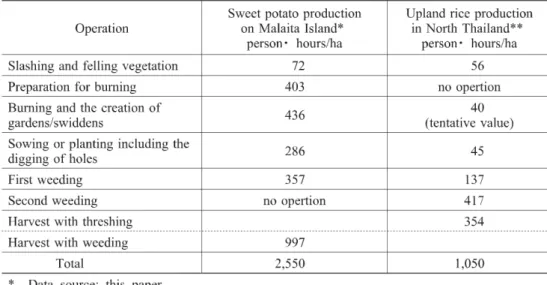
Table 2 compares the foregoing quantitative data on labour inputs into the core
operations of sweet potato production on northerly Malaita in the early 1990s with similar data on the cultivation of upland rice in the swiddens of North Thailand in the early 1970s (NAKANO 1980). Total values on the left-hand sides of the two data columns show the apparent intensiveness of labour inputs into the sweet potato gardens. Four operations were identified as requiring a large investment of labour into a definite area of land, namely, preparation for burning, the burning itself, planting including the digging of holes, and harvest which also includes some weeding. Of these four categories, the first two are specific to gardens in the warm and always rainy conditions of Malaita Island. Under the quite different monsoon conditions pertaining to upland swiddens in North Thailand, where there are distinctive wet and dry seasons, farmers hardly need to do any maintenance work in their swiddens after felling forests and vegetation until burning is carried out. In addition, the burning itself required little labour. The fire is set so that the flames are driven by the wind through the dried debris, with the only effort required being to ensure that the flames do not spread to where they are not wanted. The planting sweet potato vines year round is found to be also related to the climatic conditions when the areas where other planting methods are adopted are taken into consideration. The popular method on Malaita is possible only in regions where the warm wet weather is guaranteed over an extended