Associations between Lifestyle Patterns and Working
Women s Characteristics:
Analyses from the Japan Nurses Health Study
Ai-Zhen Chen , Kunihiko Hayashi , Jung-Su Lee, Hirofumi Takagi , Yuki Ideno
and Shosuke Suzuki
1 Gunma University Graduate School of Health Sciences, 3-39-22 Showa-machi, Maebashi, Gunma 371-8514, Japan
2 School of Public Health, Graduate School of Medicine, The University of Tokyo, 7-3-1 Hongo, Bunkyo-ku, Tokyo 113-0033, Japan 3 Faculty of Nursing, Toho University, 4-16-20 Omori-nishi, Ota-ku, Tokyo 143-0015, Japan
4 Center for Medical Education, Gunma University Graduate School of Medicine, 3-39-22 Showa-machi, Maebashi, Gunma 371-8511, Japan
5 Professor Emeritus, Gunma University, 3-39-22 Showa-machi, Maebashi, Gunma 371-8511, Japan
Abstract
Background & Aims:This study aimed to identify the lifestyle patterns of Japanese working women and their associations with women s characteristics.
M ethods: The study was conducted based on baseline data from the Japan Nurses Health Study. Principal component analysis and multivariate regression were used.
Results:Five lifestyle patterns were identified and named balanced dietary pattern, health-compromising pattern, cancer prevention pattern, working and short-sleep pattern and pill intake pattern. Nursing license, marriage status, educational degree, work location, history of shift work, parity, body mass index, age, family history of cancer and prior diagnosis of cancer or a gynecological disorder were associated with lifestyle patterns. In particular, currently or previously married women showed a positive association with balanced dietary pattern, cancer prevention pattern and pill intake pattern. Women having one or more child demonstrated a stronger tendency to adhere to the balanced dietary pattern and cancer prevention pattern, as well as showing a lower tendency towards the health-compromising pattern and pill intake pattern. Elderly women were more likely to adhere to the balanced dietary pattern, and the cancer prevention pattern.
Conclusions:This study identified five distinct lifestyle patterns and may be useful in providing a basis for further work investigating health outcomes.
Introduction
Lifestyle factors are of interest to researchers because health-related behaviors can expose important variables or confounders for morbidity and mortality. Smoking,excessive alcohol use,an unhealthy diet and physical inactivity are among the leading modifiable causes of diseases,including cardiovascular disease, stroke, type-2 diabetes and certain types of cancer. The Alameda County Study reported that seven life-style practices (smoking, alcohol use, weight status, length of sleep,physical activity,eating breakfast,and snacking) were related to baseline physical health status, and also associated with a 5.5-year risk of mortality from all causes. Two large-scale, popu-lation-based, prospective studies also reported the impact of lifestyle on overall cancer risk and life expectancy among Japanese.
While much is known about the impact of individ-ual lifestyle factor, less is known about lifestyle factor clustering. Many lifestyle factors are not randomly distributed across the population,but occur in combi-nation with others to become lifestyle patterns.
Article Information
Key words: lifestyle pattern,
principal component analysis, Japanese working women
Publication history: Received: October 27, 2014 Revised: November 26, 2014 Accepted: December 22, 2014 Corresponding author: Kunihiko Hayashi
Gunma University Graduate School of Health Sciences, 3-39-22 Showa-machi, Maebashi, Gunma 371-8514, Japan Tel:+81−27−220−8974
E-mail:khayashi@gunma-u.ac.jp
Lifestyle pattern is composed of cultural and personal habits that developed through processes of socializa-tion. Combined factors are usually associated with a higher risk of disease because of possible synergistic health effects, but there is limited research focusing on patterns of lifestyle factors. Additionally, lifestyle factors appear to combine within certain populations. Previous studies have shown that certain lifestyle factors are more prevalent among some subgroups. However, associations between lifestyle patterns and Japanese women s characteristics have not yet been reported.
To develop tailored intervention strategies, it is important to understand the characteristics of sub-populations with certain lifestyle patterns. Knowing how and where risk factors cluster with a pattern will help health professionals design more effective inter-vention strategies.
M aterials and M ethods
1. Study population
Nurse as working women are active in a range of working fields,such as hospitals,home-based services, nursing facilities, education institutions and public administration. This research will be part of the Japan Nurses Health Study(JNHS),which is the first nation-wide prospective cohort study focusing on the Japanese working women.
JNHS was initiated to recruit participants from all 47 prefectures of Japan in November 2001, with a 6-year entry period and 10-6-year follow-up. All partici-pants gave written,informed consent. The methods of participant recruitment and data collection have been described in detail previously. Participants (n= 30273)with complete lifestyle factors data were includ-ed in the analysis.
This project is in accordance with International Guidelines of Good Epidemiology Practice and Japanese Ethical Guidelines for Epidemiological Research. The study protocol has been approved by the institutional review board at Gunma University and the ethics review board at the National Institute of Public Health.
2. Baseline variables
A self-administered questionnaire was used to collect baseline information. This included personal information (birth date,birth place,marital status and educational degree), occupational data (nursing quali fication,position,work location,history of shift work), physical indicators, medical history, family history of disease and history of reproductive health.
Nursing personnel in Japan can be divided into the categories of public health nurse, midwife, regis-tered nurse and licensed assistant nurse. Assessment of the family history of cancer included parental stom-ach, colorectal, and breast, ovarian, or uterine cancer diagnosed in maternal and paternal grandmothers,mo-thers and sisters. Participants who had ever been
diag-nosed with cancer or a gynecological disorder were identified according to a self-reported medical history concerning endometriosis, uterine fibroids, cervical cancer, uterine cancer, ovarian cancer, fibroadenoma, breast cancer,stomach cancer,colorectal cancer,or any other cancer. Body mass index(BMI)was calculated as weight (kg)/height (m ).
3. Assessment of lifestyle factors
A brief frequency questionnaire regarding food (beef,pork,chicken,fish,milk/dairy,tofu,natto,miso soup) and breakfast consumption was used to assess dietary behavior over the last year. Frequency of al-cohol intake was also assessed. Seven frequency cate-gories were used (none,1-2 times/month,once a week, 2 days/week, 3-4 days/week, 5-6 days/week and 7 days/week). The frequencies of beef,pork and chicken were added to assess total meat consumption. Fre-quency of items containing soybean, including tofu, natto, and miso soup, were combined to assess intake of soy. Participants were also asked about smoking status (never smoked, ex-smoker, current smoker) and the number of cigarettes smoked per day. Supplement use was dichotomized based on current use of at least one supplement (multivitamin, vitamin A, vitamin C, vitamin E,vitamin D,calcium preparation,iron prepa-ration or other supplement) or no use of any supple-ment.
Physical activity during a typical 7-day-period in the last year was measured using a validated question-naire. Participants were asked to provide the total minutes per week of physical activity according to frequency and average duration. Moderate physical activities were walking, cycling, stretching, table ten-nis, softball, volleyball, golf and housework. Partici-pants also reported total working time spent sitting, standing, walking and performing heavy physical work. Sleep duration was identified based on partici-pants responses to the question: On average, how many hours per day do you sleep? Short sleep dura-tion was dichotomized into yes (<6 hours )or no (>6 hours). Use of an anti-inflammatory analgesic (such as aspirin or acetaminophen)was determined by the question: Please circle the medicines that you are taking regularly. Use of medications containing fe-male hormones other than hormone replacement ther-apy (never, past and current) was also assessed. Responses were coded as binary (yes/no) variables. The study also collected data on breast self-exami-nation by the question: During the last year, how many times did you perform breast self-examination? , with the following possible responses: never , every month , every 2-3 months , every 4-6 months , every 7-11 months and every 12 months . Cancer screening was dichotomized according to the two results:no cancer screening, or at least one screening for stomach cancer, uterine cancer, cervical cancer or breast cancer during the past 5 years.
As began the analysis of the data, we discovered some variables (moderate physical activity time and working time) were extremely large or small. Accord-ing to the criterion to detected outliers based on the box plot, extreme outlier of physical activity and working time were deleted, leaving 27370 participants for the final principal component analysis. However, factor loading and component scores obtained from two samples (with or without extreme outliers) were comparable (data not shown).
Principal component analysis was conducted using statistical analysis system (SAS) software (ver-sion 9.3; SAS Institute Inc., Cary, NC, USA) and included the following lifestyle factors: five dietary items including meat,soy,fish,milk/dairy,and break-fast consumption (frequency of intake), alcohol use (frequency of intake), smoking (ordinal categorical data), anti-inflammatory/analgesic use (yes or no), supplement use(yes or no),medications contain female hormones (yes or no), cancer screening (yes or no), breast self-examination (ordinal categorical data), short sleep duration (yes or no), moderate physical activity(continuous) and working time (continuous). The Proc Factor command, principal method and a prior communality estimate were the tools used for the analysis, followed by the orthogonal rotation (varimax option) to derive optimal non-correlated components (lifestyle patterns). To determine which components to retain,the Kaiser-Guttman rule(eigen-value>1) was used.
Lifestyle patterns were named according to those behaviors which had an absolute factor loading>0.3. The higher absolute value of factor loading represented a greater contribution of the lifestyle behavior to the pattern. The names do not perfectly describe each underlying lifestyle pattern but facilitate the report and discussion of the results.
Pattern scores were also computed with the Pro Factor command, representing the weighted sums of lifestyle factors, and are considered the outcome vari-ables to determine any association with participants characteristics. Participants with higher scores for a pattern had stronger tendencies towards that kind of lifestyle pattern.
Two randomly selected split-half samples were used for principal component analysis to assess re-peatability of the method. The results were highly comparable not only for factor loading but also for component scores (data not shown).
A multivariate regression model was used to assess the association between pattern scores and women s characteristics. Parity, age and BMI were treated as categorical variables. All categorical variables were converted to dummy variables in the regression model. All statistical analyses were carried out using SAS software and all tests of significance were two-sided, with a p-value of<0.05 considered statistically signifi-cant.
1. Descriptive data
Table 1 briefly summarizes the characteristics of the participants. Most women (84.4%)had a registered nurse qualification. More than 90% of women worked at a hospital,more than 80% of women had graduated from a vocational school and over 50% of nurses had a history of more than 10 years of shift work. Age group proportions were close to 30%, except for the 20s and 50s groups which were less than 5% and 15%, respectively.76.5% of women had a BMI between 18.5 kg/m and 25kg/m , and 65.2% were married. The proportions of women having either no children or two children were both around 30%.22.1% of women reported a family history of cancer,and 18.8% reported having been diagnosed with cancer or a gynecological disorder.
Table 1 Characteristics of Japanese nurses(n=27370),Japan Nurses Health Study(JNHS), 2001-2007
Characteristic Number of nurse Precentage Kind of nurse license
Public health nurse 700 2.6 Midwife 1804 6.6 Registered nurse 23097 84.4 Licensed assistant nurse 1737 6.4
missing 32 0.1
Highest professional education
High school 88 0.3 vocational school 22211 81.2 Junior college 3608 13.2 University or above 1033 3.8 missing 430 1.6 Work location Hospital 25167 92.0 Clinic 195 0.7 Prefecture governments 476 1.7 Municipality 552 2.0 Educational institution 384 1.4 Others 507 1.9 missing 89 0.3
Shift work history(Ys)
Never 5363 19.6 1∼ 2 797 2.9 3∼ 5 1664 6.1 6∼ 9 3888 14.2 10 15658 57.2 M arital status Single 7197 26.3 Married 17842 65.2 Separated 2042 7.5 missing 289 1.1 BM I (Kg/m ) <18.5 2603 9.5 18.5∼25 20924 76.5 25∼30 2792 10.2 30 494 1.8 missing 557 2.0 Age <30 888 3.1 30∼34 7278 25.0 35∼39 6563 22.6
2. Lifestyle patterns
Prior to principal component analysis, Kaiser-Meyer-Olkin (KMO) measures of sampling adequacy and Bartletts tests of sphericity were conducted. The results returned a KMO value of 0.63 and the signifi-cance of Bartletts sphericity was <0.001, indicating that the samples met the criteria for factor analysis.
Principal component loadings for each variable are shown in Table 2. Five patterns were retained in the analysis, which accounted for 43% of the total variance. The first pattern loaded heavily on soy, meat, fish and milk/dairy, and was therefore termed balanced dietary pattern . Smoking and alcohol intake were found to be positively loaded on the second pattern, along with breakfast and dairy food being negatively loaded. This pattern was labelled health-compromising pattern . The third pattern was characterized by its heavy loading on cancer screening
and breast self-examination and negative loading on meat, and was named cancer prevention pattern . The fourth pattern, termed working and short-sleep pattern ,was loaded heavily on physical activity,work time and short periods of sleep. Three variables (sup-plements, anti-inflammatory/analgesics and medica-tions containing female hormones)were loaded on the fifth factor, which was named pill intake pattern . 3. Association between lifestyle patterns and
women s characteristics
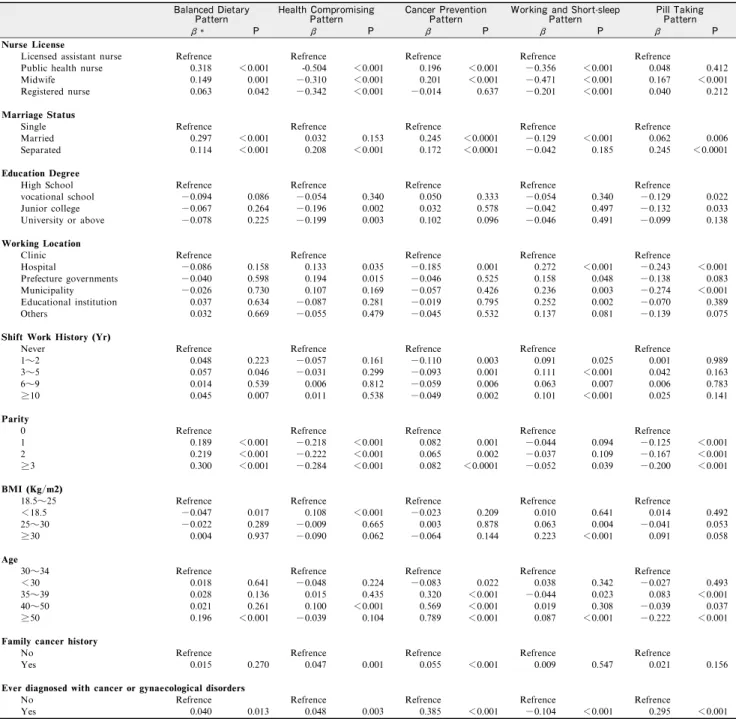
Table 3 shows the results of multivariable analyses of the lifestyle patterns and women s characteristics with adjusted regression coefficients and p-values.
Being licensed as a registered nurse (p<0.042), midwife (p=0.001) or public health nurse (p<0.001) were significantly associated with a higher adherence to the balanced dietary pattern ,compared with those women licensed as assistant nurses. Married (p<0.001) or previously married women (p<0.001) and women with children showed a stronger tendency for the balanced dietary pattern . This lifestyle pattern was also positively associated with>10-year shift work history (p=0.007), age>50 years (p<0.001) and diagnosed with cancer or a gynecological disorder(p= 0.013). A BMI below 18.5 kg/m (p=0.017) was negatively associated with the balanced dietary pat-tern .
Compared with licensed assistant nurses, regis-tered nurses, midwives and public health nurses (β= −0.342,−0.310 and −0.504,respectively;all p<0.001) showed less tendency to the health-compromising pattern . This lifestyle pattern was also negatively associated with educational degree above that of high school (junior college:p=0.002, university degree or higher:p=0.003)and parity not less than one(parity=
40∼49 10273 35.3 50 4104 14.1 missing 254 0.9 Parity 0 9093 33.2 1 3286 12.0 2 8889 32.5 3 5285 19.3 missing 817 3.0
Family Cancer History
No 16970 62.0
Yes 6055 22.1
missing 4345 15.9 Ever diagnosed with cancer or gynaecological disorders
No 22236 81.2
Yes 5134 18.8
Table 2 Factor-loading matrix derived from princial component analysis regarding lifestyle factors, Japan Nurses Health Study (JNHS), 2001-2007
Variables
Lifestyle patterns Balanced
Dietary CompromisingHealth Prevention Cancer Working andShort-sleep TakingPill
meat 57 8 -31 −9 11 Soybean food 62 −19 25 12 −9 fish 65 9 18 4 −14 milk/dairy food 42 −41 −4 12 21 breakfast 30 −50 12 −14 2 smoke −4 63 −3 16 12 anti−inflammatory analgesic −3 10 −1 21 55 alcohol drink 27 65 4 −14 1 supplement −3 −12 −6 7 63
medications contain female hormones 1 12 19 −25 55
cancer screening 14 −4 65 −21 12
short sleep duration −6 5 1 52 14
moderate physical activity 14 −1 21 54 −2 breast self examination 1 0 71 15 −4
working time 2 5 −17 54 −2
propotion account for total variance/% 11.9 8.6 7.6 7.5 7.0 Printed values are multiplied by 100 and rounded to the nearest integer. Absolute values greater than 0.3 have been flagged by an
. All the lifestyle patterns with eigenvalue>1 and cumulatively accounted for 43% total variance. Lifestyle patterns and working women s characteristics
1, 2 or 3;all p<0.001). Women who had separated from their husbands (p<0.001), worked in a hospital (p=0.035) or prefecture goverments (p=0.015), had a family history of cancer (p=0.001) or had ever been diagnosed with cancer or a gynecological disorder(p= 0.003) showed a significant association with a greater adherence to the health-compromising pattern . BMI below 18.5kg/m (p<0.001) and age of 40-50 years (p<0.001) were also positively associated with this lifestyle pattern.
For the cancer prevention pattern ,midwives(p< 0.001),public health nurses(p<0.001),married women (p<0.001), previously married women (p<0.001), par-ity not less than one,age greater than 34 years,family history of cancer (p<0.001), or previous diagnosis of cancer or a gynecological disorder (p<0.001) all
showed a stronger tendency towards this lifestyle pat-tern. Working at a hospital and a history of shift work were negatively associated with the cancer prevention pattern .
Registered nurses, midwives and public health nurses (compared with licensed assistant nurses, β= −0.201,−0.471 and−0.356,respectively;all p<0.001), women who were married (p<0.001),of parity above 3 (p=0.039)or had ever been diagnosed with cancer or a gynecological disorder(p<0.001)showed less tendency towards the working and short-sleep pattern . Work-ing at a hospital,prefectural government,municipality or educational institution (compared with working at a clinic,all p<0.05) were significantly associated with a higher adherence to the working and short-sleep pattern . A history of shift work, especially for more
Table 3 Multivariate regression analysis of nurses characteristics associated with pattern scores,Japan Nurses Health Study(JNHS), 2001-2007
Balanced Dietary
Pattern Health CompromisingPattern Cancer PreventionPattern Working and Short-Pattern sleep Pill TakingPattern
β P β P β P β P β P
Nurse License
Licensed assistant nurse Refrence Refrence Refrence Refrence Refrence
Public health nurse 0.318 <0.001 -0.504 <0.001 0.196 <0.001 −0.356 <0.001 0.048 0.412 Midwife 0.149 0.001 −0.310 <0.001 0.201 <0.001 −0.471 <0.001 0.167 <0.001 Registered nurse 0.063 0.042 −0.342 <0.001 −0.014 0.637 −0.201 <0.001 0.040 0.212 M arriage Status
Single Refrence Refrence Refrence Refrence Refrence
Married 0.297 <0.001 0.032 0.153 0.245 <0.0001 −0.129 <0.001 0.062 0.006 Separated 0.114 <0.001 0.208 <0.001 0.172 <0.0001 −0.042 0.185 0.245 <0.0001 Education Degree
High School Refrence Refrence Refrence Refrence Refrence
vocational school −0.094 0.086 −0.054 0.340 0.050 0.333 −0.054 0.340 −0.129 0.022 Junior college −0.067 0.264 −0.196 0.002 0.032 0.578 −0.042 0.497 −0.132 0.033 University or above −0.078 0.225 −0.199 0.003 0.102 0.096 −0.046 0.491 −0.099 0.138 Working Location
Clinic Refrence Refrence Refrence Refrence Refrence
Hospital −0.086 0.158 0.133 0.035 −0.185 0.001 0.272 <0.001 −0.243 <0.001 Prefecture governments −0.040 0.598 0.194 0.015 −0.046 0.525 0.158 0.048 −0.138 0.083 Municipality −0.026 0.730 0.107 0.169 −0.057 0.426 0.236 0.003 −0.274 <0.001 Educational institution 0.037 0.634 −0.087 0.281 −0.019 0.795 0.252 0.002 −0.070 0.389 Others 0.032 0.669 −0.055 0.479 −0.045 0.532 0.137 0.081 −0.139 0.075 Shift Work History(Yr)
Never Refrence Refrence Refrence Refrence Refrence
1∼2 0.048 0.223 −0.057 0.161 −0.110 0.003 0.091 0.025 0.001 0.989 3∼5 0.057 0.046 −0.031 0.299 −0.093 0.001 0.111 <0.001 0.042 0.163 6∼9 0.014 0.539 0.006 0.812 −0.059 0.006 0.063 0.007 0.006 0.783 10 0.045 0.007 0.011 0.538 −0.049 0.002 0.101 <0.001 0.025 0.141 Parity
0 Refrence Refrence Refrence Refrence Refrence
1 0.189 <0.001 −0.218 <0.001 0.082 0.001 −0.044 0.094 −0.125 <0.001 2 0.219 <0.001 −0.222 <0.001 0.065 0.002 −0.037 0.109 −0.167 <0.001 3 0.300 <0.001 −0.284 <0.001 0.082 <0.0001 −0.052 0.039 −0.200 <0.001 BM I (Kg/m2)
18.5∼25 Refrence Refrence Refrence Refrence Refrence
<18.5 −0.047 0.017 0.108 <0.001 −0.023 0.209 0.010 0.641 0.014 0.492 25∼30 −0.022 0.289 −0.009 0.665 0.003 0.878 0.063 0.004 −0.041 0.053 30 0.004 0.937 −0.090 0.062 −0.064 0.144 0.223 <0.001 0.091 0.058 Age
30∼34 Refrence Refrence Refrence Refrence Refrence
<30 0.018 0.641 −0.048 0.224 −0.083 0.022 0.038 0.342 −0.027 0.493 35∼39 0.028 0.136 0.015 0.435 0.320 <0.001 −0.044 0.023 0.083 <0.001 40∼50 0.021 0.261 0.100 <0.001 0.569 <0.001 0.019 0.308 −0.039 0.037 50 0.196 <0.001 −0.039 0.104 0.789 <0.001 0.087 <0.001 −0.222 <0.001 Family cancer history
No Refrence Refrence Refrence Refrence Refrence
Yes 0.015 0.270 0.047 0.001 0.055 <0.001 0.009 0.547 0.021 0.156 Ever diagnosed with cancer or gynaecological disorders
No Refrence Refrence Refrence Refrence Refrence
Yes 0.040 0.013 0.048 0.003 0.385 <0.001 −0.104 <0.001 0.295 <0.001 * Regression coefficient, refers to the difference in relevant factor score compared to reference group. Adjusted for all characteristics in the table.
than 10 years (p<0.001), being overweight (p=0.004), obesity(p<0.001) and being older than 50 years (p< 0.001) were positively associated with this lifestyle pattern.
For the pill intake pattern ,being a midwife(p< 0.001),being married (p=0.006)or previously married (p<0.001), aged 35-39 (p<0.001) and having been diagnosed with cancer or a gynecological disorder(p< 0.001)showed a stronger tendency towards this pattern. Having graduated from a vocational school (p=0.022) or junior college(p=0.033),working at a hospital(p< 0.001) or municipality (p<0.001), having parity not less than one (p<0.001) and age greater than 40 (p= 0.037 for age 40-50 and p<0.001 for age above 50)were negatively associated with the pill intake pattern .
Discussion
This study identified five distinct lifestyle patterns ( balanced dietary pattern , health-compromising pattern , cancer prevention pattern , working and short-sleep pattern and pill intake pattern ) with associations to Japanese working women s characteris-tics.
The balanced dietary pattern showed a close similarity to the diet of the Japanese pattern extracted by other studies, which loaded heavily on soybean products,fish and milk. Age>50 years was associated with a higher adherence towards the balanced dietary pattern due to the balanced dietary habits, aligning with results reported by Otsuka R. This study sug-gested that older people showed an increase in their intake of fish and beans,perhaps because of a changing palate and being more aware of associations between diet and health. However, age>50 years also can frequently consume a little meat to balance their diet. A descriptive epidemiology study of food intake among Japanese adults found that intakes of meat and confectionary have increased in Japan over the past 20 years regardless of age and generation.
The health-compromising pattern was clustered with risk factors such as smoking,alcohol intake,and skipping breakfast. We observed results analogous to those reported for the behaviors of adolescents and adults in Finland. Skipping breakfast was clustered with smoking, alcohol use and a sedentary lifestyle. Higher education was negatively associated with the risk behaviors of smoking and drinking. Being a public health nurse or midwife showed a tendency away from the health-compromising pattern , partly because public health nurses and midwives have one or more years of post-secondary education and are also engaged in health guidance. According to the find-ings of the Japan Nurses Health Study, reproductive events are reasons for women to cease smoking. Therefore,if a woman had a child,they were less likely to smoke or drink alcohol.
The cancer prevention pattern showed positive loading on cancer screening and breast self-exami-nation and negative loading on meat intake. These
behaviors share the same underlying source: cancer prevention. There is an increasing volume of litera-ture associating a high intake of meat,especially red meat and processed meat, with increased risk of can-cers,especially colorectal cancer. A reduced intake of red meat and processed meat has been recommended to the public for cancer prevention. Women with a family history of cancer are also more likely to undergo screening for the sake of their health. Women with a family history of cancer, previous diagnosis of cancer or a gynecological disorder and of increasing age (above 35) showed a higher prevention conscious-ness and were more likely to fall into the cancer prevention pattern .
Work time,physical activity and short sleep dura-tion clustered in the working and short-sleep pattern , and reflect an association between long working hours and lack of sleep, consistent with findings of other studies. A prospective cohort study evaluating the association between long working hours and sleep conditions reported significant negative effects of long working hours on sleep. The effects were short sleep-ing hours, difficulty fallsleep-ing asleep, frequent waksleep-ing during the night, early waking and waking without feeling refreshed. A cross-sectional study of the association between working hours and sleep duration among a Japanese working population also indicated that both men and women with long weekday working hours tended to have short periods of sleep during weekdays and holidays. In the current study,licensed assistant nurses and women with a history of shift work showed a stronger tendency towards this lifestyle pat-tern, perhaps because of heavy workloads. Recent knowledge on labor science reveals that the burden of night shifts and shift work in general increases health risks for nurses as well as increase the risk of medical accident.
The pill intake pattern included supplements, anti-inflammatory/analgesics and medications containing female hormones. White E et al. first reported a particularly strong association between nonsteroidal anti-inflammatory drug use(such as low-dose aspirin commonly used for heart disease preven-tion) and vitamin intake in a vitamins and lifestyle cohort study. Women age 35-39 showed a higher tendency towards the pill intake pattern as the results of such a reproductive age. On one hand,some of them used oral contraceptive for contraception. One the other hand some of them applied oral fertility drug to treat unexplained infertility. Meanwhile,in this age group, they may suffer menstrual pain, migraine and other gynaecological disorders (such as en-dometriosis)and used anti-inflammatory/analgesics to relieve the pain. With respect to women above 50 years old, most of them were in postmenopausal period and hormone replacement therapy was chosen to relieve menopausal symptoms.
Understanding factors of interrelated behaviors are important as they can be used to shed light on an underlying common source,and intervention strategies
can be targeted at behaviors sharing this same under-lying source. If an intervention succeeds in changing a particular behavior (for example, alcohol consump-tion), related behaviors (such as smoking) may change. Transfer of newly acquired knowledge, attitudes,or skills may be induced more easily between behaviors of the same lifestyle pattern, than between behaviors of different lifestyle patterns.
This study had some limitations. First,there were no fruit and vegetable items in the dietary question-naire. Second, the reproducibility and reliability of the questionnaire is under further validation. How-ever,the Gunma Nurses Health Study used the same dietary questionnaire when examining changes in smoking and dietary habits among Japanese female nurses and indicated no remarkable changes in responses made during pregnancy or menopause. Third, although the population in this study was recruited using random sampling from all prefectures of Japan, the results may not be generalizable to the entire population of Japanese working women. How-ever, this study extracted lifestyle patterns exclusive to women, such as the cancer prevention pattern and the pill intake pattern .
The strengths of this study were that a large sam-ple was used for statistical analyses, and all the anal-yzed data were collected from nurses, so the medical information would presumably be largely accurate. This study is also the first to report on Japanese working women s lifestyle patterns. Additionally, extensive lifestyle factors were used to extract the patterns,some of which have not been reported before. In conclusion, this study identified five distinct lifestyle patterns. Nurse license, marital status,educa-tional degree, work location, history of shift work, parity,BMI,age,family history of cancer and previous diagnosis of cancer or a gynecological disorder were associated with tendencies towards certain lifestyle patterns. The analyses from this study may be useful in providing a basis for the future studies. Prospective research is required to confirm the causal nature of the associations between lifestyle patterns and health out-comes.
Acknowledgments
The Japan Nurses Health Study was supported in part by a Grant-in-Aid for Scientific Research (No.B: 18390195)from the Japan Society for the Promotion of Science. We are grateful to the Japanese nurses who participated in the study and the support from the Japan Society for Menopause and Women s Health.
References
1. Maruthur NM,Wang NY,Appel LJ. Lifestyle interventions reduce coronary heart disease risk: results from the PRE-MIER Trial. Circulation 2009;119(15):2026-2031. 2. Stampfer MJ, Hu FB, Manson JAE,et al. Primary
preven-tion of coronary heart disease in women through diet and
lifestyle. N Engl J Med 2000;343:16-22.
3. Iso H. Lifestyle and cardiovascular disease in Japan. J Atheroscler Thromb 2011;18(2):83-88.
4. Zhang Y,Tuomilehto J,Jousilahti P,et al. Lifestyle factors on the risks of ischemic and hemorrhagic stroke.Arch Intern Med 2011 14;171(20):1811-1818.
5. Chiuve SE, Rexrode KM, Spiegelman D, et al. Primary prevention of stroke by healthy lifestyle. Circulation 2008 26;118(9):947-954.
6. Hu FB,Manson JAE,Stampfer MJ,et al. Diet,lifestyle,and the risk of type 2 diabetes mellitus in women.N Engl J Med 2001;345:790-797.
7. Navarro Silvera SA,Mayne ST,Risch HA,et al. Principal component analysis of dietary and lifestyle patterns in rela-tion to risk of subtypes of esophageal and gastric cancer. Ann Epidemiol 2011;21(7):543-550.
8. Sanchez-Zamorano LM, Flores-Luna L, Angeles-Llerenas A, et al. Healthy lifestyle on the risk of breast cancer. Cancer Epidemiol Biomarkers Prev 2011;20(5):912-922. 9. Belloc NB, Breslow L. Relationship of physical health
status and health practices. Prev Med 1972;1:409-421. 10. Belloc NB. Relationship of health practices and mortality.
Pre Med 1973;2:67-81.
11. Inoue M;JPHC Study Group. Impact of lifestyle on overall cancer risk among Japanese: the Japan Public Health Center-based Prospective Study(JPHC Study).J Epidemiol 2010;20(2):90-96.
12. JACC Study Group. Impact of smoking and other lifestyle factors on life expectancy among Japanese:findings from the Japan Collaborative Cohort (JACC) Study. J Epidemiol 2010;20(5):370-376.
13. Schneider S,Huy C,Schuessler M,et al. Optimising lifestyle interventions:identification of health behaviour patterns by cluster analysis in a German 50+ survey. Eur J Public Health 2009;19(3):271-277.
14. Poortinga W. The prevalence and clustering of four major lifestyle risk factors in an English adult population. Prev Med 2007;44:124-128.
15. Lv J, Liu Q, Ren Y, et al. Socio-demographic association of multiple modifiable lifestyle risk factors and their cluster-ing in a representative urban population of adults:a cross-sectional study in Hangzhou,China.Int J Behav Nutr Phys Act 2011;8:40-53.
16. Mullie P,Clarys P,Hulens M,et al. Socioeconomic,health, and dietary determinants of multivitamin supplements use in Belgium. Int J Public Health 2011;56(3):289-294. 17. Hayashi K, Mizunuma H, Fujita T, et al. Design of the
Japan Nurses Health Study: a prospective occupational cohort study of women s health in Japan. Ind Health 2007; 45:679-686.
18. Fujita T, Hayashi K, Katanoda K, et al. Prevalence of diseases and statistical power of the Japan Nurses Health Study. Ind Health 2007;45(5):687-694.
19. Japanese Nursing Association. Nursing in Japan (2011). http://www.nurse.or.jp/jna/english/pdf/nursing-in-japan 2011.pdf
20. Richardson MT, Ainsworth BE, Jacobs DR, et al. Valida-tion of the Stanford 7-day recall to assess habitual physical activity. Ann Epidemiol 2001;11:145-153.
21. Hagen EW, Mirer AG, Palta M, et al. The sleep-time cost of parenting:sleep duration and sleepiness among employed parents in the Wisconsin sleep cohort study. Am J Epidemiol 2013;177(5):394-401.
22. De Veaux R,Velleman P,Bock D. Stats:Data and Models: International Edition,2e.Pearson/Addison Welsey,Boston. 2007;352-360.
23. Hatcher L. A step-by-step approach to using SAS for factor analysis and structural equation modeling.North Carolina:
SAS Institute Inc., 1994;1-56.
24. Hair Jr JF, Anderson RE, Tatham RL, et al. Multivariate data analysis. New Jersey:Prentice-Hall, 1998;231-240. 25. Shimazu T,Kuriyama S,Hozawa A,et al. Dietary patterns
and cardiovascular disease mortality in Japan:a prospective cohort study. Int J Epidemiol 2007;36(3):600-609. 26. Tomata Y, Watanabe T, Sugawara Y, et al. Dietary
pat-terns and incident functional disability in elderly Japanese: the Ohsaki Cohort 2006 study. J Gerontol A Biol Sci Med Sci 2014;69(7):843-851.
27. Otsuka R, Yatsuya H, Tamakoshi K. Descriptive epidemi-ological study of food intake among Japanese adults:ana-lyses by age, time and birth cohort model. BMC Public Health 2014;14:328.
28. Keski-Rahkonen A, Kaprio J, Rissanen A. Breakfast skip-ping and health-compromising behaviors in adolescents and adults. Eur J Clin Nutr 2003;57(7):842-853.
29. Miyazaki Y, Hayashi K, Mizunuma H, et al. Smoking habits in relation to reproductive events among Japanese women:findings of the Japanese Nurses Health Study.Prev Med 2013;57(5):729-731.
30. Pham NM,Mizoue T,Tanaka K,et al. Meat consumption and colorectal cancer risk:an evaluation based on a system-atic review of epidemiologic evidence among the Japanese population. Jpn J Clin Oncol 2014;44(7):641-650. 31. Catsburg C, Miller AB, Rohan TE. Adherence to cancer
prevention guidelines and risk of breast cancer.Int J Cancer 2014;135(10):2444-2452.
32. Matsubara H, Hayashi K, Sobue T, et al. Association between cancer screening behavior and family history among Japanese women. Prev Med 2013;56(5):293-298. 33. Virtanen M, Ferrie JE, Gimeno D, et al. Long working
hours and sleep disturbances:the Whitehall II prospective cohort study. Sleep 2009;32(6):596-605.
34. Ohtsu T, Kaneita Y, Aritake S, et al. A cross-sectional
study of the association between working hours and sleep duration among the Japanese working population.J Occup Health 2013;55(4):307-311.
35. http://www.nurse.or.jp/jna/english/news/pdf/2013nr-11. pdf 2013 April.
36. White E, Patterson RE, Kristal AR, et al. Vitamins and lifestyle cohort study: study design and characteristics of supplement users. Am J Epidemiol 2004;159(1):83-93. 37. Rostami Dovom M,Ramezani Tehrani F,Abedini M,et al.
A population-based study on infertility and its influencing factors in four selected provinces in Iran (2008-2010).Iran J Reprod Med 2014;12(8):561-566.
38. Olive DL. The use of oral fertility drugs in the treatment of unexplained infertility: why the recommendations are wrong!Curr Opin Obstet Gynecol 2014;26(4):223-225. 39. Lee JS, Hayashi K, Mishra G, et al. Independent
associa-tion between age at natural menopause and hypercholester-olemia, hypertension, and diabetes mellitus: Japan nurses health study. J Atheroscler Thromb 2013;20(2):161-169. 40. Nelson HD, Humphrey LL, Nygren P, et al.
Postmeno-pausal hormone replacement therapy: scientific review. JAMA 2002;288(7):872-881.
41. Hofstetter H,Dusseldorp E,van Empelen P,et al. A primer on the use of cluster analysis or factor analysis to assess co-occurrence of risk behaviors. Prev Med 2014, 67C:141-146.
42. Peters LW, Ten Dam GT, Kocken PL, et al. Effects of transfer-oriented curriculum on multiple behaviors in the Netherlands. Health Promot Int 2013.doi:10.1093/heapro/ dat039. First published online:June 4, 2013.
43. Miyazaki Y, Hayashi K, Imazeki S, et al. Changes in smoking and dietary habits among Japanese female nurses based on the Gunma Nurses Health Study. Jpn J Health & Human Ecology 2011;77(4):135-148.