博 士 論 文
Development of an Occupational Therapy Self-checklist for Promoting Information Sharing (SPIS): Validity of the SPIS among Occupational
Therapists working in Geriatric Health Service Facilities in Japan
作 業 療 法 士 が 介 護 職 と 情 報 共 有 す る た め の 自 記 式 チ ェ ッ ク リ ス ト の 開 発
指 導 教 員 : 小 林 隆 司 教 授
首 都 大 学 東 京 大 学 院 人 間 健 康 科 学 研 究 科 博 士 後 期 課 程 人 間 健 康 科 学 専 攻 作 業 療 法 科 学 域
宇 佐 美 好 洋
2020
年3
月25
日 発 行 予 定日 本 保 健 科 学 学 会 誌 第
22
巻 第4
号2019
年7
月16
日 受 付 ,2019
年12
月5
日 受 理博 士 論 文
Development of an Occupational Therapy Self-checklist for Promoting Information Sharing (SPIS): Validity of the SPIS among Occupational
Therapists working in Geriatric Health Service Facilities in Japan
Yoshihiro Usami1), 2), Ryuji Kobayashi3)
1) Department of Occupational Therapy, Faculty of Health and Medical Science, Teikyo Heisei University
2) Doctor Course, Department of Occupational Therapy, Graduate School of Human Health Sciences, Tokyo Metropolitan University 3) Department of Occupational Therapy, Graduate School of Human
Health Sciences, Tokyo Metropolitan University
2020
年3
月25
日 発 行 予 定日 本 保 健 科 学 学 会 誌 第
22
巻 第4
号2019
年7
月16
日 受 付 ,2019
年12
月5
日 受 理Abstract
We developed the Self-checklist for Promoting Information Sharing
(SPIS) for use in nursing care homes in Japan. The SPIS is a self-
assessment tool for use by occupational therapists to identify factors that
facilitate information sharing with care workers. The present study aims
to investigate this tool by assessing its reliability and validity among
occupational therapists working in geriatric health service facilities
(excluding nursing care homes). We distributed a questionnaire survey to
400 occupational therapists working in these facilities in Japan, and we
received 257 valid responses. Each question was primarily analyzed
based on the item reaction theory, and our results suggest that all SPIS
items were appropriate for scale configuration. Furthermore, the
measurement accuracy of the SPIS was maintained when an occupational
therapist could promote information sharing with average inclination
towards information sharing and was highest when he or she could
promote information sharing with somewhat below average inclination.
Thus, the SPIS can be considered a reliable and valid scale that can be
used in geriatric health service facilities.
Keywords
Care workers, Collaboration, Occupational therapists, Care facilities for
older people, Self-checklist for Promoting Information Sharing
Introduction
In Japan, nursing care homes (where older people live for a long time
while receiving nursing care) and geriatric health service facilities
(where an older person receives rehabilitation with the goal of returning
home but still requires nursing care; this does not include nursing care
homes) are the main sites at which older persons obtain long-term in-
patient rehabilitation care
1 ), with occupational therapists (OTs) focusing
mainly on maintaining daily life function
2 ). However, there are limited
numbers OTs working in these nursing care homes and geriatric health
service facilities
3 ). Given this, care workers (CWs) are often recruited
to deliver the prescribed rehabilitation
4 ). For this reason, OTs usually
conduct the primary evaluations and guide CWs of the support that is
required
4 ), and improved collaboration between OTs and CWs is
necessary
5 )because OTs must collaborate with CWs to ensure elderly
clients are provided with effective rehabilitation support.
The Management Tool for Daily Life Performance (MTDLP) is
often used by OTs to promote interprofessional collaboration. Developed
by the Japanese Association of Occupational Therapists (JAOT), it
originated from a 2008 geriatric health promotion project by the Ministry
of Health, Labor and Welfare
6 ) , 7 ). The MTDLP defines daily life
performance as the “performance of daily life in general for people to
live,” with emphasis on the management needed to achieve the desired
goal in an organization. However, although the MTDLP can show the
division of roles among professionals, it does not guide how to improve
collaboration.
Recent trends in medical welfare research have revealed that
information sharing is important for collaboration, especially between
medical and welfare professionals
8 ). In addition, competencies have been
proposed for OTs engaged in maintenance rehabilitation, such as to
“encourage welfare professionals (i.e. CWs) to spread the perspective of
rehabilitation” and to “devise information transmission methods to make
it easier for other professionals to understand”
9 ). Recognizing this need
to share information is an issue and, we must not only clarify what
information should be shared but also how it should be transmitted
1 0 ).
How each OT and CW can share information has already been
clarified in nursing care home settings
11 ). For example, OTs have
identified the factors that promote information sharing with CWs, such
as motives, whether information is usually shared, the strategy and
strategic approach used, the outcomes, and the external support
11 ). For
an OT to promote this practice, tools are needed to evaluate one’s own
involvement
1 2 ). Therefore, we developed the Self-checklist for
Promoting Information Sharing (SPIS) that comprises 19 questions
associated with promoting information sharing and evaluates the extent
to which OTs are involved in that sharing
1 2 ). However, this checklist was
developed for use by OTs in nursing care homes, and it has not been
validated for use by OTs in geriatric health service facilities. In addition,
it has been reported that OTs in these latter facilities do not routinely
share information with CWs, including the residents’ intentions and goals,
family intentions and home care abilities, and OT specialist knowledge
1 3 )
. Therefore, the SPIS may be of particular relevance for OTs working
in geriatric health service facilities, encouraging their self-evaluation of
the factors affecting their information sharing with CWs.
The purpose of this study was to confirm the validity and reliability
of the SPIS to geriatric health service facilities among OTs in that setting.
If this can be shown, SPIS could be used to improve information sharing
between OTs and CWs in all Japanese care facilities for older people.
This may not only lead to better support for CWs but may also contribute
to improving rehabilitation and hence ultimately the overall quality of
life of residents.
Methods
Research Design and Participants
This was a cross-sectional questionnaire-based study. Participants were
enrolled from among the 4711 registered members of the Japanese
Association of Occupational Therapists
3 )who worked either full-time or
part-time at one or more Japanese geriatric health service facilities.
Individuals not working as OTs during the study period were excluded.
In January 2018, we asked the JAOT to select, at random, 400 OTs who
met these inclusion criteria.
The institutional ethics committees of Tokyo Metropolitan
University (Hachioji, Japan; Approval No. 17088) and Teikyo Heisei
University (Tokyo, Japan; Approval No. 29-078) granted the approval of
this study.
Definition of Terms
Information sharing was defined as the collaborative efforts by two or
more professionals from different groups to create lifestyle habits that
improve the activity and participation statuses of residents in care
facilities. It was defined as the sharing of information necessary for
collaborative work. Finally, CWs referred to all general care staff other
than OTs working in the care facilities for older people.
Questionnaire
Survey forms were prepared using open-ended and multiple choice
questions. The content of the questionnaire was configured to include
demographical data of the participants, the SPIS, the recognition of
implementation status of information sharing, and the Assessment Scale
of Health Care Professionals’ Recognition of a Successful
Interdisciplinary Team Approach (ITA Assessment Scale)
1 4 ).
Demographic Data
The following demographic data were collected: sex; age; lengths of
experience as an OT, employment at one or more geriatric health service
facilities, and employment at the current geriatric health service facility;
work schedule (full-time or part-time); number of days worked per week;
administrative role; and number of OTs usually working together.
The SPIS
We used the 19 SPIS items that were previously used in nursing care
homes
1 2 ); however, we modified the phrase “nursing care homes” to read
“geriatric health service facilities” (Table 1). Respondents were asked to
respond to each question using the following four-point scale: strongly
disagree (1 point), disagree (2 points), agree (3 points), strongly agree
(4 points). Higher scores, both overall and for each item, indicated
greater impact of the factors that promote information sharing.
Recognition of Implementation status of Information Sharing
To assess recognition of implementation status of information sharing,
we inquired about the recognition of an OT to share information with a
CW, using the same four-point scale applied to the SPIS questions.
The ITA Assessment Scale
We used three subscales from the ITA Assessment Scale: flexibility of
organization structure (13 items), care process and degree of
implementation (11 items), and cohesion and competence of members (8
items)
1 4 ). This scale has confirmed reliably and validly that is for use in
geriatric health service facilities. This scale assessed workplace
organization status on a scale ranging from 1 point (“I do not think so”)
to 4 points (“I think so”). The higher the score on each item, the better
the respondent recognized the utility of a team approach during daily care.
Additionally, we calculated the total score using this scale.
Data Collection
The questionnaires were sent to participants via a tailored mailing
method
1 5 ). We initially sent brief prenotice letters. One week later, we
sent the full survey containing self-checklists, the research request, and
a reply envelope. After 2 weeks, we sent a thank you letter. A reminder
letter was sent after 5 weeks. Survey forms were returned respondents
returned their completed forms, anonymously, between February 2, 2018,
and March 16, 2018. Consent was implied by return of the questionnaire.
Data analysis
Questionnaire Responses and Participant Characteristics
We used descriptive statistics to analyze the demographical data of the
participants through the questionnaire. Results included frequencies,
percentages, mean values, standard deviations, and medians for all
variables of interest.
Item Analysis of the SPIS
OTs working in geriatric health services facilities exhibit a variety of
attributes (age and years of experience) and working methods (working
concurrently with other tasks). Because of this, when a scale is developed
based on classical test theory, problems associated with sample and item
dependencies may arise
1 6 ). In the previous study
1 2 ), there were many
items with a ceiling effect, so we thought that there was a high possibility
that item dependency problems would occur in this study as well. One
approach that may correct these issues is to use the item response theory
(IRT), which allows the separate expression of difficulty of items
included in the test and the ability of the test examinee
1 6 ).
Before IRT, scales were confirmed to be one-dimensional by polyserial
correlation and categorical factor analyses (estimation method weighted
by the least squares method). Polyserial correlation was used to treat each
SPIS item score as an ordinal scale and the total SPIS score for each item
as an interval scale (the polyserial correlation coefficient was validated
at >0.2)
1 7 ). Next, we conducted a categorical factor analysis with the
remaining items (the item whose polyserial correlation coefficient is ≥
0.2) to confirm the scale one-dimensionality. Factor analysis was
performed by one-factor solution, using the polychoric correlation
coefficient. The scree plots of eigenvalues and factor contribution rates
were confirmed by factor analysis. A factor contribution rate for the first
factor of ≥ 20% indicated scale one-dimensionality
1 7 ). To guarantee the
relevance of the measured object to each item, we also checked the
validity of each item statistically. This was done using the correlation
coefficient between the scores of each SPIS item and the total score of
each SPIS item. After these analyses, we calculated the means and
standard deviations of the item scores. Cronbach’s α coefficient was then
used to confirm the internal consistency, using ≥0.7 as the reference value.
For the IRT analysis, we applied the two-parameter logistic model
and estimated the discrimination and difficulty parameters. The
discrimination parameter related to the trait of each respondent who is
trying to measure with the scale, whereas the difficulty parameter related
to the proportion of respondents who answered “agree” to each item of
the scale. We then drew the test response function (TRF) and the test
information function (TIF) of the total score for each question on the
SPIS. The TRF represented the correspondence between the trait value,
theta ( θ), and the expected value of the test score. The TIF reflected the
change in the amount of information by change in the value of θ as a
curve. The larger the amount, the better the measurement accuracy. The
discrimination and difficulty parameters had reference ranges of 0.2–2.0
and ≤4.0, respectively
1 7 ).
Relationship between total SPIS score and the recognition of
implementation status of information sharing
To assess the relationship between the total SPIS score and the
recognition of implementation status of information sharing, we
conducted a correlation analysis using polyserial correlation. This was
because the total SPIS score was treated as an interval scale and the
information sharing implementation score was treated as an ordinal scale.
Confirmation of concurrent validity
Concurrent validity was calculated as the correlation coefficient between
the total SPIS score and the total ITA Assessment Scale score. We used
the Pearson correlation and treated for scores as interval scales, treating
the strength of correlation as very low when <0.2, low when 0.2–0.4,
moderate when 0.4–0.7, and high when 0.7–0.9
1 8 ).
Statistics software
IBM SPSS Version 24 was used for the analysis of descriptive data,
Cronbach’s α coefficient, factor analysis, and Pearson correlation. HAD
16.01
1 9 )was used for polyserial correlation and categorical factor
analysis, and Exametrika Ver. 5.3 was used for the IRT. Descriptive
statistics are reported for demographic data, with results given as
frequencies, percentages, means, standard deviations, and medians, as
appropriate. The statistical significance level for all data was set to P <
0.05. When processing missing values, we excluded missing values from
descriptive statistics, Cronbach’s α coefficient, pairwise deletion of
correlation analysis, and listwise deletion of factor analysis. In IRT, we
ignored missing values
2 0 ).
Results
Questionnaire Responses and Participant Characteristics
We sent questionnaires to 400 OTs (8 of those invited by the JAOT were
unable to cooperate or did not reside at their given address), and 266
questionnaires were returned (recovery rate, 67.7%). Among those
returned, we excluded nine questionnaires completed by OTs who did not
work for geriatric health service facilities, giving an effective response
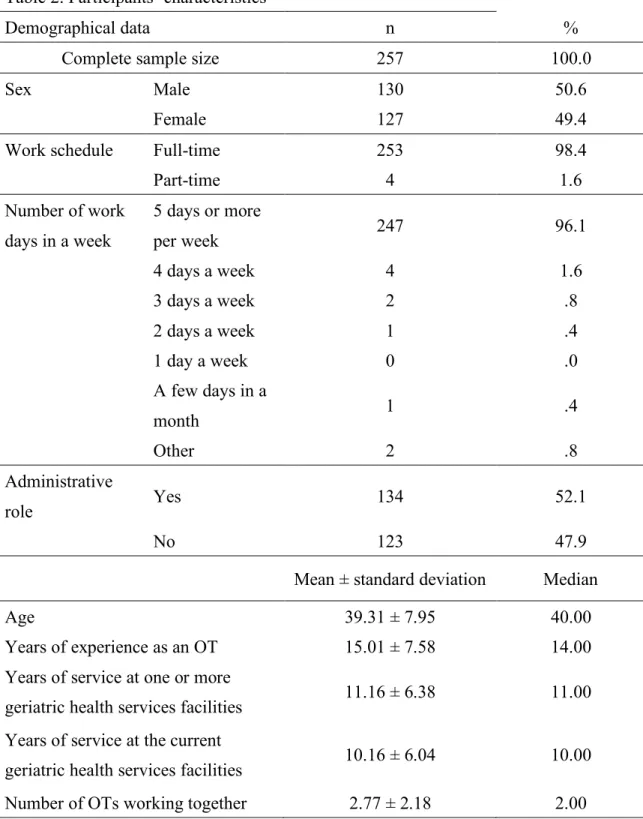
rate of 65.6% (i.e., 257 OTs). Table 2 summarizes the demographic
characteristics of the 130 male and 127 female respondents. The mean
age was 39.31 ± 7.95 years, the mean length of experience as an OT was
15.01 ± 7.58 years, the mean length of service at any geriatric health
service facility was 11.16 ± 6.38 years, and the mean length of service at
their current facility was 10.16 ± 6.04 years. The mean number of OTs
reported to work together was 2.77 ± 2.18.
Item Analysis of the SPIS
Confirmation of Validity, One-Dimensionality, and Internal
Consistency
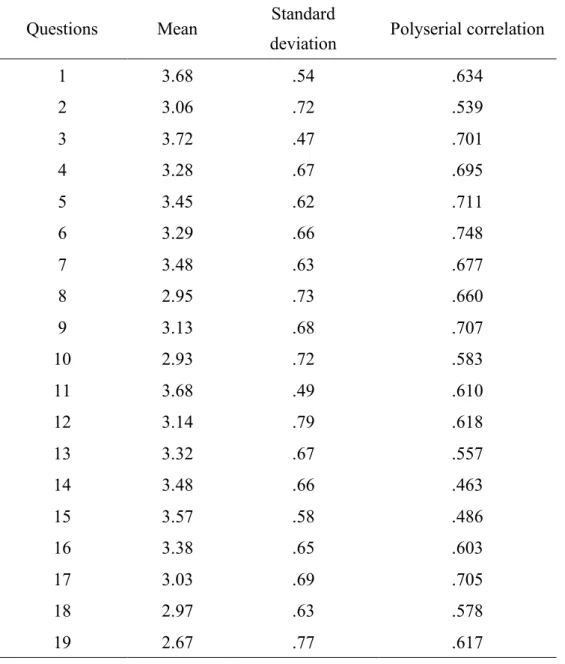
Table 3 shows the polyserial correlation of each SPIS item score and total
SPIS score. Polyserial correlations were ≥ 0.2 in all cases. The scree plot
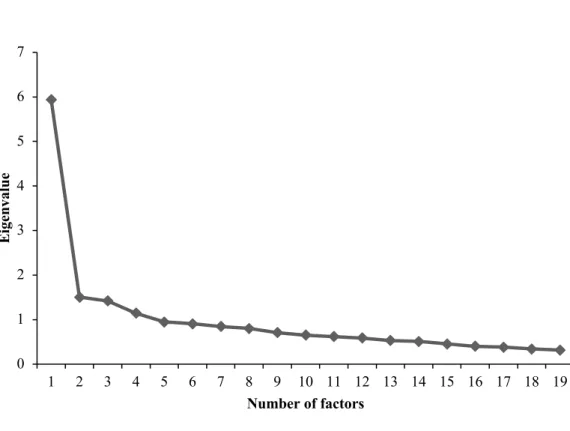
of the eigenvalues by categorical factor analysis is shown in Figure 1,
showing a factor contribution rate of 38.5%. The mean values and
standard deviations for the SPIS items are also shown in Table 3, with
highest and lowest mean values being 3.72 (item 3) and 2.67 (item 19),
respectively. Cronbach’s α coefficient was 0.87.
The IRT Analysis
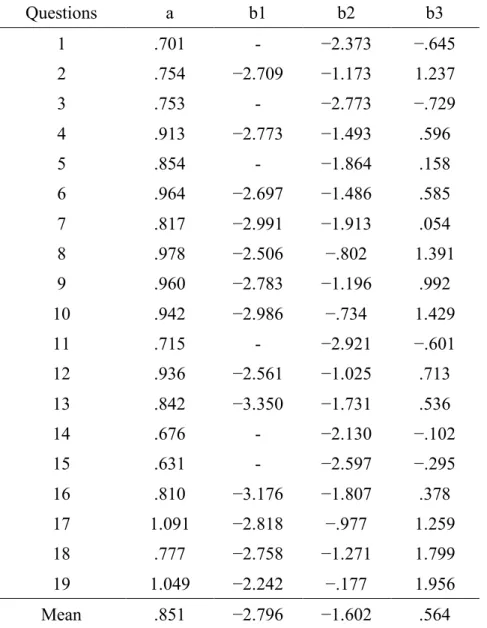
Table 4 shows the estimated value of each item parameter, as assessed by
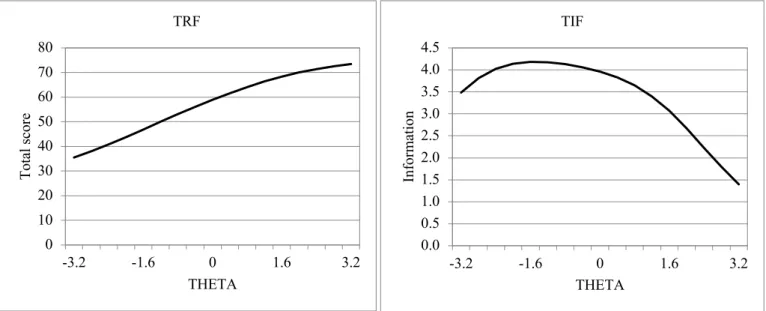
IRT, while Figure 2 shows the TRF (left image) and TIF (right image). It
was 58.97 when the TRF θ value was 0. The mean value of the
discrimination parameter (a) was 0.851, and the range was 0.631 (item
15) to 1.091 (item 17). All discrimination parameters were ≥0.5 and met
our reference criterion. The difficulty parameters b1, b2, and b3 had mean
values of − 2.796, − 1.602, and 0.564, respectively. b1 is a value with a
50% probability of “strongly disagree (1 point) or otherwise”. b2 is a
value with a 50% probability of “strongly disagree (1 point), disagree (2
points) or agree (3 points), strongly agree (4 points).” b3 is a value with
a 50% probability of "strongly agree (4 points) or otherwise.” The ranges
for these were as follows: − 3.350 (item 13) to −2.242 (item 19) for b1,
−2.921 (item 11) to − 0.177 (item 19) for b2, and −0.729 (item 3) to 1.956
(item 19) for b3. All these parameters were ≤4.0 and within the reference
criterion. In all cases, item 19 had the maximum value on the parameter.
However, there were no responses to “hardly agree” for items 1, 3, 5, 11,
14, and 15, so b1 was not estimated. Concerning the TIF, the upper limit
of 4.18 was shown to be near a θ of − 1.6.
Relationship between total score of SPIS and Recognition of
Implementation status of Information Sharing
The polyserial correlation was 0.653 for the total SPIS score with the
item score and the recognition of implementation status of information
sharing.
Concurrent Validity
The Pearson correlation was 0.52 between the total SPIS score and the
total ITA Assessment Scale score.
Discussion
We received 257 valid responses, which was within the minimum number
of 200–400 samples required for the two-parameter logistic IRT model
1 6 )
. However, the mean age of respondents was 39.31 ± 7.95 years, which
was older than that reported in the membership statistics for OTs in 2017
3 )
. This suggests that OTs in geriatric health service facilities may be
more experienced than their peers working in other areas, which was also
supported by the longer total experience as an OT, which was 15.01 ±
7.58 years in this study.
The polyserial correlation was >0.2 for all SPIS item and total
scores. This indicates that the items in the SPIS were relatevant to the
measured topic. We can therefore assume that all 19 items measure the
characteristic “information sharing promotion factor” of the total score,
as presented in our previous study
1 2 ). In addition, the scree plot of
eigenvalues in the categorical factor analysis (Figure 1) showed a
particularly large decrease from the first to the second eigenvalues,
followed by a gradual decrease. The factor contribution ratio was 38.5%,
which exceeded the requisite 20% threshold and confirmed the one-
dimensional nature of the scale.
It was also notable that Cronbach’s α coefficient was 0.87,
indicating that there was good internal consistency. Given that the mean
of each SPIS item score exceeded the possible mean value (1–4) in items
1, 3, 5, 7, 11, 14, 15, and 16, we must acknowledge the ceiling effect.
However, because the item parameters satisfied the reference value, all
items were probably appropriate for the scale configuration that was used.
Discrimination values can be graded as very low (0.01–0.34), low
(0.35 to 0.64), moderate (0.65–1.34), high (1.35–1.69), or very high
(>1.70)
2 1 ). Applying these criteria, we can state that only item 15 had a
low discrimination value and that all other items had moderate
discrimination values. The low discrimination value of item 15 indicates
that it has less influence on evaluation. Furthermore, since the value of
b2 was small, it was considered to be an item 15 that was easier than
others to respond with “agree” or “strongly agree.” Overall, this indicates
that information sharing is recognized as natural in geriatric health
service facilities, regardless of the inclination towards information
sharing levels.
Concerning the b1, b2, b3 parameters, all b2 values were <0, with
some items exceeding − 2. The fact that b2, which is the center level of
the three difficulty parameters, was between 0 and − 2 of θ indicates that
“agree” and “strongly agree” responses were common. Indeed, we found
a moderately positive correlation between the polyserial correlation of
the total SPIS score and the inclination towards information sharing.
The parameter value of item 19 was − 2.242 for b1, −0.177 for b2,
and 1.956 for b3, which were the largest values for all SPIS items. In
other words, item 19 was the most difficult factor to agree on. Thus, it
was considered more difficult to answer this item 19 as “agree” or
“strongly agree” compared with other items. Moreover, it was easier to
answer it as “strongly disagree” or “disagree.” According to the
information sharing recognition survey of Japan’s geriatric health service
facilities, rehabilitation therapists (other than OTs) want to share
information with CWs, but “About treatment of residents” and “About
daily life situation and contents of assistance” were recognized as
information that could not be shared with CWs
1 3 ). The reason was not
reported. Under such circumstances, it is difficult to include CWs in
cooperative care, which may explain the difficulties faced by OTs
answers to this question.
The result for the TRF (Figure 2, left panel) showed a very strong
linear relationship between the estimated inclination towards information
sharing value and the total score ( θ ranging from − 2.4 to 2.0), with a
steep gradient, indicating good measurement accuracy when the total
score was 40.8–70.0 points. In addition, the result for the TIF (Figure 2,
right panel) showed that the information amount was approximately 3.5
for a θ of − 3.2 and 1.5 for a θ of 3.2. However, the information amount
was maximum (4.18) when θ was approximately − 1.6, so the SPIS
measurement accuracy was maintained when the OT promoted
information sharing at a level above the midpoint. We believe that
accuracy will be highest when the test is used by an OT whose inclination
towards information sharing is below that level.
Studies of OTs in nursing care homes have reported a very strong
linear relationship between the estimated inclination value and the total
score (θ range from approximately − 2.0 to 1.2) with a steep gradient
1 2 ).
Therefore, the SPIS was more accurate when measuring OTs with a
variety of experiences and inclination levels in geriatric health services
facilities compared with those in nursing care homes.
There were also important correlations between the total SPIS
scores and both the information implementation status and the ITA
Assessment Scale scores. Polyserial correlation showed a positive and
moderately strong correlation, with a low total SPIS score associated with
a correspondingly low information sharing implementation status score,
and vice versa. However, a moderately positive correlation would
indicate that, in some cases, the total SPIS score could be high while the
implementation status of information sharing could be low. This may
have resulted from the subjective perceptions of OTs, because we did not
objectively evaluate implementation status. There was also a moderate
correlation between the total SPIS score and the total ITA Assessment
Scale score, which indicates that there is a relationship between the
awareness and implementation of a team approach. Using the SPIS may
provide important information that can facilitate the implementation
status of such an approach.
Past research verified the use of the SPIS in nursing care homes as
a useful tool for confirming the extent to which an OT, who just changed
jobs to special nursing home for the elderly or with little experience, is
involved in IS promoting factors
1 2 ). The present research has confirmed
the reliability and validity of the SPIS among OTs working in geriatric
health service facilities. It can now be considered a useful tool for
confirming the extent to which an OT is involved in factors that promote
information sharing. Not only did the item parameters satisfy the
reference values when implemented in the geriatric health service
facilities but also each item was appropriate for the scale composition,
indicating that the SPIS was a reliable and valid scale. Moreover,
measurement accuracy was maintained when OTs could promote
information sharing to above average inclination levels, with that
accuracy being highest when OTs could promote information sharing with
somewhat below average inclination. Therefore, OTs with low to
moderate inclination to promote information sharing should use this
checklist in geriatric health service settings to understand their needs
more accurately. The SPIS is useful for determining how information
sharing can be promoted between OTs and CWs, and the information
obtained from completing it may also help to improve the quality of life
for residents while enhancing the support of CWs if that information is
used to improve the quality of rehabilitation and care.
Limitations and Future Research Directions
In this research, we were unable to address factors relevant from the
perspective of CWs. Moreover, because the SPIS response options were
set on a four-point scale, the information obtained from OTs with high
inclination was low, and this should be addressed in the future. Thus, we
will consider improvements to increase the number of choices in the
checklists to ensure that we obtain information of better quality.
Recognition of implementation status of information sharing was not a
reliable and valid scale.
Finally, the SPIS checklist was developed for OTs working in care
facilities for older people in Japan. This checklist is also written in
Japanese. To date, its linguistic validity has not been studied in English,
necessitating caution before it is used in countries other than Japan.
Conclusions
All items included in the SPIS checklist were appropriate for scale
configuration in this study. In addition, the measurement accuracy of the
SPIS was maintained when an OT promoted information sharing at above
average levels and was highest when an OT promoted information sharing
with a somewhat below average levels. Thus, the SPIS can be considered
a reliable and valid scale that is transferable for use in geriatric health
service facilities.
Acknowledgment
The authors would like to express their sincere gratitude to the OTs
working in the participating geriatric health services facilities.
References
1. Ministry of Health, Labour Welfare: Long-Term Care Insurance
System of Japan. Retrieved September 18, 2019, From.
https://www.mhlw.go.jp/english/policy/care-welfare/care-welfare-
elderly/dl/ltcisj_e.pdf. 2016.
2. Japanese Association of Occupational Therapists: Definition of
Occupational Therapy as of May, 2018 (Japan). Retrieved September
18, 2019, From. http://www.jaot.or.jp/en/about.html.
3. The Journal of Japanese Association Occupational Therapists
(JJAOT): 2017 JAOT member statistics, 79: 12-25, 2018.
4. Usami, Y, Ogawa, K, Nishida, Y: Occupational Therapy at Japanese
Nursing Homes and Its Challenge in the Future. Journal of
rehabilitation sciences, 6: 47-56, 2010. (in Japanese)
5. Kaga, J: Qualitative study about the role of the rehabilitation staff
at a geriatric health services facility: Multi-occupation
collaboration for the residents. Japanese Journal of Comprehensive
Rehabilitation, 20(1): 48-56, 2019. (in Japanese)
6. Japane se As soc iatio n o f Occu patio nal Thera pists: Ma nageme nt To ol Da ily
Life Perf ormance A br idge d E ng lish Ver sion . Toky o, 20 14.
7. Io kawa, K, Hasegawa , K , Ish ikawa , T: Usefu ln ess of the Daily L ife
Perfor mance Tra nsfer Sheet in Care Manage ment of Peo ple w ith S troke .
American J our nal of Occupa tiona l Therap y, 7 3 (4), 73 042 050 80 p1-
730 420 508 0p 7, 20 19.
8. Ots uka, M , Hira ta, M, Ara i, T, et a l. : E leme nts of Inter profe ss io nal Work in
Ho me Care Ac tivities for the E lder ly. The Bulletin Saitama Prefectura l
Univers ity, 6 : 9-18 , 200 4. (in Japane se)
9. Yoko i, A , O sh ima , N, Ko baya sh i, R, e t a l. : Th e competenc ies of
occupa tiona l therap ists en gaged w ith co mmun ity-d welling elderly ad ults
with disab ilitie s: U sing the Delph i tech nique to exa mine co nte nt va lidity.
Occupatio nal T herapy, 38(3 ): 25 3-2 65, 2 019 . ( in Japa nese)
10. Yamamo to, M , O ku miya, A , Ya mamo to , T, e t a l. : D iffere nces in Percep tion
of Pro vided a nd Rece ived Inf orma tion be tween Healthcare Profe ss iona ls a t
Hea lth Care Facilitie s for E lder ly. The Jo urna l of Inter profe ss io nal
Co lla bora tion in Hea lth an d Soc ia l Care, 7(1) : 2-1 0, 20 14. ( in Japa nese)
11. Usami, Y, O gawa, K, Nish ida , Y, et al. : Un der stan d ing infor matio n shar in g
amon g occ upa tiona l therap ists an d care worke rs in spec ia l n urs in g home s
for the e lder ly. Occ upa tiona l therap y, 3 6(2) : 1 70-1 82, 2 017 . ( in Ja panese)
12. Usami, Y, K obaya sh i, R: Deve lop men t of a se lf-checklist for occu patio nal
therap ists to share infor ma tion with nur sing c are worker s a t spec ial nu rsing
home for the e lder ly. Occu patio nal T herapy, 3 7(6) : 6 27- 636 , 201 8. (in
Japane se)
13. Yamamo to, M , O ku miya, A , Ya mamo to , T: Aw areness of Prov id in g an d
Receiv ing Infor matio n a mon g N urse s, Care Workers , a nd Reha bilita tion
Therap is ts at Health Care Facilities for the E lderly. Japa n Academy of
Gero n to log ical Nur s ing , 19(2 ): 58- 65 , 2 01 5. (in Ja panese)
14. Sugimo to , T, Ka mei, T: Develop in g an as ses s ment sca le of health care
profes s iona ls ' rec ogn ition of a s uccess fu l in te rdisciplinar y team appr oach in
health care facilities for the e lder ly : Ana ly sis of re lia bility an d va lid ity.
Jour nal of Japa n Acade my of N ursin g Sc ience, 31( 4): 1 4-23 , 20 11 . ( in
Japane se)
15. Dillman, D A : Mail an d in terne t sur vey s. The tailore d de s igne d method (2 nd
ed.). J ohn Wile y & So ns , Inc, New Yor k, 20 00 .
16. Kato, K. , Yamada , T., Kawaba ta, I: Ite m Res p onse The ory by R. Ohm sha ,
Toky o, 20 14 . ( in Japa nese)
17. Toyo da, H: Ite m Res po nse The ory : Case Stu dy Vers io n - Con str uctio n
meth od of new psycho lo gica l test. Asa kura S h oten , Tok yo , 2 00 2. ( in
Japane se)
18. Gu ilfor d, J P: Funda men tal Sta tis tic s in Ps ych olo gy and Ed ucatio n T h ird
Edition . Mc Graw- Hill Bo ok Company, Inc, Ne w York , 195 6.
19. Shimizu , H: An in trod uctio n to the sta tis tica l free sof tware HAD:
Sugges tion s to improve teach ing, lear ning and practice data ana lys is.
Jour nal of Med ia, Inf orma tion and Commu nica tion , 1 : 59 –73 , 201 6. (in
Japane se)
20. Fu jimo ri, S : Treatmen t of omitted res po nse s in ite m re spo nse theory and
estima tion of ab ility parame ters in a neura l ne twor k. Bulletin of Hu man
Science, 22 : 1–1 2, 20 00 . ( in Japa nese)
21. Baker, F: T he Bas ics of Item Re spo nse The ory. Secon d E dition . ERIC
Clear in gho use on As ses smen t and Eva lua tion , United Sta tes of A merica ,
200 1.
Figure 1. Scree plot of eigenvalues by polychoric correlation
0 1 2 3 4 5 6 7
1 2 3 4 5 6 7 8 9 10 11 12 13 14 15 16 17 18 19
Eigenvalue
Number of factors
0.0 0.5 1.0 1.5 2.0 2.5 3.0 3.5 4.0 4.5
-3.2 -1.6 0 1.6 3.2
Information
THETA TIF
0 10 20 30 40 50 60 70 80
-3.2 -1.6 0 1.6 3.2
Total score
THETA TRF