• 検索結果がありません。

Abstract 1. Introduction 2. Materials and Methods

N/A
N/A
Protected

Academic year: 2021

シェア "Abstract 1. Introduction 2. Materials and Methods"

Copied!
30
0
0

読み込み中.... (全文を見る)

全文

(1)

1 Abstract

1. Introduction

2. Materials and Methods

2.1. Three-point flexural tests

2.1.1. Materials

2.1.2. Fabrication of test pieces

2.1.3. Methods

2.1.4. Properties assessed

2.1.4.1. Stress–deformation Curves

2.1.4.2. Flexural strength, elastic modulus, and 0.05% proof stress

2.2. Cantilever beam tests

2.2.1. Materials

2.2.2. Fabrication of test pieces

2.2.3. Methods

2.2.4. Properties assessed

2.2.4.1. Load at 0.5 mm deformation, elastic modulus

2.3. Statistical analysis

(2)

2 3. Results

3.1. Stress–deformation Curves

3.2. Flexural strength, elastic modulus, and 0.05% proof stress in three-point flexural tests

3.2.1. Flexural strength

3.2.2. Elastic modulus

3.2.3. Results for 0.05% proof stress

3.2. Load at 0.5 mm deformation and elastic modulus in cantilever beam tests

3.2.1. Load at 0.5 mm deformation

3.2.2. Elastic modulus

4. Discussion

5. Conclusions

6. Acknowledgments

7. References

8. Figure Legends

(3)

3 Abstract

Purpose: The aim of this study was to investigate the possibility of utilizing new acrylic denture base materials in

resin clasps based on data obtained from three-point flexural and cantilever beam tests.

Methods: Seven non-metal clasp denture (NMCD) materials and four acrylic denture base materials were assessed

by the three-point flexural test while the cantilever beam test was used to examine six NMCD materials and three

acrylic denture base materials. The flexural strength, elastic modulus and 0.05% proof stress for each material

were obtained using the three-point flexural method according to International Organization for Standardization

(ISO) 20795-1, and the load at 0.5 mm deformation and elastic modulus values were provided by cantilever beam

tests.

Results: Based on the three-point flexural test data, the only materials that simultaneously exhibited suitable levels

of flexural strength and elastic modulus, as defined in the ISO 20795-1 standard for Type 3 denture base materials,

were the polycarbonate Reigning N (REN) and the acrylics Acron (AC), Pro Impact (PI), Procast DSP (PC) and

IvoBase High Impact (HI). Cantilever beam tests found no significant differences for the load at 0.5 mm

deformation values between the PI and any of the EstheShot (ES), EstheShot Bright (ESB), REN and Acry Tone

(ACT), and no significant differences for the elastic moduli between the PI and any of the Lucitone FRS (LTF),

ES, ESB, REN and ACT.

Conclusions: The results suggest that several of the acrylic materials currently employed as denture base materials

may also be usable in NMCDs. It was further determined that the flexural properties of PI are similar to those of

ES, ESB and ACT, meaning that similar clasp designs may also be feasible when using any of these polymers.

(4)

4 1. Introduction

In recent years, increasing demand for more esthetically pleasing dental treatments has led to the widespread use

of removable partial dentures that do not include metal clasps, known as non-metal clasp dentures (NMCDs) [1].

The materials used in NMCDs are mainly polyamide, polyester or polycarbonate injection-molded thermoplastic

(IMTP) denture base resins. Compared with conventional acrylic dentures made with metal clasps, NMCDs

reduce the incidence of metal allergies and provide improved cosmetic appearance and fitting accuracy [2,3]. The

high elasticity of the IMTP materials used in NMCD resin clasps enables dentures to be retained through fitting

into the undercut of the abutment tooth [2]. The flexural properties of resin clasps are thus closely associated with

denture insertion and removal and with the transmission of stress to the abutment tooth and the mucosal surface

[4,5].

Takabayashi studied six different types of IMTP denture base resins, and found that they were more resistant to

fracture compared with Acron (AC), an acrylic denture base material [6]. Hamanaka et al. also compared the

flexural strength, elastic modulus and impact strength for four types of IMTP denture base resins with those for

AC, and found that the IMTP resins exhibited lower flexural strengths and elastic moduli relative to AC [7].

While polyamide, polyester and polycarbonate generally show better fracture and impact resistance than AC,

there are challenges associated with these materials, including difficulty during grinding, polishing and denture

repair, insufficient color stability and the necessity for frequent maintenance. A range of novel NMCD materials is

currently being developed in order to resolve these issues [1,6-11].

(5)

5

In terms of acrylic resins, conventional AC is unsuitable for NMCDs, as it exhibits both high rigidity and low

elasticity, making it susceptible to fracture. However, several other commercially available acrylic polymers with

improved impact resistance and better elasticity have been identified, and these may be candidates for NMCDs

[12]. Unfortunately, few studies have compared the physical properties of these newer acrylic materials with those

of polymers currently used in NMCDs. In the absence of scientific data for the design of NMCDs and clasps with

such new materials, individual dental laboratories continue to design and produce NMCDs based on existing

products [1].

In the present study, basic experiments were performed to evaluate the flexural properties of materials currently

used for NMCD and of acrylic denture base materials by means of three-point flexural and cantilever beam tests

in order to identify resin clasp materials and designs that are suitable for more widespread general use. The overall

aim was to assess the possibility of utilizing new acrylic denture base materials in resin clasps.

2. Materials and Methods

2.1. Three-point flexural tests

2.1.1. Materials

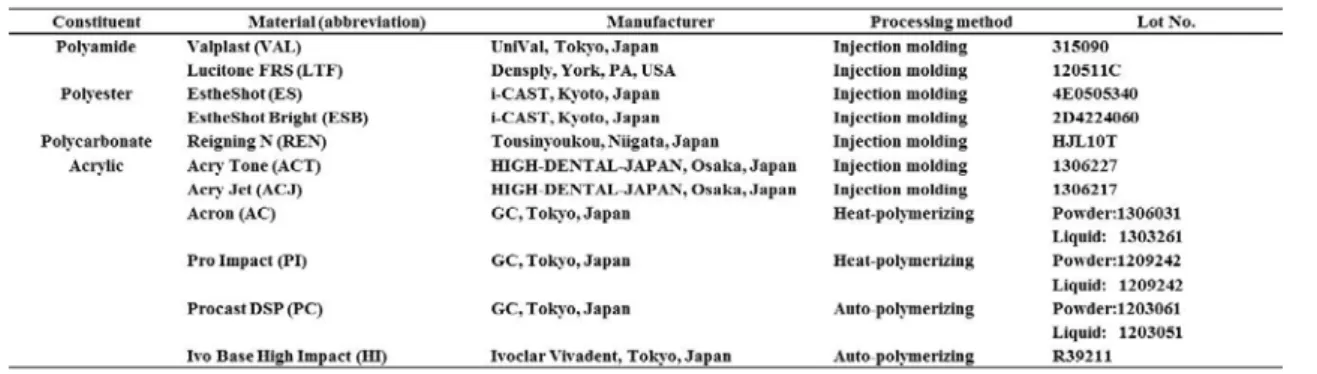
Three-point flexural tests were performed on the polyamide resins Valplast (VAL) and Lucitone FRS (LTF), the

polyesters EstheShot (ES) and EstheShot Bright (ESB), the polycarbonate Reigning N (REN) and the acrylics

Acry Tone (ACT) and Acry Jet (ACJ). The acrylic denture base materials AC, Pro Impact (PI), Procast DSP (PC)

and IvoBase High Impact (HI) were also assessed in this study. The associated abbreviations as well as

(6)

6

information regarding manufacturers and forming methods are presented in Table 1.

2.1.2. Fabrication of test pieces

In accordance with the manufacturer's instructions, test pieces were fabricated using an injection molding device

in the case of the IMTP denture base resins and HI, while flasks were used to produce the heatpolymerizing

denture base resins AC and PI. The autopolymerizing denture base resin PC was fabricated in a stone mold.

The three-point flexural test pieces had the following dimensions in accordance with the ISO 20795-1

instructions: length 64 mm; width 10 mm; depth 3.3 mm. Ten test pieces of each material were produced for each

test. Grinding was carried out under running water using #600 SiC waterproof abrasive paper and test pieces were

immersed in distilled water at 37 ºC for 50 h prior to testing.

2.1.3. Methods

A TG-5kN universal testing machine (Minebea, Nagano, Japan) was used for three-point flexural testing. The test

conditions for the three-point flexural tests were those specified in ISO 20795-1, with a support span of 50 mm

and a crosshead speed of 5 mm/min [13].

2.1.4. Properties assessed

2.1.4.1. Stress–deformation curves

Stress–deformation curves were generated for the various test pieces based on the data obtained from three-point

(7)

7 flexural testing.

Flexural deformation was calculated according to the following formula:

flexural deformation = 6Sh/L²,

where S is the deflection at the center of the test piece (mm), h is the thickness of the test piece (mm) and L is the

support span (mm).

2.1.4.2. Flexural strength, elastic modulus and 0.05% proof stress

The flexural strength of each specimen was determined as the load at fracture in the case of those materials that

exhibited fracture, or at the maximum load in the absence of fracture. The 0.05% plastic deformation stress

(0.05% proof stress) values were assessed as an indicator of the elastic limit of each material.

Flexural strength was calculated according to the following formula:

flexural strength = 3PL/2bh²,

where P is the maximum load (N), L is the support span (mm), b is the test piece width (mm) and h is the test

piece thickness (mm).

The elastic modulus was calculated according to the following formula:

elastic modulus = FL³/4dbh³,

where F is the load at the proportionate point on the load-deformation curve (N) and d is the deformation at a load

of F (mm).

(8)

8 2.2. Cantilever beam tests

2.2.1. Materials

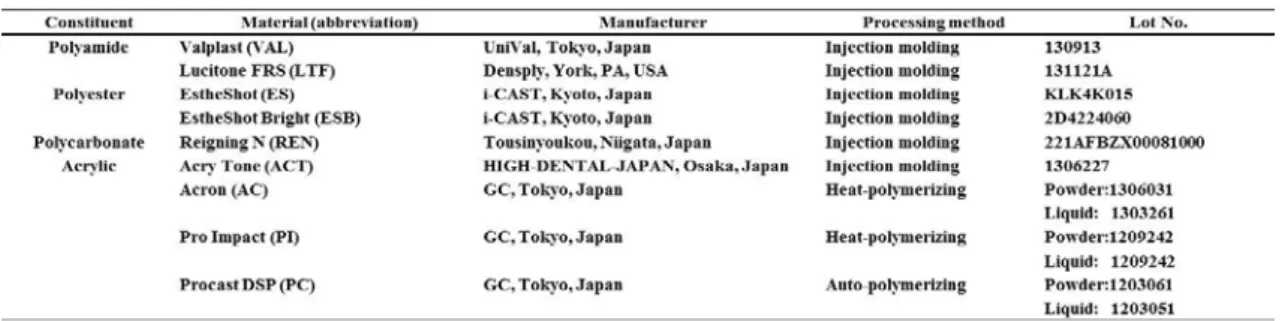
Cantilever beam tests were performed with nine materials selected as potentially suitable for use in NMCDs based

on the results of three-point flexural tests: VAL, LTF, ES, ESB, REN, ACT, AC, PI and PC. The associated

abbreviations as well as information regarding manufacturers and forming methods are shown in Table 2.

2.2.2. Fabrication of test pieces

The cantilever beam test specimens had the following dimensions: length 50 mm; width 7 mm; depth 1.5 mm. Ten

test pieces were fabricated for each test. Grinding was carried out under running water using #600 SiC waterproof

abrasive paper and test pieces were immersed in distilled water at 37 ºC for 50 h prior to testing.

2.2.3. Methods

A TG-5kN universal testing machine (Minebea, Nagano, Japan) in conjunction with a custom-made jig were used

for cantilever beam testing. The conditions for the cantilever beam tests consisted of application points simulating

the upper and lower canines and the first and second premolars, a support span of 7.5 mm (representing the mean

width of tooth crowns) and a crosshead speed of 2 mm/min, as shown in Figures 1a and 1b.

(9)

9 2.2.4. Properties assessed

2.2.4.1. Load at 0.5 mm deformation, elastic modulus

The load was determined when the specimen was deformed by 0.5 mm and the elastic modulus was measured on

the assumption of a 0.5 mm undercut.

The elastic modulus was calculated according to the following formula:

elastic modulus = 4FL³/dbh³,

where F is the load at the proportionate point on the load-deformation curve (N) and d is the deformation at a load

of F (mm).

2.3. Statistical analysis

Statistical analysis of the three-point flexural and cantilever beam test data was carried out using one-way analysis

of variance (ANOVA), applying Tukey's method for multiple comparisons with the level of significance set at p =

0.05.

3. Results

3.1. Stress–deformation curves

Figure 2 shows the stress–deformation curve for each material. The AC, an acrylic material, was evidently brittle,

since it fractured at a deformation of 4% or less. In comparison, the other materials exhibited greater flexion at

(10)

10

lower levels of stress, indicating superior toughness. The polyamide resins VAL and LTF exhibited high degrees

of flexion at low levels of stress, particularly in the case of the VAL. Among the polyester resins, the ESB

exhibited greater flexion than the ES at the same load, but less flexion than the polyamides. The polycarbonate

REN displayed comparatively less flexion under stress, with the amount of flexion being smaller than that

exhibited by the polyesters and polyamides at the same load. The degree of flexion exhibited by the various

acrylic materials under stress varied, but the PC and HI displayed only minimal flexion under stress, while the PI

showed moderate flexion and the ACT and ACJ had comparatively more flexion under stress.

3.2. Flexural strength, elastic modulus and 0.05% proof stress in three-point flexural tests

3.2.1. Flexural strength

Table 3 summarizes the flexural strength of each material. When acrylics are excluded, the polycarbonates are

seen to exhibit the highest flexural strength, followed by the polyesters and then polyamides. Among the two

polyamides, the VAL had lower strength than the LTF. The acrylics can be placed into two groups, with the AC, PI,

PC and HI exhibiting high flexural strength and the ACT and ACJ showing lower values.

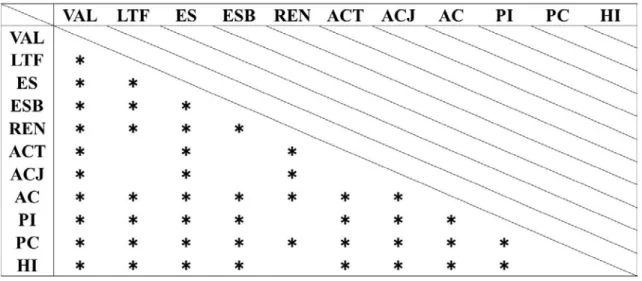
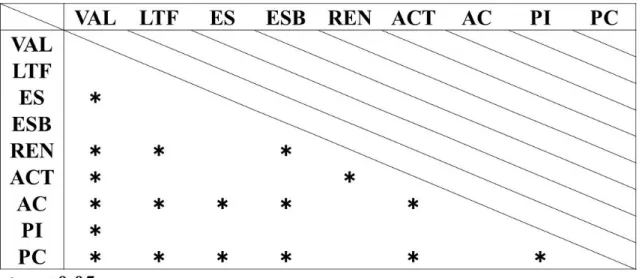
Table 4 presents the results of the statistical analysis. Significant differences were observed between nearly all the

paired materials, but not between the polyamide LTF and the polyester ESB, or between the polycarbonate REN

and the acrylics PC and HI. Within the acrylic materials, the differences between the AC and PC, the PC and HI

and the ACT and ACJ were not significant.

(11)

11 3.2.2. Elastic modulus

Table 3 shows the elastic modulus for each material. The results followed a similar trend to those seen in the case

of the stress–deformation curves in Figure 2 was well as the flexural strength data; when acrylics are excluded,

polycarbonates exhibit the highest elastic modulus values, followed by polyesters and then polyamides. The

values for acrylics were either high or low, with the AC showing a very high elastic modulus. This was followed

by the PC and HI and then by the PI, ACT and ACJ.

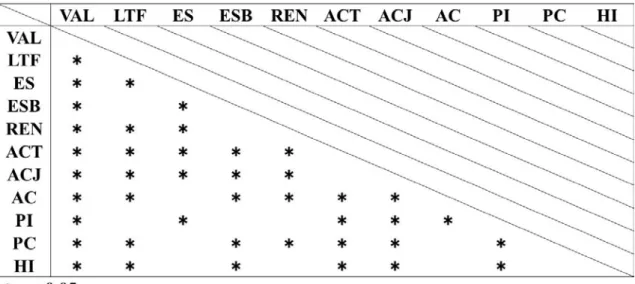
Table 5 summarizes the statistical analysis results. Significant differences were found between nearly all the

paired materials. In the low modulus group, there were no significant differences between the polyamide LTF and

the polyester ESB and between the acrylics ACT and ACJ. In the high modulus group there were no significant

differences between the polycarbonate REN and either of the acrylics PI or HI.

3.2.3. Results for 0.05% proof stress

Table 3 shows the proof stress (0.05% plastic deformation stress) data as a guide to elastic limits. In general, the

specimens appear to belong to four groups. The polyester ES and the acrylics AC, PC and HI had the highest

proof stress values, followed by the polycarbonate REN, the acrylic PI, the polyester ESB and the polyamide LTF.

The acrylics ACT and ACJ formed a group with proof stresses about half that of the highest value obtained, while

the lowest value was exhibited by the polyamide VAL.

Table 6 shows the results of the statistical analysis. The samples were divided into four groups based on their

proof stress, as shown in Table 3, and excluding the REN, there were significant differences between all these

(12)

12

groups, but almost no significant differences within each group. In the group with the highest proof stress, there

was no significant difference between the ES, AC, PC or HI. In the group with the next highest proof stress, there

was no significant difference between the REN, ESB or PI, nor between the LTF and either ESB or PI. There was

no significant difference between the ACT and ACJ, both of which had proof stress values equal to approximately

half the maximum value obtained in these trials. The VAL had a significantly lower proof stress than any other

material (p < 0.05).

3.2. Load at 0.5 mm deformation and elastic modulus in cantilever beam tests

3.2.1. Load at 0.5 mm deformation

Table 7 presents the load at 0.5 mm deformation data. Dividing the materials into three general groups, the group

with the highest load comprised the AC, PC and REN, followed by another group consisting of the PI, ES, ESB,

ACT and LTF, with the VAL undergoing 0.5 mm deformation at the lowest load.

The results of the statistical analysis are found in Table 8. Comparisons within the groups found no significant

differences between any of the materials with the highest values. Within the group with the next highest values

there were significant differences between the LTF, ES and PI (p < 0.05). As well, the load at 0.5 mm deformation

was significantly lower for the VAL than for any other material (p < 0.05). In a comparison between the IMTP

and acrylic denture base resins, there were significant differences between the AC, PC and any of the VAL, LTF,

ES, ESB or ACT (p < 0.05). However, there was no significant difference between the PI and any of the ES, ESB,

REN or ACT.

(13)

13 3.2.2. Elastic modulus

The results for the elastic modulus exhibited a similar trend to the data for load at 0.5 mm deformation (Table 7).

Dividing the materials into three groups, the group with the highest elastic modulus comprised the AC, PC and

REN, followed by the group containing the PI, ES, ESB, ACT and LTF, with the VAL again having the lowest

value.

Table 9 shows the results of the statistical analysis. Comparisons within the groups found no significant difference

between any of the materials with the highest values, nor between any of those in the group with the next highest

values. The VAL had a significantly lower elastic modulus than any of the other materials, except for the LTF and

ESB (p < 0.05). In a comparison between the IMTP and acrylic denture base resins, there were significant

differences between the AC and PC and any of the VAL, LTF, ES, ESB or ACT (p < 0.05). However, there was

no significant difference between the PI and any of the LTF, ES, ESB, REN or ACT.

4. Discussion

Denture base materials are subjected to a variety of stresses in the mouth, and thus it is appropriate to evaluate

their mechanical properties by flexural testing based on the deformation generated during occlusion, as well as the

compression and tensile stresses that occur during clasp fitting and removal [14].

This study evaluated the flexural properties of polyamide, polyester, polycarbonate and acrylic materials that are

currently used in NMCDs, including some that have recently become commercially available, as well as those of

(14)

14

acrylic denture base materials that could potentially be used in NMCDs, as basic research toward the design of

novel resin clasps.

As the bases and clasps of NMCDs are made of the same material, three-point flexural tests were initially

performed to investigate the flexural properties of clasp materials included in the denture base, as a means of

identifying those materials best suited for use as denture bases. To simulate clinical use, cantilever beam tests

were then performed to determine those denture base materials capable of insertion into and removal from a

0.5 mm undercut at the same load as commercially available IMTP denture base resins when used as clasp

materials.

The results of the three-point flexural tests are discussed first. To comply with the specifications for flexural

strength and elastic modulus prescribed by ISO 20795-1, Type 3 denture base materials are required to exhibit a

flexural strength of more than 65 MPa and an elastic modulus of more than 2000 MPa. In the present work, the

LTF, ES, ESB, REN, AC, PI, PC and HI all met the requirement for flexural strength, while the other materials did

not. The REN, AC, PI, PC and HI were the only materials investigated that met the requirement for elastic

modulus. Based on these results, only the polycarbonate REN and the acrylics AC, PI, PC and HI satisfied the

criteria for both flexural strength and elastic modulus.

One of the mechanical properties required of a denture base is a high elastic modulus (that is, high rigidity) to

minimize deformation during occlusion. NMCDs without metal clasps contain clasps made of the same material

as the base, and these materials must therefore possess both sufficient rigidity for the base and the appropriate

elastic modulus (rigidity) and elastic limit for the clasp.

(15)

15

The clasps and other retaining devices pass through a region of maximum convexity to reach the undercut, and an

appropriate level of elastic deformation is therefore required, meaning that a low elastic modulus is preferable [6].

As can be seen from the stress–deformation curves, the proportional limit and amount of elastic deformation are

related to the elastic modulus, with materials exhibiting higher elastic deformation having a smaller elastic

modulus. The elastic modulus test results showed that the acrylic denture base material with the highest elastic

modulus was AC at 2999.1 MPa, while the ACJ had the lowest value at 1661.3 MPa. In the case of those materials

currently used in NMCDs, the maximum value was that obtained for the REN at 2363.9 MPa and the lowest was

that for the VAL at 1243.3 MPa. As the aim of these tests was to identify acrylic denture base materials that could

also be used for resin clasps, the elastic modulus for materials suitable for use in NMCDs should preferably be

within the range 1243.3–2363.9 MPa, and those acrylic materials with a higher elastic modulus were therefore

considered to be too rigid for use as NMCD materials. Thus, the AC, PC and HI were all too rigid and the PI was

more suitable for use as an NMCD material.

The polyamide resins assessed in this study, such as the VAL and LTF, are linear polymers composed of repeating

amide bonds (-CONH-), and are typical aliphatic nylons. These materials generally exhibit excellent toughness,

impact resistance and flexibility due to the hydrogen bonds between amide groups (-CONH

2

-), and their

mechanical strength can be improved and their heat distortion temperature raised by the addition of a filler such as

glass fibers [11]. Because these materials are highly crystalline, they tend to show high chemical resistance,

although their capacity for hydrogen bonding results in enhanced water absorption. In addition, the insolubility of

nylon materials in methyl methacrylate (MMA) means that they do not adhere directly to autopolymerizing resins,

(16)

16

making denture fractures difficult to repair [9]. VAL is made from nylon 12, which has a lower melting point and

water absorption rate together with higher impact resistance compared with the more widely used nylon 6. Being

the lowest density polyamide, this polymer also has a low elastic modulus and is easily deformed [6,7,11,15]. The

resin used in LTF is Trogamid CX7323 ([-CO(CH

2

)

10

CONHC

6

H

6

CH

2

C

6

H

6

NH-]n), which is not only highly

transparent, durable and impact resistant, but also stable and hard-wearing, and is thus little affected by the oral

environment [11].

Polyester resins are polycondensates of a polyfunctional carboxylic acid and a polyalcohol. The best-known

examples are polyethylene terephthalate (PET), which is produced from terephthalic acid and ethylene glycol, and

polycycloalkylene terephthalate (PCAT) copolymer. Because both these materials adhere strongly to

autopolymerizing resins, dentures made of these polymers are also easy to repair [11]. The ES and ESB materials

used in the present study were made from PET and PCAT, respectively, and are characterized by high heat

resistance. Their resistance to fatigue and their mechanical strength can be improved by the addition of glass

fibers, but they tend to be brittle without the use of additives, and are readily hydrolyzed by strong bases. Of the

materials used in this project, the ESB had a lower glass fiber content compared with the ES, which presumably

improves its impact resistance and makes it easier to grind, as well as giving it a lower elastic modulus [16].

Polycarbonate resins are produced from bisphenol A (BPA) and diphenyl carbonate, and consist of monomeric

units linked by carbonate groups [-O-(C=O)-O-]. These materials will adhere to autopolymerizing resins [11].

They also exhibit superior physical properties to those of other thermoplastics in many respects, and are both

highly transparent and reasonably priced and so are used in a wide range of products. Unfortunately, their

(17)

17

chemical resistance is poor and they tend to be degraded by both bases and solvents. Their ester bonds also make

them susceptible to hydrolysis in high-temperature and high-humidity environments and, as this may generate

trace amounts of free BPA, it is recommended that the use of these materials by pregnant women should be

avoided [17]. REN, the polycarbonate resin evaluated in this study, exhibited excellent mechanical properties and

had a lower elastic modulus than that for Reigning, its commercial predecessor, means that it could be used in

patients with deeper undercuts. In addition, the durability and chemical resistance of this polymer have been

improved [11].

Acrylic resins are essentially polymers of methacrylic acid esters of the form [CH

2

C(CH

3

)(COOR)], where R is an

alkyl group. The best-known acrylic is poly(methylmethacrylate) (PMMA; R: CH

3

), and the exceptional

transparency of this polymer has led to its being termed an "organic glass." Its characteristics include excellent

heat resistance and high strength and rigidity together with low cost, although it is also highly brittle and thus not

very resistant to impact [18]. Because acrylic resins are dissolved by MMA and other organic solvents, fractured

dentures can be repaired with autopolymerizing resins, and the ease of grinding of these material means that they

are widely used by dentists as denture base materials.

The acrylic resin AC is highly rigid and is already widely used as a denture material, but is not suited for use in

NMCDs because it may fracture when used in clasps. For this reason, polyamides, polyesters and polycarbonates,

all of which are tougher than AC, have been used in the resin clasps of NMCDs. Recently, however, new acrylic

denture materials have been developed by adjusting the amount of plasticizers added so as to alter the

intermolecular bonds and improve the flexibility, toughness and impact resistance [12]. In this study, the acrylic

(18)

18

resins ACT, ACJ, AC, PI, PC and HI were assessed, all of which have differences in polymer particle size,

plasticizer type, mode of polymerization and formation method. These variations may have a significant effect on

the physical properties of the finished polymers.

Herein, flexural resistance is defined as the stress required for a 0.05% plastic deformation, and it was found that

the acrylic AC and the polyester ES were less susceptible to plastic deformation, whereas the polyamide VAL was

the most susceptible, followed by the acrylics ACT and ACJ. A load is imposed on the bases and clasps of

dentures during occlusion and, if this load is excessive, it can cause plastic deformation of the denture base and

clasp, which may damage the mucosa and reduce denture retention force. Xuan et al. reported a value for the

mean occlusal pressure exerted by elderly Japanese patients (mean age 70.5±0.5) were 39.5 (±7.6) MPa [19].

Hidaka et al. determined that the mean occlusal pressure at the maximum voluntary clenching level was 41.2

(±3.8) MPa for patients with a mean age of 24.0 (±6.3), and concluded that a proof stress higher than this value is

required to prevent the plastic deformation of NMCDs during occlusion [19,20]. The materials that met this

condition in the present work were the ES, ESB, REN, AC, PI, PC and HI.

In summary, the results for flexural strength, elastic modulus and proof stress from the three-point flexural tests

suggest that the polycarbonate REN, which is already used as an NMCD material, has the most suitable flexural

properties for use in resin clasps, and that the acrylic denture base material PI may also be suitable as an

alternative material.

The cantilever beam tests are now considered. These trials were performed to simulate the clinical use of resin

clasp materials in undercuts. In this study, the resin clasp was envisaged as being situated in the canine and

(19)

19

premolar regions, and an undercut of 0.5 mm and a support span of 7.5 mm were therefore assumed. From the

results of the three-point flexural tests, the acrylics ACJ, which had the lowest flexural strength, and HI, which

had the highest, were determined to be unsuitable as alternative materials for use in NMCDs, and were excluded

from further consideration.

The results for load at 0.5 mm deformation showed that, when the acrylic denture base resins were compared with

the IMTP denture base resins, there were significant differences between the AC and PC and between the VAL,

LTF, ES, ESB and ACT, raising concerns with respect to a high load imparted to the abutment tooth during

insertion into and removal from a 0.5 mm undercut. There was no significant difference, however, between the

acrylic denture base resin PI and the NMCD materials ES, ESB, REN and ACT, suggesting the possibility of easy

insertion and removal. The same trend was evident in the results for the elastic modulus, with almost no

significant difference between the PI and the IMTP denture base resins. These results indicate that resin clasps

made of PI may be inserted into and removed from a 0.5 mm undercut at approximately the same load levels as

are associated with IMTP denture base resins.

Körber found that the retention force per tooth generated by the clasps of partial dentures ranges from 5 to 10 N

[21], while Frank et al. reported that a force of 2.9 to 7.4 N is preferable for clinical applications [22].

Assuming that the retention force is the same as the stress during clasp removal, measured as the load at 0.5 mm

deformation, the data from the present work demonstrate that the force is in the range of 5 to 10 N for both the PI

and the IMTP denture base resins, other than the REN. This result suggests that the retention force associated with

the use of the PI is also at the same level as that of the IMTP denture base resins.

(20)

20

The results presented herein demonstrate that some of the acrylic materials currently used as denture base

materials may also be usable for NMCDs, and that the flexural properties of the acrylic material PI resemble those

of the ES, ESB and ACT, meaning that similar clasp designs may be feasible as well.

In this project, the retention force was regarded as the load at 0.5 mm deformation; however, this work did not

take into account the frictional resistance between actual clasps and abutment teeth, and additional research is

therefore required.

The polyamides, polyesters, polycarbonates and various other materials developed for use in NMCDs in recent

years have their respective advantages and disadvantages. Polyamide and polyester materials are more easily

damaged and less easily ground when compared with acrylics [8], and polycarbonate materials have been found to

suffer from high heat shrinkage during injection molding, making their dimensions less accurate than those of

acrylic materials [3]. In light of these points, assessing the suitability of acrylic materials for use in NMCDs is

valuable.

5. Conclusions

Although this was a limited study, the data indicate that the acrylic denture base material PI may be an alternative

to the polyamide, polyester and polycarbonate resins presently used as NMCD materials. The results of this work

also suggest the possibly of using designs for PI resin clasps similar to those currently employed in the case of the

IMTP denture base resins ES, ESB and ACT.

(21)

21 6. Acknowledgments

The authors sincerely thank Professor Misao Kawara of Department of Oral Function and Rehabilitation, Nihon

University School of Dentistry at Matsudo, and former Professor Kimiya Nemoto and Professor Norihiro

Nishiyama and Dr. Ryouichirou Uchida of Department of Dental Biomaterials, Nihon University School of

Dentistry at Matsudo, for their valuable advice and help in conducting the experiment.

7. References

[1] Fueki K, Ohkubo C, Yatabe M, Arakawa I, Arita M, Ino S, et al. Clinical application of removable partial

dentures using thermoplastic resin – Part I: definition and indication of non-metal clasp dentures. J

Prosthodont Res 2014; 58: 3-10.

[2] Katsumata Y, Hojo S , Hamano N, Watanabe T, Tamaguchi H, Okada S, et al. Bonding strength of

autopolymerizing resin to nylon denture base polymer. Dent Mater J 2009; 28: 409-18.

[3] Wada J, Fueki K, Yatabe M, Takahashi H, Wakabayashi N. A comparison of the fitting accuracy of

thermoplastic denture base resins used in non-metal clasp dentures to a conventional heat cured acrylic resin.

Acta Odontol Scand 2015; 73: 33-7.

[4] Taguchi Y, Shimamura I, Sakurai K. Effect of buccal part designs of polyamide resin partial removable dental

prosthesis on retentive force. J Prosthodont Res 2011; 55: 44-7

[5] Wadachi J, Sato M , Igarashi Y. Evaluation of the rigidity of dentures made of injection-molded materials.

(22)

22 Dent Mater J 2013; 32: 508-11.

[6] Takabayashi Y. Characteristics of denture thermoplastic resins for non-metal clasp dentures. Dent Mater J

2010; 29: 353-61.

[7] Hamanaka I, Takahashi Y, Shimizu H. Mechanical properties of injection-molded thermoplastic denture base

resins. Acta Odontol Scand 2011; 69: 75-9.

[8] Kawara M, Iwata Y, Iwasaki M, Komoda Y, Iida T, Asano T, et al. Scratch test of thermoplastic denture base

resins for non-metal clasp dentures. J Prosthodont Res 2014; 58: 35-40.

[9] Hamanaka I, Shimizu H, Takahashi Y, Shear bond strength of an autopolymerizing repair resin to

injection-molded thermoplastic denture base resins. Acta Odontol Scand 2013; 71: 1250-4.

[10] Takahashi Y, Hamanaka I, Shimizu H. Effect of thermal shock on mechanical properties of injection-molded

thermoplastic denture base resins. Acta Odontol Scand 2012; 70: 297-302.

[11] Fueki K, Ohkubo C, Yatabe M, Arakawa I, Arita M, Ino S, et al. Clinical application of removable partial

dentures usingthermoplastic resin - Part II: material properties and clinicalfeatures of non-metal clasp

dentures. J Prosthodont Res 2014; 58: 71-84.

[12] Kim JH, Choe HC, Son MK Evaluation of adhesion of reline resins to the thermoplastic denture base resin

for non-metal clasp denture. Dent Mater J 2014; 33: 32-8.

[13] International Standard. ISO 20795-1 for Dentistry - Base polymers - Part1: denture base polymers. Genève,

Switzerland: International Organization for Standardization; 2013

[14] Kishita C, Hamano T, Tsuru K, Nishi Y, Nagaoka E. Application of a Glass Fiber-reinforced Composite

(23)

23

Material to Clasps: The Effects of Immersion and Repeated Loading. Dent Mater J 2004; 23: 528-32.

[15] Osada H, Shimpo H, Hayakawa T, Ohkubo C. Influence of thickness and undercut of thermoplastic resin

clasps on retentive force. Dent Mater J 2013; 32: 381-89.

[16] Hamanaka I, Takahashi Y, Shimizu H. Properties of injection-molded thermoplastic polyester denture base

resins. Acta Odontol Scand 2014; 72: 139-44

[17] Watanabe M. Degradation and formation of bisphenol A in polycarbonate used in dentistry. J Med Dent Sci

2004; 51: 1-6.

[18] Ali IL, Yunus N, Abu Hassan MI. Hardness, flexural strength, and flexural modulus comparisons of three

differently cured denture base systems. J Prosthodont 2008; 17: 545-49.

[19] SONG-YU X, Rodis OM, Ogata S, Can-Hu J, Nishimura M, Matsumura S. Postural stability and occlusal

status among Japanese elderly. Gerodontology. 2012; 29: e988-97.

[20] Hidaka O, Iwasaki M, Saito M, Morimoto T. Influence of clenching intensity on bite force balance, occlusal

contact area, and average bite pressure. J Dent Res. 1999; 78: 1336-44.

[21] Körber KH. KonusKronen, 5th ed., Heidelberg: Hüthing; 1983, p.64-90.

[22] Frank RP, Nicholls JI. A study of the flexibility of wrought wire clasps. J Prosthet Dent 1981; 45: 259-67.

(24)

24 8. Figure Legends

Fig. 1a Jig used in the cantilever beam tests.

Fig. 1b Diagram of the cantilever beam test apparatus.

Fig. 2 Stress-deformation curves for denture base materials.

Table 1 Materials subjected to the three-point flexural test in this study.

Table 2 Materials subjected to the cantilever beam test in this study.

Table 3 Mean and standard deviation (SD) values for the mechanical properties of the denture base materials as

determined by three-point flexural tests.

Table 4 Significant differences in the flexural strengths of denture base materials as determined by three-point

flexural tests.

Table 5 Significant differences in the elastic moduli for denture base materials as determined by three-point

flexural tests.

Table 6 Significant differences in the 0.05% proof stress values for denture base materials as determined by

three-point flexural tests.

Table 7 Mean and standard deviation (SD) values for the mechanical properties of the denture base materials as

determined by cantilever beam tests.

Table 8 Significant differences in the load at 0.5 mm deformation values for denture base materials as

determined by cantilever beam tests.

Table 9 Significant differences in the elastic moduli for denture base materials as determined by cantilever

beam test.

(25)

25 Fig. 1a Jig used in the cantilever beam tests.

Fig. 1b Diagram of the cantilever beam test apparatus.

(26)

26

Fig. 2 Stress-deformation curves for denture base materials.

Table 1 Materials subjected to the three-point flexural test in this study.

(27)

27

Table 2 Materials subjected to the cantilever beam test in this study.

Table 3 Mean and standard deviation (SD) values for the mechanical properties of the denture base

materials as determined by three-point flexural tests.

(28)

28

Table 4 Significant differences in the flexural strengths of denture base materials as determined by three-point flexural tests.

Table 5 Significant differences in the elastic moduli for denture base materials as determined by

three-point flexural tests.

(29)

29

Table 6 Significant differences in the 0.05% proof stress values for denture base materials as determined by three-point flexural tests.

Table 7 Mean and standard deviation (SD) values for the mechanical properties of the denture base

materials as determined by cantilever beam tests.

(30)

30

Table 8 Significant differences in the load at 0.5 mm deformation values for denture base materials as determined by cantilever beam tests.

Table 9 Significant differences in the elastic moduli for denture base materials as determined by

cantilever beam test.

Fig. 1b    Diagram of the cantilever beam test apparatus.
Table 1    Materials subjected to the three-point flexural test in this study.
Table 2    Materials subjected to the cantilever beam test in this study.
Table 5    Significant differences in the elastic moduli for denture base materials as determined by  three-point flexural tests.
+3

参照

関連したドキュメント

The orthogonality test using S t−1 (Table 14), M ER t−2 (Table 15), P P I t−1 (Table 16), IP I t−2 (Table 17) and all the variables (Table 18) shows that we cannot reject the

Table 1 Results measured by current analytical methods for retention time (RT) and number of theoretical plates (NTP) of theobromine, caffeine, and internal standard..

• Apply Valor SX Herbicide, at 2 to 3 oz/A, between 7 and 30 days prior to planting field corn for the pre- emergence control of the weeds listed in Table 1, Broadleaf

Sharpen may be applied for burndown control of emerged broadleaf weeds and/or residual control of germinating broadleaf weeds (refer to Table 1 and Table 2 for list of weeds

Figure 2-10 Composition ratios in final energy consumption by fuel type in the industrial sector ... Figure 2-11 IIP increases in manufacturing in

We have several criteria in Japan to consider the safe distance between oneself and the vehicle ahead, as indicated in Table 1. The fore-mentioned suitable and

Apply Poast ® herbicide to actively growing grass weeds by aerial or ground application at the rates and timing (maximum height) listed in Table 5 (annual grass weeds),

• Apply Chateau EZ Herbicide, at 2 to 3 fl oz/A, between 7 and 30 days prior to planting field corn for the preemergence control of the weeds listed in Table 1, Broadleaf