
トップページ - 横浜国立大学学術情報リポジトリ
24
0
0
全文
(2) 28. (28). 横浜国際社会科学研究 第 24 巻第 1 号(2019 年 8 月). responsibility MCS (Durden, 2008), and sustainability control systems (Caputo et al., 2017). It has been proved that these special MCSs can be used to help companies improve their sustainability performance, enhance relationships with stakeholders, and develop social and environmental capabilities (Albertini, 2018; Durden, 2010; Pérez et al., 2007; Pondeville et al., 2013; Wijethilake, 2017). On the contrary, sustainability reporting (SR) is a major communication tool for companies to present their sustainability strategies, value-creation processes and performance information to both internal and external stakeholders; SR has a long history and various report formats, such as corporate social reporting, environmental reporting, CSR reporting, integrated reporting (IR), and sustainable development goals (SDG) reporting (Dierkes, 1979; Fifka, 2013; Gray et al., 1995; GRI, 2016, 2018; Rosati and Faria, 2019). Companies gradually pay more attention to SR because it can increase transparency and accountability in response to external pressure as well as improve internal sustainability management and performance (De Villiers and Maroun, 2018; Feijoo et al., 2014; López et al., 2015). Reporting both financial and non-financial information is a significant feature of SR, and it can meet the requirements of a broader range of stakeholders while fostering stakeholder engagement (Fasan and Mio, 2017; GRI, 2016; Herremans et al., 2016; KPMG, 2017, p. 6). In addition, some research finds that SR plays an important role in driving sustainability through organizational change (Bouten and Hoozée, 2013; Lozano et al., 2016), governance practices (Wang, 2017), and cultural control (García-Sánchez et al., 2013). Thus, SR can be used strategically to embed sustainability into strategic priorities and to help todayʼs companies to achieve their mid- or long-term objectives (Higgins and Coffey, 2016). As mentioned, over the past few decades, a considerable body of work has been developed on the effects of MCS or SR on corporate sustainability management. Some existing studies discuss the link (or relationship) between MCS and SR from a few perspectives (e.g., performance measurement, organizational change, cultural control, and governance). However, a comprehensive analysis of this link is still lacking (Epstein and Buhovac, 2014; Maas et al., 2016b). According to De Villiers and Maroun (2018), many specific research opportunities clarify the relationship or interaction of MCS and SR on sustainability management. Hence, this study aims to explore the link between MCS and SR based on a literature review, and to answer the following questions. Q1: Why should a company link MCS and SR? Q2: What is the relationship between MCS and SR? Q3: How can MCS and SR be linked or their link be strengthened? By examining the link between MCS and SR in previous studies, this study makes three contributions. First, we develop a comprehensive framework that presents the identified issues in the relationship between MCS and SR, in order to clarify and compare these links. Second, this study explains why companies need to consider the relationship between MCS and SR, and has managerial implications for strengthening the link. Third, based on our findings and discussion, we provide directions (or potential paths) for future research in this field. The rest of this paper is organized as follows. Section 2 describes the research process and method based on a literature review process model (Mayring, 2014). Section 3 first summarizes the previous studies and then discusses the links between MCS and SR from different perspectives. Furthermore, we provide a framework that presents the various issues related to the relationship between MCS and SR. Section 4 discusses the three research questions and presents conclusions and future research directions..
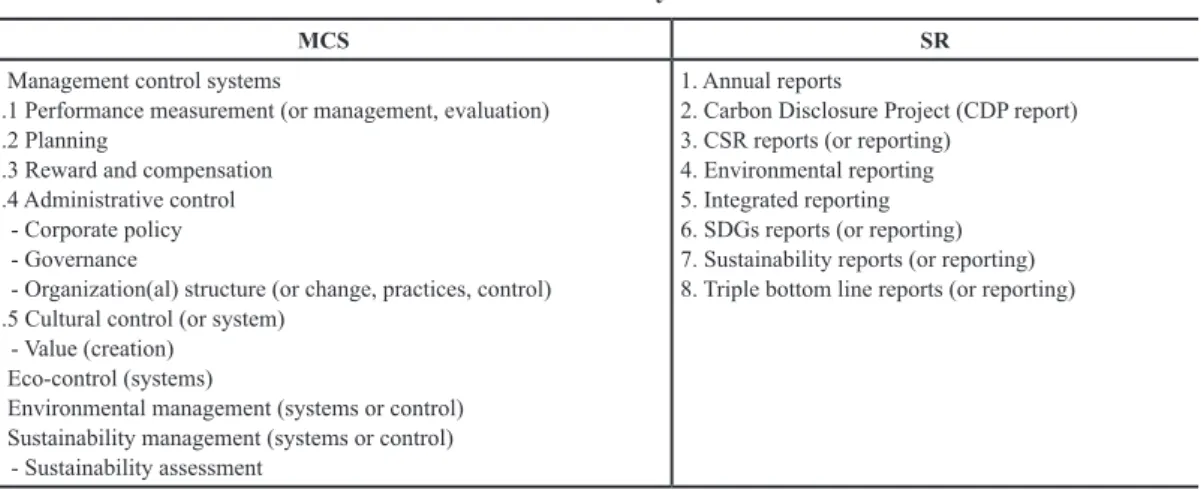
(3) The Link between Management Control Systems and Sustainability Reporting(Jin Cao, Huixiang Zeng) (29). 29. Definition of keywords Limitation of databases Step 1. Material Collection. Step 2. Descriptive Review. Step 3. Category Selection. Definition of clear boundaries Quick content check Identification of relevant articles Selection of structural dimensions and analytic categories Determination of definitions and coding for each category. Step 4. Material Evaluation. Analysis of the material: Denotation of relevant place of finding Analysis of the material: Editing and extraction place of finding. Revision of structural dimensions and analytic categories. Preparation of results. Figure 1 Literature review process model Sources: Engert et al. (2016) and Mayring (2014). 2.Research process and method This study is based on a literature review whose research method is systematic, explicit, and reproducible; the study aims to identify and evaluate researchersʼ existing works (Fink, 2013, p. 3). A literature review is helpful for refining, formulating, and focusing research questions as well as developing conceptual and theoretical frameworks (Ryan et al., 2007). In addition, Arshed and Danson (2015) claim that the literature review is one of the most important methods in the research field of business and management for identifying and understanding issues, as well as for finding knowledge gaps for future research in this specialized field. To ensure the quality, reliability, and credibility of the literature review, the literature review process model proposed by Mayring (2014) is adopted in this study (see Figure 1). Engert et al. (2016) used the same method to explore the integration of corporate sustainability into strategic management. The process model is composed of four major steps: material collection (step 1); descriptive review (step 2); category selection (step 3); and material evaluation (step 4). Steps 3 and 4 are both part of content analysis (Mayring, 2014), which is an effective method for studying documents and identifying the relevant issues in a specialized research field. 2. 1. Material collection (step 1) The first step of the literature review process model is the collection of the research material relevant to the link between MCS and SR. To ensure that the selected articles simultaneously consider MCS and SR, the keywords from the research fields of MCS and SR are combined and used for the search in titles, keywords, and.
(4) 30. (30). 横浜国際社会科学研究 第 24 巻第 1 号(2019 年 8 月). Table 1 List of keywords MCS 1. Management control systems 1.1 Performance measurement (or management, evaluation) 1.2 Planning 1.3 Reward and compensation 1.4 Administrative control - Corporate policy - Governance - Organization(al) structure (or change, practices, control) 1.5 Cultural control (or system) - Value (creation) 2. Eco-control (systems) 3. Environmental management (systems or control) 4. Sustainability management (systems or control) - Sustainability assessment. SR 1. Annual reports 2. Carbon Disclosure Project (CDP report) 3. CSR reports (or reporting) 4. Environmental reporting 5. Integrated reporting 6. SDGs reports (or reporting) 7. Sustainability reports (or reporting) 8. Triple bottom line reports (or reporting). abstracts of articles. A list of all keywords used is provided in Table 1. This study is similar to that of Guenther et al. (2016), in which the MCSs for corporate sustainability can be divided into five types of controls (i.e., performance measurement, planning, reward and compensation, administrative control, and cultural control), which are implemented in different departments or individuals at different times. In addition, the terms “ecocontrol,” “environmental management system,” and “sustainability management system” are also contained in the keywords, as their meanings are close to the definition of sustainability MCS. As mentioned in the introduction, SR comes in many forms (e.g., environmental reporting, CSR reporting, and IR), all of which are combined with the keywords of MCS and searched for in three major academic databases (Web of science, Elsevier, and Springer) and one free-access database (Google Scholar). After determining the keywords related to MCS and SR, we set three important boundaries to select accurate, reliable, and comparable research material in this field. ⅰ. The selected peer-reviewed journal articles should focus on business management. Conference papers and books are excluded in this study. ⅱ. The articles included in this study should be recent, since early works lack timeliness and cannot be used as an empirical truth (Roman et al., 1999; Van Beurden and Gössling, 2008). Thus, we focus on journal articles published after 2006, the year when the Global Reporting Initiative (GRI) launched the third version of its global guideline for comprehensive SR, which increasing numbers of companies have adopted for their sustainable development (GRI, Homepage). ⅲ. Solely journal articles that make a clear contribution to research on the link between MCS and SR are selected. When searching in databases, we briefly check the titles, keywords, and abstracts of the retrieved articles and identify those that are relevant to this studyʼs topic. 2. 2. Descriptive review (step 2) Finally, 41 journal articles that examine the link between MCS and SR are selected. We record the author names, journal name, publication year, research method, and major findings/contributions of those articles..
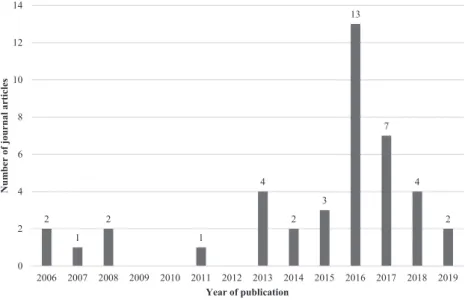
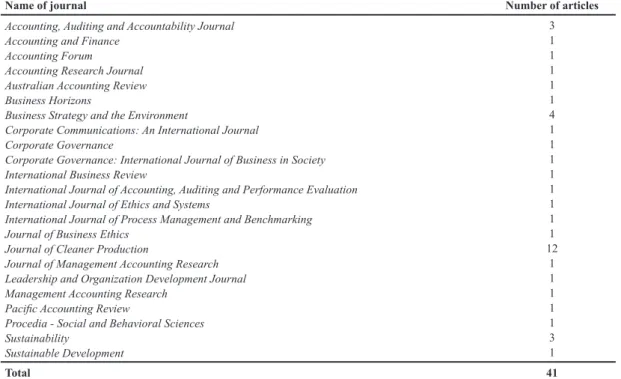
(5) The Link between Management Control Systems and Sustainability Reporting(Jin Cao, Huixiang Zeng) (31). 14. 31. 13. Number of journal articles. 12 10 8. 7. 6 4. 4 2 0. 4 3. 2. 2. 2. 1. 2006. 2007. 2. 1. 2008. 2009. 2010. 2011 2012 2013 2014 Year of publication. 2015. 2016. 2017. 2018. 2019. Figure 2 The distribution of the analyzed journal articles per year (2006‒2019). Summaries are provided in Figure 2, Table 2, and Appendix A. Figure 2 shows that the number of relevant articles increases after 2013 (n=35), and especially in 2016, when 13 journal articles were published. One reason for the increasing interest in the relationship between MCS and SR in this period is that IR, GRI-G4, and other reporting standards for sustainability were developed and widely used in the companies during these years (KPMG, 2013, 2017). In addition, the “SDGs and Paris Agreement” of by the UN have attracted extensive global attention and affected the strategies and long-term goals of companies (UN, 2015, 2016). Meanwhile, as Table 2 shows, there are more articles published in the Journal of Cleaner Production (n=12) than any other journal, because it featured a special volume on “the integration of corporate sustainability assessment, management accounting, control, and reporting” in 2016 (Vol. 136), which included 20 articles, of which we select 8 articles that are most relevant to this studyʼs topic of analysis. Appendix A presents the different methods that researchers have used to examine the links between MCS and SR. The interview study (n=10) and quantitative analysis (n=10) are most used in this specialized field, because both can provide the relatively realistic and reliable data collected from discussions with employees or sustainability reports. 2. 3. Category selection and material evaluation (steps 3 and 4) As mentioned above, category selection and material evaluation are two parts of the content analysis, which is an appropriate method for analyzing the material arising from any type of communication (Engert et al., 2016; Mayring, 2014). Establishing a suitable coding scheme is the most important step in content analysis. To ensure that the codes are closely related to the topic and questions of this study, we annotate and record the important notes within selected articles. After the coding scheme is developed, we re-evaluate this material and.
(6) 32. (32). 横浜国際社会科学研究 第 24 巻第 1 号(2019 年 8 月). Table 2 Journal names of reviewed articles Name of journal. Number of articles. Accounting, Auditing and Accountability Journal Accounting and Finance Accounting Forum Accounting Research Journal Australian Accounting Review Business Horizons Business Strategy and the Environment Corporate Communications: An International Journal Corporate Governance Corporate Governance: International Journal of Business in Society International Business Review International Journal of Accounting, Auditing and Performance Evaluation International Journal of Ethics and Systems International Journal of Process Management and Benchmarking Journal of Business Ethics Journal of Cleaner Production Journal of Management Accounting Research Leadership and Organization Development Journal Management Accounting Research Pacific Accounting Review Procedia - Social and Behavioral Sciences Sustainability Sustainable Development. 3 1 1 1 1 1 4 1 1 1 1 1 1 1 1 12 1 1 1 1 1 3 1. Total. 41. summarize the relevant issues influencing the link between MCS and SR. Appendix B presents an overview of the reviewed articles by issue identified. It must be highlighted that the intent of the literature review is not only to summarize the results and contributions of the existing journal articles but also to explore the links between MCS and SR and to provide a comprehensive framework that presents an overview of the relevant issues. 3. Results Based on the outcome of the qualitative content analysis, we develop a framework (see Figure 3) for the identified issues in exploring the links between MCS and SR, which is the basis for analyzing the three research questions presented in Section 1. Four main topics associated with the relationship between MCS and SR are identified: strategic relevance; internal management; external drivers; and support tools. These topics and their factors are categorized and named based on the important content of the texts that we systematically label and classify. Appendix B presents a full list of the authors of the issues identified. It shows that the four issues are not considered separately in most articles. For instance, according to Schaltegger and Wagner (2006), sustainability performance management and SR should be linked in order to ensure the implementation of sustainability strategy that improves company performance while meeting the various needs of internal and external stakeholders. In addition, Schaltegger and Wagner (2006) state that the sustainability balanced scorecard (SBSC) and sustainability accounting serve as useful strategic management tools for fostering this link. Therefore, in practice, the four topics are correlated and interact with each other. In this section, we follow.
(7) The Link between Management Control Systems and Sustainability Reporting(Jin Cao, Huixiang Zeng) (33). Internal Management. 33. External Drivers. - Ability and awareness - Board and executive committee - Decision-making - Integrated performance indicators - Opportunities and risk management - Profitability - Teamwork/Cross-functional communication. - Accountability and transparency - Brand and reputation - Investment and investors/creditors - Legal compliance - Market - Stakeholder relationship/engagement. Strategic Relevance. Support Tools - Guidelines (e.g., GRI)/standards - Information and communication systems/technologies - ISO standards - Sustainability accounting systems - Sustainability balanced scorecard. Figure 3 Identified issues from exploring the link between MCS and SR. this framework, introduce different insights from these reviewed articles, and finally, clarify and compare the links between MCS and SR. 3. 1. Strategic relevance Both MCS and SR are important elements for implementing sustainability strategy, as outlined in the introduction. Some researchers indicate that company can achieve competitive advantage or strategic differentiation by simultaneously treating MCS and SR with caution (Adams and Frost, 2008; Gallego-Alvarez, 2017; Higgins and Coffey, 2016; Lueg et al., 2016; Nigri and Del Baldo, 2018). From an “inside-out perspective,” the link between performance management and reporting can be characterized by strategic considerations, that is, analysis of the issues that are relevant for success with the company strategy and what should be reported to stakeholders. Meanwhile, based on the “outside-in perspective,” a company can adjust its strategies and define measurement and management activities by feedback from communication with different stakeholders (Maas et al., 2016b; Schaltegger and Wagner, 2006). Adams (2017) argues that the link between corporate governance and SR plays an important role in creating value and implementing strategy through interviews with board chairs and non-executive directors of large companies. According to Egan (2019), a companyʼs SR is used to support the managementʼs sense-making driven by deliberate strategies and understanding the business. On the contrary, many articles state that SBSC, sustainability accounting and a suitable guideline can facilitate the effectively linking of MCS with SR as a useful support tool for a company to provide financial and non-financial information related to sustainability strategy (De Villiers et al., 2016; Kerr et al., 2015; Lueg et al., 2016; Pérez-López et al., 2015; Schaltegger and Wagner, 2006; Speziale and Klovienė, 2014; Vanleer et al., 2016)..
(8) 34. (34). 横浜国際社会科学研究 第 24 巻第 1 号(2019 年 8 月). 3. 2. Internal management Several number of studies show that the link between MCS and SR plays a significant role in company internal management and business practice. Based on content analysis, this study identifies seven factors from the perspective of internal management: ability and awareness; board and executive committee; decisionmaking; integrated performance indicators; opportunities and risk management; profitability; and teamwork/ cross-functional communication. 3. 2. 1. Ability and awareness The ability and awareness of employees and managers is one of the critical elements for company sustainability management and reporting, because they play an active role in creating value (De Villiers et al., 2016; Kent and Zunker, 2017; Lueg et al., 2016). The employee individual performance system is aligned to sustainability guidelines at some companies that aim to enhance employeesʼ social responsibility and motivate them to deal with sustainability issues (De Villiers et al., 2016; Maas et al., 2016b; Morioka and Carvalho, 2016a; Sisaye, 2011). However, according to Rudyanto and Veronica Siregar (2018), employeesʼ pressure negatively affects the quality of sustainability reporting and thus, managers should take care of their management methods and attitudes. 3. 2. 2. Board and executive committee Many authors indicate that smoothly importing MCS and SR into company sustainability management depends on support from the board and executive committee, whose members determine the company vision and strategic objectives and oversee business activities (Adams, 2017; Adams and Frost, 2008; De Villiers et al., 2016; Kuzey and Uyar, 2017). Today, more and more executives of sustainability-oriented companies actively participate in business management and sustainability report preparation (Higgins and Coffey, 2016), because their rewards and bonuses are related to sustainability performance (Bouten and Hoozée, 2013). Furthermore, based on the results of the quantitative analysis, some studies shows that a significant positive correlation is found between board characteristics (e.g., proportion of independent directors and female directors) and the quality of sustainability disclosure (Mahmood and Orazalin, 2017; Rathnayaka Mudiyanselage, 2018; Rudyanto and Veronica Siregar, 2018). 3. 2. 3. Decision-making Speziale and Klovienė (2014, p. 635) claim that performance measurement systems and CSR reporting “have evolved separately but with relevant similarities, especially in terms of orientation to the strategic level in order to better support managers in decision-making activities and contribute to value creation.” This means that the link between MCS and SR can support the integration of sustainability into companiesʼ decisionmaking processes (Battaglia et al., 2016; Maas et al., 2016b). It also shows that the decision-making process integrated with sustainability depends on key internal and external information of a company (Herremans and Nazari, 2016). Hence, high-quality decision-making and improvement require excellent information collection and communication systems (Seele, 2016; Vanleer et al., 2016). In addition, SR has become widely used, because it can provide a companyʼs financial/non-financial information and give stakeholders feedback for decision-making (Adams and Frost, 2008; Biswas and OʼGrady, 2016; Ramos et al., 2013). 3. 2. 4. Integrated performance indicators From a sustainability perspective, a set of integrated performance indicators should be defined, applied, and embedded in sustainability strategic information systems. “Integrated” means that the internal management.
(9) The Link between Management Control Systems and Sustainability Reporting(Jin Cao, Huixiang Zeng) (35). 35. indicators and external reporting indicators can be part of each other (Perrini and Tencati, 2006; Vanleer et al., 2016), and can be explained by one serving “as input for the other” (Morioka and Carvalho, 2016b, p. 139). Developing integrated performance indicators is not only helpful for controlling costs, reducing emissions, and improving resource use efficiency but also for fulfilling the requirements of external stakeholders, such as government (Bouten and Hoozée, 2013). 3. 2. 5. Opportunities and risk management One of the primary focuses of company sustainability management is the measurement and management of risks and opportunities that are linked to sustainability strategy. Adams (2017) argues that both governance and SR can influence the extent of environmental, social, and governance risks and opportunities. According to Blanco et al. (2017), CDP disclosure plays a role in identifying these risks and opportunities in scopes 1, 2, and 3 in order to support companies to reduce emissions and seek green supply chain partners. In addition, integrating sustainability into MCS and SR can reduce tax risk, reputational risk, and other risks (GallegoAlvarez et al., 2017; Pineiro-Chousa et al., 2017; Shad et al., 2019). 3. 2. 6. Profitability Some authors find that profitability positively affects the quality of SR based on the results of quantitative analysis (Rathnayaka Mudiyanselage, 2018; Rudyanto and Veronica Siregar, 2018). 3. 2. 7. Teamwork/cross-functional communication Stubbs and Higgins (2014) indicate that cross-functional teams are a key mechanism for implementing organizational change and SR. Hence, management should take time to engage and educate cross-functional team members when a new standard or regulation is adopted (Lozano et al., 2016; Stubbs and Higgins, 2014). In fact, today, a great number of companies have established new departments (e.g., CSR department, CSV department, and environmental department) to facilitate sustainability information exchange and communication (Lueg et al., 2016). 3. 3. External drivers External drivers are issues that discuss these links between MCS and SR from an external view of the company for sustainability management. It consists of six factors: accountability and transparency; brand and reputation; investment and investors/creditors; legal compliance; market; and stakeholder relationship/ engagement. 3. 3. 1. Accountability and transparency Increasing accountability and transparency is one of the major objectives for companies’ disclosure of sustainability information to external stakeholders (Blanco et al., 2017; Ramos et al., 2013). To achieve transparency, high-quality reporting is required; it should address good outside-in communication in sustainability issues (Herremans and Nazari, 2016; Maas et al., 2016b). Meanwhile, Lueg et al. (2016) argue that CSR practice in internal management can improve the structure and transparency of reports. In addition, some companies have developed real-time transparency (also called 24/7/365 transparency) by digital technology, which aims to provide reliable information for stakeholders continuously (Seele, 2016). 3. 3. 2. Brand and reputation Today, more and more companies enhance brand and protect reputation by positively reporting their sustainability strategy and performance (Gallego-Alvarez et al., 2017; Mahmood and Orazalin, 2017; Pineiro-.
(10) 36. (36). 横浜国際社会科学研究 第 24 巻第 1 号(2019 年 8 月). Chousa et al., 2017). Based on the view of Lozano et al. (2016), becoming a social leader or improving a companyʼs reputation ranking is the motivation for integrating SR into sustainability performance management. 3. 3. 3. Investment and investors/creditors Many articles indicate that a sustainability-oriented company can attract more responsible investors owing to changes in investment behavior and attitudes (Bachoo et al., 2013; Blanco et al., 2017; De Villiers et al., 2016; Kuzey and Uyar, 2017). Furthermore, the outcomes of company sustainability performance management and reporting influence the judgement of creditors (e.g., bankers) (Blanco et al., 2017). 3. 3. 4. Legal compliance Legal compliance is another important reason for a company to integrate sustainability into business management and reporting (García-Sánchez et al., 2013; Maas et al., 2016b; Sisaye, 2011). Gallego-Alvarez et al. (2017) show that different institutional constraints lead to different corporate governance and reporting systems. 3. 3. 5. Market Bachoo et al. (2013) claim that the market rewards companies that provide meaningful sustainability disclosure. One manifestation is the increase of market value and share (Kuzey and Uyar, 2017; Loh et al., 2017). 3. 3. 6. Stakeholder relationship/engagement As Appendix B shows, stakeholder relationship/engagement is the most frequently mentioned issue related to company sustainability management and reporting. Building a good relationship with external stakeholders is especially important for todayʼs companies to implement strategies successfully (GallegoAlvarez et al., 2017; Nigri and Del Baldo, 2018; Perrini and Tencati, 2006; Ramos et al., 2013). Based on the “outside-in” approach, which includes stakeholder dialogue and involvement, Schaltegger and Wagner (2006) state that performance management system is driven by reporting requirements. According to Maas et al. (2016b), sustainability MCS can be linked to SR, as it collects and uses the information for reporting purpose to control performance measures, which are reported externally and scrutinized by external stakeholders. Therefore, when a company has extensive relations with internal and external stakeholders, the benefits are not unidirectional (Kerr et al. 2015). However, some authors stress that promoting stakeholder engagement can help companies to make better strategic decisions and meet the requirements of different stakeholders (De Villiers et al., 2016; Garcia et al., 2016; Morioka and Carvalho, 2016b). 3. 4. Support tools Figure 3 presents five tools that can support linking MCS and SR. They are: guidelines (e.g. GRI)/ standards; information and communication systems/technologies; International Organization for Standardization (ISO) standards; sustainability accounting systems; and SBSC. 3. 4. 1. Guidelines (e.g., GRI) /standards Nowadays, various SR guidelines or standards (e.g., GRI-G4, IR framework, and environmental reporting guideline) have been developed and are widely adopted worldwide, as they not only can identify the most critical issues for a company, as well as what it should disclose to external stakeholders, but also can promote the integration of sustainability issues into decision-making and business practice in order to improve the companyʼs sustainability performance. Many studies show that guidelines and standards have.
(11) The Link between Management Control Systems and Sustainability Reporting(Jin Cao, Huixiang Zeng) (37). 37. contributed toward the standardization of SR and the determination of performance indicators (e.g., Maas et al., 2016b; Sisaye, 2011), and that companies have benefited from aligning their performance measurement and management with these guidelines in some cases (e.g., Lueg et al., 2016; Pérez-López et al., 2015). Hence, choosing a good guideline or standard that can cover the various dimensions of sustainability performance is the starting point for a companyʼs sustainability practice (Ramos et al., 2013; Stubbs and Higgins, 2014). 3. 4. 2. Information and communication systems/technologies With the increasing need for information of company sustainability management, a new data collection and processing system is required (Adams and Frost, 2008; Bouten and Hoozée, 2013). At the same time, advanced information technologies or digital technologies make it possible to deal with massive amounts of data in sustainability management, such as enterprise resource planning systems (Perrini and Tencati, 2006; Vanleer et al., 2016), digital-based standard extensible business reporting language (XBRL) (Maas et al., 2016b; Seele, 2016), Schneider (a heat reclaim system to better manage energy consumption), and SoFi (an internet-based software tool for providing timely carbon emissions measures) (Biswas and OʼGrady, 2016). 3. 4. 3. ISO standards Some authors indicate that the practice of SR is strongly affected by the environmental management and evaluation system defined according to ISO 14001 and 14031 (Nazari et al., 2015; Ramos et al., 2013). Many companies have adopted ISO 9000, ISO 26000, and other ISO standards in their sustainability reporting (Sisaye, 2011). 3. 4. 4. Sustainability accounting systems To support company sustainability management and reporting, a new accounting system has been proposed (i.e., sustainability accounting), which can provide financial and non-financial information for strategic management and reporting purposes (Egan, 2019; Perrini and Tencati, 2006). Because of this function, sustainability accounting serves as an important link between MCS and SR (Schaltegger and Wagner, 2006). Bouten and Hoozée (2013) state that sustainability accounting information confirms that SR can be a driver of the organizational change process. In addition, sustainability management accounting, as highlighted and defined by Maas et al. (2016b, p. 241), means “the process of collection, analysis and communication of sustainability-related information.” Representative management accounting techniques in sustainability management include environmental cost accounting, life-cycle costing, and material flow cost accounting (Bennett et al., 2003; Maas et al., 2016b). In recent years, some new management accounting techniques in particular circumstances have been developed, such as water management accounting (Christ and Burritt, 2017), carbon management accounting (Gibassier and Schaltegger, 2015), and resource value flow analysis (Li et al., 2019). Meanwhile, the ability and awareness of accountants are key to ensuring that the sustainability accounting system can be linked to MCS and SR (Adams, 2017; Speziale and Klovienė, 2014). 3. 4. 5. Sustainability balanced scorecard The balanced scorecard, developed by Kaplan and Norton (1992, 1996) as a strategic performance management tool, can provide a strategy map and a mixture of financial and non-financial measures to help companies to achieve their vision and objectives. The SBSC, which is derived from the balanced scorecard, simultaneously integrates economic, environmental, and social aspects into performance measurement and management in order to support the successful implementation of sustainability strategy (Figge et al., 2002; Hansen and Schaltegger, 2016; Nigri and Del Baldo, 2018). Some studies indicate that the SBSC can present.
(12) 38. (38). 横浜国際社会科学研究 第 24 巻第 1 号(2019 年 8 月). a comprehensive set of indicators that cover both internal strategic goals and external reporting requirements (De Villiers et al., 2016; Pérez-López et al., 2015). Other authors state that the balanced scorecard for company sustainability can be an enabling framework for integrating SR into MCS (Kerr et al., 2015). In addition, we find that balanced scorecards or SBSCs are presented in some companiesʼ external reports (e.g., Akzo Nobel, 2018; Generali Group, 2018; Westpac, 2018) to illustrate their value-creating and performance management processes. 4. Discussion and conclusion This study focuses on exploring the link between MCS and SR through a literature review. Based on the result of a content analysis of 41 related articles, we developed a framework (see Figure 3) of the emerged issues in exploring the links between MCS and SR, and then followed this framework and examined these issues from different perspectives. The main topics contain strategic relevance, internal management, external drivers and support tools. We answer the three questions presented in Section 1 as follows. Q1: Why should a company link MCS and SR? First, MCS and SR are both the key elements for companies to implement a sustainability strategy and achieve competitive advantage. As todayʼs company strategy not only focuses on economic benefits but also pays more attention to environmental and social issues than before, management requires a great volume of monetary and non-monetary information to support decision-making and performance measurement. The indicators arising from the integration of MCS and SR can help a company to monitor and manage its internal performance while simultaneously improving the transparency and accountability of the company. Second, from the perspective of stakeholder management and engagement, linking MCS and SR is important for building a good relationship between internal and external stakeholders. Finally, simultaneously treating MCS and SR with caution ensures the legal compliance of a company, reduces risk, and enhances its reputation in a market. Q2: What is the relationship between MCS and SR? The link between MCS and SR is described by previous studies as “dynamic interactive” and “tightly coupled” (Biswas and OʼGrady, 2016). “Dynamic interactive” means that MCS and SR affect each other most of the time, as some authors state that MCS is driven by SR requirements but impacts on the content and figures of reports, based on the two perspectives of “inside-out” and “outside-in.” “Tightly coupled” means that the indicators in MCS and SR can form part of each other, and can be explained by one serving as the input for another. Q3: How can MCS and SR be linked or their link be strengthened? The result of the literature review shows, on the one hand, that indispensable prerequisites for linking MCS and SR are as follows: developing an organizational structure suited to sustainability management, improving the ability and awareness of employees and managers, strengthening cross-functional communication and sharing sustainability information in real time. On the other hand, the following factors play a key role in promoting the link: ensuring adequate communication with stakeholders, meeting their vinous requirements, and then adjusting performance measures and the next plan according to their feedback. Furthermore, we find that some management tools can effectively support companies to strengthen the link.
(13) The Link between Management Control Systems and Sustainability Reporting(Jin Cao, Huixiang Zeng) (39). 39. between MCS and SR, such as a suitable guideline or standard, information and digital technologies, ISO standards, sustainability accounting and SBSC. A limitation of this study is the limited number of reviewed articles, because we focus only on Englishspeaking journal articles published after 2006. Therefore, we plan to undertake a more complete review of the literature on the link between MCS and SR in the future. In addition, we plan to conduct empirical research, including an interview and questionnaire survey of advanced sustainable companies, in order to understand the actual situation of applying MCS and SR in todayʼs companies. Furthermore, based on the results of these surveys, we aim to develop new management tools or accounting systems that can support a companyʼs MCSSR links and help them to implement a sustainability strategy..
(14) 40. (40). 横浜国際社会科学研究 第 24 巻第 1 号(2019 年 8 月). Appendix A Timeline of reviewed articles No.. Study (year). Research method. Results. 1. Perrini and Tencati (2006). Conceptual. •This study presents the sustainability evaluation and reporting system, an integrated method based on the stakeholder view of the company, in order to aggregate different management tools (e.g., SR, the integrated information system, and KPI for sustainability), which maps and monitors the entire set of a companyʼs stakeholder relationships.. 2. Schaltegger and Wagner (2006). Case study. •This study proposes an integrated framework that describes how to link SBSC, sustainability accounting and reporting for sustainability performance measurement and management, based on the case of Hamburg airport.. 3. Adams and McNicholas (2007). Action research. •The authors undertake action research involving the observation of corporate meetings and identify a number of impediments to the development of an SR framework and its integration into planning and decision-making, as well as forces for change.. 4. Adams and Frost (2008). Interview study. •From the results of interviews with four companies, the authors find that SR is an important factor influencing the decision-making process and has the following benefits for their integration: reputational benefits; impact of reputation on share price; increase in staff pride in and loyalty to the company; competitive advantage in the (international) market place; improved internal data collection and reporting systems; and, improved social and environmental performance.. 5. Sisaye (2011). Conceptual. •This study notes that sustainability development plays an important role in financial accounting reports. Triple bottom line reporting has become a competitive advantage for many business organizations for sustained profitability and growth.. 6. Bachoo et al. (2013). Quantitative. •This study explores the relationship between firm value and the SR of Australian corporations based on a quantitative analysis. The results show a significant positive association between expected future performance and the quality of SR.. 7. Bouten and Hoozée (2013). Interview study. •Based on the results of semi-structured interviews with the managers of four Belgian companies, the authors find that the interplay between environmental reporting and environmental management accounting practices has the potential to foster or stifle organizational greening.. 8. García-Sánchez et al. (2013). Quantitative. •This study examines the impact of a cultural system that presents the values of local stakeholders in relation to IR.. 9. Ramos et al. (2013). Questionnaire survey. •The main aim of this study is to assess how sustainability measurement and reporting practices have been adopted in organizations that operate in a Southern European country, Portugal, and to analyze the association between the companiesʼ reporting profile and the environmental management systems and environmental performance evaluation practices.. 10. Speziale and Klovienė (2014). Literature review. •This study shows the relationship between performance measurement system and CSR and their roles in supporting the decision-making process at different stages: planning, control, and reporting.. 11. Stubbs and Higgins (2014). Interview study. •Based on the results of semi-structured interviews with managers across 15 organizations, this study explains specific mechanisms employed by the organizations to facilitate integrated reporting.. 12. Kerr et al. (2015). Interview study. •Based on the results of semi-structured interviews with employees across three organizations, this study find that the integration of SR into MCS can help a company to achieve its sustainability objectives, intensify interactions with a broader group of stakeholders, and improve communication of sustainability measures internally. Furthermore, the balanced scorecard is an enabling framework for integrating SR into the management control system..
(15) The Link between Management Control Systems and Sustainability Reporting(Jin Cao, Huixiang Zeng) (41). 41. No.. Study (year). Research method. Results. 13. Nazari et al. (2015). Quantitative. •This study proposes a model to examine the impact of external motivators and internal facilitators on SR and find that both have a significant association with enhanced SR.. 14. Pérez-López et al. (2015). Multi-case study. •This study explores the importance of external and internal motives for SR and develops a framework based on a multi-case study of four large Spanish companies making use of the GRI.. 15. Battaglia et al. (2016). Action research. •The authors undertake an action research on a large Italian food company and presents sustainability control systems (integrated with the sustainability report, the sustainability annual plan and the participatory social plan) to support the companyʼs decision processes. 16. Biswas and OʼGrady (2016). Interview study. •Based on the results of semi-structured interviews with the employees of a company in New Zealand, this study shows the relationship between external environmental reporting and internal strategies, processes and activities, which embed sustainability into organizational practices.. 17. De Villiers et al. (2016). Case study. •Based on case study evidence from a large industrial firm, the authors develop a new conceptual model that integrates SR, stakeholder management with management control systems (specifically, the balanced scorecard) in order to support companies efforts to become more sustainable.. 18. Garcia et al. (2016). Illustrative case. •This study proposes the integrated environmental evaluation of sustainability in business model, which supports decisions and the integration of corporate sustainability performance measurement and reporting activities with traditional MCS, and examines it in a Brazilian private electric power company.. 19. Herremans and Nazari (2016). Interview study. •Based on the results of interviews with employees from 11 different Canadian companies in the oil and gas industry, the authors find that managerial motivation and attitudes influence SR control systems.. 20. Higgins and Coffey (2016). Discourse analysis. •This study, through a discourse analysis of three Australian companies, explains the structure of SR and shows its contribution to a companyʼs sustainability and strategic activities.. 21. Lozano et al. (2016). Questionnaire survey. •This study aims to elucidate the inter-linkages between SR and Organizational Change Management for Sustainability based on an analysis of quantitative data from a survey.. 22. Lueg et al. (2016). Case study. •Based on a case study at the Danish carpet manufacturer, the authors stated that using CSR practices for IR is a good extension of internal MCSs.. 23. Maas et al. (2016b). Literature review. •This study proposes a comprehensive integrated framework linking sustainability assessment, management accounting, management control, and reporting to help researchers and practitioners to understand better how the four concepts are related.. 24. Morioka and Carvalho (2016a). Multi-case study. •Based on the results of cross-sectoral case studies at five Brazilian firms, this study shows four sustainability performance measurement systems that encompass sustainability indicators: (a) periodic performance measurement system of a specific area/department; (b) individual performance assessment; (c) SR; and (d) project assessment.. 25. Morioka and Carvalho (2016b). Literature review. •Based on a systematic literature review, the authors propose a conceptual framework for integrating sustainability performance into business.. 26. Seele (2016). Literature review. •Based on a systematic literature review, this study proposes the concept of “digitally unified reporting,” which uses an XBRL-based approach to combine digital data management of sustainability performance measurement with digitally standardized SR..
(16) 42. (42). 横浜国際社会科学研究 第 24 巻第 1 号(2019 年 8 月). No.. Study (year). Research method. Results. 27. Vanleer et al. (2016). Conceptual. •This study proposes a sustainability performance benchmark reporting framework in order to help companies overcome obstacles to sustainability.. 28. Adams (2017). Interview study. •This study examines the inter-relationships among environmental, social, and governance risk, corporate strategy, non-financial corporate reporting, and board oversight through interviews with board chairs and nonexecutive directors of large companies.. 29. Blanco et al. (2017). Interview study. •Based on the results of interviews with 38 firms that disclose carbon information, the authors find that firms can achieve unexpected outcomes from measuring and disclosing greenhouse gas emissions.. 30. Gallego- Alvarez et al. (2017). Quantitative. •The authors examine whether different corporate environmental reporting policies are driven by corporate governance systems based on data collected from 3931 companies from 59 countries. They find that companies modify their environmental strategies to make themselves more compatible with the characteristics of the social and institutional environment.. 31. Kent and Zunker (2017). Quantitative. •Based on analysis of data from employee-related disclosure in annual reports, this study identifies what drives a company to report employeerelated information voluntarily.. 32. Kuzey and Uyar (2017). Quantitative. •This study proves that SR is value relevant based on data provided by 297 Turkish publicly traded companies.. 33. Loh et al. (2017). Quantitative. •This study shows that SR is positively related to firmsʼ market value through a quantitative analysis of Singapore-listed companies.. 34. Mahmood and Orazalin (2017). Quantitative. •This study finds that board characteristics (e.g., board size, presence of board committees, and presence of women on boards) have a positive impact on SR through a data analysis of oil, gas, and mining companies in Kazakhstan.. 35. Pineiro-Chousa et al. (2017). Conceptual. •This study proposes a formal model for hedging capabilities of environmental management and reporting over reputational risk.. 36. Nigri and Del Baldo (2018). Multi-case study. •Based on an exploratory case-based analysis, this study explores the integration of benefit impact assessment indicators into benefit corporation measurement, management, and reporting systems.. 37. Onkila et al. (2018). Interview study. •Base on the results of in-depth interviews with 52 employees of two Finnish companies, the authors find that different sense-making frames have a diverse influence on employeesʼ perspectives on the role of SR in organizational identity change.. 38. Rathnayaka Mudiyanselage (2018). Quantitative. •The authors aim to explore the relationship between the board of directors and corporate sustainability disclosure from a data analysis of 100 listed Sri Lankan companies. They find that firms following a sustainability disclosure policy have larger boards, a higher proportion of independent directors, and more female directors.. 39. Rudyanto and Veronica Siregar (2018). Quantitative. •This study shows that both corporate governance and stakeholder pressure have a significant effect on the quality of sustainability reporting through an analysis of data collected from 123 sustainability reports of listed firms on the Indonesia Stock Exchange.. 40. Egan (2019). Interview study. •Based on the results of semi-structured interviews with managers from a large Australian family-run manufacturing company, the study finds that sustainability reports have become a critical support for on-going sensemaking.. 41. Shad et al. (2019). Conceptual. •This study presents a framework that examines the moderating effect of SR practices on the relationship between enterprise risk management implementation and business performance..
(17) The Link between Management Control Systems and Sustainability Reporting(Jin Cao, Huixiang Zeng) (43). 43. Appendix B Overview of identified authors by issue identified Topics/Categories. Number of articles. Strategic relevance. 17. Adams (2017), Adams and Frost (2008), Biswas and OʼGrady (2016), De Villiers et al. (2016), Garcia et al. (2016), Gallego-Alvarez (2017), Higgins and Coffey (2016), Kent and Zunker (2017), Kerr et al. (2015), Lueg et al. (2016), Maas et al. (2016b), Morioka and de Carvalho (2016a), Nigri and Del Baldo (2018), Pérez-López et al. (2015), Schaltegger and Wagner (2006), Speziale and Klovienė (2014), Stubbs and Higgins (2014). Ability and awareness. 11. Adams and McNicholas (2007), De Villiers et al. (2016), Herremans and Nazari (2016), Kent and Zunker (2017), Lueg et al. (2016), Maas et al. (2016b), Morioka and de Carvalho (2016a, 2016b), Onkila et al. (2018), Rudyanto and Veronica Siregar (2018), Sisaye (2011). Board and executive committee. 13. Adams (2017), Adams and Frost (2008), Bouten and Hoozée(2013), De Villiers et al. (2016), Egan (2019), Herremans and Nazari (2016), Higgins and Coffey (2016), Kuzey and Uyar (2017), Lozano et al. (2016), Mahmood and Orazalin (2017), Nazari et al. (2015), Rathnayaka Mudiyanselage (2018), Rudyanto and Veronica Siregar (2018). Decision-making. 18. Adams (2017), Adams and McNicholas (2007), Adams and Frost (2008), Battaglia et al. (2016), Biswas and OʼGrady (2016), Egan (2019), GarcíaSánchez et al. (2013), Herremans and Nazari (2016), Lozano et al. (2016), Maas et al. (2016b), Morioka and de Carvalho (2016b), Nazari et al. (2015), Nigri and Del Baldo (2018), Perrini and Tencati (2006), Ramos et al. (2013), Seele (2016), Speziale and Klovienė (2014), Vanleer et al. (2016). Integrated performance indicators. 7. Adams and Frost (2008), Bouten and Hoozée(2013), Perrini and Tencati (2006), Morioka and de Carvalho (2016a, 2016b), Schaltegger and Wagner (2006), Vanleer et al. (2016). Opportunities and risk management. 6. Adams (2017), Bachoo et al. (2013), Blanco et al. (2017), Gallego-Alvarez (2017), Pineiro-Chousa et al.(2017), Shad et al.(2019). Profitability. 2. Rathnayaka Mudiyanselage (2018), Rudyanto and Veronica Siregar (2018). Teamwork/cross-functional communication. 4. Egan (2019), Lozano et al. (2016), Lueg et al. (2016), Stubbs and Higgins (2014). Accountability and transparency. 13. Adams and Frost (2008), Biswas and OʼGrady (2016), Blanco et al. (2017), García-Sánchez et al. (2013), Lueg et al. (2016), Maas et al. (2016b), Mahmood and Orazalin (2017), Nazari et al. (2015), Pineiro-Chousa et al. (2017), Nigri and Del Baldo (2018), Pérez-López et al. (2015), Ramos et al. (2013), Seele (2016). Brand and reputation. 8. Bouten and Hoozée (2013), De Villiers et al. (2016), Gallego-Alvarez (2017), Kuzey and Uyar (2017), Lozano et al. (2016), Maas et al. (2016b), Mahmood and Orazalin (2017), Pineiro-Chousa et al. (2017). Investment and investors/creditors. 7. Bachoo et al. (2013), Blanco et al. (2017), De Villiers et al. (2016), GallegoAlvarez (2017), Kuzey and Uyar (2017), Mahmood and Orazalin (2017), Seele (2016). Legal compliance. 7. Adams (2017), Adams and Frost (2008), Gallego-Alvarez (2017), GarcíaSánchez et al. (2013), Maas et al. (2016b), Seele (2016), Sisaye (2011). Study (year). Internal management. External Drivers.
(18) 44. (44). 横浜国際社会科学研究 第 24 巻第 1 号(2019 年 8 月). Topics/Categories. Number of articles. Study (year). Market. 4. Bachoo et al. (2013), Loh et al. (2017), Kuzey and Uyar (2017), Vanleer et al. (2016). Stakeholder relationship/engagement. 21. Battaglia et al. (2016), Blanco et al. (2017), De Villiers et al. (2016), Gallego-Alvarez (2017), Garcia et al. (2016), Herremans and Nazari (2016), Higgins and Coffey (2016), Kerr et al. (2015), Lueg et al. (2016), Maas et al. (2016b), Morioka and de Carvalho (2016a, 2016b), Nigri and Del Baldo (2018), Perrini and Tencati (2006), Pérez-López et al. (2015), Rathnayaka Mudiyanselage (2018), Schaltegger and Wagner (2006), Rudyanto and Veronica Siregar (2018), Seele (2016), Sisaye (2011), Vanleer et al. (2016). Guidelines (e.g., GRI)/standards. 12. Gallego-Alvarez (2017), Lueg et al. (2016), Maas et al. (2016b), Nigri and Del Baldo (2018), Perini and Tencati (2006), Pérez-López et al. (2015), Ramos et al. (2013), Schaltegger and Wagner (2006), Sisaye (2011), Stubbs and Higgins (2014), Vanleer et al. (2016), Rathnayaka Mudiyanselage (2018). Information and communication systems/technologies. 8. Adams and Frost (2008), Biswas and OʼGrady (2016), Bouten and Hoozée(2013), Garcia et al. (2016), Maas et al. (2016b), Perrini and Tencati (2006), Seele (2016), Vanleer et al. (2016). ISO standards. 3. Ramos et al. (2013), Sisaye (2011), Nazari et al. (2015). Sustainability accounting systems. 10. Adams (2017), Bouten and Hoozée(2013), Egan (2019), Maas et al. (2016b), Nigri and Del Baldo (2018), Perrini and Tencati (2006), Schaltegger and Wagner (2006), Sisaye (2011), Speziale and Klovienė (2014), Vanleer et al. (2016). Sustainability balanced scorecard. 5. De Villiers et al. (2016), Kerr et al. (2015), Nigri and Del Baldo (2018), Pérez-López et al. (2015), Schaltegger and Wagner (2006). Support tools.
(19) The Link between Management Control Systems and Sustainability Reporting(Jin Cao, Huixiang Zeng) (45). 45. Acknowledgements The authors would like to thank the Otsuka Toshimi Scholarship Foundation, Japan, for the financial support for this research.. References Adams, C. A., Frost, G. R., 2008. Integrating Sustainability Reporting into Management, Accounting Forum, Vol. 32, Issue 4, pp. 288‒302. Adams, C. A., McNicholas, P., 2007. Making a Difference: Sustainability Reporting, Accountability and Organisational Change, Accounting, Auditing and Accountability Journal, Vol. 20, Issue 3, pp. 382‒402. Adams, C. A., 2017. Conceptualizing the Contemporary Corporate Value Creation Process, Accounting, Auditing and Accountability Journal, Vol. 30, Issue 4, pp. 906‒931. Akzo Nobel, 2018. AkzoNobel Report 2018. Albelda Pérez, E., Correa Ruiz, C., Carrasco Fenech, F., 2007. Environmental Management Systems as an Embedding Mechanism: A Research Note, Accounting, Auditing and Accountability Journal, Vol. 20, Issue 3, pp. 403‒422. Albertini, E., 2018. The Contribution of Management Control Systems to Environmental Capabilities, Journal of Business Ethics, https://doi.org/10.1007/s10551-018-3810-9 (in press). Amini, M., Bienstock, C. C., Narcum, J. A., 2018. Status of Corporate Sustainability: A Content Analysis of Fortune 500 Companies, Business Strategy and Environment, Vol. 27, Issue 8, pp. 1‒12. Anthony, R. N., Govindarajan, V., 2007. Management Control Systems, 12th Edition, McGraw-Hill/Irwin. Arjaliès, D. L., Mundy, J., 2013. The Use of Management Control Systems to Manage CSR Strategy: A Levers of Control Perspective, Management Accounting Research, Vol. 24, Issue 4, pp. 284‒300. Arshed, N., Danson, M., 2015. The Literature Review. In OʼGorman, K., MacIntosh, R. (Eds.) Research Methods for Business and Management: A Guide to Writing Your Dissertation, Second edition, Goodfellow Publishers Ltd. Bachoo, K., Tan, R., Wilson, M., 2013. Firm Value and the Quality of Sustainability Reporting in Australia, Australian Accounting Review, Vol. 23, Issue1, pp. 67‒87. Battaglia, M., Passetti, E., Bianchi, L., Frey, M., 2016. Managing for Integration: A Longitudinal Analysis of Management Control for Sustainability, Journal of Cleaner Production, Vol. 136, pp. 213‒225. Baumgartner, R. J., Ebner, D., 2010. Corporate Sustainability Strategies: Sustainability Profiles and Maturity Levels, Sustainable Development, Vol. 18, Issue 2, pp. 76‒89. Bennett, M. D., Rikhardsson, P. M., Schaltegger, S., (Eds.), 2003. Environmental Management Accounting―Purpose and Progress, Springer Science and Business Media. Biswas, S., OʼGrady, W., 2016. Using External Environmental Reporting to Embed Sustainability into Organizational Practices, Accounting Research Journal, Vol. 29, Issue 2, pp. 218‒235. Blanco, C., Caro, F., Corbett, C. J., 2017. An Inside Perspective on Carbon Disclosure, Business Horizons, Vol. 60, pp. 635‒646. Bouten, L., Hoozée, S., 2013. On the Interplay between Environmental Reporting and Management Accounting Change, Management Accounting Research, Vol. 24, Issue 4, pp. 333‒348. Caputo, F., Veltri, S., Venturelli, A., 2017. Sustainability Strategy and Management Control Systems in Family Firms. Evidence from a Case Study, Sustainability, Vol. 9, Issue 6, pp. 63‒80. Christ, K. L., Burritt, R. L., 2017. Water Management Accounting: A framework for Corporate Practice, Journal of Cleaner Production, Vol. 152, pp. 379‒386. Clarkson, M. E., 1995. A Stakeholder Framework for Analyzing and Evaluating Corporate, Social Performance, Academy of Management Review, Vol. 20, No. 1, pp. 92‒117. De Villiers, C., Maroun, W., 2018. The Future of Sustainability Accounting and Integrated Reporting, In De Villiers, C., Maroun, W. (Eds.) Sustainability Accounting and Integrated Reporting, Routledge: Abingdon, UK. De Villiers, C., Rouse, P., Kerr, J., 2016. A New Conceptual Model of Influences Driving Sustainability Based on Case.
(20) 46. (46). 横浜国際社会科学研究 第 24 巻第 1 号(2019 年 8 月). Evidence of the Integration of Corporate Sustainability Management Control and Reporting, Journal of Cleaner Production, Vol. 136, pp. 78‒85. Dierkes, M., 1979. Corporate Social Reporting in Germany: Conceptual Developments and Practical Experience, Accounting, Organizations and Society, Vol. 4, Issue 1/2, pp. 87‒107. Durden, C., 2008. Towards a Socially Responsible Management Control System, Accounting, Auditing and Accountability Journal, Vol. 21, Issue 5, pp. 671‒694. Egan, M., 2019. Sense-Making Resource Efficiency through “Sustainability” Reports, Journal of Business Ethics, https://doi.org/10.1007/s10551-017-3445-2 (in press). Elkington, J., 1998. Partnerships from Cannibals with Forks: The Triple Bottom Line of 21st‒Century Business, Environmental Quality Management, Vol. 8, Issue 1, pp. 31‒51. Engert, S., Baumgartner, R. J., 2016. Corporate Sustainability Strategy-Bridging the Gap between Formulation and Implementation, Journal of Cleaner Production, Vol. 113, pp. 822‒834. Engert, S., Rauter, R., Baumgartner, R. J., 2016. Exploring the Integration of Corporate Sustainability into Strategic Management: A Literature Review, Journal of Cleaner Production, Vol. 112, pp. 2833‒2850. Epstein, M. J., Buhovac, A. R., 2014. Making Sustainability Work: Best Practices in Managing and Measuring Corporate Social, Environmental, and Economic Impacts, Berrett-Koehler Publishers. Epstein, M. J., Roy, M. J., 2001. Sustainability in Action: Identifying and Measuring the Key Performance Drivers, Long Range Planning, Vol. 35, Issue 5, pp. 585‒604. Eweje, G., 2011. A Shift in Corporate Practice? Facilitating Sustainability Strategy in Companies, Corporate Social Responsibility and Environmental Management, Vol. 18, Issue 3, pp. 125‒136. Fasan, M., Mio, C., 2017. Fostering Stakeholder Engagement: The Role of Materiality Disclosure in Integrated Reporting, Business Strategy and the Environment, Vol. 26, Issue 3, pp. 288‒305. Feijoo, B.F., Romero, S., Ruiz, S., 2014. Effect of Stakeholdersʼ Pressure on Transparency of Sustainability Reports within the GRI Framework, Journal of Business Ethics,Vol. 122, Issue 1, pp. 53‒63. Fifka, M. S., 2013. Corporate Responsibility Reporting and its Determinants in Comparative Perspective: A Review of the Empirical Literature and a Meta-analysis, Business Strategy and the Environment, Vol. 22, Issue 1, pp. 1‒35. Figge F., Hahn T., Schaltegger S., Wagner M., 2002. The Sustainability Balanced Scorecard―Linking Sustainability Management to Business Strategy, Business Strategy and the Environment, Vol. 11, Issue 5, pp. 269‒284. Fink, A., 2013. Conducting Research Literature Reviews: From the Internet to Paper, Edition 4, SAGE Publications. Frooman, J., 1999. Stakeholder Influence Strategies, Academy of Management Review, Vol. 24, No. 2, pp. 192‒205. Gallego-Alvarez, I., Ortas, E., Vicente-Villardón, J. L., Álvarez Etxeberria, I., 2017. Institutional Constraints, Stakeholder Pressure and Corporate Environmental Reporting Policies, Business Strategy and the Environment, Vol. 26, Issue 6, pp. 807‒825. Garcia, S., Cintra, Y., Rita de Cássia, S. R., Lima, F. G., 2016. Corporate Sustainability Management: A Proposed Multi-criteria Model to Support Balanced Decision-making, Journal of Cleaner Production, Vol. 136, pp.181‒196. García-Sánchez, I. M., Rodríguez-Ariza, L., Frías-Aceituno, J. V., 2013. The Cultural System and Integrated Reporting, International Business Review, Vol. 22, Issue 5, pp. 828‒838. Generali Group, 2018. Remuneration Report. Gibassier, D., Schaltegger, S., 2015. Carbon Management Accounting and Reporting in Practice: A Case Study on Converging Emergent Approaches, Sustainability Accounting, Management and Policy Journal, Vol. 6, Issue 3, pp. 340‒365. Global Reporting Initiative [GRI], Homepage. GRIʼs history. [WWW Document]. URL. https://www.globalreporting. org/information/about-gri/gri-history/Pages/GRIʼs%20history.aspx (Accessed 11 March 2019). Global Reporting Initiative [GRI], 2016. What is Sustainability Reporting? [WWW Document]. URL. http://database. globalreporting.org/SDG-12-6/about-sustainablility-reporting (Accessed 5 March 2019). Global Reporting Initiative [GRI], 2018. Business Reporting on the SDGs. [WWW Document]. URL. https://www. globalreporting.org/information/SDGs/Pages/Reporting-on-the-SDGs.aspx (Accessed 5 March 2019). Gond, J. P., Grubnic, S., Herzig, C., Moon, J., 2012. Configuring Management Control Systems: Theorizing the Integration of Strategy and Sustainability, Management Accounting Research, Vol. 23, Issue 3, pp. 205‒223..
(21) The Link between Management Control Systems and Sustainability Reporting(Jin Cao, Huixiang Zeng) (47). 47. Gray, R., Kouhy, R., Laver, S., 1995. Corporate Social and Environmental Reporting: A Review of the Literature and a Longitudinal Study of UK Disclosure, Accounting, Auditing and Accountability Journal, Vol. 8, Issue 2, pp. 47‒77. Guenther, E., Endrikat, J., Guenther, T. W., 2016. Environmental Management Control Systems: A Conceptualization and a Review of the Empirical Evidence, Journal of Cleaner Production, Vol. 136, pp. 147‒171. Hansen, E. G., Schaltegger, S., 2016. The Sustainability Balanced Scorecard: A Systematic Review of Architectures, Journal of Business Ethics, Vol. 133, Issue 2, pp. 193‒221. Henri, J. F., Journeault, M., 2010. Eco-control: The Influence of Management Control Systems on Environmental and Economic Performance, Accounting, Organizations and Society, Vol. 35, Issue 1, pp. 63‒80. Herremans, I. M., Nazari, J. A., 2016. Sustainability Reporting Driving Forces and Management Control Systems. Journal of Management Accounting Research, Vol. 28, Issue 2, pp. 103‒124. Herremans, I. M., Nazari, J. A., Mahmoudian, F., 2016. Stakeholder Relationships, Engagement, and Sustainability Reporting, Journal of Business Ethics, Vol. 138, Issue 3, pp. 417‒435. Higgins, C., Coffey, B., 2016. Improving How Sustainability Reports Drive Change: A Critical Discourse Analysis, Journal of Cleaner Production, Vol. 136, pp. 18‒29. Ingham, M., Havard, C., 2017. CSR as Strategic and Organizational Change at “Groupe La Poste”, Journal of Business Ethics, Vol. 146, Issue 3, pp. 563‒589. Intergovernmental Panel on Climate Change [IPCC], 2014. IPCC Fifth Assessment Synthesis Report. Intergovernmental Panel on Climate Change [IPCC], 2018. Global Warming of 1.5 ºC. Jansson, J., Nilsson, J., Modig, F., Vall, G. H., 2017. Commitment to Sustainability in Small and Medium-Sized Enterprises: The Influence of Strategic Orientations and Management Values, Business Strategy and Environment, Vol. 26, Issue 1, pp. 69‒83. Journeault, M., 2016. The Integrated Scorecard in Support of Corporate Sustainability Strategies, Journal of Environmental Management, Vol. 182, pp. 214‒229. Kaplan, R. S., Norton, D. P., 1992. The Balanced Scorecard: Measures that Drive Performance, Harvard Business Review, Jan‒Feb, pp. 71‒79. Kaplan, R. S., Norton, D. P., 1996. Using the Balanced Scorecard as a Strategic Management System, Harvard Business Review, Jan‒Feb, pp. 77‒85. Kent, P., Zunker, T., 2017. A Stakeholder Analysis of Employee Disclosures in Annual Reports, Accounting and Finance, Vol. 57, Issue 2, pp. 533‒563. Kerr, J., Rouse, P., De Villiers, C., 2015. Sustainability Reporting Integrated into Management Control Systems, Pacific Accounting Review, Vol. 27, Issue 2, pp. 189‒207. KPMG, 2013. The KPMG Survey of Corporate Responsibility Reporting 2013. KPMG, 2017. The KPMG Survey of Corporate Responsibility Reporting 2017. Kuzey, C., Uyar, A., 2017. Determinants of Sustainability Reporting and its Impact on Firm Value: Evidence from the Emerging Market of Turkey, Journal of Cleaner Production, Vol. 143, pp. 27‒39. Li, Z., Zeng, H., Xiao, X., Cao, J., Yang, C., Zhang, K., 2019. Resource Value Flow Analysis of Paper-making Enterprises: A Chinese Case Study, Journal of Cleaner Production, Vol. 213, pp. 577‒587. Lloret, A., 2016. Modeling Corporate Sustainability Strategy, Journal of Business Research, Vol. 69, Issue 2, pp. 418‒235. Loh, L., Thomas, T., Wang, Y., 2017. Sustainability Reporting and Firm Value: Evidence from Singapore-listed Companies, Sustainability, Vol. 9, Issue 11, 2112. López, D. P., Romero, A. M., Barkemeyer, R., 2015. Exploring the Relationship between Sustainability Reporting and Sustainability Management Practices, Business Strategy and the Environment, Vol. 24, Issue 8, pp. 720‒734. Lowe, E. A., 1971. On the Idea of a Management Control System: Integrating Accounting and Management Control, Journal of Management Studies, Vol. 8, Issue 1, pp. 1‒12. Lozano, R., Nummert, B., Ceulemans, K., 2016. Elucidating the Relationship between Sustainability Reporting and Organisational Change Management for Sustainability, Journal of Cleaner Production, Vol. 125, pp. 168‒188. Lueg, K., Lueg, R., Andersen, K., Dancianu, V., 2016. Integrated Reporting with CSR Practices: A Pragmatic Constructivist Case Study in a Danish Cultural Setting, Corporate Communications: An International Journal,.
(22) 48. (48). 横浜国際社会科学研究 第 24 巻第 1 号(2019 年 8 月). Vol. 21, Issue 1, pp. 20‒35. Maas, K., Schaltegger, S., Crutzen, N., 2016a. Advancing the Integration of Corporate Sustainability Measurement, Management and Reporting, Journal of Cleaner Production, Vol. 133, pp. 859‒862. Maas, K., Schaltegger, S., Crutzen, N., 2016b. Integrating Corporate Sustainability Assessment, Management Accounting, Control, and Reporting, Journal of Cleaner Production, Vol. 136, pp. 237‒248. Mahmood, M., Orazalin, N., 2017. Green Governance and Sustainability Reporting in Kazakhstan’s Oil, Gas, and Mining Sector: Evidence from a Former USSR Emerging Economy, Journal of Cleaner Production, Vol. 164, pp. 389‒397. Malmi, T., Brown, D. A., 2008. Management Control Systems as a Package-opportunities, Challenges and Research Directions, Management Accounting Research, Vol. 19, Issue 4, pp.287‒300. Mayring, P., 2014. Qualitative Content Analysis: Theoretical Foundation, Basic Procedures and Software Solution, Klagenfurt. Morioka, S. N., Carvalho, M. M., 2016a. Measuring Sustainability in Practice: Exploring the Inclusion of Sustainability into Corporate Performance Systems in Brazilian Case Studies, Journal of Cleaner Production, Vol. 136, pp.123‒133. Morioka, S. N., Carvalho, M. M., 2016b. A Systematic Literature Review towards a Conceptual Framework for Integrating Sustainability Performance into Business, Journal of Cleaner Production, Vol. 136, pp. 134‒146. Nazari, J. A., Herremans, I. M., Warsame, H. A., 2015. Sustainability Reporting: External Motivators and Internal Facilitators, Corporate Governance, Vol. 15, Issue 3, pp. 375‒390. Nigri, G., Del Baldo, M., 2018. Sustainability Reporting and Performance Measurement Systems: How do Small-and Medium-sized Benefit Corporations Manage Integration? Sustainability, Vol. 10, Issue 12, 4499. Onkila, T., Mäkelä, M., Järvenpää, M., 2018. Employee Sensemaking on the Importance of Sustainability Reporting in Sustainability Identity Change. Sustainable Development, Vol. 26, Issue 3, pp. 217‒228. Pérez-López, D., Moreno-Romero, A., Barkemeyer, R., 2015. Exploring the Relationship between Sustainability Reporting and Sustainability Management Practices, Business Strategy and the Environment, Vol. 24, Issue 8, pp. 720‒734. Perrini, F., Tencati, A., 2006. Sustainability and Stakeholder Management: The Need for New Corporate Performance Evaluation and Reporting Systems, Business Strategy and the Environment, Vol. 15, Issue 5, pp. 296‒308. Pineiro-Chousa, J., Vizcaíno-González, M., López-Cabarcos, M., Romero-Castro, N., 2017. Managing Reputational Risk through Environmental Management and Reporting: An Options Theory Approach, Sustainability, Vol. 9, Issue 3, 376. Pondeville, S., Swaen, V., Rongé, Y. D., 2013. Environmental Management Control Systems: The Role of Contextual and Strategic Factors, Management Accounting Research, Vol. 24, Issue 4, pp. 317‒332. Porter, M. E., Kramer, M. R., 2006. Strategy and Society the Link between Competitive Advantage and Corporate Social Responsibility, Harvard Business Review, Vol. 84, pp. 78‒92. Porter, M. E., Kramer, M. R., 2011. Creating Shared Value, Harvard Business Review, Vol. 89, pp. 62‒77. Ramos, T. B., Cecílio, T., Douglas, C. H., Caeiro, S., 2013. Corporate Sustainability Reporting and the Relations with Evaluation and Management Frameworks: The Portuguese Case, Journal of Cleaner Production, Vol. 52, pp. 317‒328. Rathnayaka Mudiyanselage, N. C. S., 2018. Board Involvement in Corporate Sustainability Reporting: Evidence from Sri Lanka, Corporate Governance: The International Journal of Business in Society, Vol. 18, Issue 6, pp. 1042‒1056. Riccione, A., Leone, E. L., 2010. Implementing Strategies through Management Control Systems: The Case of Sustainability, International Journal of Productivity and Performance Management, Vol. 59, Issue 2, pp. 130‒144. Roman, R. M., Hayibor, S., Agle, R. B., 1999. The Relation between Social and Financial Performance: Repainting a Portrait, Business and Society, Vol. 38, Issue 1, pp. 109‒125. Rosati, F., Faria, L. G. D., 2019. Addressing the SDGs in Sustainability Reports: The Relationship with Institutional Factors, Journal of Cleaner Production, Vol. 215, pp. 1312‒1326..
図

関連したドキュメント
近年、主要な会計基準設定主体である、米国の財務会計基準審議会(以下、Financial Accounting Standards Board: FASB)
(2015) Effects of the SEC’s XBRL mandate on financial reporting comparability. International Journal of Accounting Information Systems 19, 29-44. Dong,
その 2 種類の会計処理方法の適用については、2001 年に公表された米国の財務会計基準 書である SFAS141「企業結合」(Statements of Financial
国際会計基準審議会(International Accounting Standards Board: IASB)の前身である国際 会計基準委員会(International Accounting Standards Committee:
and German Cost Accounting Methods”, Management Accounting Quarterly ,Volume 8,Issue
Manufacturing techniques Determination of basic material properties Performances Accounting for long-term degradation Adhesive bonding Design allowable strength
Alien Species, Agents of Global Change : Ecology and management of the Gypsy Moth in North America as a case History..
Work Values, Occupational Engagement, and Professional Quality of Life in Counselors- in Training: Assessment in Constructivist- Based Career Counseling Course.. Development of
