A
numerical study
on
the influence of
non-axisymmetric flow
perturbations
on
the
hole-tone
feedback cycle
MIKAEL
A. LANGTHJEM, MASAMI
NAKANO
Department of
Mechanical
Systems Engineering,
Faculty of
Engineering,
Yamagata University,
Jonan
4-chomc,Yonezawa-shi,
992-8510
JapanAbstract
The paperis concerned with theholetone feedbackcycleproblem, also known
as
Rayleigh’sbird-call. A methodology for analyzing the influence of non-axisymmetricperturbations of
the jet on the sound generation is described. In future experiments, these perturbations
will be applied at the jet nozzle via piezoelectric or electro-mechanical actuators, placed
circumferentially insidethe nozzle at itsexit. Themathematicalmodel, which is thesubject
of the proeent paper, is based on athree-dimensional vortex method. The nozzle and the
holedend-plate are representedby quadrilateral vortex panels, while the shear layer of the
jet is represented by vortexrings, composed ofvortex filaments. The sound generation is
described mathematically using the Powell-Howe theory ofvortex sound. The aim of the
work is to understand the effects ofa variety of flowperturbatioms, in order to control the
flowand theaccompanyingsound generation.
Keywords: aeroacoustics, self-sustained flow oscillations, three-dimensionalvortex method
1
Introduction
Self-sustained
fluid oscillations canoccur
ina
variety ofpractical applicationswherea
shearlayer impinges upon
a
solid structure [1]. The oscillationsare
thecause
of sound generation,which typically is powerful. In
cases
of music instruments (flutes, etc.) and whistles, soundgeneration is, of course, the aim. By engineeringapplications however, the sound generation is,
in most cases,
an
unwanted, annoying side effect.The present paper is concerned with the so-called holetone problem $[2, 3]$
.
Thecommon
teapot whistle is an example ofutilization of the sound generation in this system. The steam
jet, issuing from
a
nozzle, passes througha
similar hole ina
plate, placeda
little downstream from the nozzle.The
shearlayerofthe jet is unstable and rolls up intoa
large, coherent vortex(’anoke-ring’). This large vortex cannot pass through the hole in the plate and hits the edge
ofthe hole, where it creates
a
pressuredisturbance.
The disturbance is thrown back (with thespeed ofsound) to the nozzle, where it disturbs the shear layer. This initiatesthe roll-up ofa
new
coherent vortex. In this way an acoustic feedbadc loop is formed. Figure l(a) ilustratesthe principle of thehole-tonephenomenon. Figure l(b) shows
an
experimental realization, with(a) (b)
Figure 1: (a) Geometry and physical features of the hole-tone problem. (b) Flow visualization
ofthe vortex roll-up [4].
The basic dynamics of the hole-tone feedback system
was
studied numericafy in Ref. [5],using
an
axisymmetric vortex element method, combined withan
aeroacoustic model basedon
Curle’s equation [6]. Itwas
found that this methodology could predict the fundamentaliaracteristics
ofthe problem quite well, in particular the fluid-dynamic characteristics.The bird-call,
as
described in Rayleigh’s The Theoryof
Sound [2] is a small whistle forsimulating birdsong. It has been speculated at some point that the hole-tone phenomenon
may be the fundamental mechanism ofreal whistled birdsong, although the idea
seems
to beabandoned at present [7]. The hole-tone system is however
a
partofmanyengineeringsystems,wheresound generationisunwanted. Examplesinclude automobile intake-and exhaust systems,
$gas/steam$ distribution systems (bellows, valves, etc.), and solid-propellant rocket motors. In
these cases, ifageometry which avoids the sound-generation cannot easilybeobtained,
a
controlmethod which
can
eliminate,or at least suppress, the sound generation is desirable.Nakano et
at.
[4] studied experimentallya
forced excitationstrategy to eliminate the holetone
feedback
cycle inthe
system depicted in Fig.1.
Theshear
layernear
thenozzle
exitwas
excited acousticallyby
means
ofan
excitation chamber equipped with sixloudIpeakers, placedequidistantly around the circumference. By hamonic, axisymmetric excitation at
&equencies
away $kom$ the fundamental frequency $f_{0}$, noise level reductions (at $f_{0}$) of up to 6 $dB$
were
achieved. A part of theseexperiments
were
simulated numerically in Ref. [8]. Itwas
found thatforced acoustic excitation of the shear layer could suppress the sound pressure level, but to a
lesser degree than in the experiments.
The aim of the present work is to develop a simple and efficient numerical method for
a
full three-dimensional simulation of the hole-tone problem with the jet subjected tonon-$\dot{K}S\Psi^{nmet\dot{n}c}$‘mechanical’ (’non-acoustic’) perturbations,bypiezoelectric
or
electremechanicalactuators mounted around the circumference at the nozzle exit, similar to the experimental
concept of Kasagi [9]. With this concept,
a
variety ofexcitation modes and control lawscan
berealized. Kasagi [9] praeents
some
very interesting experimental results related toa
ffeejet. Apurpose of thepresentwork is to investigate how, andto what extent, variousexcitationmodes
(with vaiious degrees ofsymmetry) are able to suppress the noise generation in the hole-tone
problem.
Similar to
our
previous study [5], the presentone
is also basedon
a vortex method. Vortexto shear layers constituting only a small part of the overall fluid volume [10]. It has recently
been shown [11] that numerical simulations with three-dimensional vortex filaments produce
characteristics of turbulent flows which agree well with experiments and direct numerical
simu-lations (based
on
theNavier-Stokesequations). The present work isbasedonthe vortexfilament
method, similar to the work of Cortelezzi and Karagoizian [12], dealing with ajet in crossflow.
Altematively, the vortex partide method could have been chosen; this is done, for example, in
the work ofKiya et al. [13], dealing with forced excitation of
a
heejet.The paper also includesadiscussion of the acoustic modelling, althoughno numerical results
are
presented. This includesan acousticfeedbackmodel, e.g. amodel of the back-reactionfromthe acoustic fieldonto the freevortices. The soundpressure is computed usingthe vortexsound
model ofPowell [14] andHowe [15]. As in Lighthill’s original acoustic analogy [16], it is assumed
inthe vortex sound theory that there is
no
acoustic back-reaction from the acoustic field to thesound-generating bankground flow. Yet it is thought to be plausible to include an acoustic
feedback $mo$del in connection with atimestepping simulation approach, as the present.
2
Flow
model
$(a)$ Modelling
of
the jetThe shear layer of the jet issuing from the nozzle is represented in a lumped form, by a
‘ne&laoe’ ofdiscretevortexrings. Theseringsare disturbedmechanically atthe nozzleexit such
that they loosetheir natural axisymmetric form, and
are
thusrepresented by three-dimensionalvortex filaments. The inducedvelocity $4=(u_{1}, u_{2}, u_{3})_{i}$, at position $x:=(x_{1}, x_{2}, x_{3})_{i}$ and time
$t$, from $J$ vortex rings represented bythe space
curves
$r_{j}(\xi,t),$ $j=1,2,$$\ldots$ ,$J$, isgiven by [17]
$u_{1}(x_{1},t)=-\sum_{j=1}^{J}\frac{\Gamma_{j}}{4\pi}\int_{\xi}\frac{[x_{1}(t)-r_{j}(\xi,t)]x\partial r_{j}/\partial\xi}{(|r(t)-r_{j}(\xi,t)|^{2}+\alpha\sigma_{j}^{2}(\xi,t))^{s}z}d\xi$, (1)
where$\Gamma_{j}$ isthe strength (circulation) ofthe$j’ th$vortex, $\xi$isamaterial (vortex) coordinate, and
$\sigma_{j}(\xi,t)$ is the
core
radius. $\alpha$ representsthe vorticity distribution within thecore.
An analyticalexpression for this parameter
can
be derived [17]. Fora
Gaussian distribution, $\alpha\approx 0.413$.
Thespace
curves
$r_{j}(\xi, t)$are
discretizedby employing$K$marker pointsoneachcurve (vortexring), connected via cubic splines. These $spline8$ are expressed in the form of Ferguson
curve
segments(whichintum
are
basedon
Hermiteinterpolation). The integration is carried out usingGauss-Legendre quadrature. [A simple linear interpolation
was
however employed to producethe numerical examples in Section 4 of thepresentpaper.]
Avortexring isreleasedfromthe nozzle at each time stepinthe simulation. [Earlier studies
[5] have shown that the vortex shedding $hom$ the hole in the end plate is insignificant.] The
strength of the vortex ring to be released is dictated by the Kutta condition, which demands
that thepressure a little above the nozzle edge equalsthe pressure
a
little below.The convection velocity of
a
shed vortex ring is dictated by the induced velocities from all other vortexrings, plustheself-inducedvelocity,as
indicatedby (1). The positions$r_{i}$of the shedvortex filament ring marker points
are
updated by solving numerically the system ofordinarydifferential equations
$\frac{dr_{j}(t)}{dt}=4(r_{i},t)$, $i=1,2,$
$\ldots$ ,$Jx$ K. (2)
Except for the$vis\infty us$effectsimulated by theKuttacondition, thecomputations
are
basicallyreleased. The volume of each individual ring must thus be kept constant; this constraint is
imposedvia the equations
$\frac{d}{dt}(\sigma_{j}^{2}\ell_{j})=0$, $j=1,2,$
$\ldots,$$J\cross K$, (3)
where $\ell_{j}$ is the instantaneous length of the $j$ th filament. There is however
one
exception tothis ‘principle’. Duringinteractionwithothervortexrings, stretching and folding into ‘hairpins’
may
occur.
When the fold angle is beyonda
certainthreshold value,a
hairpins is removedand the the ‘loose ends’ reconnected, in accordance with the idea proposed by Chorin [18]. Therebythevolume ofthe vortex ring is reduced. Thisimplies
a
reduction inthe energyof the ring, andamounts to
a
simple dissipation mechanism.$(b)$ Modelling
of
the solidsurfaces
The solid surfaces are repraeented by quadrilateral vortex panels, made up of four straight
vortexfilaments,
as
indicated by Fig. 2. The inviscidboundarycondition ofzero
normalvelocityis imposed at control points in the center of these panels. The
mean
jet flow is provided by anumber ofpanels placed on the ‘back’ of the nozzle tube. The strengths of the bound vortex
panels
are
dictated by the boundary conditions and by themean
jet velocity.The$me\bm{i}anical/piezoelectric$ actuator system issimulated by periodicaldeformationsofthe
nozzle end section,
as
illustrated by Fig. 3.Figure 2: Distribution of bound vortex filament panels on the nozzle and the end plate. The
startup vortexofthefraejetisalso showninthe figure. [Inthetext the notation$x=(x_{1}, x_{2}, x_{3})$
is used, rather than the notation $(x, y, z)$ shown in this and in the following figures.]
Figure3: Illustration of the perturbationmechanism (actuator model). [Forpurpose of
3
Aeroacoustic
model$(a)$ The vortex sound approach
of
Powell and HoweThe concept of vortex sound, introduced by Powell [14] and developed further by Howe
[15], is probably the most efficient formulation in connection with a vortex element method
[19]. In Howe’s formulationthe sound emissionis, forlow Mach-number flows, described by the
inhomogeneous wave equation
$\frac{1}{c_{0}^{2}}\frac{\partial^{2}B}{\partial t^{2}}-\nabla^{2}B=\nabla\cdot L$, (4)
where $B(x, t)Is\cdot the$ stagnation enthalpy, and $L=wxu$ is the vortex force, with the vorticity
$w$ given by $\nabla xu$
.
The relation between the enthalpy $B$ and the acoustic pressure $p$can
beexpressed
as
[20]$\frac{\partial p}{\partial t}=\rho_{0}(\frac{\partial B}{\partial t}+u\cdot\nabla B)=\rho_{0^{\frac{DB}{Dt}}}$
.
(5)In the
far
field,the
convective term disappears, givingthe
simplerelation $p(x,t)\approx\rho_{0}B(x,t)$.
The solution to (4) is given by
$B( x,t)=-l\int_{y}\nabla_{y}G(x,y, t-\tau)\cdot Ldyd\tau$
.
(6)Here $G(x,y, t-\tau)$ is
a
Green’s function which satisfies the boundary value problem$\frac{1}{c_{0}^{2}}\frac{\partial^{2}G}{\partial\tau^{2}}-\nabla_{y}^{2}G=\delta(x-y)\delta(t-\tau)$, (7)
$G=0$ for $t<\tau$, and $\frac{\partial G}{\partial n}=0$
on
$S$.
$S$symbolizes the surface of the end plate, and $n=(n_{1},n_{2},n_{3})$ its normal vector. Furthermore,
$x$is
an
observation point and$y$a
source
point (i.e.,a
pointon
a vortex ring). An approximatesolution to (7), correct to dipole orderwhen $S$ is acoustically compact, is givenby the so-called
$\infty mpact$
Green’s
function $[19, 20]$$G(x,y, t- \tau)\approx\frac{\delta(t-\tau-|X-Y|/c_{0})}{4\pi|X-Y|}$, (8)
where$X=(X_{1}(x), X_{2}(x),$$X_{3}(x))$,with$X_{i}=x:-\varphi_{1}^{*}(x)$,and similarlyfor Y. The function$\varphi_{1}^{*}(x)$
is the velocity potential of the flow produced by moving the surface $S$ (the end plate) at unit
speed in the i-direction. In the present problem, only $\varphi_{3}^{*}$ will be
non-zero
if it is assumed thatthe thickness of theendplate is vanishingly small. On $S$
,
it satisfies the relation $\partial\varphi_{3}^{*}/\partial x_{3}=n_{3}$.
Basedon
the employed vortex panel representation of the solid surfaces, $\varphi_{3}^{*}$ is easilydeterminednumerically.
The final expression for the stagnation enthalpy $B$ takes the form
$B(x,t)=$ $\sum_{j=1}^{3}\frac{1}{4\pi}\int_{y}[(wxu)_{j}(y,t_{r})\frac{X_{j}-Y_{j}}{|X-Y|^{3}}\nabla Y_{j}d^{3}y]_{t_{r}}$ (9)
$\sum_{j=1}^{3}\frac{1}{4\pi c_{0}}\int_{y}[\frac{\partial}{\partial t}\{(wxu)_{j}(y,t_{r})\frac{X_{j}-Y_{j}}{|X-Y|^{2}}\nabla Y_{j}\}d^{3}y]_{t,}$
.
Thesquare braCketswith subscript$t_{r}$indicate evaluation at the retarded time$t_{r}=t-|x-y|/c_{0}$
.
over
all free vortex filament rings. The number of free vortices typically becomes very large.For numerical efficiency, it isthus important that this summation iscarried out simultaneously
with that in (2).
The firstterm in (9) will dominatein the
near
field; thesecondterm in the far field. Inmostaeroacoustic analyses the interest is only in the far field sound, and the first term is discarded. The
reason
for keeping it here is that the far field sound pressure is difficult tomeasure
in theexperiments [4], due toreflections$hom$ the surroundings. [An anechoic chamber is not available
at present.] Hence only the near field pressure is measured, and has to be computed
as
well.Another
reason
for keeping thenear
fleld term is that (9) is used also to evaluate the acousticfeedback. Thisis the subject of the following section.
$(b)$ Acoustic
feedback
moddFor low Mach number flows it is known that the feedback mechanism works
hydrodynami-cally (i.e., instantaneously, without $acoustic/compressibility$effects),
as
thenozzle then lies onlya
fraction ofthe fundamental $a\infty ustic$ wavelengthaway
$hom$ the endplate. Inour
earlier work[5],based
on
Curle’sequation,itwas
foundhowever,thatan
acoustic feedbacksignal(compraes-ibility $\infty rrection’$) reinforced the characteristic holetone hequency component and its higher
harmonics. It is thus found interestingto investigate the effect of acousticfeedback also in the
present vortex sound model, although it is understood that near field acoustic variables are
difficult to $\infty mpute$
.
Theacousticallyinducedflow, withvelocity$v(x,t)$,is assumed to be
a
potentialflow,super-imposed
on
the vortical ‘background flow’ (with velocity $u(x,$$t)$). The acoustic pressure$p(x,t)$and the acoustic (disturbance) velocity $v(x, t)$ is then relatedvia the expression
$\frac{\partial p}{\partial t}=-\nabla\cdot v$, (10)
or
viaa
potential function, $\Psi(x, t)$,
as
$p=m \frac{\partial\Psi}{\partial t}$ $v=-\nabla\Psi$
.
(11)Equations (5) and (11) give the relation
$v=-\int\nabla$Bdt $- \int\int\nabla(u\cdot\nabla B)d\overline{t}dt$
.
(12)$\vee v\overline{v_{conv}}$
Onlythe first (non-convective) term$v^{*}(x, t)$ of(12) will beshownhere. Using (9), it is givenby
$v_{k}^{*}(x, t)$ $=- \sum_{j=1}^{3}\frac{1}{4\pi d}\int_{y}[\frac{\partial}{\partial t}\{(wxu)_{j}\frac{X_{j}-Y_{j}}{|X-Y|^{3}}\nabla Y_{j}\nabla X_{k}(X_{k}-Y_{k})\}d^{3}y]_{t_{r}}$ (13)
$+$ $\sum_{j=1}^{3}\frac{1}{4\pi c_{0}}\int_{y}[(\omega xu)_{j}\frac{X_{j}-Y_{j}}{|X-Y|^{4}}\nabla Y_{j}\nabla X_{k}(X_{k}-Y_{k})d^{3}y]_{t_{r}}$
$\sum_{j=1}^{3}\frac{1}{4\pi}\int_{-\infty}^{t}\int_{y}[(wxu)_{j}\frac{3(X_{j}-Y_{j})}{|X-Y|^{5}}\nabla Y_{j}X_{k}(X_{k}-Y_{k})d^{3}y]_{t_{r}}d\tau$
$\sum_{j=1}^{3}\frac{1}{4\pi q)}\int_{y}[(wxu)_{j}\frac{\nabla X_{k}\nabla Y_{k}}{|X-Y|^{2}}d^{3}y]_{t_{r}}+\sum_{j=1}^{3}\frac{1}{4\pi}\int_{-\infty}^{t}\int_{y}[(wxu)_{j}\frac{\nabla X_{k}\nabla Y_{k}}{|X-Y|^{3}}d^{3}y]_{t_{r}}d\tau$
.
These$a\infty uItic$velocitiesact
as
disturbancestothehydrodynamic velocity field, andare
imposed4
Numerical
examples$(a)$ $Sta\hslash$-up jet
The calculations of the present paper
were
carried out for a setup with nozzle and endplate hole diameter $d_{\iota)}$ equal to 50
mm.
The outer diameter of the end plate is250
mm. Thegap length $L$ is
50
mm, e.g., equal to $d_{0}$.
Themean
velocity $u_{0}$ of the air-jet is 10 $m/s$.
At 20 $\circ c$ this corresponds to
a
Reynolds number $Re=u_{0}d_{0}/\nu\approx 3.3x10^{4}$and a Mach
number $M=u_{0}/c_{0}\approx 0.03$, where the speedof sound $c_{0}=340m/s$ and the kinematicviscosity
$\nu=1.5x10^{-5}m^{2}/s$
.
The vortex rings
are
discretized into 24 control points in azimuthal direction $(K=24)$.
Linear interpolation between the control points is used to produce the examples to follow; the
integrals (1) can then be evaluated analytically. The first order Euler method is employed for
the time-integration of(2). The time-step $\Delta t=0.025h/u_{0}$
.
Figure4 shows the side view of the impulsively started flow. A ‘bir& eye-view’ of the system,
after
500
time-steps, is shown in Fig. 5.1.$f$ $1$ $0s$ $0$ $\iota.\epsilon$ $- 1$ $- 1.2$ 21
,
a 墨 ‘ $4S$ 5300
time-steps400
time-steps 500 timesteps$Fi_{1}re4$: Sideview of the jet afterimpulsive start-up. The nozzle exit isat the abscissaposition
2.5; the end platewith hole at position
3.5.
$(b)$
Influence of
$non-\dot{m}symmet\dot{n}c$ perturbationsFigure 6 illustrates the influence ofthe nozzle excitation shown in Fig.
3.
The excitationamplitude is $r_{0}/20$; the frequency is 300 Hz. Part (a) of Fig. 6 shows a sequence of side view
‘snapshots’ for the non-perturbed jet, while part (b) is for the perturbed jet. The coherent
‘smokering’ which develops in part (a) is clearly destroyed by the perturbations in part (b).
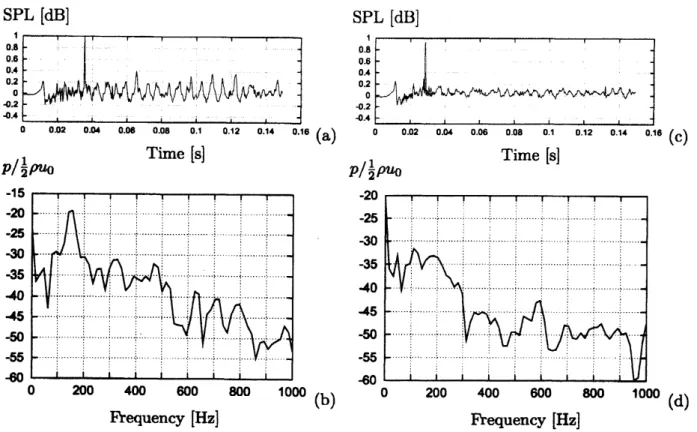
Figure 7 (a) shows the pressure on the end plate,
near
the edge of the hole. The signalshown is the
mean
pressure, averagedover
all control points atone
particular radius, slightlystart-upvortexontothe endplate.] The correspondinghequency spectrumisshown in part (b).
Part (c) showsthe pressure signal for the perturbed flow, and part (d) the to (c) corresponding
frequencyspectrum.
As in part (a) of Fig. 7, part (c) shows the pressure averaged
over
the circumference. Theperturbations imply
that
negative and positive pressure contributions cancel out.It
is thennot
surprisingthat the pressurepeaksdisappear.
From
a
hydrodynamic point ofview, the averagedpressuresignalisnot really interesting. But$hom$
an
acoustic point ofview, the$intennediate/far$ fielddipolesoundcontribution isduetothe overallpressure fluctuations onthe plate. The resultgivesthus
an
indicationthat non-axisymmetric perturbations may be effectivein cancelling theflow-induced hole-tone sound.
Figure
5:
Birdseye-view ofthe system after500
time-steps.After 800 timesteps
900
time-steps1000
time-steps800
time-steps 900 time-steps1000
time-stepsFigure6: Influenceof nozzleperturbations (asshowninFig. 3) ontheappearance of the jet. (a)
Unperturbed; (b) perturbed. A side view ofthejet is shown. The nozzle exit is at the abscissa
Figure 7: (a) Pressure fluctuations
near
the hole in the end plate. The signal shown is theaverage of the pressure at allcontrol pointsat oneparticular radius, around the circumference.
(b) The to (a) corresponding ffequency spectrum. (c) Pressure fluctuations in the
case
ofa
perturbed jet (averaged signal,
as
in$(a)$). $(d)$ The to (c) corresponding spectrum.5
Summary
In this paper a threedimensional vortex filament method, combined with an acoustic
feed-back model basedon thetheory of vortexsound, has been constructed. The purpose ofthework
is to study theinfluenceofnon-axisymmetric flowperturbations
on
the flowfield and thesoundgeneration in the holetone feedbaCk cycle problem. A few preliminary numerical studies have
been praeented. Comprehensive parameter studies
are
ongoing.6
Acknowledgement
Thesupportof the present projectthrough
a JSPS
Grant-in-Aid forScientific Research (No.18560152) is gratefully acknowledged.
References
[1] D. Rockwell, E. Naudascher, “Self-sustained oscillations of impinging free shear layers,”
Annu. Rev. Fluid Mech. 11, 67-94 (1979).
[2] Lord Rayleigh, The Theory
of
Sound, Vol. II (Dover, New York, 1896, re-issued 1945).[3] R.C.Chanaud, A. Powell, “Someexperimentsconcerningthehole and ringtone,” J.Acoust.
[4] M. Nakano, D. Tsuchidoi, K. Kohiyama, A. Rinoshika, K. Shirono, “Wavelet analysis
on
behavior of hole-tone self-sustained oscillation of impinging circular air jet subjected to
acoustic excitation,” (In Japanese) Kashikajouhou 24,
87-90
(2004).[5] M. A. Langthjem, M. Nakano, “A numerical simulation of the holetone feedback cycle
based on an axisymmetric discrete vortex method and Curle’s equation,” J. Sound and
Vibr. 288,
133-176
(2005).[6] N. Curle, “The influence of solid boundaries upon aerodynamic sound,” Proc. Roy. Soc.
Lond. A 231,
505-514
(1955).[7] G. J. L. Beckers, R. A. Suthers, C. $t$
.
Cate, “Pure-tone birdsong byresonance
filtering ofharmonicovertones,” Proc. Nat. Acad. Sci. 100,
7372-7376
(2003).[8] M.
A. Langthjem,
M. Nakano, “The jethole-tone
oscillation cycle subjected to acousticexcitation: A numerical studybased
on
an
axisymmetric vortex method,” in Jets, Wakesand Separated Flows (JSME), edited by T. Shakouchi, F. Durst, and K. Toyoda
,
pp.745-750,
2005.
[9] N. Kasagi, “Towardsmartcontrolof turbulentjet mixingand combustion,” in Jets, Wakes
andSeparatedFlows (JSME), editedby T.Shakouchi, F. Durst, andK. Toyoda,pp. 45-53,
2005.
[10] G.-H. Cottet, P. D. Koumoutsakos, Vortex Methods: Theory and Practice, (Cambridge
University Press, Cambridge, 2000).
[11] P. S. Bernard, “Turbulent flow properties of large-scale vortex systems,” Proc. Nat. Acad.
Sci.
103,10174-10179
(2006).[12] L. Cortelezzi, A. R. Karagozian, “On the formation ofthe counter-rotating vortex pair in
transverse jets,” J. Fluid Mech. 446,
347-373
(2001).[13] M. Kiya, Y.Ido, H.Akiyama, “Vortical structure inforcedunsteadycircularjet: Simulation
by$3D$vortex method,” in Vortex Flows and Rdated Numetical Methods II (ESAIM Proc.),
edited by Y. Gagnon, G.-H. Cottet, D. G. Dritschel, A. F. Ghoniem, and E. Meiburg, pp.
503-520, 1996.
[14] A. Powell, “Theory of vortex sound,” J. Acoust. Soc. Am. 36,
177-195
(1964).[15] M.S. Howe, “Contributions to the$th\infty ry$ofaerodynamic sound, withapplicationsto
excess
jet noise and thetheory ofthe flute,” J. Fluid Mech. 71,
625-673
(1975).[16] M.
J.
Lighthill, “On sound generated aerodynamically. I. General theory,” Proc. Roy. Soc.Lond. A 211,
564-587
(1952).[17] A. Leonard, “Computing three-dimensional incompressible flows with vortex elements,”
Annu. Rev. Fluid Mech. 17,
523-559
(1985).[18] A. J. Chorin, “Hairpin removal invortex interactions II,” J. Comp. Phys. 107, 1-9 (1993).
[19] M.S. Howe, “Vorticity and the theory ofaerodynamicsound,” J. Engng. Math. 41,
367-400
(2001).
![Figure 3: Illustration of the perturbation mechanism (actuator model). [For purpose of illustra- illustra-tion the amplitude is exaggerated.]](https://thumb-ap.123doks.com/thumbv2/123deta/5999863.1062113/4.892.127.768.902.1082/illustration-perturbation-mechanism-actuator-illustra-illustra-amplitude-exaggerated.webp)