Kidney function, blood pressure and
proteinuria were associated with pregnancy
outcomes of pregnant women with chronic kidney
disease: a single-center, retrospective study
in the Asian population
著者
Satoshi Kumakura, Koji Okamoto, Saeko
Takeuchi, Mai Yoshida, Takashi Nakamichi,
Tasuku Nagasawa, Emi Fujikura, Tae Yamamoto,
Masatoshi Saito, Takushi Hanita, Michihiro
Satoh, Hiroshi Sato, Sadayoshi Ito, Hideo
Harigae, Mariko Miyazaki
journal or
publication title
Clinical and Experimental Nephrology
volume
24
number
6
page range
547-556
year
2020-03-11
URL
http://hdl.handle.net/10097/00128041
doi: 10.1007/s10157-020-01865-0Kidney function, blood pressure and proteinuria were associated with pregnancy outcomes of
1
pregnant women with chronic kidney disease: A single-center, retrospective study in the Asian
2
population
3
Authors:
4
Satoshi Kumakura1,2), Koji Okamoto1), Saeko Takeuchi1), Mai Yoshida1), Takashi Nakamichi3), Tasuku Nagasawa1), Emi
5
Fujikura2), Tae Yamamoto4), Masatoshi Saito5), Takushi Hanita6), Michihiro Satoh7), Hiroshi Sato1,8), Sadayoshi Ito1,9),
6
Hideo Harigae1), and Mariko Miyazaki1,2)
7
Affiliations:
8
1) Division of Nephrology, Endocrinology and Vascular Medicine, Tohoku University Graduate School of Medicine,
9
2-1 Seiryo-Machi, Aoba-ku, Sendai, MIYAGI, 980-8575, Japan
10
2) Division of Blood Purification, Tohoku University Hospital,
11
1-1 Seiryo-Machi, Aoba-ku, Sendai, MIYAGI, 980-8574, Japan
12
3) Department of Nephrology, Ishinomaki Red-Cross Hospital,
13
71 Hebita-Aza-Nishinomichishita, Ishinomaki, MIYAGI, 986-8255, Japan
14
4) Department of Internal Medicine, Sendai City Hospital,
15
1-1-1 Asuto-Nagamachi, Aoba-ku, Sendai, MIYAGI, 980-8502, Japan
16
5) Department of Gynecology and Obstetrics, Tohoku University Graduate School of Medicine,
17
2-1 Seiryo-Machi, Aoba-ku, Sendai, MIYAGI, 980-8575, Japan
18
6) Department of Pediatrics, Tohoku University Graduate School of Medicine,
19
2-1 Seiryo-Machi, Aoba-ku, Sendai, MIYAGI, 980-8575, Japan
20
7) Division of Public Health, Hygiene and Epidemiology, Faculty of Medicine, Tohoku Medical and Pharmaceutical
21
University, 1-15-1 Fukumuro, Miyagino-ku, Sendai, MIYAGI, 983-8536, JAPAN
22
8) Department of Internal Medicine, JR Sendai Hospital,
23
1-1-5 Itsutsubashi, Aoba-ku, Sendai, MIYAGI, 980-0022, Japan
24
9) Department of Medicine, Katta General Hospital,
36 Fukuokakuramoto-Aza-Shimookibara, Shiroishi, MIYAGI, 989-0231, Japan
1
2
Corresponding Author:3
Mariko Miyazaki4
Division of Nephrology, Endocrinology and Vascular Medicine, Tohoku University Graduate School of Medicine
5
2-1 Seiryo-Machi, Aoba-ku, Sendai, 980-8574, MIYAGI, Japan
6
Phone: +81-22-717-71637
Fax: +81-22-717-77788
E-Mail: [email protected]9
Word count: 3960 words (Including Abstract, Main Body and References)
10
Key words: chronic kidney disease, pregnancy, severe adverse events, low birth weight, small for gestational age
11
12
[Background] Studies among pregnant Asian women with chronic kidney disease (CKD) have not been widely performed;
1
therefore, clinical criteria for these patients have not been well established.
2
[Methods] We conducted a retrospective study among pregnant women with CKD who received prenatal care at our
3
institution for eight consecutive years. Primary outcome was the development of severe adverse events (SAEs). We
4
analyzed correlations between primary outcome and CKD parameters (age, body mass index [BMI], estimated glomerular
5
filtration rate [eGFR], urinary protein-creatinine ratio [UP], systolic blood pressure [SBP], diastolic blood pressure [DBP],
6
and not normal blood pressure [non-NBP]) at the time of referral. Secondary outcomes were low birth weight (LBW),
7
preterm delivery (PreD), and small for gestational age (SGA). We divided into two categories, CKD stage G1, and G2 or
8
higher according to eGFR, and proteinuria negative and proteinuria positive according to UP, respectively.
9
[Results] We observed 89 pregnancies. SAE was observed in 28 pregnancies. In live birth cases, there were 28 PreD, 28
10
LBW and 13 SGA. Major SAEs included preeclampsia, superimposed preeclampsia, unscheduled cesarean section,
11
neonatal intensive care unit admission, and fetal death. Stepwise logistic regression analysis selected eGFR (OR=0.847,
12
p=0.026), SBP (OR=1.897, p=0.006) and proteinuria positive (OR=2.96, p=0.046) as the significant predictors of SAEs.
13
There were no significant differences among the baseline characteristics stratified by SGA.
14
[Conclusions] This is the first study to report pregnancy outcomes among Japanese non-disease-oriented patients with
15
CKD. In Asians, especially in the Japanese population, kidney function, blood pressure and proteinuria might affect
16
pregnancy outcomes.
Main body:
1
[Introduction]
2
Chronic kidney disease (CKD) is a global health problem with a prevalence of 8–16% in the general population [1,2] as
3
well as the Japanese population [3]. The global prevalence of CKD in childbearing women is thought to be 3%. In the
4
Japanese population, the prevalence of CKD stages 3–5 (eGFR < 60 ml/min/1.73m2) in the childbearing age population
5
is less than 1% [3]. Among this population, low outcomes and high risk of complications during pregnancies are
6
significant concerns for patients with CKD who are expecting a child. Outcomes of pregnancies among patients with
7
CKD have improved [4], but still, many young women suffer from tragic complications due to CKD [5].
8
Recent studies have shown that low kidney function [5] and gross proteinuria are risk factors for pregnancy
9
complications [6]. However, the precise role of CKD status, such as kidney function and proteinuria in the gestational
10
period, is not well known; factors that affect the growth of the baby or weeks at delivery are unknown.
11
The Japanese Society of Nephrology has issued guidelines for pregnant women with CKD in 2017 [7], which was a
12
breakthrough for Japanese pregnant women with CKD. However, the evidence for each clinical question is mostly from
13
non-Asian populations. Furthermore, there are limited studies for pregnancy outcomes among specific kidney diseases
14
in the Japanese population [8,9]. Those studies consist only of cases with biopsy-proven glomerular diseases; thus, the
15
pregnancy outcomes for pregnant women with CKD as a whole are not well known in the Japanese population. The
16
prevalence of kidney disease is different depending on the region [1,10]. Also, there are regional differences in clinical
17
practice such as tonsillectomy for IgA nephropathy, which is widely performed in Japan but not in worldwide [11].
18
Therefore, there might be some differences in basal disease activity between non-Asian and Asian populations.
However, we reluctantly apply evidence from other countries in daily practice. Thus, universally applicable evidence
1
for pregnancy outcomes among Japanese pregnant women with CKD is needed, which can be utilized by not only
2
nephrologists but also by home doctors and gynecologists.
3
In order to address this problem, we conducted a single-center retrospective cohort study among Japanese patients with
4
CKD who received both perinatal care and nephrology care at our institution. Here, we presented the relationships
5
between disease activity and pregnancy outcomes.
6
7
[Materials and Methods]
8
Study population
9
We collected data of patients who visited both the Division of Nephrology and the Department of Obstetrics at Tohoku
10
University Hospital (Sendai, Japan) from January 1, 2010, through December 31, 2017, using the medical records
11
search service in our institution. Our institution is a tertiary referral hospital that covers a population of 3 million. We
12
handle 800–900 deliveries per year, mostly high-risk pregnancies, because our institution is the only facility that can
13
provide care for high-risk pregnant women with CKD in this area. After screening candidates from the medical records,
14
we selected patients who underwent both perinatal care and CKD management in our institution and excluded those
15
with transient gestational hypertension. When a patient experienced multiple pregnancy among the study term, we
16
included the first pregnancy during the observational period. We included whose birth record provided from the
17
transferred hospital existed for the following occasions; 1) patients who were transferred to other hospitals due to
occupied neonatal intensive care unit (NICU), 2) patients who were transferred to other hospitals due to Tohoku
1
earthquake, which occurred in March 2011.
2
3
Data collection & Definitions
4
The baseline physical examination data such as height, weight, and blood pressure were obtained from the first visit to
5
the Department of Obstetrics. The baseline blood and spot urine examination data were obtained from the earliest
6
examination when the patient revealed their pregnancy. Non-normal blood pressure (non-NBP) was defined as,
7
according to guidelines from American Heart Association, systolic blood pressure [SBP] > 120 mmHg and/or diastolic
8
blood pressure [DBP] > 80 mmHg, and/or diagnosis of hypertension with previous medications. We also extracted
9
information about the method of delivery and the children’s outcomes from the inpatient medical record. We set the
10
primary outcome as severe adverse events (SAEs) and selected the precise events according to previous studies [4 - 6,
11
12]. Maternal SAE was as follows: development of preeclampsia, superimposed preeclampsia, placental abruption,
12
placenta previa, placenta preterm, unscheduled cesarean section, and new-onset or recurrence of nephrotic syndrome.
13
Child SAEs included spontaneous abortion, intrauterine fetal death, and NICU admission. Furthermore, we assessed the
14
low birth weight (LBW) , preterm delivery (PreD) and small for gestational age (SGA) as secondary outcomes, which
15
were regarded as major indicators for obstetrics outcomes. Estimated glomerular filtration (eGFR) was calculated by the
16
3-variable Japanese Equation for women (eGFR = 194 × [serum creatinine level]-1.094 × [age]-0.287 × 0.739), which
17
is widely used among Japanese medical services [13]. Hypertension was defined as follows: systolic blood pressure >
18
140 mmHg and/or diastolic blood pressure > 90 mmHg. Gestational hypertension was defined as de novo hypertension
that developed at or after 20 weeks of gestation and was absent within three months after pregnancy. Preeclampsia was
1
defined as the de novo onset of hypertension (BP ≥ 140/90 mm Hg) after 20 weeks of gestation and proteinuria (> 0.3
2
g/gCr). Chronic hypertension was defined as high blood pressure predating the pregnancy or recognized before 20
3
weeks of gestation [14]. LBW was defined as a birth weight below 2500 g. PreD was defined as delivery before 37
4
weeks of gestation. SGA was defined as the 10th percentile for the Japanese neonatal birth weight reference curve [15].
5
This formula required the following data: the child’s sex, parity of mother, and gestational age. We defined the 10th
6
percentile birth weight as lower than the value of -1.28 standard deviations according to the standard birth weight.
7
Referring to KDIGO 2012 Clinical Practice Guideline for the Evaluation and Management of Chronic Kidney Disease
8
(16), we defined “reduced kidney function” and “proteinuria positive” for patients with for patients with eGFR < 90
9
ml/min/1.73m2, and UPCr 0.15 ≥ g/gCr or higher, respectively.
10
11
Statistics
12
All data for baseline characteristics were expressed as mean ± standard deviation or median (interquartile range)
13
otherwise noted. To assess the relation of SAE in baseline characteristics, we performed univariate logistic regression
14
analysis. Additionally, we performed age-adjusted logistic regression to adjust the p values by age since age can
15
strongly affect the outcomes. Next, we performed a backward stepwise logistic regression analysis to investigate the
16
factors which affect the outcomes. We started this analysis by including all candidate variables which were related to
17
outcomes regarding the age-adjusted logistic regression analysis. Finally, in order to secure validity of the stepwise
18
logistic regression analysis, we performed a multivariate logistic regression analysis by adding missing parameters
which require to be adjusted clinically as sensitivity analysis. We decided to include following variables for this
1
analysis; age, obesity, and single variable from each kidney function parameters (eGFR or serum creatinine or reduced
2
kidney function), proteinuria parameters (UPCr or proteinuria positive), and blood pressure parameters (SBP or DBP or
3
non-NBP). The differences were considered statistically significant at the two-sided, p < 0.05 level. Analyses were
4
performed by using STATA 15.1 (Stata Corp. LLC, Texas, USA).
5
6
[Results]
7
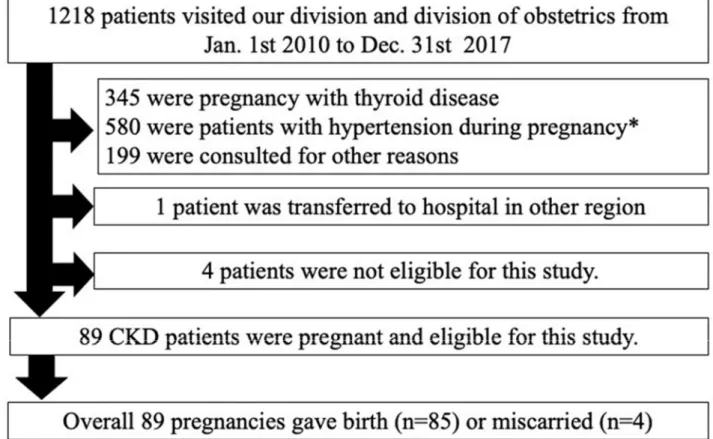
A total of 1218 patients were screened for eligibility; of these, 89 patients were selected as the study population (Figure
8
1.). Baseline characteristics are shown in Table 1. The mean age was 31.65 ± 5.44 years old. Mean BMI was 21.97 ±
9
4.20 kg/m2. Mean eGFR was 102.09 ± 35.29 ml/min/1.73m2. Median proteinuria was 0.13 g/gCr. Mean systolic blood
10
pressure was 114.3 ± 13.04 mmHg. The results of univariate logistic regression analysis as shown in Table 2. The
11
baseline characteristics stratified by SAE was shown in Supplementary Table 1. The distribution of the CKD stage
12
stratified by the SAE group and non-SAE group is shown in Table 3. Most patients had preserved kidney function, and
13
low or none proteinuria. For CKD A stage A3 group, about half of the patients had SAE. There was a successful case of
14
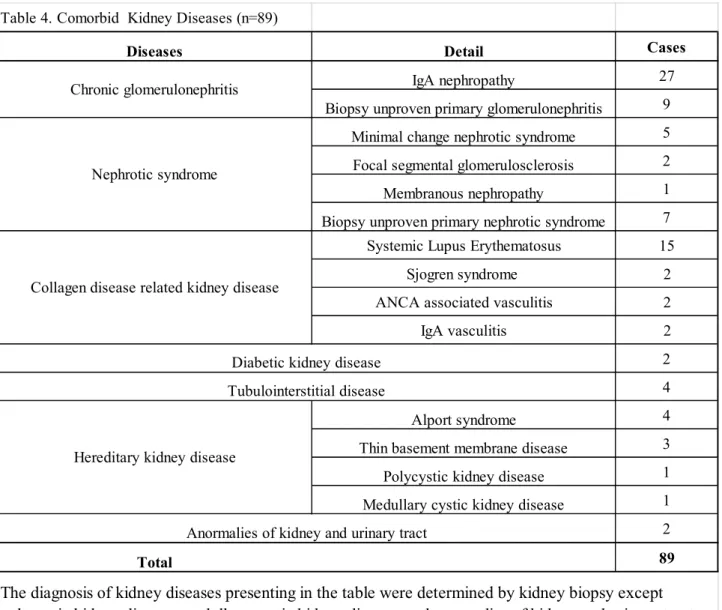
advanced stage, G5, in SAE group. The spectrum of comorbid kidney diseases is shown in Table 4. The most common
15
comorbid renal disease was biopsy-proven IgA nephropathy (n = 27, 30.3%). Fifteen cases (16.9%) had nephrotic
16
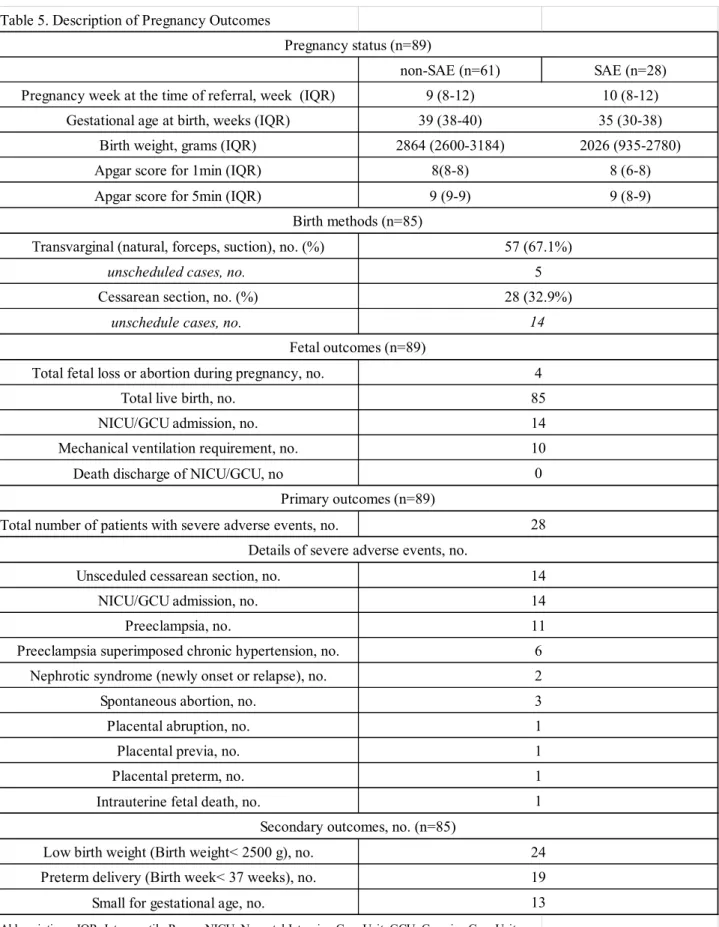
syndrome, and 21 cases (23.6%) had collagen disease-related kidney disease. The clinical profiles and laboratory
17
parameters are shown in Table 5. Twenty-eight pregnancies presented with SAEs, including one case of intrauterine
18
fetal death and three cases of spontaneous abortions. Furthermore, 32.9% of births required cesarean sections, and 50%
were unscheduled birth. Fourteen neonates required NICU support, and ten neonates required mechanical ventilation.
1
All neonates survived and were discharged after birth.
2
Results of the age-adjusted logistic regression analysis and backward stepwise logistic regression analysis for SAE are
3
as shown in Table 6. From the age-adjusted logistic regression analysis, eGFR (p = 0.033), SBP (p = 0.006), DBP (p =
4
0.009), non-NBP (p = 0.009), and proteinuria positive (p < 0.001) were selected as candidate predictors. These five
5
candidate variables, and age were included in the backward stepwise logistic regression analysis. eGFR (OR= 0.847, p
6
= 0.026, 95%CI:0.731-0.980, per 10 ml/min/1.73m2), SBP (OR = 1.897, p = 0.006, 95%CI:1.202-2.995, per 10
7
mmHg]), and proteinuria positive (OR = 2.946, p = 0.046, 95%CI:1.019-8.507, refer to proteinuria < 0.15 g/gCr) were
8
affecting significantly the SAE occurrences. Notably, forward stepwise logistic regression analysis showed same
9
selection of variables; eGFR, SBP, and proteinuria positive. Regarding the results of stepwise logistic regression
10
analysis, we analyzed in a further model which adding age and BMI to the previous model (adjusting eGFR, SBP, and
11
proteinuria positive) as a sensitivity analysis. Consequently, in this model, age (OR=1.059, 95%CI [0.953-1.177], per 1
12
year older) and BMI (OR= 1.016, 95%CI [0.894-1.155], per 1 kg/m2 higher]) were not related to SAE. SBP (OR=0.869,
13
95%CI [1.122-2.850], per 10 mmHg) were related to SAE. There were not statistically significant, though, eGFR (OR=
14
0.869, p=0.074, 95%CI [0.745-1.013], per 10 ml/min/1.73m2), proteinuria positive (OR = 2.946, p=0.051, 95%CI
15
[0.996-10.34], refer to proteinuria < 0.15 g/gCr) showed a tendency (p < 0.1) of relation with SAE.
16
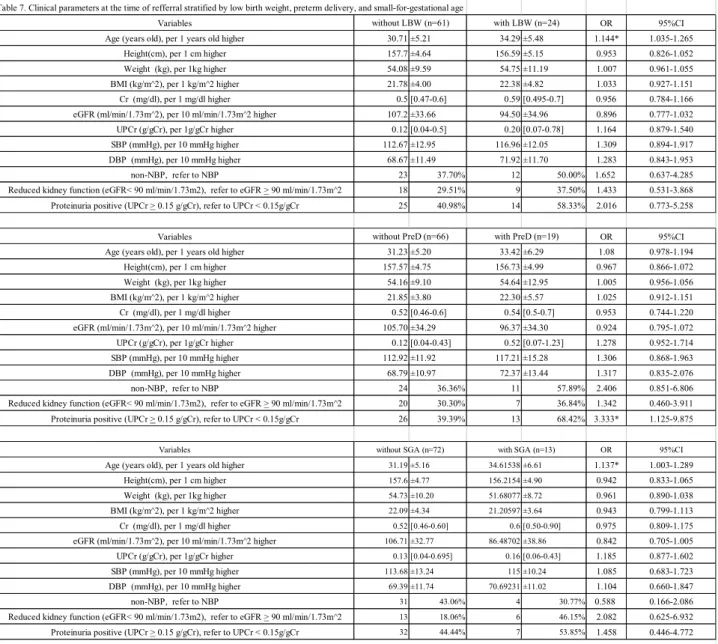
As shown in Table 7, we further assessed the baseline characteristics stratified by the secondary outcomes; LBW, PreD,
17
and SGA. LBW occurred in 24 cases. The median age was 34.29 ± 5.48 and 30.71 ± 5.21 years old in the LBW group
18
and non-LBW group, respectively. PreD occurred in 19 cases. There were more proteinuria positive cases in the PreD
group (68.42%) than the non-PreD group (39.39%), respectively. SGA occurred in 13 cases. and cases with SGA were
1
older; 34.62±6.61 and 31.59±5.16 years old in the SGA group and non-SGA group, respectively.
2
3
[Discussion]
4
In this current study, we recruited 89 pregnant Asian women, mostly Japanese, with various kidney diseases. We found
5
that eGFR, SBP, and the presence of proteinuria associate with SAE. Our results implied that kidney function and
6
proteinuria and blood pressure had impacts on pregnancy in Japanese pregnant women with CKD. For child outcomes,
7
we could not find predictors of LBW, PreD, and SGA assumingly because of the small study population.
8
Regarding the results of logistic regression analysis, there is a 15.32 % SAE risk reduction per 10 ml/min/1.73m2
9
increase in eGFR, an 89.7 % SAE risk elevation per 10 mmHg increase in SBP, and an approximately three-fold SAE
10
risk elevation for proteinuria positive. Comprehensively, high eGFR, low mean blood pressure, decreased proteinuria
11
reduces the risk of SAE of patients with CKD pregnancy. Furthermore, the additional analysis of multivariate logistic
12
regression showed that including age and BMI to the stepwise model showed a resembled result; the SBP related to
13
SAE, eGFR, and proteinuria positive showed tended relation with SAE. This result supported the validity of our study.
14
We used this result as a sensitivity analysis for our stepwise logistic regression analysis model since adjusting five
15
variables will cause overfitting in our research. However, the additional study population may be needed for further
16
study.
17
A study in an Italian population reported that proteinuria more than 1g/24 h resulted in a four-fold increased risk for
18
NICU admission, but this was not a statistically significant risk factor for cesarean sections or PreD [6]. Their results
implied that mass proteinuria does not increase maternal SAEs; however, our results indicated that the presence of
1
proteinuria, regardless of its quantity, was a predictor for SAE. Their results were significant for patients with
2
proteinuria more than 1 g/24 h; however, the influence of reduced proteinuria was not discussed. Our results implied
3
that the level of proteinuria should be minimized before the patient becomes pregnant. A prospective study from two
4
Italian institutions revealed that the severe CKD stage was a predictor for SGA [5] However, in our study, there were no
5
differences between SGA and non-SGA patients in most parameters except patient age. Thus, the effects of CKD on
6
SGA cannot be discussed in our study.
7
Our study has some unique strengths. First, we included various primary kidney diseases: glomerular diseases, such as
8
IgA nephropathy, and hereditary diseases, such as autosomal dominant polycystic kidney disease. Some previous
9
reports only recruited patients with the primary glomerular disease who underwent biopsies [17]. Although the
10
hereditary disease population was relatively less than other glomerular disease populations, our study included a variety
11
of primary diseases. Further, although we could not estimate the relative risk of each kidney disease, our results support
12
the fact that risk evaluation can be performed using the eGFR, proteinuria, and blood pressure regardless of the
13
comorbid kidney disease. Therefore, our results could be utilized efficiently in general practice, not only by
14
nephrologists. Second, our study comprised 99% Japanese population. Although there was a study from South Korea
15
that involved an Asian population [18] and a Chinese study [19] reported pregnancy outcomes among specific kidney
16
diseases, to our best of knowledge, this is the first report of pregnancy outcomes among Japanese pregnant women with
17
CKD regardless of the primary disease. Our study demonstrated that pregnancy outcomes among Japanese pregnant
18
women with CKD were similar to those reported in a previous study [8].
Our study has several limitations. First, this study was performed in a single center. We followed the global consensus
1
for pregnancy care among patients with CKD, although the precise guidelines were absent at the term of our study.
2
Thus, there might be some selection bias in previous treatments affecting our results. Second, the study population was
3
relatively small to perform multivariate analysis. We observed 89 cases and we observed 28 SAEs. Previous reports
4
show that the age [20], obesity [21] is a known risk factor for women without kidney diseases. In daily practice, we
5
firstly regard kidney disease parameters as the risk factors for pregnancy. However, we need to reduce the number of
6
adjusting variables to three variables at most to prevent overfitting since we had only 28 outcome events. Third, our
7
study population included a decent population of referral cases from other institutions, which were treated differently
8
for CKD, according to the previous practitioners. Thus, about half of the study population returned to their previous
9
institution within one month after their delivery, so their long-term clinical course could not be investigated. Moreover,
10
this study was a retrospective study, and the clinical course and follow-up periods varied in each case. This made us
11
difficult to collect data of midterm and post-pregnancy term. Therefore, we could not predict the long-term outcomes of
12
maternal CKD disease activity, such as the relapse rate of disease and/or renal survival of each case. Moreover, the
13
changes and events of pregnancy term such as weight gain or the midterm changes in proteinuria cannot be analyze in
14
this study design. We need a more extensive multi-centered, population-based prospective study to impute missing data
15
to secure the prognosis of CKD pregnancy. Finally, as in previous reports, our study population did not include patients
16
with advanced CKD stage. We had only 4 cases with eGFR< 30 mL/min/1.73m2, and our study did not include patients
17
on dialysis. According to previous reports, infant survival rates significantly improved among patients with advanced
18
CKD in the previous half-century [4]. However, the evidence for cases of impaired GFR and/or severe albuminuria was
limited [22]. As pregnancy planning, including contraceptive counseling, is not widely practiced worldwide for the
1
CKD population, about half of the pregnant women with CKD have unplanned pregnancies [23]. This issue was the
2
same in our study, especially in women with advanced CKD stage and albuminuria. Thus, the true prognosis for
3
planned pregnancies for pregnant women with advanced CKD remains controversial. There are some case reports for
4
pregnant women on dialysis with successful outcomes [24], and there is a retrospective report from France with overall
5
fetal survival of 78% among 100 pregnancies [25]. However, there are relatively fewer reports for advanced cases with
6
non-dialysis patients; therefore, we need more studies for advanced stage cases. In our study, although the outcomes for
7
advanced stages were relatively worse than those for early stages of the disease, all cases of live births had live
8
discharge rates regardless of their CKD stages. Taken together, in pregnant women with advanced CKD, successful
9
outcomes can be obtained using careful treatment with both obstetric and nephrology care.
10
In conclusion, we reported pregnancy outcomes among Asian pregnant women with CKD in a single-center
11
retrospective study, and to the best of our knowledge, this is the first report in the last decade. Our study showed that
12
kidney function and blood pressure and proteinuria positive were the significant predictors for SAEs. Pregnancy and
13
childbirth are important life events for young women. We cannot strongly recommend raising children in patients with
14
advanced CKD stage, but if the disease can be under control, it can lead to successful childbirth under the collaboration
15
of nephrologists and gynecologists.
16
17
[Notes]18
Acknowledgements19
We would like to acknowledge the staff of the medical record services for their contribution in providing the old medical
1
records for the collection of data. The data of this study was preliminary presented at the American Society of Nephrology
2
Congress, Kidney Week 2018, in San Diego, California, USA, October 23–28.
3
Also, we would like tothank Editage (www.editage.jp) for English language editing.
4
Author’s Contributions
5
S.K., T.N., T.N., K.O, T.H., M.S. and M.M. were involved in design of the work and interpretation of the data. S.K., M.S.,
6
K.O. analyzed the data. All authors were involved in drafting or revising the manuscript and approved the final version.
7
Funding
8
There was no research funding for this study.
9
[Compliance with ethical standards]
10
Conflict of interest
11
All of the authors have declared no competing interests.
12
Ethical approval
13
All procedures performed in studies involving human participants were in accordance with the ethical standards of the
14
institutional and/or national research committee at which the studies were conducted (IRB approval No. 2017-1-934 at
15
Ethics committee of Tohoku University School of Medicine) and with the 1964 Helsinki declaration and its later
16
amendments or comparable ethical standards.
17
Informed consent
18
According to Japanese Ethical Guidelines for Medical and Health Research Involving Human Subjects, informed consent
was not obtained from participants because all data were anonymized. Otherwise, we made a piece of public information
1
which states including and handling the exiting information and giving them opportunities to withdraw from the research.
2
[References]
3
1. Jha V, Garcia-Garcia G, Iseki K, Li Z, Naicker S, Plattner B et al. Chronic kidney disease: global dimension and
4
perspectives. Lancet 382: 260-272.
5
2. Hill NR, Fatoba ST, Oke JL, Hirst JA, O'Callaghan CA, Lasserson DS et al. Global Prevalence of Chronic Kidney
6
Disease - A Systematic Review and Meta-Analysis. PLoS One 2016; 11: e0158765.
7
3. IImai E, Horio M, Watanabe T, Iseki K, Yamagata K, Hara S et al. Prevalence of chronic kidney disease in the
8
Japanese general population. Clin Exp Nephrol 2009; 13: 621-630.
9
4. Hall M. Pregnancy in women with CKD: A success story. Am J Kidney Dis 2016; 68: 633-639.
10
5. Piccoli GB, Attini R, Vasario E, Conijn A, Biolcati M, D'Amico F et al. Pregnancy and chronic kidney disease: a
11
challenge in all CKD stages. Clin J Am Soc Nephrol 2010; 5: 844-855.
12
6. Piccoli GB, Cabiddu G, Attini R, Vigotti FN, Maxia S, Lepori N et al. Risk of Adverse Pregnancy Outcomes in
13
Women with CKD. J Am Soc Nephrol 2015; 26: 2011-2022.
14
7. National working group of updating clinical practice guidelines for the management of pregnancy in kidney disease
15
patients, Clinical practice guideline for the management of kidney disease patients 2017. Jpn J Nephrol 2017; 59
:955-16
1033 [in Japanese]
17
8. Shimizu A, Takei T, Moriyama T, Itabashi M, Uchida K, Nitta K. Effect of kidney disease stage on pregnancy and
18
delivery outcomes among patients with immunoglobulin A nephropathy. Am J Nephrol 2010; 32: 456-461.
9. Motoyama O, Iitaka K. Pregnancy in 4 women with childhood-onset steroid-sensitive nephrotic syndrome. CEN
1
Case Rep 2014; 3: 63-67.
2
10. Tangri N, Grams ME, Levey AS, Coresh J, Appel LJ, Astor BC et al. Multinational Assessment of Accuracy of
3
Equations for Predicting Risk of Kidney Failure. JAMA. 2016; 315;164-74.
4
11. Hotta O, Miyazaki M, Furuta T, Tomioka S, Chiba S, Horigome I et al. Tonsillectomy and steroid pulse therapy
5
significantly impact on clinical remission in patients with IgA nephropathy. Am J Kidney Dis 2001; 38: 736-743.
6
12. Kendrick J, Sharma S, Holmen J, Palit S, Nuccio E, Chonchol M. Kidney disease and maternal and fetal outcomes
7
in pregnancy. Am J Kidney Dis 2015; 66:55-59.
8
13. Matsuo S, Imai E, Horio M, Yasuda Y, Tomita K, Nitta K et al. Revised equations for estimated GFR from serum
9
creatinine in Japan. Am J Kidney Dis 2009; 53: 982-992.
10
14. Brown MA, Magee LA, Kenny LC, Karumanchi SA, McCarthy FP, Saito S et al. Hypertensive disorders of
11
pregnancy: ISSHP Classification, Diagnosis, and Management Recommendations for International Practice.
12
Hypertension 2018; 72: 24-43.
13
15. Itabashi K, Fujimura M, Kusuta S, Tamura M, Hayashi T, Takahashi T et al. Introduction of new gestational
age-14
specific standards for birth size. J Jpn Pediatr Soc 2010; 114: 1271-1293.[in Japanese]
15
16. Kidney Disease: Improving Global Outcomes (KDIGO) CKD Work Group. KDIGO 2012 Clinical Practice Guideline
16
for the Evaluation and Management of Chronic Kidney Disease. Kidney Int Suppl 2013; 3: 1–150.
17
17. Blom K, Odutayo A, Bramham K, Hladunewich MA. Pregnancy and glomerular disease: A systematic review of the
18
literature with management guidelines. Clin J Am Soc Nephrol 2017; 12: 1862-1872.
18. He Y, Liu J, Cai Q, Lv J, Yu F, Chen Q et al. The pregnancy outcomes in patients with stage 3-4 chronic kidney
1
disease and the effects of pregnancy in the long-term kidney function. J Nephrol 2018; 31: 953-960.
2
19. Liu Y, Ma X, Lv J, Shi S, Liu L, Chen Y et al. Risk factors for pregnancy outcomes in patients with IgA nephropathy:
3
a matched cohort study. Am J Kidney Dis. 2014; 64: 730-736.
4
20. Sheen JJ, Wright JD, Goffman D, Kern-Goldberger AR, Booker W, Siddiq Z et al. Maternal age and risk for adverse
5
outcomes. Am J Obstet Gynecol 2018;219:390 e1- e15.
6
21. Aune D, Saugstad OD, Henriksen T, Tonstad S. Maternal body mass index and the risk of fetal death, stillbirth, and
7
infant death: a systematic review and meta-analysis. JAMA 2014;311:1536-46.
8
22. Wiles KS, Nelson-Piercy C, Bramham K. Reproductive health and pregnancy in women with chronic kidney disease.
9
Nat Rev Nephrol 2018; 14: 165-184.
10
23. Park S, Lee SM, Park JS, Hong JS, Chin HJ, Na KY et al. Midterm eGFR and Adverse Pregnancy Outcomes: The
11
Clinical Significance of Gestational Hyperfiltration. Clin J Am Soc Nephrol 2017; 12: 1048-1056.
12
24. Cao Y, Zhang Y, Wang X, Zhang Y, Fan Y, Shi H et al. Successful pregnancy and delivery in uremic patients with
13
maintenance hemodialysis: A case report. Medicine (Baltimore) 2018; 97: e13614.
14
25.
Normand G, Xu X, Panaye M, Jolivot A, Lemoine S, Guebre-Egziabher F et al. Pregnancy Outcomes in French15
Hemodialysis Patients. Am J Nephrol 2018; 47: 219-227.
16
17
[Legends to Figures]
1
Figure 1. Flow chart of the procedure for selecting the study population.
2
*This study excluded patients with spontaneous kidney dysfunction due to gestational hypertension only.
3
Figure 1.
4
1
2
T
ab
le
1
. C
lin
ic
al
p
ar
am
et
er
s
at
th
e
ti
m
e
of
r
ef
fe
rr
al
V
ar
ia
bl
es
A
ge
(
m
ea
n±
S
D
)
ye
ar
s
ol
d
H
ei
gh
t (
m
ea
n±
S
D
)
cm
W
ei
gh
t (
m
ea
n±
S
D
)
kg
B
M
I
(m
ea
n±
S
D
)
kg
/m
2
C
r
(m
ed
ia
n,
[
IQ
R
])
m
g/
dl
eG
FR
(
m
ea
n±
S
D
),
m
l/
m
in
/1
.7
3m
2
U
P
C
r
(m
ed
ia
n,
[
IQ
R
])
S
B
P
(
m
ea
n±
S
D
)
m
m
H
g
D
B
P
(m
ea
n±
S
D
)
m
m
H
g
no
n-N
B
P
, %
R
ed
uc
ed
k
id
ne
y
fu
nc
ti
on
(
eG
FR
<
90
m
l/
m
in
/1
.7
3m
2)
,
%
P
ro
te
in
ur
ia
p
os
it
iv
e
(U
P
C
r
>
0
.1
5
g/
gC
r)
, %
54
.4
2
±9
.9
5
T
ot
al
(
n=
89
)
31
.6
5
±5
.4
4
15
7.
5
±4
.8
21
.9
7
±4
.2
0
0.
54
[0
.4
7-0.
66
]
10
2.
09
±3
5.
29
0.
13
[0
.0
5-0.
69
]
11
4.
3
±1
3.
04
70
.0
4
±1
1.
54
A
ll
d
at
a
w
er
e
ex
pr
es
se
d
as
m
ea
n
±
st
an
da
rd
d
ev
ia
tio
n
[S
D
]
or
m
ed
ia
n
(i
nt
er
qu
ar
ti
le
r
an
ge
[
IQ
R
]
ot
he
rw
is
e
no
te
d.
A
bb
re
vi
at
io
ns
;
B
M
I
bo
dy
m
as
s
in
de
x,
C
r
cr
ea
tin
in
e,
e
G
FR
e
st
im
at
ed
g
lo
m
er
ul
ar
f
il
tr
at
io
n,
U
PC
r
ur
in
ar
y
pr
ot
ei
n
cr
ea
ti
ni
ne
r
at
io
, S
B
P
s
ys
to
li
c
bl
oo
d
pr
es
su
re
, D
B
P
d
ia
st
ol
ic
b
lo
od
p
re
ss
ur
e,
n
on
-N
B
P
n
on
no
rm
al
b
lo
od
p
re
ss
ur
e,
S
A
E
s
ev
er
e
ad
ve
rs
e
ev
en
ts
37
41
.5
7
29
32
.5
8
42
47
.1
9
1
T
ab
le
2
.U
ni
va
ri
at
e
lo
gi
st
ic
r
eg
re
ss
io
n
an
al
ys
is
f
or
S
A
E
a
m
on
g
cl
in
ic
al
p
ar
am
et
er
s
at
th
e
tim
e
of
r
ef
fe
rr
al
.
O
R
p
-v
al
ue
95
%
C
I
A
ge
(
ye
ar
s
ol
d)
, p
er
1
y
ea
rs
o
ld
h
ig
he
r
1.
09
7
0.
04
4
1.
00
3-1.
19
9
H
ei
gh
t(
cm
),
p
er
1
c
m
h
ig
he
r
1.
00
0
0.
99
5
0.
91
0-1.
09
8
W
ei
gh
t
(k
g)
, p
er
1
kg
h
ig
he
r
1.
04
8
0.
04
6
1.
00
1-1.
09
7
B
M
I
(k
g/
m
^2
),
p
er
1
k
g/
m
^2
h
ig
he
r
1.
10
7
0.
06
3
0.
99
5-1.
23
3
C
r
(
m
g/
dl
),
p
er
1
m
g/
dl
h
ig
he
r
0.
96
9
0.
66
3
0.
84
2-1.
11
6
eG
FR
(
m
l/m
in
/1
.7
3m
^2
),
p
er
1
0
m
l/m
in
/1
.7
3m
^2
h
ig
he
r
0.
83
5
0.
01
1
0.
96
8-0.
99
6
U
P
C
r
(g
/g
C
r)
, p
er
1
g/
gC
r
hi
gh
er
1.
25
6
0.
07
6
0.
97
6-1.
61
7
SB
P
(
m
m
H
g)
, p
er
1
0
m
m
H
g
hi
gh
er
1.
90
4
0.
00
2
1.
02
3-1.
11
2
D
B
P
(
m
m
H
g)
, p
er
1
0
m
m
H
g
hi
gh
er
1.
95
1
0.
00
4
1.
02
1-1.
11
9
no
n-N
B
P
,
re
fe
r
to
N
B
P
3.
97
9
0.
00
4
1.
54
8-10
.2
3
R
ed
uc
ed
k
id
ne
y
fu
nc
tio
n
(e
G
FR
<
9
0
m
l/m
in
/1
.7
3m
2)
,
re
fe
r
to
e
G
FR
>
9
0
m
l/m
in
/1
.7
3m
^2
2.
43
8
0.
06
2
0.
95
5-6.
21
8
P
ro
te
in
ur
ia
p
os
iti
ve
(
U
P
C
r
>
0
.1
5
g/
gC
r)
, r
ef
er
to
U
P
C
r
<
0
.1
5g
/g
C
r
4.
43
1
0.
00
3
1.
67
6-11
.7
1
V
ar
ia
bl
es
U
ni
va
ri
at
e
lo
gi
st
ic
r
eg
re
ss
io
n
U
ni
va
ri
at
e
lo
gi
st
ic
r
eg
re
ss
io
n
an
al
ys
is
w
er
e
pe
rf
or
m
ed
to
e
va
lu
at
e
ri
sk
o
f
SA
E
.
A
bb
re
vi
at
io
ns
;
B
M
I
bo
dy
m
as
s
in
de
x,
C
r
cr
ea
tin
in
e,
e
G
FR
es
tim
at
ed
g
lo
m
er
ul
ar
f
ilt
ra
tio
n,
U
P
C
r
ur
in
ar
y
pr
ot
ei
n
cr
ea
tin
in
e
ra
tio
, S
B
P
s
ys
to
lic
b
lo
od
p
re
ss
ur
e,
D
B
P
d
ia
st
ol
ic
b
lo
od
p
re
ss
ur
e,
n
on
-N
B
P
n
on
no
rm
al
b
lo
od
p
re
ss
ur
e,
S
A
E
s
ev
er
e
ad
ve
rs
e
ev
en
ts
, O
R
o
dd
s
ra
tio
,
95
%
C
I
95
%
c
on
fi
de
nt
ia
l i
nt
er
va
l.
1
Tab le 3 . D is tr ib ut io n of C K D G s ta ge a nd A s ta ge s tr at if ie d by s ev er e ad ve rs e ev en ts A 1 A 2 A 3 A 1 A 2 A 3 U P C r < 0. 15 0. 15 ≦ U P C r< 0. 50 0. 5≦ U P C r U P C r < 0. 15 0. 15 ≦ U P C r< 0. 50 0. 5≦ U P C r G 1 eG FR ≧ 9 0 33 3 9 45 G 1 eG FR ≧ 9 0 6 4 5 15 G 2 60 ≦ eG FR < 90 6 2 3 11 G 2 60 ≦ eG FR < 90 1 1 4 6 G 3 30 ≦eG FR < 60 0 2 2 4 G 3 30 ≦eG FR < 60 1 1 4 6 G 4 15 ≦eG FR < 30 0 0 0 0 G 4 15 ≦eG FR < 30 0 0 1 1 G 5 eG FR < 15 0 0 1 1 G 5 eG FR < 15 0 0 0 0 39 7 15 61 8 6 14 28 A bb re vi at io ns a nd u ni ts ; e G FR e st im at ed g lo m er ul ar f ilt ra tio n (m l/m in /1 .7 3m ^2 ), U P C r ur in ar y pr ot ei n cr ea tin in e ra tio ( g/ gC r) , S A E s ev er e ad ve rs e ev en ts . no n-SA E to ta l SA E to ta l to ta l to ta l1
Table 4. Comorbid Kidney Diseases (n=89)
Diseases Detail Cases
IgA nephropathy 27
Biopsy unproven primary glomerulonephritis 9
Minimal change nephrotic syndrome 5
Focal segmental glomerulosclerosis 2
Membranous nephropathy 1
Biopsy unproven primary nephrotic syndrome 7
Systemic Lupus Erythematosus 15
Sjogren syndrome 2
ANCA associated vasculitis 2
IgA vasculitis 2
2 4
Alport syndrome 4
Thin basement membrane disease 3
Polycystic kidney disease 1
Medullary cystic kidney disease 1
2
Total 89
Anormalies of kidney and urinary tract
The diagnosis of kidney diseases presenting in the table were determined by kidney biopsy except
polycystic kidney disease, medullary cystic kidney disease, and anormalies of kidney and urinary tract
otherwise specified in the table. Abbreviation; ANCA antineutrophil cytoplasmic antibody.
Chronic glomerulonephritis
Nephrotic syndrome
Collagen disease related kidney disease
Diabetic kidney disease Tubulointerstitial disease
1
2
Table 5. Description of Pregnancy Outcomes
non-SAE (n=61) SAE (n=28)
Pregnancy week at the time of referral, week (IQR) 9 (8-12) 10 (8-12)
Gestational age at birth, weeks (IQR) 39 (38-40) 35 (30-38)
Birth weight, grams (IQR) 2864 (2600-3184) 2026 (935-2780)
Apgar score for 1min (IQR) 8(8-8) 8 (6-8)
Apgar score for 5min (IQR) 9 (9-9) 9 (8-9)
Transvarginal (natural, forceps, suction), no. (%) unscheduled cases, no.
Cessarean section, no. (%) unschedule cases, no.
Total fetal loss or abortion during pregnancy, no. Total live birth, no.
NICU/GCU admission, no. Mechanical ventilation requirement, no.
Death discharge of NICU/GCU, no
Total number of patients with severe adverse events, no. Unsceduled cessarean section, no.
NICU/GCU admission, no. Preeclampsia, no.
Preeclampsia superimposed chronic hypertension, no. Nephrotic syndrome (newly onset or relapse), no.
Spontaneous abortion, no. Placental abruption, no.
Placental previa, no. Placental preterm, no. Intrauterine fetal death, no.
Low birth weight (Birth weight< 2500 g), no. Preterm delivery (Birth week< 37 weeks), no.
Small for gestational age, no.
Abbreviations; IQR: Interquartile Range. NICU: Neonatal Intensive Care Unit. GCU: Growing Care Unit.
1 Secondary outcomes, no. (n=85)
24 19 13 1 Primary outcomes (n=89) 28 Details of severe adverse events, no.
14 14 11 6 2 3 1 1 0 Pregnancy status (n=89) Birth methods (n=85) 57 (67.1%) 5 28 (32.9%) 14 Fetal outcomes (n=89) 4 85 14 10
1
T
ab
le
6
. R
es
ul
ts
o
f
ag
e-ad
ju
st
ed
lo
gi
st
ic
r
eg
re
ss
io
n
an
al
ys
is
a
nd
s
te
pw
is
e
lo
gi
st
ic
r
eg
re
ss
io
n
an
al
ys
is
f
or
s
ev
er
e
ad
ve
re
s
ev
en
ts
.
V
ar
ia
bl
es
O
R
p
-v
al
ue
95
%
C
I
O
R
p
-v
al
ue
95
%
C
I
A
ge
(
ye
ar
s
ol
d)
, p
er
1
y
ea
rs
o
ld
h
ig
he
r
N
/A
N
/A
N
/A
H
ei
gh
t(
cm
),
p
er
1
c
m
h
ig
he
r
1.
01
9
0.
70
9
0.
92
3-1.
12
3
W
ei
gh
t
(k
g)
, p
er
1
kg
h
ig
he
r
1.
04
0
0.
09
4
0.
99
3-1.
08
9
B
M
I
(k
g/
m
^2
),
p
er
1
k
g/
m
^2
h
ig
he
r
1.
08
6
0.
14
6
0.
97
2-1.
21
3
C
r
(
m
g/
dl
),
p
er
1
m
g/
dl
h
ig
he
r
0.
97
4
0.
73
5
0.
84
2-1.
12
9
eG
FR
(
m
l/m
in
/1
.7
3m
^2
),
p
er
1
0
m
l/m
in
/1
.7
3m
^2
h
ig
he
r
0.
85
4*
0.
03
3
0.
97
0-0.
99
9
0.
84
7
0.
02
6
0.
73
1-0.
98
0
U
P
C
r
(g
/g
C
r)
, p
er
1
g/
gC
r
hi
gh
er
1.
33
2
0.
05
5
0.
99
3-1.
78
5
SB
P
(
m
m
H
g)
, p
er
1
0
m
m
H
g
hi
gh
er
1.
79
5*
0.
00
6
1.
01
7-1.
10
5
1.
89
7
0.
00
6
1.
20
2-2.
99
5
D
B
P
(
m
m
H
g)
, p
er
1
0
m
m
H
g
hi
gh
er
1.
85
9*
0.
00
9
1.
01
6-1.
11
4
no
n-N
B
P
,
re
fe
r
to
N
B
P
3.
62
2*
0.
00
9
1.
38
5-9.
47
3
R
ed
uc
ed
k
id
ne
y
fu
nc
tio
n
(e
G
FR
<
9
0
m
l/m
in
/1
.7
3m
2)
,
re
fe
r
to
e
G
F
R
>
9
0
m
l/m
in
/1
.7
3m
^2
1.
95
0
0.
19
9
0.
71
1-5.
16
0
P
ro
te
in
ur
ia
p
os
iti
ve
(
U
P
C
r
>
0
.1
5
g/
gC
r)
, r
ef
er
to
U
P
C
r
<
0
.1
5g
/g
C
r
5.
05
0*
0.
00
2
1.
83
2-13
.9
2
2.
94
6
0.
04
6
1.
01
9-8.
50
7
A
ge
a
dj
us
te
d
lo
gi
st
ic
r
eg
re
ss
io
n
St
ep
w
is
e
lo
gi
st
ic
r
eg
re
ss
io
n
B
ac
kw
ar
d
st
ep
w
iz
e
lo
gi
st
ic
r
eg
re
ss
io
n
an
al
ys
is
w
er
e
pe
rf
or
m
ed
b
y
st
ar
tin
g
fr
om
in
cl
ud
in
g
al
l c
an
di
da
te
p
re
di
ct
iv
e
va
ri
ab
le
s
fo
r
SA
E
a
s
a
fu
ll
m
od
el
.
C
an
di
da
te
v
ar
ia
bl
es
w
er
e
se
le
ct
ed
(
m
ar
ke
d
as
*
)
ac
co
rd
in
g
to
a
ge
-a
dj
us
te
d
lo
gi
st
ic
r
eg
re
ss
io
n
m
od
el
.
Fu
ll
m
od
el
in
cl
ud
ed
f
ol
lo
w
in
g
va
ri
ab
le
s;
a
ge
, e
G
FR
,
SB
P
, D
B
P
, n
on
-N
B
P
, a
nd
p
ro
te
in
ur
ia
p
os
iti
ve
.
eG
FR
e
st
im
at
ed
g
lo
m
er
ul
ar
f
ilt
ra
tio
n,
U
P
C
r
ur
in
ar
y
pr
ot
ei
n
cr
ea
tin
in
e
ra
tio
, S
B
P
s
ys
to
lic
b
lo
od
p
re
ss
ur
e,
D
B
P
d
ia
st
ol
ic
b
lo
od
p
re
ss
ur
e,
n
on
-N
B
P
n
on
n
or
m
al
b
lo
od
p
re
ss
ur
e,
O
R
o
dd
s
ra
tio
, 9
5%
C
I.
9
5%
c
on
fi
de
nt
ia
l i
nt
er
va
l.
1
Table 7. Clinical parameters at the time of refferral stratified by low birth weight, preterm delivery, and small-for-gestational age
Variables OR 95%CI
Age (years old), per 1 years old higher 30.71 ±5.21 34.29 ±5.48 1.144* 1.035-1.265
Height(cm), per 1 cm higher 157.7 ±4.64 156.59 ±5.15 0.953 0.826-1.052
Weight (kg), per 1kg higher 54.08 ±9.59 54.75 ±11.19 1.007 0.961-1.055
BMI (kg/m^2), per 1 kg/m^2 higher 21.78 ±4.00 22.38 ±4.82 1.033 0.927-1.151
Cr (mg/dl), per 1 mg/dl higher 0.5 [0.47-0.6] 0.59 [0.495-0.7] 0.956 0.784-1.166
eGFR (ml/min/1.73m^2), per 10 ml/min/1.73m^2 higher 107.2 ±33.66 94.50 ±34.96 0.896 0.777-1.032
UPCr (g/gCr), per 1g/gCr higher 0.12 [0.04-0.5] 0.20 [0.07-0.78] 1.164 0.879-1.540
SBP (mmHg), per 10 mmHg higher 112.67 ±12.95 116.96 ±12.05 1.309 0.894-1.917
DBP (mmHg), per 10 mmHg higher 68.67 ±11.49 71.92 ±11.70 1.283 0.843-1.953
non-NBP, refer to NBP 23 37.70% 12 50.00% 1.652 0.637-4.285
Reduced kidney function (eGFR< 90 ml/min/1.73m2), refer to eGFR > 90 ml/min/1.73m^2 18 29.51% 9 37.50% 1.433 0.531-3.868
Proteinuria positive (UPCr > 0.15 g/gCr), refer to UPCr < 0.15g/gCr 25 40.98% 14 58.33% 2.016 0.773-5.258
Variables OR 95%CI
Age (years old), per 1 years old higher 31.23 ±5.20 33.42 ±6.29 1.08 0.978-1.194
Height(cm), per 1 cm higher 157.57 ±4.75 156.73 ±4.99 0.967 0.866-1.072
Weight (kg), per 1kg higher 54.16 ±9.10 54.64 ±12.95 1.005 0.956-1.056
BMI (kg/m^2), per 1 kg/m^2 higher 21.85 ±3.80 22.30 ±5.57 1.025 0.912-1.151
Cr (mg/dl), per 1 mg/dl higher 0.52 [0.46-0.6] 0.54 [0.5-0.7] 0.953 0.744-1.220
eGFR (ml/min/1.73m^2), per 10 ml/min/1.73m^2 higher 105.70 ±34.29 96.37 ±34.30 0.924 0.795-1.072
UPCr (g/gCr), per 1g/gCr higher 0.12 [0.04-0.43] 0.52 [0.07-1.23] 1.278 0.952-1.714
SBP (mmHg), per 10 mmHg higher 112.92 ±11.92 117.21 ±15.28 1.306 0.868-1.963
DBP (mmHg), per 10 mmHg higher 68.79 ±10.97 72.37 ±13.44 1.317 0.835-2.076
non-NBP, refer to NBP 24 36.36% 11 57.89% 2.406 0.851-6.806
Reduced kidney function (eGFR< 90 ml/min/1.73m2), refer to eGFR > 90 ml/min/1.73m^2 20 30.30% 7 36.84% 1.342 0.460-3.911
Proteinuria positive (UPCr > 0.15 g/gCr), refer to UPCr < 0.15g/gCr 26 39.39% 13 68.42% 3.333* 1.125-9.875
Variables OR 95%CI
Age (years old), per 1 years old higher 31.19 ±5.16 34.61538 ±6.61 1.137* 1.003-1.289
Height(cm), per 1 cm higher 157.6 ±4.77 156.2154 ±4.90 0.942 0.833-1.065
Weight (kg), per 1kg higher 54.73 ±10.20 51.68077 ±8.72 0.961 0.890-1.038
BMI (kg/m^2), per 1 kg/m^2 higher 22.09 ±4.34 21.20597 ±3.64 0.943 0.799-1.113
Cr (mg/dl), per 1 mg/dl higher 0.52 [0.46-0.60] 0.6 [0.50-0.90] 0.975 0.809-1.175
eGFR (ml/min/1.73m^2), per 10 ml/min/1.73m^2 higher 106.71 ±32.77 86.48702 ±38.86 0.842 0.705-1.005
UPCr (g/gCr), per 1g/gCr higher 0.13 [0.04-0.695] 0.16 [0.06-0.43] 1.185 0.877-1.602
SBP (mmHg), per 10 mmHg higher 113.68 ±13.24 115 ±10.24 1.085 0.683-1.723
DBP (mmHg), per 10 mmHg higher 69.39 ±11.74 70.69231 ±11.02 1.104 0.660-1.847
non-NBP, refer to NBP 31 43.06% 4 30.77% 0.588 0.166-2.086
Reduced kidney function (eGFR< 90 ml/min/1.73m2), refer to eGFR > 90 ml/min/1.73m^2 13 18.06% 6 46.15% 2.082 0.625-6.932
Proteinuria positive (UPCr > 0.15 g/gCr), refer to UPCr < 0.15g/gCr 32 44.44% 7 53.85% 1.458 0.446-4.772
All data were expressed as mean ± standard deviation [SD] or median (interquartile range [IQR]) otherwise noted. Results of univariate logistic regression analysis were shown as Odds Ratio (OR) and 95% confidence interval (95%CI). * as marked as p -value < 0.05. Abbreviations; BMI body mass index, Cr creatinine, eGFR estimated glomerular filtration, UPCr urinary protein creatinine ratio, SBP systolic blood pressure, DBP diastolic blood pressure, non-NBP non normal blood pressure, SAE severe adverse events, LBW low birth weight, PreD preterm delivery, SGA small for gestational age, N/A not applicable.
without LBW (n=61) with LBW (n=24)
without PreD (n=66) with PreD (n=19)