[背景・ねらい] 有機性廃棄物の炭化による再利用が進められ、その炭化の程度を簡易的に知る方法が求 められている。その方法の1つとして電導度から炭化度を推定する試みがなされてきたが、 それは固形炭に限られ、粉炭の電導度測定は困難であるとされてきた。本研究では、粉炭 電導度を決めるために、粉炭を異なる電導度の溶液に懸濁させて等電導度点を見つける方 法を提案する。さらに、それを活性炭や杉オガクズ粉炭に適用し、その方法の有効性を示 すとともに、同一材料の板炭や乾燥粉炭の測定値と比較してその適用条件を明らかにする。 [成果の内容・特徴] 1.粉炭は、チッソガス中で 5℃/min の昇温速度、所定温度1時間保持し作成した。こ の粉炭 10g を 200ml の蒸留水に懸濁させ、NaCl 溶液を用いて電導度調整をした。 電導度計測は、恒温水槽中で電導度計(3kHz)を用いて行い、水中スタ−ラ−で 15 分攪拌後、界面沈降をさせ沈降体積が 100ml の時、上澄み(溶液)電導度σと沈殿 (懸濁液)電導度σ*とを測定した(図 1)。図 2 に活性炭の相対電導度(σ*/σ)の変化 を示す。相対電導度1の点が等電動度点であり、粉炭と溶液との電導度が等しくなる。 なお、図中の曲線は細孔を考慮した Maxwell 式であり、実測との一致は良い。また、 懸濁液の体積分率と相対電導度とはほぼ直線関係となる(図 3)。 2.杉オガクズ粉炭と活性炭電導度の炭化温度による変化を図4、図5に示す。電導度は炭 化温度550∼750℃で数オ−ダ−の変化を示すが、懸濁液の等電導度点から得た測定値 は乾燥粉炭のインピ−ダンス測定法での値よりその変化がかなり小さい。これは、懸 濁液中では粒子の表面荷電による電導度増加があり、それが低濃度溶液で顕著となる ためである。しかし、安定した測定値は懸濁液中でしか得られない。一方、同じ杉材 の乾燥粉炭と板炭のインピ−ダンス測定法による結果を図6に示す。板炭は粉炭より 接触点抵抗が小さいため電導度は10倍程度高くなっている。 [成果の活用面・留意点] 懸濁液の電導度から粒子電導度を決定する本法では表面電導効果を除けない。本法と乾 燥粉炭のインピ−ダンス測定とを併用することが望ましい。 懸濁液の電導度計測を用いた粉炭の性能評価法 [要約] 炭の性能は電導度測定による炭化度で簡易的に判定できる。粉炭の電導度測定 で は 接 触 点 抵 抗 が 大 き く 、 不 安 定 で あ る た め 、 懸 濁 液 中 で 粉 炭 電 導 度 を 測 る 方 法 を 開 発 し た 。 こ の 等 電 導 度 点 を 見 つ け る 測 定 法 は 、 粉 炭 電 導 度 と 炭 化 温 度 と の 関 係 を 良 く 再現する。 農業工学研究所・地域資源部・資源循環研究室 区 分 研究 連絡先 029-838-7633 [email protected] 分 類 参考
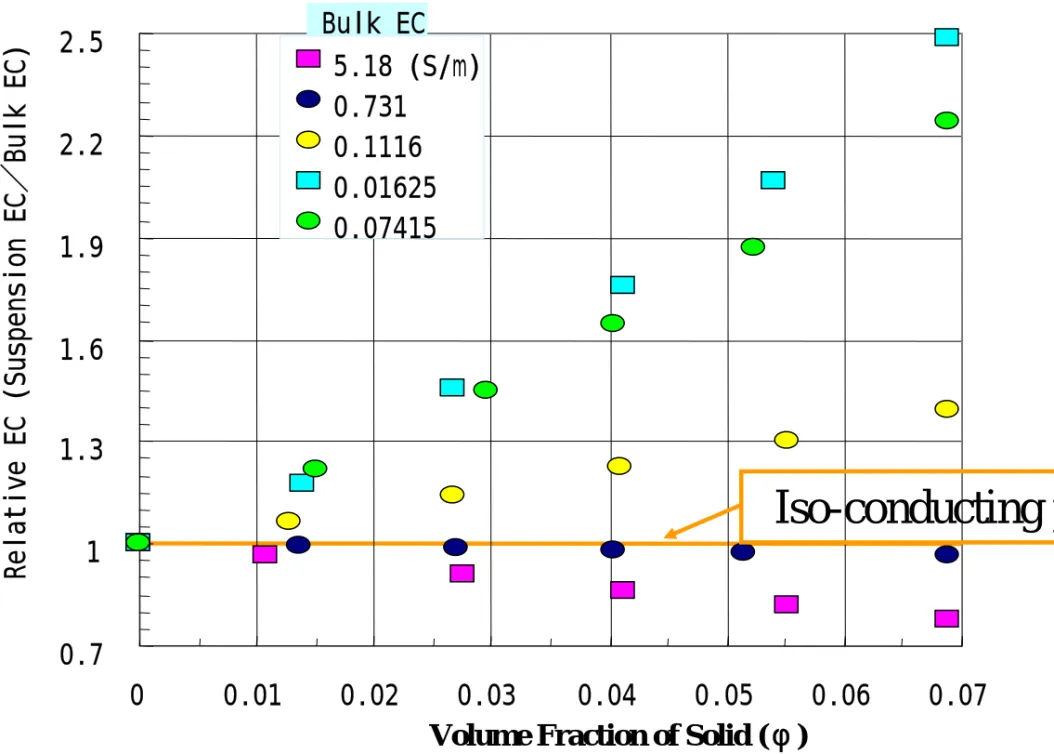
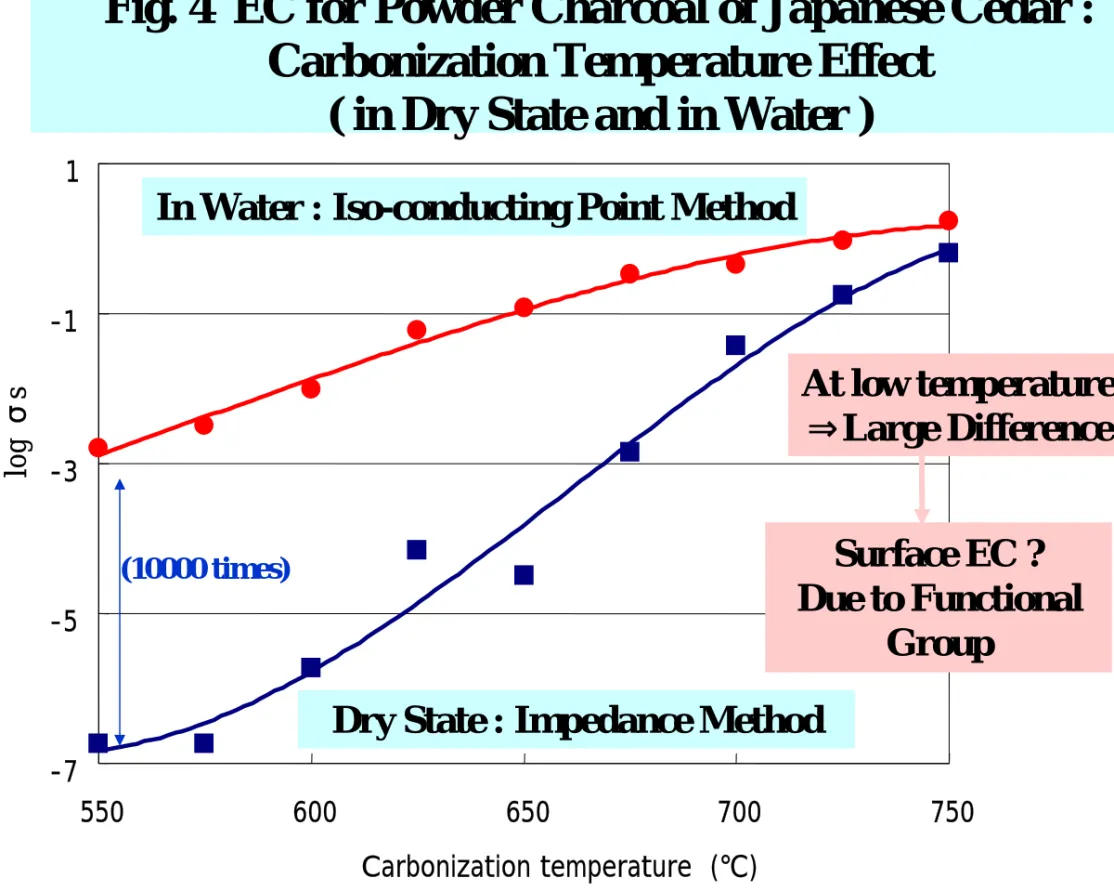
[具体的データ] 200ml 100ml 電導度電極 スタ−ラー 恒温水槽中 沈殿 上澄み 粉炭10g 界面沈降 (相対電導度) 沈殿電導度 上澄み電導度 = 等電導度点の決定 0.6 0.8 1 1.2 1.4 1.6 1.8 2 2.2 0.001 0.01 0.1 1 10 100 上澄み電導度σ(S/m) 沈殿電導度/上澄み電導度 (σ*/σ) 計算値(間隙率0.7) 活性炭実測値 図 1 懸濁液沈降を用いた粉炭電導度計測法 図 2 相対電導度(σ*/σ)と溶液電導度(σ) 溶液電導度 0.7 1 1.3 1.6 1.9 2.2 2.5 0 0.01 0.02 0.03 0.04 0.05 0.06 0.07 体積分率(φ) 相対電導度(懸濁液/溶液) 5.18S/m 0.731 0.1116 0.01625 0.07415 杉粉炭 0.00000001 0.000001 0.0001 0.01 1 100 500 550 600 650 700 750 800 炭化温度(℃) 電気 伝導 度( S / m ) 懸濁液法 乾燥粉炭 図 3 相対電導度(σ*/σ)と固体体積分率(φ) 図 4 杉オガクズ粉炭電導度と炭化温度 活性炭 0.0001 0.01 1 100 550 650 750 850 950 炭化温度(℃) 電気 伝導 度( S / m ) 懸濁液法 乾燥粉炭 0.0000001 0.00001 0.001 0.1 10 500 550 600 650 700 750 800 炭化温度(℃) 電気 伝導 度( S / m ) 杉板炭(乾燥) 杉粉炭(乾燥) 図 5 活性炭電導度と炭化温度 図 6 杉の粉炭と板炭の電導度比較 [その他] 研究課題名:イオン移動監視のための電導度計測法の開発 中期計画大課題名:有機物循環利用のための処理技術及び自然エネルギー利用技術の開発 予算区分:交付金研究、委託プロ(バイオリサイクル) 研究期間: 2002∼2004年度 研究担当者:大井節男 発表論文等:1)大井節男、多孔質粒子懸濁液の電気伝導度、コロイド及び界面化学討論 会講演要旨集、32、2002 2) 大井節男・松村英夫、界面動電現象とゼ−タ電位、土のコロイド現象(足 立・岩田編)、学会出版センタ−、93-116、2003
- 1 -
19 Electrical Conductivity for Suspensions of Carbonized Porous Powder
〔Abstract〕The quality of the carbonized materials is very sensitive to the carbonization temperature. We developed the electrical conductivity method to know the carbonization temperature and proposed a new method of measuring the conductivity of carbon powder in suspension. This is a method in which an iso-conducting point is found , and the resulting conductivity of carbon powder correlated well with the carbonization temperature.
Laboratory of Renewable Energy and Resources, Dept. of Regional Resources, National Institute for Rural Engineering
Classification: Research
Telephone number and e-mail address: 029-838-7633, [email protected]
Class: Reference
〔Background and objectives〕
Carbonization treatment is one of the most important methods for reuse of organic wastes. The quality of carbonized materials, however, is very sensitive to the carbonization temperature (CT) and this temperature should be controlled correctly for various reuses. For this reason, electrical conductivity (EC) measurement methods have been developed as a simple method to find carbonization temperatures. For carbon powder, however, EC measurement method is very difficult to apply due to high resistance at tremendous number of contact points. Accordingly, in this study, we proposed a new method of suspending carbon powder in more than one solution having different conductivities and finding the iso-conducting point. Moreover, we applied this method for activated carbon and charcoal powder made from cedar sawdust to prove the effectiveness, and finally we found the applicable conditions by comparing with the measured values of dried plate and charcoal powder made from the same material.
〔Contents and characteristics of the results〕
1. We prepared carbon powder in nitrogen gas under the following conditions: a temperature rising rate of 5°C/min and one-hour exposure to a given temperature. Next, we suspended 10 g of the powder in 200 mL of distilled water and added NaCl solution to adjust the conductivity. We put the electrode of a commercial EC meter (3 kHz) into a thermobath and stirred the suspension with a submarine stirrer for 15 minutes. We waited until the carbon powder was settled and the sedimentation volume was 100 mL, and finally measured the conductivities σ and σ* of the upper (solution) and lower (suspension) layers (Fig. 1). Figure 2 shows changes in the relative conductivity (σ*/σ) of activated carbon. The iso-conducting point means that the relative conductivity is one, that is, the conductivities of the carbon powder and bulk solution are identical. The curve shown in the figure was given by the Maxwell equation taking pore volume into consideration and agreed very well with the measured values. Moreover, relative conductivity was linearly proportional to the volume ratio of the suspension (Figure 3).
2. Figures 4 and 5 indicate changes in the conductivities of cedar charcoal and activated carbon powders with respect to the carbonization temperature. The conductivities given by the impedance measurement showed several-order changes in the range of 550-750°C, while the values obtained from the iso-conducting point of the suspensions showed a few order
- 2 -
changes. This is because the surface of the particles is charged in the suspension to increase the conductivity, particularly in the low-concentration solution. However, the stable values were obtained only from the suspension method. Figure 6 shows the conductivities by the impedance method for dried charcoal made from a cedar in powder and plate forms. The conductivity of the plate charcoal was about 10 times higher than that of the powder charcoal because the contact resistance of the powder is higher.
〔Utilization of the results and points to be considered〕
This method of finding conductivity for carbon powder in suspensions cannot exclude surface conduction effect. Therefore, it is desirable to combine this suspension method to the impedance method for dry powder.