環境科学研究科 アクティビティレポート 2017
著者
東北大学大学院環境科学研究科
雑誌名
環境科学研究科アクティビティレポート :
Coexistence
発行年
2018-03-31
URL
http://hdl.handle.net/10097/00123170
日頃より、東北大学大学院環境科学研究科の研究・教育活動に深いご理解と温かいご支援を 賜り、心から御礼申し上げます。 今年も一年を振り返りながら教職員それぞれが原稿執筆を行い、アクティビティレポート第 15 号が完成いたしました。皆さまにご高覧頂きたく、お手元にお届け致します。 環境科学研究科は「文理融合」の理念を掲げ、2003 年に設立された東北大学で第 4 番目の 独立研究科です。現在は「先進社会環境学専攻」と「先端環境創成学専攻」の 2 専攻から成り立っ ています。環境問題に対して鳥瞰的かつ国際的な視座を有し、先端的環境技術による対策を行え る人材(国際的 T 型人材)の育成も教育・研究目標の柱として磐石なものとしつつ、もう一つの柱 として、文理横断型の環境思考を基盤としたソリューションの創出を行うとともに、自在に立ち位 置を変えてディレクションを行える人材(国際的凸型人材)を育成するという教育・研究目標を打 ち立てています。 2016 年には念願の研究科本館が竣工し、青葉山新キャンパスに誕生したこの新しい本館を拠 点に、今後順次研究室を集約することで、学生教職員の利便性を向上させ、交流を促進が少しず つ図られてきていると実感しています。2 専攻体制の目指す “ 豊かな知識と優れた実務能力で組 織や社会を導くジェネラリスト” と “ 先端的環境科学の研究で世界を牽引するスペシャリスト” の 育成は、着実に加速していくことでしょう。 世界的には、持続可能な世界を実現するための 17 のゴール・169 のターゲットから構成される 持続可能な開発目標(SDGs)への取り組みが求められています。このゴール・ターゲットは、地 球上の誰一人として取り残さない(leave no one behind)ことを誓っており、世界の国々が普 遍的に取り組むものと位置付けています。我々は教育・研究を通して、こうした課題にも果敢に向 かい合いことができるリーダー的な人物を輩出することを念頭にいれています。このアクティビティ レポートには、単に研究成果を紹介するだけでなく、その成果の根底には、上述の視点も含まれ ていることをご理解いただきたいと願っております。今後とも、変わらず見守って頂くとともに、 ご指導、ご鞭撻を賜りますよう、お願い申し上げます。
First, on behalf of the Graduate School of Environmental Studies at Tohoku University, I would like to express our deepest gratitude for your continued understanding and support of our research and education. We are very pleased to deliver to you the 15th edition of our activity report, written by faculty members and covering our accomplishments in the previous year.
With the concept of “humanity-science fusion,” the Graduate School of Environmental Studies was established as the fourth independent graduate school of Tohoku University in 2003. We are currently operating in a two-department system, with the Department of Environmental Studies for Advanced Society and the Department of Frontier Sciences for Advanced Environment. The goal of our research and education can be expressed by two pillars. The first pillar involves nurturing human resources with a bird’s eye, global perspective on environmental issues and the ability to implement countermeasures with leading-edge environmental technologies (global “T-Type” human resources). The second pillar involves nurturing human resources capable of creating solutions based on humanity-science interdisciplinary environmental thought and freely assuming directorial roles in a variety of positions and contexts (global “Convex-Type” human resources).
The year 2016 saw the much-awaited completion of the new main building. To this new base completed on the Aobayama New Campus, we are accumulating our laboratories over time. We feel it is already becoming more convenient for students and faculty members alike and is facilitating more exchange. I am confident that our efforts in reaching the goal of our two-department system—nurturing “a generalist who leads organizations and society with a wealth of knowledge and an exceptional administrative ability” and “a specialist who leads the world in the research of frontier environmental science”—will be further boosted. Internationally, it is our common duty to strive for Sustainable Development Goals, which comprise 17 goals and 169 targets. As these goals and targets pledge to “leave no one behind,” we see them as universal tasks for all countries. In our research and education, it is integral to produce leaders who can address such challenges. It is our hope that when you read this activity report, it not only introduces research accomplishments but also embodies the aforementioned perspective. We greatly appreciate your further and continued help for and encouragement of our research and education.
ごあいさつ
Prefatory Note
東北大学大学院環境科学研究科長Dean, Graduate School of Environmental Studies, Tohoku University
ページ
CONTENTS
資源戦略学講座
都市環境・環境地理学講座
太陽地球システム・エネルギー学講座
自然共生システム学講座
連携講座
資源循環プロセス学講座
環境創成計画学講座
エネルギー資源学講座
寄附講座(DOWA ホールディングス)
環境政策学講座
先進社会環境学専攻
先端環境創成学専攻
Department of Environmental Studies for Advanced SocietyDepartment of Frontier Sciences for Advanced Environment
地圏環境計測・分析学分野 環境地理学分野(自然 / 人間環境地理学) 資源利用プロセス学分野 資源再生プロセス学分野 環境適合材料創製学分野(新日鐵住金) 環境グリーンプロセス学分野 環境分子化学分野 分散エネルギーシステム学分野 地圏環境政策学分野 白鳥寿一 教授 環境材料政策学分野 鳥羽隆一 教授 環境物質政策学分野 下位法弘 准教授 イノベーション戦略学分野 平野伸夫 助教 関根良平 助教 葛西栄輝 教授 / 村上太一 准教授 吉岡敏明 教授 / 亀田知人 准教授(工学研究科) 佐藤有一 教授 / 岡崎潤 教授 / 楠一彦 教授 スミスリチャード 教授 / 渡邉賢 准教授(工学研究科) 壹岐伸彦 教授 川田達也 教授 / 八代圭司 准教授 古川柳蔵 准教授 4 38 40 46 60 52 56 18 34 26 地圏環境の正確な観察・計測・分析と記録、またそのための 装置・技術・方法の開発 人間 - 環境関係を多面的に解明する 高度資源利用・環境保全のためのプロセス研究 資源・物質循環型社会の実現を目指して 鉄鋼製造技術を通して、資源・エネルギー問題に貢献する 環境調和型化学プロセスの開発 環境に適合する高次機能物質システムの創成 サステイナブルなエネルギーシステム実現に向けて 環境調和型新素材素子製造と新たな資源循環システムを目指して バックキャスト思考によるライフスタイル変革のイノベーション 環境複合材料創成科学分野 地球システム計測学分野 環境分析化学分野 地球環境変動学分野(国立環境研究所) 環境リスク評価学分野(産業技術総合研究所) バイオエコマネジメント学分野(電力中央研究所) 循環材料プロセス学分野 環境材料表面科学分野 佐藤義倫 准教授 村田功 准教授 中島英彰 教授 / 町田敏暢 教授 浅沼宏 教授 / 張銘 教授 / 坂本靖英 准教授 コマロフセルゲイ 教授 / 吉川昇 准教授 和田山智正 教授 6 42 48 62 64 66 54 58 次世代型ライフスタイルの創成を担う高機能軽元素複合材料の開発 大気中のオゾン等微量成分の変動の研究 環境系・生体系物質計測への展開を目指した新しい化学分析 モチーフの開発 グローバルな大気環境や炭素循環の変化を捉える 「安全・安心」な地熱エネルギーの利用を目指して バイオテクノロジー・バイオシステムを利用した地球温暖化の緩和・適応 対策ならびに環境計測技術 循環型社会を目指した材料製造プロセスの研究 低環境負荷社会に資するナノ材料を中心とする表面設計指針 環境科学研究科長 1 68 83 89 100 99 90 ごあいさつ 業績レポート 博士・修士論文題目一覧(平成 29 年 3 月・9 月修了) 進路状況 環境科学研究科事務室職員 索引 TOPICS トピックス
Dean, Graduate School of Environmental Studies
Prefatory Note エネルギー資源リスク評価学分野 環境・エネルギー経済学分野 駒井武 教授 / 渡邉則昭 准教授 松八重一代 教授 20 30 資源・エネルギーの持続的開発と環境の持続の可能性 サプライチェーンを通じた資源利用と関連するリスクの可視化 環境社会動態学分野 藤崎成昭 教授 28 開発と環境 - 持続可能な未来を求めて 環境素材設計学分野 水資源システム学分野 環境生命機能学分野 松原秀彰 教授 / 上高原理暢 准教授 風間聡 教授(工学研究科)/ 李玉友 教授(工学研究科)/ 小森大輔 准教授 8 44 50 環境や生命に調和する材料デザインを求めて 水資源と水環境に関する研究 マイクロ・ナノ電極システムを利用した環境・医工学バイオセンシング デバイスの開発
Urban Environment and Environmental Geography
Solar and Terrestrial Systems and Energy Sciences
Environmentally Benign Systems
Collaborative Divisions Sustainable Recycle Process
Ecomaterial Design and Process Engineering
Physical and Human Environmental Geography
Process Engineering for Advanced Resources Utilization
Recycling Chemistry
Process Engineering for Environmentally Adapted Materials (Nippon Steel & Sumitomo Metal Corporation)
Environmental Green Process Study
Environmentally-Benign Molecular Design and Synthesis
Elucidate the relationship between humans and the environment from a multifaceted perspective
Process Engineering Research for Advanced Resource Utilization and Environmental Conservation
Aimed on the realization of a resources-material recycling society
Development of new steelmaking technology contributing to the sustainable society Green Process Development
Design of environmentally benign molecular systems with high functionality
Earth System Monitoring and Instrumentation
Environmental Analytical Chemistry
Global Environment (National Institute for Environmental Studies)
Environmental Risk Assessment (National Institute of Advanced Industrial Science and Technology)
Biotechnical Eco-management (Central Research Institute of Electric Power Industry) Material Process for Circulatory Society
Environmental Materials Surface Science
Variations of ozone and related trace species in the atmosphere
Development of Chemical Motifs for Environmental and Biochemical Analysis
Observation of Global Atmospheric Environment and Carbon Cycle Changes
Studies for utilization of safe and secure geothermal energy
Utilizing biotechnology and bio-system as global warming mitigation / adaptation measures and environmental measurement.
Material Process for Circulatory Society
Atomic-level surface design for eco-friendly, novel nano-materials
Urban and Regional Environmental Systems
Environmental Bioengineering
Researches on Water resources and environments
Development of Environmental/Biomedical Sensing Devices with Micro/Nano Electrode Systems
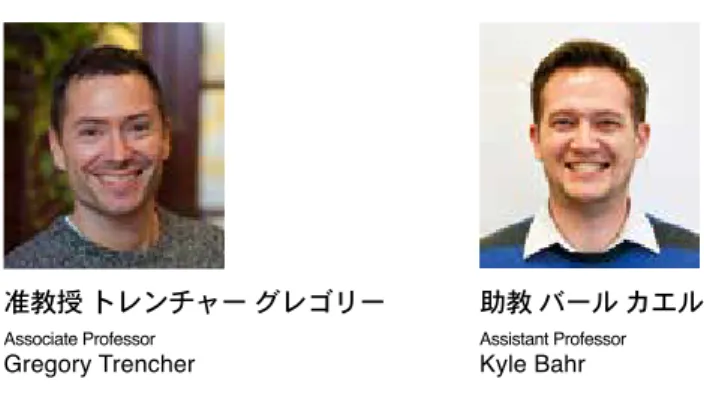
環境共生機能学分野 国際環境・自然資源マネジメント学分野 田路和幸 教授 / 高橋英志 准教授 香坂玲 教授 22 32 環境との共生・エネルギーの創製を担うナノ機能素材開発 一緒にフィールドに出て、地域と考え、論文を書いて世界と対話しよう 環境修復生態学分野 井上千弘 教授 / グラウゼギド 准教授 10 環境思いの修復技術と資源回収技術の開発 国際エネルギー資源学分野 グラウゼギド 准教授 / トレンチャーグレゴリー 准教授 24 持続可能型社会の実現に向けて政策およびエネルギー・自然資源管理 の役割 地球物質・エネルギー学分野 地球開発環境学分野 地球開発環境学分野 土屋範芳 教授 / 岡本敦 准教授 高橋弘 教授 坂口清敏 准教授 12 14 16 地圏システムと構成物質の理解とその有効利用 環境調和型開発システムに関する研究 地殻環境・エネルギー技術の新展開 Resources Strategies Energy Resources
Endowed Division (Dowa Holdings Co., Ltd.) Environmental Policies
Geo-environmental Measurement and Analysis
Distributed Energy System
Geosphere Environment Study of Functional Materials Control of Environmental Materials Environmental Technology and Innovation
Measurement, observation and equipments development for understanding of various geosphere information
Toward the development of sustainable energy system
Towards Establishing Environmentally Benign Material Synthesis and Devices and New Material Circulation Systems
Research on lifestyle innovation using backcast method
Nanocomposite Science and Interfacial Materials Design
Development of High-Functional Light-Element Composites for Creating a Next Generation Life Style
Resources and Energy Security
Environmental and Energy Economics
Sustainable development of resource and energy as well as sustainable possibility of environment
Resource logistic approach to visualize supply chain risks behind resource use
Socio-Environmental Dynamic Analysis
Development and the Environment – Toward a Sustainable Future
Design of environment-friendly materials
Design of materials harmonizing with environment and life
Designing of Nano-Ecomaterials
Natural Resource Management and Global Environmental Policy
Development of functional nano-ecomaterials for energy and environment in the environmentally benign systems
Act locally, think globally together with the community
Geoenvironmental Remediation
Development of Environmental Friendly Remediation Technologies and Resource Recovery Technologies
International Energy Resources
Building a sustainable global society through policy and sustainable energy and resource use
Geomaterial and Energy
Earth Exploitation Environmental Studies
Earth Exploitation Environmental Studies
Understanding of geosystems and geomaterials and their effective uses
Studies on environment-friendly development systems
Toward Advanced Environmental Geomechanics and Energy Technology
鈴木敦子 助教
渡部良朋 教授 / 松本伯夫 准教授 末永智一 教授 / 珠玖仁 教授(工学研究科)
Coexistence Activity Report 2017 Coexistence Activity Report 2017
4 5
先進社会環境学専攻
Department of Environmental Studies for
Advanced Society
地圏環境計測・分析学分野
資源戦略学講座
Resources Strategies地圏環境の正確な観察・計測・分析と記録、
またそのための装置・技術・方法の開発
Measurement, observation and equipment development for understanding of various geosphere information
助教 平野 伸夫
Assistant Professor
Nobuo Hirano
Geo-environmental Measurement and Analysis
The objectives of this laboratory are to focus on measurement and observation for understanding various geospheric information, and we are developing apparatus for that purpose. Our main targets are water-rock interaction, destruction of rocks under hydrothermal conditions in the Earth’s interior, scale precipitation from hot spring water, natural and artificial thermoluminescence (NTL, ATL) of quartz and/or feldspar, and hydrogen production from the reaction of strong acid/alkaline solutions with metallic aluminum.
Our main focus is the development and utilization of geothermal resources, and we will use these research results for social purposes.
流体相変化に伴う岩石鉱物の破壊現象
これまでの研究で、岩石類を 400℃から 500℃超の超臨界状態水 中に設置し、急減圧をおこなうと内部流体の沸騰と断熱膨張に伴う温 度低下によって、岩石に顕著なき裂を生じさせることが可能であること を報告してきている。この現象は地殻深部における岩石き裂発生原因 の解明や、地熱開発のための新たな掘削方法への応用が期待できる。 これまでは、超臨界熱水環境から急減圧する室内実験を主におこなっ てきたが、さらに低い 200℃から 300℃の熱水環境下でも同様の実 験をおこなった。その結果、このような低い温度でも岩石内部に微細 なき裂が生じることが確認された。この温度は実際の地熱井掘削現 場の最高温度とほぼ同じ条件である。超臨界流体の分光観察
純水の臨界点は約 374℃、22MPa である(Fig.1)が、地球内部 に存在する水には様々な成分を溶解しているため、その影響を受けて 臨界点が移動する。これは、地球内部での水が関連した岩石鉱物の 溶解・析出を考える上で非常に重要な問題である。従って、様々な元 素を溶解した水の臨界点を決定することは非常に重要となる。この決 定方法として、超臨界水の分光分析をおこない、分光状態の変化から 臨界点を決定する事を目的とした実験装置を開発し、分光データの収 集をおこなっている(Fig.2, Fig.3)。メカニカルデスケーリングと温泉スケール
現在、小規模な地熱発電として、既存の温泉井あるいは温泉設備を 利用した発電が注目されつつあるが、これらの運用では、発電効率低 下の主な原因となる熱水スケール発生の問題から逃れられない。既存 の温泉を利用する場合には発電後の温泉水を浴用などに利用するため 地熱発電のような薬品などを使用した積極的なスケール対策はおこな えない。そのため一定期間ごとに温泉井を止め、配管内スケールの除 去をおこなっているが、このためのコストが負担となってくる。そこで、 より安価におこなえるメカニカルデスケーリング方法および装置を開 発できれば、温泉を利用した発電のためだけではなく通常の温泉での コスト削減にも貢献が可能である(Fig.4)。このデスケーリングに役 立てるため、配管付着スケール等の解析をおこなっている(Fig.5)。強酸・強アルカリ等の廃水や温泉水を用いた水素発生
金属アルミニウムと pH1-2 の強酸性溶液や pH13-14 の強アルカリ 溶液を 50℃程度で反応させた場合、水素が発生することが判明して いる。これは、従来の水熱反応による水素生成の方法よりも非常に低 い温度であり工業的な利用が期待できる。そこで、現場で使用できる 基本的な反応装置を設計し、実際に強酸性温泉水を湧出する秋田県 玉川温泉において水素生成実験をおこなった結果、水素が十分に発生 できることがわかった(Fig.6)。今後は、より大規模な装置へとスケー ルアップしていく予定である。Fracturing of rocks by fluid phase change
In previous studies, it was found that when rocks are placed in supercritical water above 400 ˚C to 500 ˚C and rapidly decompressed, boiling of the internal fluid and temperature decrease associated with adiabatic expansion can cause significant cracks in the rock. This phenomenon can be used to explain the cause of rock cracking in the deep crust and to apply it to new excavation methods for geothermal development. Up to now, we have mainly conducted laboratory experiments to rapidly decompress the supercritical water environment, but similar experiments were conducted even in hot water environments of 200 ˚C to 300 ˚C. As a result, it was confirmed that cracks were generated inside the rocks even at such low temperatures. These temperatures are about the same as the maximum temperature of actual geothermal well development.
Spectroscopic measurement of
supercritical fluid
The critical point of pure water is about 374 ˚C and 22 MPa (Fig.1), but because various elements are dissolved in the water inside the Earth’s crust, the critical point of water changes. This is a very important issue in considering dissolution and precipitation of rock minerals inside the Earth’s crust. Therefore, it is very important to determine the critical point
of water containing various elements. As a method for this determination, we have developed an experimental apparatus with the aim of determining the critical point from the spectroscopic state change of supercritical water (Fig.2, Fig.3).
Mechanical descaling and hot spring scale
Power generation utilizing existing hot spring wells or hot spring facilities is attracting attention as a small-scale form of geothermal power generation. However, in doing so, it is impossible to avoid the problem of hydrothermal scale generation, which is a major cause of power generation efficiency reduction. When using existing hot springs, it is impossible to perform aggressive scale removal using chemicals because the post-power-generation hot spring water is used for spas. For that reason, the hot spring wells are stopped at regular intervals to remove in-pipe scales, but the cost of this process will become a burden for spas. Therefore, if we can develop a more inexpensive mechanical descaling method and equipment, we can contribute not only to electricity generation using hot springs but also cost reduction in ordinary spas (Fig.4). In order to aid this descaling, it was analyzed the scale structure attached to the piping, for example the density or direction of the cracks. (Fig.5).
Hydrogen generation using strong acid/
strong alkaline wastewater and acid hot
spring water
It has been reported that hydrogen is generated when a strongly acidic solution at pH 1-2 or a strongly alkaline solution at pH 13-14 and metallic aluminum react at about 50 ˚C. This is a much lower temperature than the conventional method of hydrogen production by hydrothermal reaction, and industrial applications can be expected. Therefore, we designed a basic reactor that can be used on-site. We then conducted a hydrogen production experiment at Tamagawa spa in Akita Prefecture, which has strongly acidic hot spring water. It was found that hydrogen can be generated sufficiently (Fig.6). In the future, we plan to scale up to larger equipment.
本研究室では、地圏の様々な情報の理解に焦点を当てており、そのために必要な手法や装置の開発をおこなっている。主なターゲットは、水 -岩石相互作用、地球内部の水熱条件下での岩石状態の把握、温泉水からのスケール析出、石英および / または長石の自然および人工熱発光(NTL、 ATL)、 酸 / アルカリ溶液と金属アルミニウムを用いた水素の発生技術等である。
主に地熱資源の開発と活用を目的としたものであり、これらの研究成果を最終的には社会に還元したいと考えている
Fig.1 Condtion of water near the critical point. Fig.3 Spectral map of transmit light in water at each Fig.4 Field test of mechanical descaling.
temperature. Fig.6 Hydrogen gas generating reaction of Tamagawa hot spring water and metal aluminum. Fig.2 Spectroscopic data measuring system
先進社会環境学専攻
Department of Environmental Studies for
Advanced Society
次世代型ライフスタイルの創成を担う
高機能軽元素複合材料の開発
Development of High-Functional Light-Element Composites for Creating a Next Generation Life Style
環境複合材料創成科学分野
准教授 佐藤 義倫
Associate Professor
Yoshinori Sato
資源戦略学講座
Resources StrategiesNanocomposite Science and Interfacial Materials Design
In the past, a number of composites consisting of nanomaterials that possess excellent features of their own, have been produced in basic studies. However, it is hard to design and produce composites in which the properties of nanomaterials are reflected because each nanomaterial in the composite assembles at random, not to enhance the features of the nanomaterials. In this laboratory, the purpose of the research is to study and develop high-functional composites with high-performance surfaces and interfaces using boron, carbon, and nitrogen, in an effort to expand the properties of nanomaterials to those of bulky composites.
脱フッ素化による窒素ドープ炭素材料を合成するため
のポストドーピング法の開発
固体高分子形燃料電池(PEFCs)では、白金担持カーボンブラック (Pt-C)が空気極の酸素還元反応(oxygen reduction reaction:
ORR)の触媒として使われている。しかし、白金の高コスト・低耐久 性が PEFCs のコスト増大および短寿命を引き起こしている。窒素ドー プ炭素材料は ORR 触媒として作用することが知られており、我々の 研究室では、脱フッ素化による窒素ドープ炭素材料を合成するための 新しい簡易なポストドーピング法を提案している。具体的には、フッ 素化炭素材料をアンモニアガス中で 25–1000 °C で反応することに よって窒素ドープ炭素材料を合成している。
1 本の多層カーボンナノチューブの引張強度に関する
担持された金属ナノ粒子の影響
丈夫な CNT/ 金属複合体を作製するために、デザインされた複合 体中の CNT と金属間の界面強度は、これらの物質間に作用する荷重 伝達に耐えうるくらいに十分強くなければならない。そこで、走査型 電子顕微鏡内でのその場観察による1 本の多層カーボンナノチューブ の引張強度に関する担持された金属ナノ粒子の影響を調べた。PtPd ナノ粒子を担持した場合では、担持された MWCNT の 1 本の平均引 張強度は未担持の MWCNT のそれよりも僅かに減少した。XPS およ びラマン分光分析データは PtPd ナノ粒子と MWCNT 間の結合の関 与を示唆したことから、引張強度の僅かな減少は、ナノ粒子と CNT のベーサル面間の共有結合により生じたナノチューブ構造の局所的な 歪みの誘導によるものが寄与していると考えている。受賞
・横 山 幸 司、“5th Nano Today Conference Student Travel
Award” ・黒田 彬央 “ 第 44 回炭素材料学会年会 ポスター賞 ” ・間宮 一誠 “ 第 10 回資源・素材学会東北支部 若手の会 ポスター賞 ” ・横山 幸司 “ 第 55 回炭素材料夏季セミナー ポスター賞 ” ・細見 奨太 “ 平成 28 年度 東北大学 3 年次エネルギー環境奨学賞 ” ・横山 幸司 “ 第 8 回環境エネルギー技術研究所 奨学賞 ”
研究費
・JSPS 科学研究費補助金 15H04131 ( 基盤研究 (B)/ 代表 ) ・17H01584 ( 基盤研究 (A)/ 分担 ) ・16H05518 ( 基盤研究 (B)/ 分担 ) ・26220104 ( 基盤研究 (S)/ 分担 ) ・共同研究費 ( ステラケミファ株式会社 / 代表 )共同研究
・信州大学先鋭領域融合研究群 バイオメディカル研究所(齋藤直人 教授) ・ステラケミファ株式会社(研究部)Development of a post-doping method to
synthesize nitrogen-doped carbon materials
by defluorination
In polymer electrolyte fuel cells (PEFCs), platinum nanoparticles supported on carbon black (Pt-C) have been used as a standard catalyst for oxygen reduction reactions (ORRs) on the cathode. However, the high price and poor durability of Pt has led to an increase in the cost of PEFCs and shorter cell lifetime. Nitrogen-doped carbon materials are known to act as electrocatalysts for the ORR. In our laboratory, we suggest a new and facile post-doping method for synthesizing nitrogen-doped carbon materials by defluorination. In particular, nitrogen-doped carbon materials have been synthesized by reacting fluorinated carbon materials with ammonia gas at 25–1000 ˚C.
Influence of supported metal nanoparticles
on the tensile strength of individual
multi-walled carbon nanotubes
In an effort to fabricate durable carbon nanotube (CNT)/metal composites, the interfacial strength between the CNTs and the matrix in the designed composites must be strong enough to endure the load transfer between these two components. We have investigated the influence of supported metal nanoparticles on the tensile strength of individual multi-walled
CNTs (MWCNTs) using in situ scanning electron microscopy. In the case of the deposition of PtPd nanoparticles, the average tensile strength of individual deposited MWCNTs was slightly lower than that of the as-grown MWCNTs. Since X-ray photoelectron and Raman scattering spectroscopic data showed bonds between the PtPd nanoparticles and the MWCNTs, the slight strength decrease can be attributed to the induction of local distortions in the nanotube structure caused by the covalent bonds between the nanoparticles and the CNT basal plane.
Awards
・Koji Yokoyama, “Student Travel Award” at the 5th Nano Today
Conference
・Akihisa Kuroda, “Poster Award” at the 44th Annual Meeting of the
Carbon Society of Japan
・Issei Mamiya, “Poster Award” at the 10th Young Meeting of the MMIJ
Tohoku Branch
・Koji Yokoyama, “Poster Award” at the 55th Annual Carbon Summer
Seminar for Young Researchers and Students of the Carbon Society of Japan
・Shota Hosomi, “Scholarship (Third year student)” of the Environment
and Energy Engineering, School of Engineering, Tohoku University
・Koji Yokoyama, “Scholarship Award” of the 8th Scholarship Award of
the Shaping the Future Technology for the Environment and Energy
Grants
・JSPS KAKENHI 15H04131 (Scientific Research (B)/PI) ・JSPS KAKENHI 17H01584 (Scientific Research (A)/Co-I) ・JSPS KAKENHI 16H05518 (Scientific Research (B)/Co-I) ・JSPS KAKENHI 26220104 (Scientific Research (S)/Co-I) ・Collaboration grant (Stella Chemifa Corporation/PI)
Collaborations
・Institute for Biomedical Sciences, Interdisciplinary Cluster for Cutting
Edge Research, Shinshu University (Prof. Naoto Saito)
・Stella Chemifa Corporation (Research Division)
ナノ物質は小さいながらも、優れた特性を持っている。しかし、ナノ物質の特性を生かした複合材料の設計・合成は、ランダムに配置された個々 のナノ物質の特性が打ち消されるため、極めて難しくなる。そこで、ナノ物質の特性を最大限に活かしたナノ複合界面設計に基づいた高次機能性 複合材料が必要である。本研究室では、材料科学分野における課題である「ナノ物質の特性をバルクまで引き伸ばすための軽元素複合材料設計 と材料開発およびその複合界面に関する研究」を目指している。研究を遂行するにあたり、軽元素のホウ素、炭素、窒素を用いた高機能な表界 面を持つ軽元素複合材料の開発を行っている。
Fig.1 Schematic illustration of the defluorination-assisted nanotube-substitution reaction for the synthesis of nitrogen-doped single-walled carbon nanotubes.
Fig.4 “Poster Award” in the 44th Annual Meeting of the Carbon Society of Japan. (Akihisa Kuroda) Fig.S1 New crews. Minori Kokubo (left) and Shota Taira (right).
Fig.3 “Student Travel Award” at the 5th Nano Today
Conference. (Koji Yokoyama) Fig.6 “Scholarship (Third year student)” of the Environment and Energy Engineering, School of Engineering, Tohoku University. (Shota Hosomi) Fig.S3 Oktoberfest in our laboratory.
Fig.2 Schematic illustration of the interactions between the MWCNTs and PtPd nanoparticles. Tensile strengths of MWCNTs with and without PtPd nanoparticles.
Fig.5 “Poster Award” at the 10th Young Meeting of the MMIJ Tohoku Branch. (Issei Mamiya) Fig.S2 Cherry-blossom viewing.
Coexistence Activity Report 2017 Coexistence Activity Report 2017
8 9
先進社会環境学専攻
Department of Environmental Studies for
Advanced Society
環境や生命に調和する材料デザインを求めて
Design of materials harmonizing with environment and life
環境素材設計学分野
教授 松原 秀彰
Professor
Hideaki Matsubara
Design of environment-friendly materials
資源戦略学講座
Resources Strategies准教授 上高原 理暢
Associate Professor
Masanobu Kamitakahara
Nowadays, we are using many materials to live our daily life. From the viewpoint of environmental science, materials design is required in order to build a sustainable society. In this laboratory, based on the fundamental science of the relationship between materials and phenomena of nature and life, the design of materials that produce harmony with the environment and life is studied from the viewpoint of environmental science. We are developing materials for energy saving, biomaterials to repair our bodies, and materials to clean the environment and are studying computer simulations.
省エネのための断熱・蓄熱システムの開発
エネルギー消費を抑え、化石燃料に依存しない暮らしへ移行するた めには、自然・未利用熱 ( 地中熱、太陽熱、雪氷、工場排熱等 ) の利 用が重要となる。種々の熱源と蓄熱槽を組み合わせることにより、最 小限のエネルギー消費で自然・未利用熱を有効利用するためのシステ ム構築が可能となる。特に夏の温熱を冬に、冬の冷熱を夏に利用した い場合には、これらの熱を長期間に蓄えておく断熱性能がそのまま利 用可能熱量に直結する。本研究室では、季節間の熱利用を行うことを 想定し、高性能の新規断熱材料を開発し、断熱(熱保存)性能を評 価するとともに、熱を蓄えつつ一定温度で放出可能な槽 ( 熱池と呼称 ) と複数の熱源を組み合わせた回路によって熱利用システムの効率等を 評価している。材料組織形成のシミュレーション
モンテカルロ法、有限要素法、分子動力学法などを用いて、セラミッ クスや複合材料の組織形成のシミュレーションの研究を行っている。 例えば、複数の固相、液相、気孔を含む材料の組織変化を、温度と 時間との関係で追うことのできるシミュレーションを開発した。液相焼 結として有名な WC-Co 超硬合金の粒成長を抑える新しい手法として、 第 2 固相粒子をピン止め粒子として添加する材料設計手法を、MC シ ミュレーションと比較する形の研究で進めている。航空機エンジン用セラミックスコーティングの
シミュレーション
現在、航空機エンジンの高温部品には熱遮蔽コーティングが広く適 用されており、今後は新規コーティングである耐環境性コーティング の研究が重要になってくると考えられる。本研究では、セラミックス コーティングの組織形成、組織変化、損傷・剥離のシミュレーション を行っている。モンテカルロ法を用いて、特異(柱状晶、羽毛状)な 構造の形成と焼結・粒成長による組織変化を再現できるシミュレーショ ン技術を開発し、有限要素法を用いて、焼結による膜の形状変化を再 現できるシミュレーション技術や膜の剥離の解析技術を開発した。生体に調和する材料の創製
代謝に組み込まれて生体機能に働きかける骨修復材料ならびに薬剤 を効果的に放出できる薬剤担体の創製を行っている。これまでに、生 体内で吸収され骨の代謝に組み込まれる人工骨の作製に成功してい る。これらの材料が骨代謝を活性化するメカニズムの解明にも取り組 んでいる。適切な部位に適切な量の薬剤を送り込むことにより薬剤の 効用を向上させるとともに薬剤の使用量を減らすことのできるドラッグ デリバリーシステム(DDS)の担体として、リン酸八カルシウムと水酸 アパタイトの複合相からなる顆粒の作製にも成功している。これらの 材料の開発は、患者の生活の質(QOL)を向上させるだけでなく、環 境低負荷医療の実現に貢献できると考えている。学会等での活動
下記のように、学会等でも積極的に活動をしている。 松原秀彰:粉体粉末冶金協会理事、同協会硬質材料分科会主査、粉体および 粉末冶金編集委員長、日本セラミックス協会エンジニアリングセラミックス部会 委員、日本セラミックス協会東北・北海道支部委員、賢材研究会幹事 上高原理暢:Associate Editor of Journal of the Ceramic Society of Japan、日本バイオマテリアル学会評議員、日本セラミックス協会第 30 回秋 季シンポジウム特定セッションオーガナイザー(代表者)Development of a thermal insulation /storage system for energy conservation
In order to reduce energy consumption and shift to a life independent from fossil fuels, it is important to use natural and unutilized heat. By combining heat sources and storage, it is possible to construct a system to utilize natural and unutilized heat effectively with minimum energy consumption. In this laboratory, assuming that heat is used across seasons (summer and winter), we developed a new high-performance insulation material and evaluated its insulation performance. The heat utilization efficiency of the heat utilization system was evaluated by using a circuit combining heat storage and several heat sources.
Simulation of formation of material microstructure
We are studying the simulation of the microstructure formation of ceramics and composites using the Monte Carlo method, the finite element method, and the molecular dynamics method. For example, we developed a simulation that can calculate changes in the structure of a material including several solid phases, liquid phases and pores from the viewpoint of the relationship between temperature and time. We also studied the material design of the second particle addition as a new way to inhibit grain growth in WC-Co cemented carbide, which is a well-known material of liquid phase sintering and compared it to the Monte Carlo simulation.
Simulation of ceramics coating for jet engines
Thermal barrier coating of ceramics is widely used in high-temperature and high-pressure parts of jet engines. Environmental barrier coatings are considered to be a very important ceramic technology for new jet engines. This study aimed to develop a simulation technique for microstructure formation and change and for delamination/fracture in ceramic coatings. The Monte Carlo method was used for the simulation of deposition and sintering, and the finite element method was used for the simulation of deformation and delamination of ceramic coating.
Preparation of materials harmonizing with life
In this laboratory, we designed bone-repairing materials that can be incorporated into bone metabolism and activate the biological functions and drug carriers to release drugs efficiently. We succeeded in the preparation of artificial bone that can be resorbed in vivo and incorporated into bone metabolism. We are also studying the mechanism by which these materials activate bone metabolism. This involved developing biphasic granules of octacalcium phosphate and hydroxyapatite as carriers of a drug delivery system (DDS) capable of improving the utility of a drug and reducing the amount of drug by releasing an appropriate amount of it to an appropriate site. We believe that the development of these materials not only improves the quality of life (QOL) of patients but also contributes to the realization of medicine with low environmental impact.
Activities in academic societies
As noted, we are active in academic societies.
Hideaki Matsubara: Director of the Japan Society of Powder and Powder Metallurgy, Chairperson of the Technical Division of the Hard Materials Committee of the Japan Society of Powder and Powder Metallurgy, Chief Editor of the Journal of the Japan Society of Powder and Powder Metallurgy, Committee Member of the Engineering Ceramics Division of the Ceramic Society of Japan, Committee Member of the Tohoku-Hokkaido Branch of the Ceramic Society of Japan, Secretary of the Society for Intelligent Materials.
Masanobu Kamitakahara: Associate Editor of the Journal of the Ceramic Society of Japan, Committee Member of the Japanese Society for Biomaterials, Session organizer of the 30th Fall Symposium of the Ceramic Society of Japan Organizer (Representative).
現在、我々は様々な材料を利用して生活を営んでいる。持続可能な社会を構築するためには、環境科学の観点からの材料のデザインが必要で ある。本分野では、材料と自然・生命現象の相互作用についての基礎学術に立脚し、環境科学の観点から、生命や環境と調和し、さらには積極 的に生命や自然に働きかけて新しい調和を生み出す材料のデザインの探求を行っている。具体的には、省エネルギーのための材料、生体を修復 するための材料、環境を浄化するための材料の開発、コンピューターシミュレーションの研究を行っている。
Fig.1 Heat insulation vessel (a) with vacuum wall and porous silica powder and simulation study (b) showing heat transfer from heat storage material in the vessel.
Fig.4 Scanning electron microscopic images of biphasic granule of octacalcium phosphate and hydroxyapatite. (a) Low magnification and (b) High magnification. Fig.3 Simulation for microstructure change in the top coat of
the environmental barrier coating. Fig.2 Simulation and experiment of pinning effect by the second phase
particle on grain growth at liquid phase sintering.
先進社会環境学専攻
Department of Environmental Studies for
Advanced Society
環境修復生態学分野
教授 井上 千弘 Professor Chihiro Inoue資源戦略学講座
Resources Strategies Geoenvironmental Remediation環境思いの修復技術と資源回収技術の開発
Development of Environmental Friendly Remediation Technologies and Resource Recovery Technologies
助教 簡 梅芳 博士研究員 黄 毅 研究支援者 趙 成珍 技術補佐員 山本 麻理 事務補佐員 工藤 悦子 Assistant Professor Mei-Fang Chien 准教授 グラウゼ ギド Associate Professor
Guido Grause Group photo of Inoue lab members at hanami party 2017
The contamination of soil and groundwater by heavy metals and persistent organic compounds such as chlorinated organic compounds and petroleum hydrocarbons is a serious environmental issue of concern. In addition, there is growing demand for underground resources. However, no effective methods of removing pollutants and recovering resources with low environmental burden have been developed, and thus this remains a challenge. Our aim is to develop remediation technologies and resource recovery technologies with lower cost, less energy demand, and reduced environmental load. Our major scientific activities in 2017 were as follows: (a) phyto- and bio-remediation of heavy metals from polluted soil/water, (b) microbial degradation of chlorinated organic compounds and polycyclic aromatic hydrocarbons, and (c) development of technologies to prevent elution of hazardous compounds and/or to recover valuable compounds.
植物・微生物を用いた有害重金属化合物による土壌・
水環境汚染の修復に関する研究
カドミウムやヒ素による土壌・水環境汚染の修復について、高蓄積 植物を用いた宮城県内圃場においての実証試験を継続して行い、モエ ジマシダと機能性微生物の共同栽培(Fig. 1)によるヒ素蓄積量の向 上の再現性を確認した。基礎研究として(a)ヒ素の高蓄積植物の吸 収特徴および植物のヒ素吸収・蓄積の部位・時期に関する解析を引き 続き行い、イノモトソウは多金属に対して吸収能を示したことを確認し た。(b)短寿命放射性同位体を用いたカドミウム高蓄積植物体内の 金属輸送機序の解明について、本学サイクロトロンラジオアイソトープ センター、量子科学技術研究開発機構、高崎量子応用研究所と共同 研究を行い、PETIS を用いてハクサンハタザオのカドミウムと亜鉛の 吸収輸送経路が異なることを示唆するデータを取得した (Fig. 2)。(c) ヒ素吸収後のモエジマシダバイオマスをセルロース分解能を付与した 酵母を用いてエタノールの生産に成功した。難分解性有機化合物の生物分解に関する研究
多環芳香族炭化水素(PAHs)の生物分解につて、植物と PAH 分 解能の持つ微生物の共同栽培により、植物根圏微生物の活性化およ び PAH の分解能の向上を確認した。また、1,2- ジクロロベンゼンな いし1, 4- ジオキサンを含む地下水を用いて、これら難分解性物質の 分解能を示す集積培養系の構築に成功するとともに、これらを構成す る微生物の単離と対象物質分解に果たす役割の解明を行っている。ま た、四塩化炭素に分解能を示す集積培養系の構築とその特徴解析も 進んでいる。有害化合物の放出を低減する技術および有用化合物の
回収技術の開発に関する研究
石炭灰中の微量有害元素の溶出とその抑制メカニズムの解明を検討 し、SEM/EDX/MLA を用いた石炭灰粒子の元素マッピングおよび化 合物の同定を行ってきた (Fig. 3)。資源の回収技術の開発について、 希少金属(レアメタル)の持続可能な利用を目指した生物学的回収・ 濃縮システムの開発を目指し、レアメタルのモリブデンの吸着・脱着が 可能な酵母の作製に成功し、吸着・脱着および条件の検討を深めて いる。そのほか、廃水中の窒素除去やセレン除去を目的とした微生物 燃料電池の作製を検討している。国際交流、学会発表、その他活動
台湾中央研究院生物多様性研究センターに交流・研修を行った(簡 助教・M2 若狭)。台湾中国医薬大学の張瑞仁博士 (Fig. 4) とフラン ス Pau 大学の Robert Duran 教授が来訪し、それぞれ研究討議と コロキウム環境での講演を行った。中国太原理工大学の馬小麗講師 を受け入れた(2017 年 12 月から半年間)。井上教授がパキスタンの Lahore College for Women University (LCWU) にて招待講演 を行った (Fig. 5)。その他国際・国内学会における招待講演・研究発 表を計 22 件行った (Fig. 6)。Phyto- and bio-remediation of heavy metals
from polluted soil/water
Regarding applicable phytoremediation of cadmium- or arsenic-contaminated soil or water, we continuously conducted field trials in Miyagi prefecture for the sixth year by soil planting or hydroponically cultivating cadmium or arsenic hyperaccumulators in the fields. For the third year in a row, we observed increases in arsenic accumulation by Pteris vittata, an arsenic hyperaccumulator, when it is co-cultured with a functional bacterium (Fig.1). We kept investigating the behavior(s) and mechanism(s) of arsenic/cadmium absorption and accumulation by hyperaccumulators. As a result of this research, (a) we confirmed the ability of Pteris multifida to absorb lead and cadmium in addition to arsenic, (b) our results from PETIS suggested that Arabidopsis halleri ssp. gemmifera absorbs and transports cadmium and zinc in different pathways (Fig.2), and (c) we successfully converted the biomass of P. vittata after arsenic accumulation into ethanol by using transgenic yeast that can decompose cellulose.
Microbial degradation of chlorinated organic
compounds and polycyclic aromatic
hydrocarbons
Regarding polycyclic aromatic hydrocarbons (PAHs), the results of
hydroponic culture experiments of two plants suggested that inoculation of PAH-degrading bacteria enhanced the dissipation of PAHs. In addition, the presence of PAHs or the inoculation of PAH-degrading bacteria independently induced a shift in the indigenous microbial community in the plant roots. We successfully constructed consortia from underground water samples which showed the ability to degrade 1,2-dichlorobenzene or 1,4-dioxane, and the isolation and characterization of the microbes that compose these consortia is currently in progress. The construction and characterization of the consortium that shows the ability to degrade carbon tetrachloride is also in progress.
Development of technologies to prevent
elution of hazardous compounds and/or to
recover valuable compounds
SEM, EDX, and MLA were used to map the elements and to identify the compounds in fly ash in order to determine the mechanisms of hazardous compound elution (Fig.3). A molybdenum adsorbing yeast was successfully constructed by engineering a molybdate binding domain to the cell surface of yeast in order to develop an efficient biological molybdenum recovery system. Studies on creating microbial fuel cells with the aim of removing nitrogen or selenic acid from wastewater are in progress.
International exchange and other activities
Assistant prof. Chien and Mr. Wakasa (M2) visited and had a short-term training in the biodiversity research center at Academia Sinica, Taiwan. Dr. Chang from China Medical University Hospital, Taiwan (Fig.4), and Prof. Duran from the University of Pau, France, visited our lab and gave us lectures. We received Ms. Ma from Taiyuan University of Technology, China, as a visiting scholar. Prof. Inoue gave an invited lecture in LCWU, Pakistan (Fig.5). We also gave a total of 22 invited speeches or oral/poster presentations at international and domestic conferences (Fig.6).
重金属や難分解性有機化合物による土壌・地下水の環境汚染の増大並びに地下資源への需要に対する供給不足が懸念されてきているが、これ らの問題を解決する有効な手法やその適用にはまた多くの課題が残されている。我々の研究室は上記の問題を低コスト・低環境負荷の環境修復技 術や資源回収技術により解決することを目指し、これらの技術開発に関する研究を行っている。2017 年の主な研究活動は以下である:(1)植物・ 微生物を用いた有害重金属化合物による土壌・水環境汚染の修復に関する研究、(2)難分解性有機化合物の生物分解に関する研究、(3)有害化 合物の放出を低減する技術および有用化合物の回収技術の開発に関する研究。
Fig.1 Photo of a plant-bacterium co-culture
Coexistence Activity Report 2017 Coexistence Activity Report 2017
12 13
先進社会環境学専攻
Department of Environmental Studies for
Advanced Society
地球物質・エネルギー学分野
教授 土屋 範芳 Professor Noriyoshi Tsuchiya資源戦略学講座
Resources StrategiesGeomaterial and Energy
地圏システムと構成物質の理解とその有効利用
Understanding of geosystems and geomaterials and their effective uses 准教授 岡本 敦 研究員 大庭 雅寛 研究員 山崎 慎一 研究員 山田 亮一 研究員 東野 文子 研究員 永冶 方敬
日本学術振興会特別 日本学術振興会特別
助教 宇野 正起
Associate Professor Researcher Researcher Researcher
Researcher Researcher
JSPS Research Fellowship
for Young Scientist JSPS Research Fellowship for Young Scientist
Assistant Professor
Atsushi Okamoto Masahiro Oba Shinichi yamasaki Ryoichi Yamada
Takayoshi Nagaya Fumiko Higashino
Masaoki Uno
We have been conducting various research studies to understand geosystems and to effectively utilize resources and energy. Based on experiments on the thermoluminescence of minerals, we derived the kinetic rate equation of the annealing process and applied it to drilling cores from the geothermal field. This information is useful to the estimation of the potential quantity of geothermal resources. In addition, we have succeeded in hydrofracturing rocks at very high temperatures (ductile conditions), and also clarified the formation mechanism of silica nanoparticles by the flushing of silica-saturated fluids under supercritical conditions. Hydrogen production from aluminum has succeeded in field tests using Tamagawa hot spring water, which is strongly acidic. In order to explore the acceptability of geothermal development in society, a new numerical model was constructed based on a questionnaire administered to people in an Onsen town, and a statistical inverse analysis of it was conducted.
主な研究テーマ
・超臨界地熱システムのナチュラルアナログ研究(白沢カルデラ、田沢 湖、金華山) ・延性条件における岩石破壊に関する実験的研究 ・地殻の岩石-水相互作用と変成作用(モンゴル、南極セルロンダー ネ山地) ・熱発光による地熱探査法の開発 ・マントルの蛇紋岩化作用と物質移動に関する研究(水熱実験、伊豆— 小笠原海溝,モンゴル) ・地殻流体についての分光実験と分子動力学シミュレーション ・反応に起因する岩石破壊の実験及びモデリング ・地熱開発の社会受容性についてのエージェント・ベースド・モデリン グ ・廃アルミニウムと温泉水を用いた水素発電システムの開発 ・機械学習を用いた廃鉱山排水の重金属についての統計解析参加国際学会
・ 14 th International symposium on Water Dynamics, March 17-18,
Sendai (Organized).
・ European Geosciences Union, General Assembly April 23-28, Vienna, Austria
・ Goldschmidt Conference, Aug 13-18, Paris, France,
・ Fall meeting of American Geophysics Union, Dec 11-15, New Orleans,
USA
・ Geothermal Resource Congress & GEA GeoExpo, Oct 1-4
研究プロジェクト・主な外部獲得資金
[ 科研費補助金 ] 特別推進研究(土屋)、基盤研究 (B) (岡本)、若手研究 (B) ( 宇野 )、 新学術領域公募研究(宇野) [ その他 ] NEDO 環境新技術先導プログラム(土屋)、JST 地球規模 課題対応国際科学技術協力プログラム (SATREPS)(土屋)教育・メディア報道など
・第 41 回東北大学サイエンスカフェ「地球の熱を使ってみよう〜超臨 界地熱発電から温泉水素発電まで〜」6 月 ・オープンキャンパス公開講座「岩石の中を覗いてみる」7 月 ・環境学外実習 宮城県栗駒高原、細倉鉱山ほか,9 月 ・河北新報 (2/3 2017、1/3 2018)、秋田魁新報 (8/5 2017)、東 日本放送 (4/29 2017)研究室の在学生
博士課程 D3 2 名、D2 3 名、D1 4 名(モンゴル人 2 名、エルサル バドル人 1 名、インドネシア人 2 名、ロシア人 1 名) 修士課程 M2 4 名、M1 4 名(インドネシア人 3 名) 学部生 B4 4 名、B3 4 名、研究生(アメリカ人 1 名) 研究室ホームページ http://geo.kankyo.tohoku.ac.jp/gmel/Research topics
・Natural analogue study on supercritical geothermal reservoirs ・Experimental studies on fracturing of ductile rocks
・Water-rock interaction and metamorphism (Mongolia, Antarctica) ・Development of geothermal exploration methods based on
thermoluminescence
・Serpentinization and mass transfer within the mantle
・Spectroscopic experiments on and molecular dynamics simulation of
crustal fluids
・Experiments on and modeling of reaction-induced fracturing of rocks ・Agent-based modeling of social license of geothermal development ・Development of a hydrogen power generation system using waste
aluminum and hot spring water
・Statistical analysis on heavy metals of waste mine drainage using
machine learning techniques
Participation in international conferences
・14th International symposium on Water Dynamics, March 17-18, Sendai(Organized)
・European Geosciences Union, General Assembly, April 23-28, Vienna,
Austria
・Goldschmidt Conference, Aug. 13-18, Paris, France
・Fall meeting of the American Geophysics Union, Dec. 11-15, New
Orleans, USA
・Geothermal Resource Congress & GEA GeoExpo, Oct. 1-4, Salt Lake
City, USA
Research projects, Major external acquired
funds
[MEXT/JSPS KAKENHI]
Grant-in-Aid for Specially Promoted Research (Tsuchiya), Grant-in-Aid for Scientific Research (B) (Okamoto), Grant-in-Aid for Young Scientists (B) (Uno), Grant-in-Aid for Scientific Research on Innovative area (B) (Uno),
[Others] NEDO Energy/environment new technology leading program (Tsuchiya), JST Science and Technology Research Partnership for Sustainable Development (SATREPS) (Tsuchiya)
Education, Media coverage
・41th Tohoku University Science Cafe, July, “Let’s use the heat of the
earth – from supercritical geothermal power generation to onsen-hydrogen power generation”
・Open campus, open lecture, July, “Let’s look into the rocks”
・Environmental practice of undergraduate students, Kurihara Plateau,
Hosokura Mine etc., September
・Newspaper, Kahoku Shinpo (Feb, 2nd 2017, Jan 3rd 2018), Akita Sakigake
Shinpo (Aug. 5, 2017), Higashinippon Broadcasting (April 29, 2017)
Lab members
Doctoral course: D3 2 students, D2 3 students, D1 1 student, (2 Mongolian, 1 Salvadoran, 1 Russian)
Master’s course: M2 4 students, M1 four students (3 Indonesian) Undergraduate students: B4 4 students, B3 4 students
Research student: 1 student (1 American)
Lab homepage: http://geo.kankyo.tohoku.ac.jp/gmel/ 地圏環境を理解して、資源やエネルギーを有効に利用するために様々な研究を進めてきた。鉱物の熱発光実験によりその速度式を導出し、地
熱地帯の掘削コアに適用することで、地熱資源量の推定へ結びつけた。また、超臨界地熱の条件に対応する岩石の延性領域での水圧破砕実験に 成功し、また超臨界流体のフラッシング実験によってシリカ粒子が形成するプロセスを明らかにした。アルミニウムからの水素製造では、強酸性 である玉川温泉水を用いた実地試験に成功している。また、社会における地熱開発の受容性について明らかにするために、温泉街の人々に対する アンケートに基づき、新しい数値モデルを構築し、その統計的逆解析を行った。
Fig.1 Sampling from the porphyry copper deposit
先進社会環境学専攻
Department of Environmental Studies for
Advanced Society
Studies on environment-friendly development systems
地球開発環境学分野
教授 高橋 弘
Professor
Hiroshi Takahashi
資源戦略学講座
Resources StrategiesEarth Exploitation Environmental Studies
環境調和型開発システムに関する研究
助教 里見 知昭Assistant Professor
Tomoaki Satomi Group Photo
The research activities of this laboratory are as follows: For the advanced study of Fiber-cement-stabilized soil method, several investigations were carried out to examine its strength characteristics using granular materials, development of banking materials, application of waste gypsum board paper for Fiber-cement-stabilized soil method, and soil improvement using paper sludge ash. As for the study on intelligent excavation by bucket and blade, several investigations were carried out for soil excavation in water by the flat blade, estimation of crushed rock size by using the resistive force acting on the bucket and trafficability of the vehicle in water. Furthermore, wireless measurement system for acquisition of ground information by UAV was conducted.
繊維質固化処理土工法の高度展開に関する研究
本研究室では、未利用高含水比泥土の再資源化率向上を目指して、 泥土に古紙破砕物とセメント系固化材を混合することにより良質な地 盤材料に改良する繊維質固化処理土工法を開発した。本年は本工法 の高度展開を目指し、以下の検討を行った。 (1) 造粒物を用いた繊維質固化処理土の強度特性:廃材から生成され る造粒物を高含水比泥土に添加すると、造粒物が水分を吸収し、見か けの含水比が減少することから、その後に添加する古紙破砕物の量を 削減することが可能であることが分かった (Fig.1)。 (2) 築堤材としての再資源化:市販のシルト・粘土・珪砂を混合するこ とにより、様々な粒度分布の供試土を作成し、繊維質固化処理土工 法で改良を試みた。 (3) 廃石膏ボード紙の活用:古紙の価格が高騰していることから、廃 石膏ボード紙 ( 以下、ボード紙 ) の使用の可能性について検討した。 その結果、ボード紙単体では古紙破砕物の代替品にはなり得ないが、 ボード紙と古紙破砕物を混合することにより、従来の古紙添加量を半 分まで削減できることを確認した (Fig.2)。 (4) ペーパースラッジ焼却灰を用いた土質改良:ペーパースラッジを土 質改良に用いる場合、フッ素の溶出が問題となっていたが、骨炭を用 いることにより、フッ素の溶出を抑制できることを確認した。バケット・ブレード掘削作業の知能化に関する研究
土木建設現場や資源開発現場などでは、重機による地盤掘削が不 可欠である。特に災害現場での復旧作業や海底資源開発、宇宙など の極限環境下では、重機の遠隔操作あるいは自律作業など掘削作業 の知能化が必要不可欠となっている。本年は、バケット・ブレード掘 削作業の知能化を目指し、以下の検討を行った。 (1) ブレードによる水中地盤掘削:ブレードにより地盤を掘削する作業 を地盤が気中にある場合と水中にある場合の両方で行い、掘削の挙 動を観察するとともに、掘削抵抗力の比較を行った。その結果、掘削 抵抗力は気中に比べてかなり小さくなることが確認された (Fig.3)。 (2) バケット掘削時の抵抗力を用いた破砕堆積物の粒度推定:近年、 岩盤の発破・積み込み作業の効率化を目指し、破砕堆積物の粒度を 計測して発破成績を評価し、次の発破に活用する試みが行われている。 本年は、バケット掘削時の抵抗力から破砕堆積物の粒度を推定するア ルゴリズムを提案し、その有効性を確認した (Fig.4)。 (3) 水中地盤のトラフィカビリティー:海底資源開発では、海底面にお ける地盤のトラフィカビリティーを評価する必要がある。本年は重機 の沈下特性を計測できる装置を作製し、沈下実験を行うとともに、牽 引力の計測を行った (Fig.5)。UAV を用いた地盤情報取得技術
土砂災害現場での地盤形状計測に UAV が有効であることは既に 確かめられている。本研究室では、UAV の更なる高度活用を目指し、 UAV から錘および棒状のコーンを落下させて地盤強度を推定する基 礎研究を行っている。本年は、無線計測システムの構築を行うととも に地面に突き刺さったコーンの深さから地盤強度を推定するための基 礎実験を行った ( Fig.6)。Advanced studies of Fiber-cement-stabilized
soil method
In 2017, the following studies were carried out to advance Fiber- cement-stabilized soil method.
(1) Strength characteristics of Fiber-cement-stabilized soil by using granular materials: The apparent water content of mud decreases with the addition of granular materials made from disaster debris to high-water-content mud because the granular materials absorb water. It was found that the additive amount of paper debris decreases due to the water absorption characteristics (Fig.1).
(2) Development of banking materials: To utilize mud produced in dredging work of ponds and rivers as a banking material, various soil samples with different mixture ratios of sand, silt, and clay were modified using the fiber-cement-stabilized soil method.
(3) Application of waste gypsum board paper to the fiber-cement-stabilized soil method: Since the purchase price of waste paper has been increasing in recent years, this study focused on waste gypsum board paper. It was found that waste gypsum board paper alone cannot be substituted for paper debris because waste gypsum board paper has low water absorption compared to paper debris. However, the additive amount of paper debris was decreased by half when waste gypsum board paper was mixed with paper debris (Fig.2).
(4) Soil improvement using paper sludge ash: To utilize paper sludge ash
for soil improvement, a method that can decrease the elution of fluorine from the paper sludge ash is required. This study confirmed that using bone char, the elution of fluorine from paper sludge ash can decrease to 0.8 mg/L or lower, which is a soil environmental standard.
Studies on intelligent excavation by bucket
and blade
The following studies were carried out to establish an intelligent system of excavation by bucket and blade.
(1) Soil excavation in water by flat blade: Testing of soil excavation by blade was carried out on land and in water. This study confirmed that the resistive force in water was lower than that on land because soil shear force decreased as the degree of soil saturation increased (Fig.3).
(2) Estimation of crushed rock size by using the resistive force acting on the bucket: In 2017, a method was developed for estimating crushed rock size through excavation work. It was found that the developed method was valid (Fig.4).
(3) Trafficability of the vehicle in water: In seabed resources development, evaluation of the trafficability of a vehicle in water is required. In 2017, an experimental apparatus for measuring soil shrinkage characteristics caused by the crawler vehicle was developed, and soil shrinkage test was carried out. Moreover, the traction force of a small crawler vehicle in water was measured (Fig.5).
Study on the acquisition of ground information
by UAV
This laboratory is studying the development of a system for measuring ground strength using an unmanned aerial vehicle (UAV). Two systems are now under investigation. One estimates the ground strength from the impact acceleration of a weight when it impacts on the ground surface. The other one estimates the ground strength from the penetration depth of a rectangular column. In 2017, a wireless measuring system was investigated. Furthermore, the accuracy of measuring the penetration depth of rectangular column was examined (Fig.6).
本研究室では、環境調和型開発機械システムの構築を目指し、建設副産物の再資源化、開発機械の知能化、土砂災害現場における地盤情報 取得技術の開発などを行っている。本年は、繊維質固化処理土工法の高度展開に関して、(1) 造粒物を用いた繊維質固化処理土の強度特性、(2) 築堤材としての再資源化、(3) 廃石膏ボード紙の活用、(4) ペーパースラッジ焼却灰を用いた土質改良について検討を行った。バケット・ブレード 掘削作業の知能化に関する研究に関しては、(1) ブレードによる水中地盤掘削、(2) バケット掘削時の抵抗力を用いた破砕堆積物の粒度推定、(3) 水中における重機のトラフィカビリティーについて検討を行った。さらに UAV を用いた地盤情報取得に関して無線計測システムの構築を行った。
Fig.1 Modified soil with granular materials Fig.4 Estimation of crushed rock size by using resistive force acting on the bucket
Fig.3 Excavation experiment of the soil in water Fig.6 Measurement result of rectangular column depth penetrated in the ground
Fig.2 Board paper (left) and failure plane of modified