Authentic Texts : A Pilot Study of Student
Interest in Restaurant Reviews Through Writing
著者(英) Michael Collins, Eric Gondree journal or
publication title
Hirao School of Management review
volume 7
page range 74‑87
year 2017‑03‑30
URL http://doi.org/10.14990/00002304
74
Hirao School of Management Review
第7
巻Authentic Texts: A Pilot Study of Student Interest in Restaurant Reviews Through Writing
Michael Collins
∗and Eric Gondree
∗【
Abstract
】This pilot study investigated whether a restaurant review activity would increase university students’ confidence and likelihood of using English restaurant reviews if they travel overseas. 10 students enrolled in a study abroad program and 33 students enrolled in a liberal arts department answered a pre-activity questionnaire, completed a reading and writing activity utilizing authentic materials, and answered a post-activity questionnaire. Results were analyzed using an independent t-test to show statistical significance. Although the results were shown not to be statistically significant, we believe activities which utilize purposeful authentic materials that are applicable to students future language use are constructive means of language instruction.
【
Keywords
】Study abroad, Language education, EFL, Genre writing, Restaurant reviews
∗ Hirao School of Management, Konan University
∗ Nagoya University of Commerce & Business
75 1.
Introduction
In university English writing classes, students are assigned to carry-out different composition tasks for a variety of reasons and objectives. However, as writing teachers have frequently experienced, finding assignment topics which motivate and appeal to a diverse class of students can be a challenge. Additionally, the level of student interest in writing topics may also carry consequences in the form of their performance. As a result, teachers may wish to find writing assignments that are not only relevant to students’ lives, but teachers may also opt to give students more choice of what they are to write about.
Ideally, one aim of teaching writing should be to prepare students for the use of their target language in real-world situations outside of the classroom and allow them to conduct meaningful communication through the written word. In the case of students who wish to study abroad, learners may measure the success of their experiences not only on the marks they received from their tests and papers but also on how much they learned about the host culture and how well they managed to experience the places that they were visiting. One way of providing students with an opportunity to learn about the host city’s culture they are studying in is the use of travel websites, which requires the skill of planning trips using available information resources.
Restaurant reviews of the kind which can be found in travel guides are a form of
“authentic” reading because they are materials which have been produced to fulfill a social purpose (Peacock, 1997) and they are “real life-texts, not written for pedagogic purposes” (Wallace, 1992, pg 145). Travel websites such as TripAdvisor, Airbnb, and Tabelog are increasing in popularity because they allow consumers to make
well-informed decisions based on other patrons’ first-hand experiences. At the time of writing, the TripAdvisor site features almost 400 million reviews from 6.6 million businesses and properties (TripAdvisor Fact Sheet, 2016). Also influential is the increasingly-popular smartphone app Yelp, which had 72 million visitors in the third quarter of 2016 (About Yelp, 2016).
Restaurant dining is an activity which travelers can be sure to engage in when
visiting English-speaking societies but when Japanese travel to an English-speaking
country, they may see few restaurant reviews which are written in their mother tongue
and will instead need to rely upon reviews written in English. Consequently, if they are
unable or uncomfortable reading these English-language reviews, they will have a more
difficult time making informed decisions during their trips abroad. It seems likely that a
willingness to use restaurant reviews and an increased familiarity with using these
76
reviews to plan dining experiences can be a helpful skill for Japanese who intend to travel or live in English-speaking locations.
The participants in the first author’s academic writing course were university second-year students majoring in business management. As part of their program, these students were enrolled in an intensive, three semester English preparation program for study abroad in universities in the United States and Canada. The previous year, these students had taken introductory and academic writing courses and already possessed experience in writing several different forms of essays.
The participants in the second author’s class were first year students taking academic English writing as a component of a liberal arts study program in a private foreign language university. The academic writing course fulfilled part of the program’s foreign language requirements. It was their first course to focus on academic writing and had the objective of familiarizing students with the writing process, how to compose different types of short essays and become prepared for writing research papers the following semester.
2. Literature Review
A significant body of research exists on the topic of academic writing for learners of English with regard to factors such as student interest and the importance of
meaningful writing in communicative language teaching. For instance,
meaning-focused input and meaning-focused output are two of the “four strands” of language teaching, with the input and output preferably being enjoyable and interesting to the learner (Nation, 2013, pg 8).
Several scholars have argued that an emphasis on content rather than form is a key factor in helping students to develop their interest in writing and expand their writing skills. It is not only intuitive to believe that students will probably write more and write with better performance when they have an interest in the topic matter than if they write on a topic which they find abstract, disconnected from their lives or boring. For
instance, Sternglass (1980) observed that students tend to rely on lower-level cognitive process for language production more frequently if they regarded a writing assignment as lacking meaning; such assignments may cause students to minimize the amount of work they will invest in their writing. Similarly, Homstad and Thorson (2000) argue that the use of meaningful writing assignments is an important ingredient in enhancing student writing ability.
Several studies have shown that students’ writing output can show greater fluency
and complexity when they can write about subject matter which they consider more
77
interesting and engaging (Bonzo, 2008; Kroll, 1990) in addition to assignments which are realistic and address their needs (Terry, 1989). Similar observations on the apparent relationship between student interest and writing performance have been made in a number of Japanese university settings (Cohen, 2013; Dickinson, 2014; Leblanc and Fujita, 2013; Ottoson & Crane, 2016; Sponseller and Wilkins, 2015).
The corresponding inversion of this argument was stated by Way, Joiner and Seaman (2000), who asserted that teacher-generated assignments which are
disconnected from students’ interests are meaningless and of limited use in helping students to develop their writing abilities. However, if teachers assign writing tasks that are interesting and relevant to learners’ lives, students will be more motivated to write (Yunus, Salehi, & Chenzi, 2012, pg 47). Fulwiler (1987, pg 5-6) succinctly
summarizes these contentions with: “When people care about what they write and see connections to their own lives, they both learn and write better.”
On the topic of reading in preparation for writing activities, a number of researchers have studied the role of authentic materials as input during language
teaching. For instance, as a remark upon the uninteresting and artificial activities which are often found in textbooks, Kilickaya (2004, pg 3) commented “These practices are unlikely to lead students to develop a genuine interest in learning English. Students lacking motivation to learn a language need variety and excitement.”
Kilickaya (2004, pg 5) also states that the purpose of using authentic materials is to “enable learners to interact with the real language and content rather than the form.
Learners feel that they are learning a target language as it is used outside the
classroom.” It is the realness of these materials, the fact that they are representative of real-world use, which enhances their learning value. For, when using authentic
materials, “the learner will not encounter the artificial language of the classroom but the real world and language how it is really used” (Berardo, 2006, pg 68).
Additionally, “authentic materials… are highly motivating, giving a sense of achievement when understood and encourage further reading” (Berardo, 2006, pg 68).
Similarly, Peacock (1997) argues that authentic materials may have a significant influence on student motivation, if not on student interest. Results from his research indicate the use of authentic materials significantly increased motivation in class.
Another, similar, argument was made by Nuttall (1996, pg 172), who argued “Authentic texts can be motivating because they are proof that the language is used for real-life purposes by real people.”
Kiji and Kiji (1993) have argued that teaching cultural content about foreign
cultures can be a practical vehicle for language instruction, especially if learners intend
78
to experience the foreign culture themselves. Authentic materials which highlight a particular aspect of cultural life in the language being studied can, therefore, be considered viable resources for teachers to use in their lessons.
3. Methods
3. 1 Research Questions
This study focused on the following two specific questions:
Question 1: Would an assignment requiring students to deconstruct authentic English-language restaurant reviews and write their own reviews of self-selected restaurants help to influence students to report being more confident with using English restaurant reviews in the future?
Question 2: Would an assignment requiring students to read authentic English-language restaurant reviews and write their own reviews of self-selected restaurants help to influence students to report being more likely to use English restaurant reviews in the future?
3.2 Activity Procedure
Before the beginning of this activity, students received a 6-point Likert and short-answer survey (Appendix 1) in which they were asked about their attitudes on using restaurant reviews in Japanese and their confidence using restaurant reviews in English. The questionnaire was intended to get students thinking about restaurant reviews, gauge their willingness to use them and elicit their opinions on the topic before the assignment.
Samples of English-language restaurant reviews from the TripAdvisor website which covered eateries in Buffalo, New York were taped across the walls of the
classroom. Students were given a period of time to stand, read and compare the reviews.
Students were also free to discuss the reviews with their peers, take notes and observe
examples of the criteria that restaurant patrons used to assess their dining experiences,
such as food quality, prices, service, atmosphere and so on. At the end of the activity,
students were asked to briefly share their opinions of the reviews with the rest of the
class. These samples of authentic texts were provided for the purpose of adding context
for the assignment as well as giving student model examples of how native-language
English restaurant reviews typically appear.
79
For homework, students were assigned to write their own reviews of a restaurant while using similar assessment criteria to what was shown in class. Students were to choose a restaurant of their own, perhaps their favorite restaurant or their most
recommended restaurant. Our hope was that if students could select their own eatery to review, this would enhance their interest in writing about it. On the assignment due date, students shared their restaurant reviews with peers and gave each other feedback before handing-in their reviews, which were graded according to the same criteria as their writing assignments during that semester.
On the due date of the homework assignments, students were paired to share their restaurant reviews with each other. After the homework was handed-in, students were assigned to fill-out a second 6-point Likert and short-answer survey (see Appendix 2) similar to the first one to ascertain whether their attitudes towards English restaurant reviews had changed and their comments on the assignment.
3.3. Participants
The first author’s class was comprised of intermediate-level Japanese students n=10; (8 female, 2 male) majoring in management who were participating in an academic writing course during their second year of a intensive English program study-abroad preparation course. The goal of this academic writing course was for students to demonstrate their ability to write a variety of academic essay types,
summarize academic readings and lectures from their other English courses in addition to skills like self-editing and peer-reviewing.
The second author’s class was comprised of low-intermediate Japanese students n
= 34; (25 female, 9 male) majoring in liberal arts with an international focus. They were taking part in an introductory academic writing course during their first semester which fulfilled part of their foreign language and writing requirements. These students,
although enrolled in a foreign language university, were non-English majors from a mix of programs. The aim of the course was to build their writing skills with the objective of having students being able to write several different kinds of short essays and
preparation for writing short research papers in their following semester.
The study’s participants were selected because they were members of the
researchers’ respective classes. The writing samples were all typed on computers as part
of their course homework and students were given one week to plan, write and revise
their writing samples before handing them in. Their paragraphs were graded according
to the rubrics that their other writing assignments had been assessed throughout the
semester and were treated as a factor in the course grade.
80
3.4 Data Analysis
The reported data came from questionnaires which were given before and after the activity. One portion of the questionnaire consisted of 6-point Likert scale items ranging from strongly agree to strongly disagree with numerical values ranging from 6 to 1, respectively. A t test with two independent means was used to show statistical
significance between the samples; responses to the questions were anonymous while the pre- and post-questionnaire responses could not be paired. The data were analyzed using Graphpad Software (2016), which is available online.
4. Results 4.1 First Author
Table 1 Students confidence to read restaurant reviews in English (Research Question 1) Pre-test (n=10) Post-test (n=10) Difference
Mean 2.9 3.4 +0.5
Median 3 3.5 +0.5
SD 1.2 1.26 +0.4
The data above (Table 1) show an increase in students' confidence in reading restaurant reviews in English with the calculated mean values rising from 2.9 to 3.4 out of a maximum of 6 after the completion of the reading and writing activity. Although there was a mean increase of 0.5, there is a 95% chance the results are not statistically significant (t=0.9087, df=18, p=.3755, z=.8862).
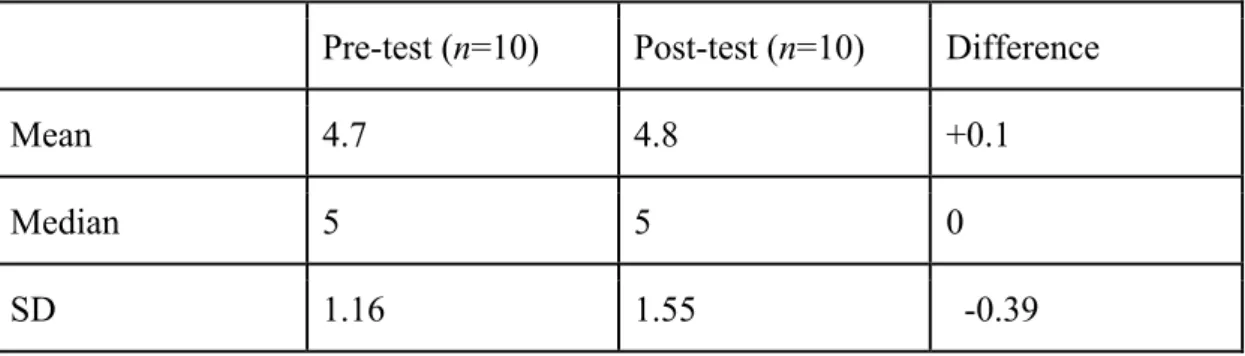
Table 2 Students’ likelihood of using English restaurant reviews in the future (Research Question 2)
Pre-test (n=10) Post-test (n=10) Difference
Mean 4.7 4.8 +0.1
Median 5 5 0
SD 1.16 1.55 -0.39
81
Table 2 shows an increase in students' confidence to read restaurant reviews in English with the calculated mean values rising from 4.7 to 4.8 out of a maximum of 6 after the completion of the reading and writing activity. There is a 95% chance that this increase is not statistically significant (t=0.1634, df=18, p=.8720, z=.1611).
4.2 Second Author
Table 3 Students confidence to read restaurant reviews in English (Research Question 1) Pre-test (n=33) Post-test (n=33) Difference
Mean 3.52 3.91 +0.39
Median 4 4 0
SD 1.25 1.01 -0.24
The data above (Table 3) show an increase in students' confidence to read restaurant reviews in English with the calculated mean values rising from 3.52 to 3.91 out of a maximum of 6 after the completion of the reading and writing activity. There is a 95%
chance this difference is considered to be not statistically significant (t=1.4054, df=64, p=.1681, z=3.8912).
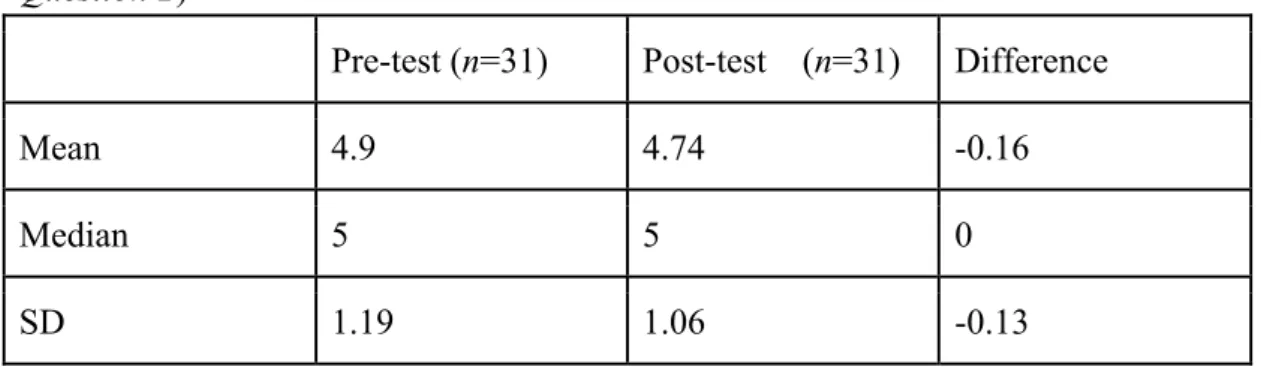
Table 4 Students’ likelihood of using English restaurant reviews in the future (Research Question 2)
Pre-test (n=31) Post-test (n=31) Difference
Mean 4.9 4.74 -0.16
Median 5 5 0
SD 1.19 1.06 -0.13
Table 4 shows a decrease in students' confidence to read restaurant reviews in
English with the calculated mean values falling from 4.9 to 4.74 out of a maximum of 6
after the completion of the reading and writing activity. This difference is considered to
be not statistically significant (t=0.5590, df=60, p=.5782, z=.5560).
82
5. Discussion
Although students in both instructors’ classes reported an increase in confidence, the results were not enough to be considered statistically significant. One unexpected characteristic of students’ reported confidence is the difference in results between the first author’s class and the second author’s class. Although the first author’s students had taken more university English courses, had more experience in writing and had been preparing to study abroad, they reported lower levels of confidence compared to the members of the second author’s class, which was comprised of non-English majors who were relatively new to writing.
The overall results of this pilot study were discouraging because the authors had hoped for greater increases in student confidence and willingness to use restaurant reviews. It is possible that the authors had overestimated the level of student interest in the topic. Restaurant and travel guides are a genre that students may not be familiar or comfortable with in English, so more time might be necessary for students to become more confident in using the large array of travel-guide resources which are available to them. Nevertheless, the authors do not believe that this project casts doubt upon the practice of finding purposeful authentic materials to use in class nor the importance of writing in different genres as a necessary means of developing student writing ability.
We do believe, however, that greater care must be taken to find reading materials and writing tasks which align more closely with student interests. Ideally, more research needs to be done to determine if appealing to topics such as dining and travel are useful means of English writing instruction.
5.1 Limitations
Larger sample sizes are always desirable for any quantitative research; the size of the classes involved in this project were too small to provide a sample for a more detailed statistical analysis. As a result, it is difficult to find correlations within such a small sample size so larger class sizes would yield more reliable results. An additional limitation of the data is the fact that a small number of students chose to not answer all of the survey questions, so there is a degree of inconsistency within the number of answers which were provided.
Authentic materials may possess a number of negative characteristics, especially if
they are not chosen carefully or used purposefully. For example, authentic readings may
be too difficult for students to read or they might be introduced lacking necessary
contexts (Richard, 2001). Additionally, the researchers for this study may also be
83
overestimating the amount of interest which can be sparked by having students choose their own restaurants to review. Finally, it is also not feasible to generalize the findings of this study to other groups of students given the fact that student ability-level,
experience with writing and motivation for studying English will be extremely diverse in other contexts and in other stages of study.
6. Conclusion
A successful language class involves a teacher’s effort to gain a better
understanding of student interests combined with an anticipation of what materials and activities would be relevant to students’ lives and futures. If teachers present students with purposeful authentic materials and lesson activities which spark their interest in making wider use of their language skills in real-world situations, then we believe that such materials and activities are certainly worthwhile. If students express a keen interest in travel or a wish to work and live overseas, then it seems likely that activities aligned with these goals are advantageous as vehicles for learning. In the case of assigning students to write English reviews for self-selected restaurants, we believe that variations on activities of this type could be possible avenues to appeal to such interests while helping students to develop and expand their writing skills. This would especially be the case if students have expressed desires to focus on such subjects. Other ideas for
activities may include reading and writing reviews for hotels, airlines, sightseeing and foreign-study topics. We believe it may be constructive for instructors to explore activities which combine the use of reading authentic materials with opportunities for students to choose the focus of their writing in ways that conform to their interests.
References
About Yelp. (n.d.). Retrieved November 14, 2016, from https://www.yelp.com/about Berardo, S. A. (2006, September). The use of authentic materials in the teaching of
reading. The Reading Matrix, 6(2). Retrieved from
http://www.readingmatrix.com/articles/berardo/article.pdf
Bonzo, J. D. (2008). To assign a topic or not: Observing fluency and complexity in intermediate foreign language writing. Foreign Language Annals, 41(4), 722-735.
Cohen, J. (2014). The impact of topic selection on writing fluency: Making a case for freedom. Journal of NEELTA, 18(1-2), 31-40.
Dickinson, P. (2014). The effect of topic-selection control on EFL writing fluency.
Niigata Kokusai Jōhōdaigaku Jōhō Bunka Gakubu Jōhō Bunka Gakka, 17, 15 - 25.
84
Fulwiler, T. (Ed.) (1987). The journal book. Portsmouth, NH: Boynton/Cook.
Graphpad Simulator [Computer software]. (2016). Retrieved from http://www.graphpad.com/quickcalcs
Homstad, T. & Thorson, H. (2000). Quantity versus quality? Using extensive and intensive writing in the FL classroom. In Bräuer, G. Writing across languages (pp.
141-152). Stamford, CT: Ablex.
Kiji, M. and Kiji, Y. (1993). Using content-based instruction to improve vocabulary retention. The Language Teacher, 17(1), 3-5.
Kilickaya, F. (2004, July). Authentic materials and cultural content in EFL classrooms.
The Internet TESL Journal, Volume X(7). Retrieved from
http://iteslj.org/Techniques/Kilickaya-AutenticMaterial.html
http://iteslj.org/Techni ques/Kilickaya-AutenticMaterial.htmlKroll, B. (1990). What does time buy? ESL student performance on home versus class compositions. In B. Kroll (Ed.), Second language writing: Research insights for the classroom (140 - 154). Cambridge, UK: Cambridge University Press.
Leblanc, C. & Fujieda, M. (2013). Investigating effects of topic control on lexical variation in Japanese university students’ in-class timed-writing. Kwansei Gakuin University Humanities Review, 17, 241-253.
Nation, P. (2013). What should every EFL teacher know? (S. Lee, Ed.) Seoul: Compass Publishing.
Nuttall, C. (1996). Teaching reading skills in a foreign language (New Edition). Oxford:
Heinemann.
Ottoson, K. J., & Crane, P. A. (2016). Self-selected topics vs. teacher-selected topics:
The impact on writing fluency. Korea TESOL Journal, 12(2), 47-64.
Peacock, M. (1997). The effect of authentic materials on the motivation of EFL learners, ELT Journal 51(2), 144-156.
Richard, J. C. (2001). Curriculum development in language teaching. Cambridge, UK:
Cambridge University Press.
Sponseller, A. & Wilkins, M. (2015). Investigating the impact of topic selection control on writing fluency. Hiroshima Studies in Language and Language Education, 18, 141 - 152.
Sternglass, M. (1980). Introspective accounts of expository writing. ERIC ED270825.
Terry, R. M. (1989, February). Teaching and evaluating writing as a communicative skill, Foreign Language Annals 22(1), 43-54.
TripAdvisor Fact Sheet (2016). Retrieved November 10, 2016 from
https://www.tripadvisor.com/PressCenter-c4-Fact_Sheet.html
85
Wallace, C. (1992). Reading. Oxford, UK: Oxford University Press.
Way, D., Joiner, E., & Seaman, M. (2000). Writing in the secondary foreign language classroom: The effects of prompts and task on novice learners of French. Modern Language Journal, 84, 171-184.
Yunus, M. M., Salehi, H., & Chenzi, C. (2012). Integrating social networking tools into
ESL writing classroom: Strengths and weaknesses. English Language Teaching,
5(8), 42-48.
86
Appendix 1 – Pre-Activity Questionnaire
Restaurant Reviews Spring 2016
What do you think makes restaurant reviews written in English challenging?
_______________________________________________________________
_______________________________________________________________
87